

The DOI matches its Crossref record; 57 of the 58 references it cites were found in a registry or an index.
Aging of Skeletal Muscle Fibers
Open accessAbstract
Aging has become an important topic for scientific research because life expectancy and the number of men and women in older age groups have increased dramatically in the last century. This is true in most countries of the world including the Republic of Korea and the United States. From a rehabilitation perspective, the most important associated issue is a progressive decline in functional capacity and independence. Sarcopenia is partly responsible for this decline. Many changes underlying the loss of muscle mass and force-generating capacity of skeletal muscle can be understood at the cellular and molecular levels. Muscle size and architecture are both altered with advanced adult age. Further, changes in myofibers include impairments in several physiological domains including muscle fiber activation, excitation-contraction coupling, actin-myosin cross-bridge interaction, energy production, and repair and regeneration. A thorough understanding of these alterations can lead to the design of improved preventative and rehabilitative interventions, such as personalized exercise training programs.
Overview
The claims and statistics of this paper haven’t been checked yet.
Run the check — free, no account needed. It reads the open-access text and checks the sources it cites.
Integrity signals
Registry
Cites
Statistics
Figures
Verification
Claims the paper makes
The claims and statistics of this paper haven’t been checked yet.
Run the check — free, no account needed. It reads the open-access text and checks the sources it cites.
Claims other papers make about this one
Each is checked against this paper’s own text: does it say what the citing paper says it does?
In the citing paper
“These changes are also accompanied by a diminished regenerative capacity of the muscle due to a loss in the number and activity of satellite cells in type II “fast” fibers [14,16,17].”
From Potential Roles of n-3 PUFAs during Skeletal Muscle Growth and Regeneration (2018) · cites this paper as [17]
Self-check
Percentages, sums and reported differences re-computed from the paper’s own numbers.
The self-check needs the paper’s full text.
Citations
Cites
Sarcopenia: European consensus on definition and diagnosis
Cruz-Jentoft, A. J., Baeyens, J. P., Bauer, J. M., Boirie, Y., Cederholm, T., Landi, F., Martin, F. C., Michel, J.-P., Rolland, Y., Schneider, S. M., et al. (2010) · Age and Ageing · doi:10.1093/ageing/afq034 · Cited by 11,601 · cited 1×
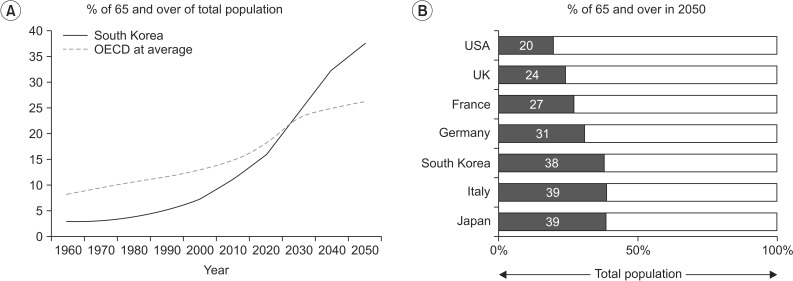
“More recently, the European Working Group on Sarcopenia in Older People has expanded the definition and suggested criteria for diagnosis [12] including the presence of muscle weakness (for example handgrip strength), a lower muscle mass (determined by bioelec1960 40”
BackgroundSkeletal muscle mass and distribution in 468 men and women aged 18–88 yr
Janssen, I., Heymsfield, S. B., Wang, Z., & Ross, R. (2000) · Journal of Applied Physiology · doi:10.1152/jappl.2000.89.1.81 · Cited by 3,087 · cited 1×
“In contrast, type I muscle fiber size is largely unaffected [22,28,29].”
BackgroundStudenski, S. A., Peters, K. W., Alley, D. E., Cawthon, P. M., McLean, R. R., Harris, T. B., Ferrucci, L., Guralnik, J. M., Fragala, M. S., Kenny, A. M., et al. (2014) · The Journals of Gerontology: Series A · doi:10.1093/gerona/glu010 · Cited by 2,545 · cited 2×
“The FNIH Sarcopenia Project Group [13] recently recommended normative values for muscle strength and lean body mass as follows: 1) grip strength in men <26 kg and in women <16 kg, or alternate grip strength adjusted for BMI <1.0 for men and <0.56 for women; and 2) appendicular lean body mass in men <19.75 kg and <15.0…”
MethodInfluentialSarcopenia: origins and clinical relevance
Rosenberg, I. H. (1997) · The Journal of Nutrition · doi:10.1093/jn/127.5.990s · Cited by 2,399 · cited 1×
“The term sarcopenia was used for the first time by Rosenberg [10,11] to refer to the loss of lean body mass with aging.”
MethodSatellite Cells and the Muscle Stem Cell Niche
Yin, H., Price, F., & Rudnicki, M. A. (2013) · Physiological Reviews · doi:10.1152/physrev.00043.2011 · Cited by 2,166 · cited 1×
“Pax7-expressing adult stem cells are normally quiescent, but when stimulated by damage or stress, they become activated and enter the cell cycle to either form new muscle fibers or self-renew and replenish the satellite cell pool, that will be used in the future [19-21].”
BackgroundLongitudinal study of muscle strength, quality, and adipose tissue infiltration
Delmonico, M. J., Harris, T. B., Visser, M., Park, S. W., Conroy, M. B., Velasquez-Mieyer, P., Boudreau, R., Manini, T. M., Nevitt, M., Newman, A. B., et al. (2009) · The American Journal of Clinical Nutrition · doi:10.3945/ajcn.2009.28047 · Cited by 1,446 · cited 1×
“However, a direct relationship between increased intermuscular fat and age-related muscle weakness has not been established [51].”
BackgroundAging of skeletal muscle: a 12-yr longitudinal study
Frontera, W. R., Hughes, V. A., Fielding, R. A., Fiatarone, M. A., Evans, W. J., & Roubenoff, R. (2000) · Journal of Applied Physiology · doi:10.1152/jappl.2000.88.4.1321 · Cited by 1,443 · cited 3×
“The loss of muscle mass and strength in older people is of greater magnitude in longitudinal compared to cross-sectional studies [15].”
BackgroundResultHuman aging, muscle mass, and fiber type composition.
Evans, W. J., & Lexell, J. (1995) · The Journals of Gerontology Series A: Biological Sciences and Medical Sciences · doi:10.1093/gerona/50a.special_issue.11 · Cited by 1,308 · cited 1×
“The decline in muscle mass, most prominent in the lower limbs, is accompanied by a 30% to 40% decrease in muscle fiber number between the second and eight decade [25].”
BackgroundRosenberg, I. H. (1989) · American Journal of Clinical Nutrition · doi:10.1093/ajcn/50.5.1231 · Cited by 1,234
Attenuation of skeletal muscle and strength in the elderly: the Health ABC Study
Goodpaster, B. H., Carlson, C. L., Visser, M., Kelley, D. E., Scherzinger, A., Harris, T. B., Stamm, E., & Newman, A. B. (2001) · Journal of Applied Physiology · doi:10.1152/jappl.2001.90.6.2157 · Cited by 1,226
Research works printed but not linked: 2
- Lexell, 1995, J Gerontol A Biol Sci Med Sci, 50 Spec No, 11
- Delbono, 2000, J Nutr Health Aging, 4, 162
Cited by
Sorted by citations
Items 301–307 of 307
Resistance Training Interventions for Dynapenia in Older Adults: A Systematic Review
Büyükdemir, D., & Özkaya, Y. G. (2026) · Akdeniz Spor Bilimleri Dergisi · doi:10.38021/asbid.1897115
Chen, S., Chen, P., Huang, L., Guo, W., & Zhong, Y.-J. (2026) · PLoS ONE · doi:10.1371/journal.pone.0354522
“…the overarching evidence for dynamic balance is constrained to a low certainty level, and data for specific cohorts over 80 remain sparse, inferences regarding these physiological restrictions on dynamic functional transformations demand highly cautious, evidence-grounded interpretation [78,79].”
Habing, K. M., Sagendorf, T. J., Alcazar, C. A., Sanford, J. A., Leach, D., Vanderpool, J. C., Hutchinson-Bunch, C. M., Gritsenko, M. A., Many, G. M., & Nakayama, K. H. (2026) · Physiological Reports · doi:10.14814/phy2.71022
“…function, maintenance, and regenerative capacity, with both omics-based and tissue-level studies identifying changes in contractile machinery, inflammatory dynamics, ECM composition, and satellite cell activity, among others (Distefano & Goodpaster, 2018; Han et al., 2021; Miljkovic et al., 2015).”
Proteomics of aging: biomarkers for physiological systems and diseases
Luo, Y., Xiao, Y.-L., Chen, J.-H., Wang, H., Luo, S., Dong, H., & Huang, R.-P. (2026) · Frontiers in Aging · doi:10.3389/fragi.2026.1895104
“The musculoskeletal system undergoes coordinated degenerative remodeling during aging, with sarcopenia and osteoporosis representing its two principal clinical phenotypes (Miljkovic et al., 2015; Gielen et al., 2023).”
Musculoskeletal Health and Healthy Ageing
Hamsat, H., & Duque, G. (2026) · Springer eBooks · doi:10.1007/978-3-032-21928-2_6
Bae, S., & Park, J. (2026) · Food Bioscience · doi:10.1016/j.fbio.2026.109978
Aparicio, P., Dobrowolny, G., Lupoli, M., Moreno‐Martínez, L., López‐Royo, T., Musarò, A., Manzano, R., & Osta, R. (2026) · International Journal of Molecular Sciences · doi:10.3390/ijms27219529
Metadata
- Authors
- Miljkovic, N., Lim, J.-Y., Miljkovic, I., & Frontera, W. R.
- Affiliations
- Vanderbilt University (US)
- Seoul National University (KR)
- University of Pittsburgh (US)
- University of Puerto Rico, Medical Sciences Campus (PR)
- Corresponding author
- Frontera, Walter R.
- Venue
- Annals of Rehabilitation Medicine
- Published
- 2015
- Volume
- 39
- Issue
- 2
- Pages
- 155
- ISSN
- 2234-0645 (ISSN-L)
- 2234-0653
- PMC
- PMC4414960
- OpenAlex
- W2049942632
- Cited by
- 309
- References
- 58
- Citations by year
- 2026: 21 · 2025: 20 · 2024: 32 · 2023: 30 · 2022: 24 · 2021: 42 · 2020: 44 · 2019: 28 · 2018: 30 · 2017: 14 · 2016: 23 · 2015: 1
- FWCI
- 2.20
- Type
- journal article
- Language
- en
- Open access
- gold
- doi.org
- Licence
- Locations
- Annals of Rehabilitation Medicine (publishedVersion, cc-by-nc)
- Europe PMC (PubMed Central) (publishedVersion, cc-by-nc)
- PubMed Central (publishedVersion, cc-by-nc)
- PubMed (publishedVersion)
- Topics
- Life Sciences › Biochemistry, Genetics and Molecular Biology › Molecular Biology › Muscle Physiology and Disorders
- Health Sciences › Medicine › Physiology (medical) › Nutrition and Health in Aging
- Health Sciences › Nursing › Nutrition and Dietetics › Muscle metabolism and nutrition
- Keywords
- skeletal muscle aging, sarcopenia, muscle fiber atrophy, muscle fiber activation, excitation-contraction coupling, actin-myosin cross-bridges, muscle energy metabolism, muscle regeneration, muscle architecture, functional capacity decline, exercise training intervention
About these checks
Registry, retraction, Cites and statistics results are computed, not judged, with one exception: a printed reference that no index lists is read once by a model before it counts as a citation error. Claims are extracted by a model and kept only when their quote appears verbatim in the text; each cited source is then checked, with a model’s help, for whether it says what the claim relies on. Those verdicts can be wrong — read the claim’s quote and the cited source before relying on one.
Statistics and arithmetic are recomputed, not judged.
Confidence bands are shown only for fields calibrated on our annotated test set. None is calibrated yet, so no band is shown.
What counts as a claim ›How we measure confidence ›How we check this ›
Are you an author, or do you see a problem with this page? Request a review
