

A statistical test suite for random and pseudorandom number generators for cryptographic applications
Open accessThe DOI matches its Crossref record; 33 of the 34 references it cites were found in a registry or an index; none of the 14 sources its claims cite is checked for support yet.
Abstract
The Information Technology Laboratory (ITL) at the National Institute of Standards and Technology (NIST) promotes the U.S. economy and public welfare by providing technical leadership for the nation's measurement and standards infrastructure. ITL develops tests, test methods, reference data, proof of concept implementations, and technical analysis to advance the development and productive use of information technology. ITL's responsibilities include the development of technical, physical, administrative, and management standards and guidelines for the cost-effective security and privacy of sensitive unclassified information in Federal computer systems.
Overview
CoChat Summary
TL;DR
This NIST Special Publication 800-22 Revision 1a presents a suite of 15 statistical tests for evaluating whether binary sequences produced by random or pseudorandom number generators are suitable for cryptographic applications. It provides test purposes, mathematical descriptions, examples, and guidance for interpreting P-values, while cautioning that statistical testing is only a first step and cannot replace cryptanalysis.
Key findings
- The suite consists of 15 tests: Frequency (Monobit), Frequency within a Block, Runs, Longest Run of Ones, Binary Matrix Rank, Discrete Fourier Transform (Spectral), Non-overlapping Template Matching, Overlapping Template Matching, Maurer’s “Universal Statistical,” Linear Complexity, Serial, Approximate Entropy, Cumulative Sums, Random Excursions, and Random Excursions Variant. The Frequency test is recommended first because it supplies the most basic evidence of non-randomness.
- Each test uses the null hypothesis \(H_0\) that the sequence is random; if P-value \(\ge \alpha\), the sequence is accepted as random, and if P-value \(<\alpha\), it is rejected. Examples use \(\alpha=0.01\), and NIST recommends \(\alpha\) in the range [0.001, 0.01].
- The document states that no finite set of statistical tests is “complete,” that statistical testing cannot absolutely certify a generator, and that statistical testing cannot serve as a substitute for cryptanalysis.
- Sample data files are 1,000,000 bits (binary expansions of \(e\), \(\pi\), \(\sqrt{2}\), \(\sqrt{3}\), and a G-SHA-1 sequence); reported example P-values include Frequency for \(\pi\) = 0.578211, for \(e\) = 0.953749, and for G-SHA-1 = 0.604458.
Methods
- Design: The NIST Statistical Test Suite is an ANSI C reference implementation of 15 tests; each test defines a test statistic, a reference distribution (e.g., normal, half-normal, chi-square), a P-value, and a decision rule at the 1% level.
- Data or sample: Tests apply to binary sequences from hardware or software RNGs/PRNGs; sample files are 1,000,000 bits, while many worked examples use small illustrative lengths such as \(n=100\).
- Main analysis: For each sequence, P-values are computed and compared to \(\alpha\); empirical interpretation examines the proportion of sequences passing a test and the uniformity of P-values. A multiple-test dependence study applied 161 test P-values to Blum-Blum-Shub sequences of length 1,000,000 and used principal components/factor analysis, concluding there was no large redundancy among tests.
Limitations
- The paper states that no set of statistical tests can absolutely certify a generator as appropriate, that statistical testing cannot substitute for cryptanalysis, and that generator design and cryptanalysis are outside its scope.
- The paper states that many examples use small sample sizes for illustration only, e.g., \(n=10\), where the normal approximation is not really applicable; many tests rely on asymptotic reference distributions for large \(n\) (order \(10^3\) to \(10^7\)), and input parameter constraints apply.
- The text makes evident additional limitations: numerical precision can degrade for large incomplete gamma parameter \(a\); Maurer’s variance approximation can make the test 2.67 times more permissive than theoretically admitted; Random Excursions is discontinued if \(J<500\); and multiple tests can yield contradictory conclusions, as in the Random Excursions example where one state gave a non-random result while seven states gave random results.
Model-written summary. Check it against the paper before relying on it.
Integrity signals
Registry
Cites
Statistics
Figures

Verification
Claims the paper makes
0 Valid · 1 Not valid · 11 Not checked · 13 Own results and interpretations
A result the paper reports from its own data — it cites no other source for it, so there is none to check. The quote shows it is in the paper.
In the paper
“The asymptotic distribution of ( Ln -µ n ) / σ n along the sequence of even or odd values of n is that of a discrete random variable obtained via a mixture of two geometric random variables (one of them taking only negative values). Strictly speaking, the asymptotic distribution as such does not exist.”
A result the paper reports from its own data — it cites no other source for it, so there is none to check. The quote shows it is in the paper.
In the paper
“However, no set of statistical tests can absolutely certify a generator as appropriate for usage in a particular application, i.e., statistical testing cannot serve as a substitute for cryptanalysis.”
A result the paper reports from its own data — it cites no other source for it, so there is none to check. The quote shows it is in the paper.
In the paper
“This graph showed that there is no large redundancy among our tests.”
In the paper
“Ueli Maurer of the Department of Computer Science at Princeton University introduced this test in 1992. Maurer's test statistic relates closely to the per-bit entropy of the stream, which its author asserts is 'the correct quality measure for a secret-key source in a cryptographic application.'”
What the sources say
- Not matchedcites Maurer
This doesn’t read as a citation we can look up.
- Not matched
What the paper did — it cites no source for this, so there is none to check. The quote shows it is in the paper.
In the paper
“The test rejects the randomness hypothesis immediately if J is too small, i.e., if the following P-value is small:”
20 more claims
Create a free account to see all 25 claims and every source verdict.
Claims other papers make about this one
Each is checked against this paper’s own text: does it say what the citing paper says it does?
The source backs part of the claim, not all of it — or backs it for a different population, condition or comparison.
In the citing paper
“However, the latest version 2.1.2 [1], released in 2014, does not incorporate several modifications.”
From Checking the quality of approximation of p-values in statistical tests for random number generators by using a three-level test (2019) · cites this paper as [1]
Experimental — accuracy not yet measuredThe source backs part of the claim, not all of it — or backs it for a different population, condition or comparison.
In the citing paper
“The NIST test suite consists of 15 statistical tests for randomness of bit sequences, and its result is a list of 188 p -values.”
From Checking the quality of approximation of p-values in statistical tests for random number generators by using a three-level test (2019) · cites this paper as [1]
Experimental — accuracy not yet measuredThe cited source says what the claim attributes to it.
In the citing paper
“Note that the current implementation of the NIST test suite uses one-level or two-level tests, differently from the above experiments”
From Checking the quality of approximation of p-values in statistical tests for random number generators by using a three-level test (2019) · cites this paper as [1]
The cited source says what the claim attributes to it.
In the citing paper
“NIST SP-800.22 statistical test suite [90] and Die-hard test suite [91] and Test U01 [92] and AIS31 [93] are most common statistical test suites to evaluate their RNGs by researchers.”
From True Random Number Generators Using Electrical Noise (2019) · cites this paper as [90]
Self-check
Percentages, sums and reported differences re-computed from the paper’s own numbers.
Each contradiction between two passages listed here was confirmed by an independent check.
Rated minor: it would not touch a result — a value no result rests on, a p-value that stays on the same side of the significance level, or a conflict that is clerical, resolved elsewhere in the paper, or outside its own findings.
In the paper
§ 2.3.8 Example
“(input) τ = 0.02 (processing) π = 0.42 (processing) Vn(obs) = 52 (output) P-value = 0.500798 (conclusion) Since P-value ≥ 0.01 , accept the sequence as random.”
§ 2.3.4 Test Description
“If it can be shown that π -1 ≥τ , then the 2 Runs test need not be performed (i.e., the test should not have been run because of a failure to pass test 1, the Frequency (Monobit) test). If the test is not applicable, then the P-value is set to 0.0000.”
Rated minor: it would not touch a result — a value no result rests on, a p-value that stays on the same side of the significance level, or a conflict that is clerical, resolved elsewhere in the paper, or outside its own findings.
In the paper
§ 2.7.4 Test Description
“| 8-10 | 010 (hit) | 2 | 110 | 1 |”
§ 2.7.4 Test Description
“For the above example, if m = 3 and the template B = 001, then the examination proceeds as follows:”
Rated minor: it would not touch a result — a value no result rests on, a p-value that stays on the same side of the significance level, or a conflict that is clerical, resolved elsewhere in the paper, or outside its own findings.
In the paper
§ 2.9.3 Test Statistic and Reference Distribution
“f n : The sum of the log2 distances between matching Lbit templates, i.e., the sum of the number of digits in the distance between Lbit templates.”
§ 3.9 Maurer's 'Universal Statistical' Test
“Then it averages over all the expansion lengths by the number of test blocks.”
Rated minor: it would not touch a result — a value no result rests on, a p-value that stays on the same side of the significance level, or a conflict that is clerical, resolved elsewhere in the paper, or outside its own findings.
In the paper
§ Input Parameters:
“The parameters p , q and s are not fixed in code; thus, the user will not be able to reconstruct the original sequence because these values will vary (i.e., they are dependent on the system time).”
§ Input Parameters:
“The input parameters have been fixed so the code will reproduce the same results.”
Rated minor: it would not touch a result — a value no result rests on, a p-value that stays on the same side of the significance level, or a conflict that is clerical, resolved elsewhere in the paper, or outside its own findings.
In the paper
§ 5.5.2 Global Parameters
“| MAXNUMOFTEMPLATES | 40 | Non-overlapping Templates Test | | NUMOFTESTS | 16 | Max number of tests | | NUMOFGENERATORS | 12 | Max number of PRNGs |”
§ A.2 Configuration Information
“| 2. | #define MAXNUMOFTEMPLATES | 148 | | 3. | #define NUMOFTESTS | 15 | | 4. | #define NUMOFGENERATORS | 10 |”
2 more findings
Create a free account to see every finding of this check.
Citations
Cites
Handbook of Mathematical Functions
McQuarrie, D. A. (1966) · American Journal of Physics · doi:10.1119/1.1972842 · Cited by 40,433
Numerical recipes in C: the art of scientific computing
(1993) · Choice Reviews Online · doi:10.5860/choice.30-5638 · Cited by 17,933
Rayward-Smith, V. J. (1991) · Journal of the Operational Research Society · doi:10.1057/jors.1991.155 · Cited by 16,821
Handbook of applied cryptography
(1997) · Choice Reviews Online · doi:10.5860/choice.34-4512 · Cited by 10,357
Handbook of Mathematical Functions
(2018) · A Century of Excellence in MEASUREMENTS, STANDARDS, and TECHNOLOGY · doi:10.1201/9781351069397-39 · Cited by 9,062
A universal algorithm for sequential data compression
Ziv, J., & Lempel, A. (1977) · IEEE Transactions on Information Theory · doi:10.1109/tit.1977.1055714 · Cited by 5,456
The Art of Computer Programming
Worlton, W. J. (1968) · Nuclear Science and Engineering · doi:10.13182/nse68-a19548 · Cited by 2,251
Handbook of Applied Cryptography
Menezes, A. J., van Oorschot, P. C., & Vanstone, S. A. (2018) · CRC Press eBooks · doi:10.1201/9780429466335 · Cited by 1,770
Numerical Recipes in C-The Art of Scientific Computing.
G., W., Press, W. H., Flannery, B. P., Teukolsky, S. A., & Vetterling, W. T. (1989) · Mathematics of Computation · doi:10.2307/2008673 · Cited by 1,513
The Fourier Transform and its Applications
Cattermole, K. W. (1965) · Electronics and Power · doi:10.1049/ep.1965.0268 · Cited by 1,417
Cited by
Items 301–400 of 3,620
A Hardware and Secure Pseudorandom Generator for Constrained Devices
Bakiri, M., Guyeux, C., Couchot, J.-F., Marangio, L., & Galatolo, S. (2018) · IEEE Transactions on Industrial Informatics · doi:10.1109/tii.2018.2815985 · Cited by 62
“To perform comparisons, in this study, we considered the reputed NIST SP800 − 22 [38] (10 6 pseudorandom bits evaluated by 16 tests) and TestU01 [22] batteries of tests (up to 10 38 pseudorandom bits under 319 tests).”
MethodUltrafast Fully Photonic Random Bit Generator
Li, P., Wang, A., Guo, Y., Guo, Y., Fan, Y., Guo, X., Liu, X., Li, K.-Y., Shore, K. A., & Wang, Y. (2018) · Journal of Lightwave Technology · doi:10.1109/jlt.2018.2817512 · Cited by 60
Secret Group-Key Generation at Physical Layer for Multi-Antenna Mesh Topology
Thai, C. D. T., Lee, J., Prakash, J., & Quek, T. Q. S. (2018) · IEEE Transactions on Information Forensics and Security · doi:10.1109/tifs.2018.2837661 · Cited by 57
“We use the NIST test suit [23] to verify the randomness of the keys generated from our implementation.”
MethodInfluentialAn Artificial Neural Network Framework for Gait-Based Biometrics
Sun, Y., & Lo, B. (2019) · IEEE Journal of Biomedical and Health Informatics · doi:10.1109/jbhi.2018.2860780 · Cited by 57
“detect deviations of a binary sequence from randomness [32].”
BackgroundT2Pair: Secure and Usable Pairing for Heterogeneous IoT Devices
Li, X., Zeng, Q., Luo, L., & Luo, T. (2020) · ACM SIGSAC Conference on Computer and Communications Security (CCS) · doi:10.1145/3372297.3417286 · Cited by 55
“A p-value represents the probability that the input bit sequence is generated by a random bit generator [40].”
BackgroundMethodGuideline for Using Cryptographic Standards in the Federal Government: Cryptographic Mechanisms
Barker, E. B. (2016) · doi:10.6028/nist.sp.800-175b · Cited by 66
Self-citationLuo, Y., Liu, Y., Liu, J., Tang, S., Harkin, J., & Cao, Y. (2020) · Information Sciences · doi:10.1016/j.ins.2020.12.065 · Cited by 60
Highly efficient entropy extraction for true random number generators on FPGAs
Rožić, V., Yang, B., Dehaene, W., & Verbauwhede, I. M. R. (2015) · ACM/IEEE Design Automation Conference (DAC) · doi:10.1145/2744769.2744852 · Cited by 68
“The proposed generators were verified using batteries of statistical tests such as NIST [7] and DIEHARD [3] but they lack formal evaluation of security.”
MethodCao, Y., Liu, C. Q., & Chang, C.-H. (2018) · IEEE Transactions on Circuits and Systems I Regular Papers · doi:10.1109/tcsi.2018.2855061 · Cited by 56
“01 is required to consider an arbitrary information source as random with a confidence level of 99% [27].”
BackgroundA Survey of Probabilistic Timing Analysis Techniques for Real-Time Systems
Davis, R. I., & Cucu, L. (2019) · Leibniz transactions on embedded systems · doi:10.4230/lites-v006-i001-a003 · Cited by 61
Valandar, M. Y., Barani, M. J., & Ayubi, P. (2019) · Soft Computing · doi:10.1007/s00500-019-04524-z · Cited by 58
“National Institute of Standards and Technology (NIST) has developed another useful test suite for analyzing the randomness of the generated numbers by proposed maps (Rukhin et al. 2001).”
Design and Properties of a New Pseudorandom Generator Based on a Filtered FCSR Automaton
Arnault, F., & Berger, T. P. (2005) · IEEE Transactions on Computers · doi:10.1109/tc.2005.181 · Cited by 57
All-Optical Quantum Random Bit Generation from Intrinsically Binary Phase of Parametric OscillatorsPreprint
Marandi, A., Leindecker, N. C., Vodopyanov, K. L., & Byer, R. L. (2014) · Cited by 58
Mobayen, S., Vaidyanathan, S. V., Sambas, A., et al. (2018) · Iranian Journal of Science and Technology Transactions of Electrical Engineering · doi:10.1007/s40998-018-0094-0 · Cited by 55
Generalized Hardware Post-processing Technique for Chaos-Based Pseudorandom Number Generators
Barakat, M. L. (2013) · ETRI Journal · doi:10.4218/etrij.13.0112.0677 · Cited by 61
“800-22 test suite [32] is used as a reference to assess statistical characteristics of the output bitstreams, each of which is isolated and examined.”
MethodInfluentialEfficient DCT-based secret key generation for the Internet of Things
Margelis, G., Fafoutis, X., Oikonomou, G., et al. (2018) · Ad Hoc Networks · doi:10.1016/j.adhoc.2018.08.014 · Cited by 55
Enhancing unimodal digital chaotic maps through hybridisation
Alawida, M., Samsudin, A., & Teh, J. S. (2019) · Nonlinear Dynamics · doi:10.1007/s11071-019-04809-w · Cited by 55
Speech encryption algorithm using FFT and 3D-Lorenz–logistic chaotic map
Sathiyamurthi, P., & Ramakrishnan, S. (2020) · Multimedia Tools and Applications · doi:10.1007/s11042-020-08729-5 · Cited by 59
Aziza, H., Postel-Pellerin, J., Bazzi, H., Canet, P., Moreau, M., della Marca, V., & Harb, A. (2020) · IEEE Transactions on Nanotechnology · doi:10.1109/tnano.2020.2976735 · Cited by 58
“Indeed, for TRNG applications and especially for NIST test suite success [34], 50% of the cells must statistically be in the LRL level so if we consider this 50% target (dashed line in Fig.”
BackgroundMethodInfluentialUniversal codes as a basis for time series testing
Ryabko, B. Y., & Astola, J. T. (2005) · Statistical Methodology · doi:10.1016/j.stamet.2005.10.004 · Cited by 55
Robust hardware true random number generators using DRAM remanence effects
Tehranipoor, F., Yan, W., & Chandy, J. A. (2016) · 2016 IEEE International Symposium on Hardware Oriented Security and Trust (HOST) · doi:10.1109/hst.2016.7495561 · Cited by 54
“01 (normally 1%) would means that sequence would be considered to be random with a confidence of 99% [18].”
BackgroundYang, C., Taralova, I., Assad, S. E., & Loiseau, J. J. (2022) · Nonlinear Dynamics · doi:10.1007/s11071-022-07534-z · Cited by 62
Kim, Y., Lim, J., Lim, J. H., Hwang, E., Lee, H., Kim, M., Ha, I., Cho, H., Kwon, J., Oh, J., et al. (2023) · Advanced Materials · doi:10.1002/adma.202212294 · Cited by 58
Sun, H., Maji, S., Chandrakasan, A. P., & Marelli, B. (2023) · Science Advances · doi:10.1126/sciadv.adf1978 · Cited by 60
“Here, we evaluate the randomness of the PUF codes extracted from our silk tags using a statistical test suite developed by the National Institute of Standards and Technology (NIST) for assessing random number generators for cryptographic applications (43).”
MethodMEMS Gyroscopes as Physical Unclonable Functions
Willers, O., Huth, C., Guajardo, J., & Seidel, H. (2016) · ACM SIGSAC Conference on Computer and Communications Security (CCS) · doi:10.1145/2976749.2978295 · Cited by 56
“We test the PUF responses with the NIST randomness test suite [28].”
MethodDesign and Analysis of Stability-Guaranteed PUFs
Wang, W.-C., Yona, Y., Diggavi, S. N., & Gupta, P. (2017) · IEEE Transactions on Information Forensics and Security · doi:10.1109/tifs.2017.2774761 · Cited by 60
“2 Inter- and intra- fractional Hamming Distance (FHD) [7], and other statistical tests for randomness [21], have been used for quantifying PUF security.”
MethodWang, Z., Chen, Y., Patil, A., Jayabalan, J., Zhang, X., Chang, C.-H., & Basu, A. (2017) · IEEE Transactions on Circuits and Systems I Regular Papers · doi:10.1109/tcsi.2017.2743004 · Cited by 54
“For generic cryptographic applications, statistic tests such as DIEHARD [8] or NIST test suite [9] is widely applied on the response bits of PUF to assess its randomness.”
BackgroundMethodInfluentialPseudo-random number generator based on a generalized conservative Sprott-A system
Cang, S., Kang, Z., & Wang, Z. (2021) · Nonlinear Dynamics · doi:10.1007/s11071-021-06310-9 · Cited by 60
Corrections of the NIST Statistical Test Suite for Randomness
Kim, S.-J., Umeno, K., & Hasegawa, A. (2004) · arXiv · doi:10.48550/arxiv.nlin/0401040 · Cited by 54
“Therefore, SHA1, which is one of well-known good PRBGs, is used instead for the mean-value and the variance-value in the NIST setting [8].”
BackgroundMethodInfluentialLoRa-LiSK: A Lightweight Shared Secret Key Generation Scheme for LoRa Networks
Junejo, A. K., Benkhelifa, F., Wong, B., & McCann, J. A. (2021) · IEEE Internet of Things Journal · doi:10.1109/jiot.2021.3103009 · Cited by 63
“Apart from entropy, the secret keys are also tested for randomness based on the statistical test suite proposed by NIST [33].”
MethodImproved Generation of Identifiers, Secret Keys, and Random Numbers From SRAMs
Baturone, I., Prada-Delgado, M. Á., & Eiroa, S. (2015) · IEEE Transactions on Information Forensics and Security · doi:10.1109/tifs.2015.2471279 · Cited by 52
Madiseh, M. G., Neville, S. W., & McGuire, M. L. (2012) · IEEE Transactions on Information Forensics and Security · doi:10.1109/tifs.2012.2195176 · Cited by 59
“Hence, in WKG the unpredictability of the resulting random sequence can be formally set within the context of known communications and information theory (i.e., as opposed to resting on empirical tests such as the NIST tests for randomness [17]).”
BackgroundFast secret key generation in static wireless networks: A virtual channel approach
Huang, P., & Wang, X. (2013) · IEEE Conference on Computer Communications (INFOCOM) · doi:10.1109/infcom.2013.6567033 · Cited by 56
“The performance evaluation metrics for our secret key generation protocols are: 1) Key disagreement probability: it measures how many different bits between the key on Alice’s side and that on Bob’s side prior to error correction procedure; 2) Key generation rate: it measures how fast the key can be generated; 3) Key…”
MethodTrue random number generation using CMOS Boolean chaotic oscillator
Park, M. H., Rodgers, J., & Lathrop, D. P. (2015) · Microelectronics Journal · doi:10.1016/j.mejo.2015.09.015 · Cited by 60
Chaos generation in fractional-order switched systems and its digital implementation
Zambrano-Serrano, E., Munoz-Pacheco, J. M., & Campos-Cantón, E. (2017) · AEU - International Journal of Electronics and Communications · doi:10.1016/j.aeue.2017.05.032 · Cited by 54
Ring oscillator as confusion – diffusion agent: a complete TRNG drove image security
Sivaraman, R., Rajagopalan, S., Rayappan, J. B. B., & Amirtharajan, R. (2020) · IET Image Processing · doi:10.1049/iet-ipr.2019.0168 · Cited by 52
“National Institute of Standards and Technology (NIST) has released a test suite for evaluating the randomness of any RNG [23].”
BackgroundA Simple Method for Constructing a Family of Hamiltonian Conservative Chaotic Systems
Ji’e, M., Yan, D., Sun, S., Zhang, F., Duan, S., & Wang, L. (2022) · IEEE Transactions on Circuits and Systems I Regular Papers · doi:10.1109/tcsi.2022.3172313 · Cited by 55
Bajwa, G., & Dantu, R. (2016) · Computers & Security · doi:10.1016/j.cose.2016.06.001 · Cited by 55
An Experimental Exploration of Marsaglia's xorshift Generators, Scrambled
Vigna, S. (2016) · ACM Transactions on Mathematical Software · doi:10.1145/2845077 · Cited by 55
“Indeed, other, more sophisticated methods might be used to aggreate the result of our samples: combining p-values, for instance, or computing a p-value of p-values [Rukhin et al. 2001].”
MethodA lightweight authentication scheme for 5G mobile communications: a dynamic key approach
Pothumarti, R., Jain, K., & Krishnan, P. (2021) · Journal of Ambient Intelligence and Humanized Computing · doi:10.1007/s12652-020-02857-4 · Cited by 57
Differential area analysis for ransomware attack detection within mixed file datasets
Davies, S. R. H., Macfarlane, R., & Buchanan, W. J. (2021) · Computers & Security · doi:10.1016/j.cose.2021.102377 · Cited by 65
“These could include Hamming distance [21], NIST statistical test suit [45], Higuchi fractal dimension [24], n-grams [30], byte frequency analysis [44] or techniques based on machine learning.”
MethodAn Encryption Application and FPGA Realization of a Fractional Memristive Chaotic System
Mohamed, S. M., Sayed, W. S., Madian, A. H., Radwan, A. G., & Said, L. A. (2023) · Electronics · doi:10.3390/electronics12051219 · Cited by 51
High Performance True Random Number Generator in Altera Stratix FPLDs
Fischer, V., Drutarovský, M., Šimka, M., & Bochard, N. (2004) · Lecture notes in computer science · doi:10.1007/978-3-540-30117-2_57 · Cited by 50
“Standard FIPS140-2 statistical tests [12] that analyze 20, 000 bit records and define thresholds to assess TRNG randomness.”
BackgroundMethodInfluentialRandomly Failed! The State of Randomness in Current Java Implementations
Michaelis, K., Meyer, C., & Schwenk, J. (2013) · Lecture notes in computer science · doi:10.1007/978-3-642-36095-4_9 · Cited by 51
Proposed Random Unified Chaotic Map as PRBG for Voice Encryption in Wireless Communication
Sadkhan, S. B., & Mohammed, R. S. (2015) · Procedia Computer Science · doi:10.1016/j.procs.2015.09.089 · Cited by 51
Improving channel reciprocity for effective key management systems
Ambekar, A., Hassan, M., & Schotten, H. D. (2012) · International Symposium on Signals, Systems and Electronics · doi:10.1109/issse.2012.6374318 · Cited by 51
Self-shrinking chaotic stream ciphers
Kanso, A. A. (2010) · Communications in Nonlinear Science and Numerical Simulation · doi:10.1016/j.cnsns.2010.04.039 · Cited by 54
High-Speed Quantum Random Number Generation Using CMOS Photon Counting Detectors
Tisa, S., Villa, F., Giudice, A., Simmerle, G., & Zappa, F. (2014) · IEEE Journal of Selected Topics in Quantum Electronics · doi:10.1109/jstqe.2014.2375132 · Cited by 60
“Furthermore, it incorporates tests from the Statistical Test Suite (STS) developed by the National Institute for Standards and Technology (NIST) [22].”
MethodExtracting secret key from wireless link dynamics in vehicular environments
Zhu, X., Xu, F., Novak, E., Tan, C. C., Li, Q., & Chen, G. (2013) · IEEE Conference on Computer Communications (INFOCOM) · doi:10.1109/infcom.2013.6567032 · Cited by 57
“To evaluate the randomness of their extracted bits, we use the NIST test [11], the state-ofthe-art statistical test tool for randomness.”
MethodA Modified Chaos-Based Joint Compression and Encryption Scheme
Chen, J., Zhou, J., & Wong, K. (2011) · IEEE Transactions on Circuits & Systems II Express Briefs · doi:10.1109/tcsii.2011.2106316 · Cited by 50
Robust and flexible FPGA-based digital PUF
Xu, T., & Potkonjak, M. (2014) · International Conference on Field Programmable Logic and Applications (FPL) · doi:10.1109/fpl.2014.6927449 · Cited by 51
PUF-Based Secure Chaotic Random Number Generator Design Methodology
Kalanadhabhatta, S., Kumar, D., Anumandla, K. K., et al. (2020) · IEEE Transactions on Very Large Scale Integration (VLSI) Systems · doi:10.1109/tvlsi.2020.2979269 · Cited by 51
An $n$-Dimensional Chaotic System Generation Method Using Parametric Pascal Matrix
Zhang, Y.-X., Hua, Z.-Y., Bao, H., Huang, H.-J., & Zhou, Y. (2022) · IEEE Transactions on Industrial Informatics · doi:10.1109/tii.2022.3151984 · Cited by 41
“According to the recommendation in [34], the significance level α, binary sequence length, and the number of binary sequences are set to 0.”
BackgroundStrong experimental guarantees in ultrafast quantum random number generation
Mitchell, M. W., Abellan, C., & Amaya, W. (2015) · Physical Review A · doi:10.1103/physreva.91.012314 · Cited by 50
“While it is common to test generated data against statistical test suites [13], these tests can only identify nonrandomness, i.e., patterns in the output.”
BackgroundTrue random number generator based on mouse movement and chaotic hash function
Zhou, Q., Liao, X., Wong, K., Hu, Y., & Xiao, D. (2009) · Information Sciences · doi:10.1016/j.ins.2009.06.005 · Cited by 55
Fault Attacks on STRNGs: Impact of Glitches, Temperature, and Underpowering on Randomness
Martín, H., Korak, T., Millán, E. S., & Hutter, M. (2014) · IEEE Transactions on Information Forensics and Security · doi:10.1109/tifs.2014.2374072 · Cited by 63
“Digital Object Identifier 10.1109/TIFS.2014.2374072 that guarantee good statistical properties (see, for example, the tests of NIST [1] or AIS31 [2]).”
BackgroundMethodInfluentialHanis, S., & Amutha, R. (2017) · Multimedia Tools and Applications · doi:10.1007/s11042-017-4606-0 · Cited by 49
“The randomness of the key and the encryption algorithm was tested using the NIST test suite SP800–22 [19].”
MethodDu, N., Schmidt, H., & Polian, I. (2021) · Nano Materials Science · doi:10.1016/j.nanoms.2021.01.001 · Cited by 58
A color image encryption scheme based on 1D cubic map
Yahi, A., Bekkouche, T., Daachi, M. E. H., & Diffellah, N. (2021) · Optik · doi:10.1016/j.ijleo.2021.168290 · Cited by 48
Review of Magnetic Tunnel Junctions for Stochastic Computing
Zink, B. R., Lv, Y., & Wang, J. (2022) · IEEE Journal on Exploratory Solid-State Computational Devices and Circuits · doi:10.1109/jxcdc.2022.3227062 · Cited by 61
A new test for randomness and its application to some cryptographic problems
Ryabko, B. Y., Stognienko, V. S., & Shokin, Y. I. (2003) · Journal of Statistical Planning and Inference · doi:10.1016/s0378-3758(03)00149-6 · Cited by 57
“Ryabko et al. / Journal of Statistical Planning and Inference 123 (2004) 365–376 371 Taking into account that the testing sample size n(k)= c√k (see (8)), we can see from two last inequalities that, with the probability 1, P(A1\H0)n(k) = c + o(1); P(A1\H1)n(k) = 5c=4 + o(1); where k→∞.”
BackgroundA cycling chaos-based cryptic-free algorithm for image steganography
Aziz, M., Tayarani-N, M. H., & Afsar, M. M. (2015) · Nonlinear Dynamics · doi:10.1007/s11071-015-1943-2 · Cited by 51
Random number generation based on digital differential chaos
Zidan, M. A., Radwan, A. G., & Salama, K. N. (2011) · IEEE International Midwest Symposium on Circuits and Systems (MWSCAS) · doi:10.1109/mwscas.2011.6026266 · Cited by 52
“800-22 random tests package [13] to demonstrate the statistical improvement introduced by applying the purposed post-processing.”
BackgroundMethodOn the using of discrete wavelet transform for physical layer key generation
Zhan, F., & Yao, N. (2017) · Ad Hoc Networks · doi:10.1016/j.adhoc.2017.06.003 · Cited by 49
A novel pseudo-random number generator from coupled map lattice with time-varying delay
Lv, X., Liao, X., & Yang, B. (2018) · Nonlinear Dynamics · doi:10.1007/s11071-018-4361-4 · Cited by 51
Highly dispersive substitution box (S‐box) design using chaos
Faheem, Z. B., Ali, A., Khan, M. A., Ehatisham-ul-Haq, M., & Ahmad, W. (2020) · ETRI Journal · doi:10.4218/etrij.2019-0138 · Cited by 52
Tuna, M. (2020) · Analog Integrated Circuits and Signal Processing · doi:10.1007/s10470-020-01703-z · Cited by 52
Olgun, A., Patel, M., Yağlıkçı, A. G., Luo, H., Kim, J. S., Bostanci, F. N., Vijaykumar, N., Ergin, O., & Mutlu, O. (2021) · Proceedings - International Symposium on Computer Architecture/Proceedings · doi:10.1109/isca52012.2021.00078 · Cited by 77
“To demonstrate that QUAC-TRNG produces high-quality bitstreams of random values, we experimentally extract nine bitstreams from three DDR4 modules (24 DRAM chips).8 Our results show that the bitstreams pass all of the NIST STS tests.”
BackgroundMethodInfluentialRemodeling randomness prioritization to boost-up security of RGB image encryption
Al-Roithy, B. O., & Gutub, A. (2021) · Multimedia Tools and Applications · doi:10.1007/s11042-021-11051-3 · Cited by 53
Novel hyper chaotic color image encryption based on pixel and bit level scrambling with diffusion
Shahna, K. U., & Mohamed, A. (2021) · Signal Processing Image Communication · doi:10.1016/j.image.2021.116495 · Cited by 69
A uniform chaotic system with extended parameter range for image encryption
Hu, G., & Li, B. (2021) · Nonlinear Dynamics · doi:10.1007/s11071-021-06228-2 · Cited by 48
Analysis and implementation of no-equilibrium chaotic system with application in image encryption
Lai, Q., Zhang, H., Kuate, P. D. K., Xu, G., & Zhao, X. (2022) · Applied Intelligence · doi:10.1007/s10489-021-03071-1 · Cited by 51
Securing While Sampling in Wireless Body Area Networks With Application to Electrocardiography
Dautov, R., & Tsouri, G. R. (2014) · IEEE Journal of Biomedical and Health Informatics · doi:10.1109/jbhi.2014.2366125 · Cited by 48
“From [18], it follows that values of Q = 8 and β = 10 are suitable for our purposes since the corresponding binary sequence is of sufficient length and passes all applicable NIST randomness tests [23].”
BackgroundChannel Frequency Response-Based Secret Key Generation in Underwater Acoustic Systems
Huang, Y., Zhou, S., Shi, Z. J., et al. (2016) · IEEE Transactions on Wireless Communications · doi:10.1109/twc.2016.2572106 · Cited by 48
Saxton, M. J. (2007) · Methods in molecular biology · doi:10.1007/978-1-59745-519-0_20 · Cited by 62
Discriminative binary feature learning and quantization in biometric key generation
Anees, A., & Chen, Y. P. (2017) · Pattern Recognition · doi:10.1016/j.patcog.2017.11.018 · Cited by 48
File Fragment Classification Using Grayscale Image Conversion and Deep Learning in Digital Forensics
Chen, Q., Liao, Q., Jiang, Z. L., Fang, J., Yiu, S., Xi, G., Li, R., Yi, Z., Wang, X., Hui, L. C. K., et al. (2018) · IEEE Security and Privacy Workshops (SPW) · doi:10.1109/spw.2018.00029 · Cited by 54
“At the same time, although high entropy file fragments are randomly distributed in grayscale images and cannot be easily distinguished, it can be distinguished with randomness using NIST Statistical Test [15].”
MethodAmirany, A., Jafari, K., & Moaiyeri, M. H. (2020) · IEEE Transactions on Nanotechnology · doi:10.1109/tnano.2020.3034818 · Cited by 53
“…randomness tests are carried out with the following conditions and source code provided by U.S National Institute of Standards and Technology [53]: 1) Simulating the proposed design in the process corners (SS, TT, and FF) using HSPICE 2) Generating 1 million random bit according to the…”
MethodWali, A., Ravichandran, H., & Das, S. (2021) · ACS Nano · doi:10.1021/acsnano.1c05984 · Cited by 51
Fan, C., & Ding, Q. (2022) · Chaos Solitons & Fractals · doi:10.1016/j.chaos.2022.112323 · Cited by 47
Color Image Encryption Using 2D Sine-Cosine Coupling Map
Zhang, Z., Tang, J., Zhang, F., Ni, H., Chen, J., & Huang, Z. (2022) · IEEE Access · doi:10.1109/access.2022.3185229 · Cited by 49
“To further investigate the randomness of the system output sequences, we used the National Institute of Standards and Technology (NIST) SP800-22 test tool [24].”
MethodXu, C., Zhang, L., Law, M. K., Zhao, X., Mak, P., & Martins, R. P. (2023) · IEEE Internet of Things Journal · doi:10.1109/jiot.2023.3267657 · Cited by 56
“6) Randomness: The NIST statistic tests [39] is a mature and recognized standard on randomness evaluation.”
BackgroundImprovement of the Security of ZigBee by a New Chaotic Algorithm
Bakhache, B., Ghazal, J. M., & Assad, S. E. (2014) · IEEE Systems Journal · doi:10.1109/jsyst.2013.2246011 · Cited by 47
Lightweight RFID authentication with forward and backward security
Burmester, M. V. D., & Munilla, J. (2011) · ACM Transactions on Information and System Security · doi:10.1145/1952982.1952993 · Cited by 46
“A comprehensive collection of randomness tests suitable for the evaluation of PRNGs used in cryptographic applications is proposed by the National Institute of Standards and Technology (NIST) [Rukhin et al. 2001].”
MethodAn FPGA Implementation of the Resolve Time-Based True Random Number Generator With Quality Control
Wieczorek, P. Z. (2014) · IEEE Transactions on Circuits and Systems I: Regular Papers · doi:10.1109/tcsi.2014.2338615 · Cited by 44
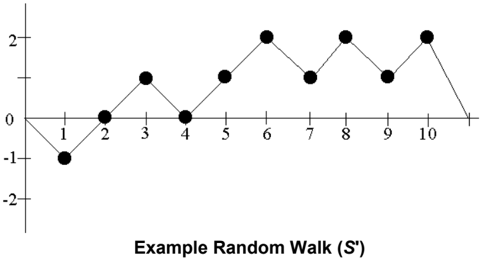
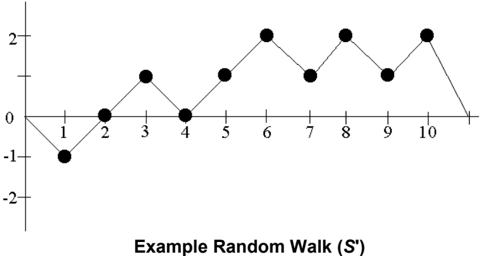
“The cumulative sums test shows that random walks [13] become too long, hence, low proportions prove the presence of long runs (of ones or zeroes) [13].”
BackgroundDetecting Code Alteration by Creating a Temporary Memory Bottleneck
Gardner, R. W., Garera, S., & Rubin, A. D. (2009) · IEEE Transactions on Information Forensics and Security · doi:10.1109/tifs.2009.2033231 · Cited by 53
Using Wireless Link Dynamics to Extract a Secret Key in Vehicular Scenarios
Zhu, X., Xu, F., Novak, E., et al. (2016) · IEEE Transactions on Mobile Computing · doi:10.1109/tmc.2016.2557784 · Cited by 47
“The extracted bits pass the NIST test [11].”
MethodDiscrete Chaotic Systems with One-Line Equilibria and Their Application to Image Encryption
Chen, E., Min, L., & Chen, G. (2017) · International Journal of Bifurcation and Chaos · doi:10.1142/s0218127417500468 · Cited by 48
Stochastic Insulator-to-Metal Phase Transition-Based True Random Number Generator
Jerry, M., Ni, K., Parihar, A., Raychowdhury, A., & Datta, S. (2017) · IEEE Electron Device Letters · doi:10.1109/led.2017.2771812 · Cited by 51
Lu, X., Hong, L., & Sengupta, K. (2018) · IEEE Journal of Solid-State Circuits · doi:10.1109/jssc.2018.2850941 · Cited by 47
Secure Industrial Internet of Things Critical Infrastructure Node Design
McGinthy, J. M., & Michaels, A. J. (2019) · IEEE Internet of Things Journal · doi:10.1109/jiot.2019.2903242 · Cited by 55
“number system (RNS) to produce pseudorandom values that appear uniform and pass NIST’s randomness testing suite [46].”
MethodInfluentialBonny, T. (2020) · Circuits Systems and Signal Processing · doi:10.1007/s00034-020-01521-8 · Cited by 54
“This makes the continuous-time chaotic oscillation a good candidate to generate truly random numbers [16], which can be used for a wide range of applications like eGovernment, e-identity card, e-Passport, e-Visa, e-Commerce, control [41,45], and public and private keys of symmetric, asymmetric [10], and hybrid crypto-…”
BackgroundCertified Quantum Random Numbers from Untrusted Light
Drahi, D., Walk, N., Hoban, M. J., Fedorov, A. K., Shakhovoy, R., Feimov, A., Kurochkin, Y., Kolthammer, W. S., Nunn, J., & Barrett, J. (2020) · Goldsmiths (University of London) · doi:10.17169/refubium-29280 · Cited by 46
An improved chacha algorithm for securing data on IoT devices
Mahdi, M. S., Hassan, N. F., & Abdul-Majeed, G. H. (2021) · SN Applied Sciences · doi:10.1007/s42452-021-04425-7 · Cited by 63
Efficient hardware implementation of a new pseudo-random bit sequence generator
Katti, R. S., & Srinivasan, S. K. (2009) · IEEE International Symposium on Circuits and Systems proceedings · doi:10.1109/iscas.2009.5118025 · Cited by 47
Cy : Chaotic yolo for user intended image encryption and sharing in social media
Asgari-Chenaghlu, M., Feizi‐Derakhshi, M., Nikzad-Khasmakhi, N., Feizi-Derakhshi, A.-R., Ramezani, M., Jahanbakhsh-Nagadeh, Z., Akan, T., Zafarani-Moattar, E., Ranjbar-Khadivi, M., & Balafar, M. A. (2020) · Information Sciences · doi:10.1016/j.ins.2020.07.007 · Cited by 49
A new cryptographic algorithm via a two-dimensional chaotic map
Elghandour, A., Salah, A., & Karawia, A. A. (2021) · Ain Shams Engineering Journal · doi:10.1016/j.asej.2021.05.004 · Cited by 50
BREAKING A CHAOTIC CRYPTOGRAPHIC SCHEME BASED ON COMPOSITION MAPS
LI, C., ARROYO, D., & LO, K.-T. (2010) · International Journal of Bifurcation and Chaos · doi:10.1142/s0218127410027192 · Cited by 46
“To further test the randomness of the sequences generated by the two equations, we adopted the test suite proposed in [23].”
MethodUltrafast physical generation of random numbers using hybrid Boolean networks
Rosin, D. P., Rontani, D., & Gauthier, D. J. (2013) · Physical Review E · doi:10.1103/physreve.87.040902 · Cited by 53
Improving PUF security with regression-based distiller
Yin, C.-E., & Qu, G. (2013) · Proceedings - ACM IEEE Design Automation Conference · doi:10.1145/2463209.2488960 · Cited by 46
“generator (PRNG) as well as a statistical test suite for random and pseudo-random number generators [10].”
Background
Metadata
- Authors
- Bassham, L. E., Rukhin, A. L., Soto, J., Nechvatal, J. R., Smid, M. E., Barker, E. B., Leigh, S. D., Levenson, M., Vangel, M., Banks, D. L., Heckert, N. A., Dray, J. F., & Vo, S.
- Affiliations
- National Institute of Standards and Technology (US)
- Venue
- NIST Special Publication 800-22 Revision 1a
- Published
- 2010
- OpenAlex
- W1517403092
- Semantic Scholar
- 961fc0f6c68303cde94a28fdb24e6eaf3ef040b4
- Cited by
- 3,617
- References
- 34
- Citations by year
- 2026: 128 · 2025: 205 · 2024: 192 · 2023: 208 · 2022: 166 · 2021: 291 · 2020: 290 · 2019: 250 · 2018: 254 · 2017: 207 · 2016: 183 · 2015: 184 · 2014: 201 · 2013: 155 · 2012: 139
- Type
- report
- Language
- en
- Open access
- gold
- doi.org
- Topics
- Physical Sciences › Computer Science › Artificial Intelligence › Cryptographic Implementations and Security
- Physical Sciences › Mathematics › Discrete Mathematics and Combinatorics › Coding theory and cryptography
- Physical Sciences › Computer Science › Computer Vision and Pattern Recognition › Chaos-based Image/Signal Encryption
- Keywords
- random number generators, pseudorandom number generators, cryptographic randomness, NIST SP 800-22, randomness testing
About these checks
Registry, retraction, Cites and statistics results are computed, not judged, with one exception: a printed reference that no index lists is read once by a model before it counts as a citation error. Claims are extracted by a model and kept only when their quote appears verbatim in the text; each cited source is then checked, with a model’s help, for whether it says what the claim relies on. Those verdicts can be wrong — read the claim’s quote and the cited source before relying on one.
A language model drew the claims from the paper on 2026-09-27 (prompt extract-v2).
Statistics and arithmetic are recomputed, not judged.
Confidence bands are shown only for fields calibrated on our annotated test set. None is calibrated yet, so no band is shown.
What counts as a claim ›How we measure confidence ›How we check this ›
Are you an author, or do you see a problem with this page? Request a review
Data sources
Bibliographic data: Semantic Scholar, OpenAlex, Crossref.
Contains information from the Semantic Scholar Academic Graph Datasets, made available under the ODC Attribution License (ODC-BY 1.0).
Semantic Scholar’s data is described in: Kinney, R., et al. (2023). The Semantic Scholar Open Data Platform. arXiv:2301.10140.
