

The effect of interactivity with a music video game on second language vocabulary recall
Open accessThe DOI matches its Crossref record; 64 of the 64 references it cites were found in a registry or an index.
Abstract
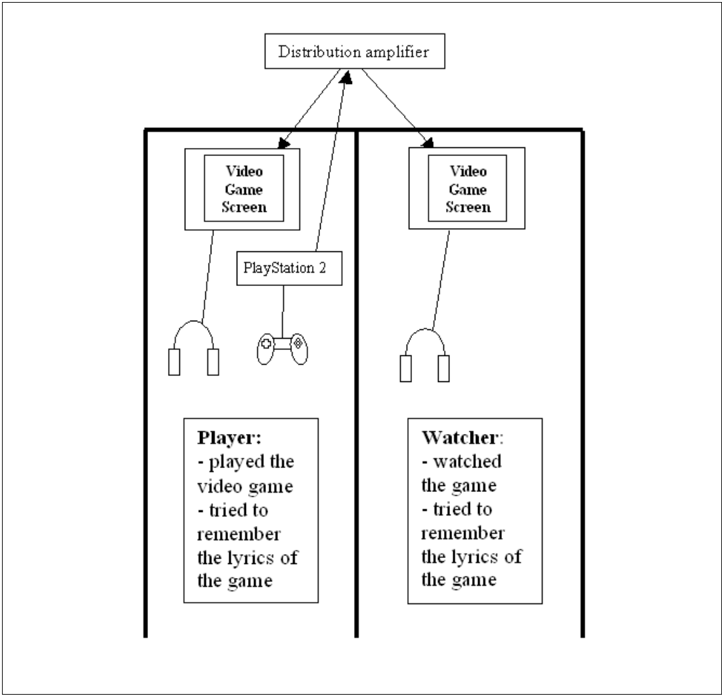
Video games are potential sources of second language input; however, the medium's fundamental characteristic, interactivity, has not been thoroughly examined in terms of its effect on learning outcomes.This experimental study investigated to what degree, if at all, video game interactivity would help or hinder the noticing and recall of second language vocabulary.Eighty randomly-selected Japanese university undergraduates were paired based on similar English language and game proficiencies.One subject played an Englishlanguage music video game for 20 minutes while the paired subject watched the game simultaneously on another monitor.Following gameplay, a vocabulary recall test, a cognitive load measure, an experience questionnaire, and a two-week delayed vocabulary recall test were administered.Results were analyzed using paired samples t-tests and various analyses of variance.Both the players and the watchers of the video game recalled vocabulary from the game, but the players recalled significantly less vocabulary than the watchers.This seems to be a result of the extraneous cognitive load induced by the interactivity of the game; the players perceived the game and its language to be significantly more difficult than the watchers did.Players also reported difficulty simultaneously attending to gameplay and vocabulary.Both players and watchers forgot significant amounts of vocabulary over the course of the study.We relate these findings to theories and studies of vocabulary acquisition and video game-based language learning, and then suggest implications for language teaching and learning with interactive multimedia.
Overview
The claims and statistics of this paper haven’t been checked yet.
Free: it reads the open-access text and checks the first 5 claims that cite a source we can check. Create a free account to check every claim.
Integrity signals
Registry
Cites
Statistics
Figures
Verification
Claims the paper makes
The claims and statistics of this paper haven’t been checked yet.
Free: it reads the open-access text and checks the first 5 claims that cite a source we can check. Create a free account to check every claim.
Claims other papers make about this one
Each is checked against this paper’s own text: does it say what the citing paper says it does?
The cited source says what the claim attributes to it.
In the citing paper
“In other words, although deHaan et al. (2010) instructed the Players to memorize the lyrics, it did not occupy a significant role in succeeding in game-play.”
From Readers, Players, and Watchers: EFL Students’ Vocabulary Acquisition through Digital Video Games (2017) · cites this paper as deHaan et al. (2010)
The cited source says what the claim attributes to it.
In the citing paper
“the most influential outlier (deHaan et al., 2010) had a very large negative effect ( d = -2.43).”
From Second language (L2) gains through digital game-based language learning (DGBLL): A meta-analysis (2022) · cites this paper as deHaan et al., 2010
The cited source says what the claim attributes to it.
In the citing paper
“It is also worth noting that deHaan et al. (2010) appears to be an outlier (see Figure 1).”
From Second language (L2) gains through digital game-based language learning (DGBLL): A meta-analysis (2022) · cites this paper as deHaan et al. (2010)
Self-check
Percentages, sums and reported differences re-computed from the paper’s own numbers.
The self-check needs the paper’s full text.
Citations
Cites
Faul, F., Erdfelder, E., Lang, A.-G., & Buchner, A. (2007) · Behavior Research Methods · doi:10.3758/bf03193146 · Cited by 65,971
The magical number seven, plus or minus two: Some limits on our capacity for processing information.
Miller, G. A. (1994) · Psychological Review · doi:10.1037/0033-295x.101.2.343 · Cited by 17,161
Mayer, R. E. (2009) · doi:10.1017/cbo9780511811678 · Cited by 7,800
Mayer, R. (2020) · doi:10.1017/9781316941355 · Cited by 7,777
What Video Games Have to Teach Us about Learning and Literacy
(2004) · Education + Training · doi:10.1108/et.2004.00446dae.002 · Cited by 6,674
Defining virtual reality: Dimensions determining telepresence
Steuer, J. (1992) · Journal of Communication · doi:10.1111/j.1460-2466.1992.tb00812.x · Cited by 5,459
Baddeley, A. (1992) · Science · doi:10.1126/science.1736359 · Cited by 5,258
Cognitive load theory, learning difficulty, and instructional design
Sweller, J. (1994) · Learning and Instruction · doi:10.1016/0959-4752(94)90003-5 · Cited by 3,801 · cited 2×
“, a fast food restaurant), since more complete schema can contribute to lower cognitive load (Douglas & Hargadon, 2001; Sweller, 1994).”
BackgroundCognitive Load Theory and Instructional Design: Recent Developments
Paas, F., Renkl, A., & Sweller, J. (2003) · Educational Psychologist · doi:10.1207/s15326985ep3801_1 · Cited by 3,041 · cited 3×
“Language Learning & Technology http://llt.msu.edu/vol14num2/dehaanreedkuwada.pdf June 2010, Volume 14, Number 2 pp. 74–94 Copyright © 2010, ISSN 1094-3501 74 THE EFFECT OF INTERACTIVITY WITH A MUSIC VIDEO GAME ON SECOND LANGUAGE VOCABULARY RECALL”
Background(2020) · Encyclopedia of Education and Information Technologies · doi:10.1007/978-3-030-10576-1_300187 · Cited by 2,893
Research works printed but not linked: 6
- deHaan, J. (2005a). Learning language through video games: A theoretical framework, an analysis of game genres and questions for future research. In S. Schaffer & M. Price (Eds.), Interactive Convergence: Critical Issues in Multimedia (vol. 10), Chapter 14, pp. 229-239. Retrieved from http://www.inter- disciplinary.net/publishing/idp/eBooks/icindex.htm
- Engelkamp, J. (2001). Action memory: A system-oriented approach. In H. D. Zimmer, R. Cohen, M. Guynn, J. Engelkamp, R. Kormi-Nouri, & M. N. Foley (Eds.), Memory for action: A distinct form of episodic memory? (pp. 49-96). New York: Oxford University Press.
- Knight, S. (1994). Dictionary: The tool of last resort in foreign language reading? A new perspective. Modern Language Journal, 78(3), 285-299.
- Schmidt, R. W. (2001). Attention. In P. Robinson (Ed.), Cognition and second language instruction
- Squire, K. D. (2006). From content to context: Video games as designed experiences Educational Researcher, 35(8), 19-29.
- Um, E. J., & deHaan, J. (2005). Video games and cognitive apprenticeship-based learning. Proceedings of the Association for Educational Communications and Technology, USA, 28, 499-505.
Cited by
Foundations of Game-Based Learning
Plass, J. L., Homer, B. D., & Kinzer, C. K. (2015) · Educational Psychologist · doi:10.1080/00461520.2015.1122533 · Cited by 1,697
“An indication for the cause of the lower learning outcome of players was that they reported perceiving the game as more difficult than the observers (deHaan, Reed, & Kuwada, 2010).”
BackgroundTechnologies for foreign language learning: a review of technology types and their effectiveness
Golonka, E. M., Bowles, A. R., Frank, V. M., Richardson, D. L., & Freynik, S. (2014) · Computer Assisted Language Learning · doi:10.1080/09588221.2012.700315 · Cited by 1,144
Boyle, E. A., Hainey, T., Connolly, T. M., Gray, G., Earp, J., Ott, M., Lim, T., Ninaus, M., Ribeiro, C., & Pereira, J. (2016) · Computers & Education · doi:10.1016/j.compedu.2015.11.003 · Cited by 1,133
Our Princess Is in Another Castle: A Review of Trends in Serious Gaming for Education
Young, M. F., Slota, S., Cutter, A. B., Jalette, G., Mullin, G., Lai, B., Simeoni, Z., Tran, M., & Yukhymenko, M. (2012) · Review of Educational Research · doi:10.3102/0034654312436980 · Cited by 736
“Further exploration by DeHaan and Kono (2010) established additional evidence of this effect: University undergraduate observers were taught very effectively by the video game, learning more than twice as much vocabulary as the players themselves (DeHaan, Reed, & Kuwada, 2010).”
BackgroundZhang, R., & Zou, D. (2022) · Computer Assisted Language Learning · doi:10.1080/09588221.2020.1744666 · Cited by 345
“…were not mature enough five years ago, and they were not well integrated in language learning to assist students to enter flow states (e.g. in deHaan, Reed, & Kuwada ’ s (2010) research); however, they have been largely improved in recent years and can be well embedded in learning systems to…”
BackgroundGaming as extramural English L2 learning and L2 proficiency among young learners
Sylvén, L. K., & Sundqvist, P. (2012) · ReCALL · doi:10.1017/s095834401200016x · Cited by 468
“Reinders and Wattana (2010) highlight the need to identify individual differences among learners, where, for instance, cognitive levels may be decisive (cf. deHaan et al. , 2010).”
BackgroundA scoping review of research on digital game-based language learning
Hung, H.-T., Yang, J. C., Hwang, G.-J., Chu, H.-C., & Wang, C.-C. (2018) · Computers & Education · doi:10.1016/j.compedu.2018.07.001 · Cited by 319
Cornillie, F., Thorne, S. L., & Desmet, P. (2012) · ReCALL · doi:10.1017/s0958344012000134 · Cited by 259
“…that adopted an experimental paradigm, using between-or within-subjects designs for comparing treatments (with or without random assignment, e.g., deHaan, Reed, & Kuwada, 2010; Zheng, Young, Brewer & Wagner, 2009), and non-experimental studies, which observed only one group or individual (e.g.,…”
MethodOut-of-school digital gameplay and in-school L2 English vocabulary outcomes
Sundqvist, P., & Wikström, P. (2015) · System · doi:10.1016/j.system.2015.04.001 · Cited by 256
Language-related computer use: Focus on young L2 English learners in Sweden
Sundqvist, P., & Sylvén, L. K. (2014) · ReCALL · doi:10.1017/s0958344013000232 · Cited by 205
Affect and willingness to communicate in digital game-based learning
Reinders, H., & Wattana, S. (2015) · ReCALL · doi:10.1017/s0958344014000226 · Cited by 238
“…for their effects on language learning and recent studies have shown that different types of games can bene fi t successful vocabulary acquisition (deHaan, Reed & Kuwada, 2010; Milton, Jonsen, Hirst & Lindenburn, 2012; Ranalli, 2008); can help improve university students ’ reading skills and…”
BackgroundChatbot-assisted dynamic assessment (CA-DA) for L2 vocabulary learning and diagnosis
Jeon, J. (2023) · Computer Assisted Language Learning · doi:10.1080/09588221.2021.1987272 · Cited by 202
“…words and facilitated more vocabulary acquisition by preventing cognitive overload, which is consistent with previous studies that demonstrated the positive effect of controlling cognitive overload on vocabulary learning (deHaan, Michael Reed, & Kuwada, 2010; Ramezanali & Faez, 2019; Teng, 2020).”
ResultDigital Language Learning (DLL): Insights from Behavior, Cognition, and the Brain
Li, P., & Lan, Y. (2021) · Bilingualism Language and Cognition · doi:10.1017/s1366728921000353 · Cited by 249
“However, the evidence so far is mixed regarding GBLL ’ s effectiveness as compared with traditional methods of language learning (e.g., deHaan, Michael Reed & Kuwada, 2010; Sundqvist & Wikström, 2015).”
BackgroundEntertainment Video Games for Academic Learning: A Systematic Review
Martinez, L., Gimenes, M., & Lambert, E. G. (2022) · Journal of Educational Computing Research · doi:10.1177/07356331211053848 · Cited by 221
“With Warcraft, Ebrahimzadeh and Alavi (2016) and Ebrahimzadeh (2017) found no differences between players and watchers on vocabulary acquisition, but deHaan et al. (2010) found that Japanese students who played a rhythm game were outperformed by those who only watched the game.”
BackgroundDigital Gaming and Language Learning: Autonomy and Community
Chik, A. (2014) · Language Learning & Technology · doi:10.64152/10125/44371 · Cited by 180
“Gee (2012) argues that “games associate words with images, actions, goals and dialogue, not just with definitions or other words” (p.”
BackgroundMontero Perez, M. (2022) · Language Teaching · doi:10.1017/s0261444821000501 · Cited by 105
The impact of adventure video games on foreign language learning and the perceptions of learners
Chen, H.-J. H., & Yang, T.-Y. C. (2013) · Interactive Learning Environments · doi:10.1080/10494820.2012.705851 · Cited by 128
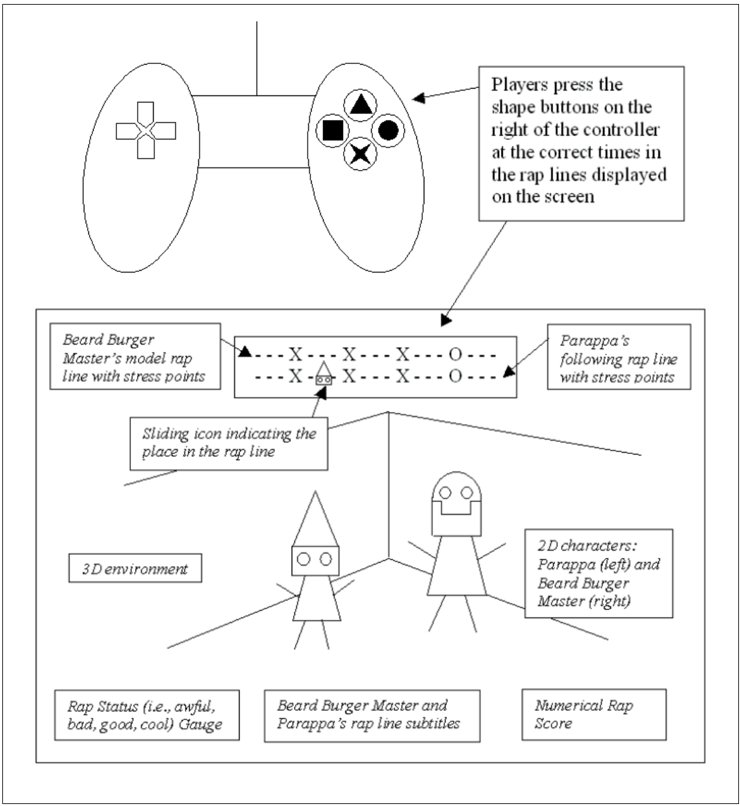
“…game on second language vocabulary learning and found that participants made statistically significant improvements in their vocabulary knowledge. deHaan, Reed, and Kuwada (2010) conducted a study on the interactivity of a PlayStation 2 music game to investigate to what degree video game…”
BackgroundResultInfluentialTsai, Y.-L., & Tsai, C.-C. (2018) · Computers & Education · doi:10.1016/j.compedu.2018.06.020 · Cited by 164
A Scoping Review of Digital Game-Based Technology on English Language Learning
Xu, Z., Chen, Z., Eutsler, L., Geng, Z., & Kogut, A. (2020) · Educational Technology Research and Development · doi:10.1007/s11423-019-09702-2 · Cited by 162
Commercial-off-the-shelf games in the digital wild and L2 learner vocabulary
Sundqvist, P. (2019) · Language Learning & Technology · doi:10.64152/10125/44674 · Cited by 154
“While both groups recalled vocabulary from the game, the players recalled significantly less vocabulary than did the watchers, most likely due to “the extraneous cognitive load induced by the interactivity of the game” (deHaan et al., 2010, p. 74).”
BackgroundLin, C.-J., Hwang, G., Fu, Q.-K., & Cao, Y.-H. (2020) · Computers & Education · doi:10.1016/j.compedu.2020.103876 · Cited by 144
Aghlara, L., & Tamjid, N. H. (2011) · Procedia - Social and Behavioral Sciences · doi:10.1016/j.sbspro.2011.11.275 · Cited by 122
Li, R. (2021) · SAGE Open · doi:10.1177/21582440211003092 · Cited by 147
“On the contrary, other researchers (e.g., deHaan et al., 2010; Jalali & Dousti, 2012) investigated the effects of game-based vocabulary learning approach in empirical studies, but obtained limited effects of such approach on learning outcomes.”
ResultPlay games or study? Computer games in eBooks to learn English vocabulary
Smith, G., Li, M., Drobisz, J., Park, H.-R., Kim, D., & Smith, S. D. (2013) · Computers & Education · doi:10.1016/j.compedu.2013.07.015 · Cited by 138
The Effects of Using Games on English Vocabulary Learning
Derakhshan, A., & Khatir, E. D. (2015) · Cited by 119
Serious Gaming for Behaviour Change: A Systematic Review
Hammady, R., & Arnab, S. (2022) · Information · doi:10.3390/info13030142 · Cited by 132
“…With regards to followed by cognitive cognitive evaluation theory, as depicted in We presented the general findings based on the frequency of game elements and behavioural change theories adopted in behaviour change studies, followed by an overview of fun, motivational theory, and Figure 10.”
BackgroundCornillie, F., Clarebout, G., & Desmet, P. (2012) · ReCALL · doi:10.1017/s0958344012000146 · Cited by 58
“With the exception of a handful of recent studies that modified constituents of game-based learning environments (e.g., deHaan, Reed, & Kuwada, 2010; Ranalli, 2008), the need for careful attention to implementation still exists today.”
BackgroundSerious Games and Their Effect Improving Attention in Students with Learning Disabilities
García-Redondo, P., García, T., Areces, D., Núñez, J. C., & Rodríguez, C. (2019) · International Journal of Environmental Research and Public Health · doi:10.3390/ijerph16142480 · Cited by 112
“Contextually” speaking: A survey of pragmatic learning abroad, in class, and online
Taguchi, N. (2014) · System · doi:10.1016/j.system.2014.09.001 · Cited by 130
The Impact of a Serious Game on Vocabulary and Content Learning
Chen, H.-J. H., & Hsu, H.-L. (2020) · Computer Assisted Language Learning · doi:10.1080/09588221.2019.1593197 · Cited by 109
Digital games and language teaching and learning
Sykes, J. M. (2018) · Foreign Language Annals · doi:10.1111/flan.12325 · Cited by 81
Differences in serious game-aided and traditional English vocabulary acquisition
Zhonggen, Y. (2018) · Computers & Education · doi:10.1016/j.compedu.2018.07.014 · Cited by 83
Vocabulary learning in massively multiplayer online games: context and action before words
Zheng, D., Bischoff, M., & Gilliland, B. (2015) · Educational Technology Research and Development · doi:10.1007/s11423-015-9387-4 · Cited by 100
“…work by deHaan (2005) and deHaan et al. (2010) examined specific constructs such as vocabulary learning through video games, but these studies isolated learners from a natural gameplay environment. deHaan et al. (2010) found that video game players retained less vocabulary than did watchers.”
BackgroundResultIkumi Hitosugi, C., Schmidt, M., & Hayashi, K. (2014) · CALICO Journal · doi:10.11139/cj.31.1.19-39 · Cited by 97
“26 For students who did better with textbook words, the rich media content in the videogame may have caused cognitive overload, thus hindering their processing of the newly introduced words (Clark, Nguyen, & Sweller, 2011; deHaan et al., 2010).”
BackgroundAn Analysis of Game Design Elements Used in Digital Game-Based Language Learning
Govender, T., & Arnedo-Moreno, J. (2021) · Sustainability · doi:10.3390/su13126679 · Cited by 105
“PaRappa the Rapper 2 [30] Second Life [7,31,34,49,55,56,60,80] Ragnarok Online [20,88] My Word Coach [54] Sistema Hipermedia Adaptativo para la ensenanza de idiomas en entorno Linex [33] World of Warcraft [12,36,38,44,92] Mingoville [57] Talking Island [116,117] Family and Friends [35,131] Divine…”
BackgroundUsing Game-Based Learning with Kinect Technology in Foreign Language Education Course
Yükseltürk, E., Altıok, S., & Başer, Z. (2018) · Educational Technology & Society · doi:10.5072/zenodo.41162 · Cited by 82
(2011) · DOAJ (DOAJ: Directory of Open Access Journals) · Cited by 79
Game-Enhanced Second Language Vocabulary Acquisition Strategies: A Systematic Review
Yudintseva, A. (2015) · Open Journal of Social Sciences · doi:10.4236/jss.2015.310015 · Cited by 62
“Due to a high interactivity of video games, note taking [43] and media [49] strategies did not provide enough support for vocabulary learning.”
BackgroundLearning Outcomes, Motivation, and Satisfaction in Gamified English Vocabulary Learning
Yu, Z. (2023) · SAGE Open · doi:10.1177/21582440231158332 · Cited by 88
“Observers of gamified learning outperformed players in a computer science class in terms of vocabulary learning (Dehaan et al., 2010).”
BackgroundExploiting adventure video games for second language vocabulary recall: a mixed-methods study
Janebi Enayat, M., & Haghighatpasand, M. (2019) · Innovation in Language Learning and Teaching · doi:10.1080/17501229.2017.1359276 · Cited by 51
“As deHaan, Reed, and Kuwada (2010, 87) believe, ‘ conducting mixed methods research with a variety of game genres seems to be a logical next step for digital game-based language research due to the early nature of the field ’ .”
BackgroundResultInfluentialExtramural English and academic vocabulary
Olsson, E., & Sylvén, L. K. (2015) · Apples - Journal of Applied Language Studies · doi:10.17011/apples/urn.201512234129 · Cited by 82
Yi, M., & Chen, M. (2025) · Frontiers in Psychology · doi:10.3389/fpsyg.2025.1568239 · Cited by 79
World of VocCraft: Computer Games and Swedish Learners’ L2 English Vocabulary
Sundqvist, P., & Sylvén, L. K. (2012) · Palgrave Macmillan UK eBooks · doi:10.1057/9781137005267_10 · Cited by 111
Measuring Interactivity in Video Games
Weber, R., Behr, K.-M., & DeMartino, C. H. (2014) · Communication Methods and Measures · doi:10.1080/19312458.2013.873778 · Cited by 72
Japanese Students’ Perceptions of Digital Game Use for English-Language Learning in Higher Education
Bolliger, D. U., Mills, D. J., White, J. S., & Kohyama, M. (2015) · Journal of Educational Computing Research · doi:10.1177/0735633115600806 · Cited by 71
“Video games centering on music, adventure, and interactive fiction continue to be used to enhance English-language learning using mobile and fixed platforms (Chen &Yang, 2011; deHaan, Reed, & Kuwada, 2010; Ranalli, 2008).”
BackgroundDigital gaming and second language development: Japanese learners interactions in a MMORPG
Peterson, M. (2011) · DOAJ (DOAJ: Directory of Open Access Journals) · Cited by 92
Exploring the potential of digital game-based vocabulary learning: a systematic review
Vnucko, G., & Klimova, B. (2023) · Systems · doi:10.3390/systems11020057 · Cited by 59
“This is in concordance with Jonathan et al. (2010)’s [39] study, which suggested that games put an additional cognitive load on their players, who may forget many newly acquired vocabulary items.”
ResultYork, J., & deHaan, J. W. (2018) · International Journal of Game-Based Learning · doi:10.4018/ijgbl.2018010102 · Cited by 51
Self-citationThe Effect of Video Games on Iranian EFL Learners' Vocabulary Learning
Vahdat, S., & Rasti-Behbahani, A. (2013) · The reading matrix · Cited by 57
Efficacy of Computer Games on Language Learning.
Klímová, B., & Kacet, J. (2017) · The Turkish Online Journal of Educational Technology · Cited by 57
Second language (L2) gains through digital game-based language learning (DGBLL): A meta-analysis
Dixon, D. H., Dixon, T., & Jordan, E. (2022) · Language Learning & Technology · doi:10.64152/10125/73464 · Cited by 88
“To this point, deHaan et al. (2010) noted that “interactivity hindered the language acquisition process” and that “English was not crucial for gameplay [which] may have contributed to the results” (p. 85).”
InfluentialThe Use of Computer-Based Simulation to Aid Comprehension and Incidental Vocabulary Learning
Ali Mohsen, M. (2016) · Journal of Educational Computing Research · doi:10.1177/0735633116639954 · Cited by 56
“Following deHaan et al. (2010), the watchers watched the clip from beginning to end (i.e., 9 minutes length), neither showing any signs of interaction nor viewing the attempts of their peers to solve the problems at hand.”
BackgroundResultInfluentialTeaching language and literacy with games: What? How? Why?
deHaan, J. W. (2019) · Ludic Language Pedagogy · doi:10.55853/llp_v1art1 · Cited by 71
Self-citationDigital simulation games in CALL: a research review
Peterson, M. (2023) · Computer Assisted Language Learning · doi:10.1080/09588221.2021.1954954 · Cited by 37
“Researchers further report that certain types of digital game may be inappropriate for many language learners due to the risk of cognitive overload (deHaan, Reed, & Kuwada, 2010).”
BackgroundSchwartz, R. N., & Plass, J. L. (2014) · Computers in Human Behavior · doi:10.1016/j.chb.2014.01.012 · Cited by 57
Digital Games and Second Language Learning
Reinders, H. (2017) · Springer eBooks · doi:10.1007/978-3-319-02237-6_26 · Cited by 63
Using a 3D Online Game to Assess Students’ Foreign Language Acquisition and Communicative Competence
Berns, A., Palomo‐Duarte, M., Dodero, J. M., & Franco, C. V. (2013) · Lecture notes in computer science · doi:10.1007/978-3-642-40814-4_3 · Cited by 55
“In addition to this, literature review has shown that computer games are often employed to address very specific aspects such as vocabulary and grammar training ([8,9,5]).”
BackgroundReaders, Players, and Watchers: EFL Students’ Vocabulary Acquisition through Digital Video Games
Ebrahimzadeh, M. (2017) · English Language Teaching · doi:10.5539/elt.v10n2p1 · Cited by 45
“This finding appear to contradict that of deHaan et al. (2010) who found the Watchers to show better performance.”
BackgroundMethodResultInfluentialDigital Gaming in L2 Teaching and Learning
Reinhardt, J. (2017) · The Handbook of Technology and Second Language Teaching and Learning · doi:10.1002/9781118914069.ch14 · Cited by 44
“A review of research on the application of digital games in foreign language education,”
Peterson, M., White, J., Mirzaei, M. S., & Wang, Q. (2020) · Advances in Educational Technologies and Instructional Design · doi:10.4018/978-1-7998-2591-3.ch004 · Cited by 44
Reinhardt, J. S., & Sykes, J. (2014) · Language learning & technology · doi:10.64152/10125/44362 · Cited by 47
Li, K., Peterson, M., & Wang, Q. (2022) · Computer Assisted Language Learning · doi:10.1080/09588221.2022.2067181 · Cited by 47
“Moreover, the GBLL literature has long stressed that it is crucial to balance gaming and learning as it was found that gamers may prioritize gaming over learning and learning may be only a by-product of gaming (Chik, 2014; DeHaan et al., 2010).”
English language education on-line game and brain connectivity
Hong, J. S., Han, D. H., Kim, Y. I., Bae, S., Kim, S. M., & Renshaw, P. F. (2016) · ReCALL · doi:10.1017/s0958344016000173 · Cited by 44
Teaching and learning English through digital game projects
deHaan, J. W. (2011) · DOAJ (DOAJ: Directory of Open Access Journals) · Cited by 50
Self-citationBlin, F. (2016) · Language studies, science and engineering · doi:10.1075/lsse.2.03bli · Cited by 39
Learning English Idioms With a Web-Based Educational Game
Müller, A., Son, J., Nozawa, K., & Dashtestani, R. (2017) · Journal of Educational Computing Research · doi:10.1177/0735633117729292 · Cited by 38
“Games played in groups can benefit the watchers of the player as much as, or even more than, the players themselves (deHaan, Reed, & Kuwada, 2010).”
BackgroundInvestigating the effectiveness of a digital game-based task on the acquisition of word knowledge
Rasti-Behbahani, A., & Shahbazi, M. (2022) · Computer Assisted Language Learning · doi:10.1080/09588221.2020.1846567 · Cited by 37
“Participants were given the walkthrough to prevent the negative effects of extensive interactivity, which can result in negative cognitive load and probably lead to difficulty in recalling vocabulary items (deHaan et al., 2010).”
BackgroundDoulou, A., Pergantis, P., Drigas, A. S., & Skianis, C. (2025) · Multimodal Technologies and Interaction · doi:10.3390/mti9010008 · Cited by 49
Supporting Foreign Language Vocabulary Learning Through Kinect-Based Gaming
Ürün, M. F., Aksoy, H., & Comez, R. (2016) · International Journal of Game-Based Learning · doi:10.4018/ijgbl.2017010102 · Cited by 35
Exploring the effects of using various designs of game-based materials on music learning
Wang, Y. (2021) · Interactive Learning Environments · doi:10.1080/10494820.2021.1894182 · Cited by 33
“For example, deHaan et al. (2010) found that learners with interactive video game experience had higher extraneous cognitive load than did those who learned with a non-interactive video, and the learners with the game recalled less learning content than did those who watched the video.”
BackgroundAI-Powered Gamified Scaffolding: Transforming Learning in Virtual Learning Environment
Jiang, X., Wang, R., Hoang, T. N., Ranaweera, C., Dong, C., & Myers, T. (2025) · Electronics · doi:10.3390/electronics14132732 · Cited by 38
Thomas, M. (2012) · Palgrave Macmillan UK eBooks · doi:10.1057/9781137005267_2 · Cited by 52
Why Digital Games Can Be Advantageous in Vocabulary Learning
Rasti-Behbahani, A. (2021) · Theory and Practice in Language Studies · doi:10.17507/tpls.1102.01 · Cited by 29
““Interactivity, the extent to which users can participate in modifying the form and content of a mediated environment in real time, is a defining characteristic of video games […] while television is something you watch, a video game is something you do” ( deHaan, Reed, & Kuwada, 2010, p. 75).”
BackgroundComputer Game-Based Foreign Language Learning: Its Benefits and Limitations
Klímová, B., & Kacetl, J. (2018) · Communications in computer and information science · doi:10.1007/978-981-13-0008-0_3 · Cited by 35
Learning and Teaching Pragmatics in the Globalized World: Introduction to the Special Issue
Taguchi, N. (2021) · Modern Language Journal · doi:10.1111/modl.12716 · Cited by 33
Muñoz–Basols, J., Gutiérrez, M. F., & Cerezo, L. (2023) · Routledge eBooks · doi:10.4324/9781003146391 · Cited by 38
Yudintseva, A. (2024) · Computers & Education X Reality · doi:10.1016/j.cexr.2024.100076 · Cited by 38
Cooperative Game-based Learning in the English as a Foreign Language Classroom
Bado, N., & Franklin, T. J. (2014) · Issues and Trends in Educational Technology · doi:10.2458/azu_itet_v2i2_bado · Cited by 33
“The finding concerning the contribution of Trace Effects to improving vocabulary knowledge is consistent with findings of previous studies (deHaan et al., 2010; Ranalli, 2008).”
ResultDigital Gaming in the Language Classroom: Student Language Performance, Engagement, and Perception
Li, K., Peterson, M., & Wan, J. (2022) · International Journal of Computer-Assisted Language Learning and Teaching · doi:10.4018/ijcallt.291110 · Cited by 31
Gaming enhances learning-induced plastic changes in the brain
Junttila, K., Smolander, A.-R. M., Karhila, R., Giannakopoulou, A., Uther, M., Kurimo, M., & Ylinen, S. (2022) · Brain and Language · doi:10.1016/j.bandl.2022.105124 · Cited by 28
Similarities between Playing World of Warcraft and CLIL
Sylvén, L. K., & Sundqvist, P. (2012) · Jyväskylä University Digital Archive (University of Jyväskylä) · Cited by 34
Mapping the research trends of digital game-based language learning (DGBLL): a scientometrics review
Li, K., Peterson, M., Wang, Q., & Wang, H. (2024) · Computer Assisted Language Learning · doi:10.1080/09588221.2023.2299436 · Cited by 31
Mapping the landscape of computer-assisted language learning: an inventory of research
Parmaxi, A., Zaphiris, P., Papadima-Sophocleous, S., & Ioannou, A. (2013) · Interactive Technology and Smart Education · doi:10.1108/itse-02-2013-0004 · Cited by 30
Tzuo, P.-W. (2012) · Educational Research and Reviews · doi:10.5897/err11.072 · Cited by 28
Challenges and Innovations in Teaching The Arabic Grammar to Non-Native Speakers
Salim, M. S. (2024) · Integrated Journal for Research in Arts and Humanities · doi:10.55544/ijrah.4.5.21 · Cited by 24
“A study by DeHaan et al. (2010) demonstrated that using interactive electronic games helped students improve their grammar skills by providing a pressure-free learning environment.”
BackgroundCan Adults Learn Vocabulary through Watching Subtitled Movies? An Experimental Corpus-Based Approach
Alharthi, T. (2020) · International Journal of English Language and Literature Studies · doi:10.18488/journal.23.2020.93.219.230 · Cited by 30
Troiano, G. M., Schouten, D. G. M., Cassidy, M. F., Tucker‐Raymond, E., Puttick, G. M., & Harteveld, C. (2020) · Annual Symposium on Computer-Human Interaction in Play · doi:10.1145/3410404.3414256 · Cited by 26
“…properly contextualized, may deceive players and confuse them about the educational message on climate change, because “climate change is not something we should celebrate” ; their reflection corroborate previous work arguing that game design that is not well-balanced “will hinder learning” [27].”
ResultL2 Languaging in a Massively Multiplayer Online Game: An Exploration of Learner Variations
Zhao, J. (2016) · International Journal of Computer-Assisted Language Learning and Teaching · doi:10.4018/ijcallt.2016100101 · Cited by 26
Vocabulary Treatment in Adventure and Role-Playing Games: A Playground for Adaptation and Adaptivity
Cornillie, F., Jacques, I., Wannemacker, S. D., Paulussen, H., & Desmet, P. (2011) · Communications in computer and information science · doi:10.1007/978-3-642-20074-8_11 · Cited by 31
“Finally, one study demonstrated that video games may increase extraneous cognitive load, and as such impede vocabulary acquisition [20].”
BackgroundImplementing Play-Based Language Learning with Children
Cheep-Aranai, R., Reinders, H., & Wasanasomsithi, P. (2015) · Palgrave Macmillan UK eBooks · doi:10.1057/9781137449757.0013 · Cited by 28
The Impact of Ecological Factors on Game‐Based L2 Practice and Learning
Ibrahim, K. H. S. (2017) · Foreign Language Annals · doi:10.1111/flan.12278 · Cited by 26
The Interplay of Game Design and Pedagogical Mediation in Game-Mediated Japanese Learning
Shintaku, K. (2016) · International Journal of Computer-Assisted Language Learning and Teaching · doi:10.4018/ijcallt.2016100103 · Cited by 28
Tan, P. Q., & Tan, K. H. (2020) · International Journal of Emerging Technologies in Learning (iJET) · doi:10.3991/ijet.v15i04.11647 · Cited by 25
“However, the high level of cognitive load induced by the interactivity of the game can hinder one’s recall of vocabulary [11].”
BackgroundA Review of Trends in Digital Game-Based Language Learning Research
Hung, H., Chang, J.-L., & Yeh, H. (2016) · IEEE International Conference on Advanced Learning Technologies (ICALT) · doi:10.1109/icalt.2016.9 · Cited by 25
The effects of a game-enhanced learning intervention on foreign language learning
Aydın, S. M., & Çakır, N. A. (2022) · Educational Technology Research and Development · doi:10.1007/s11423-022-10141-9 · Cited by 21
“However, there are also studies reporting that games do not consistently deliver the intended gains in language learning (Dalton & Devitt, 2016; deHaan et al., 2010; Vandercruysse et al., 2013).”
BackgroundA Serious Game for Improving Inferencing in the Presence of Foreign Language Unknown Words
Gabriel, P., Hirashima, T., & Hayashi, Y. (2018) · International Journal of Advanced Computer Science and Applications · doi:10.14569/ijacsa.2018.090202 · Cited by 21
“On the limitation of using commercial games, [37] conducted a research comparing vocabulary recall in players and watchers of a music game.”
BackgroundDixon, D. H. (2021) · CALICO journal · doi:10.1558/cj.20860 · Cited by 12
CALL in the Form of Simulation Games: Teaching English Vocabulary and Pronunciation through Sims
Meihami, H., Meihami, B., & Varmaghani, Z. (2013) · International Letters of Social and Humanistic Sciences · doi:10.18052/www.scipress.com/ilshs.8.57 · Cited by 18
Blume, C. (2019) · CALICO Journal · doi:10.1558/cj.35099 · Cited by 26
Alghamdi, E. A. (2016) · International Journal of Computer-Assisted Language Learning and Teaching · doi:10.4018/ijcallt.2016010102 · Cited by 18
Metadata
- Authors
- deHaan, J., Reed, W. M., & Kuwanda, K.
- Affiliations
- University of Shizuoka (JP)
- ORCID
- deHaan, Jonathan
- Venue
- Language Learning & Technology
- Published
- 2010-06-01
- Volume
- 14
- Issue
- 2
- Pages
- 74-94
- ISSN
- 1094-3501 (ISSN-L)
- OpenAlex
- W2122519738
- Cited by
- 266
- References
- 62
- Citations by year
- 2026: 10 · 2025: 12 · 2024: 39 · 2023: 11 · 2022: 18 · 2021: 28 · 2020: 16 · 2019: 16 · 2018: 19 · 2017: 12 · 2016: 15 · 2015: 17 · 2014: 16 · 2013: 14 · 2012: 17
- FWCI
- 22.72
- Type
- journal article
- Language
- en
- Open access
- diamond
- doi.org
- Licence
- Locations
- Language learning & technology (publishedVersion, cc-by-nc-nd)
- DOAJ (DOAJ: Directory of Open Access Journals) (submittedVersion, cc-by-sa)
- ScholarSpace (University of Hawaii at Manoa) (submittedVersion)
- Topics
- Social Sciences › Psychology › Developmental and Educational Psychology › Second Language Acquisition and Learning
- Social Sciences › Psychology › Developmental and Educational Psychology › Educational Games and Gamification
- Social Sciences › Arts and Humanities › Language and Linguistics › Subtitles and Audiovisual Media
- Keywords
- music video games, vocabulary acquisition, extraneous cognitive load, noticing, Japanese learners of English, interactive multimedia, delayed recall
About these checks
Registry, retraction, Cites and statistics results are computed, not judged, with one exception: a printed reference that no index lists is read once by a model before it counts as a citation error. Claims are extracted by a model and kept only when their quote appears verbatim in the text; each cited source is then checked, with a model’s help, for whether it says what the claim relies on. Those verdicts can be wrong — read the claim’s quote and the cited source before relying on one.
Statistics and arithmetic are recomputed, not judged.
Confidence bands are shown only for fields calibrated on our annotated test set. None is calibrated yet, so no band is shown.
What counts as a claim ›How we measure confidence ›How we check this ›
Are you an author, or do you see a problem with this page? Request a review
Data sources
Bibliographic data: Semantic Scholar, OpenAlex, Crossref.
Contains information from the Semantic Scholar Academic Graph Datasets, made available under the ODC Attribution License (ODC-BY 1.0).
Semantic Scholar’s data is described in: Kinney, R., et al. (2023). The Semantic Scholar Open Data Platform. arXiv:2301.10140.
