

The DOI matches its Crossref record; 60 of the 60 references it cites were found in a registry or an index.
Mechanism of ubiquitin ligation and lysine prioritization by a HECT E3
Open accessAbstract
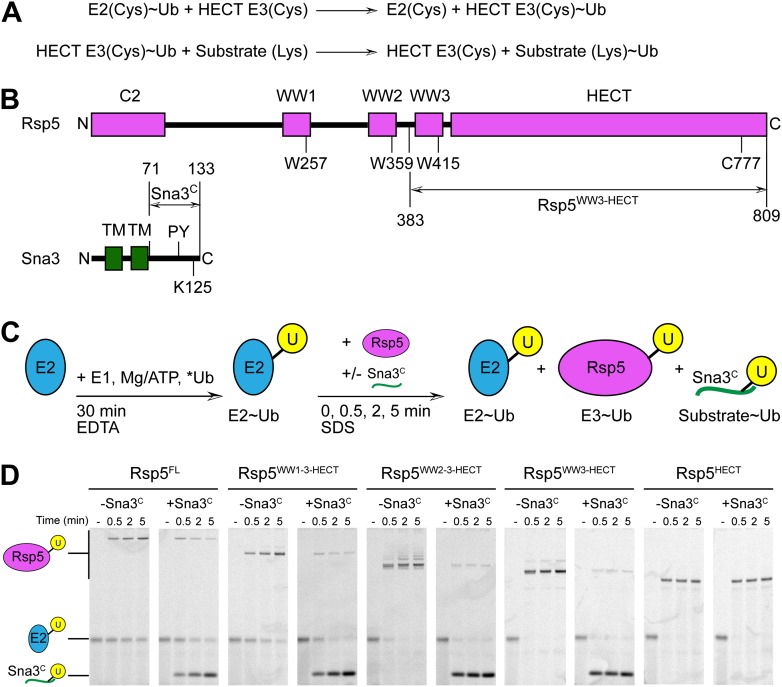
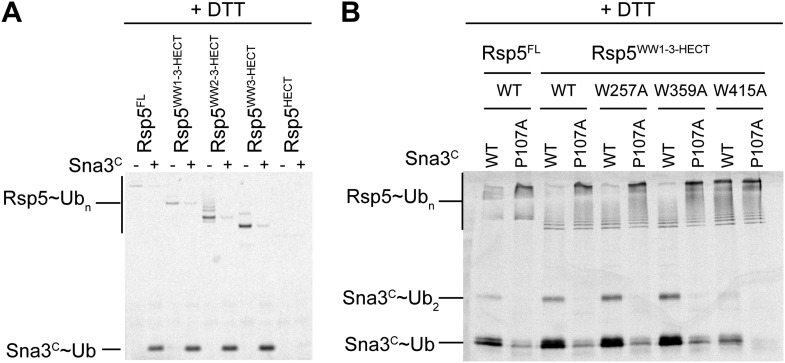
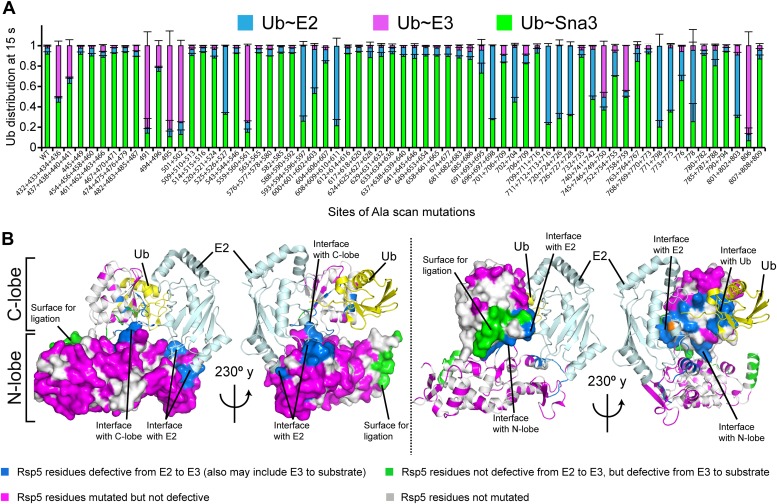
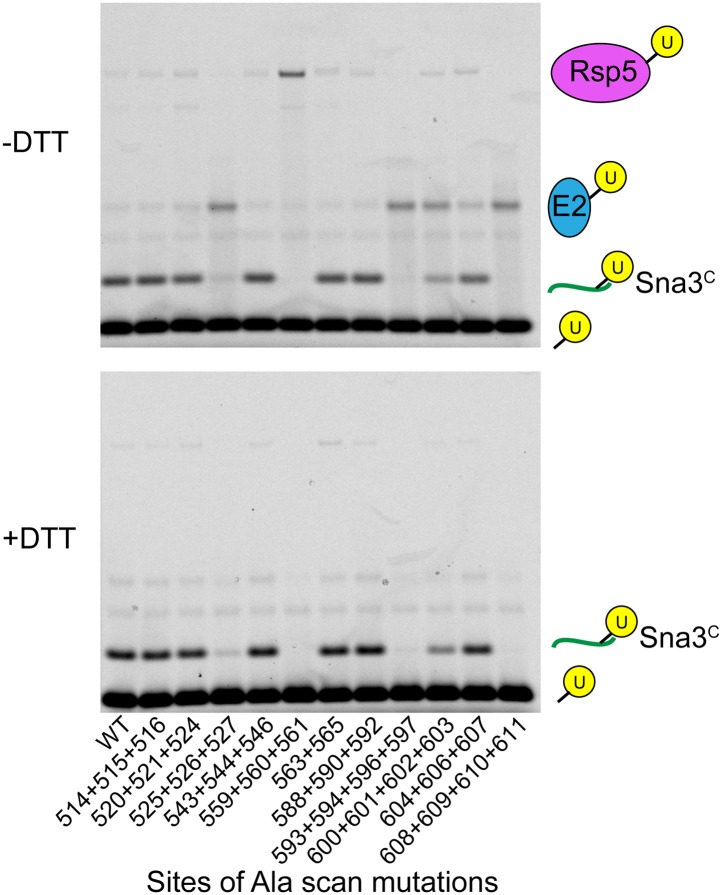
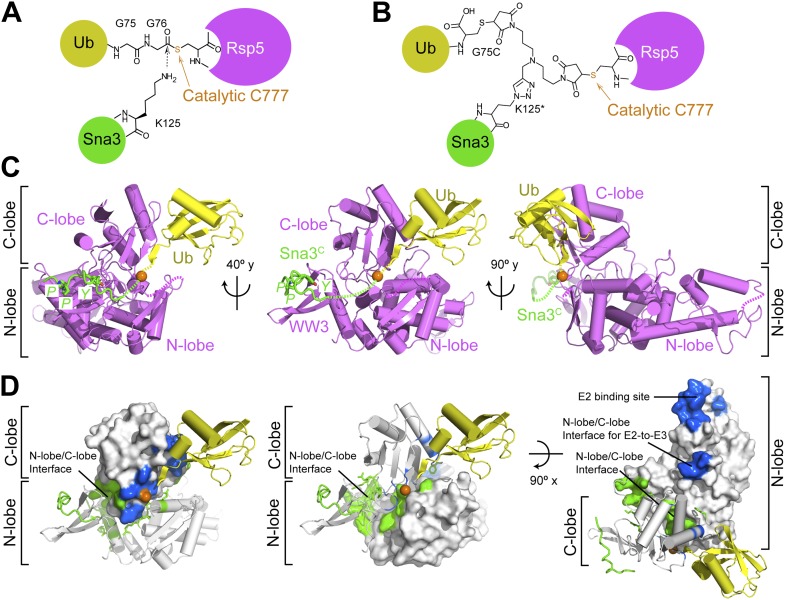
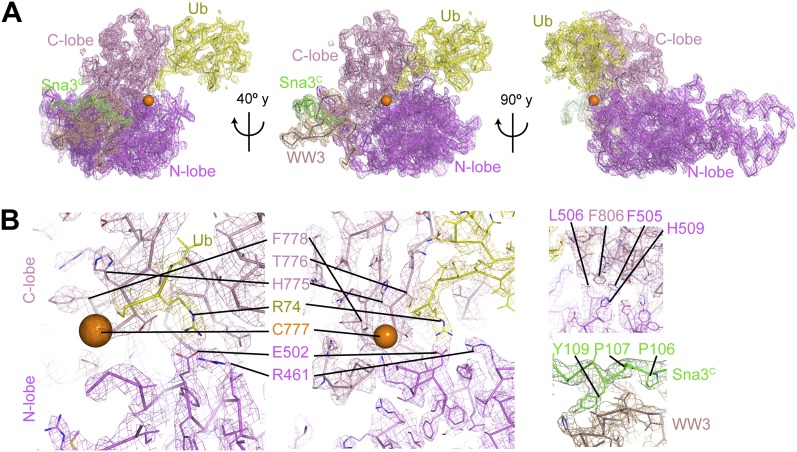
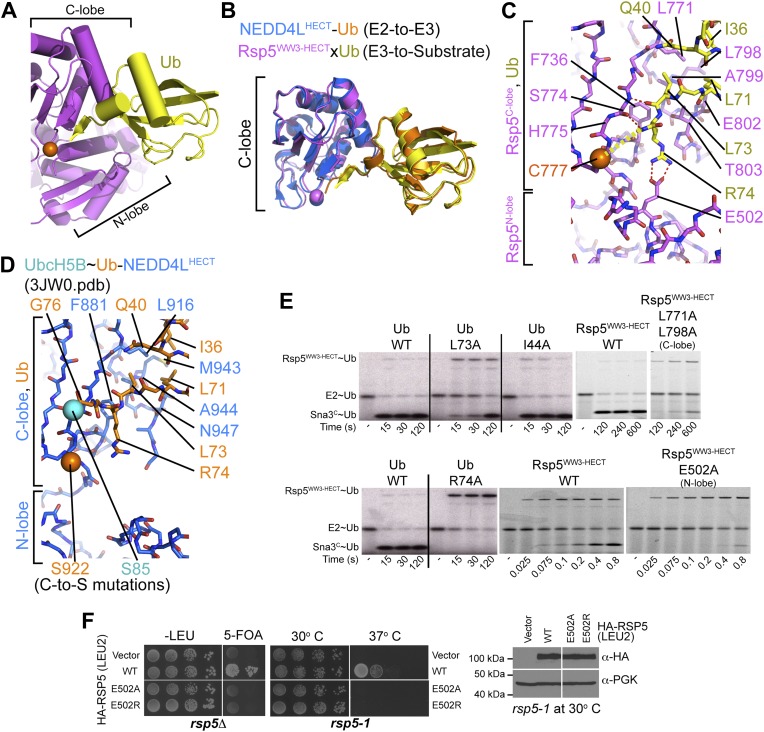
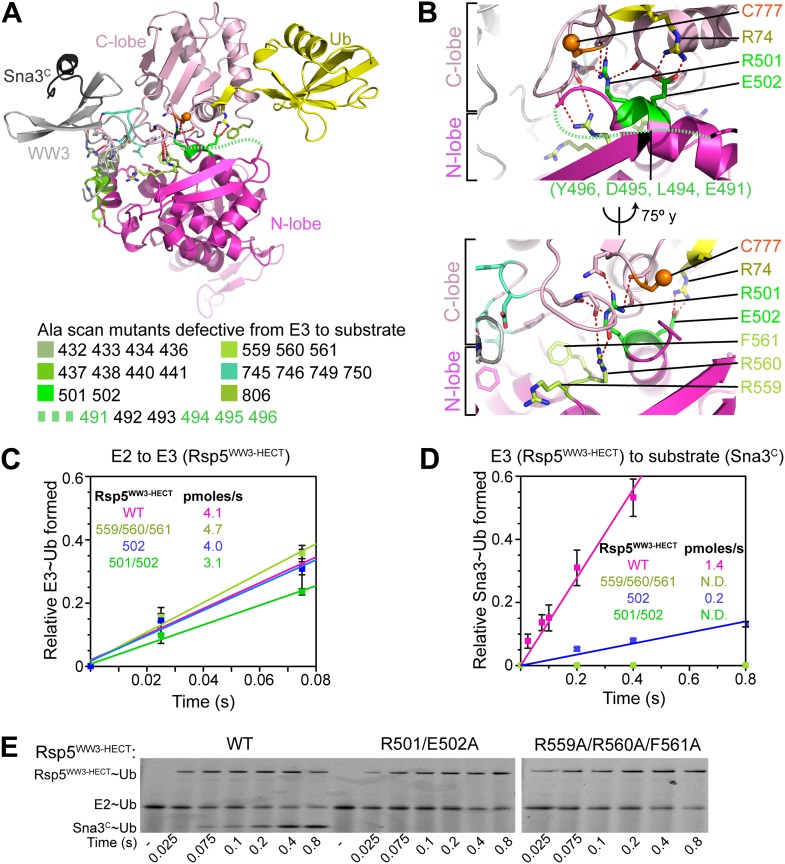
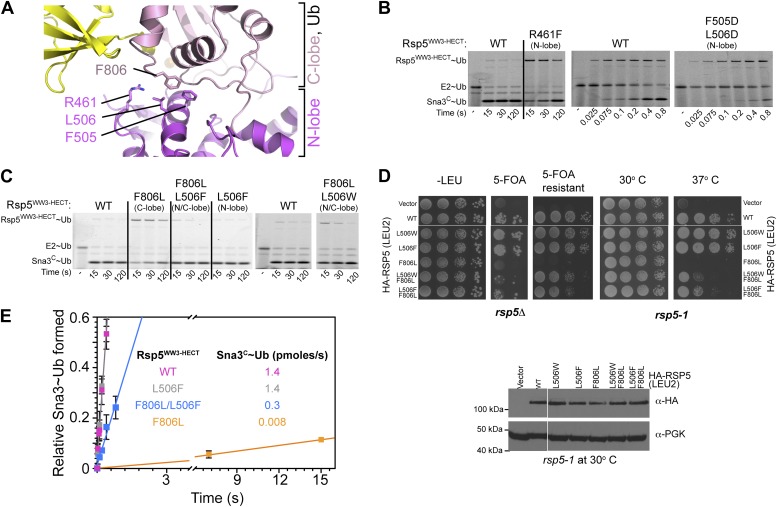
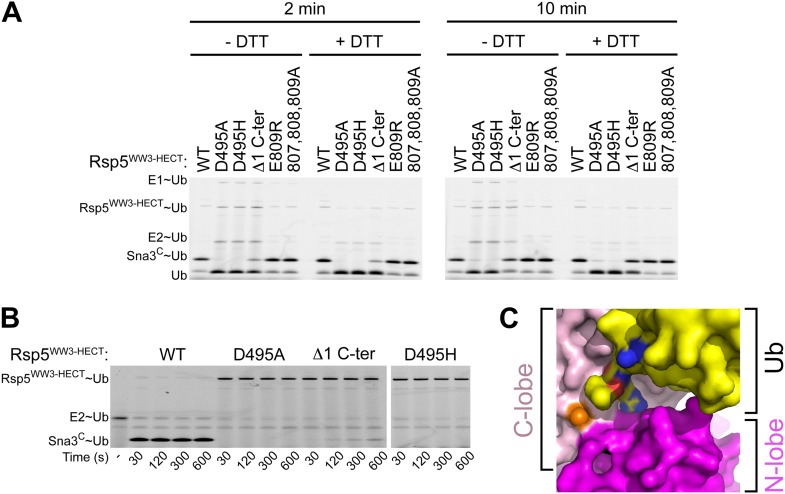
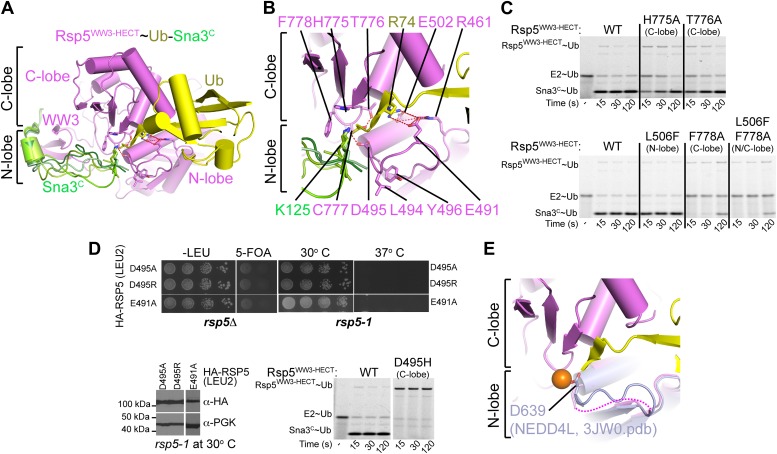
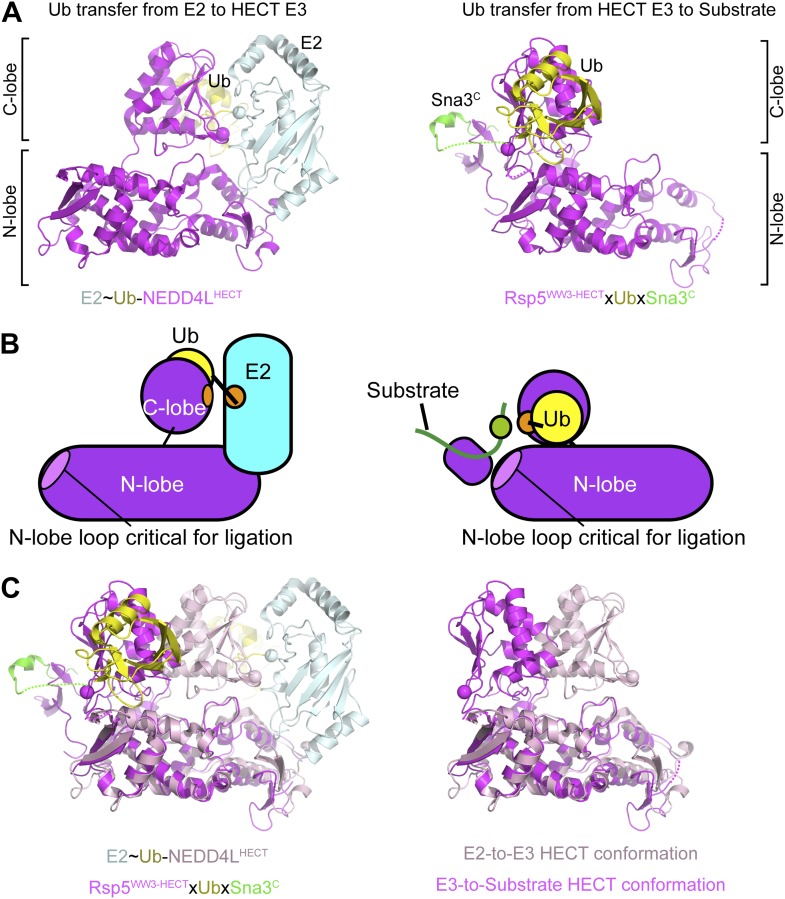
Ubiquitination by HECT E3 enzymes regulates myriad processes, including tumor suppression, transcription, protein trafficking, and degradation. HECT E3s use a two-step mechanism to ligate ubiquitin to target proteins. The first step is guided by interactions between the catalytic HECT domain and the E2∼ubiquitin intermediate, which promote formation of a transient, thioester-bonded HECT∼ubiquitin intermediate. Here we report that the second step of ligation is mediated by a distinct catalytic architecture established by both the HECT E3 and its covalently linked ubiquitin. The structure of a chemically trapped proxy for an E3∼ubiquitin-substrate intermediate reveals three-way interactions between ubiquitin and the bilobal HECT domain orienting the E3∼ubiquitin thioester bond for ligation, and restricting the location of the substrate-binding domain to prioritize target lysines for ubiquitination. The data allow visualization of an E2-to-E3-to-substrate ubiquitin transfer cascade, and show how HECT-specific ubiquitin interactions driving multiple reactions are repurposed by a major E3 conformational change to promote ligation.
Overview
The claims and statistics of this paper haven’t been checked yet.
Run the check — free, no account needed. It reads the open-access text and checks the sources it cites.
Integrity signals
Registry
Cites
Statistics
Figures
Verification
Claims the paper makes
The claims and statistics of this paper haven’t been checked yet.
Run the check — free, no account needed. It reads the open-access text and checks the sources it cites.
Claims other papers make about this one
Each is checked against this paper’s own text: does it say what the citing paper says it does?
In the citing paper
“The second class, HECT ligases, bind the target then use an intermediate strategy of transferring ubiquitin onto themselves before transferring ubiquitin to the target112,113.”
From PROTAC targeted protein degraders: the past is prologue (2022) · cites this paper as [113]
Self-check
Percentages, sums and reported differences re-computed from the paper’s own numbers.
The self-check needs the paper’s full text.
Citations
Cites
[20] Processing of X-ray diffraction data collected in oscillation mode
Otwinowski, Z., & Minor, W. (1997) · Methods in Enzymology · doi:10.1016/s0076-6879(97)76066-x · Cited by 33,475
Features and development of Coot
Emsley, P., Lohkamp, B., Scott, W. G., & Cowtan, K. (2010) · Acta Crystallographica Section D Biological Crystallography · doi:10.1107/s0907444910007493 · Cited by 29,915
Phaser crystallographic software
McCoy, A. J., Grosse-Kunstleve, R. W., Adams, P. D., Winn, M. D., Storoni, L. C., & Read, R. J. (2007) · Journal of Applied Crystallography · doi:10.1107/s0021889807021206 · Cited by 20,612
Refinement of Macromolecular Structures by the Maximum-Likelihood Method
Murshudov, G. N., Vagin, A. A., & Dodson, E. J. (1997) · Acta Crystallographica Section D Biological Crystallography · doi:10.1107/s0907444996012255 · Cited by 14,796
RING Domain E3 Ubiquitin Ligases
Deshaies, R. J., & Joazeiro, C. A. P. (2009) · Annual Review of Biochemistry · doi:10.1146/annurev.biochem.78.101807.093809 · Cited by 2,679
Leaver-Fay (2011) · doi:10.1016/b978-0-12-381270-4.00019-6 · Cited by 1,904
Self-citationStructure of ubiquitin refined at 1.8 A resolution.
Vijay-Kumar, S., Bugg, C., & Cook, W. (1987) · Journal of Molecular Biology · doi:10.1016/0022-2836(87)90679-6 · Cited by 1,636
Physiological functions of the HECT family of ubiquitin ligases
Rotin, D., & Kumar, S. (2009) · Nature Reviews Molecular Cell Biology · doi:10.1038/nrm2690 · Cited by 1,105
Protein ubiquitination involving an E1–E2–E3 enzyme ubiquitin thioester cascade
Scheffner, M., Nuber, U. A., & Huibregtse, J. M. (1995) · Nature · doi:10.1038/373081a0 · Cited by 1,017
A family of proteins structurally and functionally related to the E6-AP ubiquitin-protein ligase.
Huibregtse, J. M., Scheffner, M., Beaudenon, S. L., & Howley, P. M. (1995) · Proceedings of the National Academy of Sciences · doi:10.1073/pnas.92.7.2563 · Cited by 1,011
HECT and RING finger families of E3 ubiquitin ligases at a glance
Metzger, M. B., Hristova, V. A., & Weissman, A. M. (2012) · Journal of Cell Science · doi:10.1242/jcs.091777 · Cited by 659
Structure of a β-TrCP1-Skp1-β-Catenin Complex
Wu, G., Xu, G., Schulman, B. A., Jeffrey, P. D., Harper, J. W., & Pavletich, N. P. (2003) · Molecular Cell · doi:10.1016/s1097-2765(03)00234-x · Cited by 612
Self-citationBernier-Villamor, V., SAMPSON, D. A., Matunis, M. J., & Lima, C. D. (2002) · Cell · doi:10.1016/s0092-8674(02)00630-x · Cited by 579
Structure of an E6AP-UbcH7 Complex: Insights into Ubiquitination by the E2-E3 Enzyme Cascade
Huang, L., Kinnucan, E., Wang, G., Beaudenon, S. L., Howley, P. M., Huibregtse, J. M., & Pavletich, N. P. (1999) · Science · doi:10.1126/science.286.5443.1321 · Cited by 562
UBCH7 reactivity profile reveals parkin and HHARI to be RING/HECT hybrids
Wenzel, D. M., Lissounov, A., Brzović, P. S., & Klevit, R. E. (2011) · Nature · doi:10.1038/nature09966 · Cited by 560
Hoppe, T., Matuschewski, K., Rapé, M., Schlenker, S., Ulrich, H. D., & Jentsch, S. (2000) · Cell · doi:10.1016/s0092-8674(00)00080-5 · Cited by 559
The HECT Family of E3 Ubiquitin Ligases: Multiple Players in Cancer Development
Bernassola, F., Karin, M., Ciechanover, A., & Melino, G. (2008) · Cancer Cell · doi:10.1016/j.ccr.2008.06.001 · Cited by 541
The Nedd4 family of E3 ubiquitin ligases: functional diversity within a common modular architecture
Ingham, R. J., Gish, G. D., & Pawson, T. J. (2004) · Oncogene · doi:10.1038/sj.onc.1207436 · Cited by 531
Structure of a RING E3 ligase and ubiquitin-loaded E2 primed for catalysis
Plechanovová, A., Jaffray, E. G., Tatham, M. H., Naismith, J. H., & Hay, R. T. (2012) · Nature · doi:10.1038/nature11376 · Cited by 521
Insights into E3 ligase activity revealed by a SUMO–RanGAP1–Ubc9–Nup358 complex
Reverter, D., & Lima, C. D. (2005) · Nature · doi:10.1038/nature03588 · Cited by 493
Eddins, M. J., Carlile, C., Gomez, K. M., Pickart, C. M., & Wolberger, C. (2006) · Nature Structural & Molecular Biology · doi:10.1038/nsmb1148 · Cited by 357
Wu, G., Xu, G., Schulman, B. A., Jeffrey, P. D., Harper, J. W., & Pavletich, N. P. (2003) · Molecules and Cells · Cited by 333
Self-citationStructure of an E3:E2∼Ub Complex Reveals an Allosteric Mechanism Shared among RING/U-box Ligases
Pruneda, J. N., Littlefield, P. J., Soss, S. E., Nordquist, K. A., Chazin, W. J., Brzovic, P. S., & Klevit, R. E. (2012) · Molecular Cell · doi:10.1016/j.molcel.2012.07.001 · Cited by 333
BIRC7–E2 ubiquitin conjugate structure reveals the mechanism of ubiquitin transfer by a RING dimer
Dou, H., Buetow, L., Sibbet, G. J., Cameron, K., & Huang, D. T. (2012) · Nature Structural & Molecular Biology · doi:10.1038/nsmb.2379 · Cited by 319
Type III Secretion Effectors of the IpaH Family Are E3 Ubiquitin Ligases
Rohde, J. R., Breitkreutz, A., Chenal, A., Sansonetti, P. J., & Parsot, C. (2007) · Cell Host & Microbe · doi:10.1016/j.chom.2007.02.002 · Cited by 315
Insights into Ubiquitin Transfer Cascades from a Structure of a UbcH5B∼Ubiquitin-HECTNEDD4L Complex
Kamadurai, H., Souphron, J., Scott, D. C., Duda, D. M., Miller, D. J., Stringer, D. K., Piper, R. C., & Schulman, B. A. (2009) · Molecular Cell · doi:10.1016/j.molcel.2009.11.010 · Cited by 292
Self-citationMammalian HECT ubiquitin-protein ligases: Biological and pathophysiological aspects
Scheffner, M., & Kumar, S. (2013) · Biochimica et Biophysica Acta (BBA) - Molecular Cell Research · doi:10.1016/j.bbamcr.2013.03.024 · Cited by 290
Conformational Flexibility Underlies Ubiquitin Ligation Mediated by the WWP1 HECT Domain E3 Ligase
Verdecia, M. A., Joazeiro, C. A. P., Wells, N. J., Ferrer, J.-L., Bowman, M. E., Hunter, T. R., & Noel, J. P. (2003) · Molecular Cell · doi:10.1016/s1097-2765(02)00774-8 · Cited by 288
A ubiquitin‐binding motif required for intramolecular monoubiquitylation, the CUE domain
Shih, S. C., Prag, G., Francis, S. A., Sutanto, M. A., Hurley, J. H., & Hicke, L. (2003) · The EMBO Journal · doi:10.1093/emboj/cdg140 · Cited by 283
The Mechanism of Linkage-Specific Ubiquitin Chain Elongation by a Single-Subunit E2
Wickliffe, K. E., Lorenz, S., Wemmer, D. E., Kuriyan, J., & Rapé, M. (2011) · Cell · doi:10.1016/j.cell.2011.01.035 · Cited by 282
Regulation of Smurf2 Ubiquitin Ligase Activity by Anchoring the E2 to the HECT Domain
Ogunjimi, A. A., Briant, D. J., Pece-Barbara, N., Roy, C. L., Guglielmo, G. M. D., Kavsak, P. A., Rasmussen, R. K., Seet, B. T., Sicheri, F., & Wrana, J. L. (2005) · Molecular Cell · doi:10.1016/j.molcel.2005.06.028 · Cited by 280
Distinct Functional Surface Regions on Ubiquitin
Sloper-Mould, K. E., Jemc, J. C., Pickart, C. M., & Hicke, L. (2001) · Journal of Biological Chemistry · doi:10.1074/jbc.m103248200 · Cited by 247
Polyubiquitination by HECT E3s and the Determinants of Chain Type Specificity
Kim, H. C., & Huibregtse, J. M. (2009) · Molecular and Cellular Biology · doi:10.1128/mcb.00240-09 · Cited by 247
Solution structure of a Nedd4 WW domain-ENaC peptide complex.
Kanelis, V., Rotin, D., & Forman-Kay, J. D. (2001) · Nature Structural Biology · doi:10.1038/87562 · Cited by 220
Ubiquitylation and degradation of elongating RNA polymerase II: The last resort
Wilson, M. D., Harreman, M. T., & Svejstrup, J. Q. (2012) · Biochimica et Biophysica Acta (BBA) - Gene Regulatory Mechanisms · doi:10.1016/j.bbagrm.2012.08.002 · Cited by 200
Kleiger, G., Saha, A., Lewis, S. M., Kuhlman, B. A., & Deshaies, R. J. (2009) · Cell · doi:10.1016/j.cell.2009.10.030 · Cited by 195
Self-citationStructure of a ubiquitin-loaded HECT ligase reveals the molecular basis for catalytic priming
Maspero, E., Valentini, E., Mari, S., Cecatiello, V., Soffientini, P., Pasqualato, S., & Polo, S. (2013) · Nature Structural & Molecular Biology · doi:10.1038/nsmb.2566 · Cited by 188
Structure of the HECT:ubiquitin complex and its role in ubiquitin chain elongation
Maspero, E., Mari, S., Valentini, E., Musacchio, A., Fish, A., Pasqualato, S., & Polo, S. (2011) · EMBO Reports · doi:10.1038/embor.2011.21 · Cited by 172
The inflammation‐associated Salmonella SopA is a HECT‐like E3 ubiquitin ligase
Zhang, Y., Higashide, W., McCormick, B. A., Chen, J., & Zhou, D. (2006) · Molecular Microbiology · doi:10.1111/j.1365-2958.2006.05407.x · Cited by 168
Ubiquitin in Motion: Structural Studies of the Ubiquitin-Conjugating Enzyme∼Ubiquitin Conjugate
Pruneda, J. N., Stoll, K. E., Bolton, L. J., Brzović, P. S., & Klevit, R. E. (2011) · Biochemistry · doi:10.1021/bi101913m · Cited by 138
Dunn, R., & Hicke, L. (2001) · Molecular Biology of the Cell · doi:10.1091/mbc.12.2.421 · Cited by 136
Structure and function of a HECT domain ubiquitin‐binding site
Kim, H. C., Steffen, A. M., Oldham, M. L., Chen, J., & Huibregtse, J. M. (2011) · EMBO Reports · doi:10.1038/embor.2011.23 · Cited by 133
Saha, A., Lewis, S. M., Kleiger, G., Kuhlman, B. A., & Deshaies, R. J. (2011) · Molecular Cell · doi:10.1016/j.molcel.2011.03.016 · Cited by 120
Self-citationRegulation of catalytic activities of HECT ubiquitin ligases
Kee, Y., & Huibregtse, J. M. (2007) · Biochemical and Biophysical Research Communications · doi:10.1016/j.bbrc.2007.01.025 · Cited by 110
Cooper, E. M., Hudson, A. W., Amos, J., Wagstaff, J. E., & Howley, P. M. (2004) · Journal of Biological Chemistry · doi:10.1074/jbc.m401302200 · Cited by 107
A spectrophotometric assay for conjugation of ubiquitin and ubiquitin-like proteins
Berndsen, C., & Wolberger, C. (2011) · Analytical Biochemistry · doi:10.1016/j.ab.2011.06.034 · Cited by 101
Ubiquitin ligase adaptors: Regulators of ubiquitylation and endocytosis of plasma membrane proteins
Sébastien Léon, A., & Haguenauer‐Tsapis, R. (2008) · Experimental Cell Research · doi:10.1016/j.yexcr.2008.11.014 · Cited by 92
Regulation of the RSP5 Ubiquitin Ligase by an Intrinsic Ubiquitin-binding Site
French, M., Kretzmann, B. R., & Hicke, L. (2009) · Journal of Biological Chemistry · doi:10.1074/jbc.m901106200 · Cited by 84
The -4 Phenylalanine Is Required for Substrate Ubiquitination Catalyzed by HECT Ubiquitin Ligases
Salvat, C., Wang, G., Dastur, A., Lyon, N., & Huibregtse, J. M. (2004) · Journal of Biological Chemistry · doi:10.1074/jbc.m312201200 · Cited by 80
McNatt, M. W., McKittrick, I., West, M., & Odorizzi, G. (2006) · Molecular Biology of the Cell · doi:10.1091/mbc.e06-08-0663 · Cited by 74
Ogunjimi, A. A., Wiesner, S., Briant, D. J., Varelas, X., Sicheri, F., Forman-Kay, J. D., & Wrana, J. L. (2009) · Journal of Biological Chemistry · doi:10.1074/jbc.m109.044537 · Cited by 72
Stawiecka-Mirota, M., Pokrzywa, W., Morvan, J., Żołądek, T., Haguenauer‐Tsapis, R., Urban‐Grimal, D., & Morsomme, P. (2007) · Traffic · doi:10.1111/j.1600-0854.2007.00610.x · Cited by 71
Oestreich, A. J., Aboian, M., Lee, J. R. E., Azmi, I. F., Payne, J. A., Issaka, R. B., Davies, B. A., & Katzmann, D. J. (2006) · Molecular Biology of the Cell · doi:10.1091/mbc.e06-08-0680 · Cited by 64
Springael, J., Craene, J. D., & André, B. (1999) · Biochemical and Biophysical Research Communications · doi:10.1006/bbrc.1999.0505 · Cited by 60
Gajewska, B., Kamińska, J., Jesionowska, A., Martín, N. C. R., Hopper, A. K., & Żołądek, T. (2001) · Genetics · doi:10.1093/genetics/157.1.91 · Cited by 56
Molecular Basis for Lysine Specificity in the Yeast Ubiquitin-Conjugating Enzyme Cdc34
Sadowski, M. C., Suryadinata, R., Lai, X., Heierhorst, J., & Šarčević, B. (2010) · Molecular and Cellular Biology · doi:10.1128/mcb.01094-09 · Cited by 49
Sna 3 Is an Rsp 5 Adaptor Protein that Relies on Ubiquitination for Its MVB Sorting
MacDonald, C., Stringer, D. K., & Piper, R. C. (2011) · Traffic · doi:10.1111/j.1600-0854.2011.01326.x · Cited by 46
Self-citationThe role of Rsp5 ubiquitin ligase in regulation of diverse processes in yeast cells.
Kaliszewski, P., & Żołądek, T. (2008) · Acta Biochimica Polonica · doi:10.18388/abp.2008_3024 · Cited by 39
Direct Binding to Rsp5p Regulates Ubiquitination-independent Vacuolar Transport of Sna3p
Watson, H. A., & Bonifacino, J. S. (2007) · Molecular Biology of the Cell · doi:10.1091/mbc.e06-10-0887 · Cited by 29
Bhattacharya, S., Shcherbik, N., Vasilescu, J., Smith, J. C., Figeys, D., & Haines, D. S. (2008) · Journal of Molecular Biology · doi:10.1016/j.jmb.2008.11.018 · Cited by 14
Cited by
Sorted by citations
PROTAC targeted protein degraders: the past is prologue
Békés, M., Langley, D. R., & Crews, C. M. (2022) · Nature Reviews Drug Discovery · doi:10.1038/s41573-021-00371-6 · Cited by 3,395
Ubiquitin ligases: structure, function, and regulation
Zheng, N., & Shabek, N. (2017) · Annual Review of Biochemistry · doi:10.1146/annurev-biochem-060815-014922 · Cited by 1,499
New insights into ubiquitin E3 ligase mechanism
Berndsen, C., & Wolberger, C. (2014) · Nature Structural & Molecular Biology · doi:10.1038/nsmb.2780 · Cited by 734
Structural insights into the catalysis and regulation of E3 ubiquitin ligases
Buetow, L., & Huang, D. T. (2016) · Nature Reviews Molecular Cell Biology · doi:10.1038/nrm.2016.91 · Cited by 679
Ubiquitin-like Protein Conjugation: Structures, Chemistry, and Mechanism
Cappadocia, L., & Lima, C. D. (2017) · Chemical Reviews · doi:10.1021/acs.chemrev.6b00737 · Cited by 581
Metadata
- Authors
- Kamadurai, H. B., Qiu, Y., Deng, A., Harrison, J. S., MacDonald, C., Actis, M., Rodrigues, P., Miller, D. J., Souphron, J., Lewis, S. M., Kurinov, I., Fujii, N., Hammel, M., Piper, R., Kuhlman, B., & Schulman, B. A.
- Affiliations
- St. Jude Children's Research Hospital (US)
- University of North Carolina at Chapel Hill (US)
- University of Iowa (US)
- Centre National de la Recherche Scientifique (FR)
- Cornell University (US)
- Lawrence Berkeley National Laboratory (US)
- Corresponding author
- Kamadurai, Hari B
- Schulman, Brenda A
- ORCID
- Venue
- eLife
- Publisher
- eLife Sciences Publications, Ltd
- Published
- 2013-08-08
- Volume
- 2
- Pages
- e00828-e00828
- ISSN
- 2050-084X (ISSN-L)
- PMC
- PMC3738095
- OpenAlex
- W2037607907
- Cited by
- 165
- References
- 60
- Citations by year
- 2026: 10 · 2025: 10 · 2024: 19 · 2023: 8 · 2022: 8 · 2021: 12 · 2020: 15 · 2019: 7 · 2018: 8 · 2017: 19 · 2016: 17 · 2015: 14 · 2014: 14 · 2013: 4
- FWCI
- 7.31
- Type
- journal article
- Language
- en
- Open access
- gold
- doi.org
- Licence
- Locations
- eLife (publishedVersion, cc-by)
- Europe PMC (PubMed Central) (publishedVersion, cc-by)
- PubMed Central (publishedVersion, cc-by)
- PubMed (publishedVersion)
- Carolina Digital Repository (University of North Carolina at Chapel Hill) (submittedVersion)
- Scholarly Commons (University of the Pacific) (submittedVersion, cc-by)
- DOAJ (DOAJ: Directory of Open Access Journals) (submittedVersion, cc-by-sa)
- OSTI OAI (U.S. Department of Energy Office of Scientific and Technical Information) (submittedVersion)
- UNC Libraries
- Funders
- Howard Hughes Medical Institute (045102)
- National Institutes of Health (R01GM069530, 5P30CA021765, R01GM073960, 5P41RR015301-10, 8P41 GM103403-10, 5R01 GM058202)
- ALSAC
- DOE (DE-AC02-06CH11357)
- American Heart Association
- U.S. Department of Energy (DE-AC02-06CH11357)
- Topics
- Life Sciences › Biochemistry, Genetics and Molecular Biology › Molecular Biology › Ubiquitin and proteasome pathways
- Life Sciences › Biochemistry, Genetics and Molecular Biology › Structural Biology › Enzyme Structure and Function
- Life Sciences › Biochemistry, Genetics and Molecular Biology › Molecular Biology › Protein Degradation and Inhibitors
- Keywords
- HECT E3 ubiquitin ligase, ubiquitination, HECT domain, thioester bond, substrate-binding domain, protein degradation, protein structure
- MeSH terms
- Amino Acid Sequence, Lysine, Molecular Sequence Data, Protein Conformation, Mutagenesis, Sequence Homology, Amino Acid, Catalytic Domain, Ubiquitin, Ubiquitin-Protein Ligases
About these checks
Registry, retraction, Cites and statistics results are computed, not judged, with one exception: a printed reference that no index lists is read once by a model before it counts as a citation error. Claims are extracted by a model and kept only when their quote appears verbatim in the text; each cited source is then checked, with a model’s help, for whether it says what the claim relies on. Those verdicts can be wrong — read the claim’s quote and the cited source before relying on one.
Statistics and arithmetic are recomputed, not judged.
Confidence bands are shown only for fields calibrated on our annotated test set. None is calibrated yet, so no band is shown.
What counts as a claim ›How we measure confidence ›How we check this ›
Are you an author, or do you see a problem with this page? Request a review
