

The DOI matches its Crossref record; 60 of the 60 references it cites were found in a registry or an index.
Mechanism of ubiquitin ligation and lysine prioritization by a HECT E3
Open accessAbstract
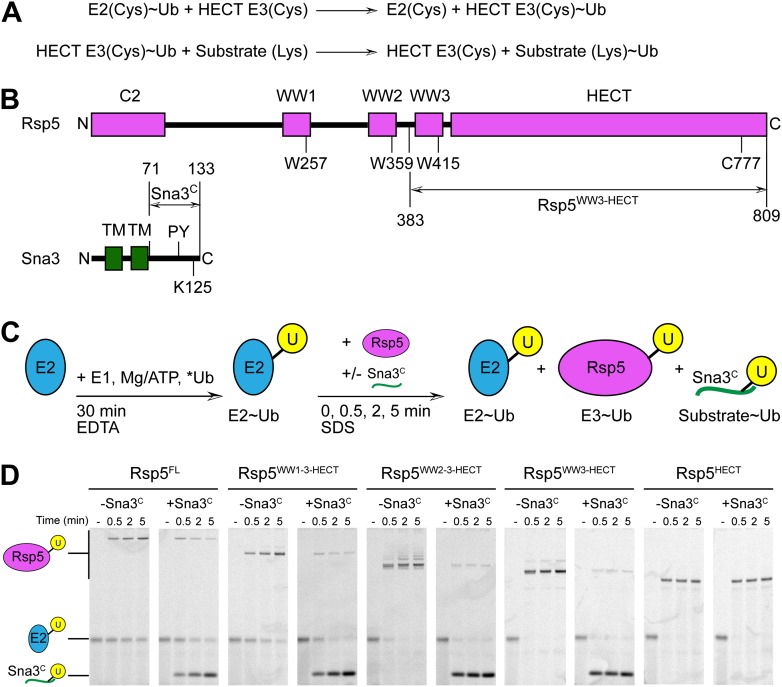
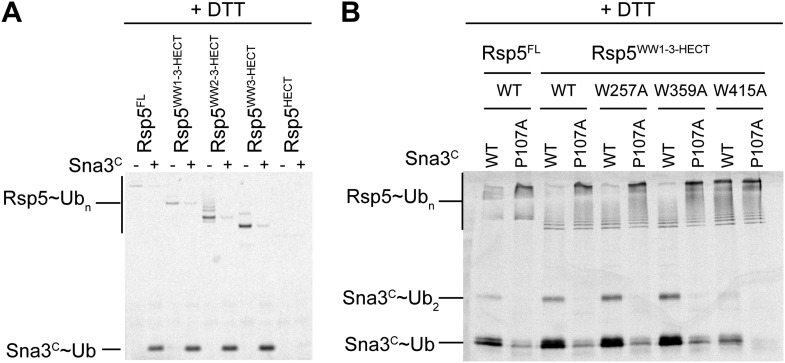
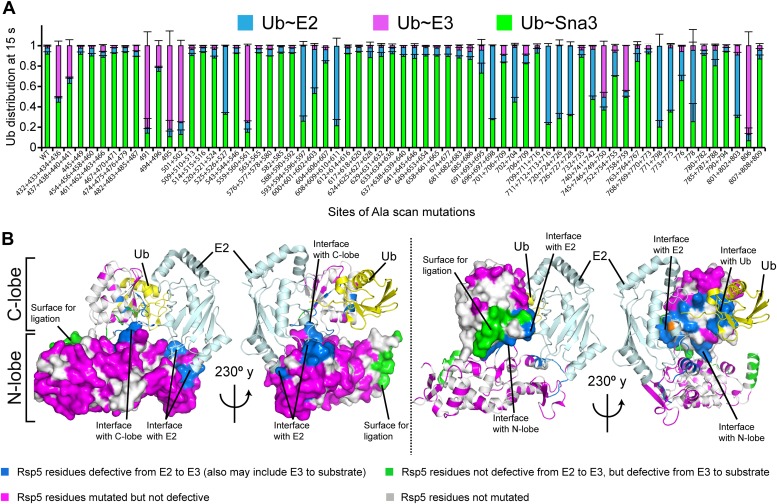
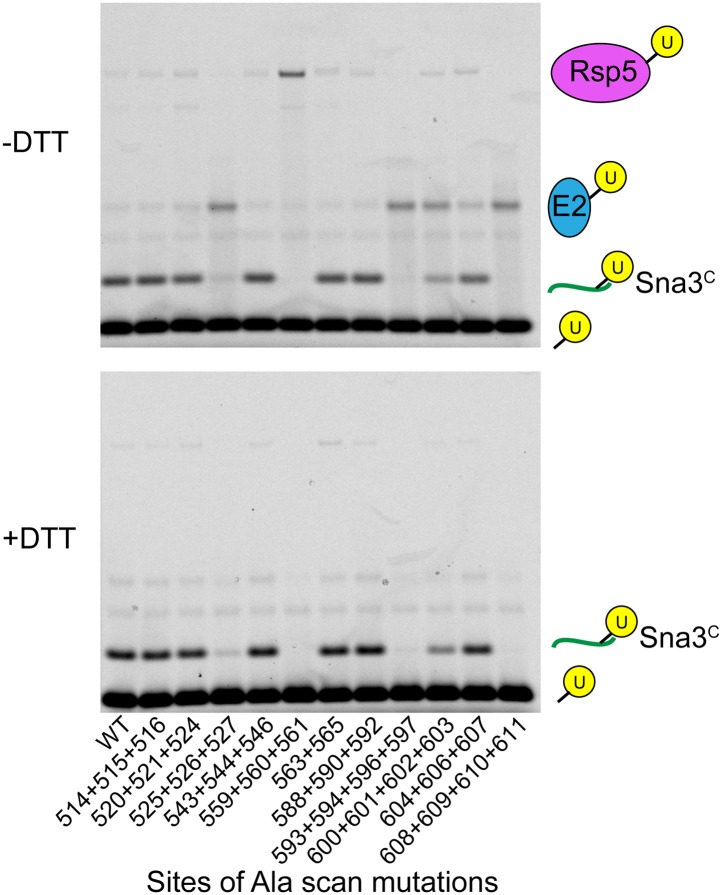
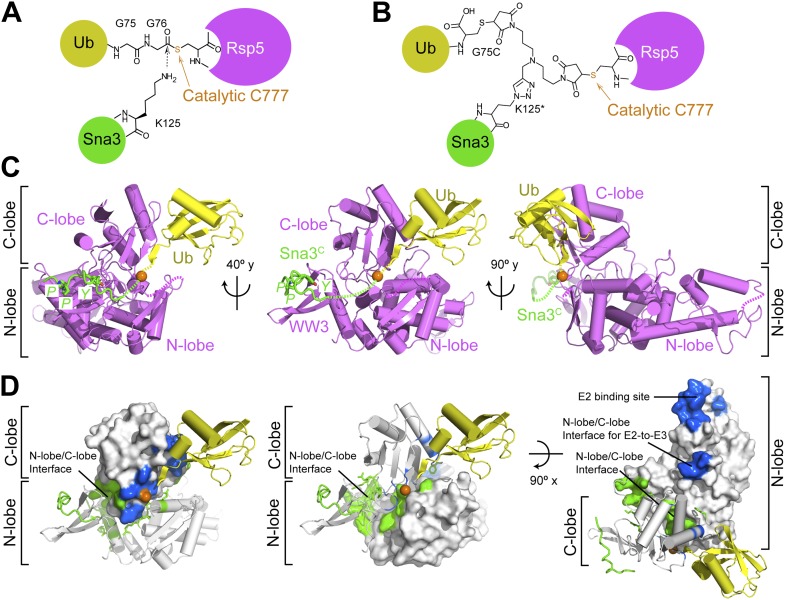
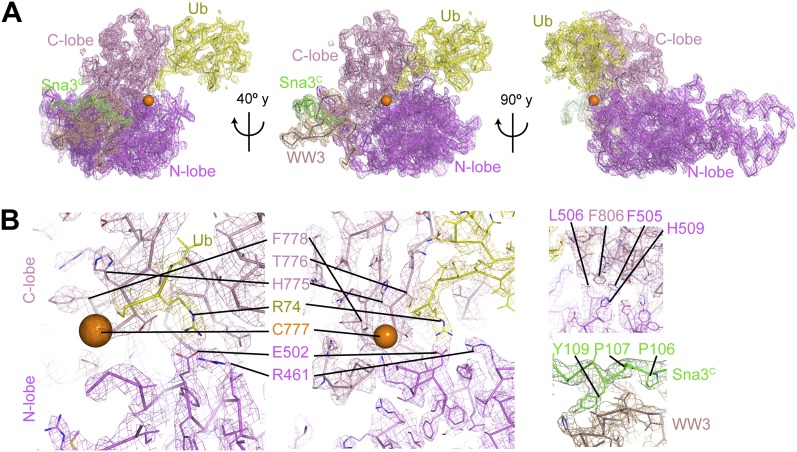
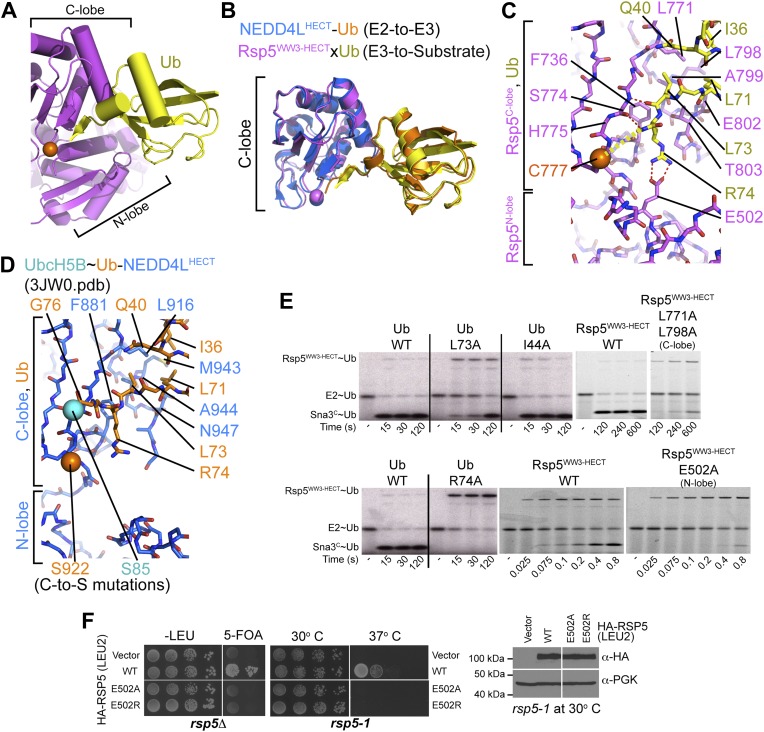
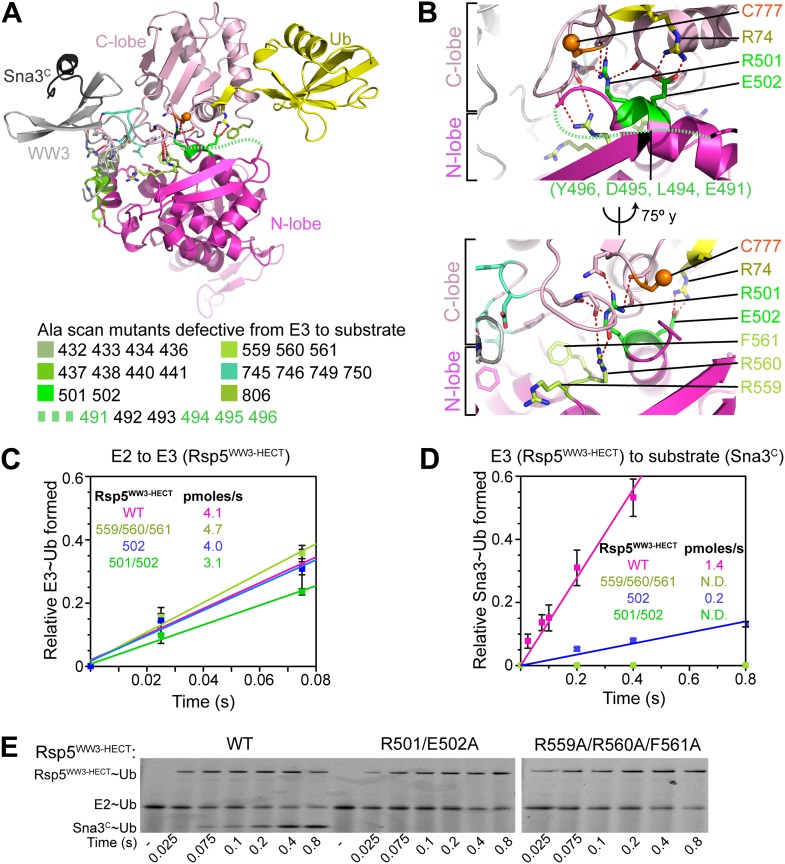
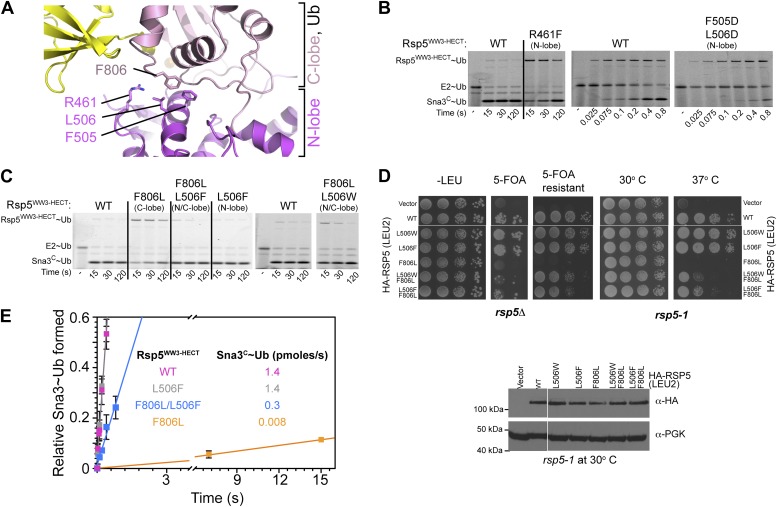
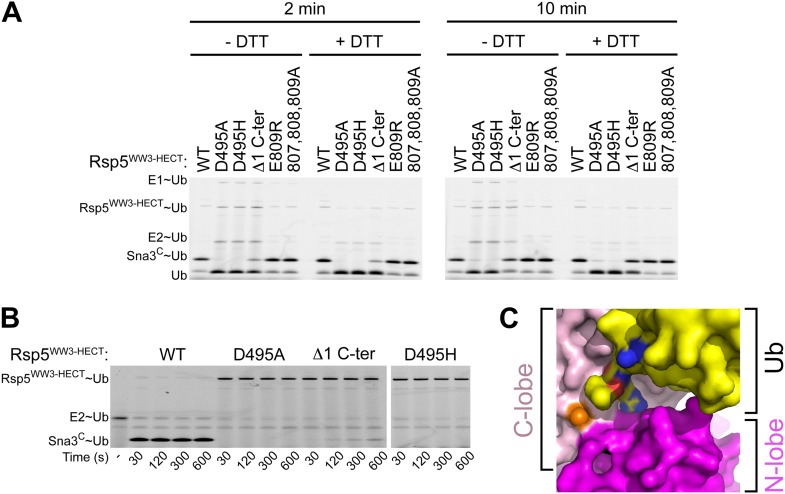
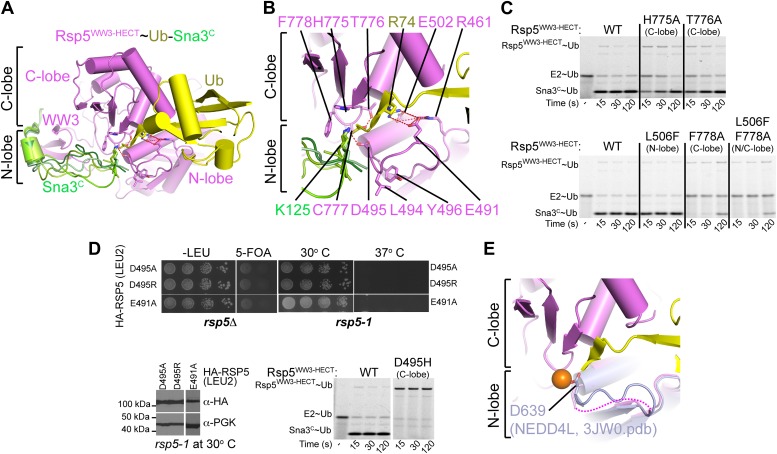
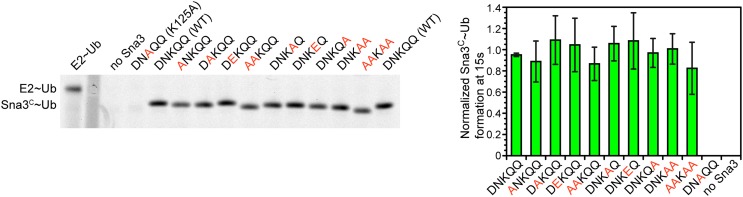
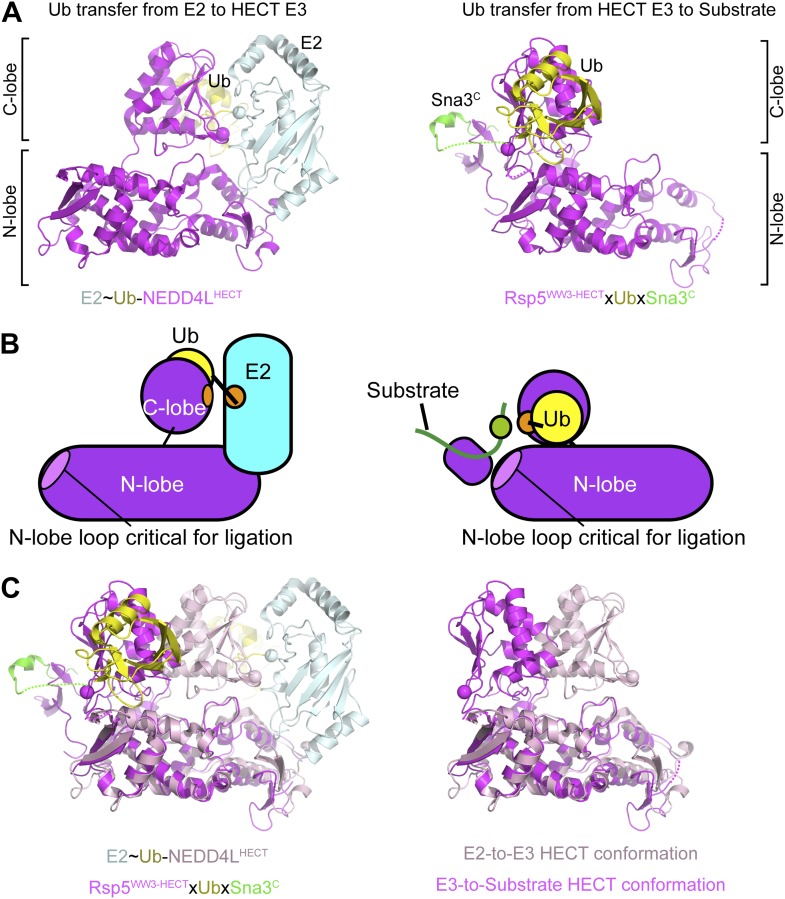
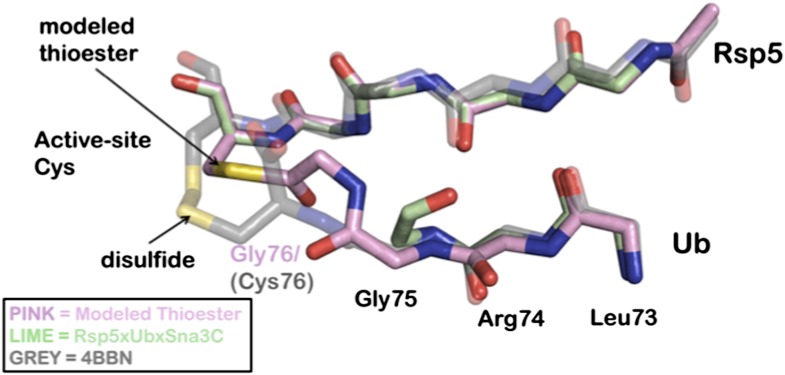
Ubiquitination by HECT E3 enzymes regulates myriad processes, including tumor suppression, transcription, protein trafficking, and degradation. HECT E3s use a two-step mechanism to ligate ubiquitin to target proteins. The first step is guided by interactions between the catalytic HECT domain and the E2∼ubiquitin intermediate, which promote formation of a transient, thioester-bonded HECT∼ubiquitin intermediate. Here we report that the second step of ligation is mediated by a distinct catalytic architecture established by both the HECT E3 and its covalently linked ubiquitin. The structure of a chemically trapped proxy for an E3∼ubiquitin-substrate intermediate reveals three-way interactions between ubiquitin and the bilobal HECT domain orienting the E3∼ubiquitin thioester bond for ligation, and restricting the location of the substrate-binding domain to prioritize target lysines for ubiquitination. The data allow visualization of an E2-to-E3-to-substrate ubiquitin transfer cascade, and show how HECT-specific ubiquitin interactions driving multiple reactions are repurposed by a major E3 conformational change to promote ligation.
Overview
The claims and statistics of this paper haven’t been checked yet.
Run the check — free, no account needed. It reads the open-access text and checks the sources it cites.
Integrity signals
Registry
Cites
Statistics
Figures
Verification
Claims the paper makes
The claims and statistics of this paper haven’t been checked yet.
Run the check — free, no account needed. It reads the open-access text and checks the sources it cites.
Claims other papers make about this one
Each is checked against this paper’s own text: does it say what the citing paper says it does?
In the citing paper
“The second class, HECT ligases, bind the target then use an intermediate strategy of transferring ubiquitin onto themselves before transferring ubiquitin to the target112,113.”
From PROTAC targeted protein degraders: the past is prologue (2022) · cites this paper as [113]
Self-check
Percentages, sums and reported differences re-computed from the paper’s own numbers.
The self-check needs the paper’s full text.
Citations
Cites
[20] Processing of X-ray diffraction data collected in oscillation mode
Otwinowski, Z., & Minor, W. (1997) · Methods in Enzymology · doi:10.1016/s0076-6879(97)76066-x · Cited by 33,475
Features and development of Coot
Emsley, P., Lohkamp, B., Scott, W. G., & Cowtan, K. (2010) · Acta Crystallographica Section D Biological Crystallography · doi:10.1107/s0907444910007493 · Cited by 29,915
Phaser crystallographic software
McCoy, A. J., Grosse-Kunstleve, R. W., Adams, P. D., Winn, M. D., Storoni, L. C., & Read, R. J. (2007) · Journal of Applied Crystallography · doi:10.1107/s0021889807021206 · Cited by 20,612
Refinement of Macromolecular Structures by the Maximum-Likelihood Method
Murshudov, G. N., Vagin, A. A., & Dodson, E. J. (1997) · Acta Crystallographica Section D Biological Crystallography · doi:10.1107/s0907444996012255 · Cited by 14,796
RING Domain E3 Ubiquitin Ligases
Deshaies, R. J., & Joazeiro, C. A. P. (2009) · Annual Review of Biochemistry · doi:10.1146/annurev.biochem.78.101807.093809 · Cited by 2,679
Leaver-Fay (2011) · doi:10.1016/b978-0-12-381270-4.00019-6 · Cited by 1,904
Self-citationStructure of ubiquitin refined at 1.8 A resolution.
Vijay-Kumar, S., Bugg, C., & Cook, W. (1987) · Journal of Molecular Biology · doi:10.1016/0022-2836(87)90679-6 · Cited by 1,636
Physiological functions of the HECT family of ubiquitin ligases
Rotin, D., & Kumar, S. (2009) · Nature Reviews Molecular Cell Biology · doi:10.1038/nrm2690 · Cited by 1,105
Protein ubiquitination involving an E1–E2–E3 enzyme ubiquitin thioester cascade
Scheffner, M., Nuber, U. A., & Huibregtse, J. M. (1995) · Nature · doi:10.1038/373081a0 · Cited by 1,017
A family of proteins structurally and functionally related to the E6-AP ubiquitin-protein ligase.
Huibregtse, J. M., Scheffner, M., Beaudenon, S. L., & Howley, P. M. (1995) · Proceedings of the National Academy of Sciences · doi:10.1073/pnas.92.7.2563 · Cited by 1,011
Cited by
Sorted by citations
PROTAC targeted protein degraders: the past is prologue
Békés, M., Langley, D. R., & Crews, C. M. (2022) · Nature Reviews Drug Discovery · doi:10.1038/s41573-021-00371-6 · Cited by 3,395
Ubiquitin ligases: structure, function, and regulation
Zheng, N., & Shabek, N. (2017) · Annual Review of Biochemistry · doi:10.1146/annurev-biochem-060815-014922 · Cited by 1,499
New insights into ubiquitin E3 ligase mechanism
Berndsen, C., & Wolberger, C. (2014) · Nature Structural & Molecular Biology · doi:10.1038/nsmb.2780 · Cited by 734
Structural insights into the catalysis and regulation of E3 ubiquitin ligases
Buetow, L., & Huang, D. T. (2016) · Nature Reviews Molecular Cell Biology · doi:10.1038/nrm.2016.91 · Cited by 679
Ubiquitin-like Protein Conjugation: Structures, Chemistry, and Mechanism
Cappadocia, L., & Lima, C. D. (2017) · Chemical Reviews · doi:10.1021/acs.chemrev.6b00737 · Cited by 581
Perilous journey: a tour of the ubiquitin–proteasome system
Kleiger, G., & Mayor, T. (2014) · Trends in Cell Biology · doi:10.1016/j.tcb.2013.12.003 · Cited by 431
Building and remodelling Cullin–RING E3 ubiquitin ligases
Lydeard, J. R., Schulman, B. A., & Harper, J. W. (2013) · The EMBO Reports · doi:10.1038/embor.2013.173 · Cited by 327
Self-citationRBR E3 ubiquitin ligases: new structures, new insights, new questions
Spratt, D. E., Walden, H., & Shaw, G. S. (2014) · Biochemical Journal · doi:10.1042/bj20140006 · Cited by 335
Yeast Reveal a “Druggable” Rsp5/Nedd4 Network that Ameliorates α-Synuclein Toxicity in Neurons
Tardiff, D. F., Jui, N. T., Khurana, V., Tambe, M. A., Thompson, M. L., Chung, C. Y., Kamadurai, H., Kim, H. T., Lancaster, A. K., Caldwell, K. A., et al. (2013) · Science · doi:10.1126/science.1245321 · Cited by 250
Self-citationAssembly and Specific Recognition of K29- and K33-Linked Polyubiquitin
Michel, M. A., Elliott, P. R., Swatek, K. N., Šimíček, M., Pruneda, J. N., Wagstaff, J. L., Freund, S. M. V., & Komander, D. (2015) · Molecular Cell · doi:10.1016/j.molcel.2015.01.042 · Cited by 219
Versatile Roles of K63-Linked Ubiquitin Chains in Trafficking
Erpapazoglou, Z., Walker, O., & Haguenauer‐Tsapis, R. (2014) · Cells · doi:10.3390/cells3041027 · Cited by 218
Scott, D. C., Sviderskiy, V. O., Monda, J. K., Lydeard, J. R., Cho, S. E., Harper, J. W., & Schulman, B. A. (2014) · Cell · doi:10.1016/j.cell.2014.04.037 · Cited by 201
Self-citationStructural Diversity of Ubiquitin E3 Ligase
Toma-Fukai, S., & Shimizu, T. (2021) · Molecules · doi:10.3390/molecules26216682 · Cited by 206
System-Wide Modulation of HECT E3 Ligases with Selective Ubiquitin Variant Probes
Zhang, W., Wu, K.-P., Sartori, M. A., Kamadurai, H. B., Ordureau, A., Jiang, C., Mercredi, P. Y., Murchie, R., Hu, J., Persaud, A., et al. (2016) · Molecular Cell · doi:10.1016/j.molcel.2016.02.005 · Cited by 168
Self-citationStructural and Functional Insights to Ubiquitin-Like Protein Conjugation
Streich, F. C., & Lima, C. D. (2014) · Annual Review of Biophysics · doi:10.1146/annurev-biophys-051013-022958 · Cited by 176
Regulating the human HECT E3 ligases
Sluimer, J., & Distel, B. (2018) · Cellular and Molecular Life Sciences · doi:10.1007/s00018-018-2848-2 · Cited by 174
Lysine-targeting specificity in ubiquitin and ubiquitin-like modification pathways
Mattiroli, F., & Sixma, T. K. (2014) · Nature Structural & Molecular Biology · doi:10.1038/nsmb.2792 · Cited by 164
Skp2 in the ubiquitin‐proteasome system: A comprehensive review
Asmamaw, M. D., Liu, Y., Zheng, Y., Shi, X., & Liu, H. (2020) · Medicinal Research Reviews · doi:10.1002/med.21675 · Cited by 161
Peptide and small molecule inhibitors of HECT-type ubiquitin ligases
Mund, T., Lewis, M., Maslen, S., & Pelham, H. R. B. (2014) · Proceedings of the National Academy of Sciences · doi:10.1073/pnas.1412152111 · Cited by 152
Structural mechanisms of HECT-type ubiquitin ligases
Lorenz, S. (2017) · Biological Chemistry · doi:10.1515/hsz-2017-0184 · Cited by 131
Enzymatic Logic of Ubiquitin Chain Assembly
Deol, K. K., Lorenz, S., & Strieter, E. R. (2019) · Frontiers in Physiology · doi:10.3389/fphys.2019.00835 · Cited by 112
Kathman, S. G., Span, I., Smith, A. T., Xu, Z., Zhan, J., Rosenzweig, A. C., & Statsyuk, A. V. (2015) · Journal of the American Chemical Society · doi:10.1021/jacs.5b06839 · Cited by 111
HECT-Type E3 Ubiquitin Ligases in Cancer
Bernassola, F., Chillemi, G., & Melino, G. (2019) · Trends in Biochemical Sciences · doi:10.1016/j.tibs.2019.08.004 · Cited by 105
A Tunable Brake for HECT Ubiquitin Ligases
Chen, Z., Jiang, H., Xu, W., Li, X., Dempsey, D. R., Zhang, X., Devreotes, P. N., Wolberger, C., Amzel, L. M., Gabelli, S. B., et al. (2017) · Molecular Cell · doi:10.1016/j.molcel.2017.03.020 · Cited by 100
Plant E3 Ligases and Their Role in Abiotic Stress Response
Al‐Saharin, R., Hellmann, H. A., & Mooney, S. (2022) · Cells · doi:10.3390/cells11050890 · Cited by 100
Brown, N. G., VanderLinden, R. T., Watson, E. R., Qiao, R., Grace, C. R., Yamaguchi, M., Weissmann, F., Frye, J. J., Dube, P., Cho, S. E., et al. (2015) · Proceedings of the National Academy of Sciences · doi:10.1073/pnas.1504161112 · Cited by 99
Self-citationLinear ubiquitin chains: enzymes, mechanisms and biology
Rittinger, K., & Ikeda, F. (2017) · Open Biology · doi:10.1098/rsob.170026 · Cited by 101
Ubc13: the Lys63 ubiquitin chain building machine
Hodge, C. D., Spyracopoulos, L., & Glover, J. N. M. (2016) · Oncotarget · doi:10.18632/oncotarget.10948 · Cited by 99
Middle-Down Mass Spectrometry Enables Characterization of Branched Ubiquitin Chains
Valkevich, E. M., Sanchez, N. A., Ge, Y., & Strieter, E. R. (2014) · Biochemistry · doi:10.1021/bi5006305 · Cited by 95
Structural and Functional Framework for the Autoinhibition of Nedd4-Family Ubiquitin Ligases
Mari, S., Ruétalo, N., Maspero, E., Schütz-Stoffregen, M. C., Pasqualato, S., Polo, S., & Wiesner, S. (2014) · Structure · doi:10.1016/j.str.2014.09.006 · Cited by 85
Covalent tethering of fragments for covalent probe discovery
Kathman, S. G., & Statsyuk, A. V. (2016) · MedChemComm · doi:10.1039/c5md00518c · Cited by 85
Zammataro, L. A., Lopez, S., Bellone, S., Pettinella, F., Bonazzoli, E., Perrone, E., Zhao, S., Menderes, G., Altwerger, G. H., Han, C., et al. (2019) · Proceedings of the National Academy of Sciences · doi:10.1073/pnas.1911385116 · Cited by 84
Membrane Protein Quality Control Mechanisms in the Endo-Lysosome System
Sardana, R., & Emr, S. D. (2021) · Trends in Cell Biology · doi:10.1016/j.tcb.2020.11.011 · Cited by 84
HERC5 and the ISGylation Pathway: Critical Modulators of the Antiviral Immune Response
Mathieu, N. A., Paparisto, E., Barr, S. D., & Spratt, D. E. (2021) · Viruses · doi:10.3390/v13061102 · Cited by 84
Structural basis for RING-Cys-Relay E3 ligase activity and its role in axon integrity
Mabbitt, P. D., Loreto, A., Déry, M.-A. C., Fletcher, A. J., Stanley, M., Pao, K., Wood, N. T., Coleman, M. P., & Virdee, S. (2020) · Nature Chemical Biology · doi:10.1038/s41589-020-0598-6 · Cited by 80
The structure and regulation of the E3 ubiquitin ligase HUWE1 and its biological functions in cancer
Gong, X., Du, D., Deng, Y., Zhou, Y., Sun, L., & Yuan, S. (2020) · Investigational New Drugs · doi:10.1007/s10637-020-00894-6 · Cited by 81
Qi, S., O'Hayre, M., Gutkind, J. S., & Hurley, J. H. (2014) · Journal of Biological Chemistry · doi:10.1074/jbc.m113.527473 · Cited by 72
Structural snapshots along K48-linked ubiquitin chain formation by the HECT E3 UBR5
Hehl, L. A., Horn‐Ghetko, D., Prabu, J. R., Vollrath, R., Vu, D. T., Berrocal, D. A. P., Mulder, M. P. C., van Noort, G. J. V. D. H., & Schulman, B. A. (2023) · Nature Chemical Biology · doi:10.1038/s41589-023-01414-2 · Cited by 77
Self-citationMechanism of ubiquitin chain synthesis employed by a HECT domain ubiquitin ligase
French, M., Klosowiak, J. L., Aslanian, A., Reed, S. I., Yates, J. R., & Hunter, T. R. (2017) · Journal of Biological Chemistry · doi:10.1074/jbc.m117.789479 · Cited by 73
Itch WW Domains Inhibit Its E3 Ubiquitin Ligase Activity by Blocking E2-E3 Ligase Trans-thiolation
Riling, C. R., Kamadurai, H., Kumar, S., O’Leary, C. E., Wu, K., Manion, E. E., Ying, M., Schulman, B. A., & Oliver, P. M. (2015) · Journal of Biological Chemistry · doi:10.1074/jbc.m115.649269 · Cited by 74
Self-citationUBR5 forms ligand-dependent complexes on chromatin to regulate nuclear hormone receptor stability
Tsai, J. M., Aguirre, J. D., Li, Y.-D., Brown, J., Focht, V., Kater, L., Kempf, G., Sandoval, B., Schmitt, S., Rutter, J. C., et al. (2023) · Molecular Cell · doi:10.1016/j.molcel.2023.06.028 · Cited by 68
Pierce, W. K., Grace, C. R., Lee, J., Nourse, A., Marzahn, M. R., Watson, E. R., High, A. A., Peng, J., Schulman, B. A., & Mittag, T. (2015) · Journal of Molecular Biology · doi:10.1016/j.jmb.2015.10.002 · Cited by 68
Self-citationA conformational switch regulates the ubiquitin ligase HUWE1
Sander, B., Xu, W., Eilers, M., Popov, N., & Lorenz, S. (2017) · eLife · doi:10.7554/elife.21036 · Cited by 68
Solenoid architecture of HUWE1 contributes to ligase activity and substrate recognition
Hunkeler, M., Jin, C. Y., Ma, M. W., Monda, J. K., Overwijn, D., Bennett, E. J., & Fischer, E. S. (2021) · Molecular Cell · doi:10.1016/j.molcel.2021.06.032 · Cited by 71
Targeting HECT ‐type E3 ligases – insights from catalysis, regulation and inhibitors
Fajner, V., Maspero, E., & Polo, S. (2017) · FEBS Letters · doi:10.1002/1873-3468.12775 · Cited by 70
Protein Engineering in the Ubiquitin System: Tools for Discovery and Beyond
Zhao, B., Tsai, Y. C., Jin, B., Wang, B., Wang, Y., Zhou, H., Carpenter, T., Weissman, A. M., & Yin, J. (2020) · Pharmacological Reviews · doi:10.1124/pr.118.015651 · Cited by 66
Mechanisms of Generating Polyubiquitin Chains of Different Topology
Suryadinata, R., Roesley, S. N. A., Yang, G., & Šarčević, B. (2014) · Cells · doi:10.3390/cells3030674 · Cited by 69
Specificity and disease in the ubiquitin system
Chaugule, V. K., & Walden, H. (2016) · Biochemical Society Transactions · doi:10.1042/bst20150209 · Cited by 65
Fang, N. N., Zhu, M., Rose, A., Wu, K., & Mayor, T. (2016) · Nature Communications · doi:10.1038/ncomms12907 · Cited by 60
Role of ubiquitin and the HPV E6 oncoprotein in E6AP-mediated ubiquitination
Mortensen, F., Schneider, D., Barbic, T., Sladewska-Marquardt, A., Kühnle, S., Marx, A., & Scheffner, M. (2015) · Proceedings of the National Academy of Sciences · doi:10.1073/pnas.1505923112 · Cited by 57
Ubiquitylation‐dependent oligomerization regulates activity of Nedd4 ligases
Attali, I., Tobelaim, W. S., Persaud, A. K., Motamedchaboki, K., Simpson-Lavy, K. J., Mashahreh, B., Levin‐Kravets, O., Keren‐Kaplan, T., Pilzer, I., Kupiec, M., et al. (2017) · The EMBO Journal · doi:10.15252/embj.201694314 · Cited by 60
Site-specific ubiquitination affects protein energetics and proteasomal degradation
Carroll, E. C., Greene, E. R., Martin, A., & Marqusee, S. (2020) · Nature Chemical Biology · doi:10.1038/s41589-020-0556-3 · Cited by 55
USP15 regulates SMURF2 kinetics through C-lobe mediated deubiquitination
Iyengar, P. V., Jaynes, P. W., Rodón, L., Lama, D., Law, K. P., Lim, Y. P., Verma, C. S., Seoane, J., & Eichhorn, P. J. A. (2015) · Scientific Reports · doi:10.1038/srep14733 · Cited by 54
HUWE1 employs a giant substrate-binding ring to feed and regulate its HECT E3 domain
Grabarczyk, D. B., Petrova, O. A., Deszcz, L., Kurzbauer, R., Murphy, P., Ahel, J., Vogel, A., Gogova, R., Faas, V., Kordic, D., et al. (2021) · Nature Chemical Biology · doi:10.1038/s41589-021-00831-5 · Cited by 52
Structural insights into Parkin substrate lysine targeting from minimal Miro substrates
Klosowiak, J. L., Park, S. J., Smith, K. P., French, M., Focia, P. J., Freymann, D. M., & Rice, S. E. (2016) · Scientific Reports · doi:10.1038/srep33019 · Cited by 53
Decoding the messaging of the ubiquitin system using chemical and protein probes
Henneberg, L. T., & Schulman, B. A. (2021) · Cell chemical biology · doi:10.1016/j.chembiol.2021.03.009 · Cited by 53
Self-citationCryo‐EM structure of the chain‐elongating E3 ubiquitin ligase UBR5
Hodáková, Z., Grishkovskaya, I., Brunner, H. L., Bolhuis, D. L., Belačić, K., Schleiffer, A., Kotisch, H., Brown, N. G., & Haselbach, D. (2023) · The EMBO Journal · doi:10.15252/embj.2022113348 · Cited by 41
Non-degradative Ubiquitination of Protein Kinases
Ball, K. A., Johnson, J. R., Lewinski, M. K., Guatelli, J., Verschueren, E., Krogan, N. J., & Jacobson, M. P. (2016) · PLoS Computational Biology · doi:10.1371/journal.pcbi.1004898 · Cited by 43
Comparative analysis of the catalytic regulation of NEDD4-1 and WWP2 ubiquitin ligases
Jiang, H., Thomas, S. N., Chen, Z., Chiang, C. Y., & Cole, P. A. (2019) · Journal of Biological Chemistry · doi:10.1074/jbc.ra119.009211 · Cited by 40
Chen, D., Gehringer, M., & Lorenz, S. (2018) · ChemBioChem · doi:10.1002/cbic.201800321 · Cited by 43
Structure of the human UBR5 E3 ubiquitin ligase
Wang, F., He, Q., Zhan, W., Yu, Z., Finkin-Groner, E., Ma, X., Lin, G., & Li, H. (2023) · Structure · doi:10.1016/j.str.2023.03.010 · Cited by 39
Structural basis for transthiolation intermediates in the ubiquitin pathway
Kochańczyk, T., Hann, Z. S., Lux, M. C., Reyes, A. M. D., Ji, C. Y., Tan, D. S., & Lima, C. D. (2024) · Nature · doi:10.1038/s41586-024-07828-9 · Cited by 39
Determination of the pKa of the N-terminal amino group of ubiquitin by NMR
Oregioni, A., Stieglitz, B., Kelly, G. P., Rittinger, K., & Frenkiel, T. A. (2017) · Scientific Reports · doi:10.1038/srep43748 · Cited by 38
Gadhave, K., Kumar, P., Kapuganti, S. K., Uversky, V. N., & Giri, R. (2020) · Biomolecules · doi:10.3390/biom10050796 · Cited by 36
Keszei, A. F. A., & Sicheri, F. (2017) · Proceedings of the National Academy of Sciences · doi:10.1073/pnas.1611595114 · Cited by 35
Linkage-specific ubiquitin chain formation depends on a lysine hydrocarbon ruler
Liwocha, J., Krist, D. T., van Noort, G. J. V. D. H., Hansen, F. M., Truong, V. H., Karayel, Ö., Purser, N., Houston, D., Burton, N., Bostock, M. J., et al. (2020) · Nature Chemical Biology · doi:10.1038/s41589-020-00696-0 · Cited by 37
Self-citationMukhopadhyay, U., Levantovsky, S., Carusone, T. M., Gharbi, S., Stein, F., Behrends, C., & Bhogaraju, S. (2024) · Science Advances · doi:10.1126/sciadv.adp3000 · Cited by 33
Wu, X., Ai, H., Mao, J., Cai, H., Liang, L., Tong, Z., Deng, Z., Zheng, Q., Liu, L., & Pan, M. (2025) · Nature Communications · doi:10.1038/s41467-025-59569-6 · Cited by 34
The deubiquitinase TRABID stabilizes the K29/K48-specific E3 ubiquitin ligase HECTD1
Harris, L. D., Pen, J. L., Scholz, N., Mieszczanek, J., Vaughan, N., Davis, S. A., Berridge, G., Kessler, B. M., Bienz, M., & Licchesi, J. D. F. (2020) · Journal of Biological Chemistry · doi:10.1074/jbc.ra120.015162 · Cited by 33
Protein ubiquitination and formation of polyubiquitin chains without ATP, E1 and E2 enzymes
Park, S. J., Krist, D. T., & Statsyuk, A. V. (2014) · Chemical Science · doi:10.1039/c4sc02340d · Cited by 31
O’Leary, C. E., Riling, C. R., Spruce, L. A., Ding, H., Kumar, S., Deng, G., Liu, Y., Seeholzer, S. H., & Oliver, P. M. (2016) · Nature Communications · doi:10.1038/ncomms11226 · Cited by 31
β-Sheet Augmentation Is a Conserved Mechanism of Priming HECT E3 Ligases for Ubiquitin Ligation
Jäckl, M., Stollmaier, C., Strohäker, T., Hyz, K., Maspero, E., Polo, S., & Wiesner, S. (2018) · Journal of Molecular Biology · doi:10.1016/j.jmb.2018.06.044 · Cited by 30
Sardana, R., Zhu, L., & Emr, S. D. (2018) · The Journal of Cell Biology · doi:10.1083/jcb.201806094 · Cited by 29
Principles of paralog-specific targeted protein degradation engaging the C-degron E3 KLHDC2
Scott, D. C., Dharuman, S., Griffith, E. C., Chai, S. C., Ronnebaum, J., King, M. T., Tangallapally, R. P., Lee, C., Gee, C. T., Yang, L., et al. (2024) · Nature Communications · doi:10.1038/s41467-024-52966-3 · Cited by 29
Self-citationUbMES and UbFluor: Novel probes for ring-between-ring (RBR) E3 ubiquitin ligase PARKIN
Park, S. J., Foote, P. K., Krist, D. T., Rice, S. E., & Statsyuk, A. V. (2017) · Journal of Biological Chemistry · doi:10.1074/jbc.m116.773200 · Cited by 30
Marcu, O., Dodson, E. J., Alam, N., Sperber, M., Kozakov, D., Lensink, M. F., & Schueler‐Furman, O. (2016) · Proteins Structure Function and Bioinformatics · doi:10.1002/prot.25230 · Cited by 28
Enzyme reversal to explore the function of yeast E3 ubiquitin‐ligases
MacDonald, C., Winistorfer, S. C., Pope, R. M., Wright, M. E., & Piper, R. C. (2017) · Traffic · doi:10.1111/tra.12485 · Cited by 27
Self-citationRies, L. K., Sander, B., Deol, K. K., Letzelter, M.-A., Strieter, E. R., & Lorenz, S. (2019) · Journal of Biological Chemistry · doi:10.1074/jbc.ra118.007014 · Cited by 28
Nair, R., Seenivasan, A., Liu, B., Chen, D., Lowe, E. D., & Lorenz, S. (2021) · ACS Chemical Biology · doi:10.1021/acschembio.1c00433 · Cited by 25
Botsch, J. J., Junker, R., Sorgenfrei, M., Ogger, P. P., Stier, L. J., von Gronau, S., Murray, P. J., Seeger, M. A., Schulman, B. A., & Bräuning, B. (2024) · Nature Communications · doi:10.1038/s41467-023-44670-5 · Cited by 24
Self-citationSandoval, D., Hill, S., Ziemba, A. J., Lewis, S. M., Kuhlman, B. A., & Kleiger, G. (2014) · Journal of Biological Chemistry · doi:10.1074/jbc.m114.615559 · Cited by 25
Self-citationStructure of the HECT domain of human WWP2
Gong, W., Zhang, X., Zhang, W., Li, J., & Li, Z. (2015) · Acta Crystallographica Section F Structural Biology Communications · doi:10.1107/s2053230x1501554x · Cited by 23
A bacterial genetic selection system for ubiquitylation cascade discovery
Levin‐Kravets, O., Tanner, N., Shohat, N., Attali, I., Keren‐Kaplan, T., Shusterman, A., Artzi, S., Varvak, A., Reshef, Y., Shi, X., et al. (2016) · Nature Methods · doi:10.1038/nmeth.4003 · Cited by 23
Crystal structure of HECT domain of UBE3C E3 ligase and its ubiquitination activity
Singh, S., & Sivaraman, J. (2020) · Biochemical Journal · doi:10.1042/bcj20200027 · Cited by 23
Targeted modulation of E3 ligases using engineered ubiquitin variants
LeBlanc, N., Mallette, E., & Zhang, W. (2020) · FEBS Journal · doi:10.1111/febs.15536 · Cited by 22
Wang, Y., Fang, S., Chen, G., Ganti, R., Chernova, T. A., Zhou, L., Duong, D. M., Kiyokawa, H., Li, M., Zhao, B., et al. (2021) · Cell chemical biology · doi:10.1016/j.chembiol.2021.02.005 · Cited by 21
Genome-Wide Identification and Evolution of HECT Genes in Soybean
Meng, X., Wang, C., Rahman, S., Wang, Y., Wang, A., & Tao, S. (2015) · International Journal of Molecular Sciences · doi:10.3390/ijms16048517 · Cited by 21
UbFluor: a mechanism-based probe for HECT E3 ligases
Krist, D. T., Park, S., Boneh, G. H., Rice, S. E., & Statsyuk, A. V. (2016) · Chemical Science · doi:10.1039/c6sc01167e · Cited by 21
Ronchi, V. P., Kim, E. D., Summa, C. M., Klein, J. M., & Haas, A. L. (2017) · Journal of Biological Chemistry · doi:10.1074/jbc.m117.813477 · Cited by 21
Stepwise multipolyubiquitination of p53 by the E6AP-E6 ubiquitin ligase complex
Masuda, Y., Saeki, Y., Arai, N., Kawai, H., Kukimoto, I., Tanaka, K., & Masutani, C. (2019) · Journal of Biological Chemistry · doi:10.1074/jbc.ra119.008374 · Cited by 21
Enrico, T. P., Stallaert, W., Wick, E. T., Ngoi, P., Wang, X., Rubin, S. M., Brown, N. G., Purvis, J. E., & Emanuele, M. J. (2021) · eLife · doi:10.7554/elife.70691 · Cited by 24
Structural mechanisms of autoinhibition and substrate recognition by the ubiquitin ligase HACE1
Düring, J., Wolter, M., Toplak, J. J., Torres, C., Dybkov, O., Fokkens, T. J., Bohnsack, K. E., Urlaub, H., Steinchen, W., Dienemann, C., et al. (2024) · Nature Structural & Molecular Biology · doi:10.1038/s41594-023-01203-4 · Cited by 20
Molecular basis for specificity of the Met1-linked polyubiquitin signal
Elliott, P. R. (2016) · Biochemical Society Transactions · doi:10.1042/bst20160227 · Cited by 23
Substrate clustering potently regulates the activity of WW-HECT domain–containing ubiquitin ligases
Mund, T., & Pelham, H. R. B. (2018) · Journal of Biological Chemistry · doi:10.1074/jbc.ra117.000934 · Cited by 19
A review on ubiquitin ligases: Orchestrators of plant resilience in adversity
Suranjika, S., Barla, P., Sharma, N., & Dey, N. (2024) · Plant Science · doi:10.1016/j.plantsci.2024.112180 · Cited by 18
Jiang, H., Chiang, C. Y., Chen, Z., Nathan, S., D’Agostino, G. D., Paulo, J. A., Song, G., Zhu, H., Gabelli, S. B., & Cole, P. A. (2022) · Journal of Biological Chemistry · doi:10.1016/j.jbc.2022.101854 · Cited by 18
TRIP12 structures reveal HECT E3 formation of K29 linkages and branched ubiquitin chains
Maiwald, S. A., Schneider, L. A., Vollrath, R., Liwocha, J., Maletic, M. D., Swatek, K. N., Mulder, M. P. C., & Schulman, B. A. (2025) · Nature Structural & Molecular Biology · doi:10.1038/s41594-025-01561-1 · Cited by 17
Self-citationMouery, R. D., Lukasik, K., Hsu, C., Bonacci, T., Bolhuis, D. L., Wang, X., Mills, C. A., Toomer, E. D., Canterbury, O. G., Robertson, K., et al. (2024) · Cell Reports · doi:10.1016/j.celrep.2024.114510 · Cited by 17
NEDD4 E3 Ligases: Functions and Mechanisms in Bone and Tooth
Xu, K., Chu, Y., Liu, Q., Fan, W., He, H., & Huang, F. P. (2022) · International Journal of Molecular Sciences · doi:10.3390/ijms23179937 · Cited by 17
Wijayanti, I., Watanabe, D., Oshiro, S., & Takagi, H. (2014) · The Journal of Biochemistry · doi:10.1093/jb/mvu069 · Cited by 17
Metadata
- Authors
- Kamadurai, H. B., Qiu, Y., Deng, A., Harrison, J. S., MacDonald, C., Actis, M., Rodrigues, P., Miller, D. J., Souphron, J., Lewis, S. M., Kurinov, I., Fujii, N., Hammel, M., Piper, R., Kuhlman, B., & Schulman, B. A.
- Affiliations
- St. Jude Children's Research Hospital (US)
- University of North Carolina at Chapel Hill (US)
- University of Iowa (US)
- Centre National de la Recherche Scientifique (FR)
- Cornell University (US)
- Lawrence Berkeley National Laboratory (US)
- Corresponding author
- Kamadurai, Hari B
- Schulman, Brenda A
- ORCID
- Venue
- eLife
- Publisher
- eLife Sciences Publications, Ltd
- Published
- 2013-08-08
- Volume
- 2
- Pages
- e00828-e00828
- ISSN
- 2050-084X (ISSN-L)
- PMC
- PMC3738095
- OpenAlex
- W2037607907
- Cited by
- 165
- References
- 60
- Citations by year
- 2026: 10 · 2025: 10 · 2024: 19 · 2023: 8 · 2022: 8 · 2021: 12 · 2020: 15 · 2019: 7 · 2018: 8 · 2017: 19 · 2016: 17 · 2015: 14 · 2014: 14 · 2013: 4
- FWCI
- 7.31
- Type
- journal article
- Language
- en
- Open access
- gold
- doi.org
- Licence
- Locations
- eLife (publishedVersion, cc-by)
- Europe PMC (PubMed Central) (publishedVersion, cc-by)
- PubMed Central (publishedVersion, cc-by)
- PubMed (publishedVersion)
- Carolina Digital Repository (University of North Carolina at Chapel Hill) (submittedVersion)
- Scholarly Commons (University of the Pacific) (submittedVersion, cc-by)
- DOAJ (DOAJ: Directory of Open Access Journals) (submittedVersion, cc-by-sa)
- OSTI OAI (U.S. Department of Energy Office of Scientific and Technical Information) (submittedVersion)
- UNC Libraries
- Funders
- Howard Hughes Medical Institute (045102)
- National Institutes of Health (R01GM069530, 5P30CA021765, R01GM073960, 5P41RR015301-10, 8P41 GM103403-10, 5R01 GM058202)
- ALSAC
- DOE (DE-AC02-06CH11357)
- American Heart Association
- U.S. Department of Energy (DE-AC02-06CH11357)
- Topics
- Life Sciences › Biochemistry, Genetics and Molecular Biology › Molecular Biology › Ubiquitin and proteasome pathways
- Life Sciences › Biochemistry, Genetics and Molecular Biology › Structural Biology › Enzyme Structure and Function
- Life Sciences › Biochemistry, Genetics and Molecular Biology › Molecular Biology › Protein Degradation and Inhibitors
- Keywords
- HECT E3 ubiquitin ligase, ubiquitination, HECT domain, thioester bond, substrate-binding domain, protein degradation, protein structure
- MeSH terms
- Amino Acid Sequence, Lysine, Molecular Sequence Data, Protein Conformation, Mutagenesis, Sequence Homology, Amino Acid, Catalytic Domain, Ubiquitin, Ubiquitin-Protein Ligases
About these checks
Registry, retraction, Cites and statistics results are computed, not judged, with one exception: a printed reference that no index lists is read once by a model before it counts as a citation error. Claims are extracted by a model and kept only when their quote appears verbatim in the text; each cited source is then checked, with a model’s help, for whether it says what the claim relies on. Those verdicts can be wrong — read the claim’s quote and the cited source before relying on one.
Statistics and arithmetic are recomputed, not judged.
Confidence bands are shown only for fields calibrated on our annotated test set. None is calibrated yet, so no band is shown.
What counts as a claim ›How we measure confidence ›How we check this ›
Are you an author, or do you see a problem with this page? Request a review
