

The DOI matches its Crossref record; 8 of the 8 references it cites were found in a registry or an index.
On the causality paradox and the Karch-Randall braneworld as an EFT
Abstract
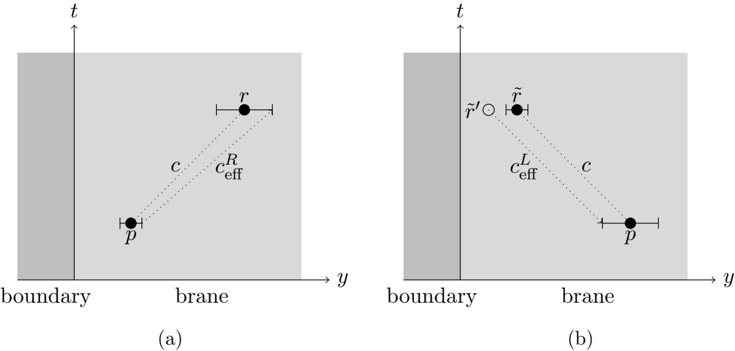
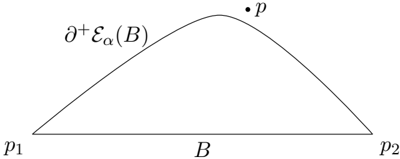
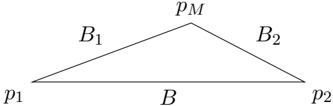
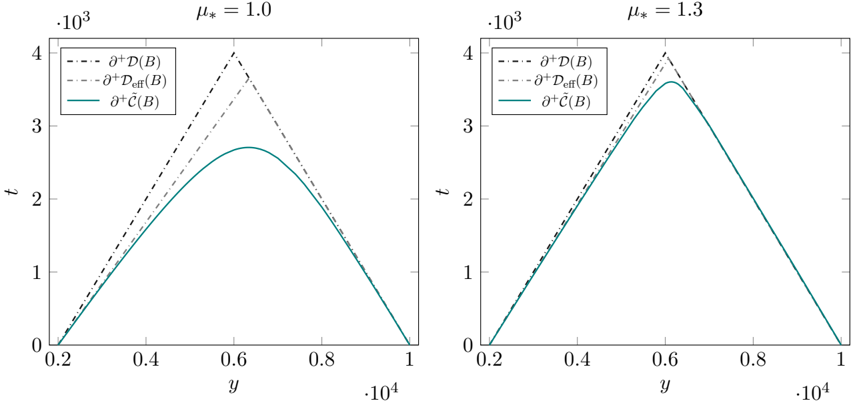
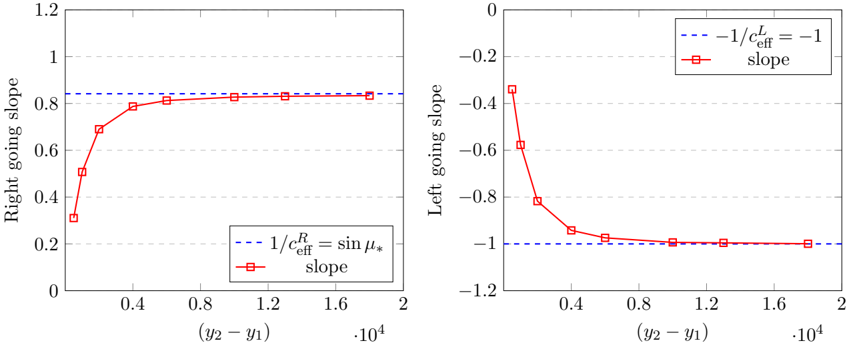
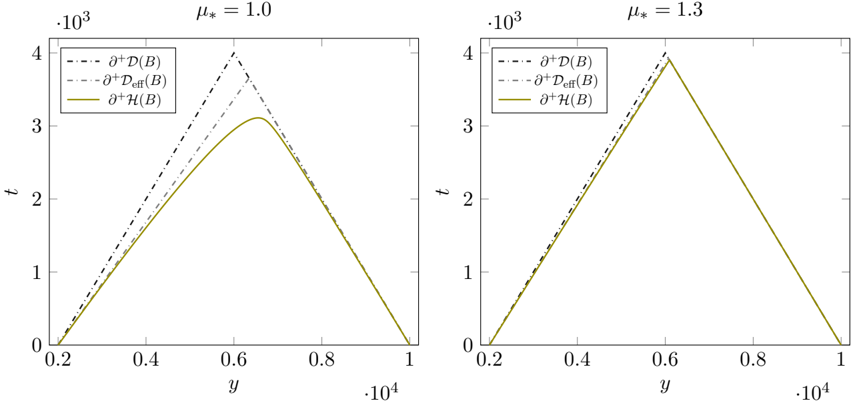
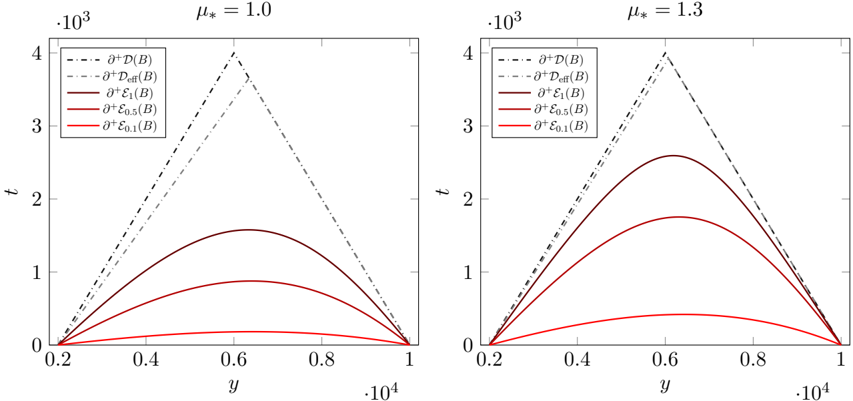
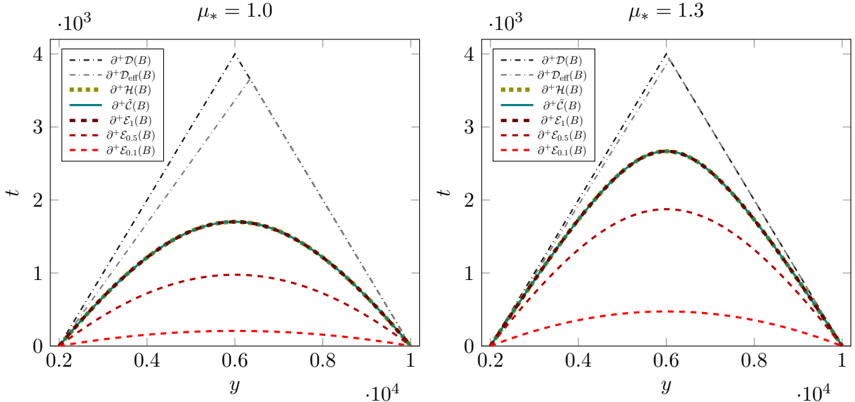
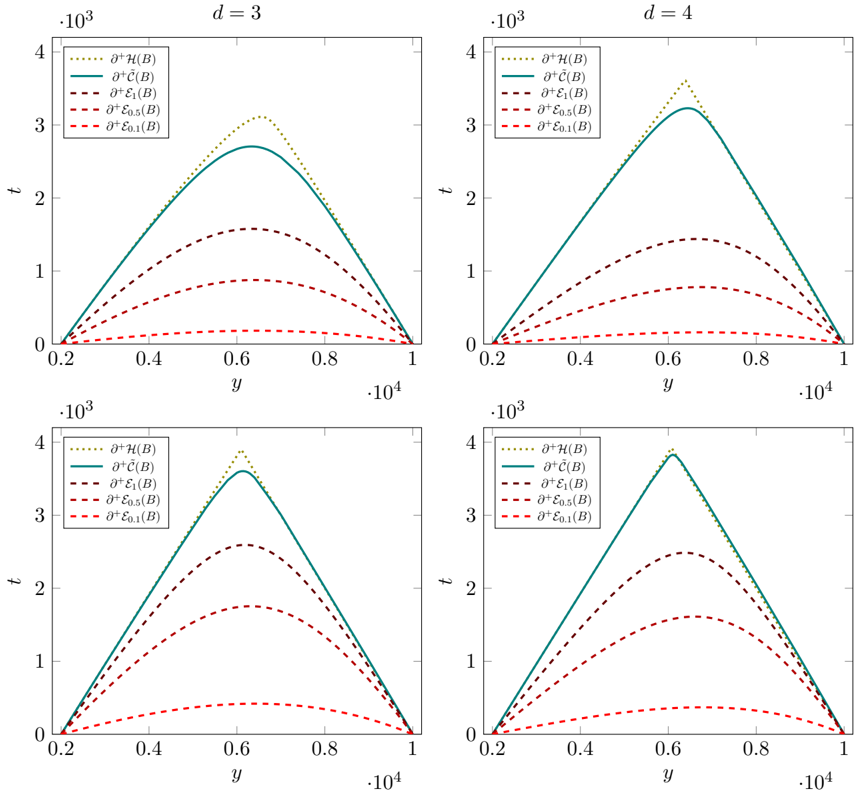
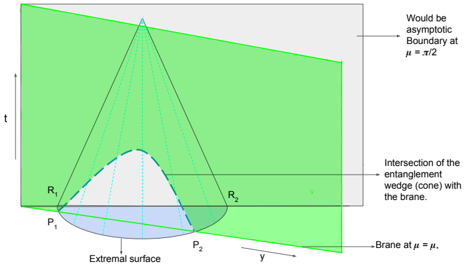
A bstract: Holography on cutoff surfaces can appear to be in tension with causality. For example, as argued by Omiya and Wei [1], double holography seemingly allows for superluminal signalling. In this paper we argue that the brane description of double holography should be treated as an effective theory and demonstrate that causality violations due to faster-than-light communication are not visible above the associated cutoff length scale. This suggests that end-of-the-world brane models are consistent with causality and that the apparent superluminal signalling is a UV effect. Moreover, we argue that short distance non-localities generically give rise to apparent faster-than-light propagation of signals in Anti-de Sitter space. Nonetheless, superluminal signalling indicates that the causal structure on holographic cutoff surfaces needs to be modified. We propose and study three different candidate regions that might replace the domain of dependence in the brane EFT of the Karch-Randall model. These regions are defined by unitarity on the brane, through bulk entanglement wedges and through the nice slice criterion, respectively. In all dimensions, these candidate regions exclude those parts of the domain of dependence which are affected by superluminal signalling. While all three definitions agree in two dimensions, they are different in higher dimensions.
Overview
The claims and statistics of this paper haven’t been checked yet.
Run the check — free, no account needed. It reads the open-access text and checks the sources it cites.
Integrity signals
Registry
Cites
Statistics
Figures
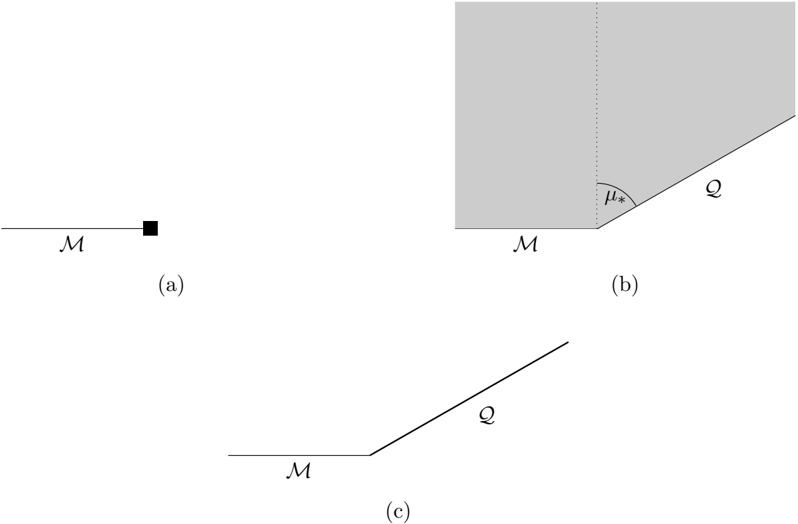
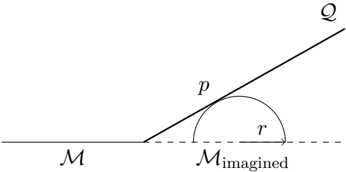
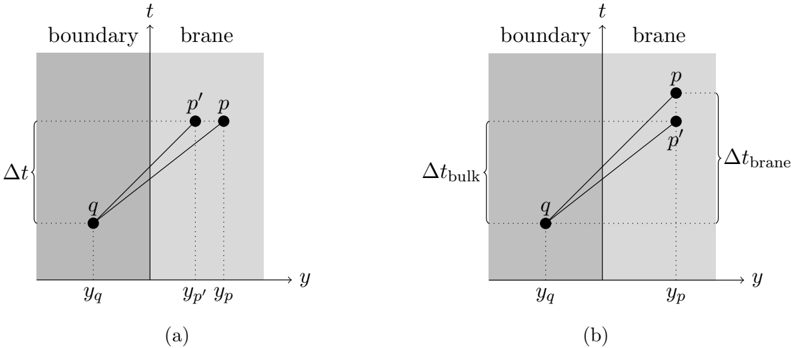
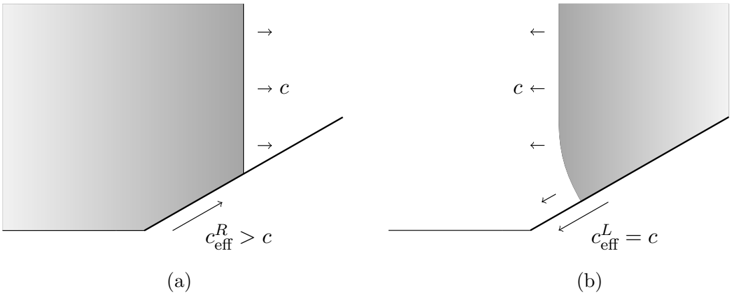
Verification
Claims the paper makes
The claims and statistics of this paper haven’t been checked yet.
Run the check — free, no account needed. It reads the open-access text and checks the sources it cites.
Claims other papers make about this one
Each is checked against this paper’s own text: does it say what the citing paper says it does?
The source backs part of the claim, not all of it — or backs it for a different population, condition or comparison.
In the citing paper
“Concerns that double-holography leads to superluminal signalling[60] are ameliorated when the brane description is treated as an effective theory, such that ETW brane models are consistent with causality[61].”
From Three-Dimensional Quantum Black Holes: A Primer (2024) · cites this paper as [61]
Experimental — accuracy not yet measured
Self-check
Percentages, sums and reported differences re-computed from the paper’s own numbers.
The self-check needs the paper’s full text.
Citations
Cites
Particle creation by black holes
Hawking, S. W. (1975) · Communications In Mathematical Physics · doi:10.1007/bf02345020 · Cited by 13,106
Information in black hole radiation
Page, D. N. (1993) · Physical Review Letters · doi:10.1103/physrevlett.71.3743 · Cited by 1,172
Entanglement wedge reconstruction and the information paradox
Penington, G. (2020) · Journal of High Energy Physics · doi:10.1007/jhep09(2020)002 · Cited by 968 · cited 1×
“These models have recently been employed as powerful tools to understand important aspects of black hole evaporation [9–12].”
MethodThe Page curve of Hawking radiation from semiclassical geometry
Almheiri, A., Mahajan, R., Maldacena, J., & Zhao, Y. (2020) · Journal of High Energy Physics · doi:10.1007/jhep03(2020)149 · Cited by 898
Black hole entropy in canonical quantum gravity and superstring theory
Susskind, L., & Uglum, J. (1994) · Physical Review D · doi:10.1103/physrevd.50.2700 · Cited by 754
Relative entropy equals bulk relative entropy
Jafferis, D. L., Lewkowycz, A., Maldacena, J., & Suh, S. J. (2015) · arXiv · doi:10.48550/arxiv.1512.06431 · Cited by 534
Causality & holographic entanglement entropy
Headrick, M., Hubeny, V. E., Lawrence, A., & Rangamani, M. (2014) · Journal of High Energy Physics · doi:10.1007/jhep12(2014)162 · Cited by 418
Entanglement Wedge Reconstruction via Universal Recovery Channels
Cotler, J., Hayden, P., Penington, G., Salton, G., Swingle, B., & Walter, M. (2017) · arXiv · doi:10.48550/arxiv.1704.05839 · Cited by 221
Research works printed but not linked: 69
- H. Omiya and Z. Wei, Causal structures and nonlocality in double holography, JHEP 07 (2022) 128 [arXiv:2107.01219] [INSPIRE]. · DOI · Paper page
- J.M. Maldacena, The Large N limit of superconformal field theories and supergravity, Adv. Theor. Math. Phys. 2 (1998) 231 [hep-th/9711200] [INSPIRE]. · DOI · Paper page
- Y. Nomura, N. Salzetta, F. Sanches and S.J. Weinberg, Toward a Holographic Theory for General Spacetimes, Phys. Rev. D 95 (2017) 086002 [arXiv:1611.02702] [INSPIRE]. · DOI
- L. McGough, M. Mezei and H. Verlinde, Moving the CFT into the bulk with $$ T\overline{T} $$, JHEP 04 (2018) 010 [arXiv:1611.03470] [INSPIRE]. · DOI · Paper page
- M. Taylor, TT deformations in general dimensions, arXiv:1805.10287 [INSPIRE]. · arXiv
- B. Grado-White, D. Marolf and S.J. Weinberg, Radial Cutoffs and Holographic Entanglement, JHEP 01 (2021) 009 [arXiv:2008.07022] [INSPIRE]. · DOI
- L. Randall and R. Sundrum, An Alternative to compactification, Phys. Rev. Lett. 83 (1999) 4690 [hep-th/9906064] [INSPIRE]. · DOI · Paper page
- A. Karch and L. Randall, Locally localized gravity, JHEP 05 (2001) 008 [hep-th/0011156] [INSPIRE]. · DOI · Paper page
- A. Almheiri, N. Engelhardt, D. Marolf and H. Maxfield, The entropy of bulk quantum fields and the entanglement wedge of an evaporating black hole, JHEP 12 (2019) 063 [arXiv:1905.08762] [INSPIRE]. · DOI · Paper page
- A. Almheiri, R. Mahajan and J.E. Santos, Entanglement islands in higher dimensions, SciPost Phys. 9 (2020) 001 [arXiv:1911.09666] [INSPIRE]. · DOI
- H. Geng and A. Karch, Massive islands, JHEP 09 (2020) 121 [arXiv:2006.02438] [INSPIRE]. · DOI · Paper page
- H.Z. Chen, R.C. Myers, D. Neuenfeld, I.A. Reyes and J. Sandor, Quantum Extremal Islands Made Easy, Part I: Entanglement on the Brane, JHEP 10 (2020) 166 [arXiv:2006.04851] [INSPIRE]. · DOI
- H.Z. Chen, R.C. Myers, D. Neuenfeld, I.A. Reyes and J. Sandor, Quantum Extremal Islands Made Easy, Part II: Black Holes on the Brane, JHEP 12 (2020) 025 [arXiv:2010.00018] [INSPIRE]. · DOI · Paper page
- T. Takayanagi, Holographic Dual of BCFT, Phys. Rev. Lett. 107 (2011) 101602 [arXiv:1105.5165] [INSPIRE]. · DOI · Paper page
- M. Fujita, T. Takayanagi and E. Tonni, Aspects of AdS/BCFT, JHEP 11 (2011) 043 [arXiv:1108.5152] [INSPIRE]. · DOI · Paper page
- S. Gao and R.M. Wald, Theorems on gravitational time delay and related issues, Class. Quant. Grav. 17 (2000) 4999 [gr-qc/0007021] [INSPIRE]. · DOI
- H. Geng et al., Inconsistency of islands in theories with long-range gravity, JHEP 01 (2022) 182 [arXiv:2107.03390] [INSPIRE]. · DOI
- A. Karch, H. Sun and C.F. Uhlemann, Double holography in string theory, JHEP 10 (2022) 012 [arXiv:2206.11292] [INSPIRE]. · DOI · Paper page
- A. Almheiri, R. Mahajan and J. Maldacena, Islands outside the horizon, arXiv:1910.11077 [INSPIRE]. · arXiv
- J. Polchinski, String theory and black hole complementarity, in STRINGS 95: Future Perspectives in String Theory, Los Angeles, U.S.A. (1995), pg. 417 [hep-th/9507094] [INSPIRE]. · arXiv
- D.A. Lowe, J. Polchinski, L. Susskind, L. Thorlacius and J. Uglum, Black hole complementarity versus locality, Phys. Rev. D 52 (1995) 6997 [hep-th/9506138] [INSPIRE]. · DOI
- S. Ryu and T. Takayanagi, Holographic derivation of entanglement entropy from AdS/CFT, Phys. Rev. Lett. 96 (2006) 181602 [hep-th/0603001] [INSPIRE]. · DOI · Paper page
- V.E. Hubeny, M. Rangamani and T. Takayanagi, A Covariant holographic entanglement entropy proposal, JHEP 07 (2007) 062 [arXiv:0705.0016] [INSPIRE]. · DOI · Paper page
- J.H. Lee, D. Neuenfeld and A. Shukla, Bounds on gravitational brane couplings and tomography in AdS3 black hole microstates, JHEP 10 (2022) 139 [arXiv:2206.06511] [INSPIRE]. · DOI · Paper page
- J. Sully, M. Van Raamsdonk and D. Wakeham, BCFT entanglement entropy at large central charge and the black hole interior, JHEP 03 (2021) 167 [arXiv:2004.13088] [INSPIRE]. · DOI
- I. Affleck and A.W.W. Ludwig, Universal noninteger ’ground state degeneracy’ in critical quantum systems, Phys. Rev. Lett. 67 (1991) 161 [INSPIRE]. · DOI
- M. Porrati, Higgs phenomenon for 4-D gravity in anti-de Sitter space, JHEP 04 (2002) 058 [hep-th/0112166] [INSPIRE]. · DOI
- O. Aharony, O. DeWolfe, D.Z. Freedman and A. Karch, Defect conformal field theory and locally localized gravity, JHEP 07 (2003) 030 [hep-th/0303249] [INSPIRE]. · DOI
- D. Neuenfeld, The Dictionary for Double Holography and Graviton Masses in d Dimensions, arXiv:2104.02801 [INSPIRE]. · arXiv
- S. de Haro, K. Skenderis and S.N. Solodukhin, Gravity in warped compactifications and the holographic stress tensor, Class. Quant. Grav. 18 (2001) 3171 [hep-th/0011230] [INSPIRE]. · DOI · Paper page
- A.M. Polyakov, Quantum Geometry of Bosonic Strings, Phys. Lett. B 103 (1981) 207 [INSPIRE]. · DOI · Paper page
- C.P. Burgess, Quantum gravity in everyday life: General relativity as an effective field theory, Living Rev. Rel. 7 (2004) 5 [gr-qc/0311082] [INSPIRE]. · DOI · Paper page
- L. Susskind and E. Witten, The Holographic bound in anti-de Sitter space, hep-th/9805114 [INSPIRE]. · arXiv
- S. de Haro, S.N. Solodukhin and K. Skenderis, Holographic reconstruction of space-time and renormalization in the AdS/CFT correspondence, Commun. Math. Phys. 217 (2001) 595 [hep-th/0002230] [INSPIRE]. · DOI · Paper page
- D. Neuenfeld, Homology conditions for RT surfaces in double holography, Class. Quant. Grav. 39 (2022) 075009 [arXiv:2105.01130] [INSPIRE]. · DOI · Paper page
- R.M. Wald, General Relativity, Chicago University Press, Chicago, U.S.A. (1984), https://doi.org/10.7208/chicago/9780226870373.001.0001 [INSPIRE]. · DOI · Paper page
- B. Czech, J.L. Karczmarek, F. Nogueira and M. Van Raamsdonk, The Gravity Dual of a Density Matrix, Class. Quant. Grav. 29 (2012) 155009 [arXiv:1204.1330] [INSPIRE]. · DOI · Paper page
- A.C. Wall, Maximin Surfaces, and the Strong Subadditivity of the Covariant Holographic Entanglement Entropy, Class. Quant. Grav. 31 (2014) 225007 [arXiv:1211.3494] [INSPIRE]. · DOI · Paper page
- X. Dong, D. Harlow and A.C. Wall, Reconstruction of Bulk Operators within the Entanglement Wedge in Gauge-Gravity Duality, Phys. Rev. Lett. 117 (2016) 021601 [arXiv:1601.05416] [INSPIRE]. · DOI · Paper page
- A. Lewkowycz, J. Liu, E. Silverstein and G. Torroba, $$ T\overline{T} $$ and EE, with implications for (A)dS subregion encodings, JHEP 04 (2020) 152 [arXiv:1909.13808] [INSPIRE]. · DOI
- S.B. Giddings, Quantization in black hole backgrounds, Phys. Rev. D 76 (2007) 064027 [hep-th/0703116] [INSPIRE]. · DOI
- Y. Kiem, H.L. Verlinde and E.P. Verlinde, Black hole horizons and complementarity, Phys. Rev. D 52 (1995) 7053 [hep-th/9502074] [INSPIRE]. · DOI
- R. Bousso and A. Shahbazi-Moghaddam, Quantum singularities, Phys. Rev. D 107 (2023) 066002 [arXiv:2206.07001] [INSPIRE]. · DOI
- A. Lewkowycz and J. Maldacena, Generalized gravitational entropy, JHEP 08 (2013) 090 [arXiv:1304.4926] [INSPIRE]. · DOI · Paper page
- T. Faulkner, A. Lewkowycz and J. Maldacena, Quantum corrections to holographic entanglement entropy, JHEP 11 (2013) 074 [arXiv:1307.2892] [INSPIRE]. · DOI · Paper page
- R. Bousso, Z. Fisher, S. Leichenauer and A.C. Wall, Quantum focusing conjecture, Phys. Rev. D 93 (2016) 064044 [arXiv:1506.02669] [INSPIRE]. · DOI · Paper page
- R. Bousso, Z. Fisher, J. Koeller, S. Leichenauer and A.C. Wall, Proof of the Quantum Null Energy Condition, Phys. Rev. D 93 (2016) 024017 [arXiv:1509.02542] [INSPIRE]. · DOI · Paper page
- S. Balakrishnan, T. Faulkner, Z.U. Khandker and H. Wang, A General Proof of the Quantum Null Energy Condition, JHEP 09 (2019) 020 [arXiv:1706.09432] [INSPIRE]. · DOI · Paper page
- K. Jensen, J. Sorce and A. Speranza, Generalized entropy for general subregions in quantum gravity, arXiv:2306.01837 [INSPIRE]. · arXiv
- S. Ali Ahmad and R. Jefferson, Crossed product algebras and generalized entropy for subregions, arXiv:2306.07323 [INSPIRE]. · arXiv
- S. Leichenauer, The Quantum Focusing Conjecture Has Not Been Violated, arXiv:1705.05469 [INSPIRE]. · arXiv
- W. Donnelly and V. Shyam, Entanglement entropy and $$ T\overline{T} $$ deformation, Phys. Rev. Lett. 121 (2018) 131602 [arXiv:1806.07444] [INSPIRE]. · DOI
- V.E. Hubeny and M. Rangamani, Causal Holographic Information, JHEP 06 (2012) 114 [arXiv:1204.1698] [INSPIRE]. · DOI · Paper page
- B. Freivogel and B. Mosk, Properties of Causal Holographic Information, JHEP 09 (2013) 100 [arXiv:1304.7229] [INSPIRE]. · DOI
- R.M. Wald, Black hole entropy is the Noether charge, Phys. Rev. D 48 (1993) R3427 [gr-qc/9307038] [INSPIRE]. · DOI · Paper page
- X. Dong, Holographic Entanglement Entropy for General Higher Derivative Gravity, JHEP 01 (2014) 044 [arXiv:1310.5713] [INSPIRE]. · DOI · Paper page
- T. Mori and B. Yoshida, Exploring causality in braneworld/cutoff holography via holographic scattering, arXiv:2308.00739 [INSPIRE]. · arXiv
- R. Emparan, A.M. Frassino and B. Way, Quantum BTZ black hole, JHEP 11 (2020) 137 [arXiv:2007.15999] [INSPIRE]. · DOI · Paper page
- R. Emparan, R. Luna, R. Suzuki, M. Tomašević and B. Way, Holographic duals of evaporating black holes, JHEP 05 (2023) 182 [arXiv:2301.02587] [INSPIRE]. · DOI · Paper page
- Y. Iwashita, T. Kobayashi, T. Shiromizu and H. Yoshino, Holographic entanglement entropy of de Sitter braneworld, Phys. Rev. D 74 (2006) 064027 [hep-th/0606027] [INSPIRE]. · DOI
- G.R. Dvali, G. Gabadadze and M. Porrati, 4-D gravity on a brane in 5-D Minkowski space, Phys. Lett. B 485 (2000) 208 [hep-th/0005016] [INSPIRE]. · DOI · Paper page
- M. Guica and R. Monten, $$ T\overline{T} $$ and the mirage of a bulk cutoff, SciPost Phys. 10 (2021) 024 [arXiv:1906.11251] [INSPIRE]. · DOI
- D.J.H. Chung and K. Freese, Can geodesics in extra dimensions solve the cosmological horizon problem?, Phys. Rev. D 62 (2000) 063513 [hep-ph/9910235] [INSPIRE]. · DOI
- E. Abdalla, A. Casali and B. Cuadros-Melgar, Shortcuts for graviton propagation in a six-dimensional brane world model, Nucl. Phys. B 644 (2002) 201 [hep-th/0205203] [INSPIRE]. · DOI
- E. Abdalla, A.G. Casali and B. Cuadros-Melgar, Shortcuts in cosmological branes, Nucl. Phys. B Proc. Suppl. 127 (2004) 1 [INSPIRE]. · DOI
- B. Greene, D. Kabat, J. Levin and A.S. Menon, Superluminal propagation on a moving braneworld, Phys. Rev. D 106 (2022) 085001 [arXiv:2206.13590] [INSPIRE]. · DOI
- D.-C. Dai and D. Stojkovic, Superluminal propagation along the brane in space with extra dimensions, arXiv:2306.04069 [INSPIRE]. · arXiv
- A.P. Polychronakos, Superluminal anisotropic propagation and wavefront splitting on tilted and boosted braneworlds, Phys. Lett. B 841 (2023) 137917 [arXiv:2210.11497] [INSPIRE]. · DOI
- B. Greene, D. Kabat, J. Levin and M. Porrati, Back to the future: Causality on a moving braneworld, Phys. Rev. D 107 (2023) 025016 [arXiv:2208.09014] [INSPIRE]. · DOI
Cited by
Sorted by citations
Three-Dimensional Quantum Black Holes: A Primer
Panella, E., Pedraza, J. F., & Svesko, A. (2024) · Universe · doi:10.3390/universe10090358 · Cited by 24
Metadata
- Authors
- Neuenfeld, D., & Srivastava, M.
- Affiliations
- Julius-Maximilians-Universität Würzburg
- Massachusetts Institute of Technology
- Venue
- Journal of High Energy Physics
- Published
- 2023-10-26
- Volume
- 2023
- Issue
- 10
- ISSN
- 1029-8479
- Cited by
- 13
- References
- 8
- Language
- en
About these checks
Registry, retraction, Cites and statistics results are computed, not judged, with one exception: a printed reference that no index lists is read once by a model before it counts as a citation error. Claims are extracted by a model and kept only when their quote appears verbatim in the text; each cited source is then checked, with a model’s help, for whether it says what the claim relies on. Those verdicts can be wrong — read the claim’s quote and the cited source before relying on one.
Statistics and arithmetic are recomputed, not judged.
Confidence bands are shown only for fields calibrated on our annotated test set. None is calibrated yet, so no band is shown.
What counts as a claim ›How we measure confidence ›How we check this ›
Are you an author, or do you see a problem with this page? Request a review
