

Role of CFTR in epithelial physiology
Open accessThe DOI matches its Crossref record; 231 of the 232 references it cites were found in a registry or an index.
Abstract
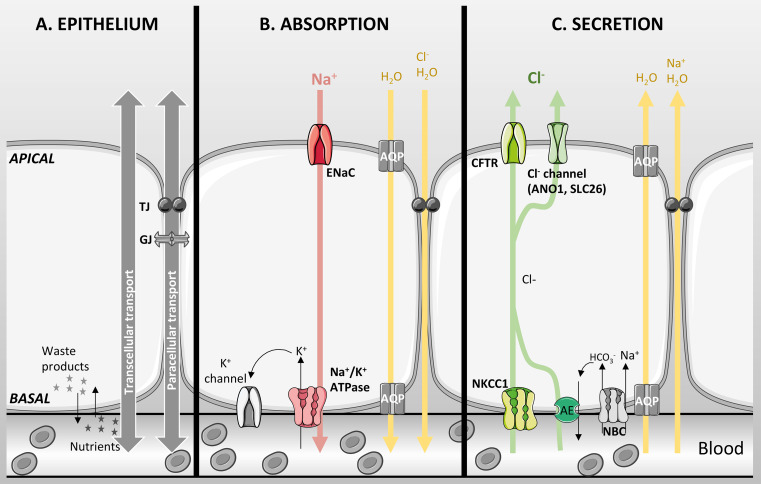
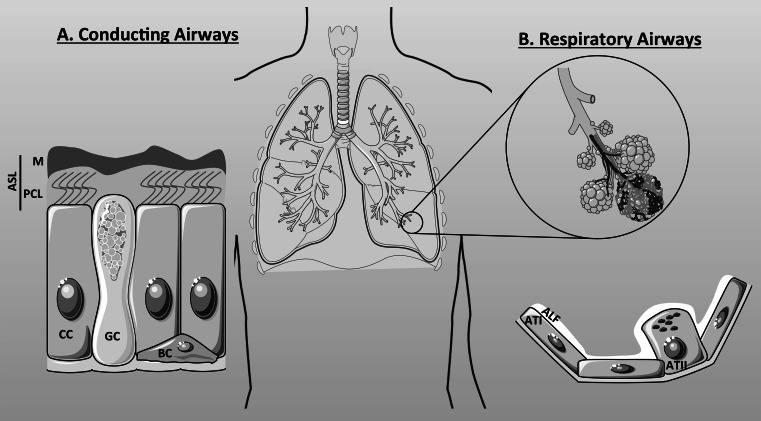
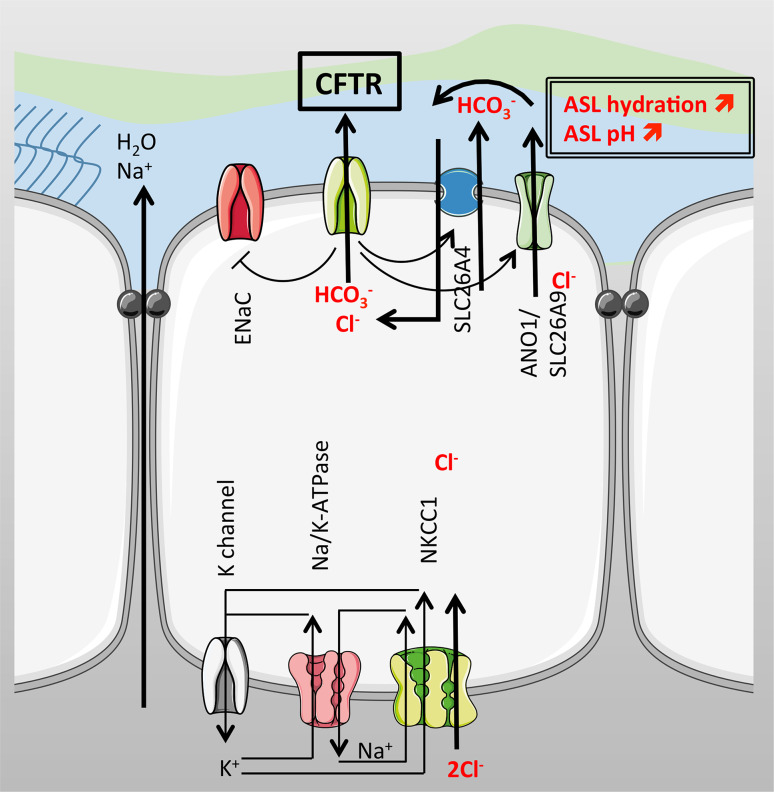
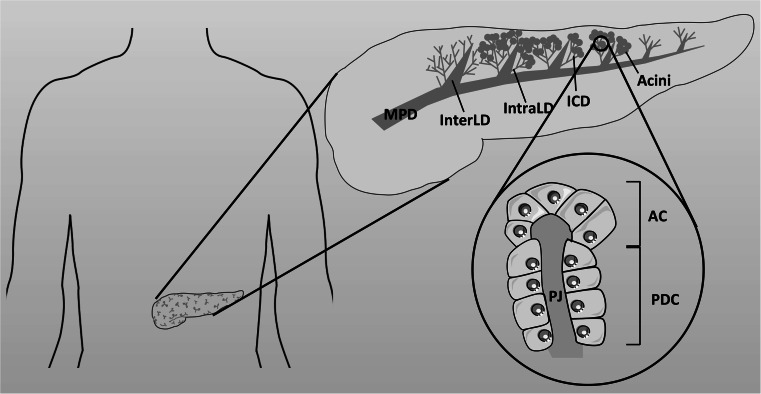
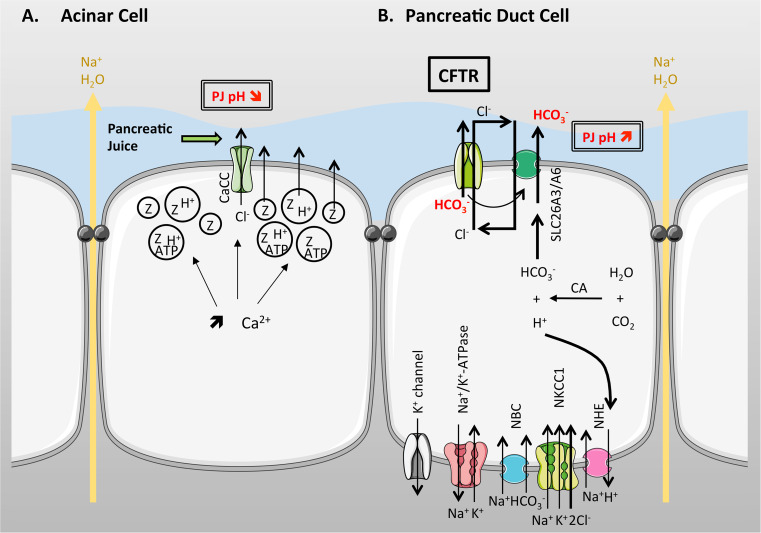
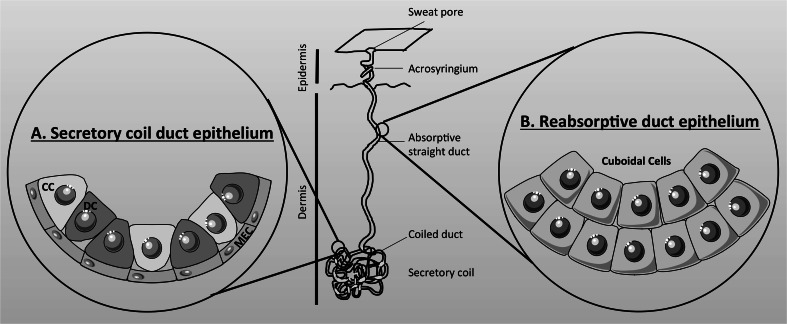
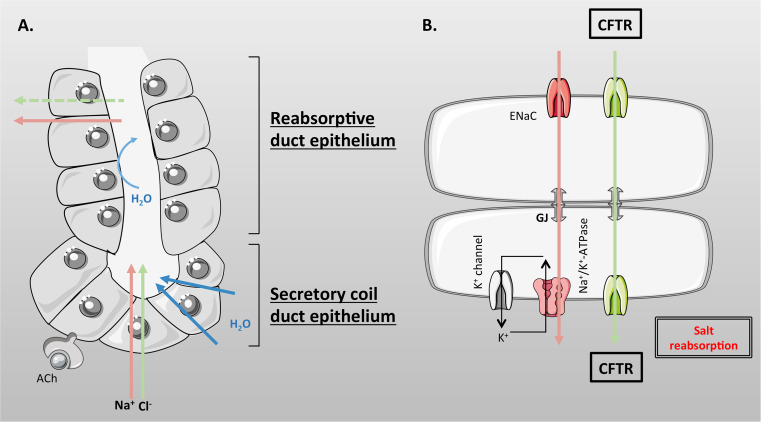
Salt and fluid absorption and secretion are two processes that are fundamental to epithelial function and whole body fluid homeostasis, and as such are tightly regulated in epithelial tissues. The CFTR anion channel plays a major role in regulating both secretion and absorption in a diverse range of epithelial tissues, including the airways, the GI and reproductive tracts, sweat and salivary glands. It is not surprising then that defects in CFTR function are linked to disease, including life-threatening secretory diarrhoeas, such as cholera, as well as the inherited disease, cystic fibrosis (CF), one of the most common life-limiting genetic diseases in Caucasian populations. More recently, CFTR dysfunction has also been implicated in the pathogenesis of acute pancreatitis, chronic obstructive pulmonary disease (COPD), and the hyper-responsiveness in asthma, underscoring its fundamental role in whole body health and disease. CFTR regulates many mechanisms in epithelial physiology, such as maintaining epithelial surface hydration and regulating luminal pH. Indeed, recent studies have identified luminal pH as an important arbiter of epithelial barrier function and innate defence, particularly in the airways and GI tract. In this chapter, we will illustrate the different operational roles of CFTR in epithelial function by describing its characteristics in three different tissues: the airways, the pancreas, and the sweat gland.
Overview
The claims and statistics of this paper haven’t been checked yet.
Free: it reads the open-access text and checks the first 5 claims that cite a source we can check. Create a free account to check every claim.
Integrity signals
Registry
Cites
Statistics
Figures
Verification
Claims the paper makes
The claims and statistics of this paper haven’t been checked yet.
Free: it reads the open-access text and checks the first 5 claims that cite a source we can check. Create a free account to check every claim.
Claims other papers make about this one
Each is checked against this paper’s own text: does it say what the citing paper says it does?
The cited source says what the claim attributes to it.
In the citing paper
“CFTR are also expressed on the apical membrane of clear cells and play a role in chloride secretion in response to beta-adrenergic stimulation”
From Physiological mechanisms determining eccrine sweat composition (2020) · cites this paper as Saint-Criq and Gray 2017
Self-check
Percentages, sums and reported differences re-computed from the paper’s own numbers.
The self-check needs the paper’s full text.
Citations
Cites
Meijer, L., Nelson, D. J., Riazanski, V., Gabdoulkhakova, A. G., Hery-Arnaud, G., Le Berre, R., Loaëc, N., Oumata, N., Galons, H., Nowak, E., et al. (2016) · Journal of Innate Immunity · doi:10.1159/000444256 · Cited by 4,992
Claudins and the Modulation of Tight Junction Permeability
Günzel, D., & Yu, A. S. L. (2013) · Physiological Reviews · doi:10.1152/physrev.00019.2012 · Cited by 1,456 · cited 1×
“junctions [5].”
Gibson, L. E., & Cooke, R. E. (1959) · Pediatrics · doi:10.1542/peds.23.3.545 · Cited by 1,434 · cited 1×
“diagnostic purposes [220, 221].”
TMEM16A confers receptor-activated calcium-dependent chloride conductance
Yang, Y. D., Cho, H., Koo, J. Y., Tak, M. H., Cho, Y., Shim, W.-S., Park, S. P., Lee, J., Lee, B., Kim, B.-M., et al. (2008) · Nature · doi:10.1038/nature07313 · Cited by 1,283 · cited 1×
“In a study from 2011, soon after the identification of the CaCC as being encoded by TMEM16A (also called Anoctamin 1, ANO1) [58–60], Ousingsawat et al.”
BackgroundTMEM16A, A Membrane Protein Associated with Calcium-Dependent Chloride Channel Activity
Caputo, A., Caci, E., Ferrera, L., Pedemonte, N., Barsanti, C., Sondo, E., Pfeffer, U., Ravazzolo, R., Zegarra-Moran, O., & Galietta, L. J. V. (2008) · Science · doi:10.1126/science.1163518 · Cited by 1,263 · cited 1×
“In a study from 2011, soon after the identification of the CaCC as being encoded by TMEM16A (also called Anoctamin 1, ANO1) [58–60], Ousingsawat et al.”
BackgroundExpression Cloning of TMEM16A as a Calcium-Activated Chloride Channel Subunit
Schroeder, B. C., Cheng, T., Jan, Y. N., & Jan, L. Y. (2008) · Cell · doi:10.1016/j.cell.2008.09.003 · Cited by 1,148 · cited 1×
“In a study from 2011, soon after the identification of the CaCC as being encoded by TMEM16A (also called Anoctamin 1, ANO1) [58–60], Ousingsawat et al.”
BackgroundMucus clearance as a primary innate defense mechanism for mammalian airways
Knowles, M. R., & Boucher, R. C. (2002) · Journal of Clinical Investigation · doi:10.1172/jci0215217 · Cited by 1,054 · cited 1×
“Studies using thin film cultured human bronchial epithelial cells (HBEs) have shown that both Na absorption and Cl secretion regulate ASL height and composition [28, 29].”
BackgroundEpidemiology of constipation in children and adults: A systematic review
Mugie, S. M., Benninga, M. A., & Di Lorenzo, C. (2011) · Best Practice & Research Clinical Gastroenterology · doi:10.1016/j.bpg.2010.12.010 · Cited by 941
Increased airway epithelial Na+ absorption produces cystic fibrosis-like lung disease in mice
Mall, M., Grubb, B. R., Harkema, J. R., O'Neal, W. K., & Boucher, R. C. (2004) · Nature Medicine · doi:10.1038/nm1028 · Cited by 911 · cited 1×
“Later work from a b-ENaC overexpressing mouse [40] provided further support, since these transgenic mice exhibited a lung phenotype characteristic of human CF airways.”
BackgroundKim, B. J., Nam, J. H., Kim, K. H., Joo, M., Ha, T. S., Weon, K. Y., Choi, S., Jun, J. Y., Park, E. J., Wie, J., et al. (2014) · Cellular Physiology and Biochemistry · doi:10.1159/000366306 · Cited by 886
Cited by
Items 201–300 of 445
CFTR Modulators: From Mechanism to Targeted Therapeutics
Yeh, H., Sutcliffe, K. J., Sheppard, D. N., & Hwang, T. (2022) · Handbook of experimental pharmacology · doi:10.1007/164_2022_597 · Cited by 13
Managing an ageing cystic fibrosis population: challenges and priorities
Frost, F. J., Peckham, D. G., Felton, I. C., Snowball, J., Gray, R. D., Jones, A. M., Simmonds, N. J., Lord, R. W., Lip, G. Y. H., Chandler, H., et al. (2025) · European Respiratory Review · doi:10.1183/16000617.0261-2024 · Cited by 14
ABCC7/CFTR Expression Is Associated with the Clinical Course of Ulcerative Colitis Patients
Villeda-Ramírez, M. A., Meza-Guillén, D., Barreto‐Zúñiga, R., & Yamamoto-Furusho, J. K. (2021) · Gastroenterology Research and Practice · doi:10.1155/2021/5536563 · Cited by 10
“The CFTR is a channel expressed in the intestine that regulates the efflux of chloride and bicarbonate ions and also participates actively in the pH regulation [9, 10].”
BackgroundCalamita, G., & Delporte, C. (2023) · Cells · doi:10.3390/cells12172170 · Cited by 10
Mezencev, R., & Auerbach, S. S. (2021) · Toxicology and Applied Pharmacology · doi:10.1016/j.taap.2021.115773 · Cited by 11
Functional evaluation of the cystic fibrosis transmembrane conductance regulator in the endocervix
Han, L. L., Roberts, M., Luo, A., Wei, S., Slayden, O. D., & MacDonald, K. D. (2022) · Biology of Reproduction · doi:10.1093/biolre/ioac090 · Cited by 12
“CFTR functions occur in concert with the epithelial sodium channel (ENaC) action, which reabsorbs Na+, moving water to maintain homeostasis of the mucus layer [7].”
BackgroundRole of Ezrin in Asthma-Related Airway Inflammation and Remodeling
Zhao, S.-M., Luo, J., Hu, J., Wang, H., Zhao, N., Cao, M., Zhang, C., Hu, R., & Liu, L. (2022) · Mediators of Inflammation · doi:10.1155/2022/6255012 · Cited by 10
Lopes‐Pacheco, M., Kitoko, J. Z., Morales, M. M., Petrs‐Silva, H., & Rocco, P. R. M. (2018) · Experimental Cell Research · doi:10.1016/j.yexcr.2018.09.015 · Cited by 11
Vaz, C. M., Mülberger, A. G., & Torrent, M. (2024) · Critical Reviews in Microbiology · doi:10.1080/1040841x.2024.2407378 · Cited by 13
Perrotta, N., Fiorito, L. A., Gentile, R., Vescovo, R., Piciocchi, A., Troiani, P., Poscia, R., & Cimino, G. (2025) · Clinical and Translational Science · doi:10.1111/cts.70373 · Cited by 8
Rodrat, M., Wongdee, K., Teerapornpuntakit, J., Thongbunchoo, J., Tanramluk, D., Aeimlapa, R., Thammayon, N., Thonapan, N., Wattano, P., & Charoenphandhu, N. (2022) · PLoS ONE · doi:10.1371/journal.pone.0277096 · Cited by 7
“As mentioned earlier, VIP normally regulates a number of gastrointestinal events, including CFTR activity [9], which is essential for luminal fluidity and pH balance [28].”
BackgroundCutaneous manifestations of cystic fibrosis
Smith, A. D., Schwartzman, G. H., Lyons, C. E., Flowers, H., Albon, D. P., Greer, K. E., Lonabaugh, K. P., & Zlotoff, B. J. (2024) · Journal of the American Academy of Dermatology · doi:10.1016/j.jaad.2024.04.052 · Cited by 8
Therapeutic potential for coxibs-nitric oxide releasing hybrids in cystic fibrosis
Consalvi, S., Poce, G., Ghelardini, C., Mannelli, L. D. C., Patrignani, P., Bruno, A., Anzini, M., Calderone, V., Martelli, A., Testai, L., et al. (2020) · European Journal of Medicinal Chemistry · doi:10.1016/j.ejmech.2020.112983 · Cited by 7
“It is caused by mutations in the gene of the cystic fibrosis transmembrane regulator (CFTR), a cAMP-dependent anion channel mostly expressed in the apical membrane of epithelia cells [1,2].”
BackgroundMethodNew Trends in Macromolecular and Supramolecular Chemistry for Biological Applications
della Sala, F., Tilly, D., & Webb, S. J. (2021) · Springer eBooks · doi:10.1007/978-3-030-57456-7 · Cited by 8
Prins, S., Corradi, V., Sheppard, D. N., Tieleman, D. P., & Vergani, P. (2022) · Journal of Biological Chemistry · doi:10.1016/j.jbc.2022.101615 · Cited by 10
“CFTR plays an important physiological role, controlling epithelial secretions in several organs, such as the airways, intestine, pancreas, biliary ducts, sweat glands, and reproductive tracts (15).”
BackgroundNanomechanics combined with HDX reveals allosteric drug binding sites of CFTR NBD1
Padányi, R., Farkas, B., Tordai, H., Kiss, B., Grubmüller, H., Soya, N., Lukács, G. L., Kellermayer, M., & Hegedűs, T. (2022) · Computational and Structural Biotechnology Journal · doi:10.1016/j.csbj.2022.05.036 · Cited by 9
CrossTalk proposal: mucosal acidification drives early progressive lung disease in cystic fibrosis
Figueira, M. F., Webster, M. J., & Tarran, R. (2018) · The Journal of Physiology · doi:10.1113/jp275425 · Cited by 8
Disease Models: Lung Models for Testing Drugs Against Inflammation and Infection
Carius, P., Horstmann, J. C., Carvalho‐Wodarz, C. D. S., & Lehr, C. (2020) · Handbook of experimental pharmacology · doi:10.1007/164_2020_366 · Cited by 9
Oxalate Flux Across the Intestine: Contributions from Membrane Transporters
Whittamore, J. M., & Hatch, M. (2021) · Comprehensive physiology · doi:10.1002/cphy.c210013 · Cited by 18
Effects of CFTR Modulators on Pseudomonas aeruginosa Infections in Cystic Fibrosis
Pescaru, C. C., Crișan, A. F., Marițescu, A., Cărunta, V., Marc, M. S., Dumitrache‐Rujinski, S., Laitin, S. M. D., & Oancea, C. I. (2025) · Infectious Disease Reports · doi:10.3390/idr17040080 · Cited by 9
“In a mutation in the CFTR gene, CFTR protein expression and/or function is impaired, leading to abnormal ion transport and dehydration of the epithelial surface [7].”
Lung organoids as a human system for Mycobacteria infection modeling and drug testing
Leon‐Icaza, S. A., Vergé, R., Mazars, R., Berry, L., & Cougoule, C. (2025) · FEBS Journal · doi:10.1111/febs.70265 · Cited by 9
“In addition, the CFTR modulates the function of the epithelial sodium channel (ENaC) and regulates the water exchange across the apical plasma membrane of EC [179,183].”
Pulmonary Aspergillosis in People with Cystic Fibrosis
Schwarz, C., Eschenhagen, P. N., Mainz, J. G., Schmidergall, T., Schuette, H., & Romanowska, E. (2024) · Seminars in Respiratory and Critical Care Medicine · doi:10.1055/s-0043-1777267 · Cited by 9
“10,11 CFTR is expressed in epithelial cells, and the absence or dysfunction of this protein can induce multiorgan disease.”
BackgroundHou, Y., Huang, C., Huang, Z., Huang, J. T., & Zhu, B. (2024) · Urolithiasis · doi:10.1007/s00240-024-01547-6 · Cited by 7
Lindblad, A., de Monestrol, I., Gilljam, M., Krantz, C., McGarry, L. J., Banefelt, J., & Aldvén, M. (2024) · Journal of Medical Economics · doi:10.1080/13696998.2024.2373000 · Cited by 7
“As an epithelial cell-surface anion channel, CFTR regulates exocrine functions across multiple organ systems and its dysfunction leads to serious clinical consequences in the lungs, pancreas, intestines, sinuses, and reproductive system 2,3 .”
Yang, C., Wang, L., Luo, S., Hu, J., Huang, X., Li, P.-W., Zhang, Y., Wu, C., & Tian, B. (2020) · Drug Design Development and Therapy · doi:10.2147/dddt.s261017 · Cited by 7
Priyamvada, S., Saksena, S., Alrefai, W. A., & Dudeja, P. K. (2018) · Elsevier eBooks · doi:10.1016/b978-0-12-809954-4.00057-8 · Cited by 8
Oral Care Recommendation for Cystic Fibrosis Patients–Recommendation for Dentists
Pawlaczyk−Kamieńska, T., Borysewicz‐Lewicka, M., Batura‐Gabryel, H., & Cofta, S. (2022) · Journal of Clinical Medicine · doi:10.3390/jcm11102756 · Cited by 7
“The widespread location of chloride channels in the human body explains why the disease shows with a polymorphism of symptoms [1,2].”
BackgroundLi, D., Han, X., Habgood, M. D., & Schneider‐Futschik, E. K. (2023) · ACS Pharmacology & Translational Science · doi:10.1021/acsptsci.2c00233 · Cited by 11
Rat tight junction proteins are disrupted after subchronic exposure to okadaic acid
Huang, L., Liu, B., Yu, X., Pan, G., Xu, J.-Y., Yan, D., Wang, Y., & Guo, Q. (2023) · Environmental Science and Pollution Research · doi:10.1007/s11356-023-26471-x · Cited by 7
“Moreover, the swollen mitochondria also contributed to the induction of diarrhea by disturbing the energy supply for ion transport (Saint-Criq and Gray 2017).”
BackgroundPrins, S., Langron, E., Hastings, C., Hill, E. J., Stefan, A. C., Griffin, L. D., & Vergani, P. (2020) · Journal of Biological Chemistry · doi:10.1074/jbc.ra120.014061 · Cited by 7
Checa, J., Martínez-González, I., Maqueda, M., Mosquera, J. L., & Aran, J. M. (2021) · Antioxidants · doi:10.3390/antiox10121936 · Cited by 8
“Our results suggested that, while dysfunctional CFTR generates an electrolyte imbalance directly influencing mucus viscosity in the airway epithelia [73], oxidative stress may impact cilia structure and function, particularly the intraflagellar transport (IFT) machinery, leading to impaired intraciliary transport of l…”
BackgroundRamli, N. S. K., Giribabu, N., & Salleh, N. (2018) · Steroids · doi:10.1016/j.steroids.2018.06.012 · Cited by 7
“Subsequently, increased in the luminal Cl concentration would drive Na to move into the lumen, possibly via the paracellular pathway [39].”
From CFTR to a CF signalling network: a systems biology approach to study Cystic Fibrosis
Najm, M., Martignetti, L., Cornet, M., Kelly, M., Sermet‐Gaudelus, I., Calzone, L., & Stoven, V. (2024) · BMC Genomics · doi:10.1186/s12864-024-10752-x · Cited by 6
“Beyond CF, reduced amounts of functional CFTR have also been observed in other diseases like chronic obstructive pulmonary disease (COPD) [102, 103], cigarette smoke [104] , or cancer [98, 105].”
BackgroundCystic fibrosis risk variants confer protection against inflammatory bowel disease
Yu, M., Zhang, Q., Yuan, K., Sazonovs, A., Stevens, C. R., Fachal, L., Lamb, C. A., Anderson, C. A., Daly, M. J., & Huang, H. (2025) · Cell Genomics · doi:10.1016/j.xgen.2025.101071 · Cited by 10
“6 In addition to its role in the lungs, CFTR also influences the physiology of the gastrointestinal (GI) tract.”
Sivapiromrat, A. K., Suppakitjanusant, P., Wang, Y., Hu, C., Binongo, J., Hunt, W. R., Weinstein, S., Jathal, I., Alvarez, J. A., Chassaing, B., et al. (2024) · Contemporary Clinical Trials Communications · doi:10.1016/j.conctc.2024.101278 · Cited by 6
“CF is caused by a mutation in the cystic fibrosis transmembrane conductance regulator (CFTR) gene, which results in the disruption of water and chloride ion transport on epithelial surfaces, such as the lung, liver, pancreas, and gastrointestinal tract [2].”
BackgroundStellate cells are in utero markers of pancreatic disease in cystic fibrosis
Leir, S., Tkachenko, S., Paranjapye, A., Meckler, F., Wettere, A. J. V., Kerschner, J. L., Kuznetsov, E., Schacht, M., Gillurkar, P., Regouski, M., et al. (2024) · Molecular Medicine · doi:10.1186/s10020-024-00871-2 · Cited by 7
CFTR modulators response of S737F and T465N CFTR variants on patient-derived rectal organoids
Kleinfelder, K., Melotti, P., Hristodor, A. M., Fevola, C., Taccetti, G., Terlizzi, V., & Sorio, C. (2024) · Orphanet Journal of Rare Diseases · doi:10.1186/s13023-024-03334-3 · Cited by 9
“Cystic fibrosis transmembrane conductance regulator (CFTR) is ATP-gated anion channel involved in the regulation of salt and water transport across a variety of epithelium [1, 2], presenting a major role in the maintenance of whole-body fluid homeostasis [3].”
BackgroundCFTR as a therapeutic target for severe lung infection
Hook, J. L., & Kuebler, W. M. (2025) · American Journal of Physiology-Lung Cellular and Molecular Physiology · doi:10.1152/ajplung.00289.2024 · Cited by 10
Recent developments in cystic fibrosis drug discovery: where are we today?
Lopes‐Pacheco, M., Winters, A. G., Jackson, J. J., Olson, J. A., Kim, M., Ledwitch, K. V., Tedman, A., Jhangiani, A. R., Schlebach, J. P., Meiler, J., et al. (2025) · Expert Opinion on Drug Discovery · doi:10.1080/17460441.2025.2490250 · Cited by 6
“Cystic fibrosis (CF) is a life-limiting autosomal recessive inherited disorder caused by mutations in the gene encoding the CF trans-membrane conductance regulator (CFTR) protein [1–3], a chloride and bicarbonate ion channel residing on the apical plasma membrane (PM) of secretory epithelia [4,5].”
Polarized transport of membrane and secreted proteins during lumen morphogenesis
Levic, D. S., & Bagnat, M. (2022) · Seminars in Cell and Developmental Biology · doi:10.1016/j.semcdb.2022.03.016 · Cited by 7
Alteration in glucocorticoids secretion and metabolism in patients affected by cystic fibrosis
Podgórski, R., Sumińska, M., Rachel, M., Fichna, M., Fichna, P., & Mazur, A. (2022) · Frontiers in Endocrinology · doi:10.3389/fendo.2022.1074209 · Cited by 7
“CFTR dysfunction causes chronic obstructive pulmonary disease, hyperresponsiveness in asthma, disturbances of the digestive system with exocrine pancreatic insufficiency, and fertility problems in both sexes (7).”
BackgroundGhodake, V. N., Dhoble, S., Vavilala, S. L., & Patravale, V. B. (2023) · Journal of Drug Delivery Science and Technology · doi:10.1016/j.jddst.2023.104359 · Cited by 7
Skłodowski, K., Suprewicz, Ł., Chmielewska-Deptuła, S. J., Kaliniak, S., Okła, S., Zakrzewska, M., Minarowski, Ł., Mróz, R. M., Daniluk, T., Savage, P. B., et al. (2023) · Frontiers in Microbiology · doi:10.3389/fmicb.2023.1290952 · Cited by 6
Structural insights into the interaction between adenovirus C5 hexon and human lactoferrin
Dhillon, A., Persson, B. D., Volkov, A. N., Sülzen, H., Kádek, A., Pompach, P., Kereïche, S., Lepšík, M., Danskog, K., Uetrecht, C., et al. (2024) · Journal of Virology · doi:10.1128/jvi.01576-23 · Cited by 6
“In this air-liquid interface, the balance of ions such as sodium, chloride, and bicarbonate is essential to preserve the characteristics of the mucins to ensure a normal mucociliary clearance (42, 43).”
BackgroundA SYK/SHC1 pathway regulates the amount of CFTR in the plasma membrane
Loureiro, C. A., Pinto, F. R., Barros, P., Matos, P., & Jordan, P. (2020) · Cellular and Molecular Life Sciences · doi:10.1007/s00018-020-03448-4 · Cited by 8
Clinical and molecular characterization of the R751L-CFTR mutation
Haq, I., Althaus, M., Gardner, A. I., Yeoh, H. Y., Joshi, U., Saint‐Criq, V., Verdon, B., Townshend, J., O’Brien, C., Ben-Hamida, M. A., et al. (2020) · American Journal of Physiology-Lung Cellular and Molecular Physiology · doi:10.1152/ajplung.00137.2020 · Cited by 6
Self-citationdo Carmo, T. I. T., Soares, V. E. M., Wruck, J., dos Anjos, F., Silva, D. T. D. R. E., Maciel, S. F. V. D. O., & Bagatini, M. D. (2021) · Inflammation Research · doi:10.1007/s00011-021-01464-z · Cited by 8
“Furthermore, CFTR dysfunction in the sweat glands results in the loss of ions such as Cl− and sodium (Na+) in the sweat [19, 20].”
BackgroundExtracellular phosphate enhances the function of F508del-CFTR rescued by CFTR correctors
Saint‐Criq, V., Wang, Y., Delpiano, L., Lin, J., Sheppard, D. N., & Gray, M. A. (2021) · Journal of Cystic Fibrosis · doi:10.1016/j.jcf.2021.04.013 · Cited by 6
Self-citationA ‘tad’ of hope in the fight against airway disease
Dubaissi, E. (2020) · Biochemical Society Transactions · doi:10.1042/bst20200745 · Cited by 7
On the relationship between anion binding and chloride conductance in the CFTR anion channel
Linsdell, P. (2021) · Biochimica et Biophysica Acta (BBA) - Biomembranes · doi:10.1016/j.bbamem.2021.183558 · Cited by 6
Drai, C., van der Woude, H. J., Lexmond, A. J., van den Hoorn, T., Mol, P. G. M., Leacy, F. P., Przybyszewska, A., Sepodes, B. M. N., & Castelnovo, T. (2025) · European Respiratory Journal · doi:10.1183/13993003.01506-2025 · Cited by 6
Insights on the Pathogenesis of Mycobacterium abscessus Infection in Patients with Cystic Fibrosis
Basher, M., Gur, M., & Meir, M. (2025) · Journal of Clinical Medicine · doi:10.3390/jcm14103492 · Cited by 6
“In the respiratory epithelium, CFTR mutations result in abnormally viscous luminal secretions, leading to a reduced ability to clear mucus [10].”
Neutrophil extracellular traps and interleukin-1β in cystic fibrosis lung disease
Fantone, K. M., Gokanapudi, N., & Rada, B. (2025) · Frontiers in Immunology · doi:10.3389/fimmu.2025.1595994 · Cited by 10
“Normal CFTR function facilitates the regular maintenance of mucus levels which is disrupted in CF causing mucus buildup (4 – 6).”
Liu, X., Li, Z., Shan, J., Wang, F., Li, Z., Luo, S., & Wu, J. (2024) · International Journal of Medical Sciences · doi:10.7150/ijms.96777 · Cited by 8
“CFTR is an anion transporter in epithelial cells, which allows chloride outflow [16, 17].”
BackgroundInfluentialTRPV4 Channel Modulators as Potential Drug Candidates for Cystic Fibrosis
Orfali, R., AlFaiz, A., Alanazi, M., Alabdulsalam, R., Alharbi, M., Alromaih, Y., Dallak, I., Alrahal, M., Alwatban, A., & Saud, R. (2024) · International Journal of Molecular Sciences · doi:10.3390/ijms251910551 · Cited by 5
Cystic fibrosis–related kidney disease—emerging morbidity and disease modifier
Hart, M., Kumar, M., Goswami, H. B., Harris, W. T., Skopelja‐Gardner, S., & Swiatecka‐Urban, A. (2025) · Pediatric Nephrology · doi:10.1007/s00467-025-06715-3 · Cited by 5
“CFTR plays a significant role in secretory epithelia where it mediates Cl − and HC03 − secretion with a 5:1 conductive ratio for Cl − and HC0 3− , respectively [4].”
Railean, V., Rodrigues, C. S., Pankonien, I., Ramalho, S. S., Silva, I. A. L., Doušová, T., Castanhinha, S., Azevedo, P., Roda, J., Farinha, C. M., et al. (2025) · Molecular Diagnosis & Therapy · doi:10.1007/s40291-025-00806-5 · Cited by 7
“The CFTR protein regulates the salt and water balance across epithelial tissues [3, 4] and, when defective, leads to a multiorgan phenotype affecting the pancreas, intestine, and reproductive system, but primarily the”
Physiologic Influences of Transepithelial K+ Secretion
Halm, D. R. (2015) · Springer eBooks · doi:10.1007/978-1-4939-3366-2_3 · Cited by 4
Crosslink between SARS-CoV-2 replication and cystic fibrosis hallmarks
Lotti, V., Lagni, A., Diani, E., Sorio, C., & Gibellini, D. (2023) · Frontiers in Microbiology · doi:10.3389/fmicb.2023.1162470 · Cited by 6
“These genetic mutations elicit the synthesis of a dysfunctional CFTR protein associated primarily with a disruption in normal chloride (Cl−) and bicarbonate (HCO3) ion transport (Anderson et al., 1991; Saint-Criq and Gray, 2017), which causes a lack of hydration in the extracellular mucus and secretions (Carrasco-Hern…”
BackgroundQu, C., Guan, X., Li, C., Zhu, X., Ma, T., Li, H., Yu, B., & Yang, H. Y. (2023) · European Journal of Pharmacology · doi:10.1016/j.ejphar.2023.175917 · Cited by 5
Seidl, E., Licht, J.-C., de Vries, R., Ratjen, F. A., & Grasemann, H. (2024) · Biomedicines · doi:10.3390/biomedicines12020431 · Cited by 7
“In the airways, CFTR facilitates the transport of chloride ions and bicarbonates through epithelial cell membranes and regulates the activity of the epithelial sodium channel (ENaC) [5–7].”
BackgroundThaweewattanodom, J., Deachapunya, C., & Poonyachoti, S. (2024) · Frontiers in Pharmacology · doi:10.3389/fphar.2024.1401273 · Cited by 6
Pathogenic germline variants in Chinese pancreatic adenocarcinoma patients
Yin, X., Shen, H., Wang, H., Wang, Q., Zhang, S., Zhang, C., Jia, Q., Guo, S., Xu, X., Zhang, W., et al. (2025) · Nature Communications · doi:10.1038/s41467-025-57520-3 · Cited by 6
“CFTR gene encodes a membrane scaffold protein that forms the anion channel invertebrates 41 .”
Structural effects of extracellular loop mutations in CFTR helical hairpins
Chang, Y.-H., Stone, T. A., Chin, S., Glibowicka, M., Bear, C. E., & Deber, C. M. (2018) · Biochimica et Biophysica Acta (BBA) - Biomembranes · doi:10.1016/j.bbamem.2018.01.003 · Cited by 5
Antimicrobial Peptides and Antibacterial Antibodies for the Elimination of ESKAPE Pathogens
Nagarajan, H., Ranganathan, S., Jeyakanthan, J., & Chitipothu, S. (2024) · Springer eBooks · doi:10.1007/978-981-99-8799-3_16 · Cited by 5
Construction, evaluation, and applications of renal barrier-on-a-chip system
Naren, T., Lv, W., Aazmi, A., Wang, Y., Yu, H., Lee, J. Y., Yang, H., Yu, M., Jiang, X., Yang, H., et al. (2026) · Bioactive Materials · doi:10.1016/j.bioactmat.2025.12.032 · Cited by 4
“…for example, nephrin and podocin must colocalize at the podocyte cell membrane to form functional slit diaphragms [252], while Na + /K + -ATPase must be restricted to the basolateral membrane of tubular epithelial cells to establish the electrochemical gradient for active transport [253,254].”
Micro-physiological system of human lung: The current status and application to drug discovery
Sone, N., & Gotoh, S. (2025) · Drug Metabolism and Pharmacokinetics · doi:10.1016/j.dmpk.2024.101050 · Cited by 6
Wang, Z., Vernaz, J., Tagaras, N., Boda, B., Buerki‐Thurnherr, T., Reina, G., Kissling, V. M., Constant, S., Gupta, G. S., & Wick, P. (2025) · ACS Nano · doi:10.1021/acsnano.5c01981 · Cited by 5
Cystic fibrosis as a paradigmatic disease in bringing science to the bedside
Amaral, M. D., & Pankonien, I. (2025) · FEBS Letters · doi:10.1002/1873-3468.70101 · Cited by 4
“CFTR was soon defined as a ‘master epithelial regula-tor’ of ion transport (reviewed in [32,33]), namely through its multiple protein – protein interactions (PPIs) [34].”
Vongsavath, T., Tun, K. M., Mukhopadhyay, D., Lo, C., Singh, A. K., Amin, R. N., Twohig, P. A., Saab, S., & Manne, V. (2025) · Gastro Hep Advances · doi:10.1016/j.gastha.2025.100752 · Cited by 4
Benecke, A.-V., Schmidt, K., Dinse, H., Schweda, A., Jahre, L. M., Fink, M., Weismüller, B., Dörrie, N., Welsner, M., Skoda, E., et al. (2022) · Healthcare · doi:10.3390/healthcare10050858 · Cited by 5
“Cystic fibrosis (CF) is a lifelimiting, monogenetic, and autosomal-recessive disease affecting up to 8000 people in Germany [5,6], which leads to irreversible damage, especially of lung parenchyma [7].”
BackgroundCFTR pharmacological modulators: A great advance in cystic fibrosis management
Foucaud, P., & Mercier, J. (2022) · Archives de Pédiatrie · doi:10.1016/j.arcped.2022.11.019 · Cited by 4
Safety and Pharmacokinetics Following Oral or Intravenous Lefamulin in Adults With Cystic Fibrosis
Sawicki, G. S., Wicha, W. W., Hiley, T., Close, N., Gelone, S. P., & Guico‐Pabia, C. J. (2024) · Clinical Therapeutics · doi:10.1016/j.clinthera.2023.12.002 · Cited by 3
Persson, C. G. A. (2024) · Physiological Reports · doi:10.14814/phy2.16096 · Cited by 4
“Airways are considered to have a “leaky epithelium” but this is based on passage of electro-lytes (Saint-Criq & Gray, 2017) rather than protein-sized molecules.”
BackgroundSoleimani, M. (2024) · Frontiers in Endocrinology · doi:10.3389/fendo.2024.1411317 · Cited by 5
Salinity and prolactin regulate anoctamin 1 in the model teleost, Fundulus heteroclitus
Breves, J. P., Posada, M. A., Tao, Y. T., & Shaughnessy, C. A. (2024) · American Journal of Physiology-Regulatory, Integrative and Comparative Physiology · doi:10.1152/ajpregu.00188.2024 · Cited by 8
“…between Cftr1, Nkcc1, and Nka is not restricted to teleost ionocytes; indeed, it constitutes a conserved strategy for Cl (cid:2) secretion similarly employed by the elasmobranch rectal gland, avian/ reptilian salt glands, and mammalian intestinal crypts, sweat glands, and airways (9, 10).”
BackgroundGraeber, S. Y., Sommerburg, O., Yu, Y., Berges, J., Hirtz, S., Scheuermann, H., Berger, J., Duerr, J., & Mall, M. A. (2025) · Frontiers in Pharmacology · doi:10.3389/fphar.2025.1537095 · Cited by 4
Molecular Physiology and Pharmacology of the Cystic Fibrosis Transmembrane Conductance Regulator
Al-Salmani, M., Sondo, E., Balut, C., Sheppard, D. N., Singh, A. K., & Pedemonte, N. (2020) · Physiology in health and disease · doi:10.1007/978-3-030-55454-5_16 · Cited by 5
Elviro, C. F., Blanchon, S., Hoehnel, S., Schumacher, U., Sauty, A., Brandenberg, N., & Regamey, N. (2021) · Swiss Medical Weekly · doi:10.4414/smw.2021.20496 · Cited by 4
Approaches Towards Synthetic Signal Transduction in Phospholipid Bilayers
della Sala, F., Tilly, D. P., & Webb, S. J. (2021) · Springer eBooks · doi:10.1007/978-3-030-57456-7_1 · Cited by 4
Dastidar, D. G., Ghosh, D., Ghosh, S., & Chakrabarti, G. (2021) · Springer eBooks · doi:10.1007/978-981-33-6827-9_38 · Cited by 5
Mechanisms of bicarbonate secretion in the equine colon ex vivo
Bauck, A. G., Vidyasagar, S., & Freeman, D. E. (2022) · American Journal of Veterinary Research · doi:10.2460/ajvr.22.03.0045 · Cited by 4
Absence of EPAC1 Signaling to Stabilize CFTR in Intestinal Organoids
Ferreira, J. F., Silva, I. A. L., Botelho, H. M., Amaral, M. D., & Farinha, C. M. (2022) · Cells · doi:10.3390/cells11152295 · Cited by 6
“Next, we used the FIS assay to assess if the EPAC1-dependent PM CFTR stabilization would lead to an increase in CFTR function (Figure 2), as the net CFTR activity depends not only on the gating of each individual channel, but also on the amount of protein at the PM [35].”
MethodRodrat, M., Jantarajit, W., Ng, D. R. S., Harvey, B. S. J., Liu, J., Wilkinson, W. J., Charoenphandhu, N., & Sheppard, D. N. (2020) · American Journal of Physiology-Lung Cellular and Molecular Physiology · doi:10.1152/ajplung.00440.2019 · Cited by 4
Variation in the number of copies of ribosomal genes in the genomes of patients with cystic fibrosis
Кондратьева, Е. И., Ershova, E. S., Voronkova, A. Y., Шмарина, Г. В., Красовский, С. А., Zhekaite, E. K., Petrova, N. V., Мельяновская, Ю. Л., Odinaeva, N. D., Вейко, Н. Н., et al. (2021) · Nauchno-prakticheskii zhurnal «Medicinskaia genetika» · doi:10.25557/2073-7998.2021.02.49-60 · Cited by 5
A novel cell line from human eccrine sweat gland duct cells for investigating sweating physiology
Welzel, J., Gruedl, S., Banowski, B., Stark, H., Sättler, A., & Welss, T. (2022) · International Journal of Cosmetic Science · doi:10.1111/ics.12769 · Cited by 5
Restoring airway epithelial homeostasis in Cystic Fibrosis
Cafora, M., Chanson, M., & Pistocchi, A. (2022) · Journal of Cystic Fibrosis · doi:10.1016/j.jcf.2022.09.009 · Cited by 4
Schloßhauer, J. L., Zemella, A., Dondapati, S. K., Thoring, L., Meyer, M., & Kubick, S. (2023) · Scientific Reports · doi:10.1038/s41598-023-42198-8 · Cited by 3
“In epithelial cells CFTR is essential for conductance of chloride, bicarbonate and thiocyanate 35,36 .”
BackgroundChate, M. D., Khan, M. O., Shaikh, M. S., Lahoti, S. R., & Baheti, K. G. (2025) · Current Pharmaceutical Analysis · doi:10.1016/j.cpan.2025.03.006 · Cited by 3
Mapping the oxidative landscape in cystic fibrosis: methodological frontiers and application
Rubin, M., Artusi, I., & Cozza, G. (2025) · Frontiers in Pharmacology · doi:10.3389/fphar.2025.1632924 · Cited by 5
Advancing cystic fibrosis treatment: investigational agents on the horizon
Santos, L., Camargo, M., Terlizzi, V., & Lopes‐Pacheco, M. (2025) · Expert Opinion on Pharmacotherapy · doi:10.1080/14656566.2025.2538275 · Cited by 3
“As a result, the loss of CFTR function leads to a variety of severe clinical manifestations, with the progressive decline in lung function being the major cause of morbidity and mortality in people with CF (PwCF) [4,5].”
CFTR Modulator Response in Nasal Organoids Derived from People with Cystic Fibrosis
Cicero, S. L., Castelli, G., Ceci, A., Cerio, A. M., Blaconà, G., Virgulti, M., Allushi, S., Sette, G., Spadaro, F., Amato, F., et al. (2025) · Cells · doi:10.3390/cells14231914 · Cited by 4
Functional Differences in Electrolyte Transport Between the Mouse Proximal and Distal Trachea
Apablaza, T., Villanueva, S., Olave-Ruiz, A., Guequén, A., Catalán, M. A., & Flores, C. A. (2026) · Acta Physiologica · doi:10.1111/apha.70270 · Cited by 3
Saint‐Criq, V., Haq, I. J., Gardner, A. I., Garnett, J. P., Ward, C., Brodlie, M., & Gray, M. A. (2019) · Journal of Visualized Experiments · doi:10.3791/59815-v · Cited by 3
Self-citationClunes, L. A., McMillan-Castanares, N., Mehta, N., Mesadieu, A., Rodríguez, J. M., Maj, M. C., & Clunes, M. T. (2020) · SAGE Open Medicine · doi:10.1177/2050312120933807 · Cited by 3
Moogahi, S., Beni, F. T., Hashemzadeh, M., & Dezfuli, A. A. Z. (2023) · Molecular Biology Reports · doi:10.1007/s11033-023-08724-7 · Cited by 4
“Several bacterial species can colonize the breathing tract of CF sufferers [3].”
BackgroundO’Regan, P. W., Stevens, N. E., Logan, N., Ryan, D. J., & Maher, M. M. (2024) · Children · doi:10.3390/children11020256 · Cited by 3
Matos, A. M., Jordan, P., & Matos, P. (2021) · Frontiers in Molecular Biosciences · doi:10.3389/fmolb.2021.812101 · Cited by 4
“Despite significant clinical progress in the last decades, with symptomatic therapies enabling the delay of disease progression, CF individuals inevitably develop severe chronic complications, particularly in the lungs, which greatly impact their quality of life and life expectancy (Saint-Criq and Gray, 2017; McBennet…”
BackgroundMillar, B. C., McCafferty, M., McCann, C., O'Neill, D., Rendall, J. C., & Moore, J. E. (2023) · Infection Disease & Health · doi:10.1016/j.idh.2022.12.002 · Cited by 3
ABCC7/CFTR Expression is Down-regulated in Patients with Active Ulcerative ColitisPreprint
Yamamoto-Furusho, J. K., Villeda-Ramírez, M. A., Meza-Guillén, D., & Barreto‐Zúñiga, R. (2020) · doi:10.21203/rs.3.rs-22104/v1 · Cited by 3
Metadata
- Authors
- Saint-Criq, V., & Gray, M. A.
- Affiliations
- Newcastle University (GB)
- Corresponding author
- Gray, Michael A.
- ORCID
- Gray, Michael A.
- Venue
- Cellular and Molecular Life Sciences
- Published
- 2016-10-06
- Volume
- 74
- Issue
- 1
- Pages
- 93-115
- ISSN
- 1420-682X (ISSN-L)
- 1420-9071
- PMC
- PMC5209439
- OpenAlex
- W2528194947
- Semantic Scholar
- ea463e9b4fdaa9bd5df690f6e4dc12719748b5cb
- Cited by
- 433
- References
- 232
- Citations by year
- 2026: 35 · 2025: 54 · 2024: 53 · 2023: 45 · 2022: 54 · 2021: 57 · 2020: 61 · 2019: 29 · 2018: 32 · 2017: 10 · 2016: 1
- FWCI
- 4.16
- Type
- journal article
- Language
- en
- Open access
- hybrid
- doi.org
- Locations
- Cellular and Molecular Life Sciences (publishedVersion, cc-by)
- Europe PMC (PubMed Central) (publishedVersion, cc-by)
- PubMed Central (publishedVersion, cc-by)
- PubMed (publishedVersion)
- HAL (submittedVersion, other-oa)
- Newcastle University ePrints (Newcastle Univesity) (cc-by)
- Funders
- Cystic Fibrosis Trust (SRC 003)
- Topics
- Health Sciences › Medicine › Pulmonary and Respiratory Medicine › Cystic Fibrosis Research Advances
- Life Sciences › Biochemistry, Genetics and Molecular Biology › Molecular Biology › Ion Transport and Channel Regulation
- Life Sciences › Biochemistry, Genetics and Molecular Biology › Molecular Biology › Ion channel regulation and function
- Keywords
- CFTR, cystic fibrosis, epithelial physiology, anion channels, secretion, fluid homeostasis, luminal pH, epithelial barrier function, respiratory tract, pancreas, sweat glands, secretory diarrhea, acute pancreatitis, chronic obstructive pulmonary disease
- MeSH terms
- Animals, Bicarbonates, Chlorides, Cystic Fibrosis, Epithelium, Humans, Immunity, Innate, Lung, Pancreas, Sweat Glands, Cystic Fibrosis Transmembrane Conductance Regulator
About these checks
Registry, retraction, Cites and statistics results are computed, not judged, with one exception: a printed reference that no index lists is read once by a model before it counts as a citation error. Claims are extracted by a model and kept only when their quote appears verbatim in the text; each cited source is then checked, with a model’s help, for whether it says what the claim relies on. Those verdicts can be wrong — read the claim’s quote and the cited source before relying on one.
Statistics and arithmetic are recomputed, not judged.
Confidence bands are shown only for fields calibrated on our annotated test set. None is calibrated yet, so no band is shown.
What counts as a claim ›How we measure confidence ›How we check this ›
Are you an author, or do you see a problem with this page? Request a review
Data sources
Bibliographic data: Semantic Scholar, OpenAlex, Crossref.
Contains information from the Semantic Scholar Academic Graph Datasets, made available under the ODC Attribution License (ODC-BY 1.0).
Semantic Scholar’s data is described in: Kinney, R., et al. (2023). The Semantic Scholar Open Data Platform. arXiv:2301.10140.
