

Role of CFTR in epithelial physiology
Open accessThe DOI matches its Crossref record; 231 of the 232 references it cites were found in a registry or an index.
Abstract
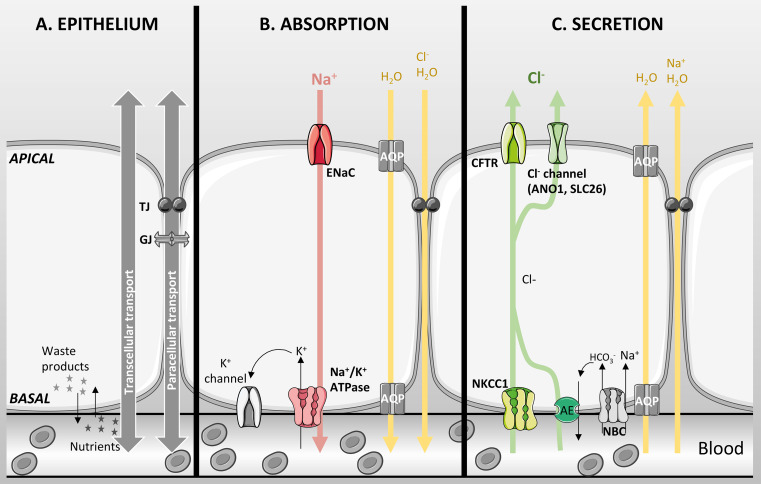
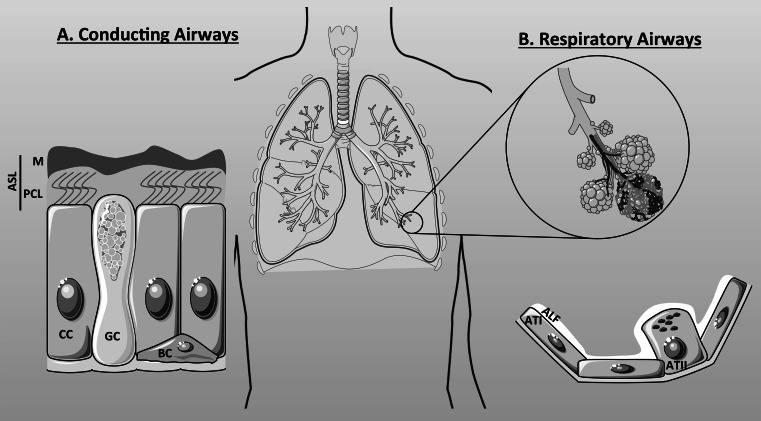
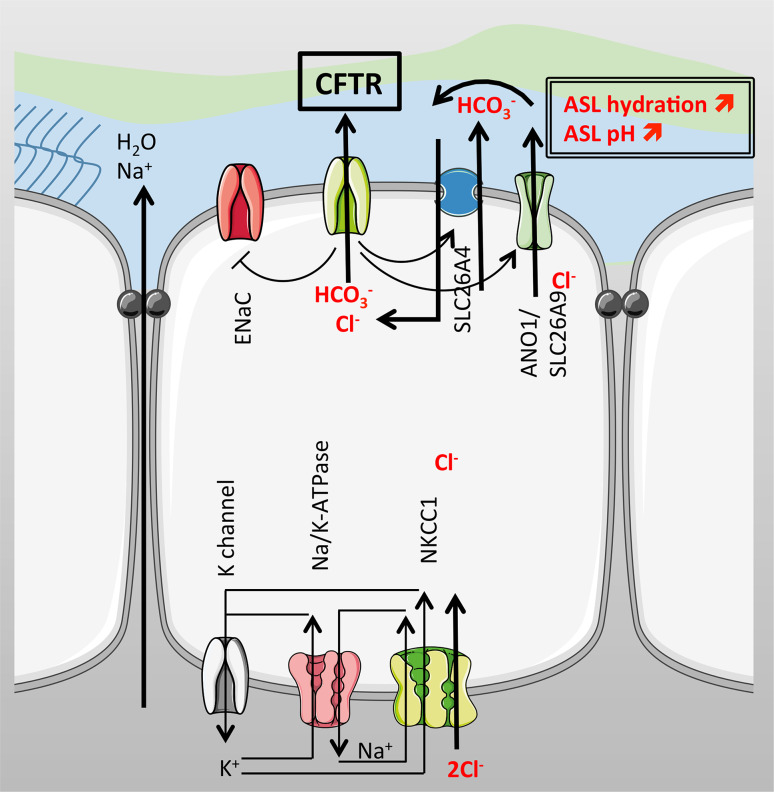
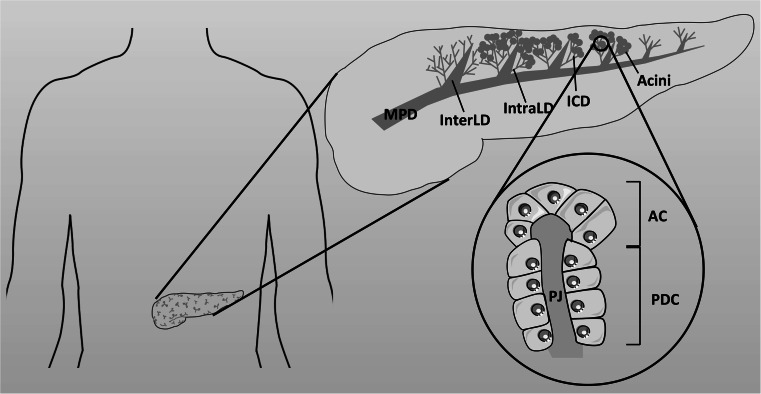
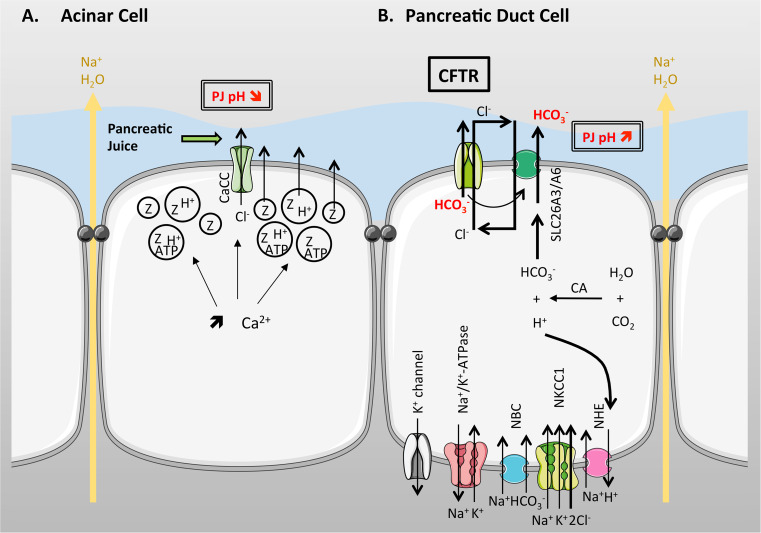
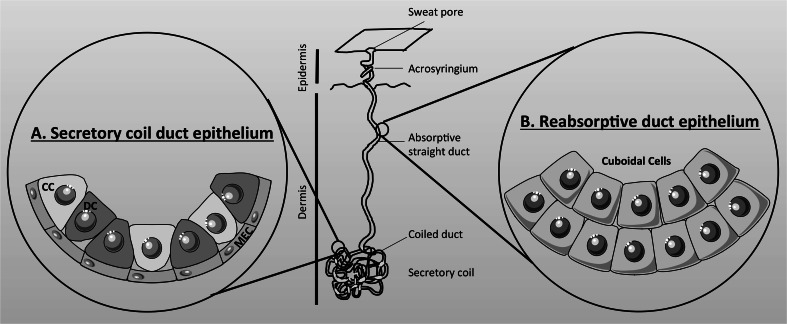
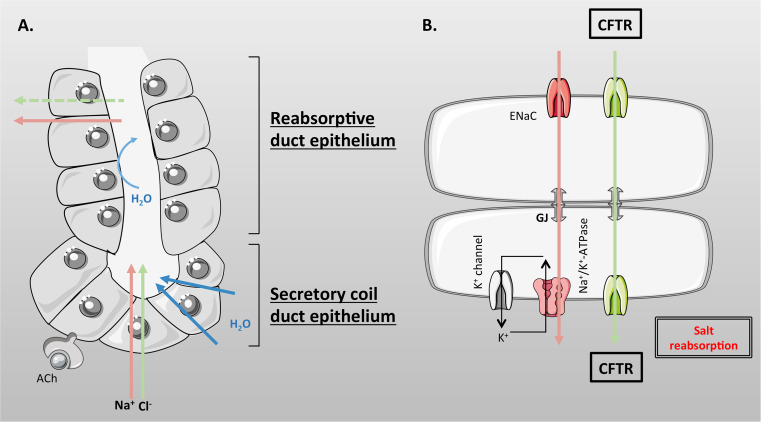
Salt and fluid absorption and secretion are two processes that are fundamental to epithelial function and whole body fluid homeostasis, and as such are tightly regulated in epithelial tissues. The CFTR anion channel plays a major role in regulating both secretion and absorption in a diverse range of epithelial tissues, including the airways, the GI and reproductive tracts, sweat and salivary glands. It is not surprising then that defects in CFTR function are linked to disease, including life-threatening secretory diarrhoeas, such as cholera, as well as the inherited disease, cystic fibrosis (CF), one of the most common life-limiting genetic diseases in Caucasian populations. More recently, CFTR dysfunction has also been implicated in the pathogenesis of acute pancreatitis, chronic obstructive pulmonary disease (COPD), and the hyper-responsiveness in asthma, underscoring its fundamental role in whole body health and disease. CFTR regulates many mechanisms in epithelial physiology, such as maintaining epithelial surface hydration and regulating luminal pH. Indeed, recent studies have identified luminal pH as an important arbiter of epithelial barrier function and innate defence, particularly in the airways and GI tract. In this chapter, we will illustrate the different operational roles of CFTR in epithelial function by describing its characteristics in three different tissues: the airways, the pancreas, and the sweat gland.
Overview
The claims and statistics of this paper haven’t been checked yet.
Free: it reads the open-access text and checks the first 5 claims that cite a source we can check. Create a free account to check every claim.
Integrity signals
Registry
Cites
Statistics
Figures
Verification
Claims the paper makes
The claims and statistics of this paper haven’t been checked yet.
Free: it reads the open-access text and checks the first 5 claims that cite a source we can check. Create a free account to check every claim.
Claims other papers make about this one
Each is checked against this paper’s own text: does it say what the citing paper says it does?
The cited source says what the claim attributes to it.
In the citing paper
“CFTR are also expressed on the apical membrane of clear cells and play a role in chloride secretion in response to beta-adrenergic stimulation”
From Physiological mechanisms determining eccrine sweat composition (2020) · cites this paper as Saint-Criq and Gray 2017
Self-check
Percentages, sums and reported differences re-computed from the paper’s own numbers.
The self-check needs the paper’s full text.
Citations
Cites
Meijer, L., Nelson, D. J., Riazanski, V., Gabdoulkhakova, A. G., Hery-Arnaud, G., Le Berre, R., Loaëc, N., Oumata, N., Galons, H., Nowak, E., et al. (2016) · Journal of Innate Immunity · doi:10.1159/000444256 · Cited by 4,992
Claudins and the Modulation of Tight Junction Permeability
Günzel, D., & Yu, A. S. L. (2013) · Physiological Reviews · doi:10.1152/physrev.00019.2012 · Cited by 1,456 · cited 1×
“junctions [5].”
Gibson, L. E., & Cooke, R. E. (1959) · Pediatrics · doi:10.1542/peds.23.3.545 · Cited by 1,434 · cited 1×
“diagnostic purposes [220, 221].”
TMEM16A confers receptor-activated calcium-dependent chloride conductance
Yang, Y. D., Cho, H., Koo, J. Y., Tak, M. H., Cho, Y., Shim, W.-S., Park, S. P., Lee, J., Lee, B., Kim, B.-M., et al. (2008) · Nature · doi:10.1038/nature07313 · Cited by 1,283 · cited 1×
“In a study from 2011, soon after the identification of the CaCC as being encoded by TMEM16A (also called Anoctamin 1, ANO1) [58–60], Ousingsawat et al.”
BackgroundTMEM16A, A Membrane Protein Associated with Calcium-Dependent Chloride Channel Activity
Caputo, A., Caci, E., Ferrera, L., Pedemonte, N., Barsanti, C., Sondo, E., Pfeffer, U., Ravazzolo, R., Zegarra-Moran, O., & Galietta, L. J. V. (2008) · Science · doi:10.1126/science.1163518 · Cited by 1,263 · cited 1×
“In a study from 2011, soon after the identification of the CaCC as being encoded by TMEM16A (also called Anoctamin 1, ANO1) [58–60], Ousingsawat et al.”
BackgroundExpression Cloning of TMEM16A as a Calcium-Activated Chloride Channel Subunit
Schroeder, B. C., Cheng, T., Jan, Y. N., & Jan, L. Y. (2008) · Cell · doi:10.1016/j.cell.2008.09.003 · Cited by 1,148 · cited 1×
“In a study from 2011, soon after the identification of the CaCC as being encoded by TMEM16A (also called Anoctamin 1, ANO1) [58–60], Ousingsawat et al.”
BackgroundMucus clearance as a primary innate defense mechanism for mammalian airways
Knowles, M. R., & Boucher, R. C. (2002) · Journal of Clinical Investigation · doi:10.1172/jci0215217 · Cited by 1,054 · cited 1×
“Studies using thin film cultured human bronchial epithelial cells (HBEs) have shown that both Na absorption and Cl secretion regulate ASL height and composition [28, 29].”
BackgroundEpidemiology of constipation in children and adults: A systematic review
Mugie, S. M., Benninga, M. A., & Di Lorenzo, C. (2011) · Best Practice & Research Clinical Gastroenterology · doi:10.1016/j.bpg.2010.12.010 · Cited by 941
Increased airway epithelial Na+ absorption produces cystic fibrosis-like lung disease in mice
Mall, M., Grubb, B. R., Harkema, J. R., O'Neal, W. K., & Boucher, R. C. (2004) · Nature Medicine · doi:10.1038/nm1028 · Cited by 911 · cited 1×
“Later work from a b-ENaC overexpressing mouse [40] provided further support, since these transgenic mice exhibited a lung phenotype characteristic of human CF airways.”
BackgroundKim, B. J., Nam, J. H., Kim, K. H., Joo, M., Ha, T. S., Weon, K. Y., Choi, S., Jun, J. Y., Park, E. J., Wie, J., et al. (2014) · Cellular Physiology and Biochemistry · doi:10.1159/000366306 · Cited by 886
Cited by
Items 301–400 of 445
Fiedorczuk, K., Iordanov, I., Mihályi, C., Szöllősi, A., Csanády, L., & Chen, J. (2024) · bioRxiv (Cold Spring Harbor Laboratory) · doi:10.1101/2024.05.28.596263 · Cited by 3
“An example of a protein activated by PKA is the cystic fibrosis transmembrane conductance regulator (CFTR), an epithelial anion channel crucial for salt-water balance of the lung, intestine, pancreas, and sweat duct (11).”
BackgroundRadji, C., Barrault, C., Flausse, R., Leveziel, N., Cantereau, A., Bur, C., Terrasse, G., & Becq, F. (2025) · American Journal of Physiology-Cell Physiology · doi:10.1152/ajpcell.00560.2024 · Cited by 2
Pereira, S., Fomichova, O., Damião, I., Oliveira, S., Almeida, V., Monteiro, M. P., Sousa, M., & Bernardino, R. L. (2025) · Scientific Reports · doi:10.1038/s41598-025-27409-8 · Cited by 3
Yoon, J. S., Li, H., Kim, Y., Shishido, H., Sheppard, D. N., Lee, M. G., & Skach, W. R. (2025) · Scientific Reports · doi:10.1038/s41598-025-31274-w · Cited by 3
“This approach was chosen to minimize confounding effects from additional cellular factors, such as ion gradients and regulatory proteins, that can influence CFTR activity in intact cells 14,57 .”
Rodrat, M., Charlick, J. N., & Sheppard, D. N. (2026) · Proceedings of the National Academy of Sciences · doi:10.1073/pnas.2523950123 · Cited by 4
Toward Precision Electrochemical Sensing of CFTR Function in Cystic Fibrosis Models
Miglione, A., Blaconà, G., Singh, S., Cicero, S. L., Fuso, A., Cimino, G., Eramo, A., Malapelle, U., Lucarelli, M., & Cinti, S. (2026) · Analytical Chemistry · doi:10.1021/acs.analchem.6c00392 · Cited by 2
Halder, A., & Pandey, D. (2020) · The Indian Journal of Medical Research · doi:10.4103/ijmr.ijmr_649_20 · Cited by 2
Mouse organoid culture is a suitable model to study esophageal ion transport mechanisms
Korsós, M. M., Bellák, T., Becskeházi, E., Gál, E., Veréb, Z., Hegyi, P. J., & Venglovecz, V. (2021) · American Journal of Physiology-Cell Physiology · doi:10.1152/ajpcell.00295.2021 · Cited by 2
Reduced Expression of TMEM16A Impairs Nitric Oxide-Dependent Cl− Transport in Retinal Amacrine Cells
Rodriguez, T., Zhong, L., Simpson, H., & Gleason, E. L. (2022) · Frontiers in Cellular Neuroscience · doi:10.3389/fncel.2022.937060 · Cited by 2
“CFTR is a protein kinase A-regulated Cl and HCO−3 channel localized to the apical membrane of epithelial cells that functions to passively secrete Cl thereby regulating sodium transport, transepithelial water flow, and luminal pH (Hull, 2012; Saint-Criq and Gray, 2017).”
BackgroundAssessing accuracy of testing and diagnosis in cystic fibrosis
Barillaro, M., & Gonska, T. Y. (2023) · Expert Review of Respiratory Medicine · doi:10.1080/17476348.2023.2213438 · Cited by 2
“CFTR is expressed in many tissues, including lungs, pancreas, sweat glands, intestinal and reproductive tracts, leading to multi-organ disease presentations in CF [2].”
BackgroundInfluentialRhinorrhea and increased chloride secretion through the CFTR chloride channel-a systematic review
Eisenhut, M. (2023) · European Archives of Oto-Rhino-Laryngology · doi:10.1007/s00405-023-08067-w · Cited by 3
“In addition, the total CFTR-regulated chloride transport across the apical cell membrane is determined by three processes: The open state probability controlled by cAMP/PKA phosphorylation, the number of CFTR channels per cell membrane, and the single channel conductance, which itself is governed by the electrochemica…”
BackgroundČervenková, L., Pálek, R., Moulisová, V., Liška, V., Daum, O., Mohelníková-Duchoňová, B., & Souček, P. (2023) · Pancreatology · doi:10.1016/j.pan.2023.10.008 · Cited by 3
Transcriptomics reveals age-related changes in ion transport–related factors in yak lungs
Xie, X., Wei, Y., Cui, Y., Zhang, Q., Lu, H., Chen, L., & He, J. (2024) · Frontiers in Veterinary Science · doi:10.3389/fvets.2024.1374794 · Cited by 2
Cystic fibrosis cell models for high-throughput analysis and drug screening
Liu, A., Chokshi, M., Nguyen, N., Powell, R. T., STEPHAN, C. C., & Bao, G. (2024) · Journal of Cystic Fibrosis · doi:10.1016/j.jcf.2024.07.001 · Cited by 2
Thammayon, N., Wongdee, K., Teerapornpuntakit, J., Jantarajit, W., Panmanee, J., Patigo, A., Saparpakorn, P., Tanramluk, D., & Charoenphandhu, N. (2025) · Biochemical and Biophysical Research Communications · doi:10.1016/j.bbrc.2025.151635 · Cited by 2
Veselu, D., Shoemark, D. K., & van der Kamp, M. W. (2026) · Journal of Computational Biophysics and Chemistry · doi:10.1142/s2737416526400077 · Cited by 2
Cystic Fibrosis Transmembrane Conductance Regulator (CFTR)-Targeted Therapeutics for Cystic Fibrosis
Veselu, D., Yeh, H., Rodrat, M., Bradbury, J. D., Fornies, Y. M., Li, H., Shoemark, D. K., Oliveira, A. S. F., Hwang, T., & Sheppard, D. N. (2024) · Springer eBooks · doi:10.1007/978-3-031-52197-3_8 · Cited by 2
SPECTRUM AND DISTRIBUTION OF DENTAL RADICULAR CYSTS
Məmmədov, K. C., & Mammadov, F. Y. (2024) · Azerbajdžanskij medicinskij žurnal · doi:10.34921/amj.2024.26.62.002 · Cited by 2
A Case of Persistent Muscle Cramps in an American Football Player With Cystic Fibrosis
Wise, P., Lafferty, L., & Phillips, S. F. (2020) · Cureus · doi:10.7759/cureus.8621 · Cited by 2
“Athletes with CF can have significant electrolyte disturbances and associated complications [4-6].”
BackgroundApablaza, T., Barros-Poblete, M., Delpiano, L., Villanueva, S., Guequén, A., Tapia‐Balladares, B., Haq, I. J., Tribiños, F., Hernández-Rivas, S., Verdon, B., et al. (2024) · bioRxiv (Cold Spring Harbor Laboratory) · doi:10.1101/2024.03.26.586799 · Cited by 2
“Reductions in anion secretion profoundly impair MCC, as observed in CF, where reductions in Cl - and HCO 3-secretion lead to mucostasis 28 .”
BackgroundSelf-citationStructure and Cl - Conductance Properties of the Open State of Human CFTRPreprint
Zeng, Z., Ing, C. E., & Pomès, R. (2024) · bioRxiv (Cold Spring Harbor Laboratory) · doi:10.1101/2024.12.08.627282 · Cited by 2
Veselu, D.-F., Shoemark, D. K., & van der Kamp, M. W. (2025) · doi:10.1101/2025.07.07.663434 · Cited by 2
Malagutti, N., Fancello, V., Cariani, A., Battistini, F., Fabbri, C., Laora, A. D., Valpiani, G., Morotti, C., Iannini, V., Borin, M., et al. (2021) · Rhinology Journal · doi:10.4193/rhin21.064 · Cited by 1
The CFTR K464N variant in fetuses potential increases premature birth risk in Chinese families
Li, J., Zhang, L., Xi, F., Lin, C., Zhan, Q., Zhou, Q., Zheng, S., Chen, W., & Jin, F. (2025) · Human Genomics · doi:10.1186/s40246-025-00736-7 · Cited by 1
“…members had no history of malignancy; [4] infants were born alive after 28 weeks of gestation; [5] the parents had no serious genetic disorders; [6] the DNA quantity and quality met the following criteria: a total amount of DNA ≥ 1 µg, a concentration ≥ 10 ng/UL and no degraded DNA detected by…”
Structure of CFTR bound to (R)-BPO-27 unveils a pore-blockage mechanism
Young, P. G., Fiedorczuk, K., & Chen, J. (2025) · Nature Communications · doi:10.1038/s41467-025-62199-7 · Cited by 3
“The cystic fi brosis transmembrane conductanceregulator (CFTR) isan ATP-gated anion channel that plays a major role in salt and fl uid homeostasis throughout epithelial tissues 1 .”
Cofta, S., Paszyńska, E., Roszak, M., Kopycka‐Kędzierawski, D. T., Otulakowska-Skrzyńska, J., Hernik, A., Winiarska, H. M., Springer, D., Rataj, M., Wysocka, E., et al. (2025) · Respiratory Medicine · doi:10.1016/j.rmed.2025.108390 · Cited by 1
Cystic Fibrosis of the Pancreas: In Vitro Duct Models for CFTR-Targeted Translational Research
Ludovico, A., Battistini, M., & Baroni, D. (2026) · International Journal of Molecular Sciences · doi:10.3390/ijms27031279 · Cited by 1
Innovative methodologies for elucidating bushfire smoke-induced pathophysiological mechanism
Paudel, K. R., Hegarty, K. J., Shrestha, J., Budden, K. F., Awatade, N. T., Sadaf, T., Malyla, V., Waters, S. A., Papagianis, P. C., Bourke, J. E., et al. (2026) · The Science of The Total Environment · doi:10.1016/j.scitotenv.2026.181645 · Cited by 1
Hypochloremic Hypokalemic Metabolic Alkalosis as a Manifestation of CFTR‐Related Disorder
Yavuz, B. Ç., Doğru, D., Sunman, B., Alboğa, D., Kayaoğlu, M. Y., Emiralioğlu, N., Yalçın, E., & Özçelik, U. (2026) · Pediatric Pulmonology · doi:10.1002/ppul.71555 · Cited by 1
Chen, Y., Fan, D., Li, H., Xiao, J., Yang, W., Zeng, W., & Chen, F. (2026) · Molecular Pharmaceutics · doi:10.1021/acs.molpharmaceut.6c00514 · Cited by 1
McNicholas, C. M. (2017) · The Journal of Physiology · doi:10.1113/jp273675 · Cited by 1
“Furthermore, recent studies have shown that non-CF diseases may cause dysfunctional activity of wild-type CFTR resulting in acquired CF-like disease state, notably in chronic obstructive pulmonary disease (COPD) (Solomon et al. 2016), asthma and acute pancreatitis (Saint-Criq & Gray, 2016).”
BackgroundShan, W., Hu, Y., Ding, J., Yang, X., Lou, J. Q., Du, Q., Liao, Q., Luo, L., Xu, J., & Xie, R. (2020) · Experimental and Therapeutic Medicine · doi:10.3892/etm.2020.9136 · Cited by 1
“One of the Cl‐ channels, CFTR, which is located on the apical side, was clearly demonstrated to be involved in the response of HCO3 secretion in the intestine a pancreatic duct (30).”
BackgroundInfluentialLong, C., Qi, M., Wang, J., Luo, J., Qin, X., Gao, G., & Xiang, Y. (2021) · PubMed Central · doi:10.11817/j.issn.1672-7347.2021.210210 · Cited by 3
Modulateurs pharmacologiques du canal CFTR : une révolution thérapeutique dans la mucoviscidose
Mercier, J., & Foucaud, P. (2022) · Bulletin de l Académie Nationale de Médecine · doi:10.1016/j.banm.2022.01.027 · Cited by 8
Wu, D., Zhu, J., Yang, F., Li, R., Liu, L., Liu, D., Liu, C., Qu, X., Liu, H., Ji, M. H., et al. (2023) · Acta Biochimica et Biophysica Sinica · doi:10.3724/abbs.2023152 · Cited by 1
“CFTR is a multidomain membrane protein that belongs to the large family of adenine nucleotide-binding cassette transporters consisting of two transmembrane domains, two nucleotide binding domains (NBDs) and a unique regulatory domain [19,20].”
BackgroundDębczyński, M., Gorrieri, G., Mojsak, D., Guida, F., Zara, F., & Scudieri, P. (2023) · Biomolecules · doi:10.3390/biom13101455 · Cited by 3
“CF also affects the intestine and pancreas (meconium ileus, malabsorption, diabetes and pancreatic insufficiency), liver (biliary cirrhosis), vas deferens (infertility), and sweat glands (heat shock) [33].”
BackgroundInfluentialSimonin, J., Tomba, C., Mercier, V., Bacchetta, M., Idris, T., Badaoui, M., Roux, A., & Chanson, M. (2024) · Life Science Alliance · doi:10.26508/lsa.202302449 · Cited by 3
Folkerts, E. J., & Grosell, M. (2024) · American Journal of Physiology-Regulatory, Integrative and Comparative Physiology · doi:10.1152/ajpregu.00077.2024 · Cited by 2
Romeo, E., Saccoliti, F., Ocello, R., Andonaia, A., Allegretta, C., Pastorino, C., Pedemonte, N., Falchi, F., Laselva, O., Bandiera, T., et al. (2025) · Journal of Medicinal Chemistry · doi:10.1021/acs.jmedchem.4c02654 · Cited by 1
Using elexacaftor/tezacaftor/ivacaftor + ivacaftor in preschool children with cystic fibrosis
Ilyenkova, N. A., Chikunov, V. V., & Shive, S. A. (2025) · PULMONOLOGIYA · doi:10.18093/0869-0189-2025-35-2-213-220 · Cited by 1
In vitro inhibition of the CFTR ion channel in the Macaca mulatta cervix thickens cervical mucus
Looney, R. J., Roberts, M., Markovetz, M. R., Godiah, R., Yao, S., Golgotiu, K., Wei, S., Cellucci, C., & Han, L. L. (2025) · Biology of Reproduction · doi:10.1093/biolre/ioaf103 · Cited by 1
When Two Worlds Collide: Navigating Diabetes in Cystic Fibrosis
Ahmad, W., Khan, J., Hashmat, A., Khan, A., Ahmad, A., Dildar, J., Sikander, M., Ahmad, S., Zakir, S., Raza, S. S., et al. (2025) · Cureus · doi:10.7759/cureus.84110 · Cited by 2
“This helps to understand the disease process of CF, in which CFTR-dependent fluid secretion is nearly nonexistent [33].”
Aberrant Cellular Pathways in PKD
Grazioli, A., Outeda, P., & Watnick, T. J. (2018) · Springer eBooks · doi:10.1007/978-1-4939-7784-0_4 · Cited by 1
Physiologic Influences of Transepithelial K+ Secretion
Halm, D. R. (2020) · Physiology in health and disease · doi:10.1007/978-3-030-52780-8_10 · Cited by 3
GPCRs of Diverse Physiologic and Pathologic Effects with Fingerprints in COVID-19
Nejat, R., Sadr, A. S., Fayaz‐Torshizi, M., & Najafi, D. J. (2021) · International Electronic Conference on Biomedicine (ECB) · doi:10.3390/ecb2021-10261 · Cited by 2
Oral care for patients with cystic fibrosis
O’Leary, F., Coffey, N., Hayes, M., & Burke, F. M. (2021) · Journal of the Irish Dental Association · doi:10.58541/001c.72302 · Cited by 2
The role of CFTR in normal human lung microvascular endothelial cells
Khalaf, M. (2019) · Cited by 1
Editorial: Co-Infection and Consequences in Cystic Fibrosis
Kahl, B. C., & Moreau, K. (2022) · Frontiers in Cellular and Infection Microbiology · doi:10.3389/fcimb.2022.924527 · Cited by 1
“The modification of the pulmonary environment and the alteration of mucociliary clearance promote the implantation and multiplication of specific pathogens linked to CF and thus cause a modification of the pulmonary microbiota (Hauser et al., 2011; Egan, 2016; Saint-Criq and Gray, 2017; French Cystic Fibrosis Register…”
BackgroundAnglès, F., Wang, C., & Balch, W. E. (2021) · Research Square · doi:10.21203/rs.3.rs-717846/v1 · Cited by 1
Structural Insights into the Interaction Between Adenovirus C5 Hexon and Human LactoferrinPreprint
Dhillon, A., Persson, B. D., Volkov, A. N., Sülzen, H., Kádek, A., Pompach, P., Kereı̈che, S., Lepšı́k, M., Danskog, K., Uetrecht, C., et al. (2023) · bioRxiv (Cold Spring Harbor Laboratory) · doi:10.1101/2023.10.09.561496 · Cited by 1
Development of novel formulated ciprofloxacin hydrochloride containing dry powder inhalation system
Benke, E. (2023) · SZTE Repository of Dissertations (University of Szeged) · doi:10.14232/phd.11789 · Cited by 1
Structure and Cl- Conductance Properties of the Open State of Human CFTRPreprint
Zeng, Z., Ing, C. E., & Pomès, R. (2025) · eLife · doi:10.7554/elife.105722 · Cited by 1
Structure and Cl- Conductance Properties of the Open State of Human CFTRPreprint
Zeng, Z., Ing, C. E., & Pomès, R. (2025) · eLife · doi:10.7554/elife.105722.1 · Cited by 1
Role of transmembrane chloride transporters in the fluid secretion of lacrimal gland duct cells
Vizvári, E. (2017) · SZTE Repository of Dissertations (University of Szeged) · doi:10.14232/phd.4100
“Defective Cl and consequent fluid secretion can be observed in the pancreatic ducts, in the airways epithelium or in the salivary glands when CFTR protein is missing or aberrant (17, 37, 48-51).”
BackgroundThe future of genetically based nutritional and pharmacological ergogenic aids in sport
Guest, N. S., García‐Bailo, B., Eny, K. M., Joffre, S., & El‐Sohemy, A. (2019) · Elsevier eBooks · doi:10.1016/b978-0-12-816193-7.00020-8
Location, location, location: lessons from airway epithelial anion channels
Delpiano, L., & Gray, M. A. (2019) · The Journal of Physiology · doi:10.1113/jp279125
Self-citationInfrared biomarkers of impaired cystic fibrosis transmembrane regulator protein biogenesis
Bellisola, G., Caldrer, S., Guidi, M. C., & Cinque, G. (2019) · Journal of Biophotonics · doi:10.1002/jbio.201900174
Batool, A., & Arooj, M. (2018) · International journal of scientific and technology research
Granata, S., Santoro, G., Masola, V., Pontrelli, P., Sallustio, F., Lombardi, G., Verlato, A., & Zaza, G. (2020) · Research Square · doi:10.21203/rs.3.rs-46751/v1
Irritable bowel syndrome - a disorder of gut-brain interaction
Midenfjord, I. (2021) · Gothenburg University Publications Electronic Archive (Gothenburg University)
Correction of a CFTR/G542X Mutation Using CRISPR/Cas9 Editing in Ovine-bovine Interspecies EmbryosPreprint
Fan, Z., Liu, Y., Périssé, I. V., Harris, A., White, K. L., & Polejaeva, I. A. (2021) · Research Square · doi:10.21203/rs.3.rs-140048/v1
Granata, S., Verlato, A., Masola, V., Carraro, A., Santoro, G., Sallustio, F., & Zaza, G. (2021) · Current pharmacogenomics and personalized medicine (Online)/Current pharmacogenomics and personalized medicine · doi:10.2174/1875692118666210525150645
Kolla, H. B., Reddy, P. N., & Bramhachari, P. V. (2021) · Springer eBooks · doi:10.1007/978-981-16-3156-6_7
Targeting ion sensors to synaptic vesicles using a Nanobody against luminal Synaptotagmin 1
Goel, R. (2022) · eDiss (Georg-August-Universität Göttingen) · doi:10.53846/goediss-51 · Cited by 1
Varescon, J.-P. (2021) · Publication Server of Goethe University Frankfurt am Main (Goethe University Frankfurt) · doi:10.21248/gups.61447
Carey, R. M., Palmer, J. N., Adappa, N. D., & Lee, R. J. (2022) · bioRxiv (Cold Spring Harbor Laboratory) · doi:10.1101/2022.09.21.508717
“Cystic fibrosis (CF) is a common lethal recessive genetic disease characterized in part by reduced airway surface liquid volume, overly thick airway surface mucus, and impaired mucociliary clearance (1, 2).”
BackgroundPump it up: bioelectric stimulation controls tissue shape and sizePreprint
Shim, G., Breinyn, I. B., Martínez-Calvo, A., Sameeksha, & Cohen, D. J. (2022) · bioRxiv (Cold Spring Harbor Laboratory) · doi:10.1101/2022.11.22.517561
A conserved WXXE motif is an apical delivery determinant of ABC transporter C subfamily isoforms
Haque, M. S., Emi, Y., & Sakaguchi, M. (2023) · Cell Structure and Function · doi:10.1247/csf.22049
“Its structure contains two membrane-spanning domains, each of which consists of six transmembrane the cells to the luminal space; therefore the Cl – secretion is essential for maintenance of the viscosity of the fluid covering epithelial tissues (Saint-Criq and Gray, 2017).”
BackgroundRodriguez, T. (2022) · Louisiana State University · doi:10.31390/gradschool_dissertations.5895
Bálint, E. R. (2022) · SZTE Repository of Dissertations (University of Szeged) · doi:10.14232/phd.11480
Rayner, R. E., Kim, S., Amer, A. O., & Cormet‐Boyaka, E. (2023) · Journal of Cystic Fibrosis · doi:10.1016/s1569-1993(23)01145-1
Lee, J. K., Arora, K., Ramanada, Y., Edirisuriya, P., & Naren, A. P. (2023) · Journal of Cystic Fibrosis · doi:10.1016/s1569-1993(23)01144-x
Silswal, N., Baumlin, N., Kim, M., & Salathe, M. A. (2023) · Journal of Cystic Fibrosis · doi:10.1016/s1569-1993(23)01146-3
Bronchial epithelial cells in cystic fibrosis: What happens in SARS-CoV-2 infection?
Lagni, A., Diani, E., Gibellini, D., & Lotti, V. (2024) · Elsevier eBooks · doi:10.1016/b978-0-443-18703-2.00004-9
Shmarin, V., Pukhalskaya, D. A., Krasovsky, S. A., Chudakova, Y. M., Мартынов, А. В., & Шмарина, Г. В. (2024) · Medical Immunology (Russia) · doi:10.15789/1563-0625-doi-16825 · Cited by 1
Editorial: Immune response to gram-negative bacteria in the lungs
Jara-Collao, A., Poli, M. C., Bain, W., & Peñaloza, H. F. (2024) · Frontiers in Cellular and Infection Microbiology · doi:10.3389/fcimb.2024.1503892
Yan, X., Deqing, Q., Yu, F., Wang, T., Xu, D., Wen, F., & Chen, J. (2024) · Expert Review of Respiratory Medicine · doi:10.1080/17476348.2024.2421843
“Cystic fibrosis transmembrane conductance regulator (CFTR), an apical epithelial cell membrane protein facilitating chloride and bicarbonate transport, is vital for epithelial electrolyte balance [7].”
IRBITs, signaling molecules of great functional diversity
Liu, Y., Feng, X., Wu, H., Gui, T., Fu, M., Luo, X., Zhao, L., & Chen, L. (2025) · Pflügers Archiv - European Journal of Physiology · doi:10.1007/s00424-025-03095-3 · Cited by 1
“In these tissues, CFTR plays an important role in fluid secretion [42, 212, 249].”
Cistinės fibrozės gydymo naujienos
Kalinauskaitė-Žukauskė, V. (2025) · Pulmonology and allergology · doi:10.37499/pia.1698
Development Of mRNA Vaccines And Therapeutics Beyond Covid-19
Yadav, A., Dwivedi, A., & Darwhekar, G. N. (2025) · European journal of parenteral & pharmaceutical sciences · doi:10.37521/ejpps30211
Phenotypic diversity of cystic fibrosis:pathogenesis and modifying factors
Mokrousova, D., Efremova, A. S., Kashirskaya, N. Y., Хавкин, А. И., & Goldshtein, D. V. (2025) · Экспериментальная и клиническая гастроэнтерология · doi:10.31146/1682-8658-ecg-233-1-125-136 · Cited by 1
Deng, F., Jiang, W., Wang, N., Wu, Y., Xu, J., Hou, R., & Jia, F. (2025) · Scientific Reports · doi:10.1038/s41598-025-19813-x · Cited by 1
“It is widely expressed in various tissues throughout the body 37 .”
Metal Ion-Releasing Glass Particles to Enhance Antibiotic Efficacy Against Cystic Fibrosis InfectionPreprint
Wolverton, M. M., Cheng, Z., Boyd, D., & Leung, B. M. (2025) · bioRxiv (Cold Spring Harbor Laboratory) · doi:10.1101/2025.10.30.685604
Beyond CFTR: Ivacaftor's role in restoring cellular redox balance and preventing ferroptosis
Rubin, M., Artusi, I., Rossetto, M., Gucciardi, A., Paolo, M. L. D., Bosello-Travain, V., Zeppilli, D., Orian, L., Miotto, G., Angeli, J. P. F., et al. (2025) · Redox Biology · doi:10.1016/j.redox.2025.103944
“The proper function of this channel is essential for maintaining appropriate fluid and electrolyte balance at these surfaces [4].”
Sivaraman, K., Tamm, S., Korenbaum, E., Olejnicka, B. T., Si, W., Wrenger, S., Stanke, F., & Janciauskiene, S. M. (2025) · Respiratory Medicine and Research · doi:10.1016/j.resmer.2025.101236
Additional file 12 of Stellate cells are in utero markers of pancreatic disease in cystic fibrosis
Leir, S.-H., Tkachenko, S., Paranjapye, A., Meckler, F., Wettere, A. J. V., Kerschner, J. L., Kuznetsov, E., Schacht, M., Gillurkar, P., Regouski, M., et al. (2024) · Figshare · doi:10.6084/m9.figshare.26758598
Additional file 8 of Stellate cells are in utero markers of pancreatic disease in cystic fibrosis
Leir, S.-H., Tkachenko, S., Paranjapye, A., Meckler, F., Wettere, A. J. V., Kerschner, J. L., Kuznetsov, E., Schacht, M., Gillurkar, P., Regouski, M., et al. (2024) · Figshare · doi:10.6084/m9.figshare.26758586
Additional file 5 of Stellate cells are in utero markers of pancreatic disease in cystic fibrosis
Leir, S.-H., Tkachenko, S., Paranjapye, A., Meckler, F., Wettere, A. J. V., Kerschner, J. L., Kuznetsov, E., Schacht, M., Gillurkar, P., Regouski, M., et al. (2024) · Figshare · doi:10.6084/m9.figshare.26758577
Additional file 7 of Stellate cells are in utero markers of pancreatic disease in cystic fibrosis
Leir, S.-H., Tkachenko, S., Paranjapye, A., Meckler, F., Wettere, A. J. V., Kerschner, J. L., Kuznetsov, E., Schacht, M., Gillurkar, P., Regouski, M., et al. (2024) · Figshare · doi:10.6084/m9.figshare.26758583
Additional file 1 of Stellate cells are in utero markers of pancreatic disease in cystic fibrosis
Leir, S.-H., Tkachenko, S., Paranjapye, A., Meckler, F., Wettere, A. J. V., Kerschner, J. L., Kuznetsov, E., Schacht, M., Gillurkar, P., Regouski, M., et al. (2024) · Figshare · doi:10.6084/m9.figshare.26758565
Gopallawa, I., Kuek, L. E., Adappa, N. D., Palmer, J. N., & Lee, R. J. (2022) · Figshare · doi:10.6084/m9.figshare.20375896
Additional file 11 of Stellate cells are in utero markers of pancreatic disease in cystic fibrosis
Leir, S.-H., Tkachenko, S., Paranjapye, A., Meckler, F., Wettere, A. J. V., Kerschner, J. L., Kuznetsov, E., Schacht, M., Gillurkar, P., Regouski, M., et al. (2024) · Figshare · doi:10.6084/m9.figshare.26758595
Additional file 4 of Stellate cells are in utero markers of pancreatic disease in cystic fibrosis
Leir, S.-H., Tkachenko, S., Paranjapye, A., Meckler, F., Wettere, A. J. V., Kerschner, J. L., Kuznetsov, E., Schacht, M., Gillurkar, P., Regouski, M., et al. (2024) · Figshare · doi:10.6084/m9.figshare.26758574
Additional file 2 of Stellate cells are in utero markers of pancreatic disease in cystic fibrosis
Leir, S.-H., Tkachenko, S., Paranjapye, A., Meckler, F., Wettere, A. J. V., Kerschner, J. L., Kuznetsov, E., Schacht, M., Gillurkar, P., Regouski, M., et al. (2024) · Figshare · doi:10.6084/m9.figshare.26758568
Additional file 6 of Stellate cells are in utero markers of pancreatic disease in cystic fibrosis
Leir, S.-H., Tkachenko, S., Paranjapye, A., Meckler, F., Wettere, A. J. V., Kerschner, J. L., Kuznetsov, E., Schacht, M., Gillurkar, P., Regouski, M., et al. (2024) · Figshare · doi:10.6084/m9.figshare.26758580
Additional file 9 of Stellate cells are in utero markers of pancreatic disease in cystic fibrosis
Leir, S.-H., Tkachenko, S., Paranjapye, A., Meckler, F., Wettere, A. J. V., Kerschner, J. L., Kuznetsov, E., Schacht, M., Gillurkar, P., Regouski, M., et al. (2024) · Figshare · doi:10.6084/m9.figshare.26758589
Metadata
- Authors
- Saint-Criq, V., & Gray, M. A.
- Affiliations
- Newcastle University (GB)
- Corresponding author
- Gray, Michael A.
- ORCID
- Gray, Michael A.
- Venue
- Cellular and Molecular Life Sciences
- Published
- 2016-10-06
- Volume
- 74
- Issue
- 1
- Pages
- 93-115
- ISSN
- 1420-682X (ISSN-L)
- 1420-9071
- PMC
- PMC5209439
- OpenAlex
- W2528194947
- Semantic Scholar
- ea463e9b4fdaa9bd5df690f6e4dc12719748b5cb
- Cited by
- 433
- References
- 232
- Citations by year
- 2026: 35 · 2025: 54 · 2024: 53 · 2023: 45 · 2022: 54 · 2021: 57 · 2020: 61 · 2019: 29 · 2018: 32 · 2017: 10 · 2016: 1
- FWCI
- 4.16
- Type
- journal article
- Language
- en
- Open access
- hybrid
- doi.org
- Locations
- Cellular and Molecular Life Sciences (publishedVersion, cc-by)
- Europe PMC (PubMed Central) (publishedVersion, cc-by)
- PubMed Central (publishedVersion, cc-by)
- PubMed (publishedVersion)
- HAL (submittedVersion, other-oa)
- Newcastle University ePrints (Newcastle Univesity) (cc-by)
- Funders
- Cystic Fibrosis Trust (SRC 003)
- Topics
- Health Sciences › Medicine › Pulmonary and Respiratory Medicine › Cystic Fibrosis Research Advances
- Life Sciences › Biochemistry, Genetics and Molecular Biology › Molecular Biology › Ion Transport and Channel Regulation
- Life Sciences › Biochemistry, Genetics and Molecular Biology › Molecular Biology › Ion channel regulation and function
- Keywords
- CFTR, cystic fibrosis, epithelial physiology, anion channels, secretion, fluid homeostasis, luminal pH, epithelial barrier function, respiratory tract, pancreas, sweat glands, secretory diarrhea, acute pancreatitis, chronic obstructive pulmonary disease
- MeSH terms
- Animals, Bicarbonates, Chlorides, Cystic Fibrosis, Epithelium, Humans, Immunity, Innate, Lung, Pancreas, Sweat Glands, Cystic Fibrosis Transmembrane Conductance Regulator
About these checks
Registry, retraction, Cites and statistics results are computed, not judged, with one exception: a printed reference that no index lists is read once by a model before it counts as a citation error. Claims are extracted by a model and kept only when their quote appears verbatim in the text; each cited source is then checked, with a model’s help, for whether it says what the claim relies on. Those verdicts can be wrong — read the claim’s quote and the cited source before relying on one.
Statistics and arithmetic are recomputed, not judged.
Confidence bands are shown only for fields calibrated on our annotated test set. None is calibrated yet, so no band is shown.
What counts as a claim ›How we measure confidence ›How we check this ›
Are you an author, or do you see a problem with this page? Request a review
Data sources
Bibliographic data: Semantic Scholar, OpenAlex, Crossref.
Contains information from the Semantic Scholar Academic Graph Datasets, made available under the ODC Attribution License (ODC-BY 1.0).
Semantic Scholar’s data is described in: Kinney, R., et al. (2023). The Semantic Scholar Open Data Platform. arXiv:2301.10140.
