

Role of CFTR in epithelial physiology
Open accessThe DOI matches its Crossref record; 231 of the 232 references it cites were found in a registry or an index.
Abstract
Salt and fluid absorption and secretion are two processes that are fundamental to epithelial function and whole body fluid homeostasis, and as such are tightly regulated in epithelial tissues. The CFTR anion channel plays a major role in regulating both secretion and absorption in a diverse range of epithelial tissues, including the airways, the GI and reproductive tracts, sweat and salivary glands. It is not surprising then that defects in CFTR function are linked to disease, including life-threatening secretory diarrhoeas, such as cholera, as well as the inherited disease, cystic fibrosis (CF), one of the most common life-limiting genetic diseases in Caucasian populations. More recently, CFTR dysfunction has also been implicated in the pathogenesis of acute pancreatitis, chronic obstructive pulmonary disease (COPD), and the hyper-responsiveness in asthma, underscoring its fundamental role in whole body health and disease. CFTR regulates many mechanisms in epithelial physiology, such as maintaining epithelial surface hydration and regulating luminal pH. Indeed, recent studies have identified luminal pH as an important arbiter of epithelial barrier function and innate defence, particularly in the airways and GI tract. In this chapter, we will illustrate the different operational roles of CFTR in epithelial function by describing its characteristics in three different tissues: the airways, the pancreas, and the sweat gland.
Overview
The claims and statistics of this paper haven’t been checked yet.
Free: it reads the open-access text and checks the first 5 claims that cite a source we can check. Create a free account to check every claim.
Integrity signals
Registry
Cites
Statistics
Figures
Verification
Claims the paper makes
The claims and statistics of this paper haven’t been checked yet.
Free: it reads the open-access text and checks the first 5 claims that cite a source we can check. Create a free account to check every claim.
Claims other papers make about this one
Each is checked against this paper’s own text: does it say what the citing paper says it does?
The cited source says what the claim attributes to it.
In the citing paper
“CFTR are also expressed on the apical membrane of clear cells and play a role in chloride secretion in response to beta-adrenergic stimulation”
From Physiological mechanisms determining eccrine sweat composition (2020) · cites this paper as Saint-Criq and Gray 2017
Self-check
Percentages, sums and reported differences re-computed from the paper’s own numbers.
The self-check needs the paper’s full text.
Citations
Cites
Meijer, L., Nelson, D. J., Riazanski, V., Gabdoulkhakova, A. G., Hery-Arnaud, G., Le Berre, R., Loaëc, N., Oumata, N., Galons, H., Nowak, E., et al. (2016) · Journal of Innate Immunity · doi:10.1159/000444256 · Cited by 4,992
Claudins and the Modulation of Tight Junction Permeability
Günzel, D., & Yu, A. S. L. (2013) · Physiological Reviews · doi:10.1152/physrev.00019.2012 · Cited by 1,456 · cited 1×
“junctions [5].”
Gibson, L. E., & Cooke, R. E. (1959) · Pediatrics · doi:10.1542/peds.23.3.545 · Cited by 1,434 · cited 1×
“diagnostic purposes [220, 221].”
TMEM16A confers receptor-activated calcium-dependent chloride conductance
Yang, Y. D., Cho, H., Koo, J. Y., Tak, M. H., Cho, Y., Shim, W.-S., Park, S. P., Lee, J., Lee, B., Kim, B.-M., et al. (2008) · Nature · doi:10.1038/nature07313 · Cited by 1,283 · cited 1×
“In a study from 2011, soon after the identification of the CaCC as being encoded by TMEM16A (also called Anoctamin 1, ANO1) [58–60], Ousingsawat et al.”
BackgroundTMEM16A, A Membrane Protein Associated with Calcium-Dependent Chloride Channel Activity
Caputo, A., Caci, E., Ferrera, L., Pedemonte, N., Barsanti, C., Sondo, E., Pfeffer, U., Ravazzolo, R., Zegarra-Moran, O., & Galietta, L. J. V. (2008) · Science · doi:10.1126/science.1163518 · Cited by 1,263 · cited 1×
“In a study from 2011, soon after the identification of the CaCC as being encoded by TMEM16A (also called Anoctamin 1, ANO1) [58–60], Ousingsawat et al.”
BackgroundExpression Cloning of TMEM16A as a Calcium-Activated Chloride Channel Subunit
Schroeder, B. C., Cheng, T., Jan, Y. N., & Jan, L. Y. (2008) · Cell · doi:10.1016/j.cell.2008.09.003 · Cited by 1,148 · cited 1×
“In a study from 2011, soon after the identification of the CaCC as being encoded by TMEM16A (also called Anoctamin 1, ANO1) [58–60], Ousingsawat et al.”
BackgroundMucus clearance as a primary innate defense mechanism for mammalian airways
Knowles, M. R., & Boucher, R. C. (2002) · Journal of Clinical Investigation · doi:10.1172/jci0215217 · Cited by 1,054 · cited 1×
“Studies using thin film cultured human bronchial epithelial cells (HBEs) have shown that both Na absorption and Cl secretion regulate ASL height and composition [28, 29].”
BackgroundEpidemiology of constipation in children and adults: A systematic review
Mugie, S. M., Benninga, M. A., & Di Lorenzo, C. (2011) · Best Practice & Research Clinical Gastroenterology · doi:10.1016/j.bpg.2010.12.010 · Cited by 941
Increased airway epithelial Na+ absorption produces cystic fibrosis-like lung disease in mice
Mall, M., Grubb, B. R., Harkema, J. R., O'Neal, W. K., & Boucher, R. C. (2004) · Nature Medicine · doi:10.1038/nm1028 · Cited by 911 · cited 1×
“Later work from a b-ENaC overexpressing mouse [40] provided further support, since these transgenic mice exhibited a lung phenotype characteristic of human CF airways.”
BackgroundKim, B. J., Nam, J. H., Kim, K. H., Joo, M., Ha, T. S., Weon, K. Y., Choi, S., Jun, J. Y., Park, E. J., Wie, J., et al. (2014) · Cellular Physiology and Biochemistry · doi:10.1159/000366306 · Cited by 886
Reduced airway surface pH impairs bacterial killing in the porcine cystic fibrosis lung
Pezzulo, A. A., Tang, X. X., Hoegger, M. J., Abou Alaiwa, M. H., Ramachandran, S., Moninger, T. O., Karp, P. H., Wohlford-Lenane, C. L., Haagsman, H. P., van Eijk, M., et al. (2012) · Nature · doi:10.1038/nature11130 · Cited by 808 · cited 3×
“Indeed, it has been shown that the activity of molecules such as the protease inhibitor SPLUNC1, which regulates antimicrobial peptides (AMPs) and shows itself antimicrobial activity [97], depends on optimal ASL pH [36, 98], as does the activity of AMPs themselves [34].”
BackgroundRoute of Passive Ion Permeation in Epithelia
FRÖMTER, E., & DIAMOND, J. (1972) · Nature New Biology · doi:10.1038/newbio235009a0 · Cited by 770 · cited 1×
“large ion concentration and osmotic gradients [8].”
Submucosal glands are the predominant site of CFTR expression in the human bronchus
Engelhardt, J. F., Yankaskas, J. R., Ernst, S. A., Yang, Y., Marino, C. R., Boucher, R. C., Cohn, J. A., & Wilson, J. M. (1992) · Nature Genetics · doi:10.1038/ng1192-240 · Cited by 653 · cited 1×
“Although CFTR is apparently not expressed in mucous cells [31], the defect in fluid secretion from serous cells affects mucin secretion (by mucous cells) as well as its hydration [32] and leads to severe mucus plugging within the glands, probably because of an acidic environment within the glands (see below).”
BackgroundEndogenous Airway Acidification: Implications for Asthma Pathophysiology
HUNT, J. F., FANG, K., MALIK, R., SNYDER, A., MALHOTRA, N., PLATTS-MILLS, T. A. E., & GASTON, B. (2000) · American Journal of Respiratory and Critical Care Medicine · doi:10.1164/ajrccm.161.3.9911005 · Cited by 649 · cited 1×
“An acidic ASL pH has also been demonstrated in other lung pathologies such as asthma [75], COPD [76] and acute respiratory distress syndrome [77].”
BackgroundStrutton, D. R., Kowalski, J. W., PharmD, Glaser, D. A., & Stang, P. E. (2004) · Journal of the American Academy of Dermatology · doi:10.1016/j.jaad.2003.12.040 · Cited by 642 · cited 1×
“These include CF, where lack of functional CFTR prevents normal NaCl absorption and leads to excessive salt loss ([192]; reviewed by [193]) which is discussed in more detail below; idiopathic anhidrosis (decreased volume of secretion), which may be caused by defects in calcium signalling [194, 195] and hyperhidrosis (…”
BackgroundABNORMAL ELECTROLYTE COMPOSITION OF SWEAT IN CYSTIC FIBROSIS OF THE PANCREAS
DI SANT'AGNESE, P. A., DARLING, R. C., PERERA, G. A., & SHEA, E. (1953) · Pediatrics · doi:10.1542/peds.12.5.549 · Cited by 546
Genotype and Phenotype in Cystic Fibrosis
Zielenski, J. (2000) · Respiration · doi:10.1159/000029497 · Cited by 482
Gating of CFTR by the STAS domain of SLC26 transporters
Ko, S. B. H., Zeng, W., Dorwart, M. R., Luo, X., Kim, K. H., Millen, L., Goto, H., Naruse, S., Soyombo, A., Thomas, P. J., et al. (2004) · Nature Cell Biology · doi:10.1038/ncb1115 · Cited by 474 · cited 1×
“This physical coupling between CFTR and the exchanger not only functionally activated anion exchange activity, but also had a positive effect on CFTR, and led to an increase in Po [136, 143], although the mechanism for both these effects is currently not understood.”
BackgroundPa, D. S., Rc, D., Perera, G. A., & SHEA, E. (1953) · PubMed · Cited by 472
Chloride channels as drug targets
Verkman, A. S., & Galietta, L. J. V. (2009) · Nature Reviews Drug Discovery · doi:10.1038/nrd2780 · Cited by 469 · cited 1×
“For the interested reader, several recent reviews describe in detail the role of CFTR in anion (Cl and HCO3 ) and fluid transport in these tissues, together with diseases associated with defective CFTR, such as CF secretory diarrhoeas and infertility [19–24].”
BackgroundpH in Expired Breath Condensate of Patients with Inflammatory Airway Diseases
Kostikas, K., Papatheodorou, G., Ganas, K., Psathakis, K., Panagou, P., & Loukides, S. (2002) · American Journal of Respiratory and Critical Care Medicine · doi:10.1164/rccm.200111-068oc · Cited by 439 · cited 8×
“More recently, CFTR dysfunction has also been implicated in the pathogenesis of acute pancreatitis, chronic obstructive pulmonary disease (COPD), and the hyper-responsiveness in asthma, underscoring its fundamental role in whole body health and disease.”
BackgroundInfluentialImmunocytochemical localization of the cystic fibrosis gene product CFTR.
Crawford, I., Maloney, P. C., Zeitlin, P. L., Guggino, W. B., Hyde, S. C., Turley, H., Gatter, K. C., Harris, A., & Higgins, C. F. (1991) · Proceedings of the National Academy of Sciences · doi:10.1073/pnas.88.20.9262 · Cited by 433 · cited 2×
“CFTR is highly expressed in the apical membrane of ductal cells but is not present in acinar cells [114, 115], and is essential for electrolyte and fluid secretion from the gland.”
BackgroundAberrant CFTR-dependent HCO-3 transport in mutations associated with cystic fibrosis
Choi, J. Y., Muallem, D., Kiselyov, K., Lee, M. G., Thomas, P. J., & Muallem, S. (2001) · Nature · doi:10.1038/35065099 · Cited by 412
The SLC26 gene family of anion transporters and channels
Alper, S. L., & Sharma, A. K. (2013) · Molecular Aspects of Medicine · doi:10.1016/j.mam.2012.07.009 · Cited by 408 · cited 1×
“To maintain an optimally hydrated ASL, CFTR also regulates other Cl channels and transporters, some of which belong to the SLC26 family [46].”
BackgroundPhysiological Basis of Cystic Fibrosis: A Historical Perspective
QUINTON, P. M. (1999) · Physiological Reviews · doi:10.1152/physrev.1999.79.1.s3 · Cited by 405 · cited 1×
“Moreover, historically, some of the first suspected descriptions of CF come from the XVI century and associated a salty skin and pancreatic damage with early childhood death [18].”
BackgroundSystemic deficiency of glutathione in cystic fibrosis
Roum, J. H., Buhl, R., McElvaney, N. G., Borok, Z., & Crystal, R. G. (1993) · Journal of Applied Physiology · doi:10.1152/jappl.1993.75.6.2419 · Cited by 399 · cited 1×
“As a GSH transporter, it has been shown that a defective CFTR leads to a reduced concentration of GSH in the ASL [106] which will impair the redox balance in the airways.”
BackgroundCystic fibrosis: impaired bicarbonate secretion and mucoviscidosis
Quinton, P. M. (2008) · The Lancet · doi:10.1016/s0140-6736(08)61162-9 · Cited by 381 · cited 3×
“Upon release of mucins, HCO3 - would complex with Ca and H, allowing mucin chains to fully expand and form a gel [65].”
BackgroundInfluentialMolecular Mechanism of Pancreatic and Salivary Gland Fluid and HCO3−Secretion
Lee, M. G., Ohana, E., Park, H. W., Yang, D., & Muallem, S. (2012) · Physiological Reviews · doi:10.1152/physrev.00011.2011 · Cited by 377 · cited 3×
“This physical coupling between CFTR and the exchanger not only functionally activated anion exchange activity, but also had a positive effect on CFTR, and led to an increase in Po [136, 143], although the mechanism for both these effects is currently not understood.”
BackgroundImpaired mucus detachment disrupts mucociliary transport in a piglet model of cystic fibrosis
Hoegger, M. J., Fischer, A. J., McMenimen, J. D., Ostedgaard, L. S., Tucker, A. J., Awadalla, M. A., Moninger, T. O., Michalski, A. S., Hoffman, E. A., Zabner, J., et al. (2014) · Science · doi:10.1126/science.1255825 · Cited by 368 · cited 1×
“Indeed, proper hydration of the ASL is crucial for an efficient mucociliary clearance, and recent studies have shown that ASL pH homeostasis is essential for bacterial killing [33, 34], mucus rheology [35] and fluid homeostasis [36].”
BackgroundMolecular Structure of Tight Junctions and Their Role in Epithelial Transport
Anderson, J. M. (2001) · Physiology · doi:10.1152/physiologyonline.2001.16.3.126 · Cited by 348 · cited 1×
“It is known that specific tight junction proteins largely influence epithelial resistance [7], and in the early 1970s, Frömter and Diamond used this measurement to classify epithelia into leaky (with a low TEER) and tight (TEER[ 500 X cm).”
BackgroundDavies, J. C., Cunningham, S., Harris, W. T., Lapey, A., Regelmann, W. E., Sawicki, G. S., Southern, K. W., Robertson, S., Green, Y., Cooke, J., et al. (2016) · The Lancet Respiratory Medicine · doi:10.1016/s2213-2600(15)00545-7 · Cited by 347
Gustafsson, J. K., Ermund, A., Ambort, D., Johansson, M. E. V., Nilsson, H. E., Thorell, K., Hebert, H., Sjövall, H., & Hansson, G. C. (2012) · Journal of Experimental Medicine · doi:10.1084/jem.20120562 · Cited by 345 · cited 1×
“Finally, mucus properties are also regulated by pH, and different groups have shown the negative impact of an acidic pH on mucus rheology [65, 87–89].”
BackgroundBeta-adrenergic agonists increase lung liquid clearance in anesthetized sheep.
Berthiaume, Y., Staub, N. C., & Matthay, M. A. (1987) · Journal of Clinical Investigation · doi:10.1172/jci112817 · Cited by 341 · cited 1×
“Na absorption plays a crucial role in this mechanism [67–70], but recent evidence points towards a control of fluid absorption by CFTR.”
BackgroundEarly versus On-Demand Nasoenteric Tube Feeding in Acute Pancreatitis
Bakker, O. J., van Brunschot, S., van Santvoort, H. C., Besselink, M. G., Bollen, T. L., Boermeester, M. A., Dejong, C. H., van Goor, H., Bosscha, K., Ali, U. A., et al. (2014) · New England Journal of Medicine · doi:10.1056/nejmoa1404393 · Cited by 339 · cited 1×
“A potential clinical strategy would be to try and improve nutritional support at a very early stage in acute pancreatitis, although a recent trial looking at the benefits of nasoenteric feeding after *20 h of admission did not show any improvement in outcome compared to those patients that had on-demand oral feeding c…”
A molecular mechanism for aberrantCFTR-dependent HCO3- transport in cystic fibrosis
Ko, S. B. H. (2002) · The EMBO Journal · doi:10.1093/emboj/cdf580 · Cited by 329
Localization of the cystic fibrosis transmembrane conductance regulator in pancreas.
Marino, C. R., Matovcik, L. M., Gorelick, F. S., & Cohn, J. A. (1991) · Journal of Clinical Investigation · doi:10.1172/jci115358 · Cited by 307 · cited 2×
“CFTR is highly expressed in the apical membrane of ductal cells but is not present in acinar cells [114, 115], and is essential for electrolyte and fluid secretion from the gland.”
BackgroundLu, C. P., Polak, L., Rocha, A. S., Pasolli, H. A., Chen, S.-C., Sharma, N., Blanpain, C., & Fuchs, E. (2012) · Cell · doi:10.1016/j.cell.2012.04.045 · Cited by 301 · cited 1×
“In addition, lack of sufficient antimicrobials can lead to skin infections and atopic dermatitis [198], and problems with wound healing and reepithelialisation may be linked to stem cell dysfunction [191, 199, 200].”
BackgroundDefective beta adrenergic response of cystic fibrosis sweat glands in vivo and in vitro.
Sato, K., & Sato, F. (1984) · Journal of Clinical Investigation · doi:10.1172/jci111385 · Cited by 301 · cited 1×
“(1) Although rates of cholinergic sweat secretion are very similar in non-CF and CF individuals, betaadrenergic (cAMP) secretion is absent in CF [218].”
BackgroundCathelicidin Anti-Microbial Peptide Expression in Sweat, an Innate Defense System for the Skin
Murakami, M., Ohtake, T., Dorschner, R. A., Gallo, R. L., Schittek, B., & Garbe, C. (2002) · Journal of Investigative Dermatology · doi:10.1046/j.1523-1747.2002.19507.x · Cited by 291 · cited 1×
“other important roles which include the production and secretion of a range of AMPs such as LL-37, lactoferrin and dermicidin, an AMP unique to skin [187–189], as well as compounds that maintain skin condition (barrier function) and skin lubricants [190].”
BackgroundAbnormal surface liquid pH regulation by cultured cystic fibrosis bronchial epithelium
Coakley, R. D., Grubb, B. R., Paradiso, A. M., Gatzy, J. T., Johnson, L. G., Kreda, S. M., O'Neal, W. K., & Boucher, R. C. (2003) · Proceedings of the National Academy of Sciences · doi:10.1073/pnas.2634339100 · Cited by 287 · cited 1×
“An acidic ASL pH was demonstrated in the early 2000s in primary HBE cell cultures from CF and non-CF patients [85].”
BackgroundGlutathione permeability of CFTR
Linsdell, P., & Hanrahan, J. W. (1998) · American Journal of Physiology-Cell Physiology · doi:10.1152/ajpcell.1998.275.1.c323 · Cited by 283 · cited 4×
“GSH is a sulfhydryl containing tripeptide that can bind and inactivate oxidants.”
BackgroundInfluentialCystic Fibrosis Transmembrane Conductance Regulator Function Is Suppressed in Cigarette Smokers
Cantin, A. M., Hanrahan, J. W., Bilodeau, G., Ellis, L., Dupuis, A., Liao, J., Zielenski, J., & Durie, P. (2006) · American Journal of Respiratory and Critical Care Medicine · doi:10.1164/rccm.200508-1330oc · Cited by 280 · cited 1×
“showed that this effect was due to an inhibition of CFTR [83], and it was later demonstrated that cigarette smoke actually induced CFTR internalisation, and this led to ASL dehydration [84], potentially contributing to the development of COPD pathology.”
BackgroundA Novel Host Defense System of Airways Is Defective in Cystic Fibrosis
Moskwa, P., Lorentzen, D., Excoffon, K. J. D. A., Zabner, J., McCray, P. B., Nauseef, W. M., Dupuy, C., & Bánfi, B. (2007) · American Journal of Respiratory and Critical Care Medicine · doi:10.1164/rccm.200607-1029oc · Cited by 278 · cited 4×
“In addition, CFTR transports glutathione (GSH) [104] and thiocyanate (SCN-) [105], and both molecules have been shown to have a crucial role in the regulation of the immune response in the lungs.”
BackgroundInfluentialRieg, S., Steffen, H., Seeber, S., Humeny, A., Kalbacher, H., Dietz, K., Garbe, C., & Schittek, B. (2005) · The Journal of Immunology · doi:10.4049/jimmunol.174.12.8003 · Cited by 273 · cited 1×
“In addition, lack of sufficient antimicrobials can lead to skin infections and atopic dermatitis [198], and problems with wound healing and reepithelialisation may be linked to stem cell dysfunction [191, 199, 200].”
BackgroundClunes, L. A., Davies, C. M., Coakley, R. D., Aleksandrov, A. A., Henderson, A. G., Zeman, K. L., Worthington, E. N., Gentzsch, M., Kreda, S. M., Cholon, D., et al. (2012) · The FASEB Journal · doi:10.1096/fj.11-192377 · Cited by 261 · cited 1×
“showed that this effect was due to an inhibition of CFTR [83], and it was later demonstrated that cigarette smoke actually induced CFTR internalisation, and this led to ASL dehydration [84], potentially contributing to the development of COPD pathology.”
BackgroundMECHANISMS OF BICARBONATE SECRETION IN THE PANCREATIC DUCT
Steward, M. C., Ishiguro, H., & Case, R. M. (2005) · Annual Review of Physiology · doi:10.1146/annurev.physiol.67.031103.153247 · Cited by 260 · cited 1×
“However, the composition of the secretion is very much flow dependent in all species studied [113, 118, 121].”
BackgroundAcidic pH increases airway surface liquid viscosity in cystic fibrosis
Tang, X. X., Ostedgaard, L. S., Hoegger, M. J., Moninger, T. O., Karp, P. H., McMenimen, J. D., Choudhury, B., Varki, A., Stoltz, D. A., & Welsh, M. J. (2016) · Journal of Clinical Investigation · doi:10.1172/jci83922 · Cited by 254 · cited 1×
“Finally, mucus properties are also regulated by pH, and different groups have shown the negative impact of an acidic pH on mucus rheology [65, 87–89].”
BackgroundA survey of newborn screening for cystic fibrosis in Europe
Southern, K. W., Munck, A., Pollitt, R., Travert, G., Zanolla, L., Dankert-Roelse, J., & Castellani, C. (2007) · Journal of Cystic Fibrosis · doi:10.1016/j.jcf.2006.05.008 · Cited by 246
Activation of the epithelial Na+ channel (ENaC) requires CFTR Cl- channel function
Reddy, M. M., Light, M. J., & Quinton, P. M. (1999) · Nature · doi:10.1038/46297 · Cited by 246 · cited 1×
“Indeed, pioneering work from the Quinton lab showed that ENaC activity was dependent on a functional interaction with a phosphorylated, Cl transporting, CFTR [193, 210, 211], highlighting a completely different regulatory interaction between the two channels.”
BackgroundHou, J., Renigunta, A., Yang, J., & Waldegger, S. (2010) · Proceedings of the National Academy of Sciences · doi:10.1073/pnas.1009399107 · Cited by 236 · cited 1×
“with properties very similar to conventional membrane spanning ion channels [6] Transepithelial electrical resistance (TEER) measurement is used to assess the barrier function of epithelial tissues, or cells grown on semi-permeable supports, and reflects the paracellular as well as transcellular conductivity.”
MethodQuinton, P. M., & Bijman, J. (1983) · New England Journal of Medicine · doi:10.1056/nejm198305193082002 · Cited by 234 · cited 1×
“in CF glands compared to normal [222], as well as skin impedance and rates of secretion, thus improving overall sensitivity and diagnostic value in sweat gland pathologies (see [221]) for a recent summary of these new tests).”
BackgroundPancreatic Fluid Secretion and Protein Hyperconcentration in Cystic Fibrosis
Kopelman, H., Durie, P., Gaskin, K., Weizman, Z., & Forstner, G. (1985) · New England Journal of Medicine · doi:10.1056/nejm198502073120601 · Cited by 227 · cited 1×
“tance of this fluid secretion to pancreatic function is well demonstrated in CF, where the lack of CFTR-dependent fluid secretion leads to near complete destruction of the gland at birth in *85 % of people with CF [116, 117].”
BackgroundThe relative frequency of CFTR mutation classes in European patients with cystic fibrosis
De Boeck, K., Zolin, A., Cuppens, H., Olesen, H. V., & Viviani, L. (2014) · Journal of Cystic Fibrosis · doi:10.1016/j.jcf.2013.12.003 · Cited by 224 · cited 1×
“As stated in Chapter ‘‘Cystic Fibrosis: a clinical view’’, CF is the most common genetically inherited disease in Caucasian populations (1 in 3500 newborns in Europe) [13, 14] and 70–90 % of CF individuals harbour the F508del mutation on at least one allele [15], which results in misfolding and incorrect processing of…”
BackgroundDe Lisle, R. C., & Borowitz, D. (2013) · Cold Spring Harbor Perspectives in Medicine · doi:10.1101/cshperspect.a009753 · Cited by 224 · cited 1×
“For the interested reader, several recent reviews describe in detail the role of CFTR in anion (Cl and HCO3 ) and fluid transport in these tissues, together with diseases associated with defective CFTR, such as CF secretory diarrhoeas and infertility [19–24].”
BackgroundTwo types of chloride channel on duct cells cultured from human fetal pancreas
Gray, M. A., Harris, A., Coleman, L., Greenwell, J. R., & Argent, B. E. (1989) · American Journal of Physiology-Cell Physiology · doi:10.1152/ajpcell.1989.257.2.c240 · Cited by 222 · cited 1×
“Early patch clamp studies from rat and human pancreatic duct cells demonstrated that under near physiological gradients, CFTR was approximately 5 times more permeable to Cl than to HCO3 - [126–129].”
BackgroundSelf-citationFunctional Characterization of Three Novel Tissue-specific Anion Exchangers SLC26A7, -A8, and -A9
Lohi, H., Kujala, M., Mäkelä, S., Lehtonen, E., Kestilä, M., Saarialho-Kere, U., Markovich, D., & Kere, J. (2002) · Journal of Biological Chemistry · doi:10.1074/jbc.m111802200 · Cited by 219 · cited 1×
“Among the latest discovered SLC26 are the SLC26A7, A8, and A9 [50].”
BackgroundHyperabsorption of Na+ and raised Ca(2+)-mediated Cl- secretion in nasal epithelia of CF mice
Grubb, B. R., Vick, R. N., & Boucher, R. C. (1994) · American Journal of Physiology-Cell Physiology · doi:10.1152/ajpcell.1994.266.5.c1478 · Cited by 218 · cited 1×
“In CF mice, enhanced Ca-dependent Cl secretion was also detected [57].”
BackgroundEccrine sweat gland development and sweat secretion
Cui, C., & Schlessinger, D. (2015) · Experimental Dermatology · doi:10.1111/exd.12773 · Cited by 213 · cited 4×
“Sweat glands also contain stem cells important for renewing skin after wounding and burns [186, 191].”
BackgroundInfluentialAquaporin water channels and lung physiology
Verkman, A. S., Matthay, M. A., & Song, Y. (2000) · American Journal of Physiology-Lung Cellular and Molecular Physiology · doi:10.1152/ajplung.2000.278.5.l867 · Cited by 212 · cited 1×
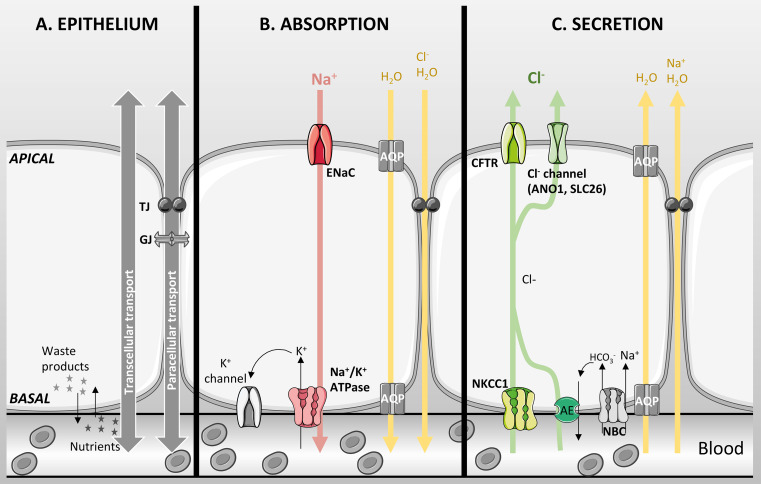
“For both processes, water moves either passively through the paracellular pathway or transcellularly via aquaporins, or by both routes [9–11] (Fig.”
BackgroundAmiloride impairs lung water clearance in newborn guinea pigs
O'Brodovich, H., Hannam, V., Seear, M., & Mullen, J. B. (1990) · Journal of Applied Physiology · doi:10.1152/jappl.1990.68.4.1758 · Cited by 208 · cited 1×
“Na absorption plays a crucial role in this mechanism [67–70], but recent evidence points towards a control of fluid absorption by CFTR.”
BackgroundAirway Gland Structure and Function
Widdicombe, J. H., & Wine, J. J. (2015) · Physiological Reviews · doi:10.1152/physrev.00039.2014 · Cited by 204 · cited 1×
“Mucous cells secrete gel-forming mucins (mainly MUC5B) as well as fluid, but the serous cells are the primary origin of the fluid component of the gland secretions, secreting solutes, fluid and innate defence molecules [27].”
BackgroundAbou Alaiwa, M. H., Reznikov, L. R., Gansemer, N. D., Sheets, K. A., Horswill, A. R., Stoltz, D. A., Zabner, J., & Welsh, M. J. (2014) · Proceedings of the National Academy of Sciences · doi:10.1073/pnas.1422091112 · Cited by 203
Sun, L., Rommens, J. M., Corvol, H., Li, W., Li, X., Chiang, T. A., Lin, F., Dorfman, R., Busson, P.-F., Parekh, R. V., et al. (2012) · Nature Genetics · doi:10.1038/ng.2221 · Cited by 203
Genotype and phenotype correlations in patients with cystic fibrosis and pancreatitis
Durno, C., Corey, M., Zielenski, J., Tullis, E., Tsui, L.-C., & Durie, P. (2002) · Gastroenterology · doi:10.1053/gast.2002.37042 · Cited by 200 · cited 1×
“mutation [164–166] with ‘severe’ CF mutations, such as the most common CF mutation, F508del and the class 3 gating mutant, G511D, strongly correlating with PI.”
BackgroundMaléth, J., Balázs, A., Pallagi, P., Balla, Z., Kui, B., Katona, M., Judák, L., Németh, I., Kemény, L. V., Rakonczay, Z., et al. (2015) · Gastroenterology · doi:10.1053/j.gastro.2014.11.002 · Cited by 199 · cited 2×
“Furthermore, the effects of ethanol and ethanol metabolites on CFTR are consistent with reduced biogenesis, accelerated plasma membrane turnover, as well as channel inhibition [176].”
BackgroundSelf-citationNovel Role for CFTR in Fluid Absorption from the Distal Airspaces of the Lung
Fang, X., Fukuda, N., Barbry, P., Sartori, C., Verkman, A. S., & Matthay, M. A. (2002) · The Journal of General Physiology · doi:10.1085/jgp.119.2.199 · Cited by 199 · cited 1×
“showed that inhibition of Cl channels, as well as Cl substitution by gluconate, inhibited fluid clearance by 50 % [71].”
BackgroundCystic Fibrosis: Lessons from the Sweat Gland
Quinton, P. M. (2007) · Physiology · doi:10.1152/physiol.00041.2006 · Cited by 198 · cited 8×
“These include CF, where lack of functional CFTR prevents normal NaCl absorption and leads to excessive salt loss ([192]; reviewed by [193]) which is discussed in more detail below; idiopathic anhidrosis (decreased volume of secretion), which may be caused by defects in calcium signalling [194, 195] and hyperhidrosis (…”
BackgroundInfluentialPark, H. W., Nam, J. H., Kim, J. Y., Namkung, W., Yoon, J. S., Lee, J., Kim, K. S., Venglovecz, V., Gray, M. A., Kim, K. H., et al. (2010) · Gastroenterology · doi:10.1053/j.gastro.2010.04.004 · Cited by 194 · cited 1×
“First, it was found that stimulation of HCO3 - secretion by cAMP agonists in intact guinea-pig ducts led to a very marked drop in intracellular Cl [147], and this reduction in intracellular [Cl] was subsequently shown to activate a kinase cascade involving the WNK1-OSR1/SPAK pathway, that ultimately led to phosphoryla…”
BackgroundSelf-citationCoupling Modes and Stoichiometry of Cl−/HCO3− Exchange by slc26a3 and slc26a6
Shcheynikov, N., Wang, Y., Park, M., Ko, S. B. H., Dorwart, M., Naruse, S., Thomas, P. J., & Muallem, S. (2006) · The Journal of General Physiology · doi:10.1085/jgp.200509392 · Cited by 191 · cited 1×
“Both these exchangers are electrogenic with A3 transporting 2Cl for 1HCO3 - (therefore causing net Cl accumulation per transport cycle), while A6 transported 2HCO3 - out of the cell for one Cl into the cell [139].”
BackgroundPhysiology and Pathophysiology of the Skin
Stoughton, R. B. (1979) · Archives of Dermatology · doi:10.1001/archderm.1979.04010070066032 · Cited by 187
LaRusch, J., Jung, J., General, I. J., Lewis, M. D., Park, H. W., Brand, R. E., Gelrud, A., Anderson, M. A., Banks, P. A., Conwell, D., et al. (2014) · PLoS Genetics · doi:10.1371/journal.pgen.1004376 · Cited by 186
Secretin-regulated chloride channel on the apical plasma membrane of pancreatic duct cells
Gray, M. A., Greenwell, J. R., & Argent, B. E. (1988) · The Journal of Membrane Biology · doi:10.1007/bf02009166 · Cited by 186 · cited 2×
“Early patch clamp studies from rat and human pancreatic duct cells demonstrated that under near physiological gradients, CFTR was approximately 5 times more permeable to Cl than to HCO3 - [126–129].”
BackgroundSelf-citationA new role for bicarbonate in mucus formation
Chen, E. Y. T., Yang, N., Quinton, P. M., & Chin, W.-C. (2010) · American Journal of Physiology-Lung Cellular and Molecular Physiology · doi:10.1152/ajplung.00180.2010 · Cited by 181 · cited 1×
“Finally, mucus properties are also regulated by pH, and different groups have shown the negative impact of an acidic pH on mucus rheology [65, 87–89].”
BackgroundGenetic Modifiers of Cystic Fibrosis–Related Diabetes
Blackman, S. M., Commander, C. W., Watson, C., Arcara, K. M., Strug, L. J., Stonebraker, J. R., Wright, F. A., Rommens, J. M., Sun, L., Pace, R. G., et al. (2013) · Diabetes · doi:10.2337/db13-0510 · Cited by 178
Ishiguro, H., Steward, M. C., Lindsay, A. R., & Case, R. M. (1996) · The Journal of Physiology · doi:10.1113/jphysiol.1996.sp021582 · Cited by 174 · cited 1×
“In the latter case, the NBC not only helped accumulate HCO3 within the cell, by utilising the inward-directed sodium gradient across the basolateral membrane, but it also importantly helped maintain an electrical driving force for efflux of HCO3 - across the apical membrane, by offsetting the depolarisation of the cel…”
BackgroundMolecular basis for pH-dependent mucosal dehydration in cystic fibrosis airways
Garland, A. L., Walton, W. G., Coakley, R. D., Tan, C. D., Gilmore, R. C., Hobbs, C. A., Tripathy, A., Clunes, L. A., Bencharit, S., Stutts, M. J., et al. (2013) · Proceedings of the National Academy of Sciences · doi:10.1073/pnas.1311999110 · Cited by 171 · cited 3×
“Indeed, it has been shown that the activity of molecules such as the protease inhibitor SPLUNC1, which regulates antimicrobial peptides (AMPs) and shows itself antimicrobial activity [97], depends on optimal ASL pH [36, 98], as does the activity of AMPs themselves [34].”
BackgroundHyperacidity of secreted fluid from submucosal glands in early cystic fibrosis
Song, Y., Salinas, D., Nielson, D. W., & Verkman, A. S. (2006) · American Journal of Physiology-Cell Physiology · doi:10.1152/ajpcell.00379.2005 · Cited by 171 · cited 1×
“glands from CF patients was more acidic that glands from non-CF individuals [86].”
BackgroundSLC26A9 is a constitutively active, CFTR-regulated anion conductance in human bronchial epithelia
Bertrand, C. A., Zhang, R., Pilewski, J. M., & Frizzell, R. A. (2009) · Journal of General Physiology · doi:10.1085/jgp.200810097 · Cited by 166 · cited 14×
“They reported the transport of all three anions by SLC26A9 and an inhibition of sulphate transport by DIDS and thiosulphate, implying that the protein acted as an anion exchanger, similar to several other SLC26 members (A3, A4 and A6).”
BackgroundInfluentialSheffield, V. C., Kraiem, Z., Beck, J. C., Nishimura, D., Stone, E. M., Salameh, M., Sadeh, O., & Glaser, B. (1996) · Nature Genetics · doi:10.1038/ng0496-424 · Cited by 165 · cited 1×
“Mutations in human SLC26 genes lead to tissue specific diseases such as autosomal recessive non-syndromic deafness, DFNB4, and Pendred Syndrome in the SLC26A4 gene [47], and studies in mice models have shed light on the organ distribution of other SLC26 transporters.”
BackgroundWang, Y., Soyombo, A. A., Shcheynikov, N., Zeng, W., Dorwart, M., Marino, C. R., Thomas, P. J., & Muallem, S. (2006) · The EMBO Journal · doi:10.1038/sj.emboj.7601387 · Cited by 165 · cited 1×
“Furthermore, pioneering studies from the Muallem lab showed that both SLC26A exchangers were regulated by CFTR [141–144] through a physical interaction between the phosphorylated R domain of CFTR and the highly conserved STAS domain of the SLC26 transporter.”
BackgroundHEAT PROSTRATION IN FIBROCYSTIC DISEASE OF THE PANCREAS AND OTHER CONDITIONS
Kessler, W. R., & Andersen, D. H. (1951) · PEDIATRICS · doi:10.1542/peds.8.5.648 · Cited by 165 · cited 1×
“Although, under normal conditions, this is not a major clinical problem, during hot and humid conditions, people with CF can lose excessive salt and fluid, causing dehydration and heat prostration as originally observed by Dorothy Anderson [219].”
BackgroundSPLUNC1 regulates airway surface liquid volume by protecting ENaC from proteolytic cleavage
Garcia-Caballero, A., Rasmussen, J. E., Gaillard, E., Watson, M. J., Olsen, J. C., Donaldson, S. H., Stutts, M. J., & Tarran, R. (2009) · Proceedings of the National Academy of Sciences · doi:10.1073/pnas.0903609106 · Cited by 160 · cited 1×
“Indeed, it has been shown that the activity of molecules such as the protease inhibitor SPLUNC1, which regulates antimicrobial peptides (AMPs) and shows itself antimicrobial activity [97], depends on optimal ASL pH [36, 98], as does the activity of AMPs themselves [34].”
BackgroundFang, X., Song, Y., Hirsch, J., Galietta, L. J. V., Pedemonte, N., Zemans, R. L., Dolganov, G., Verkman, A. S., & Matthay, M. A. (2006) · American Journal of Physiology-Lung Cellular and Molecular Physiology · doi:10.1152/ajplung.00178.2005 · Cited by 160 · cited 1×
“Inhibition of CFTR with CFTR-Inh172 did not have any effect on basal fluid absorption but inhibited *35 % of cAMPinduced fluid absorption [72].”
BackgroundNovak, I., & Greger, R. (1988) · Pfl�gers Archiv European Journal of Physiology · doi:10.1007/bf00582376 · Cited by 159 · cited 1×
“This finding, together with microelectrode studies from intact ducts that demonstrated the presence of a SITS-sensitive Cl/HCO3 exchange activity on the apical membrane together with an NPPB-sensitive Cl conductance [130, 131], combined with intracellular pH measurements [132], led to the first model of HCO3 - secreti…”
ResultHou, J., Rajagopal, M., & Yu, A. S. L. (2013) · Annual Review of Physiology · doi:10.1146/annurev-physiol-030212-183705 · Cited by 158
Sweat Gland Progenitors in Development, Homeostasis, and Wound Repair
Lu, C., & Fuchs, E. (2014) · Cold Spring Harbor Perspectives in Medicine · doi:10.1101/cshperspect.a015222 · Cited by 157 · cited 1×
“In addition, lack of sufficient antimicrobials can lead to skin infections and atopic dermatitis [198], and problems with wound healing and reepithelialisation may be linked to stem cell dysfunction [191, 199, 200].”
BackgroundAnion selectivity and block of the small-conductance chloride channel on pancreatic duct cells
Gray, M. A., Pollard, C. E., Harris, A., Coleman, L., Greenwell, J. R., & Argent, B. E. (1990) · American Journal of Physiology-Cell Physiology · doi:10.1152/ajpcell.1990.259.5.c752 · Cited by 157
Self-citationEccrine Sweat Glands are Major Contributors to Reepithelialization of Human Wounds
Rittié, L., Sachs, D. L., Orringer, J. S., Voorhees, J. J., & Fisher, G. J. (2013) · The American Journal of Pathology · doi:10.1016/j.ajpath.2012.09.019 · Cited by 156 · cited 2×
“Sweat glands also contain stem cells important for renewing skin after wounding and burns [186, 191].”
BackgroundExhaled breath condensate acidification in acute lung injury
Geßner, C., Hammerschmidt, S., Kühn, H., Seyfarth, H., Sack, U., Engelmann, L., Schauer, J., & Wirtz, H. R. W. (2003) · Respiratory Medicine · doi:10.1016/s0954-6111(03)00225-7 · Cited by 151
Ultrastructure of cells in the human bronchial submucosal glands.
Meyrick, B. O., & REID, L. M. (1970) · Europe PMC (PubMed Central) · Cited by 150
Lee, M. G., Wigley, W. C., Zeng, W., Noel, L. E., Marino, C. R., Thomas, P. J., & Muallem, S. (1999) · Journal of Biological Chemistry · doi:10.1074/jbc.274.6.3414 · Cited by 148 · cited 1×
“As described above, the increase in activity of the apical SLC26A6 anion exchanger during secretion appears to be strongly dependent on its interaction with CFTR, and interestingly, the exchanger is activated by a number of CFTR mutants that lack Cl channel activity [167].”
BackgroundBasset, G., Crone, C. G., & Saumon, G. (1987) · The Journal of Physiology · doi:10.1113/jphysiol.1987.sp016456 · Cited by 148 · cited 1×
“Na absorption plays a crucial role in this mechanism [67–70], but recent evidence points towards a control of fluid absorption by CFTR.”
BackgroundPancreatitis Among Patients With Cystic Fibrosis: Correlation With Pancreatic Status and Genotype
Boeck, K. D., Weren, M., Proesmans, M., & Kerem, E. (2005) · PEDIATRICS · doi:10.1542/peds.2004-1764 · Cited by 145
Isoforms of SLC26A6 mediate anion transport and have functional PDZ interaction domains
Lohi, H., Lamprecht, G., Markovich, D., Heil, A., Kujala, M., Seidler, U. E., & Kere, J. (2003) · American Journal of Physiology-Cell Physiology · doi:10.1152/ajpcell.00270.2002 · Cited by 143 · cited 1×
“transporting, complex [136, 141, 145].”
Basset, G., Crone, C. G., & Saumon, G. (1987) · The Journal of Physiology · doi:10.1113/jphysiol.1987.sp016457 · Cited by 142
Pedemonte, N., Caci, E., Sondo, E., Caputo, A., Rhoden, K., Pfeffer, U., Di Candia, M., Bandettini, R., Ravazzolo, R., Zegarra-Moran, O., et al. (2007) · The Journal of Immunology · doi:10.4049/jimmunol.178.8.5144 · Cited by 139
CFTR involvement in chloride, bicarbonate, and liquid secretion by airway submucosal glands
Ballard, S. T., Trout, L., Bebök, Z., Sorscher, E. J., & Crews, A. (1999) · American Journal of Physiology-Lung Cellular and Molecular Physiology · doi:10.1152/ajplung.1999.277.4.l694 · Cited by 138 · cited 1×
“They showed in pig airways that the rate of fluid secretion induced by acetylcholine was unaffected by the removal of the surface epithelium [26].”
BackgroundRieg, S., Garbe, C., Sauer, B., Kalbacher, H., & Schittek, B. (2004) · British Journal of Dermatology · doi:10.1111/j.1365-2133.2004.06081.x · Cited by 136 · cited 1×
“other important roles which include the production and secretion of a range of AMPs such as LL-37, lactoferrin and dermicidin, an AMP unique to skin [187–189], as well as compounds that maintain skin condition (barrier function) and skin lubricants [190].”
BackgroundYang, D., Shcheynikov, N., Zeng, W., Ohana, E., So, I., Ando, H., Mizutani, A., Mikoshiba, K., & Muallem, S. (2008) · Journal of Clinical Investigation · doi:10.1172/jci36983 · Cited by 136 · cited 1×
“Furthermore, like CFTR, NBC activity is positively regulated by cAMP/PKA phosphorylation [156], and both proteins are synergistically regulated in a coordinated fashion by intracellular IRBIT, in a cAMP and calcium-dependent manner [157, 158].”
BackgroundBicarbonate secretion in interlobular ducts from guinea‐pig pancreas.
Ishiguro, H., Steward, M. C., Wilson, R. W., & CASE, R. M. (1996) · The Journal of Physiology · doi:10.1113/jphysiol.1996.sp021583 · Cited by 134 · cited 1×
“In the latter case, the NBC not only helped accumulate HCO3 within the cell, by utilising the inward-directed sodium gradient across the basolateral membrane, but it also importantly helped maintain an electrical driving force for efflux of HCO3 - across the apical membrane, by offsetting the depolarisation of the cel…”
BackgroundXu, Y., Szép, S., & Lu, Z. (2009) · Proceedings of the National Academy of Sciences · doi:10.1073/pnas.0911412106 · Cited by 134
Molecular Mechanism of Mucin Secretion: I. The Role of Intragranular Charge Shielding
Verdugo, P., Deyrup‐Olsen, I., Aitken, M. L., Villalón, M., & Johnson, D. E. (1987) · Journal of Dental Research · doi:10.1177/00220345870660022001 · Cited by 134 · cited 1×
“This compact form is maintained within the granules by a high concentration of cations, specifically Ca and H [90, 91].”
BackgroundSchroeder, S. A., Gaughan, D. M., & Swift, M. (1995) · Nature Medicine · doi:10.1038/nm0795-703 · Cited by 133 · cited 1×
“Although the link between CFTR and asthma is still controversial [78–81], it is now well established that COPD shares some common features with CF, including bronchiectasis, mucus plugging, and inflammation.”
BackgroundCFTR Functions as a Bicarbonate Channel in Pancreatic Duct Cells
Ishiguro, H., Steward, M. C., Naruse, S., Ko, S. B. H., Goto, H., Case, R. M., Kondo, T., & Yamamoto, A. (2009) · Journal of General Physiology · doi:10.1085/jgp.200810122 · Cited by 133 · cited 1×
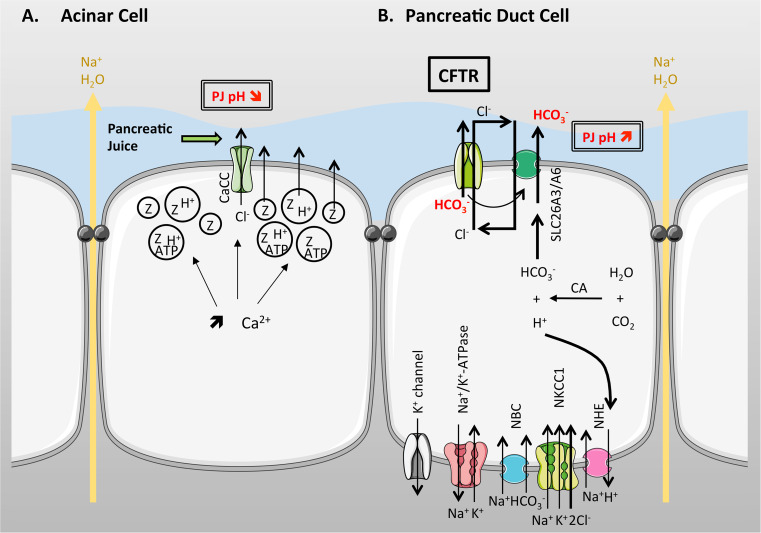
“This increase in the relative HCO3 - conductance of CFTR, together with the observed membrane potential of *60 mV of stimulated duct cells [146, 150], was found to be capable of further increasing ductal HCO3 levels to *140–160 mM.”
BackgroundStimulus-Secretion Coupling in Pancreatic Acinar Cells
Burnham, D. B., & Williams, J. A. (1984) · Journal of Pediatric Gastroenterology and Nutrition · doi:10.1097/00005176-198400031-00004 · Cited by 132
Expression of Pendrin Periostin in Allergic Rhinitis Chronic Rhinosinusitis
Ishida, A., Ohta, N., Suzuki, Y., Kakehata, S., Okubo, K., Ikeda, H., Shiraishi, H., & Izuhara, K. (2012) · Allergology International · doi:10.2332/allergolint.11-oa-0370 · Cited by 129
Quinton, P. (2001) · Nature Medicine · doi:10.1038/85429 · Cited by 128 · cited 1×
“Indeed, it was first demonstrated in the 1970s that the pancreatic secretions in patients with CF were acidic (see section on pancreas), and some years later, it was hypothesized that the defect in HCO3 - secretion caused by defective CFTR could also occur in the lungs, and therefore decrease the ASL pH [74].”
BackgroundFischbarg, J. (2010) · Physiological Reviews · doi:10.1152/physrev.00025.2009 · Cited by 128 · cited 1×
“For both processes, water moves either passively through the paracellular pathway or transcellularly via aquaporins, or by both routes [9–11] (Fig.”
BackgroundcAMP-regulated whole cell chloride currents in pancreatic duct cells
Gray, M. A., Plant, S., & Argent, B. E. (1993) · American Journal of Physiology-Cell Physiology · doi:10.1152/ajpcell.1993.264.3.c591 · Cited by 128 · cited 1×
“Early patch clamp studies from rat and human pancreatic duct cells demonstrated that under near physiological gradients, CFTR was approximately 5 times more permeable to Cl than to HCO3 - [126–129].”
BackgroundSelf-citationSchreiber, R., Nitschke, R., Greger, R., & Kunzelmann, K. (1999) · Journal of Biological Chemistry · doi:10.1074/jbc.274.17.11811 · Cited by 126 · cited 1×
“non-CF cells [62].”
Masson, E., Chen, J., Audrézet, M. ‐., Cooper, D. N., & Férec, C. (2013) · PLoS ONE · doi:10.1371/journal.pone.0073522 · Cited by 126 · cited 1×
“Finally, there is a significant correlation between the development of pancreatitis and variants in the CFTR gene that do not cause a typical CF phenotype, but appear to have impaired HCO3 - secretion [177–179].”
BackgroundThe Physiology of Bicarbonate Transporters in Mammalian Reproduction1
Liu, Y., Wang, D., & Chen, L. (2012) · Biology of Reproduction · doi:10.1095/biolreprod.111.096826 · Cited by 125 · cited 1×
“For the interested reader, several recent reviews describe in detail the role of CFTR in anion (Cl and HCO3 ) and fluid transport in these tissues, together with diseases associated with defective CFTR, such as CF secretory diarrhoeas and infertility [19–24].”
BackgroundCystic fibrosis transmembrane conductance regulator (CFTR) gene mutations in pancreatitis
Ooi, C. Y., & Durie, P. R. (2012) · Journal of Cystic Fibrosis · doi:10.1016/j.jcf.2012.05.001 · Cited by 123 · cited 1×
“Finally, there is a significant correlation between the development of pancreatitis and variants in the CFTR gene that do not cause a typical CF phenotype, but appear to have impaired HCO3 - secretion [177–179].”
BackgroundEffects of bile acids on pancreatic ductal bicarbonate secretion in guinea pig
Venglovecz, V., Rakonczay, Z., Ózsvári, B., Takács, T., Lonovics, J., Varró, A., Gray, M. A., Argent, B. E., & Hegyi, P. J. (2008) · Gut · doi:10.1136/gut.2007.134361 · Cited by 123 · cited 1×
“At low concentrations, both agents increased HCO3 - secretion, a response that required CFTR and Cl/HCO3 - exchange activity [170–172].”
BackgroundSelf-citationRegulation of Murine Airway Surface Liquid Volume by CFTR and Ca2+-activated Cl− Conductances
Tarran, R., Loewen, M. E., Paradiso, A. M., Olsen, J. C., Gray, M. A., Argent, B. E., Boucher, R. C., & Gabriel, S. E. (2002) · The Journal of General Physiology · doi:10.1085/jgp.20028599 · Cited by 122 · cited 1×
“Studies using thin film cultured human bronchial epithelial cells (HBEs) have shown that both Na absorption and Cl secretion regulate ASL height and composition [28, 29].”
BackgroundSelf-citationAbsent Secretion to Vasoactive Intestinal Peptide in Cystic Fibrosis Airway Glands
Joo, N. S., Irokawa, T., Wu, J. V., Robbins, R. C., Whyte, R. I., & Wine, J. J. (2002) · Journal of Biological Chemistry · doi:10.1074/jbc.m208826200 · Cited by 120 · cited 1×
“induce secretion by submucosal glands from CF patients [30].”
BackgroundItani, O. A., Chen, J.-H., Karp, P. H., Ernst, S., Keshavjee, S., Parekh, K., Klesney-Tait, J., Zabner, J., & Welsh, M. J. (2011) · Proceedings of the National Academy of Sciences · doi:10.1073/pnas.1106695108 · Cited by 120 · cited 1×
“On the other hand, the recent generation of CF pigs (both CFTR-/- and F508del) do not show any increased Na or water absorption compared to wild-type animals, in spite of an increased amiloride-sensitive voltage, and short-circuit current, observed in airway epithelial cultures from these animals [44].”
BackgroundKo, S. B. H., Mizuno, N., Yatabe, Y., Yoshikawa, T., Ishiguro, H., Yamamoto, A., Azuma, S., Naruse, S., Yamao, K., Muallem, S., et al. (2010) · Gastroenterology · doi:10.1053/j.gastro.2010.01.001 · Cited by 120 · cited 1×
“Furthermore, patients with autoimmune [175] or acute and chronic alcohol-induced pancreatitis, showed marked abnormalities in membrane localisation and”
BackgroundThe Exocrine Pancreas: The Acinar-Ductal Tango in Physiology and Pathophysiology
Hegyi, P., & Petersen, O. H. (2013) · Reviews of physiology, biochemistry and pharmacology · doi:10.1007/112_2013_14 · Cited by 118
Bhoomagoud, M., Jung, T., Atladóttir, J., Kolodecik, T. R., Shugrue, C., Chaudhuri, A. M., Thrower, E. C., & Gorelick, F. S. (2009) · Gastroenterology · doi:10.1053/j.gastro.2009.05.041 · Cited by 115 · cited 1×
“Furthermore, lower extracellular pH has been shown to enhance secretagogue-induced zymogen activation within acinar cells [123].”
BackgroundIRBIT governs epithelial secretion in mice by antagonizing the WNK/SPAK kinase pathway
Yang, D., Li, Q., So, I., Huang, C.-L., Ando, H., Mizutani, A., Seki, G., Mikoshiba, K., Thomas, P., & Muallem, S. (2011) · Journal of Clinical Investigation · doi:10.1172/jci43475 · Cited by 113 · cited 1×
“Furthermore, like CFTR, NBC activity is positively regulated by cAMP/PKA phosphorylation [156], and both proteins are synergistically regulated in a coordinated fashion by intracellular IRBIT, in a cAMP and calcium-dependent manner [157, 158].”
BackgroundHuman airway surface epithelial regeneration is delayed and abnormal in cystic fibrosis
Hajj, R., Lesimple, P., Nawrocki‐Raby, B., Birembaut, P. L., Puchelle, É., & Coraux, C. (2006) · The Journal of Pathology · doi:10.1002/path.2118 · Cited by 110 · cited 1×
“Although it is not clear whether a defective CFTR decreases or enhances wound healing, many studies show that bronchial epithelial cells lacking CFTR are not able to reconstitute a fully differentiated epithelium [110–112].”
BackgroundMall, M. A., Gonska, T. Y., Thomas, J., Schreiber, R., Seydewitz, H. H., Kuehr, J., Brandis, M., & Kunzelmann, K. (2003) · Pediatric Research · doi:10.1203/01.pdr.0000057204.51420.dc · Cited by 109 · cited 1×
“The histamine or UTP peak secretory response was enhanced in cultured CF airway epithelial cells and freshly excised nasal tissues from CF patients, respectively [55, 56].”
BackgroundRole of IKK and ERK pathways in intrinsic inflammation of cystic fibrosis airways
Verhaeghe, C., Remouchamps, C., Hennuy, B., Vanderplasschen, A. F. C., Chariot, A., Tabruyn, S. P., Oury, C., & Bours, V. (2007) · Biochemical Pharmacology · doi:10.1016/j.bcp.2007.03.019 · Cited by 109
Novak, I., & Greger, R. F. (1988) · Pflügers Archiv - European Journal of Physiology · doi:10.1007/bf00581647 · Cited by 107 · cited 1×
“This finding, together with microelectrode studies from intact ducts that demonstrated the presence of a SITS-sensitive Cl/HCO3 exchange activity on the apical membrane together with an NPPB-sensitive Cl conductance [130, 131], combined with intracellular pH measurements [132], led to the first model of HCO3 - secreti…”
ResultCFTR: A New Horizon in the Pathomechanism and Treatment of Pancreatitis
Hegyi, P., Wilschanski, M., Muallem, S., Lukacs, G. L., Sahin-Tóth, M., Uc, A., Gray, M. A., Rakonczay, Z., & Maléth, J. (2016) · Reviews of Physiology, Biochemistry and Pharmacology · doi:10.1007/112_2015_5002 · Cited by 107
Self-citationThe fine structure of human eccrine sweat glands
Hibbs, R. G. (1958) · American Journal of Anatomy · doi:10.1002/aja.1001030204 · Cited by 105 · cited 2×
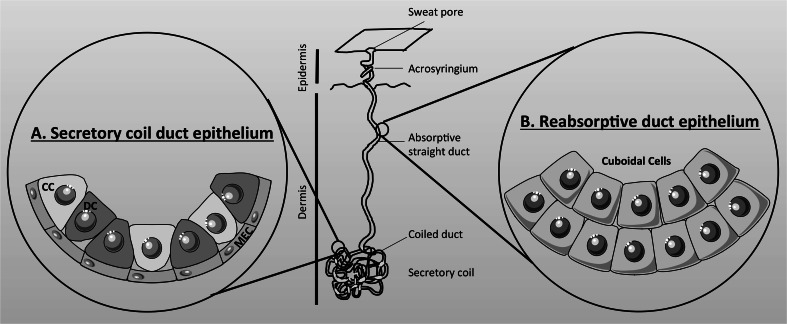
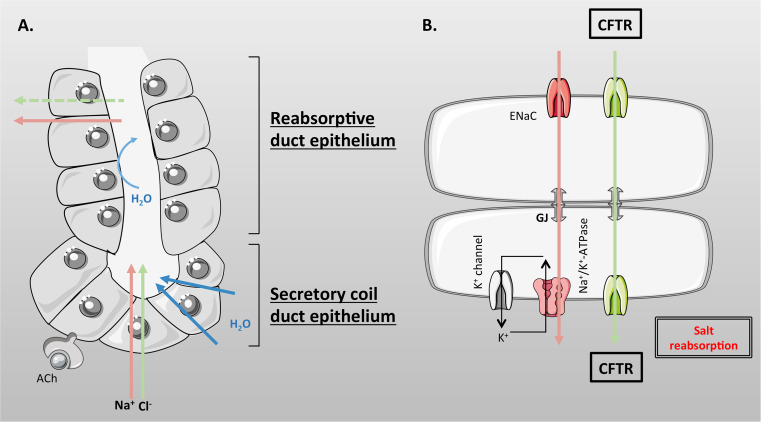
“Structurally, the proximal part of the absorptive duct is composed of a double layer of epithelial cells, which are electrically connected by gap junctions, and physically joined by desmosomes, to form a syncytium [202].”
BackgroundShcheynikov, N., Kim, K. H., Kim, K., Dorwart, M. R., Ko, S. B. H., Goto, H., Naruse, S., Thomas, P., & Muallem, S. (2004) · Journal of Biological Chemistry · doi:10.1074/jbc.m313323200 · Cited by 104
Garnett, J. P., Hickman, E. S., Burrows, R., Hegyi, P. J., Tiszlavicz, L., Cuthbert, A. W., Fong, P., & Gray, M. A. (2011) · Journal of Biological Chemistry · doi:10.1074/jbc.m111.266734 · Cited by 102 · cited 1×
“Using genetically modified cell lines (Calu-3 WT, CFTR knockdown and pendrin knockdown), the authors showed that this effect was CFTR-dependent but that although fluid secretion was mainly mediated through CFTR, the cAMP-induced rise in HCO3 - secretion was mediated via pendrin [96].”
BackgroundSelf-citationIrbit Mediates Synergy Between Ca2+ and cAMP Signaling Pathways During Epithelial Transport in Mice
Park, S., Shcheynikov, N., Hong, J. H., Zheng, C., Suh, S. H., Kawaai, K., Ando, H., Mizutani, A., Abe, T., Kiyonari, H., et al. (2013) · Gastroenterology · doi:10.1053/j.gastro.2013.03.047 · Cited by 98 · cited 1×
“Furthermore, like CFTR, NBC activity is positively regulated by cAMP/PKA phosphorylation [156], and both proteins are synergistically regulated in a coordinated fashion by intracellular IRBIT, in a cAMP and calcium-dependent manner [157, 158].”
BackgroundSLC26A9-mediated chloride secretion prevents mucus obstruction in airway inflammation
Anagnostopoulou, P., Riederer, B., Duerr, J., Michel, S., Binia, A., Agrawal, R., Liu, X., Kalitzki, K., Xiao, F., Chen, M., et al. (2012) · Journal of Clinical Investigation · doi:10.1172/jci60429 · Cited by 98 · cited 1×
“SLC26A9 is predominantly expressed in the brain and lungs, and recent work suggests that it plays an important role in airways hydration and mucus homeostasis as a polymorphism in the 3’UTR region has been shown to be associated with asthma [51].”
BackgroundImprovement of defective cystic fibrosis airway epithelial wound repair after CFTR rescue
Trinh, N. T. N., Bardou, O., Privé, A., Maillé, É., Adam, D., Lingée, S., Ferraro, P., Desrosiers, M., Coraux, C., & Brochiero, E. (2012) · European Respiratory Journal · doi:10.1183/09031936.00221711 · Cited by 92 · cited 1×
“Although it is not clear whether a defective CFTR decreases or enhances wound healing, many studies show that bronchial epithelial cells lacking CFTR are not able to reconstitute a fully differentiated epithelium [110–112].”
BackgroundFluid secretion in interlobular ducts isolated from guinea‐pig pancreas
Ishiguro, H., Naruse, S., Steward, M. C., Kitagawa, M., Ko, S. B. H., Hayakawa, T., & CASE, R. M. (1998) · The Journal of Physiology · doi:10.1111/j.1469-7793.1998.407bh.x · Cited by 89
Chang, M., Plata, C., Sinđić, A., Ranatunga, W. K., Chen, A., Zandi‐Nejad, K., Chan, K. W., Thompson, J. R., Mount, D. B., & Romero, M. F. (2009) · Journal of Biological Chemistry · doi:10.1074/jbc.m109.001669 · Cited by 89
Rowe, S. M., Accurso, F., & Clancy, J. P. (2007) · Proceedings of the American Thoracic Society · doi:10.1513/pats.200703-043br · Cited by 89
Reddy, M. M., Bell, C. L., & Quinton, P. M. (1992) · American Journal of Physiology-Cell Physiology · doi:10.1152/ajpcell.1992.262.4.c891 · Cited by 89 · cited 2×
“Clear cells express CFTR [203, 204] as well as a CaCC, most probably TMEM16A (ANO1) [205].”
BackgroundClaudin‐8 modulates paracellular permeability to acidic and basic ions in MDCK II cells
Angelow, S., Kim, K., & Yu, A. S. L. (2006) · The Journal of Physiology · doi:10.1113/jphysiol.2005.099135 · Cited by 86 · cited 1×
“Indeed, the differential expression of claudins, which have been extensively studied in kidney epithelia [2–4], have been shown to”
BackgroundChloride transport-driven alveolar fluid secretion is a major contributor to cardiogenic lung edema
Solymosi, E. A., Kaestle-Gembardt, S. M., Vadász, I., Wang, L., Neye, N., Chupin, C., Rozowsky, S., Ruehl, R., Tabuchi, A., Schulz, H., et al. (2013) · Proceedings of the National Academy of Sciences · doi:10.1073/pnas.1216382110 · Cited by 86
Pallagi, P., Venglovecz, V., Rakonczay, Z., Borka, K., Korompay, A., Ózsvári, B., Judák, L., Sahin–Tóth, M., Geisz, A., Schnúr, A., et al. (2011) · Gastroenterology · doi:10.1053/j.gastro.2011.08.039 · Cited by 84 · cited 1×
“trypsin itself has been shown to reduce CFTR-dependent HCO3 - secretion from duct cells [124], through activation of apical proteinase-activated receptor-2, which leads to further trypsin autoactivation.”
BackgroundSelf-citationFunctional interaction of CFTR and ENaC in sweat glands
Reddy, M., & Quinton, P. (2003) · Pflügers Archiv - European Journal of Physiology · doi:10.1007/s00424-002-0959-x · Cited by 84
Salvatore, D., Buzzetti, R., Baldo, E., Forneris, M. P., Lucidi, V., Manunza, D., Marinelli, I., Messore, B., Neri, A. S., Raia, V., et al. (2011) · Journal of Cystic Fibrosis · doi:10.1016/j.jcf.2010.12.005 · Cited by 83 · cited 1×
“As stated in Chapter ‘‘Cystic Fibrosis: a clinical view’’, CF is the most common genetically inherited disease in Caucasian populations (1 in 3500 newborns in Europe) [13, 14] and 70–90 % of CF individuals harbour the F508del mutation on at least one allele [15], which results in misfolding and incorrect processing of…”
BackgroundPrimary inflammation in human cystic fibrosis small airways
Tirouvanziam, R., Khazaal, I., & Péault, B. (2002) · American Journal of Physiology-Lung Cellular and Molecular Physiology · doi:10.1152/ajplung.00419.2001 · Cited by 81 · cited 1×
“Moreover, Tirouvanziam showed in 2000 and 2002 that a graft of non-infected tracheas or distal airways from CF foetuses on severe combined immunodeficiency (SCID) mice induced an increase in IL-8 and the recruitment of neutrophils [100, 101].”
BackgroundCui, C.-Y., Childress, V., Piao, Y., Michel, M., Johnson, A. A., Kunisada, M., Ko, M. S. H., Kaestner, K. H., Marmorstein, A. D., & Schlessinger, D. (2012) · Proceedings of the National Academy of Sciences · doi:10.1073/pnas.1117213109 · Cited by 80 · cited 1×
“These include CF, where lack of functional CFTR prevents normal NaCl absorption and leads to excessive salt loss ([192]; reviewed by [193]) which is discussed in more detail below; idiopathic anhidrosis (decreased volume of secretion), which may be caused by defects in calcium signalling [194, 195] and hyperhidrosis (…”
BackgroundFunctional interaction of CFTR and ENaC in sweat glands
Reddy, M. M., & Quinton, P. (2007) · Pflügers Archiv - European Journal of Physiology · doi:10.1007/s00424-006-0182-2 · Cited by 80 · cited 1×
“Indeed, pioneering work from the Quinton lab showed that ENaC activity was dependent on a functional interaction with a phosphorylated, Cl transporting, CFTR [193, 210, 211], highlighting a completely different regulatory interaction between the two channels.”
BackgroundCFTR, bicarbonate, and the pathophysiology of cystic fibrosis
Borowitz, D. (2015) · Pediatric Pulmonology · doi:10.1002/ppul.23247 · Cited by 79 · cited 1×
“For the interested reader, several recent reviews describe in detail the role of CFTR in anion (Cl and HCO3 ) and fluid transport in these tissues, together with diseases associated with defective CFTR, such as CF secretory diarrhoeas and infertility [19–24].”
BackgroundMaléth, J., Venglovecz, V., Rázga, Z., Tiszlavicz, L., Rakonczay, Z., & Hegyi, P. J. (2010) · Gut · doi:10.1136/gut.2009.192153 · Cited by 79 · cited 2×
“In terms of pancreatitis, recent animal studies have suggested that strategies that help maintain levels of HCO3 - secretion would limit the extent of pathology induced by bile and alcohol [174, 176, 182].”
BackgroundScheele, G. A., Fukuoka, S.-I., Kern, H. F., & Freedman, S. D. (1996) · Pancreas · doi:10.1097/00006676-199601000-00001 · Cited by 78 · cited 1×
“Several studies have indicated that insufficient ductal HCO3 - and fluid secretion leads to the destruction of the gland, as observed in the inherited disease CF [116, 162, 163].”
BackgroundHCO 3 − Transport in a Mathematical Model of the Pancreatic Ductal Epithelium
Sohma, Y., Gray, M. A., Imai, Y., & Argent, B. E. (2000) · The Journal of Membrane Biology · doi:10.1007/s00232001077 · Cited by 77 · cited 2×
“In relation to HCO3 - secretion, and particularly in the case of SLC26A6, computer modelling showed that having a 2:1 electrogenic Cl/HCO3 - transporter on the apical membrane, working with CFTR, could theoretically increase HCO3 - to *120 mM [135].”
BackgroundSelf-citationThe CFTR and ENaC debate: how important is ENaC in CF lung disease?
Collawn, J. F., Lazrak, A., Bebők, Z., & Matalon, S. (2012) · American Journal of Physiology-Lung Cellular and Molecular Physiology · doi:10.1152/ajplung.00036.2012 · Cited by 77 · cited 1×
“However, the regulation of ENaC by CFTR is an ongoing debate as some studies do not report the same results [41].”
ResultMechanism and synergism in epithelial fluid and electrolyte secretion
Hong, J. H., Park, S., Shcheynikov, N., & Muallem, S. (2013) · Pflügers Archiv - European Journal of Physiology · doi:10.1007/s00424-013-1390-1 · Cited by 75 · cited 1×
“that underscore the processes of absorption and secretion [1].”
BackgroundCharacterization of SLC26A9, Facilitation of Cl- Transport by Bicarbonate
Loriol, C., Dulong, S., Avella, M., Gabillat, N., Boulukos, K., Borgese, F., & Ehrenfeld, J. (2008) · Cellular Physiology and Biochemistry · doi:10.1159/000149780 · Cited by 75 · cited 1×
“of the specific CFTR inhibitor, CFTR-Inh172, in patchclamp experiments from oocytes [52] but a more significant effect of GlyH-101 (another CFTR inhibitor, but with lower selectivity) in SLC26A9-transfected HEK 293 [53].”
BackgroundFreedman, S. D., Kern, H. F., & Scheele, G. A. (2001) · Gastroenterology · doi:10.1053/gast.2001.27992 · Cited by 75 · cited 1×
“dynamics of acinar cells and, consequently, the exocytosis of zymogen granules [122].”
BackgroundSeshadri, S., Lu, X., Purkey, M. R., Homma, T., Choi, A. W., Carter, R., Suh, L. A., Norton, J., Harris, K. E., Conley, D. B., et al. (2015) · Journal of Allergy and Clinical Immunology · doi:10.1016/j.jaci.2015.05.024 · Cited by 74 · cited 1×
“The SLC26 transporter SLC26A4, pendrin, has been shown to be upregulated in inflammatory conditions in airway epithelia such as chronic rhinosinusitis [92, 93], upon stimulation with IL-17 [94] and in response to bacterial infections [95].”
BackgroundCFTR and TMEM16A are Separate but Functionally Related Cl- Channels
Ousingsawat, J., Kongsuphol, P., Schreiber, R., & Kunzelmann, K. (2011) · Cellular Physiology and Biochemistry · doi:10.1159/000335765 · Cited by 72 · cited 1×
“reported that the activation of CFTR inhibited ANO1 in a bronchial epithelial cell line [61] and also showed a molecular interaction between the two channels in an overexpressing model using HEK293 cells.”
ResultCFTR and tight junctions in cultured bronchial epithelial cells
Nilsson, H. E., Dragomir, A., Lazorova, L., Johannesson, M., & Roomans, G. M. (2009) · Experimental and Molecular Pathology · doi:10.1016/j.yexmp.2009.09.018 · Cited by 71 · cited 1×
“CFTR inhibition led to a disorganisation of F-actin and a-tubulin that was also observed in CF epithelia [63] and involved a myosin II dependent mechanism [64].”
BackgroundPark, J.-H., Park, G.-T., Cho, I. H., Sim, S.-M., Yang, J.-M., & Lee, D.-Y. (2011) · Experimental Dermatology · doi:10.1111/j.1600-0625.2010.01218.x · Cited by 70
Cook, D. P., Rector, M. V., Bouzek, D. C., Michalski, A. S., Gansemer, N. D., Reznikov, L. R., Li, X., Stroik, M. R., Ostedgaard, L. S., Alaiwa, M. H. A., et al. (2015) · American Journal of Respiratory and Critical Care Medicine · doi:10.1164/rccm.201508-1562oc · Cited by 70
Constipation in pediatric Cystic Fibrosis patients: An underestimated medical condition
van der Doef, H. P. J., Kokke, F. T., Beek, F. J. A., Woestenenk, J. W., Froeling, S. P., & Houwen, R. H. J. (2009) · Journal of Cystic Fibrosis · doi:10.1016/j.jcf.2009.11.003 · Cited by 70
Ishiguro, H., Namkung, W., Yamamoto, A., Wang, Z., Worrell, R. T., Xu, J., Lee, M. G., & Soleimani, M. (2006) · American Journal of Physiology-Gastrointestinal and Liver Physiology · doi:10.1152/ajpgi.00286.2006 · Cited by 70 · cited 1×
“However, it is generally believed that SLC26A6 mediates the majority of the Cl/ HCO3 - exchange at the apical membrane based on inhibitor profile (DIDS-sensitivity) and studies from transgenic slc26a6 knock-out mice [140].”
BackgroundStewart, A. K., Yamamoto, A., Nakakuki, M., Kondo, T., Alper, S. L., & Ishiguro, H. (2009) · American Journal of Physiology-Gastrointestinal and Liver Physiology · doi:10.1152/ajpgi.90697.2008 · Cited by 68
Localization of Na+-HCO 3 − cotransporter (NBC-1) variants in rat and human pancreas
Satoh, H., Moriyama, N., Hara, C., Yamada, H., Horita, S., Kunimi, M., Tsukamoto, K., Iso-O, N., Inatomi, J., Kawakami, H., et al. (2003) · American Journal of Physiology-Cell Physiology · doi:10.1152/ajpcell.00166.2002 · Cited by 67
Behrendorff, N., Floetenmeyer, M., Schwiening, C. J., & Thorn, P. (2010) · Gastroenterology · doi:10.1053/j.gastro.2010.07.051 · Cited by 64 · cited 1×
“8, due to proton secretion that accompanies exocytosis [120] (Fig.”
BackgroundTargeted therapies to improve CFTR function in cystic fibrosis
Brodlie, M., Haq, I. J., Roberts, K., & Elborn, J. S. (2015) · Genome Medicine · doi:10.1186/s13073-015-0223-6 · Cited by 64 · cited 1×
“Although not a major clinical problem, there is no doubt that the sweat gland has been pivotal to our general understanding of the role of CFTR in CF which has been eloquently summarised in a recent review by Paul Quinton [193], and it still holds great promise as a diagnostic tool for evaluation of new therapies for…”
BackgroundPancreatitis and Mutations of the Cystic Fibrosis Gene
Durie, P. R. (1998) · New England Journal of Medicine · doi:10.1056/nejm199809033391008 · Cited by 62 · cited 1×
“Several studies have indicated that insufficient ductal HCO3 - and fluid secretion leads to the destruction of the gland, as observed in the inherited disease CF [116, 162, 163].”
BackgroundVenglovecz, V., Hegyi, P., Rakonczay, Z., Tiszlavicz, L., Nardi, A. B. D., Grunnet, M., & Gray, M. A. (2010) · Gut · doi:10.1136/gut.2010.214213 · Cited by 62 · cited 1×
“At low concentrations, both agents increased HCO3 - secretion, a response that required CFTR and Cl/HCO3 - exchange activity [170–172].”
BackgroundSelf-citationMechanical properties and functions of the myoepithelium in the eccrine sweat gland
Sato, K., Nishiyama, A., & Kobayashi, M. (1979) · American Journal of Physiology-Cell Physiology · doi:10.1152/ajpcell.1979.237.3.c177 · Cited by 62 · cited 1×
“6a), and are modified smooth muscle cells that contract during sweat secretion, and which provide structurally integrity to the secretory coil preventing damage to the tubule during gland stimulation [206].”
BackgroundEffect of anion secretion inhibitors on mucin content of airway submucosal gland ducts
Inglis, S. K., Corboz, M. R., & Ballard, S. T. (1998) · American Journal of Physiology-Lung Cellular and Molecular Physiology · doi:10.1152/ajplung.1998.274.5.l762 · Cited by 61 · cited 1×
“Although CFTR is apparently not expressed in mucous cells [31], the defect in fluid secretion from serous cells affects mucin secretion (by mucous cells) as well as its hydration [32] and leads to severe mucus plugging within the glands, probably because of an acidic environment within the glands (see below).”
BackgroundMembrane Potential and Bicarbonate Secretion in Isolated Interlobular Ducts from Guinea-pig Pancreas
Ishiguro, H., Steward, M. C., Sohma, Y., Kubota, T., Kitagawa, M., Kondo, T., CASE, R. M., Hayakawa, T., & Naruse, S. (2002) · The Journal of General Physiology · doi:10.1085/jgp.20028631 · Cited by 59 · cited 2×
“This increase in the relative HCO3 - conductance of CFTR, together with the observed membrane potential of *60 mV of stimulated duct cells [146, 150], was found to be capable of further increasing ductal HCO3 levels to *140–160 mM.”
BackgroundStewart, A. K., Shmukler, B. E., Vandorpe, D. H., Reimold, F. R., Heneghan, J. F., Nakakuki, M., Akhavein, A., Ko, S. B. H., Ishiguro, H., & Alper, S. L. (2011) · American Journal of Physiology-Cell Physiology · doi:10.1152/ajpcell.00089.2011 · Cited by 58 · cited 1×
“Partial resolution to this apparent problem came when the molecular identity of the putative Cl/ HCO3 - exchanger was identified and found to be due to expression of several members of the SLC26 family of anion transporters, SLC26A3 and SLC26A6 [136–138], which were introduced in the section on the airways.”
BackgroundThe Role of Pancreatic Ductal Secretion in Protection Against Acute Pancreatitis in Mice*
Pallagi, P., Balla, Z., Singh, A. K., Dósa, S., Iványi, B., Kukor, Z., Tóth, A., Riederer, B., Liu, Y., Engelhardt, R., et al. (2013) · Critical Care Medicine · doi:10.1097/ccm.0000000000000101 · Cited by 57 · cited 2×
“Further support for this hypothesis came from studying the extent of pancreatic inflammation and necrosis caused by these agents in vivo, using either CFTR knock-out mice or a mouse model with reduced CFTR expression (NHERF1 KO mouse) [182].”
BackgroundSelf-citationIncreased nasal potential difference and amiloride sensitivity in neonates with cystic fibrosis
Gowen, C. W., Lawson, E. E., Gingras-Leatherman, J. L., Gatzy, J. T., Boucher, R. C., & Knowles, M. R. (1986) · The Journal of Pediatrics · doi:10.1016/s0022-3476(86)80825-3 · Cited by 57 · cited 1×
“large response to amiloride (a highly selective ENaC inhibitor) that was not seen in non-CF patients [38, 39].”
BackgroundJudák, L., Hegyi, P. J., Rakonczay, Z., Maléth, J., Gray, M. A., & Venglovecz, V. (2013) · Pflügers Archiv - European Journal of Physiology · doi:10.1007/s00424-013-1333-x · Cited by 54 · cited 1×
“However, higher levels of these agents led to a severe inhibition of CFTR-dependent HCO3 - secretion, which was due to profound mitochondrial damage and a consequent reduction in intracellular ATP levels [173, 174].”
BackgroundSelf-citationBicarbonate secretion: it takes two to tango
Gray, M. A. (2004) · Nature Cell Biology · doi:10.1038/ncb0404-292 · Cited by 52 · cited 2×
“Furthermore, pioneering studies from the Muallem lab showed that both SLC26A exchangers were regulated by CFTR [141–144] through a physical interaction between the phosphorylated R domain of CFTR and the highly conserved STAS domain of the SLC26 transporter.”
BackgroundSelf-citationThe Integrin β1 Subunit Regulates Paracellular Permeability of Kidney Proximal Tubule Cells
Elias, B. C., Mathew, S., Srichai, M. B., Palamuttam, R. J., Bulus, N. M., Mernaugh, G., Singh, A. B., Sanders, C. R., Harris, R. C., Pozzi, A., et al. (2014) · Journal of Biological Chemistry · doi:10.1074/jbc.m113.526509 · Cited by 52
Chloride transport in microperfused interlobular ducts isolated from guinea‐pig pancreas
Ishiguro, H., Naruse, S., Kitagawa, M., Mabuchi, T., Kondo, T., Hayakawa, T., CASE, R. M., & Steward, M. C. (2002) · The Journal of Physiology · doi:10.1113/jphysiol.2001.012490 · Cited by 52 · cited 1×
“First, it was found that stimulation of HCO3 - secretion by cAMP agonists in intact guinea-pig ducts led to a very marked drop in intracellular Cl [147], and this reduction in intracellular [Cl] was subsequently shown to activate a kinase cascade involving the WNK1-OSR1/SPAK pathway, that ultimately led to phosphoryla…”
BackgroundCigarette smoke inhibition of ion transport in canine tracheal epithelium.
Welsh, M. J. (1983) · Journal of Clinical Investigation · doi:10.1172/jci110917 · Cited by 51 · cited 1×
“It was first reported in the early 1980s, before the identification of the CFTR gene, that cigarette smoke decreased Cl secretion which could not be prevented by administration of antioxidants [82].”
BackgroundVariants in Solute Carrier SLC26A9 Modify Prenatal Exocrine Pancreatic Damage in Cystic Fibrosis
Miller, M. R., Soave, D. M., Li, W., Gong, J., Pace, R. G., Boëlle, P., Cutting, G. R., Drumm, M. L., Knowles, M. R., Sun, L., et al. (2015) · The Journal of Pediatrics · doi:10.1016/j.jpeds.2015.01.044 · Cited by 51
Scanlon, K. M., Gau, Y., Zhu, J., Skerry, C. M., Wall, S. M., Soleimani, M., & Carbonetti, N. H. (2014) · Infection and Immunity · doi:10.1128/iai.02222-14 · Cited by 51 · cited 1×
“The SLC26 transporter SLC26A4, pendrin, has been shown to be upregulated in inflammatory conditions in airway epithelia such as chronic rhinosinusitis [92, 93], upon stimulation with IL-17 [94] and in response to bacterial infections [95].”
BackgroundVillanger, O., Veel, T., & Ræder, M. G. (1995) · Gastroenterology · doi:10.1016/0016-5085(95)90460-3 · Cited by 50 · cited 1×
“In contrast to the rat, the pig was shown to express a basolateral HATPase that served a similar purpose to the NHE [133].”
BackgroundLazrak, A., Jurkuvenaite, A., Chen, L., Keeling, K. M., Collawn, J. F., Bedwell, D. M., & Matalon, S. (2011) · American Journal of Physiology-Lung Cellular and Molecular Physiology · doi:10.1152/ajplung.00094.2011 · Cited by 50 · cited 1×
“reported that CFTR regulates ENaC activity in isolated type II alveolar cells, even when CFTR protein levels were minimal [43].”
BackgroundHegyi, P. J., Gray, M. A., & Argent, B. E. (2003) · American Journal of Physiology-Cell Physiology · doi:10.1152/ajpcell.00574.2002 · Cited by 50 · cited 1×
“Several studies have shown that these inhibitory pathways work through the release of neurotransmitters such as Substance P, that lead to a reduction in HCO3 - secretion by selectively reducing apical Cl/HCO3 - exchange activity through a PKC-dependent pathway [159–161].”
BackgroundSelf-citationSeidler, U. E. (2013) · Current Opinion in Pharmacology · doi:10.1016/j.coph.2013.10.001 · Cited by 49 · cited 1×
“For the interested reader, several recent reviews describe in detail the role of CFTR in anion (Cl and HCO3 ) and fluid transport in these tissues, together with diseases associated with defective CFTR, such as CF secretory diarrhoeas and infertility [19–24].”
BackgroundA Mathematical Model of the Pancreatic Ductal Epithelium
Sohma, Y., Gray, M. A., Imai, Y., & Argent, B. E. (1996) · The Journal of Membrane Biology · doi:10.1007/s002329900132 · Cited by 49 · cited 1×
“Indeed, computer modelling of pancreatic HCO3 - secretion clearly showed that this arrangement of transporters would only be capable of achieving HCO3 - levels of *80 mM [134, 135].”
BackgroundSelf-citationpH regulatory mechanisms in rat pancreatic ductal cells
Stuenkel, E. L., Machen, T. E., & Williams, J. A. (1988) · American Journal of Physiology-Gastrointestinal and Liver Physiology · doi:10.1152/ajpgi.1988.254.6.g925 · Cited by 48 · cited 1×
“This finding, together with microelectrode studies from intact ducts that demonstrated the presence of a SITS-sensitive Cl/HCO3 exchange activity on the apical membrane together with an NPPB-sensitive Cl conductance [130, 131], combined with intracellular pH measurements [132], led to the first model of HCO3 - secreti…”
ResultParacellular fluid transport by epithelia
Shachar-Hill, B., & Hill, A. E. (2002) · International review of cytology · doi:10.1016/s0074-7696(02)15014-5 · Cited by 46 · cited 1×
“For both processes, water moves either passively through the paracellular pathway or transcellularly via aquaporins, or by both routes [9–11] (Fig.”
BackgroundCell Physiology of Pancreatic Ducts
Argent, B. E., Gray, M. A., Steward, M. C., & CASE, R. M. (2012) · Elsevier eBooks · doi:10.1016/b978-0-12-382026-6.00051-8 · Cited by 45
Self-citationCFTR gene transfer to human cystic fibrosis pancreatic duct cells using a Sendai virus vector
Rakonczay, Z., Hegyi, P. J., Hasegawa, M., Inoue, M., You, J., Iida, A., Ignáth, I., Alton, E. W. F. W., Uta Griesenbach, D., Óvári, G., et al. (2007) · Journal of Cellular Physiology · doi:10.1002/jcp.21220 · Cited by 44
Self-citationpH-dependent Intraluminal Organization of Mucin Granules in Live Human Mucous/Goblet Cells
Pérez-Vilar, J., Olsen, J. C., Chua, M., & Boucher, R. C. (2005) · Journal of Biological Chemistry · doi:10.1074/jbc.m413289200 · Cited by 44 · cited 1×
“This compact form is maintained within the granules by a high concentration of cations, specifically Ca and H [90, 91].”
BackgroundShan, J., Liao, J., Huang, J., Robert, R., Palmer, M. L., Fahrenkrug, S. C., O’Grady, S. M., & Hanrahan, J. W. (2012) · The Journal of Physiology · doi:10.1113/jphysiol.2012.236893 · Cited by 44 · cited 10×
“/H? exchanger (NHE) and a Cl-/HCO3 - exchanger and (2) parallel operation of a Cl-/HCO3 - exchanger with NBC [12, 37].”
BackgroundInfluentialParacellular Permeability of Bronchial Epithelium is Controlled by CFTR
Weiser, N., Molenda, N., Urbanová, K., Bähler, M., Pieper, U., Oberleithner, H., & Schillers, H. (2011) · Cellular Physiology and Biochemistry · doi:10.1159/000331742 · Cited by 43
Newborn Cystic Fibrosis Pigs Have a Blunted Early Response to an Inflammatory Stimulus
Bartlett, J. A., Ramachandran, S. S., Wohlford-Lenane, C., Barker, C. K., Pezzulo, A. A., Zabner, J., Welsh, M. J., Meyerholz, D. K., Stoltz, D. A., & McCray, P. B. (2016) · American Journal of Respiratory and Critical Care Medicine · doi:10.1164/rccm.201510-2112oc · Cited by 42 · cited 1×
“aureus, when compared to non-CF pigs [103].”
Epithelial stem cell-mediated development of the human respiratory mucosa in SCID mice
Avril‐Delplanque, A., Coraux, C., Tirouvanziam, R. M., Khazaal, I., Puchelle, É., Ambros, P. F., Gaillard, D. A., & Péault, B. (2000) · Journal of Cell Science · doi:10.1242/jcs.113.5.767 · Cited by 42
Cl‐ Conductance and Acid Secretion in the Human Sweat Duct
Quinton, P., & Reddy, M. M. (1989) · Annals of the New York Academy of Sciences · doi:10.1111/j.1749-6632.1989.tb25182.x · Cited by 41 · cited 1×
“However, it has been observed that at low flow rates Cl levels can fall as low as 10–15 mM, and pH becomes very acidic [215], which must involve a different set of transporters.”
BackgroundAcid-base transport in pancreas—new challenges
Novak, I., Haanes, K. A., & Wang, J. (2013) · Frontiers in Physiology · doi:10.3389/fphys.2013.00380 · Cited by 39 · cited 5×
“Together, these data suggest that the flowdependent changes in luminal Cl/HCO3 - concentrations observed both in vivo and in vitro studies [113, 118] can be attributed to dynamic alterations in the mechanism of anion secretion through regulatory changes in CFTR and SLC26A6 activities.”
BackgroundInfluentialThe human eccrine sweat gland: Structure, function and disorders
Bovell, D. (2015) · Journal of Local and Global Health Science · doi:10.5339/jlghs.2015.5 · Cited by 39 · cited 6×
“This creates a lumen negative potential difference that drives paracellular transport of Na, and water follows osmotically via aquaporins to produce an isotonic secretion, containing *145 mM Na, 115 mM Cl, with the remaining anions being lactate and HCO3 - [185].”
BackgroundInfluentialThe Pathophysiology of the Pancreatic Defect in Cystic Fibrosis
Durie, P. R. (1989) · Acta Paediatrica · doi:10.1111/apa.1989.78.s363.41 · Cited by 38 · cited 2×
“Several studies have indicated that insufficient ductal HCO3 - and fluid secretion leads to the destruction of the gland, as observed in the inherited disease CF [116, 162, 163].”
BackgroundHegyi, P. J., Rakonczay, Z., Tiszlavicz, L., Varró, A., Tóth, A., Rácz, G., Varga, G., Gray, M. A., & Argent, B. E. (2004) · American Journal of Physiology-Cell Physiology · doi:10.1152/ajpcell.00430.2003 · Cited by 38 · cited 1×
“Several studies have shown that these inhibitory pathways work through the release of neurotransmitters such as Substance P, that lead to a reduction in HCO3 - secretion by selectively reducing apical Cl/HCO3 - exchange activity through a PKC-dependent pathway [159–161].”
BackgroundSelf-citationIntracellular Cl activity: evidence of dual mechanisms of cl absorption in sweat duct
Reddy, M. M., & Quinton, P. M. (1994) · American Journal of Physiology-Cell Physiology · doi:10.1152/ajpcell.1994.267.4.c1136 · Cited by 38
Bovell, D. L., MacDonald, A., Meyer, B. A., Corbett, A. D., MacLaren, W. M., Holmes, S. L., & Harker, M. (2011) · Experimental Dermatology · doi:10.1111/j.1600-0625.2011.01361.x · Cited by 37
Adams, K. M., Abraham, V., Spielman, D. B., Kolls, J. K., Rubenstein, R. C., Conner, G. E., Cohen, N. A., & Kreindler, J. L. (2014) · PLoS ONE · doi:10.1371/journal.pone.0103263 · Cited by 37 · cited 1×
“The SLC26 transporter SLC26A4, pendrin, has been shown to be upregulated in inflammatory conditions in airway epithelia such as chronic rhinosinusitis [92, 93], upon stimulation with IL-17 [94] and in response to bacterial infections [95].”
Background
Cited by
Pseudomonas aeruginosa: An Audacious Pathogen with an Adaptable Arsenal of Virulence Factors
Jurado-Martín, I., Sainz-Mejías, M., & McClean, S. (2021) · International Journal of Molecular Sciences · doi:10.3390/ijms22063128 · Cited by 698
“demonstrated that although the antimicrobial composition of the ASL was similar in CF and non-CF pigs, the CF pigs’ airways showed reduced efficiency in bacterial killing, suggesting that the observed acidic environment may contribute the lack of activity of antimicrobial molecules [224,225].”
BackgroundCFTR Modulators: The Changing Face of Cystic Fibrosis in the Era of Precision Medicine
Lopes-Pacheco, M. (2020) · Frontiers in Pharmacology · doi:10.3389/fphar.2019.01662 · Cited by 535
“Furthermore, CFTR modulates the activity of other ion channels, such as the epithelial sodium channel (ENaC) (Saint-Criq and Gray, 2017; Moore and Tarran, 2018).”
BackgroundProtein kinase CK2: a potential therapeutic target for diverse human diseases
Borgo, C., D’Amore, C., Sarno, S., Salvi, M., & Ruzzene, M. (2021) · Signal Transduction and Targeted Therapy · doi:10.1038/s41392-021-00567-7 · Cited by 362
Physiological mechanisms determining eccrine sweat composition
Baker, L. B., & Wolfe, A. S. (2020) · European Journal of Applied Physiology · doi:10.1007/s00421-020-04323-7 · Cited by 367
Grasemann, H., & Ratjen, F. (2023) · New England Journal of Medicine · doi:10.1056/nejmra2216474 · Cited by 334
Metadata
- Authors
- Saint-Criq, V., & Gray, M. A.
- Affiliations
- Newcastle University (GB)
- Corresponding author
- Gray, Michael A.
- ORCID
- Gray, Michael A.
- Venue
- Cellular and Molecular Life Sciences
- Published
- 2016-10-06
- Volume
- 74
- Issue
- 1
- Pages
- 93-115
- ISSN
- 1420-682X (ISSN-L)
- 1420-9071
- PMC
- PMC5209439
- OpenAlex
- W2528194947
- Cited by
- 433
- References
- 232
- Citations by year
- 2026: 35 · 2025: 54 · 2024: 53 · 2023: 45 · 2022: 54 · 2021: 57 · 2020: 61 · 2019: 29 · 2018: 32 · 2017: 10 · 2016: 1
- FWCI
- 4.16
- Type
- journal article
- Language
- en
- Open access
- hybrid
- doi.org
- Locations
- Cellular and Molecular Life Sciences (publishedVersion, cc-by)
- Europe PMC (PubMed Central) (publishedVersion, cc-by)
- PubMed Central (publishedVersion, cc-by)
- PubMed (publishedVersion)
- HAL (submittedVersion, other-oa)
- Newcastle University ePrints (Newcastle Univesity) (cc-by)
- Funders
- Cystic Fibrosis Trust (SRC 003)
- Topics
- Health Sciences › Medicine › Pulmonary and Respiratory Medicine › Cystic Fibrosis Research Advances
- Life Sciences › Biochemistry, Genetics and Molecular Biology › Molecular Biology › Ion Transport and Channel Regulation
- Life Sciences › Biochemistry, Genetics and Molecular Biology › Molecular Biology › Ion channel regulation and function
- Keywords
- CFTR, cystic fibrosis, epithelial physiology, anion channels, secretion, fluid homeostasis, luminal pH, epithelial barrier function, respiratory tract, pancreas, sweat glands, secretory diarrhea, acute pancreatitis, chronic obstructive pulmonary disease
- MeSH terms
- Animals, Bicarbonates, Chlorides, Cystic Fibrosis, Epithelium, Humans, Immunity, Innate, Lung, Pancreas, Sweat Glands, Cystic Fibrosis Transmembrane Conductance Regulator
About these checks
Registry, retraction, Cites and statistics results are computed, not judged, with one exception: a printed reference that no index lists is read once by a model before it counts as a citation error. Claims are extracted by a model and kept only when their quote appears verbatim in the text; each cited source is then checked, with a model’s help, for whether it says what the claim relies on. Those verdicts can be wrong — read the claim’s quote and the cited source before relying on one.
Statistics and arithmetic are recomputed, not judged.
Confidence bands are shown only for fields calibrated on our annotated test set. None is calibrated yet, so no band is shown.
What counts as a claim ›How we measure confidence ›How we check this ›
Are you an author, or do you see a problem with this page? Request a review
Data sources
Bibliographic data: Semantic Scholar, OpenAlex, Crossref.
Contains information from the Semantic Scholar Academic Graph Datasets, made available under the ODC Attribution License (ODC-BY 1.0).
Semantic Scholar’s data is described in: Kinney, R., et al. (2023). The Semantic Scholar Open Data Platform. arXiv:2301.10140.
