

GLP-1 metabolite GLP-1(9–36) is a systemic inhibitor of mouse and human pancreatic islet glucagon secretion
Open accessThe DOI matches its Crossref record; 67 of the 67 references it cites were found in a registry or an index.
Abstract
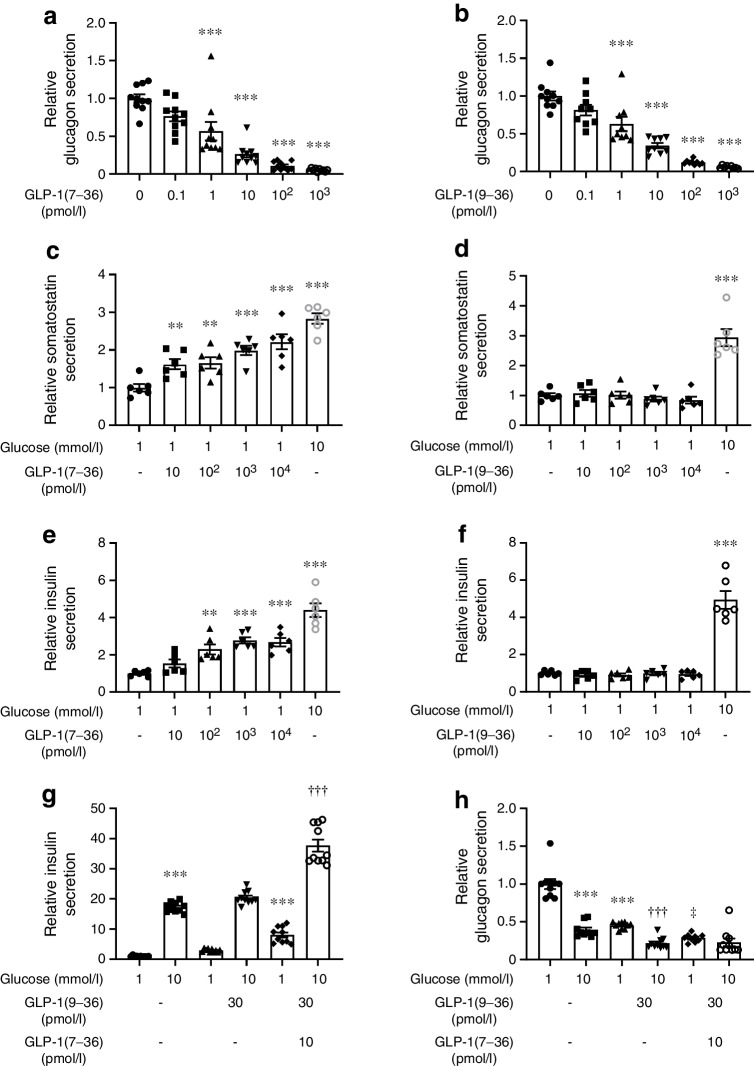
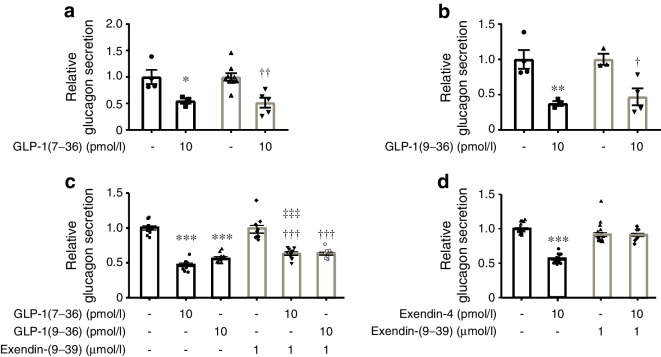
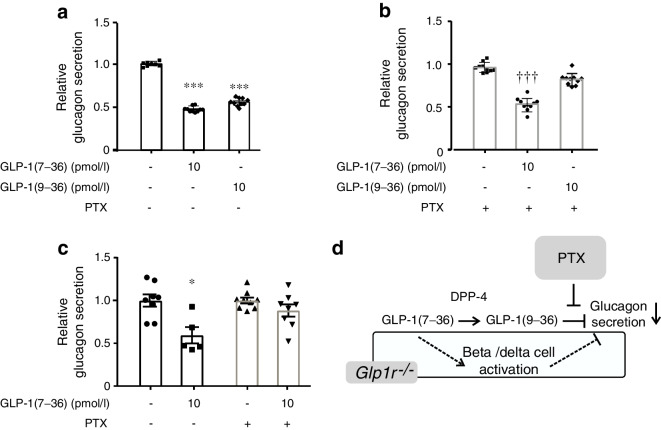
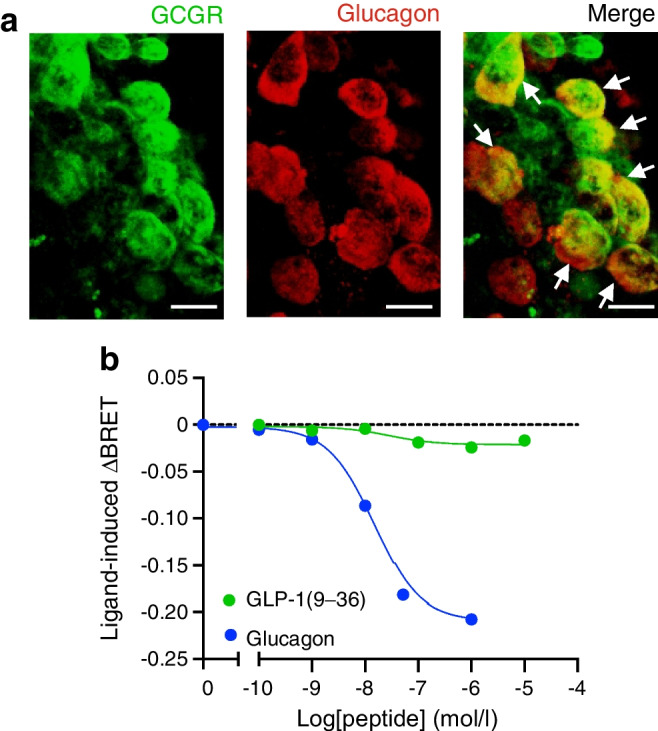
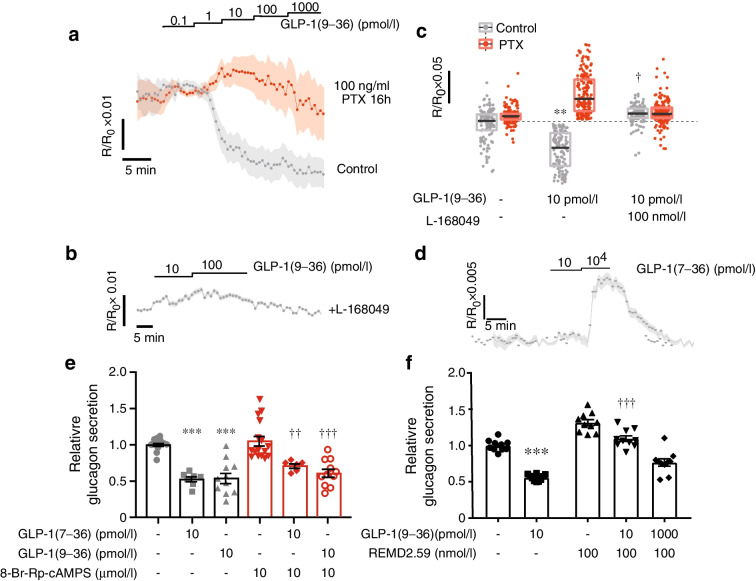
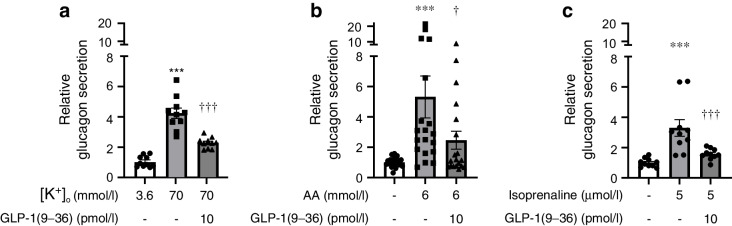
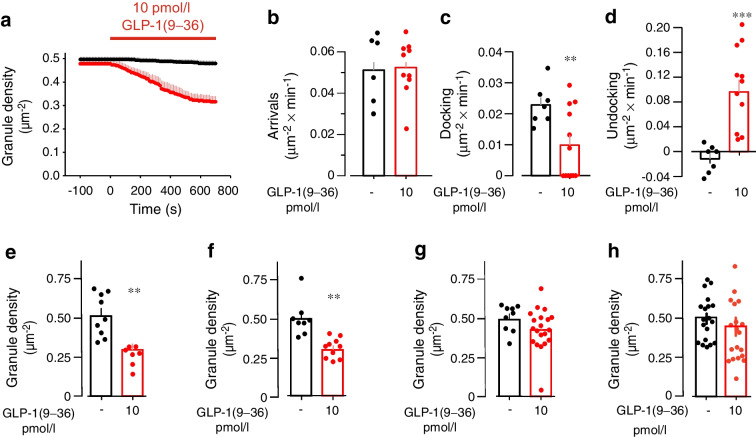
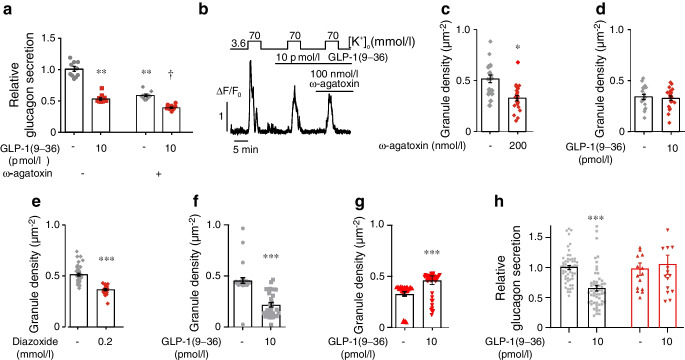
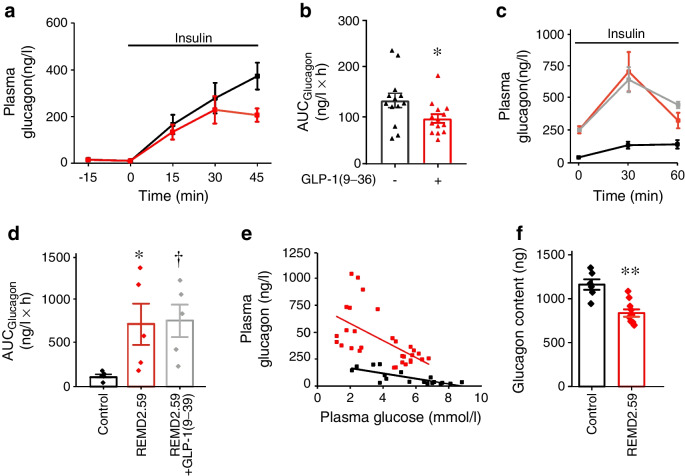
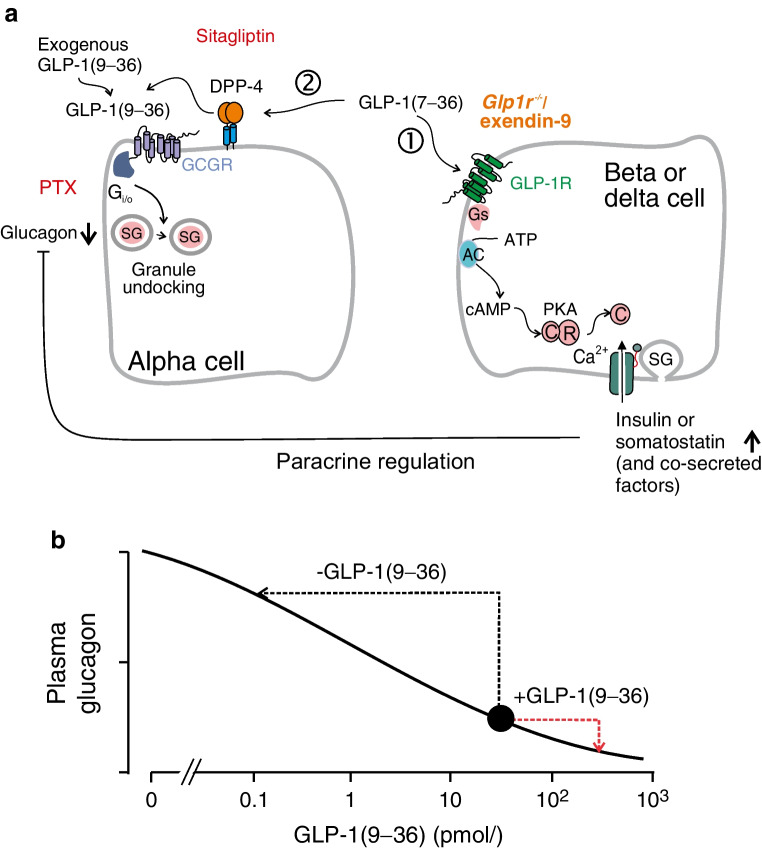
Aims/hypothesis: Diabetes mellitus is associated with impaired insulin secretion, often aggravated by oversecretion of glucagon. Therapeutic interventions should ideally correct both defects. Glucagon-like peptide 1 (GLP-1) has this capability but exactly how it exerts its glucagonostatic effect remains obscure. Following its release GLP-1 is rapidly degraded from GLP-1(7–36) to GLP-1(9–36). We hypothesised that the metabolite GLP-1(9–36) (previously believed to be biologically inactive) exerts a direct inhibitory effect on glucagon secretion and that this mechanism becomes impaired in diabetes. Methods: We used a combination of glucagon secretion measurements in mouse and human islets (including islets from donors with type 2 diabetes), total internal reflection fluorescence microscopy imaging of secretory granule dynamics, recordings of cytoplasmic Ca 2+ and measurements of protein kinase A activity, immunocytochemistry, in vivo physiology and GTP-binding protein dissociation studies to explore how GLP-1 exerts its inhibitory effect on glucagon secretion and the role of the metabolite GLP-1(9–36). Results: GLP-1(7–36) inhibited glucagon secretion in isolated islets with an IC 50 of 2.5 pmol/l. The effect was particularly strong at low glucose concentrations. The degradation product GLP-1(9–36) shared this capacity. GLP-1(9–36) retained its glucagonostatic effects after genetic/pharmacological inactivation of the GLP-1 receptor. GLP-1(9–36) also potently inhibited glucagon secretion evoked by β-adrenergic stimulation, amino acids and membrane depolarisation. In islet alpha cells, GLP-1(9–36) led to inhibition of Ca 2+ entry via voltage-gated Ca 2+ channels sensitive to ω-agatoxin, with consequential pertussis-toxin-sensitive depletion of the docked pool of secretory granules, effects that were prevented by the glucagon receptor antagonists REMD2.59 and L-168049. The capacity of GLP-1(9–36) to inhibit glucagon secretion and reduce the number of docked granules was lost in alpha cells from human donors with type 2 diabetes. In vivo, high exogenous concentrations of GLP-1(9–36) (>100 pmol/l) resulted in a small (30%) lowering of circulating glucagon during insulin-induced hypoglycaemia. This effect was abolished by REMD2.59, which promptly increased circulating glucagon by >225% (adjusted for the change in plasma glucose) without affecting pancreatic glucagon content. Conclusions/interpretation: We conclude that the GLP-1 metabolite GLP-1(9–36) is a systemic inhibitor of glucagon secretion. We propose that the increase in circulating glucagon observed following genetic/pharmacological inactivation of glucagon signalling in mice and in people with type 2 diabetes reflects the removal of GLP-1(9–36)’s glucagonostatic action. Graphical Abstract:
Overview
The claims and statistics of this paper haven’t been checked yet.
Free: it reads the open-access text and checks the first 5 claims that cite a source we can check. Create a free account to check every claim.
Integrity signals
Registry
Cites
Statistics
Figures
Verification
Claims the paper makes
The claims and statistics of this paper haven’t been checked yet.
Free: it reads the open-access text and checks the first 5 claims that cite a source we can check. Create a free account to check every claim.
Claims other papers make about this one
Each is checked against this paper’s own text: does it say what the citing paper says it does?
The source backs part of the claim, not all of it — or backs it for a different population, condition or comparison.
In the citing paper
“Recent studies show that GLP-1(9–36) can activate the inhibitory G protein (Gi/o), leading to the translocation of secretory granules (SG) beneath the cell membrane, thereby inhibiting glucagon secretion.241”
From Glucagon-like peptide-1 receptor: mechanisms and advances in therapy (2024) · cites this paper as [241]
Experimental — accuracy not yet measuredThe source backs part of the claim, not all of it — or backs it for a different population, condition or comparison.
In the citing paper
“However, this inhibitory effect is significantly weakened in patients with T2DM, indicating that its potential application in diabetes treatment requires further investigation.241”
From Glucagon-like peptide-1 receptor: mechanisms and advances in therapy (2024) · cites this paper as [241]
Experimental — accuracy not yet measuredThe source backs part of the claim, not all of it — or backs it for a different population, condition or comparison.
In the citing paper
“In summary, GLP-1 lowers blood glucose levels and inhibits glucagon secretion through direct action on α-cells, promotion of insulin secretion, and regulation of gastrointestinal activity.241”
From Glucagon-like peptide-1 receptor: mechanisms and advances in therapy (2024) · cites this paper as [241]
Experimental — accuracy not yet measuredThe source backs part of the claim, not all of it — or backs it for a different population, condition or comparison.
In the citing paper
“GLP-1(9–36) promotes the undocking of secretory granules (SG) by inhibiting the entry of Ca2+ through voltage-gated Ca2+ channels. As a result, GLP-1(9–36) reduces the number of granules available for exocytosis in α-cells, thereby decreasing the release of glucagon.241”
From Glucagon-like peptide-1 receptor: mechanisms and advances in therapy (2024) · cites this paper as [241]
Experimental — accuracy not yet measuredThe cited source says what the claim attributes to it.
In the citing paper
“Recent studies have shown that GLP-1(9–36) is particularly effective at low glucose concentrations, with its inhibitory effect being similar to that of GLP-1(7-36).241”
From Glucagon-like peptide-1 receptor: mechanisms and advances in therapy (2024) · cites this paper as [241]
3 more claims about this paper
Create a free account to see every claim other papers make about this one.
Self-check
Percentages, sums and reported differences re-computed from the paper’s own numbers.
The self-check needs the paper’s full text.
Citations
Cites
Ultrasensitive fluorescent proteins for imaging neuronal activity
Chen, T.-W., Wardill, T. J., Sun, Y., Pulver, S. R., Renninger, S. L., Baohan, A., Schreiter, E. R., Kerr, R. A., Orger, M. B., Jayaraman, V., et al. (2013) · Nature · doi:10.1038/nature12354 · Cited by 6,474 · cited 1×
“A transgenic reporter mouse model that expresses a genetically encoded Ca 2+ indicator GCaMP6-fast variant [11] (GCaMP6f) specifically in alpha cells (Gcg-GCaMP6f) was generated by crossing Gcg CreERT2 mice [12] (42277-JAX; Jackson Laboratory) (which express a tamoxifen-inducible form of Cre from…”
MethodThe Physiology of Glucagon-like Peptide 1
Holst, J. J. (2007) · Physiological Reviews · doi:10.1152/physrev.00034.2006 · Cited by 3,371
Madisen, L., Garner, A. R., Shimaoka, D., Chuong, A. S., Klapoetke, N. C., Li, L., van der Bourg, A., Niino, Y., Egolf, L., Monetti, C., et al. (2015) · Neuron · doi:10.1016/j.neuron.2015.02.022 · Cited by 1,114 · cited 1×
“…variant [11] (GCaMP6f) specifically in alpha cells (Gcg-GCaMP6f) was generated by crossing Gcg CreERT2 mice [12] (42277-JAX; Jackson Laboratory) (which express a tamoxifen-inducible form of Cre from the endogenous pre-proglucagon gene) to the Rosa26 GCaMP6f mice [13] (028865; Jackson Laboratory).”
MethodTissue and Plasma Concentrations of Amidated and Glycine-Extended Glucagon-Like Peptide I in Humans
Ørskov, C., Rabenhøj, L., Wettergren, A., Kofod, H., & Holst, J. J. (1994) · Diabetes · doi:10.2337/diab.43.4.535 · Cited by 919
Scrocchi, L. A., Brown, T. J., Maclusky, N., Brubaker, P. L., Auerbach, A. B., Joyner, A. L., & Drucker, D. J. (1996) · Nature Medicine · doi:10.1038/nm1196-1254 · Cited by 793 · cited 1×
“In addition, Glp1r −/− mice [10] were used (sex-and age-matched wild-type littermates were used as controls).”
MethodDecay Rates of Human mRNAs: Correlation With Functional Characteristics and Sequence Attributes
Yang, E., van Nimwegen, E., Zavolan, M., Rajewsky, N., Schroeder, M., Magnasco, M., & Darnell, J. E. (2003) · Genome Research · doi:10.1101/gr.1272403 · Cited by 606
The essential role of glucagon in the pathogenesis of diabetes mellitus
Unger, R., & Orci, L. (1975) · The Lancet · doi:10.1016/s0140-6736(75)92375-2 · Cited by 599
TRUPATH, an open-source biosensor platform for interrogating the GPCR transducerome
Olsen, R. H. J., DiBerto, J. F., English, J. G., Glaudin, A. M., Krumm, B. E., Slocum, S. T., Che, T., Gavin, A. C., McCorvy, J. D., Roth, B. L., et al. (2020) · Nature Chemical Biology · doi:10.1038/s41589-020-0535-8 · Cited by 544
DiGruccio, M. R., Mawla, A. M., Donaldson, C. J., Noguchi, G. M., Vaughan, J., Cowing-Zitron, C., van der Meulen, T., & Huising, M. O. (2016) · Molecular Metabolism · doi:10.1016/j.molmet.2016.04.007 · Cited by 353
Blodgett, D. M., Nowosielska, A., Afik, S., Pechhold, S., Cura, A. J., Kennedy, N. J., Kim, S., Kucukural, A., Davis, R. J., Kent, S. C., et al. (2015) · Diabetes · doi:10.2337/db15-0039 · Cited by 330
Revisiting the Complexity of GLP-1 Action from Sites of Synthesis to Receptor Activation
McLean, B. A., Wong, C. K., Campbell, J. E., Hodson, D. J., Trapp, S., & Drucker, D. J. (2021) · Endocrine Reviews · doi:10.1210/endrev/bnaa032 · Cited by 289
Protein homeostasis: live long, won't prosper
Toyama, B. H., & Hetzer, M. W. (2013) · Nature Reviews Molecular Cell Biology · doi:10.1038/nrm3496 · Cited by 283
Hare, K. J., Vilsbøll, T., Asmar, M., Deacon, C. F., Knop, F. K., & Holst, J. J. (2010) · Diabetes · doi:10.2337/db09-1414 · Cited by 276
The beta cell lesion in type 2 diabetes: there has to be a primary functional abnormality
Kahn, S. E., Zraika, S., Utzschneider, K. M., & Hull, R. L. (2009) · Diabetologia · doi:10.1007/s00125-009-1321-z · Cited by 260
A local glucagon-like peptide 1 (GLP-1) system in human pancreatic islets
Marchetti, P., Lupi, R., Bugliani, M., Kirkpatrick, C. L., Sebastiani, G., Grieco, F. A., Del Guerra, S., D’Aleo, V., Piro, S., Marselli, L., et al. (2012) · Diabetologia · doi:10.1007/s00125-012-2716-9 · Cited by 259
De Marinis, Y. Z., Salehi, A., Ward, C. E., Zhang, Q., Abdulkader, F., Bengtsson, M., Braha, O., Braun, M., Ramracheya, R., Amisten, S., et al. (2010) · Cell Metabolism · doi:10.1016/j.cmet.2010.04.007 · Cited by 257 · cited 1×
“5e), at variance with what was reported previously for high concentrations of the peptide in both mouse and human islets [41, 42].”
BackgroundSelf-citationde Heer, J., Rasmussen, C., Coy, D. H., & Holst, J. J. (2008) · Diabetologia · doi:10.1007/s00125-008-1149-y · Cited by 239
Zhang, Q., Ramracheya, R., Lahmann, C., Tarasov, A., Bengtsson, M., Braha, O., Braun, M., Brereton, M., Collins, S., Galvanovskis, J., et al. (2013) · Cell Metabolism · doi:10.1016/j.cmet.2013.10.014 · Cited by 225
Self-citationDean, E. D., Li, M., Prasad, N., Wisniewski, S. N., Von Deylen, A., Spaeth, J., Maddison, L., Botros, A., Sedgeman, L. R., Bozadjieva, N., et al. (2017) · Cell Metabolism · doi:10.1016/j.cmet.2017.05.011 · Cited by 211
Calcium signaling in pancreatic β-cells in health and in Type 2 diabetes
Gilon, P., Chae, H.-Y., Rutter, G. A., & Ravier, M. A. (2014) · Cell Calcium · doi:10.1016/j.ceca.2014.09.001 · Cited by 211
The Extrapancreatic Effects of Glucagon-Like Peptide-1 and Related Peptides
Abu-Hamdah, R., Rabiee, A., Meneilly, G. S., Shannon, R. P., Andersen, D. K., & Elahi, D. (2009) · The Journal of Clinical Endocrinology & Metabolism · doi:10.1210/jc.2008-1296 · Cited by 200
Metabolic messengers: glucagon-like peptide 1
Gribble, F. M., & Reimann, F. (2021) · Nature Metabolism · doi:10.1038/s42255-020-00327-x · Cited by 199
Extensive Oscillatory Gene Expression during C. elegans Larval Development
Hendriks, G.-J., Gaidatzis, D., Aeschimann, F., & Großhans, H. (2014) · Molecular Cell · doi:10.1016/j.molcel.2013.12.013 · Cited by 196
Gromada, J., Bokvist, K., Ding, W.-G., Barg, S., Buschard, K., Renström, E., & Rorsman, P. (1997) · The Journal of General Physiology · doi:10.1085/jgp.110.3.217 · Cited by 187
Self-citationKim, J., Okamoto, H., Huang, Z., Anguiano, G., Chen, S., Liu, Q., Cavino, K., Xin, Y., Na, E., Hamid, R., et al. (2017) · Cell Metabolism · doi:10.1016/j.cmet.2017.05.006 · Cited by 182
Adrenergic Modulation of Pancreatic A, B, and D Cells
Samols, E., & Weir, G. C. (1979) · Journal of Clinical Investigation · doi:10.1172/jci109294 · Cited by 176 · cited 1×
“Alpha cells were identified as those exhibiting a response to 10 μmol/l adrenaline (epinephrine) [23].”
BackgroundVahl, T. P., Paty, B. W., Fuller, B. D., Prigeon, R. L., & D’Alessio, D. A. (2003) · The Journal of Clinical Endocrinology & Metabolism · doi:10.1210/jc.2002-021479 · Cited by 173
Gromada, J., Ma, X., Høy, M., Bokvist, K., Salehi, A., Berggren, P.-O., & Rorsman, P. (2004) · Diabetes · doi:10.2337/diabetes.53.suppl_3.s181 · Cited by 164
Self-citationSSTR2 is the functionally dominant somatostatin receptor in human pancreatic β- and α-cells
Kailey, B., van de Bunt, M., Cheley, S., Johnson, P. R., MacDonald, P. E., Gloyn, A. L., Rorsman, P., & Braun, M. (2012) · American Journal of Physiology-Endocrinology and Metabolism · doi:10.1152/ajpendo.00207.2012 · Cited by 164
Self-citationThe Extracellular Surface of the GLP-1 Receptor Is a Molecular Trigger for Biased Agonism
Wootten, D., Reynolds, C. A., Smith, K. J., Mobarec, J. C., Koole, C., Savage, E. E., Pabreja, K., Simms, J., Sridhar, R., Furness, S. G. B., et al. (2016) · Cell · doi:10.1016/j.cell.2016.05.023 · Cited by 164
Asano, T., Katada, T., Gilman, A. G., & Ross, E. M. (1984) · Journal of Biological Chemistry · doi:10.1016/s0021-9258(17)42705-0 · Cited by 160
Structural basis of G s and G i recognition by the human glucagon receptor
Qiao, A., Han, S., Li, X., Li, Z., Zhao, P., Dai, A., Chang, R., Tai, L., Tan, Q., Chu, X., et al. (2020) · Science · doi:10.1126/science.aaz5346 · Cited by 156
Insulin inhibits glucagon release by SGLT2-induced stimulation of somatostatin secretion
Vergari, E., Knudsen, J. G., Ramracheya, R., Salehi, A., Zhang, Q., Adam, J., Asterholm, I. W., Benrick, A., Briant, L. J. B., Chibalina, M. V., et al. (2019) · Nature Communications · doi:10.1038/s41467-018-08193-8 · Cited by 152 · cited 1×
“Experiments were conducted as previously described [15].”
Self-citationInsulin-like actions of glucagon-like peptide-1: a dual receptor hypothesis
Tomas, E., & Habener, J. F. (2010) · Trends in Endocrinology & Metabolism · doi:10.1016/j.tem.2009.11.007 · Cited by 137
Ramracheya, R., Ward, C., Shigeto, M., Walker, J. N., Amisten, S., Zhang, Q., Johnson, P. R., Rorsman, P., & Braun, M. (2010) · Diabetes · doi:10.2337/db09-1505 · Cited by 136 · cited 1×
“Human islets Human pancreatic islets were isolated (with ethical approval and clinical consent) as previously described [14].”
MethodSelf-citationYan, H., Gu, W., Yang, J., Bi, V., Shen, Y., Lee, E. K., Winters, K. A., Komorowski, R., Zhang, C., Patel, J., et al. (2009) · Journal of Pharmacology and Experimental Therapeutics · doi:10.1124/jpet.108.147009 · Cited by 135
Winther-Sørensen, M., Galsgaard, K. D., Santos, A., Trammell, S. A. J., Sulek, K., Kuhre, R. E., Pedersen, J., Andersen, D. B., Hassing, A. S., Dall, M., et al. (2020) · Molecular Metabolism · doi:10.1016/j.molmet.2020.101080 · Cited by 135
Contact-induced clustering of syntaxin and munc18 docks secretory granules at the exocytosis site
Gandasi, N. R., & Barg, S. (2014) · Nature Communications · doi:10.1038/ncomms4914 · Cited by 130 · cited 2×
“Incoming and outgoing granules during visiting, docking and undocking were determined from multiple frame movies as described previously [25].”
BackgroundMethodSelf-citationRamracheya, R., Chapman, C., Chibalina, M., Dou, H., Miranda, C., González, A., Moritoh, Y., Shigeto, M., Zhang, Q., Braun, M., et al. (2018) · Physiological Reports · doi:10.14814/phy2.13852 · Cited by 128 · cited 1×
“5e), at variance with what was reported previously for high concentrations of the peptide in both mouse and human islets [41, 42].”
BackgroundSelf-citationGlucose-Dependent Granule Docking Limits Insulin Secretion and Is Decreased in Human Type 2 Diabetes
Gandasi, N. R., Yin, P., Omar-Hmeadi, M., Ottosson Laakso, E., Vikman, P., & Barg, S. (2018) · Cell Metabolism · doi:10.1016/j.cmet.2017.12.017 · Cited by 115 · cited 1×
“Granule density was calculated using a script that used the built-in ‘find maxima’ function in ImageJ (version 1.53c; http:// rsbweb. nih . gov / ij) for spot detection [26].”
MethodSelf-citationParacrine control of α-cell glucagon exocytosis is compromised in human type-2 diabetes
Omar-Hmeadi, M., Lund, P.-E., Gandasi, N. R., Tengholm, A., & Barg, S. (2020) · Nature Communications · doi:10.1038/s41467-020-15717-8 · Cited by 105
Self-citationMeier, J. J., Gethmann, A., Nauck, M. A., Götze, O., Schmitz, F., Deacon, C. F., Gallwitz, B., Schmidt, W. E., & Holst, J. J. (2006) · American Journal of Physiology-Endocrinology and Metabolism · doi:10.1152/ajpendo.00576.2005 · Cited by 104
Zhang, Y., Parajuli, K. R., Fava, G. E., Gupta, R., Xu, W., Nguyen, L. U., Zakaria, A. F., Fonseca, V. A., Wang, H., Mauvais-Jarvis, F., et al. (2019) · Diabetes · doi:10.2337/db18-0317 · Cited by 104
GLP‐1 (9–36) Amide, Cleavage Product of GLP‐1 (7–36) Amide, Is a Glucoregulatory Peptide
Elahi, D., Egan, J. M., Shannon, R. P., Meneilly, G. S., Khatri, A., Habener, J. F., & Andersen, D. K. (2008) · Obesity · doi:10.1038/oby.2008.229 · Cited by 101
The role of somatostatin in GLP-1-induced inhibition of glucagon secretion in mice
Ørgaard, A., & Holst, J. J. (2017) · Diabetologia · doi:10.1007/s00125-017-4315-2 · Cited by 101
Hamilton, A., Zhang, Q., Salehi, A., Willems, M., Knudsen, J. G., Ringgaard, A. K., Chapman, C. E., Gonzalez-Alvarez, A., Surdo, N. C., Zaccolo, M., et al. (2018) · Diabetes · doi:10.2337/db17-1102 · Cited by 94
Self-citationCharacterization of a Novel, Non-peptidyl Antagonist of the Human Glucagon Receptor
Cascieri, M. A., Koch, G. E., Ber, E., Sadowski, S. J., Louizides, D., de Laszlo, S. E., Hacker, C., Hagmann, W. K., MacCoss, M., Chicchi, G. G., et al. (1999) · Journal of Biological Chemistry · doi:10.1074/jbc.274.13.8694 · Cited by 92
Genetic Background Determines the Size and Structure of the Endocrine Pancreas
Bock, T., Pakkenberg, B., & Buschard, K. (2005) · Diabetes · doi:10.2337/diabetes.54.1.133 · Cited by 92
Na+ current properties in islet α‐ and β‐cells reflect cell‐specific Scn3a and Scn9a expression
Zhang, Q., Chibalina, M. V., Bengtsson, M., Groschner, L. N., Ramracheya, R., Rorsman, N. J. G., Leiss, V., Nassar, M. A., Welling, A., Gribble, F. M., et al. (2014) · The Journal of Physiology · doi:10.1113/jphysiol.2014.274209 · Cited by 90
Self-citationPeptide degradation and the role of DPP-4 inhibitors in the treatment of type 2 diabetes
Deacon, C. F. (2018) · Peptides · doi:10.1016/j.peptides.2017.10.011 · Cited by 89
Glucose controls glucagon secretion by directly modulating cAMP in alpha cells
Yu, Q., Shuai, H., Ahooghalandari, P., Gylfe, E., & Tengholm, A. (2019) · Diabetologia · doi:10.1007/s00125-019-4857-6 · Cited by 84
Modulation of Glucagon Receptor Pharmacology by Receptor Activity-modifying Protein-2 (RAMP2)
Weston, C., Lu, J., Li, N., Barkan, K., Richards, G. O., Roberts, D. J., Skerry, T. M., Poyner, D., Pardamwar, M., Reynolds, C. A., et al. (2015) · Journal of Biological Chemistry · doi:10.1074/jbc.m114.624601 · Cited by 77
Self-citationSharma, A. X., Quittner-Strom, E. B., Lee, Y., Johnson, J. A., Martin, S. A., Yu, X., Li, J., Lu, J., Cai, Z., Chen, S., et al. (2018) · Cell Reports · doi:10.1016/j.celrep.2018.01.065 · Cited by 71
Deacon, C. F. (2007) · Diabetes, Obesity and Metabolism · doi:10.1111/j.1463-1326.2007.00765.x · Cited by 70
Glucagon receptor inhibition normalizes blood glucose in severe insulin-resistant mice
Okamoto, H., Cavino, K., Na, E., Krumm, E., Kim, S. Y., Cheng, X., Murphy, A. J., Yancopoulos, G. D., & Gromada, J. (2017) · Proceedings of the National Academy of Sciences · doi:10.1073/pnas.1621069114 · Cited by 70
Why is it so difficult to measure glucagon-like peptide-1 in a mouse?
Windeløv, J. A., Albrechtsen, N. J. W., Kuhre, R. E., Jepsen, S. L., Hornburg, D., Pedersen, J., Jensen, E. P., Galsgaard, K. D., Winther‐Sørensen, M., Ørgaard, A., et al. (2017) · Diabetologia · doi:10.1007/s00125-017-4347-7 · Cited by 69
Pancreatic islet blood flow in normal and obese-hyperglycemic (ob/ob) mice
Carlsson, P. O., Andersson, A., & Jansson, L. (1996) · American Journal of Physiology-Endocrinology and Metabolism · doi:10.1152/ajpendo.1996.271.6.e990 · Cited by 69
High-fidelity Glucagon-CreER mouse line generated by CRISPR-Cas9 assisted gene targeting
Ackermann, A. M., Zhang, J., Heller, A., Briker, A., & Kaestner, K. H. (2017) · Molecular Metabolism · doi:10.1016/j.molmet.2017.01.003 · Cited by 63
Pettus, J., Boeder, S. C., Christiansen, M. P., Denham, D. S., Bailey, T. S., Akturk, H. K., Klaff, L. J., Rosenstock, J., Cheng, M. H. M., Bode, B. W., et al. (2022) · Nature Medicine · doi:10.1038/s41591-022-02011-x · Cited by 54
Hypoglycemia-Associated Autonomic Failure in Diabetes: Maladaptive, Adaptive, or Both?
Cryer, P. E. (2015) · Diabetes · doi:10.2337/db15-0331 · Cited by 43
Somatostatin secretion by Na+-dependent Ca2+-induced Ca2+ release in pancreatic delta cells
Vergari, E., Denwood, G., Salehi, A., Zhang, Q., Adam, J., Alrifaiy, A., Wernstedt Asterholm, I., Benrick, A., Chibalina, M. V., Eliasson, L., et al. (2020) · Nature Metabolism · doi:10.1038/s42255-019-0158-0 · Cited by 43 · cited 1×
“Insulin and somatostatin were determined by RIA (Mil-lipore and Diasource ImmunoAssays, respectively) as described previously [16, 17].”
MethodSelf-citationMetabolic Messengers: glucagon
MacDonald, P. E., & Rorsman, P. (2023) · Nature Metabolism · doi:10.1038/s42255-022-00725-3 · Cited by 43
Self-citationEvaluation of commercially available glucagon receptor antibodies and glucagon receptor expression
Bomholt, A. B., Johansen, C. D., Christensen, J. B., Kjeldsen, S. A. S., Galsgaard, K. D., Winther-Sørensen, M., Serizawa, R., Hornum, M., Porrini, E., Pedersen, J., et al. (2022) · Communications Biology · doi:10.1038/s42003-022-04242-7 · Cited by 42
Guida, C., McCulloch, L. J., Godazgar, M., Stephen, S. D., Baker, C., Basco, D., Dong, J., Chen, D., Clark, A., & Ramracheya, R. D. (2017) · Diabetes Obesity and Metabolism · doi:10.1111/dom.13113 · Cited by 34
Self-citationGalvin, S. G., Kay, R. G., Foreman, R. E., Larraufie, P., Meek, C. L., Biggs, E. K., Ravn, P., Jermutus, L., Reimann, F., & Gribble, F. M. (2021) · Journal of Proteome Research · doi:10.1021/acs.jproteome.1c00463 · Cited by 26
Franklin, Z. J., O'Harte, F. P. M., & Irwin, N. (2013) · Biological Chemistry · doi:10.1515/hsz-2013-0224 · Cited by 15
Structural Basis for Ligand Recognition of Incretin Receptors
Underwood, C. R., Parthier, C., & Reedtz‐Runge, S. (2010) · Vitamins and hormones · doi:10.1016/b978-0-12-381517-0.00009-6 · Cited by 14
Cited by
Glucagon-like peptide-1 receptor: mechanisms and advances in therapy
Zheng, Z., Zong, Y., Ma, Y., Tian, Y., Pang, Y., Zhang, C., & Gao, J. (2024) · Signal Transduction and Targeted Therapy · doi:10.1038/s41392-024-01931-z · Cited by 1,036
“232,233,241,259 (Fig.”
BackgroundStructural pharmacology and mechanisms of GLP-1R signaling
Zhou, Q., Zhao, F., Zhang, Y., Yang, D., & Wang, M. (2025) · Trends in Pharmacological Sciences · doi:10.1016/j.tips.2025.03.003 · Cited by 53
GLP1R and GIPR expression and signaling in pancreatic alpha cells, beta cells and delta cells
Shilleh, A. H., Viloria, K., Broichhagen, J., Campbell, J. E., & Hodson, D. J. (2024) · Peptides · doi:10.1016/j.peptides.2024.171179 · Cited by 39
“Notably, the glucagono-static effect of GLP1 9 – 36 is still present in Glp1r -/- knockout islets, but is absent from Gcgr -/- knockout islets [83].”
InfluentialImmunomodulation and inflammation: Role of GLP-1R and GIPR expressing cells within the gut
Morrow, N. M., Morissette, A., & Mulvihill, E. E. (2024) · Peptides · doi:10.1016/j.peptides.2024.171200 · Cited by 34
Ahmad, P., Estrin, N. E., Farshidfar, N., Zhang, Y., & Miron, R. J. (2025) · Journal of Periodontal Research · doi:10.1111/jre.13410 · Cited by 34
Metadata
- Authors
- Gandasi, N. R., Gao, R., Kothegala, L., Pearce, A., Santos, C., Acreman, S., Basco, D., Benrick, A., Chibalina, M. V., Clark, A., Guida, C., Harris, M., Johnson, P. R. V., Knudsen, J. G., Ma, J., Miranda, C., Shigeto, M., Tarasov, A. I., Yeung, H. Y., Thorens, B., Asterholm, I. W., Zhang, Q., Ramracheya, R., Ladds, G., & Rorsman, P.
- Affiliations
- Indian Institute of Science Bangalore (IN)
- Churchill Hospital (GB)
- University of Gothenburg (SE)
- University of Cambridge (GB)
- University of Lausanne (CH)
- University of Copenhagen (DK)
- University of Ulster (GB)
- Corresponding author
- Rorsman, Patrik
- ORCID
- Gandasi, Nikhil R.
- Gao, Rui
- Kothegala, Lakshmi
- Pearce, Abigail
- Santos, Cristiano
- Acreman, Samuel
- Basco, Davide
- Benrick, Anna
- Chibalina, Margarita V.
- Clark, Anne
- Guida, Claudia
- Harris, Matthew
- Johnson, Paul R. V.
- Knudsen, Jakob G.
- Ma, Jinfang
- Miranda, Caroline
- Shigeto, Makoto
- Tarasov, Andrei I.
- Yeung, Ho Yan
- Thorens, Bernard
- Asterholm, Ingrid W.
- Zhang, Quan
- Ramracheya, Reshma
- Ladds, Graham
- Rorsman, Patrik
- Venue
- Diabetologia
- Published
- 2023-12-21
- Volume
- 67
- Issue
- 3
- Pages
- 528-546
- ISSN
- 0012-186X (ISSN-L)
- 1432-0428
- PMC
- PMC10844371
- OpenAlex
- W4390061924
- Cited by
- 31
- References
- 67
- Citations by year
- 2026: 7 · 2025: 10 · 2024: 14
- FWCI
- 8.28
- Type
- journal article
- Language
- en
- Open access
- hybrid
- doi.org
- Licence
- cc-by
- creativecommons.org/licenses/by/4.0 (tdm)
- creativecommons.org/licenses/by/4.0 (vor)
- Locations
- Diabetologia (publishedVersion, cc-by)
- PubMed Central (publishedVersion, cc-by)
- PubMed (publishedVersion)
- Research at the University of Copenhagen (University of Copenhagen) (publishedVersion, cc-by)
- Ulster University Research Portal (Ulster University) (acceptedVersion, other-oa)
- SERVAL (Université de Lausanne) (acceptedVersion, other-oa)
- IRIS (submittedVersion, cc-by)
- Apollo (University of Cambridge) (submittedVersion, cc-by)
- Apollo (cc-by)
- Funders
- Vetenskapsrådet (2013-7107, 2020-01463, 2020-02485)
- University of Gothenburg
- Topics
- Health Sciences › Medicine › Endocrinology, Diabetes and Metabolism › Pancreatic function and diabetes
- Health Sciences › Medicine › Endocrinology, Diabetes and Metabolism › Diabetes Treatment and Management
- Life Sciences › Neuroscience › Cellular and Molecular Neuroscience › Neuropeptides and Animal Physiology
- Keywords
- GLP-1(7-36), glucagon secretion, pancreatic islets, alpha cells, type 2 diabetes, GLP-1 receptor, secretory granules, protein kinase A, glucagon receptor, beta-adrenergic stimulation, calcium signaling
- MeSH terms
- Diabetes Mellitus, Type 2, Glucagon, Humans, Hypoglycemia, Insulin, Islets of Langerhans, Peptide Fragments, Glucagon-Like Peptide 1
About these checks
Registry, retraction, Cites and statistics results are computed, not judged, with one exception: a printed reference that no index lists is read once by a model before it counts as a citation error. Claims are extracted by a model and kept only when their quote appears verbatim in the text; each cited source is then checked, with a model’s help, for whether it says what the claim relies on. Those verdicts can be wrong — read the claim’s quote and the cited source before relying on one.
Statistics and arithmetic are recomputed, not judged.
Confidence bands are shown only for fields calibrated on our annotated test set. None is calibrated yet, so no band is shown.
What counts as a claim ›How we measure confidence ›How we check this ›
Are you an author, or do you see a problem with this page? Request a review
Data sources
Bibliographic data: Semantic Scholar, OpenAlex, Crossref.
Contains information from the Semantic Scholar Academic Graph Datasets, made available under the ODC Attribution License (ODC-BY 1.0).
Semantic Scholar’s data is described in: Kinney, R., et al. (2023). The Semantic Scholar Open Data Platform. arXiv:2301.10140.
