

Social isolation, loneliness and depression in young adulthood: a behavioural genetic analysis
Open accessThe DOI matches its Crossref record; 60 of the 60 references it cites were found in a registry or an index.
Abstract
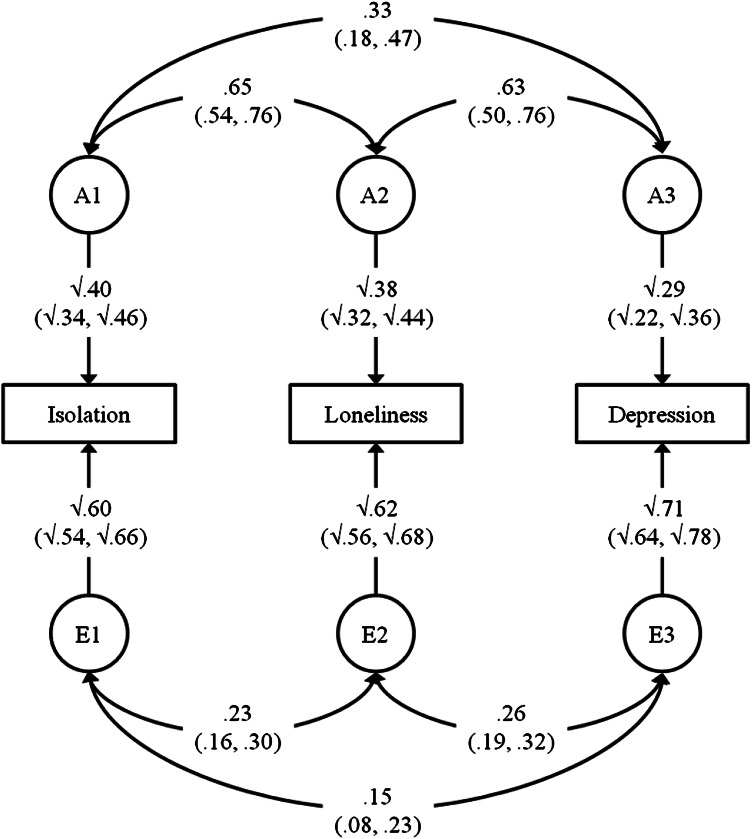
PURPOSE: To investigate the association between social isolation and loneliness, how they relate to depression, and whether these associations are explained by genetic influences. METHODS: We used data from the age-18 wave of the Environmental Risk Longitudinal Twin Study, a birth cohort of 1116 same-sex twin pairs born in England and Wales in 1994 and 1995. Participants reported on their levels of social isolation, loneliness and depressive symptoms. We conducted regression analyses to test the differential associations of isolation and loneliness with depression. Using the twin study design, we estimated the proportion of variance in each construct and their covariance that was accounted for by genetic and environmental factors. RESULTS: Social isolation and loneliness were moderately correlated (r = 0.39), reflecting the separateness of these constructs, and both were associated with depression. When entered simultaneously in a regression analysis, loneliness was more robustly associated with depression. We observed similar degrees of genetic influence on social isolation (40 %) and loneliness (38 %), and a smaller genetic influence on depressive symptoms (29 %), with the remaining variance accounted for by the non-shared environment. Genetic correlations of 0.65 between isolation and loneliness and 0.63 between loneliness and depression indicated a strong role of genetic influences in the co-occurrence of these phenotypes. CONCLUSIONS: Socially isolated young adults do not necessarily experience loneliness. However, those who are lonely are often depressed, partly because the same genes influence loneliness and depression. Interventions should not only aim at increasing social connections but also focus on subjective feelings of loneliness.
Overview
The claims and statistics of this paper haven’t been checked yet.
Free: it reads the open-access text and checks the first 5 claims that cite a source we can check. Create a free account to check every claim.
Integrity signals
Registry
Cites
Statistics
Figures
Verification
Claims the paper makes
The claims and statistics of this paper haven’t been checked yet.
Free: it reads the open-access text and checks the first 5 claims that cite a source we can check. Create a free account to check every claim.
Claims other papers make about this one
Each is checked against this paper’s own text: does it say what the citing paper says it does?
The cited source doesn’t support the claim as written.
In the citing paper
“Seven studies stated that they measured the impact of social isolation39 , 45 , 50 , 59 , 69 , 70 , 72 on mental health, but the social isolation measures used were either subscales or questions from loneliness scales, or strongly overlapped with the construct of loneliness. Therefore, we have considered them together with studies that measured loneliness.”
From Rapid Systematic Review: The Impact of Social Isolation and Loneliness on the Mental Health of Children and Adolescents in the Context of COVID-19 (2020) · cites this paper as [39]
Checked by a reasoning model — may be wrong.
Experimental — accuracy not yet measuredThe source backs part of the claim, not all of it — or backs it for a different population, condition or comparison.
In the citing paper
“Younger adults may be disproportionately affected by disease-containment policies (e.g., school/university closures) that increase social isolation placing them at higher risk of loneliness [32].”
From Loneliness in the UK during the COVID-19 pandemic: Cross-sectional results from the COVID-19 Psychological Wellbeing Study (2020) · cites this paper as [32]
Experimental — accuracy not yet measuredThe source backs part of the claim, not all of it — or backs it for a different population, condition or comparison.
In the citing paper
“Social isolation and peer victimisation do not occur randomly and are both heritable (30% to 70%), suggesting that genetic factors contribute to individual differences in these social difficulties (Fisher et al., 2015; Johansson et al., 2022; Matthews et al., 2016; Veldkamp et al., 2019).”
From A cross‐lagged twin study of emotional symptoms, social isolation and peer victimisation from early adolescence to emerging adulthood (2023) · cites this paper as Matthews et al., 2016
Experimental — accuracy not yet measuredThe source backs part of the claim, not all of it — or backs it for a different population, condition or comparison.
In the citing paper
“Although existing evidence indicates that loneliness and social isolation are independently associated with mental health conditions and mortality (Holt-Lunstad et al., 2015;Matthews et al., 2016), their independent effects on physical health conditions are less consistent and their independent effects on socioeconomic outcomes have not been investigated (Leigh-Hunt et al., 2017).”
From Investigating the interplay of loneliness and social isolation across adolescence: Findings from a nationally representative longitudinal study (2026) · cites this paper as Matthews et al., 2016
Experimental — accuracy not yet measuredThe source backs part of the claim, not all of it — or backs it for a different population, condition or comparison.
In the citing paper
“We used measures of social isolation that capture low embeddedness within age-appropriate social networks, which is consistent with prior research that conceptualizes childhood isolation in terms of peer relationships (e.g., Lacey et al., 2014;Matthews et al., 2016;Morneau-Vaillancourt et al., 2023;Thompson et al., 2023).”
From Investigating the interplay of loneliness and social isolation across adolescence: Findings from a nationally representative longitudinal study (2026) · cites this paper as Matthews et al., 2016
Experimental — accuracy not yet measured
8 more claims about this paper
Create a free account to see every claim other papers make about this one.
Self-check
Percentages, sums and reported differences re-computed from the paper’s own numbers.
The self-check needs the paper’s full text.
Citations
Cites
Diagnostic and Statistical Manual of Mental Disorders
Williams, J. B. W., & First, M. (2013) · Encyclopedia of Social Work · doi:10.1093/acrefore/9780199975839.013.104 · Cited by 109,519
Diagnostic and Statistical Manual of Mental Disorders
American Psychiatric Association (2022) · doi:10.1176/appi.books.9780890425787 · Cited by 23,476
Stress, social support, and the buffering hypothesis
Cohen, S., & Wills, T. A. (1985) · Psychological Bulletin · doi:10.1037/0033-2909.98.2.310 · Cited by 18,093 · cited 1×
“Young adults who were socially isolated experienced greater feelings of loneliness, and were also more likely to grapple with depression, suggesting that social relationships confer benefits for mental health over and above subjective feelings of connectedness, such as reducing the effects of stress [42].”
BackgroundThe Multidimensional Scale of Perceived Social Support
Zimet, G. D., Dahlem, N. W., Zimet, S. G., & Farley, G. K. (1988) · Journal of Personality Assessment · doi:10.1207/s15327752jpa5201_2 · Cited by 13,339
Genetics of Food Intake Self-Regulation in Childhood: Literature Review and Research Opportunities
Faith, M. S., Carnell, S., & Kral, T. V. E. (2013) · Human Heredity · doi:10.1159/000353879 · Cited by 7,601
UCLA loneliness scale (version 3): reliability, validity, and factor structure
Russell, D. W. (1996) · Journal of Personality Assessment · doi:10.1207/s15327752jpa6601_2 · Cited by 5,800 · cited 1×
“from the UCLA Loneliness Scale (Version 3): [33] ‘‘How often do you feel that you lack companionship?’’, ‘‘How often do you feel left out?’’, ‘‘How often do you feel isolated from others?’’ and ‘‘How often do you feel alone?’’ The full UCLA Scale consists of 20 items; however, a previous study has shown that a short f…”
BackgroundPsychometric Characteristics of the Multidimensional Scale of Perceived Social Support
Zimet, G. D., Powell, S. S., Farley, G. K., Werkman, S., & Berkoff, K. A. (1990) · Journal of Personality Assessment · doi:10.1080/00223891.1990.9674095 · Cited by 4,855
Psychometric Characteristics of the Multidimensional Scale of Perceived Social Support
Zimet, G., Powell, S., Farley, G., Werkman, S., & Berkoff, K. (1990) · Journal of Personality Assessment · doi:10.1207/s15327752jpa5503&4_17 · Cited by 4,854
From social integration to health: durkheim in the new millennium
Berkman, L. F., Glass, T., Brissette, I., & Seeman, T. E. (2000) · Social Science & Medicine · doi:10.1016/s0277-9536(00)00065-4 · Cited by 4,821 · cited 2×
“A smaller part of the correlation was explained by environmental factors, which may reflect the influence of broader socioeconomic and cultural forces that shape the context in which social relationships are formed [45].”
BackgroundLoneliness matters: a theoretical and empirical review of consequences and mechanisms
Hawkley, L. C., & Cacioppo, J. T. (2010) · Annals of Behavioral Medicine · doi:10.1007/s12160-010-9210-8 · Cited by 4,782 · cited 1×
“Crucially, although isolation and loneliness tend to co-occur, they can also be experienced independently of one another: it does not follow that isolated individuals necessarily feel lonely, nor does an abundance of social connections preclude one from experiencing loneliness [7, 8].”
Background
Research works printed but not linked: 2
- Nolen-Hoeksema S, Ahrens C (2002) Age differences and similarities in the correlates of depressive symptoms. Psychol Aging 17(1):116–124 · DOI
- Robins L, Cottler L, Bucholz K, Compton W (1995) Diagnostic Interview Schedule for DSM-IV. Washington University School of Medicine, St. Louis
Cited by
Items 301–400 of 534
Reeson, M., Polzin, W., Pazderka, H., Agyapong, V. I. O., Greenshaw, A. J., Hnatko, G., Wei, Y., Szymanski, L., & Silverstone, P. H. (2022) · Child Abuse & Neglect · doi:10.1016/j.chiabu.2022.105926 · Cited by 7
Rodríguez‐Cano, R., Lotre, K., von Soest, T., Rognli, E. B., & Bramness, J. G. (2024) · BJPsych Open · doi:10.1192/bjo.2024.22 · Cited by 7
“31 In addition, some methodological aspects of our study might explain these differences.”
BackgroundGenetically encoded sensors for in vivo detection of neurochemicals relevant to depression
Zhao, Y., Wan, J., & Li, Y. (2024) · Journal of Neurochemistry · doi:10.1111/jnc.16046 · Cited by 7
“Social isolation has been shown to increase the risk of developing depressive disorders (Matthews, Danese, et al., 2016; Taylor et al., 2016 ).”
Kurotani, K., Katane, R., Nagashima, M., Saegusa, M., Yokode, N., Watanabe, N., & Ohkawara, K. (2024) · Nutrients · doi:10.3390/nu16111661 · Cited by 8
“Moreover, it is related to physical and social frailty [3,4] and cognitive decline [5] among older adults, oral health [6] among adults, and a higher risk for suicidal behavior [7] and depression [8] among adolescents.”
BackgroundLeduc‐Cummings, I., Milyavskaya, M., Howard, A. L., & Drapeau, M. (2024) · Journal of Clinical Psychology · doi:10.1002/jclp.23744 · Cited by 6
Clement, D., & Arvinen‐Barrow, M. (2018) · Athletic Training & Sports Health Care · doi:10.3928/19425864-20181002-01 · Cited by 6
Liao, H., Fan, P., Ruan, H., Gong, N., Qiu, W., Zhang, Y., Li, X., Li, H., & Zhang, M. (2022) · Multiple Sclerosis and Related Disorders · doi:10.1016/j.msard.2022.103711 · Cited by 6
Laksmidara, M., & Nashori, F. (2022) · International Journal of Islamic Educational Psychology · doi:10.18196/ijiep.v3i2.15613 · Cited by 6
Fear, Anxiety and Depression among Bosnia and Herzegovina Citizens during the Third Wave of COVID-19
Šljivo, A., & Kulenović, A. D. (2022) · Iranian Journal of Psychiatry · doi:10.18502/ijps.v18i1.11407 · Cited by 8
Pellerone, M., Torvisco, J. M., Razza, S. G., Piccolo, A. L., Guarnera, M. A., Rosa, V. L. L., & Commodari, E. (2023) · International Journal of Environmental Research and Public Health · doi:10.3390/ijerph20032182 · Cited by 11
“The pandemic has intensified this link because adolescents have had difficulty regulating emotions due to changes in social relationships [21,22] and have experienced higher levels of emotional distress [23].”
BackgroundDevos, S., Deforche, B. I., Derluyn, I., Bracke, P., & Delaruelle, K. (2023) · Scandinavian Journal of Public Health · doi:10.1177/14034948231191850 · Cited by 6
Parenting practices and adolescent delinquency: COVID-19 impact in the United States
Wallace, L. N. (2022) · Children and Youth Services Review · doi:10.1016/j.childyouth.2022.106791 · Cited by 9
Dennis, J. K., Sealock, J., Levinson, R. T., Farber‐Eger, E. H., Franco, J. A., Fong, S., Straub, P., Hucks, D., Linton, M. F., Song, W., et al. (2019) · bioRxiv (Cold Spring Harbor Laboratory) · doi:10.1101/512541 · Cited by 7
Bridgers, E., & Fox, M. M. (2024) · Evolution Medicine and Public Health · doi:10.1093/emph/eoae025 · Cited by 9
“It has been well-established that social isolation and loneliness are known risk factors for all types of depression, and mothers are no exception [56].”
BackgroundPreferences of patients with depression for exercises: a discrete choice experiment
Li, H., Xie, P. P., Hou, Y., Jiang, W., Gong, S., & Jin, S. (2025) · BMC Public Health · doi:10.1186/s12889-025-22404-0 · Cited by 5
“Given that social isolation is one of the most common effects of depression, team sports, characterized by social interactions, can help mitigate this condition to some extent [90].”
Wan, L.-P., Zhao, Z., Liu, B.-P., Zhu, J.-H., Jia, C.-X., & Wang, X. (2025) · General Hospital Psychiatry · doi:10.1016/j.genhosppsych.2025.07.007 · Cited by 15
Mental Health in Swiss Veterinary Medicine Students: Variables Associated with Depression Scores
Gurtner, C., Krieger, T., & McConnell, M. (2024) · Journal of Veterinary Medical Education · doi:10.3138/jvme-2023-0149 · Cited by 5
Exploring Loneliness among Korean Adults: A Concept Mapping Approach
An, S.-J., & Seo, Y.-S. (2024) · Behavioral Sciences · doi:10.3390/bs14060492 · Cited by 7
“Loneliness can lead to dissatisfaction with life [8], hinder the experience of happiness [9], and result in psychological and emotional maladaptation, including depression, anxiety, helplessness, and anger [10,11].”
BackgroundExploring the human consequences of crisis in the hospitality sector: a study from India
Abas, B., Srikanth, V., Bukhari, S., & Fayaz, I. (2024) · IIMT Journal of Management · doi:10.1108/iimtjm-08-2023-0003 · Cited by 5
Robertson, K., Thyne, M. A., Thomson, R., & Watkins, L. (2024) · Dementia · doi:10.1177/14713012241279683 · Cited by 6
Phadsri, S., Shioji, R., Tanimura, A., Apichai, S., & Jaknissai, J. (2021) · Occupational Therapy International · doi:10.1155/2021/6695052 · Cited by 12
“Social participation intervention helps reduce social isolation [11], loneliness [14], and recurrent depressive symptoms [15], whereas the intervention promotes occupational participation in the meaning of life, responsibility, hope, and self-identity [16].”
BackgroundSocial isolation and subclinical vascular pathways to cerebrovascular disease
Arcidiacono, D. M., Machia, L. V., Lefferts, W. K., Wolf, D. A., & Heffernan, K. S. (2023) · Biodemography and Social Biology · doi:10.1080/19485565.2023.2182274 · Cited by 5
“While closely related, depressive symptomology is a common symptom of both social isolation and loneliness, but one does not necessarily indicate the other (Matthews et al. 2016).”
BackgroundChesbro, G. A., Peterson, J. A., Black, C. D., Larson, D. J., & Larson, R. D. (2022) · International journal of exercise science · doi:10.70252/qowa9780 · Cited by 5
Anger sensitivity and relatedness frustration as predictors of depression
Jakubowska, A., Zajenkowska, A. M., Kaźmierczak, I., Zarazińska, A., Olechowska, A., Molińska, W., & Pinkham, A. E. (2023) · Personality and Individual Differences · doi:10.1016/j.paid.2023.112379 · Cited by 7
Neuhaeusler, N. S. (2024) · International Journal of Cybersecurity Intelligence and Cybercrime · doi:10.52306/2578-3289.1140 · Cited by 9
Velthorst, E., Engelsbel, F., Keet, R., Apeldoorn, J., van Mourik, R., van der Ploeg, E., Topper, M., & Fett, A.-K. J. (2024) · Psychiatry Research · doi:10.1016/j.psychres.2024.116242 · Cited by 7
Rodriguez, T. R., Ward, J. T., Tillyer, M. S., & Ray, J. V. (2019) · Journal of Drug Issues · doi:10.1177/0022042619832019 · Cited by 8
Mental Health Service Utilization: General and Gendered Consequences for Prison Strains
Severson, R. E., Toman, E. L., & Alvarado, M. (2020) · Crime & Delinquency · doi:10.1177/0011128720937294 · Cited by 9
“, 2016); researchers consistently find that social isolation is associated with depression (Cacioppo et al., 2010; Choi et al., 2015; Matthews et al., 2016), self-harm and suicidal ideation (Calati et al.”
BackgroundInfluentialLöschnigg, M., Schuh, R., & Mouton, D. G. (2018) · De Gruyter eBooks · doi:10.1515/9783110584813 · Cited by 5
Validation of CES-D8 among Czech university students during COVID-19 pandemic
Klusáček, J., Kudrnáčová, M., & Soukup, P. (2022) · Ceskoslovenska psychologie · doi:10.51561/cspsych.66.4.398 · Cited by 7
Tzouvara, V., & Kupdere, P. (2022) · Social Sciences · doi:10.3390/socsci11090425 · Cited by 6
Covid-19: Mental Health Issues and Impact on Different Professions
Gourkhede, D. P., Ravichandran, K., Kandhan, S., Ram, V. P., Dhayananth, B., Megha, G. K., & Kumar, M. S. (2020) · International Journal of Current Microbiology and Applied Sciences · doi:10.20546/ijcmas.2020.907.353 · Cited by 5
Yang, Y. J., & Jiang, Y. (2024) · Innovation in Aging · doi:10.1093/geroni/igae093 · Cited by 5
“…individuals are less likely to have social support and engage healthy behaviors but more likely to engage unhealthy behaviors such as smoking and substance use (16), are at increased risk for cardiovascular diseases (17–19) and mental health disorders such as loneliness and depression (20,21).”
BackgroundGoldfield, G. S., Lopes, M. V., Mahboob, W., Perry, S., & Davis, C. G. (2026) · Journal of Affective Disorders · doi:10.1016/j.jad.2026.121331 · Cited by 5
Loneliness in College Students: How is the Role of Adjustment and Social Support?
Nisa, A. K., & Lestari, S. (2023) · Jurnal Psikologi Teori dan Terapan · doi:10.26740/jptt.v14n03.p322-335 · Cited by 18
“Therefore, individuals tend to feel more lonely when they are unable to establish or maintain contact with their peers (Matthews et al., 2016).”
BackgroundThe moderating role of mindfulness in the relationship between loneliness and depressive symptoms
Liao, M. C., Choi, M. S. J., Huang, C. H. O., Lam, S. K. K., Wong, M. Y. C., Wong, J. Y. H., & Fung, H. W. (2024) · Scientific Reports · doi:10.1038/s41598-024-81462-3 · Cited by 5
“Therefore, loneliness could possibly lead to depressive symptoms 14,15 .”
Qi, X., Cheng, S., Jin, Y., Liu, L., Hao, J., Wei, W., Pan, C., Kang, M., Wen, Y. F., Cheng, B., et al. (2025) · Nature Mental Health · doi:10.1038/s44220-025-00418-2 · Cited by 4
“Loneliness and social isolation have been recognized as crucial triggers for the development of CVD and depression 9–11 .”
Zhao, F. (2021) · BMC Psychiatry · doi:10.1186/s12888-021-03531-5 · Cited by 6
Nordin, N. M., Azam, N. D., Rosnon, M. R., & Talib, M. A. (2022) · Frontiers in Psychiatry · doi:10.3389/fpsyt.2022.1020947 · Cited by 4
Lee, S., Moon, H., Ko, J., Çankaya, B., Caine, E. D., & You, S. (2023) · PLoS ONE · doi:10.1371/journal.pone.0292219 · Cited by 9
Zheng, Q., Li, B., Wei-Wei, Y., Yu, Z., & Qi-Zhe, Z. (2023) · BMC Psychiatry · doi:10.1186/s12888-023-05443-y · Cited by 5
“Numerous studies confirm these feelings of loneliness, emptiness, coldness, and lack of vitality [38–40].”
BackgroundGenetic propensity to depression and the role of partnership status
Gueltzow, M., Lahtinen, H., Bijlsma, M. J., Myrskylä, M., & Martikainen, P. (2024) · Social Science & Medicine · doi:10.1016/j.socscimed.2024.116992 · Cited by 5
Einsamkeit bei Jugendlichen vor dem Hintergrund der COVID-19-Pandemie: Ein Risikofaktor
Hillert, S., Naab, S., & Hillert, A. (2022) · Zeitschrift für Kinder- und Jugendpsychiatrie und Psychotherapie · doi:10.1024/1422-4917/a000889 · Cited by 12
OPTIMISME SEBAGAI MEDIATOR HUBUNGAN ISOLASI SOSIAL DENGAN DEPRESI PADA MASA PANDEMI COVID-19
Agustina, V. F., & Aswin, I. M. (2021) · Journal of Psychological Science and Profession · doi:10.24198/jpsp.v5i1.29593 · Cited by 3
SARS-Cov-2 Damage on the Nervous System and Mental Health
Boulkrane, M. S., Ilina, V. S., Melchakov, R., Владимирович, А. М., Fedotova, J., Gozzo, L., Drago, F., Lu, W., Sarapultsev, A., Tseilikman, V., et al. (2021) · Current Neuropharmacology · doi:10.2174/1570159x19666210629151303 · Cited by 5
“Based on the data obtained in studies on humans [126] and non-human mammals (such as prairie voles) [127], we can say that social isolation can lead to an increase in depression.”
BackgroundInitial Assessment of a 7-Item Well-being Scale (SWPS-SF) among a Sample of College Students
Odom, A., Becker, C. M., Bian, H., Martin, R. J., & Sewell, K. B. (2021) · American Journal of Health Education · doi:10.1080/19325037.2021.1930611 · Cited by 6
“The SWPS was originally created and validated for a young adult (college age) population.(10,11) Additional development and testing led to the creation and validation of SWPS tools for use among working adults and Arabic Populations.”
BackgroundMethodSánchez‐Villena, A. R., Farfán, E., Fuente-Figuerola, V. D. L., & Chávez-Ravines, D. (2022) · Acta Colombiana de Psicología · doi:10.14718/acp.2022.25.2.10 · Cited by 21
“…Matar Boumosleh & Jaalouk, 2017; Primack et al., 2017; Shensa et al., 2017; Younes et al., 2016); con el aislamiento social y la soledad en jóvenes (Matthews et al., 2016); con el bajo desempeño académico, la percepción negativa del cuerpo y la actividad física reducida (Ngin et al., 2018); con la…”
BackgroundDriscoll-Evans, P. (2020) · Open Access at Essex (University of Essex) · Cited by 5
Loneliness, depression, and generalized anxiety across eight countries
Abdalla, S. M., Banda, B. F., Pickerel, M., Rosenberg, S. B., Sharma, S., & Galea, S. (2026) · Social Psychiatry and Psychiatric Epidemiology · doi:10.1007/s00127-025-03029-5 · Cited by 6
Psychological complexities of visual restoration
Dickens, P., Miller, D., & Ramaesh, K. (2021) · BMJ Case Reports · doi:10.1136/bcr-2020-237603 · Cited by 6
Cruz-Barreda, X. G., Hernández‐Vásquez, A., & Azañedo, D. (2022) · Preventive Medicine · doi:10.1016/j.ypmed.2022.107156 · Cited by 3
Pandemic-induced increase in adjustment disorders among postpartum women in Germany
Tsoneva, K., Chechko, N., Losse, E. M., Nehls, S., Habel, U., & Shymanskaya, A. (2023) · BMC Women s Health · doi:10.1186/s12905-023-02638-z · Cited by 6
“Studies from across the world suggested increased odds for psychiatric morbidity during the pandemic [3–7], especially given that the pandemic amplified some risk factors such as financial insecurity [8, 9], unemployment [10], and social isolation [11, 12].”
BackgroundMoon, H., An, J. H., Kim, M. H., Park, S., Jung, J. Y., Kim, D., Hahm, B., Hong, J. P., & Chang, H. (2023) · International Journal of Mental Health and Addiction · doi:10.1007/s11469-023-01161-4 · Cited by 4
“…depression is associated with both social isolation and loneliness, but more strongly with loneliness (Christiansen et al., 2021; Ge et al., 2017; Matthews et al., 2016), and remaining studies that have found either loneliness (Müller et al., 2021) or social isolation (Liu et al., 2020) to be…”
InfluentialDealing with Mental Health Issues in Urban Romania—A Study on Youth’s Perception of Depression
Mareci, A., & Tudoricu, A. (2023) · Springer eBooks · doi:10.1007/978-981-99-5744-6_20 · Cited by 3
The Association between Social Isolation and Physical Activity among Korean Adolescents
Jang, S., & Park, N.-Y. (2024) · Children · doi:10.3390/children11081003 · Cited by 7
“Socially isolated individuals are at higher risk of developing suicidal impulses [17,18] and depression [19,20].”
BackgroundPediatric SARS-CoV-2 infection and development of anxiety and depression
Dun-Dery, F., Xie, J., Zemek, R. L., Winston, K., Burstein, B., Sabhaney, V. J., Emsley, J. G., Gravel, J., Kam, A. J., Mater, A., et al. (2025) · Frontiers in Pediatrics · doi:10.3389/fped.2025.1524617 · Cited by 3
Choi, J., Kim, Y.-S., Son, G., Choi, K., Kim, J., & Park, S. (2025) · Scientific Reports · doi:10.1038/s41598-025-27284-3 · Cited by 6
“Depression consistently emerged as a strong risk factor for both outcomes, while anxiety was more closely associated with loneliness 56,57 .”
Corrao, G., Bergamaschi, L., Zaffaroni, M., Cavallo, I., Marvaso, G., Alterio, D., Mastrilli, F., Capizzi, S., Desideri, I., Pravettoni, G., et al. (2021) · Tumori Journal · doi:10.1177/03008916211000826 · Cited by 4
Khatami, M. I., Nadzifah, N., & Yundianto, D. (2021) · Psikoislamika Jurnal Psikologi dan Psikologi Islam · doi:10.18860/psikoislamika.v18i1.12120 · Cited by 8
“Mereka akan sulit mempercayai orang lain, mudah cemas dan pesimis, melihat orang lain dengan pandangan negatif, tidak percaya diri, dan berinteraksi dengan sikap defensif serta bermusuhan (Matthews et al., 2016).”
BackgroundBereft and Left: The interplay between insecure attachment, isolation, and neurobiology
Bell, K., McMillin, K., & Ethridge, L. E. (2022) · Developmental Review · doi:10.1016/j.dr.2022.101020 · Cited by 3
Masters, J., Wilkinson, L. R., Kelly, C., McKelvey, M. L., Saidi, L. G., Hill, T., Drozd, D. J., Wu, H., & O’Brien, T. (2022) · Gerontology and Geriatric Medicine · doi:10.1177/23337214221086465 · Cited by 3
“This is promising given the positive psycho-social effects of social interactions (Matthews et al., 2016), especially in difficult times, such as during a global pandemic.”
BackgroundLoneliness and depressive symptoms among Australian female boarding school students
Rudrum, M., Houghton, S. J., & Glasgow, K. (2022) · School Psychology International · doi:10.1177/01430343221107394 · Cited by 10
“Their greater emotional investment in maintaining quality friendships means any discrepancy between their desired and actual social relationships, places them at greater risk than males of experiencing intense feelings of loneliness (Matthews et al., 2016).”
BackgroundJeon, M. E., Gomez, M. M., Gai, A. R., Ringer, F. B., Schafer, K. M., & Joiner, T. E. (2022) · International Journal of Cognitive Therapy · doi:10.1007/s41811-022-00140-2 · Cited by 3
“, 2017), and indirectly linked through an increase in depressive symptoms (Matthews et al., 2016).”
BackgroundKaraman, M. A., Sarı, H. İ., Vela, J. C., & Balkin, R. S. (2023) · International Journal for the Advancement of Counselling · doi:10.1007/s10447-023-09513-4 · Cited by 3
“Social isolation during this time may lead to increased depression, stress, and aggression (de Oliveira & Brito, 2019; Matthews et al., 2016).”
BackgroundMcCollum, S. E., Canter, O., Fasanello, V. J., Gronsky, S., & Haussmann, M. F. (2024) · Frontiers in Endocrinology · doi:10.3389/fendo.2024.1363468 · Cited by 5
Internet gaming disorder in adolescents
Orbatu, D., Alaygut, D., & Eliaçık, K. (2019) · MOJ Women s Health · doi:10.15406/mojwh.2019.08.00259 · Cited by 4
Impacto emocional motivado por la Covid-19 en población millennial española
Casas, D. G., García, E. M., & Corchado-Castillo, A. I. (2022) · doi:10.31876/rcs.v28i1.37669 · Cited by 6
Analysis construct validity and reliability of loneliness scale
Muawanah, A., & Tentama, F. (2020) · Selamat Datang di Repository UAD (Universitas Ahmad Dahlan) · Cited by 8
Descriptive Study of Adolescent Depression in Covid-19 Pandemic
Soetikno, N. (2020) · Tarumanagara International Conference on the Applications of Social Sciences and Humanities (TICASH) · doi:10.2991/assehr.k.201209.090 · Cited by 7
“Social isolation is a state of alienation, where social connections are limited or even non-existent [8].”
BackgroundTerman, J. M., Cotler, J. H., & Jason, L. A. (2019) · Community psychology in global perspective · doi:10.1285/i24212113v5i2p19 · Cited by 3
“may experience loneliness, and loneliness predicts subsequent depression (Cacioppo, Hawkley, & Thisted, 2010; Matthews et al., 2016).”
BackgroundInfluentialFuhrmann, D., van Harmelen, A., & Kievit, R. (2020) · PsyArXiv (OSF Preprints) · doi:10.31234/osf.io/y2gbw · Cited by 7
Shuai, J., Tian, G., Cui, Y., Zhou, F., Yang, W., Ma, Y., Deng, Z., & Wang, Q. (2023) · Journal of Affective Disorders · doi:10.1016/j.jad.2023.02.037 · Cited by 4
RetractedTheodosiou, G., Sterner, T., Hiyoshi, A., Carlberg, M., Svensson, Å., Montgomery, S., & von Kobyletzki, L. (2025) · Acta Dermato Venereologica · doi:10.2340/actadv.v105.42127 · Cited by 2
“The difference in risk by severity of AD is probably driven by the symptom burden, which causes intense itch and disturbed sleep, which in turn may affect the mental health of the patient (27, 28).”
Yao, P., Meng, Y., & Fan, W. (2025) · Acta Psychologica · doi:10.1016/j.actpsy.2025.105381 · Cited by 5
Fan, X., Cui, Z., Guan, R., Zhan, C., & Tian, X. (2025) · Frontiers in Psychology · doi:10.3389/fpsyg.2025.1555954 · Cited by 6
Synergistic Impact of Sleep Disturbance and Social Isolation in Adult but Not Adolescent Female Mice
Egebjerg, C., & Kornum, B. R. (2025) · Journal of Sleep Research · doi:10.1111/jsr.70213 · Cited by 3
“SI and depressive symptoms were not associated, suggesting that isolation without perceived loneliness is not adverse to human health (Matthews et al. 2016).”
Arbaein, T. J., Alandijani, A. A., Shah, M. N., Alharbi, K. K. S., Alzahrani, S., Ennaceur, S., Alfahmi, A. A., & Alharthi, K. O. (2025) · Journal of Mind and Medical Sciences · doi:10.3390/jmms13010001 · Cited by 2
Loneliness predicts mortality risk via the erosion of purpose in life
O’Súilleabháin, P. S., Kirwan, E. M., Fredrix, M., Luchetti, M., Aschwanden, D., McGeehan, M., Sutin, A. R., Terracciano, A., Stéphan, Y., & McKenna, G. (2026) · Social Science & Medicine · doi:10.1016/j.socscimed.2026.119008 · Cited by 3
Reimagining belonging: a post-pandemic exploration of student perspectives
Dost, G. (2026) · Journal of Further and Higher Education · doi:10.1080/0309877x.2026.2622993 · Cited by 2
“These consequences entail depression (Matthews et al. 2016), poor physical health (Wang et al. 2018), self-harm behaviours (John et al. 2021), as well as involvement in unhealthy behaviours, such as smoking and alcohol consumption (Algren et al. 2020).”
Digital Art Therapy and Social Withdrawal in Japan
Mochimaru, Y., & Demaine, K. L. (2022) · Creative Arts in Education and Therapy · doi:10.15212/caet/2022/8/16 · Cited by 2
Kottwitz, A., Mönkediek, B., Klatzka, C. H., Hufer, A., & Hildebrandt, J. (2023) · BMC Psychology · doi:10.1186/s40359-023-01174-7 · Cited by 2
“[32], using data from the mid-1990s, found that 40% of the variation in feelings of isolation and 38% of the variation in feelings of loneliness among young adults (aged 18 years) in the United Kingdom could be attributed to genetic variation.”
MethodHolzworth, J., Brdar, N. M., & Bornheimer, L. A. (2024) · Mental Health Science · doi:10.1002/mhs2.80 · Cited by 2
Williams, M. P., Manjourides, J., Smith, L. H., Rainer, C., Hightow‐Weidman, L., & Haley, D. F. (2025) · Journal of Medical Internet Research · doi:10.2196/57619 · Cited by 2
“While depression has been linked to social isolation in young adults broadly [112-114], the literature examining the relationship between social support and PrEP adherence has shown mixed results across studies, where varying sources and kinds of social support show differing effects [115].”
Validation of the de Jong Gierveld Loneliness Scale for college students in Korea
Kim, Y., Kim, K., Murphy, J. L., & Park, A. (2025) · Current Psychology · doi:10.1007/s12144-025-08329-2 · Cited by 3
“Social connection and interpersonal relationships are critical components of human development and quality of life (Matthews et al., 2016; Umberson & Montez, 2010).”
Related factors to fear and stigma of COVID-19
Umar, E., Darajat, A. F., Fiddiyanti, I., & Amaliah, L. (2022) · International Journal of Public Health Science (IJPHS) · doi:10.11591/ijphs.v11i3.21377 · Cited by 2
Balog, P., Janszky, I., Chen, H., Rafael, B., Hemmingsson, T., & László, K. D. (2019) · BMJ Open · doi:10.1136/bmjopen-2019-030880 · Cited by 3
African American Young Adults’ Pain and Pain Reduction Strategies
Eze, B., & McDonald, D. D. (2020) · Pain Management Nursing · doi:10.1016/j.pmn.2020.05.004 · Cited by 2
Silver, I. A., & Kelsay, J. D. (2021) · Justice Quarterly · doi:10.1080/07418825.2021.1916062 · Cited by 2
“This constitutes a reduced exposure to capable guardians (Matthews et al., 2016).”
BackgroundSuut, N., Azlan, A. N. M., Jugah, S. J. J., Ting, C. H., Amin, N. H. S., Fadillah, M. A. R. A. M. A., & Arabi, Z. (2021) · Ulum Islamiyyah · doi:10.33102/uij.vol33no3.358 · Cited by 2
“In these populations, they tend to be lonely and socially isolate themselves, thereby increasing the risk of developing depression (Matthews et al., 2016).”
BackgroundTramontano, D. (2020) · Translational Medicine UniSa · doi:10.37825/2239-9747.1000 · Cited by 3
“Populationbased studies have demonstrated that both objective social isolation and the perception of social isolation (loneliness) are correlated with a higher risk of mortality, and that both are clearly risk factors for cardiovascular disease (CVD) [72-87].”
BackgroundBijani, S., Kashfi, F. S., Zahedi-Vanjani, S., Nedaei, K., Sharafi, A., Kalantari‐Hesari, A., & Hosseini, M. (2024) · Heliyon · doi:10.1016/j.heliyon.2024.e28964 · Cited by 6
“There is a direct correlation between social anxiety and loneliness with depression [27].”
BackgroundExploring congruency in dyadic affection accounts
McCracken, A. A. (2018) · Qualitative Research Reports in Communication · doi:10.1080/17459435.2018.1530293 · Cited by 2
“romantic relationships (Matthews et al., 2016), and thus are more susceptible to experiencing loneliness (Griffin, 2010) and may also be more vulnerable to perceived affection deficiencies than older generations.”
BackgroundInfluentialPrevalence of Demographic Profiles and Loneliness among Elderly Women in Private Care Institution
Nurunsaadah S.1, L. Z. M. 2. (2020) · Indian Journal of Public Health Research & Development · doi:10.37506/ijphrd.v11i6.10008 · Cited by 2
Relative Age Effect on European Adolescents' Social NetworkPreprint
Fumarco, L., & Baert, S. (2018) · SSRN Electronic Journal · doi:10.2139/ssrn.3301727 · Cited by 3
Liu, S., Dun, Y., Ripley-Gonzalez, J. W., Zhou, N., You, B., Li, Q., Li, H., Zhang, W., Randal, T., Olson, T. P., et al. (2020) · Research Square · doi:10.21203/rs.3.rs-69025/v1 · Cited by 2
Liu, S., Dun, Y., Ripley-Gonzalez, J. W., Zhou, N., You, B., Li, Q., Li, H., Zhang, W., Thomas, R. J., Olson, T. P., et al. (2021) · Research Square · doi:10.21203/rs.3.rs-69025/v2 · Cited by 2
Cognitive Consequences of Social Isolation During COVID-19: side effects and treatmentsPreprint
Taherizadeh, Z., Rahmani, S., Alidadi, F., & Esmaeilpour, K. (2021) · doi:10.22541/au.161405241.15229546/v1 · Cited by 2
Wedel, A. V. (2021) · Syracuse University Libraries (Syracuse University) · Cited by 2
Dziura, S. L., McNaughton, K. A., Giacobbe, E., Yarger, H. A., Hickey, A. C., Shariq, D. A., & Redcay, E. (2022) · doi:10.31234/osf.io/y9t8g · Cited by 2
Metadata
- Authors
- Matthews, T., Danese, A., Wertz, J., Odgers, C. L., Ambler, A., Moffitt, T. E., & Arseneault, L.
- Affiliations
- King's College London (GB)
- National Health Service (GB)
- Duke University (US)
- Corresponding author
- Arseneault, Louise
- ORCID
- Venue
- Social Psychiatry and Psychiatric Epidemiology
- Published
- 2016-02-03
- Volume
- 51
- Issue
- 3
- Pages
- 339-348
- ISSN
- 0933-7954 (ISSN-L)
- 1433-9285
- PMC
- PMC4819590
- OpenAlex
- W2255620466
- Cited by
- 534
- References
- 59
- Citations by year
- 2026: 28 · 2025: 47 · 2024: 76 · 2023: 62 · 2022: 81 · 2021: 82 · 2020: 75 · 2019: 40 · 2018: 24 · 2017: 16 · 2016: 3
- FWCI
- 36.52
- Type
- journal article
- Language
- en
- Open access
- hybrid
- doi.org
- Licence
- cc-by
- creativecommons.org/licenses/by/4.0 (tdm)
- creativecommons.org/licenses/by/4.0 (vor)
- Locations
- Social Psychiatry and Psychiatric Epidemiology (publishedVersion, cc-by)
- Europe PMC (PubMed Central) (publishedVersion, cc-by)
- PubMed Central (publishedVersion, cc-by)
- PubMed (publishedVersion)
- eScholarship (California Digital Library) (submittedVersion, cc-by)
- Research Portal (King's College London) (submittedVersion, cc-by)
- Funders
- Medical Research Council (G1002190)
- Economic and Social Research Council (RES-177-25-0013)
- National Institute of Child Health and Human Development (HD061298)
- Jacobs Foundation (Advanced Research Fellowship)
- National Institute for Health Research
- Topics
- Social Sciences › Health › Health disparities and outcomes
- Life Sciences › Biochemistry, Genetics and Molecular Biology › Genetics › Genetic Associations and Epidemiology
- Social Sciences › Psychology › Experimental and Cognitive Psychology › Anxiety, Depression, Psychometrics, Treatment, Cognitive Processes
- Keywords
- social isolation, loneliness, depression, early adulthood, genetic factors, heritability, genetic correlation, nonshared environment, twin studies, depressive symptoms, subjective loneliness
- MeSH terms
- Depression, England, Female, Genetics, Behavioral, Humans, Loneliness, Longitudinal Studies, Male, Regression Analysis, Social Isolation, Wales, Young Adult, Gene-Environment Interaction
About these checks
Registry, retraction, Cites and statistics results are computed, not judged, with one exception: a printed reference that no index lists is read once by a model before it counts as a citation error. Claims are extracted by a model and kept only when their quote appears verbatim in the text; each cited source is then checked, with a model’s help, for whether it says what the claim relies on. Those verdicts can be wrong — read the claim’s quote and the cited source before relying on one.
Statistics and arithmetic are recomputed, not judged.
Confidence bands are shown only for fields calibrated on our annotated test set. None is calibrated yet, so no band is shown.
What counts as a claim ›How we measure confidence ›How we check this ›
Are you an author, or do you see a problem with this page? Request a review
Data sources
Bibliographic data: Semantic Scholar, OpenAlex, Crossref.
Contains information from the Semantic Scholar Academic Graph Datasets, made available under the ODC Attribution License (ODC-BY 1.0).
Semantic Scholar’s data is described in: Kinney, R., et al. (2023). The Semantic Scholar Open Data Platform. arXiv:2301.10140.
