

Social isolation, loneliness and depression in young adulthood: a behavioural genetic analysis
Open accessThe DOI matches its Crossref record; 60 of the 60 references it cites were found in a registry or an index.
Abstract
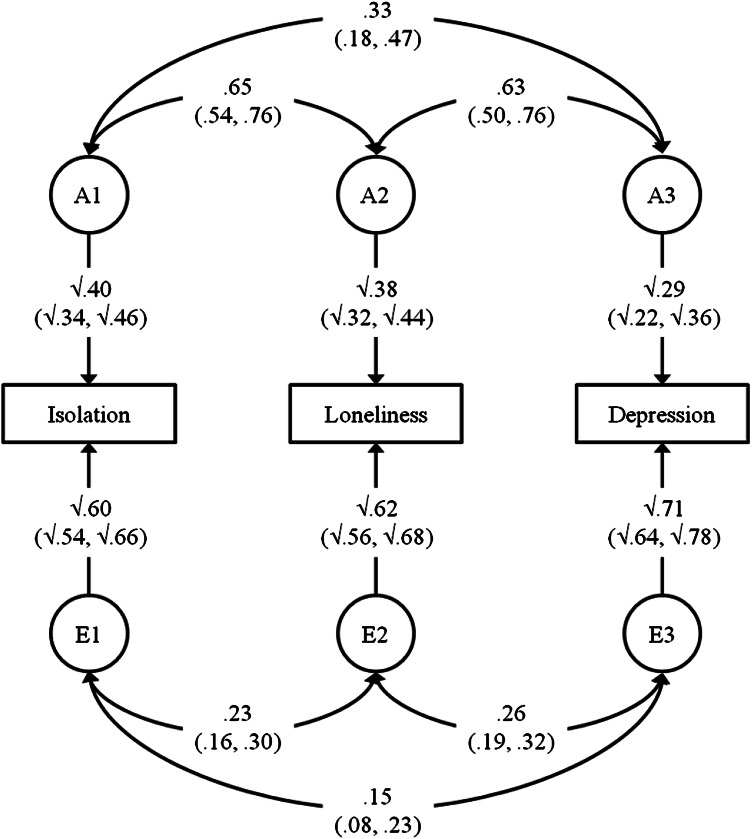
PURPOSE: To investigate the association between social isolation and loneliness, how they relate to depression, and whether these associations are explained by genetic influences. METHODS: We used data from the age-18 wave of the Environmental Risk Longitudinal Twin Study, a birth cohort of 1116 same-sex twin pairs born in England and Wales in 1994 and 1995. Participants reported on their levels of social isolation, loneliness and depressive symptoms. We conducted regression analyses to test the differential associations of isolation and loneliness with depression. Using the twin study design, we estimated the proportion of variance in each construct and their covariance that was accounted for by genetic and environmental factors. RESULTS: Social isolation and loneliness were moderately correlated (r = 0.39), reflecting the separateness of these constructs, and both were associated with depression. When entered simultaneously in a regression analysis, loneliness was more robustly associated with depression. We observed similar degrees of genetic influence on social isolation (40 %) and loneliness (38 %), and a smaller genetic influence on depressive symptoms (29 %), with the remaining variance accounted for by the non-shared environment. Genetic correlations of 0.65 between isolation and loneliness and 0.63 between loneliness and depression indicated a strong role of genetic influences in the co-occurrence of these phenotypes. CONCLUSIONS: Socially isolated young adults do not necessarily experience loneliness. However, those who are lonely are often depressed, partly because the same genes influence loneliness and depression. Interventions should not only aim at increasing social connections but also focus on subjective feelings of loneliness.
Overview
The claims and statistics of this paper haven’t been checked yet.
Free: it reads the open-access text and checks the first 5 claims that cite a source we can check. Create a free account to check every claim.
Integrity signals
Registry
Cites
Statistics
Figures
Verification
Claims the paper makes
The claims and statistics of this paper haven’t been checked yet.
Free: it reads the open-access text and checks the first 5 claims that cite a source we can check. Create a free account to check every claim.
Claims other papers make about this one
Each is checked against this paper’s own text: does it say what the citing paper says it does?
The cited source doesn’t support the claim as written.
In the citing paper
“Seven studies stated that they measured the impact of social isolation39 , 45 , 50 , 59 , 69 , 70 , 72 on mental health, but the social isolation measures used were either subscales or questions from loneliness scales, or strongly overlapped with the construct of loneliness. Therefore, we have considered them together with studies that measured loneliness.”
From Rapid Systematic Review: The Impact of Social Isolation and Loneliness on the Mental Health of Children and Adolescents in the Context of COVID-19 (2020) · cites this paper as [39]
Checked by a reasoning model — may be wrong.
Experimental — accuracy not yet measuredThe source backs part of the claim, not all of it — or backs it for a different population, condition or comparison.
In the citing paper
“Younger adults may be disproportionately affected by disease-containment policies (e.g., school/university closures) that increase social isolation placing them at higher risk of loneliness [32].”
From Loneliness in the UK during the COVID-19 pandemic: Cross-sectional results from the COVID-19 Psychological Wellbeing Study (2020) · cites this paper as [32]
Experimental — accuracy not yet measuredThe source backs part of the claim, not all of it — or backs it for a different population, condition or comparison.
In the citing paper
“Social isolation and peer victimisation do not occur randomly and are both heritable (30% to 70%), suggesting that genetic factors contribute to individual differences in these social difficulties (Fisher et al., 2015; Johansson et al., 2022; Matthews et al., 2016; Veldkamp et al., 2019).”
From A cross‐lagged twin study of emotional symptoms, social isolation and peer victimisation from early adolescence to emerging adulthood (2023) · cites this paper as Matthews et al., 2016
Experimental — accuracy not yet measuredThe source backs part of the claim, not all of it — or backs it for a different population, condition or comparison.
In the citing paper
“Although existing evidence indicates that loneliness and social isolation are independently associated with mental health conditions and mortality (Holt-Lunstad et al., 2015;Matthews et al., 2016), their independent effects on physical health conditions are less consistent and their independent effects on socioeconomic outcomes have not been investigated (Leigh-Hunt et al., 2017).”
From Investigating the interplay of loneliness and social isolation across adolescence: Findings from a nationally representative longitudinal study (2026) · cites this paper as Matthews et al., 2016
Experimental — accuracy not yet measuredThe source backs part of the claim, not all of it — or backs it for a different population, condition or comparison.
In the citing paper
“We used measures of social isolation that capture low embeddedness within age-appropriate social networks, which is consistent with prior research that conceptualizes childhood isolation in terms of peer relationships (e.g., Lacey et al., 2014;Matthews et al., 2016;Morneau-Vaillancourt et al., 2023;Thompson et al., 2023).”
From Investigating the interplay of loneliness and social isolation across adolescence: Findings from a nationally representative longitudinal study (2026) · cites this paper as Matthews et al., 2016
Experimental — accuracy not yet measured
8 more claims about this paper
Create a free account to see every claim other papers make about this one.
Self-check
Percentages, sums and reported differences re-computed from the paper’s own numbers.
The self-check needs the paper’s full text.
Citations
Cites
Diagnostic and Statistical Manual of Mental Disorders
Williams, J. B. W., & First, M. (2013) · Encyclopedia of Social Work · doi:10.1093/acrefore/9780199975839.013.104 · Cited by 109,519
Diagnostic and Statistical Manual of Mental Disorders
American Psychiatric Association (2022) · doi:10.1176/appi.books.9780890425787 · Cited by 23,476
Stress, social support, and the buffering hypothesis
Cohen, S., & Wills, T. A. (1985) · Psychological Bulletin · doi:10.1037/0033-2909.98.2.310 · Cited by 18,093 · cited 1×
“Young adults who were socially isolated experienced greater feelings of loneliness, and were also more likely to grapple with depression, suggesting that social relationships confer benefits for mental health over and above subjective feelings of connectedness, such as reducing the effects of stress [42].”
BackgroundThe Multidimensional Scale of Perceived Social Support
Zimet, G. D., Dahlem, N. W., Zimet, S. G., & Farley, G. K. (1988) · Journal of Personality Assessment · doi:10.1207/s15327752jpa5201_2 · Cited by 13,339
Genetics of Food Intake Self-Regulation in Childhood: Literature Review and Research Opportunities
Faith, M. S., Carnell, S., & Kral, T. V. E. (2013) · Human Heredity · doi:10.1159/000353879 · Cited by 7,601
UCLA loneliness scale (version 3): reliability, validity, and factor structure
Russell, D. W. (1996) · Journal of Personality Assessment · doi:10.1207/s15327752jpa6601_2 · Cited by 5,800 · cited 1×
“from the UCLA Loneliness Scale (Version 3): [33] ‘‘How often do you feel that you lack companionship?’’, ‘‘How often do you feel left out?’’, ‘‘How often do you feel isolated from others?’’ and ‘‘How often do you feel alone?’’ The full UCLA Scale consists of 20 items; however, a previous study has shown that a short f…”
BackgroundPsychometric Characteristics of the Multidimensional Scale of Perceived Social Support
Zimet, G. D., Powell, S. S., Farley, G. K., Werkman, S., & Berkoff, K. A. (1990) · Journal of Personality Assessment · doi:10.1080/00223891.1990.9674095 · Cited by 4,855
Psychometric Characteristics of the Multidimensional Scale of Perceived Social Support
Zimet, G., Powell, S., Farley, G., Werkman, S., & Berkoff, K. (1990) · Journal of Personality Assessment · doi:10.1207/s15327752jpa5503&4_17 · Cited by 4,854
From social integration to health: durkheim in the new millennium
Berkman, L. F., Glass, T., Brissette, I., & Seeman, T. E. (2000) · Social Science & Medicine · doi:10.1016/s0277-9536(00)00065-4 · Cited by 4,821 · cited 2×
“A smaller part of the correlation was explained by environmental factors, which may reflect the influence of broader socioeconomic and cultural forces that shape the context in which social relationships are formed [45].”
BackgroundLoneliness matters: a theoretical and empirical review of consequences and mechanisms
Hawkley, L. C., & Cacioppo, J. T. (2010) · Annals of Behavioral Medicine · doi:10.1007/s12160-010-9210-8 · Cited by 4,782 · cited 1×
“Crucially, although isolation and loneliness tend to co-occur, they can also be experienced independently of one another: it does not follow that isolated individuals necessarily feel lonely, nor does an abundance of social connections preclude one from experiencing loneliness [7, 8].”
Background
Research works printed but not linked: 2
- Nolen-Hoeksema S, Ahrens C (2002) Age differences and similarities in the correlates of depressive symptoms. Psychol Aging 17(1):116–124 · DOI
- Robins L, Cottler L, Bucholz K, Compton W (1995) Diagnostic Interview Schedule for DSM-IV. Washington University School of Medicine, St. Louis
Cited by
Items 201–300 of 534
Dziura, S. L., McNaughton, K. A., Giacobbe, E., Yarger, H. A., Hickey, A. C., Shariq, D. A., & Redcay, E. (2023) · Developmental Psychobiology · doi:10.1002/dev.22413 · Cited by 17
Pak, G., & Bae, S. (2023) · International Journal of Mental Health and Addiction · doi:10.1007/s11469-023-01184-x · Cited by 17
“It deepens social isolation and increases the likelihood of suicidal thoughts and attempts (Oh & Bae, 2021; Calati et al., 2019; Matthews et al., 2016).”
Parsons, C. E., Landberger, C., Purves, K. L., & Young, K. S. (2024) · Mental Health & Prevention · doi:10.1016/j.mhp.2024.200354 · Cited by 19
Hassrick, E. M., Sosnowy, C. D., Holmes, L. G., Walton, J., & Shattuck, P. T. (2020) · Autism in Adulthood · doi:10.1089/aut.2019.0058 · Cited by 20
McKenna-Plumley, P. E., Groarke, J. M., Turner, R. N., & Yang, K. (2020) · Systematic Reviews · doi:10.1186/s13643-020-01544-x · Cited by 21
Li, K., & Tang, F. (2021) · Journal of Gerontological Social Work · doi:10.1080/01634372.2021.1958115 · Cited by 15
“However, studies found these two terms are weakly to moderately correlated and have distinct concepts describing different life experiences (Cornwell & Waite, 2009b; Coyle & Dugan, 2012; Hughes et al., 2004; Matthews et al., 2016; Taylor, 2020).”
BackgroundCohen‐Mansfield, J. (2022) · International Journal of Environmental Research and Public Health · doi:10.3390/ijerph19063554 · Cited by 22
Qian, Z., Li, B., Liao, L., Liao, G., Chen, H., Han, J., Yu, T., Xu, X., Peng, J., & Cai, S. (2023) · Frontiers in Public Health · doi:10.3389/fpubh.2022.1067870 · Cited by 20
Primary care chaplaincy: an intervention for complex presentation
Macdonald, G. (2018) · Primary Health Care Research & Development · doi:10.1017/s1463423618000737 · Cited by 15
“Each of these is known to be associated with social isolation and loneliness (Cornwell and Waite, 2009; Weiss et al., 2013; Matthews et al., 2016).”
BackgroundImpact of Covid-19 outbreak on psychological health–The case of Bangladesh
Sultana, S., Shafique, I., Majeed, N., Jamshed, S., Shahani, A. K., & Qureshi, F. (2021) · Heliyon · doi:10.1016/j.heliyon.2021.e06772 · Cited by 15
Carrijo, M. F., Augusto, A., Alencar, T. D. S., Alves, A. M., Luchesi, B. M., & Martins, T. C. R. (2022) · Psychiatriki · doi:10.22365/jpsych.2022.086 · Cited by 13
Schrempft, S., Pullen, N., Baysson, H., Zaballa, M.-E., Lamour, J., Lorthe, E., Nehme, M., Guessous, I., & Stringhini, S. (2024) · Journal of Affective Disorders · doi:10.1016/j.jad.2024.05.065 · Cited by 16
“Associations between loneliness and mental health are complex, and likely reflect both genetic and non-shared environmental influences (Matthews et al., 2016).”
Evidence-based recommendations to assist adults with depression to become lifelong movers
Fortier, M., McFadden, T., & Faulkner, G. (2020) · Health Promotion and Chronic Disease Prevention in Canada · doi:10.24095/hpcdp.40.10.01 · Cited by 17
Mental Health of Medical Students Before and During COVID-19 Pandemic: a 3-Year Prospective Study
Pereira, M. B., Casagrande, A. V., Almeida, B. C., Neves, B. A., da Silva, T. C. R. P., Miskulin, F. P. C., Perissotto, T., Ribeiz, S. R. I., & Nunes, P. V. (2022) · Medical Science Educator · doi:10.1007/s40670-022-01580-3 · Cited by 18
“In addition, social isolation and loneliness have frequently been associated with depression [8] and, in conjunction with stress and worries caused by the pandemic, could have affected and deteriorated medical students’ mental health.”
BackgroundPhenome-wide screening of the putative causal determinants of depression using genetic data
Aman, A. M., García‐Marín, L. M., Thorp, J. G., Campos, A. I., Cuéllar-Partida, G., Martin, N. G., & Rentería, M. E. (2022) · Human Molecular Genetics · doi:10.1093/hmg/ddac081 · Cited by 11
Malden, S., Jepson, R. G., Laird, Y., & McAteer, J. (2019) · Journal of Social Distress and the Homeless · doi:10.1080/10530789.2019.1623365 · Cited by 20
“socially isolated and lonely young adults were more likely to be depressed than their peers who had regular social support and interaction (Matthews et al., 2016).”
BackgroundThielecke, J., Buntrock, C., Titzler, I., Braun, L., Freund, J., Berking, M., Baumeister, H., & Ebert, D. D. (2020) · Frontiers in Psychiatry · doi:10.3389/fpsyt.2020.00125 · Cited by 14
Cao, Q., & Liu, L. (2019) · Journal of Community Psychology · doi:10.1002/jcop.22262 · Cited by 15
Simegn, W., Chanie, G. S., Seid, A. M., & Dagne, H. (2023) · PLoS ONE · doi:10.1371/journal.pone.0287365 · Cited by 19
“Beyond the presence of COVID -19, loneliness might be caused by different reasons such as heritability and gene-type as explained in earlier genetics studies [51, 90, 91].”
The double-sided coin of loneliness and social media – young adults’ experiences and perceptions
Käcko, E., Hemberg, J. A. V., & Nyman-Kurkiala, P. (2024) · International Journal of Adolescence and Youth · doi:10.1080/02673843.2024.2306889 · Cited by 27
“Loneliness can be described as an unpleasant feeling (Perlman & Peplau, 1998) that arises when a person lacks social relationships (Matthews et al., 2016; Peplau & Perlman, 1982) or is dissatisfied with their current social relationships, whether in terms of quality or quantity (Peplau & Perlman,…”
Loneliness and Depressive Symptoms: Moderation and Mediation Model
Ho, T. T. Q. (2024) · American Journal of Health Education · doi:10.1080/19325037.2023.2297284 · Cited by 16
“A previous study had similar findings 46 and suggested that individuals with high levels of loneliness may have negative thoughts and are more prone to depression.”
ResultTeno, S. C., Silva, M. N., & Júdice, P. B. (2024) · BMC Public Health · doi:10.1186/s12889-024-19252-9 · Cited by 21
“…been associated with social isolation (i.e., physical, social, or psychological separation from individuals or groups) [43] in adolescents [44] and in older people [45], and the evidence shows that socially isolated people are more likely to suffer from suicidal thoughts [46] and depression [47].”
BackgroundKang, B., & Hong, M. (2024) · JMIR Formative Research · doi:10.2196/58791 · Cited by 20
“Cacioppo and Hawkley [15] and Matthews et al [9] emphasized the importance of addressing loneliness and depression in young adults for their overall well-being and development.”
BackgroundMobach, L., Wolters, N. E., Klein, A. M., Koelen, J. A., Vonk, P., der Heijde, C. M. V., Wuthrich, V. M., Rapee, R. M., & Wiers, R. W. H. J. (2024) · Scandinavian Journal of Psychology · doi:10.1111/sjop.13056 · Cited by 17
Al‐Mamun, F., Abdullah, A. M., ALmerab, M. M., Mamun, M. A., & Mamun, M. A. (2024) · Scientific Reports · doi:10.1038/s41598-024-72235-z · Cited by 12
“Firstly, the lack of close-knit community ties in urban areas can lead to feelings of isolation and a reduced support system, which in turn can negatively impact mental well-being 22,23 .”
BackgroundFujii, K., Fujii, Y., Kubo, Y., Tateoka, K., Liu, J., Nagata, K., Wakayama, S., & Okura, T. (2021) · International Journal of Environmental Research and Public Health · doi:10.3390/ijerph18126648 · Cited by 13
“” Mental health status was assessed using the Japanese version of the Kessler 6 (K6) scale [18], a screening scale that can effectively measure psychological distress as per the Diagnostic and Statistical Manual of Mental Disorders (DSM-IV) [19].”
MethodLoneliness in Posttraumatic Stress Disorder: A Neglected Factor in Accelerated Aging?
Palmer, B. W., Hussain, M., & Lohr, J. B. (2022) · Journal of Ageing and Longevity · doi:10.3390/jal2040027 · Cited by 18
“Social isolation or solitude does not necessarily equate with loneliness, as it can be experienced as a positive state for some individuals or at certain times for many people [14-16].”
BackgroundGu, X., Dou, M., Yuan, M., & Zhang, W. (2023) · Neuropsychopharmacology · doi:10.1038/s41386-023-01536-0 · Cited by 13
“These results were consistent with previous findings, which also identified a strong genetic correlation and shared loci between loneliness and depression [45, 46].”
ResultArmandpishe, S., Pakzad, R., Jandaghian-Bidgoli, M., Abdi, F., Sardashti, M., & Soltaniha, K. (2023) · Heliyon · doi:10.1016/j.heliyon.2023.e16901 · Cited by 19
Tapia‐Muñoz, T., Ajnakina, O., Fancourt, D. E., & Steptoe, A. (2023) · European Journal of Personality · doi:10.1177/08902070231206196 · Cited by 21
“Loneliness risk, understood as the tendency to experience pain from a lack of social connections, is a heritable trait, and its variance is partially explained by a genetic predisposition (Day et al., 2018; Matthews et al., 2016).”
Promoting resiliency in adolescents during a pandemic: A guide for clinicians and parents
Rome, E. S., Dinardo, P. B., & Issac, V. E. (2020) · Cleveland Clinic Journal of Medicine · doi:10.3949/ccjm.87a.20055 · Cited by 14
“Psychiatry Psychiatr Epidemiol 2016; 51(3):339–348.”
Antecedents, concurrent correlates, and potential consequences of young adult solitary alcohol use.
Fleming, C. B., Mason, W. A., Stevens, A. L., Jaffe, A. E., Cadigan, J. M., Rhew, I. C., & Lee, C. M. (2021) · Psychology of Addictive Behaviors · doi:10.1037/adb0000697 · Cited by 14
Cipolletta, S., Tedoldi, I., & Tomaino, S. C. M. (2024) · Frontiers in Psychology · doi:10.3389/fpsyg.2024.1497544 · Cited by 11
Honda, H., & Kita, T. (2021) · Health & Social Care in the Community · doi:10.1111/hsc.13610 · Cited by 12
Deimel, D., Köhler, T., Dyba, J., Graf, N., & Firk, C. (2022) · BMC Public Health · doi:10.1186/s12889-022-13593-z · Cited by 14
“Social distancing however may be associated with a substantial mental health burden and there is evidence for an association between social isolation and (mental) health problems [10, 11].”
BackgroundPostpartum loneliness predicts future depressive symptoms: a nationwide Japanese longitudinal study
Chen, C., Mochizuki, Y., Okawa, S., Okubo, R., Nakagawa, S., & Tabuchi, T. (2024) · Archives of Women s Mental Health · doi:10.1007/s00737-024-01424-6 · Cited by 17
“Historically, such loneliness has been linked with various adverse health outcomes, including increased risks of cardiovascular diseases (Valtorta et al. 2016), compromised immune functions (Cole et al. 2015), and exacerbated mental health issues (Matthews et al. 2016).”
Kushibiki, N., Aiba, M., Midorikawa, H., Komura, K., Sugawara, D., Shiratori, Y., Kawakami, N., Ogawa, T., Yaguchi, C., & Tachikawa, H. (2024) · PLoS ONE · doi:10.1371/journal.pone.0300401 · Cited by 16
Ye, Y., Li, Y., Wu, X., & Zhou, X. (2024) · Journal of Adolescent Health · doi:10.1016/j.jadohealth.2024.03.008 · Cited by 15
Heumann, E., Helmer, S. M., Busse, H., Negash, S., Horn, J., Pischke, C. R., Niephaus, Y., & Stock, C. (2024) · Frontiers in Public Health · doi:10.3389/fpubh.2024.1459501 · Cited by 14
Morneau‐Vaillancourt, G., Palaiologou, E., Polderman, T. J. C., & Eley, T. C. (2024) · Journal of Child Psychology and Psychiatry · doi:10.1111/jcpp.14099 · Cited by 16
“High genetic correlations are seen within dimensions, for example, between anxiety and depression (Matthews et al., 2016; Waszczuk, Zavos, Gregory, & Eley, 2014), antisocial behaviour and substance use (McAdams, Rowe, Rijsdijk, Maughan, & Eley, 2012), and ADHD and ASD (Taylor et al., 2013).”
Oh, H., & Bae, S. (2021) · Current Psychology · doi:10.1007/s12144-021-01589-8 · Cited by 14
Social Isolation and Associated Factors in Chinese Adults With Epilepsy: A Cross-Sectional Study
Zhong, R., Zhang, H., Chen, Q., Guo, X., Han, Y., & Lin, W. (2022) · Frontiers in Neurology · doi:10.3389/fneur.2021.813698 · Cited by 16
Jantara, R. D., Abreu, D. P. G., Santana, L. D. L., Piexak, D. R., Ribeiro, J. P., & Tomaschewski-Barlem, J. G. (2022) · Revista Enfermagem UERJ · doi:10.12957/reuerj.2022.63609 · Cited by 28
Association between Loneliness, Mental Health Symptoms, and Treatment Use among Emerging Adults
Bessaha, M. L., Mushonga, D. R., Fedina, L., & DeVylder, J. (2023) · Health & Social Work · doi:10.1093/hsw/hlad005 · Cited by 14
Lee, T. K., Wickrama, K. A. S., & O’Neal, C. W. (2018) · Journal of Behavioral Medicine · doi:10.1007/s10865-018-9952-5 · Cited by 13
Nola, M., Guiot, C., Damiani, S., Brondino, N., Milani, R., & Politi, P. (2021) · Current Psychology · doi:10.1007/s12144-021-02076-w · Cited by 15
Okruszek, Ł., Piejka, A., & Żurek, K. (2022) · Journal of Religion and Health · doi:10.1007/s10943-021-01486-1 · Cited by 14
Vasan, S., Lambert, É., Eikelis, N., & Lim, M. H. (2022) · Health & Social Care in the Community · doi:10.1111/hsc.13948 · Cited by 13
“…with a variety of social and mental health indicators, including, social isolation (de Jong Gierveld & Havens, 2004; de Jong Gierveld et al., 2006; Matthews et al., 2016 - social health indicator), social anxiety and depression (Cacioppo et al., 2010; Lim et al., 2016 - mental health indicators).”
BackgroundNo child is an island: sociability in times of social distancing
Melchior, M. (2020) · European Child & Adolescent Psychiatry · doi:10.1007/s00787-020-01572-x · Cited by 14
Buecker, S., & Horstmann, K. T. (2021) · doi:10.31234/osf.io/3dwxq · Cited by 11
Macchia, L., & Fett, A.-K. J. (2025) · Scientific Reports · doi:10.1038/s41598-025-15151-0 · Cited by 17
“Prior research showed modest correlations between loneliness and actual social connections 72 underscoring that one can feel lonely when having strong social connections or people to count on.”
Sease, T. B., Sandoz, E. K., Yoke, L., Swets, J. A., & Cox, C. R. (2024) · Behavioral Sciences · doi:10.3390/bs14060439 · Cited by 16
“These data showing that loneliness can be precipitated in experimental settings suggest that loneliness is likely context-dependent rather than context-independent [17,18].”
BackgroundShepp, K., Drescher, C. F., Griffin, J. A., & Stepleman, L. M. (2021) · Journal of Homosexuality · doi:10.1080/00918369.2021.2006001 · Cited by 13
“This is consistent with past research demonstrating the strong correlation between depression and loneliness (Erzen & Çikrikci, 2018; Mao et al., 2009; VanderWeele, Hawkley, Thisted, & Cacioppo, 2011) with both having origins in similar genetic and environmental influences (Matthews et al., 2016).”
BackgroundResultDonovan, M. L., Chun, E. K., Liu, Y., & Wang, Z. (2022) · Frontiers in Behavioral Neuroscience · doi:10.3389/fnbeh.2021.802569 · Cited by 11
Loneliness, positive, negative and disorganised Schizotypy before and during the COVID-19 pandemic
Christensen, R., Haenschel, C., Gaigg, S., & Fett, A.-K. J. (2022) · Schizophrenia Research Cognition · doi:10.1016/j.scog.2022.100243 · Cited by 13
“A further possible explanation for the link between higher loneliness and negative schizotypy is that negative schizotypy overlaps with depression (Matthews et al., 2016).”
Behera, R. K., Bala, P. K., Panigrahi, P. K., & Rana, N. P. (2022) · Benchmarking An International Journal · doi:10.1108/bij-01-2022-0025 · Cited by 13
Evidence for a shared genetic contribution to loneliness and borderline personality disorder
Schulze, A., Streit, F., Zillich, L., Awasthi, S., Hall, A. S. M., Jungkunz, M., Kleindienst, N., Frank, J., Schwarze, C. E., Dahmen, N., et al. (2023) · Translational Psychiatry · doi:10.1038/s41398-023-02705-x · Cited by 14
Schwank, S. E., Lindgren, H. E., Wickberg, B., Fu, S.-C., Ding, Y. H., & Andersson, E. P. (2020) · Women s Reproductive Health · doi:10.1080/23293691.2020.1780396 · Cited by 12
Understanding user communication around loneliness on online forums
Andy, A. (2021) · PLoS ONE · doi:10.1371/journal.pone.0257791 · Cited by 14
Qi, H.-J., & Li, L. (2022) · BioMed Research International · doi:10.1155/2022/4084121 · Cited by 12
“Social stigmatization due to skin lesions also contribute to psychiatric disease [49, 50].”
Predictors of loneliness among the left-behind children of migrant workers in Indonesia
Faisal, C. M., & Turnip, S. S. (2019) · Journal of Public Mental Health · doi:10.1108/jpmh-04-2018-0023 · Cited by 18
Cipolletta, S., Ronconi, L., & Tomaino, S. C. M. (2025) · Frontiers in Psychology · doi:10.3389/fpsyg.2025.1529795 · Cited by 15
Pharmacological mechanism of natural antidepressants: The role of mitochondrial quality control
Lv, S., Zhang, G., Lu, Y., Zhong, X., Huang, Y., Ma, Y., Yan, W., Teng, J., & Wei, S. (2024) · Phytomedicine · doi:10.1016/j.phymed.2024.155669 · Cited by 10
Own depression, partner's depression, and childlessness: A nationwide register-based study
Kailaheimo-Lönnqvist, S., Moustgaard, H., Martikainen, P., & Myrskylä, M. (2024) · Social Science & Medicine · doi:10.1016/j.socscimed.2024.117356 · Cited by 17
Tian, G., Wang, J., Zhu, J., Hu, H., & Hao, Y. (2025) · BMC Public Health · doi:10.1186/s12889-025-23771-4 · Cited by 11
“All analyses were performed using Excel 2019, R software (version 4.1.1) and Mplus Editor 8.”
InfluentialMultiscale Risk Factors of Cardiovascular Disease: CLSA Analysis of Genetic and Psychosocial Factors
Menniti, G., Paquet, C., Han, H. Y., Dubé, L., & Nielsen, D. E. (2021) · Frontiers in Cardiovascular Medicine · doi:10.3389/fcvm.2021.599671 · Cited by 12
A Glimpse Into the Sexual Dimorphisms in Major Depressive Disorder Through Epigenetic Studies
Cahill, B., Poelker-Wells, S., Prather, J. F., & Li, Y. (2021) · Frontiers in Neural Circuits · doi:10.3389/fncir.2021.768571 · Cited by 11
“Consistent with this relationship, patients’ reporting of feelings of loneliness is strongly associated with behavioral symptoms of depression during social isolation in young adults (Matthews et al., 2016).”
BackgroundAlroomi, A. S., & Mohamed, S. (2021) · Journal of Loss Prevention in the Process Industries · doi:10.1016/j.jlp.2021.104692 · Cited by 15
School belonging and depressive symptoms: the mediating roles of social inclusion and loneliness
Barzoki, M. H. (2024) · Nordic Journal of Psychiatry · doi:10.1080/08039488.2024.2304067 · Cited by 14
“Since the co-occurrence of loneliness and depression has a severe effect on overall mental well-being [26,28,30], the results support the possible serious influence of decreased social inclusion or increased social isolation to the development of adolescent depression [28,30,37].”
BackgroundA Genetically Informed Study of the Association Between Perceived Stress and Loneliness
Moshtael, R., Lynch, M. E., Duncan, G. E., & Beam, C. R. (2024) · Behavior Genetics · doi:10.1007/s10519-023-10176-5 · Cited by 15
“Both loneliness (Campagne 2019; Gao et al. 2017; Goossens et al. 2015; Matthews et al. 2016; Spithoven et al. 2019) and perceived stress (Federenko et al. 2006) are heritable constructs, with broad-sense heritability estimates ranging from .37 to .55 and .05 to .45 for loneliness and perceived…”
BackgroundKim, H. (2024) · Behavioral Sciences · doi:10.3390/bs14030241 · Cited by 15
“The lack or loss of social relationships leads to social pain, such as loneliness, and social pain leads to depression, decreased self-control, and low self-esteem [12,27,28].”
BackgroundDepression Among Medical Students of Karachi A Cross Sectional Study
Kumari, U., Dawani, N., Devnani, J., Qureshi, M. F. H., Soleja, F. K., Mohammad, D., Abubaker, Z. J., Haroon, A., & Sadiq, S. (2019) · MedEdPublish · doi:10.15694/mep.2019.000181.1 · Cited by 9
“It is the feeling of loneliness which is a risk factor for depression (Matthews et al. , 2016).”
BackgroundGiacco, D., Kirkbride, J. B., Ermakova, A. O., Webber, M., Xanthopoulou, P., & Priebe, S. (2021) · Social Psychiatry and Psychiatric Epidemiology · doi:10.1007/s00127-021-02190-x · Cited by 11
Rozental, A., Sörman, K., Ojala, O., Jangard, S., Alaoui, S. E., Månsson, K. N. T., Shahnavaz, S., Lundin, J., Forsström, D., Hedman‐Lagerlöf, M., et al. (2022) · Frontiers in Psychiatry · doi:10.3389/fpsyt.2022.933858 · Cited by 11
“The remaining measures not reported in the main article include Brief Resilience Scale (24); Clinical Outcomes in Routine Evaluation (50), three selected items (2, 3, and 4: “Felt I have someone to turn to for support when needed,” “Felt able to cope when things go wrong,” and “Felt talking to people is too much for m…”
MethodKonno, Y., Okawara, M., Hino, A., Nagata, T., Muramatsu, K., Tateishi, S., Tsuji, M., Ogami, A., Yoshimura, R., Fujino, Y., et al. (2022) · Heliyon · doi:10.1016/j.heliyon.2022.e11933 · Cited by 9
“In addition to loneliness, social isolation is also associated with mental health problems.(12,13) While loneliness and social isolation are similar, they differ in that the former is subjective while the latter is objective.”
Kulari, G. (2024) · Journal of Applied Research in Higher Education · doi:10.1108/jarhe-11-2023-0547 · Cited by 13
Prizeman, K., McCabe, C., & Weinstein, N. (2025) · Journal of Clinical Psychology · doi:10.1002/jclp.23789 · Cited by 12
Can social isolation alleviate symptoms of anxiety and depression disorders?
Peçanha, A., da Silveira, B., Krahe, T. E., & Landeira-Fernández, J. (2025) · Frontiers in Psychiatry · doi:10.3389/fpsyt.2025.1561916 · Cited by 12
“However, preexisting psychological factors may contribute to social isolation, while inadequate social support can further compromise mental health, creating a bidirectional cycle (41, 42).”
Young, L. E., Tang, J. L., & Nan, Y. (2022) · JMIR Formative Research · doi:10.2196/37982 · Cited by 9
“Social isolation among BSMM who engage in sex behaviors that place them at risk of HIV infection and transmission is also concerning given its obvious implications for facilitating or exacerbating depression [67], which itself had an unambiguous direct effect on the likelihood of using sex drugs.”
BackgroundThe “central” importance of loneliness in mental health: A network psychometric study
Pascalidis, J., & Bathelt, J. (2024) · International Journal of Psychology · doi:10.1002/ijop.13133 · Cited by 10
Lv, Z., Zhang, Y., Zhang, L., Hou, W., Lin, M., Xun, Y., Ma, H., Li, Y., Li, Y., Tai, F., et al. (2022) · Brain Research Bulletin · doi:10.1016/j.brainresbull.2022.04.016 · Cited by 9
Allchin, A., Melchior, M., Fombonne, E. J., & Surkan, P. J. (2016) · Depression and Anxiety · doi:10.1002/da.22538 · Cited by 9
“Social isolation early in life may set the stage for difficult interpersonal relations, lack of social support, and psychological distress, which can have both immediate and long-term consequences on youth social integration and mental health (Matthews et al., 2015; Matthews et al., 2016; Sakyi et al., 2015).”
BackgroundStrickland, N. J., Wekerle, C., Kehayes, I. L., Thompson, K., Dobson, K. S., & Stewart, S. H. (2019) · International Journal of Child and Adolescent Resilience · doi:10.7202/1069076ar · Cited by 9
“The lack of effects of isolation on anxiety indicates the compensatory effect of the relative absence of isolation is more important for depression, consistent with the wellestablished link of perceived isolation to depression (Matthews et al., 2016).”
BackgroundLaurene, K. R., Kodukula, G., Lechner, W. V., Grega, C., Lumpkin, E., & Kenne, D. R. (2022) · Journal of American College Health · doi:10.1080/07448481.2022.2032086 · Cited by 10
A machine-learning approach to model risk and protective factors of vulnerability to depression
Liu, J. M., Gao, M., Zhang, R., Wong, N. M. L., Wu, J., Chan, C. C. H., & Lee, T. M. C. (2024) · Journal of Psychiatric Research · doi:10.1016/j.jpsychires.2024.04.048 · Cited by 8
Leprosy and lymphatic filariasis-related disability and psychosocial burden in northern Mozambique
van Wijk, R., Raimundo, L., Nicala, D., Stakteas, Y., Cumbane, A., Muquingue, H. N., Cliff, J., van Brakel, W. H., & Muloliwa, A. M. (2024) · PLoS neglected tropical diseases · doi:10.1371/journal.pntd.0012342 · Cited by 10
Family intimacy and depression: a comparative study among adolescents in Finland
Barzoki, M. H., & Toikko, T. (2024) · Nordic Journal of Psychiatry · doi:10.1080/08039488.2024.2436986 · Cited by 9
“Such adverse experiences can lead to feelings of isolation, rejection, and diminished self-worth, which are known risk factors for depressive symptoms [39,40].”
Reis, C., Pilz, L. K., Paiva, T., Hidalgo, M. P. L., & Wright, K. P. (2025) · Journal of Sleep Research · doi:10.1111/jsr.14437 · Cited by 7
Akbulut, Ö. F., Okur, S., & Akat, M. (2025) · Psychiatric Quarterly · doi:10.1007/s11126-025-10164-4 · Cited by 8
“Moreover, increased loneliness negatively influences a person’s mental wellbeing [47].”
Wen, L.-Y., Zhang, L., Zhu, L.-J., Song, J., Wang, A., Feng, Y., Tao, Y.-J., Zhu, Y., Jin, Y., & Chang, W. (2025) · Journal of Affective Disorders · doi:10.1016/j.jad.2025.119593 · Cited by 10
Neuroticism Drives Associations Between Repetitive Behaviors and Depression in Autistic Adults
Schwartzman, J. M., Williams, Z. J., Richards, J. K., Mattheiss, S. R., & Gotham, K. O. (2022) · Frontiers in Psychiatry · doi:10.3389/fpsyt.2022.803361 · Cited by 10
Thompson, K. N., Oginni, O. A., Wertz, J., Danese, A., Okundi, M., Arseneault, L., & Matthews, T. (2024) · European Child & Adolescent Psychiatry · doi:10.1007/s00787-024-02573-w · Cited by 9
“Twin and polygenic methods have reported genetic overlap between various forms of social behaviour and mental health symptoms [18, 21–23].”
InfluentialSelf-citationPrizeman, K., Weinstein, N., & McCabe, C. (2024) · Brain and Behavior · doi:10.1002/brb3.70028 · Cited by 11
The role of resources in the face of psychopathology
Goldbach, N., Reif, A., Preuss, H., Röhm, M., Straus, E., Streicher, E., Windmann, S., & Oertel, V. (2020) · Journal of Clinical Psychology · doi:10.1002/jclp.22884 · Cited by 7
A Simmelian theory of structural loneliness
Donbavand, S. (2020) · Journal for the Theory of Social Behaviour · doi:10.1111/jtsb.12263 · Cited by 12
Santino, N., Arbour‐Nicitopoulos, K. P., Sharma, R., Graham, J. D., & Bassett-Gunter, R. L. (2021) · Disability and health journal · doi:10.1016/j.dhjo.2021.101060 · Cited by 15
Psychosocial Health and Physical Activity in People With Major Depression in the Context of COVID-19
Cody, R., Kreppke, J.-N., Beck, J., Donath, L., Eckert, A., Imboden, C., Hatzinger, M., Holsboer‐Trachsler, E., Lang, U. E., Ludyga, S., et al. (2021) · Frontiers in Sports and Active Living · doi:10.3389/fspor.2021.685117 · Cited by 8
“Isolation and the accompanying loneliness are associated with depression (Matthews et al., 2016) while depression is also associated with a small social network (Domènech-Abella et al.”
BackgroundÖZDOĞAN, A. Ç., YALÇIN, R. Ü., HASPOLAT, N. K., & Çelik, O. (2023) · Ahmet Keleşoğlu Eğitim Fakültesi Dergisi · doi:10.38151/akef.2023.43 · Cited by 8
Murayama, Y., Inoue, K., Yamazaki, C., Kameo, S., Nakazawa, M., & Koyama, H. (2019) · The Tohoku Journal of Experimental Medicine · doi:10.1620/tjem.249.101 · Cited by 7
“…2016) and sleep (Baglioni et al. 2011; Yokoyama et al. 2010) as well as social-environmental factors such as household and economic circumstances (Matthews et al. 2016; Umubyeyi et al. 2016; Niedzwiedz et al. 2016; Sapranaviciute-Zabazlajeva et al. 2014; Shidhaye et al. 2016; St. John et al.…”
BackgroundSocrates, A., Mullins, N., Gur, R. C., Gur, R. E., Stahl, E. A., O’Reilly, P. F., Reichenberg, A., Jones, H. J., Zammit, S., & Velthorst, E. (2023) · Research Square · doi:10.21203/rs.3.rs-2583059/v1 · Cited by 7
Metadata
- Authors
- Matthews, T., Danese, A., Wertz, J., Odgers, C. L., Ambler, A., Moffitt, T. E., & Arseneault, L.
- Affiliations
- King's College London (GB)
- National Health Service (GB)
- Duke University (US)
- Corresponding author
- Arseneault, Louise
- ORCID
- Venue
- Social Psychiatry and Psychiatric Epidemiology
- Published
- 2016-02-03
- Volume
- 51
- Issue
- 3
- Pages
- 339-348
- ISSN
- 0933-7954 (ISSN-L)
- 1433-9285
- PMC
- PMC4819590
- OpenAlex
- W2255620466
- Cited by
- 534
- References
- 59
- Citations by year
- 2026: 28 · 2025: 47 · 2024: 76 · 2023: 62 · 2022: 81 · 2021: 82 · 2020: 75 · 2019: 40 · 2018: 24 · 2017: 16 · 2016: 3
- FWCI
- 36.52
- Type
- journal article
- Language
- en
- Open access
- hybrid
- doi.org
- Licence
- cc-by
- creativecommons.org/licenses/by/4.0 (tdm)
- creativecommons.org/licenses/by/4.0 (vor)
- Locations
- Social Psychiatry and Psychiatric Epidemiology (publishedVersion, cc-by)
- Europe PMC (PubMed Central) (publishedVersion, cc-by)
- PubMed Central (publishedVersion, cc-by)
- PubMed (publishedVersion)
- eScholarship (California Digital Library) (submittedVersion, cc-by)
- Research Portal (King's College London) (submittedVersion, cc-by)
- Funders
- Medical Research Council (G1002190)
- Economic and Social Research Council (RES-177-25-0013)
- National Institute of Child Health and Human Development (HD061298)
- Jacobs Foundation (Advanced Research Fellowship)
- National Institute for Health Research
- Topics
- Social Sciences › Health › Health disparities and outcomes
- Life Sciences › Biochemistry, Genetics and Molecular Biology › Genetics › Genetic Associations and Epidemiology
- Social Sciences › Psychology › Experimental and Cognitive Psychology › Anxiety, Depression, Psychometrics, Treatment, Cognitive Processes
- Keywords
- social isolation, loneliness, depression, early adulthood, genetic factors, heritability, genetic correlation, nonshared environment, twin studies, depressive symptoms, subjective loneliness
- MeSH terms
- Depression, England, Female, Genetics, Behavioral, Humans, Loneliness, Longitudinal Studies, Male, Regression Analysis, Social Isolation, Wales, Young Adult, Gene-Environment Interaction
About these checks
Registry, retraction, Cites and statistics results are computed, not judged, with one exception: a printed reference that no index lists is read once by a model before it counts as a citation error. Claims are extracted by a model and kept only when their quote appears verbatim in the text; each cited source is then checked, with a model’s help, for whether it says what the claim relies on. Those verdicts can be wrong — read the claim’s quote and the cited source before relying on one.
Statistics and arithmetic are recomputed, not judged.
Confidence bands are shown only for fields calibrated on our annotated test set. None is calibrated yet, so no band is shown.
What counts as a claim ›How we measure confidence ›How we check this ›
Are you an author, or do you see a problem with this page? Request a review
Data sources
Bibliographic data: Semantic Scholar, OpenAlex, Crossref.
Contains information from the Semantic Scholar Academic Graph Datasets, made available under the ODC Attribution License (ODC-BY 1.0).
Semantic Scholar’s data is described in: Kinney, R., et al. (2023). The Semantic Scholar Open Data Platform. arXiv:2301.10140.
