

Social isolation, loneliness and depression in young adulthood: a behavioural genetic analysis
Open accessThe DOI matches its Crossref record; 60 of the 60 references it cites were found in a registry or an index.
Abstract
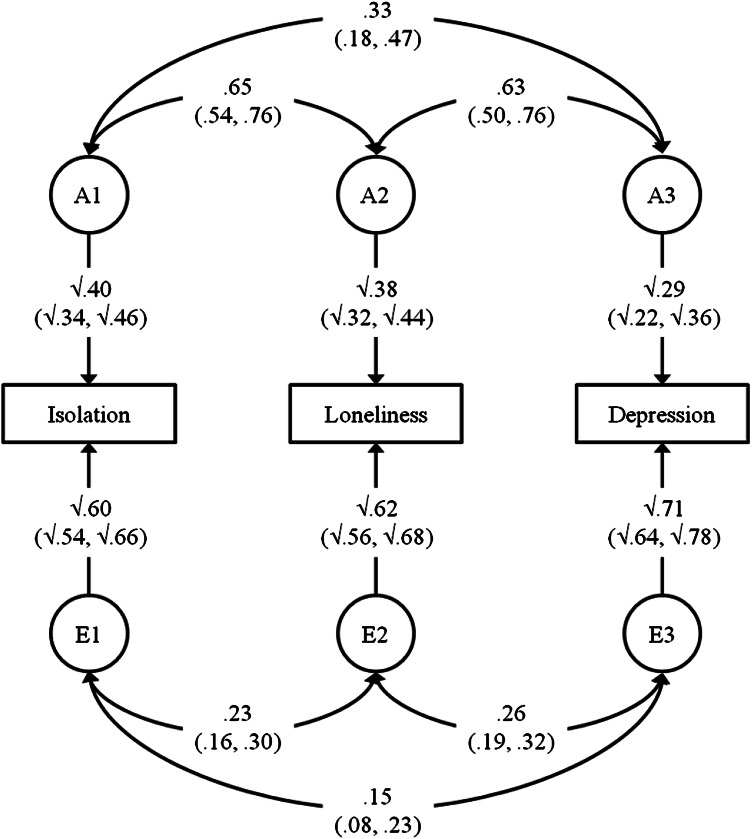
PURPOSE: To investigate the association between social isolation and loneliness, how they relate to depression, and whether these associations are explained by genetic influences. METHODS: We used data from the age-18 wave of the Environmental Risk Longitudinal Twin Study, a birth cohort of 1116 same-sex twin pairs born in England and Wales in 1994 and 1995. Participants reported on their levels of social isolation, loneliness and depressive symptoms. We conducted regression analyses to test the differential associations of isolation and loneliness with depression. Using the twin study design, we estimated the proportion of variance in each construct and their covariance that was accounted for by genetic and environmental factors. RESULTS: Social isolation and loneliness were moderately correlated (r = 0.39), reflecting the separateness of these constructs, and both were associated with depression. When entered simultaneously in a regression analysis, loneliness was more robustly associated with depression. We observed similar degrees of genetic influence on social isolation (40 %) and loneliness (38 %), and a smaller genetic influence on depressive symptoms (29 %), with the remaining variance accounted for by the non-shared environment. Genetic correlations of 0.65 between isolation and loneliness and 0.63 between loneliness and depression indicated a strong role of genetic influences in the co-occurrence of these phenotypes. CONCLUSIONS: Socially isolated young adults do not necessarily experience loneliness. However, those who are lonely are often depressed, partly because the same genes influence loneliness and depression. Interventions should not only aim at increasing social connections but also focus on subjective feelings of loneliness.
Overview
The claims and statistics of this paper haven’t been checked yet.
Free: it reads the open-access text and checks the first 5 claims that cite a source we can check. Create a free account to check every claim.
Integrity signals
Registry
Cites
Statistics
Figures
Verification
Claims the paper makes
The claims and statistics of this paper haven’t been checked yet.
Free: it reads the open-access text and checks the first 5 claims that cite a source we can check. Create a free account to check every claim.
Claims other papers make about this one
Each is checked against this paper’s own text: does it say what the citing paper says it does?
The cited source doesn’t support the claim as written.
In the citing paper
“Seven studies stated that they measured the impact of social isolation39 , 45 , 50 , 59 , 69 , 70 , 72 on mental health, but the social isolation measures used were either subscales or questions from loneliness scales, or strongly overlapped with the construct of loneliness. Therefore, we have considered them together with studies that measured loneliness.”
From Rapid Systematic Review: The Impact of Social Isolation and Loneliness on the Mental Health of Children and Adolescents in the Context of COVID-19 (2020) · cites this paper as [39]
Checked by a reasoning model — may be wrong.
Experimental — accuracy not yet measuredThe source backs part of the claim, not all of it — or backs it for a different population, condition or comparison.
In the citing paper
“Younger adults may be disproportionately affected by disease-containment policies (e.g., school/university closures) that increase social isolation placing them at higher risk of loneliness [32].”
From Loneliness in the UK during the COVID-19 pandemic: Cross-sectional results from the COVID-19 Psychological Wellbeing Study (2020) · cites this paper as [32]
Experimental — accuracy not yet measuredThe source backs part of the claim, not all of it — or backs it for a different population, condition or comparison.
In the citing paper
“Social isolation and peer victimisation do not occur randomly and are both heritable (30% to 70%), suggesting that genetic factors contribute to individual differences in these social difficulties (Fisher et al., 2015; Johansson et al., 2022; Matthews et al., 2016; Veldkamp et al., 2019).”
From A cross‐lagged twin study of emotional symptoms, social isolation and peer victimisation from early adolescence to emerging adulthood (2023) · cites this paper as Matthews et al., 2016
Experimental — accuracy not yet measuredThe source backs part of the claim, not all of it — or backs it for a different population, condition or comparison.
In the citing paper
“Although existing evidence indicates that loneliness and social isolation are independently associated with mental health conditions and mortality (Holt-Lunstad et al., 2015;Matthews et al., 2016), their independent effects on physical health conditions are less consistent and their independent effects on socioeconomic outcomes have not been investigated (Leigh-Hunt et al., 2017).”
From Investigating the interplay of loneliness and social isolation across adolescence: Findings from a nationally representative longitudinal study (2026) · cites this paper as Matthews et al., 2016
Experimental — accuracy not yet measuredThe source backs part of the claim, not all of it — or backs it for a different population, condition or comparison.
In the citing paper
“We used measures of social isolation that capture low embeddedness within age-appropriate social networks, which is consistent with prior research that conceptualizes childhood isolation in terms of peer relationships (e.g., Lacey et al., 2014;Matthews et al., 2016;Morneau-Vaillancourt et al., 2023;Thompson et al., 2023).”
From Investigating the interplay of loneliness and social isolation across adolescence: Findings from a nationally representative longitudinal study (2026) · cites this paper as Matthews et al., 2016
Experimental — accuracy not yet measured
8 more claims about this paper
Create a free account to see every claim other papers make about this one.
Self-check
Percentages, sums and reported differences re-computed from the paper’s own numbers.
The self-check needs the paper’s full text.
Citations
Cites
Diagnostic and Statistical Manual of Mental Disorders
Williams, J. B. W., & First, M. (2013) · Encyclopedia of Social Work · doi:10.1093/acrefore/9780199975839.013.104 · Cited by 109,519
Diagnostic and Statistical Manual of Mental Disorders
American Psychiatric Association (2022) · doi:10.1176/appi.books.9780890425787 · Cited by 23,476
Stress, social support, and the buffering hypothesis
Cohen, S., & Wills, T. A. (1985) · Psychological Bulletin · doi:10.1037/0033-2909.98.2.310 · Cited by 18,093 · cited 1×
“Young adults who were socially isolated experienced greater feelings of loneliness, and were also more likely to grapple with depression, suggesting that social relationships confer benefits for mental health over and above subjective feelings of connectedness, such as reducing the effects of stress [42].”
BackgroundThe Multidimensional Scale of Perceived Social Support
Zimet, G. D., Dahlem, N. W., Zimet, S. G., & Farley, G. K. (1988) · Journal of Personality Assessment · doi:10.1207/s15327752jpa5201_2 · Cited by 13,339
Genetics of Food Intake Self-Regulation in Childhood: Literature Review and Research Opportunities
Faith, M. S., Carnell, S., & Kral, T. V. E. (2013) · Human Heredity · doi:10.1159/000353879 · Cited by 7,601
UCLA loneliness scale (version 3): reliability, validity, and factor structure
Russell, D. W. (1996) · Journal of Personality Assessment · doi:10.1207/s15327752jpa6601_2 · Cited by 5,800 · cited 1×
“from the UCLA Loneliness Scale (Version 3): [33] ‘‘How often do you feel that you lack companionship?’’, ‘‘How often do you feel left out?’’, ‘‘How often do you feel isolated from others?’’ and ‘‘How often do you feel alone?’’ The full UCLA Scale consists of 20 items; however, a previous study has shown that a short f…”
BackgroundPsychometric Characteristics of the Multidimensional Scale of Perceived Social Support
Zimet, G. D., Powell, S. S., Farley, G. K., Werkman, S., & Berkoff, K. A. (1990) · Journal of Personality Assessment · doi:10.1080/00223891.1990.9674095 · Cited by 4,855
Psychometric Characteristics of the Multidimensional Scale of Perceived Social Support
Zimet, G., Powell, S., Farley, G., Werkman, S., & Berkoff, K. (1990) · Journal of Personality Assessment · doi:10.1207/s15327752jpa5503&4_17 · Cited by 4,854
From social integration to health: durkheim in the new millennium
Berkman, L. F., Glass, T., Brissette, I., & Seeman, T. E. (2000) · Social Science & Medicine · doi:10.1016/s0277-9536(00)00065-4 · Cited by 4,821 · cited 2×
“A smaller part of the correlation was explained by environmental factors, which may reflect the influence of broader socioeconomic and cultural forces that shape the context in which social relationships are formed [45].”
BackgroundLoneliness matters: a theoretical and empirical review of consequences and mechanisms
Hawkley, L. C., & Cacioppo, J. T. (2010) · Annals of Behavioral Medicine · doi:10.1007/s12160-010-9210-8 · Cited by 4,782 · cited 1×
“Crucially, although isolation and loneliness tend to co-occur, they can also be experienced independently of one another: it does not follow that isolated individuals necessarily feel lonely, nor does an abundance of social connections preclude one from experiencing loneliness [7, 8].”
Background
Research works printed but not linked: 2
- Nolen-Hoeksema S, Ahrens C (2002) Age differences and similarities in the correlates of depressive symptoms. Psychol Aging 17(1):116–124 · DOI
- Robins L, Cottler L, Bucholz K, Compton W (1995) Diagnostic Interview Schedule for DSM-IV. Washington University School of Medicine, St. Louis
Cited by
Items 101–200 of 534
Peterson, J. A., Chesbro, G. A., Larson, R. D., Larson, D. J., & Black, C. D. (2021) · Frontiers in Psychology · doi:10.3389/fpsyg.2021.652086 · Cited by 47
“Individuals who suffer from loneliness are more likely to experience depression (Matthews et al., 2016), anxiety (Cacioppo et al.”
BackgroundJeong, K., Sung, J., Lee, H., Kim, A., Kim, H., Park, C., Jeong, Y., Lee, J. H., & Kim, J. (2018) · ACM/IEEE International Conference on Human-Robot Interaction (HRI) · doi:10.1145/3171221.3171254 · Cited by 60
“Since one-person households have far more difficulties obtaining social support than other households [12,30], they are more vulnerable to suffering from depression and social isolation [29].”
BackgroundInvestigating the impact of advisor support on the perceptions of graduate students
Blanchard, C., & Haccoun, R. R. (2019) · Teaching in Higher Education · doi:10.1080/13562517.2019.1632825 · Cited by 61
Polygenic contribution to the relationship of loneliness and social isolation with schizophrenia
Andreu-Bernabeu, Á., Díaz‐Caneja, C. M., Costas, J., de Hoyos, L., Stella, C., Gurriarán, X., Alloza, C., Fañanás, L., Bobes, J., González-Pinto, A. M., et al. (2022) · Nature Communications · doi:10.1038/s41467-021-27598-6 · Cited by 44
Lee, J., Lee, H., Kim, J. E., Moon, S. J., & Nam, E. W. (2021) · Globalization and Health · doi:10.1186/s12992-020-00650-8 · Cited by 53
“This study confirmed previous findings that such social isolation influences mental health in young and middle-aged individuals, such as loneliness, depression, and stress [8].”
ResultFuhrmann, D., van Harmelen, A., & Kievit, R. (2021) · Clinical Psychological Science · doi:10.1177/21677026211030211 · Cited by 52
“, 2016)—and more so than more objective measures of social isolation ( Matthews et al., 2016).”
BackgroundInfluentialMyhr, A., Anthun, K. S., Lillefjell, M., & Sund, E. R. (2020) · Frontiers in Psychology · doi:10.3389/fpsyg.2020.01472 · Cited by 55
Locus of control and subjective well-being: Panel evidence from Australia
Kesavayuth, D., Tran, D. B., & Zikos, V. (2022) · PLoS ONE · doi:10.1371/journal.pone.0272714 · Cited by 59
“Those individuals are more likely to develop psychological distress and depression [31].”
BackgroundHeu, L. C. (2023) · Perspectives on Psychological Science · doi:10.1177/17456916231192485 · Cited by 57
“After all, between 30% and 40% of the variation in related phenomena such as loneliness or depression have been found to be explainable by genetic disposition (Matthews et al., 2016).”
Academic Burden and Emotional Problems Among Adolescents: A Longitudinal Mediation Analysis
Wang, J., Wang, Z., Yang, Y., Wang, T., Lin, H., Zhang, W., Chen, X., & Fu, C. (2025) · Journal of Adolescence · doi:10.1002/jad.12471 · Cited by 40
“Loneliness is also closely associated with symptoms of anxiety, including worries about the future, social anxiety, and doubts about one's own abilities (Hawkley and Cacioppo 2010; Matthews et al. 2016).”
Facebook addiction and depression: Loneliness as a moderator and poor sleep quality as a mediator
Ho, T. T. Q. (2021) · Telematics and Informatics · doi:10.1016/j.tele.2021.101617 · Cited by 48
Year of study as predictor of loneliness among students of University of Gondar
Dagnew, B., & Dagne, H. (2019) · BMC Research Notes · doi:10.1186/s13104-019-4274-4 · Cited by 54
Calandri, E., Graziano, F., Cattelino, E., & Testa, S. (2020) · The Journal of Early Adolescence · doi:10.1177/0272431620919156 · Cited by 54
COVID-19 and Health-Related Quality of Life: A Community-Based Online Survey in Hong Kong
Choi, E. P. H., Hui, B. P. H., Wan, E. Y. F., Kwok, J. Y. Y., Tam, T. H. L., & Wu, C. (2021) · International Journal of Environmental Research and Public Health · doi:10.3390/ijerph18063228 · Cited by 43
“Social isolation and loneliness are also found to be closely correlated with poorer physical [38] and psychological health [20].”
BackgroundLee, H., Kim, S.-H., & Uhm, J.-P. (2021) · Frontiers in Psychology · doi:10.3389/fpsyg.2021.753019 · Cited by 59
Ogrin, R., Cyarto, E., Harrington, K., Haslam, C., Lim, M. H., Golenko, X., Bush, M., Vadasz, D., Johnstone, G., & Lowthian, J. A. (2021) · Australian Journal on Ageing · doi:10.1111/ajag.12929 · Cited by 42
Eres, R., Lim, M. H., & Bates, G. W. (2023) · Psychology and Psychotherapy Theory Research and Practice · doi:10.1111/papt.12469 · Cited by 47
Danvers, A. F., Efinger, L., Mehl, M. R., Helm, P. J., Raison, C. L., Polsinelli, A. J., Moseley, S., & Sbarra, D. A. (2023) · Journal of Research in Personality · doi:10.1016/j.jrp.2023.104426 · Cited by 64
Trait Affect, Emotion Regulation, and the Generation of Negative and Positive Interpersonal Events
Hamilton, J. L., Burke, T. A., Stange, J. P., Kleiman, E. M., Rubenstein, L. M., Scopelliti, K. A., Abramson, L. Y., & Alloy, L. B. (2017) · Behavior Therapy · doi:10.1016/j.beth.2017.01.006 · Cited by 51
Pollard, A. E., & Rogge, R. D. (2022) · Archives of Sexual Behavior · doi:10.1007/s10508-021-02208-0 · Cited by 45
Suicidal behavior, depression and loneliness among college students: the role of school belonging
Zhou, C., Gao, M., Shi, X., & Zhang, Z. (2022) · Psychology Health & Medicine · doi:10.1080/13548506.2022.2113105 · Cited by 45
“As previous studies showed, although stronger loneliness was found to be positively associated with a higher risk of suicidal behavior and greater depressive mood(Matthews et al., 2016; Stickley & Koyanagi, 2016), the associations were weakened as the sense of school belonging was stronger.”
ResultWinter, R., & Lavis, A. (2021) · International Journal of Environmental Research and Public Health · doi:10.3390/ijerph19010352 · Cited by 46
Bell, V., Velthorst, E., Almansa, J., Myin‐Germeys, I., Shergill, S. S., & Fett, A.-K. J. (2023) · Schizophrenia Research Cognition · doi:10.1016/j.scog.2023.100282 · Cited by 49
“However, those who are socially isolated do not always feel lonely and feelings of loneliness can be experienced with objectively intact social networks, as supported by moderate correlation between loneliness and objective social isolation (Matthews et al., 2016).”
Xu, Y., Li, F., Liu, X., & Zhong, B. (2018) · Psychiatry Research · doi:10.1016/j.psychres.2018.04.016 · Cited by 36
Treating the mental health effects of COVID-19: The need for at-home neurotherapeutics is now
Caulfield, K. A., & George, M. S. (2020) · Brain stimulation · doi:10.1016/j.brs.2020.04.005 · Cited by 40
“This social isolationwill likely lead to an increase in depression, a link that has been established with previous studies in humans [3] and nonhuman mammals such as prairie voles [4].”
Kim, S., Park, I.-H., Kim, M., Park, A., Jhon, M., Kim, J., Kang, H., Ryu, S., Lee, J., & Kim, J. (2021) · BMC Psychiatry · doi:10.1186/s12888-021-03449-y · Cited by 45
Stressful life events increase the risk of major depressive episodes: A population-based twin study
Bjørndal, L. D., Kendler, K. S., Reichborn-Kjennerud, T., & Ystrom, E. (2023) · Psychological Medicine · doi:10.1017/s0033291722002227 · Cited by 45
Lai, K. Y., Sarkar, C., Kumari, S., Ni, M. Y., Gallacher, J., & Webster, C. J. (2021) · Landscape and Urban Planning · doi:10.1016/j.landurbplan.2021.104194 · Cited by 42
Isolation and mental health: thinking outside the box
Brown, V. N., Morgan, T., & Fralick, A. (2021) · General Psychiatry · doi:10.1136/gpsych-2020-100461 · Cited by 49
McKenna-Plumley, P. E., Turner, R. N., Yang, K., & Groarke, J. M. (2023) · BMC Psychology · doi:10.1186/s40359-023-01452-4 · Cited by 44
“While the subjective experience of loneliness is separable from the objective circumstance of social isolation, they are associated [4].”
BackgroundChronotype and social support among student athletes: impact on depressive symptoms
Wills, C. C. A., Ghani, S. B., Tubbs, A. S., Fernandez, F., Athey, A. B., Turner, R., Robbins, R., Patterson, F., Warlick, C., Alfonso‐Miller, P., et al. (2021) · Chronobiology International · doi:10.1080/07420528.2021.1927072 · Cited by 39
“Previous studies have found that social isolation is a risk factor for depression (Ge et al. 2017; Matthews et al. 2016).”
BackgroundDagan, O., Groh, A. M., Madigan, S. L., & Bernard, K. (2021) · Brain Sciences · doi:10.3390/brainsci11091226 · Cited by 54
Smith, R. S., Weihs, K. L., Alkozei, A., Killgore, W. D. S., & Lane, R. D. (2018) · Psychosomatic Medicine · doi:10.1097/psy.0000000000000661 · Cited by 39
Danneel, S., Bijttebier, P., Bastin, M., Colpin, H., Noortgate, W. V. D., Leeuwen, K. G. V., Verschueren, K., & Goossens, L. (2019) · Journal of Child and Family Studies · doi:10.1007/s10826-019-01354-3 · Cited by 37
Leach, L., & Butterworth, P. (2020) · Epidemiology and Psychiatric Sciences · doi:10.1017/s2045796020000530 · Cited by 50
Karalunas, S. L., Antovich, D. M., Goh, P. K., Martel, M. M., Tipsord, J. M., Nousen, E. K., & Nigg, J. T. (2021) · Development and Psychopathology · doi:10.1017/s0954579421000900 · Cited by 41
“, 2017), contributing to loneliness and isolation, two key drivers of depression risk (Loades et al., 2020; Matthews et al., 2016).”
BackgroundZouini, B., Sfendla, A., Ahlström, B. H., Senhaji, M., & Kerekes, N. (2019) · Annals of General Psychiatry · doi:10.1186/s12991-019-0251-5 · Cited by 32
Zhang, Y., Huang, L., Luo, Y.-J., & Ai, H. (2021) · Frontiers in Psychology · doi:10.3389/fpsyg.2021.701514 · Cited by 38
Loneliness and multiple health domains: associations among emerging adults
Perez, L. G., Siconolfi, D. E., Troxel, W., Tucker, J. S., Seelam, R., Rodriguez, A., Shih, R. A., & D’Amico, E. J. (2022) · Journal of Behavioral Medicine · doi:10.1007/s10865-021-00267-1 · Cited by 40
“Loneliness is related to adverse health outcomes (Christiansen et al., 2020; Matthews et al., 2016; Richard et al., 2017), independent of other social health indicators such as social isolation (e.”
BackgroundKehusmaa, J., Ruotsalainen, H., Männikkö, N., Alakokkare, A.-E., Niemelä, M., Jääskeläinen, E., & Miettunen, J. (2022) · Journal of Affective Disorders · doi:10.1016/j.jad.2022.02.067 · Cited by 30
Indicators of Social Isolation: A Comparison Based on Survey Data from Germany
Eckhard, J. (2017) · Social Indicators Research · doi:10.1007/s11205-017-1741-y · Cited by 43
Peleg, O., & Boniel‐Nissim, M. (2024) · Scientific Reports · doi:10.1038/s41598-024-55560-1 · Cited by 53
“In contrast to the past stereotype associating loneliness with older people, recent research suggests the experience encompasses a broad spectrum of age groups, including young adults, who often seek support through their smartphones 62 .”
ResultHeumann, E., Helmer, S. M., Busse, H., Negash, S., Horn, J., Pischke, C. R., Niephaus, Y., & Stock, C. (2022) · Journal of Affective Disorders · doi:10.1016/j.jad.2022.09.158 · Cited by 42
RetractedZhang, N., Zhang, Y., Zou, Y., Kan, Y., & Pang, J. (2022) · Journal of Affective Disorders · doi:10.1016/j.jad.2022.12.060 · Cited by 29
Relative age effect on European adolescents’ social network
Fumarco, L., & Baert, S. (2019) · Journal of Economic Behavior & Organization · doi:10.1016/j.jebo.2019.10.014 · Cited by 33
“depression, which is another factor commonly associated with loneliness and thus fewer social contacts (Matthews et al., 2016).”
BackgroundThe impact of social isolation on health and behavior in Drosophila melanogaster and beyond
Vora, A., Nguyen, A. D., Spicer, C., & Li, W. (2022) · Brain Science Advances · doi:10.26599/bsa.2022.9050016 · Cited by 34
“One study of young adults found that depression was significantly correlated with both objective and subjective social isolation [17].”
BackgroundThe Covid 19 outbreak: Maternal Mental Health and Associated Factors
Koyucu, R. G., & Karaca, P. P. (2021) · Midwifery · doi:10.1016/j.midw.2021.103013 · Cited by 32
Balter, L. J. T., Raymond, J. E., Aldred, S., Drayson, M. T., Zanten, J. V., Higgs, S., & Bosch, J. A. (2019) · Brain Behavior and Immunity · doi:10.1016/j.bbi.2019.08.196 · Cited by 35
Morneau‐Vaillancourt, G., Oginni, O., Assary, E., Krebs, G., Thompson, E. J., Palaiologou, E., Lockhart, C., Arseneault, L., & Eley, T. C. (2023) · Journal of Child Psychology and Psychiatry · doi:10.1111/jcpp.13847 · Cited by 32
“Social isolation and peer victimisation do not occur randomly and are both heritable (30% to 70%), suggesting that genetic factors contribute to individual differences in these social difficulties (Fisher et al., 2015; Johansson et al., 2022; Matthews et al., 2016; Veldkamp et al., 2019).”
BackgroundInfluentialSelf-citationLoneliness and Social Isolation in a Sample of Youth Hospitalized for Psychiatric Illness
McBride, S., & Preyde, M. (2020) · Child and Adolescent Social Work Journal · doi:10.1007/s10560-020-00723-y · Cited by 33
Salah, A. B., DeAngelis, B. N., & Al’Absi, M. (2021) · International Journal of Behavioral Medicine · doi:10.1007/s12529-020-09945-x · Cited by 30
Kerekes, N., Zouini, B., Tingberg, S., & Erlandsson, S. (2021) · Frontiers in Public Health · doi:10.3389/fpubh.2021.669958 · Cited by 29
The Experiences of Undergraduates with Depression in Online Science Learning Environments
Mohammed, T. F., Gin, L. E., Wiesenthal, N. J., & Cooper, K. M. (2022) · CBE—Life Sciences Education · doi:10.1187/cbe.21-09-0228 · Cited by 32
“Feeling alone or misunderstood, as Heather describes, can be common among individuals with depression (Matthews et al., 2016), which helps explain why a lack of a student– instructor relationship can be so problematic, while a short, positive interaction has the potential to have a lasting effect.”
BackgroundMacalli, M., Kinouani, S., Texier, N., Schück, S., & Tzourio, C. (2022) · Scientific Reports · doi:10.1038/s41598-022-21288-z · Cited by 29
Barton, S., Zovko, A., Müller, C., Krabichler, Q., Schulze, J., Wagner, S., Grinevich, V., Shamay‐Tsoory, S., & Hurlemann, R. (2024) · Neuroscience & Biobehavioral Reviews · doi:10.1016/j.neubiorev.2024.105734 · Cited by 32
“Underlying neurobiological mechanisms can overlap between loneliness and psychopathology, suggesting shared biological pathways (Düzel et al., 2019; Kim et al., 2022; Marx et al., 2023; Matthews et al., 2016).”
Association of atopic dermatitis with suicide risk among 788,411 adolescents
Kyung, Y., Choi, M. H., Jeon, Y. J., Lee, J. S., Lee, J. H., Jo, S. H., & Kim, S. H. (2020) · Annals of Allergy Asthma & Immunology · doi:10.1016/j.anai.2020.03.023 · Cited by 28
Settling down without settling: Perceived changes in partner preferences in response to COVID-19
Alexopoulos, C., Timmermans, E., Sharabi, L. L., Roaché, D. J., Croft, A., Hall, E. D., James‐Hawkins, L., Lamarche, V. M., & Uhlich, M. (2021) · Journal of Social and Personal Relationships · doi:10.1177/02654075211011527 · Cited by 26
“Previous research has linked social isolation with loneliness and negative mental health outcomes (Matthews et al., 2016).”
BackgroundBreetzke, J., & Wild, E. (2022) · PLoS ONE · doi:10.1371/journal.pone.0264602 · Cited by 30
“Social connections, however, are a central part of human life, and both their quality and quantity can strongly influence mental health [7, 8].”
BackgroundGu, Z., Li, M., Liu, L., Ban, Y., & Wu, H. L. (2023) · Supportive Care in Cancer · doi:10.1007/s00520-023-08063-0 · Cited by 29
“As previous studies have shown, growing loneliness caused by social isolation may lead to depression [17].”
BackgroundResultInfluentialConnolly, E. J., & Jackson, D. B. (2019) · Criminal Justice and Behavior · doi:10.1177/0093854819871076 · Cited by 31
“…(Hicks, Schalet, Malone, Iacono, & McGue, 2011), major depressive disorder (Wray et al., 2018), educational attainment (Okbay et al., 2016), loneliness (Matthews et al., 2016), and physical health problems (Aaltonen, Ortega-Alonso, kujala, & kaprio, 2010) during young adulthood is partly heritable.”
BackgroundNeurogenetics and Epigenetics of Loneliness
Bowirrat, A., Elman, I., Dennen, C. A., Gondré-Lewis, M. C., Cadet, J. L., Khalsa, J., Baron, D., Soni, D., Gold, M. S., McLaughlin, T., et al. (2023) · Psychology Research and Behavior Management · doi:10.2147/prbm.s423802 · Cited by 23
“…indicated 48–51 that the perception of social isolation has a genetic basis while clinical research has uncovered a significant correlation between social isolation and loneliness, 52 suggesting that these concepts share common elements (around 15% of variance) and are both linked to depression.”
BackgroundLuo, F., Jia, M., Wu, J., & Zuo, Z. (2020) · Molecular Neurobiology · doi:10.1007/s12035-020-01987-2 · Cited by 24
Mizuta, R., Maeda, N., Tashiro, T., Suzuki, Y., Kuroda, S., Ishida, A., Oda, S., Watanabe, T., Tamura, Y., Komiya, M., et al. (2024) · JMIR mhealth and uhealth · doi:10.2196/46397 · Cited by 25
“Additionally, reducing loneliness and encouraging social interaction decreases the risk of depression and mental health problems [45].”
Duradoni, M., Serritella, E., Severino, F. P., & Guazzini, A. (2024) · Human Behavior and Emerging Technologies · doi:10.1155/2024/5079719 · Cited by 32
Now is the time: VFR travel desperately seeking respect
Zentveld, E., Labas, A., Edwards, S., & Morrison, A. M. (2022) · International Journal of Tourism Research · doi:10.1002/jtr.2509 · Cited by 25
Pukas, L., Rabkow, N., Keuch, L., Ehring, E., Fuchs, S., Stoevesandt, D., Sapalidis, A., Pelzer, A., Rehnisch, C., & Watzke, S. (2022) · GMS journal for medical education · doi:10.3205/zma001534 · Cited by 33
“soziale Beziehungen, Prüfungen, hohe Arbeitsbelastung, räumliche Distanz zu Freunden und Familie, finanzielle Situation) undMissbrauch von verschreibungspflichtigen Medikamenten und Freizeitdrogen [27], [28] sowie soziale Isolation und Einsamkeit [29] wurden erhoben.”
BackgroundInfluentialIguacel, I., Michels, N., Fernández-Alvira, J. M., Bammann, K., Henauw, S. D., Felsö, R., Gwozdz, W., Hunsberger, M. L., Reisch, L. A., Russo, P., et al. (2017) · European Child & Adolescent Psychiatry · doi:10.1007/s00787-017-0998-7 · Cited by 22
“After all, smaller social networks, fewer close relationships, and lower perceived adequacy of social support have been linked to depressive symptoms [6] and psychosocial problems of the parents might influence psychosocial problems of the child due to the environmental and genetic sharing [37].”
BackgroundIndirect Effect of Hopelessness on Depression Symptoms Through Perceived Burdensomeness
Nalipay, M. J. N., & Ku, L. (2018) · Psychological Reports · doi:10.1177/0033294118789044 · Cited by 27
“The associations of feelings of loneliness and social isolation with depression have been demonstrated in the literature (Matthews et al., 2016; Teo, 2013; Witvliet, Brendgen, Van Lier, Koot, & Vitaro, 2010).”
BackgroundZadeh, Z. T., Rahmani, S., Alidadi, F., Joushi, S., & Esmaeilpour, K. (2021) · International Journal of Clinical Practice · doi:10.1111/ijcp.14949 · Cited by 26
Cohen‐Mansfield, J., & Muff, A. (2021) · International Psychogeriatrics · doi:10.1017/s1041610221000922 · Cited by 21
“, 2020), while these are increasingly identified as issues with which younger people struggle as well (Child and Lawton, 2019; Jeste et al., 2020; Matthews et al., 2016; Pitman et al., 2018).”
BackgroundPredicting student mental wellbeing and loneliness and the importance of digital skills
Dinu, L. M., Byrom, N., Mehta, K. J., Everett, S., Foster, J., & Dommett, E. J. (2022) · Journal of Further and Higher Education · doi:10.1080/0309877x.2022.2038780 · Cited by 39
“Furthermore, loneliness itself is not necessarily problematic although it can, in some cases, be associated with mental health concerns along with downward spirals in health behaviour, educational attainment and social mobility (Matthews et al. 2016).”
BackgroundCole, D. A., Martin, J. M., Jacquez, F., Tram, J. M., Zelkowitz, R. L., Nick, E. A., & Rights, J. D. (2017) · Journal of Abnormal Psychology · doi:10.1037/abn0000267 · Cited by 22
“…that which is because of shared environmental factors (Ask, Waaktaar, Seglem, & Torgersen, 2016; Eley & Stevenson, 1999; Muthén & Muthén, 1998–2010; Matthews et al., 2016; Rice, Harold, & Thapar, 2002; Tackett Waldman, Van Hulle, & Lahey, 2011; Zheng, Rijsdijk, Pingault, McMahon, & Unger, 2016;…”
Crush, E., Arseneault, L., Danese, A., Jaffee, S. R., & Fisher, H. L. (2019) · Psychological Medicine · doi:10.1017/s0033291719001983 · Cited by 22
Self-citationDemeter, E., & Rad, D. (2020) · Sustainability · doi:10.3390/su12104081 · Cited by 43
“, depression) [41], but it can also affect one’s behavioral state (i.”
BackgroundLiving through lockdown: A qualitative exploration of individuals' experiences in the UK.
Taylor, C., Lafarge, C., Cahill, S., Milani, R., & Görzig, A. (2022) · Health & Social Care in the Community · doi:10.1111/hsc.13772 · Cited by 19
Pabst, A., Heeren, A., & Maurage, P. (2020) · Addictive Behaviors · doi:10.1016/j.addbeh.2020.106382 · Cited by 20
“When this need is thwarted, psychological well-being (Matthews et al., 2016; Taylor, Taylor, Nguyen, & Chatters, 2018) and even life expectancy (Holt-Lunstad, Smith, Baker, Harris, & Stephenson, 2015; Tanskanen & Anttila, 2016) are reduced.”
Kirsnan, L., Kosiol, J., Golenko, X., Radford, K., & Fitzgerald, A. (2022) · Journal of Intergenerational Relationships · doi:10.1080/15350770.2022.2065400 · Cited by 22
“In contrast, others with extensive social networks may feel lonely if their relationships are not meeting their emotional needs (Matthews et al., 2016).”
BackgroundLay‐Yee, R., Matthews, T., Moffitt, T. E., Poulton, R., Caspi, A., & Milne, B. J. (2022) · Social Psychiatry and Psychiatric Epidemiology · doi:10.1007/s00127-022-02389-6 · Cited by 23
“More pointedly, it has been shown that social isolation in schoolaged children is related to a range of mental health symptoms [13], and that socially isolated adolescents are at greater risk of long-term mental health problems [31] including depressive symptoms [32].”
BackgroundSelf-citationWang, J.-A., Wang, H., Cao, B., Lei, X., & Long, C. (2024) · Journal of Youth and Adolescence · doi:10.1007/s10964-024-01977-w · Cited by 25
López, R., Brick, L. A. D., Defayette, A. B., Whitmyre, E. D., Wolff, J. C., Frazier, E. A., Spirito, A., & Esposito-Smythers, C. L. (2020) · Journal of Affective Disorders · doi:10.1016/j.jad.2020.05.120 · Cited by 21
“Depressive symptoms can also lead to social isolation and loneliness (Matthews et al., 2016), which in turn, increase suicide risk (Calati et al., 2019).”
BackgroundHumenny, G., Grygiel, P., Dolata, R., & Świtaj, P. (2021) · School Mental Health · doi:10.1007/s12310-020-09409-3 · Cited by 21
López-Carral, H., Grechuta, K., & Verschure, P. F. M. J. (2020) · PLoS ONE · doi:10.1371/journal.pone.0237631 · Cited by 20
Bae, S. (2023) · International Journal of Environmental Research and Public Health · doi:10.3390/ijerph20196900 · Cited by 21
“Loneliness was more strongly related to depressive symptoms when both variables were simultaneously input into the regression model at the same time [22].”
Polygenic risk of social isolation behavior and its influence on psychopathology and personality
Socrates, A., Mullins, N., Gur, R. C., Gur, R. E., Stahl, E. A., O’Reilly, P. F., Reichenberg, A., Jones, H. J., Zammit, S., & Velthorst, E. (2024) · Molecular Psychiatry · doi:10.1038/s41380-024-02617-2 · Cited by 29
“Twin studies have shown that social isolation (as measured by proxy as low social support) has a 60% contribution of non-shared environmental factors [18].”
BackgroundLonely, Stressed, and Depressed: The Impact of Isolation on U.S. Veterans
Martin, J., & Hartley, S. L. (2017) · Military Behavioral Health · doi:10.1080/21635781.2017.1333064 · Cited by 21
“Other research has distinguished loneliness from similar factors, such as social isolation, and identified loneliness as more robustly linked with depression (Matthews et al., 2016), further supporting the unique qualities of loneliness suggested by earlier research (e.g., Weiss, 1973).”
ResultPrevalence and Correlates of Sexual Revictimization in Middle and High School Youth
Edwards, K. M., & Banyard, V. L. (2020) · Journal of Interpersonal Violence · doi:10.1177/0886260520909191 · Cited by 20
“The isolation that results from depression (Matthews et al., 2016) may make youth more vulnerable to the advances of perpetrators (Krahé & Berger, 2017).”
BackgroundEl‐Khatib, Z., Nsour, M. A., Khader, Y. S., & Khdair, M. A. (2020) · Psychological Trauma Theory Research Practice and Policy · doi:10.1037/tra0000813 · Cited by 21
The young Australian loneliness survey Understanding loneliness in adolescence and young adulthood
VicHealth (2019) · doi:10.37309/2019.mw811 · Cited by 20
Laakso, M., Fagerlund, Å., Pesonen, A., Figueiredo, R. A. D. O., & Eriksson, J. G. (2022) · The Journal of Early Adolescence · doi:10.1177/02724316221105582 · Cited by 26
“…for poorer self-reported health (Eccles & Qualter, 2021; Lyyra et al., 2017; Qualter et al., 2013), negative physiological health (Brown et al., 2018) and various kinds of mental health problems such as anxiety (Heinrich & Gullone, 2006) and depression (Matthews et al., 2016; Qualter et al., 2013).”
BackgroundMishra, B., & Pradhan, J. (2023) · International Journal of Geriatric Psychiatry · doi:10.1002/gps.5946 · Cited by 20
“Socially isolated individuals are at a higher risk of suffering from depression.(45) Our findings are consistent with the findings of Luo et al.”
ResultLoneliness Matters: A Theoretical Review of Prevalence in Adulthood
Asghar, A. (2019) · Journal of Psychology and Behavioral Science · doi:10.15640/jpbs.v7n1a5 · Cited by 26
“Loneliness predominantly prevailing at young adulthood which makes it an interesting period to study loneliness and it needs to deal at this stage because loneliness had a very strong association with depressive symptoms (Matthews et al., 2016).”
BackgroundAndy, A. (2021) · JMIR Formative Research · doi:10.2196/28738 · Cited by 24
Tong, H., Hou, W. K., Liang, L., Li, T. W., Liu, H., & Lee, T. M. C. (2021) · Innovation in Aging · doi:10.1093/geroni/igab034 · Cited by 22
Veerman, L. K. M., Heppe, E. C. M., Gold, D., & Kef, S. (2019) · Journal of Visual Impairment & Blindness · doi:10.1177/0145482x18818615 · Cited by 23
“Loneliness is described by Matthews et al. (2016) as a subjective feeling of distress, emerging when social connections are regarded in a way that they are inadequate or unfulfilling.”
BackgroundCody, R., Beck, J., Brand, S., Donath, L., Eckert, A., Faude, O., Hatzinger, M., Holsboer‐Trachsler, E., Imboden, C., Kreppke, J.-N., et al. (2022) · Psychology of sport and exercise · doi:10.1016/j.psychsport.2022.102294 · Cited by 22
How does loneliness “get under the skin” to become biologically embedded?
Freilich, C. D. (2023) · Biodemography and Social Biology · doi:10.1080/19485565.2023.2260742 · Cited by 20
“…strong genetic correlations between loneliness and personality traits, especially neuroticism and extraversion have been noted (Freilich et al. 2022; Schermer and Martin 2019), as well as with symptoms of depression (Matthews et al. 2016) and borderline personality disorder (Schermer et al. 2020).”
BackgroundSocial Isolation in a Population-Based Sample of Emerging Adults: Who Is on Their Own?
Simone, M., Loth, K. A., Peterson, C. B., Berge, J. M., Eisenberg, M. E., & Neumark‐Sztainer, D. (2021) · Emerging Adulthood · doi:10.1177/21676968211021677 · Cited by 20
“While social isolation and loneliness are two overlapping constructs, the two constructs are only moderately correlated (Matthews et al., 2016) and are associated with differing psychological and behavioral health concerns (Steptoe et al.”
BackgroundEmotion Regulation Is Associated with Anxiety, Depression and Stress in Adults with Cerebral Palsy
Honan, I., Waight, E., Bratel, J., Given, F., Badawi, N. A., McIntyre, S. J., & Smithers‐Sheedy, H. (2023) · Journal of Clinical Medicine · doi:10.3390/jcm12072527 · Cited by 21
“Social isolation and loneliness are also risk factors for mood disorders [40,41].”
Backgroundde Caxias, F. P., de Athayde, F. R. F., Januzzi, M. S., PINHEIRO, L. V., & Túrcio, K. H. L. (2021) · Journal of Applied Oral Science · doi:10.1590/1678-7757-2021-0122 · Cited by 21
Quiñones-Cordero, M. M., Lombard-Newell, J., Sharp, D. L., Way, V., & Cross, W. F. (2018) · Translational Behavioral Medicine · doi:10.1093/tbm/ibx064 · Cited by 16
Metadata
- Authors
- Matthews, T., Danese, A., Wertz, J., Odgers, C. L., Ambler, A., Moffitt, T. E., & Arseneault, L.
- Affiliations
- King's College London (GB)
- National Health Service (GB)
- Duke University (US)
- Corresponding author
- Arseneault, Louise
- ORCID
- Venue
- Social Psychiatry and Psychiatric Epidemiology
- Published
- 2016-02-03
- Volume
- 51
- Issue
- 3
- Pages
- 339-348
- ISSN
- 0933-7954 (ISSN-L)
- 1433-9285
- PMC
- PMC4819590
- OpenAlex
- W2255620466
- Cited by
- 534
- References
- 59
- Citations by year
- 2026: 28 · 2025: 47 · 2024: 76 · 2023: 62 · 2022: 81 · 2021: 82 · 2020: 75 · 2019: 40 · 2018: 24 · 2017: 16 · 2016: 3
- FWCI
- 36.52
- Type
- journal article
- Language
- en
- Open access
- hybrid
- doi.org
- Licence
- cc-by
- creativecommons.org/licenses/by/4.0 (tdm)
- creativecommons.org/licenses/by/4.0 (vor)
- Locations
- Social Psychiatry and Psychiatric Epidemiology (publishedVersion, cc-by)
- Europe PMC (PubMed Central) (publishedVersion, cc-by)
- PubMed Central (publishedVersion, cc-by)
- PubMed (publishedVersion)
- eScholarship (California Digital Library) (submittedVersion, cc-by)
- Research Portal (King's College London) (submittedVersion, cc-by)
- Funders
- Medical Research Council (G1002190)
- Economic and Social Research Council (RES-177-25-0013)
- National Institute of Child Health and Human Development (HD061298)
- Jacobs Foundation (Advanced Research Fellowship)
- National Institute for Health Research
- Topics
- Social Sciences › Health › Health disparities and outcomes
- Life Sciences › Biochemistry, Genetics and Molecular Biology › Genetics › Genetic Associations and Epidemiology
- Social Sciences › Psychology › Experimental and Cognitive Psychology › Anxiety, Depression, Psychometrics, Treatment, Cognitive Processes
- Keywords
- social isolation, loneliness, depression, early adulthood, genetic factors, heritability, genetic correlation, nonshared environment, twin studies, depressive symptoms, subjective loneliness
- MeSH terms
- Depression, England, Female, Genetics, Behavioral, Humans, Loneliness, Longitudinal Studies, Male, Regression Analysis, Social Isolation, Wales, Young Adult, Gene-Environment Interaction
About these checks
Registry, retraction, Cites and statistics results are computed, not judged, with one exception: a printed reference that no index lists is read once by a model before it counts as a citation error. Claims are extracted by a model and kept only when their quote appears verbatim in the text; each cited source is then checked, with a model’s help, for whether it says what the claim relies on. Those verdicts can be wrong — read the claim’s quote and the cited source before relying on one.
Statistics and arithmetic are recomputed, not judged.
Confidence bands are shown only for fields calibrated on our annotated test set. None is calibrated yet, so no band is shown.
What counts as a claim ›How we measure confidence ›How we check this ›
Are you an author, or do you see a problem with this page? Request a review
Data sources
Bibliographic data: Semantic Scholar, OpenAlex, Crossref.
Contains information from the Semantic Scholar Academic Graph Datasets, made available under the ODC Attribution License (ODC-BY 1.0).
Semantic Scholar’s data is described in: Kinney, R., et al. (2023). The Semantic Scholar Open Data Platform. arXiv:2301.10140.
