

Social isolation, loneliness and depression in young adulthood: a behavioural genetic analysis
Open accessThe DOI matches its Crossref record; 60 of the 60 references it cites were found in a registry or an index.
Abstract
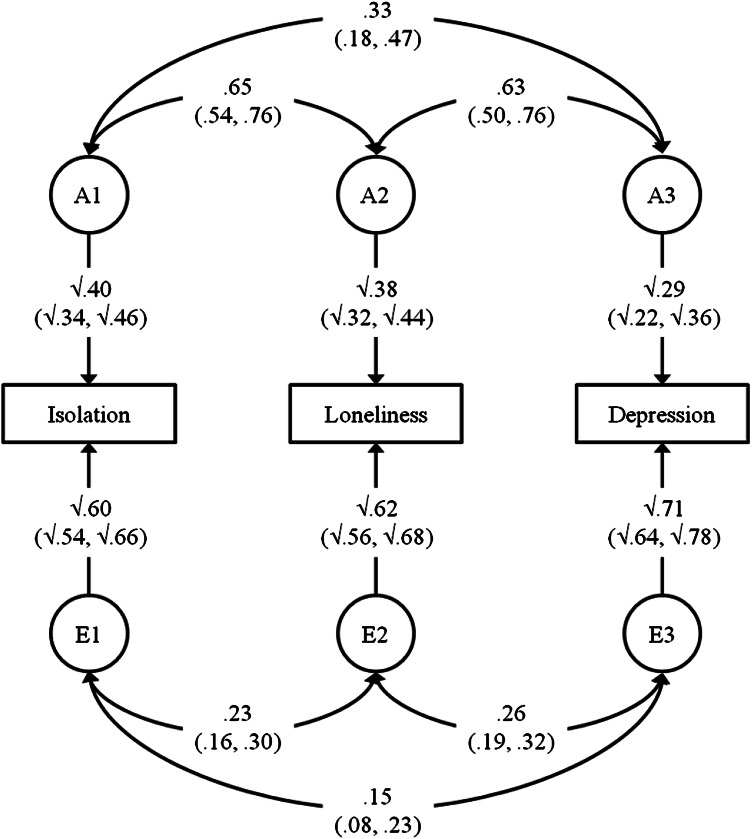
PURPOSE: To investigate the association between social isolation and loneliness, how they relate to depression, and whether these associations are explained by genetic influences. METHODS: We used data from the age-18 wave of the Environmental Risk Longitudinal Twin Study, a birth cohort of 1116 same-sex twin pairs born in England and Wales in 1994 and 1995. Participants reported on their levels of social isolation, loneliness and depressive symptoms. We conducted regression analyses to test the differential associations of isolation and loneliness with depression. Using the twin study design, we estimated the proportion of variance in each construct and their covariance that was accounted for by genetic and environmental factors. RESULTS: Social isolation and loneliness were moderately correlated (r = 0.39), reflecting the separateness of these constructs, and both were associated with depression. When entered simultaneously in a regression analysis, loneliness was more robustly associated with depression. We observed similar degrees of genetic influence on social isolation (40 %) and loneliness (38 %), and a smaller genetic influence on depressive symptoms (29 %), with the remaining variance accounted for by the non-shared environment. Genetic correlations of 0.65 between isolation and loneliness and 0.63 between loneliness and depression indicated a strong role of genetic influences in the co-occurrence of these phenotypes. CONCLUSIONS: Socially isolated young adults do not necessarily experience loneliness. However, those who are lonely are often depressed, partly because the same genes influence loneliness and depression. Interventions should not only aim at increasing social connections but also focus on subjective feelings of loneliness.
Overview
The claims and statistics of this paper haven’t been checked yet.
Free: it reads the open-access text and checks the first 5 claims that cite a source we can check. Create a free account to check every claim.
Integrity signals
Registry
Cites
Statistics
Figures
Verification
Claims the paper makes
The claims and statistics of this paper haven’t been checked yet.
Free: it reads the open-access text and checks the first 5 claims that cite a source we can check. Create a free account to check every claim.
Claims other papers make about this one
Each is checked against this paper’s own text: does it say what the citing paper says it does?
The cited source doesn’t support the claim as written.
In the citing paper
“Seven studies stated that they measured the impact of social isolation39 , 45 , 50 , 59 , 69 , 70 , 72 on mental health, but the social isolation measures used were either subscales or questions from loneliness scales, or strongly overlapped with the construct of loneliness. Therefore, we have considered them together with studies that measured loneliness.”
From Rapid Systematic Review: The Impact of Social Isolation and Loneliness on the Mental Health of Children and Adolescents in the Context of COVID-19 (2020) · cites this paper as [39]
Checked by a reasoning model — may be wrong.
Experimental — accuracy not yet measuredThe source backs part of the claim, not all of it — or backs it for a different population, condition or comparison.
In the citing paper
“Younger adults may be disproportionately affected by disease-containment policies (e.g., school/university closures) that increase social isolation placing them at higher risk of loneliness [32].”
From Loneliness in the UK during the COVID-19 pandemic: Cross-sectional results from the COVID-19 Psychological Wellbeing Study (2020) · cites this paper as [32]
Experimental — accuracy not yet measuredThe source backs part of the claim, not all of it — or backs it for a different population, condition or comparison.
In the citing paper
“Social isolation and peer victimisation do not occur randomly and are both heritable (30% to 70%), suggesting that genetic factors contribute to individual differences in these social difficulties (Fisher et al., 2015; Johansson et al., 2022; Matthews et al., 2016; Veldkamp et al., 2019).”
From A cross‐lagged twin study of emotional symptoms, social isolation and peer victimisation from early adolescence to emerging adulthood (2023) · cites this paper as Matthews et al., 2016
Experimental — accuracy not yet measuredThe source backs part of the claim, not all of it — or backs it for a different population, condition or comparison.
In the citing paper
“Although existing evidence indicates that loneliness and social isolation are independently associated with mental health conditions and mortality (Holt-Lunstad et al., 2015;Matthews et al., 2016), their independent effects on physical health conditions are less consistent and their independent effects on socioeconomic outcomes have not been investigated (Leigh-Hunt et al., 2017).”
From Investigating the interplay of loneliness and social isolation across adolescence: Findings from a nationally representative longitudinal study (2026) · cites this paper as Matthews et al., 2016
Experimental — accuracy not yet measuredThe source backs part of the claim, not all of it — or backs it for a different population, condition or comparison.
In the citing paper
“We used measures of social isolation that capture low embeddedness within age-appropriate social networks, which is consistent with prior research that conceptualizes childhood isolation in terms of peer relationships (e.g., Lacey et al., 2014;Matthews et al., 2016;Morneau-Vaillancourt et al., 2023;Thompson et al., 2023).”
From Investigating the interplay of loneliness and social isolation across adolescence: Findings from a nationally representative longitudinal study (2026) · cites this paper as Matthews et al., 2016
Experimental — accuracy not yet measured
8 more claims about this paper
Create a free account to see every claim other papers make about this one.
Self-check
Percentages, sums and reported differences re-computed from the paper’s own numbers.
The self-check needs the paper’s full text.
Citations
Cites
Diagnostic and Statistical Manual of Mental Disorders
Williams, J. B. W., & First, M. (2013) · Encyclopedia of Social Work · doi:10.1093/acrefore/9780199975839.013.104 · Cited by 109,519
Diagnostic and Statistical Manual of Mental Disorders
American Psychiatric Association (2022) · doi:10.1176/appi.books.9780890425787 · Cited by 23,476
Stress, social support, and the buffering hypothesis
Cohen, S., & Wills, T. A. (1985) · Psychological Bulletin · doi:10.1037/0033-2909.98.2.310 · Cited by 18,093 · cited 1×
“Young adults who were socially isolated experienced greater feelings of loneliness, and were also more likely to grapple with depression, suggesting that social relationships confer benefits for mental health over and above subjective feelings of connectedness, such as reducing the effects of stress [42].”
BackgroundThe Multidimensional Scale of Perceived Social Support
Zimet, G. D., Dahlem, N. W., Zimet, S. G., & Farley, G. K. (1988) · Journal of Personality Assessment · doi:10.1207/s15327752jpa5201_2 · Cited by 13,339
Genetics of Food Intake Self-Regulation in Childhood: Literature Review and Research Opportunities
Faith, M. S., Carnell, S., & Kral, T. V. E. (2013) · Human Heredity · doi:10.1159/000353879 · Cited by 7,601
UCLA loneliness scale (version 3): reliability, validity, and factor structure
Russell, D. W. (1996) · Journal of Personality Assessment · doi:10.1207/s15327752jpa6601_2 · Cited by 5,800 · cited 1×
“from the UCLA Loneliness Scale (Version 3): [33] ‘‘How often do you feel that you lack companionship?’’, ‘‘How often do you feel left out?’’, ‘‘How often do you feel isolated from others?’’ and ‘‘How often do you feel alone?’’ The full UCLA Scale consists of 20 items; however, a previous study has shown that a short f…”
BackgroundPsychometric Characteristics of the Multidimensional Scale of Perceived Social Support
Zimet, G. D., Powell, S. S., Farley, G. K., Werkman, S., & Berkoff, K. A. (1990) · Journal of Personality Assessment · doi:10.1080/00223891.1990.9674095 · Cited by 4,855
Psychometric Characteristics of the Multidimensional Scale of Perceived Social Support
Zimet, G., Powell, S., Farley, G., Werkman, S., & Berkoff, K. (1990) · Journal of Personality Assessment · doi:10.1207/s15327752jpa5503&4_17 · Cited by 4,854
From social integration to health: durkheim in the new millennium
Berkman, L. F., Glass, T., Brissette, I., & Seeman, T. E. (2000) · Social Science & Medicine · doi:10.1016/s0277-9536(00)00065-4 · Cited by 4,821 · cited 2×
“A smaller part of the correlation was explained by environmental factors, which may reflect the influence of broader socioeconomic and cultural forces that shape the context in which social relationships are formed [45].”
BackgroundLoneliness matters: a theoretical and empirical review of consequences and mechanisms
Hawkley, L. C., & Cacioppo, J. T. (2010) · Annals of Behavioral Medicine · doi:10.1007/s12160-010-9210-8 · Cited by 4,782 · cited 1×
“Crucially, although isolation and loneliness tend to co-occur, they can also be experienced independently of one another: it does not follow that isolated individuals necessarily feel lonely, nor does an abundance of social connections preclude one from experiencing loneliness [7, 8].”
Background
Research works printed but not linked: 2
- Nolen-Hoeksema S, Ahrens C (2002) Age differences and similarities in the correlates of depressive symptoms. Psychol Aging 17(1):116–124 · DOI
- Robins L, Cottler L, Bucholz K, Compton W (1995) Diagnostic Interview Schedule for DSM-IV. Washington University School of Medicine, St. Louis
Cited by
Loades, M. E., Chatburn, E., Higson-Sweeney, N., Reynolds, S., Shafran, R., Brigden, A., Linney, C., McManus, M. N., Borwick, C., & Crawley, E. (2020) · Journal of the American Academy of Child & Adolescent Psychiatry · doi:10.1016/j.jaac.2020.05.009 · Cited by 2,906
“Journal Pre-proof Rapid Systematic Review: The Impact of Social Isolation and Loneliness on the Mental Health of Children and Adolescents in the Context of COVID-19 Maria Elizabeth Loades, DClinPsy, Eleanor Chatburn, MA, Nina Higson-Sweeney, BSc, Shirley Reynolds, PhD, Roz Shafran, PhD, Amberly Brigden, MSc, Catherine…”
BackgroundInfluentialSocial media use and perceived social isolation among young adults in the U.S
Primack, B. A., Shensa, A., Sidani, J. E., Whaite, E. O., Lin, L. Y., Rosen, D., Colditz, J. B., Radovic, A., & Miller, E. (2017) · American Journal of Preventive Medicine · doi:10.1016/j.amepre.2017.01.010 · Cited by 889
“The perception of loneliness seems to be linked to poor health outcomes based on both genetic predisposition and epigenetic factors.(10) Recent increases in social media use (SMU) via platforms such as Facebook may provide opportunities for alleviation of PSI.”
BackgroundThe effect of loneliness on depression: A meta-analysis
Erzen, E., & Çikrikci, Ö. (2018) · International Journal of Social Psychiatry · doi:10.1177/0020764018776349 · Cited by 838
Groarke, J. M., Berry, E., Graham-Wisener, L., McKenna-Plumley, P. E., McGlinchey, E., & Armour, C. (2020) · PLOS ONE · doi:10.1371/journal.pone.0239698 · Cited by 727
“, school/university closures) that increase social isolation placing them at higher risk of loneliness [32].”
BackgroundNearchou, F., Flinn, C., Niland, R., Subramaniam, S. S., & Hennessy, E. (2020) · International Journal of Environmental Research and Public Health · doi:10.3390/ijerph17228479 · Cited by 577
“This is a particular concern, as there is evidence from longitudinal studies that social isolation in childhood and adolescence carries significant risk of poor adult health, as measured by risk of cardiovascular disease at age 26 years [21] and depression [22].”
BackgroundShah, S. M. A., Mohammad, D., Qureshi, M. F. H., Abbas, M. Z., & Aleem, S. (2021) · Community Mental Health Journal · doi:10.1007/s10597-020-00728-y · Cited by 554
Fruehwirth, J. C., Biswas, S., & Perreira, K. M. (2021) · PLOS ONE · doi:10.1371/journal.pone.0247999 · Cited by 522
“These stressors are motivated by a prior literature showing the importance of financial stress [14], academic stress [15], and social isolation for mental health [16].”
BackgroundLonely young adults in modern Britain: findings from an epidemiological cohort study
Matthews, T., Danese, A., Caspi, A., Fisher, H. L., Goldman-Mellor, S., Kepa, A., Moffitt, T. E., Odgers, C. L., & Arseneault, L. (2019) · Psychological Medicine · doi:10.1017/s0033291718000788 · Cited by 381
“The heritability of loneliness has been reported in a previous study of the E-Risk cohort (Matthews et al. 2016), in which 38% of the variance in loneliness was estimated to be explained by genetic influences.”
MethodSelf-citationRønnstad, A. T. M., Halling-Overgaard, A.-S., Hamann, C. R., Skov, L., Egeberg, A., & Thyssen, J. P. (2018) · Journal of the American Academy of Dermatology · doi:10.1016/j.jaad.2018.03.017 · Cited by 352
Richard, A., Rohrmann, S., Vandeleur, C. L., Schmid, M., Barth, J., & Eichholzer, M. (2017) · PLOS ONE · doi:10.1371/journal.pone.0181442 · Cited by 350
A direct test of the diathesis-stress model for depression
Major Depressive Disorder Working Group of the Psychiatric Genomics Consortium, Colodro-Conde, L., Couvy-Duchesne, B., Zhu, G., Coventry, W. L., Byrne, E. M., Gordon, S., Wright, M. J., Montgomery, G. W., Madden, P. A. F., et al. (2018) · Molecular Psychiatry · doi:10.1038/mp.2017.130 · Cited by 285
Labrague, L. J., De los Santos, J. A. A., & Falguera, C. C. (2021) · Perspectives in Psychiatric Care · doi:10.1111/ppc.12721 · Cited by 276
Scardera, S., Perret, L. C., Ouellet-Morin, I., Gariépy, G., Juster, R.-P., Boivin, M., Turecki, G., Tremblay, R. E., Côté, S., & Geoffroy, M.-C. (2020) · JAMA Network Open · doi:10.1001/jamanetworkopen.2020.27491 · Cited by 268
Achterbergh, L., Pitman, A., Birken, M., Pearce, E., Sno, H., & Johnson, S. (2020) · BMC Psychiatry · doi:10.1186/s12888-020-02818-3 · Cited by 254
Moeller, R. W., & Seehuus, M. (2019) · Journal of Adolescence · doi:10.1016/j.adolescence.2019.03.006 · Cited by 254
“However, other work in adult and young adult populations has found a bidirectional relationship between depression and loneliness (Cacioppo, Hughes, Waite, Hawkley, & Thisted, 2006; Matthews et al., 2016).”
BackgroundChristiansen, J., Qualter, P., Friis, K., Pedersen, S., Lund, R., Andersen, C., Bekker-Jeppesen, M., & Lasgaard, M. (2021) · Perspectives in Public Health · doi:10.1177/17579139211016077 · Cited by 241
Buecker, S., & Horstmann, K. T. (2021) · European Psychologist · doi:10.1027/1016-9040/a000453 · Cited by 225
Winkler, P., Formanek, T., Mlada, K., Kagstrom, A., Mohrova, Z., Mohr, P., & Csemy, L. (2020) · Epidemiology and Psychiatric Sciences · doi:10.1017/s2045796020000888 · Cited by 223
Atopic Eczema in Adulthood and Risk of Depression and Anxiety: A Population-Based Cohort Study
Schonmann, Y., Mansfield, K. E., Hayes, J. F., Abuabara, K., Roberts, A., Smeeth, L., & Langan, S. M. (2020) · The Journal of Allergy and Clinical Immunology: In Practice · doi:10.1016/j.jaip.2019.08.030 · Cited by 179
Kupferberg, A., & Hasler, G. (2023) · Journal of Affective Disorders Reports · doi:10.1016/j.jadr.2023.100631 · Cited by 170
Sleeping with one eye open: loneliness and sleep quality in young adults
Matthews, T., Danese, A., Gregory, A. M., Caspi, A., Moffitt, T. E., & Arseneault, L. (2017) · Psychological Medicine · doi:10.1017/s0033291717000629 · Cited by 167
“There is evidence for substantial heritability of both loneliness (Goossens et al. 2015; Matthews et al. 2016) and sleep quality (Barclay et al.”
BackgroundSelf-citationEmotional and social loneliness and their unique links with social isolation, depression and anxiety
Wolters, N. E., Mobach, L., Wuthrich, V. M., Vonk, P., der Heijde, C. M. V., Wiers, R. W. H. J., Rapee, R. M., & Klein, A. M. (2023) · Journal of Affective Disorders · doi:10.1016/j.jad.2023.02.096 · Cited by 217
“More recently, studies have started to differentiate the overlapping and unique aspects of the relationship between depression and loneliness (e.g., Ge et al., 2017; Matthews et al., 2016; Van den Brink et al., 2018).”
Self-Isolation: A Significant Contributor to Cannabis use during the COVID-19 Pandemic
Bartel, S. J., Sherry, S. B., & Stewart, S. H. (2020) · Substance Abuse · doi:10.1080/08897077.2020.1823550 · Cited by 155
The Impact of Loneliness and Social Isolation on Cognitive Aging: A Narrative Review
Guarnera, J., Yuen, E., & Macpherson, H. (2023) · Journal of Alzheimer's Disease Reports · doi:10.3233/adr-230011 · Cited by 161
“Yet, the association between loneliness and depressive symptoms was independent of and stronger than the association with social isolation, which has been replicated in other studies [101].”
ResultSun, S., Lin, D., Goldberg, S., Shen, Z., Chen, P., Qiao, S., Brewer, J., Loucks, E., & Operario, D. (2022) · Journal of Counseling Psychology · doi:10.1037/cou0000568 · Cited by 138
“Social isolation is a major risk factor for the development of anxiety and depression (Beutel et al., 2017; Matthews et al., 2016).”
Danneel, S., Nelemans, S., Spithoven, A., Bastin, M., Bijttebier, P., Colpin, H., Van Den Noortgate, W., Van Leeuwen, K., Verschueren, K., & Goossens, L. (2019) · Journal of Abnormal Child Psychology · doi:10.1007/s10802-019-00539-0 · Cited by 145
“Specifically, withdrawal from social interactions (Matthews et al. 2016) or excessive reassurance seeking (Hankin 2006) often resulting in rejection are behaviors frequently displayed by depressed individuals that increase the risk for experiencing loneliness.”
BackgroundKirmayer, L. J., Gómez-Carrillo, A., & Veissière, S. P. L. (2017) · Social Science & Medicine · doi:10.1016/j.socscimed.2017.04.034 · Cited by 175
Rosenberg, M., Luetke, M., Hensel, D., Kianersi, S., Fu, T.-C., & Herbenick, D. (2021) · Social Psychiatry and Psychiatric Epidemiology · doi:10.1007/s00127-020-02002-8 · Cited by 139
“Social isolation, which is essentially mandated to reduce transmission of COVID-19, has been previously linked to loneliness and negative mental health outcomes in numerous populations [3, 4].”
BackgroundCrowe, C. L., Domingue, B. W., Graf, G. H., Keyes, K. M., Kwon, D., & Belsky, D. W. (2021) · The Journals of Gerontology: Series A · doi:10.1093/gerona/glab128 · Cited by 153
Prizeman, K., Weinstein, N., & McCabe, C. (2023) · BMC Psychiatry · doi:10.1186/s12888-023-04991-7 · Cited by 197
“Notably, individuals in solitude do not inevitably experience loneliness [70], and lonely young people do not always spend less time with other people compared to less lonely people [14].”
BackgroundKelly, D., Steiner, A., Mazzei, M., & Baker, R. M. (2019) · Journal of Rural Studies · doi:10.1016/j.jrurstud.2019.01.024 · Cited by 150
Hirdes, J. P., van Everdingen, C., Ferris, J., Franco-Martin, M., Fries, B. E., Heikkilä, J., Hirdes, A., Hoffman, R., James, M. L., Martin, L., et al. (2020) · Frontiers in Psychiatry · doi:10.3389/fpsyt.2019.00926 · Cited by 124
van Winkel, M., Wichers, M., Collip, D., Jacobs, N., Derom, C., Thiery, E., Myin-Germeys, I., & Peeters, F. (2017) · Psychiatry · doi:10.1080/00332747.2016.1256143 · Cited by 123
“In concordance with loneliness, objective social isolation is also associated with the development of MDD (Matthews et al., 2016).”
BackgroundJaspal, R., & Breakwell, G. M. (2020) · International Journal of Social Psychiatry · doi:10.1177/0020764020976694 · Cited by 153
“Although the psychological burden of loneliness has been noted elsewhere (Matthews et al., 2016), our data suggest that it may be especially significant in the era of COVID-19, which may compound pre-existing psychological issues in the general population.”
BackgroundResultLazzari, C. G., & Rabottini, M. (2021) · International Journal of Psychiatry in Clinical Practice · doi:10.1080/13651501.2021.1959616 · Cited by 140
“Social isolation and feelings of loneliness are conducive to depression, and there are a genetic correlation and phenotype conducive to both (Matthews et al. 2016).”
BackgroundDong, C., Zheng, Y., Long-Iyer, K., Wright, E. C., Li, Y., & Tian, L. (2022) · Annual Review of Neuroscience · doi:10.1146/annurev-neuro-110520-031137 · Cited by 99
“…of recording setups that allow unrestrained movement to investigate circuit-specific activity during behaviors such as neutral interaction (Gunaydin et al. 2014), social defeat (Muir et al. 2018), social isolation (Matthews et al. 2016, Mita et al. 2019), and social reward (Hung et al. 2017).”
BackgroundPsychometric properties of the short-form UCLA Loneliness Scale (ULS-8) among Chinese adolescents
Xu, S., Qiu, D., Hahne, J., Zhao, M., & Hu, M. (2018) · Medicine · doi:10.1097/md.0000000000012373 · Cited by 125
Matthews, T., Rasmussen, L. J. H., Ambler, A. P., Danese, A., Eugen‐Olsen, J., Fancourt, D. E., Fisher, H. L., Iversen, K. K., Schultz, M., Sugden, K., et al. (2023) · Brain Behavior and Immunity · doi:10.1016/j.bbi.2023.11.022 · Cited by 124
“Hence, not all isolated individuals are lonely, nor are all lonely individuals isolated (Matthews et al., 2016).”
BackgroundSelf-citationYu, M., Tian, F., Cui, Q., & Wu, H. L. (2021) · BMC Psychiatry · doi:10.1186/s12888-021-03066-9 · Cited by 159
“has found, increased loneliness caused by social isolation can be a risk factor for depressive symptoms [38].”
BackgroundCOVID-19: Review of a 21st Century Pandemic from Etiology to Neuro-psychiatric Implications
Yamamoto, V., Bolanos, J. F., Fiallos, J., Strand, S. E., Morris, K., Shahrokhinia, S., Cushing, T. R., Hopp, L., Tiwari, A., Hariri, R., et al. (2020) · Journal of Alzheimer's Disease · doi:10.3233/jad-200831 · Cited by 100
“A separate study of young adults similarly suggested that social isolation can promote feelings of loneliness and a higher probability of experiencing depression [173].”
BackgroundLounds Taylor, J., Adams, R. E., & Bishop, S. L. (2017) · Autism Research · doi:10.1002/aur.1709 · Cited by 97
“…linked to internalizing symptoms (particularly mood symptoms) in typically developing children and adults [e.g., Bagwell et al., 1998; Bukowski et al., 2010; Danese et al., 2009; Hartup, 1989; Matthews et al., 2016; Sakyi et al., 2015], but this link is not well-understood in ASD samples.”
InfluentialA longitudinal twin study of victimization and loneliness from childhood to young adulthood
Matthews, T., Caspi, A., Danese, A., Fisher, H. L., Moffitt, T. E., & Arseneault, L. (2022) · Development and Psychopathology · doi:10.1017/s0954579420001005 · Cited by 93
“The heritability of loneliness (that is, the proportion of variance accounted for by genetic influences) is approximately 40–50% (Goossens et al., 2015; Matthews et al., 2016).”
BackgroundMethodInfluentialSelf-citationGenetic Contributions to Loneliness and Their Relevance to the Evolutionary Theory of Loneliness
Spithoven, A. W. M., Cacioppo, S., Goossens, L., & Cacioppo, J. T. (2019) · Perspectives on Psychological Science · doi:10.1177/1745691618812684 · Cited by 90
Kim, J., Kang, H., Lee, Y., Lee, B., & Lee, D. (2023) · Scientific Reports · doi:10.1038/s41598-023-41996-4 · Cited by 122
Field, S., Onah, M. N., van Heyningen, T., & Honikman, S. (2018) · BMC Women s Health · doi:10.1186/s12905-018-0612-2 · Cited by 128
Danneel, S., Geukens, F., Maes, M., Bastin, M., Bijttebier, P., Colpin, H., Verschueren, K., & Goossens, L. (2020) · Journal of Youth and Adolescence · doi:10.1007/s10964-020-01315-w · Cited by 89
“Loneliness is commonly categorized as an internalizing problem behavior (Blossom and Apsche 2013) and conceptualized as an emotional problem (Matthews et al. 2016).”
BackgroundGroarke, J. M., McGlinchey, E., McKenna-Plumley, P. E., Berry, E., Graham-Wisener, L., & Armour, C. (2021) · Journal of Affective Disorders · doi:10.1016/j.jad.2021.02.033 · Cited by 86
“Relative to loneliness, objective isolation is a more robust predictor of mortality (Steptoe et al., 2013), whereas loneliness (i.e., subjective isolation) is more robustly associated with depression (Matthews et al., 2016).”
BackgroundReyes‐Portillo, J. A., Warner, C. M., Kline, E. A., Bixter, M. T., Chu, B. C., Miranda, R., Nadeem, E., Nickerson, A. B., Ortin‐Peralta, A., Reigada, L. C., et al. (2022) · Emerging Adulthood · doi:10.1177/21676968211066657 · Cited by 109
“Social isolation and loneliness have also been found to be related to worse mental health outcomes (Matthews et al., 2016).”
BackgroundInfluentialNenov-Matt, T., Barton, B. B., Dewald‐Kaufmann, J., Goerigk, S. A., Rek, S. V., Zentz, K., Musil, R., Jobst, A., Padberg, F., & Reinhard, M. A. (2020) · Frontiers in Psychiatry · doi:10.3389/fpsyt.2020.608476 · Cited by 99
Zhou, H., Dang, L., Lam, L. W., Zhang, M. X., & Wu, A. M. S. (2021) · Addictive Behaviors · doi:10.1016/j.addbeh.2021.106978 · Cited by 99
Nisar, Q. A., Haider, S., Ali, F., Naz, S., & Ryu, K. (2020) · International Journal of Hospitality Management · doi:10.1016/j.ijhm.2020.102794 · Cited by 100
Mindfulness practice for protecting mental health during the COVID-19 pandemic
Zhu, J. L., Schülke, R., Vatansever, D., Xi, D., Yan, J., Zhao, H., Xie, X., Feng, J., Chen, M. Y., Sahakian, B. J., et al. (2021) · Translational Psychiatry · doi:10.1038/s41398-021-01459-8 · Cited by 83
Loneliness across cultures with different levels of social embeddedness: A qualitative study
Heu, L. C., Hansen, N., van Zomeren, M., Levy, A., Ivanova, T. T., Gangadhar, A., & Radwan, M. (2021) · Personal Relationships · doi:10.1111/pere.12367 · Cited by 79
Freak-Poli, R., Wagemaker, N., Wang, R., Lysen, T. S., Ikram, M. A., Vernooij, M. W., Dintica, C. S., Vernooij-Dassen, M., Melis, R. J. F., Laukka, E. J., et al. (2022) · Journal of Alzheimer's Disease · doi:10.3233/jad-210330 · Cited by 79
Elbogen, E. B., Lanier, M., Griffin, S. C., Blakey, S. M., Gluff, J. A., Wagner, H. R., & Tsai, J. (2022) · Cyberpsychology Behavior and Social Networking · doi:10.1089/cyber.2021.0257 · Cited by 109
Cartwright, B. D. S., White, M. P., & Clitherow, T. J. (2018) · International Journal of Environmental Research and Public Health · doi:10.3390/ijerph15061238 · Cited by 104
Lü, J., Zhang, N., Mao, D., Wang, Y., & Wang, X. (2020) · Archives of Gerontology and Geriatrics · doi:10.1016/j.archger.2020.104154 · Cited by 271
Exploring Educators’ Challenges of Online Learning in Covid-19 at a Rural School, South Africa
Mukuna, K. R., & Aloka, P. J. O. (2020) · International Journal of Learning Teaching and Educational Research · doi:10.26803/ijlter.19.10.8 · Cited by 113
“It may lead to increased anxiety, depression, and feelings of sadness (Ali & Smith, 2015; Matthews et al., 2016).”
BackgroundA Middle-Range Theory of Social Isolation in Chronic Illness
Iovino, P., Vellone, E., Cedrone, N., & Riegel, B. J. (2023) · International Journal of Environmental Research and Public Health · doi:10.3390/ijerph20064940 · Cited by 92
“Another longitudinal study of more than 1000 young adults [43] found that disconnectedness and loneliness were both associated with depression.”
BackgroundChanging the narrative: Loneliness as a social justice issue
Barreto, M., Doyle, D. M., & Qualter, P. (2024) · Political Psychology · doi:10.1111/pops.12965 · Cited by 93
“Particularly influential has been the suggestion that loneliness is at least in part genetically heritable (Boomsma et al., 2005; Gao et al., 2017; Matthews et al., 2016, 2022; Spithoven et al., 2019), which implies it stems from an individual's biological make-up, but also that it is fairly…”
BackgroundShen, C., Zhang, R., Yu, J., Sahakian, B. J., Cheng, W., & Feng, J. (2025) · Nature Human Behaviour · doi:10.1038/s41562-024-02078-1 · Cited by 94
“Additionally, there is a high genetic correlation between loneliness and depression ( r = 0.63), nearly equivalent the genetic correlation between loneliness and social isolation ( r = 0.65) 74 , indicating a significant co-occurrence of these phenotypes.”
InfluentialHymas, R., Badcock, J. C., & Milne, E. (2022) · Review Journal of Autism and Developmental Disorders · doi:10.1007/s40489-022-00330-w · Cited by 89
“The association between loneliness and depressive symptoms has been shown to be moderate-large across the lifespan ( r = 0.50–0.63; Erzen & Çikrikci, 2018; Matthews et al., 2016; Richardson et al., 2017).”
InfluentialLoneliness and online gambling-community participation of young social media users
Sirola, A., Kaakinen, M., Savolainen, I., & Oksanen, A. (2019) · Computers in Human Behavior · doi:10.1016/j.chb.2019.01.023 · Cited by 101
“adolescents and young adults, loneliness is also a risk factor for many psychosocial difficulties such as depression (Demir & Kutlu, 2016; Matthews et al., 2016) and various forms of addictive behaviors (Bian & Leung, 2015; Kuss et al.”
BackgroundWerneck, A. O., Collings, P. J., Barboza, L. L. S., Stubbs, B., & da Silva, D. R. P. (2019) · General Hospital Psychiatry · doi:10.1016/j.genhosppsych.2019.04.010 · Cited by 82
Yang, X., Hu, H., Zhao, C., Xu, H., Tu, X., & Zhang, G. (2021) · BMC Psychiatry · doi:10.1186/s12888-021-03265-4 · Cited by 72
The emotional impact of the COVID-19 pandemic on individuals with progressive multiple sclerosis
Chiaravalloti, N. D., Amato, M. P., Brichetto, G., Chataway, J., Dalgas, U., DeLuca, J., Meza, C., Moore, N. B., Feys, P., Filippi, M., et al. (2020) · Journal of Neurology · doi:10.1007/s00415-020-10160-7 · Cited by 83
“Social isolation has been shown to have a significant impact on mental health in numerous studies [32], with social isolation and loneliness being associated with depression in the general population [33].”
BackgroundCouvy‐Duchesne, B., Strike, L. T., de Zubicaray, G. I., McMahon, K. L., Thompson, P. M., Hickie, I. B., Martin, N. G., & Wright, M. J. (2018) · eNeuro · doi:10.1523/eneuro.0153-17.2017 · Cited by 73
“These include: neuroticism (Goldstein and Klein, 2014), personal life events (Boardman et al., 2011) and perceived social support (Kendler and Baker, 2007; Matthews et al., 2016).”
BackgroundSbarra, D. A., Ramadan, F. A., Choi, K. W., Treur, J. L., Levey, D. F., Wootton, R. E., Stein, M. B., Gelernter, J. E., & Klimentidis, Y. C. (2023) · Molecular Psychiatry · doi:10.1038/s41380-023-02259-w · Cited by 83
“…there is signi fi cant genetic overlap between loneliness and depression, genetic confounding does not account for the entirety of the phenotypic exposure and within-twin pair differences in loneliness are associated with increases in depression, which is consistent with a causal effect [26].”
Lee, Y., & Ko, Y.-G. (2018) · Journal of Social and Personal Relationships · doi:10.1177/0265407517712902 · Cited by 70
“Consistent with prior studies (e.g., Coyle & Dugan, 2012; Matthews et al., 2016), the association between loneliness and social network size (opp.”
ResultMental health among pregnant women with COVID‐19–related stressors and worries in the United States
Liu, J., Hung, P., Alberg, A. J., Hair, N. L., Whitaker, K. M., Simon, J., & Taylor, S. K. (2021) · Birth · doi:10.1111/birt.12554 · Cited by 75
“22 The scale included five response options: not at all (0), a little (1), sometimes (2), most of time (3), and all the time (4).”
BackgroundLack of Belonging Predicts Depressive Symptomatology in College Students
Dutcher, J. M., Lederman, J., Jain, M., Price, S., Kumar, A., Villalba, D. K., Tumminia, M. J., Doryab, A., Creswell, K. G., Riskin, E. A., et al. (2022) · Psychological Science · doi:10.1177/09567976211073135 · Cited by 89
“Similarly, loneliness is associated with higher rates of depression, particularly in young adults (Cacioppo et al., 2006, 2010; Matthews et al., 2016).”
Cultural differences in social support seeking: The mediating role of empathic concern
Zheng, S., Masuda, T., Matsunaga, M., Noguchi, Y., Ohtsubo, Y., Yamasue, H., & Ishii, K. (2021) · PLOS ONE · doi:10.1371/journal.pone.0262001 · Cited by 67
“Accumulating evidence suggests that loneliness can trigger adverse outcomes on mental and physical health, such as depression [69] and alcoholism [70].”
BackgroundLonely consumers and their friend the retail salesperson
Rippé, C. B., Smith, B., & Dubinsky, A. J. (2018) · Journal of Business Research · doi:10.1016/j.jbusres.2018.07.013 · Cited by 73
Advancing our understanding of loneliness and mental health problems in young people
Pitman, A., Mann, F., & Johnson, S. (2018) · The Lancet Psychiatry · doi:10.1016/s2215-0366(18)30436-x · Cited by 68
McKenna-Plumley, P. E., Turner, R. N., Yang, K., & Groarke, J. M. (2023) · International Journal of Qualitative Studies on Health and Well-Being · doi:10.1080/17482631.2023.2223868 · Cited by 103
“It is clear that objective aspects of a person’s social network such as social isolation are not sufficient to explain loneliness (Coyle & Dugan, 2012, Matthews et al., 2016).”
BackgroundCorbett, A., Williams, G. H., Creese, B., Hampshire, A., Hayman, V., Palmer, A., Filakovszky, A., Mills, K., Cummings, J. L., Aarsland, D., et al. (2023) · The Lancet Healthy Longevity · doi:10.1016/s2666-7568(23)00187-3 · Cited by 86
Fry, J., & Bloyce, D. (2017) · Sociology of Sport Journal · doi:10.1123/ssj.2017-0002 · Cited by 70
Does loneliness thrive in relational freedom or restriction? The culture-loneliness framework
Heu, L. C., van Zomeren, M., & Hansen, N. (2021) · Review of General Psychology · doi:10.1177/1089268020959033 · Cited by 64
“, 2008), living alone (Snell, 2017; Swader, 2019), genetic disposition (Matthews et al., 2016), introversion or neuroticism (Buecker et al.”
BackgroundBriley, P. M., Gerlach-Houck, H., & Jacobs, M. (2020) · Journal of Fluency Disorders · doi:10.1016/j.jfludis.2020.105820 · Cited by 82
Millard, S. J., Weston-Green, K., & Newell, K. A. (2020) · Progress in Neuro-Psychopharmacology and Biological Psychiatry · doi:10.1016/j.pnpbp.2020.109908 · Cited by 62
Šljivo, A., Kacamakovic, M., Quraishi, I., & Kulenović, A. D. (2020) · Psychiatria Danubina · doi:10.24869/psyd.2020.266 · Cited by 64
“Even though these predictors present general risk factors for development of depressive symptoms, we would like to emphasize the potential role of social isolation which could be one of the contributing factors and has already been shown in a few studies (Matthews et al. 2016, Ge et al. 2017).”
BackgroundResultLiu, B., Wu, X., Shi, L., Li, H., Wu, D., Lai, X., Li, Y., Yang, Y. B., & Li, D. (2021) · Nursing Open · doi:10.1002/nop2.876 · Cited by 72
“It is worth noting that social isolation is positively correlated with anxiety and depression in patients with breast cancer, consistent with the results of previous studies (Matthews et al., 2016; Santini et al., 2020).”
ResultInternet addiction and loneliness as predictors of internet gaming disorder in adolescents
Traş, Z. (2019) · Educational Research and Reviews · doi:10.5897/err2019.3768 · Cited by 76
“In adolescents and young adults, loneliness is a risk factor for many psychosocial difficulties such as depression (Matthews et al., 2016).”
BackgroundByrne, C., Saville, C. W. N., Coetzer, R., & Ramsey, R. (2021) · Archives of Clinical Neuropsychology · doi:10.1093/arclin/acab046 · Cited by 66
Stress, social support and their relationship to depression and anxiety among Latina immigrant women
Ryan, D. E., Tornberg-Belanger, S. N., Perez, G., Maurer, S., Price, C. J., Rao, D., Chan, K. C. G., & Ornelas, I. J. (2021) · Journal of Psychosomatic Research · doi:10.1016/j.jpsychores.2021.110588 · Cited by 68
Dennis, J. K., Sealock, J., Levinson, R. T., Farber‐Eger, E. H., Franco, J. A., Fong, S., Straub, P., Hucks, D., Song, W., Linton, M. F., et al. (2019) · Molecular Psychiatry · doi:10.1038/s41380-019-0614-y · Cited by 57
“6) [8, 9], but are believed to represent distinct underlying phenomena.”
BackgroundPorcelli, S., Kasper, S., Zohar, J., Souery, D., Montgomery, S., Ferentinos, P. P., Rujescu, D., Mendlewicz, J., Pich, E. M., Pollentier, S., et al. (2019) · Progress in Neuro-Psychopharmacology and Biological Psychiatry · doi:10.1016/j.pnpbp.2019.109835 · Cited by 64
“severe social dysfunction scores based on subjective experience have been observed to a greater extent in MDD than in SCZ and BD (9, 64-66), partially supporting our findings.”
Loneliness in Emerging Adulthood: A Scoping Review
Kirwan, E. M., Burns, A., O’Súilleabháin, P. S., Summerville, S., McGeehan, M., McMahon, J., Gowda, A., & Creaven, A. (2024) · Adolescent Research Review · doi:10.1007/s40894-024-00240-4 · Cited by 102
Wang, A., Davis, O. S. P., Wootton, R. E., Mottershaw, A. L., & Haworth, C. M. A. (2017) · Scientific Reports · doi:10.1038/s41598-017-13449-2 · Cited by 66
Qualter, P., Rouncefield‐Swales, A., Bray, L., Blake, L., Allen, S. J., Probert, C. S., Crook, K., & Carter, B. (2020) · Quality of Life Research · doi:10.1007/s11136-020-02653-9 · Cited by 63
Marinovic, D. A., & Hunter, R. L. (2022) · CA A Cancer Journal for Clinicians · doi:10.3322/caac.21733 · Cited by 73
Relationships between physical activity and loneliness: A systematic review of intervention studies
Ahn, J., Falk, E. B., & Kang, Y. (2023) · Current Research in Behavioral Sciences · doi:10.1016/j.crbeha.2023.100141 · Cited by 66
Preyde, M., Parekh, S., Warne, A., & Heintzman, J. D. (2017) · Child and Adolescent Social Work Journal · doi:10.1007/s10560-017-0490-8 · Cited by 63
Barcaccia, B., Cervin, M., Pozza, A., Medvedev, O. N., Baiocco, R., & Pallini, S. (2020) · Mindfulness · doi:10.1007/s12671-020-01466-8 · Cited by 58
Aslan, I., & Polat, H. (2024) · Frontiers in Public Health · doi:10.3389/fpubh.2024.1359691 · Cited by 51
Covid-19 and Maternal and Infant Health: Are We Getting the Balance Right? A Rapid Scoping Review
Topalidou, A., Thomson, G., & Downe, S. M. (2020) · The Practising Midwife · doi:10.55975/zyut2405 · Cited by 55
Shah, H. A., & Househ, M. S. (2023) · Interactive Journal of Medical Research · doi:10.2196/45197 · Cited by 70
Weight gain in Chinese youth during a 4-month COVID-19 lockdown: a retrospective observational study
Dun, Y., Ripley-Gonzalez, J. W., Zhou, N., You, B., Li, Q., Li, H., Zhang, W., Thomas, R. J., Olson, T. P., Liu, J., et al. (2021) · BMJ Open · doi:10.1136/bmjopen-2021-052451 · Cited by 54
Guessoum, S. B., Strat, Y. L., Dubertret, C., & Mallet, J. (2020) · Progress in Neuro-Psychopharmacology and Biological Psychiatry · doi:10.1016/j.pnpbp.2020.109862 · Cited by 56
Gan, S.-W., Ong, L. S., Lee, C. H., & Lin, Y. S. (2020) · The Journal of Genetic Psychology · doi:10.1080/00221325.2020.1803196 · Cited by 53
Metadata
- Authors
- Matthews, T., Danese, A., Wertz, J., Odgers, C. L., Ambler, A., Moffitt, T. E., & Arseneault, L.
- Affiliations
- King's College London (GB)
- National Health Service (GB)
- Duke University (US)
- Corresponding author
- Arseneault, Louise
- ORCID
- Venue
- Social Psychiatry and Psychiatric Epidemiology
- Published
- 2016-02-03
- Volume
- 51
- Issue
- 3
- Pages
- 339-348
- ISSN
- 0933-7954 (ISSN-L)
- 1433-9285
- PMC
- PMC4819590
- OpenAlex
- W2255620466
- Cited by
- 534
- References
- 59
- Citations by year
- 2026: 28 · 2025: 47 · 2024: 76 · 2023: 62 · 2022: 81 · 2021: 82 · 2020: 75 · 2019: 40 · 2018: 24 · 2017: 16 · 2016: 3
- FWCI
- 36.52
- Type
- journal article
- Language
- en
- Open access
- hybrid
- doi.org
- Licence
- cc-by
- creativecommons.org/licenses/by/4.0 (tdm)
- creativecommons.org/licenses/by/4.0 (vor)
- Locations
- Social Psychiatry and Psychiatric Epidemiology (publishedVersion, cc-by)
- Europe PMC (PubMed Central) (publishedVersion, cc-by)
- PubMed Central (publishedVersion, cc-by)
- PubMed (publishedVersion)
- eScholarship (California Digital Library) (submittedVersion, cc-by)
- Research Portal (King's College London) (submittedVersion, cc-by)
- Funders
- Medical Research Council (G1002190)
- Economic and Social Research Council (RES-177-25-0013)
- National Institute of Child Health and Human Development (HD061298)
- Jacobs Foundation (Advanced Research Fellowship)
- National Institute for Health Research
- Topics
- Social Sciences › Health › Health disparities and outcomes
- Life Sciences › Biochemistry, Genetics and Molecular Biology › Genetics › Genetic Associations and Epidemiology
- Social Sciences › Psychology › Experimental and Cognitive Psychology › Anxiety, Depression, Psychometrics, Treatment, Cognitive Processes
- Keywords
- social isolation, loneliness, depression, early adulthood, genetic factors, heritability, genetic correlation, nonshared environment, twin studies, depressive symptoms, subjective loneliness
- MeSH terms
- Depression, England, Female, Genetics, Behavioral, Humans, Loneliness, Longitudinal Studies, Male, Regression Analysis, Social Isolation, Wales, Young Adult, Gene-Environment Interaction
About these checks
Registry, retraction, Cites and statistics results are computed, not judged, with one exception: a printed reference that no index lists is read once by a model before it counts as a citation error. Claims are extracted by a model and kept only when their quote appears verbatim in the text; each cited source is then checked, with a model’s help, for whether it says what the claim relies on. Those verdicts can be wrong — read the claim’s quote and the cited source before relying on one.
Statistics and arithmetic are recomputed, not judged.
Confidence bands are shown only for fields calibrated on our annotated test set. None is calibrated yet, so no band is shown.
What counts as a claim ›How we measure confidence ›How we check this ›
Are you an author, or do you see a problem with this page? Request a review
Data sources
Bibliographic data: Semantic Scholar, OpenAlex, Crossref.
Contains information from the Semantic Scholar Academic Graph Datasets, made available under the ODC Attribution License (ODC-BY 1.0).
Semantic Scholar’s data is described in: Kinney, R., et al. (2023). The Semantic Scholar Open Data Platform. arXiv:2301.10140.
