

Psilocybin with psychological support for treatment-resistant depression: six-month follow-up
Open accessThe DOI matches its Crossref record; 40 of the 40 references it cites were found in a registry or an index.
Abstract
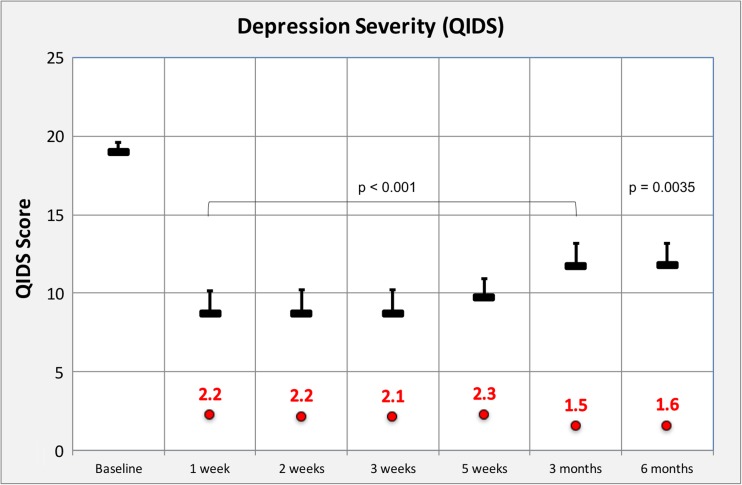
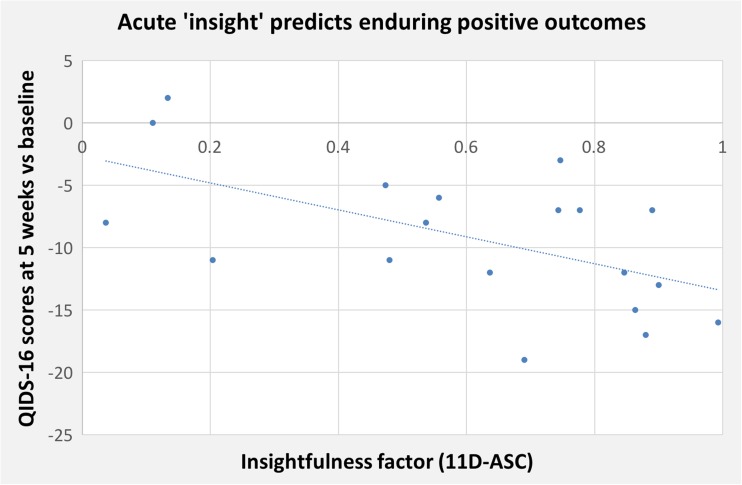
RATIONALE: Recent clinical trials are reporting marked improvements in mental health outcomes with psychedelic drug-assisted psychotherapy. OBJECTIVES: Here, we report on safety and efficacy outcomes for up to 6 months in an open-label trial of psilocybin for treatment-resistant depression. METHODS: Twenty patients (six females) with (mostly) severe, unipolar, treatment-resistant major depression received two oral doses of psilocybin (10 and 25 mg, 7 days apart) in a supportive setting. Depressive symptoms were assessed from 1 week to 6 months post-treatment, with the self-rated QIDS-SR16 as the primary outcome measure. RESULTS: Treatment was generally well tolerated. Relative to baseline, marked reductions in depressive symptoms were observed for the first 5 weeks post-treatment (Cohen's d = 2.2 at week 1 and 2.3 at week 5, both p < 0.001); nine and four patients met the criteria for response and remission at week 5. Results remained positive at 3 and 6 months (Cohen's d = 1.5 and 1.4, respectively, both p < 0.001). No patients sought conventional antidepressant treatment within 5 weeks of psilocybin. Reductions in depressive symptoms at 5 weeks were predicted by the quality of the acute psychedelic experience. CONCLUSIONS: Although limited conclusions can be drawn about treatment efficacy from open-label trials, tolerability was good, effect sizes large and symptom improvements appeared rapidly after just two psilocybin treatment sessions and remained significant 6 months post-treatment in a treatment-resistant cohort. Psilocybin represents a promising paradigm for unresponsive depression that warrants further research in double-blind randomised control trials.
Overview
The claims and statistics of this paper haven’t been checked yet.
Free: it reads the open-access text and checks the first 5 claims that cite a source we can check. Create a free account to check every claim.
Integrity signals
Registry
Cites
Statistics
Figures
Verification
Claims the paper makes
The claims and statistics of this paper haven’t been checked yet.
Free: it reads the open-access text and checks the first 5 claims that cite a source we can check. Create a free account to check every claim.
Claims other papers make about this one
Each is checked against this paper’s own text: does it say what the citing paper says it does?
The source backs part of the claim, not all of it — or backs it for a different population, condition or comparison.
In the citing paper
“Not only do they produce sustained therapeutic effects following a single administration, they also appear to have broad therapeutic potential”
From Psychedelics and Other Psychoplastogens for Treating Mental Illness. (2021) · cites this paper as [41]
Experimental — accuracy not yet measuredThe source backs part of the claim, not all of it — or backs it for a different population, condition or comparison.
In the citing paper
“Unlike traditional antidepressants, psychoplastogens produce both fast-acting and sustained beneficial behavioral effects after a single administration (Figure 1) (38–42).”
From Psychedelics and Other Psychoplastogens for Treating Mental Illness. (2021) · cites this paper as [41]
Experimental — accuracy not yet measuredThe source backs part of the claim, not all of it — or backs it for a different population, condition or comparison.
In the citing paper
“the mood-elevating properties of psilocybin seem to last significantly longer”
From Psychedelics and Other Psychoplastogens for Treating Mental Illness. (2021) · cites this paper as [41]
Experimental — accuracy not yet measuredThe source backs part of the claim, not all of it — or backs it for a different population, condition or comparison.
In the citing paper
“Remarkably, these benefits were incurred even after only a single psychedelic administration and were maintained for as long as 6 months.”
From Examining the Potential Synergistic Effects Between Mindfulness Training and Psychedelic-Assisted Therapy (2021) · cites this paper as [30]
Experimental — accuracy not yet measuredThe source backs part of the claim, not all of it — or backs it for a different population, condition or comparison.
In the citing paper
“Most of these studies however suffer from low methodological validity and are mostly open-label, yet they have yielded preliminary evidence for the capacity of psychedelic substances for treating addiction, depression, anxiety, and eating disorders (29–35).”
From Examining the Potential Synergistic Effects Between Mindfulness Training and Psychedelic-Assisted Therapy (2021) · cites this paper as [30]
Experimental — accuracy not yet measured
13 more claims about this paper
Create a free account to see every claim other papers make about this one.
Self-check
Percentages, sums and reported differences re-computed from the paper’s own numbers.
The self-check needs the paper’s full text.
Citations
Cites
Griffiths, R. R., Johnson, M. W., Carducci, M. A., Umbricht, A., Richards, W. A., Richards, B. D., Cosimano, M. P., & Klinedinst, M. A. (2016) · Journal of Psychopharmacology · doi:10.1177/0269881116675513 · Cited by 2,201 · cited 5×
“Recent studies (Griffiths et al. 2016; Ross et al. 2016; Carhart-Harris et al. 2016), including the present one, help demonstrate the feasibility of treating patients with major depressive disorder with psilocybin plus psychological support.”
BackgroundResultInfluentialRoss, S., Bossis, A., Guss, J., Agin-Liebes, G., Malone, T., Cohen, B., Mennenga, S. E., Belser, A., Kalliontzi, K., Babb, J., et al. (2016) · Journal of Psychopharmacology · doi:10.1177/0269881116675512 · Cited by 1,698 · cited 8×
“Recent studies (Griffiths et al. 2016; Ross et al. 2016; Carhart-Harris et al. 2016), including the present one, help demonstrate the feasibility of treating patients with major depressive disorder with psilocybin plus psychological support.”
BackgroundResultInfluentialCarhart-Harris, R. L., Bolstridge, M., Rucker, J., Day, C. M. J., Erritzoe, D., Kaelen, M., Bloomfield, M., Rickard, J. A., Forbes, B., Feilding, A., et al. (2016) · The Lancet Psychiatry · doi:10.1016/s2215-0366(16)30065-7 · Cited by 1,540 · cited 5×
“Recent studies (Griffiths et al. 2016; Ross et al. 2016; Carhart-Harris et al. 2016), including the present one, help demonstrate the feasibility of treating patients with major depressive disorder with psilocybin plus psychological support.”
BackgroundMethodResultInfluentialSelf-citationPilot Study of Psilocybin Treatment for Anxiety in Patients With Advanced-Stage Cancer
Grob, C. S., Danforth, A. L., Chopra, G. S., Hagerty, M., McKay, C. R., Halberstadt, A. L., & Greer, G. R. (2011) · Archives of General Psychiatry · doi:10.1001/archgenpsychiatry.2010.116 · Cited by 1,206 · cited 6×
“…separate trials have reported improvements in depressive symptoms after psilocybin-assisted psychotherapy (Griffiths et al. 2016; Ross et al. 2016; Grob et al. 2011; CarhartHarris et al. 2016), including one in which ‘treatment-resistant depression’ was the primary criterion for inclusion…”
BackgroundResultInfluentialHuman hallucinogen research: guidelines for safety
Johnson, M., Richards, W., & Griffiths, R. (2008) · Journal of Psychopharmacology · doi:10.1177/0269881108093587 · Cited by 1,203 · cited 2×
“Basic principles for safe therapeutic work with psychedelics can be found in guidelines (Johnson et al. 2008) and books (Richards 2015) but more systematic verification, refinement and (eventual) manualisation of treatment approaches are needed for subsequent roll-out (Carhart-Harris and Goodwin…”
BackgroundPsilocybin-assisted treatment for alcohol dependence: A proof-of-concept study
Bogenschutz, M. P., Forcehimes, A. A., Pommy, J. A., Wilcox, C. E., Barbosa, P., & Strassman, R. J. (2015) · Journal of Psychopharmacology · doi:10.1177/0269881114565144 · Cited by 1,151 · cited 1×
“Psilocybin has shown promise in the treatment of obsessive compulsive disorder (Moreno et al. 2006), alcohol (Bogenschutz et al. 2015) and tobacco addiction (Johnson et al. 2014) and anxiety related to terminal diagnoses (Griffiths et al. 2016; Ross et al. 2016; Grob et al. 2011).”
BackgroundPsilocybin induces schizophrenia-like psychosis in humans via a serotonin-2 agonist action
Vollenweider, F. X., Vollenweider-Scherpenhuyzen, M. F. I., Bäbler, A., Vogel, H., & Hell, D. (1998) · NeuroReport · doi:10.1097/00001756-199812010-00024 · Cited by 1,018 · cited 1×
“Like all serotonergic psychedelics, psilocybin initiates its characteristic effects via serotonin 2A receptor (5-HT2AR) agonism (Vollenweider et al. 1998).”
BackgroundPilot study of the 5-HT 2A R agonist psilocybin in the treatment of tobacco addiction
Johnson, M. W., Garcia-Romeu, A., Cosimano, M. P., & Griffiths, R. R. (2014) · Journal of Psychopharmacology · doi:10.1177/0269881114548296 · Cited by 914 · cited 1×
“Psilocybin has shown promise in the treatment of obsessive compulsive disorder (Moreno et al. 2006), alcohol (Bogenschutz et al. 2015) and tobacco addiction (Johnson et al. 2014) and anxiety related to terminal diagnoses (Griffiths et al. 2016; Ross et al. 2016; Grob et al. 2011).”
BackgroundGriffiths, R., Richards, W., Johnson, M., McCann, U., & Jesse, R. (2008) · Journal of Psychopharmacology · doi:10.1177/0269881108094300 · Cited by 905 · cited 2×
“involving appropriate psychological support), sustained improvements in well-being in healthy individuals were observed after a single dose of psilocybin in a doubleblind design incorporating an active placebo (Griffiths et al. 2008).”
BackgroundMethodSafety, tolerability, and efficacy of psilocybin in 9 patients with obsessive-compulsive disorder
Moreno, F. A., Wiegand, C. B., Taitano, E. K., & Delgado, P. L. (2006) · The Journal of Clinical Psychiatry · doi:10.4088/jcp.v67n1110 · Cited by 789 · cited 2×
“Psilocybin has shown promise in the treatment of obsessive compulsive disorder (Moreno et al. 2006),”
Background
Cited by
Items 301–400 of 969
Kaup, K., Vasser, M., Tulver, K., Munk, M., Pikamäe, J., & Aru, J. (2023) · Frontiers in Psychiatry · doi:10.3389/fpsyt.2023.1088896 · Cited by 33
“Preliminary results regarding the efficacy of such methods have been promising (24, 25, 27, 29) and have even shown strong effects in patients whose ailment has not responded to conventional methods (11, 12, 15) [see also (6–10)].”
BackgroundKelly, T. J., Bonniwell, E. M., Mu, L., Liu, X., Hu, Y., Friedman, V., Yu, H., Su, W., McCorvy, J. D., & Liu, Q.-S. (2023) · Neuropsychopharmacology · doi:10.1038/s41386-023-01744-8 · Cited by 35
“A single dose of psilocybin confers a reduction in depression and anxiety symptoms for weeks to months [13, 14] with comparable ef fi cacy to the selective-serotonin reuptake inhibitor escitalopram [11].”
Kiraga, M. K., Kuypers, K. P. C., Uthaug, M. V., Ramaekers, J. G., & Mason, N. L. (2022) · Frontiers in Psychiatry · doi:10.3389/fpsyt.2022.883869 · Cited by 26
Storm on predictive brain: A neurocomputational account of ketamine antidepressant effect
Bottemanne, H., Berkovitch, L., Gauld, C., Balcerac, A., Schmidt, L., Mouchabac, S., & Fossati, P. (2023) · Neuroscience & Biobehavioral Reviews · doi:10.1016/j.neubiorev.2023.105410 · Cited by 33
A rapid narrative review of the clinical evolution of psychedelic treatment in clinical trials
Kishon, R., Modlin, N. L., Cycowicz, Y. M., Mourtada, H., Wilson, T., Williamson, V., Cleare, A. J., & Rucker, J. (2024) · npj Mental Health Research · doi:10.1038/s44184-024-00068-9 · Cited by 34
“Correspondingly, the terms ‘ set ’ and ‘ setting ’ eventually evolved to describe the various psychological and environmental in fl uences on psychedelic treatment 26,27 .”
BackgroundSelf-citationMortaheb, S., Fort, L. D., Mason, N. L., Mallaroni, P., Ramaekers, J. G., & Demertzi, A. (2024) · Biological Psychiatry Cognitive Neuroscience and Neuroimaging · doi:10.1016/j.bpsc.2024.04.001 · Cited by 42
Szpręgiel, I., & Bysiek, A. (2024) · Pharmacological Reports · doi:10.1007/s43440-024-00660-y · Cited by 32
“To date, these stud - ies have provided evidence that psilocybin, alongside ket - amine, can be used as a fast-acting antidepressant [ 3 , 4 ].”
New insights into anti-depression effects of bioactive phytochemicals
Zhao, R., Wang, J., Chung, S. K., & Xu, B. (2024) · Pharmacological Research · doi:10.1016/j.phrs.2024.107566 · Cited by 32
The ethics of psychedelic research in disorders of consciousness
Peterson, A. H., Tagliazucchi, E., & Weijer, C. (2019) · Neuroscience of Consciousness · doi:10.1093/nc/niz013 · Cited by 28
“To address this, Scott and Carhart-Harris describe a phase II psilocybin trial involving patients with treatment-resistant depression (Carhart-Harris et al. 2016; Carhart-Harris et al. 2018).”
New agents and perspectives in the pharmacological treatment of major depressive disorder
Sanches, M., Quevedo, J., & Soares, J. C. (2020) · Progress in Neuro-Psychopharmacology and Biological Psychiatry · doi:10.1016/j.pnpbp.2020.110157 · Cited by 31
Rucker, J., Jafari, H., Mantingh, T., Bird, C., Modlin, N. L., Knight, G., Reinholdt, F., Day, C., Carter, B., & Young, A. H. (2021) · BMJ Open · doi:10.1136/bmjopen-2021-056091 · Cited by 30
Self-citationSimonsson, O., Carlbring, P., Carhart-Harris, R. L., Davis, A. K., Nutt, D. J., Griffiths, R. R., Erritzøe, D., & Goldberg, S. B. (2023) · Psychiatry Research · doi:10.1016/j.psychres.2023.115349 · Cited by 27
Self-citationThe separation distress hypothesis of depression – an update and systematic review
Watt, D. F. (2023) · Neuropsychoanalysis · doi:10.1080/15294145.2023.2240340 · Cited by 26
Psychedelic therapy in depression and substance use disorders
Korkmaz, N. D., Çıkrıkçılı, U., Akan, M., & Yücesan, E. (2024) · European Journal of Neuroscience · doi:10.1111/ejn.16421 · Cited by 32
Meyer, T. D., Meir, P., Lex, C., & Soares, J. C. (2022) · Psychiatry Research · doi:10.1016/j.psychres.2022.114727 · Cited by 24
Villiger, D. (2024) · International Review of Psychiatry · doi:10.1080/09540261.2024.2357669 · Cited by 31
Psilocybin for major depressive disorder: a systematic review of randomized controlled studies
Li, L., Mo, Y., Shi, Z.-M., Huang, X., Ning, Y.-P., Wu, H., Yang, X.-H., & Zheng, W. (2024) · Frontiers in Psychiatry · doi:10.3389/fpsyt.2024.1416420 · Cited by 30
Psychedelics for the Treatment of Obsessive–Compulsive Disorder: Efficacy and Proposed Mechanisms
Collins, H. M. (2024) · The International Journal of Neuropsychopharmacology · doi:10.1093/ijnp/pyae057 · Cited by 29
Insights on psychedelics: A systematic review of therapeutic effects
Kugel, J., Laukkonen, R., Yaden, D. B., Yücel, M., & Liknaitzky, P. (2025) · Neuroscience & Biobehavioral Reviews · doi:10.1016/j.neubiorev.2025.106117 · Cited by 32
Havenith, M. N., Leidenberger, M., Brasanac, J., Corvacho, M., Figueiredo, I., Schwarz, L., Uthaug, M. V., Rakusa, S., Bernardic, M., Vasquez-Mock, L., et al. (2025) · Communications Psychology · doi:10.1038/s44271-025-00247-0 · Cited by 33
Self-citationEckernäs, E., Timmermann, C., Carhart-Harris, R. L., Röshammar, D., & Ashton, M. (2022) · Clinical and Translational Science · doi:10.1111/cts.13410 · Cited by 25
Self-citationPsychedelics and mindfulness: a systematic review and meta-analysis
Radakovic, C., Radakovic, R., Peryer, G., & Geere, J.-A. (2022) · Journal of Psychedelic Studies · doi:10.1556/2054.2022.00218 · Cited by 25
Thal, S. B., Wieberneit, M., Sharbanee, J. M., Skeffington, P., Baker, P., Bruno, R., Wenge, T., & Bright, S. J. (2022) · Journal of Psychopharmacology · doi:10.1177/02698811221127954 · Cited by 26
Music programming for psilocybin-assisted therapy: Guided Imagery and Music-informed perspectives
Messell, C., Summer, L., Bonde, L. O., Beck, B. D., & Stenbæk, D. S. (2022) · Frontiers in Psychology · doi:10.3389/fpsyg.2022.873455 · Cited by 35
Current and future directions of drug delivery for the treatment of mental illnesses
Brewster, P. R., Bari, S. M. I., Walker, G. M., & Werfel, T. A. (2023) · Advanced Drug Delivery Reviews · doi:10.1016/j.addr.2023.114824 · Cited by 30
Kaminski, D., & Reinert, J. P. (2023) · Annals of Pharmacotherapy · doi:10.1177/10600280231205645 · Cited by 31
Co-design of Guidance for Patient and Public Involvement in Psychedelic Research
Close, J. B., Bornemann, J., Piggin, M., Jayacodi, S., Luan, L. X., Carhart-Harris, R. L., & Spriggs, M. J. (2021) · Frontiers in Psychiatry · doi:10.3389/fpsyt.2021.727496 · Cited by 27
Self-citationRossi, G. N., Hallak, J. E. C., Bouso, J. C., & SANTOS, R. G. D. (2022) · Expert Opinion on Drug Safety · doi:10.1080/14740338.2022.2066650 · Cited by 29
Lewis, B. R., Byrne, K., Hendrick, J., Garland, E. L., Thielking, P. D., & Beck, A. C. (2023) · Journal of Psychedelic Studies · doi:10.1556/2054.2022.00222 · Cited by 26
Psychedelia: The interplay of music and psychedelics
Jerotic, K., Vuust, P., & Kringelbach, M. L. (2023) · Annals of the New York Academy of Sciences · doi:10.1111/nyas.15082 · Cited by 29
“99,100 A systematic review of the importance of mystical experiences in predicting positive outcomes following psychedelic-based therapy showed positive correlations between having had a mystical experience and beneficial outcomes several weeks or months after the intervention.”
BackgroundGattuso, J., Wilson, C., Hannan, A. J., & Renoir, T. (2023) · Journal of Neurochemistry · doi:10.1111/jnc.16017 · Cited by 20
“…findings from Liu et al. (2023), who utilised resting state fMRI in rats after psilocybin (2 mg/kg i.p.), found brain activation patterns that are generally consistent with what has been observed in humans (Carhart-Harris et al., 2017; Daws et al., 2022; Doss et al., 2021; Roseman et al., 2014).”
Psychedelic-assisted therapies: The past, and the need to move forward responsibly
Gardner, J., Carter, A., O’Brien, K., & Seear, K. (2019) · International Journal of Drug Policy · doi:10.1016/j.drugpo.2019.05.019 · Cited by 34
Tolle, H. M., Farah, J. C., Mallaroni, P., Mason, N. L., Ramaekers, J. G., & Amico, E. (2024) · Network Neuroscience · doi:10.1162/netn_a_00349 · Cited by 25
Kolasa, M., Nikiforuk, A., Korlatowicz, A., Solich, J., Potasiewicz, A., Dziedzicka‐Wasylewska, M., Bugno, R., Hogendorf, A. S., Bojarski, A. J., & Faron‐Górecka, A. (2024) · Psychopharmacology · doi:10.1007/s00213-024-06644-3 · Cited by 29
The safety of psilocybin-assisted psychotherapy: A systematic review
de Freitas, R. R., Gotsis, E. S., Gallo, A. T., Fitzgibbon, B. M., Bailey, N. W., & Fitzgerald, P. B. (2024) · Australian & New Zealand Journal of Psychiatry · doi:10.1177/00048674241289024 · Cited by 29
Identification of the Antidepressant Function of the Edible Mushroom Pleurotus eryngii
Park, Y. S., Jang, S., Lee, H., Kang, S. H., Seo, H., Yeon, S., Lee, D., & Yun, C. (2021) · Journal of Fungi · doi:10.3390/jof7030190 · Cited by 24
“semilanceata produces “psylocybin”, which has hallucinogenic effects but is now undergoing clinical testing as a possible antidepressant drug [6,7].”
BackgroundPhilosophy and classic psychedelics: A review of some emerging themes
Letheby, C., & Mattu, J. (2022) · Journal of Psychedelic Studies · doi:10.1556/2054.2021.00191 · Cited by 31
Pharmacological Treatments for Anhedonia
Klein, M. E., Grice, A. B., Sheth, S., Go, M., & Murrough, J. W. (2022) · Current topics in behavioral neurosciences · doi:10.1007/7854_2022_357 · Cited by 29
Dworkin, R. H., Anderson, B. T., Andrews, N., Edwards, R. R., Grob, C. S., Ross, S., Satterthwaite, T. D., & Strain, E. C. (2022) · Journal of Pain · doi:10.1016/j.jpain.2022.05.003 · Cited by 27
Bedside to bench: the outlook for psychedelic research
Acero, V. P., Cribas, E. S., Browne, K. D., Rivellini, O. M., Burrell, J. C., O’Donnell, J. C., Das, S., & Cullen, D. K. (2023) · Frontiers in Pharmacology · doi:10.3389/fphar.2023.1240295 · Cited by 28
Raithatha, S. A., Hagel, J. M., Matinkhoo, K., Yu, L. X., Press, D., Cook, S. G., Sharma, G., Dhananjaya, D., Jensen, G., Lee, J. B., et al. (2023) · Journal of Medicinal Chemistry · doi:10.1021/acs.jmedchem.3c01225 · Cited by 24
Rostral Anterior Cingulate Thickness Predicts the Emotional Psilocybin Experience
Lewis, C. R., Preller, K. H., Braden, B. B., Riecken, C., & Vollenweider, F. X. (2020) · Biomedicines · doi:10.3390/biomedicines8020034 · Cited by 23
“Because the right hemisphere appears to be involved in emotional processing, perhaps the right lateralized effects of psilocybin play a role in its reported psychotherapeutic effectiveness across a wide range of psychiatric disorders [61].”
BackgroundHübner, S., Haijen, E., Kaelen, M., Carhart-Harris, R. L., & Kettner, H. (2021) · Journal of Medical Internet Research · doi:10.2196/25973 · Cited by 22
Self-citationThe psychedelic renaissance: the next trip for psychiatry?
Kelly, J. R., Baker, A., Babiker, M., Burke, L., Brennan, C., & O’Keane, V. (2022) · Irish Journal of Psychological Medicine · doi:10.1017/ipm.2019.39 · Cited by 21
Scoping Review of Experiential Measures from Psychedelic Research and Clinical Trials
Herrmann, Z. M., Earleywine, M., Leo, J. A. D., Slabaugh, S., Kenny, T., & Rush, A. J. (2022) · Journal of Psychoactive Drugs · doi:10.1080/02791072.2022.2125467 · Cited by 21
Chen, Y., Liu, J., Yao, Y., Yan, H., & Su, R. (2023) · Frontiers in Pharmacology · doi:10.3389/fphar.2023.1021729 · Cited by 24
Psychedelic renaissance: Revitalized potential therapies for psychiatric disorders
Rhee, T. G., Davoudian, P. A., Sanacora, G., & Wilkinson, S. T. (2023) · Drug Discovery Today · doi:10.1016/j.drudis.2023.103818 · Cited by 24
Haniff, Z. R., Bocharova, M., Mantingh, T., Rucker, J., Velayudhan, L., Taylor, D. M., Young, A. H., Aarsland, D., Vernon, A. C., & Thuret, S. (2024) · Pharmacology & Therapeutics · doi:10.1016/j.pharmthera.2024.108641 · Cited by 22
Self-citationMcCulloch, D. E.-W., Olsen, A. S., Ozenne, B., Stenbæk, D. S., Armand, S., Madsen, M. K., Knudsen, G. M., & Fisher, P. M. (2023) · medRxiv · doi:10.1101/2023.07.03.23292164 · Cited by 21
“…the treatment of affective and behavioural neuropsychiatric disorders that may be associated with their acute effects (Anderson et al., 2020; Bogenschutz et al., 2022; Carhart-Harris et al., 2021, 2018; Goodwin et al., 2022; Griffiths et al., 2016, 2016; Holze et al., 2022; Johnson et al., 2017).”
BackgroundPolo-Castellano, C., Álvarez, J. Á., Palma, M., Barbero, G. F., Ayuso, J., & Ferreiro-González, M. (2022) · Journal of Fungi · doi:10.3390/jof8060598 · Cited by 20
“On the other hand, these substances can also be used to treat certain mental disorders such as anxiety [1,2], depression [3,4], or substance abuse [5–7] such as alcohol or tobacco because of their ability to alter consumers’ perception.”
BackgroundPsilocybin increases optimistic engagement over time: computational modelling of behaviour in rats
Fisher, E. L., Smith, R. S., Conn, K., Corcoran, A. W., Milton, L. K., Hohwy, J., & Foldi, C. J. (2024) · Translational Psychiatry · doi:10.1038/s41398-024-03103-7 · Cited by 34
“This result has translational potential, and should motivate con fi rmation of these effects in human studies.”
BackgroundLaabi, S., LeMmon, C., Vogel, C., Chacon, M., & Jimenez, V. M. (2025) · International Immunopharmacology · doi:10.1016/j.intimp.2025.114940 · Cited by 23
Depression as a Disorder of Consciousness
Whiteley, C. M. K. (2021) · The British Journal for the Philosophy of Science · doi:10.1086/716838 · Cited by 29
Eckernäs, E., Bendrioua, A., Cancellerini, C., Timmermann, C., Carhart-Harris, R. L., Hoffmann, K., & Ashton, M. (2022) · Journal of Pharmaceutical and Biomedical Analysis · doi:10.1016/j.jpba.2022.114642 · Cited by 19
Self-citationPsilocybin’s Potential Mechanisms in the Treatment of Depression: A Systematic Review
Lee, H. J., Tsang, V. W. L., Chai, B. S., Lin, M. C., Howard, A. K., Uy, C. E., & Elefante, J. (2023) · Journal of Psychoactive Drugs · doi:10.1080/02791072.2023.2223195 · Cited by 22
“They observed reduced cerebral blood flow in the temporal cortex, including the left amygdala, with a statistically significant relationship found when compared to reductions in depressive symptoms (Carhart-Harris et al. 2017).”
BackgroundResultInfluentialJames, E., Erritzøe, D., Benway, T. A., Joel, Z., Timmermann, C., Good, M., Agnorelli, C., Weiss, B., Barba, T., Campbell, G., et al. (2024) · Frontiers in Psychiatry · doi:10.3389/fpsyt.2023.1305796 · Cited by 26
Germann, C. B. (2019) · Medical Hypotheses · doi:10.1016/j.mehy.2019.109406 · Cited by 22
Menon, V., Ramamurthy, P., Venu, S., & Andrade, C. (2024) · Acta Psychiatrica Scandinavica · doi:10.1111/acps.13778 · Cited by 28
“Whereas similar attenuation of treatment benefits over time was noted in a longitudinal, open-label investigation [42], a prospective waitlist-control follow-up trial showed no such attenuation of benefits at 12 months [43].”
Chemoenzymatic Synthesis of 5-Methylpsilocybin: A Tryptamine with Potential Psychedelic Activity
Fricke, J., Sherwood, A. M., Halberstadt, A. L., Kargbo, R. B., & Hoffmeister, D. (2021) · Journal of Natural Products · doi:10.1021/acs.jnatprod.1c00087 · Cited by 20
Lysergic acid diethylamide induces increased signalling entropy in rats’ prefrontal cortex
Savino, A., & Nichols, C. D. (2021) · Journal of Neurochemistry · doi:10.1111/jnc.15534 · Cited by 22
Dijkstra, J. M., & Nagatsu, T. (2021) · Journal of Neural Transmission · doi:10.1007/s00702-021-02450-9 · Cited by 28
Will psilocybin lose its magic in the clinical setting?
Hayes, C., Wahba, M., & Watson, S. (2022) · Therapeutic Advances in Psychopharmacology · doi:10.1177/20451253221090822 · Cited by 22
Amada, N. M., & Shane, J. (2022) · Journal of Humanistic Psychology · doi:10.1177/00221678221099680 · Cited by 22
Macrodosing to microdosing with psychedelics: Clinical, social, and cultural perspectives
Kaypak, A. C., & Raz, A. (2022) · Transcultural Psychiatry · doi:10.1177/13634615221119386 · Cited by 24
Marchetta, E., Mancini, G. F., Morena, M., & Campolongo, P. (2022) · Current Neuropharmacology · doi:10.2174/1570159x21666221207162750 · Cited by 12
“Although few studies have indicated possible use of these psychedelics for depression [223, 224] and obsessive-compulsive disorder [225], no other study has yet been reported regarding a potential treatment for PTSD.”
BackgroundPsychedelics and workplace harm
Viña, S. M., & Stephens, A. L. (2023) · Frontiers in Psychiatry · doi:10.3389/fpsyt.2023.1186541 · Cited by 22
“Employment status is a variable with eight categories: (1) parttime employment, (2) unemployment, (3) volunteering, (4) disability, (5) homemaking, (6) student, (7) retirement, and (8) full-time employment, which is the reference category.”
BackgroundMethodInfluentialPerceptions of psychedelic-assisted therapy among Black Americans
Carter, S. E., Packard, G. A., Coghlan, C., George, J. R., Brown, A. J., Ching, T. H. W., Julian, J., & Maples‐Keller, J. L. (2023) · Journal of Mood and Anxiety Disorders · doi:10.1016/j.xjmad.2023.100023 · Cited by 24
“Notably, treatment gains appear to be maintained across long-term follow up in both MDMA and psilocybin interventions ([9, 19], respectively).”
Molecular and Medical Aspects of Psychedelics
Wojtas, A., & Gołembiowska, K. (2023) · International Journal of Molecular Sciences · doi:10.3390/ijms25010241 · Cited by 27
Solaja, I., Haldane, K., Mason, N. L., Weiss, B., Xu, X., Xu, M., Nikolin, S., Jayasena, T., Millard, M., Brett, J., et al. (2024) · Neuroscience & Biobehavioral Reviews · doi:10.1016/j.neubiorev.2024.105570 · Cited by 23
Effects of Psychedelics in Older Adults: A Prospective Cohort Study
Kettner, H., Roseman, L., Gazzaley, A. H., Carhart-Harris, R. L., & Pasquini, L. (2024) · American Journal of Geriatric Psychiatry · doi:10.1016/j.jagp.2024.05.007 · Cited by 21
Self-citationPsilocybin-assisted therapy for depression: How do we advance the field?
Meikle, S. E., Liknaitzky, P., Rossell, S. L., Ross, M., Strauss, N. H. M., Thomas, N., Murray, G., Williams, M. L., & Castle, D. J. (2019) · Australian & New Zealand Journal of Psychiatry · doi:10.1177/0004867419888575 · Cited by 21
“This change is then reversed post-psilocybin, with an increase in DMN connectivity (Carhart-Harris et al., 2017).”
BackgroundDo psychedelics facilitate emergence of unconscious psychological processes
Lindegaard, T. (2023) · Psychodynamic Psychiatry · doi:10.1521/pdps.2023.51.3.270 · Cited by 18
Looking beyond the opioid receptor: A desperate need for new treatments for opioid use disorder
Lee, Y. K., Gold, M. S., & Fuehrlein, B. (2021) · Journal of the Neurological Sciences · doi:10.1016/j.jns.2021.120094 · Cited by 21
Association between Lifetime Classic Psychedelic Use and Sick Leave in a Population-Based Sample
Mellner, C., Dahlén, M., & Simonsson, O. (2022) · International Journal of Environmental Research and Public Health · doi:10.3390/ijerph191811353 · Cited by 18
Newton, K., & Moreton, S. G. (2022) · Ecopsychology · doi:10.1089/eco.2022.0044 · Cited by 21
Heal, D. J., Gosden, J., Smith, S. L., & Atterwill, C. K. (2022) · Neuropharmacology · doi:10.1016/j.neuropharm.2022.109375 · Cited by 20
Eckernäs, E., Timmermann, C., Carhart-Harris, R. L., Röshammar, D., & Ashton, M. (2023) · CPT Pharmacometrics & Systems Pharmacology · doi:10.1002/psp4.12933 · Cited by 17
Self-citationThe development of psilocybin therapy for treatment-resistant depression: an update
Borissova, A., & Rucker, J. (2023) · BJPsych Bulletin · doi:10.1192/bjb.2023.25 · Cited by 23
Self-citationWolfgang, A. S., & Hoge, C. W. (2023) · Current Psychiatry Reports · doi:10.1007/s11920-023-01446-4 · Cited by 25
Wang, S., Kim, S., Choi, W.-S., Lim, H. K., Woo, Y. S., Pae, C., & Bahk, W. (2023) · Clinical Psychopharmacology and Neuroscience · doi:10.9758/cpn.23.1134 · Cited by 21
“A 6-month extension study of the Carhart-Harris (2016) research showed that the depression reduction remained positive at 3 and 6 months [30].”
BackgroundCampanale, A., Inserra, A., & Comai, S. (2024) · Progress in Neuro-Psychopharmacology and Biological Psychiatry · doi:10.1016/j.pnpbp.2024.111058 · Cited by 20
Social Work and Psychedelic-Assisted Therapies: Practice Considerations for Breakthrough Treatments
Hutchison, C. A., & Bressi, S. (2020) · Clinical Social Work Journal · doi:10.1007/s10615-019-00743-x · Cited by 28
Kittur, M. E., M, L. A. B., Jones, B. D. M., Blumberger, D. M., Mulsant, B. H., Rosenblat, J. D., & Husain, M. I. (2025) · Journal of Affective Disorders · doi:10.1016/j.jad.2025.119952 · Cited by 19
Schmitz, G. P., Chiu, Y.-T., Foglesong, M. L., Magee, S. N., MacKinnon, M., König, G. M., Kostenis, E., Hsu, L.-M., Shih, Y.-Y. I., Roth, B. L., et al. (2025) · Translational Psychiatry · doi:10.1038/s41398-025-03611-0 · Cited by 31
Artru, E., & Rabeyron, T. (2021) · L Évolution Psychiatrique · doi:10.1016/j.evopsy.2021.03.013 · Cited by 22
Kamilar-Britt, P., Gordis, E. B., & Earleywine, M. (2023) · Psychedelic Medicine · doi:10.1089/psymed.2023.0020 · Cited by 20
Nordin, M., Hlynsson, J. I., Eklund, J. H., & Carlbring, P. (2024) · Journal of Psychedelic Studies · doi:10.1556/2054.2024.00337 · Cited by 27
Walther, R. F. E., & van Schie, H. T. (2024) · Psychoactives · doi:10.3390/psychoactives3030026 · Cited by 22
Dahan, J. D. C., Dadiomov, D., Bostoen, T., & Dahan, A. (2024) · npj Mental Health Research · doi:10.1038/s44184-024-00091-w · Cited by 25
Sociological investigations of human enhancement drugs: The case of microdosing psychedelics
Liokaftos, D. (2021) · International Journal of Drug Policy · doi:10.1016/j.drugpo.2020.103099 · Cited by 23
Rediscovering Psilocybin as an Antidepressive Treatment Strategy
Zeiss, R., Gahr, M., & Graf, H. (2021) · Pharmaceuticals · doi:10.3390/ph14100985 · Cited by 32
“All patients received a moderate (10 mg) and a high dose (25 mg) of psilocybin, but there was no control group [79].”
BackgroundNatural Psychoplastogens As Antidepressant Agents
Benko, J., & Vranková, S. (2020) · Molecules · doi:10.3390/molecules25051172 · Cited by 19
“, 2016, 2017, 2018 [76,79,88] psilocybin 10 and 25 mg p.”
BackgroundGill, H., Puramat, P., Patel, P., Gill, B., Marks, C. A., Rodrigues, N. B., Castle, D., Cha, D. S., Mansur, R. B., Rosenblat, J. D., et al. (2022) · Psychiatry Research · doi:10.1016/j.psychres.2022.114577 · Cited by 16
Hultgren, J., Hafsteinsson, M. H., & Brulin, J. G. (2025) · General Hospital Psychiatry · doi:10.1016/j.genhosppsych.2025.07.020 · Cited by 17
Vorobyeva, N. S., & Kozlova, A. A. (2022) · Frontiers in Pharmacology · doi:10.3389/fphar.2022.927984 · Cited by 24
“Besides, the recent findings obtained by (Carhart-Harris et al., 2018) corroborate the results of the mentioned-above TRD study supporting the efficacy and safety of psilocybin for treating symptoms of MDD.”
BackgroundResultSynthetic surprise as the foundation of the psychedelic experience
Filippo, R. D., & Schmitz, D. (2024) · Neuroscience & Biobehavioral Reviews · doi:10.1016/j.neubiorev.2024.105538 · Cited by 19
Salvetti, G., Saccenti, D., Moro, A. S., Lamanna, J., & Ferro, M. (2024) · Brain Sciences · doi:10.3390/brainsci14080829 · Cited by 18
Psilocybin: From Psychiatric Pariah to Perceived Panacea
Fonzo, G. A., Wolfgang, A. S., Barksdale, B. R., Krystal, J. H., Carpenter, L. L., Kraguljac, N. V., Grzenda, A. L., McDonald, W. M., Widge, A. S., Rodríguez, C. I., et al. (2025) · American Journal of Psychiatry · doi:10.1176/appi.ajp.20230682 · Cited by 20
Psychedelic science in post-COVID-19 psychiatry
Kelly, J. R., Crockett, M. T., Alexander, L., Haran, M., Baker, A., Burke, L., Brennan, C., & O’Keane, V. (2021) · Irish Journal of Psychological Medicine · doi:10.1017/ipm.2020.94 · Cited by 16
Psilocybin for the Treatment of Depression: A Promising New Pharmacotherapy Approach
Agin-Liebes, G., & Davis, A. K. (2021) · Current topics in behavioral neurosciences · doi:10.1007/7854_2021_282 · Cited by 23
Metadata
- Authors
- Carhart-Harris, R. L., Bolstridge, M., Day, C. M. J., Rucker, J., Watts, R., Erritzoe, D. E., Kaelen, M., Giribaldi, B., Bloomfield, M., Pilling, S., Rickard, J. A., Forbes, B., Feilding, A., Taylor, D., Curran, H. V., & Nutt, D. J.
- Affiliations
- Imperial College London (GB)
- South London and Maudsley NHS Foundation Trust (GB)
- King's College London (GB)
- University College London (GB)
- Barts Health NHS Trust (GB)
- Beckley Foundation (GB)
- Corresponding author
- Carhart-Harris, R. L.
- ORCID
- Venue
- Psychopharmacology
- Published
- 2017-11-08
- Volume
- 235
- Issue
- 2
- Pages
- 399-408
- ISSN
- 0033-3158 (ISSN-L)
- 1432-2072
- PMC
- PMC5813086
- OpenAlex
- W2767530231
- Semantic Scholar
- 54241eed73a6a87c456f4b880ffcb168b50851f0
- Cited by
- 970
- References
- 40
- Citations by year
- 2026: 87 · 2025: 153 · 2024: 171 · 2023: 143 · 2022: 152 · 2021: 110 · 2020: 93 · 2019: 29 · 2018: 27 · 2017: 4
- FWCI
- 51.90
- Type
- journal article
- Language
- en
- Open access
- hybrid
- doi.org
- Locations
- Psychopharmacology (publishedVersion, cc-by)
- Europe PMC (PubMed Central) (publishedVersion, cc-by)
- PubMed Central (publishedVersion, cc-by)
- PubMed (publishedVersion)
- UCL Discovery (University College London) (submittedVersion)
- eScholarship (California Digital Library) (submittedVersion, cc-by)
- Research Portal (King's College London) (submittedVersion, cc-by)
- Spiral (Imperial College London) (submittedVersion, other-oa)
- Funders
- Medical Research Council (MR/J00460X/1)
- Topics
- Social Sciences › Psychology › Clinical Psychology › Psychedelics and Drug Studies
- Health Sciences › Medicine › Pharmacology (medical) › Treatment of Major Depression
- Social Sciences › Psychology › Clinical Psychology › Psychotherapy Techniques and Applications
- Keywords
- psilocybin, treatment-resistant depression, psychedelic-assisted psychotherapy, major depressive disorder, depressive symptom reduction, tolerability, long-term follow-up, QIDS-SR16
- MeSH terms
- Psychosocial Support Systems, Adult, Antidepressive Agents, Combined Modality Therapy, Double-Blind Method, Feasibility Studies, Female, Follow-Up Studies, Hallucinogens, Humans, Male, Middle Aged, Psilocybin, Time Factors, Treatment Outcome, Depressive Disorder, Treatment-Resistant
About these checks
Registry, retraction, Cites and statistics results are computed, not judged, with one exception: a printed reference that no index lists is read once by a model before it counts as a citation error. Claims are extracted by a model and kept only when their quote appears verbatim in the text; each cited source is then checked, with a model’s help, for whether it says what the claim relies on. Those verdicts can be wrong — read the claim’s quote and the cited source before relying on one.
Statistics and arithmetic are recomputed, not judged.
Confidence bands are shown only for fields calibrated on our annotated test set. None is calibrated yet, so no band is shown.
What counts as a claim ›How we measure confidence ›How we check this ›
Are you an author, or do you see a problem with this page? Request a review
Data sources
Bibliographic data: Semantic Scholar, OpenAlex, Crossref.
Contains information from the Semantic Scholar Academic Graph Datasets, made available under the ODC Attribution License (ODC-BY 1.0).
Semantic Scholar’s data is described in: Kinney, R., et al. (2023). The Semantic Scholar Open Data Platform. arXiv:2301.10140.
