

Psilocybin with psychological support for treatment-resistant depression: six-month follow-up
Open accessThe DOI matches its Crossref record; 40 of the 40 references it cites were found in a registry or an index.
Abstract
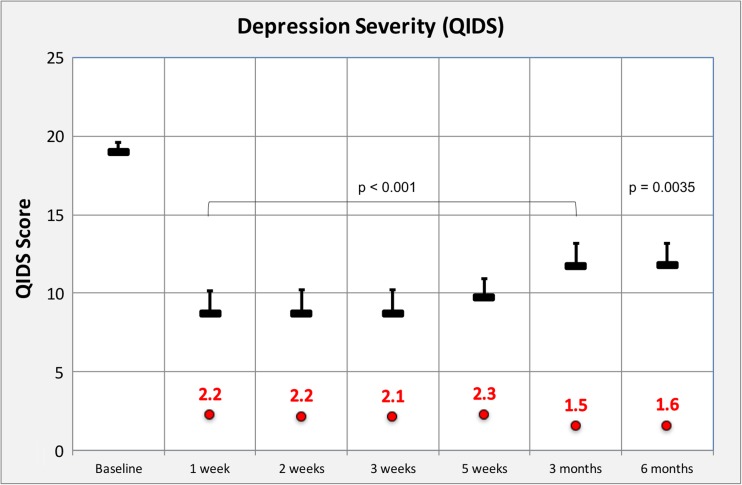
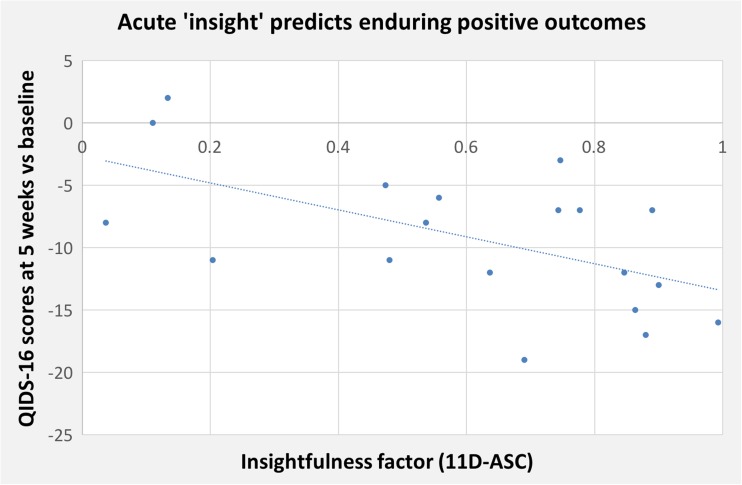
RATIONALE: Recent clinical trials are reporting marked improvements in mental health outcomes with psychedelic drug-assisted psychotherapy. OBJECTIVES: Here, we report on safety and efficacy outcomes for up to 6 months in an open-label trial of psilocybin for treatment-resistant depression. METHODS: Twenty patients (six females) with (mostly) severe, unipolar, treatment-resistant major depression received two oral doses of psilocybin (10 and 25 mg, 7 days apart) in a supportive setting. Depressive symptoms were assessed from 1 week to 6 months post-treatment, with the self-rated QIDS-SR16 as the primary outcome measure. RESULTS: Treatment was generally well tolerated. Relative to baseline, marked reductions in depressive symptoms were observed for the first 5 weeks post-treatment (Cohen's d = 2.2 at week 1 and 2.3 at week 5, both p < 0.001); nine and four patients met the criteria for response and remission at week 5. Results remained positive at 3 and 6 months (Cohen's d = 1.5 and 1.4, respectively, both p < 0.001). No patients sought conventional antidepressant treatment within 5 weeks of psilocybin. Reductions in depressive symptoms at 5 weeks were predicted by the quality of the acute psychedelic experience. CONCLUSIONS: Although limited conclusions can be drawn about treatment efficacy from open-label trials, tolerability was good, effect sizes large and symptom improvements appeared rapidly after just two psilocybin treatment sessions and remained significant 6 months post-treatment in a treatment-resistant cohort. Psilocybin represents a promising paradigm for unresponsive depression that warrants further research in double-blind randomised control trials.
Overview
The claims and statistics of this paper haven’t been checked yet.
Free: it reads the open-access text and checks the first 5 claims that cite a source we can check. Create a free account to check every claim.
Integrity signals
Registry
Cites
Statistics
Figures
Verification
Claims the paper makes
The claims and statistics of this paper haven’t been checked yet.
Free: it reads the open-access text and checks the first 5 claims that cite a source we can check. Create a free account to check every claim.
Claims other papers make about this one
Each is checked against this paper’s own text: does it say what the citing paper says it does?
The source backs part of the claim, not all of it — or backs it for a different population, condition or comparison.
In the citing paper
“Not only do they produce sustained therapeutic effects following a single administration, they also appear to have broad therapeutic potential”
From Psychedelics and Other Psychoplastogens for Treating Mental Illness. (2021) · cites this paper as [41]
Experimental — accuracy not yet measuredThe source backs part of the claim, not all of it — or backs it for a different population, condition or comparison.
In the citing paper
“Unlike traditional antidepressants, psychoplastogens produce both fast-acting and sustained beneficial behavioral effects after a single administration (Figure 1) (38–42).”
From Psychedelics and Other Psychoplastogens for Treating Mental Illness. (2021) · cites this paper as [41]
Experimental — accuracy not yet measuredThe source backs part of the claim, not all of it — or backs it for a different population, condition or comparison.
In the citing paper
“the mood-elevating properties of psilocybin seem to last significantly longer”
From Psychedelics and Other Psychoplastogens for Treating Mental Illness. (2021) · cites this paper as [41]
Experimental — accuracy not yet measuredThe source backs part of the claim, not all of it — or backs it for a different population, condition or comparison.
In the citing paper
“Remarkably, these benefits were incurred even after only a single psychedelic administration and were maintained for as long as 6 months.”
From Examining the Potential Synergistic Effects Between Mindfulness Training and Psychedelic-Assisted Therapy (2021) · cites this paper as [30]
Experimental — accuracy not yet measuredThe source backs part of the claim, not all of it — or backs it for a different population, condition or comparison.
In the citing paper
“Most of these studies however suffer from low methodological validity and are mostly open-label, yet they have yielded preliminary evidence for the capacity of psychedelic substances for treating addiction, depression, anxiety, and eating disorders (29–35).”
From Examining the Potential Synergistic Effects Between Mindfulness Training and Psychedelic-Assisted Therapy (2021) · cites this paper as [30]
Experimental — accuracy not yet measured
13 more claims about this paper
Create a free account to see every claim other papers make about this one.
Self-check
Percentages, sums and reported differences re-computed from the paper’s own numbers.
The self-check needs the paper’s full text.
Citations
Cites
Griffiths, R. R., Johnson, M. W., Carducci, M. A., Umbricht, A., Richards, W. A., Richards, B. D., Cosimano, M. P., & Klinedinst, M. A. (2016) · Journal of Psychopharmacology · doi:10.1177/0269881116675513 · Cited by 2,201 · cited 5×
“Recent studies (Griffiths et al. 2016; Ross et al. 2016; Carhart-Harris et al. 2016), including the present one, help demonstrate the feasibility of treating patients with major depressive disorder with psilocybin plus psychological support.”
BackgroundResultInfluentialRoss, S., Bossis, A., Guss, J., Agin-Liebes, G., Malone, T., Cohen, B., Mennenga, S. E., Belser, A., Kalliontzi, K., Babb, J., et al. (2016) · Journal of Psychopharmacology · doi:10.1177/0269881116675512 · Cited by 1,698 · cited 8×
“Recent studies (Griffiths et al. 2016; Ross et al. 2016; Carhart-Harris et al. 2016), including the present one, help demonstrate the feasibility of treating patients with major depressive disorder with psilocybin plus psychological support.”
BackgroundResultInfluentialCarhart-Harris, R. L., Bolstridge, M., Rucker, J., Day, C. M. J., Erritzoe, D., Kaelen, M., Bloomfield, M., Rickard, J. A., Forbes, B., Feilding, A., et al. (2016) · The Lancet Psychiatry · doi:10.1016/s2215-0366(16)30065-7 · Cited by 1,540 · cited 5×
“Recent studies (Griffiths et al. 2016; Ross et al. 2016; Carhart-Harris et al. 2016), including the present one, help demonstrate the feasibility of treating patients with major depressive disorder with psilocybin plus psychological support.”
BackgroundMethodResultInfluentialSelf-citationPilot Study of Psilocybin Treatment for Anxiety in Patients With Advanced-Stage Cancer
Grob, C. S., Danforth, A. L., Chopra, G. S., Hagerty, M., McKay, C. R., Halberstadt, A. L., & Greer, G. R. (2011) · Archives of General Psychiatry · doi:10.1001/archgenpsychiatry.2010.116 · Cited by 1,206 · cited 6×
“…separate trials have reported improvements in depressive symptoms after psilocybin-assisted psychotherapy (Griffiths et al. 2016; Ross et al. 2016; Grob et al. 2011; CarhartHarris et al. 2016), including one in which ‘treatment-resistant depression’ was the primary criterion for inclusion…”
BackgroundResultInfluentialHuman hallucinogen research: guidelines for safety
Johnson, M., Richards, W., & Griffiths, R. (2008) · Journal of Psychopharmacology · doi:10.1177/0269881108093587 · Cited by 1,203 · cited 2×
“Basic principles for safe therapeutic work with psychedelics can be found in guidelines (Johnson et al. 2008) and books (Richards 2015) but more systematic verification, refinement and (eventual) manualisation of treatment approaches are needed for subsequent roll-out (Carhart-Harris and Goodwin…”
BackgroundPsilocybin-assisted treatment for alcohol dependence: A proof-of-concept study
Bogenschutz, M. P., Forcehimes, A. A., Pommy, J. A., Wilcox, C. E., Barbosa, P., & Strassman, R. J. (2015) · Journal of Psychopharmacology · doi:10.1177/0269881114565144 · Cited by 1,151 · cited 1×
“Psilocybin has shown promise in the treatment of obsessive compulsive disorder (Moreno et al. 2006), alcohol (Bogenschutz et al. 2015) and tobacco addiction (Johnson et al. 2014) and anxiety related to terminal diagnoses (Griffiths et al. 2016; Ross et al. 2016; Grob et al. 2011).”
BackgroundPsilocybin induces schizophrenia-like psychosis in humans via a serotonin-2 agonist action
Vollenweider, F. X., Vollenweider-Scherpenhuyzen, M. F. I., Bäbler, A., Vogel, H., & Hell, D. (1998) · NeuroReport · doi:10.1097/00001756-199812010-00024 · Cited by 1,018 · cited 1×
“Like all serotonergic psychedelics, psilocybin initiates its characteristic effects via serotonin 2A receptor (5-HT2AR) agonism (Vollenweider et al. 1998).”
BackgroundPilot study of the 5-HT 2A R agonist psilocybin in the treatment of tobacco addiction
Johnson, M. W., Garcia-Romeu, A., Cosimano, M. P., & Griffiths, R. R. (2014) · Journal of Psychopharmacology · doi:10.1177/0269881114548296 · Cited by 914 · cited 1×
“Psilocybin has shown promise in the treatment of obsessive compulsive disorder (Moreno et al. 2006), alcohol (Bogenschutz et al. 2015) and tobacco addiction (Johnson et al. 2014) and anxiety related to terminal diagnoses (Griffiths et al. 2016; Ross et al. 2016; Grob et al. 2011).”
BackgroundGriffiths, R., Richards, W., Johnson, M., McCann, U., & Jesse, R. (2008) · Journal of Psychopharmacology · doi:10.1177/0269881108094300 · Cited by 905 · cited 2×
“involving appropriate psychological support), sustained improvements in well-being in healthy individuals were observed after a single dose of psilocybin in a doubleblind design incorporating an active placebo (Griffiths et al. 2008).”
BackgroundMethodSafety, tolerability, and efficacy of psilocybin in 9 patients with obsessive-compulsive disorder
Moreno, F. A., Wiegand, C. B., Taitano, E. K., & Delgado, P. L. (2006) · The Journal of Clinical Psychiatry · doi:10.4088/jcp.v67n1110 · Cited by 789 · cited 2×
“Psilocybin has shown promise in the treatment of obsessive compulsive disorder (Moreno et al. 2006),”
Background
Cited by
Items 401–500 of 969
Pouyan, N., Khankahdani, Z. H., Sisi, F. Y., Lee, Y. L., Rosenblat, J. D., Teopiz, K. M., Lui, L. M. W., Subramaniapillai, M., Lin, K., Nasri, F., et al. (2022) · CNS Drugs · doi:10.1007/s40263-022-00944-y · Cited by 18
Berkovitch, L., Fauvel, B., Preller, K. H., & Gaillard, R. (2025) · Neuroscience & Biobehavioral Reviews · doi:10.1016/j.neubiorev.2025.106239 · Cited by 17
Weiss, B., Sleep, C. E., Beller, N. M., Erritzøe, D., & Campbell, W. K. (2023) · Journal of Psychedelic Studies · doi:10.1556/2054.2023.00291 · Cited by 19
Marchi, M., Farina, R., Rachedi, K., Laonigro, F., Žuljević, M. F., Pingani, L., Ferrari, S., Somers, M., Boks, M. P., & Galeazzi, G. M. (2024) · Journal of Psychopharmacology · doi:10.1177/02698811241303594 · Cited by 23
Kinderlehrer, D. A. (2025) · Neuropsychiatric Disease and Treatment · doi:10.2147/ndt.s500337 · Cited by 18
A dangerous method? Psychedelic therapy at Modum Bad, Norway, 1961–76
Johnstad, P. G. (2020) · History of Psychiatry · doi:10.1177/0957154x19894537 · Cited by 16
“…from psychedelics on a range of conditions, including depres sion (CarhartHarris et al., 2016, 2018; Griffiths et al., 2016; Roseman, Nutt and CarhartHarris, 2018; Ross et al., 2016), anxiety (Gasser et al., 2013; Griffiths et al., 2016; Grob et al., 2011; Ross et al., 2016) and substance…”
BackgroundEffectiveness of Psilocybin on Depression: A Qualitative Study
Alshaikhli, H., Al-Naggar, R. A., & Erlam, G. D. (2021) · Electronic Journal of General Medicine · doi:10.29333/ejgm/10862 · Cited by 23
“Most research seems to consider 30 mg as excessive while 10 mg is sub-therapeutic [19, 50].”
BackgroundPsilocybin for Depression. Reply.
Carhart-Harris, R. L., Blemings, A., & Nutt, D. J. (2021) · PubMed · doi:10.1056/nejmc2108082 · Cited by 9
Self-citationAgrawal, R. G., Gillie, D. J., Mungenast, A. E., Chytil, M., Engel, S. R., Wu, M. C., Rasmussen, K., Salinas, E. O., & Olson, D. E. (2025) · ACS Chemical Neuroscience · doi:10.1021/acschemneuro.5c00667 · Cited by 18
van den Berg, M., Magaraggia, I., Schreiber, R., Hillhouse, T. M., & Porter, J. H. (2022) · Psychopharmacology · doi:10.1007/s00213-022-06106-8 · Cited by 13
Postpartum depression: A role for psychedelics?
Jairaj, C., & Rucker, J. (2022) · Journal of Psychopharmacology · doi:10.1177/02698811221093793 · Cited by 17
“It has been hypothesised that psilocybin increases DMN connectivity in the post-acute phase, followed by a ‘resetting’ and reduction in DMN connectivity, which is proposed to be associated with the therapeutic effects of psychedelics (Carhart-Harris et al., 2017).”
BackgroundSelf-citationPromising new pharmacological targets for depression: The search for efficacy
Tsugiyama, L. E., de Moraes, R. C. M., Moraes, Y. A. C., & de Oliveira, J. F. (2023) · Drug Discovery Today · doi:10.1016/j.drudis.2023.103804 · Cited by 17
Diminished psychedelic returns on distress: Marital status and household size
Viña, S. M. (2024) · PLoS ONE · doi:10.1371/journal.pone.0293675 · Cited by 18
Downey, A. E., Chaphekar, A. V., Woolley, J. D., & Raymond‐Flesch, M. (2024) · Journal of Eating Disorders · doi:10.1186/s40337-024-01005-z · Cited by 17
Autism, youth suicide, and psychedelics: A review of the 21st century evidence
Chen, M., Su, T., Hsu, J.-W., & Tsai, S. (2024) · Journal of the Chinese Medical Association · doi:10.1097/jcma.0000000000001150 · Cited by 16
“38 In addition, Carhart-Harris et al 36 also failed to find significant post-psilocybin reductions in suicidal ideation in a 6-month follow-up after Bonferroni correction.”
Peck, S. K., Brewerton, T. D., Fisher, H., Trim, J., Shao, S., Modlin, N. L., Kim, J., Finn, D. M., & Kaye, W. H. (2025) · Journal of Eating Disorders · doi:10.1186/s40337-025-01274-2 · Cited by 17
Psilocybin for depression: Considerations for clinical trial design
O’Donnell, K. C., Mennenga, S. E., & Bogenschutz, M. P. (2019) · Journal of Psychedelic Studies · doi:10.1556/2054.2019.026 · Cited by 18
Gonda, X., Döme, P., Erdelyi-Hamza, B., Krause, S., Elek, L. P., Sharma, S., & Tarazi, F. I. (2022) · European Neuropsychopharmacology · doi:10.1016/j.euroneuro.2022.05.010 · Cited by 15
Stewart, B., Dean, J. G., Koek, A. Y., Chua, J. P., Wabl, R., Martin, K., Davoodian, N., Becker, C. J., Himedan, M., Kim, A., et al. (2020) · Pharmacology Research & Perspectives · doi:10.1002/prp2.688 · Cited by 16
McCulloch, D., Knudsen, G., Barrett, F., Doss, M. K., Carhart-Harris, R. L., Rosas, F., Deco, G., Kringelbach, M., Preller, K., Ramaekers, J., et al. (2021) · Neuroscience and Biobehavioral Reviews · doi:10.31234/osf.io/64kyg · Cited by 106
“…evoked by psychedelics stem from a parallel enriching effect on the dynamics of spontaneous populationlevel neuronal activity, which can be observed empirically by measuring the entropy of neuroimaging signals (Carhart-Harris, 2018; Carhart-Harris et al., 2014; Carhart-Harris and Friston, 2019).”
BackgroundSelf-citationSchmitz, G. P., Chiu, Y.-T., König, G. M., Kostenis, E., Roth, B. L., & Herman, M. A. (2022) · bioRxiv (Cold Spring Harbor Laboratory) · doi:10.1101/2022.11.15.516655 · Cited by 23
Psychedelic Psychiatry and the Consult-Liaison Psychiatrist: A Primer
Barnett, B. S., & Greer, G. R. (2021) · Journal of the Academy of Consultation-Liaison Psychiatry · doi:10.1016/j.jaclp.2020.12.011 · Cited by 13
The effect of low-dose psilocybin on brain neurotransmission and rat behavior
Bysiek, A., Wojtas, A., Szpręgiel, I., Wawrzczak‐Bargieła, A., Maćkowiak, M., & Gołembiowska, K. (2025) · Progress in Neuro-Psychopharmacology and Biological Psychiatry · doi:10.1016/j.pnpbp.2025.111347 · Cited by 15
Brouns, E. J., Ekins, T. G., & Ahmed, O. J. (2025) · Psychedelics. · doi:10.61373/pp025r.0002 · Cited by 16
Entheogenic Spirituality: Characteristics of Spiritually Motivated Psychedelics Use
Johnstad, P. G. (2022) · International Journal for the Psychology of Religion · doi:10.1080/10508619.2022.2148060 · Cited by 15
G protein-coupled receptors as targets for transformative neuropsychiatric therapeutics
Schmitz, G. P., & Roth, B. L. (2023) · American Journal of Physiology-Cell Physiology · doi:10.1152/ajpcell.00397.2022 · Cited by 13
Therapeutic role of psilocybin and 3,4-methylenedioxymethamphetamine in trauma: A literature review
Fonseka, L. N., & Woo, B. K. P. (2023) · World Journal of Psychiatry · doi:10.5498/wjp.v13.i5.182 · Cited by 15
Atiq, M. A., Baker, M. R., Voort, J. L. V., Vargas, M. V., & Choi, D. (2024) · Psychopharmacology · doi:10.1007/s00213-024-06599-5 · Cited by 18
Chemistry/structural biology of psychedelic drugs and their receptor(s)
Gumpper, R. H., & Nichols, D. E. (2024) · British Journal of Pharmacology · doi:10.1111/bph.17361 · Cited by 14
Psychedelics and the treatment of eating disorders: considerations for future research and practice
Lacroix, E., Fatur, K., Hay, P., Touyz, S. W., & Keshen, A. R. (2024) · Journal of Eating Disorders · doi:10.1186/s40337-024-01125-6 · Cited by 16
“The most common adverse effects, however, are transient psychologically challenging experiences (“bad trips”), occurring in 26–63% of administrations in modern trials; such experiences may include periods of intense anxiety or paranoia and can be unpleasant for the client [38, 39].”
BackgroundForstmann, M., & Sagioglou, C. (2025) · Current Opinion in Psychology · doi:10.1016/j.copsyc.2025.101992 · Cited by 20
De Novo Biosynthesis of Antidepressant Psilocybin in Escherichia coli
Huang, Z., Yao, Y., Di, R., Zhang, J., Pan, Y., & Liu, G. (2025) · Microbial Biotechnology · doi:10.1111/1751-7915.70135 · Cited by 17
Psychedelics, entactogens and psychoplastogens for depression and related disorders
Hoyer, D. (2025) · British Journal of Pharmacology · doi:10.1111/bph.70088 · Cited by 18
“…effects of LSD, psilocybin and other psychedelics/antidepressants in healthy subjects and MDD patients before and after treatment (see, e.g., Carhart-Harris et al., 2012, 2014, 2017, 2018; Copa et al., 2024; Goodwin, Aaronson, et al., 2022; Preller et al., 2018; Roseman et al., 2018;…”
A potential role for psilocybin in the treatment of obsessive-compulsive disorder
Jacobs, E. (2020) · Journal of Psychedelic Studies · doi:10.1556/2054.2020.00128 · Cited by 19
Psychedelic-assisted psychotherapy for depression: How dire is the need? How could we do it?
Earleywine, M., & Leo, J. A. D. (2020) · Journal of Psychedelic Studies · doi:10.1556/2054.2020.00134 · Cited by 14
“At five-week follow-up, only 4 of 20 participants in a two-session psilocybin trial met criteria for remission (Carhart-Harris et al., 2018), a rate comparable to that of placebos (Kirsch, 2019).”
ResultEarleywine, M., Mian, M. N., Altman, B. R., & Leo, J. A. D. (2022) · Cannabis · doi:10.26828/cannabis/2022.02.02 · Cited by 12
Meccia, J., Lopez, J., & Bagot, R. C. (2022) · Psychopharmacology · doi:10.1007/s00213-022-06297-0 · Cited by 14
Psychedelic Psychodynamics: Relational Knowing and the Unthought Known
Barrett, K. (2022) · Psychoanalytic Dialogues · doi:10.1080/10481885.2022.2106141 · Cited by 18
Gukasyan, N. (2023) · Med · doi:10.1016/j.medj.2022.12.003 · Cited by 13
The Potential Role of Serotonergic Hallucinogens in Depression Treatment
Psiuk, D., Nowak, E., Cholewa, K., Łopuszańska, U., & Samardakiewicz, M. (2021) · Life · doi:10.3390/life11080765 · Cited by 16
Pattern Breaking: A Complex Systems Approach to Psychedelic MedicinePreprint
Hipólito, I., Mago, J., Rosas, F. E., & Carhart-Harris, R. L. (2022) · doi:10.31234/osf.io/ydu3h · Cited by 13
Self-citationPsychedelic Microdosing, Mindfulness, and Anxiety: A Cross-Sectional Mediation Study
Hartong, V., & van Emmerik, A. (2023) · Journal of Psychoactive Drugs · doi:10.1080/02791072.2022.2080616 · Cited by 11
Gómez-Busto, F. J., & Ortiz, M. I. (2020) · PubMed Central · doi:10.36131/cnfioritieditore20200606 · Cited by 12
Psychedelic medicines for mood disorders: current evidence and clinical considerations.
Sarris, J. J., Rubiano, D. P., Day, K., Coelho, N. L. G., & Perkins, D. (2022) · PubMed · doi:10.1097/yco.0000000000000759 · Cited by 12
Schuman, H. D. M., Savard, C., Mina, R., Barkova, S., Conradi, H. S. W., Deleemans, J. M., & Carlson, L. E. (2025) · Current Oncology · doi:10.3390/curroncol32070380 · Cited by 14
Schedule 1 barriers to research in the UK: An in-depth qualitative analysis
Howard, A., Neill, J. C., Schlag, A. K., & Lennox, C. (2021) · Drug Science Policy and Law · doi:10.1177/20503245211049313 · Cited by 15
Christianity and Psychedelic Medicine: A Pastoral Approach
McCarthy, B. C. (2022) · Christian bioethics Non-Ecumenical Studies in Medical Morality · doi:10.1093/cb/cbac008 · Cited by 15
Experiences of microdosing psychedelics in an attempt to support wellbeing and mental health
Ryan, R. S., Copello, A. G., & Fox, A. P. (2023) · BMC Psychiatry · doi:10.1186/s12888-023-04628-9 · Cited by 17
“symptomology for six months at follow-up [5].”
Knowledge gaps in psychedelic medicalisation: Clinical studies and regulatory aspects
McCulloch, D. E.-W., Liechti, M. E., Kuypers, K. P. C., Nutt, D. J., Lundberg, J., Stenbæk, D. S., Goodwin, G. M., Gründer, G., Butlen‐Ducuing, F., Haberkamp, M., et al. (2024) · Neuroscience Applied · doi:10.1016/j.nsa.2024.103938 · Cited by 18
Self-citationKrupp, K. T., Yaeger, J. D. W., Ledesma, L. J., Withanage, M. H. H., Gale, J., Howe, C. B., Allen, T. J., Sathyanesan, M., Newton, S. S., & Summers, C. H. (2024) · Neuropharmacology · doi:10.1016/j.neuropharm.2024.109949 · Cited by 13
Sakai, K., Bradley, E., Zamaria, J. A., Agin-Liebes, G., Kelley, D. P., Fish, A., Martini, V., Ferris, M. C., Morton, E. E., Michalak, E. E., et al. (2024) · Psychopharmacology · doi:10.1007/s00213-024-06585-x · Cited by 17
Szafoni, S., Gręblowski, P., Grabowska, K., & Więckiewicz, G. (2024) · Frontiers in Psychiatry · doi:10.3389/fpsyt.2024.1406888 · Cited by 18
Efficacy, Safety, and Tolerability of Psychedelics in Treatment-Resistant Depression (TRD)
Olivier, B., & Olivier, J. D. A. (2024) · Advances in experimental medicine and biology · doi:10.1007/978-981-97-4402-2_3 · Cited by 14
Preclinical models for evaluating psychedelics in the treatment of major depressive disorder
Alexander, L., Anderson, D., Baxter, L., Claydon, M. D. B., Rucker, J., & Robinson, E. S. J. (2024) · British Journal of Pharmacology · doi:10.1111/bph.17370 · Cited by 16
Self-citationThe Emergence of Psilocybin in Psychiatry and Neuroscience
Omidian, H., & Omidian, A. (2025) · Pharmaceuticals · doi:10.3390/ph18040555 · Cited by 16
Zhou, K., de Wied, D., Carhart-Harris, R. L., & Kettner, H. (2025) · PNAS Nexus · doi:10.1093/pnasnexus/pgae560 · Cited by 24
“This is in line with existing literature, which has consistently found more pronounced neurobiological responses to psychedelics in individuals with psychiatric conditions (52, 92), and greater susceptibility to perceptual disturbances (7, 52, 92, 93).”
Self-citationPsychedelic neuroplasticity of cortical neurons lacking 5-HT2A receptors
Ekins, T. G., Rybicki-Kler, C., Deng, T., Brooks, I. A. W., Jedrasiak‐Cape, I., Donoho, E., & Ahmed, O. J. (2025) · Molecular Psychiatry · doi:10.1038/s41380-025-03257-w · Cited by 22
The serotonin 1B receptor is required for some of the behavioral effects of psilocybin in mice
Fleury, S., & Nautiyal, K. M. (2025) · Molecular Psychiatry · doi:10.1038/s41380-025-03387-1 · Cited by 16
“Clinical studies report that one to two doses of psilocybin can produce antidepressant effects in MDD and treatment resistant depression patients that persist for weeks to months [5, 7, 10 – 14].”
Torrens-Spence, M. P., Liu, C., & Weng, J. (2019) · ACS Synthetic Biology · doi:10.1021/acssynbio.9b00368 · Cited by 11
King, F., & Hammond, R. (2021) · FOCUS The Journal of Lifelong Learning in Psychiatry · doi:10.1176/appi.focus.20200047 · Cited by 14
La funcionalidad política de la “ciencia” prohibicionista: El caso del cannabis y los psicodélicos
Oró, D. P. M., Apud, I., Scuro, J., & Romaní, O. (2020) · Salud Colectiva · doi:10.18294/sc.2020.2493 · Cited by 20
McMillan, R. M. (2020) · Journal of Medical Ethics · doi:10.1136/medethics-2020-106619 · Cited by 13
Zeifman, R. J., Spriggs, M. J., Kettner, H., Lyons, T., Rosas, F. E., Mediano, P. A. M., Erritzøe, D., & Carhart-Harris, R. L. (2022) · doi:10.31234/osf.io/w8j6t · Cited by 12
Self-citationde la Fuente Revenga, M., Zhu, B., Guevara, C. A., Naler, L. B., Saunders, J. M., Zhou, Z., Toneatti, R., Sierra, S., Wolstenholme, J. T., Beardsley, P. M., et al. (2021) · doi:10.1101/2021.02.24.432725 · Cited by 11
Assessing potential of psilocybin for depressive disorders
Kozak, Z., Johnson, M. W., & Aaronson, S. T. (2023) · Expert Opinion on Investigational Drugs · doi:10.1080/13543784.2023.2273493 · Cited by 11
“A 6-month follow-up [51] found statistically significant reductions in depressive symptoms in the first 5 weeks post-treatment, which remained significant at 3 and 6 months.”
BackgroundJohansen, L., Liknaitzky, P., Nedeljkovic, M., Mastin-Purcell, L., & Murray, G. (2022) · Systematic Reviews · doi:10.1186/s13643-022-01930-7 · Cited by 11
“In addition to rapid symptom reduction, preliminary findings from two long-term follow-ups have suggested that reductions in depression symptomology immediately following psilocybin-assisted psychotherapy are sustained 6 months post-treatment [16, 19].”
BackgroundShalaby, R., Agyapong, B., Vuong, W., Hrabok, M., Gusnowski, A., Surood, S., Greenshaw, A. J., & Agyapong, V. I. O. (2022) · Frontiers in Public Health · doi:10.3389/fpubh.2022.1002288 · Cited by 13
Microdosing with classical psychedelics: Research trajectories and practical considerations
Wong, A., & Raz, A. (2022) · Transcultural Psychiatry · doi:10.1177/13634615221129115 · Cited by 13
Psychedelic-Induced Serotonin 2A Receptor Downregulation Does Not Predict Swim Stress Coping in Mice
Pędzich, B. D., Medrano, M., Buckinx, A., Smolders, I. J., & Bundel, D. D. (2022) · International Journal of Molecular Sciences · doi:10.3390/ijms232315284 · Cited by 12
Gao, B., Qu, Y., Cai, M., Zhang, Y.-Y., Lu, H., Li, H.-X., Tang, Y., & Shen, H. (2023) · Journal of Chinese Integrative Medicine · doi:10.1016/j.joim.2023.06.006 · Cited by 12
Psychedelics, OCD and related disorders: A systematic review
Graziosi, M., Rohde, J. S., Tiwari, P., Siev, J., & Yaden, D. B. (2024) · Journal of Obsessive-Compulsive and Related Disorders · doi:10.1016/j.jocrd.2024.100873 · Cited by 23
Thaoboonruang, N., Lohitnavy, M., & Lohitnavy, O. (2024) · Journal of Psychoactive Drugs · doi:10.1080/02791072.2024.2399128 · Cited by 12
Evaluating the potential for psilocybin as a treatment for post-traumatic stress disorder
Miller, C., & Zoladz, P. R. (2024) · Journal of Pharmacology and Experimental Therapeutics · doi:10.1124/jpet.124.002237 · Cited by 13
A continuum hypothesis of psychotomimetic rapid antidepressants
Haarsma, J., Harmer, C. J., & Tamm, S. (2021) · Brain and Neuroscience Advances · doi:10.1177/23982128211007772 · Cited by 13
The possible place for psychedelics in pharmacotherapy of mental disorders
Wojtas, A. (2023) · Pharmacological Reports · doi:10.1007/s43440-023-00550-9 · Cited by 14
“What is more, this effect was persistent as measured in a 6-month follow-up [145].”
BackgroundEmerging Psychedelic-Assisted Therapies: Implications for Nursing Practice
Denis-Lalonde, D., & Estefan, A. (2020) · Journal of Mental Health and Addiction Nursing · doi:10.22374/jmhan.v4i1.40 · Cited by 15
“Notably, reductions in depressive symptoms were predicted by the quality of the acute psychedelic experience; the best clinical outcomes (measured at 5 weeks) were related to strong “mystical-type” experiences during the psilocybinassisted sessions.(34) In a qualitative thematic analysis of interviews at the six-month…”
BackgroundAyahuasca: Between Cognition and Culture
Peláez, I. E. A. (2020) · Publicacions URV eBooks · doi:10.17345/9788484248347 · Cited by 11
Argento, E., Christie, D., Mackay, L., Callon, C., & Walsh, Z. (2021) · Frontiers in Psychiatry · doi:10.3389/fpsyt.2021.716593 · Cited by 13
Therapeutic potential of psychedelics: History, advancements, and unexplored frontiers
Maia, J. M., de Oliveira, B. S. A., Branco, L. G. S., & Soriano, R. N. (2024) · Progress in Neuro-Psychopharmacology and Biological Psychiatry · doi:10.1016/j.pnpbp.2024.110951 · Cited by 12
Review of Psilocybin Use for Depression among Cancer Patients after Approval in Oregon
Bellman, V. (2024) · Cancers · doi:10.3390/cancers16091702 · Cited by 12
The phenomenology of psilocybin: transformative insights for research and clinical practice
Metastasio, A., Prevete, E., Venturini, S., Garofalo, A., Cecconello, B., Pisapia, N. D., & Corazza, O. (2025) · Frontiers in Psychology · doi:10.3389/fpsyg.2025.1455902 · Cited by 15
Classic psychedelics as therapeutics for psychiatric disorders
Nichols, C. D., & Hendricks, P. S. (2020) · Handbook of behavioral neuroscience · doi:10.1016/b978-0-444-64125-0.00049-9 · Cited by 18
Fissler, P., Vandersmissen, A., Filippi, M., Mavioğlu, R. N., Scholkmann, F., Karabatsiakis, A., & Krähenmann, R. (2023) · Journal of Psychopharmacology · doi:10.1177/02698811231164707 · Cited by 11
Card, K. G., Grewal, A., Closson, K., Martin, G., Baracaldo, L., Allison, S., Kruger, D. J., & Walsh, Z. (2023) · Journal of Psychoactive Drugs · doi:10.1080/02791072.2023.2268640 · Cited by 13
Rahbarnia, A., Li, Z., & Fletcher, P. J. (2023) · Psychopharmacology · doi:10.1007/s00213-023-06474-9 · Cited by 13
Jones, N., Wagner, L., Pellitteri-Hahn, M. C., Scarlett, C. O., & Wenthur, C. J. (2024) · Frontiers in Psychiatry · doi:10.3389/fpsyt.2023.1303365 · Cited by 12
Bottemanne, H., Claret, A., & Fossati, P. (2020) · L Encéphale · doi:10.1016/j.encep.2020.08.006 · Cited by 15
Experimental Therapeutics in Treatment-Resistant Major Depressive Disorder
Kaur, M., & Sanches, M. (2021) · Journal of Experimental Pharmacology · doi:10.2147/jep.s259302 · Cited by 13
Psilocybin as a Novel Pharmacotherapy for Treatment-Refractory Anorexia Nervosa
Rodan, S.-C., Aouad, P., McGregor, I. S., & Maguire, S. (2021) · OBM Neurobiology · doi:10.21926/obm.neurobiol.2102102 · Cited by 13
“Similarly, Carhart-Harris et al. (2018) reported reduced suicidal ideation at 6 months follow-up in TRD patients treated with psilocybin [105].”
BackgroundInfluentialCampbell, M., & Williams, M. T. (2021) · Frontiers in Psychiatry · doi:10.3389/fpsyt.2021.680626 · Cited by 10
Research into Psychedelic-Assisted Psychotherapy for Anorexia Nervosa Should be Funded
Otterman, L. S. (2022) · Journal of Bioethical Inquiry · doi:10.1007/s11673-022-10220-9 · Cited by 11
“found that patients with severe, unipolar, treatment-resistant depression showed significant reduction in depressive symptoms after two oral doses of psilocybin taken seven days apart (Carhart-Harris et al. 2018).”
BackgroundScala, M., Fabbri, C., Fusar-Poli, P., Di Lorenzo, G., Ferrara, M., Amerio, A., Fusar-Poli, L., Pichiecchio, A., Asteggiano, C., Menchetti, M., et al. (2024) · CNS Spectrums · doi:10.1017/s1092852924002268 · Cited by 13
Fang, Q., Chan, V. K. Y., Chan, S. S. M., Jiao, Y., Wang, J., & Li, X. (2024) · Psychiatry Research · doi:10.1016/j.psychres.2024.115960 · Cited by 9
Macoveanu, J., Petersen, J. Z., Fisher, P. M., Kessing, L. V., Knudsen, G. M., & Miskowiak, K. W. (2023) · Psychological Medicine · doi:10.1017/s0033291723000715 · Cited by 9
Pagán, A. F., Lex, C., Soares, J. C., & Meyer, T. D. (2023) · Psychedelic Medicine · doi:10.1089/psymed.2023.0022 · Cited by 11
Bryson, N., Alexander, R., Asnis-Alibozek, A. G., & Ehlers, M. (2024) · ACS Chemical Neuroscience · doi:10.1021/acschemneuro.4c00058 · Cited by 9
Gezon, L. L. (2024) · Journal of Psychedelic Studies · doi:10.1556/2054.2024.00381 · Cited by 14
Efthimiou, A. A., Cardinale, A. M., & Kepa, A. (2024) · Psychedelic Medicine · doi:10.1089/psymed.2023.0058 · Cited by 11
Effect of oral tryptamines on the gut microbiome of rats—a preliminary study
Xu, M., Kiss, A. J., Jones, J. A., McMurray, M. S., & Shi, H. (2024) · PeerJ · doi:10.7717/peerj.17517 · Cited by 10
Butler, M., Bird, C., Maggio, C., Durden, A., Modlin, N. L., Campbell‐Coker, K., Edwards, M. J., Pick, S., Millman, L. S. M., Lowery, E., et al. (2024) · Wellcome Open Research · doi:10.12688/wellcomeopenres.22543.1 · Cited by 9
Self-citation
Metadata
- Authors
- Carhart-Harris, R. L., Bolstridge, M., Day, C. M. J., Rucker, J., Watts, R., Erritzoe, D. E., Kaelen, M., Giribaldi, B., Bloomfield, M., Pilling, S., Rickard, J. A., Forbes, B., Feilding, A., Taylor, D., Curran, H. V., & Nutt, D. J.
- Affiliations
- Imperial College London (GB)
- South London and Maudsley NHS Foundation Trust (GB)
- King's College London (GB)
- University College London (GB)
- Barts Health NHS Trust (GB)
- Beckley Foundation (GB)
- Corresponding author
- Carhart-Harris, R. L.
- ORCID
- Venue
- Psychopharmacology
- Published
- 2017-11-08
- Volume
- 235
- Issue
- 2
- Pages
- 399-408
- ISSN
- 0033-3158 (ISSN-L)
- 1432-2072
- PMC
- PMC5813086
- OpenAlex
- W2767530231
- Semantic Scholar
- 54241eed73a6a87c456f4b880ffcb168b50851f0
- Cited by
- 970
- References
- 40
- Citations by year
- 2026: 87 · 2025: 153 · 2024: 171 · 2023: 143 · 2022: 152 · 2021: 110 · 2020: 93 · 2019: 29 · 2018: 27 · 2017: 4
- FWCI
- 51.90
- Type
- journal article
- Language
- en
- Open access
- hybrid
- doi.org
- Locations
- Psychopharmacology (publishedVersion, cc-by)
- Europe PMC (PubMed Central) (publishedVersion, cc-by)
- PubMed Central (publishedVersion, cc-by)
- PubMed (publishedVersion)
- UCL Discovery (University College London) (submittedVersion)
- eScholarship (California Digital Library) (submittedVersion, cc-by)
- Research Portal (King's College London) (submittedVersion, cc-by)
- Spiral (Imperial College London) (submittedVersion, other-oa)
- Funders
- Medical Research Council (MR/J00460X/1)
- Topics
- Social Sciences › Psychology › Clinical Psychology › Psychedelics and Drug Studies
- Health Sciences › Medicine › Pharmacology (medical) › Treatment of Major Depression
- Social Sciences › Psychology › Clinical Psychology › Psychotherapy Techniques and Applications
- Keywords
- psilocybin, treatment-resistant depression, psychedelic-assisted psychotherapy, major depressive disorder, depressive symptom reduction, tolerability, long-term follow-up, QIDS-SR16
- MeSH terms
- Psychosocial Support Systems, Adult, Antidepressive Agents, Combined Modality Therapy, Double-Blind Method, Feasibility Studies, Female, Follow-Up Studies, Hallucinogens, Humans, Male, Middle Aged, Psilocybin, Time Factors, Treatment Outcome, Depressive Disorder, Treatment-Resistant
About these checks
Registry, retraction, Cites and statistics results are computed, not judged, with one exception: a printed reference that no index lists is read once by a model before it counts as a citation error. Claims are extracted by a model and kept only when their quote appears verbatim in the text; each cited source is then checked, with a model’s help, for whether it says what the claim relies on. Those verdicts can be wrong — read the claim’s quote and the cited source before relying on one.
Statistics and arithmetic are recomputed, not judged.
Confidence bands are shown only for fields calibrated on our annotated test set. None is calibrated yet, so no band is shown.
What counts as a claim ›How we measure confidence ›How we check this ›
Are you an author, or do you see a problem with this page? Request a review
Data sources
Bibliographic data: Semantic Scholar, OpenAlex, Crossref.
Contains information from the Semantic Scholar Academic Graph Datasets, made available under the ODC Attribution License (ODC-BY 1.0).
Semantic Scholar’s data is described in: Kinney, R., et al. (2023). The Semantic Scholar Open Data Platform. arXiv:2301.10140.
