

Psilocybin with psychological support for treatment-resistant depression: six-month follow-up
Open accessThe DOI matches its Crossref record; 40 of the 40 references it cites were found in a registry or an index.
Abstract
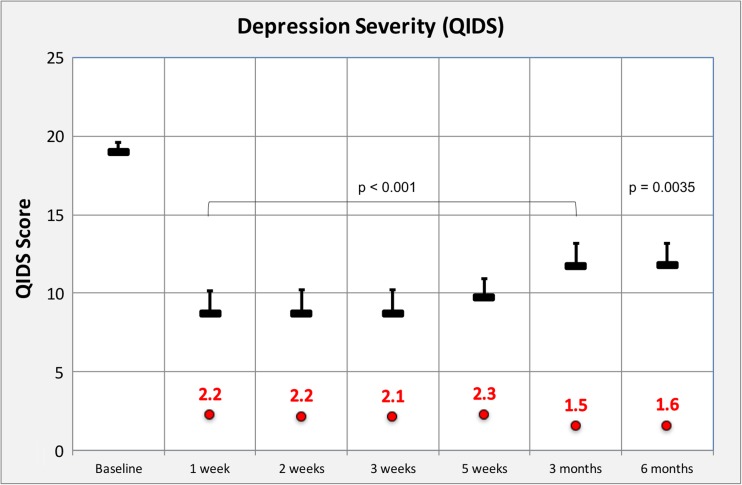
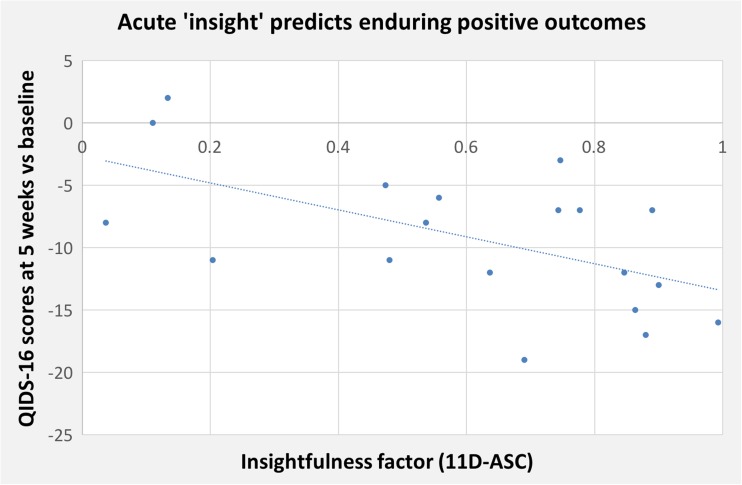
RATIONALE: Recent clinical trials are reporting marked improvements in mental health outcomes with psychedelic drug-assisted psychotherapy. OBJECTIVES: Here, we report on safety and efficacy outcomes for up to 6 months in an open-label trial of psilocybin for treatment-resistant depression. METHODS: Twenty patients (six females) with (mostly) severe, unipolar, treatment-resistant major depression received two oral doses of psilocybin (10 and 25 mg, 7 days apart) in a supportive setting. Depressive symptoms were assessed from 1 week to 6 months post-treatment, with the self-rated QIDS-SR16 as the primary outcome measure. RESULTS: Treatment was generally well tolerated. Relative to baseline, marked reductions in depressive symptoms were observed for the first 5 weeks post-treatment (Cohen's d = 2.2 at week 1 and 2.3 at week 5, both p < 0.001); nine and four patients met the criteria for response and remission at week 5. Results remained positive at 3 and 6 months (Cohen's d = 1.5 and 1.4, respectively, both p < 0.001). No patients sought conventional antidepressant treatment within 5 weeks of psilocybin. Reductions in depressive symptoms at 5 weeks were predicted by the quality of the acute psychedelic experience. CONCLUSIONS: Although limited conclusions can be drawn about treatment efficacy from open-label trials, tolerability was good, effect sizes large and symptom improvements appeared rapidly after just two psilocybin treatment sessions and remained significant 6 months post-treatment in a treatment-resistant cohort. Psilocybin represents a promising paradigm for unresponsive depression that warrants further research in double-blind randomised control trials.
Overview
The claims and statistics of this paper haven’t been checked yet.
Free: it reads the open-access text and checks the first 5 claims that cite a source we can check. Create a free account to check every claim.
Integrity signals
Registry
Cites
Statistics
Figures
Verification
Claims the paper makes
The claims and statistics of this paper haven’t been checked yet.
Free: it reads the open-access text and checks the first 5 claims that cite a source we can check. Create a free account to check every claim.
Claims other papers make about this one
Each is checked against this paper’s own text: does it say what the citing paper says it does?
The source backs part of the claim, not all of it — or backs it for a different population, condition or comparison.
In the citing paper
“Not only do they produce sustained therapeutic effects following a single administration, they also appear to have broad therapeutic potential”
From Psychedelics and Other Psychoplastogens for Treating Mental Illness. (2021) · cites this paper as [41]
Experimental — accuracy not yet measuredThe source backs part of the claim, not all of it — or backs it for a different population, condition or comparison.
In the citing paper
“Unlike traditional antidepressants, psychoplastogens produce both fast-acting and sustained beneficial behavioral effects after a single administration (Figure 1) (38–42).”
From Psychedelics and Other Psychoplastogens for Treating Mental Illness. (2021) · cites this paper as [41]
Experimental — accuracy not yet measuredThe source backs part of the claim, not all of it — or backs it for a different population, condition or comparison.
In the citing paper
“the mood-elevating properties of psilocybin seem to last significantly longer”
From Psychedelics and Other Psychoplastogens for Treating Mental Illness. (2021) · cites this paper as [41]
Experimental — accuracy not yet measuredThe source backs part of the claim, not all of it — or backs it for a different population, condition or comparison.
In the citing paper
“Remarkably, these benefits were incurred even after only a single psychedelic administration and were maintained for as long as 6 months.”
From Examining the Potential Synergistic Effects Between Mindfulness Training and Psychedelic-Assisted Therapy (2021) · cites this paper as [30]
Experimental — accuracy not yet measuredThe source backs part of the claim, not all of it — or backs it for a different population, condition or comparison.
In the citing paper
“Most of these studies however suffer from low methodological validity and are mostly open-label, yet they have yielded preliminary evidence for the capacity of psychedelic substances for treating addiction, depression, anxiety, and eating disorders (29–35).”
From Examining the Potential Synergistic Effects Between Mindfulness Training and Psychedelic-Assisted Therapy (2021) · cites this paper as [30]
Experimental — accuracy not yet measured
13 more claims about this paper
Create a free account to see every claim other papers make about this one.
Self-check
Percentages, sums and reported differences re-computed from the paper’s own numbers.
The self-check needs the paper’s full text.
Citations
Cites
Griffiths, R. R., Johnson, M. W., Carducci, M. A., Umbricht, A., Richards, W. A., Richards, B. D., Cosimano, M. P., & Klinedinst, M. A. (2016) · Journal of Psychopharmacology · doi:10.1177/0269881116675513 · Cited by 2,201 · cited 5×
“Recent studies (Griffiths et al. 2016; Ross et al. 2016; Carhart-Harris et al. 2016), including the present one, help demonstrate the feasibility of treating patients with major depressive disorder with psilocybin plus psychological support.”
BackgroundResultInfluentialRoss, S., Bossis, A., Guss, J., Agin-Liebes, G., Malone, T., Cohen, B., Mennenga, S. E., Belser, A., Kalliontzi, K., Babb, J., et al. (2016) · Journal of Psychopharmacology · doi:10.1177/0269881116675512 · Cited by 1,698 · cited 8×
“Recent studies (Griffiths et al. 2016; Ross et al. 2016; Carhart-Harris et al. 2016), including the present one, help demonstrate the feasibility of treating patients with major depressive disorder with psilocybin plus psychological support.”
BackgroundResultInfluentialCarhart-Harris, R. L., Bolstridge, M., Rucker, J., Day, C. M. J., Erritzoe, D., Kaelen, M., Bloomfield, M., Rickard, J. A., Forbes, B., Feilding, A., et al. (2016) · The Lancet Psychiatry · doi:10.1016/s2215-0366(16)30065-7 · Cited by 1,540 · cited 5×
“Recent studies (Griffiths et al. 2016; Ross et al. 2016; Carhart-Harris et al. 2016), including the present one, help demonstrate the feasibility of treating patients with major depressive disorder with psilocybin plus psychological support.”
BackgroundMethodResultInfluentialSelf-citationPilot Study of Psilocybin Treatment for Anxiety in Patients With Advanced-Stage Cancer
Grob, C. S., Danforth, A. L., Chopra, G. S., Hagerty, M., McKay, C. R., Halberstadt, A. L., & Greer, G. R. (2011) · Archives of General Psychiatry · doi:10.1001/archgenpsychiatry.2010.116 · Cited by 1,206 · cited 6×
“…separate trials have reported improvements in depressive symptoms after psilocybin-assisted psychotherapy (Griffiths et al. 2016; Ross et al. 2016; Grob et al. 2011; CarhartHarris et al. 2016), including one in which ‘treatment-resistant depression’ was the primary criterion for inclusion…”
BackgroundResultInfluentialHuman hallucinogen research: guidelines for safety
Johnson, M., Richards, W., & Griffiths, R. (2008) · Journal of Psychopharmacology · doi:10.1177/0269881108093587 · Cited by 1,203 · cited 2×
“Basic principles for safe therapeutic work with psychedelics can be found in guidelines (Johnson et al. 2008) and books (Richards 2015) but more systematic verification, refinement and (eventual) manualisation of treatment approaches are needed for subsequent roll-out (Carhart-Harris and Goodwin…”
BackgroundPsilocybin-assisted treatment for alcohol dependence: A proof-of-concept study
Bogenschutz, M. P., Forcehimes, A. A., Pommy, J. A., Wilcox, C. E., Barbosa, P., & Strassman, R. J. (2015) · Journal of Psychopharmacology · doi:10.1177/0269881114565144 · Cited by 1,151 · cited 1×
“Psilocybin has shown promise in the treatment of obsessive compulsive disorder (Moreno et al. 2006), alcohol (Bogenschutz et al. 2015) and tobacco addiction (Johnson et al. 2014) and anxiety related to terminal diagnoses (Griffiths et al. 2016; Ross et al. 2016; Grob et al. 2011).”
BackgroundPsilocybin induces schizophrenia-like psychosis in humans via a serotonin-2 agonist action
Vollenweider, F. X., Vollenweider-Scherpenhuyzen, M. F. I., Bäbler, A., Vogel, H., & Hell, D. (1998) · NeuroReport · doi:10.1097/00001756-199812010-00024 · Cited by 1,018 · cited 1×
“Like all serotonergic psychedelics, psilocybin initiates its characteristic effects via serotonin 2A receptor (5-HT2AR) agonism (Vollenweider et al. 1998).”
BackgroundPilot study of the 5-HT 2A R agonist psilocybin in the treatment of tobacco addiction
Johnson, M. W., Garcia-Romeu, A., Cosimano, M. P., & Griffiths, R. R. (2014) · Journal of Psychopharmacology · doi:10.1177/0269881114548296 · Cited by 914 · cited 1×
“Psilocybin has shown promise in the treatment of obsessive compulsive disorder (Moreno et al. 2006), alcohol (Bogenschutz et al. 2015) and tobacco addiction (Johnson et al. 2014) and anxiety related to terminal diagnoses (Griffiths et al. 2016; Ross et al. 2016; Grob et al. 2011).”
BackgroundGriffiths, R., Richards, W., Johnson, M., McCann, U., & Jesse, R. (2008) · Journal of Psychopharmacology · doi:10.1177/0269881108094300 · Cited by 905 · cited 2×
“involving appropriate psychological support), sustained improvements in well-being in healthy individuals were observed after a single dose of psilocybin in a doubleblind design incorporating an active placebo (Griffiths et al. 2008).”
BackgroundMethodSafety, tolerability, and efficacy of psilocybin in 9 patients with obsessive-compulsive disorder
Moreno, F. A., Wiegand, C. B., Taitano, E. K., & Delgado, P. L. (2006) · The Journal of Clinical Psychiatry · doi:10.4088/jcp.v67n1110 · Cited by 789 · cited 2×
“Psilocybin has shown promise in the treatment of obsessive compulsive disorder (Moreno et al. 2006),”
Background
Cited by
Items 101–200 of 969
Garcia-Romeu, A., Barrett, F. S., Carbonaro, T. M., Johnson, M. W., & Griffiths, R. R. (2021) · Journal of Psychopharmacology · doi:10.1177/0269881121991822 · Cited by 96
“Our findings are also consistent with results showing that fixed oral doses of 25 mg psilocybin were associated with decreased treatmentresistant depression symptoms, although participant body weight or BMI data for this trial were not reported (Carhart-Harris et al., 2016, 2018).”
BackgroundResultInfluentialDoes Psychedelic Therapy Have a Transdiagnostic Action and Prophylactic Potential?
Kočárová, R., Horáček, J., & Carhart-Harris, R. (2021) · Frontiers in Psychiatry · doi:10.3389/fpsyt.2021.661233 · Cited by 96
Self-citationDose–response relationships of psilocybin-induced subjective experiences in humans
Hirschfeld, T., & Schmidt, T. T. (2021) · Journal of Psychopharmacology · doi:10.1177/0269881121992676 · Cited by 93
“…reporting data on patients with cancer-related psychiatric distress (Ross et al., 2016), one study reporting data on patients with major depressive disorder (Davis et al., 2020) and two studies reporting data on patients with treatment-resistant major depression (Carhart-Harris et al., 2016, 2018).”
BackgroundMethodResultInfluentialEfficacy of psilocybin for treating symptoms of depression: systematic review and meta-analysis
Metaxa, A.-M., & Clarke, M. J. (2024) · BMJ · doi:10.1136/bmj-2023-078084 · Cited by 121
Gregorio, D. D., Enns, J. P., Núñez, N. A., Posa, L., & Gobbi, G. (2018) · Progress in brain research · doi:10.1016/bs.pbr.2018.07.008 · Cited by 105
Brennan, W., & Belser, A. B. (2022) · Frontiers in Psychology · doi:10.3389/fpsyg.2022.866018 · Cited by 90
Palitsky, R., Kaplan, D. M., Peacock, C., Zarrabi, A. J., Maples‐Keller, J. L., Grant, G. H., Dunlop, B. W., & Raison, C. L. (2023) · JAMA Psychiatry · doi:10.1001/jamapsychiatry.2023.1554 · Cited by 104
Bender, D., & Hellerstein, D. J. (2022) · Psychopharmacology · doi:10.1007/s00213-021-06049-6 · Cited by 88
Acute psilocybin enhances cognitive flexibility in rats
Torrado Pacheco, A., Olson, R. J., Garza, G., & Moghaddam, B. (2023) · Neuropsychopharmacology · doi:10.1038/s41386-023-01545-z · Cited by 87
The impact of Ayahuasca on suicidality: results from a randomized controlled trial
Zeifman, R. J., Palhano-Fontes, F., Hallak, J., Arcoverde, E., Maia-Oliveira, J. P., & Araujo, D. B. (2019) · Frontiers in Pharmacology · doi:10.3389/fphar.2019.01325 · Cited by 87
Heuschkel, K., & Kuypers, K. P. C. (2020) · Frontiers in Psychiatry · doi:10.3389/fpsyt.2020.00224 · Cited by 86
Examining changes in personality following shamanic ceremonial use of ayahuasca
Weiss, B., Miller, J. D., Carter, N. T., & Keith Campbell, W. (2021) · Scientific Reports · doi:10.1038/s41598-021-84746-0 · Cited by 86
A narrative synthesis of research with 5-MeO-DMT
Ermakova, A. O., Dunbar, F., Rucker, J., & Johnson, M. W. (2022) · Journal of Psychopharmacology · doi:10.1177/02698811211050543 · Cited by 86
“…and encouraging early phase clinical trials assessing psilocybin-assisted psychotherapy have been reported in unipolar mood disorders and anxiety (Carhart-Harris et al., 2016, 2018; Griffiths et al., 2016; Grob et al., 2011; Ross et al., 2016) and substance use disorders (Bogenschutz et al.,…”
BackgroundSelf-citationDark Classics in Chemical Neuroscience: Mescaline
Cassels, B. K., & Sáez-Briones, P. (2018) · ACS Chemical Neuroscience · doi:10.1021/acschemneuro.8b00215 · Cited by 85
The therapeutic potential of microdosing psychedelics in depression
Kuypers, K. P. C. (2020) · Therapeutic Advances in Psychopharmacology · doi:10.1177/2045125320950567 · Cited by 84
Acute subjective effects in LSD- and MDMA-assisted psychotherapy
Schmid, Y., Gasser, P., Oehen, P., & Liechti, M. E. (2021) · Journal of Psychopharmacology · doi:10.1177/0269881120959604 · Cited by 85
“Recent preliminary data suggest that hallucinogenic drugs may reduce depressive symptoms in patients with unipolar depression (Carhart-Harris et al., 2016a, 2017; Osorio et al., 2015), improve anxiety and depressive symptoms associated with life-threatening somatic diseases (Gasser et al., 2014,…”
BackgroundPsychedelics therapeutics: What we know, what we think, and what we need to research
Nutt, D., Spriggs, M., & Erritzoe, D. (2023) · Neuropharmacology · doi:10.1016/j.neuropharm.2022.109257 · Cited by 84
“Whilst most trial participants gain significant benefit from a single psilocybin treatment, there is a great deal of individual variation in the duration of effects (Carhart-Harris et al., 2018).”
Self-citationDavis, A. K., Averill, L. A., Sepeda, N. D., Barsuglia, J. P., & Amoroso, T. (2020) · Chronic Stress · doi:10.1177/2470547020939564 · Cited by 84
Psychedelic perceptions: mental health service user attitudes to psilocybin therapy
Corrigan, K., Haran, M., McCandliss, C., McManus, R., Cleary, S., Trant, R., Kelly, Y., Ledden, K., Rush, G., O’Keane, V., et al. (2022) · Irish Journal of Medical Science (1971 -) · doi:10.1007/s11845-021-02668-2 · Cited by 84
Zeifman, R. J., Singhal, N., SANTOS, R. G. D., Sanches, R. F., Osório, F. D. L., Hallak, J. E. C., & Weissman, C. R. (2020) · Psychopharmacology · doi:10.1007/s00213-020-05692-9 · Cited by 96
“In line with this model, clinical trials have found that psychedelics lead to long-term decreases in hopelessness (Ross et al. 2016) and pessimism (Lyons and Carhart-Harris 2018).”
ResultMcCulloch, D. E.-W., Madsen, M. K., Stenbæk, D. S., Kristiansen, S., Ozenne, B., Jensen, P. S., Knudsen, G. M., & Fisher, P. M. (2022) · Journal of Psychopharmacology · doi:10.1177/02698811211026454 · Cited by 83
Schneier, F. R., Feusner, J., Wheaton, M. G., Gomez, G. J., Cornejo, G., Naraindas, A. M., & Hellerstein, D. J. (2023) · Journal of Psychiatric Research · doi:10.1016/j.jpsychires.2023.03.031 · Cited by 81
Novel antidepressant drugs: Beyond monoamine targets
Gonda, X., Döme, P., Neill, J. C., & Tarazi, F. I. (2021) · CNS Spectrums · doi:10.1017/s1092852921000791 · Cited by 91
Psilocybin and MDMA for the treatment of trauma-related psychopathology
Bird, C. I. V., Modlin, N. L., & Rucker, J. J. H. (2021) · International Review of Psychiatry · doi:10.1080/09540261.2021.1919062 · Cited by 80
Self-citationRaison, C. L., Jain, R., Penn, A., Cole, S. P., & Jain, S. (2022) · Frontiers in Psychiatry · doi:10.3389/fpsyt.2022.831092 · Cited by 100
Magnesium–ibogaine therapy in veterans with traumatic brain injuries
Cherian, K. N., Keynan, J. N., Anker, L. A., Faerman, A., Brown, R. E., Shamma, A., Keynan, O., Coetzee, J. P., Batail, J.-M. V., Phillips, A., et al. (2024) · Nature Medicine · doi:10.1038/s41591-023-02705-w · Cited by 99
The Psychedelic Future of Post-Traumatic Stress Disorder Treatment
Zaretsky, T. G., Jagodnik, K. M., Barsic, R., Antonio, J. H., Bonanno, P. A., MacLeod, C., Pierce, C., Carney, H., Morrison, M. T., Saylor, C., et al. (2024) · Current Neuropharmacology · doi:10.2174/1570159x22666231027111147 · Cited by 85
Structural pharmacology and therapeutic potential of 5-methoxytryptamines
Warren, A. L., Lankri, D., Cunningham, M. J., Serrano, I. C., Parise, L. F., Kruegel, A. C., Duggan, P., Zilberg, G., Capper, M. J., Havel, V., et al. (2024) · Nature · doi:10.1038/s41586-024-07403-2 · Cited by 91
Combining Psychedelic and Mindfulness Interventions: Synergies to Inform Clinical Practice
Payne, J. E., Chambers, R., & Liknaitzky, P. (2021) · ACS Pharmacology & Translational Science · doi:10.1021/acsptsci.1c00034 · Cited by 78
Morton, E., Sakai, K., Ashtari, A., Pleet, M., Michalak, E. E., & Woolley, J. (2023) · Journal of Psychopharmacology · doi:10.1177/02698811221131997 · Cited by 78
Stenbæk, D. S., Madsen, M. K., Ozenne, B., Kristiansen, S., Burmester, D., Erritzoe, D., Knudsen, G. M., & Fisher, P. M. (2021) · Journal of Psychopharmacology · doi:10.1177/0269881120959609 · Cited by 78
Lea, T., Amada, N. M., Jungaberle, H., Schecke, H., Scherbaum, N., & Klein, M. (2020) · Psychopharmacology · doi:10.1007/s00213-020-05477-0 · Cited by 93
“Clinical trials have investigated psilocybin and ayahuasca for treatment-resistant depression (Carhart-Harris et al. 2018; Palhano-Fontes et al. 2019), psilocybin for alcohol dependence (Bogenschutz et al.”
BackgroundResultInfluentialAdvances toward precision medicine for bipolar disorder: mechanisms & molecules
Haggarty, S. J., Karmacharya, R., & Perlis, R. H. (2021) · Molecular Psychiatry · doi:10.1038/s41380-020-0831-4 · Cited by 78
“Early, albeit still small, studies suggest have shown the safety and rapid efficacy of psilocybin in patients with unipolar treatment-resistant depression [176, 177].”
ResultDuan, W., Cao, D., Wang, S., & Cheng, J. (2023) · Chemical Reviews · doi:10.1021/acs.chemrev.3c00375 · Cited by 85
More Realistic Forecasting of Future Life Events After Psilocybin for Treatment-Resistant Depression
Lyons, T., & Carhart-Harris, R. L. (2018) · Frontiers in Psychology · doi:10.3389/fpsyg.2018.01721 · Cited by 77
Self-citationA review on research and evaluation methods for investigating self-transcendence
Kitson, A., Chirico, A., Gaggioli, A., & Riecke, B. E. (2020) · Frontiers in Psychology · doi:10.3389/fpsyg.2020.547687 · Cited by 76
“…(van Elk et al., 2019), and drug-induced altered states of consciousness with DMT (Daumann et al., 2010), psilocybin (Lebedev et al., 2015; Carhart-Harris et al., 2018), LSD (Carhart-Harris et al., 2016; Tagliazucchi et al., 2016), and ayahuasca (de Araujo et al., 2012; Palhano-Fontes et…”
BackgroundRomeo, B., Hermand, M., Pétillion, A., Karila, L., & Benyamina, A. (2021) · Journal of Psychiatric Research · doi:10.1016/j.jpsychires.2021.03.002 · Cited by 76
The influence of ketamine on drug discovery in depression
Kraus, C., Wasserman, D., Henter, I. D., Acevedo-Diaz, E., Kadriu, B., & Zarate, C. A. (2019) · Drug Discovery Today · doi:10.1016/j.drudis.2019.07.007 · Cited by 75
“They found that two doses (10 mg and 25 mg, 1 week apart) of psilocybin reduced depressive symptoms within 1 week for these patients, with improvements lasting through the 3- and 6-month assessment points [100].”
BackgroundStudy Protocol for “Psilocybin as a Treatment for Anorexia Nervosa: A Pilot Study”
Spriggs, M. J., Douglass, H. M., Park, R. J., Read, T., Danby, J. L., de Magalhães, F. J. C., Alderton, K. L., Williams, T. M., Blemings, A., Lafrance, A., et al. (2021) · Frontiers in Psychiatry · doi:10.3389/fpsyt.2021.735523 · Cited by 75
Self-citationWitkin, J. M., Martin, A. E., Golani, L. K., Xu, N. Z., & Smith, J. L. (2019) · Advances in Pharmacology · doi:10.1016/bs.apha.2019.03.002 · Cited by 72
The therapeutic potential of psilocybin: a systematic review
van Amsterdam, J., & van den Brink, W. (2022) · Expert Opinion on Drug Safety · doi:10.1080/14740338.2022.2047929 · Cited by 74
Associations between lifetime classic psychedelic use and markers of physical health
Simonsson, O., Sexton, J. D., & Hendricks, P. S. (2021) · Journal of Psychopharmacology · doi:10.1177/0269881121996863 · Cited by 79
“…2020; Nutt et al., 2010; Rucker et al., 2018); and can be effective in the treatment of depression, anxiety and addiction (Aday et al., 2020; Carhart-Harris et al., 2016, 2018; Davis et al., 2020; Goldberg et al., 2020; Johnson et al., 2014; Krebs and Johansen, 2012; Luoma et al., 2020).”
BackgroundPsilocybin in neuropsychiatry: a review of its pharmacology, safety, and efficacy
Dodd, S., Norman, T. R., Eyre, H. A., Stahl, S. M., Phillips, A., Carvalho, A. F., & Berk, M. (2023) · CNS Spectrums · doi:10.1017/s1092852922000888 · Cited by 73
“Participants were followed for 6months and reported reductions in depressive symptoms measured using the QIDS-SR-16 at all posttreatment time points with the greatest improvement at 5weeks posttreatment.(83) Psychological interventions assisted by psychedelic drugs has used psycholytic and psychedelic paradigms.”
Biosynthesis and synthetic biology of psychoactive natural products
Jamieson, C. S., Misa, J., Tang, Y., & Billingsley, J. M. (2021) · Chemical Society Reviews · doi:10.1039/d1cs00065a · Cited by 81
Antidepressant effects of a psychedelic experience in a large prospective naturalistic sample
Nygart, V. A., Pommerencke, L. M., Haijen, E., Kettner, H., Kaelen, M., Mortensen, E. L., Nutt, D. J., Carhart-Harris, R. L., & Erritzoe, D. (2022) · Journal of Psychopharmacology · doi:10.1177/02698811221101061 · Cited by 73
“Notably, improvements in symptom severity have been observed several months after just one or two isolated doses of the drug (Carhart-Harris et al., 2017, 2021a; Davis et al., 2021a; Gasser et al., 2014; Griffiths et al., 2016; Grob et al., 2011).”
BackgroundMethodResultInfluentialSelf-citationTreatment-resistant depression: molecular mechanisms and management
Kajumba, M. M., Kakooza‐Mwesige, A., Nakasujja, N., Attix, D. K., & Canli, T. (2024) · Molecular Biomedicine · doi:10.1186/s43556-024-00205-y · Cited by 106
“In augmentation with psychological support, psilocybin induces rapid and long-lasting antidepressant effects, which can last for 6 [275] to 12 months after the last treatment session [276].”
BackgroundLi, N.-X., Hu, Y.-R., Chen, W.-N., & Zhang, B. (2022) · Journal of Affective Disorders · doi:10.1016/j.jad.2021.09.041 · Cited by 72
Sumner, R. L., Chacko, E., McMillan, R., Spriggs, M. J., Anderson, C., Chen, J., French, A., Jung, S., Rajan, A., Malpas, G., et al. (2021) · Journal of Psychopharmacology · doi:10.1177/0269881121998321 · Cited by 72
Tulver, K., Kaup, K., Laukkonen, R., & Aru, J. (2023) · Consciousness and Cognition · doi:10.1016/j.concog.2023.103494 · Cited by 99
HOPE: A Pilot Study of Psilocybin Enhanced Group Psychotherapy in Patients With Cancer
Lewis, B. R., Garland, E. L., Byrne, K., Durns, T. A., Hendrick, J., Beck, A. C., & Thielking, P. D. (2023) · Journal of Pain and Symptom Management · doi:10.1016/j.jpainsymman.2023.06.006 · Cited by 80
An integrated theory of false insights and beliefs under psychedelics
McGovern, H. T., Grimmer, H. J., Doss, M. K., Hutchinson, B. T., Timmermann, C., Lyon, A., Corlett, P. R., & Laukkonen, R. E. (2024) · Communications Psychology · doi:10.1038/s44271-024-00120-6 · Cited by 62
“These insights seem to have lasting behavioural effects, as discussed, such as reductionsindepressionsymptoms 10,41 , cessationofsmokingandsubstance use 165,166 .”
BackgroundPsychedelic therapy's transdiagnostic effects: A research domain criteria (RDoC) perspective
Kelly, J. R., Gillan, C. M., Prenderville, J., Kelly, C., Harkin, A., Clarke, G., & O'Keane, V. (2021) · Frontiers in Psychiatry · doi:10.3389/fpsyt.2021.800072 · Cited by 69
“Furthermore, in some participants these antidepressant and anxiolytic effects were sustained at 6 month follow up (7).”
BackgroundGiluk (2009) · doi:10.1017/s003329172000389x · Cited by 68
Zeifman, R. J., & Wagner, A. C. (2020) · Journal of Contextual Behavioral Science · doi:10.1016/j.jcbs.2019.11.001 · Cited by 67
Johnston, J. N., Kadriu, B., Allen, J., Gilbert, J. R., Henter, I. D., & Zarate, C. A. (2023) · Neuropharmacology · doi:10.1016/j.neuropharm.2023.109422 · Cited by 76
Attenuation of psilocybin mushroom effects during and after SSRI/SNRI antidepressant use
Gukasyan, N., Griffiths, R. R., Yaden, D. B., Antoine, D. G., & Nayak, S. M. (2023) · Journal of Psychopharmacology · doi:10.1177/02698811231179910 · Cited by 67
Duerler, P., Brem, S., González, G. F., Neef, T., Allen, M., Zeidman, P., Stämpfli, P., Vollenweider, F. X., & Preller, K. H. (2021) · Cerebral Cortex · doi:10.1093/cercor/bhab202 · Cited by 74
Stauffer, C. S., Anderson, B. T., Ortigo, K. M., & Woolley, J. (2021) · ACS Pharmacology & Translational Science · doi:10.1021/acsptsci.0c00169 · Cited by 65
Mertens, L. J., & Preller, K. H. (2021) · Pharmacopsychiatry · doi:10.1055/a-1341-1907 · Cited by 65
Gandy, S., Forstmann, M., Carhart-Harris, R. L., Timmermann, C., Luke, D., & Watts, R. (2020) · Health Psychology Open · doi:10.1177/2055102920978123 · Cited by 63
Self-citationOn the Relationship between Classic Psychedelics and Suicidality: A Systematic Review
Zeifman, R. J., Singhal, N., Breslow, L., & Weissman, C. R. (2021) · ACS Pharmacology & Translational Science · doi:10.1021/acsptsci.1c00024 · Cited by 73
Rosenblat, J. D., Husain, M. I., Lee, Y. L., McIntyre, R. S., Mansur, R. B., Castle, D. J., Offman, H., Parikh, S. V., Frey, B. N., Schaffer, A., et al. (2022) · The Canadian Journal of Psychiatry · doi:10.1177/07067437221111371 · Cited by 77
“001) with no participants seeking antidepressant treatment within 5 weeks of psilocybin sessions.(70) The same research group completed a phase 2, double-blind RCT involving patients with long-standing, moderate-to-severe MDD, comparing psilocybin-assisted psychotherapy with escitalopram, over a 6-week period (n = 59).”
Backgroundvan Mulukom, V., Patterson, R. E., & van Elk, M. (2020) · Psychopharmacology · doi:10.1007/s00213-020-05568-y · Cited by 62
“…certain drugs typically classified as recreational drugs may be used effectively in mental health research and care, in particular for depression (Carhart-Harris et al. 2018a; Singh et al. 2016), post-traumatic stress disorder (Mithoefer et al. 2018) and substance addiction (Morgan et al. 2017).”
BackgroundInfluentialZeifman, R. J., Wagner, A. C., Monson, C. M., & Carhart-Harris, R. L. (2023) · Journal of Affective Disorders · doi:10.1016/j.jad.2023.04.105 · Cited by 60
Self-citationPsychedelics as a Treatment for Alzheimer’s Disease Dementia
Jones, S. V., & O’Kelly, A. (2020) · Frontiers in Synaptic Neuroscience · doi:10.3389/fnsyn.2020.00034 · Cited by 72
“This effect persisted at 6 months follow up despite no further treatment (Carhart-Harris et al., 2018).”
BackgroundSmausz, R., Neill, J. C., & Gigg, J. (2022) · Journal of Psychopharmacology · doi:10.1177/02698811221092508 · Cited by 70
“, 2016 found that administration of two oral doses (10 and 25 mg 7 days apart) of psilocybin improved symptoms in patients with treatment-resistant depression 1 week, 3 months and even 6 months later (Carhart-Harris et al., 2018).”
BackgroundPharmacokinetics of N,N-dimethyltryptamine in Humans
Good, M., Joel, Z., Benway, T. A., Routledge, C. A., Timmermann, C., Erritzøe, D., Weaver, R., Allen, G., Hughes, C., Topping, H., et al. (2023) · European Journal of Drug Metabolism and Pharmacokinetics · doi:10.1007/s13318-023-00822-y · Cited by 77
“Sensation of pain/reaction at administration sitea 1 [1] 2 [2] 1 [1] 2 [2] 1 [1]”
Wolff, M., Mertens, L. J., Walter, M., Enge, S., & Evens, R. (2022) · Journal of Psychopharmacology · doi:10.1177/02698811211073758 · Cited by 58
Potential Differences in Psychedelic Actions Based on Biological Sex
Shadani, S., Conn, K., Andrews, Z. B., & Foldi, C. J. (2024) · Endocrinology · doi:10.1210/endocr/bqae083 · Cited by 66
Psychological variables implied in the therapeutic effect of ayahuasca: A contextual approach
Franquesa, A., Sainz-Cort, A., Gandy, S., Soler, J., Alcázar-Córcoles, M. Á., & Bouso, J. C. (2018) · Psychiatry Research · doi:10.1016/j.psychres.2018.04.012 · Cited by 58
Breeksema, J. J., Niemeijer, A., Krediet, E., Karsten, T., Kamphuis, J., Vermetten, E., van den Brink, W., & Schoevers, R. (2024) · Scientific Reports · doi:10.1038/s41598-024-53188-9 · Cited by 58
How ecstasy and psilocybin are shaking up psychiatry
Tullis, P. (2021) · Nature · doi:10.1038/d41586-021-00187-9 · Cited by 58
Day trip to hell: A mixed methods study of challenging psychedelic experiences
Johnstad, P. G. (2021) · Journal of Psychedelic Studies · doi:10.1556/2054.2021.00155 · Cited by 69
“…taken up again during the past decade, with preliminary results indicating therapeutic effect from psychedelics on conditions such as depression (Carhart-Harris et al., 2016, 2018; Grif fi ths et al., 2016; Ross et al., 2016), anxiety (Gasser et al., 2013; Grif fi ths et al., 2016; Grob et al.,…”
Riveros, M. E., Ávila, A., Schruers, K. R. J., & Ezquer, F. E. (2022) · Antioxidants · doi:10.3390/antiox11030540 · Cited by 67
“In a clinical study with 20 DTD patients, psilocybin was able to reduce depressive symptoms in one week, and the effects were maintained for three months after the treatment with low doses of psilocybin administered in a supported environment [50].”
BackgroundPattern breaking: a complex systems approach to psychedelic medicine
Hipólito, I., Mago, J., Rosas, F. E., & Carhart-Harris, R. L. (2023) · Neuroscience of Consciousness · doi:10.1093/nc/niad017 · Cited by 82
“…to emphasize that specific experiences should not be viewed as reliable effects of a direct drug action but rather experiences whose likelihood of occurring is increased by a direct drug action but that critically depend on contextual influences (Wolf and Hopko 2008, Carhart-Harris et al. 2018).”
InfluentialSelf-citationErritzøe, D., Barba, T., Greenway, K. T., Murphy, R., Martell, J., Giribaldi, B., Timmermann, C., Murphy-Beiner, A., Baker-Jones, M., Nutt, D. J., et al. (2024) · EClinicalMedicine · doi:10.1016/j.eclinm.2024.102799 · Cited by 73
Self-citationLuoma, J. B., Sabucedo, P., Eriksson, J., Gates, N., & Pilecki, B. C. (2019) · Journal of Contextual Behavioral Science · doi:10.1016/j.jcbs.2019.10.003 · Cited by 56
Evens, R., Schmidt, M. E., Majić, T., & Schmidt, T. T. (2023) · Therapeutic Advances in Psychopharmacology · doi:10.1177/20451253231172254 · Cited by 56
Risk of bias in randomized clinical trials on psychedelic medicine: A systematic review
Hovmand, O. R., Poulsen, E. D., Arnfred, S., & Storebø, O. J. (2023) · Journal of Psychopharmacology · doi:10.1177/02698811231180276 · Cited by 72
Mechanisms and molecular targets surrounding the potential therapeutic effects of psychedelics
Jaster, A. M., & González‐Maeso, J. (2023) · Molecular Psychiatry · doi:10.1038/s41380-023-02274-x · Cited by 61
“…being tested as a treatment for several psychiatric conditions including major depression [199 – 201] and treatment-resistant depression [23, 202, 203], generalized [204] and end-of-life anxiety [22, 205], post-traumatic stress disorder [206], smoking cessation [207, 208], and alcohol use…”
Psilocybin for Trauma-Related Disorders
Khan, A. J., Bradley, E., O’Donovan, A., & Woolley, J. (2022) · Current Topics in Behavioral Neurosciences · doi:10.1007/7854_2022_366 · Cited by 67
A Qualitative Exploration of Relational Ethical Challenges and Practices in Psychedelic Healing
Brennan, B., Jackson, M. A., MacLean, K. A., & Ponterotto, J. G. (2021) · Journal of Humanistic Psychology · doi:10.1177/00221678211045265 · Cited by 66
Leger, R. F., & Unterwald, E. M. (2021) · Journal of Psychopharmacology · doi:10.1177/02698811211044688 · Cited by 63
“Amongst the studies selected, psilocybin was by far the most commonly investigated psychedelic agent, with six trials using this compound (Anderson et al., 2020; Carhart-Harris et al., 2018; Davis et al., 2021; Griffiths et al., 2016; Grob et al., 2011; Ross et al., 2016).”
BackgroundResultThe economics of psychedelic-assisted therapies: A research agenda
Marseille, E. A., Bertozzi, S., & Kahn, J. G. (2022) · Frontiers in Psychiatry · doi:10.3389/fpsyt.2022.1025726 · Cited by 68
Psychedelic pleasures: An affective understanding of the joys of tripping
Bøhling, F. (2017) · International Journal of Drug Policy · doi:10.1016/j.drugpo.2017.07.017 · Cited by 66
Psychosis and psychedelics: Historical entanglements and contemporary contrasts
Friesen, P. (2022) · Transcultural Psychiatry · doi:10.1177/13634615221129116 · Cited by 62
“Recent research has focused largely on anxiety and depression at the end of life, treatment-resistant depression, post-traumatic stress disorder, obsessive compulsive disorder, and smoking cessation (Carhart-Harris et al., 2017; Johnson et al., 2017; Ross et al., 2016; Wheeler & Dyer, 2020).”
BackgroundChávez-Castillo, M., Núñez, V., Nava, M., Ortega, Á., Rojas, M., Bermúdez, V., & Rojas, J. (2019) · Advances in Pharmacological Sciences · doi:10.1155/2019/7943481 · Cited by 76
Isness: Using Multi-Person VR to Design Peak Mystical Type Experiences Comparable to Psychedelics
Glowacki, D. R., Wonnacott, M. D., Freire, R., Glowacki, B. R., Gale, E. M., Pike, J. E., de Haan, T., Chatziapostolou, M., & Metatla, O. (2020) · Proceedings of the 2020 CHI Conference on Human Factors in Computing Systems · doi:10.1145/3313831.3376649 · Cited by 54
Effective Connectivity of Functionally Anticorrelated Networks Under Lysergic Acid Diethylamide
Stoliker, D., Novelli, L., Vollenweider, F. X., Egan, G. F., Preller, K. H., & Razi, A. (2022) · Biological Psychiatry · doi:10.1016/j.biopsych.2022.07.013 · Cited by 60
Foldi, C. J., Liknaitzky, P., Williams, M., & Oldfield, B. J. (2020) · Frontiers in Neuroscience · doi:10.3389/fnins.2020.00043 · Cited by 51
Yaden, D. B., Berghella, A. P., Regier, P. S., Garcia‐Romeu, A., Johnson, M. W., & Hendricks, P. S. (2021) · International Journal of Drug Policy · doi:10.1016/j.drugpo.2021.103380 · Cited by 59
Effinger, D. P., Quadir, S. G., Ramage, M. C., Cone, M. G., & Herman, M. A. (2023) · Translational Psychiatry · doi:10.1038/s41398-023-02414-5 · Cited by 55
“These findings lend to recent studies in both clinical [11, 13, 65] and preclinical [66] literature showing persistent reductions in depressive behavior after a single dose of psilocybin.”
ResultConn, K., Milton, L. K., Huang, K., Munguba, H., Ruuska, J., Lemus, M. B., Greaves, E., Homman‐Ludiye, J., Oldfield, B. J., & Foldi, C. J. (2024) · Molecular Psychiatry · doi:10.1038/s41380-024-02575-9 · Cited by 68
New and emerging treatments for major depressive disorder
Njenga, C., Ramanuj, P., de Magalhães, F. J. C., & Pincus, H. A. (2024) · BMJ · doi:10.1136/bmj-2022-073823 · Cited by 62
“62 63 Considering that participants in most trials have two therapists supporting with preparation, follow-up, and dosing sessions, which can last up to 10 hours each, the amount of therapist time would be higher than most current healthcare interventions.”
BackgroundMagaraggia, I., Kuiperes, Z., & Schreiber, R. (2021) · Neurobiology of Learning and Memory · doi:10.1016/j.nlm.2021.107467 · Cited by 49
“The first was an open-label study by Carhart-Harris, Bolstridge, et al. (2016) and Carhart-Harris et al. (2018) where the antidepressant effects of a double dose of psilocybin, administered 1 week apart in supportive settings, were observed in a subpopulation of twenty patients with…”
BackgroundReview of otential sychedelic reatments for PTSD
Henner, R. L., Keshavan, M. S., & Hill, K. P. (2022) · Journal of the Neurological Sciences · doi:10.1016/j.jns.2022.120302 · Cited by 67
Ethnoracial inclusion in clinical trials of psychedelics: a systematic review
Hughes, M. E., & Garcia‐Romeu, A. (2024) · EClinicalMedicine · doi:10.1016/j.eclinm.2024.102711 · Cited by 52
Pharmacotherapies Targeting GABA-Glutamate Neurotransmission for Treatment-Resistant Depression
Vecera, C. M., C. Courtes, A., Jones, G., Soares, J. C., & Machado-Vieira, R. (2023) · Pharmaceuticals · doi:10.3390/ph16111572 · Cited by 48
“…of endogenous glutamate/BDNF signaling via TrkB. Notably, multiple serotonergic hallucino-gens have also demonstrated preliminary efficacy in TRD [55,56] and impart downstream glutamatergic effects (as well as robust spinogenesis and dendritogenesis), which are dependent on intact TrkB signaling…”
BackgroundEffect of lysergic acid diethylamide (LSD) on reinforcement learning in humans
Kanen, J. W., Luo, Q., Kandroodi, M. R., Cardinal, R. N., Robbins, T. W., Nutt, D. J., Carhart-Harris, R. L., & den Ouden, H. E. M. (2022) · Psychological Medicine · doi:10.1017/s0033291722002963 · Cited by 51
Self-citationAcute and long-term effects of psilocybin on energy balance and feeding behavior in mice
Fadahunsi, N., Lund, J. T., Breum, A. W., Mathiesen, C. V., Larsen, I. B., Knudsen, G. M., Klein, A. B., & Clemmensen, C. (2022) · Translational Psychiatry · doi:10.1038/s41398-022-02103-9 · Cited by 54
Metadata
- Authors
- Carhart-Harris, R. L., Bolstridge, M., Day, C. M. J., Rucker, J., Watts, R., Erritzoe, D. E., Kaelen, M., Giribaldi, B., Bloomfield, M., Pilling, S., Rickard, J. A., Forbes, B., Feilding, A., Taylor, D., Curran, H. V., & Nutt, D. J.
- Affiliations
- Imperial College London (GB)
- South London and Maudsley NHS Foundation Trust (GB)
- King's College London (GB)
- University College London (GB)
- Barts Health NHS Trust (GB)
- Beckley Foundation (GB)
- Corresponding author
- Carhart-Harris, R. L.
- ORCID
- Venue
- Psychopharmacology
- Published
- 2017-11-08
- Volume
- 235
- Issue
- 2
- Pages
- 399-408
- ISSN
- 0033-3158 (ISSN-L)
- 1432-2072
- PMC
- PMC5813086
- OpenAlex
- W2767530231
- Semantic Scholar
- 54241eed73a6a87c456f4b880ffcb168b50851f0
- Cited by
- 970
- References
- 40
- Citations by year
- 2026: 87 · 2025: 153 · 2024: 171 · 2023: 143 · 2022: 152 · 2021: 110 · 2020: 93 · 2019: 29 · 2018: 27 · 2017: 4
- FWCI
- 51.90
- Type
- journal article
- Language
- en
- Open access
- hybrid
- doi.org
- Locations
- Psychopharmacology (publishedVersion, cc-by)
- Europe PMC (PubMed Central) (publishedVersion, cc-by)
- PubMed Central (publishedVersion, cc-by)
- PubMed (publishedVersion)
- UCL Discovery (University College London) (submittedVersion)
- eScholarship (California Digital Library) (submittedVersion, cc-by)
- Research Portal (King's College London) (submittedVersion, cc-by)
- Spiral (Imperial College London) (submittedVersion, other-oa)
- Funders
- Medical Research Council (MR/J00460X/1)
- Topics
- Social Sciences › Psychology › Clinical Psychology › Psychedelics and Drug Studies
- Health Sciences › Medicine › Pharmacology (medical) › Treatment of Major Depression
- Social Sciences › Psychology › Clinical Psychology › Psychotherapy Techniques and Applications
- Keywords
- psilocybin, treatment-resistant depression, psychedelic-assisted psychotherapy, major depressive disorder, depressive symptom reduction, tolerability, long-term follow-up, QIDS-SR16
- MeSH terms
- Psychosocial Support Systems, Adult, Antidepressive Agents, Combined Modality Therapy, Double-Blind Method, Feasibility Studies, Female, Follow-Up Studies, Hallucinogens, Humans, Male, Middle Aged, Psilocybin, Time Factors, Treatment Outcome, Depressive Disorder, Treatment-Resistant
About these checks
Registry, retraction, Cites and statistics results are computed, not judged, with one exception: a printed reference that no index lists is read once by a model before it counts as a citation error. Claims are extracted by a model and kept only when their quote appears verbatim in the text; each cited source is then checked, with a model’s help, for whether it says what the claim relies on. Those verdicts can be wrong — read the claim’s quote and the cited source before relying on one.
Statistics and arithmetic are recomputed, not judged.
Confidence bands are shown only for fields calibrated on our annotated test set. None is calibrated yet, so no band is shown.
What counts as a claim ›How we measure confidence ›How we check this ›
Are you an author, or do you see a problem with this page? Request a review
Data sources
Bibliographic data: Semantic Scholar, OpenAlex, Crossref.
Contains information from the Semantic Scholar Academic Graph Datasets, made available under the ODC Attribution License (ODC-BY 1.0).
Semantic Scholar’s data is described in: Kinney, R., et al. (2023). The Semantic Scholar Open Data Platform. arXiv:2301.10140.
