

Psilocybin with psychological support for treatment-resistant depression: six-month follow-up
Open accessThe DOI matches its Crossref record; 40 of the 40 references it cites were found in a registry or an index.
Abstract
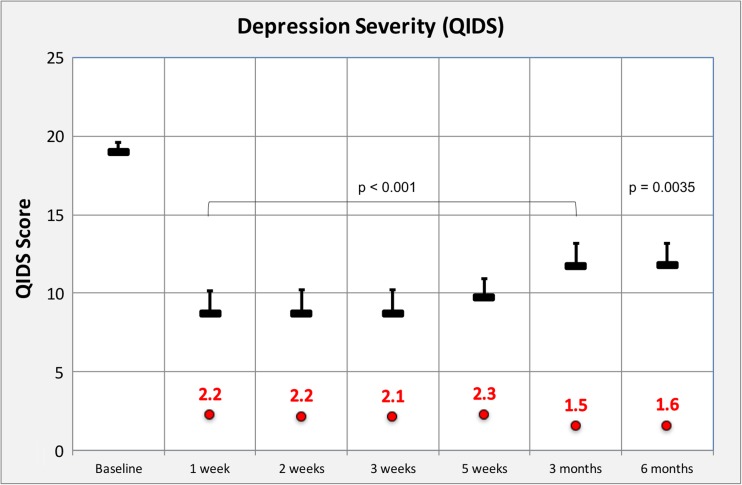
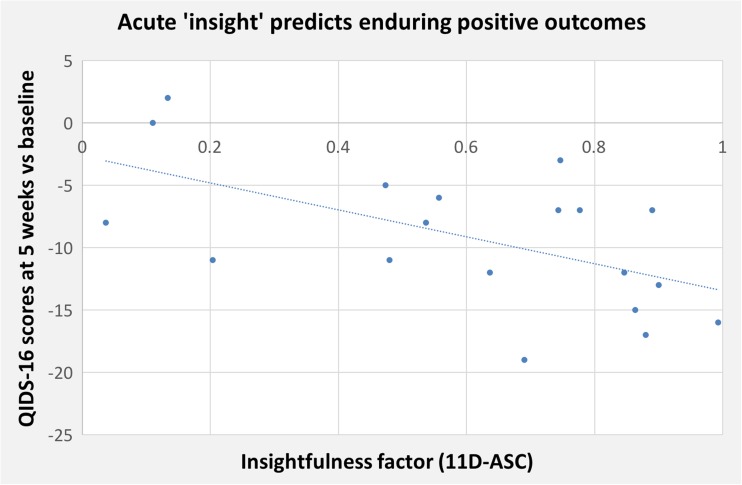
RATIONALE: Recent clinical trials are reporting marked improvements in mental health outcomes with psychedelic drug-assisted psychotherapy. OBJECTIVES: Here, we report on safety and efficacy outcomes for up to 6 months in an open-label trial of psilocybin for treatment-resistant depression. METHODS: Twenty patients (six females) with (mostly) severe, unipolar, treatment-resistant major depression received two oral doses of psilocybin (10 and 25 mg, 7 days apart) in a supportive setting. Depressive symptoms were assessed from 1 week to 6 months post-treatment, with the self-rated QIDS-SR16 as the primary outcome measure. RESULTS: Treatment was generally well tolerated. Relative to baseline, marked reductions in depressive symptoms were observed for the first 5 weeks post-treatment (Cohen's d = 2.2 at week 1 and 2.3 at week 5, both p < 0.001); nine and four patients met the criteria for response and remission at week 5. Results remained positive at 3 and 6 months (Cohen's d = 1.5 and 1.4, respectively, both p < 0.001). No patients sought conventional antidepressant treatment within 5 weeks of psilocybin. Reductions in depressive symptoms at 5 weeks were predicted by the quality of the acute psychedelic experience. CONCLUSIONS: Although limited conclusions can be drawn about treatment efficacy from open-label trials, tolerability was good, effect sizes large and symptom improvements appeared rapidly after just two psilocybin treatment sessions and remained significant 6 months post-treatment in a treatment-resistant cohort. Psilocybin represents a promising paradigm for unresponsive depression that warrants further research in double-blind randomised control trials.
Overview
The claims and statistics of this paper haven’t been checked yet.
Free: it reads the open-access text and checks the first 5 claims that cite a source we can check. Create a free account to check every claim.
Integrity signals
Registry
Cites
Statistics
Figures
Verification
Claims the paper makes
The claims and statistics of this paper haven’t been checked yet.
Free: it reads the open-access text and checks the first 5 claims that cite a source we can check. Create a free account to check every claim.
Claims other papers make about this one
Each is checked against this paper’s own text: does it say what the citing paper says it does?
The source backs part of the claim, not all of it — or backs it for a different population, condition or comparison.
In the citing paper
“Not only do they produce sustained therapeutic effects following a single administration, they also appear to have broad therapeutic potential”
From Psychedelics and Other Psychoplastogens for Treating Mental Illness. (2021) · cites this paper as [41]
Experimental — accuracy not yet measuredThe source backs part of the claim, not all of it — or backs it for a different population, condition or comparison.
In the citing paper
“Unlike traditional antidepressants, psychoplastogens produce both fast-acting and sustained beneficial behavioral effects after a single administration (Figure 1) (38–42).”
From Psychedelics and Other Psychoplastogens for Treating Mental Illness. (2021) · cites this paper as [41]
Experimental — accuracy not yet measuredThe source backs part of the claim, not all of it — or backs it for a different population, condition or comparison.
In the citing paper
“the mood-elevating properties of psilocybin seem to last significantly longer”
From Psychedelics and Other Psychoplastogens for Treating Mental Illness. (2021) · cites this paper as [41]
Experimental — accuracy not yet measuredThe source backs part of the claim, not all of it — or backs it for a different population, condition or comparison.
In the citing paper
“Remarkably, these benefits were incurred even after only a single psychedelic administration and were maintained for as long as 6 months.”
From Examining the Potential Synergistic Effects Between Mindfulness Training and Psychedelic-Assisted Therapy (2021) · cites this paper as [30]
Experimental — accuracy not yet measuredThe source backs part of the claim, not all of it — or backs it for a different population, condition or comparison.
In the citing paper
“Most of these studies however suffer from low methodological validity and are mostly open-label, yet they have yielded preliminary evidence for the capacity of psychedelic substances for treating addiction, depression, anxiety, and eating disorders (29–35).”
From Examining the Potential Synergistic Effects Between Mindfulness Training and Psychedelic-Assisted Therapy (2021) · cites this paper as [30]
Experimental — accuracy not yet measured
13 more claims about this paper
Create a free account to see every claim other papers make about this one.
Self-check
Percentages, sums and reported differences re-computed from the paper’s own numbers.
The self-check needs the paper’s full text.
Citations
Cites
Griffiths, R. R., Johnson, M. W., Carducci, M. A., Umbricht, A., Richards, W. A., Richards, B. D., Cosimano, M. P., & Klinedinst, M. A. (2016) · Journal of Psychopharmacology · doi:10.1177/0269881116675513 · Cited by 2,201 · cited 5×
“Recent studies (Griffiths et al. 2016; Ross et al. 2016; Carhart-Harris et al. 2016), including the present one, help demonstrate the feasibility of treating patients with major depressive disorder with psilocybin plus psychological support.”
BackgroundResultInfluentialRoss, S., Bossis, A., Guss, J., Agin-Liebes, G., Malone, T., Cohen, B., Mennenga, S. E., Belser, A., Kalliontzi, K., Babb, J., et al. (2016) · Journal of Psychopharmacology · doi:10.1177/0269881116675512 · Cited by 1,698 · cited 8×
“Recent studies (Griffiths et al. 2016; Ross et al. 2016; Carhart-Harris et al. 2016), including the present one, help demonstrate the feasibility of treating patients with major depressive disorder with psilocybin plus psychological support.”
BackgroundResultInfluentialCarhart-Harris, R. L., Bolstridge, M., Rucker, J., Day, C. M. J., Erritzoe, D., Kaelen, M., Bloomfield, M., Rickard, J. A., Forbes, B., Feilding, A., et al. (2016) · The Lancet Psychiatry · doi:10.1016/s2215-0366(16)30065-7 · Cited by 1,540 · cited 5×
“Recent studies (Griffiths et al. 2016; Ross et al. 2016; Carhart-Harris et al. 2016), including the present one, help demonstrate the feasibility of treating patients with major depressive disorder with psilocybin plus psychological support.”
BackgroundMethodResultInfluentialSelf-citationPilot Study of Psilocybin Treatment for Anxiety in Patients With Advanced-Stage Cancer
Grob, C. S., Danforth, A. L., Chopra, G. S., Hagerty, M., McKay, C. R., Halberstadt, A. L., & Greer, G. R. (2011) · Archives of General Psychiatry · doi:10.1001/archgenpsychiatry.2010.116 · Cited by 1,206 · cited 6×
“…separate trials have reported improvements in depressive symptoms after psilocybin-assisted psychotherapy (Griffiths et al. 2016; Ross et al. 2016; Grob et al. 2011; CarhartHarris et al. 2016), including one in which ‘treatment-resistant depression’ was the primary criterion for inclusion…”
BackgroundResultInfluentialHuman hallucinogen research: guidelines for safety
Johnson, M., Richards, W., & Griffiths, R. (2008) · Journal of Psychopharmacology · doi:10.1177/0269881108093587 · Cited by 1,203 · cited 2×
“Basic principles for safe therapeutic work with psychedelics can be found in guidelines (Johnson et al. 2008) and books (Richards 2015) but more systematic verification, refinement and (eventual) manualisation of treatment approaches are needed for subsequent roll-out (Carhart-Harris and Goodwin…”
BackgroundPsilocybin-assisted treatment for alcohol dependence: A proof-of-concept study
Bogenschutz, M. P., Forcehimes, A. A., Pommy, J. A., Wilcox, C. E., Barbosa, P., & Strassman, R. J. (2015) · Journal of Psychopharmacology · doi:10.1177/0269881114565144 · Cited by 1,151 · cited 1×
“Psilocybin has shown promise in the treatment of obsessive compulsive disorder (Moreno et al. 2006), alcohol (Bogenschutz et al. 2015) and tobacco addiction (Johnson et al. 2014) and anxiety related to terminal diagnoses (Griffiths et al. 2016; Ross et al. 2016; Grob et al. 2011).”
BackgroundPsilocybin induces schizophrenia-like psychosis in humans via a serotonin-2 agonist action
Vollenweider, F. X., Vollenweider-Scherpenhuyzen, M. F. I., Bäbler, A., Vogel, H., & Hell, D. (1998) · NeuroReport · doi:10.1097/00001756-199812010-00024 · Cited by 1,018 · cited 1×
“Like all serotonergic psychedelics, psilocybin initiates its characteristic effects via serotonin 2A receptor (5-HT2AR) agonism (Vollenweider et al. 1998).”
BackgroundPilot study of the 5-HT 2A R agonist psilocybin in the treatment of tobacco addiction
Johnson, M. W., Garcia-Romeu, A., Cosimano, M. P., & Griffiths, R. R. (2014) · Journal of Psychopharmacology · doi:10.1177/0269881114548296 · Cited by 914 · cited 1×
“Psilocybin has shown promise in the treatment of obsessive compulsive disorder (Moreno et al. 2006), alcohol (Bogenschutz et al. 2015) and tobacco addiction (Johnson et al. 2014) and anxiety related to terminal diagnoses (Griffiths et al. 2016; Ross et al. 2016; Grob et al. 2011).”
BackgroundGriffiths, R., Richards, W., Johnson, M., McCann, U., & Jesse, R. (2008) · Journal of Psychopharmacology · doi:10.1177/0269881108094300 · Cited by 905 · cited 2×
“involving appropriate psychological support), sustained improvements in well-being in healthy individuals were observed after a single dose of psilocybin in a doubleblind design incorporating an active placebo (Griffiths et al. 2008).”
BackgroundMethodSafety, tolerability, and efficacy of psilocybin in 9 patients with obsessive-compulsive disorder
Moreno, F. A., Wiegand, C. B., Taitano, E. K., & Delgado, P. L. (2006) · The Journal of Clinical Psychiatry · doi:10.4088/jcp.v67n1110 · Cited by 789 · cited 2×
“Psilocybin has shown promise in the treatment of obsessive compulsive disorder (Moreno et al. 2006),”
Background
Cited by
Items 501–600 of 969
Psilocybin and chronic neuropathic pain: a systematic review
Jevotovsky, D. S., Chopra, H., Pak, D., Durbhakula, S., Shustorovich, A., Juneja, T., Broachwala, M. Y., AlFarra, T., Silver, C., Kreitzer, G., et al. (2024) · Regional Anesthesia & Pain Medicine · doi:10.1136/rapm-2024-105532 · Cited by 12
Existential feelings as a phenomenological framework for psychedelic therapy
Tijhuis, F. B., Coninx, S., & de Bruin, L. C. (2024) · Philosophical Psychology · doi:10.1080/09515089.2024.2412195 · Cited by 10
Masking Influences: A Systematic Review of Placebo Control and Masking in Psychedelic Studies
Barstowe, A., & Kajonius, P. (2024) · Journal of Psychoactive Drugs · doi:10.1080/02791072.2024.2424272 · Cited by 12
Clinical and preclinical evidence of psilocybin as antidepressant. A narrative review
Erkizia-Santamaría, I., Horrillo, I., Meana, J. J., & Ortega, J. E. (2025) · Progress in Neuro-Psychopharmacology and Biological Psychiatry · doi:10.1016/j.pnpbp.2025.111249 · Cited by 13
“Changes in the filtering of internal and external sensory and emotional information might be relevant to psychotherapeutic effects of psilocybin (Carhart-Harris, 2018).”
Serotonergic Psychedelics Rapidly Modulate Evoked Glutamate Release in Cultured Cortical Neurons
Petrušková, A., Guhathakurta, D., Akdaş, E. Y., Perelló‐Amorós, B., Frischknecht, R., Weiss, E., Páleníček, T., & Fejtová, A. (2025) · Journal of Neurochemistry · doi:10.1111/jnc.70020 · Cited by 11
Amaev, A., Song, J., Kambari, Y., Carmona-Torres, E., Abdolizadeh, A., Ueno, F., Koizumi, T., Strafella, A. P., Husain, M. I., Graff‐Guerrero, A., et al. (2025) · Journal of Psychiatric Research · doi:10.1016/j.jpsychires.2025.03.022 · Cited by 11
Examining the biological causes of eating disorders to inform treatment strategies
Foldi, C. J., & Griffiths, K. R. (2025) · Nature reviews. Neuroscience · doi:10.1038/s41583-025-00940-3 · Cited by 13
“These promising drugs have been repurposed on the basis of their clinical efficacy in attentional-deficit hyperactivity disorder 209 , depression 210 and type 2 diabetes 211 , respectively, highlighting how ED research and treatment can benefit by casting a wider net when considering their…”
Five-year outcomes of psilocybin-assisted therapy for Major Depressive Disorder
Davis, A. K., DellaCrosse, M. A., Sepeda, N. D., Levin, A. W., Cosimano, M. P., Shaub, H., Washington, T., Gooch, P. M., Gilead, S., Gaughan, S. J., et al. (2025) · Journal of Psychedelic Studies · doi:10.1556/2054.2025.00461 · Cited by 11
Initiation of drug and alcohol use and personality development during adolescence
Wright, A. J., & Jackson, J. J. (2022) · European Journal of Personality · doi:10.1177/08902070221090107 · Cited by 14
Märcher-Rørsted, E., Jensen, A. A., Šmits, G., Frydenvang, K., & Kristensen, J. L. (2024) · Journal of Medicinal Chemistry · doi:10.1021/acs.jmedchem.4c00082 · Cited by 11
Magic mushroom extracts in lipid membranes
Nguyen, T. Q. T., Lund, F. W., Zanjani, A. A. H., & Khandelia, H. (2022) · Biochimica et Biophysica Acta (BBA) - Biomembranes · doi:10.1016/j.bbamem.2022.183957 · Cited by 10
Smith, F. N., Neill, J. C., & Wainwright, V. (2022) · Drug Science Policy and Law · doi:10.1177/20503245221124117 · Cited by 13
Psychedelics and fNIRS neuroimaging: exploring new opportunities
Scholkmann, F., & Vollenweider, F. X. (2022) · Neurophotonics · doi:10.1117/1.nph.10.1.013506 · Cited by 9
Seear, K. (2023) · Health Sociology Review · doi:10.1080/14461242.2023.2254746 · Cited by 10
Harris-Blum, L., Smith, Z., Ortiz, R. J., Athreya, D., Chang, A., Kulkarni, P. P., & Ferris, C. F. (2024) · Scientific Reports · doi:10.1038/s41598-024-69597-9 · Cited by 8
Clarkson, R. D. O., Jabbour, M., Pelayo, D. A., Lara, D., Croix, S. L., Mumman, M., Stukas, S., Anderson, R., Meraz, D., Bangura, A., et al. (2024) · Progress in Neuro-Psychopharmacology and Biological Psychiatry · doi:10.1016/j.pnpbp.2024.111155 · Cited by 8
Ghaffarzadegan, R., Karimi, M., Hedayatjoo, B., Behnoud, H., Jasemi, E., Mohammadi, M., Roustaei, S., Razmi, A., & Vaseghi, S. (2024) · Journal of Psychoactive Drugs · doi:10.1080/02791072.2024.2428241 · Cited by 10
Informed Consent in Psychedelic-Assisted Therapy
Bradberry, M. M., Appelbaum, P. S., & Gukasyan, N. (2024) · Current topics in behavioral neurosciences · doi:10.1007/7854_2024_559 · Cited by 8
Dissociable effects of psilocybin and escitalopram for depression on processing of musical surprises
Harding, R., Singer, N., Wall, M. B., Hendler, T., Erritzøe, D., Nutt, D. J., Carhart-Harris, R. L., & Roseman, L. (2025) · Molecular Psychiatry · doi:10.1038/s41380-025-03035-8 · Cited by 12
Self-citationWong, S., Meckling, G., Fabiano, N., Lee, S., Jones, B. D. M., Shorr, R., Dargél, A., Davis, A. K., Fiedorowicz, J. G., Solmi, M., et al. (2025) · Therapeutic Advances in Psychopharmacology · doi:10.1177/20451253251372449 · Cited by 10
“21 Carhart-Harris et al. 22 found a decrease in suicidal ideation from PT compared to escitalopram treatment that was significantly different.”
Psilocybin with psychotherapeutic support for treatment-resistant depression: a pilot clinical trial
Meikle, S. E., Carter, O. L., Liknaitzky, P., Johansen, L., Iyer, R., Strauss, N. H. M., Williams, M. L., Castle, D. J., & Rossell, S. L. (2025) · Therapeutic Advances in Psychopharmacology · doi:10.1177/20451253251377187 · Cited by 10
“While the QIDS-SR was selected for its brevity and use in similar trials, 12,13 self-report measures are more susceptible to response bias, and tend to show greater improvements than clinician-rated measures.”
Palhas, M. L. C., Corne, R., & Mongeau, R. (2025) · Progress in Neuro-Psychopharmacology and Biological Psychiatry · doi:10.1016/j.pnpbp.2025.111533 · Cited by 12
Psychedelics and psychological strengths
Brasher, T. J., Rosen, D., & Spinella, M. (2023) · International Journal of Wellbeing · doi:10.5502/ijw.v13i1.2325 · Cited by 10
Presa, M. H., da Rocha, M. J., Pires, C. S., Ledebuhr, K. N. B., da Costa, G. P., Alves, D. A. C., Bortolatto, C. F., & Brüning, C. A. (2023) · ACS Chemical Neuroscience · doi:10.1021/acschemneuro.3c00108 · Cited by 9
Microbiome: The Next Frontier in Psychedelic Renaissance
Kargbo, R. B. (2023) · Journal of Xenobiotics · doi:10.3390/jox13030025 · Cited by 11
EMBARK Psychedelic Therapy for Depression: A New Approach for the Whole Person
Brennan, B., & Belser, A. (2024) · doi:10.1093/9780197762622.001.0001 · Cited by 8
Bhagavan, C., Glue, P., Evans, W., Reynolds, L., Turner, T., King, C., Russell, B. R., Morunga, E., Mills, J. L., Layton, G., et al. (2024) · Trials · doi:10.1186/s13063-024-08174-x · Cited by 14
“This effect profile has also been reproduced in treatment-resistant depression including in an open-label study and phase 2 study [23, 24].”
MethodPsychothérapie augmentée par la kétamine (KAP) dans les troubles de l’humeur : mode d’emploi
Bottemanne, H., Baldacci, A., Muller, C., Boyreau, A., & Claret, A. (2021) · L Encéphale · doi:10.1016/j.encep.2021.08.011 · Cited by 13
The Pharmacology and Clinical Applications of Psychedelic Medicines Within Midwifery Practice
Stein, C. A., Penn, A., Hope, S., Dorsen, C. G., & Mangini, M. (2022) · Journal of Midwifery & Women s Health · doi:10.1111/jmwh.13371 · Cited by 10
Exline, J. J., Schutt, W. A., Pait, K. C., & Wilt, J. A. (2022) · International Journal for the Psychology of Religion · doi:10.1080/10508619.2022.2148062 · Cited by 8
A suicide attempt following psilocybin ingestion in a patient with no prior psychiatric history
Kramer, E. N., Reddy, K., & Shapiro, B. B. (2023) · Psychiatry Research Case Reports · doi:10.1016/j.psycr.2023.100118 · Cited by 11
Jones, N. T., Zahid, Z., Grady, S. M., Sultan, Z. W., Zheng, Z.-Q., Banks, M. I., & Wenthur, C. J. (2020) · bioRxiv · doi:10.1101/2020.08.12.248229 · Cited by 3
“[5–9] In the human studies carried out to date, psilocybin has reliably demonstrated improvements in primary outcome measures, with effects that occur rapidly and persist for a period of weeks to months.”
BackgroundAmid magic and menace: psychiatrists’ attitudes to psilocybin therapy
Gribben, A. D., Burke, T., Harrington, C., Husein, A., Murnane, K. S., Hendricks, P. S., Tobin, K., Ivers, J., Thuery, G., Harkin, A., et al. (2024) · Irish Journal of Psychological Medicine · doi:10.1017/ipm.2024.49 · Cited by 7
Psychedelics and Suicide-Related Outcomes: A Systematic Review
Meshkat, S., Malik, T., Zeifman, R. J., Swainson, J., Zhang, Y., Burback, L., Winkler, O., Greenshaw, A. J., Reichelt, A. C., Vermetten, E. H. G. J. M., et al. (2025) · Journal of Clinical Medicine · doi:10.3390/jcm14051416 · Cited by 9
Balabandian, M., Manavi, M. A., Lesani, A., Jafari, R. M., Shafaroodi, H., Heidari, N., Mirnajafi‐Zadeh, J., Foroumadi, A., Afrooghe, A., & Dehpour, A. R. (2025) · Pharmacology Research & Perspectives · doi:10.1002/prp2.70079 · Cited by 8
Seragnoli, F., Picard, F., Thorens, G., Buchard, A., Geyer, M., Abatista, A., Ponomarenko, P., Petignat, C., Riccardi, M., Bisson, M. D., et al. (2025) · Cognitive Therapy and Research · doi:10.1007/s10608-025-10588-z · Cited by 8
Thaoboonruang, N., Lohitnavy, O., Ya, K., & Lohitnavy, M. (2025) · Scientific Reports · doi:10.1038/s41598-025-98202-w · Cited by 8
Joga, R., Yerram, S., Patnam, J. D., Choudhary, K. K., Varpe, P. C., Raghuvanshi, R. S., & Srivastava, S. (2025) · Health Policy · doi:10.1016/j.healthpol.2025.105392 · Cited by 7
Psilocybin in late-life mental health: Addressing depression, loneliness, and existential anxiety
Konstantinou, G., Rosenblat, J. D., Hales, S., Husain, M. I., & Blumberger, D. M. (2025) · General Hospital Psychiatry · doi:10.1016/j.genhosppsych.2025.12.005 · Cited by 7
O’Regan, G., Plummer, Z., Christie, B. R., Shultz, S. R., & Allen, J. (2026) · Journal of Neuroinflammation · doi:10.1186/s12974-026-03717-2 · Cited by 15
Yamamoto, M., Hirakata, H., & Toda, K. (2026) · Frontiers in Cell and Developmental Biology · doi:10.3389/fcell.2026.1777975 · Cited by 12
Yngwe, H., Plavén‐Sigray, P., Ekman, C. J., Henje, E., Berglund, A., Tiger, M., Beckman, M., & Lundberg, J. O. (2026) · JAMA Network Open · doi:10.1001/jamanetworkopen.2026.12589 · Cited by 12
Wizła, M., Kraus, S. W., & Lewczuk, K. (2022) · Comprehensive Psychiatry · doi:10.1016/j.comppsych.2022.152303 · Cited by 9
Downey, A. E., Boyd, M., Chaphekar, A. V., Woolley, J. D., & Raymond‐Flesch, M. (2023) · International Journal of Eating Disorders · doi:10.1002/eat.24041 · Cited by 9
Escamilla-Orozco, R. I., González-Trujano, M. E., Mariscal, J. M. G., Torres-Valencia, J. M., Guzmán-González, H., Vega, J. L., & Loizaga-Velder, A. K. (2023) · Journal of Psychoactive Drugs · doi:10.1080/02791072.2023.2246459 · Cited by 8
Psychedelics, With a Focus on Psilocybin: Issues for the Clinician
Garakani, A., Alexander, J. L., Sumner, C. R., Pine, J. H., Gross, L. S., Raison, C. L., Aaronson, S. T., & Baron, D. A. (2023) · Journal of Psychiatric Practice · doi:10.1097/pra.0000000000000729 · Cited by 7
Biscoe, N., Bonson, A., Slavin, M., Busuttil, W., MacManus, D., Cox, A., & Murphy, D. (2023) · European Journal of Trauma & Dissociation · doi:10.1016/j.ejtd.2023.100359 · Cited by 8
Schmautz, B., Fuchshuber, J., Andres, D., Prandstätter, T., Roithmeier, L., Freund, A., Schwerdtfeger, A. R., & Unterrainer, H. (2024) · Frontiers in Human Neuroscience · doi:10.3389/fnhum.2024.1329226 · Cited by 9
Factors associated with cognitive flexibility in people with opioid-use disorder: a pilot study
Regier, P. S., de Arruda, T. C. M., Šinko, L., Teitelman, A. M., & Childress, A. R. (2024) · Frontiers in Psychiatry · doi:10.3389/fpsyt.2024.1505391 · Cited by 7
Educational moderation of gender disparities in psychedelic health outcomes
Viña, S. M. (2025) · Academia Mental Health and Well-Being · doi:10.20935/mhealthwellb7580 · Cited by 8
Therapeutic Use of Hallucinogens
Wiltenburg, V. D., Prado, D. D. R., & Mendes, F. R. (2021) · Springer eBooks · doi:10.1007/978-3-030-62855-0_35 · Cited by 8
Thal, S. B., Wieberneit, M., Sharbanee, J. M., Skeffington, P., Bruno, R., Wenge, T., & Bright, S. J. (2023) · Journal of Humanistic Psychology · doi:10.1177/00221678231168516 · Cited by 10
Global species diversity and distribution of the psychedelic fungal genus Panaeolus
Strauss, D., Ghosh, S. B., Murray, Z., & Gryzenhout, M. (2023) · Heliyon · doi:10.1016/j.heliyon.2023.e16338 · Cited by 11
“When psilocybin and psilocin are consumed by an individual, these substances can cross the blood-brain barrier and act as a serotonin inhibitor, creating hallucinations and long lasting beneficial changes in the brain [12,13].”
BackgroundEthical considerations for psychedelic-assisted therapy in military clinical settings
Hoener, S., Wolfgang, A. S., Nissan, D. A., & Howe, E. G. (2023) · Journal of Medical Ethics · doi:10.1136/jme-2023-108943 · Cited by 8
Psychedelics and Hallucinogens in Psychiatry: Finding New Pharmacological Targets
de Sousa, T. R., Rema, J., Machado, S. E. D. C., & Novais, F. (2021) · Current Topics in Medicinal Chemistry · doi:10.2174/1568026621666211201145800 · Cited by 8
Erhan, E., Külahlı, İ., Kandemir, O., Cemiloglu, R., Yigitbasi, O. G., & Cüreoğlu, S. (1996) · PubMed · Cited by 8
Utilisation des psychédéliques en psychiatrie : lien avec les neurotrophines
Corne, R., & Mongeau, R. (2019) · Biologie Aujourd hui · doi:10.1051/jbio/2019015 · Cited by 8
Ramos, L., & Vicente, S. (2024) · Journal of Clinical and Experimental Neuropsychology · doi:10.1080/13803395.2024.2363343 · Cited by 8
Irrmischer, M., Puxty, D. J., Yıldırım, B. O., Deijen, J. B., & Engelbregt, H. (2025) · Psychopharmacology · doi:10.1007/s00213-024-06733-3 · Cited by 9
Race and Gender Differences in the Moderating Relationship of Psychedelics on Stigma and Distress
Viña, S. M. (2025) · Psychedelic Medicine · doi:10.1089/psymed.2024.0021 · Cited by 8
5-HT2A receptors shape whole-brain monoaminergic coherence in male mice
Butler, J. J., Virgili, M., Giovanni, G. D., Chagraoui, A., Beyeler, A., & Deurwaerdère, P. D. (2025) · Progress in Neuro-Psychopharmacology and Biological Psychiatry · doi:10.1016/j.pnpbp.2025.111437 · Cited by 7
Thuery, G., Sheridan, C., Iusan, P., Brar, G., Ledden, K., Freyne, A., Kelly, J. R., & Harkin, A. (2025) · Acta Neuropsychiatrica · doi:10.1017/neu.2025.10030 · Cited by 8
Toward Standardized Products Containing Biomass of Psilocybe Cubensis Fungi
Foster, K., Morrison, I., Daniel, S., Antoine, J. M. R., Thankappan, B. M., Haye, W. D. L., Tyler, M. W., Grant, C. N., & Delgoda, R. (2025) · Journal of AOAC International · doi:10.1093/jaoacint/qsaf072 · Cited by 6
Serotonin 5-HT2C Receptor Signaling Analysis Reveals Psychedelic Biased Agonism
Bonniwell, E. M., Alabdali, R., Hennessey, J. J., McKee, J. L., Cavalco, N. G., Lammers, J. C., Moore, E. J., Franchini, L., Orlandi, C., & McCorvy, J. D. (2025) · ACS Chemical Neuroscience · doi:10.1021/acschemneuro.5c00647 · Cited by 9
Stocker, K., Hartmann, M., Schmid, Y., Vogt, S. B., Becker, A., Ley, L., Straumann, I., Arikci, D., Klaiber, A., Erne, L., et al. (2025) · Journal of Psychopharmacology · doi:10.1177/02698811251397328 · Cited by 11
Maltby, C. J., Klein, A. K., Paschen, E., Pinto, J., Dvořák, D., Hedde, J. R., Hanks, A. N., Bianchi, M., & Hughes, Z. A. (2026) · Journal of Psychopharmacology · doi:10.1177/02698811251395386 · Cited by 11
Religious Social Integration, Psychedelics, and Psychological Distress
Viña, S. M. (2024) · Journal of Psychoactive Drugs · doi:10.1080/02791072.2024.2425021 · Cited by 7
The Hallucinogen Rating Scale: Updated Factor Structure in a Large, Multistudy Sample
Calder, A. E., Qualls, C., Hasler, G., Elmiger, D., & Strassman, R. J. (2024) · Biological Psychiatry Global Open Science · doi:10.1016/j.bpsgos.2024.100436 · Cited by 10
“Psychedelics can enhance autobiographical memory and alter one ’ s perspective on past events (45,46), and the related phenomenon of psychological insight is also characteristic of their effects (47,48).”
Structural basis for psilocybin biosynthesis
Meng, C., Guo, W., Chuan, X., Wen, Y., Zhu, X., Zhang, Q., Liang, Y., Li, H., Xu, S., Qiu, Y., et al. (2025) · Nature Communications · doi:10.1038/s41467-025-58239-x · Cited by 11
Forstmann, M., & Sagioglou, C. (2021) · European Psychologist · doi:10.1027/1016-9040/a000447 · Cited by 9
Butler, M., Seynaeve, M., Bradley‐Westguard, A., Bao, J., Crawshaw, A. A., Pick, S., Edwards, M. J., Nicholson, T. R., & Rucker, J. (2022) · Journal of Neuropsychiatry · doi:10.1176/appi.neuropsych.21080213 · Cited by 7
Self-citationPsychedelic assisted therapy for major depressive disorder: Recent work and clinical directions
McCartney, A., McGovern, H. T., & Foe, A. D. (2022) · Journal of Psychedelic Studies · doi:10.1556/2054.2022.00211 · Cited by 13
Yavorsky, C., Ballard, E. D., Opler, M. G. A., Sedway, J. A., Targum, S. D., & Lenderking, W. R. (2023) · Frontiers in Psychiatry · doi:10.3389/fpsyt.2023.1135828 · Cited by 7
User perceptions of long-term costs and benefits of MDMA use: findings from a large online sample
Elsey, J. W. B., Wuestman, V. A. F., & Fieten, A. (2023) · Drugs Education Prevention and Policy · doi:10.1080/09687637.2023.2284643 · Cited by 9
An Occupational Perspective on Psychedelic Therapy: A Scoping Review
Hogan, G. A., Wagner, K. E., Tichenor, E., & Barlott, T. (2024) · Canadian Journal of Occupational Therapy · doi:10.1177/00084174241228678 · Cited by 7
“For instance, quick and lasting reductions in symptoms have been seen for treatment-resistant depression, with the use of psilocybin (Carhart-Harris et al., 2017); for alcohol use disorder, with the use of LSD (Fuentes et al., 2020); and for eating disorders, with the use of ceremonial ayahuasca…”
MethodLuoma, J. B., Davis, A. K., Watts, R., & McCracken, L. M. (2020) · Journal of Contextual Behavioral Science · doi:10.1016/j.jcbs.2020.01.004 · Cited by 7
Self-citationTreatment resistant depression
Vaccarino, S. R., & Kennedy, S. H. (2020) · Elsevier eBooks · doi:10.1016/b978-0-12-821033-8.00003-4 · Cited by 8
Advancing elite athlete mental health treatment with psychedelic-assisted psychotherapy
Walton, C. C., & Liknaitzky, P. (2020) · Journal of Applied Sport Psychology · doi:10.1080/10413200.2020.1848941 · Cited by 6
“, 2016) with over half of the mean clinical effect sustained at six months (Carhart-Harris et al., 2018).”
BackgroundPsychedelic Medicines in Major Depression: Progress and Future Challenges
Bouso, J. C., Oña, G., SANTOS, R. G. D., & Hallak, J. E. C. (2021) · Advances in experimental medicine and biology · doi:10.1007/978-981-33-6044-0_26 · Cited by 11
Future directions for clinical psilocybin research: The relaxed symptom network.
Lewis-Healey, E., Laukkonen, R., & van Elk, M. (2022) · Psychology & Neuroscience · doi:10.1037/pne0000290 · Cited by 8
“…found extremely large effect sizes when using psilocybin (the psychoactive component in mushrooms from the psilocybe genus) to treat depressive disorders (Grob et al., 2011; Ross et al., 2016; Griffiths et al., 2016; Carhart-Harris et al., 2016; 2018a; Agin-Liebes et al., 2020; Davis et al., 2020).”
BackgroundConn, K., Milton, L. K., Huang, K., Munguba, H., Ruuska, J., Lemus, M. B., Greaves, E., Homman‐Ludiye, J., Oldfield, B. J., & Foldi, C. J. (2023) · bioRxiv (Cold Spring Harbor Laboratory) · doi:10.1101/2023.12.12.571374 · Cited by 6
“…clinical trials and preclinical studies indicates that psilocybin is an effective treatment for symptoms of several psychiatric disorders 18 and may circumvent issues with medication compliance because long-term improvements (at least for depression) have been demonstrated after a single dose 14 .”
BackgroundInfluentialDowney, A. E., Bradley, E., Lerche, A. S., O’Donovan, A., Krystal, A. D., & Woolley, J. D. (2024) · Psychedelic Medicine · doi:10.1089/psymed.2023.0051 · Cited by 6
Psilocybin has a narrow therapeutic window as an antidepressant treatment
Seillier, L., Čechová, B., Seillier, A., & Šlamberová, R. (2025) · Progress in Neuro-Psychopharmacology and Biological Psychiatry · doi:10.1016/j.pnpbp.2025.111368 · Cited by 6
Blanton, A. M., Parikh, P., Zhou, S., Mohamed, M., Ufret-Vincenty, R. L., & Mancini, R. (2025) · American Journal of Ophthalmology Case Reports · doi:10.1016/j.ajoc.2025.102359 · Cited by 7
Ellis, S., Bostian, C. M., Donnelly, A. J., Feng, W., Eisen, K., Lean, M., Conlan, E., Ostacher, M. J., Aaronson, S. T., & Suppes, T. M. (2025) · Journal of Affective Disorders · doi:10.1016/j.jad.2025.119655 · Cited by 11
Examining the potential of psilocybin and 5-MeO-DMT as therapeutics for traumatic brain injury
Plummer, Z., Allen, J., Brand, J., Mayo, L. M., Shultz, S. R., & Christie, B. R. (2025) · Progress in Neuro-Psychopharmacology and Biological Psychiatry · doi:10.1016/j.pnpbp.2025.111448 · Cited by 6
Effects of psychedelic microdosing on cognitive functions: A systematic review and meta-analysis
Pinhas, N., Eidlman, N., Barnea, A., & Peled‐Avron, L. (2025) · Neuroscience & Biobehavioral Reviews · doi:10.1016/j.neubiorev.2025.106493 · Cited by 7
Predictors of therapeutic response to psychedelic-assisted therapy: A systematic review
Viljoen, G., Walter, H., Bendau, A., Koslowski, M., & Betzler, F. (2025) · Journal of Psychopharmacology · doi:10.1177/02698811251389581 · Cited by 12
“However, the literature presents a mixed picture; while some studies report a decrease in DMN connectivity during MTEs (Carhart-Harris et al., 2017), others show an increase in connectivity from baseline to post-session that is linked to better therapeutic outcomes (Copa et al., 2024; Mertens et…”
Vollebregt, R., Storm, A. E. M., Lucassen, P. J., & Somers, M. (2025) · Neuroscience & Biobehavioral Reviews · doi:10.1016/j.neubiorev.2025.106529 · Cited by 11
Weintraub, M. J., Jeffrey, J. K., Grob, C. S., Ichinose, M. C., Bergman, R. L., Cooper, Z. D., & Miklowitz, D. J. (2023) · Psychedelic Medicine · doi:10.1089/psymed.2023.0018 · Cited by 7
“6,7 ).”
Expectancies for Subjective and Antidepressant Effects in Psilocybin Users
Earleywine, M., Mian, M. N., & Leo, J. A. D. (2023) · Journal of Humanistic Psychology · doi:10.1177/00221678231194798 · Cited by 6
Marie, S. (2024) · Anthropology of Consciousness · doi:10.1111/anoc.12226 · Cited by 6
Photoswitchable TCB-2 for control of the 5-HT 2A receptor and analysis of biased agonism
Esmaeili, A. J., Montazeri, P., Gomez, J. C., Dumervil, D. J., Nezhad, F. S., & Steinhardt, R. C. (2024) · Chemical Communications · doi:10.1039/d4cc03892d · Cited by 5
Evaluating the value and risks of psychedelics for psychiatric medicine: a clinical perspective
Marazziti, D., Weiss, F., Gurrieri, R., Russomanno, G., Gambini, M., Magnesa, A., Coccoglioniti, A., & Perugi, G. (2024) · Expert Review of Neurotherapeutics · doi:10.1080/14737175.2024.2445016 · Cited by 5
Siegel, V., & Emmert‐Aronson, B. O. (2021) · F1000Research · doi:10.12688/f1000research.53496.1 · Cited by 3
“Furthermore, psilocybin in combination with psychotherapy was effective in treating a number of ailments, including nicotine addiction 5,6 , treatment-resistant depression 7 , and other mood and drug use disorders 8 .”
BackgroundA review of psilocybin: chemistry, clinical uses and future research directions
Milliken, E. J. T., Galettis, P., & Martin, J. (2023) · Australian Journal of Chemistry · doi:10.1071/ch23010 · Cited by 5
Employing Synergistic Interactions of Virtual Reality and Psychedelics in Neuropsychopharmacology
Moroz, M., & Carhart-Harris, R. L. (2018) · doi:10.1109/var4good.2018.8576882 · Cited by 7
“as psilocybin have shown to reduce depressive symptoms and anxiety [12, 13, 83], as have dissociatives such at ketamine [6, 41, 68, 79].”
BackgroundSelf-citationVitkauskas, M., & Mathuru, A. S. (2020) · International Journal of Molecular Sciences · doi:10.3390/ijms21186525 · Cited by 5
“Initial reports from a different cohort of subjects suggest the effects may last for up to 6 months, a highly unusual long-lasting effect when compared to other antidepressants [40].”
ResultGlennon, R. A., & Iversen, L. L. (2021) · Wiley eBooks · doi:10.1002/0471266949.bmc101.pub3 · Cited by 5
Psychedelics and Mindfulness: A Systematic Review and Meta-AnalysisPreprint
Radakovic, C., Radaković, R., Peryer, G., & Geere, J. (2021) · doi:10.31234/osf.io/yu7jf · Cited by 5
Metadata
- Authors
- Carhart-Harris, R. L., Bolstridge, M., Day, C. M. J., Rucker, J., Watts, R., Erritzoe, D. E., Kaelen, M., Giribaldi, B., Bloomfield, M., Pilling, S., Rickard, J. A., Forbes, B., Feilding, A., Taylor, D., Curran, H. V., & Nutt, D. J.
- Affiliations
- Imperial College London (GB)
- South London and Maudsley NHS Foundation Trust (GB)
- King's College London (GB)
- University College London (GB)
- Barts Health NHS Trust (GB)
- Beckley Foundation (GB)
- Corresponding author
- Carhart-Harris, R. L.
- ORCID
- Venue
- Psychopharmacology
- Published
- 2017-11-08
- Volume
- 235
- Issue
- 2
- Pages
- 399-408
- ISSN
- 0033-3158 (ISSN-L)
- 1432-2072
- PMC
- PMC5813086
- OpenAlex
- W2767530231
- Semantic Scholar
- 54241eed73a6a87c456f4b880ffcb168b50851f0
- Cited by
- 970
- References
- 40
- Citations by year
- 2026: 87 · 2025: 153 · 2024: 171 · 2023: 143 · 2022: 152 · 2021: 110 · 2020: 93 · 2019: 29 · 2018: 27 · 2017: 4
- FWCI
- 51.90
- Type
- journal article
- Language
- en
- Open access
- hybrid
- doi.org
- Locations
- Psychopharmacology (publishedVersion, cc-by)
- Europe PMC (PubMed Central) (publishedVersion, cc-by)
- PubMed Central (publishedVersion, cc-by)
- PubMed (publishedVersion)
- UCL Discovery (University College London) (submittedVersion)
- eScholarship (California Digital Library) (submittedVersion, cc-by)
- Research Portal (King's College London) (submittedVersion, cc-by)
- Spiral (Imperial College London) (submittedVersion, other-oa)
- Funders
- Medical Research Council (MR/J00460X/1)
- Topics
- Social Sciences › Psychology › Clinical Psychology › Psychedelics and Drug Studies
- Health Sciences › Medicine › Pharmacology (medical) › Treatment of Major Depression
- Social Sciences › Psychology › Clinical Psychology › Psychotherapy Techniques and Applications
- Keywords
- psilocybin, treatment-resistant depression, psychedelic-assisted psychotherapy, major depressive disorder, depressive symptom reduction, tolerability, long-term follow-up, QIDS-SR16
- MeSH terms
- Psychosocial Support Systems, Adult, Antidepressive Agents, Combined Modality Therapy, Double-Blind Method, Feasibility Studies, Female, Follow-Up Studies, Hallucinogens, Humans, Male, Middle Aged, Psilocybin, Time Factors, Treatment Outcome, Depressive Disorder, Treatment-Resistant
About these checks
Registry, retraction, Cites and statistics results are computed, not judged, with one exception: a printed reference that no index lists is read once by a model before it counts as a citation error. Claims are extracted by a model and kept only when their quote appears verbatim in the text; each cited source is then checked, with a model’s help, for whether it says what the claim relies on. Those verdicts can be wrong — read the claim’s quote and the cited source before relying on one.
Statistics and arithmetic are recomputed, not judged.
Confidence bands are shown only for fields calibrated on our annotated test set. None is calibrated yet, so no band is shown.
What counts as a claim ›How we measure confidence ›How we check this ›
Are you an author, or do you see a problem with this page? Request a review
Data sources
Bibliographic data: Semantic Scholar, OpenAlex, Crossref.
Contains information from the Semantic Scholar Academic Graph Datasets, made available under the ODC Attribution License (ODC-BY 1.0).
Semantic Scholar’s data is described in: Kinney, R., et al. (2023). The Semantic Scholar Open Data Platform. arXiv:2301.10140.
