

Psilocybin with psychological support for treatment-resistant depression: six-month follow-up
Open accessThe DOI matches its Crossref record; 40 of the 40 references it cites were found in a registry or an index.
Abstract
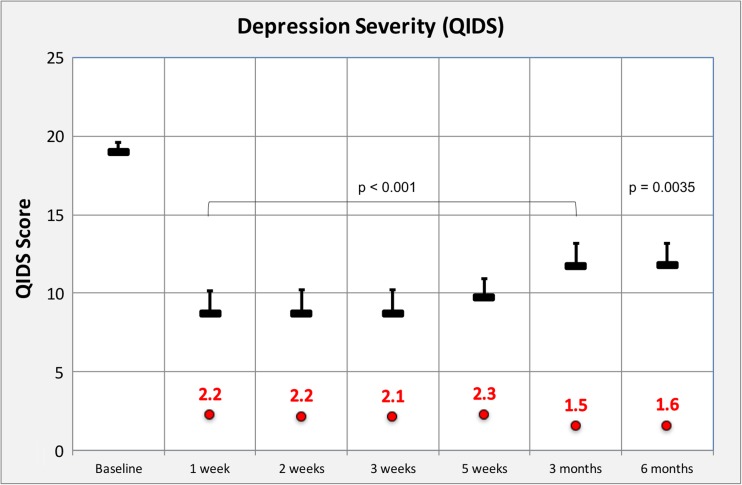
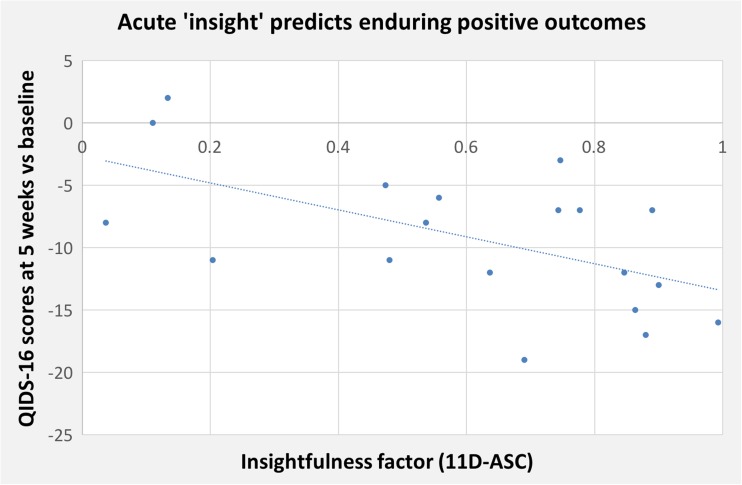
RATIONALE: Recent clinical trials are reporting marked improvements in mental health outcomes with psychedelic drug-assisted psychotherapy. OBJECTIVES: Here, we report on safety and efficacy outcomes for up to 6 months in an open-label trial of psilocybin for treatment-resistant depression. METHODS: Twenty patients (six females) with (mostly) severe, unipolar, treatment-resistant major depression received two oral doses of psilocybin (10 and 25 mg, 7 days apart) in a supportive setting. Depressive symptoms were assessed from 1 week to 6 months post-treatment, with the self-rated QIDS-SR16 as the primary outcome measure. RESULTS: Treatment was generally well tolerated. Relative to baseline, marked reductions in depressive symptoms were observed for the first 5 weeks post-treatment (Cohen's d = 2.2 at week 1 and 2.3 at week 5, both p < 0.001); nine and four patients met the criteria for response and remission at week 5. Results remained positive at 3 and 6 months (Cohen's d = 1.5 and 1.4, respectively, both p < 0.001). No patients sought conventional antidepressant treatment within 5 weeks of psilocybin. Reductions in depressive symptoms at 5 weeks were predicted by the quality of the acute psychedelic experience. CONCLUSIONS: Although limited conclusions can be drawn about treatment efficacy from open-label trials, tolerability was good, effect sizes large and symptom improvements appeared rapidly after just two psilocybin treatment sessions and remained significant 6 months post-treatment in a treatment-resistant cohort. Psilocybin represents a promising paradigm for unresponsive depression that warrants further research in double-blind randomised control trials.
Overview
The claims and statistics of this paper haven’t been checked yet.
Free: it reads the open-access text and checks the first 5 claims that cite a source we can check. Create a free account to check every claim.
Integrity signals
Registry
Cites
Statistics
Figures
Verification
Claims the paper makes
The claims and statistics of this paper haven’t been checked yet.
Free: it reads the open-access text and checks the first 5 claims that cite a source we can check. Create a free account to check every claim.
Claims other papers make about this one
Each is checked against this paper’s own text: does it say what the citing paper says it does?
The source backs part of the claim, not all of it — or backs it for a different population, condition or comparison.
In the citing paper
“Not only do they produce sustained therapeutic effects following a single administration, they also appear to have broad therapeutic potential”
From Psychedelics and Other Psychoplastogens for Treating Mental Illness. (2021) · cites this paper as [41]
Experimental — accuracy not yet measuredThe source backs part of the claim, not all of it — or backs it for a different population, condition or comparison.
In the citing paper
“Unlike traditional antidepressants, psychoplastogens produce both fast-acting and sustained beneficial behavioral effects after a single administration (Figure 1) (38–42).”
From Psychedelics and Other Psychoplastogens for Treating Mental Illness. (2021) · cites this paper as [41]
Experimental — accuracy not yet measuredThe source backs part of the claim, not all of it — or backs it for a different population, condition or comparison.
In the citing paper
“the mood-elevating properties of psilocybin seem to last significantly longer”
From Psychedelics and Other Psychoplastogens for Treating Mental Illness. (2021) · cites this paper as [41]
Experimental — accuracy not yet measuredThe source backs part of the claim, not all of it — or backs it for a different population, condition or comparison.
In the citing paper
“Remarkably, these benefits were incurred even after only a single psychedelic administration and were maintained for as long as 6 months.”
From Examining the Potential Synergistic Effects Between Mindfulness Training and Psychedelic-Assisted Therapy (2021) · cites this paper as [30]
Experimental — accuracy not yet measuredThe source backs part of the claim, not all of it — or backs it for a different population, condition or comparison.
In the citing paper
“Most of these studies however suffer from low methodological validity and are mostly open-label, yet they have yielded preliminary evidence for the capacity of psychedelic substances for treating addiction, depression, anxiety, and eating disorders (29–35).”
From Examining the Potential Synergistic Effects Between Mindfulness Training and Psychedelic-Assisted Therapy (2021) · cites this paper as [30]
Experimental — accuracy not yet measured
13 more claims about this paper
Create a free account to see every claim other papers make about this one.
Self-check
Percentages, sums and reported differences re-computed from the paper’s own numbers.
The self-check needs the paper’s full text.
Citations
Cites
Griffiths, R. R., Johnson, M. W., Carducci, M. A., Umbricht, A., Richards, W. A., Richards, B. D., Cosimano, M. P., & Klinedinst, M. A. (2016) · Journal of Psychopharmacology · doi:10.1177/0269881116675513 · Cited by 2,201 · cited 5×
“Recent studies (Griffiths et al. 2016; Ross et al. 2016; Carhart-Harris et al. 2016), including the present one, help demonstrate the feasibility of treating patients with major depressive disorder with psilocybin plus psychological support.”
BackgroundResultInfluentialRoss, S., Bossis, A., Guss, J., Agin-Liebes, G., Malone, T., Cohen, B., Mennenga, S. E., Belser, A., Kalliontzi, K., Babb, J., et al. (2016) · Journal of Psychopharmacology · doi:10.1177/0269881116675512 · Cited by 1,698 · cited 8×
“Recent studies (Griffiths et al. 2016; Ross et al. 2016; Carhart-Harris et al. 2016), including the present one, help demonstrate the feasibility of treating patients with major depressive disorder with psilocybin plus psychological support.”
BackgroundResultInfluentialCarhart-Harris, R. L., Bolstridge, M., Rucker, J., Day, C. M. J., Erritzoe, D., Kaelen, M., Bloomfield, M., Rickard, J. A., Forbes, B., Feilding, A., et al. (2016) · The Lancet Psychiatry · doi:10.1016/s2215-0366(16)30065-7 · Cited by 1,540 · cited 5×
“Recent studies (Griffiths et al. 2016; Ross et al. 2016; Carhart-Harris et al. 2016), including the present one, help demonstrate the feasibility of treating patients with major depressive disorder with psilocybin plus psychological support.”
BackgroundMethodResultInfluentialSelf-citationPilot Study of Psilocybin Treatment for Anxiety in Patients With Advanced-Stage Cancer
Grob, C. S., Danforth, A. L., Chopra, G. S., Hagerty, M., McKay, C. R., Halberstadt, A. L., & Greer, G. R. (2011) · Archives of General Psychiatry · doi:10.1001/archgenpsychiatry.2010.116 · Cited by 1,206 · cited 6×
“…separate trials have reported improvements in depressive symptoms after psilocybin-assisted psychotherapy (Griffiths et al. 2016; Ross et al. 2016; Grob et al. 2011; CarhartHarris et al. 2016), including one in which ‘treatment-resistant depression’ was the primary criterion for inclusion…”
BackgroundResultInfluentialHuman hallucinogen research: guidelines for safety
Johnson, M., Richards, W., & Griffiths, R. (2008) · Journal of Psychopharmacology · doi:10.1177/0269881108093587 · Cited by 1,203 · cited 2×
“Basic principles for safe therapeutic work with psychedelics can be found in guidelines (Johnson et al. 2008) and books (Richards 2015) but more systematic verification, refinement and (eventual) manualisation of treatment approaches are needed for subsequent roll-out (Carhart-Harris and Goodwin…”
BackgroundPsilocybin-assisted treatment for alcohol dependence: A proof-of-concept study
Bogenschutz, M. P., Forcehimes, A. A., Pommy, J. A., Wilcox, C. E., Barbosa, P., & Strassman, R. J. (2015) · Journal of Psychopharmacology · doi:10.1177/0269881114565144 · Cited by 1,151 · cited 1×
“Psilocybin has shown promise in the treatment of obsessive compulsive disorder (Moreno et al. 2006), alcohol (Bogenschutz et al. 2015) and tobacco addiction (Johnson et al. 2014) and anxiety related to terminal diagnoses (Griffiths et al. 2016; Ross et al. 2016; Grob et al. 2011).”
BackgroundPsilocybin induces schizophrenia-like psychosis in humans via a serotonin-2 agonist action
Vollenweider, F. X., Vollenweider-Scherpenhuyzen, M. F. I., Bäbler, A., Vogel, H., & Hell, D. (1998) · NeuroReport · doi:10.1097/00001756-199812010-00024 · Cited by 1,018 · cited 1×
“Like all serotonergic psychedelics, psilocybin initiates its characteristic effects via serotonin 2A receptor (5-HT2AR) agonism (Vollenweider et al. 1998).”
BackgroundPilot study of the 5-HT 2A R agonist psilocybin in the treatment of tobacco addiction
Johnson, M. W., Garcia-Romeu, A., Cosimano, M. P., & Griffiths, R. R. (2014) · Journal of Psychopharmacology · doi:10.1177/0269881114548296 · Cited by 914 · cited 1×
“Psilocybin has shown promise in the treatment of obsessive compulsive disorder (Moreno et al. 2006), alcohol (Bogenschutz et al. 2015) and tobacco addiction (Johnson et al. 2014) and anxiety related to terminal diagnoses (Griffiths et al. 2016; Ross et al. 2016; Grob et al. 2011).”
BackgroundGriffiths, R., Richards, W., Johnson, M., McCann, U., & Jesse, R. (2008) · Journal of Psychopharmacology · doi:10.1177/0269881108094300 · Cited by 905 · cited 2×
“involving appropriate psychological support), sustained improvements in well-being in healthy individuals were observed after a single dose of psilocybin in a doubleblind design incorporating an active placebo (Griffiths et al. 2008).”
BackgroundMethodSafety, tolerability, and efficacy of psilocybin in 9 patients with obsessive-compulsive disorder
Moreno, F. A., Wiegand, C. B., Taitano, E. K., & Delgado, P. L. (2006) · The Journal of Clinical Psychiatry · doi:10.4088/jcp.v67n1110 · Cited by 789 · cited 2×
“Psilocybin has shown promise in the treatment of obsessive compulsive disorder (Moreno et al. 2006),”
Background
Cited by
Items 601–700 of 969
Psilocybin for Treatment-Resistant Depression
Roméo, B., Dervaux, A., & Benyamina, A. (2023) · New England Journal of Medicine · doi:10.1056/nejmc2215459 · Cited by 6
Pogorelov, V. M., Rodriguiz, R. M., Roth, B. L., & Wetsel, W. C. (2023) · bioRxiv (Cold Spring Harbor Laboratory) · doi:10.1101/2023.06.01.543310 · Cited by 5
Psilocin fosters neuroplasticity in iPSC-derived human cortical neuronsPreprint
Schmidt, M., Hoffrichter, A., Davoudi, M., Horschitz, S., Lau, T., Meinhardt, M. W., Spanagel, R., Ladewig, J., Köhr, G., & Koch, P. (2024) · Research Square · doi:10.21203/rs.3.rs-4242829/v1 · Cited by 5
Psilocin fosters neuroplasticity in iPSC-derived human cortical neuronsPreprint
Schmidt, M., Hoffrichter, A., Davoudi, M., Horschitz, S., Lau, T., Meinhardt, M. W., Spanagel, R., Ladewig, J., Köhr, G., & Koch, P. (2026) · eLife · doi:10.7554/elife.104006 · Cited by 14
Kettner, H., Roseman, L., Gazzaley, A., Carhart-Harris, R. L., & Pasquini, L. (2024) · Research Square · doi:10.21203/rs.3.rs-3977169/v1 · Cited by 5
Self-citationPsychoanalyst attitudes towards psychedelic-assisted therapy
Kraiem, E., Diener, M., Guss, J., Mavrides, L., & Saban, S. (2025) · Drugs Education Prevention and Policy · doi:10.1080/09687637.2024.2359444 · Cited by 4
Rodan, S.-C., Meez, N., Lloyd-Hurwitz, S., Bedoya‐Pérez, M. A., Suraev, A. S., Sommer, N., Greenstien, K., Maguire, S., & McGregor, I. S. (2025) · Journal of Eating Disorders · doi:10.1186/s40337-025-01328-5 · Cited by 5
Horato, N., Dalvi-Garcia, F., Dutra, P. E. P., & Nardi, A. E. (2026) · Journal of Clinical Psychopharmacology · doi:10.1097/jcp.0000000000002122 · Cited by 5
Murray, Z., Lewies, A., Wentzel, J. F., Schutte‐Smith, M., Erasmus, E., Noreljaleel, A. E. M., Visser, H. G., Wilhelm, A., & Issahaku, A. R. (2026) · Scientific Reports · doi:10.1038/s41598-026-39483-7 · Cited by 7
“This may explain reports of transient increases in heart rate and blood pressure following psilocybin ingestion 6,52 , as well as the potential to mitigate stress-induced cardiac dysfunction and decrease the risk for cardiovascular disease through increasing neuroplasticity upon psychedelic…”
Psychedelic therapy and cultural humility
Gearin, A. K., Docherty, J., Sun, X., Cheung, E. H.-L., & Tanuseputro, P. (2026) · Translational Psychiatry · doi:10.1038/s41398-026-03913-x · Cited by 4
“Given the importance of “ setting ” to clinical outcomes [68], the physical environment can also be adapted.”
Rucker, J., Mantingh, T., Kerr‐Gaffney, J., Bird, C., Chu, P., Modlin, N. L., Campbell‐Coker, K., Hambleton, S., Seath, P., Hignett, R., et al. (2026) · Nature Medicine · doi:10.1038/s41591-026-04541-0 · Cited by 6
“Prior to the funding of this study, a single open-label, publicly funded pilot study had been completed in 20 patients with TRD in England 7 .”
InfluentialSelf-citationIn naturalistic psychedelic use, group use is common and acceptable
Byrne, K., Lindsay, S., Baker, N. J., Schmutz, C., & Lewis, B. (2023) · Journal of Psychedelic Studies · doi:10.1556/2054.2023.00261 · Cited by 6
Is Use of Psychedelic Drugs a Risk or Protective Factor for Late-Life Cognitive Decline?
Fearn, K., & Bhattacharyya, K. K. (2024) · Gerontology and Geriatric Medicine · doi:10.1177/23337214241250108 · Cited by 5
Psychedelic‐assisted therapy for palliative care within a home treatment setting: A case report
Seragnoli, F., Geo, M., Entela, M., Bachmann, S., Rabitti, E., Cavuto, S., Dubus, Z., Penzenstadler, L. E., Thorens, G., Billieux, J., et al. (2024) · Clinical Case Reports · doi:10.1002/ccr3.9305 · Cited by 7
“7 A distinction must be made between classic psychedel-ics and non-classic psychedelics such as MDMA.”
BackgroundContinuous flow synthesis of N , N -dimethyltryptamine (DMT) analogues with therapeutic potential
Simoens, A., Dejaegere, A., Vandevelde, M., & Stevens, C. V. (2025) · RSC Medicinal Chemistry · doi:10.1039/d4md00562g · Cited by 5
Feasibility of a Hypnosis Intervention for a Mystical Experience
Corlett, C. E., Alldredge, C. T., & Elkins, G. R. (2025) · International Journal of Clinical and Experimental Hypnosis · doi:10.1080/00207144.2025.2491352 · Cited by 5
Beck, S. A., Barlow, C., Engel, L. B., & Barratt, M. J. (2025) · Toxicon · doi:10.1016/j.toxicon.2025.108450 · Cited by 4
Exploring a Druggable Hydrophobic Tunnel in the 5-HT2A Receptor with Potent Phenethylamines
Simon, Í. A., Pottie, E., Jensen, M. K., Harpsøe, K., Jensen, A. A., Kristensen, J. L., Stove, C. P., & Poulie, C. B. M. (2026) · Journal of Medicinal Chemistry · doi:10.1021/acs.jmedchem.6c01973 · Cited by 4
Clark, G. (2021) · International Journal of Jungian Studies · doi:10.1163/19409060-bja10017 · Cited by 11
Burt, I. (2023) · Journal of Creativity in Mental Health · doi:10.1080/15401383.2023.2237868 · Cited by 4
Schuitmaker, N. (2023) · Research Society and Development · doi:10.33448/rsd-v12i9.43308 · Cited by 5
“, 2015), and treatmentresistant depression (Carhart-Harris et al., 2016; Carhart-Harris et al., 2018).”
BackgroundGriffin, C., & Knight, A. (2024) · Journal of Psychedelic Studies · doi:10.1556/2054.2024.00333 · Cited by 3
“Research also suggests psi-locybin may be an effective treatment for OCD (Wilcox, 2014), treatment-resistant depression (Carhart-Harris et al., 2017; Goodwin et al., 2022), smoking cessation (Johnson, Garcia-Romeu, Cosimano, & Grif fi ths, 2014), alcoholism (Bogenschutz et al., 2015, 2022) and end…”
BackgroundSwanson, L. R., Jungers, S., Varghese, R., Cullen, K. R., Evans, M. D., Nielson, J. L., & Schallmo, M. (2024) · Journal of Vision · doi:10.1167/jov.24.12.5 · Cited by 6
Perspectives of Psychotherapists Regarding Psychedelic Assisted Therapy
Kinahan, S. P., & Wilson, E. J. (2025) · Counselling and Psychotherapy Research · doi:10.1002/capr.12881 · Cited by 5
Exploring serotonergic psychedelics as a treatment for personality disorders
Carrithers, B. M., Roberts, D. E., Weiss, B., King, J. D., Carhart-Harris, R. L., Gordon, A. R., Pagni, B. A., Moreau, M., Ross, S., & Zeifman, R. J. (2025) · Neuropharmacology · doi:10.1016/j.neuropharm.2025.110413 · Cited by 4
Self-citationMusic and non-music approaches in psilocybin-assisted psychotherapy: The sound of silence
Gloeckler, S. G., Lévesque, J. T., Lehmann, A., Farzin, H., & Greenway, K. T. (2025) · Journal of Psychedelic Studies · doi:10.1556/2054.2024.00421 · Cited by 7
Henry, J. S., Giribaldi, B., Nutt, D. J., Erritzøe, D., Carhart-Harris, R. L., & Lyons, T. (2025) · European Neuropsychopharmacology · doi:10.1016/j.euroneuro.2025.06.003 · Cited by 5
Self-citationFarré, M., Papaseit, E., Fonseca, F., & Torrens, M. (2020) · Springer eBooks · doi:10.1007/978-3-030-36391-8_19 · Cited by 5
Altman, B. R., Earleywine, M., & Leo, J. A. D. (2022) · Journal of Psychoactive Drugs · doi:10.1080/02791072.2021.2020382 · Cited by 4
Emerging drugs for the treatment of major depressive disorder
Hong, J., Vernon, D., Kunovac, J. L., & Stahl, S. M. (2022) · Expert Opinion on Emerging Drugs · doi:10.1080/14728214.2022.2117297 · Cited by 5
“001) furthering the evidence that it is a viable treatment possibility with lasting effects [77].”
BackgroundPsychedelics for Alzheimer's Disease Palliative Care
McManus, K. R., Patrick, R. E., Striepe, M. I., Drury, M. J., Ozonsi, R., Forester, B. P., & Weinberg, M. S. (2022) · Advances in Psychiatry and Behavioral Health · doi:10.1016/j.ypsc.2022.06.001 · Cited by 5
Predictors of Pharmacy Students' Attitudes About the Therapeutic Use of Psilocybin
Bhuiya, N. M. M. A., Jacobs, R. J., Wang, K., Sun, Y., Nava, B., Sampiere, L., Yerubandi, A., & Caballero, J. (2023) · Cureus · doi:10.7759/cureus.45169 · Cited by 8
“However, although psilocybin has been reported to be relatively safe and can result in positive experiences under a controlled environment, there can be some negative consequences such as transient paranoia, nausea, and headaches lasting several days [23].”
BackgroundTowards a New Materialism in Psychedelic Studies
Oostveen, D. F. (2023) · Deleuze and Guattari Studies · doi:10.3366/dlgs.2023.0530 · Cited by 5
Olsen, A. S., Lykkebo-Valløe, A., Ozenne, B., Madsen, M. K., Stenbæk, D. S., Armand, S., Mørup, M., Ganz, M., Knudsen, G. M., & Fisher, P. M. (2021) · medRxiv · doi:10.1101/2021.12.17.21267992 · Cited by 4
PHARMACOKINETICS OF N,N-DIMETHYLTRYPTAMINE FUMARATE IN HUMANSPreprint
Good, M., Benway, T. A., Joel, Z., Routledge, C. A., Timmermann, C., Erritzøe, D., Weaver, R., Allen, G., Hughes, C., Topping, H., et al. (2022) · doi:10.22541/au.165237523.39763980/v1 · Cited by 4
Advancing translational neuroscience research for eating disorders
Foldi, C. J., James, M. H., Brown, R. M., Piya, M. K., & Steward, T. (2022) · Australian & New Zealand Journal of Psychiatry · doi:10.1177/00048674221106678 · Cited by 5
“A growing base of evidence supports the potential efficacy of psilocybin in alleviating symptoms of depression, addiction and end-of-life anxiety (Carhart-Harris et al., 2018) and in improving outcomes in patient populations by increasing cognitive and neural flexibility (Doss et al.”
BackgroundCould psychedelics treat personality disorders
(2022) · Journal of Addiction Science · doi:10.17756/jas.2022-057 · Cited by 3
Psychedelic experiences in psychedelic-assisted therapy for depression
Khan, U. (2024) · Philosophical Psychology · doi:10.1080/09515089.2024.2378845 · Cited by 3
Gaur, P., Engel, L. B., Hall, D. R., Khoo, C., Sarris, J. J., Perkins, D., Li, C. G., & Low, M. (2025) · Forensic Chemistry · doi:10.1016/j.forc.2025.100659 · Cited by 3
Entheogen: an evolutionary medicine for neuropsychiatric disorders
Wang, Y., & Wang, X. (2025) · National Science Review · doi:10.1093/nsr/nwaf168 · Cited by 3
From molecules to meaning: unpacking the antidepressant mechanisms of psychedelic drugs
Acero, V. P., Flatt, T. A., Gooch, P. M., Gaughan, S. J., Levin, A. W., & Davis, A. K. (2025) · Expert Review of Clinical Pharmacology · doi:10.1080/17512433.2025.2515866 · Cited by 4
Psychedelic Treatment with Psilocybin: Addressing Medical Malpractice Risk and Physicians’ Concerns
Cheung, K., Brodie, M., Chang, S.-L., Deschamps, P., Fallu, J., Farzin, H., Hébert, J., Stephan, J.-F., Dorval, M., Joly, Y., et al. (2025) · The Journal of Law Medicine & Ethics · doi:10.1017/jme.2025.10109 · Cited by 5
“15 Clinical improvement often persists for a relatively long period of time after a single administration of psilocybin, with effects lasting from 4 weeks to up to 12 months.”
Rosa, I., Padula, L. P., Semeraro, F., Marrangone, C., Inserra, A., Risio, L. D., Boffa, M., Zoratto, F., Borgi, M., Guidotti, R., et al. (2025) · Psychiatry Research · doi:10.1016/j.psychres.2025.116697 · Cited by 6
Psilocybin-assisted psychotherapy in adults with depression – A literature review
Dorczok, M. C., Mittmann, G., Ettl, T., & Steiner‐Hofbauer, V. (2025) · Progress in Neuro-Psychopharmacology and Biological Psychiatry · doi:10.1016/j.pnpbp.2025.111508 · Cited by 4
Marinis, J., Clarke, S. T., Guerin, A. A., Guastella, A. J., & Bedi, G. (2025) · BJPsych Open · doi:10.1192/bjo.2025.10847 · Cited by 6
Allen, J., Sun, M., Baker, T. L., Dames, S., Kryskow, P., Christie, B. R., McDonald, S. J., & Shultz, S. R. (2025) · Molecular Psychiatry · doi:10.1038/s41380-025-03329-x · Cited by 5
Islas-Vargas, J., Armenta, S., Rivera-Román, Á. A., Hernández-León, S., Méndez-Hernández, J. E., & Arce-Cervantes, O. (2025) · World Journal of Microbiology and Biotechnology · doi:10.1007/s11274-025-04758-0 · Cited by 3
Roberts, C., Seynaeve, M., Ermakova, A. O., Dunbar, F., Wells, H., Puri, A., Bird, C., & Rucker, J. (2026) · Journal of Psychopharmacology · doi:10.1177/02698811261420087 · Cited by 6
Self-citationZiadi, Y., & Park, T. (2026) · Value in Health Regional Issues · doi:10.1016/j.vhri.2026.101605 · Cited by 3
Mertens, L. J., Betzler, F., Brand, M., Evens, R., Jungaberle, A., Jungaberle, H., Kärtner, L., Majić, T., Schmitz, C. N., Ströhle, A., et al. (2026) · Psychotherapy and Psychosomatics · doi:10.1159/000552272 · Cited by 5
Bender, D. A., & Siegel, J. S. (2024) · Elsevier eBooks · doi:10.1016/b978-0-323-95702-1.00043-9 · Cited by 4
Andersen, K. A. A., Holmøy, B., & Stewart, L. H. (2024) · Journal of Psychedelic Studies · doi:10.1556/2054.2024.00346 · Cited by 4
MacLeod, A., Clarke, V., & Warner, C. (2025) · The Arts in Psychotherapy · doi:10.1016/j.aip.2025.102284 · Cited by 3
Biba, B.-J., & O’Shea, B. A. (2025) · Journal of Psychoactive Drugs · doi:10.1080/02791072.2025.2511750 · Cited by 4
Modification of natural tryptamines for the treatment of neuropsychiatric diseases
Palfreyman, M. G., Varty, G. B., Stang, E. M., Boltaev, U., Avery, K., & Nivorozhkin, A. (2025) · Journal of Psychopharmacology · doi:10.1177/02698811251368362 · Cited by 3
Interval delivery of 5HT2A agonists using multilayered polymer films
Hossain, M., Sulochana, S. P., Heath, K. E., Bari, S. M. I., Brewster, P. R., Barnes, J., Munivar, A., Walker, G. M., Puleo, D. A., & Werfel, T. A. (2023) · Journal of Biomedical Materials Research Part A · doi:10.1002/jbm.a.37497 · Cited by 3
Educational Materials and Image Induction Increase Treatment Credibility
Low, F., & Earleywine, M. (2023) · Journal of Psychoactive Drugs · doi:10.1080/02791072.2022.2154722 · Cited by 3
Information parity increases on functional brain networks under influence of a psychedelic substance
Viol, A., Viswanathan, G. M., Soldatkina, O., Palhano-Fontes, F., Onias, H., de Araújo, D. B., & Hövel, P. (2023) · Journal of Physics Complexity · doi:10.1088/2632-072x/acc22b · Cited by 4
Next generation antidepressants with novel mechanisms for treatment resistant depression
Chen, M., Tu, P., & Su, T. (2023) · Progress in brain research · doi:10.1016/bs.pbr.2023.02.005 · Cited by 3
Cognición extendida y símbolos de la velada mazateca con hongos psilocibios
Caynas-Rojas, S., & Mercadillo, R. E. (2024) · Andamios · doi:10.29092/uacm.v21i54.1063 · Cited by 2
Psychedelika in der Psychiatrie: Einführung und Stand klinischer Studien
Herwig, U. (2024) · Nervenheilkunde · doi:10.1055/a-2233-4301 · Cited by 3
A bibliometric analysis of research on psychedelics for depression treatment
Hua, H., Fu, X., Wang, W., Wang, S., Wang, D., Wu, Z., Zhang, Q., He, T., & Yang, C. (2024) · Heliyon · doi:10.1016/j.heliyon.2024.e36886 · Cited by 3
Therapeutic Use of Psychedelics for Mental Disorders: A Systematized Review
Alyahya, N. M., & Saleem, E. A. A. (2024) · Journal of Nature and Science of Medicine · doi:10.4103/jnsm.jnsm_76_24 · Cited by 6
Low, Z. X. B., Yong, S. J., AlRasheed, H. A., Al‐Subaie, M. F., Kaabi, N. A., Alfaresi, M. S., Albayat, H., Alotaibi, J., bshabshe, A. A. A. A., Alwashmi, A. S. S., et al. (2025) · Progress in Neuro-Psychopharmacology and Biological Psychiatry · doi:10.1016/j.pnpbp.2025.111279 · Cited by 4
Jensen, A. A., Cecchi, C. R., Hibicke, M., Bach, A. H., Kaadt, E., Märcher-Rørsted, E., Nichols, C. D., Elfving, B., & Kristensen, J. L. (2025) · ACS Pharmacology & Translational Science · doi:10.1021/acsptsci.5c00208 · Cited by 4
Acute and Long-Term Effects of Ayahuasca on (Higher-Order) Cognitive Processes
Mason, N. L., & Kuypers, K. P. C. (2021) · Springer eBooks · doi:10.1007/978-3-030-55688-4_7 · Cited by 4
A case of treatment-resistant depression in an older adult and a discussion of treatment options
Pope, E., Muthukrishnan, S., Phillips, J., & Phillips, S. M. (2021) · BJPsych Bulletin · doi:10.1192/bjb.2021.105 · Cited by 3
Conformational Landscape and Hydrogen Bonding Pattern of Psilocin: Computational Insights
Bhadoria, P., & Ramanathan, V. (2023) · ChemistrySelect · doi:10.1002/slct.202203994 · Cited by 3
“Go Ask Alice”: The Case for Researching Schedule I Drugs
Iserson, K. V. (2018) · Cambridge Quarterly of Healthcare Ethics · doi:10.1017/s0963180118000518 · Cited by 3
The role of ceremonial ayahuasca use and the healing of eating disorders: a qualitative study
Renelli, M. (2018) · Lu Zone Ul (Laurentian University) · Cited by 10
Initiation of drug and alcohol use and personality development during adolescencePreprint
Wright, A. J., & Jackson, J. J. (2020) · doi:10.31234/osf.io/gpsj4 · Cited by 3
Classic psychedelics: past uses, present trends, future possibilitiesPreprint
Safron, A., & Johnson, M. W. (2022) · PsyArXiv (OSF Preprints) · doi:10.31234/osf.io/eys2j · Cited by 6
(Dis)connectedness, suicidality and group psychedelic therapies.Preprint
McAlpine, R. G., & Blackburne, G. (2024) · PsyArXiv (OSF Preprints) · doi:10.31234/osf.io/haeqs · Cited by 2
Gordon, A. R., Carrithers, B. M., Pagni, B. A., Kettner, H., Marrocu, A., Nayak, S. M., Weiss, B., Carhart-Harris, R. L., Roberts, D. E., & Zeifman, R. J. (2024) · Research Square · doi:10.21203/rs.3.rs-4203641/v1 · Cited by 5
Self-citationLasting effect of psilocybin on sociability can be blocked by DNA methyltransferase inhibitionPreprint
Song, C., Chang, T., Buchborn, T., & Knöpfel, T. (2025) · bioRxiv (Cold Spring Harbor Laboratory) · doi:10.1101/2025.03.10.642385 · Cited by 6
Fernández‐Borkel, T., Borkel, L. F., Rojas‐Hernández, J., Hernández‐Álvarez, E., Hernández, D. J. Q., Ponti, L. G., & Henríquez‐Hernández, L. A. (2025) · ACS Pharmacology & Translational Science · doi:10.1021/acsptsci.5c00445 · Cited by 6
The Therapeutic Potential of Psychedelics on Reducing Rumination: A Mini-Review
Ramarushton, B., Blumenthal, H., Ryals, A. J., Boals, A., & Thompson, L. (2024) · Psychedelic Medicine · doi:10.1089/psymed.2024.0009 · Cited by 3
“43 Due to the considerable variation, contemporary research has yet to identify speci fi c factors that maximize the effectiveness of psychotherapeutic protocols and sustain treatment effects.”
Sun, X., Liu, D., & Zhao, X. (2024) · World Journal of Microbiology and Biotechnology · doi:10.1007/s11274-024-04168-8 · Cited by 3
Psilocin fosters neuroplasticity in iPSC-derived human cortical neurons
Schmidt, M., Hoffrichter, A., Davoudi, M., Horschitz, S., Lau, T., Meinhardt, M. W., Spanagel, R., Ladewig, J., Köhr, G., & Koch, P. (2026) · eLife · doi:10.7554/elife.104006.3 · Cited by 10
Shuler, M. K., & Keller-Dupree, E. A. (2025) · Journal of Human Services · doi:10.52678/001c.132043 · Cited by 2
Beesley, V. L., Kennedy, T., Maccallum, F., Ross, M., Harvey, R., Rossell, S. L., Sarris, J. J., Perkins, D., Neale, R. Ε., Bennett–Levy, J., et al. (2025) · BMJ Open · doi:10.1136/bmjopen-2024-095992 · Cited by 4
Weintraub, M. J., Miklowitz, D. J., & Jeffrey, J. K. (2025) · Journal of Psychiatric Practice · doi:10.1097/pra.0000000000000853 · Cited by 3
“6,10 In these early pilot trials, antidepressant effect sizes were reported that were ~1.5 to 2 times greater than the effect sizes found for standard pharmacotherapy or psychotherapy for depression.”
InfluentialRise of the Mushrooms: Effects of Psilocybin Reforms on Psychedelic Usage Patterns
Bhave, A. (2025) · Journal of Public Policy & Marketing · doi:10.1177/07439156251360774 · Cited by 4
Palmisano, V. F., Agnorelli, C., Faraji, S., & Nogueira, J. J. (2025) · Physical Chemistry Chemical Physics · doi:10.1039/d5cp01252j · Cited by 2
Psychedelic therapy: bridging neuroplasticity, phenomenology, and clinical outcomes
Kishon, R., & Cycowicz, Y. M. (2025) · Frontiers in Psychiatry · doi:10.3389/fpsyt.2025.1637162 · Cited by 3
Bernal, A. M. O., Raison, C. L., Lancelotta, R., Timmermann, C., Sepeda, N. D., & Davis, A. K. (2025) · Journal of Psychoactive Drugs · doi:10.1080/02791072.2025.2577305 · Cited by 1
Brown, R. E., Lissemore, J. I., Shinozuka, K., Coetzee, J. P., Faerman, A., Olash, C., Geoly, A. D., Buchanan, D. M., Cherian, K. N., Chaiken, A., et al. (2025) · Journal of Affective Disorders · doi:10.1016/j.jad.2025.120722 · Cited by 4
Gregersen, A. T., Whelan, T. P., Golden, C. T., Blackmore, T., & Palner, M. (2026) · Psychedelic Medicine · doi:10.1177/28314425251386879 · Cited by 3
Moral Considerations and the Experience of Ego Dissolution: Insights from Psilocybin
Karimov, A., & Rasulov, D. (2025) · Asian Journal of Ethics in Health and Medicine · doi:10.51847/ml10ckoxsw · Cited by 2
Psilocybin to promote synaptogenesis in the brains of patients with mild cognitive impairment
Song, J., Kambari, Y., Amaev, A., Ueno, F., Carmona, E. T., Luca, V. D., Pollock, B. G., Flint, A. J., Husain, M. I., Graff‐Guerrero, A., et al. (2023) · Medical Hypotheses · doi:10.1016/j.mehy.2023.111068 · Cited by 5
Videira, N. B., Nair, V., Paquet, V., & Calhoun, D. (2023) · Journal of Applied Toxicology · doi:10.1002/jat.4533 · Cited by 2
Unveiling the Psychedelic Journey: An Appraisal of Psilocybin as a Profound Antidepressant Therapy
Shah, F. I., Shehzadi, S., Akram, F., Haq, I. U., Javed, B., Sabir, S., Kazim, Y., & Ashfaq, S. (2023) · Molecular Biotechnology · doi:10.1007/s12033-023-00994-7 · Cited by 4
Aghaei, A. M., Weleff, J., Martins, B. S., Ing, K., Fontenele, R., Barnett, B. S., Anand, A., & Nia, A. B. (2024) · Current Addiction Reports · doi:10.1007/s40429-024-00574-y · Cited by 2
At the Forefront: Social Workers’ Role in Psilocybin Treatment for Depression and Substance Misuse
Parker, C., & Wood, B. M. (2024) · Social Work · doi:10.1093/sw/swae019 · Cited by 4
Psychedelic Research for Alcohol Use Disorder with Comorbid Major Depressive Disorder: An Unmet Need
de Jonge, D., van der Meer, P. B., Kramers, C., & Schellekens, A. (2024) · Current Psychiatry Reports · doi:10.1007/s11920-024-01567-4 · Cited by 3
“In continuation of their earlier open-label work [50, 51], a phase II RCT by Carhart-Harris et al. (2021) compared psilocybin to the SSRI escitalopram [52].”
Fernandes-Nascimento, M. H., Viana-Ferreira, K., & Negrão, A. B. (2025) · Psychedelic Medicine · doi:10.1089/psymed.2024.0031 · Cited by 3
The Trouble With Psychedelic Cacti: Conflicting Meanings of San Pedro and Peyote
Engel, L. B., & Low, M. (2025) · Contemporary Drug Problems · doi:10.1177/00914509251318751 · Cited by 2
Holas, P., Kamińska, J., & Zajenkowski, M. (2025) · Dialogues in Clinical Neuroscience · doi:10.1080/19585969.2025.2470426 · Cited by 3
Is there a place for psychedelics in sports practice?
Portes, M. A. M., Werle, I., & Bertoglio, L. J. (2025) · Acta Neuropsychiatrica · doi:10.1017/neu.2025.13 · Cited by 4
Leonard, D., & Brooks, T. R. (2025) · Journal of Humanistic Psychology · doi:10.1177/00221678251330066 · Cited by 4
Metadata
- Authors
- Carhart-Harris, R. L., Bolstridge, M., Day, C. M. J., Rucker, J., Watts, R., Erritzoe, D. E., Kaelen, M., Giribaldi, B., Bloomfield, M., Pilling, S., Rickard, J. A., Forbes, B., Feilding, A., Taylor, D., Curran, H. V., & Nutt, D. J.
- Affiliations
- Imperial College London (GB)
- South London and Maudsley NHS Foundation Trust (GB)
- King's College London (GB)
- University College London (GB)
- Barts Health NHS Trust (GB)
- Beckley Foundation (GB)
- Corresponding author
- Carhart-Harris, R. L.
- ORCID
- Venue
- Psychopharmacology
- Published
- 2017-11-08
- Volume
- 235
- Issue
- 2
- Pages
- 399-408
- ISSN
- 0033-3158 (ISSN-L)
- 1432-2072
- PMC
- PMC5813086
- OpenAlex
- W2767530231
- Semantic Scholar
- 54241eed73a6a87c456f4b880ffcb168b50851f0
- Cited by
- 970
- References
- 40
- Citations by year
- 2026: 87 · 2025: 153 · 2024: 171 · 2023: 143 · 2022: 152 · 2021: 110 · 2020: 93 · 2019: 29 · 2018: 27 · 2017: 4
- FWCI
- 51.90
- Type
- journal article
- Language
- en
- Open access
- hybrid
- doi.org
- Locations
- Psychopharmacology (publishedVersion, cc-by)
- Europe PMC (PubMed Central) (publishedVersion, cc-by)
- PubMed Central (publishedVersion, cc-by)
- PubMed (publishedVersion)
- UCL Discovery (University College London) (submittedVersion)
- eScholarship (California Digital Library) (submittedVersion, cc-by)
- Research Portal (King's College London) (submittedVersion, cc-by)
- Spiral (Imperial College London) (submittedVersion, other-oa)
- Funders
- Medical Research Council (MR/J00460X/1)
- Topics
- Social Sciences › Psychology › Clinical Psychology › Psychedelics and Drug Studies
- Health Sciences › Medicine › Pharmacology (medical) › Treatment of Major Depression
- Social Sciences › Psychology › Clinical Psychology › Psychotherapy Techniques and Applications
- Keywords
- psilocybin, treatment-resistant depression, psychedelic-assisted psychotherapy, major depressive disorder, depressive symptom reduction, tolerability, long-term follow-up, QIDS-SR16
- MeSH terms
- Psychosocial Support Systems, Adult, Antidepressive Agents, Combined Modality Therapy, Double-Blind Method, Feasibility Studies, Female, Follow-Up Studies, Hallucinogens, Humans, Male, Middle Aged, Psilocybin, Time Factors, Treatment Outcome, Depressive Disorder, Treatment-Resistant
About these checks
Registry, retraction, Cites and statistics results are computed, not judged, with one exception: a printed reference that no index lists is read once by a model before it counts as a citation error. Claims are extracted by a model and kept only when their quote appears verbatim in the text; each cited source is then checked, with a model’s help, for whether it says what the claim relies on. Those verdicts can be wrong — read the claim’s quote and the cited source before relying on one.
Statistics and arithmetic are recomputed, not judged.
Confidence bands are shown only for fields calibrated on our annotated test set. None is calibrated yet, so no band is shown.
What counts as a claim ›How we measure confidence ›How we check this ›
Are you an author, or do you see a problem with this page? Request a review
Data sources
Bibliographic data: Semantic Scholar, OpenAlex, Crossref.
Contains information from the Semantic Scholar Academic Graph Datasets, made available under the ODC Attribution License (ODC-BY 1.0).
Semantic Scholar’s data is described in: Kinney, R., et al. (2023). The Semantic Scholar Open Data Platform. arXiv:2301.10140.
