

Psilocybin with psychological support for treatment-resistant depression: six-month follow-up
Open accessThe DOI matches its Crossref record; 40 of the 40 references it cites were found in a registry or an index.
Abstract
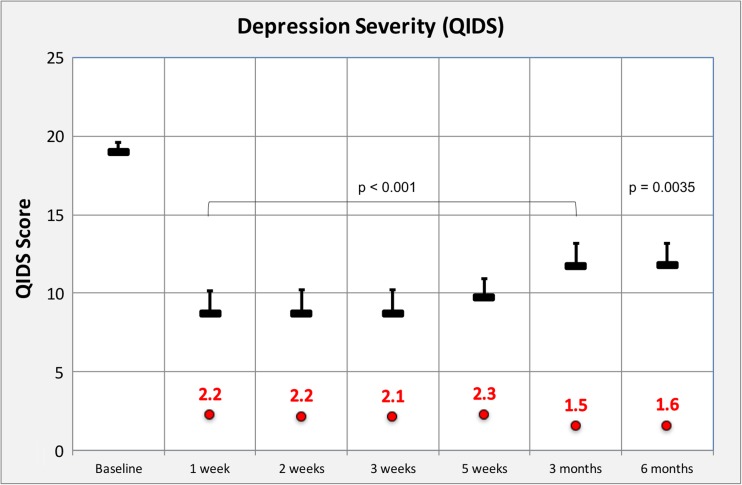
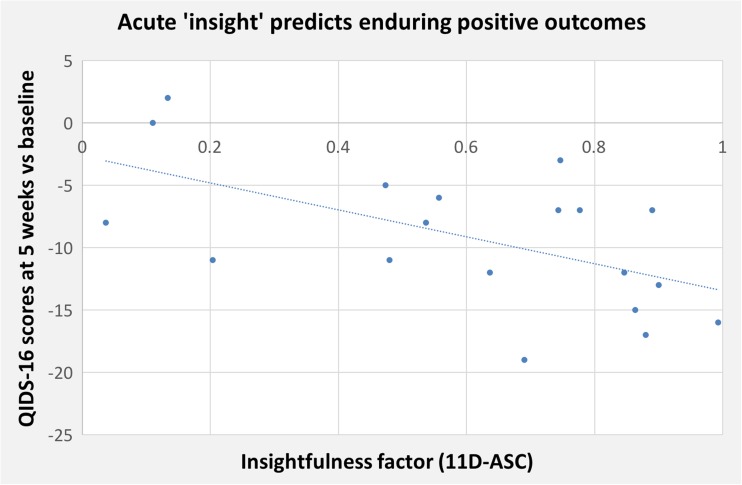
RATIONALE: Recent clinical trials are reporting marked improvements in mental health outcomes with psychedelic drug-assisted psychotherapy. OBJECTIVES: Here, we report on safety and efficacy outcomes for up to 6 months in an open-label trial of psilocybin for treatment-resistant depression. METHODS: Twenty patients (six females) with (mostly) severe, unipolar, treatment-resistant major depression received two oral doses of psilocybin (10 and 25 mg, 7 days apart) in a supportive setting. Depressive symptoms were assessed from 1 week to 6 months post-treatment, with the self-rated QIDS-SR16 as the primary outcome measure. RESULTS: Treatment was generally well tolerated. Relative to baseline, marked reductions in depressive symptoms were observed for the first 5 weeks post-treatment (Cohen's d = 2.2 at week 1 and 2.3 at week 5, both p < 0.001); nine and four patients met the criteria for response and remission at week 5. Results remained positive at 3 and 6 months (Cohen's d = 1.5 and 1.4, respectively, both p < 0.001). No patients sought conventional antidepressant treatment within 5 weeks of psilocybin. Reductions in depressive symptoms at 5 weeks were predicted by the quality of the acute psychedelic experience. CONCLUSIONS: Although limited conclusions can be drawn about treatment efficacy from open-label trials, tolerability was good, effect sizes large and symptom improvements appeared rapidly after just two psilocybin treatment sessions and remained significant 6 months post-treatment in a treatment-resistant cohort. Psilocybin represents a promising paradigm for unresponsive depression that warrants further research in double-blind randomised control trials.
Overview
The claims and statistics of this paper haven’t been checked yet.
Free: it reads the open-access text and checks the first 5 claims that cite a source we can check. Create a free account to check every claim.
Integrity signals
Registry
Cites
Statistics
Figures
Verification
Claims the paper makes
The claims and statistics of this paper haven’t been checked yet.
Free: it reads the open-access text and checks the first 5 claims that cite a source we can check. Create a free account to check every claim.
Claims other papers make about this one
Each is checked against this paper’s own text: does it say what the citing paper says it does?
The source backs part of the claim, not all of it — or backs it for a different population, condition or comparison.
In the citing paper
“Not only do they produce sustained therapeutic effects following a single administration, they also appear to have broad therapeutic potential”
From Psychedelics and Other Psychoplastogens for Treating Mental Illness. (2021) · cites this paper as [41]
Experimental — accuracy not yet measuredThe source backs part of the claim, not all of it — or backs it for a different population, condition or comparison.
In the citing paper
“Unlike traditional antidepressants, psychoplastogens produce both fast-acting and sustained beneficial behavioral effects after a single administration (Figure 1) (38–42).”
From Psychedelics and Other Psychoplastogens for Treating Mental Illness. (2021) · cites this paper as [41]
Experimental — accuracy not yet measuredThe source backs part of the claim, not all of it — or backs it for a different population, condition or comparison.
In the citing paper
“the mood-elevating properties of psilocybin seem to last significantly longer”
From Psychedelics and Other Psychoplastogens for Treating Mental Illness. (2021) · cites this paper as [41]
Experimental — accuracy not yet measuredThe source backs part of the claim, not all of it — or backs it for a different population, condition or comparison.
In the citing paper
“Remarkably, these benefits were incurred even after only a single psychedelic administration and were maintained for as long as 6 months.”
From Examining the Potential Synergistic Effects Between Mindfulness Training and Psychedelic-Assisted Therapy (2021) · cites this paper as [30]
Experimental — accuracy not yet measuredThe source backs part of the claim, not all of it — or backs it for a different population, condition or comparison.
In the citing paper
“Most of these studies however suffer from low methodological validity and are mostly open-label, yet they have yielded preliminary evidence for the capacity of psychedelic substances for treating addiction, depression, anxiety, and eating disorders (29–35).”
From Examining the Potential Synergistic Effects Between Mindfulness Training and Psychedelic-Assisted Therapy (2021) · cites this paper as [30]
Experimental — accuracy not yet measured
13 more claims about this paper
Create a free account to see every claim other papers make about this one.
Self-check
Percentages, sums and reported differences re-computed from the paper’s own numbers.
The self-check needs the paper’s full text.
Citations
Cites
Griffiths, R. R., Johnson, M. W., Carducci, M. A., Umbricht, A., Richards, W. A., Richards, B. D., Cosimano, M. P., & Klinedinst, M. A. (2016) · Journal of Psychopharmacology · doi:10.1177/0269881116675513 · Cited by 2,201 · cited 5×
“Recent studies (Griffiths et al. 2016; Ross et al. 2016; Carhart-Harris et al. 2016), including the present one, help demonstrate the feasibility of treating patients with major depressive disorder with psilocybin plus psychological support.”
BackgroundResultInfluentialRoss, S., Bossis, A., Guss, J., Agin-Liebes, G., Malone, T., Cohen, B., Mennenga, S. E., Belser, A., Kalliontzi, K., Babb, J., et al. (2016) · Journal of Psychopharmacology · doi:10.1177/0269881116675512 · Cited by 1,698 · cited 8×
“Recent studies (Griffiths et al. 2016; Ross et al. 2016; Carhart-Harris et al. 2016), including the present one, help demonstrate the feasibility of treating patients with major depressive disorder with psilocybin plus psychological support.”
BackgroundResultInfluentialCarhart-Harris, R. L., Bolstridge, M., Rucker, J., Day, C. M. J., Erritzoe, D., Kaelen, M., Bloomfield, M., Rickard, J. A., Forbes, B., Feilding, A., et al. (2016) · The Lancet Psychiatry · doi:10.1016/s2215-0366(16)30065-7 · Cited by 1,540 · cited 5×
“Recent studies (Griffiths et al. 2016; Ross et al. 2016; Carhart-Harris et al. 2016), including the present one, help demonstrate the feasibility of treating patients with major depressive disorder with psilocybin plus psychological support.”
BackgroundMethodResultInfluentialSelf-citationPilot Study of Psilocybin Treatment for Anxiety in Patients With Advanced-Stage Cancer
Grob, C. S., Danforth, A. L., Chopra, G. S., Hagerty, M., McKay, C. R., Halberstadt, A. L., & Greer, G. R. (2011) · Archives of General Psychiatry · doi:10.1001/archgenpsychiatry.2010.116 · Cited by 1,206 · cited 6×
“…separate trials have reported improvements in depressive symptoms after psilocybin-assisted psychotherapy (Griffiths et al. 2016; Ross et al. 2016; Grob et al. 2011; CarhartHarris et al. 2016), including one in which ‘treatment-resistant depression’ was the primary criterion for inclusion…”
BackgroundResultInfluentialHuman hallucinogen research: guidelines for safety
Johnson, M., Richards, W., & Griffiths, R. (2008) · Journal of Psychopharmacology · doi:10.1177/0269881108093587 · Cited by 1,203 · cited 2×
“Basic principles for safe therapeutic work with psychedelics can be found in guidelines (Johnson et al. 2008) and books (Richards 2015) but more systematic verification, refinement and (eventual) manualisation of treatment approaches are needed for subsequent roll-out (Carhart-Harris and Goodwin…”
BackgroundPsilocybin-assisted treatment for alcohol dependence: A proof-of-concept study
Bogenschutz, M. P., Forcehimes, A. A., Pommy, J. A., Wilcox, C. E., Barbosa, P., & Strassman, R. J. (2015) · Journal of Psychopharmacology · doi:10.1177/0269881114565144 · Cited by 1,151 · cited 1×
“Psilocybin has shown promise in the treatment of obsessive compulsive disorder (Moreno et al. 2006), alcohol (Bogenschutz et al. 2015) and tobacco addiction (Johnson et al. 2014) and anxiety related to terminal diagnoses (Griffiths et al. 2016; Ross et al. 2016; Grob et al. 2011).”
BackgroundPsilocybin induces schizophrenia-like psychosis in humans via a serotonin-2 agonist action
Vollenweider, F. X., Vollenweider-Scherpenhuyzen, M. F. I., Bäbler, A., Vogel, H., & Hell, D. (1998) · NeuroReport · doi:10.1097/00001756-199812010-00024 · Cited by 1,018 · cited 1×
“Like all serotonergic psychedelics, psilocybin initiates its characteristic effects via serotonin 2A receptor (5-HT2AR) agonism (Vollenweider et al. 1998).”
BackgroundPilot study of the 5-HT 2A R agonist psilocybin in the treatment of tobacco addiction
Johnson, M. W., Garcia-Romeu, A., Cosimano, M. P., & Griffiths, R. R. (2014) · Journal of Psychopharmacology · doi:10.1177/0269881114548296 · Cited by 914 · cited 1×
“Psilocybin has shown promise in the treatment of obsessive compulsive disorder (Moreno et al. 2006), alcohol (Bogenschutz et al. 2015) and tobacco addiction (Johnson et al. 2014) and anxiety related to terminal diagnoses (Griffiths et al. 2016; Ross et al. 2016; Grob et al. 2011).”
BackgroundGriffiths, R., Richards, W., Johnson, M., McCann, U., & Jesse, R. (2008) · Journal of Psychopharmacology · doi:10.1177/0269881108094300 · Cited by 905 · cited 2×
“involving appropriate psychological support), sustained improvements in well-being in healthy individuals were observed after a single dose of psilocybin in a doubleblind design incorporating an active placebo (Griffiths et al. 2008).”
BackgroundMethodSafety, tolerability, and efficacy of psilocybin in 9 patients with obsessive-compulsive disorder
Moreno, F. A., Wiegand, C. B., Taitano, E. K., & Delgado, P. L. (2006) · The Journal of Clinical Psychiatry · doi:10.4088/jcp.v67n1110 · Cited by 789 · cited 2×
“Psilocybin has shown promise in the treatment of obsessive compulsive disorder (Moreno et al. 2006),”
Background
Cited by
Items 201–300 of 969
Rijsketic, D. R., Casey, A. B., Barbosa, D. A. N., Zhang, X., Hietamies, T. M., Ramirez-Ovalle, G., Pomrenze, M. B., Halpern, C. H., Williams, L. M., Malenka, R. C., et al. (2023) · Neuropsychopharmacology · doi:10.1038/s41386-023-01613-4 · Cited by 54
“DISCUSSION The subjective effects of psilocybin and its putative therapeutic efficacy may depend on the environmental context of drug administration [51].”
BackgroundRoméo, B., Kervadec, E., Fauvel, B., Strika-Bruneau, L., Amirouche, A., Bezo, A., Piolino, P., & Benyamina, A. (2025) · Neuroscience & Biobehavioral Reviews · doi:10.1016/j.neubiorev.2025.106086 · Cited by 68
Psychedelics and virtual reality: parallels and applications
Aday, J. S., Davoli, C. C., & Bloesch, E. K. (2020) · Therapeutic Advances in Psychopharmacology · doi:10.1177/2045125320948356 · Cited by 47
The role of neurotrophic factors in novel, rapid psychiatric treatments
Kim, J., He, M. J., Widmann, A. K., & Lee, F. S. (2023) · Neuropsychopharmacology · doi:10.1038/s41386-023-01717-x · Cited by 51
The role of the psychedelic experience in psilocybin treatment for treatment-resistant depression
Goodwin, G. M., Aaronson, S. T., Alvarez, O., Carhart-Harris, R. L., Chai-Rees, J., Croal, M., DeBattista, C., Dunlop, B. W., Feifel, D., Hellerstein, D. J., et al. (2024) · Journal of Affective Disorders · doi:10.1016/j.jad.2024.12.061 · Cited by 63
Self-citationPsychedelics and potential benefits in “healthy normals”: A review of the literature
Gandy, S. (2019) · Journal of Psychedelic Studies · doi:10.1556/2054.2019.029 · Cited by 60
“…studies in both healthy (Griffiths et al., 2011; Griffiths, Richards, McCann, & Jesse, 2006; MacLean, Johnson, & Griffiths, 2011) and patient (Carhart-Harris et al., 2018; Garcia-Romeu, Griffiths, & Johnson, 2016; Griffiths et al., 2016; Ross et al., 2016) populations have found that the…”
BackgroundEvaluating the Potential Use of Serotonergic Psychedelics in Autism Spectrum Disorder
Markopoulos, A., Inserra, A., De Gregorio, D., & Gobbi, G. (2022) · Frontiers in Pharmacology · doi:10.3389/fphar.2021.749068 · Cited by 46
Rantamäki, T., & Kohtala, S. (2020) · Pharmacological Reviews · doi:10.1124/pr.119.018697 · Cited by 45
Stoliker, D., Novelli, L., Vollenweider, F. X., Egan, G. F., Preller, K. H., & Razi, A. (2024) · Biological Psychiatry · doi:10.1016/j.biopsych.2024.01.002 · Cited by 53
Kałużna, A., Schlosser, M., Craste, E. G., Stroud, J., & Cooke, J. E. (2022) · Journal of Psychedelic Studies · doi:10.1556/2054.2022.00199 · Cited by 61
Witkin, J. M., Knutson, D. E., Rodriguez, G. J., & Shi, S. (2018) · Current Pharmaceutical Design · doi:10.2174/1381612824666180730104707 · Cited by 44
Donovan, L. L., Johansen, J. V., Ros, N. F., Jaberi, E., Línnet, K., Johansen, S. S., Ozenne, B., Issazadeh‐Navikas, S., Hansen, H. D., & Knudsen, G. M. (2020) · European Neuropsychopharmacology · doi:10.1016/j.euroneuro.2020.11.013 · Cited by 50
Bornemann, J., Close, J. B., Spriggs, M. J., Carhart-Harris, R. L., & Roseman, L. (2021) · Frontiers in Psychiatry · doi:10.3389/fpsyt.2021.735427 · Cited by 53
“This is consistent with existing psychedelic data suggesting transdiagnostically significant longterm outcomes in openness (115), attitude (116), personality (117), depression and anxiety (86, 118) reported for months to years (119) following treatment.”
ResultSelf-citationMindfulness meditation and psychedelics: potential synergies and commonalities
Holas, P., & Kamińska, J. (2023) · Pharmacological Reports · doi:10.1007/s43440-023-00551-8 · Cited by 43
“Psychedelics, on the other hand, offer a shortcut to such states, but their effects can be temporary and influenced by external factors [29, [58].”
BackgroundThe neurobiology of openness as a personality trait
Raya, M. A., Ogunyemi, A. O., Broder, J., Carstensen, V. R., Illanes‐Manrique, M., & Rankin, K. P. (2023) · Frontiers in Neurology · doi:10.3389/fneur.2023.1235345 · Cited by 68
“, LSD and psilocybin, which are agonists for the 5-HT2AR serotonin receptor), have been shown to increase openness in some individuals (50, 51).”
BackgroundRocha, J. M., Osório, F. L., Crippa, J. A. S., Bouso, J. C., Rossi, G. N., Hallak, J. E. C., & dos Santos, R. G. (2019) · Therapeutic Advances in Psychopharmacology · doi:10.1177/2045125319845774 · Cited by 43
McCrone, P., Fisher, H., Knight, C., Harding, R., Schlag, A. K., Nutt, D. J., & Neill, J. C. (2023) · Psychological Medicine · doi:10.1017/s0033291723001411 · Cited by 42
Self-citationThe frontiers of new psychedelic therapies: A survey of sociological themes and issues
Andrews, T., & Wright, K. (2022) · Sociology Compass · doi:10.1111/soc4.12959 · Cited by 53
Peterson, A. H., Largent, E. A., Lynch, H. F., Karlawish, J. H., & Sisti, D. A. (2022) · AJOB Neuroscience · doi:10.1080/21507740.2022.2148771 · Cited by 43
Effects of DMT on mental health outcomes in healthy volunteers
Timmermann, C., Zeifman, R. J., Erritzøe, D., Nutt, D. J., & Carhart-Harris, R. L. (2024) · Scientific Reports · doi:10.1038/s41598-024-53363-y · Cited by 55
“Accordingly, it is noteworthy that classic psychedelic (i.e., serotonin 2A receptor [5-HT2AR] agonist) therapy has been found to improve a range of mental health outcomes (e.g., for a review, see Andersen et al. 3 ).”
BackgroundSelf-citationThe structural diversity of psychedelic drug actions revealed
Gumpper, R. H., Jain, M. K., Kim, K., Sun, R., Sun, N., Xu, Z., DiBerto, J. F., Krumm, B. E., Kapolka, N. J., Kanıskan, H. Ü., et al. (2025) · Nature Communications · doi:10.1038/s41467-025-57956-7 · Cited by 46
“These fi ndings are reminiscent of results from clinical trials on psilocybin, where a single dose was found to have anti-depressant effects lasting several months 4 .”
The Neglected Role of Psychotherapy for Treatment-Resistant Depression
Markowitz, J. C., Wright, J. H., Peeters, F., Thase, M. E., Kocsis, J. H., & Sudak, D. M. (2022) · American Journal of Psychiatry · doi:10.1176/appi.ajp.2021.21050535 · Cited by 41
Olsen, A. S., Lykkebo-Valløe, A., Ozenne, B., Madsen, M. K., Stenbæk, D. S., Armand, S., Mørup, M., Ganz, M., Knudsen, G. M., & Fisher, P. M. (2022) · NeuroImage · doi:10.1016/j.neuroimage.2022.119716 · Cited by 42
“Psilocybin also induces rapid and lasting positive effects on mood, well-being, and personality (Carhart-Harris et al., 2018; Erritzoe et al., 2018; MacLean et al., 2011; Madsen et al., 2020).”
Psychotherapy with Psilocybin for Depression: Systematic Review
Dawood-Hristova, J. J., & Pérez‐Jover, V. (2023) · Behavioral Sciences · doi:10.3390/bs13040297 · Cited by 56
Lake, S., & Lucas, P. (2024) · International Journal of Drug Policy · doi:10.1016/j.drugpo.2024.104507 · Cited by 53
Kuc, J., Kettner, H., Rosas, F. E., Erritzøe, D., Haijen, E. C. H. M., Kaelen, M., Nutt, D. J., & Carhart-Harris, R. L. (2021) · Psychopharmacology · doi:10.1007/s00213-021-05999-1 · Cited by 41
Self-citationJohnstad, P. G. (2020) · Nordic Studies on Alcohol and Drugs · doi:10.1177/1455072520963787 · Cited by 49
Toward Mapping Neurobehavioral Heterogeneity of Psychedelic Neurobiology in Humans
Moujaes, F., Preller, K. H., Ji, J. L., Murray, J. D., Berkovitch, L., Vollenweider, F. X., & Anticevic, A. (2022) · Biological Psychiatry · doi:10.1016/j.biopsych.2022.10.021 · Cited by 40
Are psychedelics the answer to chronic pain: A review of current literature
Kooijman, N. I., Willegers, T., Reuser, A. M., Mulleners, W. M., Kramers, C., Vissers, K. C. P., & van der Wal, S. E. I. (2023) · Pain Practice · doi:10.1111/papr.13203 · Cited by 53
“Subsequently, an open- label study in patients with treatment- resistant depression showed sustained reductions in depressive symptoms.(11) Large RCTs on the effects of psilocybin and treatment- resistant depression and major depressive disorders are ongoing.”
BackgroundVilliger, D., & Trachsel, M. (2023) · Journal of Medical Ethics · doi:10.1136/jme-2022-108816 · Cited by 45
The effect of lysergic acid diethylamide (LSD) on whole-brain functional and effective connectivity
Bedford, P., Hauke, D. J., Wang, Z., Röth, V., Nagy-Huber, M., Holze, F., Ley, L., Vizeli, P., Liechti, M. E., Borgwardt, S., et al. (2023) · Neuropsychopharmacology · doi:10.1038/s41386-023-01574-8 · Cited by 47
“Since psilocybin led to lasting positive changes in mood in healthy volunteers (Griffiths et al., 2006), it was recently investigated as a treatment for patients with depression (Carhart-Harris et al., 2016a, 2018; Davis et al., 2021).”
BackgroundPestana, J., Beccaria, F., & Petrilli, E. (2020) · Drugs and Alcohol Today · doi:10.1108/dat-03-2020-0016 · Cited by 45
Taking Different Roads: l‐Tryptophan as the Origin of Psilocybe Natural Products
Lenz, C., Sherwood, A., Kargbo, R., & Hoffmeister, D. (2021) · ChemPlusChem · doi:10.1002/cplu.202000581 · Cited by 40
Increased low-frequency brain responses to music after psilocybin therapy for depression
Wall, M. B., Lam, C., Ertl, N., Kaelen, M., Roseman, L., Nutt, D. J., & Carhart-Harris, R. L. (2023) · Journal of Affective Disorders · doi:10.1016/j.jad.2023.04.081 · Cited by 49
Self-citationEleftheriou, M. E., & Thomas, E. (2021) · Frontiers in Psychiatry · doi:10.3389/fpsyt.2021.707057 · Cited by 39
“Randomised clinical trials (RCTs) of psilocybin-assisted therapy demonstrated a significant reduction of depressive symptoms in terminally ill cancer patients, as well as in treatmentresistant depression (29, 30, 38).”
BackgroundFrom relaxed beliefs under psychedelics (REBUS) to revised beliefs after psychedelics (REBAS)
Zeifman, R. J., Spriggs, M. J., Kettner, H., Lyons, T., Rosas, F. E., Mediano, P. A. M., Erritzøe, D., & Carhart-Harris, R. L. (2025) · Scientific Reports · doi:10.1038/s41598-023-28111-3 · Cited by 70
Self-citationPsychedelic treatment of functional neurological disorder: a systematic review
Butler, M., Seynaeve, M., Nicholson, T. R., Pick, S., Kanaan, R. A., Lees, A., Young, A. H., & Rucker, J. (2020) · Therapeutic Advances in Psychopharmacology · doi:10.1177/2045125320912125 · Cited by 39
Self-citationNiles, H. F., Fogg, C., Kelmendi, B., & Lazenby, M. (2021) · BMC Palliative Care · doi:10.1186/s12904-021-00889-x · Cited by 54
“Psilocybin’s FDA designation as a breakthrough therapy for major depressive disorder [45, 46], while promising for the general psychiatric population, is not without pitfalls.”
BackgroundYu, C., Liang, C., Yang, F., Tu, Y., Hsu, C., Carvalho, A. F., Stubbs, B., Thompson, T., Tsai, C., Yeh, T., et al. (2022) · Journal of Clinical Medicine · doi:10.3390/jcm11040938 · Cited by 44
“Among studies that reported two-dose psilocybin administration, four had a treatment interval of 7 days [21,22,28,29], while one had an average treatment interval of 1.”
BackgroundDo psychedelics change beliefs?
McGovern, H. T., Leptourgos, P., Hutchinson, B. T., & Corlett, P. R. (2022) · Psychopharmacology · doi:10.1007/s00213-022-06153-1 · Cited by 41
Knowledge, Perceptions, and Use of Psychedelics among Individuals with Fibromyalgia
Glynos, N. G., Pierce, J. M., Davis, A. K., McAfee, J., & Boehnke, K. F. (2022) · Journal of Psychoactive Drugs · doi:10.1080/02791072.2021.2022817 · Cited by 46
Response Flexibility: The Role of the Lateral Habenula
Hones, V. I., & Mizumori, S. J. Y. (2022) · Frontiers in Behavioral Neuroscience · doi:10.3389/fnbeh.2022.852235 · Cited by 45
“In support of this, psilocybin administration has proven effective in drug-resistant depression (Carhart-Harris et al., 2018), and addiction (Johnson et al.”
BackgroundBarsuglia, J. P., Polanco, M., Palmer, R., Malcolm, B. J., Kelmendi, B., & Calvey, T. (2018) · Progress in Brain Research · doi:10.1016/bs.pbr.2018.08.002 · Cited by 38
Castro Santos, H., & Gama Marques, J. (2021) · Porto Biomedical Journal · doi:10.1097/j.pbj.0000000000000128 · Cited by 37
Psychedelics for acquired brain injury: a review of molecular mechanisms and therapeutic potential
Allen, J., Dames, S., Foldi, C. J., & Shultz, S. R. (2024) · Molecular Psychiatry · doi:10.1038/s41380-023-02360-0 · Cited by 47
Association Between Lifetime Classic Psychedelic Use and Hypertension in the Past Year
Simonsson, O., Hendricks, P. S., Carhart-Harris, R. L., Kettner, H., & Osika, W. (2021) · Hypertension · doi:10.1161/hypertensionaha.120.16715 · Cited by 39
Self-citationCannabis-induced oceanic boundlessness
Earleywine, M., Ueno, L. F., Mian, M. N., & Altman, B. R. (2021) · Journal of Psychopharmacology · doi:10.1177/0269881121997099 · Cited by 37
“But several studies reveal that “mystical” or “boundless” moments covary with later improvement (e.g., Carhart-Harris et al., 2018, Garcia-Romeu et al., 2014, Griffiths et al., 2016; Richards et al., 1977).”
BackgroundPsilocybin: From Serendipity to Credibility?
Rucker, J. J., & Young, A. H. (2021) · Frontiers in Psychiatry · doi:10.3389/fpsyt.2021.659044 · Cited by 37
Self-citationStrumila, R., Nobile, B., Korsakova, L., Lengvenytė, A., Olié, É., López‐Castromán, J., Guillaume, S., & Courtet, P. (2021) · Pharmaceuticals · doi:10.3390/ph14121213 · Cited by 49
“Psilocybin could be an interesting alternative because it (i) acts on mechanisms that are implicated in SB and SI physiopathology [5]; (ii) could produce results with just one administration [4]; (iii) acts rapidly [19]; (iv) may not require co-therapy with a classic antidepressant after intake [20]; (v) has demonstra…”
BackgroundSeeking the Psilocybiome: Psychedelics meet the microbiota-gut-brain axis
Kelly, J. R., Clarke, G. A., Harkin, A., Corr, S. C., Galvin, S. D., Pradeep, V., Cryan, J. F., O’Keane, V., & Dinan, T. G. (2022) · International Journal of Clinical and Health Psychology · doi:10.1016/j.ijchp.2022.100349 · Cited by 45
“…proposed synergistic relationship between contact with the natural environment and psychedelics (Gandy et al., 2020; Kettner et al., 2019; Lyons & Carhart-Harris, 2018), exploration of the molecular constellations and associated information pathways of interconnectivity between the microbial…”
BackgroundYoon, S., Iqbal, H., Kim, S. M., & Jin, M. (2023) · Biomolecules & Therapeutics · doi:10.4062/biomolther.2022.116 · Cited by 38
Psychedelics for treatment resistant depression: are they game changers?
Kalfas, M., Taylor, R. H., Tsapekos, D., & Young, A. H. (2023) · Expert Opinion on Pharmacotherapy · doi:10.1080/14656566.2023.2281582 · Cited by 40
Luquiens, A., Belahda, D., Graux, C., Igounenc, N., Serrand, C., Rochefort, P., Mura, T., & Sergent, F. (2025) · Addiction · doi:10.1111/add.70152 · Cited by 43
Torrens-Spence, M. P., Liu, C., Pluskal, T., Chung, Y. K., & Weng, J. (2018) · ACS Chemical Biology · doi:10.1021/acschembio.8b00821 · Cited by 37
Synthesis and Characterization of 5-MeO-DMT Succinate for Clinical Use
Sherwood, A. M., Claveau, R., Lancelotta, R., Kaylo, K. W., & Lenoch, K. (2020) · ACS Omega · doi:10.1021/acsomega.0c05099 · Cited by 40
Dourron, H. M., Strauss, C. K., & Hendricks, P. S. (2022) · Pharmacological Reviews · doi:10.1124/pharmrev.121.000514 · Cited by 42
Psilocybin and Other Classic Psychedelics in Depression
Nutt, D. J., Peill, J. M., Weiss, B., Godfrey, K., Carhart-Harris, R. L., & Erritzøe, D. (2023) · Current topics in behavioral neurosciences · doi:10.1007/7854_2023_451 · Cited by 43
Self-citationRichardson, E., Patterson, R., Meltzer-Brody, S. E., McClure, R. W., & Tow, A. C. (2024) · Annual Review of Medicine · doi:10.1146/annurev-med-050423-095712 · Cited by 52
Psychedelic medicine: The biology underlying the persisting psychedelic effects
Kuypers, K. P. C. (2019) · Medical Hypotheses · doi:10.1016/j.mehy.2019.02.029 · Cited by 35
Trends in the Top-Cited Articles on Classic Psychedelics
Lawrence, D. W., Sharma, B., Griffiths, R. R., & Carhart-Harris, R. (2021) · Journal of Psychoactive Drugs · doi:10.1080/02791072.2021.1874573 · Cited by 35
“…of major depressive disorder, anxiety, cancer-related existential crisis, and substance use disorders, particularly as an adjuvant to psychotherapy (Carhart-Harris et al. 2018, 2016a; Griffiths et al. 2016, 2006; Johnson et al. 2019; Muttoni, Ardissino, and John 2019; Ross et al. 2016; Uthaug et…”
BackgroundSelf-citationFrom Stress to Synapse: The Neuronal Atrophy Pathway to Mood Dysregulation
Krasner, H., Ong, C. V., Hewitt, P., & Vida, T. A. (2025) · International Journal of Molecular Sciences · doi:10.3390/ijms26073219 · Cited by 42
“Another promising area of exploration involves the use of classic psychedelics, such as psilocybin and the entactogen/empathogen MDMA, which shows potential in promoting neuronal plasticity and improving mood disorders [268,269].”
Søndergaard, A., Madsen, M. K., Ozenne, B., Armand, S., Knudsen, G. M., Fisher, P. M., & Stenbæk, D. S. (2022) · Frontiers in Psychology · doi:10.3389/fpsyg.2022.948729 · Cited by 38
Pagni, B. A., Petridis, P. D., Podrebarac, S. K., Grinband, J., Claus, E. D., & Bogenschutz, M. P. (2024) · Scientific Reports · doi:10.1038/s41598-024-52967-8 · Cited by 40
Role of Psychedelics in Treatment-Resistant Depression
Kamal, S., Jha, M. K., & Radhakrishnan, R. (2023) · Psychiatric Clinics of North America · doi:10.1016/j.psc.2023.02.004 · Cited by 38
Copa, D., Erritzøe, D., Giribaldi, B., Nutt, D. J., Carhart-Harris, R. L., & Tagliazucchi, E. (2024) · Journal of Affective Disorders · doi:10.1016/j.jad.2024.02.089 · Cited by 40
Self-citationThe Potential of Psychedelics for End of Life and Palliative Care
Yaden, D. B., Nayak, S. M., Gukasyan, N., Anderson, B. T., & Griffiths, R. R. (2021) · Current topics in behavioral neurosciences · doi:10.1007/7854_2021_278 · Cited by 39
Psilocybin Efficacy and Mechanisms of Action in Major Depressive Disorder: a Review
Prouzeau, D., Conejero, I., Voyvodic, P. L., Bécamel, C., Abbar, M., & López‐Castromán, J. (2022) · Current Psychiatry Reports · doi:10.1007/s11920-022-01361-0 · Cited by 40
The Safety and Efficacy of Psychedelic-Assisted Therapies for Older Adults: Knowns and Unknowns
Johnston, C. B., Mangini, M., Grob, C. S., & Anderson, B. T. (2022) · American Journal of Geriatric Psychiatry · doi:10.1016/j.jagp.2022.08.007 · Cited by 40
“Results from one open-label pilot trial in treatment-resistant depression (N=20, mean age 44 years) and one randomized double-blind waitlist-controlled trial in major depression (N=24, mean age 40 years) suggest that psilocybin therapy may produce large pre-post improvements in depressive symptoms (Cohen’s d >2) that…”
BackgroundEthical Issues Regarding Nonsubjective Psychedelics as Standard of Care
Yaden, D. B., Earp, B. D., & Griffiths, R. R. (2022) · Cambridge Quarterly of Healthcare Ethics · doi:10.1017/s096318012200007x · Cited by 42
“10 In the past two decades, clinical trials on psilocybin have demonstrated a significant potential to increase well-being, 11,12,13 as well as decrease anxiety, 14,15 decrease depression, 16,17,18 and treat substance use disorders such as alcohol use disorder and tobacco use disorder.”
Roberts, C. A., Osborne-Miller, I., Cole, J. C., Gage, S. H., & Christiansen, P. (2020) · Journal of Psychopharmacology · doi:10.1177/0269881120936508 · Cited by 39
How Important Is a Guide Who Has Taken Psilocybin in Psilocybin-Assisted Therapy for Depression?
Earleywine, M., Low, F., Altman, B. R., & Leo, J. A. D. (2022) · Journal of Psychoactive Drugs · doi:10.1080/02791072.2022.2047842 · Cited by 34
The role of serotonin neurotransmission in rapid antidepressant actions
Pehrson, A. L., Roberts, D., Khawaja, A., & McNair, R. (2022) · Psychopharmacology · doi:10.1007/s00213-022-06098-5 · Cited by 37
“ever, there is accreting evidence that 5-HT2A receptor agonists have rapid, long-lasting antidepressant effects on their own in human clinical trials (Sanches et al. 2016; Griffiths et al. 2016; Carhart-Harris et al. 2018; Palhano-Fontes et al. 2019), and in rodent models (Hibicke et al.”
BackgroundTakaba, R., Ibi, D., Yoshida, K., Hosomi, E., Kawase, R., Kitagawa, H., Goto, H., Achiwa, M., Mizutani, K., Maeda, K., et al. (2023) · Naunyn-Schmiedeberg s Archives of Pharmacology · doi:10.1007/s00210-023-02778-x · Cited by 39
Self-compassion in Relation to Alexithymia, Empathy, and Negative Mood in Young Adults
Lyvers, M., Randhawa, A. K., & Thorberg, F. A. (2020) · Mindfulness · doi:10.1007/s12671-020-01379-6 · Cited by 50
Giving Consent to the Ineffable
Villiger, D. (2024) · Neuroethics · doi:10.1007/s12152-024-09545-6 · Cited by 32
Aarrestad, I. K., Cameron, L. P., Fenton, E. M., Casey, A. B., Rijsketic, D. R., Patel, S. D., Sambyal, R., Johnson, S. B., Ly, C., Viswanathan, J., et al. (2025) · Nature Neuroscience · doi:10.1038/s41593-025-02021-1 · Cited by 44
Mystical Experiences in Retrospective Reports of First Times Using a Psychedelic in Finland
Kangaslampi, S., Hausen, A., & Rauteenmaa, T. (2020) · Journal of Psychoactive Drugs · doi:10.1080/02791072.2020.1767321 · Cited by 31
Pearson, C. S., Siegel, J. S., & Gold, J. A. (2021) · Journal of the Neurological Sciences · doi:10.1016/j.jns.2021.120096 · Cited by 36
Analysis of recreational psychedelic substance use experiences classified by substance
Hase, A., Erdmann, M., Limbach, V., & Hasler, G. (2022) · Psychopharmacology · doi:10.1007/s00213-022-06062-3 · Cited by 35
Coppola, M., Bevione, F., & Mondola, R. (2022) · Journal of Xenobiotics · doi:10.3390/jox12010004 · Cited by 41
“Patients reported mild adverse effects such as transient headaches, anxiety, confusion, and nausea [84].”
BackgroundAverbeck, B. B. (2022) · Proceedings of the National Academy of Sciences · doi:10.1073/pnas.2121331119 · Cited by 42
Psychedelic-Assisted Therapy for People with Eating Disorders
Gukasyan, N., Schreyer, C. C., Griffiths, R. R., & Guarda, Á. S. (2022) · Current Psychiatry Reports · doi:10.1007/s11920-022-01394-5 · Cited by 35
The Altered States Database: Psychometric data from a systematic literature review
Prugger, J., Derdiyok, E., Dinkelacker, J., Costines, C., & Schmidt, T. T. (2022) · Scientific Data · doi:10.1038/s41597-022-01822-4 · Cited by 36
Więckiewicz, G., Stokłosa, I., Piegza, M. J., Gorczyca, P. W., & Pudło, R. (2021) · Pharmaceuticals · doi:10.3390/ph14080793 · Cited by 39
“[27] 2018 Followup, NonRCT (openlabel trial) 20 Subjects with treatmentresistant major depressive disorder (MDD) Psylocybin 10 mg and 25 mg in two sessions with 7 days interval.”
BackgroundResultThe Role of Psychedelics and Counseling in Mental Health Treatment
Curtis, R., Roberts, L. C., Graves, E. G., Rainey, H. T., Wynn, D. D., Krantz, D., & Wieloch, V. (2020) · Journal of Mental Health Counseling · doi:10.17744/mehc.42.4.03 · Cited by 37
Whitfield, H. J. (2021) · Frontiers in Psychiatry · doi:10.3389/fpsyt.2021.727572 · Cited by 33
“Unlike purely psychological interventions, psychedelic-assisted therapy is usually considered to have three distinct phases of treatment: (1) psychotherapeutic preparation before medication session, (2) a guided psychedelic medication session with psychological support, and (3) a psychotherapeutic integration therapy…”
BackgroundInfluentialFalchi-Carvalho, M., Wießner, I., Silva, S. R. B., Maia, L. O., Barros, H., Laborde, S., Arichelle, F., Tullman, S., Silva-Costa, N., Assunção, A., et al. (2023) · European Neuropsychopharmacology · doi:10.1016/j.euroneuro.2023.12.006 · Cited by 39
Human brain changes after first psilocybin use
Lyons, T., Spriggs, M. J., Kerkelä, L., Rosas, F. E., Roseman, L., Mediano, P. A. M., Timmermann, C., Oestreich, L., Pagni, B. A., Zeifman, R. J., et al. (2026) · Nature Communications · doi:10.1038/s41467-026-71962-3 · Cited by 42
“S4 – 12).”
Self-citationEfficacité des psychédéliques en psychiatrie, une revue systématique
Berkovitch, L., Roméo, B., Karila, L., Gaillard, R., & Benyamina, A. (2021) · L Encéphale · doi:10.1016/j.encep.2020.12.002 · Cited by 37
Psychedelics and Anti-inflammatory Activity in Animal Models
Flanagan, T. W., & Nichols, C. D. (2022) · Current topics in behavioral neurosciences · doi:10.1007/7854_2022_367 · Cited by 32
5-HT2A SNPs Alter the Pharmacological Signaling of Potentially Therapeutic Psychedelics
Schmitz, G. P., Jain, M. K., Slocum, S. T., & Roth, B. L. (2022) · ACS Chemical Neuroscience · doi:10.1021/acschemneuro.1c00815 · Cited by 31
DellaCrosse, M., Pleet, M., Morton, E., Ashtari, A., Sakai, K., Woolley, J., & Michalak, E. (2022) · PLOS ONE · doi:10.1371/journal.pone.0279073 · Cited by 28
Buot, A., Pallares, C., Oganesyan, A., Dauré, C., Bonnelle, V., Burguière, E., Dos Santos, J. F. A., N’Diaye, K., Ljuslin, M., Smith, P., et al. (2023) · Scientific Reports · doi:10.1038/s41598-023-39812-0 · Cited by 28
“But this is coherent with studies in other pathologies such as depression showing effects persisting from multiple weeks to several months 41,45,46 .”
ResultBhatt, K. V., & Weissman, C. R. (2024) · npj Mental Health Research · doi:10.1038/s44184-023-00053-8 · Cited by 34
“While the half-life of psilocybin is ~3 h 7 , antidepressant effects of a single dose have been shown to last for up to 6 months 8,9 .”
BackgroundRush, B. R., Marcus, O., García, S., Loizaga-Velder, A. K., Loewinger, G. C., Spitalier, A., & Mendive, F. M. (2021) · Frontiers in Pharmacology · doi:10.3389/fphar.2021.659644 · Cited by 40
Animal Behavior in Psychedelic Research
Odland, A. U., Kristensen, J. L., & Andreasen, J. T. (2022) · Pharmacological Reviews · doi:10.1124/pharmrev.122.000590 · Cited by 32
Doyle, M. A., Ling, S., Lui, L. M. W., Fragnelli, P., Teopiz, K. M., Ho, R., Di Vincenzo, J. D., Rosenblat, J. D., Gillissie, E. S., Nogo, D., et al. (2022) · Expert Opinion on Drug Safety · doi:10.1080/14740338.2022.2063273 · Cited by 27
“Several cases of HPPD have been reported to occur after only one occasion of hallucinogen usage [8],”
BackgroundPeacock, C., Mascaro, J. S., Brauer, E., Zarrabi, A. J., Dunlop, B. W., Maples‐Keller, J. L., Grant, G. H., Raison, C. L., Rab, F., & Palitsky, R. (2024) · PLoS ONE · doi:10.1371/journal.pone.0296071 · Cited by 33
Rapid-acting antidepressant drugs modulate affective bias in rats
Hinchcliffe, J. K., Stuart, S. A., Wood, C. M., Bartlett, J. M., Kamenish, K., Arban, R., Thomas, C. W., Selimbeyoglu, A., Hurley, S., Hengerer, B., et al. (2024) · Science Translational Medicine · doi:10.1126/scitranslmed.adi2403 · Cited by 31
“Psilocybin’s antidepressant effects have been observed from the first day of treatment and can last for at least 6 months (5, 53).”
Tripping over the other: Could psychedelics increase empathy?
Blatchford, E., Bright, S. J., & Engel, L. B. (2020) · Journal of Evolutionary Psychology · doi:10.1556/2054.2020.00136 · Cited by 32
Metadata
- Authors
- Carhart-Harris, R. L., Bolstridge, M., Day, C. M. J., Rucker, J., Watts, R., Erritzoe, D. E., Kaelen, M., Giribaldi, B., Bloomfield, M., Pilling, S., Rickard, J. A., Forbes, B., Feilding, A., Taylor, D., Curran, H. V., & Nutt, D. J.
- Affiliations
- Imperial College London (GB)
- South London and Maudsley NHS Foundation Trust (GB)
- King's College London (GB)
- University College London (GB)
- Barts Health NHS Trust (GB)
- Beckley Foundation (GB)
- Corresponding author
- Carhart-Harris, R. L.
- ORCID
- Venue
- Psychopharmacology
- Published
- 2017-11-08
- Volume
- 235
- Issue
- 2
- Pages
- 399-408
- ISSN
- 0033-3158 (ISSN-L)
- 1432-2072
- PMC
- PMC5813086
- OpenAlex
- W2767530231
- Semantic Scholar
- 54241eed73a6a87c456f4b880ffcb168b50851f0
- Cited by
- 970
- References
- 40
- Citations by year
- 2026: 87 · 2025: 153 · 2024: 171 · 2023: 143 · 2022: 152 · 2021: 110 · 2020: 93 · 2019: 29 · 2018: 27 · 2017: 4
- FWCI
- 51.90
- Type
- journal article
- Language
- en
- Open access
- hybrid
- doi.org
- Locations
- Psychopharmacology (publishedVersion, cc-by)
- Europe PMC (PubMed Central) (publishedVersion, cc-by)
- PubMed Central (publishedVersion, cc-by)
- PubMed (publishedVersion)
- UCL Discovery (University College London) (submittedVersion)
- eScholarship (California Digital Library) (submittedVersion, cc-by)
- Research Portal (King's College London) (submittedVersion, cc-by)
- Spiral (Imperial College London) (submittedVersion, other-oa)
- Funders
- Medical Research Council (MR/J00460X/1)
- Topics
- Social Sciences › Psychology › Clinical Psychology › Psychedelics and Drug Studies
- Health Sciences › Medicine › Pharmacology (medical) › Treatment of Major Depression
- Social Sciences › Psychology › Clinical Psychology › Psychotherapy Techniques and Applications
- Keywords
- psilocybin, treatment-resistant depression, psychedelic-assisted psychotherapy, major depressive disorder, depressive symptom reduction, tolerability, long-term follow-up, QIDS-SR16
- MeSH terms
- Psychosocial Support Systems, Adult, Antidepressive Agents, Combined Modality Therapy, Double-Blind Method, Feasibility Studies, Female, Follow-Up Studies, Hallucinogens, Humans, Male, Middle Aged, Psilocybin, Time Factors, Treatment Outcome, Depressive Disorder, Treatment-Resistant
About these checks
Registry, retraction, Cites and statistics results are computed, not judged, with one exception: a printed reference that no index lists is read once by a model before it counts as a citation error. Claims are extracted by a model and kept only when their quote appears verbatim in the text; each cited source is then checked, with a model’s help, for whether it says what the claim relies on. Those verdicts can be wrong — read the claim’s quote and the cited source before relying on one.
Statistics and arithmetic are recomputed, not judged.
Confidence bands are shown only for fields calibrated on our annotated test set. None is calibrated yet, so no band is shown.
What counts as a claim ›How we measure confidence ›How we check this ›
Are you an author, or do you see a problem with this page? Request a review
Data sources
Bibliographic data: Semantic Scholar, OpenAlex, Crossref.
Contains information from the Semantic Scholar Academic Graph Datasets, made available under the ODC Attribution License (ODC-BY 1.0).
Semantic Scholar’s data is described in: Kinney, R., et al. (2023). The Semantic Scholar Open Data Platform. arXiv:2301.10140.
