

The DOI matches its Crossref record; 166 of the 166 references it cites were found in a registry or an index.
Gut microbiota functions: metabolism of nutrients and other food components
Open accessAbstract
The diverse microbial community that inhabits the human gut has an extensive metabolic repertoire that is distinct from, but complements the activity of mammalian enzymes in the liver and gut mucosa and includes functions essential for host digestion. As such, the gut microbiota is a key factor in shaping the biochemical profile of the diet and, therefore, its impact on host health and disease. The important role that the gut microbiota appears to play in human metabolism and health has stimulated research into the identification of specific microorganisms involved in different processes, and the elucidation of metabolic pathways, particularly those associated with metabolism of dietary components and some host-generated substances. In the first part of the review, we discuss the main gut microorganisms, particularly bacteria, and microbial pathways associated with the metabolism of dietary carbohydrates (to short chain fatty acids and gases), proteins, plant polyphenols, bile acids, and vitamins. The second part of the review focuses on the methodologies, existing and novel, that can be employed to explore gut microbial pathways of metabolism. These include mathematical models, omics techniques, isolated microbes, and enzyme assays.
Overview
The claims and statistics of this paper haven’t been checked yet.
Run the check — free, no account needed. It reads the open-access text and checks the sources it cites.
Integrity signals
Registry
Cites
Statistics
Figures
Verification
Claims the paper makes
The claims and statistics of this paper haven’t been checked yet.
Run the check — free, no account needed. It reads the open-access text and checks the sources it cites.
Claims other papers make about this one
Each is checked against this paper’s own text: does it say what the citing paper says it does?
The source backs part of the claim, not all of it — or backs it for a different population, condition or comparison.
In the citing paper
“The intricate role of the gut microbiota in breaking down complex carbohydrates, proteins, and lipids enhances the digestive process, facilitating the absorption of essential nutrients.”
From Unveiling the therapeutic symphony of probiotics, prebiotics, and postbiotics in gut-immune harmony (2024) · cites this paper as [15]
Experimental — accuracy not yet measuredIn the citing paper
“The gut microbiota is an important factor that shapes both energy harvest and storage through metabolism of proteins and production of several metabolites including SCFAs, ammonia, sulfur-containing metabolites such as hydrogen sulfide and methanethiol, and neuroactive compounds such as tryptamine, serotonin, phenethylamine, tryptophan, and histamine [137, 138].”
From The athletic gut microbiota (2020) · cites this paper as [138]
In the citing paper
“It is well appreciated that the gut microbiota can synthesize certain vitamins, most notably vitamin K and B-group vitamins [e.g., cobalamin (B 12 ), folate, and riboflavin (144, 145)], some of which might be directly absorbed.”
From Diet and the Microbiota–Gut–Brain Axis: Sowing the Seeds of Good Mental Health (2021) · cites this paper as [145]
Self-check
Percentages, sums and reported differences re-computed from the paper’s own numbers.
The self-check needs the paper’s full text.
Citations
Cites
1 retracted
Kaoutari, A. E., Armougom, F., Leroy, Q., Vialettes, B., Million, M., Raoult, D., & Henrissat, B. (2013) · PLoS ONE · doi:10.1371/journal.pone.0084033 · Cited by 56 · cited 1×
“[109] have designed a custom microarray of non-redundant DNA probes for over 6500 genes coding for enzymes involved in dietary polysaccharide breakdown.”
BackgroundRetractedPolyphenols: Food sources and bioavailability
Manach, C., Scalbert, A., Morand, C., Rémésy, C., & Jiménez, L. (2004) · The American Journal of Clinical Nutrition · doi:10.1093/ajcn/79.5.727 · Cited by 8,175 · cited 3×
“Flavanones Naringenin 3-(4-Hydroxyphenyl)propionic acid 3- phenylpropionic acid Clostridium strains Eubacterium ramulus [85, 90]”
BackgroundA core gut microbiome in obese and lean twins
Turnbaugh, P. J., Hamady, M., Yatsunenko, T., Cantarel, B. L., Duncan, A., Ley, R. E., Sogin, M. L., Jones, W. J., Roe, B. A., Affourtit, J. P., et al. (2009) · Nature · doi:10.1038/nature07540 · Cited by 7,823 · cited 3×
“The short halflife of mRNA leads to difficulty in the detection of shortterm responses to environmental changes, consequentially extrapolating results obtained from transcriptional analysis of faecal samples to functions within the large intestine itself can present problems [115, 117].”
BackgroundGut flora metabolism of phosphatidylcholine promotes cardiovascular disease
Wang, Z., Klipfell, E., Bennett, B. J., Koeth, R., Levison, B. S., DuGar, B., Feldstein, A. E., Britt, E. B., Fu, X., Chung, Y.-M., et al. (2011) · Nature · doi:10.1038/nature09922 · Cited by 5,597 · cited 2×
“TMAO can be used as an electron acceptor by Escherichia coli , and, interest-ingly, has been implicated as a risk factor for CVD [133].”
BackgroundHost-gut microbiota metabolic interactions
Nicholson, J. K., Holmes, E., Kinross, J., Burcelin, R., Gibson, G., Jia, W., & Pettersson, S. (2012) · Science · doi:10.1126/science.1223813 · Cited by 4,760 · cited 1×
“This large and diverse microbial community has an equally extensive metabolic repertoire that complements the activity of mammalian enzymes in the liver and gut mucosa [3].”
BackgroundSelf-citationCirculating mitochondrial DAMPs cause inflammatory responses to injury
Zhang, Q., Raoof, M., Chen, Y., Sumi, Y., Sursal, T., Junger, W., Brohi, K., Itagaki, K., & Hauser, C. J. (2010) · Nature · doi:10.1038/nature08780 · Cited by 3,812 · cited 1×
“The gene set of the gut microbiota (the gut microbiome) is estimated to be about 3 million genes −150 times larger than that of the human genome [2].”
BackgroundFormation of propionate and butyrate by the human colonic microbiota
Louis, P., & Flint, H. J. (2017) · Environmental Microbiology · doi:10.1111/1462-2920.13589 · Cited by 3,028 · cited 1×
“It is important to note that propionate and butyrate are also formed from peptide and amino-acid fermentation by certain Bacteroidetes and Firmicutes species [21].”
BackgroundThe gut microbiota, bacterial metabolites and colorectal cancer
Louis, P., Hold, G. L., & Flint, H. J. (2014) · Nature Reviews Microbiology · doi:10.1038/nrmicro3344 · Cited by 2,925 · cited 1×
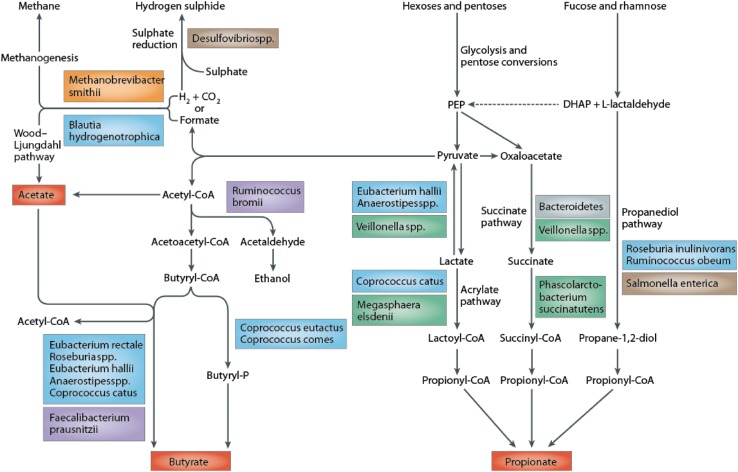
“1 Pathways of carbohydrate metabolism [156]”
Bile salt biotransformations by human intestinal bacteria
Ridlon, J. M., Kang, D.-J., & Hylemon, P. B. (2006) · Journal of Lipid Research · doi:10.1194/jlr.r500013-jlr200 · Cited by 2,829 · cited 2×
“This deconjugation step provides bacteria with a mechanism to reduce the toxicity of the bile acids and is a source of nitrogen, sulphur and carbon atoms [64, 65].”
BackgroundMetabolomics analysis reveals large effects of gut microflora on mammalian blood metabolites
Wikoff, W. R., Anfora, A. T., Liu, J., Schultz, P. G., Lesley, S. A., Peters, E. C., & Siuzdak, G. (2009) · Proceedings of the National Academy of Sciences · doi:10.1073/pnas.0812874106 · Cited by 2,677 · cited 1×
“The utility of this approach for studying the microbiome has been demonstrated in animal models of altered microbial status, such as germ-free, gnotobiotic, antibiotic-treated animals, and also in human studies [82, 130–132].”
Method
Research works printed but not linked: 1
- Walker AW, Duncan SH, Louis P, Flint HJ (2014) Phylogeny, culturing, and metagenomics of the approaches to unravel multi-species microbial community functioning. Comput Struct. Biotechnol J 13:24–32
Cited by
Sorted by citations
Items 401–500 of 1,001
Pharmacologic and Nonpharmacologic Therapies for the Gut Microbiota in Type 2 Diabetes
Caesar, R. (2019) · Canadian Journal of Diabetes · doi:10.1016/j.jcjd.2019.01.007 · Cited by 57
Preservation of Human Gut Microbiota Inoculums for In Vitro Fermentations Studies
de Carvalho, N. M., Oliveira, D., Saleh, M. A. D., Pintado, M., & Madureira, A. R. (2021) · Fermentation · doi:10.3390/fermentation7010014 · Cited by 59
“, the use of metabolic end-products of a given microorganism by others [42,43], limits the accumulation of lactate in the colon and the consequent metabolic acidosis [21].”
BackgroundResultHuang, M., Zhao, Q., Duan, R., Liu, Y., & Wan, Y. (2021) · Environmental Pollution · doi:10.1016/j.envpol.2021.117702 · Cited by 56
Microbiome and metabolome in inflammatory bowel disease
Upadhyay, K. G., Desai, D., Ashavaid, T. F., & Dherai, A. J. (2022) · Journal of Gastroenterology and Hepatology · doi:10.1111/jgh.16043 · Cited by 61
Pectin mediates the mechanism of host blood glucose regulation through intestinal flora
Guo, Q., Hou, X., Cui, Q., Li, S., Shen, G., Luo, Q., Wu, H., Chen, H., Liu, Y., Chen, A., et al. (2023) · Critical Reviews in Food Science and Nutrition · doi:10.1080/10408398.2023.2173719 · Cited by 63
“BAs are interactive metabolites between the host genome and intestinal flora (Rowland et al. 2018).”
BackgroundZhang, Y., Zhang, J., Yan, J., Qi, X., Wang, Y., Zheng, Z., Liang, J., Ling, J., Chen, Y., Tang, X., et al. (2024) · Trends in Food Science & Technology · doi:10.1016/j.tifs.2024.104410 · Cited by 60
Zhang, Z., Mocanu, V., Deehan, E. C., Hotte, N., Zhu, Y., Wei, S., Kao, D. H., Karmali, S., Birch, D. W., Walter, J., et al. (2024) · Gut Microbes · doi:10.1080/19490976.2024.2345134 · Cited by 59
“…(ASV44) and Roseburia spp. ( ASV103), which are reported as species having glycosyl-transferases and dietary fiber degradation function, respectively, 43,44 and which may play a role in improving insulin sensitivity through regulation of glucagon-like peptide-1 45,46 and intestinal gluconeogenesis.”
BackgroundNavajas-Porras, B., Pérez-Burillo, S., Morales-Pérez, J., Rufián‐Henares, J. Á., & Pastoriza, S. (2020) · Food Chemistry · doi:10.1016/j.foodchem.2020.126926 · Cited by 57
NLR and Intestinal Dysbiosis-Associated Inflammatory Illness: Drivers or Dampers?
Elias‐Oliveira, J., Leite, J. A., Pereira, Í. S., Guimarães, J. B., Manso, G. M. D. C., Silva, J. S., Tostes, R. C., & Carlos, D. (2020) · Frontiers in Immunology · doi:10.3389/fimmu.2020.01810 · Cited by 59
“The intestinal microbiota influences host metabolism (16), immune system (17, 18), gut microbicide mechanisms (19), and maintains the intestinal barrier (20).”
BackgroundIron deficiency anemia-related gut microbiota dysbiosis in infants and young children: A pilot study
Mulevičienė, A., D’Amico, F., Turroni, S., Candela, M., & Jankauskienė, A. (2018) · Acta Microbiologica et Immunologica Hungarica · doi:10.1556/030.65.2018.045 · Cited by 60
“Unbalanced microbial configurations have been found to result in lifelong consequences, including increased risk of metabolic and immunological diseases [16, 17, 20, 22].”
BackgroundTariq, A., Sahar, A., Usman, M., Sameen, A., Azhar, M., Tahir, R., Younas, R., & Khan, M. I. (2023) · Food Bioscience · doi:10.1016/j.fbio.2023.102669 · Cited by 56
Adetunji, J. A., Fasae, K. D., Awe, A., Paimo, O. K., Adegoke, A. M., Akintunde, J. K., & Sekhoacha, M. P. (2023) · Heliyon · doi:10.1016/j.heliyon.2023.e17166 · Cited by 58
Mafe, A. N., Edo, G. I., Akpoghelie, P. O., Gaaz, T. S., Yousif, E., Zainulabdeen, K., Isoje, E. F., Igbuku, U. A., Opiti, R. A., Garba, Y., et al. (2025) · Probiotics and Antimicrobial Proteins · doi:10.1007/s12602-025-10452-2 · Cited by 64
Human Gut Microbiome: A Connecting Organ Between Nutrition, Metabolism, and Health
Valencia, S., Zuluaga, M., Pérez, M. C. F., Montoya-Quintero, K. F., Candamil-Cortés, M. S., & Robledo, S. (2025) · International Journal of Molecular Sciences · doi:10.3390/ijms26094112 · Cited by 87
“19,000 (18.26”
InfluentialZhang, Y., Sun, K., Li, Z., Chai, X., Fu, X., Kholodkevich, S. V., Kuznetsova, T. V., Chen, C., & Ren, N. (2020) · Chemosphere · doi:10.1016/j.chemosphere.2020.128130 · Cited by 58
Emami, N. K., Çalık, A., White, M. B., Kimminau, E. A., & Dalloul, R. A. (2020) · Frontiers in Veterinary Science · doi:10.3389/fvets.2020.572142 · Cited by 59
“Butyrate producers mostly belong to the Firmicutes phylum (57).”
BackgroundThe intestinal mycobiota and its relationship with overweight, obesity and nutritional aspects
Gamboa, R. G., Kirchmayr, M. R., Hernandez, M. S. G., Pérez‐Brocal, V., Moyá, A., & González‐Ávila, M. (2021) · Journal of Human Nutrition and Dietetics · doi:10.1111/jhn.12864 · Cited by 55
Effects of dietary fibers, micronutrients, and phytonutrients on gut microbiome: a review
Beane, K. E., Redding, M. C., Wang, X., Pan, J. H., Le, B., Cicalo, C., Jeon, S., Kim, Y. J., Lee, J. H., Shin, E., et al. (2021) · Applied Biological Chemistry · doi:10.1186/s13765-021-00605-6 · Cited by 59
Gut microbiome and its meta-omics perspectives: profound implications for cardiovascular diseases
Xu, J., & Yang, Y. (2021) · Gut Microbes · doi:10.1080/19490976.2021.1936379 · Cited by 61
Biomarkers of gastrointestinal functionality in dogs: A systematic review and meta-analysis
Félix, A. P., Souza, C. M. M., & de Oliveira, S. G. (2021) · Animal Feed Science and Technology · doi:10.1016/j.anifeedsci.2021.115183 · Cited by 71
Structure, functions, and diversity of the healthy human microbiome
Ahrodia, T., Das, S., Bakshi, S., & Das, B. (2022) · Progress in molecular biology and translational science · doi:10.1016/bs.pmbts.2022.07.003 · Cited by 55
Cao, W., Guan, S., Yuan, Y., Wang, Y., Yiasmin, M. N., Liu, Y., Tong, Y., Yu, S., & Hua, X. (2023) · Critical Reviews in Food Science and Nutrition · doi:10.1080/10408398.2023.2253547 · Cited by 59
“Faecalibacterium prausnitzii , negatively correlated to the seriousness of IBD, is regarded as the most important indicator bacteria, and it can also selectively utilize pectic polysaccharides (Rowland et al. 2018; Zhang, Fan et al. 2022).”
Hosseini, S., Imenshahidi, M., Hosseinzadeh, H., & Karimi, G. (2018) · Biomedicine & Pharmacotherapy · doi:10.1016/j.biopha.2018.08.111 · Cited by 55
Gibney, E. R., Milenković, D., Combet, E., Ruskovska, T., Greyling, A., González‐Sarrías, A., de Roos, B., Tomás-Barberán, F. A., Morand, C., & Rodriguez‐Mateos, A. (2019) · European Journal of Nutrition · doi:10.1007/s00394-019-02066-6 · Cited by 57
Personalized Nutrition Through The Gut Microbiota: Current Insights And Future Perspectives
Vandeputte, D. (2020) · Nutrition Reviews · doi:10.1093/nutrit/nuaa098 · Cited by 63
Research Note: The gut microbiota varies with dietary fiber levels in broilers
Qiu, M., Hu, J., Peng, H., Li, B., Xu, J., Song, X., Yu, C., Zhang, Z., Du, X., Bu, G., et al. (2022) · Poultry Science · doi:10.1016/j.psj.2022.101922 · Cited by 54
“SCFAs production and the chicken high performance, and family Rikenellaceae is involved in degrading carbohydrate (Rowland et al., 2018).”
BackgroundShen, J., Guo, H., Liu, S., Jin, W., Zhang, Z., Zhang, Y., Liu, K., Mao, S., Zhou, Z., Xie, L. Y., et al. (2022) · British Journal of Pharmacology · doi:10.1111/bph.15965 · Cited by 54
“could produce a large repertoire of small molecules, such as organic acids, amino acids, bile salts, vitamins, gases, toxins and virulence factors (Rowland et al., 2018; Urdaneta & Casadesús, 2017).”
BackgroundShang, Z., Pai, L., & Patil, S. (2024) · Frontiers in Nutrition · doi:10.3389/fnut.2024.1395664 · Cited by 57
The Intriguing Connection Between the Gut and Lung Microbiomes
Druszczyńska, M., Sadowska, B., Kulesza, J., Gąsienica-Gliwa, N., Kulesza, E., & Fol, M. (2024) · Pathogens · doi:10.3390/pathogens13111005 · Cited by 62
“Gut bacteria also affect hepatic fat metabolism, indirectly influencing cholesterol and fatty acid transformation, while contributing to essential B vitamins and vitamin K synthesis [3].”
The microbiota: a key regulator of health, productivity, and reproductive success in mammals
Khan, I. M., Nassar, N., Chang, H., Khan, S., Cheng, M., Wang, Z., & Xiang, X. (2024) · Frontiers in Microbiology · doi:10.3389/fmicb.2024.1480811 · Cited by 61
Gut microbiota metabolic reprogramming drives the development of metabolic diseases in the host
Wang, Y., Huang, B., Wei, X., Guan, Y., Li, L., Zheng, Y., & Sun, W. (2026) · Gut Microbes · doi:10.1080/19490976.2026.2644681 · Cited by 59
“An 247-250 Therefore, studying gut microbial metabolic reprogramming provides a novel framework for understanding and treating metabolic diseases.”
Effect of the Degree of Polymerization of Fructans on Ex Vivo Fermented Human Gut Microbiome
Astó, E., Méndez, I., Rodríguez-Prado, M., Cuñé, J., Espadaler, J., & Farrán-Codina, A. (2019) · Nutrients · doi:10.3390/nu11061293 · Cited by 57
“In a healthy state, they contribute nutrients and energy to the host via the fermentation of nondigestible dietary components in the large intestine, and a balance is maintained with the host’s metabolism and immune system [9,10].”
BackgroundHossain, T. J., Chowdhury, S. I., Mozumder, H. A., Chowdhury, M. N. A., Ali, F., Rahman, N. F., & Dey, S. (2020) · Frontiers in Microbiology · doi:10.3389/fmicb.2020.02097 · Cited by 54
“range of catabolic and biotransformation reactions which are distinct from, but complement the metabolic processes of the host (Krishnan et al., 2015; Banerjee and Ray, 2017; Egerton et al., 2018; Rowland et al., 2018).”
BackgroundMASI: microbiota—active substance interactions database
Zeng, X. L., Yang, X., Fan, J., Tan, Y. C., Ju, L., Shen, W. X., Wang, Y., Wang, X., Chen, W., Ju, D., et al. (2020) · Nucleic Acids Research · doi:10.1093/nar/gkaa924 · Cited by 54
“Broad variety of xenobiotics such as dietary components (4), pharmaceuticals (2,5,6), herbal products (7) and environmental chemicals (8,9) are modified by microbiota with altered bioavailabilities, bioactivities and toxic effects in the host.”
BackgroundGlycine regulates mucosal immunity and the intestinal microbial composition in weaned piglets
Ji, Y. S., Fan, X., Zhang, Y., Li, J., Dai, Z., & Wu, Z. (2021) · Amino Acids · doi:10.1007/s00726-021-02976-y · Cited by 57
“The resident species of the gut microbiota utilize enteral amino acids for protein synthesis (Rowland et al. 2018).”
BackgroundWiesmann, C. L., Wang, N. R., Zhang, Y., Liu, Z., & Haney, C. H. (2022) · FEMS Microbiology Reviews · doi:10.1093/femsre/fuac048 · Cited by 62
Characterization, health benefits and applications of fruits and vegetable probiotics
James, A., & Wang, Y. (2019) · CyTA - Journal of Food · doi:10.1080/19476337.2019.1652693 · Cited by 58
Haange, S., Jehmlich, N., Krügel, U., Hintschich, C. A., Wehrmann, D., Hankir, M. K., Seyfried, F., Froment, J., Hübschmann, T., Müller, S., et al. (2020) · Microbiome · doi:10.1186/s40168-020-0788-1 · Cited by 56
Diet-induced obesity leads to alterations in behavior and gut microbiota composition in mice
Júnior, R. E. M., de Carvalho, L. M., dos Reis, D. C., Cassali, G. D., Faria, A. M. C., Maioli, T. U., & Godard, A. L. B. (2021) · The Journal of Nutritional Biochemistry · doi:10.1016/j.jnutbio.2021.108622 · Cited by 55
Plant-Based Diet Index and Metabolic Risk in Men: Exploring the Role of the Gut Microbiome
Li, Y., Wang, D. D., Satija, A., Ivey, K. L., Li, J., Wilkinson, J. E., Li, R., Baden, M. Y., Chan, A. T., Huttenhower, C., et al. (2021) · Journal of Nutrition · doi:10.1093/jn/nxab175 · Cited by 55
Effects of bacteriophages on gut microbiome functionality
Kurilovich, E., & Geva-Zatorsky, N. (2025) · Gut Microbes · doi:10.1080/19490976.2025.2481178 · Cited by 51
“169,170 However, evidence is accumulating showing that phages are also able to modulate mammalian immunity (Figure 2) by changing bacterial functionality and abundance.”
Schiano, C., Grimaldi, V., Scognamiglio, M., Costa, D., Soricelli, A., Nicoletti, G. F., & Claudio Napoli, A. (2021) · Food Research International · doi:10.1016/j.foodres.2021.110220 · Cited by 60
An extended reconstruction of human gut microbiota metabolism of dietary compounds
Blasco, T., Pérez-Burillo, S., Balzerani, F., Hinojosa-Nogueira, D., Lerma-Aguilera, A., Pastoriza, S., Cendoya, X., Rubio, Á., Gosalbes, M. J., Jiménez‐Hernández, N., et al. (2021) · Nature Communications · doi:10.1038/s41467-021-25056-x · Cited by 52
Gut microbiota associations with metabolic syndrome and relevance of its study in pediatric subjects
Carrizales-Sánchez, A. K., García‐Cayuela, T., Hernández‐Brenes, C., & Senés‐Guerrero, C. (2021) · Gut Microbes · doi:10.1080/19490976.2021.1960135 · Cited by 55
“Since both sulfate-reducing bacteria and methanogens from the gut compete for the same pool of H2, the availability of sulfate for H2S production is the bottleneck for this preference.(65,67) Desulfovibrio piger has been associated with abundance of Collinsella aerofaciens, an Actinobacterium that conducts sugar ferme…”
BackgroundInfluentialThe Emerging Biotherapeutic Agent: Akkermansia
Kalia, V. C., Gong, C., Shanmugam, R., Lin, H. M., Zhang, L., & Lee, J.-K. (2021) · Indian Journal of Microbiology · doi:10.1007/s12088-021-00993-9 · Cited by 53
“The distribution of bacterial populations varies significantly throughout the human body [3, 4].”
The Gut-Brain-Immune Axis in Autism Spectrum Disorders: A State-of-Art Report
Puricelli, C., Rolla, R., Gigliotti, C. L., Boggio, E. M., Beltrami, E., Dianzani, U., & Keller, R. (2022) · Frontiers in Psychiatry · doi:10.3389/fpsyt.2021.755171 · Cited by 64
Gut-on-a-Chip Models: Current and Future Perspectives for Host–Microbial Interactions Research
Morelli, M., Kurek, D., Ng, C. P., & Queiroz, K. C. S. (2023) · Biomedicines · doi:10.3390/biomedicines11020619 · Cited by 58
“Furthermore, the gut wall is home to large microbial communities, which participate in homeostasis through protection against pathogens [1,2] and the production of vitamins and short-chain fatty acids [3].”
BackgroundGut microbiota short-chain fatty acids and their impact on the host thyroid function and diseases
Mendoza-León, M. J., Mangalam, A. K., Regaldiz, A., González-Madrid, E., Rangel-Ramírez, M. A., Álvarez-Mardones, O., Vallejos, O. P., Méndez, C., Bueno, S. M., Melo-González, F., et al. (2023) · Frontiers in Endocrinology · doi:10.3389/fendo.2023.1192216 · Cited by 56
Developmental Signatures of Microbiota-Derived Metabolites in the Mouse Brain
Swann, J. R., Spitzer, S. O., & Heijtz, R. D. (2020) · Metabolites · doi:10.3390/metabo10050172 · Cited by 56
“It is now widely recognized that gut bacteria interact with and perform multiple critical functions for their host, including dietary extraction, the production of vitamins, and providing protection against invading pathogens [3,4].”
BackgroundBas-Bellver, C., Andrés, C., Seguí, L., Barrera, C., Jiménez‐Hernández, N., Artacho, A., Betoret, N., & Gosalbes, M. J. (2020) · Journal of Agricultural and Food Chemistry · doi:10.1021/acs.jafc.0c02088 · Cited by 60
Hagi, T., Geerlings, S. Y., Nijsse, B., & Belzer, C. (2020) · Applied Microbiology and Biotechnology · doi:10.1007/s00253-020-10976-3 · Cited by 55
Saha, S., Kurade, M. B., Ha, G.-S., Lee, S. S., Roh, H., Park, Y., & Jeon, B. (2021) · Bioresource Technology · doi:10.1016/j.biortech.2021.125250 · Cited by 52
Insights into the constellating drivers of satiety impacting dietary patterns and lifestyle
Rakha, A., Mehak, F., Shabbir, M. A., Arslan, M., Ranjha, M. M. A. N., Ahmed, W., Socol, C. T., Rusu, A. V., Hassoun, A., & Aadil, R. M. (2022) · Frontiers in Nutrition · doi:10.3389/fnut.2022.1002619 · Cited by 52
“Because of its interaction with gut receptors, it’s becoming more well recognized as a key component in satiety signaling (41).”
BackgroundMetabolic fate of tea polyphenols and their crosstalk with gut microbiota
Wang, M., Li, J., Hu, T., & Zhao, H. (2022) · Food Science and Human Wellness · doi:10.1016/j.fshw.2021.12.003 · Cited by 55
Sun, M., Li, D., Mei, H., Miao, X., Su, Y., Chi, Y., Li, Y., Sun, R., Niu, H., & Wang, J. (2022) · Food & Function · doi:10.1039/d2fo01165d · Cited by 52
Association of gut microbiota with obesity in children and adolescents
Cho, K. Y. (2022) · Korean Journal of Pediatrics · doi:10.3345/cep.2021.01837 · Cited by 52
Zou, T., Xie, F., Liang, P., Chen, J., Wang, Z., Du, ., & You, J. (2022) · Biomedicine & Pharmacotherapy · doi:10.1016/j.biopha.2022.114034 · Cited by 53
Functional constipation and the effect of prebiotics on the gut microbiota: a review
Erhardt, R., Harnett, J., Steels, E., & Steadman, K. J. (2022) · British Journal Of Nutrition · doi:10.1017/s0007114522003853 · Cited by 54
“The gut microbiota, with an estimated 3 million genes, is 150 times larger than the human genome and contributes to such an extent to our metabolic capacity that it is considered by many as fulfilling the functions of another organ(32,33).”
Yu, H., Sun, T., He, X., Wang, Z., Zhao, K., An, J., Wen, L., Li, J., Li, W., & Feng, J. (2022) · Aging and Disease · doi:10.14336/ad.2022.0325 · Cited by 56
“In the presence of gut microbiota-caused dysbiosis, harmful metabolites and proinflammatory cytokines can damage the intestinal barrier, causing systematic inflammation and pancreatic β-cell dysfunction and further damaging the brain-blood barrier to cause neuroinflammation, immune activation, and oxidative stress [10…”
BackgroundEffects of gut microbiota on neurodegenerative diseases
Khatoon, S., Kalam, N., Rashid, S., & Bano, G. (2023) · Frontiers in Aging Neuroscience · doi:10.3389/fnagi.2023.1145241 · Cited by 55
“These metabolites exerts various physiological activities in the brain, including cognitive function, mood, and appetite (Kennedy et al., 2017; Lin and Zhang, 2017; Rowland et al., 2018).”
BackgroundClemente‐Suárez, V. J., Redondo-Flórez, L., Rubio-Zarapuz, A., Martín-Rodríguez, A., & Tornero-Aguilera, J. F. (2024) · Biomedicines · doi:10.3390/biomedicines12010221 · Cited by 59
“The microbiota aids in digestion, synthesizes essential vitamins, modulates the immune system, and provides a line of defense against pathogenic organisms [9].”
BackgroundThe dark side of the gut: Virome–host interactions in intestinal homeostasis and disease
Li, Y., Handley, S. A., & Baldridge, M. T. (2021) · The Journal of Experimental Medicine · doi:10.1084/jem.20201044 · Cited by 55
Gut microbiome strain-sharing within isolated village social networks
Beghini, F., Pullman, J., Alexander, M., Shridhar, S. V., Prinster, D., Singh, A., Matute Juárez, R., Airoldi, E. M., Brito, I. L., & Christakis, N. A. (2025) · Nature · doi:10.1038/s41586-024-08222-1 · Cited by 51
Yin, H., Ma, J., Han, J., Li, M., & Shang, J. (2019) · PeerJ · doi:10.7717/peerj.6665 · Cited by 50
“3) came from different individual rats, there existed transformations between Qr, IQ, and QG in vivo, and the metabolism and transformation between these three compounds would be affect by many factors, such as gastric emptying rate and intestinal flora (Rowland et al., 2018; Yuan et al., 2016).”
BackgroundThe chemistry of gut microbiome in health and diseases
Lau, A., Tan, L. T., Mutalib, N. A., Wong, S. H., Letchumanan, V., & Lee, L. (2021) · Progress In Microbes & Molecular Biology · doi:10.36877/pmmb.a0000175 · Cited by 55
“Some probiotics strains can increase antiinflammatory mediators' concentration, such as tumor necrosis factors, which can abate diseases([276,284]).”
BackgroundWu, Y., Zhang, X., Han, D., Pi, Y., Tao, S., Zhang, S., Wang, S., Zhao, J., Chen, L., & Wang, J. (2021) · Animal nutrition · doi:10.1016/j.aninu.2020.07.012 · Cited by 51
“Intestinal microbiota have vital functions on gut barriers, metabolic reactions, nutritional effects and the maturation of the host's immune responses (Rowland et al., 2017; Ma et al., 2018; Valdes et al., 2018).”
BackgroundTurchini, G. M., Francis, D. S., Du, Z., Olsen, R. E., Ringø, E., & Tocher, D. R. (2021) · Elsevier eBooks · doi:10.1016/b978-0-12-819587-1.00003-3 · Cited by 60
Guizzo, M. G., Tirloni, L., González, S., Farber, M. D., Braz, G. R. C., Parizi, L. F., Silva, L. A. D. E., Vaz, I. D. S., & de Oliveira, P. L. (2022) · Frontiers in Microbiology · doi:10.3389/fmicb.2022.868575 · Cited by 50
Tissue-wide metabolomics reveals wide impact of gut microbiota on mice metabolite composition
Zarei, I., Koistinen, V., Kokla, M., Klåvus, A., Babu, A. F., Lehtonen, M., Auriola, S. O. K., & Hanhineva, K. (2022) · Scientific Reports · doi:10.1038/s41598-022-19327-w · Cited by 49
Microbiota of the gastrointestinal tract: Friend or foe?
Senchukova, M. A. (2023) · World Journal of Gastroenterology · doi:10.3748/wjg.v29.i1.19 · Cited by 56
Liu, C., Gan, R., Chen, D., Zheng, L., Ng, S. B., & Rietjens, I. M. C. M. (2023) · Critical Reviews in Food Science and Nutrition · doi:10.1080/10408398.2023.2180478 · Cited by 50
“…tools to study the microbial conversion of a wide array of substances, including dietary ingredients, e.g., polysaccharides, polyphenols, dietary fibers, proteins, pathogens, pharmaceuticals, and toxins, without ethical constraints (Aura et al. 2002; Rowland et al. 2018; Titgemeyer et al. 1991).”
Gut microbiota dependant trimethylamine N-oxide and hypertension
Mutengo, K. H., Masenga, S. K., Mweemba, A., Mutale, W., & Kirabo, A. (2023) · Frontiers in Physiology · doi:10.3389/fphys.2023.1075641 · Cited by 53
“On the other hand, Bacteroidetes break down complex polysaccharides and play a role in vitamin production and regulating inflammation in the gut (Belkaid and Hand, 2014; Rowland et al., 2018).”
BackgroundBiomarkers in aquatic systems: Advancements, applications and future directions
Sikaily, A. E., & Shabaka, S. H. (2024) · The Egyptian Journal of Aquatic Research · doi:10.1016/j.ejar.2024.05.002 · Cited by 56
Xu, M., Zhou, E. Y., & Shi, H. (2025) · Cells · doi:10.3390/cells14050384 · Cited by 58
“…LPSs, SCFAs, polyamines (e.g., putrescine, spermidine, spermine), bile salts (produced by the liver and modified in the gut lumen by the microbiota), and certain essential vitamins, as well as gas, toxins, and virulence factors, as has been shown in both preclinical and clinical studies [208–210].”
Composition of the Intestinal Microbiota Determines the Outcome of Virus-Triggered Colitis in Mice
Bolsega, S., Basic, M., Smoczek, A., Büettner, M., Eberl, C., Ahrens, D., Odum, K. A., Stecher, B., & Bleich, A. (2019) · Frontiers in Immunology · doi:10.3389/fimmu.2019.01708 · Cited by 50
“production of short chain fatty acids (SCFA), bioconversion of complex molecules, degradation of xenobiotic substances, and also in the development and maturation of the mucosal immune system (3, 4).”
BackgroundMetabolomic Signatures of Long-term Coffee Consumption and Risk of Type 2 Diabetes in Women
Hang, D., Zeleznik, O. A., He, X., Guasch‐Ferré, M., Jiang, X., Li, J., Liang, L., Eliassen, A. H., Clish, C. B., Chan, A. T., et al. (2020) · Diabetes Care · doi:10.2337/dc20-0800 · Cited by 50
Fu, Y., Yin, R., Liu, Z., Niu, Y., Guo, E., Cheng, R., Diao, X., Xue, Y., & Shen, Q. (2020) · Nutrients · doi:10.3390/nu12113452 · Cited by 50
“In particular, gut microbiota in the small and large intestine also play a role in dietary protein metabolism, including promoting protein digestion to produce short peptides and amino acids, which are then fermented to exert regulatory effects back on the gut microbiota [21,22].”
Effects of the l-tyrosine-derived bacterial metabolite p-cresol on colonic and peripheral cells
Blachier, F., & Andriamihaja, M. (2021) · Amino Acids · doi:10.1007/s00726-021-03064-x · Cited by 53
Metabolomic signatures after bariatric surgery – a systematic review
Vaz, M. E. D. L., Pereira, S. S., & Monteiro, M. P. (2021) · Reviews in Endocrine and Metabolic Disorders · doi:10.1007/s11154-021-09695-5 · Cited by 53
“Gut microbiota plays an important role in various physiological processes, including metabolism of dietary components and some host-generated substances, with an impact on the use and storage of energy [71].”
BackgroundDeandra, F. A., Ketherin, K., Rachmasari, R., Sulijaya, B., & Takahashi, N. (2023) · Heliyon · doi:10.1016/j.heliyon.2023.e13475 · Cited by 49
Influence of the gut microbiota on satiety signaling
Bastings, J. J. A. J., Venema, K., Blaak, E. E., & Adam, T. C. (2023) · Trends in Endocrinology and Metabolism · doi:10.1016/j.tem.2023.02.003 · Cited by 48
Matin, S., & Dadkhah, M. (2024) · Brain Research Bulletin · doi:10.1016/j.brainresbull.2024.110882 · Cited by 50
Shin, J., Jung, S., Kim, S.-A., Kang, M., Kim, M. S., Joung, H., Hwang, G., & Shin, D. (2019) · Nutrients · doi:10.3390/nu11102450 · Cited by 49
“The gut microbiota influences the uptake and metabolism of dietary components, such as fermentation of dietary fiber, synthesis of specific vitamins, and transformation of cholesterol [8].”
BackgroundCognitive-Behavioural Correlates of Dysbiosis: A Review
Luca, M., Chattipakorn, S. C., Sriwichaiin, S., & Luca, A. (2020) · International Journal of Molecular Sciences · doi:10.3390/ijms21144834 · Cited by 46
Characterizations of the Gut Bacteriome, Mycobiome, and Virome in Patients with Osteoarthritis
Chen, C., Zhang, Y., Yao, X., Li, S., Wang, G., Huang, Y., Yang, Y., Zhang, A., Liu, C., Zhu, D., et al. (2022) · Microbiology Spectrum · doi:10.1128/spectrum.01711-22 · Cited by 49
“makes an important contribution to human metabolic homeostasis (26) and is closely”
BackgroundOliveira, R. A., & Pamer, E. G. (2023) · Cell Host & Microbe · doi:10.1016/j.chom.2023.03.002 · Cited by 51
Bioactive Dairy-Fermented Products and Phenolic Compounds: Together or Apart
Wróblewska, B., Kuliga, A., & Wnorowska, K. (2023) · Molecules · doi:10.3390/molecules28248081 · Cited by 55
“The microbiota in the large intestine enables the metabolization of polyphenols that end up in the colon [25].”
BackgroundKatoh, T., Maeshibu, T., Kikkawa, K.-I., Gotoh, A., Tomabechi, Y., Nakamura, M., Liao, W.-H., Yamaguchi, M., Ashida, H., Yamamoto, K., et al. (2017) · Bioscience Biotechnology and Biochemistry · doi:10.1080/09168451.2017.1361810 · Cited by 48
Antibiotic use and the risk of rheumatoid arthritis: a population-based case-control study
Sultan, A. A., Mallen, C. D., Müller, S., Hider, S., Scott, I. C., Helliwell, T., & Hall, L. J. (2019) · BMC Medicine · doi:10.1186/s12916-019-1394-6 · Cited by 48
Zhu, X., Liu, J., Liu, H., & Yang, G. (2020) · Poultry Science · doi:10.1016/j.psj.2020.03.034 · Cited by 48
“Soybean oligosaccharides have been demonstrated to contribute to the growth of beneficial bacteria and improve the intestinal microenvironment, thus resulting in the change of VFAs concentrations.”
BackgroundInfluentialLiver Cirrhosis and Sarcopenia from the Viewpoint of Dysbiosis
Nishikawa, H., Enomoto, H., Nishiguchi, S., & Iijima, H. (2020) · International Journal of Molecular Sciences · doi:10.3390/ijms21155254 · Cited by 49
“Glutathione has an auxiliary role in protecting cells from reactive oxygen species such as free radicals and peroxides [68,69].”
BackgroundInsight into the Possible Use of the Predator Bdellovibrio bacteriovorus as a Probiotic
Bonfiglio, G., Neroni, B., Radocchia, G., Marazzato, M., Pantanella, F., & Schippa, S. (2020) · Nutrients · doi:10.3390/nu12082252 · Cited by 50
“Anaerobic bacteria are predominant in the guts of healthy subjects [126].”
BackgroundG protein-coupled receptors as potential targets for nonalcoholic fatty liver disease treatment
Yang, M. J., & Zhang, C. (2021) · World Journal of Gastroenterology · doi:10.3748/wjg.v27.i8.677 · Cited by 49
Butyrate: A Link between Early Life Nutrition and Gut Microbiome in the Development of Food Allergy
Costanzo, M. D., Paulis, N. D., & Biasucci, G. (2021) · Life · doi:10.3390/life11050384 · Cited by 50
“Although SCFAs can also be derived from dietary proteins and glycoprotein metabolism, carbohydrates represent the main sources [41].”
BackgroundImpacts of polyphenols on laying hens' productivity and egg quality: A review
El-Hack, M. E. A., Salem, H. M., Khafaga, A. F., Soliman, S. M., & El‐Saadony, M. T. (2022) · Journal of Animal Physiology and Animal Nutrition · doi:10.1111/jpn.13758 · Cited by 53
Microbiota-mediated metabolic perturbations in the gut and brain of mice after microplastic exposure
Lee, S.-H., Lin, W., & Cheng, T. (2023) · Chemosphere · doi:10.1016/j.chemosphere.2023.141026 · Cited by 48
Razi, A., Ghiaei, A., Dolatabadi, F. K., & Haghighi, R. (2024) · Frontiers in Medicine · doi:10.3389/fmed.2024.1401808 · Cited by 47
Saint-Martin, V., Guillory, V., Chollot, M., Fleurot, I., Kut, E., Roesch, F., Caballero, I., Helloin, E., Chambellon, É., Ferguson, B. J., et al. (2024) · Communications Biology · doi:10.1038/s42003-024-06815-0 · Cited by 54
“Speci fi c bacterial genera and species in fl uence various aspects of poultry physiology 2,12,15,65 .”
Milk-derived extracellular vesicles and gut health
Barathan, M., & Law, J. X. (2025) · npj Science of Food · doi:10.1038/s41538-025-00375-1 · Cited by 47
Arginine accelerates intestinal health through cytokines and intestinal microbiota
Wu, M., Xiao, H., Shao, F., Tan, B., & Hu, S. (2019) · International Immunopharmacology · doi:10.1016/j.intimp.2019.106029 · Cited by 47
Metadata
- Authors
- Rowland, I., Gibson, G., Heinken, A., Scott, K., Swann, J., Thiele, I., & Tuohy, K.
- Affiliations
- University of Reading (GB)
- University of Luxembourg (LU)
- University of Aberdeen (GB)
- Imperial College London (GB)
- Fondazione Edmund Mach (IT)
- Corresponding author
- Rowland, Ian
- Venue
- European Journal of Nutrition
- Published
- 2017-04-09
- Volume
- 57
- Issue
- 1
- Pages
- 1-24
- ISSN
- 1436-6207 (ISSN-L)
- 1436-6215
- PMC
- PMC5847071
- OpenAlex
- W2604323123
- Cited by
- 2,878
- References
- 166
- Citations by year
- 2026: 317 · 2025: 393 · 2024: 431 · 2023: 382 · 2022: 424 · 2021: 365 · 2020: 305 · 2019: 173 · 2018: 65 · 2017: 17
- FWCI
- 14.34
- Type
- journal article
- Language
- en
- Open access
- hybrid
- doi.org
- Locations
- European Journal of Nutrition (publishedVersion, cc-by)
- PubMed Central (publishedVersion, cc-by)
- PubMed (publishedVersion)
- CentAUR (University of Reading) (acceptedVersion, other-oa)
- ePrints Soton (University of Southampton) (acceptedVersion)
- Aberdeen University Research Archive (Aberdeen University) (submittedVersion, other-oa)
- CINECA IRIS Institutional Research Information System (Fondazione Edmund Mach) (submittedVersion, cc-by)
- Open Repository and Bibliography (University of Luxembourg) (submittedVersion, cc-by-nc-sa)
- Spiral (Imperial College London) (submittedVersion, cc-by)
- Funders
- International Life Sciences Institute Europe
- Topics
- Life Sciences › Biochemistry, Genetics and Molecular Biology › Molecular Biology › Gut microbiota and health
- Health Sciences › Nursing › Nutrition and Dietetics › Microbial Metabolites in Food Biotechnology
- Life Sciences › Agricultural and Biological Sciences › Food Science › Probiotics and Fermented Foods
- Keywords
- gut microbiota, host-microbe interactions, nutrient metabolism, dietary carbohydrates, short-chain fatty acids, protein metabolism, plant polyphenols, bile acids, vitamin metabolism, microbial metabolic pathways, enzyme activity assay
- MeSH terms
- Gastrointestinal Microbiome, Bacteria, Bile Acids and Salts, Diet, Dietary Carbohydrates, Dietary Proteins, Fatty Acids, Food, Health Promotion, Humans, Models, Theoretical, Plants, Edible, Vitamins, Proteomics, Metagenomics, Polyphenols, Phytochemicals
About these checks
Registry, retraction, Cites and statistics results are computed, not judged, with one exception: a printed reference that no index lists is read once by a model before it counts as a citation error. Claims are extracted by a model and kept only when their quote appears verbatim in the text; each cited source is then checked, with a model’s help, for whether it says what the claim relies on. Those verdicts can be wrong — read the claim’s quote and the cited source before relying on one.
Statistics and arithmetic are recomputed, not judged.
Confidence bands are shown only for fields calibrated on our annotated test set. None is calibrated yet, so no band is shown.
What counts as a claim ›How we measure confidence ›How we check this ›
Are you an author, or do you see a problem with this page? Request a review
