

The DOI matches its Crossref record; 166 of the 166 references it cites were found in a registry or an index.
Gut microbiota functions: metabolism of nutrients and other food components
Open accessAbstract
The diverse microbial community that inhabits the human gut has an extensive metabolic repertoire that is distinct from, but complements the activity of mammalian enzymes in the liver and gut mucosa and includes functions essential for host digestion. As such, the gut microbiota is a key factor in shaping the biochemical profile of the diet and, therefore, its impact on host health and disease. The important role that the gut microbiota appears to play in human metabolism and health has stimulated research into the identification of specific microorganisms involved in different processes, and the elucidation of metabolic pathways, particularly those associated with metabolism of dietary components and some host-generated substances. In the first part of the review, we discuss the main gut microorganisms, particularly bacteria, and microbial pathways associated with the metabolism of dietary carbohydrates (to short chain fatty acids and gases), proteins, plant polyphenols, bile acids, and vitamins. The second part of the review focuses on the methodologies, existing and novel, that can be employed to explore gut microbial pathways of metabolism. These include mathematical models, omics techniques, isolated microbes, and enzyme assays.
Overview
The claims and statistics of this paper haven’t been checked yet.
Run the check — free, no account needed. It reads the open-access text and checks the sources it cites.
Integrity signals
Registry
Cites
Statistics
Figures
Verification
Claims the paper makes
The claims and statistics of this paper haven’t been checked yet.
Run the check — free, no account needed. It reads the open-access text and checks the sources it cites.
Claims other papers make about this one
Each is checked against this paper’s own text: does it say what the citing paper says it does?
The source backs part of the claim, not all of it — or backs it for a different population, condition or comparison.
In the citing paper
“The intricate role of the gut microbiota in breaking down complex carbohydrates, proteins, and lipids enhances the digestive process, facilitating the absorption of essential nutrients.”
From Unveiling the therapeutic symphony of probiotics, prebiotics, and postbiotics in gut-immune harmony (2024) · cites this paper as [15]
Experimental — accuracy not yet measuredIn the citing paper
“The gut microbiota is an important factor that shapes both energy harvest and storage through metabolism of proteins and production of several metabolites including SCFAs, ammonia, sulfur-containing metabolites such as hydrogen sulfide and methanethiol, and neuroactive compounds such as tryptamine, serotonin, phenethylamine, tryptophan, and histamine [137, 138].”
From The athletic gut microbiota (2020) · cites this paper as [138]
In the citing paper
“It is well appreciated that the gut microbiota can synthesize certain vitamins, most notably vitamin K and B-group vitamins [e.g., cobalamin (B 12 ), folate, and riboflavin (144, 145)], some of which might be directly absorbed.”
From Diet and the Microbiota–Gut–Brain Axis: Sowing the Seeds of Good Mental Health (2021) · cites this paper as [145]
Self-check
Percentages, sums and reported differences re-computed from the paper’s own numbers.
The self-check needs the paper’s full text.
Citations
Cites
1 retracted
Kaoutari, A. E., Armougom, F., Leroy, Q., Vialettes, B., Million, M., Raoult, D., & Henrissat, B. (2013) · PLoS ONE · doi:10.1371/journal.pone.0084033 · Cited by 56 · cited 1×
“[109] have designed a custom microarray of non-redundant DNA probes for over 6500 genes coding for enzymes involved in dietary polysaccharide breakdown.”
BackgroundRetractedPolyphenols: Food sources and bioavailability
Manach, C., Scalbert, A., Morand, C., Rémésy, C., & Jiménez, L. (2004) · The American Journal of Clinical Nutrition · doi:10.1093/ajcn/79.5.727 · Cited by 8,175 · cited 3×
“Flavanones Naringenin 3-(4-Hydroxyphenyl)propionic acid 3- phenylpropionic acid Clostridium strains Eubacterium ramulus [85, 90]”
BackgroundA core gut microbiome in obese and lean twins
Turnbaugh, P. J., Hamady, M., Yatsunenko, T., Cantarel, B. L., Duncan, A., Ley, R. E., Sogin, M. L., Jones, W. J., Roe, B. A., Affourtit, J. P., et al. (2009) · Nature · doi:10.1038/nature07540 · Cited by 7,823 · cited 3×
“The short halflife of mRNA leads to difficulty in the detection of shortterm responses to environmental changes, consequentially extrapolating results obtained from transcriptional analysis of faecal samples to functions within the large intestine itself can present problems [115, 117].”
BackgroundGut flora metabolism of phosphatidylcholine promotes cardiovascular disease
Wang, Z., Klipfell, E., Bennett, B. J., Koeth, R., Levison, B. S., DuGar, B., Feldstein, A. E., Britt, E. B., Fu, X., Chung, Y.-M., et al. (2011) · Nature · doi:10.1038/nature09922 · Cited by 5,597 · cited 2×
“TMAO can be used as an electron acceptor by Escherichia coli , and, interest-ingly, has been implicated as a risk factor for CVD [133].”
BackgroundHost-gut microbiota metabolic interactions
Nicholson, J. K., Holmes, E., Kinross, J., Burcelin, R., Gibson, G., Jia, W., & Pettersson, S. (2012) · Science · doi:10.1126/science.1223813 · Cited by 4,760 · cited 1×
“This large and diverse microbial community has an equally extensive metabolic repertoire that complements the activity of mammalian enzymes in the liver and gut mucosa [3].”
BackgroundSelf-citationCirculating mitochondrial DAMPs cause inflammatory responses to injury
Zhang, Q., Raoof, M., Chen, Y., Sumi, Y., Sursal, T., Junger, W., Brohi, K., Itagaki, K., & Hauser, C. J. (2010) · Nature · doi:10.1038/nature08780 · Cited by 3,812 · cited 1×
“The gene set of the gut microbiota (the gut microbiome) is estimated to be about 3 million genes −150 times larger than that of the human genome [2].”
BackgroundFormation of propionate and butyrate by the human colonic microbiota
Louis, P., & Flint, H. J. (2017) · Environmental Microbiology · doi:10.1111/1462-2920.13589 · Cited by 3,028 · cited 1×
“It is important to note that propionate and butyrate are also formed from peptide and amino-acid fermentation by certain Bacteroidetes and Firmicutes species [21].”
BackgroundThe gut microbiota, bacterial metabolites and colorectal cancer
Louis, P., Hold, G. L., & Flint, H. J. (2014) · Nature Reviews Microbiology · doi:10.1038/nrmicro3344 · Cited by 2,925 · cited 1×
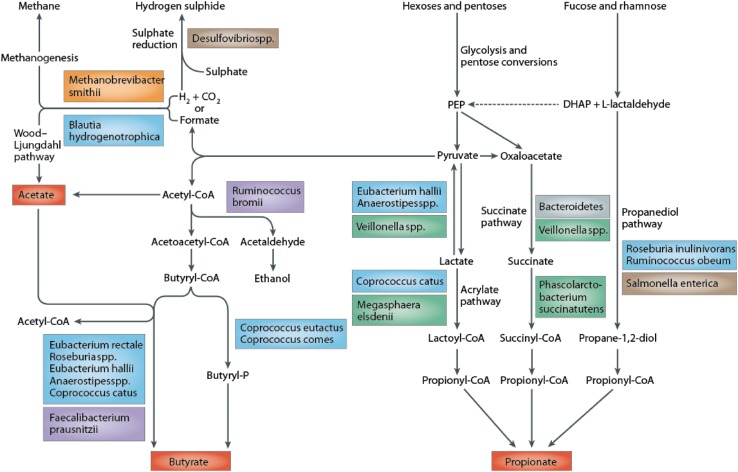
“1 Pathways of carbohydrate metabolism [156]”
Bile salt biotransformations by human intestinal bacteria
Ridlon, J. M., Kang, D.-J., & Hylemon, P. B. (2006) · Journal of Lipid Research · doi:10.1194/jlr.r500013-jlr200 · Cited by 2,829 · cited 2×
“This deconjugation step provides bacteria with a mechanism to reduce the toxicity of the bile acids and is a source of nitrogen, sulphur and carbon atoms [64, 65].”
BackgroundMetabolomics analysis reveals large effects of gut microflora on mammalian blood metabolites
Wikoff, W. R., Anfora, A. T., Liu, J., Schultz, P. G., Lesley, S. A., Peters, E. C., & Siuzdak, G. (2009) · Proceedings of the National Academy of Sciences · doi:10.1073/pnas.0812874106 · Cited by 2,677 · cited 1×
“The utility of this approach for studying the microbiome has been demonstrated in animal models of altered microbial status, such as germ-free, gnotobiotic, antibiotic-treated animals, and also in human studies [82, 130–132].”
Method
Research works printed but not linked: 1
- Walker AW, Duncan SH, Louis P, Flint HJ (2014) Phylogeny, culturing, and metagenomics of the approaches to unravel multi-species microbial community functioning. Comput Struct. Biotechnol J 13:24–32
Cited by
Sorted by citations
Probiotics and prebiotics in intestinal health and disease: from biology to the clinic
Sanders, M. E., Merenstein, D. J., Reid, G., Gibson, G. R., & Rastall, R. A. (2019) · Nature Reviews Gastroenterology & Hepatology · doi:10.1038/s41575-019-0173-3 · Cited by 2,059
Stojanov, S., Berlec, A., & Štrukelj, B. (2020) · Microorganisms · doi:10.3390/microorganisms8111715 · Cited by 1,967
“The most abundant metabolic products of gut microbiota are short-chain fatty acids (SCFAs), mainly acetate, propionate, and butyrate, which are produced by anaerobic fermentation of undigested carbohydrates [15].”
BackgroundFlavonoids as Anticancer Agents
Kopustinskienė, D. M., Jakštas, V., Savickas, A., & Bernatonienė, J. (2020) · Nutrients · doi:10.3390/nu12020457 · Cited by 1,420
“Intestinal epithelium, besides nutrient absorption, provides a barrier controlling the entrance of microorganisms, their metabolic products and toxins as well as toxins present in ingested foods [194].”
BackgroundFassarella, M., Blaak, E. E., Penders, J., Nauta, A., Smidt, H., & Zoetendal, E. G. (2020) · Gut · doi:10.1136/gutjnl-2020-321747 · Cited by 818
“7 Furthermore, peristalsis is one of the greatest negative selection pressures in the gut, which removes millions of viable microbial cells, indicating that adhesion to human gut epithelium might be essential for the persistence in the environment.”
BackgroundInfluentialHuman gut microbiota in health and disease: Unveiling the relationship
Afzaal, M., Saeed, F., Shah, Y. A., Hussain, M., Rabail, R., Socol, C. T., Hassoun, A., Pateiro, M., Lorenzo, J. M., Rusu, A. V., et al. (2022) · Frontiers in Microbiology · doi:10.3389/fmicb.2022.999001 · Cited by 762
“Acetate helps in the growth of other bacteria as an essential co-factor; for example, Faecalibacterium prausnitzii will not grow in pure culture in the absence of acetate (Rowland et al., 2018).”
BackgroundResultInfluentialImpact of antibiotics on the human microbiome and consequences for host health
Patangia, D. V., Ryan, C. A., Dempsey, E. M., Ross, R. P., & Stanton, C. (2022) · MicrobiologyOpen · doi:10.1002/mbo3.1260 · Cited by 861
“This type of dependency is also seen in many other bacterial groups (Heinken & Thiele, 2015; Rowland et al., 2018).”
BackgroundGut Microbiota as a Trigger for Metabolic Inflammation in Obesity and Type 2 Diabetes
Scheithauer, T. P. M., Rampanelli, E., Nieuwdorp, M., Vallance, B. A., Verchere, C. B., van Raalte, D. H., & Herrema, H. (2020) · Frontiers in Immunology · doi:10.3389/fimmu.2020.571731 · Cited by 715
Tanase, D. M., Gosav, E. M., Costea, C. F., Ciocoiu, M., Lacatusu, C. M., Maranduca, M. A., Ouatu, A., & Floria, M. (2020) · Journal of Diabetes Research · doi:10.1155/2020/3920196 · Cited by 627
“Indeed, data shows that gut dysbiosis enhances bacteria production that can regulate KCs inflammatory activation, promotes short-chain fatty acids (SCFAs) production, changes the enterohepatic circulation of bile acid, and can lead to inflammation and finally hepatic steatosis [98, 99].”
BackgroundImpact of Diet-Modulated Butyrate Production on Intestinal Barrier Function and Inflammation
Bach Knudsen, K. E., Lærke, H. N., Hedemann, M. S., Nielsen, T. S., Ingerslev, A. K., Gundelund Nielsen, D. S., Theil, P. K., Purup, S., Hald, S., Schioldan, A. G., et al. (2018) · Nutrients · doi:10.3390/nu10101499 · Cited by 572
“in the Clostridium coccodies (Clostridial cluster XIVa) cluster of Firmicutes [16,38].”
BackgroundInfluentialWang, A., Zhang, Z., Ding, Q., Yang, Y., Bindelle, J., Ran, C., & Zhou, Z. (2021) · Gut Microbes · doi:10.1080/19490976.2021.1900996 · Cited by 480
Cuevas-Sierra, A., Ramos-Lopez, O., Riezu-Boj, J. I., Milagro, F. I., & Martinez, J. A. (2019) · Advances in Nutrition · doi:10.1093/advances/nmy078 · Cited by 523
“In particular, Bacteroides and Propionibacterium species are able to convert dietary protein intake, mucin, or host enzymes into amino acids and derivatives (118).”
BackgroundMycotoxin: Its Impact on Gut Health and Microbiota
Liew, W.-P.-P., & Sabran, M. R. (2018) · Frontiers in Cellular and Infection Microbiology · doi:10.3389/fcimb.2018.00060 · Cited by 472
“Similarly, metabolism pathways of proteins, bile, and phytochemicals, as well as vitamins synthesis by the microbiota, has been also elucidated (Rowland et al., 2017).”
BackgroundRole of Dietary Nutrients in the Modulation of Gut Microbiota: A Narrative Review
Yang, Q., Liang, Q., Balakrishnan, B., Belobrajdic, D. P., Feng, Q.-J., & Zhang, W. Y. (2020) · Nutrients · doi:10.3390/nu12020381 · Cited by 487
Hosomi, K., Saito, M., Park, J., Murakami, H., Shibata, N., Ando, M., Nagatake, T., Konishi, K., Ohno, H., Tanisawa, K., et al. (2022) · Nature Communications · doi:10.1038/s41467-022-32015-7 · Cited by 481
Diet and the Microbiota–Gut–Brain Axis: Sowing the Seeds of Good Mental Health
Berding, K., Vlckova, K., Marx, W., Schellekens, H., Stanton, C., Clarke, G., Jacka, F., Dinan, T. G., & Cryan, J. F. (2021) · Advances in Nutrition · doi:10.1093/advances/nmaa181 · Cited by 451
Montero, C. G., Fraile‐Μartinez, O., Gomez-Lahoz, A. M., Pekarek, L., Castellanos, A. J., Noguerales-Fraguas, F., Coca, S., Guijarro, L. G., García‐Honduvilla, N., Asúnsolo, Á., et al. (2021) · Nutrients · doi:10.3390/nu13020699 · Cited by 487
“Likewise, gut microbiota are essential for the synthesis of vitamins, such as vitamin K or many of those of the B complex, the degradation of polyphenols from the diet, xenobiotic elimination, and even the metabolism of bile acids (BA) [44,45].”
BackgroundThe Interactions between Polyphenols and Microorganisms, Especially Gut Microbiota
Makarewicz, M., Drożdż, I., Tarko, T., & Duda‐Chodak, A. (2021) · Antioxidants · doi:10.3390/antiox10020188 · Cited by 466
“The great diversity of bacterial species forming the gut microbiota implicates the large number of genes which they contain [2] and the enormous metabolic capacity of the intestinal microbiome, which is approximately 100-fold greater than that of the human liver [2,12].”
BackgroundPolyphenols—Gut Microbiota Interrelationship: A Transition to a New Generation of Prebiotics
Plamada, D., & Vodnar, D. C. (2021) · Nutrients · doi:10.3390/nu14010137 · Cited by 457
“Among its major roles are: maintaining the structural integrity of the endothelial barrier, influencing the growth of the immune system, providing antimicrobial protection, impacting the metabolism of carbohydrates, lipids, and proteins, and playing an important role in the synthesis of several vitamins such as vitami…”
BackgroundThe interaction among gut microbes, the intestinal barrier and short chain fatty acids
Ma, J., Piao, X., Mahfuz, S. U., Long, S., & Wang, J. (2021) · Animal nutrition · doi:10.1016/j.aninu.2021.09.012 · Cited by 432
Recent advances in the application of metabolomics for food safety control and food quality analyses
Li, S., Tian, Y., Jiang, P., Lin, Y., Liu, X., & Yang, H. (2020) · Critical Reviews in Food Science and Nutrition · doi:10.1080/10408398.2020.1761287 · Cited by 405
“At present, meta-omics approach is conducive to consideration of microbiota ecosystem as a holistic population structure, and the genes, transcripts, proteins, and metabolites of microorganisms can be integrated via high-throughput global analysis (Rowland et al. 2018).”
BackgroundUterine Microbiota: Residents, Tourists, or Invaders?
Baker, J. M., Chase, D. M., & Herbst‐Kralovetz, M. M. (2018) · Frontiers in Immunology · doi:10.3389/fimmu.2018.00208 · Cited by 400
“An example of a mutually beneficial relationship is the production of vitamins and SCFAs that are produced by the gut microbiome and can act not only as nutrients for cells but may also elicit beneficial epigenetic changes in the host as well as (in the case of propionate and acetate) serving as important satiety sign…”
BackgroundGut microbial molecules in behavioural and neurodegenerative conditions
Needham, B. D., Kaddurah-Daouk, R., & Mazmanian, S. K. (2020) · Nature Reviews Neuroscience · doi:10.1038/s41583-020-00381-0 · Cited by 379
Microbiota and metabolic diseases
Pascale, A., Marchesi, N., Marelli, C., Coppola, A., Luzi, L., Govoni, S., Giustina, A., & Gazzaruso, C. (2018) · Endocrine · doi:10.1007/s12020-018-1605-5 · Cited by 423
Pathogenesis of allergic diseases and implications for therapeutic interventions
Wang, J., Zhou, Y., Zhang, H., Hu, L., Liu, J., Wang, L., Wang, T., Zhang, H., Cong, L., & Wang, Q. (2023) · Signal Transduction and Targeted Therapy · doi:10.1038/s41392-023-01344-4 · Cited by 431
Mohr, A. E., Jäger, R., Carpenter, K. C., Kerksick, C. M., Purpura, M., Townsend, J. R., West, N. P., Black, K., Gleeson, M., Pyne, D. B., et al. (2020) · Journal of the International Society of Sports Nutrition · doi:10.1186/s12970-020-00353-w · Cited by 378
“The gut microbiota is an important factor that shapes both energy harvest and storage through metabolism of proteins and production of several metabolites including SCFAs, ammonia, sulfur-containing metabolites such as hydrogen sulfide and methanethiol, and neuroactive compounds such as tryptamine, serotonin, phenethy…”
BackgroundBrain–gut–microbiota axis in depression: A historical overview and future directions
Chang, L., Wei, Y., & Hashimoto, K. (2022) · Brain Research Bulletin · doi:10.1016/j.brainresbull.2022.02.004 · Cited by 407
Immune regulation by microbiome metabolites
Kim, C. H. (2018) · Immunology · doi:10.1111/imm.12930 · Cited by 375
Gut–organ axis: a microbial outreach and networking
Ahlawat, S., Asha, A., & Sharma, K. K. (2020) · Letters in Applied Microbiology · doi:10.1111/lam.13333 · Cited by 372
“Furthermore, it plays an important role in digestion (Boulang e et al. 2016; Karst 2016), vitamin synthesis (Rowland et al. 2017; Wang et al. 2017a), safeguards against pathogens (Dupaul-Chicoine et al. 2013; Jones and Neish 2016; Gaufin et al. 2017; Hillman et al. 2017), increases fat storage…”
BackgroundGut Microbiome Dysbiosis and Immunometabolism: New Frontiers for Treatment of Metabolic Diseases
Belizário, J. E., Faintuch, J., & Garay-Malpartida, M. (2018) · Mediators of Inflammation · doi:10.1155/2018/2037838 · Cited by 341
“Under anaerobic conditions, species belonging to the Bacteroides genus, and to the Clostridiaceae and Lactobacillaceae families, in special, Citrobacter and Serratia strains, produce short-chain fatty acids (SCFAs) which are volatile fat acids able to cross the blood-brain barrier via monocarboxylate transporters.”
BackgroundInfluentialInsulin resistance in obesity: an overview of fundamental alterations
Barazzoni, R., Cappellari, G. G., Ragni, M., & Nisoli, E. (2018) · Eating and Weight Disorders - Studies on Anorexia Bulimia and Obesity · doi:10.1007/s40519-018-0481-6 · Cited by 383
Inflammation in Renal Diseases: New and Old Players
Andrade‐Oliveira, V., Foresto‐Neto, O., Watanabe, I. K. M., Zatz, R., & Câmara, N. O. S. (2019) · Frontiers in Pharmacology · doi:10.3389/fphar.2019.01192 · Cited by 339
Effects of Synbiotic Supplement on Human Gut Microbiota, Body Composition and Weight Loss in Obesity
Sergeev, I. N., Aljutaily, T., Walton, G., & Huarte, E. (2020) · Nutrients · doi:10.3390/nu12010222 · Cited by 331
“This community can contribute to the development of obesity primarily by influencing dietary energy intake and intestinal absorption of nutrients [3,4], but it can also provide the human host with benefits besides energy extraction, including a reduction of low grade chronic inflammation associated with obesity and me…”
BackgroundGlutamatergic Signaling Along The Microbiota-Gut-Brain Axis
Baj, A., Moro, E., Bistoletti, M., Orlandi, V. T., Crema, F., & Giaroni, C. (2019) · International Journal of Molecular Sciences · doi:10.3390/ijms20061482 · Cited by 339
“Microorganisms harboring the human gastrointestinal tract produce many compounds useful to the host, such as vitamins, gas, organic acids, bile salts, bacteriocin [23,24].”
BackgroundÇatalkaya, G., Venema, K., Lucini, L., Rocchetti, G., Delmas, D., Daglia, M., Filippis, A. D., Xiao, H., Quiles, J. L., Xiao, J., et al. (2020) · Food Frontiers · doi:10.1002/fft2.25 · Cited by 349
The Microbiota–Gut–Brain Axis and Alzheimer’s Disease: Neuroinflammation Is to Blame?
Megur, A., Baltriukienė, D., Bukelskienė, V., & Burokas, A. (2020) · Nutrients · doi:10.3390/nu13010037 · Cited by 323
“These findings suggest that the microbiota performs numerous vital functions in our body, including releasing biochemical by-products such as SCFA and gases [88].”
BackgroundBioactive potential of fruit and vegetable wastes
Coman, V., Teleky, B., Mitrea, L., Martău, G. A., Szabo, K., Călinoiu, L. F., & Vodnar, D. C. (2019) · Advances in food and nutrition research · doi:10.1016/bs.afnr.2019.07.001 · Cited by 339
Corrêa, T. A. F., Rogero, M. M., Hassimotto, N. M. A., & Lajolo, F. M. (2019) · Frontiers in Nutrition · doi:10.3389/fnut.2019.00188 · Cited by 327
Microbiota, Inflammation and Colorectal Cancer
Lucas, C., Barnich, N., & Nguyen, H. T. T. (2017) · International Journal of Molecular Sciences · doi:10.3390/ijms18061310 · Cited by 331
“There is also an association between the presence of methane in the colon and CRC, although this could be a consequence rather than causal of the disease [68].”
BackgroundPérez-Burillo, S., Molino, S., Navajas-Porras, B., Valverde-Moya, Á. J., Hinojosa-Nogueira, D., López-Maldonado, A., Pastoriza, S., & Rufián‐Henares, J. Á. (2021) · Nature Protocols · doi:10.1038/s41596-021-00537-x · Cited by 314
Cholesterol Metabolism by Uncultured Human Gut Bacteria Influences Host Cholesterol Level
Kenny, D. J., Plichta, D. R., Shungin, D., Koppel, N., Hall, A. B., Fu, B., Vasan, R. S., Shaw, S. Y., Vlamakis, H. C., Balskus, E. P., et al. (2020) · Cell Host & Microbe · doi:10.1016/j.chom.2020.05.013 · Cited by 319
“A range of gut microbes metabolize and modify dietary and host-derived molecules in the small intestine (Koppel et al., 2017; Rowland et al., 2018).”
BackgroundOral microbial biofilms: an update
Mosaddad, S. A., Tahmasebi, E., Yazdanian, A., Rezvani, M. B., Seifalian, A. M., Yazdanıan, M., & Tebyanian, H. (2019) · European Journal of Clinical Microbiology & Infectious Diseases · doi:10.1007/s10096-019-03641-9 · Cited by 340
Human gut microbiome aging clock based on taxonomic profiling and deep learning
Galkin, F., Mamoshina, P., Aliper, A., Lane, E., Moskalev, V., Gladyshev, V. N., & Zhavoronkov, A. (2020) · iScience · doi:10.1016/j.isci.2020.101199 · Cited by 292
Dietary polyphenols to combat the metabolic diseases via altering gut microbiota
Gowd, V., Karim, N., Shishir, M. R. I., Xie, L., & Chen, W. (2019) · Trends in Food Science & Technology · doi:10.1016/j.tifs.2019.09.005 · Cited by 298
Intestinal mucus and their glycans: A habitat for thriving microbiota
Luis, A. S., & Hansson, G. C. (2023) · Cell Host & Microbe · doi:10.1016/j.chom.2023.05.026 · Cited by 305
Pirsaheb, M., Hossini, H., & Makhdoumi, P. (2020) · Process Safety and Environmental Protection · doi:10.1016/j.psep.2020.05.050 · Cited by 284
Gut microbiota of aquatic organisms: A key endpoint for ecotoxicological studies
Evariste, L., Barret, M., Mottier, A., Mouchet, F., Gauthier, L., & Pinelli, É. (2019) · Environmental Pollution · doi:10.1016/j.envpol.2019.02.101 · Cited by 269
Ketogenic Diet and Microbiota: Friends or Enemies?
Paoli, A., Mancin, L., Bianco, A., Thomas, E., Mota, J. F., & Piccini, F. (2019) · Genes · doi:10.3390/genes10070534 · Cited by 276
“The availability of a huge variety and combination of nutrients promotes the selective enrichment of microorganisms, but both the quality and quantity of the macronutrients have an effect on the structure and function of the microbiome [35].”
BackgroundEffectiveness of probiotics, prebiotics, and prebiotic‐like components in common functional foods
Peng, M., Tabashsum, Z., Anderson, M., Truong, A., Houser, A., Padilla, J., Akmel, A., Bhatti, J., Rahaman, S. O., & Biswas, D. (2020) · Comprehensive Reviews in Food Science and Food Safety · doi:10.1111/1541-4337.12565 · Cited by 283
Intestinal microbiota-derived tryptophan metabolites are predictive of Ah receptor activity
Dong, F., Hao, F., Murray, I. A., Smith, P. B. W., Koo, I., Tindall, A. M., Kris‐Etherton, P. M., Gowda, K., Amin, S., Patterson, A. D., et al. (2020) · Gut Microbes · doi:10.1080/19490976.2020.1788899 · Cited by 252
“vitamins, short-chain fatty acids and substrates, for host metabolism.(3) Additionally, microbial detoxification of potential toxicants may confer protection to the host.”
BackgroundBenedé-Ubieto, R., Cubero, F. J., & Nevzorova, Y. A. (2024) · Gut Microbes · doi:10.1080/19490976.2024.2331460 · Cited by 242
“62–64 However, changes in the diet, drug toxicity, a proinflammatory environment and the presence of other microbiota members have been defined as the main microbiome modifiers and dysbiosis inductors.”
BackgroundChakrabarti, A., Geurts, L., Hoyles, L., Iozzo, P., Kraneveld, A. D., Fata, G. L., Miani, M., Patterson, E., Pot, B., Shortt, C., et al. (2022) · Cellular and Molecular Life Sciences · doi:10.1007/s00018-021-04060-w · Cited by 261
“It is acknowledged that diet is a key determinant of composition of gut microbial populations and that it impacts on gut transit time and gut environmental conditions, and critically determines the supply of substrates for microbial growth [22, 23].”
BackgroundPlasma metabolites to profile pathways in noncommunicable disease multimorbidity
Pietzner, M., Stewart, I. D., Raffler, J., Khaw, K., Michelotti, G. A., Kastenmüller, G., Wareham, N. J., & Langenberg, C. (2021) · Nature Medicine · doi:10.1038/s41591-021-01266-0 · Cited by 246
Possible Side Effects of Polyphenols and Their Interactions with Medicines
Duda‐Chodak, A., & Tarko, T. (2023) · Molecules · doi:10.3390/molecules28062536 · Cited by 257
Impact of Fecal Microbiota Transplantation on Obesity and Metabolic Syndrome—A Systematic Review
Zhang, Z., Mocanu, V., Cai, C., Dang, J. T., Slater, L., Deehan, E. C., Walter, J., & Madsen, K. L. (2019) · Nutrients · doi:10.3390/nu11102291 · Cited by 245
“In terms of short-term improvement in insulin sensitivity, subjects receiving FMT demonstrated increases in relative abundance of Ruminococcus bromii and Roseburia intestinalis [40], species that are well-known as dietary fiber degraders and butyrate producers, respectively [43,44], which may play a role in improving…”
BackgroundInfluentialWegierska, A. E., Charitos, I. A., Topi, S., Potenza, M. A., Montagnani, M., & Santacroce, L. (2022) · Sports Medicine · doi:10.1007/s40279-022-01696-x · Cited by 250
“In addition, the microbiota participates in metabolic functions by processing nondigestible dietary residues that produce SCFAs (such as n-butyrate, acetate, and propionate), which subsequently contribute to the host energy balance by increasing the availability of nutrients [66].”
BackgroundUpdate of probiotics in human world: A nonstop source of benefactions till the end of time
Zommiti, M., Feuilloley, M. G. J., & Connil, N. (2020) · Microorganisms · doi:10.3390/microorganisms8121907 · Cited by 225
Bosi, A., Banfi, D., Bistoletti, M., Giaroni, C., & Baj, A. (2020) · International Journal of Tryptophan Research · doi:10.1177/1178646920928984 · Cited by 221
“The epithelium of the gastrointestinal tract contains different types of single sensory/secretory EECs, which represent the largest endocrine system of the human body.151 At least 15 types of EECs have been described, releasing more than 20 peptide hormones involved in the regulation of gut motility, gastric acid secr…”
BackgroundVaiserman, A. M., Romanenko, M., Півень, Л. В., Moseiko, V., Lushchak, O. V., Kryzhanovska, N., Gurianov, V. G., & Koliada, A. K. (2020) · BMC Microbiology · doi:10.1186/s12866-020-01903-7 · Cited by 220
Effects of Polyphenol Intake on Metabolic Syndrome: Current Evidences from Human Trials
Chiva‐Blanch, G., & Badimón, L. (2017) · Oxidative Medicine and Cellular Longevity · doi:10.1155/2017/5812401 · Cited by 229
“In total, over 1000 bacterial species have been identified, of which many remain uncultured, with about 160 species being found in the gut of any individual, making an important contribution to human metabolism and health by contributing enzymes that are not encoded by the human genome [121].”
BackgroundDey, P. (2019) · Pharmacological Research · doi:10.1016/j.phrs.2019.104367 · Cited by 216
Microbial-derived metabolites as a risk factor of age-related cognitive decline and dementia
Connell, E., Le Gall, G., Pontifex, M. G., Sami, S., Cryan, J. F., Clarke, G., Müller, M., & Vauzour, D. (2022) · Molecular Neurodegeneration · doi:10.1186/s13024-022-00548-6 · Cited by 208
“Initially, these microorganisms were considered to be solely responsible for intestinal processes (fermentation of carbohydrates, synthesis of vitamins and xenobiotic metabolism) [50].”
BackgroundBioactive compounds produced by probiotics in food products
Chugh, B., & Kamal‐Eldin, A. (2020) · Current Opinion in Food Science · doi:10.1016/j.cofs.2020.02.003 · Cited by 234
Engevik, M. A., Morra, C. N., Röth, D., Engevik, K. A., Spinler, J. K., Devaraj, S., Crawford, S. E., Estes, M. K., Kalkum, M., & Versalovic, J. A. (2019) · Frontiers in Microbiology · doi:10.3389/fmicb.2019.02305 · Cited by 206
Williams, B. A., Mikkelsen, D., Flanagan, B. M., & Gidley, M. J. (2019) · Journal of Animal Science and Biotechnology/Journal of animal science and biotechnology · doi:10.1186/s40104-019-0350-9 · Cited by 221
“Protein fermentation refers to the bacterial breakdown of proteins to amino acids, as well as their further breakdown to ammonia and other potentially toxic compounds such as indoles, phenols, and amines [97].”
BackgroundDietary Factors Modulating Colorectal Carcinogenesis
Vernia, F., Longo, S. A., Stefanelli, G., Viscido, A., & Latella, G. (2021) · Nutrients · doi:10.3390/nu13010143 · Cited by 211
“The role of gut microbiota in the development of CRC through specific biochemical pathways is becoming increasingly evident [86,87].”
BackgroundArias, N., Arboleya, S., Allison, J., Kaliszewska, A., Higarza, S. G., Gueimonde, M., & Arias, J. L. (2020) · Nutrients · doi:10.3390/nu12082340 · Cited by 210
“Moreover, it participates in the development of a host’s immune system, brain, and behavior; protects against pathogens; and is a factory of bioactive compounds [29,30].”
BackgroundMacrofungi: A review of cultivation strategies, bioactivity, and application of mushrooms
Lu, H., Lou, H., Hu, J., Liu, Z., & Chen, Q. (2020) · Comprehensive Reviews in Food Science and Food Safety · doi:10.1111/1541-4337.12602 · Cited by 210
Stevia Leaf to Stevia Sweetener: Exploring Its Science, Benefits, and Future Potential
Samuel, P., Ayoob, K. T., Magnuson, B. A., Wölwer‐Rieck, U., Jeppesen, P. B., Rogers, P. J., Rowland, I. R., & Mathews, R. (2018) · Journal of Nutrition · doi:10.1093/jn/nxy102 · Cited by 202
Microbiota and Lifestyle: A Special Focus on Diet
Redondo-Useros, N., Nova, E., González-Zancada, N., Díaz, L. E., Gómez-Martínez, S., & Marcos, A. (2020) · Nutrients · doi:10.3390/nu12061776 · Cited by 189
Role of Physiology, Immunity, Microbiota, and Infectious Diseases in the Gut Health of Poultry
Wickramasuriya, S. S., Park, I., Lee, K.-W., Lee, Y., Kim, W. H., Nam, H., & Lillehoj, H. S. (2022) · Vaccines · doi:10.3390/vaccines10020172 · Cited by 215
“One of the key functions of the gut microbiota is extracting essential nutrients from the diet and making them available to the chicken [78].”
BackgroundUnveiling the therapeutic symphony of probiotics, prebiotics, and postbiotics in gut-immune harmony
Zhou, P., Chen, C., Patil, S., & Dong, S. (2024) · Frontiers in Nutrition · doi:10.3389/fnut.2024.1355542 · Cited by 193
“This microbial activity optimizes the utilization of vitamins, minerals, and nutrients by the body (15).”
BackgroundKabir, M. T., Rahman, M. H., Shah, M., Jamiruddin, M. R., Basak, D., Al‐Harrasi, A., Bhatia, S., Ashraf, G. M., Najda, A., El-kott, A. F., et al. (2022) · Biomedicine & Pharmacotherapy · doi:10.1016/j.biopha.2021.112610 · Cited by 191
Chavda, V. P., Patel, A., Mistry, K. J., Suthar, S. F., Wu, Z., Chen, Z., & Hou, K. (2022) · Frontiers in Oncology · doi:10.3389/fonc.2022.867655 · Cited by 199
Kong, H. G., Kim, H. H., Chung, J.-H., Jun, J., Lee, S., Kim, H., Jeon, S., Park, S. G., Bhak, J., & Ryu, C. (2019) · Cell Reports · doi:10.1016/j.celrep.2019.02.018 · Cited by 178
“Many studies have been conducted to investigate the metabolism of bacteria, especially intestinal microbiota and interactions in host organisms (El Aidy et al., 2013; Hillman et al., 2017; Hsiao et al., 2008; Rowland et al., 2018).”
BackgroundPostbiotics: From emerging concept to application
Aggarwal, S., Sabharwal, V., Kaushik, P., Joshi, A., Aayushi, A., & Suri, M. (2022) · Frontiers in Sustainable Food Systems · doi:10.3389/fsufs.2022.887642 · Cited by 199
Nutraceutical Value of Citrus Flavanones and Their Implications in Cardiovascular Disease
Testai, L., & Calderone, V. (2017) · Nutrients · doi:10.3390/nu9050502 · Cited by 179
“Indeed, it has been demonstrated that the intestinal microbiota controls the bio-activation of flavonoids and regulates their catabolism [78].”
BackgroundCowan, C. S. M., Dinan, T. G., & Cryan, J. F. (2020) · Journal of Child Psychology and Psychiatry · doi:10.1111/jcpp.13156 · Cited by 176
Liu, C., Du, P., Cheng, Y., Guo, Y., Hu, B., Yao, W., Zhu, X., & Qian, H. (2021) · Carbohydrate Polymers · doi:10.1016/j.carbpol.2020.117571 · Cited by 178
Postbiotics as potential new therapeutic agents for metabolic disorders management
Bourebaba, Y., Marycz, K., Mularczyk, M., & Bourebaba, L. (2022) · Biomedicine & Pharmacotherapy · doi:10.1016/j.biopha.2022.113138 · Cited by 191
Felizardo, R. J. F., Watanabe, I. K. M., Dardi, P., Rossoni, L. V., & Câmara, N. O. S. (2019) · Pharmacological Research · doi:10.1016/j.phrs.2019.01.019 · Cited by 181
Nutritional Status and the Influence of the Vegan Diet on the Gut Microbiota and Human Health
Sakkas, H., Bozidis, P., Touzios, C., Kolios, D., Αθανασίου, Γ., Athanasopoulou, E., Gerou, I., & Gartzonika, C. (2020) · Medicina · doi:10.3390/medicina56020088 · Cited by 175
“Although there is a variety of functional competencies among different intestinal microbial communities, the normal gut microbiota, which is considered the largest organ and the most complex system of microorganisms [74], plays a crucial role in most of the human health aspects and well-being, including digestion of f…”
BackgroundDisturbances of the Gut Microbiota and Microbiota-Derived Metabolites in Inflammatory Bowel Disease
Hu, Y., Chen, Z., Xu, C., Kan, S., & Chen, D. (2022) · Nutrients · doi:10.3390/nu14235140 · Cited by 180
“Furthermore, gut microbiota helps to promote the biosynthesis of vitamin B and vitamin K in a host, showing a protective effect for the host [62].”
BackgroundThe Preterm Gut Microbiota: An Inconspicuous Challenge in Nutritional Neonatal Care
Henderickx, J. G. E., Zwittink, R. D., van Lingen, R. A., Knol, J., & Belzer, C. (2019) · Frontiers in Cellular and Infection Microbiology · doi:10.3389/fcimb.2019.00085 · Cited by 173
Mapping Interactions of Microbial Metabolites with Human G-Protein-Coupled Receptors
Colosimo, D. A., Kohn, J. A., Luo, P. M., Piscotta, F. J., Han, S. M., Pickard, A. J., Rao, A., Cross, J. R., Cohen, L. J., & Brady, S. F. (2019) · Cell Host & Microbe · doi:10.1016/j.chom.2019.07.002 · Cited by 176
“Its presence in human fecal and sera samples has been attributed to either de novo biosynthesis by bacteria or microbial transformation of dietary compounds, most notably by species ofClostridium (Gao et al., 2009; Loke et al., 2009;Muñoz-González et al., 2013; Rowland et al., 2018).”
BackgroundThe Impact of Plant Phytochemicals on the Gut Microbiota of Humans for a Balanced Life
Santhiravel, S., Bekhit, A. E. A., Mendis, E., Jacobs, J. L., Dunshea, F. R., Rajapakse, N., & Ponnampalam, E. N. (2022) · International Journal of Molecular Sciences · doi:10.3390/ijms23158124 · Cited by 183
“This includes the generation of vitamins and the breakdown of polyphenols and polysaccharides [59].”
BackgroundInfluentialPlant Prebiotics and Their Role in the Amelioration of Diseases
Kaur, A. P., Bhardwaj, S., Dhanjal, D. S., Nepovimová, E., Martins, N. A., Kuča, K., Chopra, C., Singh, R., Kumar, H., Şen, F., et al. (2021) · Biomolecules · doi:10.3390/biom11030440 · Cited by 174
“Microbes present in the gut synthesize SCFAs via fermentation of carbohydrates, amino acids, and other nutrients that are not absorbed in the small intestine [200].”
BackgroundHow Diet and Physical Activity Modulate Gut Microbiota: Evidence, and Perspectives
Campaniello, D., Corbo, M. R., Sinigaglia, M., Speranza, B., Racioppo, A., Altieri, C., & Bevilacqua, A. (2022) · Nutrients · doi:10.3390/nu14122456 · Cited by 178
Promising bioactivities of postbiotics: A comprehensive review
Rafique, N., Jan, S. Y., Dar, A. H., Dash, K. K., Sarkar, A., Shams, R., Pandey, V. K., Khan, S. A., Amin, Q. A., & Hussain, S. Z. (2023) · Journal of Agriculture and Food Research · doi:10.1016/j.jafr.2023.100708 · Cited by 176
Hydrogen cross-feeders of the human gastrointestinal tract
Smith, N. W., Shorten, P. R., Altermann, E., Roy, N. C., & McNabb, W. C. (2018) · Gut Microbes · doi:10.1080/19490976.2018.1546522 · Cited by 176
Health promoting microbial metabolites produced by gut microbiota after prebiotics metabolism
Peredo-Lovillo, A. G., Romero‐Luna, H. E., & Jiménez‐Fernández, M. (2020) · Food Research International · doi:10.1016/j.foodres.2020.109473 · Cited by 170
Postbiotic production: harnessing the power of microbial metabolites for health applications
Prajapati, N., Patel, J., Singh, S., Yadav, V. K., Joshi, C., Patani, A., Prajapati, D., Sahoo, D. K., & Patel, A. (2023) · Frontiers in Microbiology · doi:10.3389/fmicb.2023.1306192 · Cited by 186
Association between gut microbiota and bone health: Potential mechanisms and prospective
Chen, Y.-C., Greenbaum, J., Shen, H., & Deng, H.-W. (2017) · The Journal of Clinical Endocrinology & Metabolism · doi:10.1210/jc.2017-00513 · Cited by 165
Influence of Maternal Milk on the Neonatal Intestinal Microbiome
Gopalakrishna, K. P., & Hand, T. W. (2020) · Nutrients · doi:10.3390/nu12030823 · Cited by 170
“Germ-free mice, which are bred to completely lack a microbiome, also have deficits in vitamin B and K synthesis, which can affect prothrombin levels [24].”
BackgroundLucas, L. N., Barrett, K., Kerby, R. L., Zhang, Q., Cattaneo, L. E., Stevenson, D., Rey, F. E., & Amador-Noguez, D. (2021) · mSystems · doi:10.1128/msystems.00805-21 · Cited by 168
“A fundamental way by which the gut microbiota affects human physiology is via a wide variety of microbially encoded biochemical activities such as vitamin synthesis, production of small organic acids, and modification of bile acids (1).”
BackgroundCross-Domain and Viral Interactions in the Microbiome
Rowan-Nash, A. D., Korry, B. J., Mylonakis, E. E., & Belenky, P. A. (2019) · Microbiology and Molecular Biology Reviews · doi:10.1128/mmbr.00044-18 · Cited by 173
Dual role of microbiota-derived short-chain fatty acids on host and pathogen
Mirzaei, R., Dehkhodaie, E., Bouzari, B., Rahimi, M., Gholestani, A., Hosseini‐Fard, S. R., Keyvani, H., Teimoori, A., & Karampoor, S. (2021) · Biomedicine & Pharmacotherapy · doi:10.1016/j.biopha.2021.112352 · Cited by 167
Kandpal, M., Indari, O., Baral, B., Jakhmola, S., Tiwari, D., Bhandari, V., Pandey, R. K., Bala, K., Sonawane, A., & Jha, H. C. (2022) · Metabolites · doi:10.3390/metabo12111064 · Cited by 177
“The gut microbiota aids in a wide range of functions in human health; due to its prominent role in the neuroendocrine functions [17], metabolism [18], and immunity of an individual [19], the gastrointestinal microbiome has piqued the scientific community’s curiosity in recent years [20].”
BackgroundRole of dietary fiber in promoting immune health—An EAACI position paper
Venter, C., Meyer, R. W., Greenhawt, M., Pali‐Schöll, I., Nwaru, B. I., Roduit, C., Untersmayr, E., Adel‐Patient, K., Agache, I. O., Agostoni, C. V., et al. (2022) · Allergy · doi:10.1111/all.15430 · Cited by 166
Barone, M., D’Amico, F., Brigidi, P., & Turroni, S. (2022) · BioFactors · doi:10.1002/biof.1835 · Cited by 161
“Some bacterial genera normally adapted to the human gastrointestinal tract niche, including, Bifidobacterium, Bacteroides, and Enterococcus, are well-known to biosynthesize vitamin K and those of group B, more precisely the water-soluble forms of the latter.(23,65,66) Furthermore, as reported for minerals, the gut mic…”
BackgroundKim, I.-S., Kim, C., & Yang, W. (2021) · International Journal of Molecular Sciences · doi:10.3390/ijms22084054 · Cited by 175
Metadata
- Authors
- Rowland, I., Gibson, G., Heinken, A., Scott, K., Swann, J., Thiele, I., & Tuohy, K.
- Affiliations
- University of Reading (GB)
- University of Luxembourg (LU)
- University of Aberdeen (GB)
- Imperial College London (GB)
- Fondazione Edmund Mach (IT)
- Corresponding author
- Rowland, Ian
- Venue
- European Journal of Nutrition
- Published
- 2017-04-09
- Volume
- 57
- Issue
- 1
- Pages
- 1-24
- ISSN
- 1436-6207 (ISSN-L)
- 1436-6215
- PMC
- PMC5847071
- OpenAlex
- W2604323123
- Cited by
- 2,878
- References
- 166
- Citations by year
- 2026: 317 · 2025: 393 · 2024: 431 · 2023: 382 · 2022: 424 · 2021: 365 · 2020: 305 · 2019: 173 · 2018: 65 · 2017: 17
- FWCI
- 14.34
- Type
- journal article
- Language
- en
- Open access
- hybrid
- doi.org
- Locations
- European Journal of Nutrition (publishedVersion, cc-by)
- PubMed Central (publishedVersion, cc-by)
- PubMed (publishedVersion)
- CentAUR (University of Reading) (acceptedVersion, other-oa)
- ePrints Soton (University of Southampton) (acceptedVersion)
- Aberdeen University Research Archive (Aberdeen University) (submittedVersion, other-oa)
- CINECA IRIS Institutional Research Information System (Fondazione Edmund Mach) (submittedVersion, cc-by)
- Open Repository and Bibliography (University of Luxembourg) (submittedVersion, cc-by-nc-sa)
- Spiral (Imperial College London) (submittedVersion, cc-by)
- Funders
- International Life Sciences Institute Europe
- Topics
- Life Sciences › Biochemistry, Genetics and Molecular Biology › Molecular Biology › Gut microbiota and health
- Health Sciences › Nursing › Nutrition and Dietetics › Microbial Metabolites in Food Biotechnology
- Life Sciences › Agricultural and Biological Sciences › Food Science › Probiotics and Fermented Foods
- Keywords
- gut microbiota, host-microbe interactions, nutrient metabolism, dietary carbohydrates, short-chain fatty acids, protein metabolism, plant polyphenols, bile acids, vitamin metabolism, microbial metabolic pathways, enzyme activity assay
- MeSH terms
- Gastrointestinal Microbiome, Bacteria, Bile Acids and Salts, Diet, Dietary Carbohydrates, Dietary Proteins, Fatty Acids, Food, Health Promotion, Humans, Models, Theoretical, Plants, Edible, Vitamins, Proteomics, Metagenomics, Polyphenols, Phytochemicals
About these checks
Registry, retraction, Cites and statistics results are computed, not judged, with one exception: a printed reference that no index lists is read once by a model before it counts as a citation error. Claims are extracted by a model and kept only when their quote appears verbatim in the text; each cited source is then checked, with a model’s help, for whether it says what the claim relies on. Those verdicts can be wrong — read the claim’s quote and the cited source before relying on one.
Statistics and arithmetic are recomputed, not judged.
Confidence bands are shown only for fields calibrated on our annotated test set. None is calibrated yet, so no band is shown.
What counts as a claim ›How we measure confidence ›How we check this ›
Are you an author, or do you see a problem with this page? Request a review
