

Physiological mechanisms determining eccrine sweat composition
Open accessThe DOI matches its Crossref record; 363 of the 365 references it cites were found in a registry or an index; 92 of the 523 sources its claims cite were checked for support.
Abstract
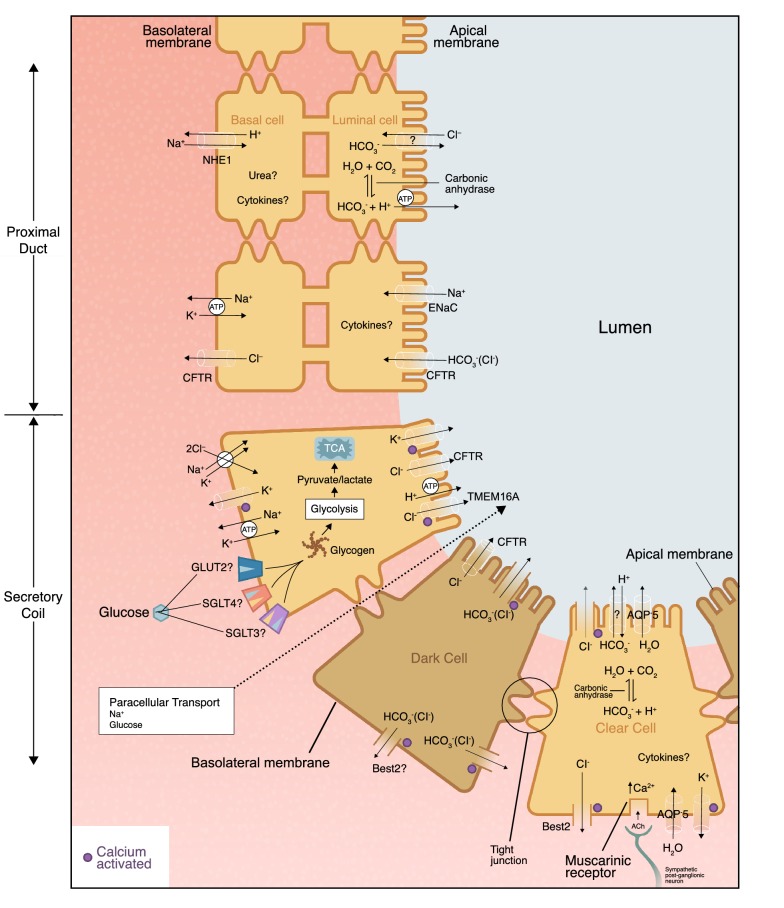
Purpose: The purpose of this paper is to review the physiological mechanisms determining eccrine sweat composition to assess the utility of sweat as a proxy for blood or as a potential biomarker of human health or nutritional/physiological status. Methods: This narrative review includes the major sweat electrolytes (sodium, chloride, and potassium), other micronutrients (e.g., calcium, magnesium, iron, copper, zinc, vitamins), metabolites (e.g., glucose, lactate, ammonia, urea, bicarbonate, amino acids, ethanol), and other compounds (e.g., cytokines and cortisol). Results: Ion membrane transport mechanisms for sodium and chloride are well established, but the mechanisms of secretion and/or reabsorption for most other sweat solutes are still equivocal. Correlations between sweat and blood have not been established for most constituents, with perhaps the exception of ethanol. With respect to sweat diagnostics, it is well accepted that elevated sweat sodium and chloride is a useful screening tool for cystic fibrosis. However, sweat electrolyte concentrations are not predictive of hydration status or sweating rate. Sweat metabolite concentrations are not a reliable biomarker for exercise intensity or other physiological stressors. To date, glucose, cytokine, and cortisol research is too limited to suggest that sweat is a useful surrogate for blood. Conclusion: Final sweat composition is not only influenced by extracellular solute concentrations, but also mechanisms of secretion and/or reabsorption, sweat flow rate, byproducts of sweat gland metabolism, skin surface contamination, and sebum secretions, among other factors related to methodology. Future research that accounts for these confounding factors is needed to address the existing gaps in the literature.
Overview
CoChat Summary
TL;DR
This narrative review concludes that final eccrine sweat composition is shaped not only by extracellular solute concentrations but also by glandular secretion/reabsorption, sweat flow rate, gland metabolism, skin contamination, and sebum, so sweat is not generally a reliable proxy for blood. Elevated sweat sodium and chloride remain useful for cystic fibrosis screening, but most other sweat constituents lack established blood correlations or diagnostic utility.
Key findings
- Na+ and Cl− are the most concentrated sweat electrolytes, ranging from ~10 to ~90 mmol/L; their secretion/reabsorption mechanisms are well established, but mechanisms for most other sweat solutes remain equivocal.
- Sweat-blood correlations have not been established for most constituents, with perhaps the exception of ethanol; sweat glucose is ~100× lower than blood glucose, and glucose, cytokine, and cortisol research is too limited to support sweat as a blood surrogate.
- Sweat electrolyte concentrations are not predictive of hydration status or sweating rate, and sweat metabolite concentrations are not reliable biomarkers of exercise intensity or other physiological stressors.
- Heat acclimation can decrease sweat [Na+] and [Cl−] by up to 30–60% after 7–10 days; within a bout, as forearm sweating rate increased from ~0.25 to 0.82 mg/cm2/min, sweat [Na+] rose from 19 ± 5 to 59 ± 10 mmol/L, with Na+ reabsorption falling from 86 ± 3% to 65 ± 6%.
Methods
- Narrative review of physiological mechanisms determining eccrine sweat composition during passive and active heat stress.
- Covers major electrolytes (Na+, Cl−, K+), other micronutrients (Ca2+, Mg2+, Fe2+, Cu2+, Zn2+, vitamins), metabolites (glucose, lactate, ammonia, urea, bicarbonate, amino acids, ethanol), cytokines, and cortisol.
- Synthesizes literature on secretion/reabsorption, collection and analytical confounders, heat acclimation/diet/training effects, and sweat-versus-blood correlations, including Table 1 ranges and supplemental tables.
Limitations
- Stated: mechanisms of secretion/reabsorption for most non-Na/Cl solutes are still equivocal; few well-designed, adequately powered sweat-blood correlation studies exist; methodological confounds include skin surface contamination, collection method, storage, and analytical technique; normative data are insufficient for most constituents; no longitudinal training studies and no sweat-blood cortisol comparisons are available.
- Evident from the text: as a narrative review, it does not use a systematic search or meta-analysis, and many cited studies are old, small, or report mixed/equivocal results, with the authors repeatedly calling for more controlled research.
Model-written summary. Check it against the paper before relying on it.
Integrity signals
Registry
Cites
Statistics
Figures
Verification
Claims the paper makes
76 Valid · 13 Not valid · 213 Not checked · 79 Own results and interpretations
At least one cited source doesn’t support this claim or points to a different paper, and none confirmed it — see the verdicts below.
In the paper
“some in vitro experiments suggest that ion channel (ENaC) activity is temperature dependent, such that higher temperature increases excitability and open probability”
§ Physiological mechanisms determining eccrine sweat composition > Mechanisms determining sweat composition > Electrolytes (sodium, chloride, and potassium)
What the sources say
- Disputedcites Chraibi and Horisberger 2002 matched to “Na Self Inhibition of Human Epithelial Na Channel” (2002) sourceExperimental — accuracy not yet measured
The Results section (‘Effect of Temperature on the Steady-State Amiloride-sensitive Current’) reports that, under control conditions, ENaC current decreased as temperature rose; it increased only after protease treatment. The Discussion (‘Effect of Temperature and Kinetics of Self Inhibition’) says high temperature favors the low-open-probability state, contrary to the claimed increase in open probability. (LLM, conf=0.90)
Checked by a reasoning model — may be wrong.
- Disputedcites Chraibi and Horisberger 2003 matched to “Dual effect of temperature on the human epithelial Na + channel” (2003) sourceExperimental — accuracy not yet measured
The Discussion (p. 5) reports that ENaC open probability increased 2.3-fold on cooling, contrary to the claim that higher temperature increases it. The paper does report greater unitary current at higher temperature, but that is distinct from open probability; it does not establish increased excitability. (LLM, conf=0.89)
Checked by a reasoning model — may be wrong.
- Not checked — no full text of the sourcecites Ruff 1999 matched to “Effects of temperature on slow and fast inactivation of rat skeletal muscle Na+channels” (1999) source
hedgedstates a cause- Asserted: passes — The authors put it forward as true.
- Checkable: passes — It can be checked against evidence.
- Load-bearing: unclear — It is unclear whether the paper’s conclusions depend on it.
- Based: passes — The paper gives a reason why it holds.
- Disputed
At least one cited source doesn’t support this claim or points to a different paper, and none confirmed it — see the verdicts below.
In the paper
“There is no experimental evidence that alcohol ingestion leads to an increase in sweating rate (Baker 2019).”
§ Physiological mechanisms determining eccrine sweat composition > Mechanisms determining sweat composition > Metabolites
What the sources say
- Disputedcites Baker 2019 matched to “Physiology of sweat gland function: The roles of sweating and sweat composition in human health” (2019) sourceExperimental — accuracy not yet measured
In “Excretion of ethanol,” Baker reports that one laboratory study found a higher chest sweating rate 10–30 minutes after alcohol ingestion than after water. The increase was small and transient, and other studies found no difference, but the reported experiment contradicts the claim that there is no experimental evidence of an increase. (LLM, conf=0.88)
Checked by a reasoning model — may be wrong.
plain- Asserted: passes — The authors put it forward as true.
- Checkable: passes — It can be checked against evidence.
- Load-bearing: unclear — It is unclear whether the paper’s conclusions depend on it.
- Based: passes — The paper gives a reason why it holds.
- Disputed
The sources with a verdict support this claim; the rest weren’t checked yet, have no full text we could read, or their verdicts aren’t rated yet.
In the paper
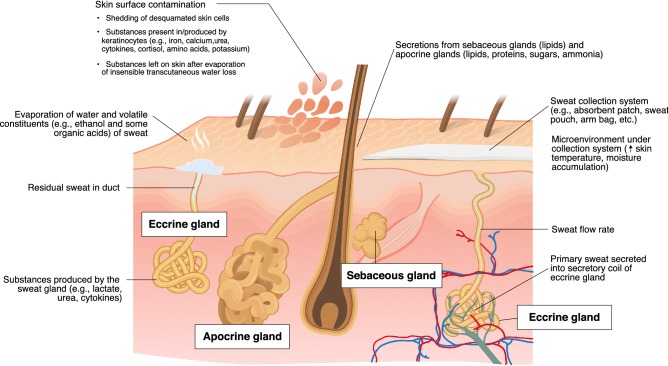
“Since extracellular fluid is the precursor to primary sweat in the secretory coil of eccrine sweat glands (Cage and Dobson 1965; Sato 1977)”
§ Physiological mechanisms determining eccrine sweat composition > Introduction
What the sources say
- Supportedcites Cage and Dobson 1965 matched to “Sodium Secretion and Reabsorption in the Human Eccrine Sweat Gland*” (1965) source
The Discussion states that the precursor of the secretory fluid must be interstitial fluid or blood plasma, both extracellular fluids. The paper also describes the secretory fluid as being produced in the secretory coil. (LLM, conf=0.93)
- Not checked — no full text of the sourcecites Sato 1977 matched to “The physiology, pharmacology, and biochemistry of the eccrine sweat gland” (1977) source
plainstates a cause- Asserted: passes — The authors put it forward as true.
- Checkable: passes — It can be checked against evidence.
- Load-bearing: passes — The paper’s conclusions depend on it.
- Based: passes — The paper gives a reason why it holds.
- Supported
The sources with a verdict support this claim; the rest weren’t checked yet, have no full text we could read, or their verdicts aren’t rated yet.
In the paper
“its application has been limited to date (Brothers et al. 2019; Gao et al. 2018; Heikenfeld et al. 2018).”
§ Physiological mechanisms determining eccrine sweat composition > Introduction
What the sources say
- Not checked — no full text of the sourcecites Brothers et al. 2019 matched to “Achievements and Challenges for Real-Time Sensing of Analytes in Sweat within Wearable Platforms” (2019) source
- Supportedcites Gao et al. 2018 matched to “Wearable physiological systems and technologies for metabolic monitoring” (2018) source
The ‘Effects of environment on measuring sweat’ section says wearable sweat-monitoring devices existed as research prototypes but were not yet commercially available. It also describes practical barriers to their use, supporting the claim that application had been limited to date. No page number is provided in our copy. (LLM, conf=0.90)
- Supportedcites Heikenfeld et al. 2018 matched to “Wearable sensors: modalities, challenges, and prospects” (2018) source
The Wearable Chemical Sensors section reports demonstrations of non-invasive, real-time sweat monitoring but says that no commercial wearable products for sweat-based chemical detection yet exist. Its discussion of unresolved sampling and validation challenges supports the claim that practical application remained limited; the passage has no page number in our copy. (LLM, conf=0.87)
plain- Asserted: passes — The authors put it forward as true.
- Checkable: passes — It can be checked against evidence.
- Load-bearing: unclear — It is unclear whether the paper’s conclusions depend on it.
- Based: passes — The paper gives a reason why it holds.
The cited sources support only part of this claim — read each source’s verdict below.
In the paper
“Whole body sweating rate can be > 3.0 L/h (Armstrong et al. 1986; Barnes et al. 2019; Bergeron 2003; Godek et al. 2005, 2010; Palmer and Spriet 2008).”
§ Physiological mechanisms determining eccrine sweat composition > Eccrine sweat glands and thermoregulatory sweating
What the sources say
- Not checked — no full text of the sourcecites Armstrong et al. 1986 matched to “Preparing Alberto Salazar for the Heat of the 1984 Olympic Marathon” (1986) source
- Partly supportedcites Barnes et al. 2019 matched to “Normative data for sweating rate, sweat sodium concentration, and sweat sodium loss in athletes: An update and analysis by sport” (2019) sourceExperimental — accuracy not yet measured
Our copy of Barnes et al. (2019) repeatedly documents whole-body sweating rate (WBSR) in athletes and 'considerable overall inter-individual variation in sweating' (Conclusion; Discussion, p. n/a), with the highest sport means in American football (1.51 ± 0.70 L/h) and endurance (1.28 ± 0.57 L/h) (ABSTRACT; Table 3). However, no passage states that WBSR can exceed 3.0 L/h; the only explicit high-rate threshold given is that 'three of the 24 endurance athletes tested outdoors had sweating rates over 2.0 L/h' (Results, descriptive statistics), and the '>3–4' figure in the Introduction refers to grams of Na+ loss, not sweating rate. The range/maximum values that could carry the >3.0 L/h magnitude sit in Tables 2–3, which are not rendered in our copy (placeholder rows only). So the source supports high and highly variable WBSR in athletes but not the specific >3.0 L/h magnitude attributed to it. (LLM, conf=0.68)
- Not checked — no full text of the sourcecites Bergeron 2003 matched to “Heat cramps: fluid and electrolyte challenges during tennis in the heat” (2003) source
plain- Asserted: passes — The authors put it forward as true.
- Checkable: passes — It can be checked against evidence.
- Load-bearing: unclear — It is unclear whether the paper’s conclusions depend on it.
- Based: passes — The paper gives a reason why it holds.
257 more claims · 59 with their cited sources checked
Create a free account to see all 381 claims and to verify the 10 references still open.
- Probably not a substantial claim. 40
- It may state two separate claims as one. 90
Self-check
Percentages, sums and reported differences re-computed from the paper’s own numbers.
Each contradiction between two passages listed here was confirmed by an independent check.
Rated minor: it would not touch a result — a value no result rests on, a p-value that stays on the same side of the significance level, or a conflict that is clerical, resolved elsewhere in the paper, or outside its own findings.
In the paper
§ Physiological mechanisms determining eccrine sweat composition > Overview of sweat composition
“| Amino Acids | R–CH(NH2) –COOH | ≤ 13 × 10–3 each | ≤ 6.5 × 10⁻³ each | 75–204 each | Polar and nonpolar | Leaching of natural moisturizing factors from the skin | NA |”
§ Physiological mechanisms determining eccrine sweat composition > Effects of heat acclimation, diet, and physical training on sweat composition > Metabolites
“total amino acid concentrations in sweat were significantly lower in trained (physically active for an average of 9 h per week) than untrained (average of 1 h of sports per week) men during 15 min of cycling at 150 W while covered with a plastic blanket (12,797 vs. 24,855 µmol/L, respectively).”
Citations
Cites
Items 201–363 of 363
The local training effect of secretory activity on the response of eccrine sweat glands
Collins, K. J., Crockford, G. W., & Weiner, J. S. (1966) · The Journal of Physiology · doi:10.1113/jphysiol.1966.sp007911 · Cited by 52
Immunolocalization and translocation of aquaporin-5 water channel in sweat glands
Inoue, R., Sohara, E., Rai, T., Satoh, T., Yokozeki, H., Sasaki, S., & Uchida, S. (2013) · Journal of Dermatological Science · doi:10.1016/j.jdermsci.2013.01.013 · Cited by 52
Human frontal sweat rate and lactate concentration during heat exposure and exercise
Fellmann, N., Grizard, G., & Coudert, J. (1983) · Journal of Applied Physiology · doi:10.1152/jappl.1983.54.2.355 · Cited by 52 · cited 3×
“Collective observations throughout the literature indicate that sweat lactate concentration typically exceeds that of blood lactate (Ament et al. 1997; Derbyshire et al. 2012; Fellmann et al. 1983; Green et al. 2000; Weiner and Van Heyningen 1952; Whitehouse 1935), especially at the onset of initial sweating when flow…”
BackgroundInfluentialWhy do we have Apocrine and Sebaceous Glands?
Porter, A. M. W. (2001) · Journal of the Royal Society of Medicine · doi:10.1177/014107680109400509 · Cited by 52 · cited 1×
“…collected in an area dense with apocrine glands and/or sebaceous glands (e.g., axilla, face, forehead, scalp) their secretions could artificially elevate lipid, protein, sugar, and ammonia concentrations of sweat samples collected from the skin surface (Montagna and Parakkal 1974a, b; Porter 2001).”
BackgroundA Sweat‐Patch Test for Alcohol Consumption: Evaluation in Continuous and Episodic Drinkers
Phillips, M., & McAloon, M. H. (1980) · Alcoholism: Clinical and Experimental Research · doi:10.1111/j.1530-0277.1980.tb04837.x · Cited by 52
Real-time colorimetric hydration sensor for sport activities
Zhou, Y., Han, H., Naw, H. P. P., Lammy, A. V., Goh, C. H., Boujday, S., & Steele, T. W. J. (2015) · Materials & Design · doi:10.1016/j.matdes.2015.06.078 · Cited by 51
THE SWEAT TEST IN CYSTIC FIBROSIS
Shwachman, H., & Antonowicz, I. (1962) · Annals of the New York Academy of Sciences · doi:10.1111/j.1749-6632.1962.tb30495.x · Cited by 51
Boulyga, S. F., Heilmann, J., PROHASKA, T. R., & Heumann, K. G. (2007) · Analytical and Bioanalytical Chemistry · doi:10.1007/s00216-007-1485-7 · Cited by 50
TANG, Y.-M., WANG, D.-G., LI, J., LI, X.-H., WANG, Q., LIU, N., LIU, W.-T., & LI, Y.-X. (2016) · INDUSTRIAL HEALTH · doi:10.2486/indhealth.2014-0225 · Cited by 50
Sato, K., Ohtsuyama, M., & Samman, G. (1991) · Journal of the American Academy of Dermatology · doi:10.1016/s0190-9622(08)80117-x · Cited by 49
Characterization of Monocarboxylate Transport in Human Kidney HK-2 Cells
Wang, Q., Lu, Y., Yuan, M., Darling, I. M., Repasky, E. A., & Morris, M. E. (2006) · Molecular Pharmaceutics · doi:10.1021/mp060037b · Cited by 49
Comparison of sweat rate during graded exercise and the local rate induced by pilocarpine
Vimieiro-Gomes, A. C., Magalhães, F. C., Amorim, F. T., Machado-Moreira, C. A., Rosa, M. S., Lima, N. R. V., & Rodrigues, L. O. C. (2005) · Brazilian Journal of Medical and Biological Research · doi:10.1590/s0100-879x2005000700017 · Cited by 49
Variability of Measurements of Sweat Sodium Using the Regional Absorbent-Patch Method
Dziedzic, C. E., Ross, M. L., Slater, G. J., & Burke, L. M. (2014) · International Journal of Sports Physiology and Performance · doi:10.1123/ijspp.2013-0480 · Cited by 49
Normal human sweat contains interleukin-8
Jones, A. P., Webb, L. M. C., Anderson, A. O., Leonardo, E. J., & Rot, A. (1995) · Journal of Leukocyte Biology · doi:10.1002/jlb.57.3.434 · Cited by 49
Electrochemical driving forces for K+ secretion by rat paw eccrine sweat gland
Sato, K. (1980) · American Journal of Physiology-Cell Physiology · doi:10.1152/ajpcell.1980.239.3.c90 · Cited by 49 · cited 1×
“2016; Sato 1980), but more research is needed.”
BackgroundFACTORS INFLUENCING CHLORIDE CONCENTRATION IN HUMAN SWEAT
Johnson, R. E., Pitts, G. C., & Consolazio, F. C. (1944) · American Journal of Physiology-Legacy Content · doi:10.1152/ajplegacy.1944.141.4.575 · Cited by 49
Adams, W. S., Leslie, A., & Levin, M. H. (1950) · Experimental Biology and Medicine · doi:10.3181/00379727-74-17804 · Cited by 48
Plasma ammonia is the principal source of ammonia in sweat
Czarnowski, D., Górski, J., Jóźwiuk, J., & Boroń-Kaczmarska, A. (1992) · European Journal of Applied Physiology and Occupational Physiology · doi:10.1007/bf00705070 · Cited by 48
Heat acclimation causes a linear decrease in sweat sodium ion concentration
Buono, M. J., Kolding, M., Leslie, E., Moreno, D., Norwood, S., Ordille, A., & Weller, R. (2018) · Journal of Thermal Biology · doi:10.1016/j.jtherbio.2017.12.001 · Cited by 48
Liappis, N., Kelderbacher, S. D., Kesseler, K., & Bantzer, P. (1979) · European Journal of Applied Physiology and Occupational Physiology · doi:10.1007/bf00423292 · Cited by 47
Describing individual variation in local sweating during exercise in a temperate environment
Bain, A. R., Deren, T. M., & Jay, O. (2011) · European Journal of Applied Physiology · doi:10.1007/s00421-010-1788-9 · Cited by 47
The Elimination of Ethyl Alcohol in Sweat1
Nyman, E., & Palmlöv, A. (1936) · Skandinavisches Archiv Für Physiologie · doi:10.1111/j.1748-1716.1936.tb01150.x · Cited by 47
Observations on Lactate Content of Sweat
Weiner, J. S., & van Heyningen, R. E. (1952) · Journal of Applied Physiology · doi:10.1152/jappl.1952.4.9.734 · Cited by 47 · cited 1×
“2011; Van Heyningen and Weiner 1952).”
The Effect of Intracutaneous d-Aldosterone and Hydrocortisone on Human Eccrine Sweat Gland Function
Sato, K., & Dobson, R. L. (1970) · Journal of Investigative Dermatology · doi:10.1111/1523-1747.ep12259279 · Cited by 46 · cited 2×
“K+-ATPase is influenced by plasma aldosterone concentration and sweat gland sensitivity to aldosterone (Kirby and Convertino 1986; Ladell and Shephard 1961; Sato and Dobson 1970).”
BackgroundSweat lactate secretion during exercise in relation to women's aerobic capacity
Lamont, L. S. (1987) · Journal of Applied Physiology · doi:10.1152/jappl.1987.62.1.194 · Cited by 46
Ono, E., Murota, H., Mori, Y., Yoshioka, Y., Nomura, Y., Munetsugu, T., Yokozeki, H., & Katayama, I. (2018) · PLOS ONE · doi:10.1371/journal.pone.0195960 · Cited by 46
Lobitz, W. C., & Osterberg, A. E. (1945) · Journal of Investigative Dermatology · doi:10.1038/jid.1945.7 · Cited by 45
Brown, M. B., Haack, K. K. V., Pollack, B. P., Millard-Stafford, M., & McCarty, N. A. (2011) · American Journal of Physiology-Regulatory, Integrative and Comparative Physiology · doi:10.1152/ajpregu.00660.2010 · Cited by 45
Sato, K., Feibleman, C. E., & Dobson, R. L. (1970) · Journal of Investigative Dermatology · doi:10.1111/1523-1747.ep12260581 · Cited by 44 · cited 1×
“Likewise, sweat [Na+] and [Cl−] have been reported to be higher (Collins 1962; Sato et al. 1970; Shwachman and Antonowicz 1962) or similar (di Sant’Agnese and Powell 1962; Shwachman and Antonowicz 1962) with pharmacological stimulation versus passive heating.”
BackgroundImmunohistochemical identification of interleukin 1α and β in human eccrine sweat-gland apparatus
REITAMO, S., ANTTILA, H. S. I., DIDIERJEAN, L., & SAURAT, J.-H. (1990) · British Journal of Dermatology · doi:10.1111/j.1365-2133.1990.tb08279.x · Cited by 44
Foy, H., & Kondi, A. (1957) · PubMed · Cited by 44
Effects of sweat gland training by repeated local heating.
OGAWA, T., ASAYAMA, M., & MIYAGAWA, T. (1982) · The Japanese Journal of Physiology · doi:10.2170/jjphysiol.32.971 · Cited by 44
(1965) · PubMed Central · Cited by 44
The dissolved constituents of human sweat
Whitehouse, A. G. R. (1935) · Proceedings of the Royal Society of London. Series B - Biological Sciences · doi:10.1098/rspb.1935.0020 · Cited by 43 · cited 1×
“2000; Weiner and Van Heyningen 1952; Whitehouse 1935), especially at the onset of initial sweating when flow rates are low.”
BackgroundSweat lactate in man is derived from blood glucose.
Gordon, R. S., Thompson, R. H., Muenzer, J., & Thrasher, D. (1971) · Journal of Applied Physiology · doi:10.1152/jappl.1971.31.5.713 · Cited by 43
Sweat Facilitated Amino Acid Losses in Male Athletes during Exercise at 32-34°C
Dunstan, R. H., Sparkes, D. L., Dascombe, B. J., Macdonald, M. M., Evans, C. A., Stevens, C. J., Crompton, M. J., Gottfries, J., Franks, J., Murphy, G., et al. (2016) · PLOS ONE · doi:10.1371/journal.pone.0167844 · Cited by 43
Hooton, K., & Li, L. (2017) · Analytical Chemistry · doi:10.1021/acs.analchem.7b01988 · Cited by 43
Glucose Metabolism of the Isolated Eccrine Sweat Gland
Sato, K., & Dobson, R. L. (1973) · Journal of Clinical Investigation · doi:10.1172/jci107401 · Cited by 42 · cited 1×
“%) by adrenergic stimulation (Sato 1973).”
Hayden, G., Milne, H. C., Patterson, M. J., & Nimmo, M. A. (2004) · European Journal of Applied Physiology · doi:10.1007/s00421-004-1057-x · Cited by 42
BUONO, M. J., McKENZIE, B. K., & KASCH, F. W. (1991) · Age and Ageing · doi:10.1093/ageing/20.6.439 · Cited by 42
Nuclear microscopy: A tool for imaging elemental distribution and percutaneous absorption in vivo
Veríssimo, A., Alves, L. C., Filipe, P., Silva, J. N., Silva, R., Dolores YNSA, M., Gontier, E., Moretto, P., Pallon, J., & Pinheiro, T. (2007) · Microscopy Research and Technique · doi:10.1002/jemt.20402 · Cited by 42
Urea transporters and sweat response to uremia
Keller, R. W., Bailey, J. L., Wang, Y., Klein, J. D., & Sands, J. M. (2016) · Physiological Reports · doi:10.14814/phy2.12825 · Cited by 42
Exercise tolerance in the heat on low and normal salt intakes
Hargreaves, M., Morgan, T. O., Snow, R., & Guerin, M. (1989) · Clinical Science · doi:10.1042/cs0760553 · Cited by 41
SIMULTANEOUS STUDY OF CONSTITUENTS OF URINE AND PERSPIRATION
Mosher, H. H. (1933) · Journal of Biological Chemistry · doi:10.1016/s0021-9258(18)76026-2 · Cited by 41 · cited 1×
“The mechanisms underlying sweat ammonia concentration have been speculated for decades, beginning with Mosher (1933) and the proposal that ammonia is a byproduct of urea catabolism in eccrine glands.”
BackgroundHamouti, N., Fernández‐Elías, V. E., Ortega, J. F., & Mora‐Rodriguez, R. (2014) · Scandinavian Journal of Medicine & Science in Sports · doi:10.1111/sms.12028 · Cited by 41
Tian, Y., & Stacey, M. C. (2003) · Wound Repair and Regeneration · doi:10.1046/j.1524-475x.2003.11502.x · Cited by 41
Cl‐ Conductance and Acid Secretion in the Human Sweat Duct
Quinton, P., & Reddy, M. M. (1989) · Annals of the New York Academy of Sciences · doi:10.1111/j.1749-6632.1989.tb25182.x · Cited by 41
Differences in composition of sweat induced by thermal exposure and by running exercise
Fukumoto, T., Tanaka, T., Fujioka, H., Yoshihara, S., Ochi, T., & Kuroiwa, A. (1988) · Clinical Cardiology · doi:10.1002/clc.4960111010 · Cited by 41
CFTR in cystic fibrosis and cholera: from membrane transport to clinical practice
Goodman, B. E., & Percy, W. H. (2005) · Advances in Physiology Education · doi:10.1152/advan.00035.2004 · Cited by 41
Na+/H+ exchangers in the human eccrine sweat duct
Granger, D., Marsolais, M., Burry, J., & Laprade, R. (2003) · American Journal of Physiology-Cell Physiology · doi:10.1152/ajpcell.00581.2002 · Cited by 41
(1985) · PubMed · Cited by 40
Surface contamination artificially elevates initial sweat mineral concentrations
Ely, M. R., Kenefick, R. W., Cheuvront, S. N., Chinevere, T. D., Lacher, C. P., Lukaski, H. C., & Montain, S. J. (2011) · Journal of Applied Physiology · doi:10.1152/japplphysiol.01437.2010 · Cited by 38
Intracellular Cl activity: evidence of dual mechanisms of cl absorption in sweat duct
Reddy, M. M., & Quinton, P. M. (1994) · American Journal of Physiology-Cell Physiology · doi:10.1152/ajpcell.1994.267.4.c1136 · Cited by 38
Brown, W. K., & Sargent, F. (1965) · Archives of Environmental Health: An International Journal · doi:10.1080/00039896.1965.10664244 · Cited by 38
Briggman, J. V., Tashian, R. E., & Spicer, S. S. (1983) · PubMed Central · Cited by 37
Faulkner, S. H., Spilsbury, K. L., Harvey, J., Jackson, A., Huang, J., Platt, M., Tok, A., & Nimmo, M. A. (2014) · European Journal of Applied Physiology · doi:10.1007/s00421-014-2851-8 · Cited by 37
Hydrogen ion and electrolyte excretion of the single human sweat gland
Kaiser, D., Songo-Williams, R., & Drack, E. (1974) · Pfl�gers Archiv European Journal of Physiology · doi:10.1007/bf00587917 · Cited by 37
Hew-Butler, T., Noakes, T. D., Soldin, S. J., & Verbalis, J. G. (2010) · British Journal of Sports Medicine · doi:10.1136/bjsm.2008.051771 · Cited by 37
Sweat sodium concentration during exercise in the heat in aerobically trained and untrained humans
Hamouti, N., Del Coso, J., Ortega, J. F., & Mora-Rodriguez, R. (2011) · European Journal of Applied Physiology · doi:10.1007/s00421-011-1911-6 · Cited by 36
Validity/reliability of sweat analysis by whole-body washdown vs. regional collections
Lemon, P. W., Yarasheski, K. E., & Dolny, D. G. (1986) · Journal of Applied Physiology · doi:10.1152/jappl.1986.61.5.1967 · Cited by 36
Didierjean, L., Gruaz, D., Frobert, Y., Grassi, J., Dayer, J.-M., & Saurat, J.-H. (1990) · Cytokine · doi:10.1016/1043-4666(90)90053-v · Cited by 35
Exercise-Induced Trace Mineral Element Concentration in Regional Versus Whole-Body Wash-Down Sweat
Baker, L. B., Stofan, J. R., Lukaski, H. C., & Horswill, C. A. (2011) · International Journal of Sport Nutrition and Exercise Metabolism · doi:10.1123/ijsnem.21.3.233 · Cited by 35
Self-citationEnhancing glucose flux into sweat by increasing paracellular permeability of the sweat gland
Jajack, A., Brothers, M., Kasting, G., & Heikenfeld, J. (2018) · PLOS ONE · doi:10.1371/journal.pone.0200009 · Cited by 35
Na, C. H., Sharma, N., Madugundu, A. K., Chen, R., Aksit, M. A., Rosson, G. D., Cutting, G. R., & Pandey, A. (2019) · Molecular & Cellular Proteomics · doi:10.1074/mcp.ra118.001101 · Cited by 35
Amano, T., Gerrett, N., Inoue, Y., Nishiyasu, T., Havenith, G., & Kondo, N. (2015) · European Journal of Applied Physiology · doi:10.1007/s00421-015-3275-9 · Cited by 34
Quantitative study of free amino acids in human eccrine sweat during normal conditions and exercise
Liappis, N., & Hungerland, H. (1972) · The American Journal of Clinical Nutrition · doi:10.1093/ajcn/25.7.661 · Cited by 34
IRON CONTENT OF THERMAL SWEAT IN IRON-DEFICIENCY ANÆMIA
Hussain, R., & Patwardhan, V. N. (1959) · The Lancet · doi:10.1016/s0140-6736(59)90653-1 · Cited by 34
Souza, S. L., Graça, G., & Oliva, A. (2018) · Skin Research and Technology · doi:10.1111/srt.12412 · Cited by 34
Silvers, S., Forster, W., & Talbert, G. A. (1928) · American Journal of Physiology-Legacy Content · doi:10.1152/ajplegacy.1928.84.3.577 · Cited by 33
Urea transfer across the sweat glands
Komives, G. K., Robinson, S., & Roberts, J. T. (1966) · Journal of Applied Physiology · doi:10.1152/jappl.1966.21.6.1681 · Cited by 33
Effect of skin temperature on salt concentration of sweat
Robinson, S., Gerking, S. D., Turrell, E. S., & Kincaid, R. K. (1950) · Journal of Applied Physiology · doi:10.1152/japplphysiol.1950.2.12.654 · Cited by 32
Vellar, O. D., & Askevold, R. (1968) · Scandinavian Journal of Clinical and Laboratory Investigation · doi:10.3109/00365516809160740 · Cited by 32 · cited 1×
“2000; Vellar and Askevold 1968).”
Genetic and other Determinants of Sweat Sodium
Eichner, E. R. (2008) · Current Sports Medicine Reports · doi:10.1249/jsr.0b013e31817f3b35 · Cited by 30
Skin Tattoos Alter Sweat Rate and Na+ Concentration
LUETKEMEIER, M. J., HANISKO, J. M., & AHO, K. M. (2017) · Medicine & Science in Sports & Exercise · doi:10.1249/mss.0000000000001244 · Cited by 30
McCubbin, A. J., Lopez, M. B., Cox, G. R., Caldwell Odgers, J. N., & Costa, R. J. S. (2019) · European Journal of Applied Physiology · doi:10.1007/s00421-019-04199-2 · Cited by 30
Interleukin-1 alpha in human sweat is functionally active and derived from the eccrine sweat gland
Sato, K., & Sato, F. (1994) · American Journal of Physiology-Regulatory, Integrative and Comparative Physiology · doi:10.1152/ajpregu.1994.266.3.r950 · Cited by 29 · cited 5×
“2006; Sato and Sato 1994) although IL-6 and TNF-α are not consistently detected (Dai et al.”
BackgroundInfluentialÅStrand, I. (1963) · Acta Physiologica Scandinavica · doi:10.1111/j.1748-1716.1963.tb02658.x · Cited by 29 · cited 5×
“1997; Astrand 1963; Buono et al.”
BackgroundInfluentialSweat Rate and Electrolyte Concentration in Swimmers, Runners, and Nonathletes
Henkin, S. D., Sehl, P. L., & Meyer, F. (2010) · International Journal of Sports Physiology and Performance · doi:10.1123/ijspp.5.3.359 · Cited by 28
Measurement of sodium concentration in sweat samples: comparison of 5 analytical techniques
Goulet, E. D. B., Asselin, A., Gosselin, J., & Baker, L. B. (2017) · Applied Physiology, Nutrition, and Metabolism · doi:10.1139/apnm-2017-0059 · Cited by 28
Self-citationDoorn, J., Storteboom, T. T. R., Mulder, A., de Jong, W., Rottier, B. L., & Kema, I. (2014) · Annals of Clinical Biochemistry International Journal of Laboratory Medicine · doi:10.1177/0004563214549642 · Cited by 27
MINIMAL SODIUM LOSSES THROUGH THE SKIN 1
Arn, K. D., & Reimer, A. (1950) · Journal of Clinical Investigation · doi:10.1172/jci102371 · Cited by 26
Hew-Butler, T., Hummel, J., Rider, B. C., & Verbalis, J. G. (2014) · American Journal of Physiology-Regulatory, Integrative and Comparative Physiology · doi:10.1152/ajpregu.00120.2014 · Cited by 26
Dual effect of temperature on the human epithelial Na + channel
Chra�bi, A., & Horisberger, J.-D. (2003) · Pfl�gers Archiv European Journal of Physiology · doi:10.1007/s00424-003-1178-9 · Cited by 26
ITOH, S., & NAKAYAMA, T. (1951) · The Japanese Journal of Physiology · doi:10.2170/jjphysiol.2.248 · Cited by 26
Composition of palmar and forearm sweat
Collins, K. J. (1962) · Journal of Applied Physiology · doi:10.1152/jappl.1962.17.1.99 · Cited by 26 · cited 4×
“With respect to underlying mechanisms, it is interesting to note that the higher sweat lactate concentrations were generally associated with lower sweating rates (Astrand 1963; Collins 1962).”
BackgroundInfluentialSecretion of Electrolytes in Thermal Sweat
Amatruda, T. T., & Welt, L. G. (1953) · Journal of Applied Physiology · doi:10.1152/jappl.1953.5.12.759 · Cited by 26
Braconnier, P., Milani, B., Loncle, N., Lourenco, J. M., Brito, W., Delacoste, J., Maillard, M., Stuber, M., Burnier, M., & Pruijm, M. (2020) · Journal of Hypertension · doi:10.1097/hjh.0000000000002234 · Cited by 26
MECHANISM OF WATER AND ELECTROLYTE SECRETION BY THE ECCRINE SWEAT GLAND
Gordon, R., & Cage, G. (1966) · The Lancet · doi:10.1016/s0140-6736(66)90249-2 · Cited by 25
UREA, AMINO ACID AND AMMONIA IN HUMAN SWEAT
ARAKI, Y., & ANDO, S. (1952) · The Japanese Journal of Physiology · doi:10.2170/jjphysiol.3.211 · Cited by 25
Time Relation of Renal and Sweat Gland Adjustments to Salt Deficiency in Men
Robinson, S., Nicholas, J. R., Smith, J. H., Daly, W. J., & Pearcy, M. (1955) · Journal of Applied Physiology · doi:10.1152/jappl.1955.8.2.159 · Cited by 25
The Expression of AQP5 and UTs in the Sweat Glands of Uremic Patients
Xie, L., Jin, L., Feng, J., & Lv, J. (2017) · BioMed Research International · doi:10.1155/2017/8629783 · Cited by 25
(1988) · PubMed · Cited by 24
Collins, K. J., Eddy, T. P., Hibbs, A. N., Stock, A. L., & Wheeler, E. F. (1971) · Occupational and Environmental Medicine · doi:10.1136/oem.28.3.246 · Cited by 24
EFFECT OF WORK AND HEAT ON THE HYDROGEN ION CONCENTRATION OF THE SWEAT
Talbert, G. A. (1919) · American Journal of Physiology-Legacy Content · doi:10.1152/ajplegacy.1919.50.3.433 · Cited by 24 · cited 1×
“Sweat pH does not seem to vary between active and passive sweating, as long as the local environment (ventilation and humidity) is standardized between stimulation 1 3 methods (Talbert 1919, 1922).”
BackgroundRothman, S. S., Smiljanic, A. M., & Murphy, J. C. (1949) · Journal of Investigative Dermatology · doi:10.1038/jid.1949.103 · Cited by 23 · cited 2×
“Similarly, skin surface contamination could originate from minerals, amino acids, and other constituents deposited on the skin after evaporation of everyday insensible transcutaneous water loss (Mitchell and Hamilton 1949; Rothman et al. 1949).”
BackgroundThe Secretion of Salt and Water by the Eccrine Sweat Gland
Dobson, R. L. (1972) · Archives of Dermatology · doi:10.1001/archderm.1972.01620060008002 · Cited by 23
Stimulation of pentose cycle in the eccrine sweat gland by adrenergic drugs
Sato, K. A. (1973) · American Journal of Physiology-Legacy Content · doi:10.1152/ajplegacy.1973.224.5.1149 · Cited by 23 · cited 1×
“%) by adrenergic stimulation (Sato 1973).”
(1990) · PubMed · Cited by 23
Shamsuddin, A. K. M., Kuwahara, T., Oue, A., Nomura, C., Koga, S., Inoue, Y., & Kondo, N. (2005) · European Journal of Applied Physiology · doi:10.1007/s00421-005-1354-z · Cited by 22
Wheeler, E. F., El-Neil, H., Willson, J. O. C., & Weiner, J. S. (1973) · British Journal Of Nutrition · doi:10.1079/bjn19730014 · Cited by 22
Wilson, T. E., & Metzler‐Wilson, K. (2014) · Experimental Dermatology · doi:10.1111/exd.12595 · Cited by 21 · cited 1×
“1991; Wilson and Metzler-Wilson 2015) illustrated in Fig.”
BackgroundBoisvert, P., & Candas, V. (1994) · European Journal of Applied Physiology and Occupational Physiology · doi:10.1007/bf00609413 · Cited by 21
Yoshida, T., Shin-ya, H., Nakai, S., Yorimoto, A., Morimoto, T., Suyama, T., & Sakurai, M. (2006) · European Journal of Applied Physiology · doi:10.1007/s00421-006-0295-5 · Cited by 21
Lactic Acid and Sweat Gland Function
WEINER, J. S., & VAN HEYNINGEN, R. (1949) · Nature · doi:10.1038/164351b0 · Cited by 20
Validity and reliability of the Horiba C-122 compact sodium analyzer in sweat samples of athletes
Goulet, E. D. B., Dion, T., & Myette‐Côté, É. (2012) · European Journal of Applied Physiology · doi:10.1007/s00421-012-2331-y · Cited by 20
Ahmed, A. A., Nordlind, K., Schultzberg, M., & Lidén, S. (1996) · Experimental Dermatology · doi:10.1111/j.1600-0625.1996.tb00122.x · Cited by 20
(1994) · PubMed · Cited by 20
Water and Electrolyte Loss and Replacement in Exercise
Maughan, R. J. (2000) · Nutrition in Sport · doi:10.1002/9780470693766.ch17 · Cited by 20
Maximal oxygen uptake, sweating and tolerance to exercise in the heat
GREENLEAF, J. E., Castle, B. L., & Ruff, W. K. (1972) · International Journal of Biometeorology · doi:10.1007/bf01553622 · Cited by 19
Pilocarpine iontophoresis test: an index of physiological sweat secretion?
Hjortskov, N., Jepsen, L. T., Nielsen, B., Juul, A., & Skakkebæk, N. E. (1995) · Clinical Physiology · doi:10.1111/j.1475-097x.1995.tb00530.x · Cited by 19
Some Water-soluble Vitamins in the Sweat of Tropically Acclimatized European Men
Lugg, J. W. H., & Ellis, F. P. (1954) · British Journal of Nutrition · doi:10.1079/bjn19540011 · Cited by 19
Amano, T., Hirose, M., Konishi, K., Gerrett, N., Ueda, H., Kondo, N., & Inoue, Y. (2017) · European Journal of Applied Physiology · doi:10.1007/s00421-017-3619-8 · Cited by 19
Metabolomic stability of exercise-induced sweat
Harshman, S. W., Pitsch, R. L., Schaeublin, N. M., Smith, Z. K., Strayer, K. E., Phelps, M. S., Qualley, A. V., Cowan, D. W., Rose, S. D., O'Connor, M. L., et al. (2019) · Journal of Chromatography B · doi:10.1016/j.jchromb.2019.121763 · Cited by 19
Clunes, M., Lindsay, S. L., Roussa, E., Pm, Q., & Bovell, D. (2004) · Journal of Molecular Histology · doi:10.1023/b:hijo.0000039837.45595.a6 · Cited by 17
In Vitro Metabolic Studies of Hydrocortisone-4-C14 In Human Skin*
Hsia, S. L., Witten, V. H., & Hao, Y. L. (1964) · Journal of Investigative Dermatology · doi:10.1038/jid.1964.172 · Cited by 17
Restricting dietary sodium reduces plasma sodium response to exercise in the heat
Koenders, E. E., Franken, C. P. G., Cotter, J. D., Thornton, S. N., & Rehrer, N. J. (2017) · Scandinavian Journal of Medicine & Science in Sports · doi:10.1111/sms.12748 · Cited by 17
Seasonal variation of trace element loss to sweat during exercise in males
Hoshi, A., Watanabe, H., Chiba, M., Inaba, Y., Kobayashi, M., Kimura, N., & Ito, T. (2002) · Environmental Health and Preventive Medicine · doi:10.1007/bf02897331 · Cited by 16
The Effect of Heat Acclimation on Sweat Microminerals: Artifact of Surface Contamination
Ely, M. R., Kenefick, R. W., Cheuvront, S. N., Chinevere, T., Lacher, C. P., Lukaski, H. C., & Montain, S. J. (2013) · International Journal of Sport Nutrition and Exercise Metabolism · doi:10.1123/ijsnem.23.5.470 · Cited by 16
Excretion of 4-14C-cortisol and l,2-3H-d-aldosterone in Human Thermal Sweat1
JENKINS, M. E., RIVAROLA, M. A., BRUSILOW, S. W., & MIGEON, C. J. (1969) · The Journal of Clinical Endocrinology & Metabolism · doi:10.1210/jcem-29-8-1102 · Cited by 16
Identification of potassium and chloride channels in eccrine sweat glands
Cui, C., Sima, J., Yin, M., Michel, M., Kunisada, M., & Schlessinger, D. (2015) · Journal of Dermatological Science · doi:10.1016/j.jdermsci.2015.11.001 · Cited by 16
FURTHER STUDIES ON THE HYDROGEN ION CONCENTRATION OF HUMAN SWEAT
Talbert, G. A. (1922) · American Journal of Physiology-Legacy Content · doi:10.1152/ajplegacy.1922.61.3.493 · Cited by 16 · cited 2×
“Sweat pH does not seem to vary between active and passive sweating, as long as the local environment (ventilation and humidity) is standardized between stimulation 1 3 methods (Talbert 1919, 1922).”
BackgroundPullan, N. J., Thurston, V., & Barber, S. (2013) · Annals of Clinical Biochemistry International Journal of Laboratory Medicine · doi:10.1177/0004563212474565 · Cited by 15
Evidence for a Non-Plasma Source of Urea in Sweat
BRUSILOW, S. W. (1967) · Nature · doi:10.1038/214506a0 · Cited by 15 · cited 4×
“Brusilow (1967) found that the sweat-toplasma ratio of 14C-labeled urea after oral administration was 1.08, while the ratio for total urea was 1.43.”
BackgroundInfluentialNonisotonicity of simian eccrine primary sweat induced in vitro
Sato, K., & Sato, F. (1987) · American Journal of Physiology-Regulatory, Integrative and Comparative Physiology · doi:10.1152/ajpregu.1987.252.6.r1099 · Cited by 15 · cited 2×
“1987; Sato and Sato 1987b).”
BackgroundMcCubbin, A. J., & da Costa, R. (2018) · International Journal of Sports Science · doi:10.5923/j.sports.20180801.05 · Cited by 15
Cysteine proteinase inhibitor in eccrine sweat is derived from sweat gland
Yokozeki, H., Hibino, T., Takemura, T., & Sato, K. (1991) · American Journal of Physiology-Regulatory, Integrative and Comparative Physiology · doi:10.1152/ajpregu.1991.260.2.r314 · Cited by 14
Excretion of Adrenal Corticoids in the Sweat
Nichols, J., & Miller, A. T. (1948) · Experimental Biology and Medicine · doi:10.3181/00379727-69-16751 · Cited by 14
Talbert, G. A., & Haugen, C. O. (1927) · American Journal of Physiology-Legacy Content · doi:10.1152/ajplegacy.1927.81.1.74 · Cited by 14
Montagna, W., & Parakkal, P. F. (1974) · The Structure & Function of Skin · doi:10.1016/b978-0-12-505263-4.50016-9 · Cited by 14 · cited 3×
“Apocrine glands open into hair follicles and produce a viscous sweat containing lipids, proteins, sugars, and ammonia (Montagna and Parakkal 1974a; Robertshaw 1983).”
Background(1969) · PubMed · Cited by 13
McArdle, H. J. (1992) · Proceedings of the Nutrition Society · doi:10.1079/pns19920030 · Cited by 13 · cited 1×
“In other cells throughout the body divalent metal transporter 1, divalent cation transporter 1, or other carriermediated systems play an important role in moving Fe2+, Zn2+, and Cu2+ across the membrane (Anderson and Frazer 2017; Jahnen-Dechent and Ketteler 2012; McArdle 1992; Roohani et al.”
BackgroundOutput of NaCl by Sweat Glands and Kidneys in Relation to Dehydration and to Salt Depletion
Robinson, S., Maletich, R. T., Robinson, W. S., Rohrer, B. B., & Kunz, A. L. (1956) · Journal of Applied Physiology · doi:10.1152/jappl.1956.8.6.615 · Cited by 13
Montagna, W., & Parakkal, P. F. (1974) · The Structure & Function of Skin · doi:10.1016/b978-0-12-505263-4.50015-7 · Cited by 13 · cited 3×
“Apocrine glands open into hair follicles and produce a viscous sweat containing lipids, proteins, sugars, and ammonia (Montagna and Parakkal 1974a; Robertshaw 1983).”
BackgroundBovell, D. L., Clunes, M. T., Roussa, E., Burry, J., & Elder, H. Y. (2000) · The Histochemical Journal · doi:10.1023/a:1004087120735 · Cited by 12
Genesis Of The Sweat: Plasma Urea Concentration Gradient
Gordon, R. S., Thompson, R. H., Thrasher, D., & Benson, J. W. (1976) · Journal of Investigative Dermatology · doi:10.1111/1523-1747.ep12482142 · Cited by 12
Tattoos do not affect exercise-induced localised sweat rate or sodium concentration
Rogers, E., Irwin, C., McCartney, D., Cox, G. R., & Desbrow, B. (2019) · Journal of Science and Medicine in Sport · doi:10.1016/j.jsams.2019.06.004 · Cited by 12
Urocanic Acid in Sweat: An Artifact of Elution from the Epidermis
Brusilow, S. W., & Ikai, K. (1968) · Science · doi:10.1126/science.160.3833.1257 · Cited by 11
Secretion of urea and thiourea in sweat
Brusilow, S. W., & Gordes, E. H. (1965) · American Journal of Physiology-Legacy Content · doi:10.1152/ajplegacy.1965.209.6.1213 · Cited by 11
Agache, P. G. (2004) · Springer eBooks · doi:10.1007/978-3-662-08585-1_31 · Cited by 11
The effects of exercise and passive heating on the sweat glands ion reabsorption rates
Gerrett, N., Amano, T., Inoue, Y., Havenith, G., & Kondo, N. (2018) · Physiological Reports · doi:10.14814/phy2.13619 · Cited by 11
The influence of local skin temperature on the sweat glands maximum ion reabsorption rate
Gerrett, N., Amano, T., Havenith, G., Inoue, Y., & Kondo, N. (2019) · European Journal of Applied Physiology · doi:10.1007/s00421-018-04059-5 · Cited by 11
Effects of salt loading during exercise in a hot dry climate.
Konikoff, F. M., Shoenfeld, Y., Magazanik, A., Epstein, J., & Shapira, Y. (1986) · PubMed · Cited by 10
Osmotic Pressure of Human Sweat
Lichton, I. J. (1957) · Journal of Applied Physiology · doi:10.1152/jappl.1957.11.3.422 · Cited by 10 · cited 1×
“1938; Lichton 1957; Sato 1977,1983; Sato et al.”
The Human Eccrine Sweat Gland: Structural and Functional Interrelationships
Dobson, R. L. (1965) · Archives of Environmental Health: An International Journal · doi:10.1080/00039896.1965.10664242 · Cited by 10 · cited 5×
“Since extracellular fluid is the precursor to primary sweat in the secretory coil of eccrine sweat glands (Cage and Dobson 1965; Sato 1977), it is then anticipated that sweat solute concentrations excreted onto the sweat surface provide a surrogate for blood or are at least directly correlated with…”
BackgroundInfluentialEffects of stimulation technique, anatomical region, and time on human sweat lipid mediator profiles
Agrawal, K., Waller, J. D., Pedersen, T. L., & Newman, J. W. (2018) · Prostaglandins & Other Lipid Mediators · doi:10.1016/j.prostaglandins.2017.09.007 · Cited by 10
Talbert, G. A., Silvers, S., & Johnson, W. (1927) · American Journal of Physiology-Legacy Content · doi:10.1152/ajplegacy.1927.81.1.81 · Cited by 10
Colombani, P., Späti, S., Spleiss, C., Frey-Rindova, P., & Wenk, C. (1997) · Zeitschrift für Ernährungswissenschaft · doi:10.1007/bf01623370 · Cited by 9
Johnson, B. B., Johnson, R. E., & Sargent, F. (1969) · Journal of Investigative Dermatology · doi:10.1038/jid.1969.117 · Cited by 9
Influence of Sample Storage Conditions on Sweat Chloride Results
Bergeron, J., Bachmann, L. M., & Miller, W. G. (2011) · Clinical Chemistry · doi:10.1373/clinchem.2010.160267 · Cited by 9
Effect of local heating and arterial occlusion on sweat electrolyte content
Elizondo, R. S., Banerjee, M., & Bullard, R. W. (1972) · Journal of Applied Physiology · doi:10.1152/jappl.1972.32.1.1 · Cited by 9
Zech, M., Bösel, S., Tuthorn, M., et al. (2015) · Isotopes in Environmental and Health Studies · doi:10.1080/10256016.2015.1057136 · Cited by 8
Vellar, O. D. (1968) · Scandinavian Journal of Clinical and Laboratory Investigation · doi:10.3109/00365516809077004 · Cited by 8
Sweat loss of nitrogen and other nutrients during heavy physical activity.
Gs, T., Shenolikar, I. S., & Pg, T. (1976) · PubMed · Cited by 8
Blood, sweat, and chemotactic cytokines
Murphy, P. M. (1995) · Journal of Leukocyte Biology · doi:10.1002/jlb.57.3.438 · Cited by 7 · cited 1×
“2013; Murphy 1995; Sato and Sato 1994).”
Glycogen depletion as indication for ammonia determination in exercise testing
Schulz, H., & Heck, H. (2003) · European Journal of Sport Science · doi:10.1080/17461390300073303 · Cited by 6
17-HYDR0XYC0RTIC0ID DETERMINATIONS IN SWEAT
LEWIS, J. L., & THORN, G. W. (1955) · The Journal of Clinical Endocrinology & Metabolism · doi:10.1210/jcem-15-7-829 · Cited by 6
Buono, M. J., Stone, M. S., & Cannon, D. T. (2015) · Journal of Basic and Clinical Physiology and Pharmacology · doi:10.1515/jbcpp-2015-0097 · Cited by 6
Baker, L. B., Barnes, K. A., Sopeña, B. C., Nuccio, R. P., Reimel, A. J., & Ungaro, C. T. (2018) · International Journal of Sport Nutrition and Exercise Metabolism · doi:10.1123/ijsnem.2017-0199 · Cited by 6
Self-citationHow Soon is "Promptly"? Storage and Handling of Samples for the Analysis of Sweat Chloride
Jones, P. M., McCullom, V., Moore, G., & Eckhardt, J. (2008) · Laboratory Medicine · doi:10.1309/d4tl5kevjv0ykf66 · Cited by 5
(1974) · PubMed · Cited by 4
(1973) · PubMed · Cited by 2
Woodruff, A. W., & Wright, S. G. (1987) · Elsevier eBooks · doi:10.1016/b978-0-7236-0826-4.50064-8 · Cited by 1
(1973) · PubMed
Research works printed but not linked: 9
- Brunner H Über Glykogen in der gesunden und kranken Haut Verh Dtsch derm Gesellschaft 1906 9 521 535
- Embden R Tachau H Uber das Vorkommen von Serin im menschlichen Schweisse Biochem Ztschr 1910 28 230
- Kirschbaum C Hellhammer DH Fink G Salivary cortisol Encyclopedia of stress 2000 2 New York Academic 405 409
- Kuno Y Human perspiration 1956 Springfield Charles C. Thomas Publisher
- Kutchai HC Berne RM Levy MN Cellular membranes and transmembrane transport of solute and water Physiology 1998 St. Louis Mosby Press 3 20
- Ladell WSS Shephard RJ Aldosterone inhibition and acclimatization to heat Proc Physiol Soc 1961 3–4 19P 20P
- Sato K Gisolfi CV Nadel ER The mechanism of eccrine sweat secretion Exercise, heat, and thermoregulation Perspectives in exercise science and sports medicine 1993 Dubuque Brown & Benchmark 85 117
- Wescor Sweat Chek™ sweat conductivity analyzer model 3120 instruction/service manual 2005 USA Wescor Inc
- Yuyama H On the histological examination of distribution of glycogen in the skin of leprosy with special reference to the relationship between the function of sweat glands and the changes of glycogen content J Derm Urol 1935 37 811 832
Cited by
Wearable chemical sensors for biomarker discovery in the omics era
Sempionatto, J. R., Lasalde-Ramírez, J. A., Mahato, K., Wang, J., & Gao, W. (2022) · Nature Reviews Chemistry · doi:10.1038/s41570-022-00439-w · Cited by 613
Human temperature regulation under heat stress in health, disease, and injury
Cramer, M. N., Gagnon, D., Laitano, O., & Crandall, C. G. (2022) · Physiological Reviews · doi:10.1152/physrev.00047.2021 · Cited by 491
Yin, L., Cao, M., Kim, K. N., Lin, M., Moon, J.-M., Sempionatto, J. R., Yu, J., Liu, R., Wicker, C., Trifonov, A., et al. (2022) · Nature Electronics · doi:10.1038/s41928-022-00843-6 · Cited by 358
The challenges and promise of sweat sensing
Davis, N., Heikenfeld, J., Milla, C., & Javey, A. (2024) · Nature Biotechnology · doi:10.1038/s41587-023-02059-1 · Cited by 211
Achievements and Challenges for Real-Time Sensing of Analytes in Sweat within Wearable Platforms
Brothers, M. C., DeBrosse, M., Grigsby, C. C., Naik, R. R., Hussain, S. M., Heikenfeld, J., & Kim, S. S. (2019) · Accounts of Chemical Research · doi:10.1021/acs.accounts.8b00555 · Cited by 207
Metadata
- Authors
- Baker, L. B., & Wolfe, A. S.
- Affiliations
- Gatorade Sports Science Institute (US)
- Corresponding author
- Baker, Lindsay B.
- ORCID
- Baker, Lindsay B.
- Venue
- European Journal of Applied Physiology
- Published
- 2020-03-02
- Volume
- 120
- Issue
- 4
- Pages
- 719-752
- ISSN
- 0020-9376 (ISSN-L)
- 1439-6319
- 1439-6327
- PMC
- PMC7125257
- OpenAlex
- W3010240226
- Semantic Scholar
- 3a7f3eeeee43ce9bbcb7b652fe248abe7d8d2ac5
- Cited by
- 367
- References
- 365
- Citations by year
- 2026: 85 · 2025: 76 · 2024: 66 · 2023: 53 · 2022: 40 · 2021: 34 · 2020: 10
- FWCI
- 4.07
- Type
- journal article
- Language
- en
- Open access
- hybrid
- doi.org
- Licence
- cc-by
- creativecommons.org/licenses/by/4.0 (tdm)
- creativecommons.org/licenses/by/4.0 (vor)
- Locations
- European Journal of Applied Physiology (publishedVersion, cc-by)
- Europe PMC (PubMed Central) (publishedVersion, cc-by)
- PubMed Central (publishedVersion, cc-by)
- PubMed (publishedVersion)
- Funders
- Gatorade Sports Science Institute (NA)
- Topics
- Health Sciences › Medicine › Physiology (medical) › Thermoregulation and physiological responses
- Health Sciences › Medicine › Physiology (medical) › Cardiovascular and exercise physiology
- Health Sciences › Medicine › Physiology (medical) › Exercise and Physiological Responses
- Keywords
- eccrine sweat, sweat composition, sweat electrolytes, sodium, chloride, potassium, sweat biomarkers, cystic fibrosis screening, cortisol, exercise intensity
- MeSH terms
- Acclimatization, Eccrine Glands, Electrolytes, Humans, Specimen Handling, Sweat, Sweating, Sodium Chloride, Dietary, Micronutrients, Physical Conditioning, Human
About these checks
Registry, retraction, Cites and statistics results are computed, not judged, with one exception: a printed reference that no index lists is read once by a model before it counts as a citation error. Claims are extracted by a model and kept only when their quote appears verbatim in the text; each cited source is then checked, with a model’s help, for whether it says what the claim relies on. Those verdicts can be wrong — read the claim’s quote and the cited source before relying on one.
The claim verdicts this report counts are experimental: their accuracy is not yet measured.
A language model drew the claims from the paper on 2026-10-07, under version 3 of the claim definition (model deepseek-v4.1-flash, prompt extract-v3).
A second model labelled each claim on 2026-10-07 (model jev-1.13-20260917, definition revision gold-guideline-v0.2).
Cited sources are checked with a language model’s help (gpt-6-sol and qwen3.8-omni-flash).
Statistics and arithmetic are recomputed, not judged.
Confidence bands are shown only for fields calibrated on our annotated test set. None is calibrated yet, so no band is shown.
What counts as a claim ›How we measure confidence ›How we check this ›
Are you an author, or do you see a problem with this page? Request a review
Data sources
Bibliographic data: Semantic Scholar, OpenAlex, Crossref.
Contains information from the Semantic Scholar Academic Graph Datasets, made available under the ODC Attribution License (ODC-BY 1.0).
Semantic Scholar’s data is described in: Kinney, R., et al. (2023). The Semantic Scholar Open Data Platform. arXiv:2301.10140.
