

Physiological mechanisms determining eccrine sweat composition
Open accessThe DOI matches its Crossref record; 363 of the 365 references it cites were found in a registry or an index; 92 of the 523 sources its claims cite were checked for support.
Abstract
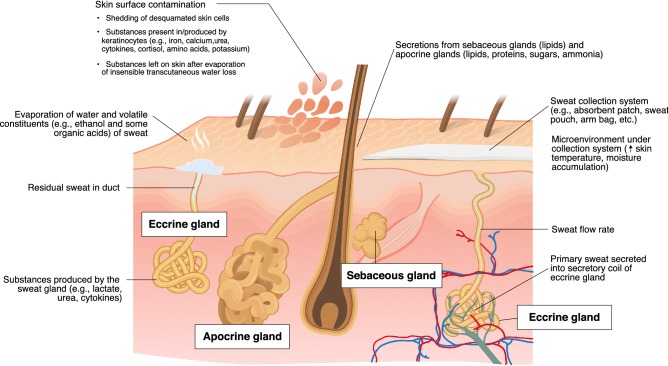
Purpose: The purpose of this paper is to review the physiological mechanisms determining eccrine sweat composition to assess the utility of sweat as a proxy for blood or as a potential biomarker of human health or nutritional/physiological status. Methods: This narrative review includes the major sweat electrolytes (sodium, chloride, and potassium), other micronutrients (e.g., calcium, magnesium, iron, copper, zinc, vitamins), metabolites (e.g., glucose, lactate, ammonia, urea, bicarbonate, amino acids, ethanol), and other compounds (e.g., cytokines and cortisol). Results: Ion membrane transport mechanisms for sodium and chloride are well established, but the mechanisms of secretion and/or reabsorption for most other sweat solutes are still equivocal. Correlations between sweat and blood have not been established for most constituents, with perhaps the exception of ethanol. With respect to sweat diagnostics, it is well accepted that elevated sweat sodium and chloride is a useful screening tool for cystic fibrosis. However, sweat electrolyte concentrations are not predictive of hydration status or sweating rate. Sweat metabolite concentrations are not a reliable biomarker for exercise intensity or other physiological stressors. To date, glucose, cytokine, and cortisol research is too limited to suggest that sweat is a useful surrogate for blood. Conclusion: Final sweat composition is not only influenced by extracellular solute concentrations, but also mechanisms of secretion and/or reabsorption, sweat flow rate, byproducts of sweat gland metabolism, skin surface contamination, and sebum secretions, among other factors related to methodology. Future research that accounts for these confounding factors is needed to address the existing gaps in the literature.
Overview
CoChat Summary
TL;DR
This narrative review concludes that final eccrine sweat composition is shaped not only by extracellular solute concentrations but also by glandular secretion/reabsorption, sweat flow rate, gland metabolism, skin contamination, and sebum, so sweat is not generally a reliable proxy for blood. Elevated sweat sodium and chloride remain useful for cystic fibrosis screening, but most other sweat constituents lack established blood correlations or diagnostic utility.
Key findings
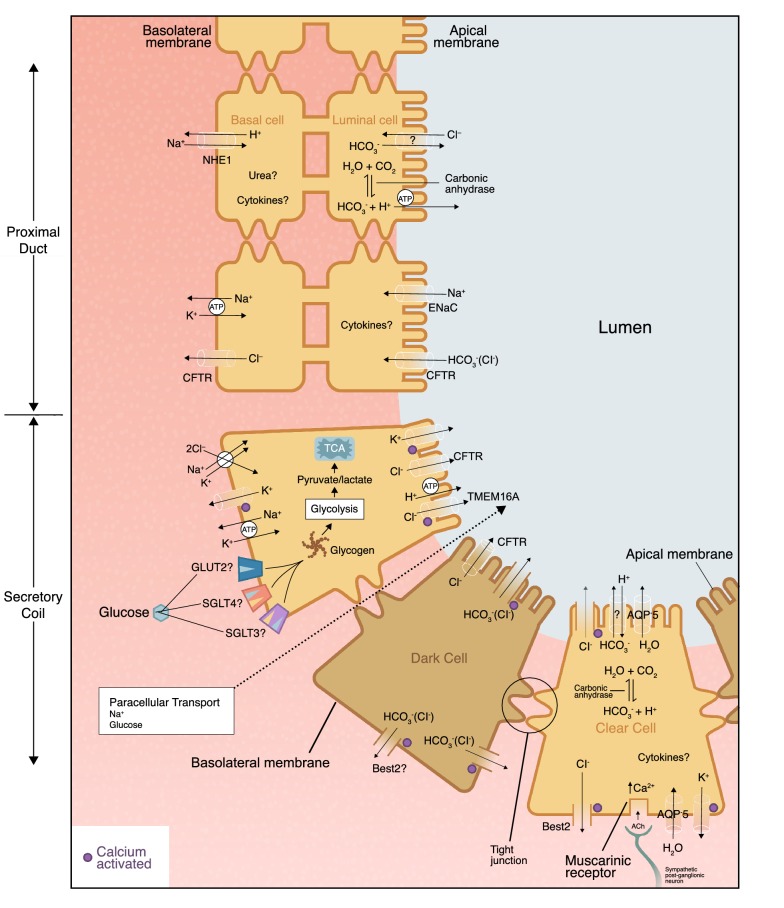
- Na+ and Cl− are the most concentrated sweat electrolytes, ranging from ~10 to ~90 mmol/L; their secretion/reabsorption mechanisms are well established, but mechanisms for most other sweat solutes remain equivocal.
- Sweat-blood correlations have not been established for most constituents, with perhaps the exception of ethanol; sweat glucose is ~100× lower than blood glucose, and glucose, cytokine, and cortisol research is too limited to support sweat as a blood surrogate.
- Sweat electrolyte concentrations are not predictive of hydration status or sweating rate, and sweat metabolite concentrations are not reliable biomarkers of exercise intensity or other physiological stressors.
- Heat acclimation can decrease sweat [Na+] and [Cl−] by up to 30–60% after 7–10 days; within a bout, as forearm sweating rate increased from ~0.25 to 0.82 mg/cm2/min, sweat [Na+] rose from 19 ± 5 to 59 ± 10 mmol/L, with Na+ reabsorption falling from 86 ± 3% to 65 ± 6%.
Methods
- Narrative review of physiological mechanisms determining eccrine sweat composition during passive and active heat stress.
- Covers major electrolytes (Na+, Cl−, K+), other micronutrients (Ca2+, Mg2+, Fe2+, Cu2+, Zn2+, vitamins), metabolites (glucose, lactate, ammonia, urea, bicarbonate, amino acids, ethanol), cytokines, and cortisol.
- Synthesizes literature on secretion/reabsorption, collection and analytical confounders, heat acclimation/diet/training effects, and sweat-versus-blood correlations, including Table 1 ranges and supplemental tables.
Limitations
- Stated: mechanisms of secretion/reabsorption for most non-Na/Cl solutes are still equivocal; few well-designed, adequately powered sweat-blood correlation studies exist; methodological confounds include skin surface contamination, collection method, storage, and analytical technique; normative data are insufficient for most constituents; no longitudinal training studies and no sweat-blood cortisol comparisons are available.
- Evident from the text: as a narrative review, it does not use a systematic search or meta-analysis, and many cited studies are old, small, or report mixed/equivocal results, with the authors repeatedly calling for more controlled research.
Model-written summary. Check it against the paper before relying on it.
Integrity signals
Registry
Cites
Statistics
Figures
Verification
Claims the paper makes
76 Valid · 13 Not valid · 213 Not checked · 79 Own results and interpretations
At least one cited source doesn’t support this claim or points to a different paper, and none confirmed it — see the verdicts below.
In the paper
“some in vitro experiments suggest that ion channel (ENaC) activity is temperature dependent, such that higher temperature increases excitability and open probability”
§ Physiological mechanisms determining eccrine sweat composition > Mechanisms determining sweat composition > Electrolytes (sodium, chloride, and potassium)
What the sources say
- Disputedcites Chraibi and Horisberger 2002 matched to “Na Self Inhibition of Human Epithelial Na Channel” (2002) sourceExperimental — accuracy not yet measured
The Results section (‘Effect of Temperature on the Steady-State Amiloride-sensitive Current’) reports that, under control conditions, ENaC current decreased as temperature rose; it increased only after protease treatment. The Discussion (‘Effect of Temperature and Kinetics of Self Inhibition’) says high temperature favors the low-open-probability state, contrary to the claimed increase in open probability. (LLM, conf=0.90)
Checked by a reasoning model — may be wrong.
- Disputedcites Chraibi and Horisberger 2003 matched to “Dual effect of temperature on the human epithelial Na + channel” (2003) sourceExperimental — accuracy not yet measured
The Discussion (p. 5) reports that ENaC open probability increased 2.3-fold on cooling, contrary to the claim that higher temperature increases it. The paper does report greater unitary current at higher temperature, but that is distinct from open probability; it does not establish increased excitability. (LLM, conf=0.89)
Checked by a reasoning model — may be wrong.
- Not checked — no full text of the sourcecites Ruff 1999 matched to “Effects of temperature on slow and fast inactivation of rat skeletal muscle Na+channels” (1999) source
hedgedstates a cause- Asserted: passes — The authors put it forward as true.
- Checkable: passes — It can be checked against evidence.
- Load-bearing: unclear — It is unclear whether the paper’s conclusions depend on it.
- Based: passes — The paper gives a reason why it holds.
- Disputed
At least one cited source doesn’t support this claim or points to a different paper, and none confirmed it — see the verdicts below.
In the paper
“There is no experimental evidence that alcohol ingestion leads to an increase in sweating rate (Baker 2019).”
§ Physiological mechanisms determining eccrine sweat composition > Mechanisms determining sweat composition > Metabolites
What the sources say
- Disputedcites Baker 2019 matched to “Physiology of sweat gland function: The roles of sweating and sweat composition in human health” (2019) sourceExperimental — accuracy not yet measured
In “Excretion of ethanol,” Baker reports that one laboratory study found a higher chest sweating rate 10–30 minutes after alcohol ingestion than after water. The increase was small and transient, and other studies found no difference, but the reported experiment contradicts the claim that there is no experimental evidence of an increase. (LLM, conf=0.88)
Checked by a reasoning model — may be wrong.
plain- Asserted: passes — The authors put it forward as true.
- Checkable: passes — It can be checked against evidence.
- Load-bearing: unclear — It is unclear whether the paper’s conclusions depend on it.
- Based: passes — The paper gives a reason why it holds.
- Disputed
The sources with a verdict support this claim; the rest weren’t checked yet, have no full text we could read, or their verdicts aren’t rated yet.
In the paper
“Since extracellular fluid is the precursor to primary sweat in the secretory coil of eccrine sweat glands (Cage and Dobson 1965; Sato 1977)”
§ Physiological mechanisms determining eccrine sweat composition > Introduction
What the sources say
- Supportedcites Cage and Dobson 1965 matched to “Sodium Secretion and Reabsorption in the Human Eccrine Sweat Gland*” (1965) source
The Discussion states that the precursor of the secretory fluid must be interstitial fluid or blood plasma, both extracellular fluids. The paper also describes the secretory fluid as being produced in the secretory coil. (LLM, conf=0.93)
- Not checked — no full text of the sourcecites Sato 1977 matched to “The physiology, pharmacology, and biochemistry of the eccrine sweat gland” (1977) source
plainstates a cause- Asserted: passes — The authors put it forward as true.
- Checkable: passes — It can be checked against evidence.
- Load-bearing: passes — The paper’s conclusions depend on it.
- Based: passes — The paper gives a reason why it holds.
- Supported
The sources with a verdict support this claim; the rest weren’t checked yet, have no full text we could read, or their verdicts aren’t rated yet.
In the paper
“its application has been limited to date (Brothers et al. 2019; Gao et al. 2018; Heikenfeld et al. 2018).”
§ Physiological mechanisms determining eccrine sweat composition > Introduction
What the sources say
- Not checked — no full text of the sourcecites Brothers et al. 2019 matched to “Achievements and Challenges for Real-Time Sensing of Analytes in Sweat within Wearable Platforms” (2019) source
- Supportedcites Gao et al. 2018 matched to “Wearable physiological systems and technologies for metabolic monitoring” (2018) source
The ‘Effects of environment on measuring sweat’ section says wearable sweat-monitoring devices existed as research prototypes but were not yet commercially available. It also describes practical barriers to their use, supporting the claim that application had been limited to date. No page number is provided in our copy. (LLM, conf=0.90)
- Supportedcites Heikenfeld et al. 2018 matched to “Wearable sensors: modalities, challenges, and prospects” (2018) source
The Wearable Chemical Sensors section reports demonstrations of non-invasive, real-time sweat monitoring but says that no commercial wearable products for sweat-based chemical detection yet exist. Its discussion of unresolved sampling and validation challenges supports the claim that practical application remained limited; the passage has no page number in our copy. (LLM, conf=0.87)
plain- Asserted: passes — The authors put it forward as true.
- Checkable: passes — It can be checked against evidence.
- Load-bearing: unclear — It is unclear whether the paper’s conclusions depend on it.
- Based: passes — The paper gives a reason why it holds.
The cited sources support only part of this claim — read each source’s verdict below.
In the paper
“Whole body sweating rate can be > 3.0 L/h (Armstrong et al. 1986; Barnes et al. 2019; Bergeron 2003; Godek et al. 2005, 2010; Palmer and Spriet 2008).”
§ Physiological mechanisms determining eccrine sweat composition > Eccrine sweat glands and thermoregulatory sweating
What the sources say
- Not checked — no full text of the sourcecites Armstrong et al. 1986 matched to “Preparing Alberto Salazar for the Heat of the 1984 Olympic Marathon” (1986) source
- Partly supportedcites Barnes et al. 2019 matched to “Normative data for sweating rate, sweat sodium concentration, and sweat sodium loss in athletes: An update and analysis by sport” (2019) sourceExperimental — accuracy not yet measured
Our copy of Barnes et al. (2019) repeatedly documents whole-body sweating rate (WBSR) in athletes and 'considerable overall inter-individual variation in sweating' (Conclusion; Discussion, p. n/a), with the highest sport means in American football (1.51 ± 0.70 L/h) and endurance (1.28 ± 0.57 L/h) (ABSTRACT; Table 3). However, no passage states that WBSR can exceed 3.0 L/h; the only explicit high-rate threshold given is that 'three of the 24 endurance athletes tested outdoors had sweating rates over 2.0 L/h' (Results, descriptive statistics), and the '>3–4' figure in the Introduction refers to grams of Na+ loss, not sweating rate. The range/maximum values that could carry the >3.0 L/h magnitude sit in Tables 2–3, which are not rendered in our copy (placeholder rows only). So the source supports high and highly variable WBSR in athletes but not the specific >3.0 L/h magnitude attributed to it. (LLM, conf=0.68)
- Not checked — no full text of the sourcecites Bergeron 2003 matched to “Heat cramps: fluid and electrolyte challenges during tennis in the heat” (2003) source
plain- Asserted: passes — The authors put it forward as true.
- Checkable: passes — It can be checked against evidence.
- Load-bearing: unclear — It is unclear whether the paper’s conclusions depend on it.
- Based: passes — The paper gives a reason why it holds.
257 more claims · 59 with their cited sources checked
Create a free account to see all 381 claims and to verify the 11 references still open.
- Probably not a substantial claim. 40
- It may state two separate claims as one. 90
Self-check
Percentages, sums and reported differences re-computed from the paper’s own numbers.
Each contradiction between two passages listed here was confirmed by an independent check.
Rated minor: it would not touch a result — a value no result rests on, a p-value that stays on the same side of the significance level, or a conflict that is clerical, resolved elsewhere in the paper, or outside its own findings.
In the paper
§ Physiological mechanisms determining eccrine sweat composition > Overview of sweat composition
“| Amino Acids | R–CH(NH2) –COOH | ≤ 13 × 10–3 each | ≤ 6.5 × 10⁻³ each | 75–204 each | Polar and nonpolar | Leaching of natural moisturizing factors from the skin | NA |”
§ Physiological mechanisms determining eccrine sweat composition > Effects of heat acclimation, diet, and physical training on sweat composition > Metabolites
“total amino acid concentrations in sweat were significantly lower in trained (physically active for an average of 9 h per week) than untrained (average of 1 h of sports per week) men during 15 min of cycling at 150 W while covered with a plastic blanket (12,797 vs. 24,855 µmol/L, respectively).”
Citations
Cites
Fully integrated wearable sensor arrays for multiplexed in situ perspiration analysis
Gao, W., Emaminejad, S., Nyein, H. Y. Y., Challa, S., Chen, K., Peck, A., Fahad, H. M., Ota, H., Shiraki, H., Kiriya, D., et al. (2016) · Nature · doi:10.1038/nature16521 · Cited by 5,087
American College of Sports Medicine position stand
Otis, C. L. (1997) · Medical Entomology and Zoology · Cited by 4,407
Webb, A. K. (2006) · Cited by 4,369
Cytokines, Inflammation, and Pain
Zhang, J.-M., & An, J. (2007) · International Anesthesiology Clinics · doi:10.1097/aia.0b013e318034194e · Cited by 2,945
USSING, H. H., & ZERAHN, K. (1951) · Acta Physiologica Scandinavica · doi:10.1111/j.1748-1716.1951.tb00800.x · Cited by 2,406
Adaptations of skeletal muscle to endurance exercise and their metabolic consequences
Holloszy, J. O., & Coyle, E. F. (1984) · Journal of Applied Physiology · doi:10.1152/jappl.1984.56.4.831 · Cited by 1,985
ACSM Position Stand: Exercise and Fluid Replacement
Convertino, V. A., Armstrong, L. E., Coyle, E. F., Mack, G. W., Sawka, M. N., Senay, L. C., & Sherman, W. M. (1996) · Medicine & Science in Sports & Exercise · doi:10.1097/00005768-199610000-00045 · Cited by 1,965
Salivary Cortisol in Psychobiological Research: An Overview
Kirschbaum, C., & Hellhammer, D. H. (2008) · Neuropsychobiology · doi:10.1159/000118611 · Cited by 1,532
Exercise and Fluid Replacement
(2007) · Medicine & Science in Sports & Exercise · doi:10.1249/mss.0b013e31802ca597 · Cited by 1,497
Gibson, L. E., & Cooke, R. E. (1959) · Pediatrics · doi:10.1542/peds.23.3.545 · Cited by 1,434 · cited 2×
“, pilocarpine or methacholine) transdermally to stimulate the muscarinic receptors on the sweat glands (Gibson and Cooke 1959; Webster 1983).”
Background
Research works printed but not linked: 9
- Brunner H Über Glykogen in der gesunden und kranken Haut Verh Dtsch derm Gesellschaft 1906 9 521 535
- Embden R Tachau H Uber das Vorkommen von Serin im menschlichen Schweisse Biochem Ztschr 1910 28 230
- Kirschbaum C Hellhammer DH Fink G Salivary cortisol Encyclopedia of stress 2000 2 New York Academic 405 409
- Kuno Y Human perspiration 1956 Springfield Charles C. Thomas Publisher
- Kutchai HC Berne RM Levy MN Cellular membranes and transmembrane transport of solute and water Physiology 1998 St. Louis Mosby Press 3 20
- Ladell WSS Shephard RJ Aldosterone inhibition and acclimatization to heat Proc Physiol Soc 1961 3–4 19P 20P
- Sato K Gisolfi CV Nadel ER The mechanism of eccrine sweat secretion Exercise, heat, and thermoregulation Perspectives in exercise science and sports medicine 1993 Dubuque Brown & Benchmark 85 117
- Wescor Sweat Chek™ sweat conductivity analyzer model 3120 instruction/service manual 2005 USA Wescor Inc
- Yuyama H On the histological examination of distribution of glycogen in the skin of leprosy with special reference to the relationship between the function of sweat glands and the changes of glycogen content J Derm Urol 1935 37 811 832
Cited by
Wearable chemical sensors for biomarker discovery in the omics era
Sempionatto, J. R., Lasalde-Ramírez, J. A., Mahato, K., Wang, J., & Gao, W. (2022) · Nature Reviews Chemistry · doi:10.1038/s41570-022-00439-w · Cited by 613
Human temperature regulation under heat stress in health, disease, and injury
Cramer, M. N., Gagnon, D., Laitano, O., & Crandall, C. G. (2022) · Physiological Reviews · doi:10.1152/physrev.00047.2021 · Cited by 491
Yin, L., Cao, M., Kim, K. N., Lin, M., Moon, J.-M., Sempionatto, J. R., Yu, J., Liu, R., Wicker, C., Trifonov, A., et al. (2022) · Nature Electronics · doi:10.1038/s41928-022-00843-6 · Cited by 358
The challenges and promise of sweat sensing
Davis, N., Heikenfeld, J., Milla, C., & Javey, A. (2024) · Nature Biotechnology · doi:10.1038/s41587-023-02059-1 · Cited by 211
Achievements and Challenges for Real-Time Sensing of Analytes in Sweat within Wearable Platforms
Brothers, M. C., DeBrosse, M., Grigsby, C. C., Naik, R. R., Hussain, S. M., Heikenfeld, J., & Kim, S. S. (2019) · Accounts of Chemical Research · doi:10.1021/acs.accounts.8b00555 · Cited by 207
Sempionatto, J. R., Moon, J.-M., & Wang, J. (2021) · ACS Sensors · doi:10.1021/acssensors.1c00139 · Cited by 208
Sweat as a diagnostic biofluid
Yang, D. S., Ghaffari, R., & Rogers, J. A. (2023) · Science · doi:10.1126/science.abq5916 · Cited by 200
State of Sweat: Emerging Wearable Systems for Real-Time, Noninvasive Sweat Sensing and Analytics
Ghaffari, R., Yang, D. S., Kim, J., Mansour, A., Wright, J. A., Model, J. B., Wright, D. E., Rogers, J. A., & Ray, T. R. (2021) · ACS Sensors · doi:10.1021/acssensors.1c01133 · Cited by 178
“Intense physical activity, exposure to heat stress, and localized chemical inducement are the core methods for generating sufficient microliter volumes of sweat for biochemical analysis with suitability defined by target application 16,100-104 .”
Zhong, B., Qin, X., Xu, H., Liu, L., Li, L., Li, Z., Cao, L., Lou, Z., Jackman, J. A., Cho, N.-J., et al. (2024) · Nature Communications · doi:10.1038/s41467-024-44751-z · Cited by 176
“Phenylalanine (Phe), an essential AA, is present insweatbuthasonlyalowpresenceontheskinsurface(non-NMF)and ishypothesizedtopartitionintosweatviadiffusionduetoitssmallsize and nonpolar side chain properties 14,29 .”
Wearable flexible microfluidic sensing technologies
Chen, S., Qiao, Z., Niu, Y., Yeo, J. C., Liu, Y., Qi, J., Fan, S., Liu, X., Lee, J. Y., & Lim, C. T. (2023) · Nature Reviews Bioengineering · doi:10.1038/s44222-023-00094-w · Cited by 168
“…and stimulation, which can alter the composition of sweat owing to different secretion, reabsorption or partition mechanisms of specific analytes 52,53 ; for example, large molecules, such as cytokines and metabolites, have higher concentrations during active sweating (high sweat rate) 54 .”
BackgroundZhong, B., Jiang, K., Wang, L., & Shen, G. (2022) · Advanced Science · doi:10.1002/advs.202103257 · Cited by 164
Wearable Self‐Powered Electrochemical Devices for Continuous Health Management
Parrilla, M., & Wael, K. D. (2021) · Advanced Functional Materials · doi:10.1002/adfm.202107042 · Cited by 163
Can Wearable Sweat Lactate Sensors Contribute to Sports Physiology?
Hoovels, K. V., Xuan, X., Cuartero, M., Gijssel, M., Swarén, M., & Crespo, G. A. (2021) · ACS Sensors · doi:10.1021/acssensors.1c01403 · Cited by 143
CFTR Protein: Not Just a Chloride Channel?
Hanssens, L. S., Duchateau, J., & Casimir, G. J. (2021) · Cells · doi:10.3390/cells10112844 · Cited by 176
“In the sweat glands, CFTR is involved in Cl− secretion (primary sweat) and absorption (final sweat) [14].”
BackgroundSun, Y., He, W., Jiang, C., Li, J., Liu, J., & Liu, M. (2025) · Nano-Micro Letters · doi:10.1007/s40820-024-01597-w · Cited by 170
“For instance, cystic fibrosis, a disease characterized by sodium ion (Na + ) imbalance in sweat, thus can be directly diagnosed by measuring Na + concentration in sweat [274].”
Sweat and saliva cortisol response to stress and nutrition factors
Pearlmutter, P., Derose, G., Samson, C., Linehan, N., Cen, Y., Begdache, L., Won, D., & Koh, A. (2020) · Scientific Reports · doi:10.1038/s41598-020-75871-3 · Cited by 146
A monolithically integrated in-textile wristband for wireless epidermal biosensing
Ma, X., Wang, P., Huang, L., Ding, R., Zhou, K., Shi, Y., Chen, F., Zhuang, Q., Huang, Q., Lin, Y., et al. (2023) · Science Advances · doi:10.1126/sciadv.adj2763 · Cited by 124
Fully Integrated Wearable Device for Continuous Sweat Lactate Monitoring in Sports
Xuan, X., Chen, C., Molinero‐Fernández, Á., Ekelund, E., Cardinale, D. A., Swarén, M., Wedholm, L., Cuartero, M., & Crespo, G. A. (2023) · ACS Sensors · doi:10.1021/acssensors.3c00708 · Cited by 133
Zheng, L. L., Liu, Y., & Zhang, C. (2021) · Sensors and Actuators B Chemical · doi:10.1016/j.snb.2021.130131 · Cited by 103
Access and Management of Sweat for Non‐Invasive Biomarker Monitoring: A Comprehensive Review
Saha, T., Caño, R. D., la Paz, E. D., Sandhu, S. S., & Wang, J. (2022) · Small · doi:10.1002/smll.202206064 · Cited by 105
Quantification of sweat urea in diabetes using electro-optical technique
Sudha, S., Kalpana, R., & Soundararajan, P. (2021) · Physiological Measurement · doi:10.1088/1361-6579/ac1d3a · Cited by 99
Sweat and Sebum Preferences of the Human Skin Microbiota
Swaney, M. H., Nelsen, A., Sandstrom, S., & Kalan, L. R. (2023) · Microbiology Spectrum · doi:10.1128/spectrum.04180-22 · Cited by 96
“Eccrine sweat, composed of mainly 156 salt water, contains a variety of other solutes in varying concentrations, including lactate, urea, 157 glucose, bicarbonate, amino acids, electrolytes (in addition to Na+ and Cl-), and vitamins (23, 24).”
BackgroundZhao, H., Zhang, X., Qin, Y., Xia, Y., Xu, X. S., Sun, X., Yu, D., Mugo, S. M., Wang, D., & Zhang, Q. M. (2022) · Advanced Functional Materials · doi:10.1002/adfm.202212083 · Cited by 107
Antibody-Coated Wearable Organic Electrochemical Transistors for Cortisol Detection in Human Sweat
Demuru, S., Kim, J., Chazli, M. E., Bruce, S., Dupertuis, M., Binz, P., Saubade, M., Lafaye, C., & Briand, D. (2022) · ACS Sensors · doi:10.1021/acssensors.2c01250 · Cited by 108
Sun, M., Pei, X., Xin, T., Liu, J., Ma, C., Cao, M., & Zhou, M. (2022) · Analytical Chemistry · doi:10.1021/acs.analchem.1c05174 · Cited by 89
Epidermal wearable optical sensors for sweat monitoring
Wang, J., Luo, Y., Zhou, Z., Xiao, J., Xu, T., & Zhang, X. (2024) · Communications Materials · doi:10.1038/s43246-024-00518-z · Cited by 97
Klous, L., de Ruiter, C. J., Scherrer, S., Gerrett, N., & Daanen, H. A. M. (2021) · European Journal of Applied Physiology · doi:10.1007/s00421-020-04562-8 · Cited by 86
A self-powered skin-patch electrochromic biosensor
Santiago, S., Río-Colín, D., Azizkhani, H., Pellitero, M. A., Guirado, G., & del Campo, F. J. (2020) · Biosensors and Bioelectronics · doi:10.1016/j.bios.2020.112879 · Cited by 83
Clark, K. M., & Ray, T. R. (2023) · ACS Sensors · doi:10.1021/acssensors.3c01512 · Cited by 93
Kukkar, D., Zhang, D., Jeon, B., & Kim, K. (2022) · TrAC Trends in Analytical Chemistry · doi:10.1016/j.trac.2022.116570 · Cited by 82
Regulation of muscle potassium: exercise performance, fatigue and health implications
Lindinger, M. I., & Cairns, S. P. (2021) · European Journal of Applied Physiology · doi:10.1007/s00421-020-04546-8 · Cited by 78
Wearable device for continuous sweat lactate monitoring in sports: a narrative review
Yang, G., Hong, J., & Park, S.-B. (2024) · Frontiers in Physiology · doi:10.3389/fphys.2024.1376801 · Cited by 101
Wireless and battery-free platforms for collection of biosignals
Stuart, T., Cai, L., Burton, A., & Gutruf, P. (2021) · Biosensors and Bioelectronics · doi:10.1016/j.bios.2021.113007 · Cited by 82
“Investigation into sweat-based extraction of biomarkers as the means for noninvasive monitoring of markers such as glucose, potassium and chloride (Baker and Wolfe, 2020; Heikenfeld, 2016; Heikenfeld et al., 2018; Moyer et al., 2012) is therefore a very active research area.”
Review-Enzymatic and Non-Enzymatic Electrochemical Sensor for Lactate Detection in Human Biofluids
Shakhih, M. F. M., Rosslan, A. S., Noor, A. M., Ramanathan, S., Lazim, А. M., & Wahab, A. A. (2021) · Journal of The Electrochemical Society · doi:10.1149/1945-7111/ac0360 · Cited by 69
Groundwater Nitrate Contamination and its Effect on Human Health: A Review
Chaudhary, I. J., Chauhan, R., Kale, S. S., Gosavi, S. W., Rathore, D., Dwivedi, V., Singh, S., & Yadav, V. K. (2025) · Water Conservation Science and Engineering · doi:10.1007/s41101-025-00359-y · Cited by 73
“Urine is the primary means of excretion; some are also expelled through sweat and face [54], and bacteria and mammals metabolize the remainder [55].”
Pérez, D., & Orozco, J. (2022) · Microchimica Acta · doi:10.1007/s00604-022-05228-2 · Cited by 72
Ammonia detection: A pathway towards potential point-of-care diagnostics
Rath, R. J., Herrington, J. O., Adeel, M., Güder, F., Dehghani, F., & Farajikhah, S. (2024) · Biosensors and Bioelectronics · doi:10.1016/j.bios.2024.116100 · Cited by 66
Sweat as a source of non-invasive biomarkers for clinical diagnosis: An overview
Zhang, Z., Li, Z., Wei, K., Cao, Z. C., Zhu, Z., & Chen, R. (2024) · Talanta · doi:10.1016/j.talanta.2024.125865 · Cited by 69
Worth your sweat: wearable microfluidic flow rate sensors for meaningful sweat analytics
Ursem, R. F. R., Steijlen, A. S. M., Parrilla, M., Bastemeijer, J., Bossche, A., & Wael, K. D. (2025) · Lab on a Chip · doi:10.1039/d4lc00927d · Cited by 68
Epidermal Wearable Biosensors for Monitoring Biomarkers of Chronic Disease in Sweat
Yuan, X., Li, C., Yin, X., Yang, Y., Ji, B., Niu, Y., & Ren, L. M. (2023) · Biosensors · doi:10.3390/bios13030313 · Cited by 64
Dykstra, G., Chapa, I., & Liu, Y. (2024) · ACS Applied Materials & Interfaces · doi:10.1021/acsami.3c19448 · Cited by 69
3D-Printed Flexible Microfluidic Health Monitor for In Situ Sweat Analysis and Biomarker Detection
Chen, C., Fu, Y., Sparks, S. S., Lyu, Z., Pradhan, A., Ding, S., Boddeti, N., Liu, Y., Lin, Y., Du, D., et al. (2024) · ACS Sensors · doi:10.1021/acssensors.4c00528 · Cited by 67
Wei, L., Lv, Z., He, Y., Cheng, L., Qiu, Y., Huang, X., Ding, C., Wu, H., & Liu, A. (2022) · Sensors and Actuators B Chemical · doi:10.1016/j.snb.2022.133213 · Cited by 59
Fibers/Textiles-Based Flexible Sweat Sensors: A Review
Zhang, S., Tan, R., Xu, X., Iqbal, S., & Hu, J. (2023) · ACS Materials Letters · doi:10.1021/acsmaterialslett.2c01207 · Cited by 56
Li, Y., Guo, Y., Chen, H., Xiao, X., Long, F., Zhong, H., Wang, K., Guo, Z., Zhuang, Z., & Liu, Z. (2024) · ACS Photonics · doi:10.1021/acsphotonics.3c01490 · Cited by 56
Perspiration permeable, textile embeddable microfluidic sweat sensor
Liu, M., Wang, S., Xiong, Z., Zheng, Z., Ma, N., Li, L., Gao, Q., Ge, C., Wang, Y., & Zhang, T. (2023) · Biosensors and Bioelectronics · doi:10.1016/j.bios.2023.115504 · Cited by 56
Minimally and non-invasive glucose monitoring: the road toward commercialization
Min, S. Q., Geng, H., He, Y., Xu, T., Liu, Q., & Zhang, X. (2025) · Sensors & Diagnostics · doi:10.1039/d4sd00360h · Cited by 65
Karki, H. P., Jang, Y., Jung, J., & Oh, J. (2021) · Journal of Nanobiotechnology · doi:10.1186/s12951-021-00814-7 · Cited by 60
Wang, S., Liu, M., Yang, X., Lu, Q., Xiong, Z., Li, L., Zheng, H., Feng, S., & Zhang, T. (2022) · Biosensors and Bioelectronics · doi:10.1016/j.bios.2022.114351 · Cited by 52
Wang, S., Liu, M., Shi, Y., Yang, X., Li, L., Lu, Q., Zheng, H., Feng, S., Bai, Y., & Zhang, T. (2022) · Sensors and Actuators B Chemical · doi:10.1016/j.snb.2022.132290 · Cited by 49
Uncovering the Sweat Biofouling Components and Distributions in Electrochemical Sensors
Wang, X., He, A., Yu, B., Zhang, L., Pang, W., Zhang, H., & Niu, P. (2022) · Analytical Chemistry · doi:10.1021/acs.analchem.2c03158 · Cited by 53
Yuan, X., Ouaskioud, O., Yin, X., Li, C., Ma, P., Yang, Y., Yang, P., Xie, L., & Ren, L. M. (2023) · Micromachines · doi:10.3390/mi14071452 · Cited by 57
“1 (mM) 96–106 [17,25] 10–90 [26] 120–135 [27] 6–35 [28] 96–106 [25]”
A holistic pathway to biosensor translation
D’Alton, L., Souto, D. E. P., Punyadeera, C., Abbey, B., Voelcker, N. H., Hogan, C. F., & Silva, S. M. (2024) · Sensors & Diagnostics · doi:10.1039/d4sd00088a · Cited by 66
Monitor for lactate in perspiration
Luo, T.-T., Sun, Z., Li, C., Feng, J., Xiao, Z.-X., & Wei-dong, L. (2021) · The Journal of Physiological Sciences · doi:10.1186/s12576-021-00811-3 · Cited by 51
“Recent research has shown that most sweat components are independent of blood components, in terms of concentrations [1, 61].”
BackgroundSpinelli, J. C., Suleski, B. J., Wright, D. E., Grow, J. L., Fagans, G. R., Buckley, M. J., Yang, D. S., Yang, K., Beil, S. M., Wallace, J. C., et al. (2025) · npj Digital Medicine · doi:10.1038/s41746-025-01466-9 · Cited by 44
Unveiling stress markers: A systematic review investigating psychological stress biomarkers
Shah, K., Kumari, R., & Jain, M. (2024) · Developmental Psychobiology · doi:10.1002/dev.22490 · Cited by 66
Implications of pH and Ionic Environment in Chronic Diabetic Wounds: An Overlooked Perspective
Guo, J., Cao, Y., Wu, Q., Zhou, Y.-M., Cao, Y.-H., & Cen, L.-S. (2024) · Clinical Cosmetic and Investigational Dermatology · doi:10.2147/ccid.s485138 · Cited by 57
“80 Its spatial distribution along the outer layer of the epidermis suggests that sweat glands play a role in wound healing.”
Liu, Q., Shi, W., Tian, L., Su, M., Jiang, M., Li, J., Gu, H., & Yu, C. (2021) · Analytica Chimica Acta · doi:10.1016/j.aca.2021.339010 · Cited by 47
Detection of lactate in human sweat via surface-modified, screen-printed carbon electrodes
Kumar, N., Lin, Y.-J., Huang, Y.-C., Liao, Y.-T., & Lin, S. (2023) · Talanta · doi:10.1016/j.talanta.2023.124888 · Cited by 45
Luo, G., Xie, J., Liu, J., Luo, Y., Li, M., Li, Z., Yang, P., Zhao, L., Wang, K., Maeda, R., et al. (2023) · Small · doi:10.1002/smll.202306318 · Cited by 45
Zhao, H., Jing, B., Zhang, X., Li, D., Chang, Q., Xia, Y., Liu, Y., Mugo, S. M., Wang, H., & Zhang, Q. M. (2025) · Advanced Materials · doi:10.1002/adma.202504534 · Cited by 59
Wearable Ion Sensors for the Detection of Sweat Ions Fabricated by Heat-Transfer Printing
Shitanda, I., Muramatsu, N., Kimura, R., Takahashi, N., Watanabe, K., Matsui, H., Loew, N., Motosuke, M., Mukaimoto, T., Kobayashi, M., et al. (2023) · ACS Sensors · doi:10.1021/acssensors.3c01027 · Cited by 44
Yeung, K. K., Li, J., Huang, T., Hosseini, I. I., Mahdi, R. A., Alam, M. M., Sun, H., Mahshid, S., Yang, J. H., Ye, T. T., et al. (2022) · Nano Letters · doi:10.1021/acs.nanolett.2c01969 · Cited by 40
Gui, X., Xie, J., Wang, W., Hou, B., Min, J., Zhai, P., Cai, L., Tang, J., Zhu, R., Wu, X., et al. (2023) · ACS Applied Nano Materials · doi:10.1021/acsanm.3c00812 · Cited by 41
Wearable Double Network Plasmonic Hydrogel for SERS Detection of Urea and Uric Acid in Sweat
Zhu, J., Yu, W., Xiong, H., Xia, X., Li, Y., & Huang, Y. (2025) · ACS Sensors · doi:10.1021/acssensors.5c01745 · Cited by 44
Wearable sweat-sensing patches for non-invasive and continuous health tracking
Shinde, S., Kim, K. H., Park, S. Y., Kim, J. H., Kim, J., Joe, D. J., & Lee, H. E. (2024) · Sensors and Actuators Reports · doi:10.1016/j.snr.2024.100265 · Cited by 49
Bruckschlegel, C., Fleischmann, V., Gajovic‐Eichelmann, N., & Wongkaew, N. (2025) · Talanta · doi:10.1016/j.talanta.2025.127850 · Cited by 46
“Especially the high concentration of lactate (5 – 40 mM) [100] and of urea (4 – 12 mM) [100] highlights the need in investigating the interference of these two biomarkers when ones want to measure glucose in sweat, for instance.”
Sweat rate and sweat composition during heat acclimation
Klous, L., de Ruiter, C. J., Alkemade, P., Daanen, H. A. M., & Gerrett, N. (2020) · Journal of Thermal Biology · doi:10.1016/j.jtherbio.2020.102697 · Cited by 45
A perspective on flexible sensors in developing diagnostic devices
Wang, L., Jiang, K., & Shen, G. (2021) · Applied Physics Letters · doi:10.1063/5.0057020 · Cited by 36
Cinca-Morros, S., García-Rey, S., Álvarez‐Herms, J., Basabe‐Desmonts, L., & Benito‐Lopez, F. (2024) · Analytica Chimica Acta · doi:10.1016/j.aca.2024.342988 · Cited by 39
Spehar‐Délèze, A., Anastasova, S., & Vadgama, P. M. (2021) · Chemosensors · doi:10.3390/chemosensors9080195 · Cited by 39
“The gland is capable of orchestrating its lactate output over a considerable amplitude, viz 5–40 mM [62].”
BackgroundInsight into continuous glucose monitoring: from medical basics to commercialized devices
Chmayssem, A., Nadolska, M., Tubbs, E., Sadowska, K., Vadgma, P., Shitanda, I., Tsujimura, S., Lattach, Y., Peacock, M., Tingry, S., et al. (2023) · Microchimica Acta · doi:10.1007/s00604-023-05743-w · Cited by 40
Carbon nanomaterials for sweat-based sensors: a review
Ehtesabi, H., & Kalji, S.-O. (2024) · Microchimica Acta · doi:10.1007/s00604-023-06162-7 · Cited by 39
“Sweat Na and Cl values across a wide variety of subjects evaluated in varied activity and environmental settings typically vary from 10 to 90 mM in the literature [59, 71].”
Wearable Sensing Device Integrated with Prestored Reagents for Cortisol Detection in Sweat
Luan, Y., Zhou, Y., Li, C., Wang, H., Zhou, Y., Wang, Q., He, X., Huang, J. L., Liu, J., Yang, X., et al. (2024) · ACS Sensors · doi:10.1021/acssensors.4c00112 · Cited by 34
Patterned Gold Nanoparticle Superlattice Film for Wearable Sweat Sensors
Ye, H., Chen, X., Huang, X., Li, C., Yin, X., Zhao, W., & Wang, T. (2024) · Nano Letters · doi:10.1021/acs.nanolett.4c03254 · Cited by 35
Baker, L. B., Chavez, P. J. D. D., Nuccio, R. P., Brown, S. D., King, M. A., Sopeña, B. C., & Barnes, K. A. (2022) · Journal of Applied Physiology · doi:10.1152/japplphysiol.00391.2022 · Cited by 42
Self-citationSteijlen, A. S. M., Jansen, K. M. B., Bastemeijer, J., French, P. J., & Bossche, A. (2022) · Analytical Chemistry · doi:10.1021/acs.analchem.2c01052 · Cited by 35
Tao, B., Yang, W., Miao, F., et al. (2022) · Materials Science and Engineering B · doi:10.1016/j.mseb.2022.116163 · Cited by 31
Wang, S., Rovira, M., Demuru, S., Lafaye, C., Kim, J., Kunnel, B. P., Besson, C., Fernández‐Sánchez, C., Serra-Graells, F., Margarit, J. M., et al. (2023) · IEEE Transactions on Biomedical Circuits and Systems · doi:10.1109/tbcas.2023.3286528 · Cited by 37
“…loss and dehydration/salt loss [2]; (2) the need of athletes or workers in hot conditions to have a tool to improve real time hydration management [3]; (3) the potential link between sweating and other physiological parameters like core body temperature or heart rate, data already available with…”
BackgroundMultifunctional Wearable System for Mapping Body Temperature and Analyzing Sweat
Alam, M. S., Kim, J. K., & Choi, J. (2023) · ACS Sensors · doi:10.1021/acssensors.3c00098 · Cited by 36
Giaretta, J., Zulli, R., Prabhakar, T., Rath, R. J., Naficy, S., Spilimbergo, S., Weiss, P. S., Farajikhah, S., & Dehghani, F. (2024) · Advanced Sensor Research · doi:10.1002/adsr.202400065 · Cited by 35
Noura, Z., Shah, I., Aziz, S., Aamouche, A., Jung, D. W., Lakssir, B., & ElMostafa, R. (2022) · Sensors · doi:10.3390/s22228971 · Cited by 35
“), amino acids (such as histidine), glucose, urea, ammonia, lactate, pyruvate, and other metabolites (including drug metabolites) [8,17,18].”
High-sensitivity flexible electrochemical sensor for real-time multi-analyte sweat analysis
Zhang, Y., Sun, Y., Han, J., Zhang, M., Li, F., & Yang, D. (2025) · Talanta · doi:10.1016/j.talanta.2025.127644 · Cited by 30
Chemical composition effect on latent print development using black fingerprint powders
Moreno, S., Brown, G. J., Klein, M., Wang, Q., Markiewicz, J. T., Alemán, E. A., Rushton, C. G., & Quiñones, R. (2021) · Forensic Chemistry · doi:10.1016/j.forc.2021.100366 · Cited by 37
A Wearable Patch Sensor for Simultaneous Detection of Dopamine and Glucose in Sweat
Sun, Y., Ma, J., Wang, Y., Qiao, S., Feng, Y., Li, Z., Wang, Z., Han, Y., & Zhu, Z. (2023) · Analytica—A Journal of Analytical Chemistry and Chemical Analysis · doi:10.3390/analytica4020014 · Cited by 29
“Biomarkers in sweat exhibit some degree of correlation with components in blood [10,11], and there is a lot of excellent works trying to detect biomarkers electrochemically in sweat as an alternative to blood testing [12–15], such as the wearable electrochemical devices for glucose [16,17], uric…”
BackgroundAranyosi, A. J., Model, J. B., Zhang, M. Z., Lee, S. P., Leech, A., Li, W., Seib, M. S., Chen, S., Reny, N., Wallace, J. C., et al. (2020) · Journal of Investigative Dermatology · doi:10.1016/j.jid.2020.05.107 · Cited by 29
Structure and Function of the Skin
McGrath, J. A., & Uitto, J. (2024) · Wiley eBooks · doi:10.1002/9781119709268.rook002 · Cited by 40
Adaptively resettable microfluidic patch for sweat rate and electrolytes detection
Liu, M., Liu, S., Zhang, T., Zhou, D., Li, L., Gao, Q., Liu, Y., Ge, C., Wang, Y., Wang, Y., et al. (2024) · Biosensors and Bioelectronics · doi:10.1016/j.bios.2024.116299 · Cited by 25
Rovira, M., Lafaye, C., Demuru, S., Kunnel, B. P., Aymerich, J., Cuenca, J., Serra-Graells, F., Margarit, J. M., Haque, R. I., Saubade, M., et al. (2024) · Biosensors and Bioelectronics · doi:10.1016/j.bios.2024.116560 · Cited by 28
Recent Advances in Self‐Powered Electrochemical Biosensors for Early Diagnosis of Diseases
Galstyan, V., D’Onofrio, I., Liboà, A., Giorgio, G. D., Vurro, D., Rovati, L. L., Tarabella, G., & D’Angelo, P. (2024) · Advanced Materials Technologies · doi:10.1002/admt.202400395 · Cited by 27
Mosquito taste responses to human and floral cues guide biting and feeding
Baik, L. S., Talross, G. J. S., Gray, S., Pattisam, H. S., Peterson, T. N., Nidetz, J. E., Hol, F. J. H., & Carlson, J. R. (2024) · Nature · doi:10.1038/s41586-024-08047-y · Cited by 27
“Human sweat is composed mainly of water and salt, along with lower concentrations of amino acids and ammonium 23,24 .”
A touch-based multimodal and cryptographic bio-human–machine interface
Lin, S., Zhu, J., Yu, W., Wang, B., Sabet, K. A., Zhao, Y., Cheng, X., Hojaiji, H., Lin, H., Tan, J., et al. (2022) · Proceedings of the National Academy of Sciences · doi:10.1073/pnas.2201937119 · Cited by 26
“the analyte-specific blood–sweat partitioning mechanisms (43).”
Jankovskaja, S., Morin, M., Gustafsson, A., Anderson, C. D., Lehoczki, B., Engblom, J., Björklund, S., Rezeli, M., Marko‐Varga, G., & Ruzgas, T. A. (2022) · Analytical Chemistry · doi:10.1021/acs.analchem.1c05470 · Cited by 25
Shen, G., Moua, K. T. Y., Perkins, K., Johnson, D., Li, A., Curtin, P. T., Gao, W. F., & McCune, J. S. (2023) · Frontiers in Pharmacology · doi:10.3389/fphar.2023.1126981 · Cited by 26
Jia, Y., & Yan, B. (2023) · Spectrochimica Acta Part A Molecular and Biomolecular Spectroscopy · doi:10.1016/j.saa.2023.122764 · Cited by 23
Multiomic Approaches for Cancer Biomarker Discovery in Liquid Biopsies: Advances and Challenges
Díaz, P. M., Leehans, A., Ravishankar, P., & Daily, A. (2023) · Biomarker Insights · doi:10.1177/11772719231204508 · Cited by 28
Smart salt-responsive thread for highly sensitive microfluidic glucose detection in sweat
Wu, L. L., Xiong, J., Xiao, G., Ju, J., Sun, W., Wang, W., Ma, Y., Ran, R., Qiao, Y., Li, C. M., et al. (2024) · Lab on a Chip · doi:10.1039/d3lc00975k · Cited by 23
Sweat rate and sweat composition following active or passive heat re-acclimation: A pilot study
Klous, L., de Ruiter, C. J., Alkemade, P., Daanen, H. A. M., & Gerrett, N. (2020) · Temperature · doi:10.1080/23328940.2020.1826287 · Cited by 26
Implications of the Onset of Sweating on the Sweat Lactate Threshold
Maeda, Y., Okawara, H., Sawada, T., Nakashima, D., Nagahara, J., Fujitsuka, H., Ikeda, K., Hoshino, S., Kobari, Y., Katsumata, Y., et al. (2023) · Sensors · doi:10.3390/s23073378 · Cited by 27
“The analysis of sweat, which contains various types of physiological information [20], has attracted the attention of researchers and physiologists in the athletic field.”
BackgroundSheffield, Z., Paul, P., Krishnakumar, S., & Pan, D. (2024) · Advanced Science · doi:10.1002/advs.202411339 · Cited by 29
Metadata
- Authors
- Baker, L. B., & Wolfe, A. S.
- Affiliations
- Gatorade Sports Science Institute (US)
- Corresponding author
- Baker, Lindsay B.
- ORCID
- Baker, Lindsay B.
- Venue
- European Journal of Applied Physiology
- Published
- 2020-03-02
- Volume
- 120
- Issue
- 4
- Pages
- 719-752
- ISSN
- 0020-9376 (ISSN-L)
- 1439-6319
- 1439-6327
- PMC
- PMC7125257
- OpenAlex
- W3010240226
- Semantic Scholar
- 3a7f3eeeee43ce9bbcb7b652fe248abe7d8d2ac5
- Cited by
- 367
- References
- 365
- Citations by year
- 2026: 85 · 2025: 76 · 2024: 66 · 2023: 53 · 2022: 40 · 2021: 34 · 2020: 10
- FWCI
- 4.07
- Type
- journal article
- Language
- en
- Open access
- hybrid
- doi.org
- Licence
- cc-by
- creativecommons.org/licenses/by/4.0 (tdm)
- creativecommons.org/licenses/by/4.0 (vor)
- Locations
- European Journal of Applied Physiology (publishedVersion, cc-by)
- Europe PMC (PubMed Central) (publishedVersion, cc-by)
- PubMed Central (publishedVersion, cc-by)
- PubMed (publishedVersion)
- Funders
- Gatorade Sports Science Institute (NA)
- Topics
- Health Sciences › Medicine › Physiology (medical) › Thermoregulation and physiological responses
- Health Sciences › Medicine › Physiology (medical) › Cardiovascular and exercise physiology
- Health Sciences › Medicine › Physiology (medical) › Exercise and Physiological Responses
- Keywords
- eccrine sweat, sweat composition, sweat electrolytes, sodium, chloride, potassium, sweat biomarkers, cystic fibrosis screening, cortisol, exercise intensity
- MeSH terms
- Acclimatization, Eccrine Glands, Electrolytes, Humans, Specimen Handling, Sweat, Sweating, Sodium Chloride, Dietary, Micronutrients, Physical Conditioning, Human
About these checks
Registry, retraction, Cites and statistics results are computed, not judged, with one exception: a printed reference that no index lists is read once by a model before it counts as a citation error. Claims are extracted by a model and kept only when their quote appears verbatim in the text; each cited source is then checked, with a model’s help, for whether it says what the claim relies on. Those verdicts can be wrong — read the claim’s quote and the cited source before relying on one.
The claim verdicts this report counts are experimental: their accuracy is not yet measured.
A language model drew the claims from the paper on 2026-10-07, under version 3 of the claim definition (model deepseek-v4.1-flash, prompt extract-v3).
A second model labelled each claim on 2026-10-07 (model jev-1.13-20260917, definition revision gold-guideline-v0.2).
Cited sources are checked with a language model’s help (gpt-6-sol and qwen3.8-omni-flash).
Statistics and arithmetic are recomputed, not judged.
Confidence bands are shown only for fields calibrated on our annotated test set. None is calibrated yet, so no band is shown.
What counts as a claim ›How we measure confidence ›How we check this ›
Are you an author, or do you see a problem with this page? Request a review
Data sources
Bibliographic data: Semantic Scholar, OpenAlex, Crossref.
Contains information from the Semantic Scholar Academic Graph Datasets, made available under the ODC Attribution License (ODC-BY 1.0).
Semantic Scholar’s data is described in: Kinney, R., et al. (2023). The Semantic Scholar Open Data Platform. arXiv:2301.10140.
