

Physiological mechanisms determining eccrine sweat composition
Open accessThe DOI matches its Crossref record; 363 of the 365 references it cites were found in a registry or an index; 92 of the 523 sources its claims cite were checked for support.
Abstract
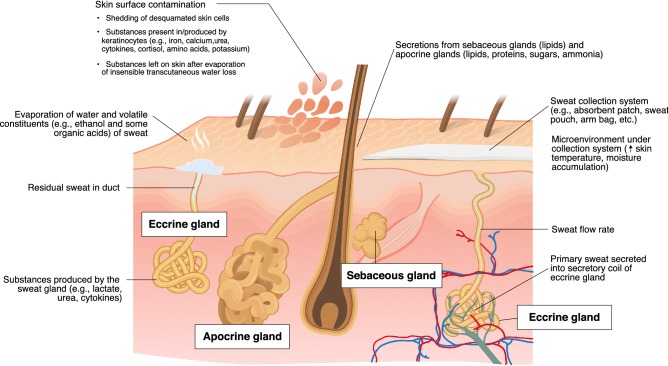
Purpose: The purpose of this paper is to review the physiological mechanisms determining eccrine sweat composition to assess the utility of sweat as a proxy for blood or as a potential biomarker of human health or nutritional/physiological status. Methods: This narrative review includes the major sweat electrolytes (sodium, chloride, and potassium), other micronutrients (e.g., calcium, magnesium, iron, copper, zinc, vitamins), metabolites (e.g., glucose, lactate, ammonia, urea, bicarbonate, amino acids, ethanol), and other compounds (e.g., cytokines and cortisol). Results: Ion membrane transport mechanisms for sodium and chloride are well established, but the mechanisms of secretion and/or reabsorption for most other sweat solutes are still equivocal. Correlations between sweat and blood have not been established for most constituents, with perhaps the exception of ethanol. With respect to sweat diagnostics, it is well accepted that elevated sweat sodium and chloride is a useful screening tool for cystic fibrosis. However, sweat electrolyte concentrations are not predictive of hydration status or sweating rate. Sweat metabolite concentrations are not a reliable biomarker for exercise intensity or other physiological stressors. To date, glucose, cytokine, and cortisol research is too limited to suggest that sweat is a useful surrogate for blood. Conclusion: Final sweat composition is not only influenced by extracellular solute concentrations, but also mechanisms of secretion and/or reabsorption, sweat flow rate, byproducts of sweat gland metabolism, skin surface contamination, and sebum secretions, among other factors related to methodology. Future research that accounts for these confounding factors is needed to address the existing gaps in the literature.
Overview
CoChat Summary
TL;DR
This narrative review concludes that final eccrine sweat composition is shaped not only by extracellular solute concentrations but also by glandular secretion/reabsorption, sweat flow rate, gland metabolism, skin contamination, and sebum, so sweat is not generally a reliable proxy for blood. Elevated sweat sodium and chloride remain useful for cystic fibrosis screening, but most other sweat constituents lack established blood correlations or diagnostic utility.
Key findings
- Na+ and Cl− are the most concentrated sweat electrolytes, ranging from ~10 to ~90 mmol/L; their secretion/reabsorption mechanisms are well established, but mechanisms for most other sweat solutes remain equivocal.
- Sweat-blood correlations have not been established for most constituents, with perhaps the exception of ethanol; sweat glucose is ~100× lower than blood glucose, and glucose, cytokine, and cortisol research is too limited to support sweat as a blood surrogate.
- Sweat electrolyte concentrations are not predictive of hydration status or sweating rate, and sweat metabolite concentrations are not reliable biomarkers of exercise intensity or other physiological stressors.
- Heat acclimation can decrease sweat [Na+] and [Cl−] by up to 30–60% after 7–10 days; within a bout, as forearm sweating rate increased from ~0.25 to 0.82 mg/cm2/min, sweat [Na+] rose from 19 ± 5 to 59 ± 10 mmol/L, with Na+ reabsorption falling from 86 ± 3% to 65 ± 6%.
Methods
- Narrative review of physiological mechanisms determining eccrine sweat composition during passive and active heat stress.
- Covers major electrolytes (Na+, Cl−, K+), other micronutrients (Ca2+, Mg2+, Fe2+, Cu2+, Zn2+, vitamins), metabolites (glucose, lactate, ammonia, urea, bicarbonate, amino acids, ethanol), cytokines, and cortisol.
- Synthesizes literature on secretion/reabsorption, collection and analytical confounders, heat acclimation/diet/training effects, and sweat-versus-blood correlations, including Table 1 ranges and supplemental tables.
Limitations
- Stated: mechanisms of secretion/reabsorption for most non-Na/Cl solutes are still equivocal; few well-designed, adequately powered sweat-blood correlation studies exist; methodological confounds include skin surface contamination, collection method, storage, and analytical technique; normative data are insufficient for most constituents; no longitudinal training studies and no sweat-blood cortisol comparisons are available.
- Evident from the text: as a narrative review, it does not use a systematic search or meta-analysis, and many cited studies are old, small, or report mixed/equivocal results, with the authors repeatedly calling for more controlled research.
Model-written summary. Check it against the paper before relying on it.
Integrity signals
Registry
Cites
Statistics
Figures
Verification
Claims the paper makes
76 Valid · 13 Not valid · 213 Not checked · 79 Own results and interpretations
At least one cited source doesn’t support this claim or points to a different paper, and none confirmed it — see the verdicts below.
In the paper
“some in vitro experiments suggest that ion channel (ENaC) activity is temperature dependent, such that higher temperature increases excitability and open probability”
§ Physiological mechanisms determining eccrine sweat composition > Mechanisms determining sweat composition > Electrolytes (sodium, chloride, and potassium)
What the sources say
- Disputedcites Chraibi and Horisberger 2002 matched to “Na Self Inhibition of Human Epithelial Na Channel” (2002) sourceExperimental — accuracy not yet measured
The Results section (‘Effect of Temperature on the Steady-State Amiloride-sensitive Current’) reports that, under control conditions, ENaC current decreased as temperature rose; it increased only after protease treatment. The Discussion (‘Effect of Temperature and Kinetics of Self Inhibition’) says high temperature favors the low-open-probability state, contrary to the claimed increase in open probability. (LLM, conf=0.90)
Checked by a reasoning model — may be wrong.
- Disputedcites Chraibi and Horisberger 2003 matched to “Dual effect of temperature on the human epithelial Na + channel” (2003) sourceExperimental — accuracy not yet measured
The Discussion (p. 5) reports that ENaC open probability increased 2.3-fold on cooling, contrary to the claim that higher temperature increases it. The paper does report greater unitary current at higher temperature, but that is distinct from open probability; it does not establish increased excitability. (LLM, conf=0.89)
Checked by a reasoning model — may be wrong.
- Not checked — no full text of the sourcecites Ruff 1999 matched to “Effects of temperature on slow and fast inactivation of rat skeletal muscle Na+channels” (1999) source
hedgedstates a cause- Asserted: passes — The authors put it forward as true.
- Checkable: passes — It can be checked against evidence.
- Load-bearing: unclear — It is unclear whether the paper’s conclusions depend on it.
- Based: passes — The paper gives a reason why it holds.
- Disputed
At least one cited source doesn’t support this claim or points to a different paper, and none confirmed it — see the verdicts below.
In the paper
“There is no experimental evidence that alcohol ingestion leads to an increase in sweating rate (Baker 2019).”
§ Physiological mechanisms determining eccrine sweat composition > Mechanisms determining sweat composition > Metabolites
What the sources say
- Disputedcites Baker 2019 matched to “Physiology of sweat gland function: The roles of sweating and sweat composition in human health” (2019) sourceExperimental — accuracy not yet measured
In “Excretion of ethanol,” Baker reports that one laboratory study found a higher chest sweating rate 10–30 minutes after alcohol ingestion than after water. The increase was small and transient, and other studies found no difference, but the reported experiment contradicts the claim that there is no experimental evidence of an increase. (LLM, conf=0.88)
Checked by a reasoning model — may be wrong.
plain- Asserted: passes — The authors put it forward as true.
- Checkable: passes — It can be checked against evidence.
- Load-bearing: unclear — It is unclear whether the paper’s conclusions depend on it.
- Based: passes — The paper gives a reason why it holds.
- Disputed
The sources with a verdict support this claim; the rest weren’t checked yet, have no full text we could read, or their verdicts aren’t rated yet.
In the paper
“Since extracellular fluid is the precursor to primary sweat in the secretory coil of eccrine sweat glands (Cage and Dobson 1965; Sato 1977)”
§ Physiological mechanisms determining eccrine sweat composition > Introduction
What the sources say
- Supportedcites Cage and Dobson 1965 matched to “Sodium Secretion and Reabsorption in the Human Eccrine Sweat Gland*” (1965) source
The Discussion states that the precursor of the secretory fluid must be interstitial fluid or blood plasma, both extracellular fluids. The paper also describes the secretory fluid as being produced in the secretory coil. (LLM, conf=0.93)
- Not checked — no full text of the sourcecites Sato 1977 matched to “The physiology, pharmacology, and biochemistry of the eccrine sweat gland” (1977) source
plainstates a cause- Asserted: passes — The authors put it forward as true.
- Checkable: passes — It can be checked against evidence.
- Load-bearing: passes — The paper’s conclusions depend on it.
- Based: passes — The paper gives a reason why it holds.
- Supported
The sources with a verdict support this claim; the rest weren’t checked yet, have no full text we could read, or their verdicts aren’t rated yet.
In the paper
“its application has been limited to date (Brothers et al. 2019; Gao et al. 2018; Heikenfeld et al. 2018).”
§ Physiological mechanisms determining eccrine sweat composition > Introduction
What the sources say
- Not checked — no full text of the sourcecites Brothers et al. 2019 matched to “Achievements and Challenges for Real-Time Sensing of Analytes in Sweat within Wearable Platforms” (2019) source
- Supportedcites Gao et al. 2018 matched to “Wearable physiological systems and technologies for metabolic monitoring” (2018) source
The ‘Effects of environment on measuring sweat’ section says wearable sweat-monitoring devices existed as research prototypes but were not yet commercially available. It also describes practical barriers to their use, supporting the claim that application had been limited to date. No page number is provided in our copy. (LLM, conf=0.90)
- Supportedcites Heikenfeld et al. 2018 matched to “Wearable sensors: modalities, challenges, and prospects” (2018) source
The Wearable Chemical Sensors section reports demonstrations of non-invasive, real-time sweat monitoring but says that no commercial wearable products for sweat-based chemical detection yet exist. Its discussion of unresolved sampling and validation challenges supports the claim that practical application remained limited; the passage has no page number in our copy. (LLM, conf=0.87)
plain- Asserted: passes — The authors put it forward as true.
- Checkable: passes — It can be checked against evidence.
- Load-bearing: unclear — It is unclear whether the paper’s conclusions depend on it.
- Based: passes — The paper gives a reason why it holds.
The cited sources support only part of this claim — read each source’s verdict below.
In the paper
“Whole body sweating rate can be > 3.0 L/h (Armstrong et al. 1986; Barnes et al. 2019; Bergeron 2003; Godek et al. 2005, 2010; Palmer and Spriet 2008).”
§ Physiological mechanisms determining eccrine sweat composition > Eccrine sweat glands and thermoregulatory sweating
What the sources say
- Not checked — no full text of the sourcecites Armstrong et al. 1986 matched to “Preparing Alberto Salazar for the Heat of the 1984 Olympic Marathon” (1986) source
- Partly supportedcites Barnes et al. 2019 matched to “Normative data for sweating rate, sweat sodium concentration, and sweat sodium loss in athletes: An update and analysis by sport” (2019) sourceExperimental — accuracy not yet measured
Our copy of Barnes et al. (2019) repeatedly documents whole-body sweating rate (WBSR) in athletes and 'considerable overall inter-individual variation in sweating' (Conclusion; Discussion, p. n/a), with the highest sport means in American football (1.51 ± 0.70 L/h) and endurance (1.28 ± 0.57 L/h) (ABSTRACT; Table 3). However, no passage states that WBSR can exceed 3.0 L/h; the only explicit high-rate threshold given is that 'three of the 24 endurance athletes tested outdoors had sweating rates over 2.0 L/h' (Results, descriptive statistics), and the '>3–4' figure in the Introduction refers to grams of Na+ loss, not sweating rate. The range/maximum values that could carry the >3.0 L/h magnitude sit in Tables 2–3, which are not rendered in our copy (placeholder rows only). So the source supports high and highly variable WBSR in athletes but not the specific >3.0 L/h magnitude attributed to it. (LLM, conf=0.68)
- Not checked — no full text of the sourcecites Bergeron 2003 matched to “Heat cramps: fluid and electrolyte challenges during tennis in the heat” (2003) source
plain- Asserted: passes — The authors put it forward as true.
- Checkable: passes — It can be checked against evidence.
- Load-bearing: unclear — It is unclear whether the paper’s conclusions depend on it.
- Based: passes — The paper gives a reason why it holds.
257 more claims · 59 with their cited sources checked
Create a free account to see all 381 claims and to verify the 10 references still open.
- Probably not a substantial claim. 40
- It may state two separate claims as one. 90
Self-check
Percentages, sums and reported differences re-computed from the paper’s own numbers.
Each contradiction between two passages listed here was confirmed by an independent check.
Rated minor: it would not touch a result — a value no result rests on, a p-value that stays on the same side of the significance level, or a conflict that is clerical, resolved elsewhere in the paper, or outside its own findings.
In the paper
§ Physiological mechanisms determining eccrine sweat composition > Overview of sweat composition
“| Amino Acids | R–CH(NH2) –COOH | ≤ 13 × 10–3 each | ≤ 6.5 × 10⁻³ each | 75–204 each | Polar and nonpolar | Leaching of natural moisturizing factors from the skin | NA |”
§ Physiological mechanisms determining eccrine sweat composition > Effects of heat acclimation, diet, and physical training on sweat composition > Metabolites
“total amino acid concentrations in sweat were significantly lower in trained (physically active for an average of 9 h per week) than untrained (average of 1 h of sports per week) men during 15 min of cycling at 150 W while covered with a plastic blanket (12,797 vs. 24,855 µmol/L, respectively).”
Citations
Cites
Fully integrated wearable sensor arrays for multiplexed in situ perspiration analysis
Gao, W., Emaminejad, S., Nyein, H. Y. Y., Challa, S., Chen, K., Peck, A., Fahad, H. M., Ota, H., Shiraki, H., Kiriya, D., et al. (2016) · Nature · doi:10.1038/nature16521 · Cited by 5,087
American College of Sports Medicine position stand
Otis, C. L. (1997) · Medical Entomology and Zoology · Cited by 4,407
Webb, A. K. (2006) · Cited by 4,369
Cytokines, Inflammation, and Pain
Zhang, J.-M., & An, J. (2007) · International Anesthesiology Clinics · doi:10.1097/aia.0b013e318034194e · Cited by 2,945
USSING, H. H., & ZERAHN, K. (1951) · Acta Physiologica Scandinavica · doi:10.1111/j.1748-1716.1951.tb00800.x · Cited by 2,406
Adaptations of skeletal muscle to endurance exercise and their metabolic consequences
Holloszy, J. O., & Coyle, E. F. (1984) · Journal of Applied Physiology · doi:10.1152/jappl.1984.56.4.831 · Cited by 1,985
ACSM Position Stand: Exercise and Fluid Replacement
Convertino, V. A., Armstrong, L. E., Coyle, E. F., Mack, G. W., Sawka, M. N., Senay, L. C., & Sherman, W. M. (1996) · Medicine & Science in Sports & Exercise · doi:10.1097/00005768-199610000-00045 · Cited by 1,965
Salivary Cortisol in Psychobiological Research: An Overview
Kirschbaum, C., & Hellhammer, D. H. (2008) · Neuropsychobiology · doi:10.1159/000118611 · Cited by 1,532
Exercise and Fluid Replacement
(2007) · Medicine & Science in Sports & Exercise · doi:10.1249/mss.0b013e31802ca597 · Cited by 1,497
Gibson, L. E., & Cooke, R. E. (1959) · Pediatrics · doi:10.1542/peds.23.3.545 · Cited by 1,434 · cited 2×
“, pilocarpine or methacholine) transdermally to stimulate the muscarinic receptors on the sweat glands (Gibson and Cooke 1959; Webster 1983).”
BackgroundWearable sensors: modalities, challenges, and prospects
Heikenfeld, J., Jajack, A., Rogers, J., Gutruf, P., Tian, L., Pan, T., Li, R., Khine, M., Kim, J., Wang, J., et al. (2018) · Lab on a Chip · doi:10.1039/c7lc00914c · Cited by 1,434
Zinc and its importance for human health: An integrative review.
Roohani, N., Hurrell, R. F., Kelishadi, R., & Schulin, R. (2013) · PubMed Central · Cited by 1,424
Rowe, S. M., Miller, S., & Sorscher, E. J. (2005) · New England Journal of Medicine · doi:10.1056/nejmra043184 · Cited by 1,398
Cederbaum, A. I. (2012) · Clinics in Liver Disease · doi:10.1016/j.cld.2012.08.002 · Cited by 1,145 · cited 3×
“Because of its small size and hydrophilic–lipophilic nature, ethanol is easily distributed throughout body water via passive diffusion (Cederbaum 2012; Jacobsen 1952; Nyman and Palmlov 1936; Paton 2005; Pawan and Grice 1968), and is likely secreted into sweat by the same mechanism.”
BackgroundJahnen-Dechent, W., & Ketteler, M. (2012) · Clinical Kidney Journal · doi:10.1093/ndtplus/sfr163 · Cited by 1,054
Getting Across the Cell Membrane: An Overview for Small Molecules, Peptides, and Proteins
Yang, N. J., & Hinner, M. J. (2015) · Methods in Molecular Biology · doi:10.1007/978-1-4939-2272-7_3 · Cited by 826
Accessing analytes in biofluids for peripheral biochemical monitoring
Heikenfeld, J., Jajack, A., Feldman, B., Granger, S. W., Gaitonde, S., Begtrup, G., & Katchman, B. A. (2019) · Nature Biotechnology · doi:10.1038/s41587-019-0040-3 · Cited by 758
Physiology of sweat gland function: The roles of sweating and sweat composition in human health
Baker, L. B. (2019) · Temperature · doi:10.1080/23328940.2019.1632145 · Cited by 732 · cited 8×
“1989), very few recent reviews have provided an update on mechanisms underlying sweat composition in the context of sweat as a potential biomarker of human health (Baker 2019).”
BackgroundMethodResultInfluentialSelf-citationSonner, Z., Wilder, E., Heikenfeld, J., Kasting, G., Beyette, F., Swaile, D., Sherman, F., Joyce, J., Hagen, J., Kelley-Loughnane, N., et al. (2015) · Biomicrofluidics · doi:10.1063/1.4921039 · Cited by 724
Biology of sweat glands and their disorders. I. Normal sweat gland function
Sato, K., Kang, W. H., Saga, K., & Sato, K. T. (1989) · Journal of the American Academy of Dermatology · doi:10.1016/s0190-9622(89)70063-3 · Cited by 717
Current understanding of iron homeostasis
Anderson, G. J., & Frazer, D. M. (2017) · The American Journal of Clinical Nutrition · doi:10.3945/ajcn.117.155804 · Cited by 688
Potential problems with the interpretation of hair analysis results
Wennig, R. (2000) · Forensic Science International · doi:10.1016/s0379-0738(99)00146-2 · Cited by 677 · cited 1×
“2000; Wennig 2000).”
Correlation Between Sweat Glucose and Blood Glucose in Subjects with Diabetes
Moyer, J., Wilson, D., Finkelshtein, I., Wong, B., & Potts, R. (2012) · Diabetes Technology & Therapeutics · doi:10.1089/dia.2011.0262 · Cited by 570
Blood Lactate Measurements and Analysis during Exercise: A Guide for Clinicians
Goodwin, M. L., Harris, J. E., Hernández, A., & Gladden, L. B. (2007) · Journal of Diabetes Science and Technology · doi:10.1177/193229680700100414 · Cited by 554
Importance of skin temperature in the regulation of sweating.
Nadel, E. R., Bullard, R. W., & Stolwijk, J. A. (1971) · Journal of Applied Physiology · doi:10.1152/jappl.1971.31.1.80 · Cited by 545
Structure, function, and regulation of cellular tight junctions
Schneeberger, E. E., & Lynch, R. D. (1992) · American Journal of Physiology-Lung Cellular and Molecular Physiology · doi:10.1152/ajplung.1992.262.6.l647 · Cited by 518
Robinson, S., & Robinson, A. H. (1954) · Physiological Reviews · doi:10.1152/physrev.1954.34.2.202 · Cited by 514 · cited 4×
“While several excellent classic reviews on sweat composition and mechanisms of sweat gland function have been published (Costill 1977; Robinson and Robinson 1954; Sato 1977; Sato et al.”
BackgroundInfluentialPermeability of small nonelectrolytes through lipid bilayer membranes
Walter, A., & Gutknecht, J. (1986) · The Journal of Membrane Biology · doi:10.1007/bf01870127 · Cited by 502
Taylor, N. A., & Machado-Moreira, C. A. (2013) · Extreme Physiology & Medicine · doi:10.1186/2046-7648-2-4 · Cited by 490
Sawka, M. N., Leon, L. R., Montain, S. J., & Sonna, L. A. (2011) · Comprehensive Physiology · doi:10.1002/cphy.c100082 · Cited by 470
Variations in Regional Sweat Composition in Normal Human Males
Patterson, M. J., Galloway, S. D. R., & Nimmo, M. A. (2000) · Experimental Physiology · doi:10.1111/j.1469-445x.2000.02058.x · Cited by 438
McDermott, B. P., Anderson, S. A., Armstrong, L. E., Casa, D. J., Cheuvront, S. N., Cooper, L., Kenney, W. L., O'Connor, F. G., & Roberts, W. O. (2017) · Journal of Athletic Training · doi:10.4085/1062-6050-52.9.02 · Cited by 438
Role of CFTR in epithelial physiology
Saint-Criq, V., & Gray, M. A. (2017) · Cellular and Molecular Life Sciences · doi:10.1007/s00018-016-2391-y · Cited by 433
Adhesive RFID Sensor Patch for Monitoring of Sweat Electrolytes
Rose, D. P., Ratterman, M. E., Griffin, D. K., Hou, L., Kelley-Loughnane, N., Naik, R. R., Hagen, J. A., Papautsky, I., & Heikenfeld, J. C. (2015) · IEEE Transactions on Biomedical Engineering · doi:10.1109/tbme.2014.2369991 · Cited by 416
Aberrant CFTR-dependent HCO-3 transport in mutations associated with cystic fibrosis
Choi, J. Y., Muallem, D., Kiselyov, K., Lee, M. G., Thomas, P. J., & Muallem, S. (2001) · Nature · doi:10.1038/35065099 · Cited by 412
Physiological Basis of Cystic Fibrosis: A Historical Perspective
QUINTON, P. M. (1999) · Physiological Reviews · doi:10.1152/physrev.1999.79.1.s3 · Cited by 405 · cited 1×
“CFTR availability is reduced with defects in CFTR genes (i.e., cystic fibrosis) (Goodman and Percy 2005; Quinton 1999, 2007; Reddy and Quinton 2003; Rowe et al.”
BackgroundBaker, L. B. (2017) · Sports Medicine · doi:10.1007/s40279-017-0691-5 · Cited by 403 · cited 3×
“For example, if the intent is to use the results to inform athletes on their individual sweat electrolyte losses, then the sweat testing should be conducted during exercise and in conditions (i.e., thermal environment) specific/relevant to their sport (Baker 2017).”
BackgroundMethodSelf-citationNyein, H. Y. Y., Bariya, M., Kivimäki, L., Uusitalo, S., Liaw, T. S., Jansson, E., Ahn, C. H., Hangasky, J. A., Zhao, J., Lin, Y., et al. (2019) · Science Advances · doi:10.1126/sciadv.aaw9906 · Cited by 388
Wearable Sensors for Biochemical Sweat Analysis
Bandodkar, A. J., Jeang, W. J., Ghaffari, R., & Rogers, J. A. (2019) · Annual Review of Analytical Chemistry · doi:10.1146/annurev-anchem-061318-114910 · Cited by 387
The physiology, pharmacology, and biochemistry of the eccrine sweat gland
Sato, K. (1977) · Reviews of Physiology, Biochemistry and Pharmacology · doi:10.1007/bfb0037089 · Cited by 384 · cited 20×
“While several excellent classic reviews on sweat composition and mechanisms of sweat gland function have been published (Costill 1977; Robinson and Robinson 1954; Sato 1977; Sato et al.”
BackgroundInfluentialPRICE, T. N., JACKSON, N. V., & HALESTRAP, P. A. (1998) · Biochemical Journal · doi:10.1042/bj3290321 · Cited by 361
Detection of physiological concentrations of cortisol and cortisone in human hair
Raul, J.-S., Cirimele, V., Ludes, B., & Kintz, P. (2004) · Clinical Biochemistry · doi:10.1016/j.clinbiochem.2004.02.010 · Cited by 348
Taylor, N. A. S. (2014) · Comprehensive Physiology · doi:10.1002/cphy.c130022 · Cited by 331
PROVISION OF MEDICINES IN ECUADOR
Johnston, T. (1980) · The Lancet · doi:10.1016/s0140-6736(80)91511-1 · Cited by 316
Use of saliva for monitoring unbound free cortisol levels in serum
Teruhisa, U., Ryoji, H., Taisuke, I., Tatsuya, S., Fumihiro, M., & Tatsuo, S. (1981) · Clinica Chimica Acta · doi:10.1016/0009-8981(81)90353-3 · Cited by 314
Provision of medicine in Ecuador.
Johnston, T. (1980) · The Lancet · Cited by 314
Measurement of Free Hormones in Blood
EKINS, R. (1990) · Endocrine Reviews · doi:10.1210/edrv-11-1-5 · Cited by 306 · cited 1×
“Approximately 90% of the endogenous hormone is bound to carriers, and it is believed that the remaining 5–10% of unbound or free cortisol is biologically active on target tissues (Ekins 1990).”
BackgroundCytokines and the Skin Barrier
Hänel, K., Cornelissen, C., Lüscher, B., & Baron, J. (2013) · International Journal of Molecular Sciences · doi:10.3390/ijms14046720 · Cited by 305
The relevance of sweat testing for the diagnosis of cystic fibrosis in the genomic era.
Mishra, A., Greaves, R. F., & Massie, J. (2005) · Europe PMC (PubMed Central) · Cited by 294
Lactate in human sweat: a critical review of research to the present day
Derbyshire, P. J., Barr, H., Davis, F., & Higson, S. P. J. (2012) · The Journal of Physiological Sciences · doi:10.1007/s12576-012-0213-z · Cited by 280
Shirreffs, S. M., & Maughan, R. J. (1997) · Journal of Applied Physiology · doi:10.1152/jappl.1997.82.1.336 · Cited by 251
Acute and adaptive responses in humans to exercise in a warm, humid environment
Nielsen, B., Strange, S., Christensen, N. J., Warberg, J., & Saltin, B. (1997) · Pfl�gers Archiv European Journal of Physiology · doi:10.1007/s004240050361 · Cited by 228
Salivary cortisone is a potential biomarker for serum free cortisol
Perogamvros, I., Keevil, B. G., Ray, D. W., & Trainer, P. J. (2010) · The Journal of Clinical Endocrinology & Metabolism · doi:10.1210/jc.2010-1215 · Cited by 222
Gagnon, D., Jay, O., & Kenny, G. P. (2013) · The Journal of Physiology · doi:10.1113/jphysiol.2012.248823 · Cited by 221
Eccrine sweat gland development and sweat secretion
Cui, C., & Schlessinger, D. (2015) · Experimental Dermatology · doi:10.1111/exd.12773 · Cited by 213
Heat cramps: fluid and electrolyte challenges during tennis in the heat
Bergeron, M. F. (2003) · Journal of Science and Medicine in Sport · doi:10.1016/s1440-2440(03)80005-1 · Cited by 213 · cited 1×
“2019; Bergeron 2003; Godek et al.”
SWEATING: ITS COMPOSITION AND EFFECTS ON BODY FLUIDS*
Costill, D. L. (1977) · Annals of the New York Academy of Sciences · doi:10.1111/j.1749-6632.1977.tb38195.x · Cited by 212 · cited 3×
“While several excellent classic reviews on sweat composition and mechanisms of sweat gland function have been published (Costill 1977; Robinson and Robinson 1954; Sato 1977; Sato et al.”
BackgroundFunctional requirement of aquaporin-5 in plasma membranes of sweat glands
Nejsum, L. N., Kwon, T.-H., Jensen, U. B., Fumagalli, O., Frøkiaer, J., Krane, C. M., Menon, A. G., King, L. S., Agre, P. C., & Nielsen, S. (2002) · Proceedings of the National Academy of Sciences · doi:10.1073/pnas.012588099 · Cited by 211
Cizza, G., Marques, A. H., Eskandari, F., Christie, I. C., Torvik, S., Silverman, M. N., Phillips, T. M., & Sternberg, E. M. (2008) · Biological Psychiatry · doi:10.1016/j.biopsych.2008.05.035 · Cited by 208
Achievements and Challenges for Real-Time Sensing of Analytes in Sweat within Wearable Platforms
Brothers, M. C., DeBrosse, M., Grigsby, C. C., Naik, R. R., Hussain, S. M., Heikenfeld, J., & Kim, S. S. (2019) · Accounts of Chemical Research · doi:10.1021/acs.accounts.8b00555 · Cited by 207
Mechanisms and controllers of eccrine sweating in humans
Crandall, C. G. (2010) · Frontiers in Bioscience · doi:10.2741/s94 · Cited by 202 · cited 3×
“…passive heat stress, other local (e.g., skin temperature, skin blood flow, adrenergic stimulation, and other neuromodulators) and central mediators (e.g., body core temperature, central command, and exercise pressor reflex) are involved in stimulation of sweating (Shibasaki and Crandall 2010).”
BackgroundInfluentialCystic Fibrosis: Lessons from the Sweat Gland
Quinton, P. M. (2007) · Physiology · doi:10.1152/physiol.00041.2006 · Cited by 198 · cited 1×
“CFTR availability is reduced with defects in CFTR genes (i.e., cystic fibrosis) (Goodman and Percy 2005; Quinton 1999, 2007; Reddy and Quinton 2003; Rowe et al.”
BackgroundThe Detection of Cortisol in Human Sweat: Implications for Measurement of Cortisol in Hair
Russell, E., Koren, G., Rieder, M., & Van Uum, S. H. M. (2014) · Therapeutic Drug Monitoring · doi:10.1097/ftd.0b013e31829daa0a · Cited by 193
Mitchell, H. H., & Hamilton, T. S. (1949) · Journal of Biological Chemistry · doi:10.1016/s0021-9258(18)56964-7 · Cited by 192
Acute effects of dehydration on sweat composition in men during prolonged exercise in the heat
Morgan, R. M., Patterson, M. J., & Nimmo, M. A. (2004) · Acta Physiologica Scandinavica · doi:10.1111/j.1365-201x.2004.01305.x · Cited by 192
Baker, L. B., Stofan, J. R., Hamilton, A. A., & Horswill, C. A. (2009) · Journal of Applied Physiology · doi:10.1152/japplphysiol.00197.2009 · Cited by 189
Self-citationSodium ion concentration vs. sweat rate relationship in humans
Buono, M. J., Ball, K. D., & Kolkhorst, F. W. (2007) · Journal of Applied Physiology · doi:10.1152/japplphysiol.00015.2007 · Cited by 186
Effect of physical training on peripheral sweat production
Buono, M. J., & Sjoholm, N. T. (1988) · Journal of Applied Physiology · doi:10.1152/jappl.1988.65.2.811 · Cited by 185
Biochemistry and Physiology of the Skin
FUKUYAMA, K. (1984) · Archives of Dermatology · doi:10.1001/archderm.1984.01650410129030 · Cited by 183 · cited 10×
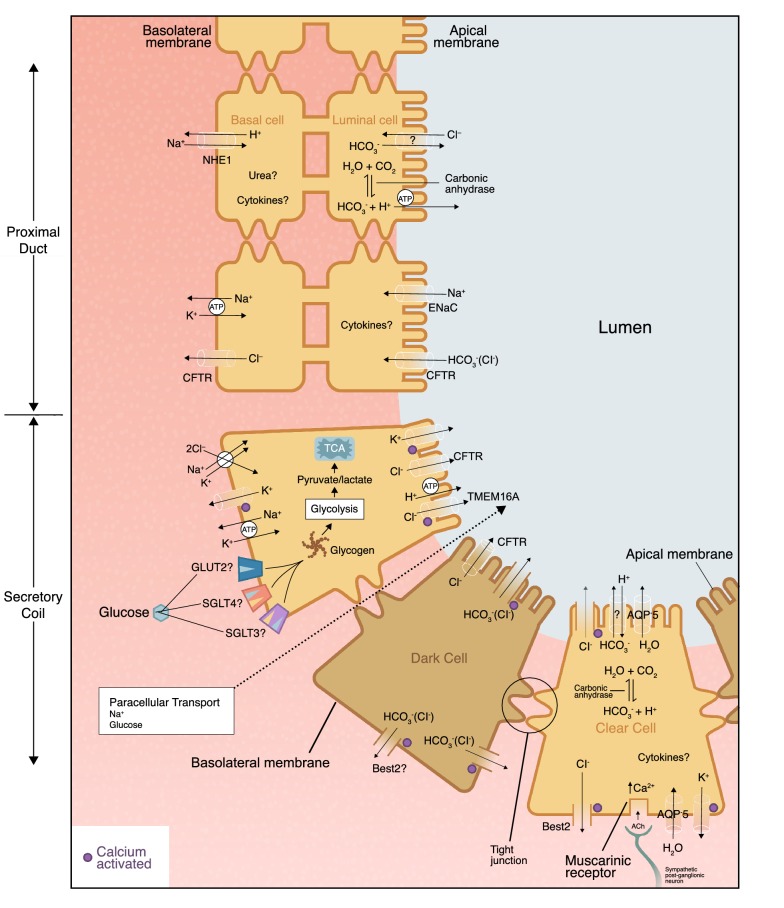
“The primary function of the duct is reabsorption of Na+ and Cl− ions, most of which occurs in the proximal duct (Sato 1983), resulting in a hypotonic final sweat excreted onto the skin surface (Sato 1977, 1993).”
BackgroundInfluentialNeural control of sweat secretion: a review
Hu, Y., Converse, C., Lyons, M. C., & Hsu, W. H. (2018) · British Journal of Dermatology · doi:10.1111/bjd.15808 · Cited by 181
A wearable patch for continuous monitoring of sweat electrolytes during exertion
Alizadeh, A., Burns, A., Lenigk, R., Gettings, R., Ashe, J., Porter, A., McCaul, M., Barrett, R., Diamond, D., White, P., et al. (2018) · Lab on a Chip · doi:10.1039/c8lc00510a · Cited by 180
Hammond, K. B., Turcios, N. L., & Gibson, L. E. (1994) · The Journal of Pediatrics · doi:10.1016/s0022-3476(94)70314-0 · Cited by 178
Muscle water and electrolytes following varied levels of dehydration in man
Costill, D. L., Cote, R., & Fink, W. (1976) · Journal of Applied Physiology · doi:10.1152/jappl.1976.40.1.6 · Cited by 175
Sweat composition in exercise and in heat
Verde, T., Shephard, R. J., Corey, P., & Moore, R. (1982) · Journal of Applied Physiology · doi:10.1152/jappl.1982.53.6.1540 · Cited by 174
Exercise associated hyponatraemia: quantitative analysis to understand the aetiology
Montain, S. J., Cheuvront, S. N., & Sawka, M. N. (2006) · British Journal of Sports Medicine · doi:10.1136/bjsm.2005.018481 · Cited by 172
Influence of acclimatization on sweat sodium concentration.
Allan, J. R., & Wilson, C. G. (1971) · Journal of Applied Physiology · doi:10.1152/jappl.1971.30.5.708 · Cited by 171
Impaired High-Intensity Cycling Performance Time at Low Levels of Dehydration
Walsh, R., Noakes, T., Hawley, J., & Dennis, S. (1994) · International Journal of Sports Medicine · doi:10.1055/s-2007-1021076 · Cited by 171
Paton, A. (2005) · BMJ · doi:10.1136/bmj.330.7482.85 · Cited by 167 · cited 3×
“Because of its small size and hydrophilic–lipophilic nature, ethanol is easily distributed throughout body water via passive diffusion (Cederbaum 2012; Jacobsen 1952; Nyman and Palmlov 1936; Paton 2005; Pawan and Grice 1968), and is likely secreted into sweat by the same mechanism.”
BackgroundPlasma aldosterone and sweat sodium concentrations after exercise and heat acclimation
Kirby, C. R., & Convertino, V. A. (1986) · Journal of Applied Physiology · doi:10.1152/jappl.1986.61.3.967 · Cited by 163
QUANTITATION AND REGIONAL DISTRIBUTION OF SWEAT GLANDS IN MAN 1
Randall, W. C. (1946) · Journal of Clinical Investigation · doi:10.1172/jci101760 · Cited by 159 · cited 1×
“1998, 2001; Kuno 1956; Randall 1946).”
Inoue, Y., Havenith, G., Kenney, W. L., Loomis, J. L., & Buskirk, E. R. (1999) · International Journal of Biometeorology · doi:10.1007/s004840050107 · Cited by 158
Changes in Bone Mineral Content in Male Athletes: Mechanisms of Action and Intervention Effects
Klesges, R. C. (1996) · JAMA · doi:10.1001/jama.1996.03540030060033 · Cited by 157
Ca, P. (1976) · PubMed · Cited by 157
Hauke, A., Simmers, P., Ojha, Y. R., Cameron, B. D., Ballweg, R., Zhang, T., Twine, N., Brothers, M., Gomez, E., & Heikenfeld, J. (2018) · Lab on a Chip · doi:10.1039/c8lc01082j · Cited by 156
Analysis of metabolites in sweat as a measure of physical condition
Mitsubayashi, K., Suzuki, M., Tamiya, E., & Karube, I. (1994) · Analytica Chimica Acta · doi:10.1016/0003-2670(94)80004-9 · Cited by 153
Recent advances in noninvasive flexible and wearable wireless biosensors
Salim, A., & Lim, S. (2019) · Biosensors and Bioelectronics · doi:10.1016/j.bios.2019.111422 · Cited by 153
Heat of evaporation of sweat: thermodynamic considerations.
Wenger, C. B. (1972) · Journal of Applied Physiology · doi:10.1152/jappl.1972.32.4.456 · Cited by 148 · cited 1×
“2011; Wenger 1972).”
Physiological Bases of Human Performance During Work and Exercise
Taylor, N. A. S., & Groeller, H. (2008) · Medical Entomology and Zoology · Cited by 147
Morphology and development of an apoeccrine sweat gland in human axillae
Sato, K., Leidal, R., & Sato, F. (1987) · American Journal of Physiology-Regulatory, Integrative and Comparative Physiology · doi:10.1152/ajpregu.1987.252.1.r166 · Cited by 147 · cited 2×
“Apocrine and apoeccrine glands differ from eccrine glands in that they are limited to certain body regions and, therefore, play a lesser role in the overall volume of sweat secretion (Montagna and Parakkal 1974a; Robertshaw 1983; Sato et al. 1987).”
BackgroundLocalization of 11 beta-hydroxysteroid dehydrogenase type II in human epithelial tissues.
Smith, R. E., Maguire, J. A., Stein-Oakley, A. N., Sasano, H., Takahashi, K., Fukushima, K., & Krozowski, Z. S. (1996) · The Journal of Clinical Endocrinology & Metabolism · doi:10.1210/jcem.81.9.8784076 · Cited by 146
Sweat Mineral-Element Responses during 7 h of Exercise-Heat Stress
Montain, S. J., Cheuvront, S. N., & Lukaski, H. C. (2007) · International Journal of Sport Nutrition and Exercise Metabolism · doi:10.1123/ijsnem.17.6.574 · Cited by 141
Gamella, M., Campuzano, S., Manso, J., Rivera, G. G. D., López-Colino, F., Reviejo, A. J., & Pingarrón, J. M. (2014) · Analytica Chimica Acta · doi:10.1016/j.aca.2013.09.020 · Cited by 140
DISTRIBUTION OF ALCOHOL IN URINE AND SWEAT AFTER DRINKING
Pawan, G. L. S., & GRICE, K. A. (1968) · The Lancet · doi:10.1016/s0140-6736(68)91302-0 · Cited by 138
Neuroendocrine System of the Skin
Slominski, A. (2005) · Dermatology · doi:10.1159/000087012 · Cited by 138 · cited 1×
“2013), cortisol (Slominski 2005; Terao and Katayama 2016), and amino acids (Dunstan et al.”
BackgroundGrellner, W. (2002) · Forensic Science International · doi:10.1016/s0379-0738(02)00342-0 · Cited by 135 · cited 2×
“1996; Grellner 2002; Reitamo et al.”
Na Self Inhibition of Human Epithelial Na Channel
Chraïbi, A., & Horisberger, J.-D. (2002) · The Journal of General Physiology · doi:10.1085/jgp.20028612 · Cited by 135
Turner, C., Parekh, B. K., Walton, C., Španěl, P., Smith, D. C., & Evans, M. L. (2008) · Rapid Communications in Mass Spectrometry · doi:10.1002/rcm.3402 · Cited by 135
Ammonia in breath and emitted from skin
Schmidt, F. M., Vaittinen, O., Metsälä, M., Lehto, M. J., Forsblom, C. M., Groop, P., & Halonen, L. (2013) · Journal of Breath Research · doi:10.1088/1752-7155/7/1/017109 · Cited by 134
Barnes, K. A., Anderson, M. L., Stofan, J. R., Dalrymple, K. J., Reimel, A. J., Roberts, T. J., Randell, R. K., Ungaro, C. T., & Baker, L. B. (2019) · Journal of Sports Sciences · doi:10.1080/02640414.2019.1633159 · Cited by 132
Self-citationPractical Hydration Solutions for Sports
Belval, L. N., Hosokawa, Y., Casa, D. J., Adams, W. M., Armstrong, L. E., Baker, L. B., Burke, L., Cheuvront, S., Chiampas, G., González-Alonso, J., et al. (2019) · Nutrients · doi:10.3390/nu11071550 · Cited by 132
Self-citationTHE METABOLISM OF ETHYL ALCOHOL
JACOBSEN, E. (1952) · Pharmacological Reviews · doi:10.1016/s0031-6997(25)07318-1 · Cited by 131
KONDO, TAKANO, AOKI, SHIBASAKI, TOMINAGA, & INOUE (1998) · Acta Physiologica Scandinavica · doi:10.1046/j.1365-201x.1998.00407.x · Cited by 130
Marques-Deak, A., Cizza, G., Eskandari, F., Torvik, S., Christie, I. C., Sternberg, E. M., & Phillips, T. M. (2006) · Journal of Immunological Methods · doi:10.1016/j.jim.2006.07.011 · Cited by 129
The relationship between exercise intensity and the sweat lactate excretion rate
Buono, M. J., Lee, N. V. L., & Miller, P. W. (2010) · The Journal of Physiological Sciences · doi:10.1007/s12576-009-0073-3 · Cited by 128
Wingo, J. E., Low, D. A., Keller, D. M., Brothers, R. M., Shibasaki, M., & Crandall, C. G. (2010) · Journal of Applied Physiology · doi:10.1152/japplphysiol.00646.2010 · Cited by 128
Effects of temperature on slow and fast inactivation of rat skeletal muscle Na+channels
Ruff, R. L. (1999) · American Journal of Physiology-Cell Physiology · doi:10.1152/ajpcell.1999.277.5.c937 · Cited by 128
CHANGES IN COMPOSITION OF SWEAT DURING ACCLIMATIZATION TO HEAT
Dill, D. B., Hall, F. G., & Edwards, H. T. (1938) · American Journal of Physiology-Legacy Content · doi:10.1152/ajplegacy.1938.123.2.412 · Cited by 127
Sweat rate and sodium loss during work in the heat
Bates, G. P., & Miller, V. S. (2008) · Journal of Occupational Medicine and Toxicology · doi:10.1186/1745-6673-3-4 · Cited by 126
The chemical histology of human eccrine and apocrine sweat glands
Bunting, H., Wislocki, G. B., & Dempsey, E. W. (1948) · The Anatomical Record · doi:10.1002/ar.1091000106 · Cited by 122
Thermoregulatory responses of middle-aged and young men during dry-heat acclimation
Pandolf, K. B., Cadarette, B. S., Sawka, M. N., Young, A. J., Francesconi, R. P., & Gonzalez, R. R. (1988) · Journal of Applied Physiology · doi:10.1152/jappl.1988.65.1.65 · Cited by 122
Optimizing the restoration and maintenance of fluid balance after exercise-induced dehydration
Evans, G. H., James, L. J., Shirreffs, S. M., & Maughan, R. J. (2017) · Journal of Applied Physiology · doi:10.1152/japplphysiol.00745.2016 · Cited by 120
Sweat Iron and Zinc Losses during Prolonged Exercise
DeRuisseau, K. C., Cheuvront, S. N., Haymes, E. M., & Sharp, R. G. (2002) · International Journal of Sport Nutrition and Exercise Metabolism · doi:10.1123/ijsnem.12.4.428 · Cited by 119
Baker, L. B., Ungaro, C. T., Sopeña, B. C., Nuccio, R. P., Reimel, A. J., Carter, J. M., Stofan, J. R., & Barnes, K. A. (2018) · Journal of Applied Physiology · doi:10.1152/japplphysiol.00867.2017 · Cited by 116
Self-citationJia, M., Chew, W. M., Feinstein, Y., Skeath, P., & Sternberg, E. M. (2016) · The Analyst · doi:10.1039/c5an02387d · Cited by 113
Preparing Alberto Salazar for the Heat of the 1984 Olympic Marathon
Armstrong, L. E., Hubbard, R. W., Jones, B. H., & Daniels, J. T. (1986) · The Physician and Sportsmedicine · doi:10.1080/00913847.1986.11709011 · Cited by 111
Sweating as a heat loss thermoeffector
Gagnon, D., & Crandall, C. G. (2018) · Handbook of clinical neurology · doi:10.1016/b978-0-444-63912-7.00013-8 · Cited by 111
Whole body surface loss of trace metals in normal males.
Jacob, R. A., Sandstead, H. H., Munoz, J. M., Klevay, L. M., & Milne, D. B. (1981) · The American Journal of Clinical Nutrition · doi:10.1093/ajcn/34.7.1379 · Cited by 110
Baker, L. B., De Chavez, P. J. D., Ungaro, C. T., Sopeña, B. C., Nuccio, R. P., Reimel, A. J., & Barnes, K. A. (2019) · European Journal of Applied Physiology · doi:10.1007/s00421-018-4048-z · Cited by 110 · cited 8×
“1989), very few recent reviews have provided an update on mechanisms underlying sweat composition in the context of sweat as a potential biomarker of human health (Baker 2019).”
BackgroundMethodResultInfluentialSelf-citationEffect of sweat loss on body fluids
Kozlowski, S., & Saltin, B. (1964) · Journal of Applied Physiology · doi:10.1152/jappl.1964.19.6.1119 · Cited by 109
THE AMINO ACIDS OF HUMAN SWEAT
Hier, S. W., Cornbleet, T., & Bergeim, O. (1946) · Journal of Biological Chemistry · doi:10.1016/s0021-9258(17)35010-x · Cited by 108 · cited 2×
“Amino acids were first identified in sweat in 1910 (Embden and Tachau 1910) and since then several more studies have isolated up to 20 different amino acids in sweat collected on the skin surface (Coltman et al. 1966; Dunstan et al. 2016; Gitlitz et al. 1974; Hier et al. 1946; Rothman and Sullivan 1949).”
BackgroundZinc, iron, and nitrogen content of sweat in normal and deficient subjects.
PRASAD, A. S., Schulert, A. R., Hh, S., Miale, A., & FARID, Z. (1963) · PubMed · Cited by 107
McCance, R. A. (1938) · The Journal of Physiology · doi:10.1113/jphysiol.1938.sp003595 · Cited by 106
Body Fluid Balance During Heat Stress in Humans
Mack, G. W., & Nadel, E. R. (1996) · Comprehensive Physiology · doi:10.1002/cphy.cp040110 · Cited by 103
Brune, M., Magnusson, B., Persson, H., & Hallberg, L. (1986) · The American Journal of Clinical Nutrition · doi:10.1093/ajcn/43.3.438 · Cited by 102
Sodium Secretion and Reabsorption in the Human Eccrine Sweat Gland*
Cage, G. W., & Dobson, R. L. (1965) · Journal of Clinical Investigation · doi:10.1172/jci105233 · Cited by 101
Buono, M. J., Claros, R., DeBoer, T., & Wong, J. (2008) · Journal of Applied Physiology · doi:10.1152/japplphysiol.90503.2008 · Cited by 101
Diagnostics of anaerobic power and capacity
Heck, H., Schulz, H., & Bartmus, U. (2003) · European Journal of Sport Science · doi:10.1080/17461390300073302 · Cited by 101
Weiner, J. S., & Hellmann, K. (1960) · Biological reviews/Biological reviews of the Cambridge Philosophical Society · doi:10.1111/j.1469-185x.1960.tb01413.x · Cited by 100
Anttila, H., Reitamo, S., Erkko, P., Ceska, M., Moser, B., & Baggiolini, M. (1992) · Journal of Investigative Dermatology · doi:10.1111/1523-1747.ep12495817 · Cited by 100
Local cortisol/corticosterone activation in skin physiology and pathology
Terao, M., & Katayama, I. (2016) · Journal of Dermatological Science · doi:10.1016/j.jdermsci.2016.06.014 · Cited by 100
Voluntary dehydration and electrolyte losses during prolonged exercise in the heat.
Armstrong, L. E., Hubbard, R. W., Szlyk, P. C., Matthew, W. T., & Sils, I. V. (1985) · PubMed · Cited by 94
Sweat urea, uric acid and creatinine concentrations in uraemic patients
Al‐Tamer, Y. Y., Hadi, E. A., & Al-Badrani, I. E. I. (1997) · Urological Research · doi:10.1007/bf01294662 · Cited by 94
Effect of Heat Acclimation on Sweat Minerals
CHINEVERE, T. D., KENEFICK, R. W., CHEUVRONT, S. N., LUKASKI, H. C., & SAWKA, M. N. (2008) · Medicine & Science in Sports & Exercise · doi:10.1249/mss.0b013e3181641c04 · Cited by 93
Godek, S. F., Bartolozzi, A. R., & Godek, J. J. (2005) · British Journal of Sports Medicine · doi:10.1136/bjsm.2004.011767 · Cited by 92
Function of human eccrine sweat glands during dynamic exercise and passive heat stress
Kondo, N., Shibasaki, M., Aoki, K., Koga, S., Inoue, Y., & Crandall, C. G. (2001) · Journal of Applied Physiology · doi:10.1152/jappl.2001.90.5.1877 · Cited by 91
A modified anaerobic method of sweat collection
Boysen, T. C., Yanagawa, S., Sato, F., & Sato, K. (1984) · Journal of Applied Physiology · doi:10.1152/jappl.1984.56.5.1302 · Cited by 91
Wearable physiological systems and technologies for metabolic monitoring
Gao, W., Brooks, G. A., & Klonoff, D. C. (2018) · Journal of Applied Physiology · doi:10.1152/japplphysiol.00407.2017 · Cited by 91
Saat, M., Sirisinghe, R. G., Singh, R., & Tochihara, Y. (2005) · Journal of PHYSIOLOGICAL ANTHROPOLOGY and Applied Human Science · doi:10.2114/jpa.24.541 · Cited by 90
Dai, X., Okazaki, H., Hanakawa, Y., Murakami, M., Tohyama, M., Shirakata, Y., & Sayama, K. (2013) · PLoS ONE · doi:10.1371/journal.pone.0067666 · Cited by 88
Kenouch, S., Lombes, M., Delahaye, F., Eugene, E., Bonvalet, J. P., & Farman, N. (1994) · The Journal of Clinical Endocrinology & Metabolism · doi:10.1210/jcem.79.5.7962326 · Cited by 87
LOSS OF MINERALS THROUGH THE SKIN OF NORMAL HUMANS WHEN SWEATING IS AVOIDED
Freyberg, R. H., & Grant, R. L. (1937) · Journal of Clinical Investigation · doi:10.1172/jci100897 · Cited by 87
Histochemical Demonstration of Secretory Activity in Human Eccrine Sweat Glands
Shelley, W. B., & Mescon, H. (1952) · Journal of Investigative Dermatology · doi:10.1038/jid.1952.31 · Cited by 87
Eccrine Sweat as a Biofluid for Profiling Immune Biomarkers
Katchman, B. A., Zhu, M., Blain Christen, J., & Anderson, K. S. (2018) · PROTEOMICS – Clinical Applications · doi:10.1002/prca.201800010 · Cited by 86
UREA EXCRETION IN HUMAN SWEAT AS A TRACER FOR MOVEMENT OF WATER WITHIN THE SECRETING GLAND
Schwartz, I. L., Thaysen, J. H., & Dole, V. P. (1953) · Journal of Experimental Medicine · doi:10.1084/jem.97.3.429 · Cited by 85
Hirasawa, G., Sasano, H., Takahashi, K.-I., Fukushima, K., Suzuki, T., Hiwatashi, N., Toyota, T., Krozowski, Z. S., & Nagura, H. (1997) · The Journal of Clinical Endocrinology & Metabolism · doi:10.1210/jcem.82.11.4337 · Cited by 85
Functional interaction of CFTR and ENaC in sweat glands
Reddy, M., & Quinton, P. (2003) · Pflügers Archiv - European Journal of Physiology · doi:10.1007/s00424-002-0959-x · Cited by 84
THE COMPOSITION OF SWEAT, WITH SPECIAL REFERENCE TO THE VITAMINS
Mickelsen, O., & Keys, A. (1943) · Journal of Biological Chemistry · doi:10.1016/s0021-9258(18)72194-7 · Cited by 83
Seasonal variation in sweating responses of older and younger men
Inoue, Y., Nakao, M., Okudaira, S., Ueda, H., & Araki, T. (1995) · European Journal of Applied Physiology and Occupational Physiology · doi:10.1007/bf00601802 · Cited by 83
Iron, copper and zinc concentrations in human sweat and plasma; the effect of exercise
Aruoma, O. I., Reilly, T., MacLaren, D., & Halliwell, B. (1988) · Clinica Chimica Acta · doi:10.1016/0009-8981(88)90310-5 · Cited by 83
(1979) · PubMed · Cited by 81
Oxford Textbook of Sports Medicine
Dorsen, P. J. (1999) · JAMA · doi:10.1001/jama.282.23.2264 · Cited by 81
Functional interaction of CFTR and ENaC in sweat glands
Reddy, M. M., & Quinton, P. (2007) · Pflügers Archiv - European Journal of Physiology · doi:10.1007/s00424-006-0182-2 · Cited by 80 · cited 5×
“Thus, with cystic fibrosis, defects in CFTR also impose a loss of ENaC activity (Reddy and Quinton 2003).”
BackgroundInfluentialTHE ECCRINE SWEAT DEFECT IN CYSTIC FIBROSIS OF THE PANCREAS (MUCOVISCIDOSIS)
di Sant'Agnese, P. A., & Powell, G. F. (1962) · Annals of the New York Academy of Sciences · doi:10.1111/j.1749-6632.1962.tb30494.x · Cited by 79
Lactate and Ammonia Concentration in Blood and Sweat During Incremental Cycle Ergometer Exercise
Ament, W., Huizenga, J., Mook, G., Gips, C., & Verkerke, C. J. (1997) · International Journal of Sports Medicine · doi:10.1055/s-2007-972592 · Cited by 79
Murota, H., Matsui, S., Ono, E., Kijima, A., Kikuta, J., Ishii, M., & Katayama, I. (2015) · Journal of Dermatological Science · doi:10.1016/j.jdermsci.2014.08.011 · Cited by 78
THE EXCRETION OF TRACE METALS IN HUMAN SWEAT
COHN, J. R., & EMMETT, E. A. (1979) · Toxicology and Occupational Medicine · doi:10.1016/b978-0-444-00288-4.50036-0 · Cited by 78 · cited 4×
“This may explain the very high concentrations of minerals often reported in studies using the arm bag technique (Cohn and Emmett 1978; Collins et al. 1971; Ely et al. 2011; Van Heyningen and Weiner 1952).”
BackgroundResultInfluentialPlasma membrane Cl-/HCO3-exchangers: Structure, mechanism and physiology
Bonar, P. T., & Casey, J. R. (2008) · Channels · doi:10.4161/chan.2.5.6899 · Cited by 77
Effect of induced metabolic alkalosis on sweat composition in men
Patterson, M. J., Galloway, S. D. R., & Nimmo, M. A. (2002) · Acta Physiologica Scandinavica · doi:10.1046/j.1365-201x.2002.00927.x · Cited by 75
Sweat constitutes several natural moisturizing factors, lactate, urea, sodium, and potassium
Watabe, A., Sugawara, T., Kikuchi, K., Yamasaki, K., Sakai, S., & Aiba, S. (2013) · Journal of Dermatological Science · doi:10.1016/j.jdermsci.2013.06.005 · Cited by 75
Mark, H., & Harding, C. R. (2013) · International Journal of Cosmetic Science · doi:10.1111/ics.12019 · Cited by 75
Regional and Total Body Sweat Composition of Men Fed Controlled Diets
Costa, F., GALLOWAY, D. H., & Margen, S. (1969) · American Journal of Clinical Nutrition · doi:10.1093/ajcn/22.1.52 · Cited by 74
Sweat Ethanol Concentrations are Highly Correlated with Co‐Existing Blood Values in Humans
Buono, M. J. (1999) · Experimental Physiology · doi:10.1111/j.1469-445x.1999.01798.x · Cited by 74 · cited 2×
“It does appear that sweat ethanol concentration increases linearly with ethanol ingestion, as several investigators have demonstrated a significant positive correlation between sweat and blood ethanol concentrations (Brown 1985; Buono 1999; Gamella et al.”
BackgroundGodek, S. F., Peduzzi, C., Burkholder, R., Condon, S., Dorshimer, G., & Bartolozzi, A. R. (2010) · Journal of Athletic Training · doi:10.4085/1062-6050-45.4.364 · Cited by 73
Langbein, L., Rogers, M. A., Praetzel, S., Cribier, B., Peltre, B., Gassler, N., & Schweizer, J. (2005) · Journal of Investigative Dermatology · doi:10.1111/j.0022-202x.2005.23860.x · Cited by 72
A comparison of arm‐bag sweat and body sweat
van Heyningen, R., & Weiner, J. S. (1952) · The Journal of Physiology · doi:10.1113/jphysiol.1952.sp004713 · Cited by 71 · cited 6×
“2000; Weiner and Van Heyningen 1952; Whitehouse 1935), especially at the onset of initial sweating when flow rates are low.”
BackgroundInfluentialSweat lactate response between males with high and low aerobic fitness
Green, J. M., Pritchett, R. C., Crews, T. R., McLester, J. R., & Tucker, D. C. (2004) · European Journal of Applied Physiology · doi:10.1007/s00421-003-0968-2 · Cited by 70
Dermal excretion of iron in intensely training athletes
Paulev, P.-E., Jordal, R., & Pedersen, N. S. (1983) · Clinica Chimica Acta · doi:10.1016/0009-8981(83)90071-2 · Cited by 69
Karlsen, A., Nybo, L., Nørgaard, S. J., Jensen, M. V., Bonne, T., & Racinais, S. (2015) · Scandinavian Journal of Medicine & Science in Sports · doi:10.1111/sms.12449 · Cited by 68
Metabolomics analysis of human sweat collected after moderate exercise
Delgado-Povedano, M. M., Calderón-Santiago, M., Luque de Castro, M. D., & Priego-Capote, F. (2018) · Talanta · doi:10.1016/j.talanta.2017.09.028 · Cited by 68
Sweat Lactate, Ammonia, and Urea in Rugby Players
Alvear-Ordenes, I., García-López, D., De Paz, J. A., & González-Gallego, J. (2005) · International Journal of Sports Medicine · doi:10.1055/s-2004-830380 · Cited by 67
Baker, L. B., Ungaro, C. T., Barnes, K. A., Nuccio, R. P., Reimel, A. J., & Stofan, J. R. (2014) · Physiological Reports · doi:10.14814/phy2.12007 · Cited by 67
Self-citationThe effect of sodium balance on sweat sodium secretion and plasma aldosterone concentration
Allsopp, A. J., Sutherland, R., Wood, P., & Wootton, S. A. (1998) · European Journal of Applied Physiology · doi:10.1007/s004210050454 · Cited by 66
Quinton, P. M. (1981) · Pflügers Archiv - European Journal of Physiology · doi:10.1007/bf00581513 · Cited by 65 · cited 2×
“…Na channel, GLUT2 glucose transporter 2, NHE1 Na+/H+ exchanger isoform 1, SGLT3 sodium-dependent glucose transporter 3, SGLT4 sodium-dependent glucose transporter 4, TMEM16A transmembrane member 16A 1 3 the apical and basolateral membranes (Quinton 1981; Reddy and Quinton 1994b; Sato 1993).”
BackgroundPharmacological criteria that can affect the detection of doping agents in hair
Kintz, P., Cirimele, V., & Ludes, B. (2000) · Forensic Science International · doi:10.1016/s0379-0738(99)00176-0 · Cited by 65
The effects of heat and exercise on sweat iron loss
WALLER, M. F., & HAYMES, E. M. (1996) · Medicine & Science in Sports & Exercise · doi:10.1097/00005768-199602000-00007 · Cited by 65
Metabolic studies of isolated human eccrine sweat glands
Wolfe, S., Cage, G., Epstein, M., Tice, L., Miller, H., & Gordon, R. S. (1970) · Journal of Clinical Investigation · doi:10.1172/jci106407 · Cited by 64
Using sweat to measure cytokines in older adults compared to younger adults: A pilot study
Hladek, M. D., Szanton, S. L., Cho, Y., Lai, C., Sacko, C., Roberts, L., & Gill, J. (2017) · Journal of Immunological Methods · doi:10.1016/j.jim.2017.11.003 · Cited by 63
Gitlitz, P. H., Sunderman, & Hohnadel, D. C. (1974) · Clinical Chemistry · doi:10.1093/clinchem/20.10.1305 · Cited by 62
(1975) · PubMed · Cited by 61
Sweat secretion by human axillary apoeccrine sweat gland in vitro
Sato, K., & Sato, F. (1987) · American Journal of Physiology-Regulatory, Integrative and Comparative Physiology · doi:10.1152/ajpregu.1987.252.1.r181 · Cited by 61 · cited 2×
“1987; Sato and Sato 1987b).”
BackgroundSweat in the pathogenesis of atopic dermatitis
Murota, H., Yamaga, K., Ono, E., & Katayama, I. (2018) · Allergology International · doi:10.1016/j.alit.2018.06.003 · Cited by 61
Sigal, C. B., & Dobson, R. L. (1968) · Journal of Investigative Dermatology · doi:10.1038/jid.1968.73 · Cited by 60
Effects of High and Low Blood Lactate Concentrations on Sweat Lactate Response
Green, J. M., Bishop, P. A., Muir, I. H., McLester Jr, J. R., & Heath, H. E. (2000) · International Journal of Sports Medicine · doi:10.1055/s-2000-8483 · Cited by 60
Modeling Glucose Transport From Systemic Circulation to Sweat
La Count, T. D., Jajack, A., Heikenfeld, J., & Kasting, G. B. (2019) · Journal of Pharmaceutical Sciences · doi:10.1016/j.xphs.2018.09.026 · Cited by 60
Sweat lactate in exercising children and adolescents of varying physical maturity
Falk, B., Bar-Or, O., MacDougall, J. D., McGillis, L., Calvert, R., & Meyer, F. (1991) · Journal of Applied Physiology · doi:10.1152/jappl.1991.71.5.1735 · Cited by 58
Effects of dietary sodium on body and muscle potassium content during heat acclimation
Armstrong, L. E., Costill, D. L., Fink, W. J., Bassett, D., Hargreaves, M., Nishibata, I., & King, D. S. (1985) · European Journal of Applied Physiology and Occupational Physiology · doi:10.1007/bf02337183 · Cited by 57
The concentration of sodium in thermal sweat
Bulmer, M. G., & Forwell, G. D. (1956) · The Journal of Physiology · doi:10.1113/jphysiol.1956.sp005506 · Cited by 56
Palmer, M. S., & Spriet, L. L. (2008) · Applied Physiology, Nutrition, and Metabolism · doi:10.1139/h08-011 · Cited by 56
Influence of Passive and Active Heating on the Temperature Regulation of Man
NIELSEN, B., & NIELSEN, M. (1965) · Acta Physiologica Scandinavica · doi:10.1111/j.1748-1716.1965.tb04186.x · Cited by 56 · cited 1×
“In general, higher sweating rates have been reported with exercise than passive heating (Taylor and Machado-Moreira 2013) albeit the differences may be attenuated when heat production, body core temperature, and skin temperatures are consistent between methods (Nielsen and Nielsen 1965).”
BackgroundCollins, K. J., & Weiner, J. S. (1962) · The Journal of Physiology · doi:10.1113/jphysiol.1962.sp006902 · Cited by 56 · cited 4×
“With respect to underlying mechanisms, it is interesting to note that the higher sweat lactate concentrations were generally associated with lower sweating rates (Astrand 1963; Collins 1962).”
BackgroundInfluentialBillington, R., Ho, A., & Genazzani, A. A. (2002) · The Journal of Physiology · doi:10.1113/jphysiol.2002.030098 · Cited by 55
Rapid regulation of electrolyte absorption in sweat duct
Ready, M. M., & Quinton, P. (1994) · The Journal of Membrane Biology · doi:10.1007/bf00234486 · Cited by 55 · cited 4×
“One proposed mechanism involves a bicarbonate/Cl− exchanger (Quinton and Reddy 1989; Reddy and Quinton 1994a) in combination with a hydrogen-ATPase pump, which could create a favorable gradient for bicarbonate luminal secretion following Cl− reabsorption (Patterson et al.”
BackgroundInfluentialLaboratory Diagnosis of Cystic Fibrosis
Webster, H. L., & Rundell, C. A. (1982) · CRC Critical Reviews in Clinical Laboratory Sciences · doi:10.3109/10408368209085074 · Cited by 55 · cited 1×
“Pharmacologically induced sweating involves the use of a small electrical current (iontophoresis) to propel charged cholinergic agonists (e.g., pilocarpine or methacholine) transdermally to stimulate the muscarinic receptors on the sweat glands (Gibson and Cooke 1959; Webster 1983).”
BackgroundEffect of physical training on exercise-induced sweating in women
Araki, T., Matsushita, K., Umeno, K., Tsujino, A., & Toda, Y. (1981) · Journal of Applied Physiology · doi:10.1152/jappl.1981.51.6.1526 · Cited by 55
Brusilow, S., & Gordes, E. (1968) · American Journal of Physiology-Legacy Content · doi:10.1152/ajplegacy.1968.214.3.513 · Cited by 55
LOBITZ, W. C. (1948) · Archives of Dermatology and Syphilology · doi:10.1001/archderm.1948.01520180124013 · Cited by 54
Vellar, O. D. (1968) · Scandinavian Journal of Clinical and Laboratory Investigation · doi:10.3109/00365516809084278 · Cited by 53
Identification of Ammonia in Gas Emanated from Human Skin and Its Correlation with That in Blood
Nose, K., Mizuno, T., Yamane, N., Kondo, T., Ohtani, H., Araki, S., & Tsuda, T. (2005) · Analytical Sciences · doi:10.2116/analsci.21.1471 · Cited by 53
The Amino Acid Content of Sweat in Normal Adults
Coltman, C. A., ROWE, N. J., & Atwell, R. J. (1966) · American Journal of Clinical Nutrition · doi:10.1093/ajcn/18.5.373 · Cited by 53
Rothman, S. S., & Sullivan, M. B. (1949) · Journal of Investigative Dermatology · doi:10.1038/jid.1949.104 · Cited by 53 · cited 2×
“1949) stemming from the split of arginine to ornithine and urea via arginase activity in the eccrine gland or skin (Rothman and Sullivan 1949; Talbert et al.”
Background
Research works printed but not linked: 9
- Brunner H Über Glykogen in der gesunden und kranken Haut Verh Dtsch derm Gesellschaft 1906 9 521 535
- Embden R Tachau H Uber das Vorkommen von Serin im menschlichen Schweisse Biochem Ztschr 1910 28 230
- Kirschbaum C Hellhammer DH Fink G Salivary cortisol Encyclopedia of stress 2000 2 New York Academic 405 409
- Kuno Y Human perspiration 1956 Springfield Charles C. Thomas Publisher
- Kutchai HC Berne RM Levy MN Cellular membranes and transmembrane transport of solute and water Physiology 1998 St. Louis Mosby Press 3 20
- Ladell WSS Shephard RJ Aldosterone inhibition and acclimatization to heat Proc Physiol Soc 1961 3–4 19P 20P
- Sato K Gisolfi CV Nadel ER The mechanism of eccrine sweat secretion Exercise, heat, and thermoregulation Perspectives in exercise science and sports medicine 1993 Dubuque Brown & Benchmark 85 117
- Wescor Sweat Chek™ sweat conductivity analyzer model 3120 instruction/service manual 2005 USA Wescor Inc
- Yuyama H On the histological examination of distribution of glycogen in the skin of leprosy with special reference to the relationship between the function of sweat glands and the changes of glycogen content J Derm Urol 1935 37 811 832
Cited by
Wearable chemical sensors for biomarker discovery in the omics era
Sempionatto, J. R., Lasalde-Ramírez, J. A., Mahato, K., Wang, J., & Gao, W. (2022) · Nature Reviews Chemistry · doi:10.1038/s41570-022-00439-w · Cited by 613
Human temperature regulation under heat stress in health, disease, and injury
Cramer, M. N., Gagnon, D., Laitano, O., & Crandall, C. G. (2022) · Physiological Reviews · doi:10.1152/physrev.00047.2021 · Cited by 491
Yin, L., Cao, M., Kim, K. N., Lin, M., Moon, J.-M., Sempionatto, J. R., Yu, J., Liu, R., Wicker, C., Trifonov, A., et al. (2022) · Nature Electronics · doi:10.1038/s41928-022-00843-6 · Cited by 358
The challenges and promise of sweat sensing
Davis, N., Heikenfeld, J., Milla, C., & Javey, A. (2024) · Nature Biotechnology · doi:10.1038/s41587-023-02059-1 · Cited by 211
Achievements and Challenges for Real-Time Sensing of Analytes in Sweat within Wearable Platforms
Brothers, M. C., DeBrosse, M., Grigsby, C. C., Naik, R. R., Hussain, S. M., Heikenfeld, J., & Kim, S. S. (2019) · Accounts of Chemical Research · doi:10.1021/acs.accounts.8b00555 · Cited by 207
Metadata
- Authors
- Baker, L. B., & Wolfe, A. S.
- Affiliations
- Gatorade Sports Science Institute (US)
- Corresponding author
- Baker, Lindsay B.
- ORCID
- Baker, Lindsay B.
- Venue
- European Journal of Applied Physiology
- Published
- 2020-03-02
- Volume
- 120
- Issue
- 4
- Pages
- 719-752
- ISSN
- 0020-9376 (ISSN-L)
- 1439-6319
- 1439-6327
- PMC
- PMC7125257
- OpenAlex
- W3010240226
- Semantic Scholar
- 3a7f3eeeee43ce9bbcb7b652fe248abe7d8d2ac5
- Cited by
- 367
- References
- 365
- Citations by year
- 2026: 85 · 2025: 76 · 2024: 66 · 2023: 53 · 2022: 40 · 2021: 34 · 2020: 10
- FWCI
- 4.07
- Type
- journal article
- Language
- en
- Open access
- hybrid
- doi.org
- Licence
- cc-by
- creativecommons.org/licenses/by/4.0 (tdm)
- creativecommons.org/licenses/by/4.0 (vor)
- Locations
- European Journal of Applied Physiology (publishedVersion, cc-by)
- Europe PMC (PubMed Central) (publishedVersion, cc-by)
- PubMed Central (publishedVersion, cc-by)
- PubMed (publishedVersion)
- Funders
- Gatorade Sports Science Institute (NA)
- Topics
- Health Sciences › Medicine › Physiology (medical) › Thermoregulation and physiological responses
- Health Sciences › Medicine › Physiology (medical) › Cardiovascular and exercise physiology
- Health Sciences › Medicine › Physiology (medical) › Exercise and Physiological Responses
- Keywords
- eccrine sweat, sweat composition, sweat electrolytes, sodium, chloride, potassium, sweat biomarkers, cystic fibrosis screening, cortisol, exercise intensity
- MeSH terms
- Acclimatization, Eccrine Glands, Electrolytes, Humans, Specimen Handling, Sweat, Sweating, Sodium Chloride, Dietary, Micronutrients, Physical Conditioning, Human
About these checks
Registry, retraction, Cites and statistics results are computed, not judged, with one exception: a printed reference that no index lists is read once by a model before it counts as a citation error. Claims are extracted by a model and kept only when their quote appears verbatim in the text; each cited source is then checked, with a model’s help, for whether it says what the claim relies on. Those verdicts can be wrong — read the claim’s quote and the cited source before relying on one.
The claim verdicts this report counts are experimental: their accuracy is not yet measured.
A language model drew the claims from the paper on 2026-10-07, under version 3 of the claim definition (model deepseek-v4.1-flash, prompt extract-v3).
A second model labelled each claim on 2026-10-07 (model jev-1.13-20260917, definition revision gold-guideline-v0.2).
Cited sources are checked with a language model’s help (gpt-6-sol and qwen3.8-omni-flash).
Statistics and arithmetic are recomputed, not judged.
Confidence bands are shown only for fields calibrated on our annotated test set. None is calibrated yet, so no band is shown.
What counts as a claim ›How we measure confidence ›How we check this ›
Are you an author, or do you see a problem with this page? Request a review
Data sources
Bibliographic data: Semantic Scholar, OpenAlex, Crossref.
Contains information from the Semantic Scholar Academic Graph Datasets, made available under the ODC Attribution License (ODC-BY 1.0).
Semantic Scholar’s data is described in: Kinney, R., et al. (2023). The Semantic Scholar Open Data Platform. arXiv:2301.10140.
