

Controlled dietary phosphate loading in healthy young men elevates plasma phosphate and FGF23 levels
Open accessThe DOI matches its Crossref record; 63 of the 63 references it cites were found in a registry or an index; 38 of the 100 sources its claims cite were checked for support.
Abstract
Increased dietary inorganic phosphate (P i ) intake stimulates renal P i excretion, in part, by parathyroid hormone (PTH), fibroblast growth factor 23 (FGF23) or dopamine. High dietary P i may also stimulate sympathetic outflow. Rodent studies provided evidence for these regulatory loops, while controlled experiments in healthy humans examined periods of either a few hours or several weeks, and often varied dietary calcium intake. The effects of controlled, isolated changes in dietary P i intake over shorter periods are unknown. We studied the effects of a low or high P i diet on parameters of mineral metabolism in 10 healthy young men. Participants received a standardized diet (1000 mg phosphorus equivalent/day) supplemented with either a phosphate binder (low P i diet) or phosphate capsules (750 mg phosphorus, high P i diet) in a randomized cross-over trial for 5 days with a 7-day washout between diets. High P i intake increased plasma P i levels and 24-h excretion and decreased urinary calcium excretion. High P i intake increased intact FGF23 (iFGF23) and suppressed plasma Klotho without affecting cFGF23, PTH, calcidiol, calcitriol, Fetuin-A, dopamine, epinephrine, norepinephrine, metanephrine, or aldosterone. Higher iFGF23 correlated with lower calcitriol and higher PTH. These data support a role for iFGF23 in increasing renal P i excretion and reducing calcitriol in healthy young men during steady-state high dietary P i intake. High dietary P i intake elevated blood P i levels in healthy young subjects with normal renal function and may therefore be a health risk, as higher serum P i levels are associated with cardiovascular risk in the general population.
Overview
CoChat Summary
TL;DR
In 10 healthy young men, a controlled 5-day high-phosphate diet raised plasma phosphate, 24-h urinary phosphate, fractional phosphate excretion, and intact FGF23, while lowering urinary calcium and plasma soluble Klotho. The authors conclude that higher dietary phosphate can elevate blood phosphate even with normal kidney function, with possible cardiovascular-risk implications.
Key findings
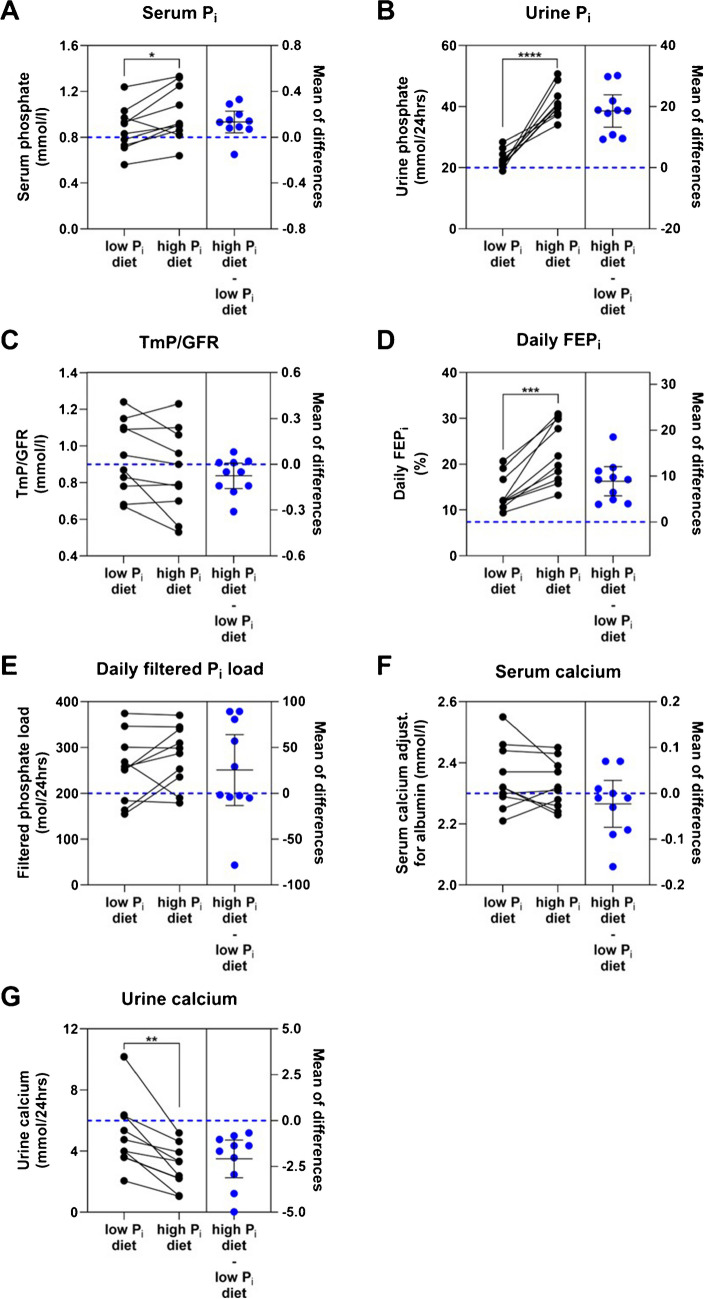
- High vs low phosphate diet increased plasma phosphate (0.87 ± 0.19 vs 1.00 ± 0.23 mmol/l, p = 0.011), 24-h urinary phosphate (22.7 ± 2.9 vs 41.2 ± 5.1 mmol/24 h, p < 0.0001), and daily fractional excretion of phosphate (13.6 ± 3.8% vs 22.5 ± 6.7%, p = 0.0001).
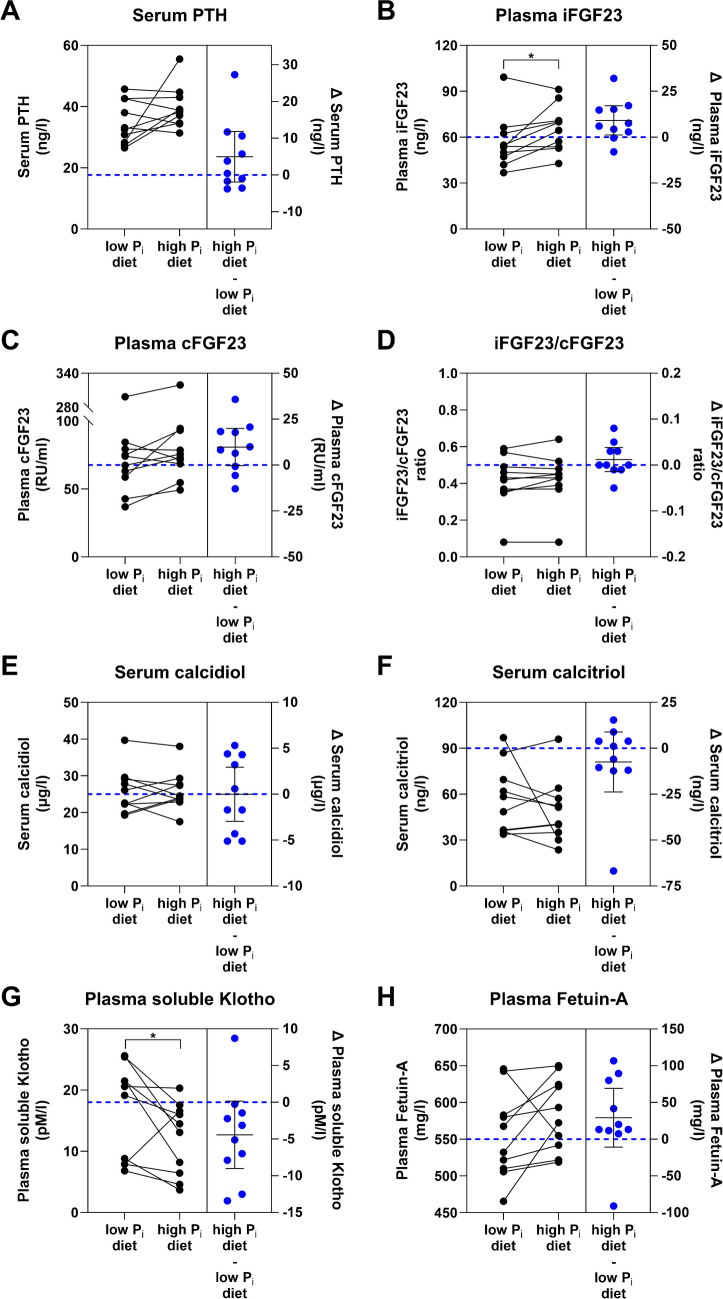
- High phosphate intake increased plasma intact FGF23 (56.7 ± 17.3 vs 65.8 ± 15.0 ng/l, p = 0.029) but not cFGF23 (88.0 ± 75.6 vs 97.8 ± 79.1 RU/ml, p = 0.056), and reduced plasma soluble Klotho (median 19.9 [7.9–22.5] vs 13.8 [6.0–16.8] pM/l, p = 0.049).
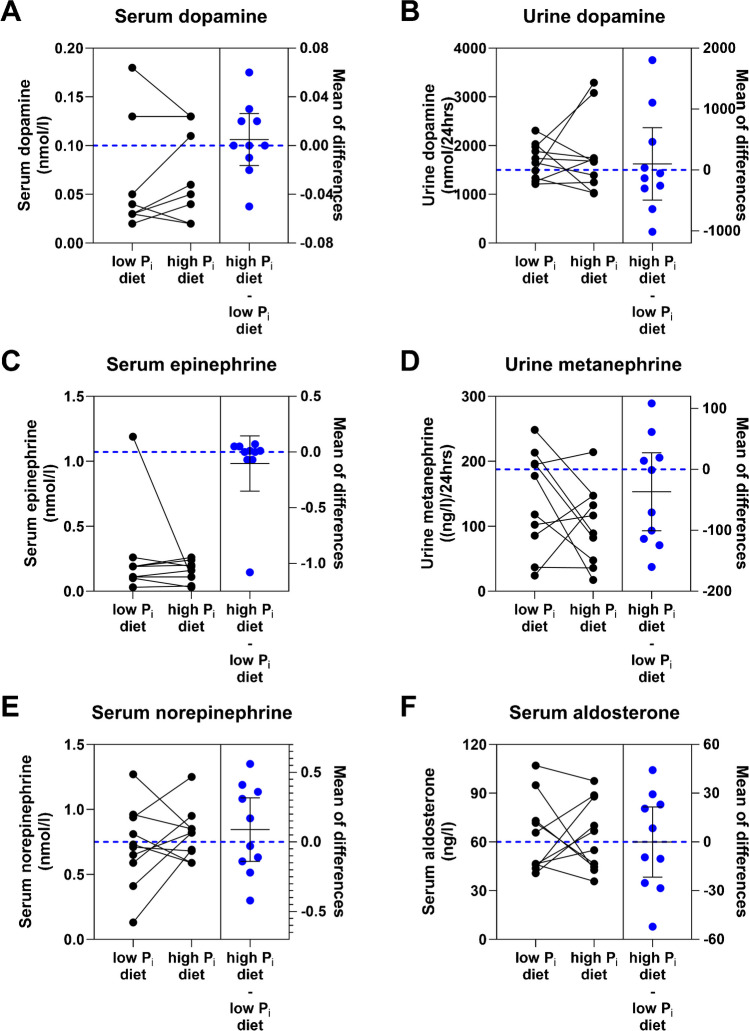
- High phosphate intake decreased 24-h urinary calcium (5.0 ± 2.2 vs 2.9 ± 1.4 mmol/24 h, p = 0.0013), with no significant changes in PTH, calcidiol, calcitriol, Fetuin-A, dopamine, epinephrine, norepinephrine, metanephrine, or aldosterone.
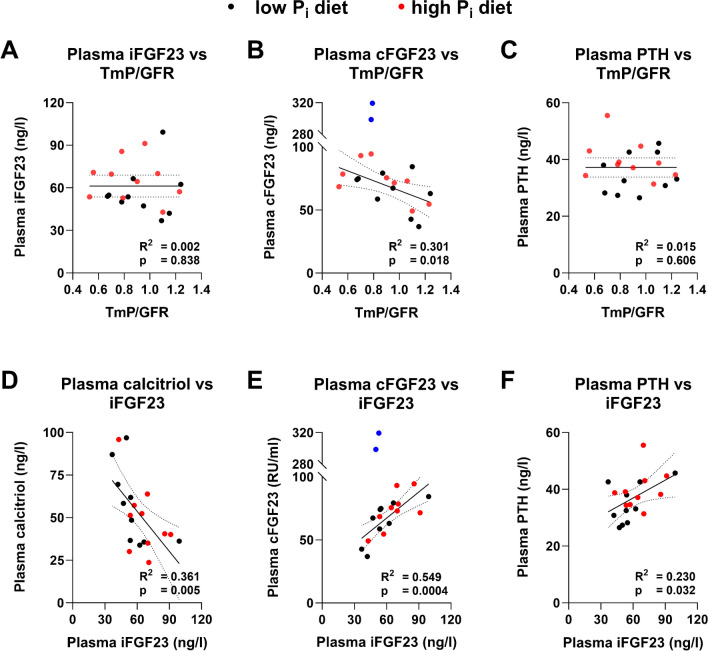
- Higher iFGF23 correlated with lower calcitriol and higher PTH; cFGF23 showed a significant negative relationship with TmP/GFR.
Methods
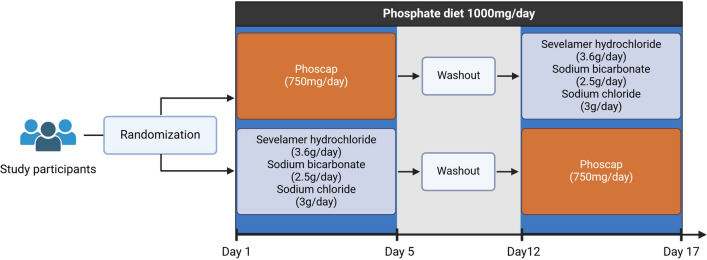
- Open-label randomized cross-over trial in 10 healthy men aged 20–40 years with normal kidney function; participants received a standardized diet containing ~1000 mg phosphorus/day and were randomized to 5 days of low phosphate (sevelamer hydrochloride 1200 mg thrice daily) or high phosphate (Phoscap providing 750 mg phosphorus/day), with a 7-day washout between diets.
- Blood was collected fasting at the end of each dietary period; 24-h urine was collected on day 5, with spot urine for TmP/GFR.
- Analyses used paired t-test, Wilcoxon test, or non-linear regression (α = 0.05), with data presented as mean ± SD or median and interquartile range.
Limitations
- The authors state that sodium intake was inadvertently 840 mg higher in the low phosphate arm, though they argue the iFGF23 and phosphate differences likely reflect phosphate rather than sodium.
- The authors note the small sample size (n = 10) limited more sophisticated analysis, and that correlations between measurements from the same participants on each diet are dependent.
- The study included only healthy young men, was open-label, and assessed a single time point for TmP/GFR; these features limit generalizability and may miss kinetic or sex-specific effects.
Model-written summary. Check it against the paper before relying on it.
Integrity signals
Registry
Cites
Statistics
Figures
Verification
Claims the paper makes
18 Valid · 4 Not valid · 14 Not checked · 73 Own results and interpretations
The cited sources support only part of this claim — read each source’s verdict below.
In the paper
“In contrast, our high Pi diet rather reflects real Pi intake in many industrialized countries as suggested by data from the National Health and Nutrition Examination Survey (NHANES) showing average phosphorus intake in adults in the range of 1200–1400 mg/day [21].”
§ Controlled dietary phosphate loading in healthy young men elevates plasma phosphate and FGF23 levels > Discussion
What the sources say
- Partly supportedcites [21] Fulgoni K, Fulgoni VL 3rd (2021) Trends in total, added, and natural phosphorus intake in adult Americans, NHANES 1988–1994 to NHANES 2015–2016. Nutrients 13. 10.3390/nu13072249 PMC8308364 34210102 sourceExperimental — accuracy not yet measured
The Abstract reports mean total phosphorus intake of 1292 mg/day in 1988–1994 and 1398 mg/day in 2015–2016 among U.S. adults, supporting the stated range. The study’s NHANES data concern Americans, however, and do not establish that this intake is typical across many industrialized countries. It also distinguishes total phosphorus from added phosphorus, rather than measuring the intake of inorganic phosphate specifically. (LLM, conf=0.86)
hedged- Asserted: passes — The authors put it forward as true.
- Checkable: passes — It can be checked against evidence.
- Load-bearing: passes — The paper’s conclusions depend on it.
- Based: passes — The paper gives a reason why it holds.
- Partly supported
Every source the paper cites for this claim was checked and supports it.
In the paper
“This was accompanied by an increase in PTH and, in some studies, by an increase in intact FGF23 (iFGF23) [44, 59].”
§ Controlled dietary phosphate loading in healthy young men elevates plasma phosphate and FGF23 levels > Introduction
What the sources say
- Supportedcites [44] Nishida Y, Taketani Y, Yamanaka-Okumura H, Imamura F, Taniguchi A, Sato T, Shuto E, Nashiki K, Arai H, Yamamoto H, Takeda E (2006) Acute effect of oral phosphate loading on serum fibroblast growth factor 23 levels in healthy men. Kidney Int 70:2141–2147. 10.1038/sj.ki.5002000. (5002000 [pii]) 17063170 source
The Discussion reports increased PTH after oral phosphate loading and a modest iFGF23 increase at 8 hours after the highest-phosphate meal (1200 mg). It also says iFGF23 did not increase within the first 6 hours, consistent with the citing sentence’s qualification that an increase occurs only sometimes. (LLM, conf=0.91)
- Supportedcites [59] Volk C, Schmidt B, Brandsch C, Kurze T, Schlegelmilch U, Grosse I, Ulrich C, Girndt M, Stangl GI (2022) Acute effects of an inorganic phosphorus additive on mineral metabolism and cardiometabolic risk factors in healthy subjects. J Clin Endocrinol Metab 107:e852–e864. 10.1210/clinem/dgab635 34448875 source
The Discussion reports that some studies of healthy subjects found increased fasting FGF23 after several days of phosphorus loading; the References identify one of those studies as examining intact FGF23. The Discussion also makes clear that this paper's own single-dose study found no increase during the eight-hour postprandial period. (LLM, conf=0.86)
hedgedstates a possible cause- Asserted: passes — The authors put it forward as true.
- Checkable: passes — It can be checked against evidence.
- Load-bearing: passes — The paper’s conclusions depend on it.
- Based: passes — The paper gives a reason why it holds.
- Supported
Every source the paper cites for this claim was checked and supports it.
In the paper
“This was accompanied by an increase in PTH and, in some studies, by an increase in intact FGF23 (iFGF23) [44, 59].”
§ Controlled dietary phosphate loading in healthy young men elevates plasma phosphate and FGF23 levels > Introduction
What the sources say
- Supportedcites [44] Nishida Y, Taketani Y, Yamanaka-Okumura H, Imamura F, Taniguchi A, Sato T, Shuto E, Nashiki K, Arai H, Yamamoto H, Takeda E (2006) Acute effect of oral phosphate loading on serum fibroblast growth factor 23 levels in healthy men. Kidney Int 70:2141–2147. 10.1038/sj.ki.5002000. (5002000 [pii]) 17063170 source
The results section reports that serum intact-PTH increased significantly 1, 2, and 4 hours after the higher-phosphate meals compared with the P400 meal. The Discussion describes a rapid, double-peak PTH response to dietary phosphate loading. The study was conducted in healthy men. (LLM, conf=0.93)
- Supportedcites [59] Volk C, Schmidt B, Brandsch C, Kurze T, Schlegelmilch U, Grosse I, Ulrich C, Girndt M, Stangl GI (2022) Acute effects of an inorganic phosphorus additive on mineral metabolism and cardiometabolic risk factors in healthy subjects. J Clin Endocrinol Metab 107:e852–e864. 10.1210/clinem/dgab635 34448875 source
The Phosphate-Regulating Hormones section reports that PTH rose after the meal and that the increase was moderately greater with phosphorus than with placebo from 1 to 5 hours. The 8-hour PTH response was also significantly higher with phosphorus. (LLM, conf=0.94)
plainstates an association- Asserted: passes — The authors put it forward as true.
- Checkable: passes — It can be checked against evidence.
- Load-bearing: unclear — It is unclear whether the paper’s conclusions depend on it.
- Based: passes — The paper gives a reason why it holds.
- Supported
Every source the paper cites for this claim was checked and supports it.
In the paper
“The sensitivity of the cFGF23 to indicate higher plasma Pi levels may be lower than for iFGF23 [17].”
§ Controlled dietary phosphate loading in healthy young men elevates plasma phosphate and FGF23 levels > Discussion
What the sources say
- Supportedcites [17] Egli-Spichtig D, Hamid AK, Pastor Arroyo EM, Ketteler M, Wiecek A, Rosenkranz AR, Pasch A, Lorentz H, Hellmann B, Karus M, Ammer R, Rubio-Aliaga I, Wagner CA (2023) Intact FGF23 predicts serum phosphate improvement after combined nicotinamide and phosphate binder treatment in hemodialysis patients. Clin Kidney J 16: 1622–1633. 10.1093/ckj/sfad040 PMC10539220 37779856 source
The Results section (page unavailable) reports that iFGF23 had slightly better recognition rates than cFGF23 for phosphate values above the third quartile. This supports the hedged claim that cFGF23 may be less sensitive to higher phosphate levels, although the paper says their overall predictive accuracy was similar in the hemodialysis cohort. (LLM, conf=0.88)
hedgedstates an association- Asserted: passes — The authors put it forward as true.
- Checkable: passes — It can be checked against evidence.
- Load-bearing: unclear — It is unclear whether the paper’s conclusions depend on it.
- Based: passes — The paper gives a reason why it holds.
- Supported
The cited sources support only part of this claim — read each source’s verdict below.
In the paper
“The literature suggests that high sodium intake is associated with lower cFGF23 expression [27, 29, 48, 62].”
§ Controlled dietary phosphate loading in healthy young men elevates plasma phosphate and FGF23 levels > Discussion
What the sources say
- Partly supportedcites [27] Hu JW, Wang Y, Chu C, Mu JJ (2018) Effect of salt intervention on serum levels of fibroblast growth factor 23 (FGF23) in Chinese adults: an intervention study. Med Sci Monit 24:1948–1954. 10.12659/msm.906489 29608553 PMC5898259 sourceExperimental — accuracy not yet measured
The Results (Effect of dietary salt intervention on serum FGF23; page not provided) report lower serum FGF23 after a switch from low to high sodium intake. But the Methods (Laboratory measurements; page not provided) specify an assay for intact FGF23, not c-terminal FGF23 (cFGF23), and the study measured serum concentration rather than expression. (LLM, conf=0.87)
- Supportedcites [29] Humalda JK, Yeung SMH, Geleijnse JM, Gijsbers L, Riphagen IJ, Hoorn EJ, Rotmans JI, Vogt L, Navis G, Bakker SJL, de Borst MH (2020) Effects of potassium or sodium supplementation on mineral homeostasis: a controlled dietary intervention study. J Clin Endocrinol Metab 105:e3246-3256. 10.1210/clinem/dgaa359 32506135 PMC7365698 source
The Subjects and Methods section (Measurements; page unavailable) specifies that the study measured C-terminal FGF23. The Discussion (page unavailable) reports that sodium supplementation decreased FGF23 levels and notes a prior study in which high salt intake did the same. The paper measures circulating levels rather than directly measuring gene expression, but it supports the stated association. (LLM, conf=0.91)
- Partly supportedcites [48] Radvanyi Z, Yoo EJ, Kandasamy P, Salas-Bastos A, Monnerat S, Refardt J, Christ-Crain M, Hayashi H, Kondo Y, Jantsch J, Rubio-Aliaga I, Sommer L, Wagner CA, Hediger MA, Kwon HM, Loffing J, Pathare G (2024) Extracellular sodium regulates fibroblast growth factor 23 (FGF23) formation. J Biol Chem 300:105480. 10.1016/j.jbc.2023.105480 37992803 PMC10770535 sourceExperimental — accuracy not yet measured
The Results section reports an inverse association between serum sodium and cFGF23, and the Abstract reports that elevated extracellular sodium suppressed FGF23 formation in cell lines. Neither establishes that high sodium intake is associated with lower cFGF23; the Abstract explicitly distinguishes dietary salt intake from plasma sodium levels. Page numbers are not available in our copy. (LLM, conf=0.85)
- Not checked — no full text of the sourcecites [62] Zhang B, Umbach AT, Chen H, Yan J, Fakhri H, Fajol A, Salker MS, Spichtig D, Daryadel A, Wagner CA, Foller M, Lang F (2016) Up-regulation of FGF23 release by aldosterone. Biochem Biophys Res Commun 470:384–390. 10.1016/j.bbrc.2016.01.034. (S0006-291X(16)30034-1 [pii]) 26773502 source
hedgedstates an association- Asserted: passes — The authors put it forward as true.
- Checkable: passes — It can be checked against evidence.
- Load-bearing: passes — The paper’s conclusions depend on it.
- Based: passes — The paper gives a reason why it holds.
- Partly supported
40 more claims · 1 with their cited sources checked
Create a free account to see all 109 claims and to verify the 27 references still open.
- Probably not a substantial claim. 48
- It may state two separate claims as one. 28
Self-check
Percentages, sums and reported differences re-computed from the paper’s own numbers.
Each contradiction between two passages listed here was confirmed by an independent check.
Rated minor: it would not touch a result — a value no result rests on, a p-value that stays on the same side of the significance level, or a conflict that is clerical, resolved elsewhere in the paper, or outside its own findings.
In the paper
§ Controlled dietary phosphate loading in healthy young men elevates plasma phosphate and FGF23 levels > Discussion
“Dopamine was measured both in plasma and urine while aldosterone only in urine.”
§ Controlled dietary phosphate loading in healthy young men elevates plasma phosphate and FGF23 levels > Results > Effects of dietary Pi on phosphatropic hormones
“| Serum aldosterone (ng/l) | 63.6 ± 23.2 | 63.6 ± 22.0 | 0.9981 |”
Rated minor: it would not touch a result — a value no result rests on, a p-value that stays on the same side of the significance level, or a conflict that is clerical, resolved elsewhere in the paper, or outside its own findings.
In the paper
§ Controlled dietary phosphate loading in healthy young men elevates plasma phosphate and FGF23 levels > Discussion
“the average urinary excretion of Pi of 22.3 mmol/day (702 mg/day) and 41.2 mmol/day (1277 mg/day)”
§ Controlled dietary phosphate loading in healthy young men elevates plasma phosphate and FGF23 levels > Results > Effects of dietary Pi on plasma and urine minerals
“| Phosphate (mmol/24 h) | 22.7 ± 2.9 | 41.2 ± 5.1 | < 0.0001 |”
Rated minor: it would not touch a result — a value no result rests on, a p-value that stays on the same side of the significance level, or a conflict that is clerical, resolved elsewhere in the paper, or outside its own findings.
In the paper
§ Controlled dietary phosphate loading in healthy young men elevates plasma phosphate and FGF23 levels > Results > Effects of dietary Pi on plasma and urine minerals
“and filtered Pi load (F), and serum and 24-h urine calcium levels (E, F)”
§ Controlled dietary phosphate loading in healthy young men elevates plasma phosphate and FGF23 levels > Results > Effects of dietary Pi on plasma and urine minerals
“Dietary Pi intake had no effect on total serum calcium levels corrected for albumin (Fig. 2F, Table 3); however, 24-h urinary calcium excretion was significantly lower with high Pi intake (Fig. 2G, Table 3).”
Citations
Cites
Ahmed, A., Jorna, T., & Bhandari, S. (2016) · Nephron · doi:10.1159/000447068 · Cited by 11,717
FGF23 induces left ventricular hypertrophy
Faul, C., Amaral, A. P., Oskouei, B., Hu, M.-C., Sloan, A., Isakova, T., Gutiérrez, O. M., Aguillon-Prada, R., Lincoln, J., Hare, J. M., et al. (2011) · Journal of Clinical Investigation · doi:10.1172/jci46122 · Cited by 2,027
Self-citationFGF-23 Is a Potent Regulator of Vitamin D Metabolism and Phosphate Homeostasis
Shimada, T., Hasegawa, H., Yamazaki, Y., Muto, T., Hino, R., Takeuchi, Y., Fujita, T., Nakahara, K., Fukumoto, S., & Yamashita, T. (2004) · Journal of Bone and Mineral Research · doi:10.1359/jbmr.0301264 · Cited by 1,883
Motulsky, H. J., & Brown, R. E. (2006) · BMC Bioinformatics · doi:10.1186/1471-2105-7-123 · Cited by 1,616
Dhingra, R. (2007) · Archives of Internal Medicine · doi:10.1001/archinte.167.9.879 · Cited by 861
Regulation of Phosphate Homeostasis by PTH, Vitamin D, and FGF23
Bergwitz, C., & Jüppner, H. (2010) · Annual Review of Medicine · doi:10.1146/annurev.med.051308.111339 · Cited by 741
Larsson, T., Nisbeth, U. L. F., Ljunggren, Ö., Jüppner, H., & Jonsson, K. B. (2003) · Kidney International · doi:10.1046/j.1523-1755.2003.00328.x · Cited by 689
Hu, M. C., Shiizaki, K., Kuro-o, M., & Moe, O. W. (2013) · Annual Review of Physiology · doi:10.1146/annurev-physiol-030212-183727 · Cited by 587
Self-citationFerrari, S. L., Bonjour, J.-P., & Rizzoli, R. (2005) · The Journal of Clinical Endocrinology & Metabolism · doi:10.1210/jc.2004-1039 · Cited by 518
Dietary Phosphorus Regulates Serum Fibroblast Growth Factor-23 Concentrations in Healthy Men
Antoniucci, D. M., Yamashita, T., & Portale, A. A. (2006) · The Journal of Clinical Endocrinology & Metabolism · doi:10.1210/jc.2006-0021 · Cited by 421
Bai, X., Miao, D., Li, J., Goltzman, D., & Karaplis, A. C. (2004) · Endocrinology · doi:10.1210/en.2004-0233 · Cited by 329
The Kidney Is the Principal Organ Mediating Klotho Effects
Lindberg, K., Amin, R., Moe, O. W., Hu, M.-C., Erben, R. G., Östman Wernerson, A., Lanske, B., Olauson, H., & Larsson, T. E. (2014) · Journal of the American Society of Nephrology · doi:10.1681/asn.2013111209 · Cited by 296
Self-citationde Borst, M. H., Vervloet, M. G., ter Wee, P. M., & Navis, G. (2011) · Journal of the American Society of Nephrology · doi:10.1681/asn.2010121251 · Cited by 282
High dietary phosphorus intake is associated with all-cause mortality: results from NHANES III
Chang, A. R., Lazo, M., Appel, L. J., Gutiérrez, O. M., & Grams, M. E. (2014) · The American Journal of Clinical Nutrition · doi:10.3945/ajcn.113.073148 · Cited by 262
Calvo, M. S., & Uribarri, J. (2013) · The American Journal of Clinical Nutrition · doi:10.3945/ajcn.112.053934 · Cited by 255
Acute effect of oral phosphate loading on serum fibroblast growth factor 23 levels in healthy men
Nishida, Y., Taketani, Y., Yamanaka-Okumura, H., Imamura, F., Taniguchi, A., Sato, T., Shuto, E., Nashiki, K., Arai, H., Yamamoto, H., et al. (2006) · Kidney International · doi:10.1038/sj.ki.5002000 · Cited by 243
Effects of Dietary Phosphate and Calcium Intake on Fibroblast Growth Factor-23
Vervloet, M. G., van Ittersum, F. J., Büttler, R. M., Heijboer, A. C., Blankenstein, M. A., & ter Wee, P. M. (2011) · Clinical Journal of the American Society of Nephrology · doi:10.2215/cjn.04730510 · Cited by 218
Parathyroid hormone action on phosphate transporter mRNA and protein in rat renal proximal tubules
Kempson, S. A., Lotscher, M., Kaissling, B., Biber, J., Murer, H., & Levi, M. (1995) · American Journal of Physiology-Renal Physiology · doi:10.1152/ajprenal.1995.268.4.f784 · Cited by 208
Jüppner, H. (2011) · Kidney International · doi:10.1038/ki.2011.27 · Cited by 191
Renal Tubular Reabsorption of Phosphate (TmP/GFR): Indications and Interpretation
Payne, R. B. (1998) · Annals of Clinical Biochemistry: International Journal of Laboratory Medicine · doi:10.1177/000456329803500203 · Cited by 184
Mechanisms of phosphate transport
Levi, M., Gratton, E., Forster, I. C., Hernando, N., Wagner, C. A., Biber, J., Sorribas, V., & Murer, H. (2019) · Nature Reviews Nephrology · doi:10.1038/s41581-019-0159-y · Cited by 171
Self-citationParathyroid hormone activates the orphan nuclear receptor Nurr1 to induce FGF23 transcription
Meir, T., Durlacher, K., Pan, Z., Amir, G., Richards, W. G., Silver, J., & Naveh-Many, T. (2014) · Kidney International · doi:10.1038/ki.2014.215 · Cited by 152
Barker, S. L., Pastor, J., Carranza, D., Quiñones, H., Griffith, C., Goetz, R., Mohammadi, M., Ye, J., Zhang, J., Hu, M. C., et al. (2015) · Nephrology Dialysis Transplantation · doi:10.1093/ndt/gfu291 · Cited by 150
Self-citationContributions to Total Phosphorus Intake: All Sources Considered
Calvo, M. S., & Uribarri, J. (2013) · Seminars in Dialysis · doi:10.1111/sdi.12042 · Cited by 123
The Human Response to Acute Enteral and Parenteral Phosphate Loads
Scanni, R., vonRotz, M., Jehle, S., Hulter, H. N., & Krapf, R. (2014) · Journal of the American Society of Nephrology · doi:10.1681/asn.2013101076 · Cited by 118
Quinn, S. J., Thomsen, A. R. B., Pang, J. L., Kantham, L., Bräuner-Osborne, H., Pollak, M., Goltzman, D., & Brown, E. M. (2013) · American Journal of Physiology-Endocrinology and Metabolism · doi:10.1152/ajpendo.00460.2012 · Cited by 115
Dhingra, R., Gona, P., Benjamin, E. J., Wang, T. J., Aragam, J., D'Agostino, R. B., Kannel, W. B., & Vasan, R. S. (2010) · European Journal of Heart Failure · doi:10.1093/eurjhf/hfq106 · Cited by 108
Up-regulation of FGF23 release by aldosterone
Zhang, B., Umbach, A. T., Chen, H., Yan, J., Fakhri, H., Fajol, A., Salker, M. S., Spichtig, D., Daryadel, A., Wagner, C. A., et al. (2016) · Biochemical and Biophysical Research Communications · doi:10.1016/j.bbrc.2016.01.034 · Cited by 91
Self-citationEffect of High Phosphorus Intake on Calcium and Phosphorus Metabolism in Man
Spencer, H., Menczel, J., Lewin, I., & Samachson, J. (1965) · The Journal of Nutrition · doi:10.1093/jn/86.2.125 · Cited by 87
Impact of Phosphorus-Based Food Additives on Bone and Mineral Metabolism
Gutiérrez, O. M., Luzuriaga-McPherson, A., Lin, Y., Gilbert, L. C., Ha, S.-W., & Beck, G. R. (2015) · The Journal of Clinical Endocrinology & Metabolism · doi:10.1210/jc.2015-2279 · Cited by 82
Bacic, D., Capuano, P., Baum, M., Zhang, J., Stange, G., Biber, J., Kaissling, B., Moe, O. W., Wagner, C. A., & Murer, H. (2005) · American Journal of Physiology-Renal Physiology · doi:10.1152/ajprenal.00380.2004 · Cited by 76
Self-citationAssociation of dietary phosphate and serum phosphorus concentration by levels of kidney function
Moore, L. W., Nolte, J. V., Gaber, A. O., & Suki, W. N. (2015) · The American Journal of Clinical Nutrition · doi:10.3945/ajcn.114.102715 · Cited by 75
Renal phosphate handling and inherited disorders of phosphate reabsorption: an update
Wagner, C. A., Rubio-Aliaga, I., & Hernando, N. (2019) · Pediatric Nephrology · doi:10.1007/s00467-017-3873-3 · Cited by 73
Self-citationMechanisms and Regulation of Intestinal Phosphate Absorption
Hernando, N., & Wagner, C. A. (2018) · Comprehensive Physiology · doi:10.1002/cphy.c170024 · Cited by 70
Self-citationCuche, J. L., Marchand, G. R., Greger, R. F., Lang, R. C., & Knox, F. G. (1976) · Journal of Clinical Investigation · doi:10.1172/jci108461 · Cited by 68
Phosphate intake, hyperphosphatemia, and kidney function
Rubio-Aliaga, I., & Krapf, R. (2022) · Pflügers Archiv - European Journal of Physiology · doi:10.1007/s00424-022-02691-x · Cited by 65
A Controlled Increase in Dietary Phosphate Elevates BP in Healthy Human Subjects
Mohammad, J., Scanni, R., Bestmann, L., Hulter, H. N., & Krapf, R. (2018) · Journal of the American Society of Nephrology · doi:10.1681/asn.2017121254 · Cited by 60
Turner, M. E., Beck, L., Hill Gallant, K. M., Chen, Y., Moe, O. W., Kuro-o, M., Moe, S. M., & Aikawa, E. (2024) · Arteriosclerosis, Thrombosis, and Vascular Biology · doi:10.1161/atvbaha.123.319198 · Cited by 54
Self-citationLederer, E. D., & Wagner, C. A. (2018) · Pflügers Archiv - European Journal of Physiology · doi:10.1007/s00424-018-2246-5 · Cited by 48
Self-citationAutocrine/paracrine regulation of renal Na(+)-phosphate cotransport by dopamine
Glahn, R. P., Onsgard, M. J., Tyce, G. M., Chinnow, S. L., Knox, F. G., & Dousa, T. P. (1993) · American Journal of Physiology-Renal Physiology · doi:10.1152/ajprenal.1993.264.4.f618 · Cited by 47
Kägi, L., Bettoni, C., Pastor-Arroyo, E. M., Schnitzbauer, U., Hernando, N., & Wagner, C. A. (2018) · PLOS ONE · doi:10.1371/journal.pone.0195427 · Cited by 46
Self-citationIncreased renal dopamine and acute renal adaptation to a high-phosphate diet
Weinman, E. J., Biswas, R., Steplock, D., Wang, P., Lau, Y.-S., Desir, G. V., & Shenolikar, S. (2011) · American Journal of Physiology-Renal Physiology · doi:10.1152/ajprenal.00744.2010 · Cited by 44
An Expert Perspective on Phosphate Dysregulation With a Focus on Chronic Hypophosphatemia
Aljuraibah, F., Bacchetta, J., Brandi, M. L., Florenzano, P. F., Javaid, M. K., Mäkitie, O., Raimann, A., Rodríguez, M., Siggelkow, H., Tiosano, D., et al. (2020) · Journal of Bone and Mineral Research · doi:10.1002/jbmr.4486 · Cited by 42
Self-citationEndogenous renal dopamine production regulates phosphate excretion
Debska-Slizien, A., Ho, P., Drangova, R., & Baines, A. D. (1994) · American Journal of Physiology-Renal Physiology · doi:10.1152/ajprenal.1994.266.6.f858 · Cited by 40
Küng, C. J., Haykir, B., Schnitzbauer, U., Egli-Spichtig, D., Hernando, N., & Wagner, C. A. (2021) · American Journal of Physiology-Renal Physiology · doi:10.1152/ajprenal.00250.2021 · Cited by 38
Self-citationTiong, M. K., Cai, M. M. X., Toussaint, N. D., Tan, S.-J., Pasch, A., & Smith, E. R. (2022) · Scientific Reports · doi:10.1038/s41598-022-11065-3 · Cited by 38
Fulgoni, K., & Fulgoni, V. L. (2021) · Nutrients · doi:10.3390/nu13072249 · Cited by 31
Meyer, M. H., Dulde, E., & Meyer, R. A. (2004) · Physiological Genomics · doi:10.1152/physiolgenomics.00210.2003 · Cited by 27
Humalda, J. K., Yeung, S. M. H., Geleijnse, J. M., Gijsbers, L., Riphagen, I. J., Hoorn, E. J., Rotmans, J. I., Vogt, L., Navis, G., Bakker, S. J. L., et al. (2020) · The Journal of Clinical Endocrinology & Metabolism · doi:10.1210/clinem/dgaa359 · Cited by 26
Verheyen, N., Fahrleitner-Pammer, A., Pieske, B., Meinitzer, A., Belyavskiy, E., Wetzel, J., Gaksch, M., Grübler, M. R., Catena, C., Sechi, L. A., et al. (2016) · Journal of Hypertension · doi:10.1097/hjh.0000000000001004 · Cited by 24
Devaraj, S., Duncan‐Staley, C., & Jialal, I. (2010) · Metabolic Syndrome and Related Disorders · doi:10.1089/met.2010.0030 · Cited by 23
Radloff, J., Pagitz, M., Andrukhova, O., Oberbauer, R., Burgener, I. A., & Erben, R. G. (2021) · Frontiers in Physiology · doi:10.3389/fphys.2021.649921 · Cited by 23
Dietary phosphorus intake and health
Uribarri, J., & Calvo, M. S. (2014) · The American Journal of Clinical Nutrition · doi:10.3945/ajcn.113.080259 · Cited by 22
Volk, C., Schmidt, B., Brandsch, C., Kurze, T., Schlegelmilch, U., Grosse, I., Ulrich, C., Girndt, M., & Stangl, G. I. (2022) · The Journal of Clinical Endocrinology & Metabolism · doi:10.1210/clinem/dgab635 · Cited by 21
Hu, J.-W., Wang, Y., Chu, C., & Mu, J.-J. (2018) · Medical Science Monitor · doi:10.12659/msm.906489 · Cited by 17
Ugrica, M., Bettoni, C., Bourgeois, S., Daryadel, A., Pastor-Arroyo, E.-M., Gehring, N., Hernando, N., Wagner, C. A., & Rubio-Aliaga, I. (2021) · Nephrology Dialysis Transplantation · doi:10.1093/ndt/gfab015 · Cited by 17
Self-citationFulgoni, K., Fulgoni, V. L., & Wallace, T. C. (2022) · Nutrients · doi:10.3390/nu14091738 · Cited by 15
Daryadel, A., Haykir, B., Küng, C. J., Bugarski, M., Bettoni, C., Schnitzbauer, U., Hernando, N., Hall, A. M., & Wagner, C. A. (2022) · Acta Physiologica · doi:10.1111/apha.13815 · Cited by 14
Self-citationLatic, N., Peitzsch, M., Zupcic, A., Pietzsch, J., & Erben, R. G. (2022) · Biomedicines · doi:10.3390/biomedicines10102510 · Cited by 14
Giacona, J. M., Afridi, A., Bezan Petric, U., Johnson, T., Pastor, J., Ren, J., Sandon, L., Malloy, C., Pandey, A., Shah, A., et al. (2024) · Journal of Applied Physiology · doi:10.1152/japplphysiol.00818.2023 · Cited by 10
Self-citationEgli-Spichtig, D., Hamid, A. K., Arroyo, E. M. P., Ketteler, M., Wiecek, A., Rosenkranz, A. R., Pasch, A., Lorenz, H., Hellmann, B., Karus, M., et al. (2023) · Clinical Kidney Journal · doi:10.1093/ckj/sfad040 · Cited by 9
Self-citationExtracellular sodium regulates fibroblast growth factor 23 (FGF23) formation
Radvanyi, Z., Yoo, E. J., Kandasamy, P., Salas-Bastos, A., Monnerat, S., Refardt, J., Christ-Crain, M., Hayashi, H., Kondo, Y., Jantsch, J., et al. (2024) · Journal of Biological Chemistry · doi:10.1016/j.jbc.2023.105480 · Cited by 9
Self-citationEgli-Spichtig, D., Zhang, M. Y. H., Li, A., Pastor Arroyo, E. M., Hernando, N., Wagner, C. A., Chang, W., & Perwad, F. (2021) · Scientific Reports · doi:10.1038/s41598-021-84735-3 · Cited by 1
Self-citation
Cited by
Soft tissue calcifications in chronic kidney disease—beyond the vasculature
Fajol, A., & Faul, C. (2025) · Pflügers Archiv - European Journal of Physiology · doi:10.1007/s00424-025-03098-0 · Cited by 17
Regulation of Renal and Extrarenal Calcitriol Synthesis and Its Clinical Implications
Zittermann, A. (2025) · International Journal of Molecular Sciences · doi:10.3390/ijms26125570 · Cited by 16
“Figure S2A summarizes the results of a meta-analysis of five studies with six cohorts of adults regarding the effect of P supplementation on circulating calcitriol [46–50].”
InfluentialThe Pathologic Actions of Phosphate in CKD
Fajol, A., & Faul, C. (2025) · Kidney360 · doi:10.34067/kid.0000000820 · Cited by 10
“8 High dietary phosphate intake by healthy individuals can signi fi cantly increase serum phosphate levels for several hours, 9,10 showing that hyperphosphatemia can also occur in the absence of disease.”
Updates on renal phosphate transport
Wagner, C. A., Egli-Spichtig, D., & Rubio‐Aliaga, I. (2025) · Current Opinion in Nephrology & Hypertension · doi:10.1097/mnh.0000000000001090 · Cited by 8
Self-citationFajol, A., Heitman, K., Thomas, S. M., Li, Q., Mitchell, T., Gamboa, J. L., Zarjou, A., Gutiérrez, O. M., & Faul, C. (2025) · The Journal of Physiology · doi:10.1113/jp289283 · Cited by 1
Metadata
- Authors
- Gerber, J. S., Arroyo, E. M. P., Pastor, J., Correia, M., Rudloff, S., Moe, O. W., Egli-Spichtig, D., Mohebbi, N., & Wagner, C. A.
- Affiliations
- Ente Ospedaliero Cantonale (CH)
- University of Zurich (CH)
- The University of Texas Southwestern Medical Center (US)
- University of Bern (CH)
- University Hospital Zurich (CH)
- Corresponding author
- Wagner, Carsten A.
- ORCID
- Venue
- Pflügers Archiv - European Journal of Physiology
- Published
- 2024-11-27
- Volume
- 477
- Issue
- 3
- Pages
- 495-508
- ISSN
- 0031-6768 (ISSN-L)
- 1432-2013
- PMC
- PMC11825603
- OpenAlex
- W4404779463
- Semantic Scholar
- 2951706e32050848e0f5d48f8bc54881be3bfdf4
- Cited by
- 15
- References
- 63
- Citations by year
- 2026: 8 · 2025: 7
- FWCI
- 4.24
- Type
- journal article
- Language
- en
- Open access
- hybrid
- doi.org
- Licence
- cc-by
- creativecommons.org/licenses/by/4.0 (tdm)
- creativecommons.org/licenses/by/4.0 (vor)
- Locations
- Pflügers Archiv - European Journal of Physiology (publishedVersion, cc-by)
- PubMed Central (publishedVersion, cc-by)
- PubMed (publishedVersion)
- Funders
- Schweizerischer Nationalfonds zur Förderung der Wissenschaftlichen Forschung (183774)
- University of Zurich
- Topics
- Health Sciences › Medicine › Nephrology › Parathyroid Disorders and Treatments
- Health Sciences › Medicine › Orthopedics and Sports Medicine › Bone health and osteoporosis research
- Health Sciences › Medicine › Nephrology › Renal function and acid-base balance
- Keywords
- dietary phosphorus, fibroblast growth factor 23, plasma phosphate, renal phosphate excretion, parathyroid hormone, 1,25-dihydroxyvitamin D3, mineral metabolism, phosphate binders, urinary calcium excretion, Klotho, healthy young men
- MeSH terms
- Fibroblast Growth Factor-23, Klotho Proteins, Adult, Calcitriol, Calcium, Fibroblast Growth Factors, Glucuronidase, Humans, Male, Parathyroid Hormone, Phosphates, Phosphorus, Dietary, Cross-Over Studies, Young Adult
About these checks
Registry, retraction, Cites and statistics results are computed, not judged, with one exception: a printed reference that no index lists is read once by a model before it counts as a citation error. Claims are extracted by a model and kept only when their quote appears verbatim in the text; each cited source is then checked, with a model’s help, for whether it says what the claim relies on. Those verdicts can be wrong — read the claim’s quote and the cited source before relying on one.
The claim verdicts this report counts are experimental: their accuracy is not yet measured.
A language model drew the claims from the paper on 2026-10-10, under version 3 of the claim definition (model deepseek-v4.1-flash, prompt extract-v3).
A second model labelled each claim on 2026-10-10 (model jev-1.13-20260917, definition revision gold-guideline-v0.2).
Cited sources are checked with a language model’s help (gpt-6-sol).
Statistics and arithmetic are recomputed, not judged.
Confidence bands are shown only for fields calibrated on our annotated test set. None is calibrated yet, so no band is shown.
What counts as a claim ›How we measure confidence ›How we check this ›
Are you an author, or do you see a problem with this page? Request a review
Data sources
Bibliographic data: Semantic Scholar, OpenAlex, Crossref.
Contains information from the Semantic Scholar Academic Graph Datasets, made available under the ODC Attribution License (ODC-BY 1.0).
Semantic Scholar’s data is described in: Kinney, R., et al. (2023). The Semantic Scholar Open Data Platform. arXiv:2301.10140.
