

The DOI matches its Crossref record; 65 of the 65 references it cites were found in a registry or an index.
Pyroglutamate Abeta pathology in APP/PS1KI mice, sporadic and familial Alzheimer’s disease cases
Open accessAbstract
The presence of Abeta(pE3) (N-terminal truncated Abeta starting with pyroglutamate) in Alzheimer's disease (AD) has received considerable attention since the discovery that this peptide represents a dominant fraction of Abeta peptides in senile plaques of AD brains. This was later confirmed by other reports investigating AD and Down's syndrome postmortem brain tissue. Importantly, Abeta(pE3) has a higher aggregation propensity, and stability, and shows an increased toxicity compared to full-length Abeta. We have recently shown that intraneuronal accumulation of Abeta(pE3) peptides induces a severe neuron loss and an associated neurological phenotype in the TBA2 mouse model for AD. Given the increasing interest in Abeta(pE3), we have generated two novel monoclonal antibodies which were characterized as highly specific for Abeta(pE3) peptides and herein used to analyze plaque deposition in APP/PS1KI mice, an AD model with severe neuron loss and learning deficits. This was compared with the plaque pattern present in brain tissue from sporadic and familial AD cases. Abundant plaques positive for Abeta(pE3) were present in patients with sporadic AD and familial AD including those carrying mutations in APP (arctic and Swedish) and PS1. Interestingly, in APP/PS1KI mice we observed a continuous increase in Abeta(pE3) plaque load with increasing age, while the density for Abeta(1-x ) plaques declined with aging. We therefore assume that, in particular, the peptides starting with position 1 of Abeta are N-truncated as disease progresses, and that, Abeta(pE3) positive plaques are resistant to age-dependent degradation likely due to their high stability and propensity to aggregate.
Overview
The claims and statistics of this paper haven’t been checked yet.
Run the check — free, no account needed. It reads the open-access text and checks the sources it cites.
Integrity signals
Registry
Cites
Statistics
Figures
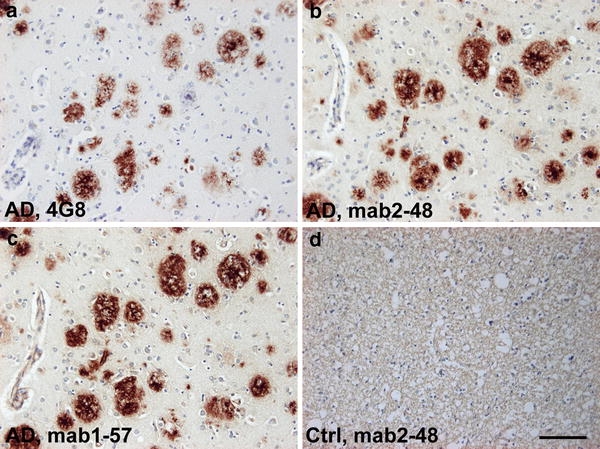
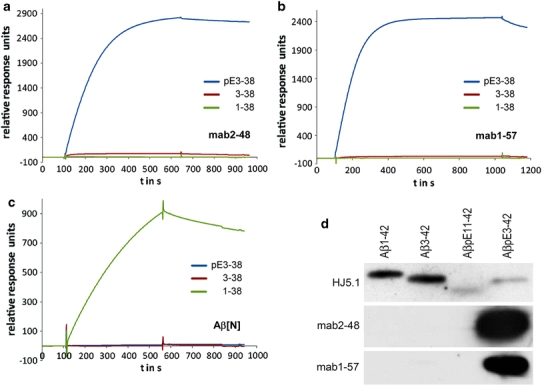
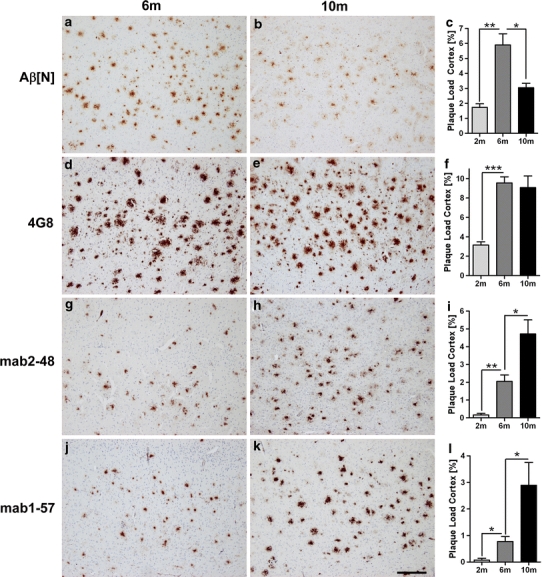
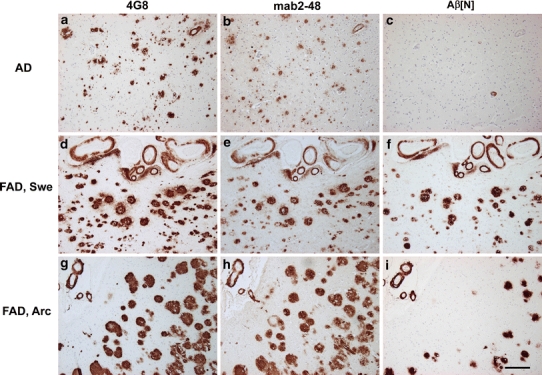
Verification
Claims the paper makes
The claims and statistics of this paper haven’t been checked yet.
Run the check — free, no account needed. It reads the open-access text and checks the sources it cites.
Claims other papers make about this one
Each is checked against this paper’s own text: does it say what the citing paper says it does?
The source backs part of the claim, not all of it — or backs it for a different population, condition or comparison.
In the citing paper
“N-terminal Aβ1-x/βCTF-specific antibodies also fail to label N-truncated Aβ42 peptides that appear to be particularly important in AD [60, 98, 157, 158, 206].”
From Intraneuronal β-amyloid accumulation and synapse pathology in Alzheimer’s disease (2010) · cites this paper as [206]
Experimental — accuracy not yet measured
Self-check
Percentages, sums and reported differences re-computed from the paper’s own numbers.
The self-check needs the paper’s full text.
Citations
Cites
Alzheimer's Disease: Genes, Proteins, and Therapy
Selkoe, D. J. (2001) · Physiological Reviews · doi:10.1152/physrev.2001.81.2.741 · Cited by 6,063
Amyloid plaque core protein in Alzheimer disease and Down syndrome.
Masters, C. L., Simms, G., Weinman, N. A., Multhaup, G., McDonald, B. L., & Beyreuther, K. (1985) · Proceedings of the National Academy of Sciences · doi:10.1073/pnas.82.12.4245 · Cited by 4,431
Self-citationOakley, H., Cole, S. L., Logan, S., Maus, E., Shao, P., Craft, J., Guillozet-Bongaarts, A., Ohno, M., Disterhoft, J., Van Eldik, L., et al. (2006) · The Journal of Neuroscience · doi:10.1523/jneurosci.1202-06.2006 · Cited by 3,530 · cited 1×
“Although learning deficits (Billings et al. 2005; Holcomb et al. 1998; Oakley et al. 2006; Puolivali et al. 2002) were evident in various APP models, the extent of Ab-amyloid deposition did not correlate with the behavioral phenotype (Holcomb et al.”
BackgroundHolcomb, L., Gordon, M. N., McGowan, E., Yu, X., Benkovic, S., Jantzen, P., Wright, K., Saad, I., Mueller, R., Morgan, D., et al. (1998) · Nature Medicine · doi:10.1038/nm0198-097 · Cited by 1,386
Billings, L. M., Oddo, S., Green, K. N., McGaugh, J. L., & LaFerla, F. M. (2005) · Neuron · doi:10.1016/j.neuron.2005.01.040 · Cited by 1,294
Correlation Between Elevated Levels of Amyloid β-Peptide in the Brain and Cognitive Decline
Näslund, J. (2000) · JAMA · doi:10.1001/jama.283.12.1571 · Cited by 1,268
Plaque-independent disruption of neural circuits in Alzheimer’s disease mouse models
Hsia, A. Y., Masliah, E., McConlogue, L., Yu, G.-Q., Tatsuno, G., Hu, K., Kholodenko, D., Malenka, R. C., Nicoll, R. A., & Mucke, L. (1999) · Proceedings of the National Academy of Sciences · doi:10.1073/pnas.96.6.3228 · Cited by 1,123
Masters, C. L., Multhaup, G., Simms, G., Pottgiesser, J., Martins, R. N., & Beyreuther, K. T. (1985) · The EMBO Journal · doi:10.1002/j.1460-2075.1985.tb04000.x · Cited by 1,048
Self-citationIntraneuronal Aβ42 Accumulation in Human Brain
Gouras, G. K., Tsai, J., Naslund, J., Vincent, B., Edgar, M., Checler, F., Greenfield, J. P., Haroutunian, V., Buxbaum, J. D., Xu, H., et al. (2000) · The American Journal of Pathology · doi:10.1016/s0002-9440(10)64700-1 · Cited by 991
Age, Neuropathology, and Dementia
Savva, G. M., Wharton, S. B., Ince, P. G., Forster, G., Matthews, F. E., & Brayne, C. (2009) · New England Journal of Medicine · doi:10.1056/nejmoa0806142 · Cited by 900
The cell biology of β-amyloid precursor protein and presenilin in Alzheimer's disease
Selkoe, D. (1998) · Trends in Cell Biology · doi:10.1016/s0962-8924(98)01363-4 · Cited by 862
Takahashi, R. H., Milner, T. A., Li, F., Nam, E. E., Edgar, M. A., Yamaguchi, H., Beal, M. F., Xu, H., Greengard, P., & Gouras, G. K. (2002) · The American Journal of Pathology · doi:10.1016/s0002-9440(10)64463-x · Cited by 706
Moechars, D., Dewachter, I., Lorent, K., Reversé, D., Baekelandt, V., Naidu, A., Tesseur, I., Spittaels, K., Haute, C. V. D., Checler, F., et al. (1999) · Journal of Biological Chemistry · doi:10.1074/jbc.274.10.6483 · Cited by 668
Saido, T. C., Iwatsubo, T., Mann, D. M. A., Shimada, H., Ihara, Y., & Kawashima, S. (1995) · Neuron · doi:10.1016/0896-6273(95)90301-1 · Cited by 587
Aβ toxicity in Alzheimer’s disease: globular oligomers (ADDLs) as new vaccine and drug targets
Klein, W. L. (2002) · Neurochemistry International · doi:10.1016/s0197-0186(02)00050-5 · Cited by 551
Mass spectrometry of purified amyloid beta protein in Alzheimer's disease.
Mori, H., Takio, K., OGAWARA, M., & Selkoe, D. J. (1992) · Journal of Biological Chemistry · doi:10.1016/s0021-9258(18)41896-0 · Cited by 486
Isolation of Low‐Molecular‐Weight Proteins from Amyloid Plaque Fibers in Alzheimer's Disease
Selkoe, D. J., Abraham, C. R., Podlisny, M. B., & Duffy, L. K. (1986) · Journal of Neurochemistry · doi:10.1111/j.1471-4159.1986.tb08501.x · Cited by 452
Oligomerization of Alzheimer's β-Amyloid within Processes and Synapses of Cultured Neurons and Brain
Takahashi, R. H., Almeida, C. G., Kearney, P. F., Yu, F., Lin, M. T., Milner, T. A., & Gouras, G. K. (2004) · The Journal of Neuroscience · doi:10.1523/jneurosci.5167-03.2004 · Cited by 445
The Oligomerization of Amyloid β-Protein Begins Intracellularly in Cells Derived from Human Brain
Walsh, D. M., Tseng, B. P., Rydel, R. E., Podlisny, M. B., & Selkoe, D. J. (2000) · Biochemistry · doi:10.1021/bi001048s · Cited by 401
Casas, C., Sergeant, N., Itier, J.-M., Blanchard, V., Wirths, O., van der Kolk, N., Vingtdeux, V., van de Steeg, E., Ret, G., Canton, T., et al. (2004) · The American Journal of Pathology · doi:10.1016/s0002-9440(10)63388-3 · Cited by 400
Self-citationAlzheimer disease models and human neuropathology: similarities and differences
Duyckaerts, C., Potier, M.-C., & Delatour, B. (2008) · Acta Neuropathologica · doi:10.1007/s00401-007-0312-8 · Cited by 375
Cataldo, A. M., Petanceska, S., Terio, N. B., Peterhoff, C. M., Durham, R., Mercken, M., Mehta, P. D., Buxbaum, J., Haroutunian, V., & Nixon, R. A. (2004) · Neurobiology of Aging · doi:10.1016/j.neurobiolaging.2004.02.027 · Cited by 363
Glutaminyl cyclase inhibition attenuates pyroglutamate Aβ and Alzheimer's disease–like pathology
Schilling, S., Zeitschel, U., Hoffmann, T., Heiser, U., Francke, M., Kehlen, A., Holzer, M., Hutter-Paier, B., Prokesch, M., Windisch, M., et al. (2008) · Nature Medicine · doi:10.1038/nm.1872 · Cited by 357
Wirths, O., Multhaup, G., & Bayer, T. A. (2004) · Journal of Neurochemistry · doi:10.1111/j.1471-4159.2004.02737.x · Cited by 357
Self-citationHolcomb, L. A., Gordon, M. N., Jantzen, P., Hsiao, K., Duff, K., & Morgan, D. (1999) · Behavior Genetics · doi:10.1023/a:1021691918517 · Cited by 353
Amino-terminal Deletions Enhance Aggregation of β-Amyloid Peptides in Vitro
Pike, C. J., Overman, M. J., & Cotman, C. W. (1995) · Journal of Biological Chemistry · doi:10.1074/jbc.270.41.23895 · Cited by 302
Maeda, J., Ji, B., Irie, T., Tomiyama, T., Maruyama, M., Okauchi, T., Staufenbiel, M., Iwata, N., Ono, M., Saido, T. C., et al. (2007) · The Journal of Neuroscience · doi:10.1523/jneurosci.0673-07.2007 · Cited by 300
Amino- and carboxyl-terminal heterogeneity of β-amyloid peptides deposited in human brain
Saido, T. C., Yamao-Harigaya, W., Iwatsubo, T., & Kawashima, S. (1996) · Neuroscience Letters · doi:10.1016/0304-3940(96)12970-0 · Cited by 270
On the Seeding and Oligomerization of pGlu-Amyloid Peptides (in vitro)
Schilling, S., Lauber, T., Schaupp, M., Manhart, S., Scheel, E., Böhm, G., & Demuth, H.-U. (2006) · Biochemistry · doi:10.1021/bi0612667 · Cited by 254
Iwatsubo, T., Saido, T. C., Mann, D. M. A., Lee, V. M.-Y., & Trojanowski, J. Q. (1996) · Europe PMC (PubMed Central) · Cited by 248
Kuo, Y., Kokjohn, T. A., Beach, T. G., Sue, L. I., Brune, D. C., Lopez, J. C., Kalback, W. M., Abramowski, D., Sturchler, C., Staufenbiel, M., et al. (2001) · Journal of Biological Chemistry · doi:10.1074/jbc.m007859200 · Cited by 247
He, W., & Barrow, C. J. (1999) · Biochemistry · doi:10.1021/bi990563r · Cited by 216
Russo, C., Violani, E., Salis, S., Venezia, V., Dolcini, V., Damonte, G., Benatti, U., D’Arrigo, C., Patrone, E., Carlo, P., et al. (2002) · Journal of Neurochemistry · doi:10.1046/j.1471-4159.2002.01107.x · Cited by 204
Harigaya, Y., Saido, T. C., Eckman, C. B., Prada, C.-M., Shoji, M., & Younkin, S. G. (2000) · Biochemical and Biophysical Research Communications · doi:10.1006/bbrc.2000.3490 · Cited by 202
β-Amyloid Is Different in Normal Aging and in Alzheimer Disease
Piccini, A., Russo, C., Gliozzi, A., Relini, A., Vitali, A., Borghi, R., Giliberto, L., Armirotti, A., D’Arrigo, C., Bachi, A., et al. (2005) · Journal of Biological Chemistry · doi:10.1074/jbc.m501694200 · Cited by 192
Güntert, A., Döbeli, H., & Bohrmann, B. (2006) · Neuroscience · doi:10.1016/j.neuroscience.2006.08.027 · Cited by 180
Kuo, Y.-M., Emmerling, M. R., Woods, A. S., Cotter, R. J., & Roher, A. E. (1997) · Biochemical and Biophysical Research Communications · doi:10.1006/bbrc.1997.7083 · Cited by 178
Wirths, O., Breyhan, H., Cynis, H., Schilling, S., Demuth, H.-U., & Bayer, T. A. (2009) · Acta Neuropathologica · doi:10.1007/s00401-009-0557-5 · Cited by 174
Self-citationGlutaminyl cyclases unfold glutamyl cyclase activity under mild acid conditions
Schilling, S., Hoffmann, T., Manhart, S., Hoffmann, M., & Demuth, H. (2004) · FEBS Letters · doi:10.1016/s0014-5793(04)00300-x · Cited by 172
Subcellular Topography of Neuronal Aβ Peptide in APPxPS1 Transgenic Mice
Langui, D., Girardot, N., El Hachimi, K. H., Allinquant, B., Blanchard, V., Pradier, L., & Duyckaerts, C. (2004) · The American Journal of Pathology · doi:10.1016/s0002-9440(10)63405-0 · Cited by 165
Kalback, W. M., Watson, M. D., Kokjohn, T. A., Kuo, Y., Weiss, N., Luehrs, D. C., Lopez, J. C., Brune, D. C., Sisodia, S. S., Staufenbiel, M., et al. (2001) · Biochemistry · doi:10.1021/bi015685+ · Cited by 147
Amino-Terminally Truncated Aβ Peptide Species Are the Main Component of Cotton Wool Plaques
Miravalle, L., Calero, M., Takao, M., Roher, A. E., Ghetti, B. F., & Vidal, R. (2005) · Biochemistry · doi:10.1021/bi0508237 · Cited by 140
Age-dependent axonal degeneration in an Alzheimer mouse model
Wirths, O., Weis, J., Kayed, R., Saido, T. C., & Bayer, T. A. (2007) · Neurobiology of Aging · doi:10.1016/j.neurobiolaging.2006.07.021 · Cited by 127
Self-citationChristensen, D. Z., Kraus, S. L., Flohr, A., Cotel, M.-C., Wirths, O., & Bayer, T. A. (2008) · Acta Neuropathologica · doi:10.1007/s00401-008-0451-6 · Cited by 126
Self-citationWirths, O., Multhaup, G., Czech, C., Feldmann, N., Blanchard, V., Tremp, G., Beyreuther, K., Pradier, L., & Bayer, T. A. (2002) · Brain Pathology · doi:10.1111/j.1750-3639.2002.tb00442.x · Cited by 125
Self-citationHippocampal Aβ42 Levels Correlate with Spatial Memory Deficit in APP and PS1 Double Transgenic Mice
Puoliväli, J. T., Wang, J., Heikkinen, T., Heikkilä, M., Tapiola, T., van Groen, T., & Tanila, H. (2002) · Neurobiology of Disease · doi:10.1006/nbdi.2002.0481 · Cited by 125
Gorevic, P. D., Goñi, F., Pons‐Estel, B. A., Álvarez, F., Peress, N. S., & Frangione, B. (1986) · Journal of Neuropathology & Experimental Neurology · doi:10.1097/00005072-198611000-00004 · Cited by 124
Heterogeneity of water‐soluble amyloid β‐peptide in Alzheimer's disease and Down's syndrome brains
Russo, C., Saido, T. C., DeBusk, L. M., Tabaton, M., Gambetti, P. L., & Teller, J. K. (1997) · FEBS Letters · doi:10.1016/s0014-5793(97)00564-4 · Cited by 122
Kuo, Y.-M., Webster, S., Emmerling, M. R., De Lima, N., & Roher, A. E. (1998) · Biochimica et Biophysica Acta (BBA) - Molecular Basis of Disease · doi:10.1016/s0925-4439(98)00014-3 · Cited by 122
Cynis, H., Scheel, E., Saido, T. C., Schilling, S., & Demuth, H. (2008) · Biochemistry · doi:10.1021/bi800250p · Cited by 117
Aminopeptidase A contributes to the N‐terminal truncation of amyloid β‐peptide
Sévalle, J., Amoyel, A., Robert, P. H., Fournié‐Zaluski, M., Roques, B. P., & Checler, F. (2009) · Journal of Neurochemistry · doi:10.1111/j.1471-4159.2009.05950.x · Cited by 108
N-terminal Heterogeneity of Parenchymal and Cerebrovascular Aβ Deposits
Tekirian, T. L., Saido, T. C., Markesbery, W. R., Russell, M. J., Wekstein, D. R., Patel, E., & Geddes, J. W. (1998) · Journal of Neuropathology & Experimental Neurology · doi:10.1097/00005072-199801000-00009 · Cited by 101
Role of Amyloid- Glycine 33 in Oligomerization, Toxicity, and Neuronal Plasticity
Harmeier, A., Wozny, C., Rost, B. R., Munter, L. M., Hua, H., Georgiev, O., Beyermann, M., Hildebrand, P. W., Weise, C., Schaffner, W., et al. (2009) · Journal of Neuroscience · doi:10.1523/jneurosci.1336-09.2009 · Cited by 97
Self-citationWirths, O., Breyhan, H., Schäfer, S., Roth, C., & Bayer, T. A. (2008) · Neurobiology of Aging · doi:10.1016/j.neurobiolaging.2006.12.004 · Cited by 97
Self-citationWęgiel, J., Kuchna, I., Nowicki, K., Frackowiak, J., Mazur‐Kolecka, B., Imaki, H., Wegiel, J., Mehta, P. D., Silverman, W. P., Reisberg, ., et al. (2007) · Acta Neuropathologica · doi:10.1007/s00401-006-0191-4 · Cited by 89
APP/PS1KI bigenic mice develop early synaptic deficits and hippocampus atrophy
Breyhan, H., Wirths, O., Duan, K., Marcello, A., Rettig, J., & Bayer, T. A. (2009) · Acta Neuropathologica · doi:10.1007/s00401-009-0539-7 · Cited by 87
Self-citationInhibition of glutaminyl cyclase alters pyroglutamate formation in mammalian cells
Cynis, H., Schilling, S., Bodnár, M., Hoffmann, T., Heiser, U. F., Saido, T. C., & Demuth, H. (2006) · Biochimica et Biophysica Acta (BBA) - Proteins and Proteomics · doi:10.1016/j.bbapap.2006.08.003 · Cited by 85
Quantification of Modified Amyloid β Peptides in Alzheimer Disease and Down Syndrome Brains
Hosoda, R., Saido, T. C., Otvos, L., Arai, T., Mann, D. M. A., Lee, V. M.-Y., Trojanowski, J. Q., & Iwatsubo, T. (1998) · Journal of Neuropathology and Experimental Neurology · doi:10.1097/00005072-199811000-00012 · Cited by 79
Christensen, D. Z., Bayer, T. A., & Wirths, O. (2010) · Neurobiology of Aging · doi:10.1016/j.neurobiolaging.2008.07.022 · Cited by 77
Self-citationRusso, C., Salis, S., Dolcini, V., Venezia, V., Song, X., Teller, J. K., & Schettini, G. (2001) · Neurobiology of Disease · doi:10.1006/nbdi.2000.0357 · Cited by 76
Amyloid β-Peptide: The Inside Story
Tseng, B., Kitazawa, M., & LaFerla, F. (2004) · Current Alzheimer Research · doi:10.2174/1567205043332045 · Cited by 72
D'Andrea, M. R., Nagele, R. G., Wang, H.-Y., & Lee, D. H. S. (2002) · Neuroscience Letters · doi:10.1016/s0304-3940(02)00875-3 · Cited by 64
Association of a Presenilin 1 S170F Mutation With a Novel Alzheimer Disease Molecular Phenotype
Piccini, A., Zanusso, G., Borghi, R., Noviello, C., Monaco, S., Russo, R., Damonte, G., Armirotti, A., Gelati, M., Giordano, R., et al. (2007) · Archives of Neurology · doi:10.1001/archneur.64.5.738 · Cited by 53
Marcello, A., Wirths, O., Schneider-Axmann, T., Degerman-Gunnarsson, M., Lannfelt, L., & Bayer, T. A. (2009) · Neurobiology of Aging · doi:10.1016/j.neurobiolaging.2009.08.011 · Cited by 29
Self-citation
Cited by
Sorted by citations
Jawhar, S., Trawicka, A., Jenneckens, C., Bayer, T. A., & Wirths, O. (2012) · Neurobiology of Aging · doi:10.1016/j.neurobiolaging.2010.05.027 · Cited by 623
“The following antibodies were used: 4G8 (A 17-14, :10,000, Covance, Princeton, USA), NF200 (200 kDa-neuofilament, 1:1,000, Millipore, Schwalbach, Germany), 2–48 A 3pE-x, 1:100, Synaptic Systems, Göttingen, Germany, (Wirths et al., 2010)), A [N] (1:2,000, IBL, Hamburg, Gerany), 692 against A (1:500) and 23850 against h…”
InfluentialSelf-citationBiochemistry of Amyloid -Protein and Amyloid Deposits in Alzheimer DiseasePreprint
Masters, C. L., & Selkoe, D. J. (2012) · Cold Spring Harbor Perspectives in Medicine · doi:10.1101/cshperspect.a006262 · Cited by 554
Endothelial LRP1 transports amyloid-β1–42 across the blood-brain barrier
Storck, S. E., Meister, S., Nahrath, J., Meißner, J. N., Schubert, N., Di Spiezio, A., Baches, S., Vandenbroucke, R. E., Bouter, Y., Prikulis, I., et al. (2015) · Journal of Clinical Investigation · doi:10.1172/jci81108 · Cited by 477
Self-citationIntraneuronal β-amyloid accumulation and synapse pathology in Alzheimer’s disease
Gouras, G. K., Tampellini, D., Takahashi, R. H., & Capetillo-Zarate, E. (2010) · Acta Neuropathologica · doi:10.1007/s00401-010-0679-9 · Cited by 372
Pyroglutamate Amyloid-β (Aβ): A Hatchet Man in Alzheimer Disease
Jawhar, S., Wirths, O., & Bayer, T. A. (2011) · Journal of Biological Chemistry · doi:10.1074/jbc.r111.288308 · Cited by 220
Self-citation
Metadata
- Authors
- Wirths, O., Bethge, T., Marcello, A., Harmeier, A., Jawhar, S., Lucassen, P. J., Multhaup, G., Brody, D. L., Esparza, T., Ingelsson, M., Kalimo, H., Lannfelt, L., & Bayer, T. A.
- Affiliations
- University of Göttingen (DE)
- Freie Universität Berlin (DE)
- University of Amsterdam (NL)
- Washington University in St. Louis (US)
- Uppsala University (SE)
- Corresponding author
- Bayer, Thomas A.
- ORCID
- Venue
- Journal of Neural Transmission
- Published
- 2009-10-13
- Volume
- 117
- Issue
- 1
- Pages
- 85-96
- ISSN
- 0300-9564 (ISSN-L)
- 1435-1463
- PMC
- PMC2789212
- OpenAlex
- W2097338951
- Cited by
- 106
- References
- 65
- Citations by year
- 2024: 1 · 2023: 3 · 2022: 4 · 2021: 3 · 2020: 3 · 2019: 6 · 2018: 4 · 2017: 6 · 2016: 7 · 2015: 13 · 2014: 7 · 2013: 10 · 2012: 14
- FWCI
- 8.61
- Type
- journal article
- Language
- en
- Open access
- hybrid
- doi.org
- Licence
- cc-by-nc
- Locations
- Journal of Neural Transmission (publishedVersion, cc-by-nc)
- Europe PMC (PubMed Central) (publishedVersion, cc-by-nc)
- PubMed Central (publishedVersion, cc-by-nc)
- PubMed (publishedVersion)
- UvA-DARE (University of Amsterdam) (publishedVersion, other-oa)
- GoeScholar The Publication Server of the Georg-August-Universität Göttingen (Georg-August-Universität Göttingen) (submittedVersion, cc-by)
- Data Archiving and Networked Services (DANS) (submittedVersion, other-oa)
- Funders
- European Commission (MEST-CT-2005-020013)
- Topics
- Life Sciences › Neuroscience › Cellular and Molecular Neuroscience › Alzheimer's disease research and treatments
- Health Sciences › Medicine › Psychiatry and Mental health › Dementia and Cognitive Impairment Research
- Life Sciences › Neuroscience › Neurology › Neuroinflammation and Neurodegeneration Mechanisms
- Keywords
- pyroglutamate amyloid-beta, Alzheimer's disease, amyloid plaques, amyloid-beta aggregation, amyloid beta degradation, APP mutations, PS1 mutations, monoclonal antibodies, neuronal loss, aging, familial Alzheimer's disease, sporadic Alzheimer's disease
- MeSH terms
- Aged, Aged, 80 and over, Aging, Alzheimer Disease, Animals, Brain, Disease Models, Animal, Female, Humans, Male, Mice, Transgenic, Middle Aged, Mutation, Peptide Fragments, Pyrrolidonecarboxylic Acid, Receptors, Cell Surface, Amyloid beta-Peptides, Amyloid beta-Protein Precursor, Mice, Presenilin-1, Plaque, Amyloid, Protease Nexins
About these checks
Registry, retraction, Cites and statistics results are computed, not judged, with one exception: a printed reference that no index lists is read once by a model before it counts as a citation error. Claims are extracted by a model and kept only when their quote appears verbatim in the text; each cited source is then checked, with a model’s help, for whether it says what the claim relies on. Those verdicts can be wrong — read the claim’s quote and the cited source before relying on one.
Statistics and arithmetic are recomputed, not judged.
Confidence bands are shown only for fields calibrated on our annotated test set. None is calibrated yet, so no band is shown.
What counts as a claim ›How we measure confidence ›How we check this ›
Are you an author, or do you see a problem with this page? Request a review
