

Gamification of health professions education: a systematic review
Open accessThe DOI matches its Crossref record; 148 of the 149 references it cites were found in a registry or an index; none of the 15 sources its claims cite is checked for support yet.
Abstract
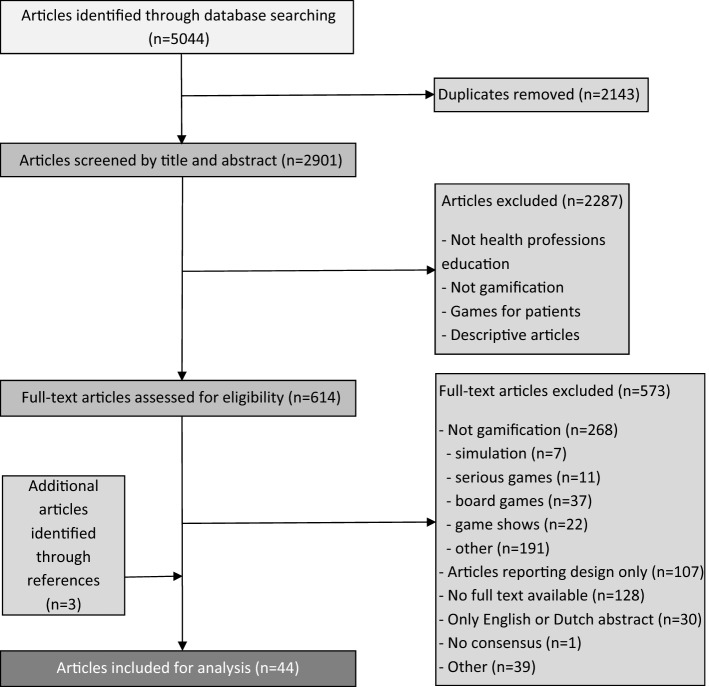
Gamification refers to using game attributes in a non-gaming context. Health professions educators increasingly turn to gamification to optimize students’ learning outcomes. However, little is known about the concept of gamification and its possible working mechanisms. This review focused on empirical evidence for the effectiveness of gamification approaches and theoretical rationales for applying the chosen game attributes. We systematically searched multiple databases, and included all empirical studies evaluating the use of game attributes in health professions education. Of 5044 articles initially identified, 44 met the inclusion criteria. Negative outcomes for using gamification were not reported. Almost all studies included assessment attributes (n = 40), mostly in combination with conflict/challenge attributes (n = 27). Eight studies revealed that this specific combination had increased the use of the learning material, sometimes leading to improved learning outcomes. A relatively small number of studies was performed to explain mechanisms underlying the use of game attributes (n = 7). Our findings suggest that it is possible to improve learning outcomes in health professions education by using gamification, especially when employing game attributes that improve learning behaviours and attitudes towards learning. However, most studies lacked well-defined control groups and did not apply and/or report theory to understand underlying processes. Future research should clarify mechanisms underlying gamified educational interventions and explore theories that could explain the effects of these interventions on learning outcomes, using well-defined control groups, in a longitudinal way. In doing so, we can build on existing theories and gain a practical and comprehensive understanding of how to select the right game elements for the right educational context and the right type of student.
Overview
CoChat Summary
TL;DR
This systematic review of 44 empirical studies found that gamification in health professions education was generally associated with positive or unchanged outcomes, with no negative outcomes reported. Assessment and conflict/challenge attributes were most common, but most studies were descriptive or lacked well-defined control groups and theory, limiting conclusions about mechanisms and effectiveness.
Key findings
- Of 5044 articles identified, 44 met inclusion criteria; no negative outcomes for gamification were reported. Almost all studies included assessment attributes (n = 40), often with conflict/challenge attributes (n = 27); this combination was linked to increased use of learning material in 8 studies and sometimes improved learning outcomes.
- Study quality varied: MERSQI scores ranged from 5 to 17 (mean 9.8, SD 3.1). Most studies were descriptive (n = 25; mean MERSQI 8.3, SD 2.3); 12 were justification studies and 7 were clarification studies. Only 8 well-controlled studies using assessment and conflict/challenge attributes were interpreted with more confidence.
- Contexts were predominantly USA (n = 20) or Canada (n = 8); digital gamified activities (n = 28) outnumbered analogue activities (n = 14). Most studies involved undergraduate (n = 15) and postgraduate medical students (n = 15), followed by nursing (n = 7).
- Theory use was limited: 7 clarification studies referenced theories including Experiential Learning Theory (3 studies), Reinforcement Learning Theory, Social Comparison Theory, Self-Directed Learning, and Deliberate Practice Theory; a common assumption was that gamification improves outcomes by changing learning behaviours or attitudes.
Methods
- Systematic review following AMEE guidelines; searched eight databases (Academic Search Premier, CINAHL, EMBASE, ERIC, Psychology and Behavior Sciences Collection, PsychINFO, PubMed, Cochrane Library) in April 2018, plus hand-searching references and citations.
- Included peer-reviewed journal articles on gamification or game elements in education for (future) health professionals, quantitative or mixed-method; excluded development-only studies, qualitative-only studies, serious games, patient education, simulations except gamified simulations, game-show/board-game contexts, and non-Dutch/English articles.
- Data extraction covered context, participants, intervention, outcomes, quality, and theory; quality was assessed with MERSQI, and studies were classified as description, justification, or clarification using Cook et al.’s framework. Double screening of a 10% excluded sample yielded 94% agreement.
Limitations
- Stated: the search may have missed articles because broad keywords were excluded; lack of consensus on definitions of game, gamification, and serious games made inclusion/exclusion subjective; only one researcher screened full texts; MERSQI does not assess qualitative parts of mixed-methods studies; the conceptual framework may over-generalize and lose information; only English and Dutch articles were included, risking language/culture bias.
- Stated/evident: most included studies lacked well-defined control groups and/or theory (36 of 44 were descriptive, confounded justification/clarification, or clarification without control groups), and combinations of game elements prevented disentangling individual effects; publication bias may have overreported positive results.
- Evident: the review reports no negative outcomes, but this may reflect underreporting; small-scale and pilot studies dominate, and the authors note gamification can have unexpected or unwanted effects (e.g., competition shifting attention from learning, over-justification effect).
Model-written summary. Check it against the paper before relying on it.
Integrity signals
Registry
Cites
Statistics
Figures
Verification
Claims the paper makes
0 Valid · 0 Not valid · 10 Not checked · 55 Own results and interpretations
A result the paper reports from its own data — it cites no other source for it, so there is none to check. The quote shows it is in the paper.
In the paper
“most of the included studies were descriptive in nature and rarely explained what was meant by gamification and how it worked in health professions education.”
§ Gamification of health professions education: a systematic review > Conclusion
plain- Asserted: passes — The authors put it forward as true.
- Checkable: passes — It can be checked against evidence.
- Load-bearing: passes — The paper’s conclusions depend on it.
- Based: passes — The paper gives a reason why it holds.
A result the paper reports from its own data — it cites no other source for it, so there is none to check. The quote shows it is in the paper.
In the paper
“Of 5044 articles initially identified, 44 met the inclusion criteria.”
- Also stated in: § Results · plain
“A total of 44 studies were eligible for inclusion in our systematic review (Table 1).”
§ Gamification of health professions education: a systematic review > Abstract
plain- Asserted: passes — The authors put it forward as true.
- Checkable: passes — It can be checked against evidence.
- Load-bearing: passes — The paper’s conclusions depend on it.
- Based: passes — The paper gives a reason why it holds.
- Also stated in: § Results · plain
A result the paper reports from its own data — it cites no other source for it, so there is none to check. The quote shows it is in the paper.
In the paper
“A combination of conflict and challenge attributes was also more often chosen by researchers from Europe (6 out of 8 European studies) and the USA (17 out of 21 USA studies) than by researchers from Canada (3 out of 8 Canadian studies).”
§ Gamification of health professions education: a systematic review > Results > Contextual differences and effects of game attributes
plainstates an association- Asserted: passes — The authors put it forward as true.
- Checkable: passes — It can be checked against evidence.
- Load-bearing: unclear — It is unclear whether the paper’s conclusions depend on it.
- Based: passes — The paper gives a reason why it holds.
A result the paper reports from its own data — it cites no other source for it, so there is none to check. The quote shows it is in the paper.
In the paper
“Most of the included studies (n = 25; Table 1) were descriptive in nature in such sense that they focused on observation and described what was done, without using comparison groups.”
§ Gamification of health professions education: a systematic review > Results > Quality of the current gamified learning research
plainn = 25- Asserted: passes — The authors put it forward as true.
- Checkable: passes — It can be checked against evidence.
- Load-bearing: passes — The paper’s conclusions depend on it.
- Based: passes — The paper gives a reason why it holds.
A result the paper reports from its own data — it cites no other source for it, so there is none to check. The quote shows it is in the paper.
In the paper
“A relatively small number of studies was performed to explain mechanisms underlying the use of game attributes (n = 7).”
§ Gamification of health professions education: a systematic review > Abstract
plainn = 7- Asserted: passes — The authors put it forward as true.
- Checkable: passes — It can be checked against evidence.
- Load-bearing: passes — The paper’s conclusions depend on it.
- Based: passes — The paper gives a reason why it holds.
30 more claims
Create a free account to see all 65 claims and to verify the 13 references still open.
- It may state two separate claims as one. 16
- Probably not a substantial claim. 21
Claims other papers make about this one
Each is checked against this paper’s own text: does it say what the citing paper says it does?
The source backs part of the claim, not all of it — or backs it for a different population, condition or comparison.
In the citing paper
“The enthusiastic participation and complexity and riskiness of strategies that emerged are consistent with the engagement observed in other gamified public health exercises, such as outbreak response simulations and health systems role-plays (78, 79).”
From Global Health Trade Summit: an AI-enhanced simulation of international trade and global health for undergraduate public health education (2025) · cites this paper as [79]
Experimental — accuracy not yet measuredThe source backs part of the claim, not all of it — or backs it for a different population, condition or comparison.
In the citing paper
“This aligns with research in health professions education demonstrating that gamification can substantially enhance learning outcomes and student motivation (79, 80).”
From Global Health Trade Summit: an AI-enhanced simulation of international trade and global health for undergraduate public health education (2025) · cites this paper as [79]
Experimental — accuracy not yet measured
Self-check
Percentages, sums and reported differences re-computed from the paper’s own numbers.
Each contradiction between two passages listed here was confirmed by an independent check.
Rated minor: it would not touch a result — a value no result rests on, a p-value that stays on the same side of the significance level, or a conflict that is clerical, resolved elsewhere in the paper, or outside its own findings.
In the paper
§ Gamification of health professions education: a systematic review > Discussion > Empirical evidence for using gamification
“The remaining eight studied included in our study were well-controlled studies using assessment and conflict/challenge attributes, so these study results could be interpreted with more confidence.”
§ Gamification of health professions education: a systematic review > Results
“| | Petrucci et al. (2015) | Residents (n = 14) | Conflict/challenge | Competition, progress, social network | Surgery (simulator) | 11 | Digital | Increased use, no difference in outcome |”
Rated minor: it would not touch a result — a value no result rests on, a p-value that stays on the same side of the significance level, or a conflict that is clerical, resolved elsewhere in the paper, or outside its own findings.
In the paper
§ Gamification of health professions education: a systematic review > Results > Educational context and student characteristics
“The majority of the studies were conducted in the USA (n = 20) or Canada (n = 8).”
§ Gamification of health professions education: a systematic review > Results > Contextual differences and effects of game attributes
“the USA (17 out of 21 USA studies)”
Cited works that were retracted
Works this paper cites that were later retracted, from the retraction notices publishers deposit. Major when the notice came out before this paper was published.
Rated major: it would touch a result — a value a result rests on, reported and recomputed p-values on opposite sides of the significance level, two passages that conflict with no sign which is right, or a cited work retracted before this paper was published.
In the paper
“…1999; Bligh and Prideaux 2002; Cook et al. 2008), which we felt should also apply to research on game-based learning in general and gamification in particular (Caponetto et al. 2014; De Sousa Borges et al. 2014; Faiella and Ricciardi 2015; Gentry et al. 2016; McCoy et al. 2016; Nah et al. 2014).”
Cited work 10.1002/14651858.cd012209 · retracted 2018-06-22 · notice 10.1002/14651858.cd012209.pub2 · this paper published 2020-10-31
Citations
Cites
1 retracted
Serious Gaming and Gamification interventions for health professional education
Gentry, S. V., Ehrstrom, B. L., Gauthier, A., Álvarez, J., Wortley, D. J., van Rijswijk, J., Car, J., Lilienthal, A., Car, L. T., Nikolaou, C. K., et al. (2016) · Cochrane Database of Systematic Reviews · doi:10.1002/14651858.cd012209 · Cited by 28 · cited 2×
“…1999; Bligh and Prideaux 2002; Cook et al. 2008), which we felt should also apply to research on game-based learning in general and gamification in particular (Caponetto et al. 2014; De Sousa Borges et al. 2014; Faiella and Ricciardi 2015; Gentry et al. 2016; McCoy et al. 2016; Nah et al. 2014).”
BackgroundRetractedRayyan-a web and mobile app for systematic reviews.
Ouzzani, M., Hammady, H., Fedorowicz, Z., & Elmagarmid, A. (2016) · Systematic Reviews · doi:10.1186/s13643-016-0384-4 · Cited by 26,092 · cited 1×
“After retrieving the search results from different databases, AvG removed the duplicates and uploaded the remaining articles to Rayyan, a mobile and web-based application developed for systematic reviews (Ouzzani et al. 2016).”
MethodA theory of social comparison processes
Festinger, L. (1954) · Human Relations · doi:10.1177/001872675400700202 · Cited by 20,926 · cited 1×
“According to the Social Comparison Theory, social comparison is a fundamental mechanism for modifying judgment and behaviour through the inner drive individuals have to gain accurate self-evaluations (Corcoran et al. 2011; Festinger 1954).”
MethodThe role of deliberate practice in the acquisition of expert performance
Ericsson, K. A., Krampe, R. T., & Tesch-Römer, C. (1993) · Psychological Review · doi:10.1037/0033-295x.100.3.363 · Cited by 9,564 · cited 1×
“Deliberate Practice Theory is based on engaging already motivated students to become experts via well-defined goals, real world tasks and immediate and informative feedback (Butt et al. 2018; Ericsson et al. 1993).”
BackgroundDeci, E. L., Koestner, R., & Ryan, R. M. (1999) · Psychological Bulletin · doi:10.1037/0033-2909.125.6.627 · Cited by 7,176 · cited 1×
“This is also called the over-justification effect (Deci et al. 1999, 2001; Hanus and Fox 2015; Landers et al. 2015; Lepper et al. 1973).”
BackgroundHomo Ludens: A Study of the Play-Element in Culture.
Gillin, J. L., & Huizinga, J. (1951) · American Sociological Review · doi:10.2307/2087716 · Cited by 6,560
Rules of Play: Game Design Fundamentals
Salen, K., & Zimmerman, E. (2003) · Medical Entomology and Zoology · Cited by 5,438
Does Gamification Work? -- A Literature Review of Empirical Studies on Gamification
Hamari, J., Koivisto, J., & Sarsa, H. (2014) · 2014 47th Hawaii International Conference on System Sciences · doi:10.1109/hicss.2014.377 · Cited by 5,201 · cited 1×
“…technology (Blohm and Leimeister 2013; Burke 2014; Burkey et al. 2013; De Sousa Borges et al. 2014; Domínguez et al. 2013; Gaggioli 2016; Hamari et al. 2014; Hsu et al. 2013; Huotari and Hamari 2012, 2017; Kumar 2013; Muntean 2011; Perrotta et al. 2013; Robson et al. 2015; Simões et al.…”
BackgroundThe Modern Practice of Adult Education: From Pedagogy to Andragogy
Knowles, M. S. (1970) · Cited by 3,905
(2020) · Journal of Medical Education · doi:10.5812/jme · Cited by 3,490
Research works printed but not linked: 8
- Caponetto, I., Earp, J., & Ott, M. (2014). Gamification and education: A literature review. In Proceedings of the European Conference on Games-Based Learning.
- Chia P Using a virtual game to enhance simulation based learning in nursing education Singapore Nurs J [Internet]. 2013 40 3 21 6
- Deterding S Khaled R Nacke L Dixon D Gamification: Toward a definition Chi 2011 2011 12 15
- Huotari, K., & Hamari, J. (2012). Defining gamification—A service marketing perspective. In Proceedings of the 16th International Academic MindTrek Conference 2012: “Envisioning Future Media Environments”, MindTrek 2012.
- Jacobs, J. W., & Dempsey, J. V. (1993). Simulation and gaming: Fidelity, feedback, and motivation. In: Dempsey, J.V. and Sales G.C. (Eds.). Interactive instruction and feedback. Englewood Cliffs, New Jersey: Educational Technology Publications
- Nemer LB Kalin D Fiorentino D Garcia JJ Estes CM The labor games Obstet Gynecol. 2016 128 1s 5s 27662001 · DOI
- Tilley, N., & Pawson, R. (2000). Realistic evaluation: An overview. The British Journal of Sociology.
- Zuk R Get in the game: How communicators can leverage gamification Public Relations Tactics 2012 19 7
Cited by
Items 101–200 of 861
Oral-Hygiene-Related Mobile Apps in the French App Stores: Assessment of Functionality and Quality
Carrouel, F., Bourgeois, D. M., Clément, C., Tardivo, D., Martinon, P., Guiral, S., Lan, R., Viennot, S., Dussart, C., & Fraticelli, L. (2022) · International Journal of Environmental Research and Public Health · doi:10.3390/ijerph19127293 · Cited by 22
“, making education more playful through games, level systems, and apps for mobiles and tablets, is a sign, among other recent technological innovations, of the democratization of education and the development of new learning approaches [26].”
BackgroundGerber, A., & Fischetti, B. (2022) · Medical Science Educator · doi:10.1007/s40670-022-01641-7 · Cited by 21
Berger, S., Stalmeijer, R. E., Marty, A., & Berendonk, C. (2023) · Academic Medicine · doi:10.1097/acm.0000000000005188 · Cited by 22
Rosa-Castillo, A., García-Pañella, O., Novella, A. R., Maestre-González, E., Pulpón-Segura, A. M., Icart-Isern, T., & Solà‐Pola, M. (2023) · Nurse Education in Practice · doi:10.1016/j.nepr.2023.103656 · Cited by 21
Assessment and evaluation of a serious game for teaching factual knowledge in dental education
Lemos, M., Wolfart, S., & Rittich, A. B. (2023) · BMC Medical Education · doi:10.1186/s12909-023-04498-5 · Cited by 20
“This is one of the strongest variables affecting memory, leading to better learning outcomes and retention [38].”
BackgroundInfluentialÇakmak, B., & Kaymaz, T. T. (2024) · BMC Nursing · doi:10.1186/s12912-024-02586-5 · Cited by 20
Pagels, L., Schindler, O., & Luedtke, K. (2025) · BMC Medical Education · doi:10.1186/s12909-025-06750-6 · Cited by 20
“The application of gamification (as described before: online quizzes, immersive videos, escape rooms) proves to be extremely effective in enhancing student satisfaction in other health professions as well [90].”
Johansen, F., Toft, H., Stalheim, O. R., & Løvsletten, M. (2025) · Advances in Simulation · doi:10.1186/s41077-025-00337-3 · Cited by 20
“This feedback raises an important distinction between literal realism — attempting to replicate clinical settings—and perceived realism achieved through intuitive and immersive design, as often seen in gamified environments [34].”
Akatsu, H., Shiima, Y., Gomi, H., Hegab, A. E., Kobayashi, G., Naka, T., & Ogino, M. (2022) · BMC Medical Education · doi:10.1186/s12909-022-03130-2 · Cited by 20
“in 2021, there was no study that focused on physical examination techniques and skills [13].”
BackgroundDakroub, A. H., Weinberger, J. J., & Levine, D. L. (2022) · Cureus · doi:10.7759/cureus.22822 · Cited by 20
Taramarcaz, V., Herren, T., Golay, É., Regard, S., Martin-Achard, S., Mach, F., Schnetzler, N., Ricci, G., Zamberg, I., Larribau, R., et al. (2022) · Journal of Medical Internet Research · doi:10.2196/38508 · Cited by 20
Using Gamification to Engage Clinical Nurses in Quality Improvement
Bonn, J., Mulkey, D. C., & Goers, J. (2022) · Journal for Nurses in Professional Development · doi:10.1097/nnd.0000000000000898 · Cited by 19
Enhancing, Targeting, and Improving Dental Trauma Education: Engaging Generations Y and Z
Berlin‐Broner, Y., & Levin, L. (2024) · Dental Traumatology · doi:10.1111/edt.13022 · Cited by 19
Schlögl, M., Roller‐Wirnsberger, R., Hernes, S. S., Perkisas, S., Bakken, M. S., Miot, S., Balcı, C., Dani, M., Pajulammi, H. M., Piaggi, P., et al. (2021) · Aging Clinical and Experimental Research · doi:10.1007/s40520-021-01933-9 · Cited by 19
Bawazeer, M. A., Aamir, S., Othman, F. M., & Alkahtani, R. (2023) · BMC Medical Education · doi:10.1186/s12909-023-04253-w · Cited by 19
Are Serious Games an Effective Teaching Tool in Anatomy Education? A Systematic Review
Habsi, T. A., Alibrahim, H., Alzaabi, A. A., Mogali, S. R., Wen, T. J., Joseph, M. A., Al‐Ajmi, E., & Sirasanagandla, S. R. (2025) · Applied Sciences · doi:10.3390/app15052474 · Cited by 18
Revolutionizing radiology education: exploring innovative teaching methods
Altun, İ., Turan, O., & Awan, O. A. R. (2025) · Abdominal Radiology · doi:10.1007/s00261-025-05010-x · Cited by 19
Gamified learning in dermatology and dermoscopy education: a paradigm shift
Donoso, F., Peirano, D., Longo, C., Apalla, Z., Lallas, A., Jaimes, N., & Navarrete‐Dechent, C. (2023) · Clinical and Experimental Dermatology · doi:10.1093/ced/llad177 · Cited by 19
Analysis Effectiveness of Implementation Assessment as Learning on Metacognitive Skills
Daniar, A. V., Herdyastuti, N., & Lutfi, A. (2023) · IJORER International Journal of Recent Educational Research · doi:10.46245/ijorer.v4i6.392 · Cited by 19
“Assessment is the process of collecting, interpreting, and using evidence to make decisions about student achievement in education (Brown, 2019; Hammerstein et al., 2021; Namoun & Alshanqiti, 2021; Puspita & Wrahatnolo, 2023; Schildkamp, 2019; Supena et al., 2021; van Gaalen et al., 2021).”
MethodDavid, L., & Weinstein, N. (2024) · European Journal of Education · doi:10.1111/ejed.12674 · Cited by 19
“Effort, as well, is a helpful way to assess current academic well-being in terms of students' current engagement in their education (Goodman et al., 2011 ), and reflects time and energy a student invests in learning (Van Brussel et al., 2020; Van Gaalen et al., 2021 ).”
Evidence-Based Crossword Puzzles for Health Professions Education: A Systematic Review
Arnold, M., Tan, S., Pakos, T., Stretton, B., Kovoor, J. G., Gupta, A. K., Thomas, J. S., & Bacchi, S. (2024) · Medical Science Educator · doi:10.1007/s40670-024-02085-x · Cited by 19
“While the relative merits of gamification in medical education have been reviewed previously [3], different gamification styles present unique learning advantages and educators may benefit from nuanced information pertaining to the specific formats and delivery.”
BackgroundA narrative literature review on new technologies for teaching anatomy
Bankar, M., Bankar, N. J., Gajbe, U., Singh, B. R., Shambharkar, S., Bahadure, S. D., Bandre, G. R., Bankar, S. N., & Shelke, Y. P. (2024) · International Journal of Academic Medicine · doi:10.4103/ijam.ijam_30_24 · Cited by 18
Dönmez, A. A., Çalık, A., Terzi, K., & Kapucu, S. (2024) · Education and Information Technologies · doi:10.1007/s10639-024-12885-8 · Cited by 18
“Several studies (Gallegos et al., 2017; García-Viola et al., 2019 ; Ivanović, 2024; Ramadhan et al., 2023; Rosa-Castillo et al., 2023; Tavares, 2022; van Gaalen et al., 2021) concluded that the use of gamification techniques in education had various positive effects such as supporting active…”
Fagundo-Rivera, J., Romero‐Castillo, R., Garrido-Bueno, M., & Fernández-León, P. (2024) · Education Sciences · doi:10.3390/educsci14101097 · Cited by 18
“In fact, the positive results found regarding the usefulness of the escape room for teaching in health professions [17] are in line with other studies in medicine [18,19], physiotherapy [20,21], pharmacy [22], occupational therapy [23], or psychology [24].”
The “Neurospeed” game: a fun tool to learn the neurological semiology
Zeidan, S., Baltaze, S., Garcin, B., Liège, A. D., Doridam, J., Josse, L., & Degos, B. (2022) · BMC Medical Education · doi:10.1186/s12909-022-03316-8 · Cited by 18
“Game-based learning is gaining interest [14, 15] as it is active, student-centered, and rewarding.”
BackgroundAdapting Dental Education for the Gen Z: An Overview of Active Learning Strategies
Piglionico, S. S., & Presti, A. C. L. (2025) · Journal of Dental Education · doi:10.1002/jdd.13997 · Cited by 17
Virtual reality cricothyrotomy - a case-control study on gamification in emergency education
Speck, I. K., Merk, A., Burkhardt, V., Flayyih, O., Huber, C. G., Widder, A., Everad, F., & Offergeld, C. (2024) · BMC Medical Education · doi:10.1186/s12909-024-05133-7 · Cited by 17
Martínez‐Galiano, J. M., González-Cabrera, M., Rodríguez‐Almagro, J., & Hernández‐Martínez, A. (2024) · Nursing Reports · doi:10.3390/nursrep14020052 · Cited by 17
“For example, different games such as puzzles, role-playing games, or crossword puzzles, among others, have been proven effective in the learning process [9] and students show interest in them.”
BackgroundImpacto de la gamificación en el aprendizaje de estudiantes universitarios
Cevallos, M. P. R., Segovia-Avendaño, M. E., & Tamayo, N. J. (2024) · RIDE Revista Iberoamericana para la Investigación y el Desarrollo Educativo · doi:10.23913/ride.v14i28.1902 · Cited by 17
Medina, J., Castillo-Martínez, A., Barchino, R., Estriégana, R., & Ramírez, R. R. (2024) · IEEE Access · doi:10.1109/access.2024.3441317 · Cited by 17
“Gamification has proven to be effective in a variety of areas, including education, health, marketing, and work [6], [7].”
BackgroundDiCesare, D., Scheveck, B., Adams, J., Tassone, M., Diaz-Cruz, V. I., Dillen, C. M. V., Ganti, L., Gue, S., & Walker, A. (2025) · International Journal of Emergency Medicine · doi:10.1186/s12245-024-00748-5 · Cited by 17
The Impact of Game-Based Interventions on Adult Cognition: A Systematic Review
Coelho, F., Gonçalves, D., & Abreu, A. M. (2025) · International Journal of Human–Computer Interaction · doi:10.1080/10447318.2025.2462746 · Cited by 14
“Many studies in this area have shortcomings, such as undefined CG and a lack of theoretical underpinnings to comprehend the underlying processes (van Gaalen et al., 2021).”
Gamification of POCUS: Are Students Learning?
Russell, F. M., Lobo, D., Herbert, A., Kaine, J. C., Pallansch, J., Soriano, P., Adame, J. D., & Ferre, R. M. (2023) · Western Journal of Emergency Medicine · doi:10.5811/westjem.2022.11.57730 · Cited by 17
Dederichs, M., Nitsch, F. J., & Apolinário-Hagen, J. (2022) · JMIR Medical Education · doi:10.2196/32017 · Cited by 16
“Moreover, gamification might improve the learning process in health education [48].”
BackgroundGame-based learning enhances students’ understanding of endocrine physiology in veterinary medicine
Afonso, M. V. R., Lopes, R. B., Andrade, E. F., & Pereira, L. J. (2024) · AJP Advances in Physiology Education · doi:10.1152/advan.00182.2023 · Cited by 16
Delage, C., Palayer, M., Lerouet, D., & Besson, V. C. (2024) · BMC Medical Education · doi:10.1186/s12909-024-05157-z · Cited by 16
“Van Gaalen and colleagues also found that the inclusion of competition often led to improved learning outcomes, such as increased knowl - edge retention, skill development, and positive changes in behaviour [6].”
BackgroundResultInfluentialHu, H., Lai, X., & Yan, L. (2024) · BMC Medical Education · doi:10.1186/s12909-024-05442-x · Cited by 16
Stathakarou, N., Kononowicz, A. A., Mattsson, E., & Karlgren, K. (2024) · JMIR Serious Games · doi:10.2196/63390 · Cited by 16
“The incorporation of these elements in education has shown promise in enhancing engagement, motivation, and improving learning outcomes, particularly when these elements promote learning behaviors and attitudes [6].”
BackgroundEdwards, S. L., Swamy, L., Cosimini, M. J., Watsjold, B. K., & Chan, T. M. (2023) · AEM Education and Training · doi:10.1002/aet2.10907 · Cited by 16
Karimian, Z., Momeni, M., & Zarifsanaiey, N. (2025) · BMC Medical Education · doi:10.1186/s12909-025-07523-x · Cited by 15
Andretta, V., Elia, R. A., Colangelo, M., Rubbi, I., Santoro, E., Boccia, G., Cascella, M., & Cerrone, V. (2025) · International Medical Education · doi:10.3390/ime5010005 · Cited by 16
Not Just Fun and Games: Game-Based Learning in Health Professions Education
Thesen, T., Bahner, I., Belovich, A. N., Bonaminio, G. A., Brenneman, A., Brooks, W. S., Chinn, C., El-Sawi, N. I., Habal, S., Haight, M. A., et al. (2023) · Medical Science Educator · doi:10.1007/s40670-023-01859-z · Cited by 15
Gamification in physiotherapy and rehabilitation education: a narrative review
Dereli, M., & Kahraman, T. (2024) · Bulletin of Faculty of Physical Therapy · doi:10.1186/s43161-023-00168-1 · Cited by 15
“Since the main goal of this approach is to provide education for students, game components are used to enhance learning rather than creating games [27].”
BackgroundResultInfluentialJørgensen, T., Rosenkrantz, O., Eberhard, K. E., Jensen, T. W., & Dieckmann, P. (2024) · BMC Medical Education · doi:10.1186/s12909-024-05295-4 · Cited by 15
Gamification to foster student engagement: a mixed methods study in higher education
Gaggioli, C., Gabbi, E., & Ranieri, M. (2024) · Qwerty · doi:10.30557/qw000076 · Cited by 15
“Khalil et al. (2018) and Majuri et al. (2018) reported that badges, leaderboards, progress, and challenges were the most commonly gamification affordances, and van Gaalen et al. (2021) showed that ‘assessment’ and/or ‘conflict/challenge’ were frequently embedded in the learning environment.”
Por, F. P., Ong, C. S. B., Ng, S. K., & Eak, A. D. (2024) · Interactive Technology and Smart Education · doi:10.1108/itse-11-2023-0226 · Cited by 15
Kim, K., Choi, D., Shim, H., & Lee, C. A. (2024) · Nurse Education Today · doi:10.1016/j.nedt.2024.106263 · Cited by 15
Jabade, M., & Nadaf, H. K. (2024) · Journal of Education and Health Promotion · doi:10.4103/jehp.jehp_321_24 · Cited by 15
Shadan, M., Ismail, H., & Naushad, F. H. M. (2025) · BMC Medical Education · doi:10.1186/s12909-024-06602-9 · Cited by 15
O’Connor, A., Tai, A., Brinn, M. P., Hoang, A. N. T. H., Cataldi, D., & Carson‐Chahhoud, K. (2022) · JMIR Pediatrics and Parenting · doi:10.2196/40231 · Cited by 15
“Recently, multiple publications and systematic reviews have provided evidence of the potential of gamification to improve learning outcomes and promote positive behavioral change in various health care or educational settings [57-63].”
BackgroundSepsis and Clinical Simulation: What Is New? (and Old)
Cuesta-Montero, P., Navarro-Martínez, J., Yedro, M., & Galiana-Ivars, M. (2023) · Journal of Personalized Medicine · doi:10.3390/jpm13101475 · Cited by 16
“These strategies are better accepted by professionals, especially younger ones, and show higher knowledge retention [45].”
BackgroundAn Escape Room to Teach First- and Second-Year Medical Students Nephrology
Hu, J. C., Sonnleitner, M. L., Weldon, E. J., Kejriwal, S., Brown, B., & Shah, A. H. (2023) · Medical Science Educator · doi:10.1007/s40670-023-01917-6 · Cited by 15
“Game-based learning (GBL) has gained traction in academia and may be an innovative way to address different medical education subjects, effectively delivering study objectives through tactile, physical, and analog activities [5].”
dos Santos, T. T., Ríos, M. P., de Medeiros, G. C. B. S., Mata, Á. N. D. S., Silva, D. D. N., Martínez, D. G., & Piuvezam, G. (2023) · PLoS ONE · doi:10.1371/journal.pone.0294894 · Cited by 15
Krause, F., Horn, B., Braun, A., Fedrowitz, S., Bell, L., & Lemos, M. (2024) · BMC Medical Education · doi:10.1186/s12909-024-05884-3 · Cited by 14
“Games ultimately should reward players for their game progress [54, 55].”
Gamification solutions for persons with disabilities: a systematic literature review
Boubakri, M., & Nafil, K. (2024) · Universal Access in the Information Society · doi:10.1007/s10209-024-01170-7 · Cited by 14
“Gamification has also been used to improve access to healthcare for persons with disabilities [31].”
Fostering Competencies: A Scoping Review of Escape Rooms in Medical Education
Park, G. L., Hegazy, S. A., Sepe, J., Swigart, J. P., Burnette, P., Beltran, J., & Hernandez, C. (2025) · Medical Science Educator · doi:10.1007/s40670-024-02270-y · Cited by 15
“Gamification, an active learning educational strategy, purposely uses game elements to engage learners and increase motivation [9, 10].”
Aloum, L., Ibrahim, H., Rajasekaran, S. K., & Alefishat, E. A. (2025) · JMIR Medical Education · doi:10.2196/73666 · Cited by 14
Pramesti, S. D., Putri, A. A., & Ekasari, L. A. (2025) · Elementary School Jurnal Pendidikan dan Pembelajaran ke-SD-an · doi:10.31316/esjurnal.v12i2.4553 · Cited by 15
Using Zoom and Card Game to Conduct Advance Care Planning Classes: An Innovative Practice
Phenwan, T., Peerawong, T., Jarusomboon, W., Sittiwantana, E., Satian, C., & Supanichwatana, S. (2021) · OMEGA - Journal of Death and Dying · doi:10.1177/00302228211032735 · Cited by 14
Percepción de la implementación de la app Quizizz en un curso virtual de microbiología
Dextre-Vílchez, S. A., & Vásquez-Mercado, R. P. (2021) · Investigación en Educación Médica · doi:10.22201/fm.20075057e.2022.41.21376 · Cited by 15
A mobile game for enhancing Tourism and Cultural Heritage
Rallis, I., Kopsiaftis, G., Kalisperakis, I., Stentoumis, C., Koutsomitsos, D., & Riga, V. (2022) · Procedia Computer Science · doi:10.1016/j.procs.2022.08.062 · Cited by 14
Virtual Reality Simulation for Suicide Risk Assessment Training: Prevalence of Adverse Effects
Bahadur, A. G., Hargreaves, F., Antinucci, R., Sockalingam, S., & Abdool, P. S. (2023) · Academic Psychiatry · doi:10.1007/s40596-023-01799-1 · Cited by 14
Game-based learning in pharmacy education: A systematic review and narrative synthesis
Kanaan, S., Dabbous, M., Akel, M., Lteif, R., Rahal, M. K., & Sakr, F. (2023) · Pharmacy Education · doi:10.46542/pe.2023.231.629639 · Cited by 13
Little Patients, Big Tasks - A Pediatric Emergency Medicine Escape Room
Pelletier, J. (2023) · PubMed Central · doi:10.21980/j89w70 · Cited by 13
Bouriami, A., Boussaa, S., & Adib, A. R. E. (2024) · Simulation & Gaming · doi:10.1177/10468781241301103 · Cited by 13
Levett-Jones, T. L., Moroney, T. L., Bonnamy, J., Cornish, J., Moll, E. C., Foster, A., Lapkin, S., Pich, J., Richards, C., Tutticci, N. F., et al. (2025) · Nurse Education Today · doi:10.1016/j.nedt.2025.106753 · Cited by 13
Jiang, Y., Sun, M., Nuerdawulieti, B., Huang, X., Hou, Y., Nan, J., Cui, S., & Nan, X. (2025) · Frontiers in Medicine · doi:10.3389/fmed.2025.1576256 · Cited by 15
Virtual reality simulation training for health professions trainees in gastrointestinal endoscopy
Sabrie, N., Khan, R., Plahouras, J., Johnston, B. C., Scaffidi, M. A., Grover, S. C., & Walsh, C. M. (2025) · Cochrane Database of Systematic Reviews · doi:10.1002/14651858.cd008237.pub4 · Cited by 13
Binh, A. D. T., Hoang, T.-H., & Quang, H. T. (2024) · Evaluation Review · doi:10.1177/0193841x241291752 · Cited by 14
“…and gami fi ed activities, may be similarly appealing to all students, irrespective of their age or level of study; or a review study conducted by van Gaalen et al. (2020) concluded no clear evidence that the impact of gami fi cation activities relied on contextual variables (e.g. undergraduate…”
Sannathimmappa, M. B., Nambiar, V., & Aravindakshan, R. (2024) · Journal of Education and Health Promotion · doi:10.4103/jehp.jehp_2074_23 · Cited by 12
“[3,4] .”
BackgroundAcar, M. D., Güner, Ü. Ç., & Vural, B. (2022) · Celal Bayar Üniversitesi Sağlık Bilimleri Enstitüsü Dergisi · doi:10.34087/cbusbed.1052241 · Cited by 12
Toward responsive attunement as health professionals
Dall’Alba, G. (2023) · Studies in Continuing Education · doi:10.1080/0158037x.2023.2193388 · Cited by 12
“…and Shamim 2021), entrustable professional activities (Shorey, Lau, Lau and Ang 2019), ‘students as partners’ (Barradell and Bell 2021), gamification (van Gaalen et al. 2021), visual thinking strategies (Aspden, Wearn and Petersen 2020) and exposure to historical accounts (J. Kelly et al. 2017).”
Saikia, S., Gul, S., & Verma, M. K. (2023) · Global Knowledge, Memory and Communication · doi:10.1108/gkmc-04-2023-0114 · Cited by 12
Molina‐Rodríguez, A., Suárez-Cortés, M., Leal‐Costa, C., Ruzafa‐Martínez, M., Agea, J. L. D., Ramos‐Morcillo, A. J., & Jiménez‐Ruiz, I. (2023) · BMC Nursing · doi:10.1186/s12912-023-01499-z · Cited by 12
“Multimedia elements have provided advantages through the gamification of the classroom and active learning, as shown by a recent systematic review that described how gamification improved the acquisition of knowledge and the attitude towards learning [13].”
BackgroundGames in education: a systematic review of studies in international and Iranian contexts
Bakhtiari, R., Seraji, F., Farrokhnia, M., Habibzadeh, Z., & Noroozi, O. (2024) · Educational Technology Research and Development · doi:10.1007/s11423-024-10426-1 · Cited by 12
“Additionally, underpinning their choice with a widely-accepted theoretical framework, such as the taxonomy of game attributes for learning (Bedwell et al., 2012), can increase the generalizability of their findings (van Gaalen et al., 2021).”
A Literature Review: Which, How and What for the Use of Artificial Intelligence in Gamification
Gao, L. (2024) · European Conference on Games Based Learning · doi:10.34190/ecgbl.18.1.2627 · Cited by 12
“Additionally, common gamification tools, such as points, badges, leaderboards, and timed performance, are utilized to enhance user engagement and achievement recognition (Buckley et al., 2018; van Gaalen et al., 2021).”
BackgroundEvaluation of the effectiveness of a digital escape room for learning veterinary anatomy
Montel, C., Cartiaux, B., & Mogicato, G. (2025) · Anatomical Sciences Education · doi:10.1002/ase.2543 · Cited by 12
Harring, A. K. V., Røislien, J., Larsen, K., Guterud, M., Bugge, H. F., Sandset, E. C., Kristensen, D. V., & Hov, M. R. (2023) · Advances in Simulation · doi:10.1186/s41077-023-00245-4 · Cited by 11
Gamification and Novelty Effect in Distance Learning During the Covid-19 Pandemic
Kratochvíl, T., Vaculík, M., & Macák, M. (2022) · Frontiers in Education · doi:10.3389/feduc.2023.1051227 · Cited by 12
Flornoy-Guédon, A., Fonzo‐Christe, C., Meier, E., Gazengel-Marchand, M., Francois, O., Gschwind, L., & Bonnabry, P. (2023) · European Journal of Hospital Pharmacy · doi:10.1136/ejhpharm-2022-003679 · Cited by 12
“11 We used self-perceived competence to obtain more information about self-confidence and detect erroneous beliefs.”
MethodSystematic Review on Educational Data Mining in Educational Gamification
Bošnjaković, N., & Babić, I. Đ. (2023) · Technology Knowledge and Learning · doi:10.1007/s10758-023-09686-2 · Cited by 11
“…al., 2021 ), improves academic achievement (Kalogiannakis et al., 2021 ; Manzano-León et al., 2021 ), impacts behavior change (Kim & Castelli, 2021 ; Van Gaalen et al., 2021 ), provides students with immediate feedback, and promotes collaborative skills (Barna & Fodor, 2018 ; Hursen & Bas, 2019 ).”
Virtual Reality–based Methods for Training Novice Electrophysiology Trainees—A Pilot Study
Gorbaty, B., Arango, S., Buyck, D., James, R. C., Porter, S. T., Iaizzo, P. A., Perry, T. E., & Seslar, S. P. (2023) · Journal of Innovations in Cardiac Rhythm Management · doi:10.19102/icrm.2023.14091 · Cited by 11
Serious game for radiotherapy training
Kayed, J. E., Akl, T., Massoud, C., Margossian, C., Fayad, H. J., Fares, G., Felefly, T., & Rihana, S. A. (2024) · BMC Medical Education · doi:10.1186/s12909-024-05430-1 · Cited by 11
“Integrating the radiotherapy procedure within a game can be challenging; this is due to trying to transform a critical procedure into a set of interactive game elements with the use of different software [16].”
MethodGamification and Serious Games in Orthopedic Education: A Systematic Review
Tung, W. S., Baker, R. J., Toy, K., Eftekhari, M., Casey, G., Jahani, R., Bono, C. M., Harteveld, C., Bejarano‐Pineda, L., & Ashkani‐Esfahani, S. (2024) · Cureus · doi:10.7759/cureus.68234 · Cited by 11
“This pedagogical approach can potentially emulate clinical scenarios where physicians think critically to help their patients [7-9 , Extant studies have shown that games played on a variety of platforms such as consoles, smartphones, and virtual reality systems have been successful in reducing…”
BackgroundCano, S. T., Serrano, P. G. C., Valdivia, S. C. M., & Chávez-Fernandez, F. A. (2025) · Educación Médica · doi:10.1016/j.edumed.2024.101018 · Cited by 11
A Quality Improvement Initiative to Improve Patient Safety Event Reporting by Residents
Herchline, D., Rojas, C. R., Shah, A. A., Fairchild, V., Mehta, S. D., & Hart, J. K. (2022) · Pediatric Quality and Safety · doi:10.1097/pq9.0000000000000519 · Cited by 11
Roncal‐Belzunce, V., Gutiérrez‐Valencia, M., Echeverría-Beistegui, I., & Martínez‐Velilla, N. (2024) · International Journal of Medical Informatics · doi:10.1016/j.ijmedinf.2024.105535 · Cited by 10
Transforming Healthcare Training: Personalized and Gamified First Aid Education
Farooq, F., Ishaq, K., Alvi, A., Rosdi, F., & Nawaz, N. A. H. (2025) · Human Behavior and Emerging Technologies · doi:10.1155/hbe2/8256881 · Cited by 10
Flinton, D., Khine, R., Mannion, L., O’Sullivan, C., & Cherry, P. (2023) · Journal of Radiotherapy in Practice · doi:10.1017/s1460396923000262 · Cited by 10
Fitrianingtyas, I., Suryandari, K. C., & Tatminingsih, S. (2023) · DWIJA CENDEKIA Jurnal Riset Pedagogik · doi:10.20961/jdc.v7i1.73548 · Cited by 10
Gamification in medical education: A new approach
Pawar, V. V., & Pawar, D. (2024) · Oral Oncology Reports · doi:10.1016/j.oor.2024.100209 · Cited by 10
Romero‐Alemán, M. (2024) · Anatomical Sciences Education · doi:10.1002/ase.2406 · Cited by 10
“11,12 The prevalence of a digital native student body at the university may have contrib - uted to these outcomes.”
BackgroundWettergreen, S. A., Scott, C., Auten, M., Kiles, T. M., Litten, K. P., Scott, D., & Stewart, M. P. (2024) · Currents in Pharmacy Teaching and Learning · doi:10.1016/j.cptl.2024.03.010 · Cited by 10
Skinner, G. C., Chen, T., Jentis, G., Liu, Y., McCulloh, C. J., Harzman, A. E., Huang, E. S., Kalady, M. F., & Kim, P. C. W. (2024) · npj Digital Medicine · doi:10.1038/s41746-024-01095-8 · Cited by 10
Challenges of Implementing Gamification in Medical Education: A Scoping Review
Tabassum, A. (2024) · Journal of Bahria University Medical and Dental College · doi:10.51985/jbumdc2023260 · Cited by 10
Lee, C.-Y., Lee, C., Lai, H.-Y., Chen, P.-J., Chen, M., & Yau, S.-Y. (2024) · BMJ Open · doi:10.1136/bmjopen-2024-086262 · Cited by 11
Burkhardt, V., Valette, M., Speck, I. K., Flayyih, O., Huber, C., Widder, A., Wunderlich, R., Everad, F., Offergeld, C., & Albrecht, T. (2025) · BMC Medical Education · doi:10.1186/s12909-025-06816-5 · Cited by 10
“This concept should not be confused with offering a game for training; VR simulation rather uses gamification elements to improve learning and uses strategies of the gaming industry to maintain participants’ engagement and motivation [8].”
Teaching children and adolescents basic life support using gamification
Fijačko, N., Creber, R. M., Gosak, L., Štiglic, G., Skok, P., & Greif, R. (2021) · Resuscitation · doi:10.1016/j.resuscitation.2021.10.010 · Cited by 10
A Behavioral Strategy to Nudge Young Adults to Adopt In-Person Counseling: Gamification
Piao, S., & Joo, J. (2022) · Behavioral Sciences · doi:10.3390/bs12020040 · Cited by 10
“In particular, van Gaalen pointed out that prior research on gamification highlighted assessment and conflict/challenge extensively [30].”
BackgroundInfluentialPérez, A. L., Mohamad, J. R. J., & Rodríguez, D. D. L. C. S. (2021) · Servicio de Publicaciones y Difusión Científica de la Universidad de Las Palmas de Gran Canaria eBooks · doi:10.20420/1663.2021.462 · Cited by 10
Metadata
- Authors
- van Gaalen, A. E. J., Brouwer, J., Schönrock-Adema, J., Bouwkamp-Timmer, T., Jaarsma, A. D. C., & Georgiadis, J. R.
- Affiliations
- University of Groningen (NL)
- University Medical Center Groningen (NL)
- Venue
- Advances in Health Sciences Education
- Published
- 2020-10-31
- Volume
- 26
- Issue
- 2
- Pages
- 683-711
- ISSN
- 1382-4996 (ISSN-L)
- 1573-1677
- PMC
- PMC8041684
- OpenAlex
- W3094919143
- Cited by
- 625
- References
- 149
- Citations by year
- 2026: 108 · 2025: 126 · 2024: 160 · 2023: 121 · 2022: 80 · 2021: 29
- FWCI
- 12.14
- Type
- journal article
- Language
- en
- Open access
- hybrid
- doi.org
- Licence
- cc-by
- creativecommons.org/licenses/by/4.0 (tdm)
- creativecommons.org/licenses/by/4.0 (vor)
- Locations
- Advances in Health Sciences Education (publishedVersion, cc-by)
- PubMed Central (publishedVersion, cc-by)
- PubMed (publishedVersion)
- University of Groningen research database (University of Groningen / Centre for Information Technology) (publishedVersion, cc-by)
- Utrecht University Repository (Utrecht University) (submittedVersion, other-oa)
- University of Groningen research database (University of Groningen / Centre for Information Technology) (submittedVersion, cc-by)
- Funders
- University of Groningen
- Topics
- Social Sciences › Psychology › Developmental and Educational Psychology › Educational Games and Gamification
- Social Sciences › Education › Innovations in Medical Education
- Physical Sciences › Engineering › Biomedical Engineering › Biomedical and Engineering Education
- Keywords
- gamification, health professions education, game attributes, learning outcomes, learning behavior, learning attitude, educational intervention
- MeSH terms
- Health Occupations, Humans, Learning, Students
About these checks
Registry, retraction, Cites and statistics results are computed, not judged, with one exception: a printed reference that no index lists is read once by a model before it counts as a citation error. Claims are extracted by a model and kept only when their quote appears verbatim in the text; each cited source is then checked, with a model’s help, for whether it says what the claim relies on. Those verdicts can be wrong — read the claim’s quote and the cited source before relying on one.
A language model drew the claims from the paper on 2026-11-23, under version 3 of the claim definition (model deepseek-v4.1-flash, prompt extract-v3).
A second model labelled each claim on 2026-11-23 (model jev-1.13-20260917, definition revision gold-guideline-v0.2).
Statistics and arithmetic are recomputed, not judged.
Confidence bands are shown only for fields calibrated on our annotated test set. None is calibrated yet, so no band is shown.
What counts as a claim ›How we measure confidence ›How we check this ›
Are you an author, or do you see a problem with this page? Request a review
Data sources
Bibliographic data: Semantic Scholar, OpenAlex, Crossref.
Contains information from the Semantic Scholar Academic Graph Datasets, made available under the ODC Attribution License (ODC-BY 1.0).
Semantic Scholar’s data is described in: Kinney, R., et al. (2023). The Semantic Scholar Open Data Platform. arXiv:2301.10140.
