

Genetics of Wellbeing and Its Components Satisfaction with Life, Happiness, and Quality of Life: A Review and Meta-analysis of Heritability Studies
Open accessThe DOI matches its Crossref record; 86 of the 94 references it cites were found in a registry or an index; 10 of the 29 sources its claims cite were checked for support.
Abstract
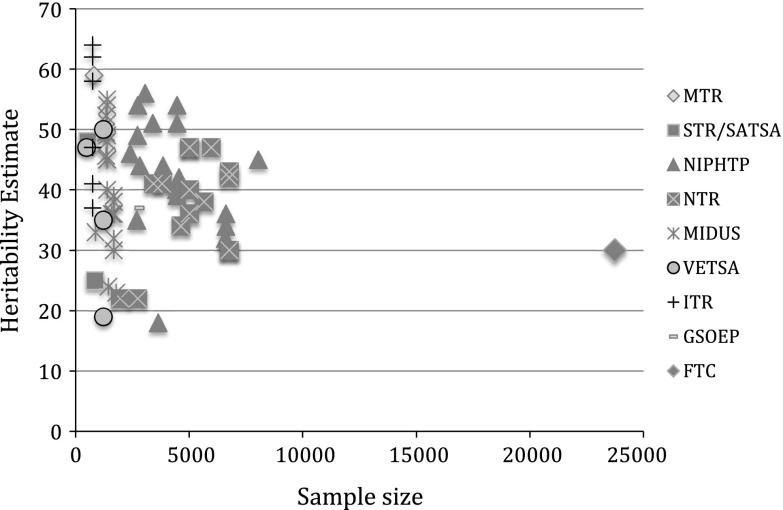
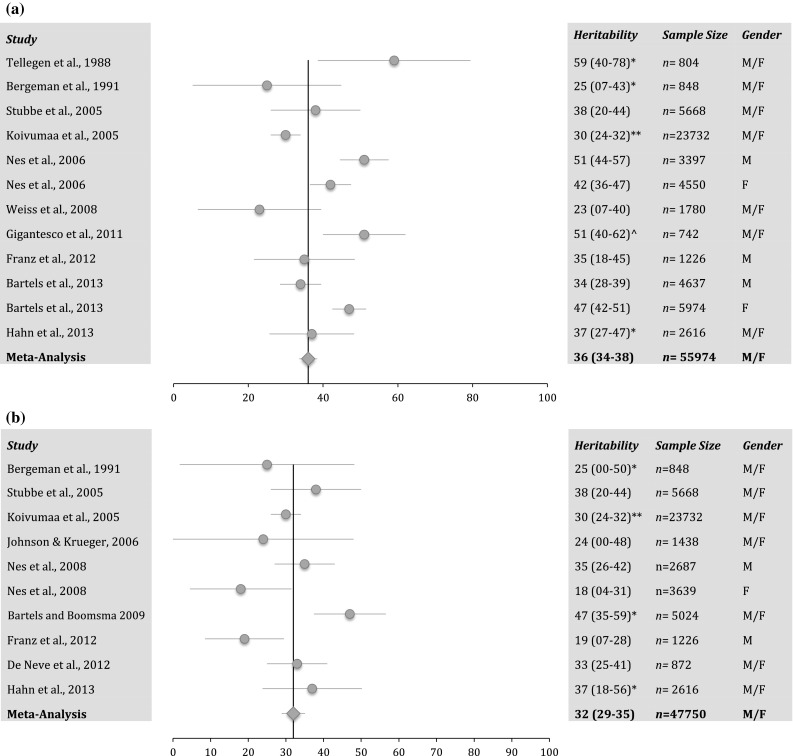
Wellbeing is a major topic of research across several disciplines, reflecting the increasing recognition of its strong value across major domains in life. Previous twin-family studies have revealed that individual differences in wellbeing are accounted for by both genetic as well as environmental factors. A systematic literature search identified 30 twin-family studies on wellbeing or a related measure such as satisfaction with life or happiness. Review of these studies showed considerable variation in heritability estimates (ranging from 0 to 64 %), which makes it difficult to draw firm conclusions regarding the genetic influences on wellbeing. For overall wellbeing twelve heritability estimates, from 10 independent studies, were meta-analyzed by computing a sample size weighted average heritability. Ten heritability estimates, derived from 9 independent samples, were used for the meta-analysis of satisfaction with life. The weighted average heritability of wellbeing, based on a sample size of 55,974 individuals, was 36 % (34-38), while the weighted average heritability for satisfaction with life was 32 % (29-35) (n = 47,750). With this result a more robust estimate of the relative influence of genetic effects on wellbeing is provided.
Overview
CoChat Summary
## TL;DR
This review and meta-analysis synthesizes twin-family studies of wellbeing and related constructs, finding heritability estimates that range widely across studies. Using 12 wellbeing estimates from 10 studies and 10 satisfaction-with-life estimates from 9 samples, the paper reports weighted average heritability of 36% for wellbeing and 32% for satisfaction with life.
## Key findings
- A systematic search identified 30 twin-family studies on wellbeing or related measures such as satisfaction with life or happiness.
- Across the reviewed studies, heritability estimates ranged from 0% to 64%; by construct, the ranges were 17–56% for overall wellbeing, 0–60% for satisfaction with life, 22–41% for happiness, and 22–42% for quality of life.
- The meta-analysis used 12 heritability estimates from 10 studies for wellbeing (n = 55,974) and 10 heritability estimates from 9 independent samples for satisfaction with life (n = 47,750).
- The weighted average heritability was 36% (34–38) for wellbeing and 32% (29–35) for satisfaction with life; the paper summarizes this as genetic factors explaining about 35% of variance.
- For wellbeing, the meta-analytic point estimate fell within the confidence intervals of 6 of 12 studies (50%); for satisfaction with life, it fell within 7 of 10 confidence intervals (70%).
## Methods
- The paper conducted a systematic literature search in PubMed and ISI Web of Knowledge using keywords related to wellbeing, happiness, satisfaction with life, twin/twins, heritability, and genes; it excluded animal studies and foreign-language papers.
- The review included 24 papers plus 6 additional publications identified from references and author checks, and incorporated an additional Finnish dataset, yielding 30 relevant papers and one extra dataset.
- For the meta-analyses, the author computed sample-size-weighted average heritability from independent twin-family studies, with separate meta-analyses for wellbeing and satisfaction with life; confidence intervals were estimated when missing.
- The analysis used broad heritability estimates (additive + non-additive) and treated sex-specific estimates as independent when reported.
## Limitations
- The paper states that wellbeing is conceptually and measurement-wise heterogeneous, and that the wide variety of questionnaires, scales, subscales, and items makes the meta-analysis vulnerable to heterogeneity.
- It also notes that some studies used sex-specific estimates, but the meta-analyses combined male and female data, so it remains unclear whether sex/gender matters for the genetic architecture; no study systematically tested qualitative sex differences.
- The review says that because several cohorts contributed multiple papers, only a subset could be included in the meta-analyses for independence, so some relevant work from MIDUS, the Netherlands Twin Register, and the Norwegian Institute of Public Health Twin Panel was excluded.
- The paper states that all included studies were based on western European and North American population-based samples, limiting generalizability to other populations.
- Evident from the text: the meta-analyses are cross-sectional, include only two measurement occasions in the longitudinal studies discussed, and rely largely on twin-family designs, so causal and developmental conclusions are limited.
Model-written summary. Check it against the paper before relying on it.
Integrity signals
Registry
Cites
Statistics
Figures
Verification
Claims the paper makes
9 Valid · 0 Not valid · 11 Not checked · 30 Own results and interpretations
The sources with a verdict support this claim; the rest weren’t checked yet, have no full text we could read, or their verdicts aren’t rated yet.
In the paper
“Only Johnson and Krueger (2006), Nes et al. (2010b), and van der Aa et al. (2010a), tested whether the heritability estimates were significantly moderated by level of financial resources and perceived control, marital status, or parental divorce, respectively.”
§ Genetics of Wellbeing and Its Components Satisfaction with Life, Happiness, and Quality of Life: A Review and Meta-analysis of Heritability Studies > Discussion > Considerations and limitations
What the sources say
- Not checked — no full text of the sourcecites Johnson and Krueger 2006 matched to “How money buys happiness: Genetic and environmental processes linking finances and life satisfaction.” (2006) source
- Supportedcites Nes et al. 2010b matched to “Mates and Marriage Matter: Genetic and Environmental Influences on Subjective Wellbeing Across Marital Status” (2010) source
The Statistical Analyses section says the authors tested whether marital status modifies genetic influences on subjective wellbeing. The Males and Females results compare genetic models across marital status, supporting the attribution that Nes et al. tested this moderation. This source is not being cited for the other studies or the citing authors’ claim that these were the only studies to do so. Page numbers were not available for the decisive passages. (LLM, conf=0.92)
- Supportedcites van der Aa et al. 2010a matched to “Moderation of Genetic Factors by Parental Divorce in Adolescents' Evaluations of Family Functioning and Subjective Wellbeing” (2010) source
The Discussion states that the study tested whether genetic influences differed between adolescents from divorced and nondivorced families and found higher heritability for evaluations of general family functioning among those from divorced families. The Univariate Genetic Models section also reports tests for divorce-related differences in family cohesion, which were not significant. The citation supports the claim that parental divorce was tested as a moderator, not that it significantly moderated every estimate. (LLM, conf=0.93)
plain- Asserted: passes — The authors put it forward as true.
- Checkable: passes — It can be checked against evidence.
- Load-bearing: unclear — It is unclear whether the paper’s conclusions depend on it.
- Based: passes — The paper gives a reason why it holds.
The sources with a verdict support this claim; the rest weren’t checked yet, have no full text we could read, or their verdicts aren’t rated yet.
In the paper
“Two cohorts (the Norwegian Institute of Public Health Twin Panel and the Netherlands Twin Register), reported significant sex-differences in heritability in some of their studies (Bartels et al. 2010, 2013; Nes et al. 2006, 2008; Røysamb et al. 2003).”
§ Genetics of Wellbeing and Its Components Satisfaction with Life, Happiness, and Quality of Life: A Review and Meta-analysis of Heritability Studies > Results > Heritability estimates
What the sources say
- Supportedcites Bartels et al. 2010 matched to “Heritability and Genome-Wide Linkage Scan of Subjective Happiness” (2010) source
The Abstract identifies the study sample as coming from the Netherlands Twin Register. The Results report significant sex differences in the heritability of happiness (χ²₄ = 37.06, p = .00), supporting the Netherlands Twin Register part of the multi-citation sentence. (LLM, conf=0.94)
- Not checked — no full text of the sourcecites Nes et al. 2006 matched to “Subjective well-being: genetic and environmental contributions to stability and change” (2006) source
- Not checked — no full text of the sourcecites Røysamb et al. 2003 matched to “Happiness and Health: Environmental and Genetic Contributions to the Relationship Between Subjective Well-Being, Perceived Health, and Somatic Illness.” (2003) source
plainstates an association- Asserted: passes — The authors put it forward as true.
- Checkable: passes — It can be checked against evidence.
- Load-bearing: unclear — It is unclear whether the paper’s conclusions depend on it.
- Based: passes — The paper gives a reason why it holds.
- Supported
The sources with a verdict support this claim; the rest weren’t checked yet, have no full text we could read, or their verdicts aren’t rated yet.
In the paper
“Five studies, all extended twin designs, report significant non-additive genetic effects (Bartels and Boomsma 2009; Hahn et al. 2013; Nes et al. 2010a; Stubbe et al. 2005; Tellegen et al. 1988)”
§ Genetics of Wellbeing and Its Components Satisfaction with Life, Happiness, and Quality of Life: A Review and Meta-analysis of Heritability Studies > Results > Heritability estimates
What the sources say
- Supportedcites Bartels and Boomsma 2009 matched to “Born to be Happy? The Etiology of Subjective Well-Being” (2009) source
The Discussion describes this study as using a twin-sibling design and reports significant non-additive genetic influences for all four measures of subjective well-being. This supports the claim as applied to Bartels and Boomsma (2009); the citation does not need to establish the findings of the other four listed studies. (LLM, conf=0.94)
- Not checked — no full text of the sourcecites Hahn et al. 2013 matched to “Beyond the heritability of life satisfaction – The roles of personality and twin-specific influences” (2013) source
- Not checked — no full text of the sourcecites Nes et al. 2010a matched to “Family Matters: Happiness in Nuclear Families and Twins” (2010) source
plain- Asserted: passes — The authors put it forward as true.
- Checkable: passes — It can be checked against evidence.
- Load-bearing: unclear — It is unclear whether the paper’s conclusions depend on it.
- Based: passes — The paper gives a reason why it holds.
- Supported
Every source the paper cites for this claim was checked and supports it.
In the paper
“In addition a small, probably underpowered, genome-wide linkage study indicated genomic regions of interest on chromosome 1 and 19 (Bartels et al. 2010).”
§ Genetics of Wellbeing and Its Components Satisfaction with Life, Happiness, and Quality of Life: A Review and Meta-analysis of Heritability Studies > Discussion > Molecular genetic studies
What the sources say
- Supportedcites Bartels et al. 2010 matched to “Heritability and Genome-Wide Linkage Scan of Subjective Happiness” (2010) source
The Discussion (page not specified in the supplied passages) calls the linkage sample relatively small and reports suggestive linkage on chromosomes 1 and 19. The Results (page not specified) show that neither peak reached the study’s significance threshold, consistent with the citing sentence’s cautious description of the study as probably underpowered. (LLM, conf=0.92)
hedgedstates an association- Asserted: passes — The authors put it forward as true.
- Checkable: passes — It can be checked against evidence.
- Load-bearing: unclear — It is unclear whether the paper’s conclusions depend on it.
- Based: passes — The paper gives a reason why it holds.
- Supported
Every source the paper cites for this claim was checked and supports it.
In the paper
“One study reported an association of satisfaction with life and the VNTR polymorphism on the serotonin transporter gene (5-HTTLPR), with greater satisfaction with life for the individuals with the longer variant (De Neve 2011), but follow-up work on an augmented sample from the same data did not replicate the finding (De Neve et al. 2012).”
§ Genetics of Wellbeing and Its Components Satisfaction with Life, Happiness, and Quality of Life: A Review and Meta-analysis of Heritability Studies > Discussion > Molecular genetic studies
What the sources say
- Supportedcites De Neve et al. 2012 matched to “Genes, economics, and happiness.” (2012) source
Section 3.5.2 reports tests in newly available Add Health data and the larger combined sample. It says no model specification reached statistical significance, so the original significant association was not replicated in the augmented Add Health data. (LLM, conf=0.93)
plain- Asserted: passes — The authors put it forward as true.
- Checkable: passes — It can be checked against evidence.
- Load-bearing: unclear — It is unclear whether the paper’s conclusions depend on it.
- Based: passes — The paper gives a reason why it holds.
- Supported
27 more claims
Create a free account to see all 50 claims and to verify the 7 references still open.
- It may state two separate claims as one. 14
- Probably not a substantial claim. 7
Citations
Cites
The satisfaction with life scale
Diener, E., Emmons, R. A., Larsen, R. J., & Griffin, S. (1985) · Journal of Personality Assessment · doi:10.1207/s15327752jpa4901_13 · Cited by 31,768 · cited 1×
“The Netherlands Twin Register adopted three wellbeing measure in their longitudinal cohort study (the Satisfaction With Life Scale (Diener et al. 1985), the Subjective Happiness Scale (Lyubomirski and Lepper 1999), and the Cantril Self-Anchoring Striving Scale (Cantril 1965).”
MethodSubjective well-being: Three decades of progress.
Diener, E., Suh, E. M., Lucas, R. E., & Smith, H. L. (1999) · Psychological Bulletin · doi:10.1037/0033-2909.125.2.276 · Cited by 12,910
On Happiness and Human Potentials: A Review of Research on Hedonic and Eudaimonic Well-Being
Ryan, R. M., & Deci, E. L. (2001) · Annual Review of Psychology · doi:10.1146/annurev.psych.52.1.141 · Cited by 11,567 · cited 2×
“2004), and a deeper ‘‘eudaimonic’’ form that results from striving toward meaning and a noble purpose beyond simple self-gratification (Ryan and Deci 2001).”
BackgroundThe structure of psychological well-being revisited.
Ryff, C. D., & Keyes, C. L. M. (1995) · Journal of Personality and Social Psychology · doi:10.1037//0022-3514.69.4.719 · Cited by 10,285 · cited 4×
“The Italian Twin Register used the Ryff’s Scales of Psychological Well-being with three items per dimension and the Add Health study used one item to assess Satisfaction with Life.”
MethodInfluentialThe Structure of Psychological Well-Being.
Mechanic, D., & Bradburn, N. M. (1970) · American Sociological Review · doi:10.2307/2093340 · Cited by 4,923
A Measure of Subjective Happiness: Preliminary Reliability and Construct Validation
Lyubomirsky, S., & Lepper, H. S. (1999) · Social Indicators Research · doi:10.1023/a:1006824100041 · Cited by 4,071 · cited 1×
“1985), the Subjective Happiness Scale (Lyubomirski and Lepper 1999), and the Cantril Self-Anchoring Striving Scale (Cantril 1965).”
MethodOptimizing well-being: The empirical encounter of two traditions.
Keyes, C. L. M., Shmotkin, D., & Ryff, C. D. (2002) · Journal of Personality and Social Psychology · doi:10.1037/0022-3514.82.6.1007 · Cited by 3,322 · cited 1×
“Eudaimonic and hedonic wellbeing have also been found to be highly correlated (r = 0.70) and reciprocally influence one another (Keyes et al. 2002; Waterman 1993).”
BackgroundInfluentialReport by the commission on the measurement of economic performance and social progress
Fitoussi, J., Sen, A. K., & Stiglitz, J. E. (2011) · Cited by 3,090
Keyes, C. L. M. (1998) · Social Psychology Quarterly · doi:10.2307/2787065 · Cited by 2,924 · cited 1×
“In addition, 3 measures of mental wellbeing (emotional, psychological, and social) have been developed by Keyes (1998) applying factor analysis on several wellbeing measures in MIDUS.”
MethodWaterman, A. S. (1993) · Journal of Personality and Social Psychology · doi:10.1037//0022-3514.64.4.678 · Cited by 2,820 · cited 2×
“Eudaimonic and hedonic wellbeing have also been found to be highly correlated (r = 0.70) and reciprocally influence one another (Keyes et al. 2002; Waterman 1993).”
BackgroundInfluential
Research works printed but not linked: 1
- Diener E Wirtz D Biswas-Diener R Tov W Kim-Prieto C Choi D Oishi S New measuresof well-being 2009 Dordrecht Springer
Cited by
Advances in subjective well-being research
Diener, E., Oishi, S., & Tay, L. (2018) · Nature Human Behaviour · doi:10.1038/s41562-018-0307-6 · Cited by 2,003
Top 10 Replicated Findings From Behavioral Genetics
Plomin, R., DeFries, J. C., Knopik, V. S., & Neiderhiser, J. M. (2016) · Perspectives on Psychological Science · doi:10.1177/1745691615617439 · Cited by 517
“…Hudziak, Bartels, Van Beijsterveldt, & Boomsma, 2004); withdrawn behavior (Hoekstra, Bartels, Hudziak, Van Beijsterveldt, & Boomsma, 2008); anxiety and depression after childhood (Kendler, Gardner, & Lichtenstein, 2008); and general internalizing and externalizing problems (Bartels et al., 2004).”
BackgroundSteptoe, A. (2019) · Annual Review of Public Health · doi:10.1146/annurev-publhealth-040218-044150 · Cited by 474
“Some of the principal elements that have been identified are summarized in Figure 1, and an extensive literature has been devoted to these associations (4, 26, 35).”
BackgroundLife Satisfaction and Subsequent Physical, Behavioral, and Psychosocial Health in Older Adults
KIM, E. S., DELANEY, S. W., TAY, L., CHEN, Y., DIENER, E., & VANDERWEELE, T. J. (2021) · The Milbank Quarterly · doi:10.1111/1468-0009.12497 · Cited by 245
Koydemir, S., Sökmez, A. B., & Schütz, A. (2021) · Applied Research in Quality of Life · doi:10.1007/s11482-019-09788-z · Cited by 190
Buecker, S., Luhmann, M., Haehner, P., Bühler, J. L., Dapp, L. C., Luciano, E. C., & Orth, U. (2023) · Psychological Bulletin · doi:10.1037/bul0000401 · Cited by 172
The heritability of self-control: A meta-analysis
Willems, Y. E., Boesen, N., Li, J., Finkenauer, C., & Bartels, M. (2019) · Neuroscience & Biobehavioral Reviews · doi:10.1016/j.neubiorev.2019.02.012 · Cited by 160
Self-citationFanning, A. L., & O'Neill, D. W. (2019) · Journal of Cleaner Production · doi:10.1016/j.jclepro.2018.11.223 · Cited by 147
“…happiness include genetic 139 predisposition, personal circumstances such as marriage or unemployment, and social issues such as 140 inequality, corruption, social support, and personal autonomy (Bartels, 2015; Helliwell et al., 2016; 141 Luhmann et al., 2012; Oishi et al., 2011; Tay et al., 2014).”
BackgroundThe Relationship Between Satisfaction With Life and Depression Symptoms by Gender
Gigantesco, A., Fagnani, C., Toccaceli, V., Stazi, M. A., Lucidi, F., Violani, C., & Picardi, A. (2019) · Frontiers in Psychiatry · doi:10.3389/fpsyt.2019.00419 · Cited by 140
“Taken together, depressive symptoms appear related to life satisfaction, but the pattern of associations among gender is still debated (31).”
BackgroundBaselmans, B. M. L., Willems, Y. E., van Beijsterveldt, C. E. M., Ligthart, L., Willemsen, G., Dolan, C. V., Boomsma, D. I., & Bartels, M. (2018) · Frontiers in Psychiatry · doi:10.3389/fpsyt.2018.00261 · Cited by 131
Self-citationNeighborhood-Based social capital and life satisfaction: the case of Rotterdam, The Netherlands
Hoogerbrugge, M. M., & Burger, M. (2018) · Urban Geography · doi:10.1080/02723638.2018.1474609 · Cited by 132
Genetics, personality and wellbeing. A twin study of traits, facets and life satisfaction
Røysamb, E., Nes, R. B., Czajkowski, N. O., & Vassend, O. M. (2018) · Scientific Reports · doi:10.1038/s41598-018-29881-x · Cited by 154
de Vries, L. P., van de Weijer, M. P., & Bartels, M. (2022) · Neuroscience & Biobehavioral Reviews · doi:10.1016/j.neubiorev.2022.104733 · Cited by 93
“Twin studies have estimated the heritability of well-being, i.e., the genetic contribution to the variation in well-being, to be around 40% (Bartels, 2015; Nes and Røysamb, 2015; van de Weijer et al., 2020).”
BackgroundSelf-citationHiswåls, A.-S., Marttila, A., Mälstam, E., & Macassa, G. (2017) · Journal of Public Health Research · doi:10.4081/jphr.2017.995 · Cited by 92
Can I Sustain My Happiness? A Review, Critique and Research Agenda for Economics of Happiness
Jain, M., Sharma, G. D., & Mahendru, M. (2019) · Sustainability · doi:10.3390/su11226375 · Cited by 85
Measurement of flourishing: a scoping review
Rule, A., Abbey, C., Wang, H., Rozelle, S., & Singh, M. K. (2024) · Frontiers in Psychology · doi:10.3389/fpsyg.2024.1293943 · Cited by 67
“Indicators of wellbeing are highly complex and often constitute polygenic phenotypes and traits, strongly influenced by the environment, with which an organism interacts in complex ways (Bartels, 2015).”
BackgroundA genetic perspective on the relationship between eudaimonic –and hedonic well-being
Baselmans, B. M. L., & Bartels, M. (2018) · Scientific Reports · doi:10.1038/s41598-018-32638-1 · Cited by 92
Self-citationAndreola, C., Mascheretti, S., Belotti, R., Ogliari, A. L., Marino, C., Battaglia, M., & Scaini, S. (2020) · Neuroscience & Biobehavioral Reviews · doi:10.1016/j.neubiorev.2020.11.016 · Cited by 75
“Typically, to deal with this dependency, previous meta-analyses only included one eff ;ect size for each sample included study (Bartels, 2015; de Zeeuw et al., 2015; Little et al., 2017).”
MethodPositive Psychological Functioning and the Biology of Health
Kubzansky, L. D., Boehm, J. K., & Segerstrom, S. C. (2015) · Social and Personality Psychology Compass · doi:10.1111/spc3.12224 · Cited by 53
“For example, prior research has suggested that dispositional optimism is approximately 25% heritable (Plomin et al., 1992), with estimates for life satisfaction and purpose in life ranging from 32% to 47% (Bartels, 2015; Gigantesco et al., 2011).”
BackgroundWang, A., Davis, O. S. P., Wootton, R. E., Mottershaw, A. L., & Haworth, C. M. A. (2017) · Scientific Reports · doi:10.1038/s41598-017-13449-2 · Cited by 66
In pursuit of happiness: Life satisfaction drives political support
Esaiasson, P., Dahlberg, S., & Kokkonen, A. (2020) · European Journal of Political Research · doi:10.1111/1475-6765.12335 · Cited by 73
Boehm, J. K. (2021) · Social and Personality Psychology Compass · doi:10.1111/spc3.12599 · Cited by 66
“A portion of well‐being is heritable (Bartels, 2015; Carver & Scheier, 2014; Røysamb & Nes, 2018; Stubbe et al., 2005), but the social context is also relevant.”
BackgroundHappiness in Behaviour Genetics: An Update on Heritability and Changeability
Nes, R. B., & Røysamb, E. (2016) · Journal of Happiness Studies · doi:10.1007/s10902-016-9781-6 · Cited by 71
“Environmental influences are clearly important to overall happiness and wellbeing, usually accounting for 50–70 % of the total variation—and even more when wellbeing is measured as a state more than a trait (Bartels 2015; Nes and Røysamb 2015; Menne-Lothmann et al. 2012).”
BackgroundResultBuitenweg, D. C., Bongers, I. L., van de Mheen, D., van Oers, H., & van Nieuwenhuizen, C. (2018) · Quality of Life Research · doi:10.1007/s11136-018-1964-7 · Cited by 50
“Bartels [53] provided additional evidence for the genetic component of QoL and SWB.”
BackgroundRapacciuolo, A., Filardi, P. P., Cuomo, R., Mauriello, V., Quarto, M., Kisslinger, A., Savarese, G., Illario, M., & Tramontano, D. (2016) · Journal of Aging Research · doi:10.1155/2016/4768420 · Cited by 44
Chiang, H., & Lee, T. S. (2017) · Geriatrics and gerontology international/Geriatrics & gerontology international · doi:10.1111/ggi.13141 · Cited by 50
van Agteren, J. E., & Iasiello, M. P. (2020) · Australian Psychologist · doi:10.1111/ap.12440 · Cited by 57
“Major models of wellbeing are almost entirely psychological and overlook important moderators of mental health such as genetics (Bartels, 2015), personality (DeNeve & Cooper, 1998; Lamers, Westerhof, Kovacs, & Bohlmeijer, 2012), or aspects of physical health (Hernandez et al., 2018).”
Backgroundde Vries, L. P., van Beijsterveldt, T. C. E. M., MAES, H. H. M., Colodro‐Conde, L., & Bartels, M. (2021) · Behavior Genetics · doi:10.1007/s10519-021-10046-y · Cited by 52
“%) for well-being based on all measures (Nes and Røysamb 2015; Bartels 2015) and 32% (CI 29–35”
BackgroundMethodSelf-citationElsamani, Y., Mejía, C., & Kajikawa, Y. (2023) · PLoS ONE · doi:10.1371/journal.pone.0280005 · Cited by 67
“conclude in their meta-analysis study based on 30 twin family studies on well-being, that due to the considerable variation in heritability estimates in these studies (0%–64%), it is difficult to confirm the genetic influence on well-being [92].”
BackgroundGuse, T., Vescovelli, F., & Croxford, S.-A. (2017) · Youth & Society · doi:10.1177/0044118x17697237 · Cited by 44
Adesanya, O. A., Rojas, B. M., Darboe, A., & Beogo, I. (2017) · PLoS ONE · doi:10.1371/journal.pone.0188281 · Cited by 42
Happy but Unequal: Differences in Subjective Well-Being across Individuals and Space in Colombia
Burger, M., Hendriks, M., & Ianchovichina, E. (2021) · Applied Research in Quality of Life · doi:10.1007/s11482-021-09954-2 · Cited by 43
“Genetic factors and personality traits explain to a large extent SWB (Bartels, 2015; Lykken & Tellegen, 1996).”
BackgroundLife satisfaction and inflammation in couples: an actor–partner analysis
Uchino, B. N., de Grey, R. G. K., Cronan, S. B., Smith, T. W., Diener, E., Joel, S., & Bosch, J. A. (2017) · Journal of Behavioral Medicine · doi:10.1007/s10865-017-9880-9 · Cited by 37
“These studies suggest that genes and non-shared experiences explain by far most of the variance in life satisfaction, and the shared environment between siblings (e.g., family life) had a negligible contribution (Bartels, 2015; Bartels & Boomsma, 2009).”
BackgroundAssociation between subjective well-being and all-cause mortality among older adults in China
Zhu, C., Lian, Z., Huang, Y., Zhong, Q., & Wang, J. (2023) · BMC Psychiatry · doi:10.1186/s12888-023-05079-y · Cited by 42
“In addition, given the heritability of both SWB and lifespan [61], researchers suspected that some genetic factors may contribute to the association between SWB and survival.”
BackgroundWounds that time can’t heal: Life satisfaction and exposure to traumatic events
Bucciol, A., & Zarri, L. (2019) · Journal of Economic Psychology · doi:10.1016/j.joep.2019.102241 · Cited by 34
Sphingomyelin Synthases in Neuropsychiatric Health and Disease
Mühle, C., Canalejas, R. D. B., & Kornhuber, J. (2019) · Neurosignals · doi:10.33594/000000200 · Cited by 32
Masuda, Y., Williams, J. R., & Tallis, H. (2020) · Journal of Happiness Studies · doi:10.1007/s10902-020-00307-8 · Cited by 30
“For instance, our dataset does not have information on factors such as genetics (Bartels 2015), personality traits (Costa and McCrae 1980), and perception of control (Verme 2009).”
Backgroundde Vries, L. P., Baselmans, B. M. L., Luykx, J. J., de Zeeuw, E. L., Minică, C. C., de Geus, E. J. C., Vinkers, C. H., & Bartels, M. (2021) · Neurobiology of Stress · doi:10.1016/j.ynstr.2021.100315 · Cited by 35
“These estimates are highly comparable to earlier studies on resilience and well-being (Amstadter et al., 2014; Bartels, 2015; Boardman et al., 2008).”
BackgroundResultInfluentialSelf-citationTrudel‐Fitzgerald, C., Kubzansky, L. D., & VanderWeele, T. J. (2021) · Oxford University Press eBooks · doi:10.1093/oso/9780197512531.003.0006 · Cited by 50
Kushlev, K., Heintzelman, S. J., Lutes, L. D., Wirtz, D., Oishi, S., & Diener, E. (2016) · Contemporary Clinical Trials · doi:10.1016/j.cct.2016.11.003 · Cited by 40
Jamshidi, J., Williams, L. M., Schofield, P. R., Park, H. R. P., Montalto, A., Chilver, M. R., Bryant, R. A., Toma, C., Fullerton, J. M., & Gatt, J. M. (2020) · Genes Brain & Behavior · doi:10.1111/gbb.12694 · Cited by 34
“However, this is not always true as the range of heritability estimates reported from studies that have used single-item questions to measure wellbeing is sometimes not different from those that have used multiple-item questionnaires.(6) Other factors also influence the heritability estimates across different studies,…”
BackgroundResultSubjective well-being as a dynamic construct
Luhmann, M., Krasko, J., & Terwiel, S. (2021) · Elsevier eBooks · doi:10.1016/b978-0-12-813995-0.00048-0 · Cited by 45
A systematic review of the neural correlates of well-being reveals no consistent associations
de Vries, L. P., van de Weijer, M. P., & Bartels, M. (2023) · Neuroscience & Biobehavioral Reviews · doi:10.1016/j.neubiorev.2023.105036 · Cited by 36
“A recent review (van de Weijer et al., 2020) replicates the robust meta-analytic heritability estimate of well-being of about 40% for well-being (Bartels, 2015; Nes and Røysamb, 2015).”
BackgroundSelf-citationPersonality Polygenes, Positive Affect, and Life Satisfaction
Weiß, A., Baselmans, B. M. L., Hofer, E., Yang, J., Okbay, A., Lind, P. A., Miller, M. B., Nolte, I. M., Zhao, W., Hagenaars, S. P., et al. (2016) · Twin Research and Human Genetics · doi:10.1017/thg.2016.65 · Cited by 31
“Genetic influences account for approximately 40% of variation in wellbeing (Bartels, 2015), which is comparable to the heritability estimates for personality traits (Bouchard & Loehlin, 2001).”
ResultSelf-citationGender Differences in Subjective Well‐Being
Perry, N. (2020) · Wiley eBooks · doi:10.1002/9781119547174.ch209 · Cited by 31
Wootton, R. E., Davis, O. S. P., Mottershaw, A. L., Wang, A., & Haworth, C. M. A. (2017) · European Child & Adolescent Psychiatry · doi:10.1007/s00787-017-0997-8 · Cited by 31
“Despite this, there is consistent evidence to suggest a genetic basis for subjective wellbeing, with a meta-analytic estimate of 36% in adult samples [19], and recent evidence of similar levels of heritability in adolescence [20].”
BackgroundKnies, G. (2021) · Journal of Happiness Studies · doi:10.1007/s10902-021-00457-3 · Cited by 31
“…satisfaction—such as the family living context (e.g., Vignoli et al., 2014) and the work context (e.g., Brereton et al., 2008; Clark, 2010), but there is also relevant heterogeneity in unobserved characteristics—such as personality (e.g., DeNeve & Cooper, 1998) and genes (e.g., Bartels, 2015).”
BackgroundResultJamshidi, J., Schofield, P. R., Gatt, J. M., & Fullerton, J. M. (2022) · Translational Psychiatry · doi:10.1038/s41398-022-01874-5 · Cited by 27
“Wellbeing is moderately heritable, with estimates from twin studies ranging from 17 to 67% [reviewed in Bartels [7]], leading to efforts to elucidate the specific genetic signatures (particularly Single Nucleotide Polymorphisms (SNPs)) underlying this trait [8, 9].”
BackgroundResultMaterial resources and well-being — Evidence from an Ethiopian housing lottery
Andersen, A., Kotsadam, A., & Somville, V. (2022) · Journal of Health Economics · doi:10.1016/j.jhealeco.2022.102619 · Cited by 28
Chen, C. (2022) · Local Environment · doi:10.1080/13549839.2022.2119379 · Cited by 27
“Factors affecting these ratings could be complicated, including genes (Bartels 2015), environmental conditions (Brereton, Clinch, and Ferreira 2008), and social and organisational statuses such as wealth, freedom, and equality (Veenhoven 2015).”
Haworth, C. M. A., Nelson, S. K., Layous, K., Carter, K., Bao, K. J., Lyubomirsky, S., & Plomin, R. J. (2016) · PLoS ONE · doi:10.1371/journal.pone.0155538 · Cited by 29
“Twin analyses of subjective well-being have indicated significant heritability in the range of 30–50% [1].”
BackgroundMies, G. W., Verweij, K. J. H., Treur, J. L., Ligthart, L., Fedko, I. O., Hottenga, J., Willemsen, G. A. H. M., Bartels, M., Boomsma, D. I., & Vink, J. M. (2017) · Drug and Alcohol Dependence · doi:10.1016/j.drugalcdep.2017.10.018 · Cited by 26
“It is important to realize that stress and life satisfaction are also under the influence of genetic factors, the heritability varies between 5 and 45% (Bartels, 2015).”
Self-citationExpanding the environmental scope: an environment-wide association study for mental well-being
van de Weijer, M. P., Baselmans, B. M. L., Hottenga, J., Dolan, C. V., Willemsen, G. A. H. M., & Bartels, M. (2021) · Journal of Exposure Science & Environmental Epidemiology · doi:10.1038/s41370-021-00346-0 · Cited by 27
Self-citationDobewall, H., Hintsanen, M., Savelieva, K., Hakulinen, C. A., Merjonen, P., Gluschkoff, K., & Keltikangas‐Järvinen, L. (2018) · Journal of Happiness Studies · doi:10.1007/s10902-018-9975-1 · Cited by 25
“By assuming that the overall level of life satisfaction is the common cause of participants’ satisfaction as a parent, as a spouse, and at work, we follow what is usually called 1 The intergenerational transmission of life satisfaction is also dependent on shared genes (Bartels 2015; Carlsson et al.”
BackgroundRothwell, J., & Davoodi, T. (2024) · Communications Psychology · doi:10.1038/s44271-024-00161-x · Cited by 43
“More agreeable childrenmay evoke warmer parenting or be the recipients of genetic patterns — shared withoneormoreparents — thatpositivelyaffectrelationships 38,83,84 .”
The Effect of Social Support on Work-Life Balance: The Role of Psychological Well-Being
Kurtuluş, E., KURTULUŞ, H. Y., Birel, S., & Batmaz, H. (2023) · International Journal of Contemporary Educational Research · doi:10.33200/ijcer.1152323 · Cited by 43
“The concept of happiness comes to the fore in the subjective well-being of a person (Bartels, 2015).”
BackgroundMigrants and Life Satisfaction: The Role of the Country of Origin and the Country of Residence
Berggren, N., Bergh, A., Bjørnskov, C., & Tanaka, S. (2020) · Kyklos · doi:10.1111/kykl.12225 · Cited by 38
de Camargos, M. G., Paiva, B. S. R., de Oliveira, M. A., Ferreira, P. D. S., de Almeida, V. T. N., Cadamuro, S. D. A., de Almeida, C. S. L., & Paiva, C. E. (2020) · BMC Palliative Care · doi:10.1186/s12904-020-00594-1 · Cited by 22
“Main findings The feeling of happiness is subject to a wide range of external influences; however, hereditary components are present that can be explained by the genetic architecture of the personality and are responsible for 30 to 50% of the score variance [4, 28, 29].”
BackgroundSchmitz, A., & Brandt, M. (2022) · Social Indicators Research · doi:10.1007/s11205-022-02967-w · Cited by 22
“There are several explanations for inter-individual variation in wellbeing, ranging from a genetic predisposition for happiness (Bartels, 2015) to psychological theories concerned with personality traits (Lucas, 2018).”
BackgroundThe structure of well-being: a single underlying factor with genetic and environmental influences
Bjørndal, L. D., Nes, R. B., Czajkowski, N. O., & Røysamb, E. (2023) · Quality of Life Research · doi:10.1007/s11136-023-03437-7 · Cited by 34
Associations between subjective well-being and subcortical brain volumes
Ent, D. V. ‘., den Braber, A., Baselmans, B. M. L., Brouwer, R. M., Dolan, C. V., Pol, H. E. H., de Geus, E. J. C., & Bartels, M. (2017) · Scientific Reports · doi:10.1038/s41598-017-07120-z · Cited by 29
“…and regulations, and approved by the scientific committee of the VU University Amsterdam Faculty of Psychology and Education (MRI-study 1,2,3,5) and ethical review board of the VU medical center Amsterdam (MRI-study 1,2,3,5) and the Central Committee on Research involving Human Subjects of…”
Self-citationEtiology of basic psychological needs and their association with personality: A twin study
Bratko, D., Butković, A., Hlupić, T. V., & Pocrnić, M. (2022) · Journal of Research in Personality · doi:10.1016/j.jrp.2022.104201 · Cited by 24
Lomas, T., Bartels, M., van de Weijer, M. P., Pluess, M., Hanson, J. A., & VanderWeele, T. J. (2022) · Emotion Review · doi:10.1177/17540739221114109 · Cited by 27
“Together, these studies indicate a meta-analytic heritability of around 40% (Bartels, 2015; Nes & Røysamb, 2015; Van De Weijer et al., 2021), indicating that around 40% of individual differences can be Figure 2.”
BackgroundSelf-citationRoutledge, K. M., Burton, K., Williams, L. M., Harris, A. W. F., Schofield, P. R., Clark, C. R., & Gatt, J. M. (2016) · Cognition & Emotion · doi:10.1080/02699931.2016.1232242 · Cited by 24
“being and depression and anxiety symptoms, univariate heritability estimates typically range from small (30%) to moderate (48%) (Bartels, 2015; Burton et al., 2015; Gatt et al., 2014).”
BackgroundEpigenome-Wide Association Study of Wellbeing
Baselmans, B. M. L., van Dongen, J., Nivard, M. G., Lin, B. D., Zilhäo, N. R., Boomsma, D. I., & Bartels, M. (2015) · Twin Research and Human Genetics · doi:10.1017/thg.2015.85 · Cited by 25
“A large meta-analysis (Bartels, 2015) showed that the weighted average heritability for WB was 36% (95% CI: 34–38, and for SAT 32% (95% CI: 29–35).”
BackgroundSelf-citationElectroencephalography profiles as a biomarker of wellbeing: A twin study
Chilver, M. R., Keller, A. S., Park, H. R. P., Jamshidi, J., Montalto, A., Schofield, P. R., Clark, C. R., Harmon-Jones, E., Williams, L. M., & Gatt, J. M. (2020) · Journal of Psychiatric Research · doi:10.1016/j.jpsychires.2020.04.010 · Cited by 19
Routledge, K. M., Williams, L. M., Harris, A. W. F., Schofield, P. R., Clark, C. R., & Gatt, J. M. (2018) · Psychiatry Research · doi:10.1016/j.psychres.2018.03.042 · Cited by 18
“Previous twin studies show the heritability of wellbeing and depression and anxiety symptoms is small to moderate (30-48%; Bartels, 2015; Burton et al., 2015; Gatt, Burton, Schofield, Bryant, & Williams, 2014).”
BackgroundPropiedades psicométricas de la Escala de Satisfacción con la Vida en población ecuatoriana adulta
Arias, P. R., & García, F. E. (2018) · Pensamiento Psicológico · doi:10.11144/javerianacali.ppsi16-2.ppes · Cited by 37
On the link of self‐esteem, life satisfaction, and Neuroticism
Hufer, A., & Riemann, R. (2021) · Journal of Personality · doi:10.1111/jopy.12632 · Cited by 20
Wadsworth, T., & Pendergast, P. M. (2021) · International Journal of Wellbeing · doi:10.5502/ijw.v11i2.1451 · Cited by 22
Well-Being Science for Teaching and the General Public
Tov, W., Wirtz, D., Kushlev, K., Biswas‐Diener, R., & Diener, E. (2022) · Perspectives on Psychological Science · doi:10.1177/17456916211046946 · Cited by 28
“The extent to which genes influence well-being can depend on life circumstances such as age, finances, or marital status (Bartels, 2015; Røysamb & Nes, 2018).”
BackgroundNostalgia and Satisfaction with Life: A Behavioral Genetic Analysis
Luo, Y. L. L., Wildschut, T., Sedikides, C., & Cai, H. (2022) · Journal of Happiness Studies · doi:10.1007/s10902-022-00548-9 · Cited by 20
“These results were consistent with previous findings (Bartels, 2015; Hahn et al., 2013).”
ResultCauses of individual differences in adolescent optimism: a study in Dutch twins and their siblings
Mavioğlu, R. N., Boomsma, D. I., & Bartels, M. (2015) · European Child & Adolescent Psychiatry · doi:10.1007/s00787-015-0680-x · Cited by 22
Self-citationKim, G., Wang, S. Y., & Sellbom, M. (2018) · The Journals of Gerontology Series B · doi:10.1093/geronb/gby110 · Cited by 15
Integrative Well-Being Leads Our Attentional System: An Eye-Tracking Study
Blanco, I., & Vázquez, C. (2020) · Journal of Happiness Studies · doi:10.1007/s10902-020-00251-7 · Cited by 18
Park, H. R. P., Chilver, M. R., Montalto, A., Jamshidi, J., Schofield, P. R., Williams, L. M., & Gatt, J. M. (2021) · Psychological Medicine · doi:10.1017/s0033291721002695 · Cited by 16
Shi, L., Zhang, J., Xiao, S., Lin, H. Y., Zhao, C., Zhao, S., Ou, W., Li, H., & Zhang, C. (2022) · Journal of Nursing Management · doi:10.1111/jonm.13663 · Cited by 14
Exploring the Genetic Etiology of Trust in Adolescents: Combined Twin and DNA Analyses
Wootton, R. E., Davis, O. S. P., Mottershaw, A. L., Wang, A., & Haworth, C. M. A. (2016) · Twin Research and Human Genetics · doi:10.1017/thg.2016.84 · Cited by 17
“Meta-analyses of twin studies estimate the heritability of subjective well-being at 36% (Bartels, 2015) and DNA-based heritability estimates at only 4% (Okbay et al.”
BackgroundLachmann, B., Doebler, A., Sindermann, C., Sariyska, R., Cooper, A. J., Haas, H., & Montag, C. (2020) · Journal of Happiness Studies · doi:10.1007/s10902-020-00231-x · Cited by 16
“Bartels (2015) summarized 25 years of research on the heritability of life satisfaction and SWB in a meta-analysis, making a distinction between SWB and life satisfaction, although these two terms are often used interchangeably in the literature (Layard 2010).”
Backgroundde Geus, E. J. C. (2020) · Mental health and physical activity · doi:10.1016/j.mhpa.2020.100378 · Cited by 19
A Re-evaluation of Candidate Gene Studies for Well-Being in Light of Genome-Wide Evidence
van de Weijer, M. P., Pelt, D. H. M., de Vries, L. P., Baselmans, B. M. L., & Bartels, M. (2022) · Journal of Happiness Studies · doi:10.1007/s10902-022-00538-x · Cited by 16
“Ever since it was discovered that well-being or happiness is a heritable trait (Bartels, 2015; Hamer, 1996; Nes & Røysamb, 2015), well-being researchers have aspired to find the genetic variants responsible for variation in well-being.”
BackgroundSelf-citationStolarski, M., Zawadzki, B., Matthews, G., Pruszczak, D., & Wojciechowski, J. (2023) · Journal of Personality · doi:10.1111/jopy.12870 · Cited by 16
Begeer, S., Ma, Y., Koot, H. M., Wierda, M., van Beijsterveldt, C. E. M. (., Boomsma, D. I., & Bartels, M. (2016) · Research in Autism · doi:10.1016/j.rasd.2016.11.004 · Cited by 22
Self-citationThe role of genetics in subjective well-being
Røysamb, E., & Nes, R. B. (2018) · Nature Human Behaviour · doi:10.1038/s41562-018-0494-1 · Cited by 20
Alexander, K. E., Conley, Y. P., Levine, J. D., Cooper, B. A., Paul, S. M., Mastick, J., West, C. M., & Miaskowski, C. A. (2017) · Journal of Pain and Symptom Management · doi:10.1016/j.jpainsymman.2017.09.020 · Cited by 14
“Recent evidence suggests that 11%e35% of QOL is heritable.(10) As noted in one review,(11) polymorphisms in inflammatory, dopaminergic, serotonergic, neurotrophin signaling, and neuroactive ligand-receptor interaction pathways were associated with changes in QOL.”
Older workers’ education and earnings among OECD countries
Lim, D. H., Jeong, S., Yoo, S., & Yoo, M. H. (2018) · European journal of training and development · doi:10.1108/ejtd-08-2017-0069 · Cited by 18
Güler, M., & Çetin, F. (2018) · Management Research Review · doi:10.1108/mrr-01-2018-0002 · Cited by 21
Association of MAOA-uVNTR Polymorphism with Subjective Well-Being in Men
Сергеевич, Г. А., Ананьева, Е. Д., Rubanovich, A. V., Inglehart, R., Понарин, Э. Д., & Borinskaya, S. A. (2018) · Russian Journal of Genetics · doi:10.1134/s1022795418050058 · Cited by 14
Li, S., Meng, J., Liu, Q., Huo, T., Zhu, X., Li, Y., Ren, Z., Wang, X., & Qiu, J. (2019) · Neuroscience · doi:10.1016/j.neuroscience.2019.05.055 · Cited by 20
Happiness and well-being: The value and findings from genetic studies
van de Weijer, M. P., de Vries, L. P., & Bartels, M. (2022) · Elsevier eBooks · doi:10.1016/b978-0-12-821514-2.00016-7 · Cited by 35
Self-citationTowards a personalized happiness approach to capturing change in satisfaction
Beck, E. D., Cheung, F., Thapa, S., & Jackson, J. J. (2025) · Nature Human Behaviour · doi:10.1038/s41562-025-02171-z · Cited by 36
Happiness and its molecular fingerprints
Probst-Hensch, N. M. (2017) · International Review of Economics · doi:10.1007/s12232-017-0269-4 · Cited by 14
“According to recent meta-analysis of heritability estimates for well-being, based on data from over 55,000 individuals, the average heritability of satisfaction with life was 32% (95% confidence intervals (29–35)— Bartels 2015).”
MethodSchnitker, S. A., Ratchford, J. L., & Lorona, R. T. (2019) · The Journal of Positive Psychology · doi:10.1080/17439760.2019.1685572 · Cited by 14
“…construct, it must be distinguished from happiness, general positive emotionality, and well-being, which are extensively studied in psychology (e.g. Bartels, 2015; Bolier et al., 2013; DeNeve & Cooper, 1998; Luhmann, Hofmann, Eid, & Lucas, 2012; Lyubomirsky et al., 2005; Sin & Lyubomirsky, 2009).”
BackgroundFeliu‐Soler, A., de Diego-Adeliño, J., Luciano, J. V., Castillo, I. I., Alemany, C., Puigdemont, D., Pérez, V., Portella, M. J., & Trujols, J. (2021) · International Journal of Environmental Research and Public Health · doi:10.3390/ijerph182010964 · Cited by 12
“Happiness can be understood as the mirror of subjective well-being [3] and is a construct determined by the interaction of genetic, emotional and cognitive factors [4,5].”
BackgroundProfessional Financial Advice and Subjective Well-Being
Schepen, A., & Burger, M. (2022) · Applied Research in Quality of Life · doi:10.1007/s11482-022-10049-9 · Cited by 18
“1 3 Genetic factors and personality traits are important drivers of differences in happiness and life satisfaction between people (Bartels, 2015), but other personal characteristics, including age (Clark, 2019), health (Graham, 2008), income and poverty (Clark et al., 2008; Samuels & Stavropoulou,…”
BackgroundJamshidi, J., Park, H. R. P., Montalto, A., Fullerton, J. M., & Gatt, J. M. (2022) · Human Brain Mapping · doi:10.1002/hbm.25993 · Cited by 18
“Wellbeing is influenced by both environment and genetics with a moderate heritability (17–67%; Bartels, 2015).”
BackgroundThe role of group identification in the well-being of Spaniards with gypsy ethnicity
Gómez-Berrocal, C., Porras, C., & Mata, S. (2019) · The Journal of Social Psychology · doi:10.1080/00224545.2019.1634504 · Cited by 15
“In addition, the exact effect of age or sex on well-being and its components has not yet been determined; there are notable differences in age regarding the etiology of life satisfaction, and it is not clear whether sex could be an important factor for understanding individual differences in well-being (Bartels, 2015).”
BackgroundResultInfluentialGenetic Associations with Subjective Well-Being Also Implicate Depression and NeuroticismPreprint
Okbay, A., Baselmans, B. M. L., Neve, J.-E. D., Turley, P., Nivard, M. G., Fontana, M. A., Meddens, S. F. W., Linnér, R. K., Rietveld, C. A., Derringer, J. L., et al. (2015) · bioRxiv (Cold Spring Harbor Laboratory) · doi:10.1101/032789 · Cited by 15
Self-citationGene–environment interplay in the context of romantic relationships
Whisman, M. A., & South, S. C. (2016) · Current Opinion in Psychology · doi:10.1016/j.copsyc.2016.08.002 · Cited by 13
Metadata
- Authors
- Bartels, M.
- Affiliations
- Vrije Universiteit Amsterdam (NL)
- Corresponding author
- Bartels, Meike
- ORCID
- Bartels, Meike
- Venue
- Behavior Genetics
- Published
- 2015-02-26
- Volume
- 45
- Issue
- 2
- Pages
- 137-156
- ISSN
- 0001-8244 (ISSN-L)
- 1573-3297
- PMC
- PMC4346667
- OpenAlex
- W1992656413
- Semantic Scholar
- 410d6635e7e9f3dfbf07812c5cf4208c7d21e516
- Cited by
- 293
- References
- 94
- Citations by year
- 2026: 28 · 2025: 24 · 2024: 22 · 2023: 32 · 2022: 38 · 2021: 35 · 2020: 30 · 2019: 21 · 2018: 23 · 2017: 16 · 2016: 17 · 2015: 6
- FWCI
- 3.23
- Type
- journal article
- Language
- en
- Open access
- hybrid
- doi.org
- Locations
- Behavior Genetics (publishedVersion, cc-by)
- Europe PMC (PubMed Central) (publishedVersion, cc-by)
- PubMed Central (publishedVersion, cc-by)
- PubMed (publishedVersion)
- VU Research Portal (publishedVersion, other-oa)
- Data Archiving and Networked Services (DANS) (submittedVersion, other-oa)
- Funders
- Vrije Universiteit Amsterdam
- Nederlandse Organisatie voor Wetenschappelijk Onderzoek (463-06-001, NWO-VENI 451-04-034, 451–04-034, NWO 463-06-001)
- National Institute on Aging (P01AG020166, R01AG033590, U19AG051426)
- Eunice Kennedy Shriver National Institute of Child Health and Human Development (P01HD031921)
- Topics
- Social Sciences › Psychology › Social Psychology › Psychological Well-being and Life Satisfaction
- Life Sciences › Neuroscience › Cellular and Molecular Neuroscience › Neurotransmitter Receptor Influence on Behavior
- Life Sciences › Biochemistry, Genetics and Molecular Biology › Genetics › Genetic Associations and Epidemiology
- Keywords
- well-being, heritability, life satisfaction, happiness, quality of life, twin studies, genetic factors, environmental influences, individual differences
- MeSH terms
- Family, Female, Genotype, Happiness, Humans, Male, Molecular Biology, Personal Satisfaction, Quality of Life, Surveys and Questionnaires, Registries, Sex Factors, Twins, Sample Size, Twin Studies as Topic, Genetic Predisposition to Disease
About these checks
Registry, retraction, Cites and statistics results are computed, not judged, with one exception: a printed reference that no index lists is read once by a model before it counts as a citation error. Claims are extracted by a model and kept only when their quote appears verbatim in the text; each cited source is then checked, with a model’s help, for whether it says what the claim relies on. Those verdicts can be wrong — read the claim’s quote and the cited source before relying on one.
The claim verdicts this report counts are experimental: their accuracy is not yet measured.
A language model drew the claims from the paper on 2026-10-10, under version 3 of the claim definition (model deepseek-v4.1-flash, prompt extract-v3).
A second model labelled each claim on 2026-10-10 (model jev-1.13-20260917, definition revision gold-guideline-v0.2).
Cited sources are checked with a language model’s help (gpt-6-sol).
Statistics and arithmetic are recomputed, not judged.
Confidence bands are shown only for fields calibrated on our annotated test set. None is calibrated yet, so no band is shown.
What counts as a claim ›How we measure confidence ›How we check this ›
Are you an author, or do you see a problem with this page? Request a review
Data sources
Bibliographic data: Semantic Scholar, OpenAlex, Crossref.
Contains information from the Semantic Scholar Academic Graph Datasets, made available under the ODC Attribution License (ODC-BY 1.0).
Semantic Scholar’s data is described in: Kinney, R., et al. (2023). The Semantic Scholar Open Data Platform. arXiv:2301.10140.
