

Genetics of Wellbeing and Its Components Satisfaction with Life, Happiness, and Quality of Life: A Review and Meta-analysis of Heritability Studies
Open accessThe DOI matches its Crossref record; 86 of the 94 references it cites were found in a registry or an index; 10 of the 29 sources its claims cite were checked for support.
Abstract
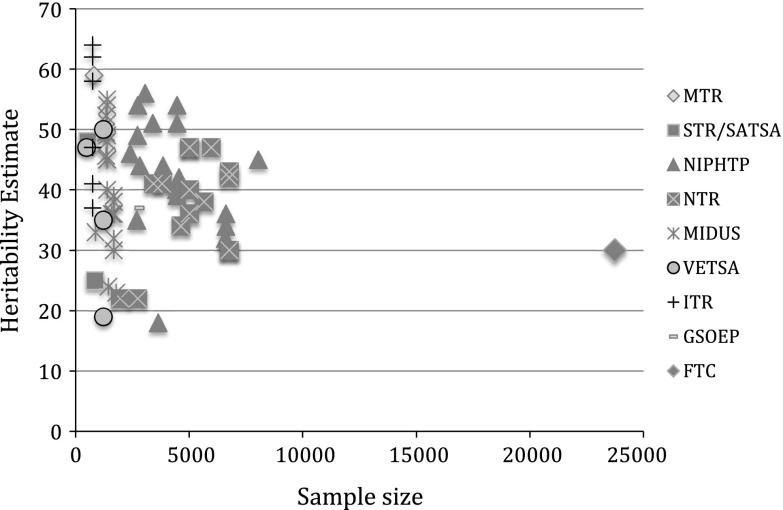
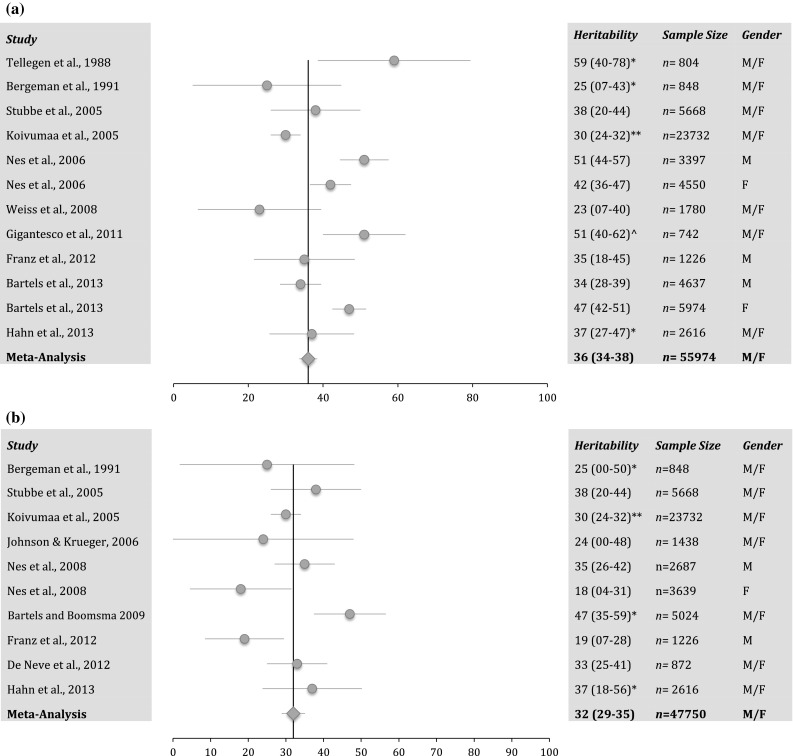
Wellbeing is a major topic of research across several disciplines, reflecting the increasing recognition of its strong value across major domains in life. Previous twin-family studies have revealed that individual differences in wellbeing are accounted for by both genetic as well as environmental factors. A systematic literature search identified 30 twin-family studies on wellbeing or a related measure such as satisfaction with life or happiness. Review of these studies showed considerable variation in heritability estimates (ranging from 0 to 64 %), which makes it difficult to draw firm conclusions regarding the genetic influences on wellbeing. For overall wellbeing twelve heritability estimates, from 10 independent studies, were meta-analyzed by computing a sample size weighted average heritability. Ten heritability estimates, derived from 9 independent samples, were used for the meta-analysis of satisfaction with life. The weighted average heritability of wellbeing, based on a sample size of 55,974 individuals, was 36 % (34-38), while the weighted average heritability for satisfaction with life was 32 % (29-35) (n = 47,750). With this result a more robust estimate of the relative influence of genetic effects on wellbeing is provided.
Overview
CoChat Summary
## TL;DR
This review and meta-analysis synthesizes twin-family studies of wellbeing and related constructs, finding heritability estimates that range widely across studies. Using 12 wellbeing estimates from 10 studies and 10 satisfaction-with-life estimates from 9 samples, the paper reports weighted average heritability of 36% for wellbeing and 32% for satisfaction with life.
## Key findings
- A systematic search identified 30 twin-family studies on wellbeing or related measures such as satisfaction with life or happiness.
- Across the reviewed studies, heritability estimates ranged from 0% to 64%; by construct, the ranges were 17–56% for overall wellbeing, 0–60% for satisfaction with life, 22–41% for happiness, and 22–42% for quality of life.
- The meta-analysis used 12 heritability estimates from 10 studies for wellbeing (n = 55,974) and 10 heritability estimates from 9 independent samples for satisfaction with life (n = 47,750).
- The weighted average heritability was 36% (34–38) for wellbeing and 32% (29–35) for satisfaction with life; the paper summarizes this as genetic factors explaining about 35% of variance.
- For wellbeing, the meta-analytic point estimate fell within the confidence intervals of 6 of 12 studies (50%); for satisfaction with life, it fell within 7 of 10 confidence intervals (70%).
## Methods
- The paper conducted a systematic literature search in PubMed and ISI Web of Knowledge using keywords related to wellbeing, happiness, satisfaction with life, twin/twins, heritability, and genes; it excluded animal studies and foreign-language papers.
- The review included 24 papers plus 6 additional publications identified from references and author checks, and incorporated an additional Finnish dataset, yielding 30 relevant papers and one extra dataset.
- For the meta-analyses, the author computed sample-size-weighted average heritability from independent twin-family studies, with separate meta-analyses for wellbeing and satisfaction with life; confidence intervals were estimated when missing.
- The analysis used broad heritability estimates (additive + non-additive) and treated sex-specific estimates as independent when reported.
## Limitations
- The paper states that wellbeing is conceptually and measurement-wise heterogeneous, and that the wide variety of questionnaires, scales, subscales, and items makes the meta-analysis vulnerable to heterogeneity.
- It also notes that some studies used sex-specific estimates, but the meta-analyses combined male and female data, so it remains unclear whether sex/gender matters for the genetic architecture; no study systematically tested qualitative sex differences.
- The review says that because several cohorts contributed multiple papers, only a subset could be included in the meta-analyses for independence, so some relevant work from MIDUS, the Netherlands Twin Register, and the Norwegian Institute of Public Health Twin Panel was excluded.
- The paper states that all included studies were based on western European and North American population-based samples, limiting generalizability to other populations.
- Evident from the text: the meta-analyses are cross-sectional, include only two measurement occasions in the longitudinal studies discussed, and rely largely on twin-family designs, so causal and developmental conclusions are limited.
Model-written summary. Check it against the paper before relying on it.
Integrity signals
Registry
Cites
Statistics
Figures
Verification
Claims the paper makes
9 Valid · 0 Not valid · 11 Not checked · 30 Own results and interpretations
The sources with a verdict support this claim; the rest weren’t checked yet, have no full text we could read, or their verdicts aren’t rated yet.
In the paper
“Only Johnson and Krueger (2006), Nes et al. (2010b), and van der Aa et al. (2010a), tested whether the heritability estimates were significantly moderated by level of financial resources and perceived control, marital status, or parental divorce, respectively.”
§ Genetics of Wellbeing and Its Components Satisfaction with Life, Happiness, and Quality of Life: A Review and Meta-analysis of Heritability Studies > Discussion > Considerations and limitations
What the sources say
- Not checked — no full text of the sourcecites Johnson and Krueger 2006 matched to “How money buys happiness: Genetic and environmental processes linking finances and life satisfaction.” (2006) source
- Supportedcites Nes et al. 2010b matched to “Mates and Marriage Matter: Genetic and Environmental Influences on Subjective Wellbeing Across Marital Status” (2010) source
The Statistical Analyses section says the authors tested whether marital status modifies genetic influences on subjective wellbeing. The Males and Females results compare genetic models across marital status, supporting the attribution that Nes et al. tested this moderation. This source is not being cited for the other studies or the citing authors’ claim that these were the only studies to do so. Page numbers were not available for the decisive passages. (LLM, conf=0.92)
- Supportedcites van der Aa et al. 2010a matched to “Moderation of Genetic Factors by Parental Divorce in Adolescents' Evaluations of Family Functioning and Subjective Wellbeing” (2010) source
The Discussion states that the study tested whether genetic influences differed between adolescents from divorced and nondivorced families and found higher heritability for evaluations of general family functioning among those from divorced families. The Univariate Genetic Models section also reports tests for divorce-related differences in family cohesion, which were not significant. The citation supports the claim that parental divorce was tested as a moderator, not that it significantly moderated every estimate. (LLM, conf=0.93)
plain- Asserted: passes — The authors put it forward as true.
- Checkable: passes — It can be checked against evidence.
- Load-bearing: unclear — It is unclear whether the paper’s conclusions depend on it.
- Based: passes — The paper gives a reason why it holds.
The sources with a verdict support this claim; the rest weren’t checked yet, have no full text we could read, or their verdicts aren’t rated yet.
In the paper
“Two cohorts (the Norwegian Institute of Public Health Twin Panel and the Netherlands Twin Register), reported significant sex-differences in heritability in some of their studies (Bartels et al. 2010, 2013; Nes et al. 2006, 2008; Røysamb et al. 2003).”
§ Genetics of Wellbeing and Its Components Satisfaction with Life, Happiness, and Quality of Life: A Review and Meta-analysis of Heritability Studies > Results > Heritability estimates
What the sources say
- Supportedcites Bartels et al. 2010 matched to “Heritability and Genome-Wide Linkage Scan of Subjective Happiness” (2010) source
The Abstract identifies the study sample as coming from the Netherlands Twin Register. The Results report significant sex differences in the heritability of happiness (χ²₄ = 37.06, p = .00), supporting the Netherlands Twin Register part of the multi-citation sentence. (LLM, conf=0.94)
- Not checked — no full text of the sourcecites Nes et al. 2006 matched to “Subjective well-being: genetic and environmental contributions to stability and change” (2006) source
- Not checked — no full text of the sourcecites Røysamb et al. 2003 matched to “Happiness and Health: Environmental and Genetic Contributions to the Relationship Between Subjective Well-Being, Perceived Health, and Somatic Illness.” (2003) source
plainstates an association- Asserted: passes — The authors put it forward as true.
- Checkable: passes — It can be checked against evidence.
- Load-bearing: unclear — It is unclear whether the paper’s conclusions depend on it.
- Based: passes — The paper gives a reason why it holds.
- Supported
The sources with a verdict support this claim; the rest weren’t checked yet, have no full text we could read, or their verdicts aren’t rated yet.
In the paper
“Five studies, all extended twin designs, report significant non-additive genetic effects (Bartels and Boomsma 2009; Hahn et al. 2013; Nes et al. 2010a; Stubbe et al. 2005; Tellegen et al. 1988)”
§ Genetics of Wellbeing and Its Components Satisfaction with Life, Happiness, and Quality of Life: A Review and Meta-analysis of Heritability Studies > Results > Heritability estimates
What the sources say
- Supportedcites Bartels and Boomsma 2009 matched to “Born to be Happy? The Etiology of Subjective Well-Being” (2009) source
The Discussion describes this study as using a twin-sibling design and reports significant non-additive genetic influences for all four measures of subjective well-being. This supports the claim as applied to Bartels and Boomsma (2009); the citation does not need to establish the findings of the other four listed studies. (LLM, conf=0.94)
- Not checked — no full text of the sourcecites Hahn et al. 2013 matched to “Beyond the heritability of life satisfaction – The roles of personality and twin-specific influences” (2013) source
- Not checked — no full text of the sourcecites Nes et al. 2010a matched to “Family Matters: Happiness in Nuclear Families and Twins” (2010) source
plain- Asserted: passes — The authors put it forward as true.
- Checkable: passes — It can be checked against evidence.
- Load-bearing: unclear — It is unclear whether the paper’s conclusions depend on it.
- Based: passes — The paper gives a reason why it holds.
- Supported
Every source the paper cites for this claim was checked and supports it.
In the paper
“In addition a small, probably underpowered, genome-wide linkage study indicated genomic regions of interest on chromosome 1 and 19 (Bartels et al. 2010).”
§ Genetics of Wellbeing and Its Components Satisfaction with Life, Happiness, and Quality of Life: A Review and Meta-analysis of Heritability Studies > Discussion > Molecular genetic studies
What the sources say
- Supportedcites Bartels et al. 2010 matched to “Heritability and Genome-Wide Linkage Scan of Subjective Happiness” (2010) source
The Discussion (page not specified in the supplied passages) calls the linkage sample relatively small and reports suggestive linkage on chromosomes 1 and 19. The Results (page not specified) show that neither peak reached the study’s significance threshold, consistent with the citing sentence’s cautious description of the study as probably underpowered. (LLM, conf=0.92)
hedgedstates an association- Asserted: passes — The authors put it forward as true.
- Checkable: passes — It can be checked against evidence.
- Load-bearing: unclear — It is unclear whether the paper’s conclusions depend on it.
- Based: passes — The paper gives a reason why it holds.
- Supported
Every source the paper cites for this claim was checked and supports it.
In the paper
“One study reported an association of satisfaction with life and the VNTR polymorphism on the serotonin transporter gene (5-HTTLPR), with greater satisfaction with life for the individuals with the longer variant (De Neve 2011), but follow-up work on an augmented sample from the same data did not replicate the finding (De Neve et al. 2012).”
§ Genetics of Wellbeing and Its Components Satisfaction with Life, Happiness, and Quality of Life: A Review and Meta-analysis of Heritability Studies > Discussion > Molecular genetic studies
What the sources say
- Supportedcites De Neve et al. 2012 matched to “Genes, economics, and happiness.” (2012) source
Section 3.5.2 reports tests in newly available Add Health data and the larger combined sample. It says no model specification reached statistical significance, so the original significant association was not replicated in the augmented Add Health data. (LLM, conf=0.93)
plain- Asserted: passes — The authors put it forward as true.
- Checkable: passes — It can be checked against evidence.
- Load-bearing: unclear — It is unclear whether the paper’s conclusions depend on it.
- Based: passes — The paper gives a reason why it holds.
- Supported
27 more claims
Create a free account to see all 50 claims and to verify the 7 references still open.
- It may state two separate claims as one. 14
- Probably not a substantial claim. 7
Citations
Cites
The satisfaction with life scale
Diener, E., Emmons, R. A., Larsen, R. J., & Griffin, S. (1985) · Journal of Personality Assessment · doi:10.1207/s15327752jpa4901_13 · Cited by 31,768 · cited 1×
“The Netherlands Twin Register adopted three wellbeing measure in their longitudinal cohort study (the Satisfaction With Life Scale (Diener et al. 1985), the Subjective Happiness Scale (Lyubomirski and Lepper 1999), and the Cantril Self-Anchoring Striving Scale (Cantril 1965).”
MethodSubjective well-being: Three decades of progress.
Diener, E., Suh, E. M., Lucas, R. E., & Smith, H. L. (1999) · Psychological Bulletin · doi:10.1037/0033-2909.125.2.276 · Cited by 12,910
On Happiness and Human Potentials: A Review of Research on Hedonic and Eudaimonic Well-Being
Ryan, R. M., & Deci, E. L. (2001) · Annual Review of Psychology · doi:10.1146/annurev.psych.52.1.141 · Cited by 11,567 · cited 2×
“2004), and a deeper ‘‘eudaimonic’’ form that results from striving toward meaning and a noble purpose beyond simple self-gratification (Ryan and Deci 2001).”
BackgroundThe structure of psychological well-being revisited.
Ryff, C. D., & Keyes, C. L. M. (1995) · Journal of Personality and Social Psychology · doi:10.1037//0022-3514.69.4.719 · Cited by 10,285 · cited 4×
“The Italian Twin Register used the Ryff’s Scales of Psychological Well-being with three items per dimension and the Add Health study used one item to assess Satisfaction with Life.”
MethodInfluentialThe Structure of Psychological Well-Being.
Mechanic, D., & Bradburn, N. M. (1970) · American Sociological Review · doi:10.2307/2093340 · Cited by 4,923
A Measure of Subjective Happiness: Preliminary Reliability and Construct Validation
Lyubomirsky, S., & Lepper, H. S. (1999) · Social Indicators Research · doi:10.1023/a:1006824100041 · Cited by 4,071 · cited 1×
“1985), the Subjective Happiness Scale (Lyubomirski and Lepper 1999), and the Cantril Self-Anchoring Striving Scale (Cantril 1965).”
MethodOptimizing well-being: The empirical encounter of two traditions.
Keyes, C. L. M., Shmotkin, D., & Ryff, C. D. (2002) · Journal of Personality and Social Psychology · doi:10.1037/0022-3514.82.6.1007 · Cited by 3,322 · cited 1×
“Eudaimonic and hedonic wellbeing have also been found to be highly correlated (r = 0.70) and reciprocally influence one another (Keyes et al. 2002; Waterman 1993).”
BackgroundInfluentialReport by the commission on the measurement of economic performance and social progress
Fitoussi, J., Sen, A. K., & Stiglitz, J. E. (2011) · Cited by 3,090
Keyes, C. L. M. (1998) · Social Psychology Quarterly · doi:10.2307/2787065 · Cited by 2,924 · cited 1×
“In addition, 3 measures of mental wellbeing (emotional, psychological, and social) have been developed by Keyes (1998) applying factor analysis on several wellbeing measures in MIDUS.”
MethodWaterman, A. S. (1993) · Journal of Personality and Social Psychology · doi:10.1037//0022-3514.64.4.678 · Cited by 2,820 · cited 2×
“Eudaimonic and hedonic wellbeing have also been found to be highly correlated (r = 0.70) and reciprocally influence one another (Keyes et al. 2002; Waterman 1993).”
BackgroundInfluential
Research works printed but not linked: 1
- Diener E Wirtz D Biswas-Diener R Tov W Kim-Prieto C Choi D Oishi S New measuresof well-being 2009 Dordrecht Springer
Cited by
Items 201–288 of 288
Perizonius, S., Wesseldijk, L. W., Ullén, F., & Mosing, M. A. (2026) · European Journal of Personality · doi:10.1177/08902070261423583 · Cited by 1
“Social isolation, well-being, loneliness and primals have all been shown to be between 21% and 50% heritable (Bartels, 2015; Boomsma et al., 2005; Matthews et al., 2016; Perizonius et al., 2024).”
Wolfram, T., Moore, S., Li, J. H., Anomaly, J., Davidson, I., & Christensen, M. (2026) · Intelligence & Cognitive Abilities · doi:10.65550/001c.158459 · Cited by 5
Geijsen, A. J. M. R., & Bartels, M. (2026) · Nature Communications · doi:10.1038/s41467-026-72459-9 · Cited by 2
Self-citationFazaldad, G., Iqbal, S., & Hassan, B. (2020) · Pakistan Journal of Psychological Research · doi:10.33824/pjpr.2020.35.2.21 · Cited by 3
“Moreover, young individuals with higher level of happiness had very few undesirable social skills like impulsivity, jealousy and withdrawal and those psychopathological symptoms were rarely found in happy individuals (Agbaria, Ronen, & Hamama, 2012; Bartels, 2015).”
BackgroundWhy some people are not as happy as they could be: the role of unobservable subjective factors
Amendola, A., Dell’Anno, R., Anno, N. A., & Parisi, L. (2022) · International Journal of Happiness and Development · doi:10.1504/ijhd.2022.10048753 · Cited by 1
On Machine Learning Methods for Genome Enabled Prediction of Complex Phenotypes
Elenter, J., Etchebarne, G., & Hounie, I. (2020) · IEEE Congreso Bienal de Argentina (ARGENCON) · doi:10.1109/argencon49523.2020.9505410 · Cited by 1
Subjektivna dobrobit i osobine ličnosti
Pocrnić, M., & Bratko, D. (2021) · Psihologijske teme · doi:10.31820/pt.30.3.7 · Cited by 2
He said, she said: Unpacking the determinants of Pakistan’s Intra-household gender differences
Mahmood, T. (2022) · Quality & Quantity · doi:10.1007/s11135-022-01355-3 · Cited by 4
Ando, J. (2022) · Elsevier eBooks · doi:10.1016/b978-0-12-821514-2.00034-9 · Cited by 1
Questionnaires and Their Use in Primate Welfare
Gartner, M. C. (2023) · Springer eBooks · doi:10.1007/978-3-030-82708-3_11 · Cited by 6
Life Satisfaction Among Italian Migrants, Italian Stayers, and Swiss Natives: Who Fares Better?
Dones, I. (2023) · Comparative Population Studies · doi:10.12765/cpos-2023-18 · Cited by 3
Riva, E., Lucchini, M., Pancheva, M. G., Piazzoni, C., & Lillard, D. R. (2024) · Analyses of Social Issues and Public Policy · doi:10.1111/asap.12384 · Cited by 2
Family experiences while growing up, personality traits, and well-being: A mediation analysis
Zalewska, A. M., Węziak‐Białowolska, D., Grabowska-Chenczke, O., Werner-Maliszewska, A., & Zawadzka-Jabłonowska, A. (2025) · Journal of Research in Personality · doi:10.1016/j.jrp.2025.104630 · Cited by 2
Woolfolk, H. C. (2019) · ScholarWorks -A service of University of Vermont Libraries (University of Vermont) · Cited by 3
Genes-in-Dyads: A Study of Relationship Quality
Das, A. (2020) · Research on Aging · doi:10.1177/0164027520920024 · Cited by 1
“At least part of this stable component is genetically rooted (Bartels, 2015).”
BackgroundSoja, M., Grabczak, W., Nowakowska‐Domagała, K., et al. (2020) · Postępy Psychiatrii i Neurologii · doi:10.5114/ppn.2020.101203 · Cited by 1
“This evaluation usually comprises at least three key aspects: social, psychological and physical [1, 2].”
BackgroundSELF-EFFICACY BELIEFS IN AIR TRAFFIC MANAGEMENT SETTING
Tharikh, S. M., Hamzah, S. R., Baidi, N., & Rajadurai, J. (2021) · International Journal of Supply Chain Operation Management and Logistics · doi:10.35631/ijscol.23002 · Cited by 1
“It is generally utilized conversely with bliss (Bartels, 2015; Youssef‐ Morgan & Luthans, 2015).”
BackgroundLayard, R., & Neve, J.-E. D. (2023) · Cambridge University Press eBooks · doi:10.1017/9781009298957.026
Efectos del reishi (Ganoderma lucidum) en pacientes con fibromialgia
Pazzi, F. (2016) · Institutional Repository University of Extremadura (University of Extremadura) · Cited by 2
A inclusão da diversidade sexual na Universidade
Agreli, M. S. (2018) · doi:10.11606/t.59.2018.tde-23032018-103830 · Cited by 1
Itahashi, T., Kosibaty, N., Hashimoto, R., & Aoki, Y. Y. (2019) · bioRxiv (Cold Spring Harbor Laboratory) · doi:10.1101/714618 · Cited by 2
“Indeed, genetic research has shown that 22 genetic factors account for about one third of SWB (Bartels, 2015).”
BackgroundGenetic evidence for bidirectional causal effects between resilience and well-beingPreprint
de Vries, L. D., Baselmans, B., Luykx, J. J., de Zeeuw, E., Minică, C., de Geus, E. D., Vinkers, C., & Bartels, M. (2020) · bioRxiv · doi:10.1101/2020.11.03.366492 · Cited by 4
“These estimates are highly comparable to earlier studies to resilience and well-being (Amstadter et al., 2014; Bartels, 2015; Boardman et al., 2008).”
InfluentialSelf-citationChanges in mental well-being in Hong Kong before and during social unrest and COVID-19Preprint
Wong, S. M. Y., Siu, L. T. T., Hui, C. L. M., Chan, S. K. W., Lee, E. H. M., Chang, W. C., Suen, Y. N., & Chen, E. Y. H. (2021) · Research Square · doi:10.21203/rs.3.rs-440216/v1 · Cited by 1
Bem-estar subjetivo e personalidade: um estudo com irmãos gêmeos
Fernandes, E. D. S. (2021) · Digital Library of Theses and Dissertations (Universidade de São Paulo) · doi:10.11606/d.47.2021.tde-13092021-153444 · Cited by 3
Cognitive Ability and Economic Growth: How Much Happiness is Optimal?Preprint
Burhan, N. A. S., Sabri, M. F., & Rindermann, H. (2021) · SSRN Electronic Journal · doi:10.2139/ssrn.3801436 · Cited by 1
Expanding the environmental scope: An environment-wide association study for mental well-beingPreprint
van de Weijer, M. P., Baselmans, B. M. L., Hottenga, J., et al. (2021) · doi:10.31234/osf.io/aes74 · Cited by 1
Self-citationLin, C.-F., Lo, K., Su, Y., Yeh, D.-P., Kao, H.-F., Lin, I.-T., Ho, C., Shieh, J., & Lee, P.-F. (2023) · Research Square · doi:10.21203/rs.3.rs-2864752/v1 · Cited by 1
Megherbi-moulay, O., Jullian, B., Franchitto, N., et al. (2024) · Research Square · doi:10.21203/rs.3.rs-4419957/v1 · Cited by 1
Gene-Environment Interplay for Well-Being
van de Weijer, M. P. (2023) · doi:10.5463/thesis.236 · Cited by 1
The Happy Boomer: Baby Boomer Life Satisfaction Through Affect and Feeling of Belonging
Massey, B. C.-M. (2016) · OhioLink ETD Center (Ohio Library and Information Network) · Cited by 2
Computational approaches in genetics with a focus on GoNL and twin studies
Fedko, I. O. (2016) · Digital Academic REpository of VU University Amsterdam (Vrije Universiteit Amsterdam)
Understanding and Influencing Pupils' Choices as they Prepare to Leave School
Asbury, K., & Plomin, R. J. (2017) · White Rose Research Online (University of Leeds, The University of Sheffield, University of York)
Can A Single Imagery Session Positively Change Sense of Wellbeing?
do Rosário, J. L. P. (2015) · International Journal of Psychology and Psychoanalysis · doi:10.23937/2572-4037.1510006 · Cited by 1
“It also conveys information regarding a broad array of behaviors and health, including physical and mental health, social relationships, leisure, and subjective states such as emotions and mental engagement [47].”
BackgroundGoodwin, A. J. (2017) · TSpace (University of Toronto)
Developing SENSES: Student experience of non-shared environment scales
Yerdelen, S., Durksen, T. L., Rimfeld, K., Plomin, R. J., & Asbury, K. (2018) · PLoS ONE · doi:10.1371/journal.pone.0202543 · Cited by 1
Advancing the study of quality of life in bipolar disorder: A multimethod approach
Morton, E. E. (2018) · Figshare · doi:10.25916/sut.26279554
Theories and Empirical Findings
Iparraguirre, J. L. (2019) · Springer eBooks · doi:10.1007/978-3-030-29013-9_2 · Cited by 1
Dwomoh, D., Amuasi, S. A., Incoom, G., Yawson, A. E., Asampong, E., & Bosomprah, S. (2020) · Research Square · doi:10.21203/rs.3.rs-15573/v1
Mitä sydän näkee? Katsaus interoseption merkitykseen ihmisen tiedonkäsittelylle ja hyvinvoinnille
Lyyra, P., & Parviainen, T. M. (2025) · Psykologia · doi:10.62443/psykologia.v54i5.78008 · Cited by 10
“Koettuun hyvinvointiin vaikuttavat merkittä-västi biologiset ja psykologiset suhteellisen pysy-vät piirteet (Bartels, 2015), ja persoonallisuuden osa-alueiden on osoitettu kytkeytyvän koettuun psykologiseen hyvinvointiin yli aikuisuuden (Kokko ym., 2013).”
InfluentialGaya, L. (2021) · Open University of Cape Town (University of Cape Town) · Cited by 3
UK (England, Wales, Scotland and Northern Ireland) and Ireland
Boniwell, I., & Grenville-Cleave, B. (2022) · Springer eBooks · doi:10.1007/978-3-030-57354-6_5
Genetic Influences on Quality of Life
Thong, M. S. Y., Sprangers, M. A. G., Sloan, J. A., & Ordoñana, J. R. (2021) · Springer eBooks · doi:10.1007/978-3-319-69909-7_1154-2
DiLalla, L. F. (2011) · Oxford University Press eBooks · doi:10.1093/obo/9780199828340-0010 · Cited by 1
Psihologija subjektivnega blagostanja: znanstvena spoznanja o sreči
Avsec, A., Kavčič, T., & Kocjan, G. Z. (2022) · Založba Univerze v Ljubljani (University of Ljubljana Press) eBooks · doi:10.4312/9789617128475 · Cited by 16
(2021) · Mardaga eBooks · doi:10.3917/mard.hanse.2021.01.0359
السحیمی, ع. ر. (2021) · مجلة كلية التربية جامعة بنها · doi:10.21608/jfeb.2021.228015
Happiness Studies in the Biological and Medical Sciences
Freeze, R. A. (2022) · Social indicators research series · doi:10.1007/978-3-031-10913-3_5
Campion, J. (2022) · Oxford University Press eBooks · doi:10.1093/med/9780198861478.003.0051
The structure of wellbeing–a single underlying factor with genetic and environmental influencesPreprint
Bjørndal, L. D., Nes, R. B., Czajkowski, N. O., et al. (2022) · doi:10.31234/osf.io/mzp3r
Souza, M. D. (2022) · Law Technology and Humans · doi:10.5204/lthj.1869 · Cited by 2
ADN, histoire de nos différences
(2020) · Odile Jacob eBooks · doi:10.3917/oj.sablo.2020.01.0231
some reason prevalence of anxiety and depression among people of different ages: a review
Shaalan, S. H., Atiya, R. N., Mubarak, S. M. H., & Hussain, S. A. (2023) · Maaen Journal for Medical Sciences · doi:10.55810/2789-9128.1026
Review Article on “Importance of Behavioral Genetics on the Psychological Development of the Person”
Chakrala, B. (2023) · The Journal of Neurobehavioral Sciences · doi:10.4103/jnbs.jnbs_10_23
Research on measuring happiness
Deng, Y. (2023) · Advances in Education, Humanities and Social Science Research · doi:10.56028/aehssr.7.1.614.2023
“…happiness under the philosophical system of Confucius all have their underlying logic, and these differences illustrate that happiness has powerful socio-cultural-historical properties and that a single concept of happiness does not fit all social systems (Bartels, 2015; Oishi & Gilbert, 2016).”
The genetics of partnership dissolutionPreprint
Jørgensen, R. E., Cheesman, R., Andreassen, O. A., et al. (2024) · doi:10.31235/osf.io/2w4ef
Genetic Influences on Quality of Life
Thong, M. S. Y., Sprangers, M. A. G., Sloan, J. A., & Ordoñana, J. R. (2023) · Springer eBooks · doi:10.1007/978-3-031-17299-1_1154
The Impact of Green Bond Issuance on Public European FirmsPreprint
Pinto, J., Coelho, R., Pacheco, L., & Madaleno, M. (2024) · SSRN Electronic Journal · doi:10.2139/ssrn.4779057 · Cited by 2
Enhancing Employee Satisfaction with Mobility and Transportation Offerings: A Managerial ApproachPreprint
Schwehn, L. H., Heußler, T., & Backhaus, C. (2024) · SSRN Electronic Journal · doi:10.2139/ssrn.4798052
Harerimana, N. V., Liu, Y., & Ruks, M. (2024) · bioRxiv (Cold Spring Harbor Laboratory) · doi:10.1101/2024.12.12.628202
Subjective Well-being: A Key to Bridge Urbanization, Brain and Mental HealthPreprint
Qin, W., Zhao, Z., Wei, L., Lin, L., Li, X., Xie, Y., Zhang, Y., Zhao, F., Liu, N., Dong, H., et al. (2025) · Research Square · doi:10.21203/rs.3.rs-5794364/v1
A life course study of genetic and environmental influences on sustainable working life
Ropponen, A., Bergström, J., Narusyte, J., & Svedberg, P. (2025) · PLoS ONE · doi:10.1371/journal.pone.0317675
“The result is consistent with the common environmental effects of education [41], well-being [42], and longevity [43].”
Okumuşoğlu, S. (2025) · Afyon Kocatepe Üniversitesi Sosyal Bilimler Dergisi · doi:10.32709/akusosbil.1248639
Chen, X., Zheng, C., Xu, J., Wang, Q., Zhao, Z., & Jiang, Q. (2025) · Clinical Oral Investigations · doi:10.1007/s00784-025-06377-3 · Cited by 1
“Twin and adoption studies estimate that the heritability of overall well-being ranges from 17 to 56% [19], while hedonic and eudaimonic well-being exhibit heritability estimates between 30% and 64% [20].”
Alrouh, H., Zijlmans, J., Luijten, M. A. J., van Oers, H. A., Tieskens, J. M., Middeldorp, C. M., Popma, A., Polderman, T. J. C., & Bartels, M. (2025) · Behavior Genetics · doi:10.1007/s10519-025-10223-3
“%) aligned with results from earlier studies, which ranged from 22 to 47% (Bartels 2015; Baselmans et al. 2018).”
Self-citationLin, C.-F., Su, Y., Kao, H.-F., Lee, P.-F., Chao, M.-L., Yeh, D.-P., Shieh, J., & Ho, C. (2025) · Frontiers in Public Health · doi:10.3389/fpubh.2025.1566383
Погурська, Т. (2023) · Теоретичні і прикладні проблеми психології · doi:10.33216/2219-2654-2023-62-3-2-334-347
Azcona-Granada, N., Geijsen, A. J. M. R., van Dongen, J., Pool, R., Huider, F., Badia-i-Mompel, P., Pelt, D. H. M., & Bartels, M. (2025) · bioRxiv (Cold Spring Harbor Laboratory) · doi:10.1101/2025.10.09.681412
Self-citationSocial unrest, subjective well-being, and active government: Evidence from a global sample
Le, D. V., & Tran, T. Q. (2025) · Russian Journal of Economics · doi:10.32609/j.ruje.11.163408 · Cited by 1
“…government trust (Helliwell et al., 2020), neighbor relationships (Waldinger and Schulz, 2023), economic expectations, and democratic factors (Bartels, 2015; Dolan et al., 2008; Howell and Howell, 2008). α c denotes time-invariant country-specific factors; λ y accounts for year fixed…”
Berkessel, J. B. (2026) · Psychologische Rundschau · doi:10.1026/0033-3042/a000743
Palka, J., & Hurych, E. (2026) · Studia sportiva · doi:10.5817/sts2026-1-2
Factors Influencing Subjective Well-Being: Key Dimensions and Research Evolution
Li, H., & Shen, G. (2026) · Springer eBooks · doi:10.1007/978-981-95-4937-5_4
Bühler, J. L., Scheling, L., Aebi, J. A., Lüdtke, O., & Orth, U. (2026) · European Journal of Personality · doi:10.1177/08902070261423578 · Cited by 1
“Findings from quantitative genetic studies indicate that these enduring components are largely attributable to genes (Bartels, 2015; Hahn et al., 2016; Spotts et al., 2005).”
InfluentialDissecting Alzheimer's disease heritability across populations
Liu, S., Bush, W. S., Kunkle, B. W., Byrd, G. S., Reitz, C., Tosto, G., Rajabli, F., Caban‐Holt, A., Cuccaro, M. L., Starks, T. D., et al. (2026) · Alzheimer s & Dementia · doi:10.1002/alz.71236
“52 These study-specific differences demonstrated by population characteristics may arise from variations in study design, such as differences in recruitmentstrategies,andevolvingphenotypingcriteria.”
Skaug, E., Waaktaar, T., & Torgersen, S. O. (2026) · Behavior Genetics · doi:10.1007/s10519-026-10262-4
“…time-invariant stability, along with the proportion of genetic and previous studies that have consistently documented moder - ate genetic effects on adolescent wellbeing, mainly account - ing for trait stability (Bartels 2015 ; Baselmans et al. 2018; de Vries et al. 2024; Nes and Røysamb 2015 ).”
Jürgenssen, O., Rovner, M., & Handke, S. (2026) · dms – der moderne staat – Zeitschrift für Public Policy Recht und Management · doi:10.3224/dms.v19i1.09
Social media use, genotype and adolescent mental health: A social push pattern among girlsPreprint
Ghirardi, G., & Ferrara, A. (2026) · Research Square · doi:10.21203/rs.3.rs-9693680/v1
Sasaki, K., & Spinath, F. M. (2026) · Personality and Individual Differences · doi:10.1016/j.paid.2026.113974
On the Human Condition: The Game of Life, the Meaning Race, and the Dilemmas of ExistencePreprint
Tobore, T. O. (2026) · SSRN Electronic Journal · doi:10.2139/ssrn.7027418
Human Flourishing: The Role of Personality and CulturePreprint
Oishi, S., Padgett, R. N., Felton, C., Lomas, T., Case, B. W., Johnson, B. R., & VanderWeele, T. J. (2026) · SSRN Electronic Journal · doi:10.2139/ssrn.7202176
Reflections on the Past, Present, and Future of Well-Being Science from Several of Its Pioneers
Stenlund, S., O'Connor, K. J., & Aknin, L. B. (2026) · Journal of Happiness Studies · doi:10.1007/s10902-026-01092-6 · Cited by 2
“Given past work demonstrating that a meaningful portion of happiness is determined by genes (Bartels, 2015) and that happiness is linked to longevity (Danner et al., 2001; Diener & Chan, 2011) and sustained cognitive health (Stenlund et al., 2026; Willroth et al., 2023), the answer is important as…”
Zhao, H., Ma, T., Xu, Y., & Zhang, H. (2026) · Behavioral Sciences · doi:10.3390/bs16091480
“This process is driven by multiple mechanisms—including genetic predispositions, shared household environments, and social learning (Augustijn, 2022; Bartels, 2015; Casas et al., 2008; Deater-Deckard et al., 2024; Grønhøj & Thøgersen, 2009)—which jointly foster congruence in psychological…”
Particulate matter air pollution and life satisfaction: Links across and within twin pairs
Kuznetsov, D. V., Beyer, M., Ruks, M., Mönkediek, B., Kandler, C., & Kühn, S. (2026) · Environmental Research · doi:10.1016/j.envres.2026.125565
Common and Unique Etiological Influences on Personality and Personality Disorders in Youth
Torgersen, S. O., Skaug, E., & Waaktaar, T. (2026) · Psychopathology · doi:10.1159/psp/aelag006
Differences in wellbeing: Current and future directions
Bartels, M., Azcona-Granada, N., Leitritz, D., Sametoğlu, S., Mayerhofer, L., Fey, I. F. A., Geijsen, A. J. M. R., Pelt, D. H. M., & de Vries, L. P. (2026) · Personality and Individual Differences · doi:10.1016/j.paid.2026.114066
Self-citationUnderstanding the Psychology, Genetics, and Neurobiology of Happiness with Clinical Implications
Friedberg, A., & Sherman, S. (2026) · Psychodynamic Psychiatry · doi:10.1521/pdps.2026.54.3.476
Social processes in well-being (SoWell): A survey and ecological momentary assessment twin study
Bjørndal, L. D., Nes, R. B., Ebrahimi, O. V., Teulings, I., & Røysamb, E. (2026) · Scandinavian Journal of Public Health · doi:10.1177/14034948261488979
Metadata
- Authors
- Bartels, M.
- Affiliations
- Vrije Universiteit Amsterdam (NL)
- Corresponding author
- Bartels, Meike
- ORCID
- Bartels, Meike
- Venue
- Behavior Genetics
- Published
- 2015-02-26
- Volume
- 45
- Issue
- 2
- Pages
- 137-156
- ISSN
- 0001-8244 (ISSN-L)
- 1573-3297
- PMC
- PMC4346667
- OpenAlex
- W1992656413
- Semantic Scholar
- 410d6635e7e9f3dfbf07812c5cf4208c7d21e516
- Cited by
- 293
- References
- 94
- Citations by year
- 2026: 28 · 2025: 24 · 2024: 22 · 2023: 32 · 2022: 38 · 2021: 35 · 2020: 30 · 2019: 21 · 2018: 23 · 2017: 16 · 2016: 17 · 2015: 6
- FWCI
- 3.23
- Type
- journal article
- Language
- en
- Open access
- hybrid
- doi.org
- Locations
- Behavior Genetics (publishedVersion, cc-by)
- Europe PMC (PubMed Central) (publishedVersion, cc-by)
- PubMed Central (publishedVersion, cc-by)
- PubMed (publishedVersion)
- VU Research Portal (publishedVersion, other-oa)
- Data Archiving and Networked Services (DANS) (submittedVersion, other-oa)
- Funders
- Vrije Universiteit Amsterdam
- Nederlandse Organisatie voor Wetenschappelijk Onderzoek (463-06-001, NWO-VENI 451-04-034, 451–04-034, NWO 463-06-001)
- National Institute on Aging (P01AG020166, R01AG033590, U19AG051426)
- Eunice Kennedy Shriver National Institute of Child Health and Human Development (P01HD031921)
- Topics
- Social Sciences › Psychology › Social Psychology › Psychological Well-being and Life Satisfaction
- Life Sciences › Neuroscience › Cellular and Molecular Neuroscience › Neurotransmitter Receptor Influence on Behavior
- Life Sciences › Biochemistry, Genetics and Molecular Biology › Genetics › Genetic Associations and Epidemiology
- Keywords
- well-being, heritability, life satisfaction, happiness, quality of life, twin studies, genetic factors, environmental influences, individual differences
- MeSH terms
- Family, Female, Genotype, Happiness, Humans, Male, Molecular Biology, Personal Satisfaction, Quality of Life, Surveys and Questionnaires, Registries, Sex Factors, Twins, Sample Size, Twin Studies as Topic, Genetic Predisposition to Disease
About these checks
Registry, retraction, Cites and statistics results are computed, not judged, with one exception: a printed reference that no index lists is read once by a model before it counts as a citation error. Claims are extracted by a model and kept only when their quote appears verbatim in the text; each cited source is then checked, with a model’s help, for whether it says what the claim relies on. Those verdicts can be wrong — read the claim’s quote and the cited source before relying on one.
The claim verdicts this report counts are experimental: their accuracy is not yet measured.
A language model drew the claims from the paper on 2026-10-10, under version 3 of the claim definition (model deepseek-v4.1-flash, prompt extract-v3).
A second model labelled each claim on 2026-10-10 (model jev-1.13-20260917, definition revision gold-guideline-v0.2).
Cited sources are checked with a language model’s help (gpt-6-sol).
Statistics and arithmetic are recomputed, not judged.
Confidence bands are shown only for fields calibrated on our annotated test set. None is calibrated yet, so no band is shown.
What counts as a claim ›How we measure confidence ›How we check this ›
Are you an author, or do you see a problem with this page? Request a review
Data sources
Bibliographic data: Semantic Scholar, OpenAlex, Crossref.
Contains information from the Semantic Scholar Academic Graph Datasets, made available under the ODC Attribution License (ODC-BY 1.0).
Semantic Scholar’s data is described in: Kinney, R., et al. (2023). The Semantic Scholar Open Data Platform. arXiv:2301.10140.
