

Genetics of Wellbeing and Its Components Satisfaction with Life, Happiness, and Quality of Life: A Review and Meta-analysis of Heritability Studies
Open accessThe DOI matches its Crossref record; 86 of the 94 references it cites were found in a registry or an index; 10 of the 29 sources its claims cite were checked for support.
Abstract
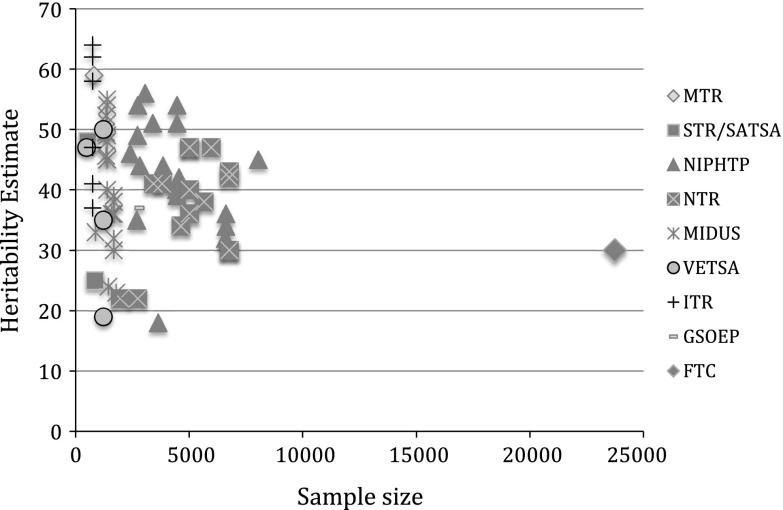
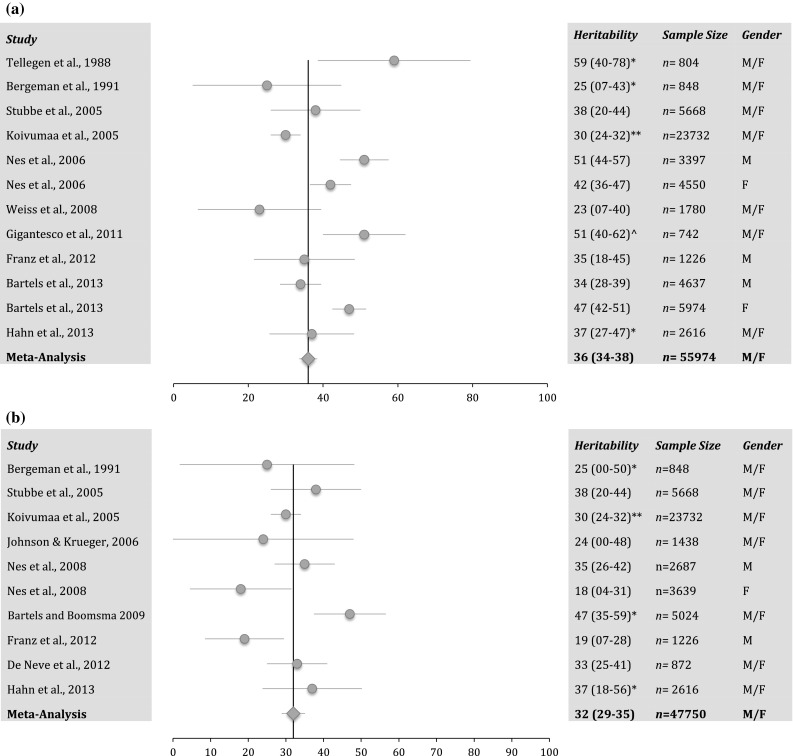
Wellbeing is a major topic of research across several disciplines, reflecting the increasing recognition of its strong value across major domains in life. Previous twin-family studies have revealed that individual differences in wellbeing are accounted for by both genetic as well as environmental factors. A systematic literature search identified 30 twin-family studies on wellbeing or a related measure such as satisfaction with life or happiness. Review of these studies showed considerable variation in heritability estimates (ranging from 0 to 64 %), which makes it difficult to draw firm conclusions regarding the genetic influences on wellbeing. For overall wellbeing twelve heritability estimates, from 10 independent studies, were meta-analyzed by computing a sample size weighted average heritability. Ten heritability estimates, derived from 9 independent samples, were used for the meta-analysis of satisfaction with life. The weighted average heritability of wellbeing, based on a sample size of 55,974 individuals, was 36 % (34-38), while the weighted average heritability for satisfaction with life was 32 % (29-35) (n = 47,750). With this result a more robust estimate of the relative influence of genetic effects on wellbeing is provided.
Overview
CoChat Summary
## TL;DR
This review and meta-analysis synthesizes twin-family studies of wellbeing and related constructs, finding heritability estimates that range widely across studies. Using 12 wellbeing estimates from 10 studies and 10 satisfaction-with-life estimates from 9 samples, the paper reports weighted average heritability of 36% for wellbeing and 32% for satisfaction with life.
## Key findings
- A systematic search identified 30 twin-family studies on wellbeing or related measures such as satisfaction with life or happiness.
- Across the reviewed studies, heritability estimates ranged from 0% to 64%; by construct, the ranges were 17–56% for overall wellbeing, 0–60% for satisfaction with life, 22–41% for happiness, and 22–42% for quality of life.
- The meta-analysis used 12 heritability estimates from 10 studies for wellbeing (n = 55,974) and 10 heritability estimates from 9 independent samples for satisfaction with life (n = 47,750).
- The weighted average heritability was 36% (34–38) for wellbeing and 32% (29–35) for satisfaction with life; the paper summarizes this as genetic factors explaining about 35% of variance.
- For wellbeing, the meta-analytic point estimate fell within the confidence intervals of 6 of 12 studies (50%); for satisfaction with life, it fell within 7 of 10 confidence intervals (70%).
## Methods
- The paper conducted a systematic literature search in PubMed and ISI Web of Knowledge using keywords related to wellbeing, happiness, satisfaction with life, twin/twins, heritability, and genes; it excluded animal studies and foreign-language papers.
- The review included 24 papers plus 6 additional publications identified from references and author checks, and incorporated an additional Finnish dataset, yielding 30 relevant papers and one extra dataset.
- For the meta-analyses, the author computed sample-size-weighted average heritability from independent twin-family studies, with separate meta-analyses for wellbeing and satisfaction with life; confidence intervals were estimated when missing.
- The analysis used broad heritability estimates (additive + non-additive) and treated sex-specific estimates as independent when reported.
## Limitations
- The paper states that wellbeing is conceptually and measurement-wise heterogeneous, and that the wide variety of questionnaires, scales, subscales, and items makes the meta-analysis vulnerable to heterogeneity.
- It also notes that some studies used sex-specific estimates, but the meta-analyses combined male and female data, so it remains unclear whether sex/gender matters for the genetic architecture; no study systematically tested qualitative sex differences.
- The review says that because several cohorts contributed multiple papers, only a subset could be included in the meta-analyses for independence, so some relevant work from MIDUS, the Netherlands Twin Register, and the Norwegian Institute of Public Health Twin Panel was excluded.
- The paper states that all included studies were based on western European and North American population-based samples, limiting generalizability to other populations.
- Evident from the text: the meta-analyses are cross-sectional, include only two measurement occasions in the longitudinal studies discussed, and rely largely on twin-family designs, so causal and developmental conclusions are limited.
Model-written summary. Check it against the paper before relying on it.
Integrity signals
Registry
Cites
Statistics
Figures
Verification
Claims the paper makes
9 Valid · 0 Not valid · 11 Not checked · 30 Own results and interpretations
The sources with a verdict support this claim; the rest weren’t checked yet, have no full text we could read, or their verdicts aren’t rated yet.
In the paper
“Only Johnson and Krueger (2006), Nes et al. (2010b), and van der Aa et al. (2010a), tested whether the heritability estimates were significantly moderated by level of financial resources and perceived control, marital status, or parental divorce, respectively.”
§ Genetics of Wellbeing and Its Components Satisfaction with Life, Happiness, and Quality of Life: A Review and Meta-analysis of Heritability Studies > Discussion > Considerations and limitations
What the sources say
- Not checked — no full text of the sourcecites Johnson and Krueger 2006 matched to “How money buys happiness: Genetic and environmental processes linking finances and life satisfaction.” (2006) source
- Supportedcites Nes et al. 2010b matched to “Mates and Marriage Matter: Genetic and Environmental Influences on Subjective Wellbeing Across Marital Status” (2010) source
The Statistical Analyses section says the authors tested whether marital status modifies genetic influences on subjective wellbeing. The Males and Females results compare genetic models across marital status, supporting the attribution that Nes et al. tested this moderation. This source is not being cited for the other studies or the citing authors’ claim that these were the only studies to do so. Page numbers were not available for the decisive passages. (LLM, conf=0.92)
- Supportedcites van der Aa et al. 2010a matched to “Moderation of Genetic Factors by Parental Divorce in Adolescents' Evaluations of Family Functioning and Subjective Wellbeing” (2010) source
The Discussion states that the study tested whether genetic influences differed between adolescents from divorced and nondivorced families and found higher heritability for evaluations of general family functioning among those from divorced families. The Univariate Genetic Models section also reports tests for divorce-related differences in family cohesion, which were not significant. The citation supports the claim that parental divorce was tested as a moderator, not that it significantly moderated every estimate. (LLM, conf=0.93)
plain- Asserted: passes — The authors put it forward as true.
- Checkable: passes — It can be checked against evidence.
- Load-bearing: unclear — It is unclear whether the paper’s conclusions depend on it.
- Based: passes — The paper gives a reason why it holds.
The sources with a verdict support this claim; the rest weren’t checked yet, have no full text we could read, or their verdicts aren’t rated yet.
In the paper
“Two cohorts (the Norwegian Institute of Public Health Twin Panel and the Netherlands Twin Register), reported significant sex-differences in heritability in some of their studies (Bartels et al. 2010, 2013; Nes et al. 2006, 2008; Røysamb et al. 2003).”
§ Genetics of Wellbeing and Its Components Satisfaction with Life, Happiness, and Quality of Life: A Review and Meta-analysis of Heritability Studies > Results > Heritability estimates
What the sources say
- Supportedcites Bartels et al. 2010 matched to “Heritability and Genome-Wide Linkage Scan of Subjective Happiness” (2010) source
The Abstract identifies the study sample as coming from the Netherlands Twin Register. The Results report significant sex differences in the heritability of happiness (χ²₄ = 37.06, p = .00), supporting the Netherlands Twin Register part of the multi-citation sentence. (LLM, conf=0.94)
- Not checked — no full text of the sourcecites Nes et al. 2006 matched to “Subjective well-being: genetic and environmental contributions to stability and change” (2006) source
- Not checked — no full text of the sourcecites Røysamb et al. 2003 matched to “Happiness and Health: Environmental and Genetic Contributions to the Relationship Between Subjective Well-Being, Perceived Health, and Somatic Illness.” (2003) source
plainstates an association- Asserted: passes — The authors put it forward as true.
- Checkable: passes — It can be checked against evidence.
- Load-bearing: unclear — It is unclear whether the paper’s conclusions depend on it.
- Based: passes — The paper gives a reason why it holds.
- Supported
The sources with a verdict support this claim; the rest weren’t checked yet, have no full text we could read, or their verdicts aren’t rated yet.
In the paper
“Five studies, all extended twin designs, report significant non-additive genetic effects (Bartels and Boomsma 2009; Hahn et al. 2013; Nes et al. 2010a; Stubbe et al. 2005; Tellegen et al. 1988)”
§ Genetics of Wellbeing and Its Components Satisfaction with Life, Happiness, and Quality of Life: A Review and Meta-analysis of Heritability Studies > Results > Heritability estimates
What the sources say
- Supportedcites Bartels and Boomsma 2009 matched to “Born to be Happy? The Etiology of Subjective Well-Being” (2009) source
The Discussion describes this study as using a twin-sibling design and reports significant non-additive genetic influences for all four measures of subjective well-being. This supports the claim as applied to Bartels and Boomsma (2009); the citation does not need to establish the findings of the other four listed studies. (LLM, conf=0.94)
- Not checked — no full text of the sourcecites Hahn et al. 2013 matched to “Beyond the heritability of life satisfaction – The roles of personality and twin-specific influences” (2013) source
- Not checked — no full text of the sourcecites Nes et al. 2010a matched to “Family Matters: Happiness in Nuclear Families and Twins” (2010) source
plain- Asserted: passes — The authors put it forward as true.
- Checkable: passes — It can be checked against evidence.
- Load-bearing: unclear — It is unclear whether the paper’s conclusions depend on it.
- Based: passes — The paper gives a reason why it holds.
- Supported
Every source the paper cites for this claim was checked and supports it.
In the paper
“In addition a small, probably underpowered, genome-wide linkage study indicated genomic regions of interest on chromosome 1 and 19 (Bartels et al. 2010).”
§ Genetics of Wellbeing and Its Components Satisfaction with Life, Happiness, and Quality of Life: A Review and Meta-analysis of Heritability Studies > Discussion > Molecular genetic studies
What the sources say
- Supportedcites Bartels et al. 2010 matched to “Heritability and Genome-Wide Linkage Scan of Subjective Happiness” (2010) source
The Discussion (page not specified in the supplied passages) calls the linkage sample relatively small and reports suggestive linkage on chromosomes 1 and 19. The Results (page not specified) show that neither peak reached the study’s significance threshold, consistent with the citing sentence’s cautious description of the study as probably underpowered. (LLM, conf=0.92)
hedgedstates an association- Asserted: passes — The authors put it forward as true.
- Checkable: passes — It can be checked against evidence.
- Load-bearing: unclear — It is unclear whether the paper’s conclusions depend on it.
- Based: passes — The paper gives a reason why it holds.
- Supported
Every source the paper cites for this claim was checked and supports it.
In the paper
“One study reported an association of satisfaction with life and the VNTR polymorphism on the serotonin transporter gene (5-HTTLPR), with greater satisfaction with life for the individuals with the longer variant (De Neve 2011), but follow-up work on an augmented sample from the same data did not replicate the finding (De Neve et al. 2012).”
§ Genetics of Wellbeing and Its Components Satisfaction with Life, Happiness, and Quality of Life: A Review and Meta-analysis of Heritability Studies > Discussion > Molecular genetic studies
What the sources say
- Supportedcites De Neve et al. 2012 matched to “Genes, economics, and happiness.” (2012) source
Section 3.5.2 reports tests in newly available Add Health data and the larger combined sample. It says no model specification reached statistical significance, so the original significant association was not replicated in the augmented Add Health data. (LLM, conf=0.93)
plain- Asserted: passes — The authors put it forward as true.
- Checkable: passes — It can be checked against evidence.
- Load-bearing: unclear — It is unclear whether the paper’s conclusions depend on it.
- Based: passes — The paper gives a reason why it holds.
- Supported
27 more claims
Create a free account to see all 50 claims and to verify the 7 references still open.
- It may state two separate claims as one. 14
- Probably not a substantial claim. 7
Citations
Cites
The satisfaction with life scale
Diener, E., Emmons, R. A., Larsen, R. J., & Griffin, S. (1985) · Journal of Personality Assessment · doi:10.1207/s15327752jpa4901_13 · Cited by 31,768 · cited 1×
“The Netherlands Twin Register adopted three wellbeing measure in their longitudinal cohort study (the Satisfaction With Life Scale (Diener et al. 1985), the Subjective Happiness Scale (Lyubomirski and Lepper 1999), and the Cantril Self-Anchoring Striving Scale (Cantril 1965).”
MethodSubjective well-being: Three decades of progress.
Diener, E., Suh, E. M., Lucas, R. E., & Smith, H. L. (1999) · Psychological Bulletin · doi:10.1037/0033-2909.125.2.276 · Cited by 12,910
On Happiness and Human Potentials: A Review of Research on Hedonic and Eudaimonic Well-Being
Ryan, R. M., & Deci, E. L. (2001) · Annual Review of Psychology · doi:10.1146/annurev.psych.52.1.141 · Cited by 11,567 · cited 2×
“2004), and a deeper ‘‘eudaimonic’’ form that results from striving toward meaning and a noble purpose beyond simple self-gratification (Ryan and Deci 2001).”
BackgroundThe structure of psychological well-being revisited.
Ryff, C. D., & Keyes, C. L. M. (1995) · Journal of Personality and Social Psychology · doi:10.1037//0022-3514.69.4.719 · Cited by 10,285 · cited 4×
“The Italian Twin Register used the Ryff’s Scales of Psychological Well-being with three items per dimension and the Add Health study used one item to assess Satisfaction with Life.”
MethodInfluentialThe Structure of Psychological Well-Being.
Mechanic, D., & Bradburn, N. M. (1970) · American Sociological Review · doi:10.2307/2093340 · Cited by 4,923
A Measure of Subjective Happiness: Preliminary Reliability and Construct Validation
Lyubomirsky, S., & Lepper, H. S. (1999) · Social Indicators Research · doi:10.1023/a:1006824100041 · Cited by 4,071 · cited 1×
“1985), the Subjective Happiness Scale (Lyubomirski and Lepper 1999), and the Cantril Self-Anchoring Striving Scale (Cantril 1965).”
MethodOptimizing well-being: The empirical encounter of two traditions.
Keyes, C. L. M., Shmotkin, D., & Ryff, C. D. (2002) · Journal of Personality and Social Psychology · doi:10.1037/0022-3514.82.6.1007 · Cited by 3,322 · cited 1×
“Eudaimonic and hedonic wellbeing have also been found to be highly correlated (r = 0.70) and reciprocally influence one another (Keyes et al. 2002; Waterman 1993).”
BackgroundInfluentialReport by the commission on the measurement of economic performance and social progress
Fitoussi, J., Sen, A. K., & Stiglitz, J. E. (2011) · Cited by 3,090
Keyes, C. L. M. (1998) · Social Psychology Quarterly · doi:10.2307/2787065 · Cited by 2,924 · cited 1×
“In addition, 3 measures of mental wellbeing (emotional, psychological, and social) have been developed by Keyes (1998) applying factor analysis on several wellbeing measures in MIDUS.”
MethodWaterman, A. S. (1993) · Journal of Personality and Social Psychology · doi:10.1037//0022-3514.64.4.678 · Cited by 2,820 · cited 2×
“Eudaimonic and hedonic wellbeing have also been found to be highly correlated (r = 0.70) and reciprocally influence one another (Keyes et al. 2002; Waterman 1993).”
BackgroundInfluentialCantril, H. (1965) · Cited by 2,273
Happiness Is a Stochastic Phenomenon
Lykken, D., & Tellegen, A. (1996) · Psychological Science · doi:10.1111/j.1467-9280.1996.tb00355.x · Cited by 1,719 · cited 6×
“2010), longitudinal data (Kendler et al. 2011a, b; Koivumaa-Honkanen et al. 2005; Lykken and Tellegen 1996; Nes et al. 2006, 2013), or applied a multivariate framework to investigate the overlap of wellbeing with other phenotypes, such as somatic health variables (Harris et al.”
BackgroundMethodInfluential(1985) · Cited by 1,630
Currie, C. E., Zanotti, C., Morgan, A. M., Currie, D. B., de Looze, M. E., Roberts, C., Samdal, O., Smith, O. R. F., & Barnekow, V. (2012) · Cited by 1,591
Personality similarity in twins reared apart and together.
Tellegen, A., Lykken, D. T., Bouchard, T. J., & Wilcox, K. J. (1988) · Journal of Personality and Social Psychology · doi:10.1037//0022-3514.54.6.1031 · Cited by 1,514 · cited 5×
“Four studies (Bergeman et al. 1991; Harris et al. 1992; Lykken and Tellegen 1996; Tellegen et al. 1988) included reared apart twins pairs besides twins reared together.”
BackgroundMethodInfluentialZubaida, S. D., & Cantril, H. (1967) · The British Journal of Sociology · doi:10.2307/588624 · Cited by 1,496 · cited 2×
“The Netherlands Twin Register adopted three wellbeing measure in their longitudinal cohort study (the Satisfaction With Life Scale (Diener et al. 1985), the Subjective Happiness Scale (Lyubomirski and Lepper 1999), and the Cantril Self-Anchoring Striving Scale (Cantril 1965).”
MethodOECD Guidelines on Measuring Subjective Well-being
OECD (2013) · doi:10.1787/9789264191655-en · Cited by 1,434
Theory and Validity of Life Satisfaction Scales
Diener, E., Inglehart, R., & Tay, L. (2013) · Social Indicators Research · doi:10.1007/s11205-012-0076-y · Cited by 1,272 · cited 2×
“Keywords Wellbeing Satisfaction with life Happiness Twin Heritability Review Meta-analysis Genetics Genes”
BackgroundMethodAnxiety and the Anxiety Disorders
Tuma, A. H., & Maser, J. (1990) · International Clinical Psychopharmacology · doi:10.1097/00004850-199001000-00015 · Cited by 1,270
Diener, E., Wirtz, D., Biswas-Diener, R., Tov, W., Kim-Prieto, C., Choi, D.-W., & Oishi, S. (2009) · Social Indicators Research Series · doi:10.1007/978-90-481-2354-4_12 · Cited by 1,152 · cited 1×
“Correlations in the range of .5–.6 are reported for the association of overall wellbeing with satisfaction with life or happiness/positive affect or across dimensions (Bartels and Boomsma 2009; Diener et al. 2009).”
BackgroundPositive health: connecting well–being with biology
Ryff, C. D., Singer, B. H., & Dienberg Love, G. (2004) · Philosophical Transactions of the Royal Society of London. Series B: Biological Sciences · doi:10.1098/rstb.2004.1521 · Cited by 916 · cited 2×
“From a more philosophic point of view, wellbeing is sometimes distinguished in two basic forms: a ‘‘hedonic’’ form representing the sum of an individual’s positive affective experiences (Ryff et al. 2004), and a deeper ‘‘eudaimonic’’ form that results from striving toward meaning and a noble purpose beyond simple self…”
BackgroundTellegen, A., & Waller, N. G. (2008) · The SAGE Handbook of Personality Theory and Assessment: Volume 2 — Personality Measurement and Testing · doi:10.4135/9781849200479.n13 · Cited by 905
Life Satisfaction Set Point: Stability and Change.
Fujita, F., & Diener, E. (2005) · Journal of Personality and Social Psychology · doi:10.1037/0022-3514.88.1.158 · Cited by 821 · cited 2×
“84 for a period of 2 weeks to 1 month (Fujita and Diener 2005; Krueger and Schkade 2008).”
BackgroundJinks, J. L., & Fulker, D. W. (1970) · Psychological Bulletin · doi:10.1037/h0029135 · Cited by 808 · cited 1×
“The exceptions are Tellegen et al. (1988) and Harris et al. (1992) who used the within-between method of Jinks and Fulker (1970) and Lykken and Tellegen (1996) who reported twin correlations only.”
MethodToward an Integration of Subjective Well-Being and Psychopathology
Greenspoon, P. J., & Saklofske, D. H. (2001) · Social Indicators Research · doi:10.1023/a:1007219227883 · Cited by 775 · cited 1×
“A major force driving this broad interest is the association of wellbeing with physical and mental health and its possible pivotal role in socio-economic issues and economic development (Boehm et al. 2011; Greenspoon and Saklofske 2010; Seaford 2011; Stiglitz et al. 2009).”
BackgroundVeenhoven, R. (2008) · Journal of Happiness Studies · doi:10.1007/s10902-006-9042-1 · Cited by 771 · cited 1×
“Wellbeing predicts longevity among healthy populations and the observed positive effect is for example of similar magnitude as the negative effect of smoking (Steptoe and Wardle 2012; Veenhoven 2008).”
BackgroundThe reliability of subjective well-being measures
Krueger, A. B., & Schkade, D. A. (2008) · Journal of Public Economics · doi:10.1016/j.jpubeco.2007.12.015 · Cited by 735 · cited 2×
“For single item measures test– retest correlations between .5 and .7 have been reported for time periods of 1 day to a 2-year period (Krueger and Schkade 2008; Michalos and Kahlke 2010), indicating that single item measures also perform rather well.”
Development and validation of a brief form of the multidimensional personality questionnaire
Patrick, C. J., Curtin, J. J., & Tellegen, A. (2002) · Psychological Assessment · doi:10.1037/1040-3590.14.2.150 · Cited by 647
The heritability of general cognitive ability increases linearly from childhood to young adulthood
Haworth, C. M. A., Wright, M. J., Luciano, M., Martin, N. G., de Geus, E. J. C., van Beijsterveldt, C. E. M., Bartels, M., Posthuma, D., Boomsma, D. I., Davis, O. S. P., et al. (2010) · Molecular Psychiatry · doi:10.1038/mp.2009.55 · Cited by 617 · cited 1×
“…studies disentangling genetic and environmental influences on wellbeing throughout childhood are highly warranted since differences in genetic architecture between children, adolescents, and adults have been frequently observed (Haworth et al. 2010; Huppertz et al. 2012; Nivard et al. 2014).”
BackgroundSelf-citationAn Analysis of a Short Self-Report Measure of Life Satisfaction: Correlation With Rater Judgments
Wood, V., Wylie, M. L., & Sheafor, B. (1969) · Journal of Gerontology · doi:10.1093/geronj/24.4.465 · Cited by 582 · cited 1×
“The Swedish Twin Registry (including the Swedish Adoption/Twin Study of Aging (SATSA)) applied the Life Satisfaction Index Z (LSI-Z) (Wood et al. 1969).”
MethodLi, M. D., Cheng, R., Ma, J. Z., & Swan, G. E. (2003) · Addiction · doi:10.1046/j.1360-0443.2003.00295.x · Cited by 553 · cited 3×
“Analysis The broad heritability estimates (additive ? non-additive) of the selected studies were meta-analyzed by computing the weighted average heritability (Li et al. 2003).”
MethodInfluentialHelliwell, J. F., Layard, R., & Sachs, J. D. (2013) · London School of Economics and Political Science Research Online (London School of Economics and Political Science) · doi:10.14288/1.0053622 · Cited by 536 · cited 1×
“…of the rising interest is the recent United Nations high-level meeting on wellbeing and happiness (April 2012), the World Happiness Report 2013 (Helliwell et al. 2013), and the OECD Guidelines on Measuring Subjective Well-being (OECD 2013), with the intention to harmonize and structure the…”
BackgroundA functional genomic perspective on human well-being
Fredrickson, B. L., Grewen, K. M., Coffey, K. A., Algoe, S. B., Firestine, A. M., Arevalo, J. M. G., Ma, J., & Cole, S. W. (2013) · Proceedings of the National Academy of Sciences · doi:10.1073/pnas.1305419110 · Cited by 512 · cited 2×
“Finally, a small study analyzed leukocyte basal gene expression profiles and reported distinct gene expression profiles for hedonic (positive affect) versus eudaimonic (striving, purpose) wellbeing (Fredrickson et al. 2013), but replication is warranted, especially since distinguishing hedonic versus eudaimonic wellbe…”
BackgroundPersonal Income and Subjective Well-being: A Review
Cummins, R. A. (2000) · Journal of Happiness Studies · doi:10.1023/a:1010079728426 · Cited by 498
Weiss, A., Bates, T. C., & Luciano, M. (2008) · Psychological Science · doi:10.1111/j.1467-9280.2008.02068.x · Cited by 401 · cited 6×
“…1992; Røysamb et al. 2003), sleep (Nes et al. 2005), mental health/illness (Bartels et al. 2013; Kendler et al. 2011a, b; Nes et al. 2008, 2013), social support (Bergeman et al. 1991; Schnittker 2008), exercise behavior (Bartels et al. 2012), or personality (Hahn et al. 2013; Weiss et al. 2008).”
BackgroundMethodInfluentialMeasuring Subjective Well-Being
Layard, R. (2010) · Science · doi:10.1126/science.1186315 · Cited by 391 · cited 1×
“Often terms like wellbeing, satisfaction with life, happiness, or quality of life are used interchangeably (Layard 2010).”
BackgroundJohnson, W., & Krueger, R. F. (2006) · Journal of Personality and Social Psychology · doi:10.1037/0022-3514.90.4.680 · Cited by 382 · cited 12×
“2008) and one for the satisfaction with life meta-analysis (Johnson and Krueger 2006).”
BackgroundMethodInfluentialA Note on the Statistical Power in Extended Twin Designs
Posthuma, D., & Boomsma, D. I. (2000) · Behavior Genetics · doi:10.1023/a:1001959306025 · Cited by 272 · cited 1×
“The absence of significant findings for non-additive genetic or shared environmental effect by no means indicates the absence of these effect, since it could also reflect a lack of power to detect these variance components (Posthuma and Boomsma 2000).”
BackgroundNational Survey of Midlife Development in the United States (MIDUS II), 2004-2006: Archival Version
Ryff, C., Almeida, D. M., Ayanian, J. S., Carr, D. S., Cleary, P. D., Coe, C., Davidson, R., Krueger, R. F., Lachman, M. E., Marks, N. F., et al. (2007) · ICPSR Data Holdings · doi:10.3886/icpsr04652 · Cited by 269
Measures of self-reported well-being: their affective, cognitive, and other components
Andrews, F. M., & McKennell, A. C. (1980) · Social Indicators Research · doi:10.1007/bf00286474 · Cited by 265
Child well-being in Rich Countries: A Comparative Overview
UNICEF Innocenti Research Centre (2013) · Innocenti report card · doi:10.18356/0aea8e54-en · Cited by 264
Measures of Self-Reported Well-Being: Their Affective, Cognitive, and other Components
Andrews, F. M., & Mckennell, A. C. (2005) · Social Indicators Research Series · doi:10.1007/1-4020-3742-2_9 · Cited by 228
Røysamb, E., Tambs, K., Reichborn-Kjennerud, T., Neale, M. C., & Harris, J. R. (2003) · Journal of Personality and Social Psychology · doi:10.1037/0022-3514.85.6.1136 · Cited by 224 · cited 6×
“2006, 2013), or applied a multivariate framework to investigate the overlap of wellbeing with other phenotypes, such as somatic health variables (Harris et al. 1992; Røysamb et al. 2003), sleep (Nes et al.”
BackgroundResultInfluentialExploring the Association Between Well-Being and Psychopathology in Adolescents
Bartels, M., Cacioppo, J. T., van Beijsterveldt, T. C. E. M., & Boomsma, D. I. (2013) · Behavior Genetics · doi:10.1007/s10519-013-9589-7 · Cited by 224 · cited 9×
“Two cohorts (the NIPHTP and the NTR), reported significant sexdifferences in heritability in some of their studies (Bartels et al. 2010, 2013; Nes et al. 2006, 2008; Røysamb et al. 2002).”
BackgroundMethodResultInfluentialSelf-citationBorn to be Happy? The Etiology of Subjective Well-Being
Bartels, M., & Boomsma, D. I. (2009) · Behavior Genetics · doi:10.1007/s10519-009-9294-8 · Cited by 217 · cited 13×
“Other studies applied a multivariate model to multiple measures of wellbeing (Archontaki et al. 2013; Bartels and Boomsma 2009; Gigantesco et al. 2011; Keyes et al. 2010), longitudinal data (Kendler et al.”
BackgroundMethodInfluentialSelf-citationSubjective well-being: genetic and environmental contributions to stability and change
NES, R. B., Røysamb, E., TAMBS, K., HARRIS, J. R., & REICHBORN-KJENNERUD, T. (2006) · Psychological Medicine · doi:10.1017/s0033291706007409 · Cited by 214 · cited 11×
“The NTR consistently report higher estimates for females versus males, which is also observed in most of the NIPHTP, except for the heritability estimate at time2 in Nes et al. (2006) and the estimate in Nes et al. (2008).”
BackgroundMethodResultInfluentialNivard, M. G., Dolan, C. V., Kendler, K. S., Kan, K.-J., Willemsen, G., van Beijsterveldt, C. E. M., Lindauer, R. J. L., van Beek, J. H. D. A., Geels, L. M., Bartels, M., et al. (2015) · Psychological Medicine · doi:10.1017/s003329171400213x · Cited by 213 · cited 2×
“Additionally, studies disentangling genetic and environmental influences on wellbeing throughout childhood are highly warranted since differences in genetic architecture between children, adolescents, and adults have been frequently observed (Haworth et al. 2010; Huppertz et al. 2012; Nivard et al. 2014).”
BackgroundSelf-citationHeritability of life satisfaction in adults: a twin-family study
STUBBE, J. H., POSTHUMA, D., BOOMSMA, D. I., & De GEUS, E. J. C. (2005) · Psychological Medicine · doi:10.1017/s0033291705005374 · Cited by 209
The Adult Netherlands Twin Register: Twenty-Five Years of Survey and Biological Data Collection
Willemsen, G., Vink, J. M., Abdellaoui, A., den Braber, A., van Beek, J. H. D. A., Draisma, H. H. M., van Dongen, J., van ‘t Ent, D., Geels, L. M., van Lien, R., et al. (2013) · Twin Research and Human Genetics · doi:10.1017/thg.2012.140 · Cited by 205 · cited 1×
“The paper by Stubbe et al. (2005) is based on data of the Adult Netherlands Twin Register (Willemsen et al. 2013), while the paper of Bartels and Boomsma (2009) is based on data of the Young Netherlands Twin Register (van Beijsterveldt et al. 2013).”
MethodA prospective study of positive psychological well-being and coronary heart disease.
Boehm, J. K., Peterson, C., Kivimaki, M., & Kubzansky, L. (2011) · Health Psychology · doi:10.1037/a0023124 · Cited by 203 · cited 1×
“A major force driving this broad interest is the association of wellbeing with physical and mental health and its possible pivotal role in socio-economic issues and economic development (Boehm et al. 2011; Greenspoon and Saklofske 2010; Seaford 2011; Stiglitz et al. 2009).”
BackgroundThe Structure of the Genetic and Environmental Influences on Mental Well-Being
Keyes, C. L. M., Myers, J. M., & Kendler, K. S. (2010) · American Journal of Public Health · doi:10.2105/ajph.2010.193615 · Cited by 195 · cited 4×
“…States (MIDUS) data are used by researchers from different institutes (Archontaki et al. 2013; Johnson and Krueger 2006; Kendler et al. 2011a, b; Keyes et al. 2010; Weiss et al. 2008) and the MIDUS study collected data on wellbeing and satisfaction with life in different ways (e.g. telephonic…”
BackgroundMethodInfluentialSubjective well-being. Sex-specific effects of genetic and environmental factors
Røysamb, E., Harris, J. R., Magnus, P. M., Vittersø, J., & Tambs, K. (2002) · Personality and Individual Differences · doi:10.1016/s0191-8869(01)00019-8 · Cited by 170 · cited 3×
“The minority of the heritability estimates were based on studies which applied a univariate model (Bartels et al. 2010; De Neve et al. 2012; Lykken and Tellegen 1996; Nes et al. 2010a, b; Røysamb et al. 2002; Stubbe et al. 2005; Tellegen et al. 1988).”
BackgroundResultvan Beijsterveldt, C. E. M., Groen-Blokhuis, M., Hottenga, J. J., Franić, S., Hudziak, J. J., Lamb, D., Huppertz, C., de Zeeuw, E., Nivard, M., Schutte, N., et al. (2013) · Twin Research and Human Genetics · doi:10.1017/thg.2012.118 · Cited by 167
Self-citationEnjoying Life and Living Longer
Steptoe, A., & Wardle, J. (2012) · Archives of Internal Medicine · doi:10.1001/archinternmed.2011.1028 · Cited by 151 · cited 1×
“Wellbeing predicts longevity among healthy populations and the observed positive effect is for example of similar magnitude as the negative effect of smoking (Steptoe and Wardle 2012; Veenhoven 2008).”
BackgroundGenes, economics, and happiness.
De Neve, J.-E., Christakis, N. A., Fowler, J. H., & Frey, B. S. (2012) · Journal of Neuroscience, Psychology, and Economics · doi:10.1037/a0030292 · Cited by 148
Kendler, K. S., Myers, J. M., Maes, H. H., & Keyes, C. L. M. (2011) · Behavior Genetics · doi:10.1007/s10519-011-9466-1 · Cited by 136 · cited 6×
“…that have used repeated measures of wellbeing to investigate the longitudinal genetic architecture (Nes et al. 2006) or the genetic influence on the overlap of the two measurement occasions (Kendler et al. 2011b; Nes et al. 2013) report large genetic influences on the stability of wellbeing.”
BackgroundMethodInfluentialMajor depression and life satisfaction: A population-based twin study
Nes, R. B., Czajkowski, N. O., Røysamb, E., Ørstavik, R., Tambs, K., & Reichborn‐Kjennerud, T. (2012) · Journal of Affective Disorders · doi:10.1016/j.jad.2012.05.060 · Cited by 130 · cited 4×
“…Gigantesco et al. 2011; Keyes et al. 2010), longitudinal data (Kendler et al. 2011a, b; Koivumaa-Honkanen et al. 2005; Lykken and Tellegen 1996; Nes et al. 2006, 2013), or applied a multivariate framework to investigate the overlap of wellbeing with other phenotypes, such as somatic health…”
BackgroundInfluentialCognitive, affective and contextual predictors of subjective wellbeing
Galinha, I. C., & Ribeiro, J. L. P. (2012) · International Journal of Wellbeing · doi:10.5502/ijw.v2i1.3 · Cited by 127
Schnittker, J. (2008) · American Journal of Sociology · doi:10.1086/592424 · Cited by 124 · cited 5×
“…1992; Røysamb et al. 2003), sleep (Nes et al. 2005), mental health/illness (Bartels et al. 2013; Kendler et al. 2011a, b; Nes et al. 2008, 2013), social support (Bergeman et al. 1991; Schnittker 2008), exercise behavior (Bartels et al. 2012), or personality (Hahn et al. 2013; Weiss et al. 2008).”
BackgroundMethodInfluentialDe Neve, J.-E. (2011) · Journal of Human Genetics · doi:10.1038/jhg.2011.39 · Cited by 108 · cited 1×
“…with life and the VNTR polymorphism on the serotonin transporter gene (5-HTTLPR), with greater satisfaction with life for the individuals with the longer variant (De Neve 2011), but follow-up work on an augmented sample from the same data did not replicate the finding (De Neve et al. 2012).”
BackgroundMolecular genetics and subjective well-being
Rietveld, C. A., Cesarini, D., Benjamin, D. J., Koellinger, P. D., De Neve, J.-E., Tiemeier, H., Johannesson, M., Magnusson, P. K. E., Pedersen, N. L., Krueger, R. F., et al. (2013) · Proceedings of the National Academy of Sciences · doi:10.1073/pnas.1222171110 · Cited by 104 · cited 2×
“Some indirect evidence for the presence of non-additive genetic effects in wellbeing is provided by the recent finding of molecular genetic evidence for wellbeing (Rietveld et al. 2013).”
BackgroundSelf-citationHypertension labelling, life events and psychological well-being
Moum, T., Næss, S., Sørensen, T., Tambs, K., & Holmen, J. (1990) · Psychological Medicine · doi:10.1017/s0033291700017153 · Cited by 101 · cited 2×
“…used an overall wellbeing measure are the Minnesota Twin Registry, using the Well-being Scale of the Multidimensional Personality Questionnaire (MPQ; (Tellegen 1982)) and the Norwegian Institute of Public Health Twin Panel using a short version of the Subjective Well-being Scale (Moum et al. 1990).”
MethodEffect of Shared Environmental Factors on Exercise Behavior from Age 7 to 12 Years
Huppertz, C., Bartels, M., BEIJSTERVELDT, C. E. M. V., Boomsma, D. I., Hudziak, J. J., & de Geus, E. J. C. (2012) · Medicine & Science in Sports & Exercise · doi:10.1249/mss.0b013e31825d358e · Cited by 91
Self-citationThe stability of life satisfaction in a 15-year follow-up of adult Finns healthy at baseline
Koivumaa-Honkanen, H., Kaprio, J., Honkanen, R. J., Viinamäki, H., & Koskenvuo, M. (2005) · BMC Psychiatry · doi:10.1186/1471-244x-5-4 · Cited by 77 · cited 4×
“The data are described in Koivumaa-Honkanen et al. (2005) and data were used in a standard variance– covariance structural equation modeling frame-work to obtain heritability estimates and confidence intervals.”
BackgroundMethodInfluentialGenetic mediation of the relationship between social support and psychological well-being.
Bergeman, C. S., Plomin, R., Pedersen, N. L., & McClearn, G. E. (1991) · Psychology and Aging · doi:10.1037//0882-7974.6.4.640 · Cited by 69
Stability and Sensitivity in Perceived Quality of Life Measures: Some Panel Results
Michalos, A. C., & Kahlke, P. M. (2009) · Social Indicators Research · doi:10.1007/s11205-009-9554-2 · Cited by 66 · cited 2×
“For single item measures test– retest correlations between .5 and .7 have been reported for time periods of 1 day to a 2-year period (Krueger and Schkade 2008; Michalos and Kahlke 2010), indicating that single item measures also perform rather well.”
BackgroundA critical reanalysis of the relationship between genomics and well-being
Brown, N. J. L., MacDonald, D. A., Samanta, M. P., Friedman, H. L., & Coyne, J. C. (2014) · Proceedings of the National Academy of Sciences · doi:10.1073/pnas.1407057111 · Cited by 65 · cited 2×
“2013), but replication is warranted, especially since distinguishing hedonic versus eudaimonic wellbeing with a self-report measure is under debate (Brown et al. 2014; Cole and Fredrickson 2013, 2014; Coyne 2013).”
BackgroundAge Differences in the Etiology of the Relationship between Life Satisfaction and Self-Rated Health
Harris, J. R., Pedersen, N. L., Stacey, C., McClearn, G. E., & Nesselroade, J. R. (1992) · Journal of Aging and Health · doi:10.1177/089826439200400302 · Cited by 62 · cited 12×
“…2006, 2013), or applied a multivariate framework to investigate the overlap of wellbeing with other phenotypes, such as somatic health variables (Harris et al. 1992; Røysamb et al. 2003), sleep (Nes et al. 2005), mental health/illness (Bartels et al. 2013; Kendler et al. 2011a, b; Nes et al.…”
BackgroundMethodInfluentialGenetic Influences on Psychological Well‐Being: A Nationally Representative Twin Study
Archontaki, D., Lewis, G. J., & Bates, T. C. (2013) · Journal of Personality · doi:10.1111/j.1467-6494.2012.00787.x · Cited by 60 · cited 6×
“Other studies applied a multivariate model to multiple measures of wellbeing (Archontaki et al. 2013; Bartels and Boomsma 2009; Gigantesco et al. 2011; Keyes et al. 2010), longitudinal data (Kendler et al.”
BackgroundMethodInfluentialThe MAOA gene predicts happiness in women
Chen, H., Pine, D. S., Ernst, M., Gorodetsky, E., Kasen, S., Gordon, K., Goldman, D., & Cohen, P. (2013) · Progress in Neuro-Psychopharmacology and Biological Psychiatry · doi:10.1016/j.pnpbp.2012.07.018 · Cited by 59
Heritability and Genome-Wide Linkage Scan of Subjective Happiness
Bartels, M., Saviouk, V., de Moor, M. H. M., Willemsen, G., van Beijsterveldt, T. C. E. M., Hottenga, J.-J., de Geus, E. J. C., & Boomsma, D. I. (2010) · Twin Research and Human Genetics · doi:10.1375/twin.13.2.135 · Cited by 56 · cited 14×
“Two cohorts (the NIPHTP and the NTR), reported significant sexdifferences in heritability in some of their studies (Bartels et al. 2010, 2013; Nes et al. 2006, 2008; Røysamb et al. 2002).”
BackgroundResultInfluentialSelf-citationBeyond the heritability of life satisfaction – The roles of personality and twin-specific influences
Hahn, E., Johnson, W., & Spinath, F. M. (2013) · Journal of Research in Personality · doi:10.1016/j.jrp.2013.07.003 · Cited by 48 · cited 8×
“…1992; Røysamb et al. 2003), sleep (Nes et al. 2005), mental health/illness (Bartels et al. 2013; Kendler et al. 2011a, b; Nes et al. 2008, 2013), social support (Bergeman et al. 1991; Schnittker 2008), exercise behavior (Bartels et al. 2012), or personality (Hahn et al. 2013; Weiss et al. 2008).”
BackgroundInfluentialGigantesco, A., Stazi, M. A., Alessandri, G., Medda, E., Tarolla, E., & Fagnani, C. (2011) · Psychological Medicine · doi:10.1017/s0033291711000663 · Cited by 48 · cited 3×
“Other studies applied a multivariate model to multiple measures of wellbeing (Archontaki et al. 2013; Bartels and Boomsma 2009; Gigantesco et al. 2011; Keyes et al. 2010), longitudinal data (Kendler et al.”
MethodFamily Matters: Happiness in Nuclear Families and Twins
Nes, R. B., Czajkowski, N., & Tambs, K. (2010) · Behavior Genetics · doi:10.1007/s10519-010-9365-x · Cited by 41
Kendler, K. S., Myers, J., & Keyes, C. L. M. (2011) · Twin Research and Human Genetics · doi:10.1375/twin.14.6.516 · Cited by 40
Time to legislate for the good life
Seaford, C. (2011) · Nature · doi:10.1038/477532a · Cited by 37
Bartels, M., de Moor, M. H. M., van der Aa, N., Boomsma, D. I., & de Geus, E. J. C. (2012) · Frontiers in Genetics · doi:10.3389/fgene.2012.00004 · Cited by 37 · cited 11×
“…1992; Røysamb et al. 2003), sleep (Nes et al. 2005), mental health/illness (Bartels et al. 2013; Kendler et al. 2011a, b; Nes et al. 2008, 2013), social support (Bergeman et al. 1991; Schnittker 2008), exercise behavior (Bartels et al. 2012), or personality (Hahn et al. 2013; Weiss et al. 2008).”
BackgroundResultInfluentialSelf-citationWell-being and ill-being: shared environments, shared genes?
Nes, R. B., Czajkowski, N., R⊘ysamb, E., Reichborn-Kjennerud, T., & Tambs, K. (2008) · The Journal of Positive Psychology · doi:10.1080/17439760802399323 · Cited by 36 · cited 10×
“The NTR consistently report higher estimates for females versus males, which is also observed in most of the NIPHTP, except for the heritability estimate at time2 in Nes et al. (2006) and the estimate in Nes et al. (2008).”
InfluentialGenetic and Environmental Multidimensionality of Well- and Ill-Being in Middle Aged Twin Men
Franz, C. E., Panizzon, M. S., Eaves, L. J., Thompson, W., Lyons, M. J., Jacobson, K. C., Tsuang, M., Glatt, S. J., & Kremen, W. S. (2012) · Behavior Genetics · doi:10.1007/s10519-012-9538-x · Cited by 36 · cited 5×
“Two studies combined wellbeing with self-esteem and either mental illness (Franz et al. 2012) or hippocampal volume (Kubarych et al.”
BackgroundInfluentialHighly correlated hedonic and eudaimonic well-being thwart genomic analysis
Coyne, J. C. (2013) · Proceedings of the National Academy of Sciences · doi:10.1073/pnas.1315212110 · Cited by 33 · cited 1×
“…(positive affect) versus eudaimonic (striving, purpose) wellbeing (Fredrickson et al. 2013), but replication is warranted, especially since distinguishing hedonic versus eudaimonic wellbeing with a self-report measure is under debate (Brown et al. 2014; Cole and Fredrickson 2013, 2014; Coyne 2013).”
BackgroundNes, R. B., Røysamb, E., Harris, J. R., Czajkowski, N., & Tambs, K. (2010) · Twin Research and Human Genetics · doi:10.1375/twin.13.4.312 · Cited by 26 · cited 11×
“Only Johnson and Krueger (2006), Nes et al. (2010b), and van der Aa et al. (2010a), tested whether the heritability estimates were significantly moderated by level of financial resources and perceived control, marital status, or parental divorce, respectively.”
BackgroundResultInfluentialA multivariate twin study of hippocampal volume, self‐esteem and well‐being in middle‐aged men
Kubarych, T. S., Prom‐Wormley, E. C., Franz, C. E., Panizzon, M. S., Dale, A. M., Fischl, B. R., Eyler, L. T., Fennema‐Notestine, C., Grant, M., Hauger, R. L., et al. (2012) · Genes Brain & Behavior · doi:10.1111/j.1601-183x.2012.00789.x · Cited by 25
Subjective Wellbeing and Sleep Problems: A Bivariate Twin Study
Nes, R. B., Røysamb, E., Reichborn‐Kjennerud, T., Tambs, K., & Harris, J. R. (2005) · Twin Research and Human Genetics · doi:10.1375/twin.8.5.440 · Cited by 24 · cited 5×
“…to investigate the overlap of wellbeing with other phenotypes, such as somatic health variables (Harris et al. 1992; Røysamb et al. 2003), sleep (Nes et al. 2005), mental health/illness (Bartels et al. 2013; Kendler et al. 2011a, b; Nes et al. 2008, 2013), social support (Bergeman et al. 1991;…”
BackgroundResultInfluentialErrors in the Brown et al. critical reanalysis
Cole, S. W., & Fredrickson, B. L. (2014) · Proceedings of the National Academy of Sciences · doi:10.1073/pnas.1413316111 · Cited by 22 · cited 1×
“…(positive affect) versus eudaimonic (striving, purpose) wellbeing (Fredrickson et al. 2013), but replication is warranted, especially since distinguishing hedonic versus eudaimonic wellbeing with a self-report measure is under debate (Brown et al. 2014; Cole and Fredrickson 2013, 2014; Coyne 2013).”
Backgroundvan der Aa, N., Boomsma, D. I., Rebollo-Mesa, I., Hudziak, J. J., & Bartels, M. (2010) · Twin Research and Human Genetics · doi:10.1375/twin.13.2.143 · Cited by 20 · cited 8×
“Only Johnson and Krueger (2006), Nes et al. (2010b), and van der Aa et al. (2010a), tested whether the heritability estimates were significantly moderated by level of financial resources and perceived control, marital status, or parental divorce, respectively.”
BackgroundResultInfluentialSelf-citationReply to Coyne: Genomic analyses are unthwarted
Cole, S. W., & Fredrickson, B. L. (2013) · Proceedings of the National Academy of Sciences · doi:10.1073/pnas.1316887110 · Cited by 17 · cited 1×
“…(positive affect) versus eudaimonic (striving, purpose) wellbeing (Fredrickson et al. 2013), but replication is warranted, especially since distinguishing hedonic versus eudaimonic wellbeing with a self-report measure is under debate (Brown et al. 2014; Cole and Fredrickson 2013, 2014; Coyne 2013).”
Background
Research works printed but not linked: 1
- Diener E Wirtz D Biswas-Diener R Tov W Kim-Prieto C Choi D Oishi S New measuresof well-being 2009 Dordrecht Springer
Cited by
Advances in subjective well-being research
Diener, E., Oishi, S., & Tay, L. (2018) · Nature Human Behaviour · doi:10.1038/s41562-018-0307-6 · Cited by 2,003
Top 10 Replicated Findings From Behavioral Genetics
Plomin, R., DeFries, J. C., Knopik, V. S., & Neiderhiser, J. M. (2016) · Perspectives on Psychological Science · doi:10.1177/1745691615617439 · Cited by 517
“…Hudziak, Bartels, Van Beijsterveldt, & Boomsma, 2004); withdrawn behavior (Hoekstra, Bartels, Hudziak, Van Beijsterveldt, & Boomsma, 2008); anxiety and depression after childhood (Kendler, Gardner, & Lichtenstein, 2008); and general internalizing and externalizing problems (Bartels et al., 2004).”
BackgroundSteptoe, A. (2019) · Annual Review of Public Health · doi:10.1146/annurev-publhealth-040218-044150 · Cited by 474
“Some of the principal elements that have been identified are summarized in Figure 1, and an extensive literature has been devoted to these associations (4, 26, 35).”
BackgroundLife Satisfaction and Subsequent Physical, Behavioral, and Psychosocial Health in Older Adults
KIM, E. S., DELANEY, S. W., TAY, L., CHEN, Y., DIENER, E., & VANDERWEELE, T. J. (2021) · The Milbank Quarterly · doi:10.1111/1468-0009.12497 · Cited by 245
Koydemir, S., Sökmez, A. B., & Schütz, A. (2021) · Applied Research in Quality of Life · doi:10.1007/s11482-019-09788-z · Cited by 190
Metadata
- Authors
- Bartels, M.
- Affiliations
- Vrije Universiteit Amsterdam (NL)
- Corresponding author
- Bartels, Meike
- ORCID
- Bartels, Meike
- Venue
- Behavior Genetics
- Published
- 2015-02-26
- Volume
- 45
- Issue
- 2
- Pages
- 137-156
- ISSN
- 0001-8244 (ISSN-L)
- 1573-3297
- PMC
- PMC4346667
- OpenAlex
- W1992656413
- Semantic Scholar
- 410d6635e7e9f3dfbf07812c5cf4208c7d21e516
- Cited by
- 293
- References
- 94
- Citations by year
- 2026: 28 · 2025: 24 · 2024: 22 · 2023: 32 · 2022: 38 · 2021: 35 · 2020: 30 · 2019: 21 · 2018: 23 · 2017: 16 · 2016: 17 · 2015: 6
- FWCI
- 3.23
- Type
- journal article
- Language
- en
- Open access
- hybrid
- doi.org
- Locations
- Behavior Genetics (publishedVersion, cc-by)
- Europe PMC (PubMed Central) (publishedVersion, cc-by)
- PubMed Central (publishedVersion, cc-by)
- PubMed (publishedVersion)
- VU Research Portal (publishedVersion, other-oa)
- Data Archiving and Networked Services (DANS) (submittedVersion, other-oa)
- Funders
- Vrije Universiteit Amsterdam
- Nederlandse Organisatie voor Wetenschappelijk Onderzoek (463-06-001, NWO-VENI 451-04-034, 451–04-034, NWO 463-06-001)
- National Institute on Aging (P01AG020166, R01AG033590, U19AG051426)
- Eunice Kennedy Shriver National Institute of Child Health and Human Development (P01HD031921)
- Topics
- Social Sciences › Psychology › Social Psychology › Psychological Well-being and Life Satisfaction
- Life Sciences › Neuroscience › Cellular and Molecular Neuroscience › Neurotransmitter Receptor Influence on Behavior
- Life Sciences › Biochemistry, Genetics and Molecular Biology › Genetics › Genetic Associations and Epidemiology
- Keywords
- well-being, heritability, life satisfaction, happiness, quality of life, twin studies, genetic factors, environmental influences, individual differences
- MeSH terms
- Family, Female, Genotype, Happiness, Humans, Male, Molecular Biology, Personal Satisfaction, Quality of Life, Surveys and Questionnaires, Registries, Sex Factors, Twins, Sample Size, Twin Studies as Topic, Genetic Predisposition to Disease
About these checks
Registry, retraction, Cites and statistics results are computed, not judged, with one exception: a printed reference that no index lists is read once by a model before it counts as a citation error. Claims are extracted by a model and kept only when their quote appears verbatim in the text; each cited source is then checked, with a model’s help, for whether it says what the claim relies on. Those verdicts can be wrong — read the claim’s quote and the cited source before relying on one.
The claim verdicts this report counts are experimental: their accuracy is not yet measured.
A language model drew the claims from the paper on 2026-10-10, under version 3 of the claim definition (model deepseek-v4.1-flash, prompt extract-v3).
A second model labelled each claim on 2026-10-10 (model jev-1.13-20260917, definition revision gold-guideline-v0.2).
Cited sources are checked with a language model’s help (gpt-6-sol).
Statistics and arithmetic are recomputed, not judged.
Confidence bands are shown only for fields calibrated on our annotated test set. None is calibrated yet, so no band is shown.
What counts as a claim ›How we measure confidence ›How we check this ›
Are you an author, or do you see a problem with this page? Request a review
Data sources
Bibliographic data: Semantic Scholar, OpenAlex, Crossref.
Contains information from the Semantic Scholar Academic Graph Datasets, made available under the ODC Attribution License (ODC-BY 1.0).
Semantic Scholar’s data is described in: Kinney, R., et al. (2023). The Semantic Scholar Open Data Platform. arXiv:2301.10140.
