

Genetics of Wellbeing and Its Components Satisfaction with Life, Happiness, and Quality of Life: A Review and Meta-analysis of Heritability Studies
Open accessThe DOI matches its Crossref record; 86 of the 94 references it cites were found in a registry or an index; 10 of the 29 sources its claims cite were checked for support.
Abstract
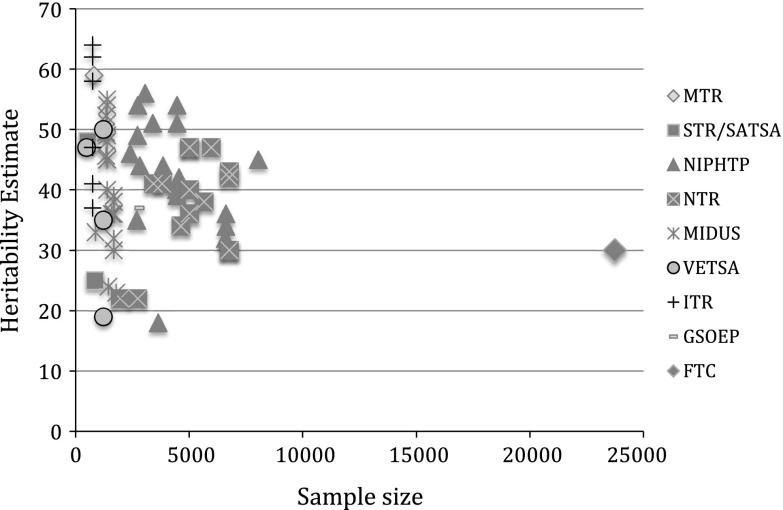
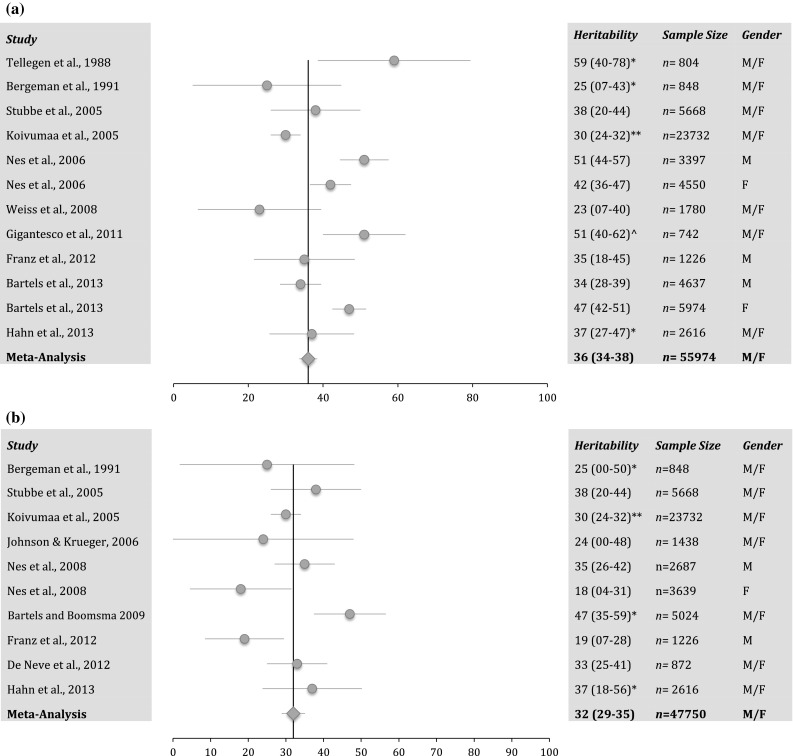
Wellbeing is a major topic of research across several disciplines, reflecting the increasing recognition of its strong value across major domains in life. Previous twin-family studies have revealed that individual differences in wellbeing are accounted for by both genetic as well as environmental factors. A systematic literature search identified 30 twin-family studies on wellbeing or a related measure such as satisfaction with life or happiness. Review of these studies showed considerable variation in heritability estimates (ranging from 0 to 64 %), which makes it difficult to draw firm conclusions regarding the genetic influences on wellbeing. For overall wellbeing twelve heritability estimates, from 10 independent studies, were meta-analyzed by computing a sample size weighted average heritability. Ten heritability estimates, derived from 9 independent samples, were used for the meta-analysis of satisfaction with life. The weighted average heritability of wellbeing, based on a sample size of 55,974 individuals, was 36 % (34-38), while the weighted average heritability for satisfaction with life was 32 % (29-35) (n = 47,750). With this result a more robust estimate of the relative influence of genetic effects on wellbeing is provided.
Overview
CoChat Summary
## TL;DR
This review and meta-analysis synthesizes twin-family studies of wellbeing and related constructs, finding heritability estimates that range widely across studies. Using 12 wellbeing estimates from 10 studies and 10 satisfaction-with-life estimates from 9 samples, the paper reports weighted average heritability of 36% for wellbeing and 32% for satisfaction with life.
## Key findings
- A systematic search identified 30 twin-family studies on wellbeing or related measures such as satisfaction with life or happiness.
- Across the reviewed studies, heritability estimates ranged from 0% to 64%; by construct, the ranges were 17–56% for overall wellbeing, 0–60% for satisfaction with life, 22–41% for happiness, and 22–42% for quality of life.
- The meta-analysis used 12 heritability estimates from 10 studies for wellbeing (n = 55,974) and 10 heritability estimates from 9 independent samples for satisfaction with life (n = 47,750).
- The weighted average heritability was 36% (34–38) for wellbeing and 32% (29–35) for satisfaction with life; the paper summarizes this as genetic factors explaining about 35% of variance.
- For wellbeing, the meta-analytic point estimate fell within the confidence intervals of 6 of 12 studies (50%); for satisfaction with life, it fell within 7 of 10 confidence intervals (70%).
## Methods
- The paper conducted a systematic literature search in PubMed and ISI Web of Knowledge using keywords related to wellbeing, happiness, satisfaction with life, twin/twins, heritability, and genes; it excluded animal studies and foreign-language papers.
- The review included 24 papers plus 6 additional publications identified from references and author checks, and incorporated an additional Finnish dataset, yielding 30 relevant papers and one extra dataset.
- For the meta-analyses, the author computed sample-size-weighted average heritability from independent twin-family studies, with separate meta-analyses for wellbeing and satisfaction with life; confidence intervals were estimated when missing.
- The analysis used broad heritability estimates (additive + non-additive) and treated sex-specific estimates as independent when reported.
## Limitations
- The paper states that wellbeing is conceptually and measurement-wise heterogeneous, and that the wide variety of questionnaires, scales, subscales, and items makes the meta-analysis vulnerable to heterogeneity.
- It also notes that some studies used sex-specific estimates, but the meta-analyses combined male and female data, so it remains unclear whether sex/gender matters for the genetic architecture; no study systematically tested qualitative sex differences.
- The review says that because several cohorts contributed multiple papers, only a subset could be included in the meta-analyses for independence, so some relevant work from MIDUS, the Netherlands Twin Register, and the Norwegian Institute of Public Health Twin Panel was excluded.
- The paper states that all included studies were based on western European and North American population-based samples, limiting generalizability to other populations.
- Evident from the text: the meta-analyses are cross-sectional, include only two measurement occasions in the longitudinal studies discussed, and rely largely on twin-family designs, so causal and developmental conclusions are limited.
Model-written summary. Check it against the paper before relying on it.
Integrity signals
Registry
Cites
Statistics
Figures
Verification
Claims the paper makes
9 Valid · 0 Not valid · 11 Not checked · 30 Own results and interpretations
The sources with a verdict support this claim; the rest weren’t checked yet, have no full text we could read, or their verdicts aren’t rated yet.
In the paper
“Only Johnson and Krueger (2006), Nes et al. (2010b), and van der Aa et al. (2010a), tested whether the heritability estimates were significantly moderated by level of financial resources and perceived control, marital status, or parental divorce, respectively.”
§ Genetics of Wellbeing and Its Components Satisfaction with Life, Happiness, and Quality of Life: A Review and Meta-analysis of Heritability Studies > Discussion > Considerations and limitations
What the sources say
- Not checked — no full text of the sourcecites Johnson and Krueger 2006 matched to “How money buys happiness: Genetic and environmental processes linking finances and life satisfaction.” (2006) source
- Supportedcites Nes et al. 2010b matched to “Mates and Marriage Matter: Genetic and Environmental Influences on Subjective Wellbeing Across Marital Status” (2010) source
The Statistical Analyses section says the authors tested whether marital status modifies genetic influences on subjective wellbeing. The Males and Females results compare genetic models across marital status, supporting the attribution that Nes et al. tested this moderation. This source is not being cited for the other studies or the citing authors’ claim that these were the only studies to do so. Page numbers were not available for the decisive passages. (LLM, conf=0.92)
- Supportedcites van der Aa et al. 2010a matched to “Moderation of Genetic Factors by Parental Divorce in Adolescents' Evaluations of Family Functioning and Subjective Wellbeing” (2010) source
The Discussion states that the study tested whether genetic influences differed between adolescents from divorced and nondivorced families and found higher heritability for evaluations of general family functioning among those from divorced families. The Univariate Genetic Models section also reports tests for divorce-related differences in family cohesion, which were not significant. The citation supports the claim that parental divorce was tested as a moderator, not that it significantly moderated every estimate. (LLM, conf=0.93)
plain- Asserted: passes — The authors put it forward as true.
- Checkable: passes — It can be checked against evidence.
- Load-bearing: unclear — It is unclear whether the paper’s conclusions depend on it.
- Based: passes — The paper gives a reason why it holds.
The sources with a verdict support this claim; the rest weren’t checked yet, have no full text we could read, or their verdicts aren’t rated yet.
In the paper
“Two cohorts (the Norwegian Institute of Public Health Twin Panel and the Netherlands Twin Register), reported significant sex-differences in heritability in some of their studies (Bartels et al. 2010, 2013; Nes et al. 2006, 2008; Røysamb et al. 2003).”
§ Genetics of Wellbeing and Its Components Satisfaction with Life, Happiness, and Quality of Life: A Review and Meta-analysis of Heritability Studies > Results > Heritability estimates
What the sources say
- Supportedcites Bartels et al. 2010 matched to “Heritability and Genome-Wide Linkage Scan of Subjective Happiness” (2010) source
The Abstract identifies the study sample as coming from the Netherlands Twin Register. The Results report significant sex differences in the heritability of happiness (χ²₄ = 37.06, p = .00), supporting the Netherlands Twin Register part of the multi-citation sentence. (LLM, conf=0.94)
- Not checked — no full text of the sourcecites Nes et al. 2006 matched to “Subjective well-being: genetic and environmental contributions to stability and change” (2006) source
- Not checked — no full text of the sourcecites Røysamb et al. 2003 matched to “Happiness and Health: Environmental and Genetic Contributions to the Relationship Between Subjective Well-Being, Perceived Health, and Somatic Illness.” (2003) source
plainstates an association- Asserted: passes — The authors put it forward as true.
- Checkable: passes — It can be checked against evidence.
- Load-bearing: unclear — It is unclear whether the paper’s conclusions depend on it.
- Based: passes — The paper gives a reason why it holds.
- Supported
The sources with a verdict support this claim; the rest weren’t checked yet, have no full text we could read, or their verdicts aren’t rated yet.
In the paper
“Five studies, all extended twin designs, report significant non-additive genetic effects (Bartels and Boomsma 2009; Hahn et al. 2013; Nes et al. 2010a; Stubbe et al. 2005; Tellegen et al. 1988)”
§ Genetics of Wellbeing and Its Components Satisfaction with Life, Happiness, and Quality of Life: A Review and Meta-analysis of Heritability Studies > Results > Heritability estimates
What the sources say
- Supportedcites Bartels and Boomsma 2009 matched to “Born to be Happy? The Etiology of Subjective Well-Being” (2009) source
The Discussion describes this study as using a twin-sibling design and reports significant non-additive genetic influences for all four measures of subjective well-being. This supports the claim as applied to Bartels and Boomsma (2009); the citation does not need to establish the findings of the other four listed studies. (LLM, conf=0.94)
- Not checked — no full text of the sourcecites Hahn et al. 2013 matched to “Beyond the heritability of life satisfaction – The roles of personality and twin-specific influences” (2013) source
- Not checked — no full text of the sourcecites Nes et al. 2010a matched to “Family Matters: Happiness in Nuclear Families and Twins” (2010) source
plain- Asserted: passes — The authors put it forward as true.
- Checkable: passes — It can be checked against evidence.
- Load-bearing: unclear — It is unclear whether the paper’s conclusions depend on it.
- Based: passes — The paper gives a reason why it holds.
- Supported
Every source the paper cites for this claim was checked and supports it.
In the paper
“In addition a small, probably underpowered, genome-wide linkage study indicated genomic regions of interest on chromosome 1 and 19 (Bartels et al. 2010).”
§ Genetics of Wellbeing and Its Components Satisfaction with Life, Happiness, and Quality of Life: A Review and Meta-analysis of Heritability Studies > Discussion > Molecular genetic studies
What the sources say
- Supportedcites Bartels et al. 2010 matched to “Heritability and Genome-Wide Linkage Scan of Subjective Happiness” (2010) source
The Discussion (page not specified in the supplied passages) calls the linkage sample relatively small and reports suggestive linkage on chromosomes 1 and 19. The Results (page not specified) show that neither peak reached the study’s significance threshold, consistent with the citing sentence’s cautious description of the study as probably underpowered. (LLM, conf=0.92)
hedgedstates an association- Asserted: passes — The authors put it forward as true.
- Checkable: passes — It can be checked against evidence.
- Load-bearing: unclear — It is unclear whether the paper’s conclusions depend on it.
- Based: passes — The paper gives a reason why it holds.
- Supported
Every source the paper cites for this claim was checked and supports it.
In the paper
“One study reported an association of satisfaction with life and the VNTR polymorphism on the serotonin transporter gene (5-HTTLPR), with greater satisfaction with life for the individuals with the longer variant (De Neve 2011), but follow-up work on an augmented sample from the same data did not replicate the finding (De Neve et al. 2012).”
§ Genetics of Wellbeing and Its Components Satisfaction with Life, Happiness, and Quality of Life: A Review and Meta-analysis of Heritability Studies > Discussion > Molecular genetic studies
What the sources say
- Supportedcites De Neve et al. 2012 matched to “Genes, economics, and happiness.” (2012) source
Section 3.5.2 reports tests in newly available Add Health data and the larger combined sample. It says no model specification reached statistical significance, so the original significant association was not replicated in the augmented Add Health data. (LLM, conf=0.93)
plain- Asserted: passes — The authors put it forward as true.
- Checkable: passes — It can be checked against evidence.
- Load-bearing: unclear — It is unclear whether the paper’s conclusions depend on it.
- Based: passes — The paper gives a reason why it holds.
- Supported
27 more claims
Create a free account to see all 50 claims and to verify the 7 references still open.
- It may state two separate claims as one. 14
- Probably not a substantial claim. 7
Citations
Cites
The satisfaction with life scale
Diener, E., Emmons, R. A., Larsen, R. J., & Griffin, S. (1985) · Journal of Personality Assessment · doi:10.1207/s15327752jpa4901_13 · Cited by 31,768 · cited 1×
“The Netherlands Twin Register adopted three wellbeing measure in their longitudinal cohort study (the Satisfaction With Life Scale (Diener et al. 1985), the Subjective Happiness Scale (Lyubomirski and Lepper 1999), and the Cantril Self-Anchoring Striving Scale (Cantril 1965).”
MethodSubjective well-being: Three decades of progress.
Diener, E., Suh, E. M., Lucas, R. E., & Smith, H. L. (1999) · Psychological Bulletin · doi:10.1037/0033-2909.125.2.276 · Cited by 12,910
On Happiness and Human Potentials: A Review of Research on Hedonic and Eudaimonic Well-Being
Ryan, R. M., & Deci, E. L. (2001) · Annual Review of Psychology · doi:10.1146/annurev.psych.52.1.141 · Cited by 11,567 · cited 2×
“2004), and a deeper ‘‘eudaimonic’’ form that results from striving toward meaning and a noble purpose beyond simple self-gratification (Ryan and Deci 2001).”
BackgroundThe structure of psychological well-being revisited.
Ryff, C. D., & Keyes, C. L. M. (1995) · Journal of Personality and Social Psychology · doi:10.1037//0022-3514.69.4.719 · Cited by 10,285 · cited 4×
“The Italian Twin Register used the Ryff’s Scales of Psychological Well-being with three items per dimension and the Add Health study used one item to assess Satisfaction with Life.”
MethodInfluentialThe Structure of Psychological Well-Being.
Mechanic, D., & Bradburn, N. M. (1970) · American Sociological Review · doi:10.2307/2093340 · Cited by 4,923
A Measure of Subjective Happiness: Preliminary Reliability and Construct Validation
Lyubomirsky, S., & Lepper, H. S. (1999) · Social Indicators Research · doi:10.1023/a:1006824100041 · Cited by 4,071 · cited 1×
“1985), the Subjective Happiness Scale (Lyubomirski and Lepper 1999), and the Cantril Self-Anchoring Striving Scale (Cantril 1965).”
MethodOptimizing well-being: The empirical encounter of two traditions.
Keyes, C. L. M., Shmotkin, D., & Ryff, C. D. (2002) · Journal of Personality and Social Psychology · doi:10.1037/0022-3514.82.6.1007 · Cited by 3,322 · cited 1×
“Eudaimonic and hedonic wellbeing have also been found to be highly correlated (r = 0.70) and reciprocally influence one another (Keyes et al. 2002; Waterman 1993).”
BackgroundInfluentialReport by the commission on the measurement of economic performance and social progress
Fitoussi, J., Sen, A. K., & Stiglitz, J. E. (2011) · Cited by 3,090
Keyes, C. L. M. (1998) · Social Psychology Quarterly · doi:10.2307/2787065 · Cited by 2,924 · cited 1×
“In addition, 3 measures of mental wellbeing (emotional, psychological, and social) have been developed by Keyes (1998) applying factor analysis on several wellbeing measures in MIDUS.”
MethodWaterman, A. S. (1993) · Journal of Personality and Social Psychology · doi:10.1037//0022-3514.64.4.678 · Cited by 2,820 · cited 2×
“Eudaimonic and hedonic wellbeing have also been found to be highly correlated (r = 0.70) and reciprocally influence one another (Keyes et al. 2002; Waterman 1993).”
BackgroundInfluential
Research works printed but not linked: 1
- Diener E Wirtz D Biswas-Diener R Tov W Kim-Prieto C Choi D Oishi S New measuresof well-being 2009 Dordrecht Springer
Cited by
Items 101–200 of 288
Lazić, M., Gavrilov‐Jerković, V., & Jovanović, V. (2018) · Journal of Happiness Studies · doi:10.1007/s10902-018-0050-8 · Cited by 16
Ortíz, D. A. C., Salgado, P. M., & León‐Cázares, F. (2017) · Estudios Gerenciales · doi:10.1016/j.estger.2017.11.004 · Cited by 33
“…hallazgos indican que esta actitud es bastante estable a través de los años (Gale, Deary y Stafford, 2013) y que está fuertemente asociada con disposiciones individuales como la personalidad (DeNeve y Cooper, 1998), así como con factores aún más estables (innatos) como la genética (Bartels, 2015).”
BackgroundHappiness, Well-being and Sustainability: A Course in Systems Change
Musikanski, L., Phillips, R., Bradbury, J., de Graaf, J., & Bliss, C. L. (2020) · Routledge eBooks · doi:10.4324/9781003043232 · Cited by 16
The nature of the relation between mental well-being and ill-being
Tamnes, C. K., Bekkhus, M., Eilertsen, M., Nes, R. B., Prydz, M. B., Ystrøm, E., Aksnes, E. R., Andersen, S. N., Ask, H., Ayorech, Z., et al. (2025) · Nature Human Behaviour · doi:10.1038/s41562-025-02319-x · Cited by 16
“Heritability estimates are approximately 40% for several components of both ill-being and well-being 23–25 , although estimates vary across specific conditions and components 26–28 .”
Frontoinsular cortical microstructure is linked to life satisfaction in young adulthood
Cabeen, R. P., Toga, A. W., & Allman, J. M. (2021) · Brain Imaging and Behavior · doi:10.1007/s11682-021-00467-y · Cited by 11
“The longitudinal study of Bartels (2015) found stability only for some individuals over time, and Kubiszewski et al. (2020) found stability only in a high life satisfaction subcohort.”
BackgroundInfluentialSaunders, I. M., Pick, A. M., & Lee, K. C. (2023) · American Journal of Pharmaceutical Education · doi:10.1016/j.ajpe.2022.10.009 · Cited by 10
Touzery, S. H., Babnik, K., Pivač, S., & Skela‐Savič, B. (2020) · Human Systems Management · doi:10.3233/hsm-190721 · Cited by 10
“For example, subjective well-being has three facets that are measured with separate instruments assessing life satisfaction, positive affect, and negative affect [14], although some studies assess only the specific component of well-being and some the whole construct [18].”
The stability and change of wellbeing across the lifespan: a longitudinal twin-sibling study
de Vries, L. P., Pelt, D. H. M., & Bartels, M. (2024) · Psychological Medicine · doi:10.1017/s0033291724000692 · Cited by 18
“…on quality of life of the child when the child is 5, 7, 9, 10, and 12 years old, self-report data from adolescents when they are 14, 16, and 18 years old, and self-report data from adults from surveys 8 (2008), 10 (2013), 11 (2013), 12 (2015), and 14 (2019), which we reorganized in age cohorts.”
BackgroundResultInfluentialSelf-citationPancheva, M. G., & Vásquez, A. (2022) · International Journal of Wellbeing · doi:10.5502/ijw.v12i2.1887 · Cited by 12
A quantitative assessment model for students’ sustainability: evidence from a Peruvian university
Giannetti, B. F., Agostinho, F., Almeida, C. M. V. B., Pinto, M. J. A., Chirinos-Marroquín, M., & Paredes, M. D. (2023) · International Journal of Sustainability in Higher Education · doi:10.1108/ijshe-07-2022-0234 · Cited by 17
Realo, A., Johannson, J., & Schmidt, M. (2016) · Journal of Happiness Studies · doi:10.1007/s10902-016-9769-2 · Cited by 13
“A recent large-scale meta-analysis of independent twin cohorts showed that the weighted average heritability estimate of SWB was about 35 % (Bartels 2015).”
BackgroundGenes, Environments and Core Features of Eudaimonic Wellbeing
Røysamb, E., & Nes, R. B. (2016) · International handbooks of quality-of-life · doi:10.1007/978-3-319-42445-3_16 · Cited by 17
Saunders, G., Elkins, I. J., Christensen, K., & McGue, M. K. (2018) · Psychology and Aging · doi:10.1037/pag0000248 · Cited by 10
“For example, both SWB and lifespan are moderately heritable, with heritability estimates ranging from 0.32 to 0.36 for SWB (Bartels, 2015) and from 0.20 and 0.30 for lifespan (Herskind et al., 1996; Skytthe et al., 2003).”
Influentialvan de Weijer, M. P., Pelt, D. H. M., van Beijsterveldt, C. E. M., Willemsen, G. A. H. M., & Bartels, M. (2021) · European Child & Adolescent Psychiatry · doi:10.1007/s00787-021-01798-3 · Cited by 11
“Research showed that the heritability of well-being is 40% [18, 19], meaning that about 40% of the individual differences in well-being can be explained by genetic differences between people.”
BackgroundResultSelf-citationThe winding roads to adulthood: A twin study
Rimfeld, K., Malanchini, M., Packer, A. E., Gidziela, A., Allegrini, A. G., Ayorech, Z., Smith‐Woolley, E., McMillan, A. J., Ogden, R., Dale, P. S., et al. (2021) · JCPP Advances · doi:10.1002/jcv2.12053 · Cited by 9
“The winding road to adulthood is the subtitle of the field ‐ defining book on emerging adulthood (EA) by Jeffrey Arnett (Arnett, 2004, 2015).”
Examining well‐being in posttraumatic stress disorder treatment: An explorative study
Radstaak, M., Hüning, L., Lamers, S. M. A., & Bohlmeijer, E. T. (2022) · Journal of Traumatic Stress · doi:10.1002/jts.22798 · Cited by 13
Positive emotion expression at age 11 is associated with multiple well-being outcomes 39 years later
Coffey, J. K., Nelson, S. K., Parsley, H., & Pluess, M. (2022) · Current Psychology · doi:10.1007/s12144-022-03218-4 · Cited by 11
“Written expression of positive emotion likely reflects the experience of frequent positive emotions, as well as stable individual differences in positivity, both of which are hypothesized to be associated with long-term well-being (Bartels, 2015; Fredrickson, 2013; Okbay et al., 2016; Weiss et al., 2008).”
BackgroundPelt, D. H. M., Schwabe, I., & Bartels, M. (2023) · Behavior Genetics · doi:10.1007/s10519-023-10137-y · Cited by 10
“Evidence for the influence of the shared environment (C) or non-additive genetic effects (D) is limited and inconsistent (Bartels 2015; Nes and Røysamb 2015).”
BackgroundInfluentialSelf-citationYan, L., Tao, T., & Ullah, S. (2023) · PLoS ONE · doi:10.1371/journal.pone.0287673 · Cited by 11
Capturing the well-being exposome in poly-environmental scores.
van de Weijer, M. P., Pelt, D. H. M., Baselmans, B. M. L., Ligthart, L., Huider, F., Hottenga, J., Pool, R., & Bartels, M. (2023) · Journal of Environmental Psychology · doi:10.1016/j.jenvp.2023.102208 · Cited by 10
“Since environmental factors have been found to account for 60 – 70% of individual differences in well-being (Bartels, 2015; Nes & Roysamb, 2015), the included socioenvironmental exposures were able to explain approximately half of the environmental variation in well-being.”
BackgroundSelf-citationWorldwide Well-Being: Simulated Twins Reveal Genetic and (Hidden) Environmental Influences
Røysamb, E., Moffitt, T. E., Caspi, A., Ystrøm, E., & Nes, R. B. (2023) · Perspectives on Psychological Science · doi:10.1177/17456916231178716 · Cited by 16
“Another meta-analysis (Bartels, 2015), based on more than 55,000 respondents across 10 independent studies, reported a weighted mean heritability of .36 for general well-being.”
BackgroundMethodResultInfluentialRopponen, A., Narusyte, J., Wang, M., Silventoinen, K., Böckerman, P., & Svedberg, P. (2023) · PLoS ONE · doi:10.1371/journal.pone.0289074 · Cited by 10
“However, this finding is consistent with common environmental effects of education [11], wellbeing [13] and longevity [12], reflecting potentially a mechanism related to some shared lifestyle or circumstances at the Table 4.”
BackgroundResultDoes Camouflaging Cause Reduced Quality of Life? A Co-Twin Control Study
Remnélius, K. L., Neufeld, J., Isaksson, J., & Bölte, S. (2024) · Journal of Autism and Developmental Disorders · doi:10.1007/s10803-024-06583-0 · Cited by 17
Bornscheuer, L., Lundin, A., Forsell, Y., Lavebratt, C., & Melas, P. A. (2023) · Genes · doi:10.3390/genes14091826 · Cited by 8
Wang, Y., Ma, T., Zhu, Y., Chu, X., Yao, S., Wang, H.-F., Cai, J., Wang, X.-F., & Jiang, X. (2017) · Genetic Testing and Molecular Biomarkers · doi:10.1089/gtmb.2016.0402 · Cited by 11
“( 2) As a heterogeneous phenotype, SWB includes a continuous profile of affective evaluations and subjective life assessments (Bartels, 2015; Diener and Chan, 2011), which reflect global assessments for the major domains in life and underpin diverse information for a broad range of behaviors and…”
Bitzer, J., Gören, E., & Heinz Welsch, B. (2024) · Economica · doi:10.1111/ecca.12528 · Cited by 7
What Makes People High in Openness to Experience Happy? The Mediating Effect of Arts Engagement
Manolika, M., & Jacobsen, T. (2024) · Empirical Studies of the Arts · doi:10.1177/02762374241267934 · Cited by 4
“…— do re fl ect underlying genetic dispositions (e.g., Bignardi et al., 2022; Jæger & Møllegaard, 2022) and given the relative in fl uence of genes on SWB (e.g., Bartels, 2015; Lucas & Diener, 2009), controls for genetic confounding are necessary to secure a clear understanding of whether — and to…”
Genetic and Environmental Contributions to Positive Affect: Insights from Adolescent Twins
Gooding, D. C., Moore, M. N., Pflum, M. J., Schmidt, N. L., & Goldsmith, H. H. (2021) · Affective Science · doi:10.1007/s42761-021-00041-1 · Cited by 9
“However, extant data regarding subjective well-being, typically conceptualized as a broad category of positive affective experiences (Diener et al., 1999) suggest no differences in heritability estimates between adolescents and adults (Lykken & Tellegen, 1996; Bartels et al., 2010; Bartels, 2015).”
BackgroundUnraveling the Relation Between Personality and Well-Being in a Genetically Informative Design
Pelt, D. H. M., de Vries, L. P., & Bartels, M. (2022) · European Journal of Personality · doi:10.1177/08902070221134878 · Cited by 13
“Meta-analyses on twin studies have indicated that personality traits and well-being are both moderately heritable, with estimates around 40% for well-being traits (Bartels, 2015; Nes & Røysamb, 2015) and around 50% for personality (Johnson et al., 2008; Vukasovi´c & Bratko, 2015).”
BackgroundResultInfluentialSelf-citationGenetic distance and differences in happiness across nations: Some preliminary evidence
Burger, M., Veenhoven, R., Kakar, L., & Commandeur, H. R. (2015) · EUR Research Repository (Erasmus University Rotterdam) · Cited by 7
Attachment, Religion, and Spirituality
Davis, E. (. B., & Granqvist, P. (2026) · Cambridge University Press eBooks · doi:10.1017/9781009501019 · Cited by 7
Adamczyk, J., & Adamczyk-Kowalczuk, M. (2022) · Sustainability · doi:10.3390/su142315551 · Cited by 14
de Vries, L. P., & Bartels, M. (2024) · Personality and Individual Differences · doi:10.1016/j.paid.2024.112996 · Cited by 9
Self-citationUnveiling subjective well-being: the role of reward processing and resilience
Oltean, L.-E., Șoflău, R., Miu, A. C., & Szentágotai‐Tătar, A. (2025) · Current Psychology · doi:10.1007/s12144-024-07247-z · Cited by 8
“For example, meta-analytical work has focused on SWB heritability (Bartels, 2015 ), while others have considered environment (e.g., Die - ner et al., 2017), culture (e.g., Jebb et al., 2020 ), psychopa - thology (e.g., Kolar et al., 2024 ), or intentional activities, including sports or music…”
Genetic Variations and Health-Related Quality of Life (HRQOL): A Genome-Wide Study Approach
Adjei, A. A., Lopez, C., Schaid, D. J., Sloan, J. A., Le‐Rademacher, J. G., Loprinzi, C. L., Norman, A. D., Olson, J. E., Couch, F. J., Beutler, A. S., et al. (2021) · Cancers · doi:10.3390/cancers13040716 · Cited by 8
Rollero, C., Czepczor‐Bernat, K., Fedi, A., Boza, M., Brytek‐Matera, A., Lemoine, J. E., Sahlan, R. N., Wilson, E., Piccoli, N. D., & Gattino, S. (2022) · Current Psychology · doi:10.1007/s12144-022-03381-8 · Cited by 9
“Concerning age, there are remarkable differences regarding the aetiology of life satisfaction (Bartels, 2015).”
BackgroundResultInfluentialKnisely, M. R., Conley, Y. P., & Szigethy, E. (2019) · Biological Research For Nursing · doi:10.1177/1099800419860906 · Cited by 7
Mann, F. D., DeYoung, C. G., Tiberius, V., & Krueger, R. F. (2019) · Journal of Research in Personality · doi:10.1016/j.jrp.2019.103880 · Cited by 5
“These studies have shown that not only is subjective/hedonic well-being heritable (Bartels, 2015; Pluess, 2015), but also a number of social-relational constructs that are correlated with well-being, including financial status (Johnson & Krueger, 2006), social support (Wang, Davis, Wootton,…”
BackgroundCognitive ability and economic growth: how much happiness is optimal?
Burhan, N. A. S., Sabri, M. F., & Rindermann, H. (2022) · International Review of Economics · doi:10.1007/s12232-022-00409-0 · Cited by 21
“The long-term stability of happiness is consistent with studies showing that a person’s affective state and mood are also determined by genetic factors (Bartels 2015).”
ResultLuo, X., Ruan, Z., & Liu, L. (2024) · Journal of Psychosomatic Research · doi:10.1016/j.jpsychores.2024.111940 · Cited by 8
Park, H. R. P., Williams, L. M., Turner, R. M., & Gatt, J. M. (2022) · BMJ Open · doi:10.1136/bmjopen-2021-058918 · Cited by 5
Mental Health Effects of Income over the Adult Life Course
Rauf, T. (2023) · Socius Sociological Research for a Dynamic World · doi:10.1177/23780231231186072 · Cited by 9
“Previous genetic studies find high levels of heritability in depression and mental well-being (Bartels 2015; Howard et al. 2019), which could potentially result in a reverse causal effect of depression on income.”
BackgroundGENETIC AND ENVIRONMENTAL FACTORS IN EMOTION REGULATION AND LIFE SATISFACTION: A TWIN STUDY
Milovanović, I. Z., Sadiković, S., & Kodžopeljić, J. (2019) · Primenjena psihologija · doi:10.19090/pp.2018.4.399-417 · Cited by 6
Pyne, T., Ghosh, P., Dhauria, M., Ganguly, K., Sengupta, D., Nandagopal, K., Sengupta, M., & Das, M. (2021) · Journal of Psychiatric Research · doi:10.1016/j.jpsychires.2021.11.040 · Cited by 5
Impact of OXTR Polymorphisms on Subjective Well-Being: The Intermediary Role of Attributional Style
Ji, L., Chen, C., Hou, B., Ren, D., Yuan, F., Liu, L., Bi, Y., Guo, Z., Yang, F., Wu, X. L., et al. (2022) · Frontiers in Genetics · doi:10.3389/fgene.2021.763628 · Cited by 5
“As a complex trait, SWB is influenced by many factors ranging from genetics to societal conditions (Anglim, Horwood, Smillie, Marrero, and Wood, 2020; Bartels, 2015; Litwin and ShiovitzEzra, 2011).”
BackgroundInfluentialPropiedades psicométricas de la Escala de Satisfacción con la Vida en población ecuatoriana adulta
Arias, P. R., & García, F. E. (2018) · Pensamiento Psicológico · doi:10.11144/1773 · Cited by 19
“Los metaanálisis realizados hasta el momento han demostrado que la satisfacción con la vida está relacionada con la heredabilidad (Bartels, 2015), las emociones positivas (Busseri, 2018), la inteligencia emocional (Sánchez, Extremera y Fernández, 2016), la resiliencia (Hu, Zhang y Wang, 2015) y la…”
BackgroundKim, W., & Kwon, H. (2019) · THE KOREAN JOURNAL OF DEVELOPMENTAL PSYCHOLOGY · doi:10.35574/kjdp.2019.12.32.4.1 · Cited by 5
Happy but Unequal: Differences in Subjective Well-Being Across Individuals and Space in Colombia
Burger, M., Hendriks, M., & Ianchovichina, E. (2021) · World Bank, Washington, DC eBooks · doi:10.1596/1813-9450-9554 · Cited by 6
Harerimana, N. V., Liu, Y., & Ruks, M. (2025) · PLoS ONE · doi:10.1371/journal.pone.0316416 · Cited by 4
“The key contribution of this study lies in extending G × E research to the domain of life satisfaction—a trait with well-established heritability [13,14]—but limited research on how this genetic influence is moderated by contextual environmental factors such as neighborhood deprivation.”
Deppe, M., Disselkamp, C. K. L., Maj, C., Aldisi, R. S., Nöthen, M., Diewald, M., Spinath, F. M., Forstner, A. J., & Kandler, C. (2026) · European Journal of Personality · doi:10.1177/08902070251412958 · Cited by 5
“Open questions arise in terms of possible age differences in SWB heritability (Bartels, 2015) and the extent to which quantitative genetic and molecular genetic evidence on this association align.”
Sphingolipids in Emotional Well‐Being
Kalinichenko, L. S., Zoicas, I., Muehle, C., Kornhuber, J., & Müller, C. P. (2026) · Journal of Neurochemistry · doi:10.1111/jnc.70379 · Cited by 7
“It also did not influence the inhibitory effect of cocaine on the DA transporter, a major mediator of cocaine's addictive properties in the brain (Valdomero et al. 2010, 2015).”
Sports club participation impacts life satisfaction in adolescence: A twin study
Dings, A., & Spinath, F. M. (2024) · Psychology of sport and exercise · doi:10.1016/j.psychsport.2024.102639 · Cited by 11
Psychosocial factors that predict happiness: A multigroup path analysis
Muñóz, J. M., Romo, J. F. M., Luna, D., & Toledano‐Toledano, F. (2025) · Acta Psychologica · doi:10.1016/j.actpsy.2025.104768 · Cited by 8
Diao, C., Tan, H., Wen, Y., Zhu, R., Wu, X., Zhang, S., Zhao, Y., Liu, N., Zhou, X., & Hu, Z. Y. (2023) · Frontiers in Psychology · doi:10.3389/fpsyg.2023.1211614 · Cited by 5
“Additionally, controlling sex is important as there may be gender differences in emotion regulation, which could also affect the relationship between emotions, positive thoughts, and satisfaction with life (Bartels, 2015; Liu et al., 2020).”
BackgroundMethodBuddhist Generosity: Its Conceptual Model and Empirical Tests
Ariyabuddhiphongs, V. (2016) · Archive for the Psychology of Religion · doi:10.1163/15736121-12341329 · Cited by 6
“Happiness is a research topic that has been studied from various approaches, ranging from genetics (Bartels, 2015), parenthood (Hansen, 2012), occupational science (Robinson, Kennedy, & Harmon, 2012), human potentials (Ryan & Deci, 2001), to health promotion (Scorsolini-Comin & dos Santos, 2010).”
Background임혜림, 정익중, & 김서현 (2018) · Korean Journal of Social Welfare · doi:10.20970/kasw.2018.70.2.006 · Cited by 4
Lange, K., Lycett, K., Ellul, S., Saffery, R., Mensah, F. K., Carlin, J. B., Gold, L. H., Edwards, B., Azzopardi, P. S., SAWYER, M. G., et al. (2020) · Australian & New Zealand Journal of Psychiatry · doi:10.1177/0004867420924092 · Cited by 4
“As many mental health traits are moderately heritable (Bartels, 2015), this may indicate potential complex gene–environment interactions underlying our associations.”
BackgroundOn the beauty of sadness: it’s okay to say, I am sad, thank you
Tobore, T. O. (2023) · Communicative & Integrative Biology · doi:10.1080/19420889.2023.2211424 · Cited by 6
Dones, I., & Ciobanu, R. O. (2024) · Frontiers in Sociology · doi:10.3389/fsoc.2024.1243760 · Cited by 4
“Studies have also debated to what extent wellbeing is dependent on genes and individual personality traits (Bartels, 2015; Røysamb et al., 2018), and to what extent it is dependent on external factors like social contexts and life events (Helliwell and Putnam, 2004).”
BackgroundGärtner, M., Grimm, S., Aust, S., Fan, Y., von Scheve, C., & Bajbouj, M. (2017) · Aging & Mental Health · doi:10.1080/13607863.2017.1348467 · Cited by 6
“A recent meta-analysis of 10 independent twin studies (Bartels, 2015) suggests that well-being has a significant heritable, genetic component (about 36%), and one study including older individuals suggested that the genetic influence on wellbeing even increases with age (up to 48%; Harris,…”
BackgroundUrgency of Resilience and Optimism in Improving Students’ Mental Health
Mangestuti, R., Sholichatun, Y., Aziz, R., & Wahyuni, E. N. (2020) · Jurnal Kajian Bimbingan dan Konseling · doi:10.17977/um001v5i42020p154 · Cited by 16
“One of the monumental studies on this topic focuses on the relation between physical and mental health (Bartels, 2015).”
BackgroundMaterial resources and well-being - Evidence from an Ethiopian housing lottery.Preprint
Andersen, A. G., Kotsadam, A., & Somville, V. (2021) · Journal of Health Economics · doi:10.2139/ssrn.3834930 · Cited by 7
“In particular, life satisfaction has lower heritability and as such is more influenced by environmental factors than many other dimensions of well-being (Bartels, 2015; Røysamb and Nes, 2018; Røysamb et al., 2018).”
Deppe, M., Pahnke, C. K. L., Maj, C., Aldisi, R. S., Nöthen, M. M., Diewald, M., Spinath, F. M., Forstner, A. J., & Kandler, C. (2024) · SSRN Electronic Journal · doi:10.2139/ssrn.4861903 · Cited by 2
Musek, J. (2024) · Springer eBooks · doi:10.1007/978-3-031-55308-0_7 · Cited by 4
Sametoğlu, S., Pelt, D. H. M., & Bartels, M. (2025) · Behavior Genetics · doi:10.1007/s10519-025-10224-2 · Cited by 6
“For instance, heritability estimates based on twin studies for WB are 40–50% (for a review and meta-analysis see, Bartels 2015; Nes and Røysamb 2017; Van De Weijer et al. 2022).”
Self-citationBackman-Nord, P., Söderberg, P., & Forsman, A. K. (2021) · Nordic Psychology · doi:10.1080/19012276.2021.1996264 · Cited by 4
“Bartels (2015) review shows a notable difference between heritability estimates of overall well-being, ranging from 0% to 64%, with an average of 36%.”
BackgroundWell‐being spectrum traits are associated with polygenic scores for autism
Mohammad, S., de Ruijter, M. J. T., Rukh, G., Rask‐Andersen, M., Mwinyi, J., & Schiöth, H. B. (2023) · Autism Research · doi:10.1002/aur.3011 · Cited by 5
“The WBS traits life satisfaction and positive affect ( (cid:4) 40%; Bartels, 2015), adult loneliness (37%; Abdellaoui et al., 2018), depression (30% – 40%; Sullivan et al., 2000), and neuroticism (40% – 60”
BackgroundKrasko, J., Intelisano, S., & Luhmann, M. (2023) · European Journal of Personality · doi:10.1177/08902070231220970 · Cited by 5
“Although genetic factors seem to be highly relevant (Bartels, 2015; Nes & Røysamb, 2017), other factors, including engagement in certain activities, can also explain why people experience different levels of well-being (Huta & Ryan, 2010; Lyubomirsky et al., 2005; Lyubomirsky & Layous, 2013).”
de Vries, L. P., Baselmans, B. M. L., Luykx, J. J., de Zeeuw, E. L., Minică, C. C., de Geus, E. J. C., Vinkers, C. H., Bartels, M., Onderzoek, Brain, et al. (2021) · Utrecht University Repository (Utrecht University) · Cited by 3
Self-citationAziz, C., Lomas, T., & Mattoli, S. (2022) · International Journal of Community Well-Being · doi:10.1007/s42413-022-00169-3 · Cited by 3
Key Aspects of a Sustainable Health Insurance System in Germany
Pelster, M., Hagemann, V., & Uribe, F. L. (2016) · Applied Health Economics and Health Policy · doi:10.1007/s40258-016-0223-8 · Cited by 4
Fox, E., & Keers, R. (2019) · Nebraska Symposium on Motivation/The Nebraska symposium on motivation · doi:10.1007/978-3-030-27473-3_4 · Cited by 3
Happiness and Social Capital in India
Itaba, Y. (2022) · Creative economy · doi:10.1007/978-981-15-9305-5_3 · Cited by 4
The relationship between pet attachment, perceived stress and life satisfaction: An online survey
Wright, S. L. (2018) · SUNScholar (Stellenbosch University) · Cited by 9
Paric, A. (2019) · Carleton University's Institutional Repository (MacOdrum Library, Carleton University) · doi:10.22215/etd/2019-13505 · Cited by 4
Cultivating Happiness and Insight for Enhanced Organizational Health
Nithya, L. (2025) · Advances in human resources management and organizational development book series · doi:10.4018/979-8-3693-8457-2.ch008 · Cited by 3
Megherbi-moulay, O., Jullian, B., Franchitto, N., Igier, V., & Sordes, F. (2025) · Applied Research in Quality of Life · doi:10.1007/s11482-025-10439-9 · Cited by 2
“In psychology, SWB is widely studied in research on comorbidities and health outcomes (Bartels, 2015; Busseri & Sadava, 2011; Chen et al., 2013).”
Music style preferences and well-being: A genetic perspective
Bratchenko, A., Xia, P., Boomsma, D. I., Mosing, M. A., Ullén, F., & Wesseldijk, L. W. (2025) · Personality and Individual Differences · doi:10.1016/j.paid.2025.113162 · Cited by 3
“It is well-known that well-being is moderately heritable (Bartels, 2015).”
Teas, E., Robertson, O. C., Marceau, K., & Friedman, E. M. (2021) · Psychosomatic Medicine · doi:10.1097/psy.0000000000000972 · Cited by 3
Pequeno, D. P., Carron, J., Gaspar, K. C., Lima, C. S. P., & Lourenço, G. J. (2022) · European Journal of Cancer Care · doi:10.1111/ecc.13731 · Cited by 2
Dhauria, M., Pyne, T., Nandagopal, K., Chakraborty, I., Ganguly, K., Sengupta, D., Mondal, S., Sengupta, M., & Das, M. (2025) · The Nucleus · doi:10.1007/s13237-025-00530-9 · Cited by 3
“Studies on the heritability of happiness revealed that ~ 23% to 59% of the variation in peoples’ happiness levels can be attributed to genetic predisposition, with a mean estimate of 36% [4].”
Relationships between wellbeing polygenic scores, brain structure, and psychopathology in children
Tamnes, C. K., Dahl, A., van der Meer, D., Agartz, I., Alnæs, D., Andreassen, O. A., Mills, K. L., Norbom, L. B., Richard, G., Dahl, R. E., et al. (2025) · Personality and Individual Differences · doi:10.1016/j.paid.2025.113313 · Cited by 6
Revisiting happiness measurements: the challenges of quantitative research
Jiang, Y., Samah, N. A., & Heng, Z. (2025) · Social Sciences & Humanities Open · doi:10.1016/j.ssaho.2025.102092 · Cited by 2
New Perspectives for Multidisciplinary and Integrated Strategies of Adolescent Health and Well-being
Pingitore, A., Bastiani, L., Doveri, C., Trivellini, G., & Mastorci, F. (2019) · Springer eBooks · doi:10.1007/978-3-030-25816-0_16 · Cited by 2
Образ благополучия в нарративах жителей Дальнего Востока: результаты исследовательского проекта
Костина, Е. Ю., Orlova, N. A., & Panfilova, A. O. (2020) · Monitoring obŝestvennogo mneniâ: èkonomičeskie i socialʹnye peremeny · doi:10.14515/monitoring.2020.1.03 · Cited by 2
Subjective Well-Being in Times of Covid-19: Positivity Bias
Otta, E., Defelipe, R. P., David, V. F., & Bussab, V. S. R. (2021) · Human Ethology · doi:10.22330/he/36/109-124 · Cited by 2
Hinterberger, T., Walter, N., & Galuska, J. (2021) · Diagnostica · doi:10.1026/0012-1924/a000278 · Cited by 4
Predicting future happiness on the basis of personality traits and values
Kajonius, P. (2021) · International Journal of Personality Psychology · doi:10.21827/ijpp.7.37717 · Cited by 2
“A meta-analysis by Bartels (2015) demonstrated that over 1/3 is genetic in origin, suggesting stability over the lifespan.”
Satisfaction of life in postmenopausal women
Pałucka, K., Bałanda-Bałdyga, A., Kęsik, J. J., & Pilewska-Kozak, A. B. (2022) · Kwartalnik Naukowy Fides et Ratio · doi:10.34766/fetr.v3i51.1113 · Cited by 3
Warr, P. B. (2020) · Cambridge University Press eBooks · doi:10.1017/9781108573887.033 · Cited by 2
Well-Being Science for Teaching and the General PublicPreprint
Tov, W., Wirtz, D., Kushlev, K., Biswas‐Diener, R., & Diener, E. (2020) · doi:10.31234/osf.io/3wmsu · Cited by 2
Ward, J., Lyall, L. M., Cullen, B., Strawbridge, R. J., Zhu, X., Stanciu, I., Aman, A., Niedzwiedz, C. L., Anderson, J. J., Bailey, M. E. S., et al. (2022) · bioRxiv (Cold Spring Harbor Laboratory) · doi:10.1101/2022.04.05.487098 · Cited by 3
AN INTROSPECTION ANALYSIS OF HUMAN VALUES DEPICTED IN TAMIL MOVIE SUPER DELUXE
Nandakumar, S., & Jenitha, J. R. (2023) · ShodhKosh Journal of Visual and Performing Arts · doi:10.29121/shodhkosh.v4.i2.2023.580 · Cited by 1
“The review says that humans are interested in family with a democratic system (equally important) because many people are interested in modern society, at the same time they agree their statement of showing behaviour that broke the moral principle Bartels (2015). Generally, the valuation is divided into two categories…”
BackgroundWELL-BEING AND PERSONALITY AS A FUNCTION OF GENETIC AND ENVIRONMENTAL INFLUENCES
Fernandes, E. D. S., & Otta, E. (2024) · Psicologia e Saúde em Debate · doi:10.22289/2446-922x.v10n1a40 · Cited by 1
Intricacies of AI-Enhanced Mood Tracking for Personalized Well-Being
Karthikeyan, C. (2024) · Advances in business strategy and competitive advantage book series · doi:10.4018/979-8-3693-3498-0.ch011 · Cited by 1
Bjørndal, L. D., Nes, R. B., Ayorech, Z., Vassend, O. M., & Røysamb, E. (2024) · Quality of Life Research · doi:10.1007/s11136-024-03832-8 · Cited by 2
“Individual differences in wellbeing are moderately influenced by genetic effects with the majority of differences explained by environmental variation [3, 47].”
Al-Ghalib, S. (2025) · Gulf Studies · doi:10.1007/978-981-96-3412-5_14 · Cited by 1
Butković, A., & Bratko, D. (2025) · Personality and Individual Differences · doi:10.1016/j.paid.2025.113503 · Cited by 1
A developmental model of traits associated with resilience
Dampney-Jay, G., & Pluess, M. (2026) · International Journal of Behavioral Development · doi:10.1177/01650254251413131 · Cited by 3
“…(i.e., either achieved or not), but rather as a continuum of competence within each trait, with the ability to utilise that competence being impacted by environmental factors as well as the development of other traits (Bartels, 2015; Kendler et al., 2011; Malouff et al., 2008; Okbay et al., 2016).”
Understanding Well-Being: An Interdisciplinary Synthesis
Li, H., & Shen, G. (2026) · Springer eBooks · doi:10.1007/978-981-95-4937-5_2 · Cited by 1
Metadata
- Authors
- Bartels, M.
- Affiliations
- Vrije Universiteit Amsterdam (NL)
- Corresponding author
- Bartels, Meike
- ORCID
- Bartels, Meike
- Venue
- Behavior Genetics
- Published
- 2015-02-26
- Volume
- 45
- Issue
- 2
- Pages
- 137-156
- ISSN
- 0001-8244 (ISSN-L)
- 1573-3297
- PMC
- PMC4346667
- OpenAlex
- W1992656413
- Semantic Scholar
- 410d6635e7e9f3dfbf07812c5cf4208c7d21e516
- Cited by
- 293
- References
- 94
- Citations by year
- 2026: 28 · 2025: 24 · 2024: 22 · 2023: 32 · 2022: 38 · 2021: 35 · 2020: 30 · 2019: 21 · 2018: 23 · 2017: 16 · 2016: 17 · 2015: 6
- FWCI
- 3.23
- Type
- journal article
- Language
- en
- Open access
- hybrid
- doi.org
- Locations
- Behavior Genetics (publishedVersion, cc-by)
- Europe PMC (PubMed Central) (publishedVersion, cc-by)
- PubMed Central (publishedVersion, cc-by)
- PubMed (publishedVersion)
- VU Research Portal (publishedVersion, other-oa)
- Data Archiving and Networked Services (DANS) (submittedVersion, other-oa)
- Funders
- Vrije Universiteit Amsterdam
- Nederlandse Organisatie voor Wetenschappelijk Onderzoek (463-06-001, NWO-VENI 451-04-034, 451–04-034, NWO 463-06-001)
- National Institute on Aging (P01AG020166, R01AG033590, U19AG051426)
- Eunice Kennedy Shriver National Institute of Child Health and Human Development (P01HD031921)
- Topics
- Social Sciences › Psychology › Social Psychology › Psychological Well-being and Life Satisfaction
- Life Sciences › Neuroscience › Cellular and Molecular Neuroscience › Neurotransmitter Receptor Influence on Behavior
- Life Sciences › Biochemistry, Genetics and Molecular Biology › Genetics › Genetic Associations and Epidemiology
- Keywords
- well-being, heritability, life satisfaction, happiness, quality of life, twin studies, genetic factors, environmental influences, individual differences
- MeSH terms
- Family, Female, Genotype, Happiness, Humans, Male, Molecular Biology, Personal Satisfaction, Quality of Life, Surveys and Questionnaires, Registries, Sex Factors, Twins, Sample Size, Twin Studies as Topic, Genetic Predisposition to Disease
About these checks
Registry, retraction, Cites and statistics results are computed, not judged, with one exception: a printed reference that no index lists is read once by a model before it counts as a citation error. Claims are extracted by a model and kept only when their quote appears verbatim in the text; each cited source is then checked, with a model’s help, for whether it says what the claim relies on. Those verdicts can be wrong — read the claim’s quote and the cited source before relying on one.
The claim verdicts this report counts are experimental: their accuracy is not yet measured.
A language model drew the claims from the paper on 2026-10-10, under version 3 of the claim definition (model deepseek-v4.1-flash, prompt extract-v3).
A second model labelled each claim on 2026-10-10 (model jev-1.13-20260917, definition revision gold-guideline-v0.2).
Cited sources are checked with a language model’s help (gpt-6-sol).
Statistics and arithmetic are recomputed, not judged.
Confidence bands are shown only for fields calibrated on our annotated test set. None is calibrated yet, so no band is shown.
What counts as a claim ›How we measure confidence ›How we check this ›
Are you an author, or do you see a problem with this page? Request a review
Data sources
Bibliographic data: Semantic Scholar, OpenAlex, Crossref.
Contains information from the Semantic Scholar Academic Graph Datasets, made available under the ODC Attribution License (ODC-BY 1.0).
Semantic Scholar’s data is described in: Kinney, R., et al. (2023). The Semantic Scholar Open Data Platform. arXiv:2301.10140.
