

A public health frame arouses hopeful emotions about climate change: A Letter
Open accessThe DOI matches its Crossref record; 29 of the 30 references it cites were found in a registry or an index.
Abstract
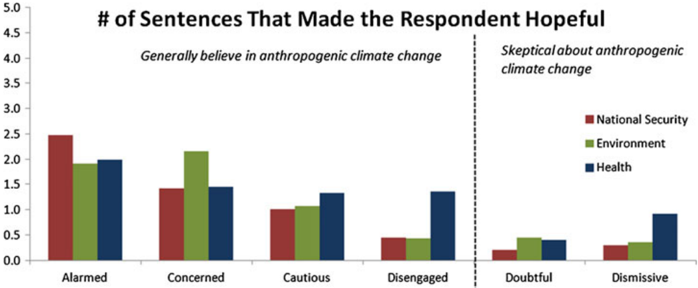
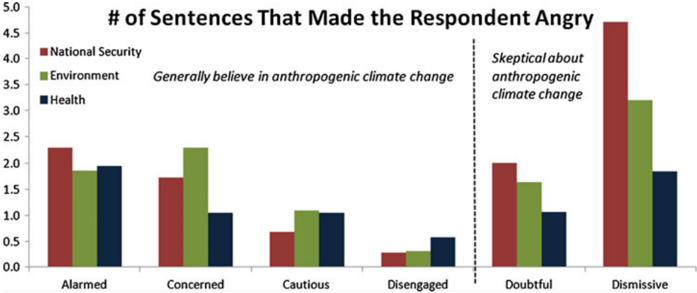
Communication researchers and practitioners have suggested that framing climate change in terms of public health and/or national security may make climate change more personally relevant and emotionally engaging to segments of the public who are currently disengaged or even dismissive of the issue. To evaluate these assumptions, using a nationally representative online survey of U.S. residents ( N = 1,127) conducted in December, 2010, we randomly assigned six previously identified audience segments on climate change to one of three experimental conditions. Subjects were asked to read uniquely framed news articles about climate change emphasizing either the risks to the environment, public health, or national security and the benefits of mitigation and adaptation-related actions. Results show that across audience segments, the public health focus was the most likely to elicit emotional reactions consistent with support for climate change mitigation and adaptation. Findings also indicated that the national security frame may possibly boomerang among audience segments already doubtful or dismissive of the issue, eliciting unintended feelings of anger.
Overview
The claims and statistics of this paper haven’t been checked yet.
Free: it reads the open-access text and checks the first 5 claims that cite a source we can check. Create a free account to check every claim.
Integrity signals
Registry
Cites
Statistics
Figures
Verification
Claims the paper makes
The claims and statistics of this paper haven’t been checked yet.
Free: it reads the open-access text and checks the first 5 claims that cite a source we can check. Create a free account to check every claim.
Claims other papers make about this one
Each is checked against this paper’s own text: does it say what the citing paper says it does?
The cited source says what the claim attributes to it.
In the citing paper
“While studies such as Myers et al (2012) and Maibach et al (2010) have found evidence for the efficacy of the Public health frame, others have found limited evidence (Walker et al 2018).”
From Framing climate change for effective communication: a systematic map (2020) · cites this paper as Myers et al 2012
Self-check
Percentages, sums and reported differences re-computed from the paper’s own numbers.
The self-check needs the paper’s full text.
Citations
Cites
Self-efficacy: Toward a unifying theory of behavioral change
Bandura, A. (1977) · Psychological Review · doi:10.1037/0033-295x.84.2.191 · Cited by 43,925
(2011) · Cited by 14,317
Self-efficacy: Toward a unifying theory of behavioral change
Bandura, A. (1978) · Advances in Behaviour Research and Therapy · doi:10.1016/0146-6402(78)90002-4 · Cited by 10,586
Frame Analysis: An Essay on the Organization of Experience.
Gamson, W. A., & Goffman, E. (1975) · Contemporary Sociology · doi:10.2307/2064022 · Cited by 10,570
Media Discourse and Public Opinion on Nuclear Power: A Constructionist Approach
Gamson, W. A., & Modigliani, A. (1989) · American Journal of Sociology · doi:10.1086/229213 · Cited by 4,971 · cited 1×
“Social scientists have long understood that the way an issue is framed has important consequences (Goffman 1974; Gamson and Modigliani 1989).”
BackgroundTARGET ARTICLE: Hope Theory: Rainbows in the Mind
Snyder, C. R. (2002) · Psychological Inquiry · doi:10.1207/s15327965pli1304_01 · Cited by 3,737 · cited 1×
“Feelings of hope related to climate change, for example, likely increase the probability that individuals will choose to engage with the issue and adopt beliefs and behaviors consistent with efforts to stem the problem (Markowitz and Shariff 2012; Snyder 2002; Swim et al. 2010).”
BackgroundClimate Change Risk Perception and Policy Preferences: The Role of Affect, Imagery, and Values
Leiserowitz, A. (2006) · Climatic Change · doi:10.1007/s10584-006-9059-9 · Cited by 2,197
Self-citationFraming as a Theory of Media Effects
Scheufele, D. A. (1999) · Journal of Communication · doi:10.1111/j.1460-2466.1999.tb02784.x · Cited by 2,179 · cited 2×
“The frame used suggests both the diagnosis of the problem as well as prescriptions for what should be done about it (Nisbet 2009; Scheufele 1999).”
BackgroundMethodBarriers perceived to engaging with climate change among the UK public and their policy implications
Lorenzoni, I., Nicholson-Cole, S., & Whitmarsh, L. (2007) · Global Environmental Change · doi:10.1016/j.gloenvcha.2007.01.004 · Cited by 2,026 · cited 3×
“Effective public engagement requires understanding the cognitive, affective, and behavioral nature of audiences (Lorenzoni et al. 2007).”
BackgroundInfluentialHow Emotion Shapes Behavior: Feedback, Anticipation, and Reflection, Rather Than Direct Causation
Baumeister, R. F., Vohs, K. D., Nathan DeWall, C., & Zhang, L. (2007) · Personality and Social Psychology Review · doi:10.1177/1088868307301033 · Cited by 1,743 · cited 1×
“Emotions serve as affective prompts for engagement with an issue and lead to forming predispositions for action when a relevant situation arises (Baumeister et al. 2007).”
Background
Cited by
Items 101–200 of 773
Making climate-science communication evidence-based: all the way down
Kahan, D. M. (2014) · Routledge eBooks · doi:10.4324/9780203073407-27 · Cited by 95
Ryan, K. (2016) · Emotion, space and society · doi:10.1016/j.emospa.2016.02.006 · Cited by 96
“Across the literature of disciplines such as public health (Myers et al., 2012), science communication (O’Neill and Nicholson-Cole, 2009), and visual arts (Duxbury, 2010), research explores the relationship between emotion and climate change.”
BackgroundHerrmann, A., Fischer, H., Amelung, D., Litvine, D., Aall, C., Andersson, C., Baltruszewicz, M., Barbier, C., Bruyère, S., Bénévise, F., et al. (2017) · BMC Public Health · doi:10.1186/s12889-017-4604-1 · Cited by 93
“pointed out that health was a potential motivator to adopt mitigation action [28, 29].”
BackgroundGeiger, N., Swim, J. K., Gasper, K., Fraser, J., & Flinner, K. (2021) · Journal of Environmental Psychology · doi:10.1016/j.jenvp.2021.101649 · Cited by 91
Feldman, L., & Hart, P. S. (2018) · Journal of Communication · doi:10.1093/joc/jqy011 · Cited by 92
Pragmatic and (or) Constitutive? On the Foundations of Contemporary Risk Communication Research
Rickard, L. N. (2019) · Risk Analysis · doi:10.1111/risa.13415 · Cited by 92
Developments in the Framing of Climate Change as a Public Health Issue in US Newspapers
Weathers, M. R., & Kendall, B. E. (2016) · Environmental Communication · doi:10.1080/17524032.2015.1050436 · Cited by 66
Framing climate change as a human health issue: enough to tip the scale in climate policy?
Rossa-Roccor, V., Giang, A., & Kershaw, P. (2021) · The Lancet Planetary Health · doi:10.1016/s2542-5196(21)00113-3 · Cited by 92
Message Framing and Climate Change Communication: A Meta-Analytical Review
Li, N., & Su, L. Y.-F. (2018) · Journal of Applied Communications · doi:10.4148/1051-0834.2189 · Cited by 93
Increasing pro-environmental behaviors by increasing self-concordance: Testing an intervention.
Unsworth, K. L., & McNeill, I. M. (2017) · Journal of Applied Psychology · doi:10.1037/apl0000155 · Cited by 90
The Influence of Identity Salience on Framing Effectiveness: An Experiment
Diamond, E. P. (2020) · Political Psychology · doi:10.1111/pops.12669 · Cited by 89
“For example, policy communicators have attempted to generate public support for climate mitigation policies by emphasizing the economic costs of inaction and the economic benefits of renewable energy (Hoffman, 2011; Hulme, 2009; Stern, 2007), the local impacts of climate change (Scannell & Gifford, 2013; Spence & Pidg…”
BackgroundHart, P. S., & Feldman, L. (2018) · Journal of Environmental Psychology · doi:10.1016/j.jenvp.2018.08.013 · Cited by 91
Experimental effects of climate messages vary geographically
Zhang, B., van der Linden, S., Mildenberger, M., Marlon, J. R., Howe, P. D., & Leiserowitz, A. (2018) · Nature Climate Change · doi:10.1038/s41558-018-0122-0 · Cited by 87
Self-citationIdentifying climate change interpretive communities in a large Australian sample
Hine, D. W., Reser, J., Phillips, W. J., Cooksey, R., Marks, A. D. G., Nunn, P. D., Watt, S., Bradley, G. L., & Glendon, A. I. (2013) · Journal of Environmental Psychology · doi:10.1016/j.jenvp.2013.08.006 · Cited by 88
Addressing the Complexities of Boundary Work in Sustainability Science through Communication
McGreavy, B., Hutchins, K., Smith, H. M., Lindenfeld, L., & Silka, L. (2013) · Sustainability · doi:10.3390/su5104195 · Cited by 91
Counteracting Climate Science Politicization With Effective Frames and Imagery
Bolsen, T., Palm, R. I., & Kingsland, J. T. (2019) · Science Communication · doi:10.1177/1075547019834565 · Cited by 91
“In another study, Scannell and Gifford (2013) found that frames emphasizing the local impact of climate change were more impactful on beliefs than frames that made salient its effects on distant locations (also see, Myers et al., 2012).”
BackgroundA new approach for evaluating climate change communication
Levine, A. S., & Kline, R. (2017) · Climatic Change · doi:10.1007/s10584-017-1952-x · Cited by 87
Kelly, C. (2018) · Marine Policy · doi:10.1016/j.marpol.2018.03.023 · Cited by 86
Health in climate change research from 1990 to 2014: positive trend, but still underperforming
Verner, G., Schütte, S., Knop, J., Sankoh, O., & Sauerborn, R. (2016) · Global Health Action · doi:10.3402/gha.v9.30723 · Cited by 73
“Health can be a motivating factor for action on climate change (20) and an increased focus on this in the scientific community could be a means of effecting individual and political change.”
BackgroundA Social Identity Approach to Engaging Christians in the Issue of Climate Change
Goldberg, M. H., Gustafson, A., Ballew, M. T., Rosenthal, S. A., & Leiserowitz, A. (2019) · Science Communication · doi:10.1177/1075547019860847 · Cited by 83
Self-citationMessage framing strategies for effective marine conservation communication
Kolandai‐Matchett, K., & Armoudian, M. (2020) · Aquatic Conservation Marine and Freshwater Ecosystems · doi:10.1002/aqc.3349 · Cited by 88
Pechey, R., Reynolds, J. P., Cook, B., Marteau, T. M., & Jebb, S. A. (2022) · Journal of Environmental Psychology · doi:10.1016/j.jenvp.2022.101817 · Cited by 84
Predictors of trust in the general science and climate science research of US federal agencies
Myers, T. A., Kotcher, J., Stenhouse, N., Anderson, A. A., Maibach, E., Beall, L., & Leiserowitz, A. (2017) · Public Understanding of Science · doi:10.1177/0963662516636040 · Cited by 74
“…shown that utilizing this national security frame may backfire among those members of the public who are skeptical of climate science (although those findings may have been the result of participants questioning the attribution of the information to members of the US military; Myers et al., 2012).”
BackgroundSelf-citationStevenson, K. T., King, T. L., Selm, K. R., Peterson, M. N., & Monroe, M. C. (2017) · Environmental Education Research · doi:10.1080/13504622.2017.1318114 · Cited by 81
“For instance, a simple framing of climate change as a public health concern made people more hopeful than when using a national security frame (Myers et al. 2012), and a stewardship frame used with forest landowners increased feelings of efficacy (Krantz and Monroe 2016).”
BackgroundMethodResultInfluentialHowarth, C., Parsons, L., & Thew, H. (2020) · One Earth · doi:10.1016/j.oneear.2020.04.001 · Cited by 80
Park, C. S., Liu, Q., & Kaye, B. K. (2021) · Social Media + Society · doi:10.1177/20563051211036059 · Cited by 82
“YouTube videos are likely to influence public views about climate change (Boykoff & Boykoff, 2007), and are effective in mobilizing the public to take action (Leiserowitz et al., 2013; Myers et al., 2012; Porter & Hellsten, 2014).”
BackgroundHufnagel, E. (2015) · Journal of Research in Science Teaching · doi:10.1002/tea.21245 · Cited by 83
Theory and Methods for Sociocultural Research in Science and Engineering Education
Kelly, G. J., & Green, J. (2018) · Routledge eBooks · doi:10.4324/9781351139922 · Cited by 80
Climate concern and policy acceptance before and after COVID-19
Drews, S., Savin, I. V., van den Bergh, J. C. J. M., & Villamayor‐Tomás, S. (2022) · Ecological Economics · doi:10.1016/j.ecolecon.2022.107507 · Cited by 79
Kotcher, J., Feldman, L., Luong, K. T., Wyatt, J., & Maibach, E. W. (2021) · The Journal of Climate Change and Health · doi:10.1016/j.joclim.2021.100030 · Cited by 78
“This approach promotes risk perceptions and policy support [12], affective assessment and assessment certainty [13], and hopeful emotions [14].”
BackgroundSelf-citationMossler, M. V., Bostrom, A., Kelly, R. P., Crosman, K. M., & Moy, P. (2017) · Global Environmental Change · doi:10.1016/j.gloenvcha.2017.04.002 · Cited by 78
Public perception of climate change in Britain following the winter 2013/2014 flooding
Capstick, S., Demski, C., Sposato, R. G., Pidgeon, N. F., Spence, A., & Corner, A. (2015) · ORCA Online Research @Cardiff (Cardiff University) · Cited by 78
Walker, B. J. A., Kurz, T., & Russel, D. (2018) · Environment and Behavior · doi:10.1177/0013916517713299 · Cited by 77
“…those studies suggesting the importance of framing on the public’s engagement with climate change (e.g., Bain et al., 2012; Maibach et al., 2010; Myers et al., 2012; Walker et al., 2014) over the existing research that suggests a more mixed outcome (Aklin & Urpelainen, 2013; Bernauer &…”
ResultCognitive reappraisal and pro‐environmental behavior: The role of global climate change perception
Panno, A., Carrus, G., Maricchiolo, F., & Mannetti, L. (2015) · European Journal of Social Psychology · doi:10.1002/ejsp.2162 · Cited by 71
Emotional responses to climate change information and their effects on policy support
Myers, T. A., Roser‐Renouf, C., & Maibach, E. W. (2023) · Frontiers in Climate · doi:10.3389/fclim.2023.1135450 · Cited by 78
Self-citationCommunicating about ocean health: theoretical and practical considerations
Schuldt, J. P., McComas, K. A., & Byrne, S. E. (2016) · Philosophical Transactions of the Royal Society B Biological Sciences · doi:10.1098/rstb.2015.0214 · Cited by 75
Kotcher, J., Maibach, E. W., Montoro, M., & Hassol, S. J. (2018) · GeoHealth · doi:10.1029/2018gh000154 · Cited by 75
“, 2014), or by a narrow range of outcomemeasures, such as a focus on only emotional responses (Myers et al., 2012).”
BackgroundSelf-citationNeither Hope nor Fear: Empirical Evidence Should Drive Biodiversity Conservation Strategies
Kidd, L. R., Bekessy, S. A., & Garrard, G. E. (2019) · Trends in Ecology & Evolution · doi:10.1016/j.tree.2019.01.018 · Cited by 75
Navigating fundamental tensions towards a decolonial relational vision of planetary health
Jones, R., Reid, P., & Macmillan, A. K. (2022) · The Lancet Planetary Health · doi:10.1016/s2542-5196(22)00197-8 · Cited by 75
The work after “It's too late” (to prevent dangerous climate change)
Moser, S. C. (2019) · Wiley Interdisciplinary Reviews Climate Change · doi:10.1002/wcc.606 · Cited by 73
The Political Economy of Health Co-Benefits: Embedding Health in the Climate Change Agenda
Workman, A., Blashki, G., Bowen, K. J., Karoly, D. J., & Wiseman, J. (2018) · International Journal of Environmental Research and Public Health · doi:10.3390/ijerph15040674 · Cited by 60
Role of Emotions in Climate Change Communication
Salama, S., & Aboukoura, K. (2017) · Climate change management · doi:10.1007/978-3-319-69838-0_9 · Cited by 71
Communication research to improve engagement with climate change and human health: A review
Campbell, E., Uppalapati, S. S., Kotcher, J., & Maibach, E. W. (2023) · Frontiers in Public Health · doi:10.3389/fpubh.2022.1086858 · Cited by 69
Self-citationTransforming communication and knowledge production processes to address high-end climate change
Tàbara, J. D., Clair, A. L. S., & Hermansen, E. A. T. (2017) · Environmental Science & Policy · doi:10.1016/j.envsci.2017.01.004 · Cited by 69
Understanding hope and what it means for the future of conservation
Park, A., WILLIAMS, E. S., & Zurba, M. (2020) · Biological Conservation · doi:10.1016/j.biocon.2020.108507 · Cited by 68
Making it personal: Diversity and deliberation in climate adaptation planning
Phadke, R., Manning, C. M., & Burlager, S. (2015) · Climate Risk Management · doi:10.1016/j.crm.2015.06.005 · Cited by 66
Narrative Persuasion and Storytelling as Climate Communication Strategies
Jones, M. D., & Peterson, H. L. (2016) · Oxford University Press eBooks · doi:10.1093/acrefore/9780190228620.013.384 · Cited by 69
From influencing to engagement: a framing model for climate communication in polarised settings
Badullovich, N. (2022) · Environmental Politics · doi:10.1080/09644016.2022.2052648 · Cited by 65
Is my vulnerability so different from your’s? A call for compassionate climate change research
Eriksen, S. (2022) · Progress in Human Geography · doi:10.1177/03091325221083221 · Cited by 64
“Yet scholars, policy makers and public at large often fail to connect with what it means for our daily lives and how to act to address the problem within our lived realities, contributing to disengagement (Myers et al., 2012; Stoknes, 2014).”
BackgroundCole, J. C., Gillis, A. J., van der Linden, S., Cohen, M. A., & Vandenbergh, M. P. (2025) · Perspectives on Psychological Science · doi:10.1177/17456916231186409 · Cited by 61
“Other research raises doubt on whether ideologically targeted messaging is effective (Aklin & Urpelainen, 2013; Arpan et al., 2018) or may backfire (Myers et al., 2012).”
Framing and Context of the Report
(IPCC), I. P. O. C. C. (2022) · Cambridge University Press eBooks · doi:10.1017/9781009157964.003 · Cited by 63
Méndez, M. (2015) · Local Environment · doi:10.1080/13549839.2015.1038227 · Cited by 59
Environmental education and the health professions: framing climate change as a health issue
Adlong, W., & Dietsch, E. (2014) · Environmental Education Research · doi:10.1080/13504622.2014.930727 · Cited by 61
“…the health effects of climate change, the health co-benefits of mitigation, including the avoidance of the current health costs of fossil fuel use previously described, are also important for political and public discourse about climate action (Myers et al. 2012; WHO 2009a, 2012b; Wibeck, 2014).”
BackgroundČulin, J., & Bielić, T. (2016) · Journal of Maritime & Transportation Science · doi:10.18048/2016.51.04 · Cited by 59
“Namely, research on climate change communication have shown that framing climate change in terms of public health instead of environmental problem is more effective at engaging audiences (Myers et al., 2012; Nisbet, 2009).”
BackgroundFlying less: personal health and environmental co-benefits
Cohen, S., & Kantenbacher, J. (2019) · Journal of Sustainable Tourism · doi:10.1080/09669582.2019.1585442 · Cited by 59
“…an effective framing for engaging the public (Maibach et al. 2010), while focusing on the public health impacts of climate change has been more effective than environmental or national-security frames in eliciting emotional reactions consistent with support for climate action (Myers et al. 2012).”
Homer-Dixon, T. F., Milkoreit, M., Mock, S. J., Schröder, T., & Thagard, P. R. (2014) · SAGE Open · doi:10.1177/2158244014526210 · Cited by 62
Feldman, L. (2013) · International journal of communication · Cited by 58
Action on climate change requires deliberative framing at local governance level
Romsdahl, R. J., Blue, G., & Kirilenko, A. (2018) · Climatic Change · doi:10.1007/s10584-018-2240-0 · Cited by 58
“For example, studies show that reframing climate change in different terms, such as public health, elicits positive responses and may provide support for addressing climate policy actions (Myers et al. 2012; Dryzek and Lo 2015).”
BackgroundPeterson, H. L. (2021) · Policy Studies Journal · doi:10.1111/psj.12447 · Cited by 57
Compensating for the Climate: Unemployment Insurance and Climate Change Votes
Kono, D. Y. (2019) · Political Studies · doi:10.1177/0032321719836066 · Cited by 56
“…the state of the economy (Kahn and Kotchen, 2011; Scruggs and Benegal, 2012),4 elite cues (Brulle et al., 2012), the framing of climate policy (Myers et al., 2012),5 the inclusion of economic sanctions in climate legislation (Bechtel and Scheve, 2013; Tingley and Tomz, 2014), local weather…”
BackgroundStrategic Framing and Persuasive Messaging to Influence Climate Change Perceptions and Decisions
Bolsen, T., & Shapiro, M. A. (2017) · Oxford University Press eBooks · doi:10.1093/acrefore/9780190228620.013.385 · Cited by 61
Engaging Diverse Audiences with Climate Change: Message Strategies for Global Warming's Six AmericasPreprint
Roser‐Renouf, C., Stenhouse, N., Rolfe-Redding, J., Maibach, E. W., & Leiserowitz, A. (2014) · SSRN Electronic Journal · doi:10.2139/ssrn.2410650 · Cited by 56
“Health frames may also work with these segments (Myers et al., 2012), along with conveying personal experience with climate for the Doubtful (Myers et al., 2013).””
BackgroundSelf-citationPerceptions of the health impacts of climate change among Canadians
Casson, N. J., Cameron, L., Mauro, I. J., Friesen‐Hughes, K., & Rocque, R. (2023) · BMC Public Health · doi:10.1186/s12889-023-15105-z · Cited by 54
Communicating climate change and health in the media
Depoux, A., Hémono, M., Puig-Malet, S., Pédron, R., & Flahault, A. (2017) · Public health reviews · doi:10.1186/s40985-016-0044-1 · Cited by 54
“However, the sections in which they appear demonstrate the media’s tendency to frame climate change as an environmental issue [4].”
BackgroundLuong, K. T., Garrett, R., & Slater, M. D. (2019) · Science Communication · doi:10.1177/1075547019862559 · Cited by 54
“For example, a message supporting climate change mitigation can have a “risks to the environment,” “public health,” or “national security” frame, all of which support policies and actions to mitigate climate change, but each highlighting a different reason for the stance (Myers et al., 2012).”
BackgroundClimate Change and Emotions: Analysis of People’s Emotional States in Southern Ecuador
Iñiguez-Gallardo, V., Boero, D. L., & Tzanopoulos, J. (2021) · Frontiers in Psychology · doi:10.3389/fpsyg.2021.644240 · Cited by 58
Communicating Climate Change: A Guide for Educators
Armstrong, A. K., Krasny, M. E., & Schuldt, J. P. (2019) · Cornell University Press eBooks · doi:10.7591/9781501730801 · Cited by 54
Lockwood, A. (2016) · Environmental Communication · doi:10.1080/17524032.2016.1205642 · Cited by 52
Nature of green advertisements in India: Are they greenwashed?
Fernando, A. G., Sivakumaran, B., & Suganthi, L. (2014) · Asian Journal of Communication · doi:10.1080/01292986.2014.885537 · Cited by 52
Flemming, D., Creß, U., Kimmig, S., BRANDT, M. J., & Kimmerle, J. (2018) · Frontiers in Communication · doi:10.3389/fcomm.2018.00003 · Cited by 52
Böhler, H., & Kayser, M. A. (2021) · Stadtforschung aktuell · doi:10.1007/978-3-658-31027-1_7 · Cited by 50
Liu, T., Shryane, N. M., & Elliot, M. J. (2022) · Humanities and Social Sciences Communications · doi:10.1057/s41599-022-01287-1 · Cited by 53
“Subsequently, Myers et al. (2012) tested Maibach et al.’s segments of US residents (N= 1127) and compared the effectiveness of climate change message framings among the segments.”
BackgroundResultInfluentialHow strong is public support for unilateral climate policy and what drives it?
McGrath, L. F., & Bernauer, T. (2017) · Wiley Interdisciplinary Reviews Climate Change · doi:10.1002/wcc.484 · Cited by 51
The Six Australias: Concern About Climate Change (and Global Warming) is Rising
Neumann, C., Stanley, S. K., Leviston, Z., & Walker, I. A. (2022) · Environmental Communication · doi:10.1080/17524032.2022.2048407 · Cited by 53
“For example, due to their high valence and issue involvements, campaigns may focus on the more responsive Alarmed and Concerned segments, and avoid Dismissives, who are less likely to change their mind (Maibach et al., 2011).”
BackgroundInfluentialEbi, K. L., Semenza, J. C., & Rocklöv, J. (2016) · Environmental Health · doi:10.1186/s12940-016-0183-3 · Cited by 49
“risks of climate change is an effective approach to building public consensus on adaptation and mitigation [4].”
Singh, S. P., & Swanson, M. (2017) · PLoS ONE · doi:10.1371/journal.pone.0181401 · Cited by 50
Larger Than Life: Injecting Hope into the Planetary Health Paradigm
Prescott, S. L., & Logan, A. C. (2018) · Challenges · doi:10.3390/challe9010013 · Cited by 50
“Undoubtedly, emotions in general, and hope in particular, are an important consideration in support of climate change policy [21,22].”
BackgroundDisrupting polarized discourses: Can we get out of the ruts of environmental conflicts?
Lucas, C. H., & Warman, R. D. (2018) · Environment and Planning C Politics and Space · doi:10.1177/2399654418772843 · Cited by 49
There Must Be More: Communication to Close the Cultural Divide
Moser, S. C., & Berzonsky, C. L. (2015) · Cambridge University Press eBooks · doi:10.1017/cbo9781139149389.017 · Cited by 50
“Even those who tried have found it difficult, depressing or overwhelming to contemplate (Meijnders, Midden, and Wilke 2001; Moser 2007; Myers et al. 2012).”
BackgroundThe influence of message framing on public beliefs and behaviors related to species reintroduction
Niemiec, R. M., Sekar, S., Gonzalez, M. N., & Mertens, A. (2020) · Biological Conservation · doi:10.1016/j.biocon.2020.108522 · Cited by 48
Doell, K. C., Conte, B., & Brosch, T. (2021) · Scientific Reports · doi:10.1038/s41598-021-99438-y · Cited by 50
Communicating the Scientific Consensus on Climate Change: Diverse Audiences and Effects Over Time
Goldberg, M. H., Gustafson, A., van der Linden, S., Rosenthal, S. A., & Leiserowitz, A. (2022) · Environment and Behavior · doi:10.1177/00139165221129539 · Cited by 46
“anger) to messages about the public health and national security implications of climate change (Myers et al., 2012).”
BackgroundSelf-citationThe earth is our home: systemic metaphors to redefine our relationship with nature
Thibodeau, P. H., Frantz, C. M., & Berretta, M. (2017) · Climatic Change · doi:10.1007/s10584-017-1926-z · Cited by 46
van der Linden, S. (2015) · Environmental Education Research · doi:10.1080/13504622.2015.1108391 · Cited by 46
Dacorogna, B., & Maréchal, P. (2008) · Journal of convex analysis · doi:10.68381/jca15019 · Cited by 46
Audiences for Science Communication in the United States
Besley, J. C. (2018) · Environmental Communication · doi:10.1080/17524032.2018.1457067 · Cited by 45
Lu, H. (2022) · Science Communication · doi:10.1177/10755470221105068 · Cited by 43
“…appeals, and visualization have been shown effective in making individuals resonate emotionally with climate change (e.g., H. Lu & Schuldt, 2016; Myers et al., 2012; O’Neill & Nicholson-Cole, 2009), they are often designed for single exposure interventions that seldom consider what happens when…”
BackgroundThe durable, bipartisan effects of emphasizing the cost savings of renewable energy
Gustafson, A., Goldberg, M. H., Bergquist, P., Lacroix, K., Rosenthal, S. A., & Leiserowitz, A. (2022) · Nature Energy · doi:10.1038/s41560-022-01099-2 · Cited by 48
Self-citationBowen, K., Miller, F. P., Dany, V., McMichael, A. J., & Friel, S. (2013) · Climate and Development · doi:10.1080/17565529.2013.833077 · Cited by 43
Livingstone, S. W., Cadotte, M. W., & Isaac, M. E. (2018) · Ecosystem Services · doi:10.1016/j.ecoser.2018.02.006 · Cited by 43
A people-centred approach is needed to meet net zero goals
Verfuerth, C., Demski, C., Capstick, S., Whitmarsh, L. E., & Poortinga, W. (2023) · Journal of the British Academy · doi:10.5871/jba/011s4.097 · Cited by 42
Arpan, L. M., Xu, X., Raney, A. A., Chen, C., & Wang, Z. (2018) · Energy Research & Social Science · doi:10.1016/j.erss.2018.08.007 · Cited by 43
Martel-Morin, M., & Lachapelle, É. (2022) · PLoS ONE · doi:10.1371/journal.pone.0273977 · Cited by 44
“[39] use the Six Americas segmentation model and demonstrate that framing climate change as a health issue elicited positive emotional reactions (e.”
MethodResultHowarth, C. (2017) · Energy Research & Social Science · doi:10.1016/j.erss.2017.06.011 · Cited by 43
“For example, framing the co-benefits of climate change and low carbon transitions through health, well-being [31,32] and energy security [33] lenses can increase engagement on the issue.”
BackgroundNatural Disaster Risk and Residential Mortgage Lending Standards
Duanmu, J., Li, Y., Lin, M., & Tahsin, S. (2021) · Journal of Real Estate Research · doi:10.1080/08965803.2021.2013613 · Cited by 41
Geiger, N. (2020) · Health Communication · doi:10.1080/10410236.2020.1862449 · Cited by 42
“…health implications of climate change, such as noting that climate change is causing an increase in asthma rates and that addressing the issue can improve public health by reducing air pollution, can lead to increased hope and concern about the topic (Maibach et al., 2010; Myers et al., 2012).”
BackgroundFinding shared meaning in the Anthropocene: engaging diverse perspectives on climate change
Hochachka, G. (2021) · Sustainability Science · doi:10.1007/s11625-021-00965-4 · Cited by 41
“…2004; Torbert and Barker 2014) 1 3 as its ability to reveal the viewpoints of people that may otherwise go unnoticed, thus legitimizing popular knowledge in the face of other dominant discourses (Bennett and Dearden 2013; Hissa 2016; Hochachka 2019; McClymont Peace and Myers 2012; Myers et al.”
BackgroundEnvironmental attitudes, environmental problems and party choice. A large-N comparative study
Papp, Z. (2022) · Political Geography · doi:10.1016/j.polgeo.2022.102652 · Cited by 40
Climate change and health in Earth's future
Bowles, D. C., Butler, C. D., & Friel, S. (2013) · Earth s Future · doi:10.1002/2013ef000177 · Cited by 40
MacInnis, B., Krosnick, J. A., Abeles, A. T., Caldwell, M. R., Prahler, E. E., & Dunne, D. D. (2014) · Climatic Change · doi:10.1007/s10584-014-1286-x · Cited by 39
“” Finally, our finding regarding framing contributes to the growing literature on the impact of framing in this arena (see, e.g., Gifford and Comeau 2011; Myers et al. 2012; Spence and Pidgeon 2010).”
Result
Metadata
- Authors
- Myers, T. A., Nisbet, M. C., Maibach, E. W., & Leiserowitz, A. A.
- Affiliations
- George Mason University (US)
- American University (US)
- Yale University (US)
- Corresponding author
- Nisbet, Matthew C.
- Venue
- Climatic Change
- Published
- 2012-06-28
- Volume
- 113
- Issue
- 3-4
- Pages
- 1105-1112
- ISSN
- 0165-0009 (ISSN-L)
- 1573-1480
- OpenAlex
- W1575525139
- Cited by
- 632
- References
- 30
- Citations by year
- 2026: 22 · 2025: 52 · 2024: 46 · 2023: 53 · 2022: 60 · 2021: 70 · 2020: 51 · 2019: 68 · 2018: 54 · 2017: 42 · 2016: 35 · 2015: 35 · 2014: 24 · 2013: 18 · 2012: 1
- FWCI
- 82.00
- Type
- journal article
- Language
- en
- Open access
- hybrid
- doi.org
- Licence
- cc-by
- Locations
- Climatic Change (publishedVersion, cc-by)
- RePEc: Research Papers in Economics (submittedVersion)
- Funders
- Grantham Foundation for the Protection of the Environment
- Topics
- Social Sciences › Sociology and Political Science › Climate Change Communication and Perception
- Social Sciences › Sociology and Political Science › Risk Perception and Management
- Social Sciences › Economics, Econometrics and Finance › Economics and Econometrics › Climate Change Policy and Economics
- Keywords
- climate change communication, framing effects, public health framing, national security framing, climate emotions, public attitudes toward climate change
About these checks
Registry, retraction, Cites and statistics results are computed, not judged, with one exception: a printed reference that no index lists is read once by a model before it counts as a citation error. Claims are extracted by a model and kept only when their quote appears verbatim in the text; each cited source is then checked, with a model’s help, for whether it says what the claim relies on. Those verdicts can be wrong — read the claim’s quote and the cited source before relying on one.
Statistics and arithmetic are recomputed, not judged.
Confidence bands are shown only for fields calibrated on our annotated test set. None is calibrated yet, so no band is shown.
What counts as a claim ›How we measure confidence ›How we check this ›
Are you an author, or do you see a problem with this page? Request a review
Data sources
Bibliographic data: Semantic Scholar, OpenAlex, Crossref.
Contains information from the Semantic Scholar Academic Graph Datasets, made available under the ODC Attribution License (ODC-BY 1.0).
Semantic Scholar’s data is described in: Kinney, R., et al. (2023). The Semantic Scholar Open Data Platform. arXiv:2301.10140.
