

A public health frame arouses hopeful emotions about climate change: A Letter
Open accessThe DOI matches its Crossref record; 29 of the 30 references it cites were found in a registry or an index.
Abstract
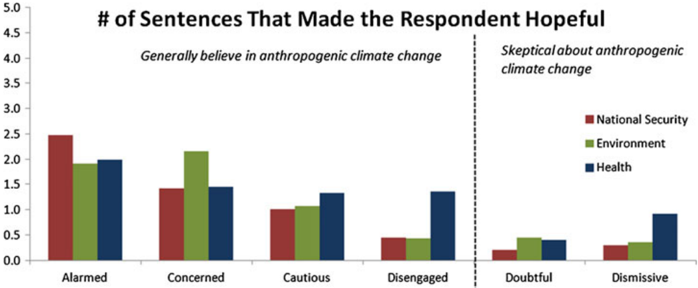
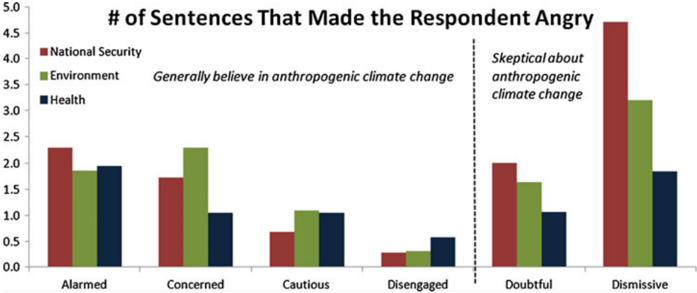
Communication researchers and practitioners have suggested that framing climate change in terms of public health and/or national security may make climate change more personally relevant and emotionally engaging to segments of the public who are currently disengaged or even dismissive of the issue. To evaluate these assumptions, using a nationally representative online survey of U.S. residents ( N = 1,127) conducted in December, 2010, we randomly assigned six previously identified audience segments on climate change to one of three experimental conditions. Subjects were asked to read uniquely framed news articles about climate change emphasizing either the risks to the environment, public health, or national security and the benefits of mitigation and adaptation-related actions. Results show that across audience segments, the public health focus was the most likely to elicit emotional reactions consistent with support for climate change mitigation and adaptation. Findings also indicated that the national security frame may possibly boomerang among audience segments already doubtful or dismissive of the issue, eliciting unintended feelings of anger.
Overview
The claims and statistics of this paper haven’t been checked yet.
Free: it reads the open-access text and checks the first 5 claims that cite a source we can check. Create a free account to check every claim.
Integrity signals
Registry
Cites
Statistics
Figures
Verification
Claims the paper makes
The claims and statistics of this paper haven’t been checked yet.
Free: it reads the open-access text and checks the first 5 claims that cite a source we can check. Create a free account to check every claim.
Claims other papers make about this one
Each is checked against this paper’s own text: does it say what the citing paper says it does?
The cited source says what the claim attributes to it.
In the citing paper
“While studies such as Myers et al (2012) and Maibach et al (2010) have found evidence for the efficacy of the Public health frame, others have found limited evidence (Walker et al 2018).”
From Framing climate change for effective communication: a systematic map (2020) · cites this paper as Myers et al 2012
Self-check
Percentages, sums and reported differences re-computed from the paper’s own numbers.
The self-check needs the paper’s full text.
Citations
Cites
Self-efficacy: Toward a unifying theory of behavioral change
Bandura, A. (1977) · Psychological Review · doi:10.1037/0033-295x.84.2.191 · Cited by 43,925
(2011) · Cited by 14,317
Self-efficacy: Toward a unifying theory of behavioral change
Bandura, A. (1978) · Advances in Behaviour Research and Therapy · doi:10.1016/0146-6402(78)90002-4 · Cited by 10,586
Frame Analysis: An Essay on the Organization of Experience.
Gamson, W. A., & Goffman, E. (1975) · Contemporary Sociology · doi:10.2307/2064022 · Cited by 10,570
Media Discourse and Public Opinion on Nuclear Power: A Constructionist Approach
Gamson, W. A., & Modigliani, A. (1989) · American Journal of Sociology · doi:10.1086/229213 · Cited by 4,971 · cited 1×
“Social scientists have long understood that the way an issue is framed has important consequences (Goffman 1974; Gamson and Modigliani 1989).”
BackgroundTARGET ARTICLE: Hope Theory: Rainbows in the Mind
Snyder, C. R. (2002) · Psychological Inquiry · doi:10.1207/s15327965pli1304_01 · Cited by 3,737 · cited 1×
“Feelings of hope related to climate change, for example, likely increase the probability that individuals will choose to engage with the issue and adopt beliefs and behaviors consistent with efforts to stem the problem (Markowitz and Shariff 2012; Snyder 2002; Swim et al. 2010).”
BackgroundClimate Change Risk Perception and Policy Preferences: The Role of Affect, Imagery, and Values
Leiserowitz, A. (2006) · Climatic Change · doi:10.1007/s10584-006-9059-9 · Cited by 2,197
Self-citationFraming as a Theory of Media Effects
Scheufele, D. A. (1999) · Journal of Communication · doi:10.1111/j.1460-2466.1999.tb02784.x · Cited by 2,179 · cited 2×
“The frame used suggests both the diagnosis of the problem as well as prescriptions for what should be done about it (Nisbet 2009; Scheufele 1999).”
BackgroundMethodBarriers perceived to engaging with climate change among the UK public and their policy implications
Lorenzoni, I., Nicholson-Cole, S., & Whitmarsh, L. (2007) · Global Environmental Change · doi:10.1016/j.gloenvcha.2007.01.004 · Cited by 2,026 · cited 3×
“Effective public engagement requires understanding the cognitive, affective, and behavioral nature of audiences (Lorenzoni et al. 2007).”
BackgroundInfluentialHow Emotion Shapes Behavior: Feedback, Anticipation, and Reflection, Rather Than Direct Causation
Baumeister, R. F., Vohs, K. D., Nathan DeWall, C., & Zhang, L. (2007) · Personality and Social Psychology Review · doi:10.1177/1088868307301033 · Cited by 1,743 · cited 1×
“Emotions serve as affective prompts for engagement with an issue and lead to forming predispositions for action when a relevant situation arises (Baumeister et al. 2007).”
Background
Cited by
Items 401–500 of 773
Thaker, J. J., & Floyd, B. (2021) · Journal of Science Communication · doi:10.22323/2.20050208 · Cited by 9
“While some studies incorporate climate change and public health frame in the same message [Bernauer and McGrath, 2016; Feldman and Hart, 2018; Myers et al., 2012], other scholars have presented this information sequentially [Bain et al., 2016; Walker, Kurz and Russel, 2018] or have used frame…”
BackgroundResultInfluentialKommunikation zu Klimawandel und Gesundheit für spezifische Zielgruppen
Lehrer, L., Hellmann, L., Temme, H., Otten, L., Hübenthal, J., Geiger, M., Jenny, M. A., & Betsch, C. (2023) · Publication server of the Robert Koch Institute (Robert Kock Institute) · doi:10.25646/11770 · Cited by 9
Framing of climate change issues in Indian television news channels
G., C., Arul, C., & Aram, I. A. (2016) · Journal of Media and Communication Studies · doi:10.5897/jmcs2015.0479 · Cited by 9
Alternative Facts and Alternative Views: Scientists, Managers, and Animal Rights Activists
Perry, G., Sarge, M. A., & Perry, D. (2020) · Springer eBooks · doi:10.1007/978-3-030-42335-3_13 · Cited by 9
Vu, H. T., McCombs, M., Russell, A., & Pain, P. (2020) · The Agenda Setting Journal · doi:10.1075/asj.19009.vu · Cited by 9
Cumulative Harm as a Function of Carbon Emissions
Nolt, J. (2018) · Climate change management · doi:10.1007/978-3-319-77544-9_3 · Cited by 9
Canadian Weathercasters’ Current and Potential Role as Climate Change Communicators
McIlroy‐Young, B., & Thistlethwaite, J. (2019) · Environmental Communication · doi:10.1080/17524032.2018.1557726 · Cited by 9
Gesundheitliche Vorteile von Klimaschutzmaßnahmen – wie Haushalte und Politik profitieren können
Herrmann, A., de Jong, L., Kowalski, C., & Sauerborn, R. (2019) · Bundesgesundheitsblatt - Gesundheitsforschung - Gesundheitsschutz · doi:10.1007/s00103-019-02929-7 · Cited by 9
“Auch andere Studien zeigten, dass das Gesundheitsargument dazu führt, dass Menschen Klimapolitiken positiver gegenüberstehen [35, 36].”
BackgroundCommunicating climate change : how proximising climate change and global identity predict engagement
Loy, L. S. (2018) · University writing server of the University of Hohenheim (Universität Hohenheim) · Cited by 9
The “Think-and-do Tank” Model: Action-oriented Climate Communication Research
Maibach, E. W., Roser‐Renouf, C., Myers, T. A., Kotcher, J., & Reed, D. (2024) · Environmental Communication · doi:10.1080/17524032.2024.2304571 · Cited by 9
“; exploratory and hypothesis-driven message testing research (e.g. Myers et al., 2012; Kotcher, Feldman, et al., 2021); and fi eld experiments to evaluate the impact of our and other organization ’ s climate science communication initiatives (e.g. Myers et al., 2020).”
BackgroundSelf-citationEmotion and the Psychological Distance of Climate Change
Chu, H., & Yang, J. Z. (2020) · Sage Journals Data · doi:10.25384/sage.c.5039987 · Cited by 9
A New Journalism for a New Climate: Is Solutions Journalism the Solution?
Thier, K. (2025) · Science Communication · doi:10.1177/10755470251378065 · Cited by 8
Rage of righteousness: Anger's role in promoting debunking effects during the COVID-19 pandemic
Peng, K., Zheng, Y., Qiu, Y., & Li, Q. (2023) · Computers in Human Behavior · doi:10.1016/j.chb.2023.107896 · Cited by 8
What our response to the COVID-19 pandemic tells us of our capacity to respond to climate change
Gemenne, F., & Depoux, A. (2020) · Environmental Research Letters · doi:10.1088/1748-9326/abb851 · Cited by 8
Hafenscher, P., & Jankó, F. (2022) · Environmental Education Research · doi:10.1080/13504622.2022.2068506 · Cited by 8
“Hope may well be an adequate tool for managing fear and motivating collective action (Kleres and Wettergren 2017; Myers et al. 2012; Ojala 2012), but it can also reduce risk perception.”
MethodSocial media engagement in health and climate change: an exploratory analysis of Twitter
Golder, S., & Graham, H. M. (2024) · Environmental Research Health · doi:10.1088/2752-5309/ad22ea · Cited by 9
“…public’s lack of knowledge of the type and severity of climate change’s impact on people’s health [47] and points to the potential for testing and refining public health messaging around climate change, including targeted messages for those unconcerned and sceptical about climate change [48, 49].”
BackgroundDuffy, M. A. (2021) · The American Naturalist · doi:10.1086/715153 · Cited by 8
Media Framing of Climate Change Mitigation and Adaptation
Swain, K. A. (2021) · Springer eBooks · doi:10.1007/978-1-4614-6431-0_6-3 · Cited by 8
Frames, facts, and the science of communicating environmental crises
Martell, J. E. M., & Rodewald, A. D. (2020) · Conservation Biology · doi:10.1111/cobi.13424 · Cited by 8
“In contrast to the substantial body of research about climate-change framing (e.g., Hart 2011; Myers et al. 2012; for a review, see Nisbet and Scheufele [2009]), there remains a noticeable dearth of literature about message framing within the conservation and biodiversity arenas despite the obvious…”
BackgroundResultArnold, A. (2015) · OPUS Publication Server of the University of Stuttgart (University of Stuttgart) · doi:10.18419/opus-8740 · Cited by 10
Hayes, K. (2019) · TSpace (University of Toronto) · Cited by 8
Sater, R. A., Perona, M., Huillery, É., & Chevallier, C. (2021) · SocArXiv (OSF Preprints) · doi:10.31235/osf.io/kw3tn · Cited by 10
The role of co-benefits in motivating climate change mitigation – Experimental evidence
Feldhaus, C., Gleue, M., Löschel, A., & Werner, P. (2025) · Ecological Economics · doi:10.1016/j.ecolecon.2025.108783 · Cited by 7
Samet, J. M., & Zhang, J. J. (2015) · Routledge eBooks · doi:10.4324/9781315818719.ch20 · Cited by 7
Ghezelbash, D., & Dorostkar, K. (2023) · Journal of Refugee Studies · doi:10.1093/jrs/fead039 · Cited by 7
Communiquer l’action en changements climatiques au Québec: Une étude de segmentation
Daignault, P., Boivin, M., & St-Arnaud, V. C. (2018) · VertigO · doi:10.4000/vertigo.23203 · Cited by 8
The Paris agreement: charting a low-emissions path for a child born today
Howard, C., Tcholakov, Y., & Holz, C. (2019) · The Lancet Planetary Health · doi:10.1016/s2542-5196(19)30246-3 · Cited by 7
Factors affecting staff support of a voluntary nonlead ammunition outreach program
Schulz, J. H., Stanis, S. A. W., Li, C. J., Morgan, M., & Webb, E. B. (2021) · Applied Environmental Education & Communication · doi:10.1080/1533015x.2021.1943062 · Cited by 7
“Disagreement among program staff over information credibility, however, could be mitigated by framing it in ways that increase personal relevance and emotional engagement (Myers et al., 2012).”
BackgroundSwim, J. K., Geiger, N., & Guerriero, J. G. (2021) · Thinking & Reasoning · doi:10.1080/13546783.2021.1957710 · Cited by 8
“Including solutions that help diminish threats to human health–describing human impacts can improve climate science communications (Maibach et al., 2010; Myers et al., 2012; Tannenbaum et al., 2015).”
BackgroundTirivangasi, H. M., Rankoana, S. A., & Nyahunda, L. (2021) · Technium Social Sciences Journal · doi:10.47577/tssj.v26i1.5026 · Cited by 7
Peterson, H. L., & Zanocco, C. M. (2023) · Review of Policy Research · doi:10.1111/ropr.12557 · Cited by 10
Towards a conceptual framework for place-responsive climate-health communication
Mocatta, G., Allen, K., & Beyer, K. (2022) · The Journal of Climate Change and Health · doi:10.1016/j.joclim.2022.100176 · Cited by 7
Livingstone, S. W. (2018) · TSpace (University of Toronto) · Cited by 7
Saadi, S., & Antoni, J. (2022) · SSRN Electronic Journal · doi:10.2139/ssrn.4156681 · Cited by 7
The AI Manipulation GapPreprint
Boine, C. C. (2022) · SSRN Electronic Journal · doi:10.2139/ssrn.4042321 · Cited by 7
Occupational mental health of non-family members in family firms: Evidence from Pakistan
Khan, K., e-Habiba, U., Sabeen, Z., & Waseem, M. (2022) · Frontiers in Public Health · doi:10.3389/fpubh.2022.961553 · Cited by 6
“The psychological distance can also decrease desirability for future rewards and weaken positive affective reactions like hope (17), which hinders problem-solving and group action (18).”
BackgroundFrom Price to Quantity: Redefining How Consumers Pay the Ethical Premium
Wan, J., & Bharti, M. (2025) · Journal of Business Ethics · doi:10.1007/s10551-025-06178-4 · Cited by 6
“…related body of literature focuses on examining consumer characteristics—such as values and beliefs (e.g., White et al., 2011) emotions (e.g., hope: Myers et al., 2012; pride: Onwezen et al., 2013; guilt: Steenhaut & Kenhove, 2006, and identity (e.g., Bartels & Hoogendam, 2011)—and how these…”
Framing Global Climate Security
Pettenger, M. E. (2017) · Palgrave Macmillan UK eBooks · doi:10.1057/978-1-349-95145-1_7 · Cited by 6
Climate change adaptation: Existential threat, welfare states and legal management
Sterett, S. M. (2019) · Oñati Socio-legal Series · doi:10.35295/osls.iisl/0000-0000-0000-1064 · Cited by 6
Determinants of meat consumption: Applying the expanded Theory of Planned Behaviour in Latvia
Liobikienė, G., & Brizga, J. (2024) · Cleaner and Responsible Consumption · doi:10.1016/j.clrc.2024.100247 · Cited by 6
Meeks, L. M. (2022) · Journal of Information Technology & Politics · doi:10.1080/19331681.2022.2069182 · Cited by 6
“The environmental frame focuses on water or air pollution, emissions, flora and fauna protection, etc. Myers et al. (2012) found that issue-oriented frames, like public health and national security, could be more effective than traditional messages.”
BackgroundFrequent pro-climate messaging does not predict pro-climate voting by United States legislators
Wynes, S., Dickau, M., Kotcher, J., Thaker, J. J., Goldberg, M. H., Matthews, H. D., & Donner, S. D. (2022) · Environmental Research Climate · doi:10.1088/2752-5295/aca8c4 · Cited by 6
Batawalage, H., Williams, B., & Wijegoonewardene, M. (2023) · The Journal of Climate Change and Health · doi:10.1016/j.joclim.2023.100257 · Cited by 6
Subašić, M., Birch, S., Fagan, A., & Maltby, T. (2024) · Democratization · doi:10.1080/13510347.2024.2346109 · Cited by 6
Chattopadhyay, D., & Chattopadhyay, S. (2021) · Global Media and Communication · doi:10.1177/1742766520988035 · Cited by 6
“Previous studies have concluded that tweets that frame an event in an emotional perspective (e.g. anger, dissatisfaction, frustration, happiness) are more likely to cause public debates, especially if the language is highly emotive (e.g. Lecheler et al., 2015; Myers et al., 2012).”
BackgroundGut für das Klima, gut für die Gesundheit: Perspektiven für individuelle Verhaltensänderungen
McCall, T., Liedtke, T. P., Hornberg, C., & Liebig‐Gonglach, M. (2021) · Medizinisch Wissenschaftliche Verlagsgesellschaft eBooks · doi:10.32745/9783954666270-13 · Cited by 6
“Nur wenige Studien haben bislang untersucht, inwieweit ein potenzieller Gesundheitsgewinn Menschen dazu motiviert, das eigene Verhalten zugunsten des Klimaschutzes anzupassen (Myers et al. 2012; Herrmann et al. 2018).”
Gómez-Carmona, D. (2020) · Institutional Repository of the University of Granada (University of Granada) · Cited by 6
van der Linden, S. (2014) · London School of Economics and Political Science Research Online (London School of Economics and Political Science) · Cited by 8
FEMA declarations, local risk and cost of borrowing in california
Lazerson, D. S., & Tahsin, S. (2024) · Journal of Economics and Finance · doi:10.1007/s12197-024-09693-8 · Cited by 5
Kesse‐Guyot, E., Chayre, A., Perraud, E., Berger, S., Richard, A., Berlivet, J., Touvier, M., Allès, B., Herçberg, S., Lairon, D., et al. (2025) · The Lancet Regional Health - Europe · doi:10.1016/j.lanepe.2025.101481 · Cited by 5
“71 A public health communication strategy that clearly emphasises the health benefits of sustainable lifestyles enhances both individual and collective motivation, thus supporting the shift towards more environmentally sustainable eating habits.”
Tailored information and the public support for carbon pricing in Germany
Schwarz, A., Stünzi, A., Kaestner, K., Pahle, M., & Sommer, S. (2025) · Ecological Economics · doi:10.1016/j.ecolecon.2025.108849 · Cited by 5
“It is primarily based on laboratory experiments and not directly related to carbon pricing (e.g., Kim et al., 2023; Martel-Morin and Lachapelle, 2022; Myers et al., 2012; Hine et al., 2016).”
Kim, S. J., & Kim, Y. (2019) · Korean Journal of Journalism & Communication Studies · doi:10.20879/kjjcs.2019.63.4.007 · Cited by 5
Local Climate Change Reporting: Assessing the Impacts of Climate Journalism Workshops
Yagatich, W., Campbell, E., Borth, A. C., Patzer, S. M., Timm, K. M. F., Hassol, S. J., Placky, B. W., & Maibach, E. W. (2022) · Weather Climate and Society · doi:10.1175/wcas-d-21-0117.1 · Cited by 5
“Local reporting can connect people ’ s fi rst-hand experiences to the abstract processes that constitute global climate change thereby enhancing engagement with the issue (Weber 2010; Spence and Pidgeon 2010; Myers et al. 2012; Ford and King 2015).”
BackgroundSelf-citationGraton, A., Mailliez, M., & Hahnel, U. J. J. (2020) · Comprehensive Results in Social Psychology · doi:10.1080/23743603.2021.2018932 · Cited by 5
Masri, S., Simolaris, A., Hopfer, S., & Wu, J. Y. (2020) · Earth · doi:10.3390/earth1010006 · Cited by 5
“A study by Myers et al. (2012) found that reframing climate change in the context of public health and national security more readily elicits emotional reactions consistent with support for climate change mitigation and adaptation [14].”
BackgroundClimate Donations Inspired by Evidence-Based Fundraising
Ryba, R., Dry, M. J., & Connell, S. D. (2022) · Frontiers in Psychology · doi:10.3389/fpsyg.2022.768823 · Cited by 5
Communicating ocean and human health connections: An agenda for research and practice
Reamer, M. B. (2022) · Frontiers in Public Health · doi:10.3389/fpubh.2022.1033905 · Cited by 5
Andersen, J. A., Wylie, L. E., & Brank, E. M. (2017) · Cogent Social Sciences · doi:10.1080/23311886.2016.1268748 · Cited by 5
Chapter 9. Establishing Common Ground: Finding Better Ways to Communicate About Climate Disruption
Barnosky, A. D., Matlock, T., Christensen, J., Han, H. C., Miles, J., Rice, R. E., Westerling, A. L., & White, L. D. (2016) · Collabra · doi:10.1525/collabra.68 · Cited by 5
Myrick, J. G., & Conlin, J. (2020) · Environmental Communication · doi:10.1080/17524032.2020.1736115 · Cited by 5
Suci, A., Wang, H.-C., & Doong, H. (2022) · Asian Journal Of Social Psychology · doi:10.1111/ajsp.12551 · Cited by 5
Balancing Paradigms in Climate Change Communication Research to Support Climate Services
de Leon, I. Z. P., & Gotangco, C. K. (2017) · Climate change management · doi:10.1007/978-3-319-69838-0_12 · Cited by 5
Discourse in the Balance: American Presidential Discourse About Climate Change
Calderwood, K. J. (2019) · Communication Studies · doi:10.1080/10510974.2019.1572636 · Cited by 5
Anthropic thinking about global climate change
Betz, N. (2019) · Digital Repository Service (Northeastern University) · doi:10.17760/d20318389 · Cited by 5
Climate Change Denial & Skepticism: A Review of the Literature
Weddig, C. (2022) · doi:10.35650/mw.3043.d.2022 · Cited by 5
“Rhetorical changes, such as avoiding the term “climate change” in favor of phrases like “economic development” or “public health” have been shown to help de-politicize climate policy (Myers et al. 2012; Weathers & Kendall 2015; Romsdahl et al. 2019).”
BackgroundChouinard, M.-P. (2018) · Knowledge UdeS (Institutional Deposit of the University of Sherbrooke) · Cited by 5
Integrating Climate Change into Competency-Based Veterinary Education
Duncan, C., Berrian, A. M., & Sander, W. E. (2025) · Journal of Veterinary Medical Education · doi:10.3138/jvme-2024-0102 · Cited by 4
A thematic analysis of what Australians state would change their minds on climate change
Lee, A. S. G., Kirkland, K., Stanley, S. K., Robinson, A., Leviston, Z., & Walker, I. A. (2025) · Scientific Reports · doi:10.1038/s41598-025-96714-z · Cited by 4
“Recommendations for this group therefore include interventions that make climate change more personally relevant, such as by linking it to shared public health concerns 24,25 or using persuasive narratives 47 .”
Perälä, A. (2022) · VAKKI Publications. · doi:10.70484/vakki.149331 · Cited by 4
Leach, C., Schulz, A. J., Schroeck, N. J., Lawrence, S., Sand, S. L., Williams, G. O., Bewaji, O. A., & Fuchs‐Young, R. (2023) · Environmental Hazards · doi:10.1080/17477891.2023.2256727 · Cited by 4
“…the issue, grounding the research in constituent experiences, and framing insight in a way that is compelling, arouses emotion, and can be recycled by policy makers for their constituents (Korfmacher, 2019; Lerner & Gehrke, 2018; Maibach et al., 2011; Myers et al., 2012; Stamatakis et al., 2010).”
Magistro, B., Debnath, R., Wennberg, P. O., & Alvarez, R. M. (2025) · npj Climate Action · doi:10.1038/s44168-025-00236-3 · Cited by 4
Rawlyk, M., & Willness, C. R. (2025) · Sustainability Science · doi:10.1007/s11625-025-01685-9 · Cited by 4
“…have examined framing strategies that resonate in such complex socio-ecological settings, including public health frames (Kotcher et al. 2018; Myers et al. 2012), moral frames aligned with conservative values (Feinberg and Willer 2013), patriotic frames (Feygina et al. 2010), in-group…”
Qiu, L., Liu, L., & Santosh, M. (2025) · Discover Sustainability · doi:10.1007/s43621-025-01075-2 · Cited by 4
“For example, using the method of randomized grouping experiment in the United States, researchers found that when individuals view climate change from the perspective of public health, active support for relevant policies was likely to occur to neutralize the negative impact of climate change [101].”
Parguel, B., Charry, K. M., Pantin‐Sohier, G., & Thomas, F. (2025) · Appetite · doi:10.1016/j.appet.2025.108150 · Cited by 4
Handriana, I., & Yuningsih, E. (2021) · Jurnal Health Sains · doi:10.46799/jhs.v2i5.162 · Cited by 4
Mi, L., Han, J., Xu, T., Wang, X., Qiao, L., Jia, T., & Gan, X. (2023) · International Journal of Environmental Research and Public Health · doi:10.3390/ijerph20043721 · Cited by 4
“There is also evidence that health-framed information may be more attractive than environmentally-framed information [58].”
BackgroundSocial Reformism 2.0: Work, Welfare and Progressive Politics in the 21st Century
Ferrera, M., Miró, J., & Ronchi, S. (2024) · Edward Elgar Publishing eBooks · doi:10.4337/9781035311446 · Cited by 4
Marchais, D., Roux, D., & Arnould, E. J. (2024) · Recherche et Applications en Marketing (French Edition) · doi:10.1177/07673701241231218 · Cited by 4
“…recherches orientées vers la psychologie du consommateur, les comportements écoresponsables (Durif et al., 2011 ; François-Lecompte, 2005), ainsi que différentes mesures de préoccupation pour l’environnement ou le changement climatique (Bamberg, 2003 ; Myers et al., 2012 ; Schneider et al., 2021).”
BackgroundMagistro, B., & Alvarez, R. M. (2024) · Environmental Politics · doi:10.1080/09644016.2024.2439686 · Cited by 4
“Several studies have analyzed how different frames in climate change communication can affect attitudes and behavior (Nisbet 2009, Spence and Pidgeon 2010, Gifford and Comeau 2011, Myers et al .”
Energy Policy Preferences in Times of Crisis: Evidence from Survey Experiments in the UK
McGrath, L. F. (2024) · Journal of Political Institutions and Political Economy · doi:10.1561/113.00000111 · Cited by 4
“In the context of climate change, a significant body of literature has examined the role of framing to increase engagement with and support for climate policy (Nisbet, 2009; Lakoff, 2010; Lockwood, 2011; Bain et al., 2012; Myers et al., 2012; Bain et al., 2016; Drews and van den Bergh, 2016).”
Framing in Climate Change Communication and its Influence on Ideological Divides
Romeu, H. C. (2025) · Glocality · doi:10.5334/glo.99 · Cited by 4
“For example, the National Security frame has provoked anger among climate sceptics (Myers et al. 2012).”
Value-Based Narratives Foster Trust in Scientists and Communication Behaviors
Yang, J. Z., Arpan, L. M., Ophir, Y., & Shah, P. (2025) · Science Communication · doi:10.1177/10755470251345234 · Cited by 5
“In general, people trust those who hold values similar to their own (Earle & Cvetkovich, 1997; Siegrist, 2021), and individuals may be more open to risk and benefit information when it is framed in a manner that matches their individual values (Myers et al., 2012; Nilsson et al., 2016).”
Do Source cues or frames matter? Convincing the public about the veracity of climate science
Gainous, J., Payne, R. A., & Merry, M. K. (2021) · Social Science Quarterly · doi:10.1111/ssqu.13033 · Cited by 4
Climate change and human health
Woodward, A. J., & Macmillan, A. K. (2021) · doi:10.1093/med/9780198816805.003.0014 · Cited by 4
Li, C. J., Schulz, J. H., & Thuston, S. (2022) · Applied Environmental Education & Communication · doi:10.1080/1533015x.2022.2062068 · Cited by 4
Climate change, costs, or jobs: How policymakers frame state clean energy laws
Armstrong, J. H. (2023) · The Electricity Journal · doi:10.1016/j.tej.2023.107350 · Cited by 4
Mameno, K., Kubo, T., Suzuki, T., Tsuge, T., & Shoji, Y. (2022) · Environmental Conservation · doi:10.1017/s0376892922000108 · Cited by 4
“…climate change as a public health or national security issue rather than an environmental one could increase citizens’ support for measures to address climate change (Myers et al. 2012), as people could recognize the issue as substantively different through the framing approach (Druckman 2001).”
BackgroundCollaborative approaches to account for the health costs of climate-sensitive events
Limaye, V. S. (2023) · The Journal of Climate Change and Health · doi:10.1016/j.joclim.2023.100210 · Cited by 4
Going Global: Climate Change Discourse in Presidential Communications
Calderwood, K. J. (2019) · Environmental Communication · doi:10.1080/17524032.2019.1592005 · Cited by 4
Climate Change Communication in South Korea
Kim, S., Kang, M.-H., & Chang, J. J. (2017) · Oxford University Press eBooks · doi:10.1093/acrefore/9780190228620.013.469 · Cited by 4
Making climate change meaningful: Narrative dissonance and the gap between knowledge and action
Malena-Chan, R. (2019) · HARVEST (University of Saskatchewan) · Cited by 4
The Intersections of Resistance and Health
Essex, R. (2023) · Oxford University Press eBooks · doi:10.1093/acrefore/9780190632366.013.494 · Cited by 4
Tailored Information and the Public Support for Carbon PricingPreprint
Schwarz, A., Stünzi, A., Kaestner, K., Pahle, M., & Sommer, S. (2024) · SSRN Electronic Journal · doi:10.2139/ssrn.4757636 · Cited by 4
Exploring east African climate change risk perceptions to inform effective climate services
Steynor, A., & Pasquini, L. (2023) · Climate Services · doi:10.1016/j.cliser.2023.100419 · Cited by 3
Hussain, M. (2024) · Newspaper Research Journal · doi:10.1177/07395329241263145 · Cited by 3
“Communication researchers have argued that frames of public health and national security may make climate change emotionally engaging (Maibach et al., 2010; Myers et al., 2012).”
Coates, Z., Brown, S. D., & Kelly, M. (2025) · Climate · doi:10.3390/cli13060128 · Cited by 3
Samuel, G. N., MacFarlane, M., & Briggs, S. (2025) · Sociology of Health & Illness · doi:10.1111/1467-9566.70058 · Cited by 3
“…policies in terms of direct health co‐benefits is particularly appealing because of the immediate visible and tangible improvements to individuals and their communities (Holguera et al. 2020; Myers et al. 2012; Maibach et al. 2010; Workman et al. 2018; Amelung et al. 2019; Moutet et al. 2024).”
Media coverage of biodiversity research in the Netherlands: news triggers, sources, and frames
Heerdink, A. W. M., Ruigrok, N., Aivelo, T., & Smeets, I. (2025) · Journal for Nature Conservation · doi:10.1016/j.jnc.2025.127018 · Cited by 3
Hine, D. W., Phillips, K. L., Hine, M. J., Bhattacharya, O., Phillips, W. J., Driver, A. B., Marks, A. D. G., & Phillips, G. (2025) · PLoS ONE · doi:10.1371/journal.pone.0331672 · Cited by 3
“…following exposure to certain frames, such as presenting climate change impacts as local rather than global [14] or as a threat to public health [15]; or presenting mitigation in terms of gains rather than losses [16] along with objective information on climate change and mitigation behaviours…”
Chen, X., Schneider, C. R., & Hine, D. W. (2026) · Climatic Change · doi:10.1007/s10584-025-04094-0 · Cited by 3
“…engaged segments (e.g., Disengaged ), indirect and non-threat - ening frames, such as highlighting economic co-benefits, health outcomes, or community well-being, may better align with their core values and reduce resistance (Bain et al. 2012 ; Kotcher et al. 2018 ; Myers et al. 2012 ; Steg 2016).”
Metadata
- Authors
- Myers, T. A., Nisbet, M. C., Maibach, E. W., & Leiserowitz, A. A.
- Affiliations
- George Mason University (US)
- American University (US)
- Yale University (US)
- Corresponding author
- Nisbet, Matthew C.
- Venue
- Climatic Change
- Published
- 2012-06-28
- Volume
- 113
- Issue
- 3-4
- Pages
- 1105-1112
- ISSN
- 0165-0009 (ISSN-L)
- 1573-1480
- OpenAlex
- W1575525139
- Cited by
- 632
- References
- 30
- Citations by year
- 2026: 22 · 2025: 52 · 2024: 46 · 2023: 53 · 2022: 60 · 2021: 70 · 2020: 51 · 2019: 68 · 2018: 54 · 2017: 42 · 2016: 35 · 2015: 35 · 2014: 24 · 2013: 18 · 2012: 1
- FWCI
- 82.00
- Type
- journal article
- Language
- en
- Open access
- hybrid
- doi.org
- Licence
- cc-by
- Locations
- Climatic Change (publishedVersion, cc-by)
- RePEc: Research Papers in Economics (submittedVersion)
- Funders
- Grantham Foundation for the Protection of the Environment
- Topics
- Social Sciences › Sociology and Political Science › Climate Change Communication and Perception
- Social Sciences › Sociology and Political Science › Risk Perception and Management
- Social Sciences › Economics, Econometrics and Finance › Economics and Econometrics › Climate Change Policy and Economics
- Keywords
- climate change communication, framing effects, public health framing, national security framing, climate emotions, public attitudes toward climate change
About these checks
Registry, retraction, Cites and statistics results are computed, not judged, with one exception: a printed reference that no index lists is read once by a model before it counts as a citation error. Claims are extracted by a model and kept only when their quote appears verbatim in the text; each cited source is then checked, with a model’s help, for whether it says what the claim relies on. Those verdicts can be wrong — read the claim’s quote and the cited source before relying on one.
Statistics and arithmetic are recomputed, not judged.
Confidence bands are shown only for fields calibrated on our annotated test set. None is calibrated yet, so no band is shown.
What counts as a claim ›How we measure confidence ›How we check this ›
Are you an author, or do you see a problem with this page? Request a review
Data sources
Bibliographic data: Semantic Scholar, OpenAlex, Crossref.
Contains information from the Semantic Scholar Academic Graph Datasets, made available under the ODC Attribution License (ODC-BY 1.0).
Semantic Scholar’s data is described in: Kinney, R., et al. (2023). The Semantic Scholar Open Data Platform. arXiv:2301.10140.
