

A public health frame arouses hopeful emotions about climate change: A Letter
Open accessThe DOI matches its Crossref record; 29 of the 30 references it cites were found in a registry or an index.
Abstract
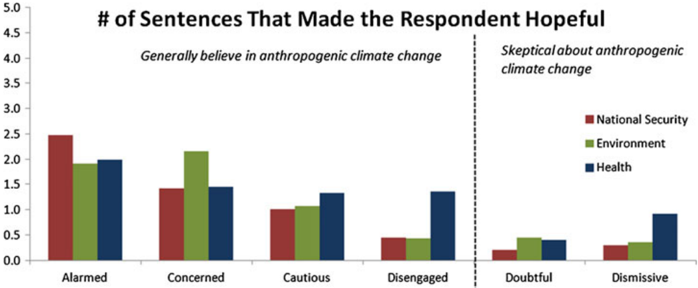
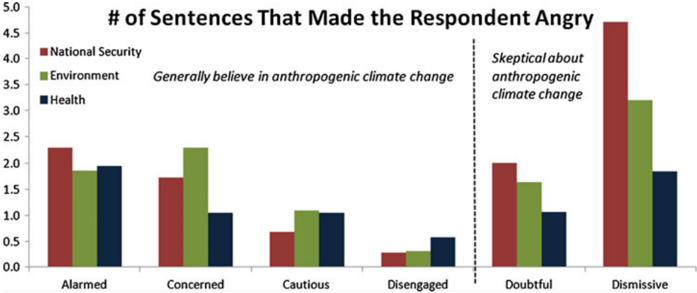
Communication researchers and practitioners have suggested that framing climate change in terms of public health and/or national security may make climate change more personally relevant and emotionally engaging to segments of the public who are currently disengaged or even dismissive of the issue. To evaluate these assumptions, using a nationally representative online survey of U.S. residents ( N = 1,127) conducted in December, 2010, we randomly assigned six previously identified audience segments on climate change to one of three experimental conditions. Subjects were asked to read uniquely framed news articles about climate change emphasizing either the risks to the environment, public health, or national security and the benefits of mitigation and adaptation-related actions. Results show that across audience segments, the public health focus was the most likely to elicit emotional reactions consistent with support for climate change mitigation and adaptation. Findings also indicated that the national security frame may possibly boomerang among audience segments already doubtful or dismissive of the issue, eliciting unintended feelings of anger.
Overview
The claims and statistics of this paper haven’t been checked yet.
Free: it reads the open-access text and checks the first 5 claims that cite a source we can check. Create a free account to check every claim.
Integrity signals
Registry
Cites
Statistics
Figures
Verification
Claims the paper makes
The claims and statistics of this paper haven’t been checked yet.
Free: it reads the open-access text and checks the first 5 claims that cite a source we can check. Create a free account to check every claim.
Claims other papers make about this one
Each is checked against this paper’s own text: does it say what the citing paper says it does?
The cited source says what the claim attributes to it.
In the citing paper
“While studies such as Myers et al (2012) and Maibach et al (2010) have found evidence for the efficacy of the Public health frame, others have found limited evidence (Walker et al 2018).”
From Framing climate change for effective communication: a systematic map (2020) · cites this paper as Myers et al 2012
Self-check
Percentages, sums and reported differences re-computed from the paper’s own numbers.
The self-check needs the paper’s full text.
Citations
Cites
Self-efficacy: Toward a unifying theory of behavioral change
Bandura, A. (1977) · Psychological Review · doi:10.1037/0033-295x.84.2.191 · Cited by 43,925
(2011) · Cited by 14,317
Self-efficacy: Toward a unifying theory of behavioral change
Bandura, A. (1978) · Advances in Behaviour Research and Therapy · doi:10.1016/0146-6402(78)90002-4 · Cited by 10,586
Frame Analysis: An Essay on the Organization of Experience.
Gamson, W. A., & Goffman, E. (1975) · Contemporary Sociology · doi:10.2307/2064022 · Cited by 10,570
Media Discourse and Public Opinion on Nuclear Power: A Constructionist Approach
Gamson, W. A., & Modigliani, A. (1989) · American Journal of Sociology · doi:10.1086/229213 · Cited by 4,971 · cited 1×
“Social scientists have long understood that the way an issue is framed has important consequences (Goffman 1974; Gamson and Modigliani 1989).”
BackgroundTARGET ARTICLE: Hope Theory: Rainbows in the Mind
Snyder, C. R. (2002) · Psychological Inquiry · doi:10.1207/s15327965pli1304_01 · Cited by 3,737 · cited 1×
“Feelings of hope related to climate change, for example, likely increase the probability that individuals will choose to engage with the issue and adopt beliefs and behaviors consistent with efforts to stem the problem (Markowitz and Shariff 2012; Snyder 2002; Swim et al. 2010).”
BackgroundClimate Change Risk Perception and Policy Preferences: The Role of Affect, Imagery, and Values
Leiserowitz, A. (2006) · Climatic Change · doi:10.1007/s10584-006-9059-9 · Cited by 2,197
Self-citationFraming as a Theory of Media Effects
Scheufele, D. A. (1999) · Journal of Communication · doi:10.1111/j.1460-2466.1999.tb02784.x · Cited by 2,179 · cited 2×
“The frame used suggests both the diagnosis of the problem as well as prescriptions for what should be done about it (Nisbet 2009; Scheufele 1999).”
BackgroundMethodBarriers perceived to engaging with climate change among the UK public and their policy implications
Lorenzoni, I., Nicholson-Cole, S., & Whitmarsh, L. (2007) · Global Environmental Change · doi:10.1016/j.gloenvcha.2007.01.004 · Cited by 2,026 · cited 3×
“Effective public engagement requires understanding the cognitive, affective, and behavioral nature of audiences (Lorenzoni et al. 2007).”
BackgroundInfluentialHow Emotion Shapes Behavior: Feedback, Anticipation, and Reflection, Rather Than Direct Causation
Baumeister, R. F., Vohs, K. D., Nathan DeWall, C., & Zhang, L. (2007) · Personality and Social Psychology Review · doi:10.1177/1088868307301033 · Cited by 1,743 · cited 1×
“Emotions serve as affective prompts for engagement with an issue and lead to forming predispositions for action when a relevant situation arises (Baumeister et al. 2007).”
Background
Cited by
Items 201–300 of 773
An analysis of climate change and health hazards: results from an international study
Filho, W. L., Ternova, L., Fayyaz, M. M., Abubakar, I. R., Kovaleva, M., Donkor, F. K., Anuga, S. W., Matamanda, A. R., Djekic, I. V., Abatcha, I., et al. (2022) · International Journal of Climate Change Strategies and Management · doi:10.1108/ijccsm-08-2021-0090 · Cited by 39
Engaging Diverse Audiences with Climate ChangePreprint
Roser‐Renouf, C., Stenhouse, N., Rolfe-Redding, J., Maibach, E. W., & Leiserowitz, A. (2015) · SSRN Electronic Journal · doi:10.4324/9781315887586-27 · Cited by 40
Self-citationCommunicating Risks: Principles and Challenges
Bostrom, A., Böhm, G., & O’Connor, R. E. (2018) · Springer eBooks · doi:10.1007/978-3-319-92478-6_11 · Cited by 38
Strategic Communication Research to Illuminate and Promote Public Engagement with Climate Change
Roser‐Renouf, C., & Maibach, E. W. (2018) · Nebraska Symposium on Motivation/The Nebraska symposium on motivation · doi:10.1007/978-3-319-96920-6_6 · Cited by 41
Self-citationBaden, D. A. (2019) · Ecopsychology · doi:10.1089/eco.2019.0023 · Cited by 39
“Many studies have reported positive associations between hope and increased PEBs (Feldman & Hart, 2016; Myers, Nisbet, Maibach, & Leiserowitz, 2012; Ojala, 2012; Smith & Leiserowitz, 2014; Stevenson & Peterson, 2016).”
Casualties as a moral measure of climate change
Nolt, J. (2014) · Climatic Change · doi:10.1007/s10584-014-1131-2 · Cited by 37
Message Framing Matters: Communicating Climate Change with Forest Landowners
Krantz, S. A., & Monroe, M. C. (2015) · Journal of Forestry · doi:10.5849/jof.14-057 · Cited by 40
La Respuesta de la sociedad española ante el cambio climático
Cartea, P. M., & FUNDACIÓN MAPFRE. Instituto de Prevención, S. Y. M. A. (2013) · MAPFRE (Fundación Mapfre) · Cited by 41
Narratives and the Policy Process : Applications of the Narrative Policy Framework
Shanahan, E. A. (2021) · Montana State University ScholarWorks (Montana State University) · doi:10.15788/npf · Cited by 36
Guenther, L., & Weingart, P. (2017) · Public Understanding of Science · doi:10.1177/0963662517693453 · Cited by 37
“Myers et al. (2012), for instance, show that differently framed messages about climate change have the potential to result in unique effects for some segments of the US population.”
BackgroundBergquist, P., Marlon, J. R., Goldberg, M. H., Gustafson, A., Rosenthal, S. A., & Leiserowitz, A. (2022) · Thinking & Reasoning · doi:10.1080/13546783.2022.2030407 · Cited by 37
“…2019; Nabi et al., 2018; Zomeren, 2013), storytelling (Gustafson et al., 2020; Lyons et al., 2019), norm- and values-based messaging (Dixon et al., 2017), and framing choices (e.g., Bernauer & McGrath, 2016; Myers et al., 2012; Wolsko et al., 2016) influence public concerns about global warming.”
BackgroundSelf-citationBowers, A. W., Monroe, M. C., & Adams, D. C. (2016) · Environmental Communication · doi:10.1080/17524032.2016.1176947 · Cited by 36
How do Canadian media report climate change impacts on health? A newspaper review
King, N., Bishop-Williams, K. E., Beauchamp, S., Ford, J. D., Berrang‐Ford, L., Cunsolo, A., & Harper, S. L. (2019) · Climatic Change · doi:10.1007/s10584-018-2311-2 · Cited by 35
“…focusing on the emotions associated with climate change media coverage has found that stories evoking worry, interest, and hope are those most likely to elicit climate change policy support (Myers et al. 2012; Smith and Leiserowitz 2014; Feldman and Hart 2016, 2018; Prescott and Logan 2018).”
BackgroundThe impact of frames highlighting coastal flooding in the USA on climate change beliefs
Bolsen, T., Kingsland, J. T., & Palm, R. I. (2018) · Climatic Change · doi:10.1007/s10584-018-2143-0 · Cited by 35
“Although a growing literature examines how exposure to different types of Bemphasis frames^ influences beliefs about climate change, only recently have scholars begun to examine the impact of climate change imagery on individuals’ opinions and behaviors (Hart and Feldman 2016; Leiserowitz 2006; Myers et al. 2012; O’Ne…”
BackgroundBiodiversity and Health in the Face of Climate Change: Implications for Public Health
Cook, P. A., Howarth, M. L., & Wheater, C. P. (2019) · Springer eBooks · doi:10.1007/978-3-030-02318-8_11 · Cited by 37
“2014): framing climate change concerns around health and well-being may be more powerful than arguing to conserve the environment without an explicit link to human health (Myers et al. 2012).”
BackgroundMcMichael, C. (2013) · Springer eBooks · doi:10.1007/978-94-007-7890-0_12 · Cited by 34
Qiu, S., & Qiu, J. (2024) · Frontiers in Psychology · doi:10.3389/fpsyg.2024.1363418 · Cited by 34
Framing climate change and health: New Zealand’s online news media
Harrison, S., Macmillan, A. K., & Rudd, C. (2019) · Health Promotion International · doi:10.1093/heapro/daz130 · Cited by 33
Crafting an effective narrative on the green transition
Terzi, A. (2020) · Energy Policy · doi:10.1016/j.enpol.2020.111883 · Cited by 34
Hart, P. S., & Feldman, L. (2020) · Science Communication · doi:10.1177/1075547020980443 · Cited by 33
“The failure of the environment factor to influence any of the variables under analysis contradicts previous work finding that health-based messages can serve as an effective tool to overcome polarization on climate change (Maibach et al., 2008; Myers et al., 2012).”
BackgroundResultInfluentialDegrowth or Not Degrowth: The Importance of Message Frames for Characterizing the New Economy
Tomaselli, M. F., Kozak, R. A., Gifford, R., & Sheppard, S. R. J. (2021) · Ecological Economics · doi:10.1016/j.ecolecon.2021.106952 · Cited by 33
The effects of a temporal framing manipulation on environmentalism: A replication and extension
Stanley, S. K., Klas, A., Clarke, E. J. R., & Walker, I. A. (2021) · PLoS ONE · doi:10.1371/journal.pone.0246058 · Cited by 35
“These message frames require careful development, and testing on different segments of the population, as they are sometimes ineffective or backfire to reduce environmentalism for some groups [21, 28, 30, 36, 78].”
BackgroundResultClimate Change as a National Security Issue: Examining Framing Effects Across Party
Gainous, J., & Merry, M. K. (2021) · American Politics Research · doi:10.1177/1532673x211053213 · Cited by 34
“…the likelihood of conflict (see Bolsen et al., 2019; Feldman & Hart, 2018b; Zhou, 2016).1 A second theme emphasizes more localized impacts and direct threats to U.S. military forces, such as the flooding of U.S. naval bases because of sea-level rise (see McCright et al., 2016; Myers et al., 2012).”
BackgroundResultInfluentialKim, I., Hammond, M. D., & Milfont, T. L. (2023) · Social Psychological Bulletin · doi:10.32872/spb.8557 · Cited by 34
“Negatively-valenced and threatening messages are often shown to backfire (e.g., Byrne & Hart, 2009; Hart & Nisbet, 2012; Myers et al., 2012; Schultz et al., 2007), in which people more strongly reject the message and the intended attitude.”
BackgroundMaczka, K., Chmielewski, P., Jeran, A., Matczak, P., & van Riper, C. J. (2018) · Ecosystem Services · doi:10.1016/j.ecoser.2018.12.005 · Cited by 34
“, 1994; Renn, 2008; Slovic, 2016), climate variability (Jamieson, 2014; Markowitz and Shariff, 2012; Myers et al., 2012; Nisbet, 2009), and land management concerns in protected areas (van Riper et al.”
BackgroundThaker, J. J., Richardson, L., & Holmes, D. (2023) · Journal of Environmental Psychology · doi:10.1016/j.jenvp.2023.102064 · Cited by 33
The Impact of Message Valence on Climate Change Attitudes: A Longitudinal Experiment
Diamond, E. P., & Urbanski, K. (2022) · Environmental Communication · doi:10.1080/17524032.2022.2151486 · Cited by 31
“Hope or optimism have previously been evoked by framing messages in terms of the public health benefits of combatting climate change (Myers et al., 2012), its potential solutions (Feinberg & Willer, 2011), or by discussing actions that have already been taken to mitigate its effects.”
BackgroundHart, P. S., Stedman, R. C., & McComas, K. A. (2015) · Journal of Environmental Psychology · doi:10.1016/j.jenvp.2015.07.003 · Cited by 33
“In contrast, climate mitigation projects may elicit strong positive or negative associations (Myers et al., 2012; Spence & Pidgeon, 2010), leading us to examine how positive and negative emotions associated with the proposed mitigation projects may respectively impact support.”
BackgroundInfluentialAbrahams, D. (2019) · Conflict Security and Development · doi:10.1080/14678802.2019.1637080 · Cited by 33
Wynes, S., Kotcher, J., & Donner, S. D. (2021) · Climatic Change · doi:10.1007/s10584-021-03215-9 · Cited by 31
“Surveys of legislators can instead be used to elicit the legislator’s opinions on what they believe is effective in changing their political decisions (Cluverius, 2017; Hooghe and Marien, 2012), but results from these investigations may be subject to social desirability bias (Nederhof, 1985).”
The health effects of climate change: Know the risks and become part of the solutions
Howard, C., & Huston, P. (2019) · Canada Communicable Disease Report · doi:10.14745/ccdr.v45i05a01 · Cited by 32
“Understanding the health impacts of climate change has been shown to be one of the best ways of motivating action (21), and health professionals and scientists are among the most trusted of messengers (22).”
BackgroundAgrawal, S., Ray, A., & Rana, N. P. (2024) · Corporate Social Responsibility and Environmental Management · doi:10.1002/csr.2992 · Cited by 30
Cameron, L., Rocque, R., Penner, K. E., & Mauro, I. J. (2021) · BMC Public Health · doi:10.1186/s12889-021-10614-1 · Cited by 31
Effect of carbon market on air pollution: Firm-level evidence in China
Zhu, J., Li, X., Fan, Y., Shi, H., & Zhao, L. (2022) · Resources Conservation and Recycling · doi:10.1016/j.resconrec.2022.106321 · Cited by 30
The transnational influence of natural disasters on environmental attitudes
Pantera, D. K., Böhmelt, T., & Bakaki, Z. (2023) · European Journal of Political Research · doi:10.1111/1475-6765.12572 · Cited by 30
Petrescu‐Mag, R. M., Petrescu, D. C., Ivan, A., & Ţenter, A. (2023) · BMC Public Health · doi:10.1186/s12889-023-15353-z · Cited by 30
“[74] found that framing climate change as a public health risk elicited emotional reactions that could support climate change mitigation and adaptation.”
BackgroundPersonality Traits Associated With Environmental Concern
Wuertz, T. R. (2015) · ScholarWorks (Walden University) · Cited by 30
User comments on climate stories: impacts of anecdotal vs. scientific evidence
Hinnant, A., Subramanian, R., & Young, R. (2016) · Climatic Change · doi:10.1007/s10584-016-1759-1 · Cited by 30
Fesenfeld, L., McGrath, L. F., Sun, Y., Wicki, M., & Bernauer, T. (2024) · PLOS Climate · doi:10.1371/journal.pclm.0000297 · Cited by 28
Hornsey, M. J., Fielding, K. S., McStay, R., Reser, J., & Bradley, G. L. (2015) · Environment and Behavior · doi:10.1177/0013916515574085 · Cited by 27
Perceptions of climate change in Thunder Bay, Ontario: towards a place-based understanding
Galway, L. P. (2018) · Local Environment · doi:10.1080/13549839.2018.1550743 · Cited by 29
“The literature increasingly lends support for the importance of remaining hopeful in the face of climate change as despair and fear can lead to inaction (Myers et al. 2012; Ojala 2012; Chadwick 2015; Nabi, Gustafson, and Jensen 2018).”
BackgroundAmerican Scientists’ Willingness to Use Different Communication Tactics
Besley, J. C., Newman, T. P., Dudo, A. D., & Tiffany, L. A. (2021) · Science Communication · doi:10.1177/10755470211011159 · Cited by 28
“…speak in more or less formal ways to better CONNECT with different audiences (Thon & Jucks, 2017), to FRAME issues in ways meant to resonate with specific audiences (Myers et al., 2012), and telling compelling STORIES meant to provide insight into a speakers’ motivation and journey (Olson, 2015).”
BackgroundNewspaper Coverage of Global Warming and Climate Change (GWCC) as a Public Health Issue
Weathers, M. (2013) · Applied Environmental Education & Communication · doi:10.1080/1533015x.2013.795829 · Cited by 28
Howden-Chapman, P., Keall, M., Whitwell, K., & Chapman, R. (2020) · Science of The Total Environment · doi:10.1016/j.scitotenv.2019.134408 · Cited by 27
Yan, Z., Arpan, L. M., & Clayton, R. B. (2024) · Sustainability · doi:10.3390/su16177777 · Cited by 27
The effects of educator’s level of environmental literacy on their issue identification practices
Hunter, R. H., & Jordan, R. (2022) · Environmental Education Research · doi:10.1080/13504622.2022.2045003 · Cited by 27
“A great deal of research on framing of environmental issues has shown that careful framing can change both how people feel and act on environmental issues (e.g. Myers et al. 2012).”
BackgroundGonzález, A. D. L., Ilundain, M. C. E., & León, B. (2022) · El Profesional de la Informacion · doi:10.3145/epi.2022.mar.02 · Cited by 27
Anger in response to climate breakdown
Bergman, H. M. (2023) · Zeitschrift für Ethik und Moralphilosophie · doi:10.1007/s42048-023-00149-y · Cited by 29
Patterns of controversy and consensus in German, Canadian, and US online news on climate change
Tschötschel, R., Schuck, A. R. T., & Wonneberger, A. (2019) · Global Environmental Change · doi:10.1016/j.gloenvcha.2019.101957 · Cited by 28
Pros and Cons of Sugarcane Straw Recovery in São Paulo
Rasche, L., & Diego, R. S. D. (2019) · BioEnergy Research · doi:10.1007/s12155-019-10078-7 · Cited by 27
Zahry, N. R., & Besley, J. C. (2021) · Journal of Applied Communication Research · doi:10.1080/00909882.2021.1880017 · Cited by 26
“Emotionalization of information – using emotional appeals to present scientific information – is predominantly examined to engage laypersons with scientific topics (Flemming et al., 2018; Myers et al., 2012).”
BackgroundStanley, S. K., Jylhä, K. M., Leviston, Z., & Walker, I. A. (2023) · British Journal of Social Psychology · doi:10.1111/bjso.12710 · Cited by 27
Climate Change Advocacy and Engagement on Social Media
Hart, P. S., Feldman, L., Choi, S., Chinn, S., & Hiaeshutter-Rice, D. (2024) · Science Communication · doi:10.1177/10755470241284934 · Cited by 28
“…types of impacts, including public health, the economy, food/agriculture, and national security, were infrequent; as such, environmental organizations may be neglecting opportunities to reach additional audiences for whom these dimensions of climate change may resonate (Myers et al., 2012).”
InfluentialCommunicating about marine disease: The effects of message frames on policy support
McComas, K. A., Schuldt, J. P., Burge, C. A., & Roh, S. (2015) · Marine Policy · doi:10.1016/j.marpol.2015.02.012 · Cited by 26
“Further, although climate change is commonly framed in terms of its consequences for environmental and ecosystem health (by highlighting threats to species survival or shifts in wildlife habitats), framing the issue in terms of its possible public health impacts may evoke stronger emotional responses and help mobilize…”
BackgroundSkurka, C. (2018) · Health Communication · doi:10.1080/10410236.2018.1536943 · Cited by 26
Comparing the effects of climate change labelling on reactions of the Taiwanese public
Hung, L., & Bayrak, M. M. (2020) · Nature Communications · doi:10.1038/s41467-020-19979-0 · Cited by 25
Cameron, L., Rocque, R., Penner, K. E., & Mauro, I. J. (2021) · PLoS ONE · doi:10.1371/journal.pone.0252952 · Cited by 26
“This seems to challenge the emerging climate communications literature that suggests that health is an important frame for effective dialogue with an increasingly polarized public [9,48,49].”
BackgroundEmotional appeals and social support in organizational YouTube videos during COVID-19
Xie, W., Damiano, A. D., & Jong, C.-H. (2022) · Telematics and Informatics Reports · doi:10.1016/j.teler.2022.100028 · Cited by 25
Raimi, K. T., Sarge, M. A., Geiger, N., Gillis, A. J., & Lee, J. (2023) · Journal of Environmental Psychology · doi:10.1016/j.jenvp.2023.102210 · Cited by 25
Mancuso, T., Cianni, R. D., Vita, G. A. D., Spada, E., Brun, F., Spadaro, D., & Zanchini, R. (2024) · Journal of Cleaner Production · doi:10.1016/j.jclepro.2023.140528 · Cited by 25
Davidson, D. J. (2018) · Nature and Culture · doi:10.3167/nc.2018.130304 · Cited by 25
Albright, K., Shah, P., Santodomingo, M., & Scandlyn, J. N. (2020) · American Journal of Public Health · doi:10.2105/ajph.2020.305723 · Cited by 25
Occupational therapy’s contributions to combating climate change and lifestyle diseases
Díaz, L. G., & Richardson, J. A. (2021) · Scandinavian Journal of Occupational Therapy · doi:10.1080/11038128.2021.1989484 · Cited by 24
Climate‐driven ‘species‐on‐the‐move’ provide tangible anchors to engage the public on climate change
Pecl, G. T., Kelly, R., Lucas, C. H., van Putten, I. E., Badhe, R., Champion, C., Chen, I., Defeo, O., Gaitán‐Espitía, J. D., Evengård, B., et al. (2023) · People and Nature · doi:10.1002/pan3.10495 · Cited by 24
“In addition, health professionals (alongside scientists) often rank among the most trusted of messengers, and a focus on public health often elicits strong emotional reactions consistent with support for climate change mitigation and adaptation (Myers et al., 2012).”
BackgroundSandal, S., Éthier, I., Onu, U. C., Fung, W. W., Bajpai, D., Hailu, W., Bagasha, P., Chiara, L. D., Hafiz, E. O. A., Smyth, B. J., et al. (2024) · Journal of the American Society of Nephrology · doi:10.1681/asn.0000000000000402 · Cited by 24
“65 Our work can thus help inform practice and policy to increase awareness of the interconnectedness of climate change, kidney health, and kidney care.”
Cognitive complexity increases climate change belief
Chen, L., & Unsworth, K. L. (2019) · Journal of Environmental Psychology · doi:10.1016/j.jenvp.2019.101316 · Cited by 24
Herrmann, A., Sauerborn, R., & Nilsson, M. (2020) · International Journal of Environmental Research and Public Health · doi:10.3390/ijerph17041297 · Cited by 24
“showed that a public health frame aroused hope and support for climate change mitigation across a varying spectrum of climate change beliefs in another US sample [41].”
BackgroundMultisolving Innovations For Climate And Health: Message Framing To Achieve Broad Public Support
Dearing, J. W., & Lapinski, M. K. (2020) · Health Affairs · doi:10.1377/hlthaff.2020.01170 · Cited by 24
Introduction to the Research handbook on communicating climate change
Holmes, D. (2020) · Edward Elgar Publishing eBooks · doi:10.4337/9781789900408.00006 · Cited by 23
Cianni, R. D., Mancuso, T., Rizzo, G., & Migliore, G. (2024) · Appetite · doi:10.1016/j.appet.2024.107405 · Cited by 23
“For example, some studies have found that health-related issues are significantly effective (Caso et al., 2023; Myers et al., 2012; Nisbet, 2009); consequently, these studies highlight that emphasizing public health aspects in informative messages has the potential to be a more effective approach…”
Media Representations of Water Issues as Health Risks
Mayeda, A. M., Boyd, A. D., Paveglio, T. B., & Flint, C. G. (2018) · Environmental Communication · doi:10.1080/17524032.2018.1513054 · Cited by 23
“It may also encourage individual involvement in climate changemitigation by accentuating the personal impacts it may have on their lives (Myers et al., 2012).”
BackgroundInfluentialUnlocking the Potential for Transformative Climate Adaptation in Cities
Chu, E., Brown, A., Michael, K., Du, J., Lwasa, S., & Mahendra, A. (2019) · World Resources Institute · doi:10.46830/wriwp.19.00036 · Cited by 22
Thaker, J. J., & Cook, C. C. H. (2021) · Journal of Environmental Psychology · doi:10.1016/j.jenvp.2021.101685 · Cited by 22
“As health impacts are more persuasive than environmental frames, particularly among those are sceptical about climate change (Myers et al., 2012), the findings of this study indicate that understanding how individuals attribute health impacts associated with climate change can be a useful avenue for future research.”
BackgroundIt’s Not All Bad News: Solutions-Oriented Journalism Approaches
Thier, K. (2024) · Springer eBooks · doi:10.1007/978-3-031-49084-2_18 · Cited by 22
Pillay, C., & van den Bergh, J. C. J. M. (2016) · International Journal of Climate Change Strategies and Management · doi:10.1108/ijccsm-06-2015-0084 · Cited by 23
Role of Affective Mediators in the Effects of Media Use on Proenvironmental Behavior
Li, Z. (2020) · Science Communication · doi:10.1177/1075547020971646 · Cited by 24
“Items were adapted from Nabi (2002) and Nabi and Prestin (2016) to measure individuals’ emotional reactions after reading haze-related information on a 5-point scale where 1 = not at all to 5 = very much. A principle component factor analysis indicated that the seven items grouped in two factors, which accounted for 6…”
BackgroundMethodInfluentialNiemiec, R. M., Jones, M. S., Mertens, A., & Dillard, C. (2021) · Appetite · doi:10.1016/j.appet.2021.105293 · Cited by 22
Framing Climate Change Impacts as Moral Violations: The Pathway of Perceived Message Credibility
Huang, J., Yang, J. Z., & Chu, H. (2022) · International Journal of Environmental Research and Public Health · doi:10.3390/ijerph19095210 · Cited by 22
“To engage conservatives, certain studies have framed climate change using language that reflects conservative moral values and religious beliefs, such as “protection of God’s creation” or “stewardship over the earth” [36], or emphasized the impact of climate change on national security [37,38].”
BackgroundPublic opinion foundations of the clean energy transition
Gazmararian, A. F., Mildenberger, M., & Tingley, D. H. (2025) · Environmental Politics · doi:10.1080/09644016.2025.2508563 · Cited by 22
Akerlof, K., Boules, C., Rohring, E., Rohring, B., & Kappalman, S. (2020) · Environmental Management · doi:10.1007/s00267-020-01283-8 · Cited by 21
Kim, S. C., Pei, D., Kotcher, J., & Myers, T. A. (2020) · Environment and Behavior · doi:10.1177/0013916520942600 · Cited by 21
“For example, information about the health implications of climate change arouses feelings of hope and is evaluated positively, even among those dismissive of climate change (Maibach et al., 2010; Myers et al., 2012).”
BackgroundSelf-citationWu, M., Long, R., Yang, S., Wang, X., & Chen, H. (2022) · International Journal of Environmental Research and Public Health · doi:10.3390/ijerph191811305 · Cited by 21
“For example, Myers et al. (2012) conducted a nationally representative online survey of American residents in December 2010, asking the subjects to read news articles about the unique framework of climate change and pay attention to emotional dimensions in the research.”
BackgroundLo, A. Y. H., & Jim, C. Y. (2014) · Public Understanding of Science · doi:10.1177/0963662513517483 · Cited by 22
“For instance, disengaged climate change believers might pay attention to climate change messages framed in terms of public health, whereas climate deniers might respond negatively and radically to those messages framed in terms of national security (Maibach et al., 2010; Myers et al., 2012).”
BackgroundInfluentialRomano, G. H. C., Sippori, R., & Soroker, S. (2025) · Frontiers in Psychology · doi:10.3389/fpsyg.2025.1505564 · Cited by 20
“Participants who selected 4 or 5 were excluded from the study, as the emotional experience of individuals who deny climate change and/or its anthropogenic origins is assumed to differ from those who recognize human-induced climate change (Myers et al., 2012).”
Calling attention to opponents of climate action in climate and health messaging
Kotcher, J., Luong, K. T., Charles, J., Gould, R., & Maibach, E. W. (2023) · The Lancet Planetary Health · doi:10.1016/s2542-5196(23)00217-6 · Cited by 21
Self-citationConstructing climate change: Exploring how cities frame climate change in the Arctic
Филимонова, Н. (2024) · Journal of Urban Affairs · doi:10.1080/07352166.2024.2351391 · Cited by 20
“…lenses to examine the topic, including national and subnational actors (Bremer et al., 2020; Díaz-Pont, 2021); political parties (Båtstrand, 2014); policy consultants (Singh et al., 2020); mass media and social media (Broadbent et al., 2016; Jang & Hart, 2015), and individuals (Myers et al., 2012).”
The Emotional Toll of Climate Change on Science Professionals
Gilford, D. M., Moser, S. C., DePodwin, B., Moulton, R., & Watson, S. M. (2019) · Eos · doi:10.1029/2019eo137460 · Cited by 20
Lessons from an experiment with values‐based messaging to support watershed conservation
Marquina, T. G., Hackenburg, D. M., Duray, H., Fisher, B., & Gould, R. K. (2022) · Conservation Biology · doi:10.1111/cobi.13910 · Cited by 20
“Instrumental values may resonate better with others (Myers et al., 2012).”
BackgroundMass Media Roles in Climate Change Mitigation
Swain, K. A. (2016) · Springer eBooks · doi:10.1007/978-3-319-14409-2_6 · Cited by 22
Distilling the characteristics of transformational change in a changing climate
Tanner, T., & Bahadur, A. (2013) · SOAS Research Online (SOAS University of London) · Cited by 20
McDivitt, P. (2016) · CU Scholar (University of Colorado Boulder) · Cited by 20
Adapting to Climate Change in Modern Policing: The Rise of the “Eco-Cop”
Matczak, A. (2025) · SpringerBriefs in criminology · doi:10.1007/978-3-031-97510-3 · Cited by 19
Direct-to-consumer advertising and the role of hope
Delbaere, M., & Willis, E. (2015) · Journal of Medical Marketing Device Diagnostic and Pharmaceutical Marketing · doi:10.1177/1745790416640369 · Cited by 19
Borth, A. C., Campbell, E., Munson, S., Patzer, S. M., Yagatich, W., & Maibach, E. W. (2021) · Journalism Practice · doi:10.1080/17512786.2021.2002711 · Cited by 19
“…dialogue around climate change, yet solutions journalism is not the norm (Aitamurto and Varma 2018; Boykoff and Boykoff 2007; Fahy and Nisbet 2011; Hart 2011; Iyengar 1990; McCombs and Shaw 1972; McIntyre 2019; McIntyre and Lough 2019; Myers et al. 2012; Post 2017; Schmid-Petri et al. 2015).”
BackgroundSelf-citationO’Keefe, D. J. (2023) · Communication Methods and Measures · doi:10.1080/19312458.2023.2214949 · Cited by 19
“…effects are not uncommon; for some examples, see Calabrese and Zhang (2019), Gosnell (2018), Liang et al. (2018), Lienemann and Siegel (2018), Myers et al. (2012), Nicolla and Lazard (in press), Richter et al. (2018), Ringold (2002), Ryoo and Kim (2023), Sato and Takasaki (2021), Schmid and…”
BackgroundClimate summits and protests have a strong impact on climate change media coverage in Germany
Lochner, J., Stechemesser, A., & Wenz, L. (2024) · Communications Earth & Environment · doi:10.1038/s43247-024-01434-3 · Cited by 21
Public engagement with health and climate change around the world: a Google Trends analysis
Dasandi, N., Mikhaylov, S., Pantera, D. K., & Romanello, M. B. (2025) · The Lancet Planetary Health · doi:10.1016/s2542-5196(25)00029-4 · Cited by 19
Lieberknecht, K. (2021) · Journal of the American Planning Association · doi:10.1080/01944363.2021.1896974 · Cited by 19
Buchanan, T., Ackland, J., Lloyd, S., van der Linden, S., & de‐Wit, L. (2022) · Climatic Change · doi:10.1007/s10584-021-03262-2 · Cited by 19
Framing clean energy campaigns to promote civic engagement among parents
Hanus, N., Wong‐Parodi, G., Hoyos, L., & Rauch, M. (2018) · Environmental Research Letters · doi:10.1088/1748-9326/aaa557 · Cited by 19
Metadata
- Authors
- Myers, T. A., Nisbet, M. C., Maibach, E. W., & Leiserowitz, A. A.
- Affiliations
- George Mason University (US)
- American University (US)
- Yale University (US)
- Corresponding author
- Nisbet, Matthew C.
- Venue
- Climatic Change
- Published
- 2012-06-28
- Volume
- 113
- Issue
- 3-4
- Pages
- 1105-1112
- ISSN
- 0165-0009 (ISSN-L)
- 1573-1480
- OpenAlex
- W1575525139
- Cited by
- 632
- References
- 30
- Citations by year
- 2026: 22 · 2025: 52 · 2024: 46 · 2023: 53 · 2022: 60 · 2021: 70 · 2020: 51 · 2019: 68 · 2018: 54 · 2017: 42 · 2016: 35 · 2015: 35 · 2014: 24 · 2013: 18 · 2012: 1
- FWCI
- 82.00
- Type
- journal article
- Language
- en
- Open access
- hybrid
- doi.org
- Licence
- cc-by
- Locations
- Climatic Change (publishedVersion, cc-by)
- RePEc: Research Papers in Economics (submittedVersion)
- Funders
- Grantham Foundation for the Protection of the Environment
- Topics
- Social Sciences › Sociology and Political Science › Climate Change Communication and Perception
- Social Sciences › Sociology and Political Science › Risk Perception and Management
- Social Sciences › Economics, Econometrics and Finance › Economics and Econometrics › Climate Change Policy and Economics
- Keywords
- climate change communication, framing effects, public health framing, national security framing, climate emotions, public attitudes toward climate change
About these checks
Registry, retraction, Cites and statistics results are computed, not judged, with one exception: a printed reference that no index lists is read once by a model before it counts as a citation error. Claims are extracted by a model and kept only when their quote appears verbatim in the text; each cited source is then checked, with a model’s help, for whether it says what the claim relies on. Those verdicts can be wrong — read the claim’s quote and the cited source before relying on one.
Statistics and arithmetic are recomputed, not judged.
Confidence bands are shown only for fields calibrated on our annotated test set. None is calibrated yet, so no band is shown.
What counts as a claim ›How we measure confidence ›How we check this ›
Are you an author, or do you see a problem with this page? Request a review
Data sources
Bibliographic data: Semantic Scholar, OpenAlex, Crossref.
Contains information from the Semantic Scholar Academic Graph Datasets, made available under the ODC Attribution License (ODC-BY 1.0).
Semantic Scholar’s data is described in: Kinney, R., et al. (2023). The Semantic Scholar Open Data Platform. arXiv:2301.10140.
