

A public health frame arouses hopeful emotions about climate change: A Letter
Open accessThe DOI matches its Crossref record; 29 of the 30 references it cites were found in a registry or an index.
Abstract
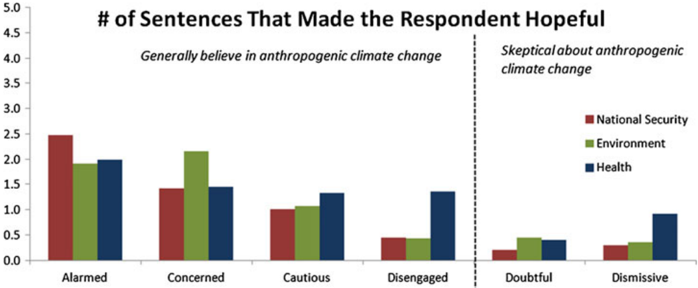
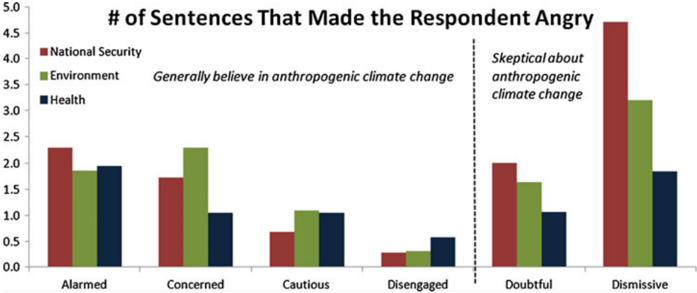
Communication researchers and practitioners have suggested that framing climate change in terms of public health and/or national security may make climate change more personally relevant and emotionally engaging to segments of the public who are currently disengaged or even dismissive of the issue. To evaluate these assumptions, using a nationally representative online survey of U.S. residents ( N = 1,127) conducted in December, 2010, we randomly assigned six previously identified audience segments on climate change to one of three experimental conditions. Subjects were asked to read uniquely framed news articles about climate change emphasizing either the risks to the environment, public health, or national security and the benefits of mitigation and adaptation-related actions. Results show that across audience segments, the public health focus was the most likely to elicit emotional reactions consistent with support for climate change mitigation and adaptation. Findings also indicated that the national security frame may possibly boomerang among audience segments already doubtful or dismissive of the issue, eliciting unintended feelings of anger.
Overview
The claims and statistics of this paper haven’t been checked yet.
Free: it reads the open-access text and checks the first 5 claims that cite a source we can check. Create a free account to check every claim.
Integrity signals
Registry
Cites
Statistics
Figures
Verification
Claims the paper makes
The claims and statistics of this paper haven’t been checked yet.
Free: it reads the open-access text and checks the first 5 claims that cite a source we can check. Create a free account to check every claim.
Claims other papers make about this one
Each is checked against this paper’s own text: does it say what the citing paper says it does?
The cited source says what the claim attributes to it.
In the citing paper
“While studies such as Myers et al (2012) and Maibach et al (2010) have found evidence for the efficacy of the Public health frame, others have found limited evidence (Walker et al 2018).”
From Framing climate change for effective communication: a systematic map (2020) · cites this paper as Myers et al 2012
Self-check
Percentages, sums and reported differences re-computed from the paper’s own numbers.
The self-check needs the paper’s full text.
Citations
Cites
Self-efficacy: Toward a unifying theory of behavioral change
Bandura, A. (1977) · Psychological Review · doi:10.1037/0033-295x.84.2.191 · Cited by 43,925
(2011) · Cited by 14,317
Self-efficacy: Toward a unifying theory of behavioral change
Bandura, A. (1978) · Advances in Behaviour Research and Therapy · doi:10.1016/0146-6402(78)90002-4 · Cited by 10,586
Frame Analysis: An Essay on the Organization of Experience.
Gamson, W. A., & Goffman, E. (1975) · Contemporary Sociology · doi:10.2307/2064022 · Cited by 10,570
Media Discourse and Public Opinion on Nuclear Power: A Constructionist Approach
Gamson, W. A., & Modigliani, A. (1989) · American Journal of Sociology · doi:10.1086/229213 · Cited by 4,971 · cited 1×
“Social scientists have long understood that the way an issue is framed has important consequences (Goffman 1974; Gamson and Modigliani 1989).”
BackgroundTARGET ARTICLE: Hope Theory: Rainbows in the Mind
Snyder, C. R. (2002) · Psychological Inquiry · doi:10.1207/s15327965pli1304_01 · Cited by 3,737 · cited 1×
“Feelings of hope related to climate change, for example, likely increase the probability that individuals will choose to engage with the issue and adopt beliefs and behaviors consistent with efforts to stem the problem (Markowitz and Shariff 2012; Snyder 2002; Swim et al. 2010).”
BackgroundClimate Change Risk Perception and Policy Preferences: The Role of Affect, Imagery, and Values
Leiserowitz, A. (2006) · Climatic Change · doi:10.1007/s10584-006-9059-9 · Cited by 2,197
Self-citationFraming as a Theory of Media Effects
Scheufele, D. A. (1999) · Journal of Communication · doi:10.1111/j.1460-2466.1999.tb02784.x · Cited by 2,179 · cited 2×
“The frame used suggests both the diagnosis of the problem as well as prescriptions for what should be done about it (Nisbet 2009; Scheufele 1999).”
BackgroundMethodBarriers perceived to engaging with climate change among the UK public and their policy implications
Lorenzoni, I., Nicholson-Cole, S., & Whitmarsh, L. (2007) · Global Environmental Change · doi:10.1016/j.gloenvcha.2007.01.004 · Cited by 2,026 · cited 3×
“Effective public engagement requires understanding the cognitive, affective, and behavioral nature of audiences (Lorenzoni et al. 2007).”
BackgroundInfluentialHow Emotion Shapes Behavior: Feedback, Anticipation, and Reflection, Rather Than Direct Causation
Baumeister, R. F., Vohs, K. D., Nathan DeWall, C., & Zhang, L. (2007) · Personality and Social Psychology Review · doi:10.1177/1088868307301033 · Cited by 1,743 · cited 1×
“Emotions serve as affective prompts for engagement with an issue and lead to forming predispositions for action when a relevant situation arises (Baumeister et al. 2007).”
Background
Cited by
Items 301–400 of 773
Threatening Messages in Climate Change Communication
Scharks, T. (2016) · ResearchWorks at the University of Washington (University of Washington) · Cited by 19
Health and Environmental Protective Behavioral Intentions for Reducing Harm from Water Pollutants
Little, G. M., Kohl, P. A., & Wardropper, C. B. (2023) · Environmental Management · doi:10.1007/s00267-023-01805-0 · Cited by 18
“In fact, many communication campaigns emphasize the public health risks that are associated with environmental issues to incite behavior change (Myers et al. 2012; Sauerborn et al. 2009).”
BackgroundSpitzer, J. E., Grapsas, S., Poorthuis, A. M. G., & Thomaes, S. C. E. (2023) · International Journal of Behavioral Development · doi:10.1177/01650254231190919 · Cited by 18
“So far, relevant research in the field has focused almost exclusively on adults (e.g., Brosch, 2021; Mah et al., 2020; Moser, 2007; Myers et al., 2012), whereas adolescents are particularly emotionally involved in climate change (Hickman et al., 2021; Hufnagel, 2017; Ojala, 2023).”
BackgroundAwuor, L., Meldrum, R. J., & Liberda, E. N. (2020) · International Journal of Environmental Research and Public Health · doi:10.3390/ijerph17176338 · Cited by 19
Evaluating effective public engagement: local stories from a global network of IPCC scientists
Pidcock, R., Heath, K., Messling, L., Wang, S., Pirani, A., Connors, S. L., Corner, A., Shaw, C. J., & Gomis, M. (2021) · Climatic Change · doi:10.1007/s10584-021-03230-w · Cited by 19
Igigabel, M., Diab, Y., & Yates, M. (2022) · Frontiers in Earth Science · doi:10.3389/feart.2021.756936 · Cited by 18
Spaiser, V., Dunn, K. P., Milner, P., & Moore, J. (2024) · Environmental Sociology · doi:10.1080/23251042.2024.2369739 · Cited by 17
“How climate change information is presented has a substantive impact on individual attitudes toward climate change policies (Luong, Garrertt, and Slater 2019; Myers et al. 2012).”
Public support for more ambitious climate policies: Empirical evidence from Germany
Goerg, S. J., Pondorfer, A., & Stöhr, V. (2025) · Ecological Economics · doi:10.1016/j.ecolecon.2025.108538 · Cited by 18
Psychological distance as a working tool for managers
Alaoui, M. D., & Cova, V. (2021) · Recherche et Applications en Marketing (English Edition) · doi:10.1177/20515707211022169 · Cited by 17
“Psychological remoteness can also promote desirability related to future benefits and reinforce positive affective reactions such as hope (Chu and Yang, 2019), which has the effect of stimulating solution seeking and collective action (Myers et al., 2012).”
BackgroundPolicy or scientific messaging? Strategic framing in a case of subnational climate change conflict
Cann, H. W. (2021) · Review of Policy Research · doi:10.1111/ropr.12438 · Cited by 17
How Resistance Shapes Health and Well-Being
Essex, R. (2022) · Journal of Bioethical Inquiry · doi:10.1007/s11673-022-10183-x · Cited by 17
“For example, several studies have suggested that framing climate change as a public health issue is effective and could engage those previously not engaged and raise support for climate change mitigation and adaptation (Myers et al. 2012; Maibach et al. 2010).”
BackgroundMendoza-Vasconez, A. S., McLaughlin, E., Sallis, J. F., Maibach, E. W., Epel, E. S., Bennett, G. G., Nogueira, L., Thayer, J. F., & Dietz, W. H. (2022) · Translational Behavioral Medicine · doi:10.1093/tbm/ibac028 · Cited by 17
Self-citationVoices of transitions: Korea's online news media and user comments on the energy transition
Kim, B., Yang, S., & Kim, H. (2024) · Energy Policy · doi:10.1016/j.enpol.2024.114020 · Cited by 17
Myrick, J. G., & Comfort, S. E. (2019) · Mass Communication & Society · doi:10.1080/15205436.2019.1639758 · Cited by 18
“Myers et al. (2012) found that different audiences responded with anger to different types of climate change messages, with individuals who were already dismissive of climate change expressing the most anger overall.”
BackgroundFraming local climate change policies in the US Great Plains
Romsdahl, R. J., Wood, R. S., Harsell, D. M., & Hultquist, A. (2019) · Journal of Environmental Policy & Planning · doi:10.1080/1523908x.2019.1673154 · Cited by 17
Velardi, S., & Selfa, T. L. (2020) · Agroecology and Sustainable Food Systems · doi:10.1080/21683565.2020.1818159 · Cited by 17
Howarth, C., & Parsons, L. (2021) · Climatic Change · doi:10.1007/s10584-021-02959-8 · Cited by 19
Chapter 2 - Integrated risk and uncertainty assessment of climate change response policies
Kunreuther, H. C., Gupta, S. K., Bosetti, V., Cooke, R. M., Dutt, V., Ha‐Duong, M., Held, H., Llanes-Regueiro, J., Patt, A., Shittu, E., et al. (2014) · IIASA PURE (International Institute of Applied Systems Analysis) · Cited by 18
Media Framing of Climate Change Mitigation and Adaptation
Swain, K. A. (2022) · Springer eBooks · doi:10.1007/978-3-030-72579-2_6 · Cited by 16
Making Environmental Communication Work: Creating Useful Guidance
Besley, J. C. (2015) · Environmental Communication · doi:10.1080/17524032.2015.1044006 · Cited by 16
Feinholdt, A., Schuck, A. R. T., Lecheler, S. K., & de Vreese, C. H. (2016) · Journal of Media Psychology Theories Methods and Applications · doi:10.1027/1864-1105/a000165 · Cited by 16
“Mean-while, there is an accumulating body of research suggesting that the specific character of a frame covering a contested issue may trigger emotions (e.g., Aarøe, 2011 ; Myers et al., 2012 ) that correspondingly influences issue beliefs in ways that are consistent with the respective frame.”
Their Economy and Our Health: Communicating Climate Change to the Divided American Public
Chu, H., & Yang, J. Z. (2020) · International Journal of Environmental Research and Public Health · doi:10.3390/ijerph17217718 · Cited by 16
“Two issues of particular interest are public health and the economy, as they are highly relevant to people’s wellbeing regardless of political or cultural identities [31,35].”
BackgroundUsing Segmentation and Prototyping in Engaging Politically-Salient Climate-Change Household Segments
Sherley, C., Morrison, M., Duncan, R., & Parton, K. A. (2014) · Journal of Nonprofit & Public Sector Marketing · doi:10.1080/10495142.2014.918792 · Cited by 16
“As an exception, Myers et al. (2012) investigated how different household segments reacted to three different message frames: public health, national security, and environment.”
BackgroundPartisan Cueing and Polarization in Public Opinion About Climate Change
Guber, D. L. (2016) · Oxford University Press eBooks · doi:10.1093/acrefore/9780190228620.013.306 · Cited by 16
Motivating sustainable behaviors by framing biodiversity loss as a public health risk
Joshi, A. (2021) · Journal of Risk Research · doi:10.1080/13669877.2021.1913634 · Cited by 17
Perspectives of Southwest Florida Homeowners and Real Estate Agents before Hurricane Ian
Palm, R. I., & Bolsen, T. (2023) · The Professional Geographer · doi:10.1080/00330124.2023.2194372 · Cited by 15
“…climate change on audiences rather than portrayals of effects on exotic species or locations such as polar bears at the North Pole (Lorenzoni, Nicholson-Cole, and Whitmarsh 2007; Pidgeon and Fischhoff 2011; Myers et al. 2012; Bolsen, Kingsland, and Palm 2018; Feldman and Hart 2018; Retchless 2018).”
BackgroundEffects of the low-carbon energy transition on air pollution and health
Peng, W., Morales, C. C., Shiwang, J., Luo, H., Iyer, G. C., Budolfson, M. B., & Scovronick, N. (2025) · Nature Reviews Clean Technology · doi:10.1038/s44359-025-00070-0 · Cited by 16
“In other countries, the potential co-benefits of improved air quality and reduced health impacts have helped to increase public support for climate and clean-energy policies 8–10 .”
Markanday, A., & Galarraga, I. (2021) · Climate Risk Management · doi:10.1016/j.crm.2021.100359 · Cited by 15
Stanley, S. K., Tseung‐Wong, C. N., Leviston, Z., & Walker, I. A. (2021) · Climatic Change · doi:10.1007/s10584-021-03278-8 · Cited by 17
Marchais, D., Roux, D., & Arnould, E. J. (2024) · Recherche et Applications en Marketing (English Edition) · doi:10.1177/20515707231221423 · Cited by 15
“These studies have nurtured a large body of consumer psychology-ori-ented research on eco-responsible behaviors (Durif et al., 2011; François-Lecompte, 2005) and different measures of concern for the environment or climate change (Bamberg, 2003; Myers et al., 2012; Schneider et al., 2021).”
BackgroundThe framing of climate change discourse by Statoil
Капранов, О. (2018) · Topics in Linguistics · doi:10.2478/topling-2018-0004 · Cited by 15
“Initially, the problem of climate change was framed as a scientific issue, and after 1988, as a political one (Jaspal and Nerlich, 2014; Myers et al., 2012).”
BackgroundEffect of Context on Scientists’ Normative Beliefs
Tiffany, L. A., Hautea, S., Besley, J. C., Newman, T. P., & Dudo, A. D. (2021) · Science Communication · doi:10.1177/10755470211048186 · Cited by 15
“Previous work on question framing suggests it is possible that placing a question within a particular context could impact how respondents report their normative beliefs (Druckman & Lupia, 2016; Myers et al., 2012; Nisbet, 2009).”
BackgroundFood for Thought: Audience Engagement with Sustainability Messages in Branded Content
Swenson, R. D., & Olsen, N. C. (2017) · Environmental Communication · doi:10.1080/17524032.2017.1279202 · Cited by 15
Meldrum, H. M., Szymanski, D. W., Oches, E. A., & Davis, P. T. (2017) · Climate change management · doi:10.1007/978-3-319-53742-9_16 · Cited by 15
Agenda Building, Narratives, and Attention Cycles in Climate Change News Coverage
Shanahan, J. E. (2016) · Oxford University Press eBooks · doi:10.1093/acrefore/9780190228620.013.347 · Cited by 15
Chatterjee, J. S., Thongprasert, S., & Some, S. (2024) · Annual Review of Environment and Resources · doi:10.1146/annurev-environ-121322-070317 · Cited by 14
Disaster experience mitigates the partisan divide on climate change: Evidence from Texas
Chen, T. H. Y., Fariss, C. J., Shin, H., & Xu, X. (2024) · Global Environmental Change · doi:10.1016/j.gloenvcha.2024.102918 · Cited by 14
Rising Tides, Sinking Approval Rates: Examining SLR Risk and Mortgage Credit Access
Fu, C., Huang, Q., Lin, M., & Tahsin, S. (2025) · European Financial Management · doi:10.1111/eufm.12543 · Cited by 14
Bowen, C. D., Coscia, K. A., Aadnes, M. G., Summersill, A. R., & Barnes, M. E. (2025) · CBE—Life Sciences Education · doi:10.1187/cbe.23-07-0134 · Cited by 14
“Emphasizing information about climate change in a way that the audience perceives to be more relevant has led to positive climate change attitudes (Myers et al. , 2012; Dixon et al. , 2017).”
The Ecology of Fear and Climate Change: A Pragmatist Point of View
Ballet, J. J., Bazin, D., & Petit, E. (2022) · Environmental Values · doi:10.3197/096327122x16452897197711 · Cited by 14
“Emotions are a potential driver for action to mitigate climate change (Leiserowitz 2006; Moser 2007; Norgaard 2011; Swim et al. 2011; Myers et al. 2012; Smith and Leiserowitz 2014; Clayton et al. 2015).”
BackgroundEconomic framing dominates climate policy reporting: a fifty-state analysis
Garth, A., & Roberts, J. T. (2022) · Climatic Change · doi:10.1007/s10584-022-03371-6 · Cited by 14
“Framing involves highlighting some aspects of an issue instead of others (Myers et al. 2012).”
BackgroundYeh, S.-C., Chiou, H., Wu, A.-W., Lee, H.-C., & Wu, H. C. (2019) · International Journal of Environmental Research and Public Health · doi:10.3390/ijerph16224577 · Cited by 14
“Thus, seeking to and maintaining health even avoiding unhealthiness might be a human basic needs and policy advocacy with public health implication was readily accepted by the public and further mobilized the public to support that policy [41,42].”
BackgroundSuggestions for improving the effectiveness of environmental education in the maritime sector
Čulin, J., Bielić, T., & Jakšić, K. (2019) · Pomorstvo · doi:10.31217/p.33.2.13 · Cited by 14
“…of climate change to ecosystems), public health (health risks associated with climate change), and national security (risks to U.S. national security) framed messages and findings indicated that certain frames may have potential boomerang effect within some segments (Myers et al., 2012).”
BackgroundA Public Health Frame for Fracking? Predicting Public Support for Hydraulic Fracturing
O’Neill, B., & Schneider, M. J. (2020) · Sociological Quarterly · doi:10.1080/00380253.2020.1773350 · Cited by 14
“Because it is extremely water intensive, scholars have argued that it is impractical and irresponsible to perform the practice in water scarce regions (Nicot and Scanlon 2012; Sovacool 2014).”
BackgroundThe Role of Health Co-Benefits in the Development of Australian Climate Change Mitigation Policies
Workman, A., Blashki, G. A., Karoly, D. J., & Wiseman, J. (2016) · International Journal of Environmental Research and Public Health · doi:10.3390/ijerph13090927 · Cited by 14
“Research undertaken around climate change communication has found that framing climate change from a health perspective can positively influence an individual’s acceptance of robust climate policies, irrespective of political preferences [11,12].”
BackgroundHine, D. W., Phillips, W. J., & Reser, J. (2013) · USC Research Bank (University of the Sunshine Coast) · Cited by 14
“Global Warming” versus “Climate Change” and the Influence of Labeling on Public Perceptions
Schuldt, J. P. (2016) · Oxford University Press eBooks · doi:10.1093/acrefore/9780190228620.013.309 · Cited by 15
Uppalapati, S. S., Ansah, P., Campbell, E., Gour, N., Thier, K., Kotcher, J., & Maibach, E. W. (2023) · OSF Preprints (OSF Preprints) · doi:10.31219/osf.io/6w3qh · Cited by 14
Self-citationAven, T., & Thekdi, S. (2024) · Routledge eBooks · doi:10.4324/9781003494317 · Cited by 15
La distance psychologique comme outil actionnable par les managers
Alaoui, M. D., & Cova, V. (2021) · Recherche et Applications en Marketing (French Edition) · doi:10.1177/0767370121992803 · Cited by 15
“L’éloignement psychologique peut également favoriser la désirabilité liée aux bénéfices futurs et renforcer des réactions affectives positives comme l’espoir (Chu et Yang, 2019), qui a pour effet de stimuler la recherche de solutions et la mise en place d’actions collectives (Myers et al., 2012).”
BackgroundHerrmann, A., Krippl, N., Fischer, H., Nieder, J., Griesel, S., Bärnighausen, T., Schildmann, J., Mikolajczyk, R., Danquah, I., Mezger, N. C. S., et al. (2025) · The Lancet Planetary Health · doi:10.1016/s2542-5196(25)00110-x · Cited by 13
Participation and Engagement of Public Health Stakeholders in Climate and Health Adaptation
Austhof, E., Berisha, V., McMahan, B., Owen, G., Keith, L., Roach, M., & Brown, H. E. (2020) · Atmosphere · doi:10.3390/atmos11030265 · Cited by 13
“Another online survey found that framing climate change as a public health issue was most likely to produce the emotional reactions consistent with supporting climate change mitigation and adaptation [18].”
BackgroundA Narrative Policy Framework Solution to Understanding Climate Change Framing Research
Wolters, E. A., Jones, M. D., & Duvall, K. (2021) · Montana State University ScholarWorks (Montana State University) · doi:10.15788/npf9 · Cited by 13
Political Psychology and the Climate Crisis
Geiger, N., Gruszczynski, M., & Swim, J. K. (2022) · Cambridge University Press eBooks · doi:10.1017/9781108779104.037 · Cited by 14
Scientists’ public engagement goals: Perceived importance and personal prioritization
Besley, J. C., & Dudo, A. D. (2025) · Public Understanding of Science · doi:10.1177/09636625251367685 · Cited by 12
“…knowledge (McKasy et al., 2020), beliefs about a behavior (Fishbein and Ajzen, 2010), general affect (Finucane et al., 2000), discrete emotions (Nabi, 2003), or specific framings (Myers et al., 2012) would be considered potential cognitive or affective objectives rather than behavioral goals.”
Gillis, A. J., Geiger, N., Raimi, K. T., Lee, J., & Sarge, M. A. (2023) · Climatic Change · doi:10.1007/s10584-023-03519-y · Cited by 12
Support for climate-driven migration in Australia: Testing an ideology-based threat model
Stanley, S. K., Leviston, Z., & Tseung‐Wong, C. N. (2023) · Current Research in Ecological and Social Psychology · doi:10.1016/j.cresp.2023.100119 · Cited by 12
“Tying climate change to national security issues is divisive ( Myers et al., 2012 ), and warning of impending climate migration is not an effective way to increase support for action to avert climate change ( Arias and Blair, 2022 ).”
Global Change: a Public Health Researcher’s Ethical Responsibility
Pascal, M., Beaudeau, P., Médina, S., & Hamilton, N. C. (2019) · Current Environmental Health Reports · doi:10.1007/s40572-019-00238-4 · Cited by 13
Briassoulis, H. (2019) · International Journal of the Commons · doi:10.5334/ijc.969 · Cited by 12
Shao, W., & McCarthy, A. F. (2020) · Geographical Review · doi:10.1080/00167428.2019.1702427 · Cited by 12
YILMAZ, S., & Aydoğdu, B. (2020) · International Journal of Active Learning · doi:10.48067/ijal.813577 · Cited by 12
Emotions in climate change communication: An experimental investigation
Arıkan, G., Melek, G., & Günay, D. (2021) · Communications · doi:10.1515/commun-2020-0036 · Cited by 12
The impact of public health messages on audience engagement and collective climate action
Thier, K., Campbell, E., Uppalapati, S. S., Kotcher, J., & Maibach, E. W. (2025) · Current Opinion in Behavioral Sciences · doi:10.1016/j.cobeha.2025.101539 · Cited by 11
Self-citationAnsah, P., Badullovich, N., Myers, T. A., Kotcher, J., Rosenthal, S. A., Leiserowitz, A., & Maibach, E. W. (2025) · npj Climate Action · doi:10.1038/s44168-025-00258-x · Cited by 11
Self-citationMotivating Personal Climate Action through a Safety and Health Risk Management Framework
Mullins-Jaime, C., & Wachter, J. K. (2022) · International Journal of Environmental Research and Public Health · doi:10.3390/ijerph20010007 · Cited by 11
“Framing concern for climate change around personal health has been suggested in the literature as a possible solution to motivate individuals to act [8,9], particularly among those with cautious or dismissive attitudes toward climate change [10].”
BackgroundPromising a Greener Paris: Anne Hidalgo’s Framing of Environmental Issues in Her Mayoral Campaigns
Meeks, L. M. (2023) · Environmental Communication · doi:10.1080/17524032.2023.2226356 · Cited by 12
“The first 12 variables explicitly connected environmental matters to either a traditional or alternate issue frame (see Bolsen et al., 2019; Devaney et al., 2020; Maibach et al., 2010; Meeks, 2022; Myers et al., 2012).”
BackgroundInfluentialLampard, P., Premji, S., Adamson, J., Bojke, L., Glerum–Brooks, K., Golder, S., Graham, H. M., Janković, D., & Zeuner, D. (2023) · BMC Public Health · doi:10.1186/s12889-023-16717-1 · Cited by 11
“This is a noteworthy gap, given evidence that a health framing of climate change can promote public engagement in climate action [66–68] (a point also noted by our public involvement panel, see Table 3).”
BackgroundPromoting Conservation Behaviors by Leveraging Optimistic and Pessimistic Messages and Emotions
Martell, J. E. M., & Rodewald, A. D. (2023) · Society & Natural Resources · doi:10.1080/08941920.2023.2294847 · Cited by 11
“…that both word choice and positive vs. negative framing can influence public perception and behavioral intentions (e.g., Hart et al. 2015, Gifford and Comeau 2011; Morris et al. 2020; Morton et al. 2011, Myers et al. 2012; Scannell and Gifford 2013; Spence and Pidgeon 2010; Xue et al. 2016).”
BackgroundEmotions affect learning about climate change – a case study of FFF
Deisenrieder, V., Oberauer, K., Kubisch, S., Parth, S., Stötter, J., & Keller, L. (2024) · International Research in Geographical and Environmental Education · doi:10.1080/10382046.2024.2342727 · Cited by 11
“…with CC are worry, fear, stress, guilt, anger, frustration and resignation (Burke et al., 2018; Corner et al., 2015; Kleres & Wettergren, 2017), whereas a positive emotion frequently added to this set of negative emotions is hope (Kidman & Chang, 2021; Myers et al., 2012; Ojala, 2012, 2017, 2023).”
Intersecting frames in communicating environmental risk and uncertainty
Schuldt, J. P., McComas, K. A., & Burge, C. A. (2017) · Journal of Risk Research · doi:10.1080/13669877.2017.1382559 · Cited by 11
“Alexander 2010; Goffman 1974; Lakoff 2010; Nisbet 2009; Tversky and Kahneman 1981), leading to dozens of empirical examples of the ways that often-subtle differences in the portrayal of climate change and its associated threats can influence public perceptions of the issue (e.g. Feldman and Hart 2015; Myers et al. 201…”
BackgroundInfluentialConnotative Meanings of Sustainable Mobility: A Segmentation Approach Using Cultural Sentiments
Wolf, I., & Schröder, T. (2019) · Transportation Research Part A Policy and Practice · doi:10.1016/j.tra.2019.06.002 · Cited by 13
Scientifically framed gene drive communication perceived as credible but riskier
MacDonald, E. A., Edwards, E. D., Balanovic, J., & Medvecky, F. (2021) · People and Nature · doi:10.1002/pan3.10186 · Cited by 11
“…perspective and alternative frames emphasising national security or public health were K E Y W O R D S CRISPR, framing, invasive species, media frames, public engagement, synthetic biology tested, with the latter being most effective in eliciting climate mitigation attitudes (Myers et al., 2012).”
BackgroundThe road to “local green recovery”: Signposts from COVID‐19 lockdown life in the UK
Collins, R., & Welsh, K. (2022) · Area · doi:10.1111/area.12780 · Cited by 11
Climate change and mental health: time for action and advocacy
Power, E., McCarthy, N., Kelly, I., Cannon, M. D., & Cotter, D. (2022) · Irish Journal of Psychological Medicine · doi:10.1017/ipm.2021.70 · Cited by 11
“Framing the climate crisis as a health crisis is both true and necessary, with the added benefit of increasing public engagement which is crucial in buildingmomentum to avert catastrophic climate breakdown (Myers et al. 2012).”
BackgroundAthy, A. E., Milojev, P., Gray, N. H., Osborne, D., Sibley, C. G., & Milfont, T. L. (2022) · Journal of Environmental Psychology · doi:10.1016/j.jenvp.2022.101875 · Cited by 11
Fuest, S., Sester, M., & Griffin, A. L. (2023) · Transportation Research Interdisciplinary Perspectives · doi:10.1016/j.trip.2023.100829 · Cited by 11
Communicating climate change and health to specific target groups
Lehrer, L., Hellmann, L., Temme, H., Otten, L., Hübenthal, J., Geiger, M., Jenny, M. A., & Betsch, C. (2023) · PubMed Central · doi:10.25646/11773 · Cited by 11
Chiew, K. S., Hashemi, J., Gans, L. K., Lerebours, L., Clement, N. J., Vu, M.-A. T., Sapiro, G., Heller, N. E., & Adcock, R. A. (2018) · PLoS ONE · doi:10.1371/journal.pone.0193506 · Cited by 11
Travelling towards 2050: Climate change, storytelling and the future of travel
Fletcher, J. (2019) · Otago University Research Archive (University of Otago) · Cited by 11
Niess, S. (2025) · Cogent Economics & Finance · doi:10.1080/23322039.2025.2490820 · Cited by 11
“Although interventions that leverage positive emotions have not been directly tested in the context of SRI, evidence from other sustainability domains suggests their potential effectiveness (e.g. Antonetti & Maklan, 2014; Myers et al., 2012; Peter & Honea, 2012).”
Neural topic modeling reveals German television’s climate change coverage
Schirmag, T., Wedemeyer, J. H., Stechemesser, A., & Wenz, L. (2025) · Communications Earth & Environment · doi:10.1038/s43247-025-02402-1 · Cited by 10
Byron, L. G., & Akerlof, K. (2021) · BMC Public Health · doi:10.1186/s12889-021-11737-1 · Cited by 10
“Because health is something that most people care about [15], communicating about the health effects of climate change can potentially help governments connect with wide audiences on the issue [16, 17].”
BackgroundEvaluating responses to health-related messages about the financial costs of climate change
Limaye, V. S., & Toff, B. (2023) · The Journal of Climate Change and Health · doi:10.1016/j.joclim.2023.100218 · Cited by 10
“…personally relevant and intelligible to some members of the public [27]; relatedly, a representative national online survey in 2010 found that a public health focus in climate messaging activated emotional reactions consistent with support for climate change mitigation and adaptation policies [28].”
Economics, health, or environment: What motivates individual climate action?
Brown, H. E., Austhof, E., Luz, P. M., & Ferguson, D. B. (2023) · PLOS Climate · doi:10.1371/journal.pclm.0000177 · Cited by 10
Jiang, L., Liu, H., & Jiang, N. (2023) · Behavioral Sciences · doi:10.3390/bs13110917 · Cited by 10
“Evoking emotion (fear or efficacy) can potently increase people’s attention and motivation to process health messages [2,15,19,21,22].”
BackgroundFraming effects on sustainable behavior
Lee, Y.-C. (2024) · Sustainable Development · doi:10.1002/sd.2988 · Cited by 10
Aylward, B., Cunsolo, A., Vriezen, R., Bayne, H. L., King, N., & Harper, S. L. (2024) · Environmental Research Health · doi:10.1088/2752-5309/ad44cb · Cited by 10
“Further, a public health frame could help convey the health co-benefits of climate change action, which some evidence suggests can generate emotions aligned with support for climate change mitigation and adaptation [59].”
BackgroundTigges, P., Greser, A., Gágyor, I., Kraft, J., Maun, A., Schmiemann, G., Schwienhorst-Stich, E., Heintze, C., & Schuster, A. (2024) · Frontiers in Public Health · doi:10.3389/fpubh.2024.1383423 · Cited by 10
Quintana, J., Viola, L., Sanchez, V., Scott, D., & Duncan, C. (2025) · Frontiers in Veterinary Science · doi:10.3389/fvets.2025.1442482 · Cited by 10
Political polarization in support for subsidizing unprofitable coal power plants
Hart, P. S., Stedman, R. C., & Clarke, C. E. (2021) · Energy Policy · doi:10.1016/j.enpol.2021.112156 · Cited by 10
Badullovich, N. (2022) · Climate Action · doi:10.1007/s44168-022-00021-6 · Cited by 10
Use of learning frames in climate change communication: A study of organizations in Latin America
Viteri, F., & Takahashi, B. (2019) · International Communication Gazette · doi:10.1177/1748048519827728 · Cited by 10
“The analysis is grounded in methodological procedures by Schreir (2012), Saldaña (2013), and Krippendorff (2013).”
MethodSegmenting residents based on emotional reactions to tourism performing arts development
Zheng, D., Ritchie, B. W., & Benckendorff, P. J. (2019) · Journal of Travel & Tourism Marketing · doi:10.1080/10548408.2019.1657052 · Cited by 10
“Emotion-based segmentation may assist public authorities to better target and adopt strategies toward different groups of residents who share common characteristics (e.g. Ismail El-Adly, 2007; Myers et al., 2012).”
BackgroundPublic Engagement with Climate Change and Health: A Global Literature Review
Uppalapati, S. S., Campbell, E., Kotcher, J., Thier, K., Ansah, P., Gour, N., & Maibach, E. (2025) · EcoHealth · doi:10.1007/s10393-025-01756-4 · Cited by 9
“Framing climate change and air pollution as public health issues—rather than as environmental, national security, or economic issues—can be an effective way to engage the public (Myers et al., 2012; Petrovic et al., 2014).”
Self-citationWeathers, M., Ganapathy, D., Mosher, M. M., Myers, T. A., Gour, N., Jiang, M., Ye, Q., Shen, F., Kotcher, J., & Maibach, E. W. (2025) · The Lancet Planetary Health · doi:10.1016/j.lanplh.2025.101335 · Cited by 9
Self-citationOtte, P. P. (2021) · Current Opinion in Environmental Sustainability · doi:10.1016/j.cosust.2021.10.003 · Cited by 9
Kotcher, J., Badullovich, N., Ahmed, M., Alwis, D. D., & Maibach, E. W. (2023) · The Journal of Climate Change and Health · doi:10.1016/j.joclim.2023.100291 · Cited by 9
“…political spectrum, especially when efforts include information about the health risks of climate change, the health bene fi ts of climate solutions, opponents who stand in the way of efforts to address climate change, and social normative information about others who are taking action [12 − 16].”
Self-citationLi, Y., Yu, B., & Dai, J. (2024) · Environmental Communication · doi:10.1080/17524032.2024.2327069 · Cited by 9
“Similar to previous findings, for both CC-and GW-labeled videos, political frames are positively associated with anger and disgust, while impact frames are associated with fear and sadness (Myers et al., 2012; Nabi et al., 2018).”
Same News Frames, Different Issues: Issue Familiarity and Dynamic Framing Effects
Shehata, A., Glogger, I., Djerf‐Pierre, M., Zuiderveld, M., Åhrén, C., & Hedenus, F. (2024) · Communication Research · doi:10.1177/00936502241259690 · Cited by 10
“For this purpose, we used the public health ( PH ) frame, which is also applicable to both AMR and CC and emphasizes human health-related aspects connected to an event, problem, or issue (McCright et al., 2016; Myers et al., 2012; see also, Hawkins & Linvill, 2010).”
Frame Tone and Sentiment Analysis
Balshetwar, S., Tuganayat, R. M., & Regulwar, G. B. (2019) · International Journal of Computer Sciences and Engineering · doi:10.26438/ijcse/v7i6.2440 · Cited by 9
Metadata
- Authors
- Myers, T. A., Nisbet, M. C., Maibach, E. W., & Leiserowitz, A. A.
- Affiliations
- George Mason University (US)
- American University (US)
- Yale University (US)
- Corresponding author
- Nisbet, Matthew C.
- Venue
- Climatic Change
- Published
- 2012-06-28
- Volume
- 113
- Issue
- 3-4
- Pages
- 1105-1112
- ISSN
- 0165-0009 (ISSN-L)
- 1573-1480
- OpenAlex
- W1575525139
- Cited by
- 632
- References
- 30
- Citations by year
- 2026: 22 · 2025: 52 · 2024: 46 · 2023: 53 · 2022: 60 · 2021: 70 · 2020: 51 · 2019: 68 · 2018: 54 · 2017: 42 · 2016: 35 · 2015: 35 · 2014: 24 · 2013: 18 · 2012: 1
- FWCI
- 82.00
- Type
- journal article
- Language
- en
- Open access
- hybrid
- doi.org
- Licence
- cc-by
- Locations
- Climatic Change (publishedVersion, cc-by)
- RePEc: Research Papers in Economics (submittedVersion)
- Funders
- Grantham Foundation for the Protection of the Environment
- Topics
- Social Sciences › Sociology and Political Science › Climate Change Communication and Perception
- Social Sciences › Sociology and Political Science › Risk Perception and Management
- Social Sciences › Economics, Econometrics and Finance › Economics and Econometrics › Climate Change Policy and Economics
- Keywords
- climate change communication, framing effects, public health framing, national security framing, climate emotions, public attitudes toward climate change
About these checks
Registry, retraction, Cites and statistics results are computed, not judged, with one exception: a printed reference that no index lists is read once by a model before it counts as a citation error. Claims are extracted by a model and kept only when their quote appears verbatim in the text; each cited source is then checked, with a model’s help, for whether it says what the claim relies on. Those verdicts can be wrong — read the claim’s quote and the cited source before relying on one.
Statistics and arithmetic are recomputed, not judged.
Confidence bands are shown only for fields calibrated on our annotated test set. None is calibrated yet, so no band is shown.
What counts as a claim ›How we measure confidence ›How we check this ›
Are you an author, or do you see a problem with this page? Request a review
Data sources
Bibliographic data: Semantic Scholar, OpenAlex, Crossref.
Contains information from the Semantic Scholar Academic Graph Datasets, made available under the ODC Attribution License (ODC-BY 1.0).
Semantic Scholar’s data is described in: Kinney, R., et al. (2023). The Semantic Scholar Open Data Platform. arXiv:2301.10140.
