

A public health frame arouses hopeful emotions about climate change: A Letter
Open accessThe DOI matches its Crossref record; 29 of the 30 references it cites were found in a registry or an index.
Abstract
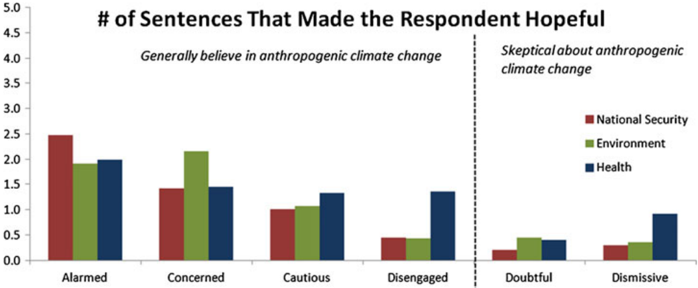
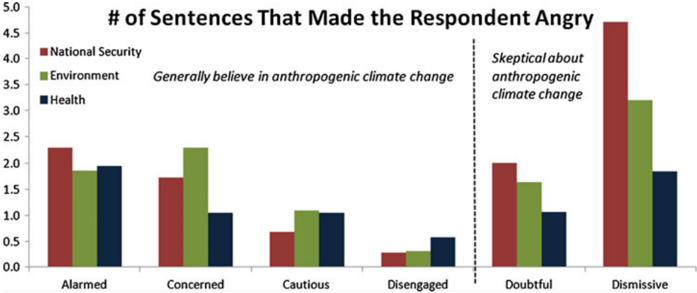
Communication researchers and practitioners have suggested that framing climate change in terms of public health and/or national security may make climate change more personally relevant and emotionally engaging to segments of the public who are currently disengaged or even dismissive of the issue. To evaluate these assumptions, using a nationally representative online survey of U.S. residents ( N = 1,127) conducted in December, 2010, we randomly assigned six previously identified audience segments on climate change to one of three experimental conditions. Subjects were asked to read uniquely framed news articles about climate change emphasizing either the risks to the environment, public health, or national security and the benefits of mitigation and adaptation-related actions. Results show that across audience segments, the public health focus was the most likely to elicit emotional reactions consistent with support for climate change mitigation and adaptation. Findings also indicated that the national security frame may possibly boomerang among audience segments already doubtful or dismissive of the issue, eliciting unintended feelings of anger.
Overview
The claims and statistics of this paper haven’t been checked yet.
Free: it reads the open-access text and checks the first 5 claims that cite a source we can check. Create a free account to check every claim.
Integrity signals
Registry
Cites
Statistics
Figures
Verification
Claims the paper makes
The claims and statistics of this paper haven’t been checked yet.
Free: it reads the open-access text and checks the first 5 claims that cite a source we can check. Create a free account to check every claim.
Claims other papers make about this one
Each is checked against this paper’s own text: does it say what the citing paper says it does?
The cited source says what the claim attributes to it.
In the citing paper
“While studies such as Myers et al (2012) and Maibach et al (2010) have found evidence for the efficacy of the Public health frame, others have found limited evidence (Walker et al 2018).”
From Framing climate change for effective communication: a systematic map (2020) · cites this paper as Myers et al 2012
Self-check
Percentages, sums and reported differences re-computed from the paper’s own numbers.
The self-check needs the paper’s full text.
Citations
Cites
Self-efficacy: Toward a unifying theory of behavioral change
Bandura, A. (1977) · Psychological Review · doi:10.1037/0033-295x.84.2.191 · Cited by 43,925
(2011) · Cited by 14,317
Self-efficacy: Toward a unifying theory of behavioral change
Bandura, A. (1978) · Advances in Behaviour Research and Therapy · doi:10.1016/0146-6402(78)90002-4 · Cited by 10,586
Frame Analysis: An Essay on the Organization of Experience.
Gamson, W. A., & Goffman, E. (1975) · Contemporary Sociology · doi:10.2307/2064022 · Cited by 10,570
Media Discourse and Public Opinion on Nuclear Power: A Constructionist Approach
Gamson, W. A., & Modigliani, A. (1989) · American Journal of Sociology · doi:10.1086/229213 · Cited by 4,971 · cited 1×
“Social scientists have long understood that the way an issue is framed has important consequences (Goffman 1974; Gamson and Modigliani 1989).”
BackgroundTARGET ARTICLE: Hope Theory: Rainbows in the Mind
Snyder, C. R. (2002) · Psychological Inquiry · doi:10.1207/s15327965pli1304_01 · Cited by 3,737 · cited 1×
“Feelings of hope related to climate change, for example, likely increase the probability that individuals will choose to engage with the issue and adopt beliefs and behaviors consistent with efforts to stem the problem (Markowitz and Shariff 2012; Snyder 2002; Swim et al. 2010).”
BackgroundClimate Change Risk Perception and Policy Preferences: The Role of Affect, Imagery, and Values
Leiserowitz, A. (2006) · Climatic Change · doi:10.1007/s10584-006-9059-9 · Cited by 2,197
Self-citationFraming as a Theory of Media Effects
Scheufele, D. A. (1999) · Journal of Communication · doi:10.1111/j.1460-2466.1999.tb02784.x · Cited by 2,179 · cited 2×
“The frame used suggests both the diagnosis of the problem as well as prescriptions for what should be done about it (Nisbet 2009; Scheufele 1999).”
BackgroundMethodBarriers perceived to engaging with climate change among the UK public and their policy implications
Lorenzoni, I., Nicholson-Cole, S., & Whitmarsh, L. (2007) · Global Environmental Change · doi:10.1016/j.gloenvcha.2007.01.004 · Cited by 2,026 · cited 3×
“Effective public engagement requires understanding the cognitive, affective, and behavioral nature of audiences (Lorenzoni et al. 2007).”
BackgroundInfluentialHow Emotion Shapes Behavior: Feedback, Anticipation, and Reflection, Rather Than Direct Causation
Baumeister, R. F., Vohs, K. D., Nathan DeWall, C., & Zhang, L. (2007) · Personality and Social Psychology Review · doi:10.1177/1088868307301033 · Cited by 1,743 · cited 1×
“Emotions serve as affective prompts for engagement with an issue and lead to forming predispositions for action when a relevant situation arises (Baumeister et al. 2007).”
Background
Cited by
Items 501–600 of 773
Негативные эмоции и поддержка климатической политики в России
Valko, D., & Мальцева, А. С. (2023) · Психология Журнал Высшей школы экономики · doi:10.17323/1813-8918-2023-4-643-665 · Cited by 3
Choi, S., & Hart, P. S. (2024) · Risk Analysis · doi:10.1111/risa.17659 · Cited by 3
“…individuals about climate change (Hansen, 2019; National Science Board, 2016), and differences in news coverage can significantly impact public attitudes and behavior (Corbett & Durfee, 2004; Feldman et al., 2012; Kahlor & Rosen-thal, 2009; Krosnick et al., 2006; Myers et al., 2012; Zhao, 2009).”
Waters, Y. L., Thompson, K., Wilson, K. A., & Dean, A. J. (2025) · Journal of Environmental Management · doi:10.1016/j.jenvman.2025.124788 · Cited by 3
Han, B., Xie, Y., Yang, H., Jin, T., & Zhang, K. (2025) · Asian Journal Of Social Psychology · doi:10.1111/ajsp.70015 · Cited by 3
Henderson, G. L., Mildenberger, M., & Stokes, L. C. (2025) · Climatic Change · doi:10.1007/s10584-025-03957-w · Cited by 3
“Some studies show promising results (Myers et al. 2012 ; Goldberg et al. 2021), yet research on persuasive political communication shows that most efforts do not succeed (Kalla and Broockman 2018).”
Designing Resilient and Sustainable Communities
Stokols, D. (2018) · Elsevier eBooks · doi:10.1016/b978-0-12-803113-1.00008-9 · Cited by 3
Howard, C., & Huston, P. (2019) · Relevé des maladies transmissibles au Canada · doi:10.14745/ccdr.v45i05a01f · Cited by 3
“Il est démontré que la compréhension des répercussions des changements climatiques sur la santé est un des meilleurs moyens de motiver l’action (21), et les professionnels de la santé et les scientifiques sont parmi les messagers qui inspirent le plus confiance (22).”
BackgroundMatthews, J. Z. (2022) · Crime Law and Social Change · doi:10.1007/s10611-022-10067-6 · Cited by 3
“Similarly, climate justice research suggests that framing climate change as a public health issue results in greater support for climate change mitigation than framing it as an issue of science (Myers et al., 2012).”
Psycho-logische Eckpunkte erfolgreicher Klima(schutz)kommunikation
Grothmann, T. (2017) · Management-Reihe Corporate Social Responsibility · doi:10.1007/978-3-662-52746-7_13 · Cited by 3
A few points that communication on climate change could learn from the COVID-19 crisis
Depoux, A., & Gemenne, F. (2020) · Edward Elgar Publishing eBooks · doi:10.4337/9781789900408.00039 · Cited by 3
Mass Media Roles in Climate Change Mitigation
Swain, K. A. (2015) · Springer eBooks · doi:10.1007/978-1-4614-6431-0_6-2 · Cited by 3
Chapter 1: Framing and Context of the Report
Abram, N., Gattuso, J.-P., Prakash, A., Cheng, L., Chidichimo, M. P., Crate, S., Enomoto, H., Gaschagen, M., Gruber, N., Harper, S., et al. (2019) · NERC Open Research Archive (Natural Environment Research Council) · Cited by 3
Singh, A. S. (2015) · OhioLink ETD Center (Ohio Library and Information Network) · Cited by 3
Butaric, L. N., Light, L. E. O., & Juengst, S. L. (2017) · American Journal of Human Biology · doi:10.1002/ajhb.23002 · Cited by 3
“On the other hand, “feelings of hope related to climate change, for example, likely increase the probability that individuals will choose to engage with the issue and adopt beliefs and behaviors consistent with efforts to stem the problem” (Myers et al., 2012:1107).”
BackgroundGlobal Warming’s Six MTurks: A Secondary Analysis of a US-Based Online Crowdsourcing Market
Austhof, E., & Brown, H. E. (2022) · International Journal of Environmental Research and Public Health · doi:10.3390/ijerph19148320 · Cited by 3
“[19] found that framing climate change with this lens is most likely to produce behavioral change for climate change adaptation and mitigation.”
BackgroundThoughts and feelings about climate change : an in-depth investigation
Tollemache, R. (2018) · UWE Research Repository (UWE Bristol) · Cited by 3
Méndez, M. (2015) · eScholarship (California Digital Library) · Cited by 3
Tradeoffs in deliberative public engagement with science
Calyx, C. (2018) · ANU Open Research (Australian National University) · doi:10.25911/5d6fa131a998c · Cited by 3
Adapting Smart: Rethinking Climate Resilience Through Finance, Security, and GovernancePreprint
Leal‐Arcas, R., Almaniya, T., Alawdah, A., Alshehri, M., & Al-Ruwayshid, S. (2025) · SSRN Electronic Journal · doi:10.2139/ssrn.5402506 · Cited by 3
Hu, Y. (2020) · Purdue e-Pubs (Purdue University System) · doi:10.25394/pgs.12101619 · Cited by 3
The Role of Moral Foundations in the Energy Transition
Bedle, H., Garneau, C. R. H., & Stanfield, R. (2024) · SHAREOK (University of Oklahoma; Oklahoma State University; Central Oklahoma University) · Cited by 3
Patterson, S., Jamieson, P. E., & Jamieson, K. H. (2024) · Journal of Health Communication · doi:10.1080/10810730.2024.2360617 · Cited by 2
“In the search for foci that may affect behaviors and policy support, health frames and topics are seen as promising by some (Myers et al., 2012) but less so by others (Li & Yi-Fan Su, 2018).”
BackgroundJoy: the key to using media to move the needle on climate change
McCormick, S., Aldous, A. M., & Yarbrough, L. (2024) · Frontiers in Communication · doi:10.3389/fcomm.2024.1410775 · Cited by 3
Issue linkage and climate votes in the U.S. House of Representatives, 2007–2020
Morton, K., Dolšak, N., & Prakash, A. (2024) · PLOS Climate · doi:10.1371/journal.pclm.0000440 · Cited by 2
Impact of anger, compassion, and hope on climate action taking
Zaremba, D., Marczak, M., Michałowski, J. M., Klöckner, C. A., Wierzba, M., & Marchewka, A. (2026) · Scientific Reports · doi:10.1038/s41598-026-56796-9 · Cited by 2
“Research suggests that effective hope appeals must balance optimism with realism and emphasize efficacy to maintain engagement 65,66 .”
Miniard, D., & Attari, S. Z. (2025) · Climatic Change · doi:10.1007/s10584-025-04034-y · Cited by 2
“…review of 25 years of climate framing research showed that issue-specific frames that focused on health, economic, or security concerns represent the dominant approach in the field (Badullovich et al. 2020; Guenther et al. 2024 ; Maibach et al. 2010; Myers et al. 2012 ; Spence and Pidgeon 2010 ).”
InfluentialBadullovich, N., Stede, M., Aktaṣ, B., Mirzakhmedova, N., & Saint‐Dizier, P. (2025) · Scientometrics · doi:10.1007/s11192-025-05494-w · Cited by 2
“…et al. issue frames, as well as three others that were taken from recent publications on the topic of climate change framing: Public health (Maibach et al., 2010; Myers et al., 2012), Environment (Bolsen & Shapiro, 2018; Nisbet, 2009), and Efficacy (Bolsen & Shapiro, 2018; Feldman et al., 2017).”
Climate Change Communication in Pakistan: Analyzing Media Frames on Social Media Platform
Ali, H., & Ali, M. (2026) · Environmental Communication · doi:10.1080/17524032.2026.2674235 · Cited by 2
Lyu, J., Shu, Y., & Wang, S. (2026) · Energies · doi:10.3390/en19112733 · Cited by 2
“Scholars have identified multiple distinct frames, including the public health frame [6], the economic development frame [7], the moral and ethical frame [25], the national security frame [26], and the environmental and human impact frame [27].”
Climate change concerns and perceived intergenerational mobility
Gugushvili, A., & Präg, P. (2026) · Journal of Environmental Psychology · doi:10.1016/j.jenvp.2026.103119 · Cited by 2
¿Cómo comunicar el cambio climático sin crear escepticismo? Apuntes para el tratamiento informativo
Muñoz-Pico, H. P. (2021) · #PerDebate · doi:10.18272/pd.v5i1.2384 · Cited by 2
Public Health and the Climate Emergency
Harmer, A. (2023) · Springer eBooks · doi:10.1007/978-3-030-96778-9_38-1 · Cited by 2
Deriving Core Principles of Social Ecology
Stokols, D. (2018) · Elsevier eBooks · doi:10.1016/b978-0-12-803113-1.00003-x · Cited by 2
Myrick, J. G. (2019) · Emerald Group Publishing Limited eBooks · doi:10.1108/978-1-78769-967-020191005 · Cited by 2
An innovative web media for better disseminating climate action
Daignault, P., & St-Arnaud, V. C. (2021) · Applied Environmental Education & Communication · doi:10.1080/1533015x.2021.2013746 · Cited by 2
“…suggest communicating about climate change through innovative frames, more aligned with receivers’ preoccupations such as health and economy (Myers et al., 2012; Petrovic et al., 2014), and to present this information in terms of gain rather than loss to increase positive attitudes (Spence…”
BackgroundHealth and safety issues of employees in family firms
(2023) · Frontiers research topics · doi:10.3389/978-2-83251-696-6 · Cited by 2
Heo, W., Park, N., Henager, R., & Grable, J. E. (2023) · Financial Services Review · doi:10.61190/fsr.v27i2.3387 · Cited by 2
Rehman, S. U., Watson, E., & Noble, L. (2024) · Journal of Communications In Healthcare · doi:10.1080/17538068.2024.2357947 · Cited by 2
Zhu, Y., Xu, J., Zhang, R., Lan, D., & Jiang, Y. (2024) · Journal of Media Psychology Theories Methods and Applications · doi:10.1027/1864-1105/a000437 · Cited by 2
Bræin, T., Monney, F. N. R., & Venema, T. A. G. (2024) · European Journal of Health Communication · doi:10.47368/ejhc.2024.401 · Cited by 2
Climate Change and Emotions: A Comparative Study across Affected and Non-Affected Provinces in Iran
Sohrābi, F., Kolivand, P., Alishvandi, R., Ahmadi, H., Asadi, M., Motavali, Y., & Mamsharifi, P. (2025) · International journal of body, mind and culture · doi:10.61838/ijbmc.v12i2.843 · Cited by 2
Media Framing of Climate Change Mitigation and Adaptation
Swain, K. A. (2025) · Springer eBooks · doi:10.1007/978-3-031-84483-6_6 · Cited by 2
Role of Communication in Creating Climate Change Awareness in Punjab, Pakistan
Tariq, M., Aslam, M. J., Amin, D. S., & Nargis, M. (2025) · Journal of Social Signs Review · Cited by 2
Building a Leadership Culture for Environmental Health in a Nurse-Led Clinic
Demorest, S. L., Potter, T., ANDERSON, J. A., Funk, K. A., Napral, M., & Wagner, A. (2017) · Interdisciplinary Journal of Partnership Studies · doi:10.24926/ijps.v4i3.174 · Cited by 2
Climate Change Communication Studies: Inquiries into Beliefs, Information and Stories
Arnold, A. (2018) · Springer eBooks · doi:10.1007/978-3-319-69383-5_2 · Cited by 2
Pinto, J. D. C. (2018) · REVISTA ESPAÑOLA DE COMUNICACIÓN EN SALUD · doi:10.20318/recs.2018.4258 · Cited by 2
Campbell, E., Patzer, S. M., Beall, L., Gallagher, A. M., & Maibach, E. W. (2020) · Parks Stewardship Forum · doi:10.5070/p536146377 · Cited by 2
“This facilitated discussion approach highlights the direct implications of climate change on human health—a frame that has been informed through communication research and has repeatedly proven to be an effective approach (Myers et al. 2012).”
BackgroundSelf-citationReady-made oTree applications for the study of climate change adaptation behavior
von Bülow, C. W., & Liu, X. (2020) · Journal of Behavioral and Experimental Economics · doi:10.1016/j.socec.2020.101590 · Cited by 2
The Theory of Worldviews from an Environmental Law Perspective
Bányai, O. (2021) · World Futures · doi:10.1080/02604027.2021.1929790 · Cited by 2
“This practice was empirically tested in a lot of cases and these results support the effectiveness of worldviews based communication (Gromet et al., 2013; Feinberg & Willer, 2013; Myers et al., 2012).”
ResultKatajamäki, H., Enell-Nilsson, M., Kauppinen-Räisänen, H., & Limatius, H. (2022) · Bristol University Press eBooks · doi:10.46692/9781447338253.009 · Cited by 2
Govender, D. (2015) · Open University of Cape Town (University of Cape Town) · Cited by 2
Park, S. (2017) · Digital Archive @ GSU · doi:10.57709/10137076 · Cited by 2
Tomaselli, M. F. (2017) · cIRcle (University of British Columbia) · doi:10.14288/1.0357253 · Cited by 2
“, 1998; Rothman & Salovey, 1997) and when the frame is inconsistent with previous beliefs (Lakoff, 2004; Myers et al., 2012; Shen, 2004).”
BackgroundResultInfluentialMyers, D. (2017) · MOspace Institutional Repository (University of Missouri) · doi:10.32469/10355/62321 · Cited by 2
A comunicação das alterações climáticas - um estudo sobre os efeitos do framing da saúde
Güttler, J. M. D. O. (2018) · Portuguese National Funding Agency for Science, Research and Technology (RCAAP Project by FCT) · doi:10.34626/b8nz-vx49 · Cited by 2
Miller, S. (2019) · Queensland University of Technology · doi:10.5204/thesis.eprints.131621 · Cited by 2
Mudavadi, K. C. (2019) · Cited by 2
Message framing in the time of the precautionary principle: response to Martell and Rodewald 2019
Kusmanoff, A. M. (2020) · Conservation Biology · doi:10.1111/cobi.13593 · Cited by 2
“In contrast, Martell and Rodewald are concerned about the risk of increased polarization and conflict around global heating (or climate change, if you prefer) and thus argue that The Guardian should instead draw on the empirical research that can inform this goal (e.g., Myers et al. 2012).”
BackgroundHealth as a Key Driver of Climate Change Communication. A Scoping ReviewPreprint
Ahmadi, S., Schütte, S., Herlihy, N., Hémono, M., Flahault, A., & Depoux, A. (2020) · Preprints.org · doi:10.20944/preprints202010.0095.v1 · Cited by 2
Collective Emotions and Resilient Regional Communities
Duffy, M., Boyd, C. P., Barry, K., & Askland, H. H. (2021) · Springer eBooks · doi:10.1007/978-3-030-51812-7_79-1 · Cited by 2
Science communication training should be about more than just how to transmit knowledge
Besley, J. C., & Dudo, A. D. (2016) · The Conversation · doi:10.64628/aai.scc377ehg · Cited by 2
A New Journalism For A New Climate: Is Solutions Journalism The Solution?
Thier, K. (2023) · University Libraries (University of Maryland) · doi:10.13016/dspace/mwtf-8rhg · Cited by 2
Buchanan, T. (2023) · Apollo (University of Cambridge) · doi:10.17863/cam.104225 · Cited by 3
Τα ΜΜΕ και η περιβαλλοντική πληροφόρηση
Νίκας, Κ. Ε. (2023) · University of Thessaly Institutional Repository (University of Thessaly) · doi:10.26253/heal.uth.37942 · Cited by 2
Skurka, C. (2019) · eCommons (Cornell University) · doi:10.7298/m43x-9z85 · Cited by 2
Reframing climate change as a public health issue : a Canadian case study, 2008-2020
Pillod, A. (2021) · doi:10.71781/19610 · Cited by 2
The nature of awe in science communication
Silva Luna, D. (2021) · Otago University Research Archive (University of Otago) · Cited by 2
Lartigue, C. (2022) · theses.fr (ABES) · doi:10.70675/ee10bb98z87a9z4c1azb102ze35b3fbb5d13 · Cited by 2
Information Processing and Response Among Global Warming’s Six Americas
Roser‐Renouf, C., Myers, T. A., & Maibach, E. W. (2025) · Environmental Communication · doi:10.1080/17524032.2025.2464165 · Cited by 1
“Multiple studies assessing biased processing among climate skeptics and Republicans demonstrate how messages may backfire: Myers et al. (2012) found that a national security message intended to persuade the Dismissive elicited anger rather than belief change.”
Self-citationIyer, A., & Alphonsa Jose, K. (2025) · Journal of Environmental Psychology · doi:10.1016/j.jenvp.2025.102626 · Cited by 1
Using emotional appeal to encourage recycle and reuse behaviors
Yang, J. Z., He, Y., & Feeley, T. H. (2025) · Risk Analysis · doi:10.1111/risa.70083 · Cited by 1
“…such as climate change, for instance, researchers have found that framing climate change as a public health issue—as opposed to an environmental or economic issue—can be an effective way to engage the public (Maibach et al., 2010; Myers et al., 2012; Petrovic et al., 2014; Walker et al., 2018).”
Carnes, N., & Henderson, G. L. (2025) · British Journal of Political Science · doi:10.1017/s000712342510063x · Cited by 1
“There are even indications that well-designed messages can promote support for government interventions to reduce greenhouse gas pollution or promote clean energy (Myers et al. 2012; Stokes and Warshaw 2017; Hart and Feldman 2021).”
Highlighting Inaction Versus Action to Motivate Desirable Consumer Behaviors
Fernandes, J., & Laran, J. (2025) · Journal of Current Issues & Research in Advertising · doi:10.1080/10641734.2025.2565731 · Cited by 1
Energy efficiency and carbon emission reduction: Policy and sectoral strategies for climate action
Tırınk, S., Argun, Y. A., & Çakmakcı, Ö. (2025) · Black Sea Journal of Environmental Sciences · doi:10.5281/zenodo.18154708 · Cited by 1
Chan, F. H. F., Koh, R. W. S., Yim, S. H. L., Horton, B. P., & Griva, K. (2026) · Annals of Behavioral Medicine · doi:10.1093/abm/kaag002 · Cited by 1
Goldfarb, J. L., Ryan, E. M., & Kriner, D. L. (2026) · Energy Research & Social Science · doi:10.1016/j.erss.2026.104733 · Cited by 1
Media framing of climate and health in Pakistan: analysis of floods 2022 news coverage
Qusien, R., Shah, S. F. A., & Sastry, S. (2026) · Global Perspectives in Communication · doi:10.1093/gpcomm/wpag012 · Cited by 1
Ouellette, L. L. (2014) · Indiana Magazine of History (Indiana University) · Cited by 1
Language, Frames, and Narratives
Corner, A., & Clarke, J. (2016) · Springer eBooks · doi:10.1007/978-3-319-46744-3_4 · Cited by 1
Martin, V. Y., Lloyd, D. J., & Christidis, L. (2014) · QUT ePrints (Queensland University of Technology) · Cited by 1
Bach, T. (2014) · Michigan Journal of Environmental & Administrative Law · doi:10.36640/mjeal.3.2.protecting · Cited by 1
Emotion and Technology Education
Spendlove, D. (2017) · Springer international handbooks of education · doi:10.1007/978-3-319-44687-5_38 · Cited by 1
Citizens’ Decision-Making Frameworks on Climate Change Policy Preferences
Morton, T. S. M., & Hannibal, B. (2018) · Journal of Social Science for Policy Implications · doi:10.15640/jsspi.v6n2a1 · Cited by 1
“Tabitha Morton & Bryce Hannibal 9 One possible explanation for this may be that these types of preventative policies work to ease the fear and anxiety that individuals have regarding climate change and the events associated with it (Myers et al., 2012; Erhlich& Becker, 1972).”
BackgroundInfluentialA Partisan and Polarized Issue in the United States
Palm, R. I., & Bolsen, T. (2020) · Coastal research library · doi:10.1007/978-3-030-32602-9_3 · Cited by 1
Luong, K. T., Knobloch‐Westerwick, S., & Brooks, D. (2021) · Environmental Communication · doi:10.1080/17524032.2021.1910531 · Cited by 1
“Novel message strategies have also been developed and tested, such as new emotional appeals including humor, hope, and pride (Myers et al., 2012; Rowe et al., 2019; Skurka et al., 2018), appeal to moral values (Wolsko et al., 2016), and appeal to social identities (Fielding & Hornsey, 2016).”
BackgroundAssessment of Emotion in Online News based on Kansei Approach for National Security
Razali, N. A. M., Malizan, N. A., Hasbullah, N. A., Zainuddin, N. M., Noor, N. M., Ishak, K. K., & Sukardi, S. (2021) · International Journal of Advanced Computer Science and Applications · doi:10.14569/ijacsa.2021.0120741 · Cited by 1
Čada, K. (2023) · Czech Sociological Review · doi:10.13060/csr.2023.016 · Cited by 1
Public Health and the Climate Emergency
Harmer, A. (2023) · Springer eBooks · doi:10.1007/978-3-031-25110-8_38 · Cited by 1
Communicating the Health Relevance of Climate Change
Sarfaty, M., & Maibach, E. W. (2024) · Oxford University Press eBooks · doi:10.1093/oso/9780197683293.003.0018 · Cited by 1
Self-citationAmerican big cats on the spotlight
Lucherini, M., Vidal, E. M. L., Nanni, V., Caruso, N. C., & Engel, M. T. (2024) · Human Dimensions of Wildlife · doi:10.1080/10871209.2024.2378183 · Cited by 1
“…ways that may alter preferences and choices – can influence and signal public attitudes and behaviors related to the environment (e.g., Lakoff, 2010; Myers et al., 2012), wildlife (e.g., Arbieu et al., 2021; Bhatia et al., 2013; Bombieri et al., 2018; Killion et al., 2019; Mammola et al., 2020)…”
Jaschek, C. (2015) · Lund University Publications Student Papers (Lund University) · Cited by 1
Ilmastonmuutos ja arvojohtaminen yrityksessä - ympäristötietoisten johtajien käsityksiä
Kahra, H. (2015) · Tampere University Institutional Repository (Tampere University) · Cited by 1
Goldberg, J. (2016) · ResearchOnline - JCU (James Cook University) · doi:10.25903/95d4-1s42 · Cited by 2
People's understandings, perceptions of, and emotions towards climate change
Gallardo, I., & Veronica, M. E. (2017) · Kent Academic Repository (University of Kent) · Cited by 1
Communicating the Health Impacts of Climate Change: from Conviction to Persuasion
Lozon, E. (2018) · Digital Commons - Michigan Tech (Michigan Technological University) · doi:10.37099/mtu.dc.etdr/603 · Cited by 1
Climate change from a distance: psychological distance and personal engagement with climate change
Wang, S. (2019) · UWA Profiles and Research Repository (UWA) · doi:10.26182/5d088150adaa5 · Cited by 1
Workman, A. (2019) · Minerva Access (University of Melbourne) · Cited by 1
Romsdahl, R. J. (2020) · Climatic Change · doi:10.1007/s10584-020-02913-0 · Cited by 1
Metadata
- Authors
- Myers, T. A., Nisbet, M. C., Maibach, E. W., & Leiserowitz, A. A.
- Affiliations
- George Mason University (US)
- American University (US)
- Yale University (US)
- Corresponding author
- Nisbet, Matthew C.
- Venue
- Climatic Change
- Published
- 2012-06-28
- Volume
- 113
- Issue
- 3-4
- Pages
- 1105-1112
- ISSN
- 0165-0009 (ISSN-L)
- 1573-1480
- OpenAlex
- W1575525139
- Cited by
- 632
- References
- 30
- Citations by year
- 2026: 22 · 2025: 52 · 2024: 46 · 2023: 53 · 2022: 60 · 2021: 70 · 2020: 51 · 2019: 68 · 2018: 54 · 2017: 42 · 2016: 35 · 2015: 35 · 2014: 24 · 2013: 18 · 2012: 1
- FWCI
- 82.00
- Type
- journal article
- Language
- en
- Open access
- hybrid
- doi.org
- Licence
- cc-by
- Locations
- Climatic Change (publishedVersion, cc-by)
- RePEc: Research Papers in Economics (submittedVersion)
- Funders
- Grantham Foundation for the Protection of the Environment
- Topics
- Social Sciences › Sociology and Political Science › Climate Change Communication and Perception
- Social Sciences › Sociology and Political Science › Risk Perception and Management
- Social Sciences › Economics, Econometrics and Finance › Economics and Econometrics › Climate Change Policy and Economics
- Keywords
- climate change communication, framing effects, public health framing, national security framing, climate emotions, public attitudes toward climate change
About these checks
Registry, retraction, Cites and statistics results are computed, not judged, with one exception: a printed reference that no index lists is read once by a model before it counts as a citation error. Claims are extracted by a model and kept only when their quote appears verbatim in the text; each cited source is then checked, with a model’s help, for whether it says what the claim relies on. Those verdicts can be wrong — read the claim’s quote and the cited source before relying on one.
Statistics and arithmetic are recomputed, not judged.
Confidence bands are shown only for fields calibrated on our annotated test set. None is calibrated yet, so no band is shown.
What counts as a claim ›How we measure confidence ›How we check this ›
Are you an author, or do you see a problem with this page? Request a review
Data sources
Bibliographic data: Semantic Scholar, OpenAlex, Crossref.
Contains information from the Semantic Scholar Academic Graph Datasets, made available under the ODC Attribution License (ODC-BY 1.0).
Semantic Scholar’s data is described in: Kinney, R., et al. (2023). The Semantic Scholar Open Data Platform. arXiv:2301.10140.
