

A public health frame arouses hopeful emotions about climate change: A Letter
Open accessThe DOI matches its Crossref record; 29 of the 30 references it cites were found in a registry or an index.
Abstract
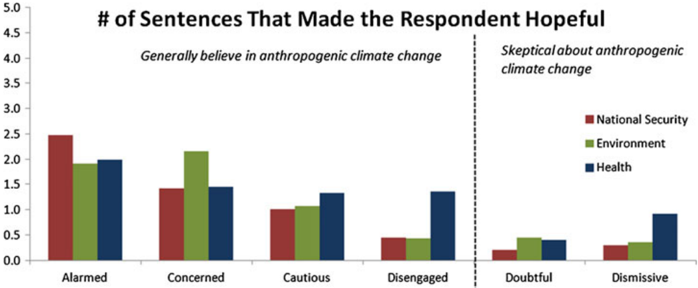
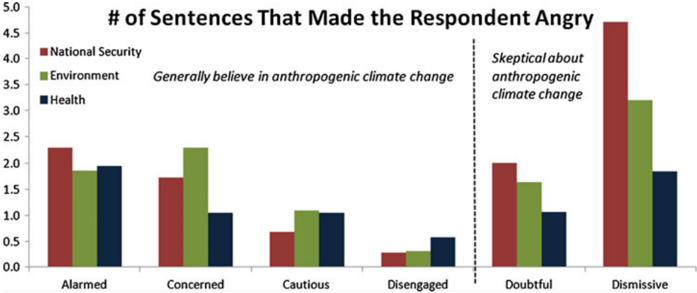
Communication researchers and practitioners have suggested that framing climate change in terms of public health and/or national security may make climate change more personally relevant and emotionally engaging to segments of the public who are currently disengaged or even dismissive of the issue. To evaluate these assumptions, using a nationally representative online survey of U.S. residents ( N = 1,127) conducted in December, 2010, we randomly assigned six previously identified audience segments on climate change to one of three experimental conditions. Subjects were asked to read uniquely framed news articles about climate change emphasizing either the risks to the environment, public health, or national security and the benefits of mitigation and adaptation-related actions. Results show that across audience segments, the public health focus was the most likely to elicit emotional reactions consistent with support for climate change mitigation and adaptation. Findings also indicated that the national security frame may possibly boomerang among audience segments already doubtful or dismissive of the issue, eliciting unintended feelings of anger.
Overview
The claims and statistics of this paper haven’t been checked yet.
Free: it reads the open-access text and checks the first 5 claims that cite a source we can check. Create a free account to check every claim.
Integrity signals
Registry
Cites
Statistics
Figures
Verification
Claims the paper makes
The claims and statistics of this paper haven’t been checked yet.
Free: it reads the open-access text and checks the first 5 claims that cite a source we can check. Create a free account to check every claim.
Claims other papers make about this one
Each is checked against this paper’s own text: does it say what the citing paper says it does?
The cited source says what the claim attributes to it.
In the citing paper
“While studies such as Myers et al (2012) and Maibach et al (2010) have found evidence for the efficacy of the Public health frame, others have found limited evidence (Walker et al 2018).”
From Framing climate change for effective communication: a systematic map (2020) · cites this paper as Myers et al 2012
Self-check
Percentages, sums and reported differences re-computed from the paper’s own numbers.
The self-check needs the paper’s full text.
Citations
Cites
Self-efficacy: Toward a unifying theory of behavioral change
Bandura, A. (1977) · Psychological Review · doi:10.1037/0033-295x.84.2.191 · Cited by 43,925
(2011) · Cited by 14,317
Self-efficacy: Toward a unifying theory of behavioral change
Bandura, A. (1978) · Advances in Behaviour Research and Therapy · doi:10.1016/0146-6402(78)90002-4 · Cited by 10,586
Frame Analysis: An Essay on the Organization of Experience.
Gamson, W. A., & Goffman, E. (1975) · Contemporary Sociology · doi:10.2307/2064022 · Cited by 10,570
Media Discourse and Public Opinion on Nuclear Power: A Constructionist Approach
Gamson, W. A., & Modigliani, A. (1989) · American Journal of Sociology · doi:10.1086/229213 · Cited by 4,971 · cited 1×
“Social scientists have long understood that the way an issue is framed has important consequences (Goffman 1974; Gamson and Modigliani 1989).”
BackgroundTARGET ARTICLE: Hope Theory: Rainbows in the Mind
Snyder, C. R. (2002) · Psychological Inquiry · doi:10.1207/s15327965pli1304_01 · Cited by 3,737 · cited 1×
“Feelings of hope related to climate change, for example, likely increase the probability that individuals will choose to engage with the issue and adopt beliefs and behaviors consistent with efforts to stem the problem (Markowitz and Shariff 2012; Snyder 2002; Swim et al. 2010).”
BackgroundClimate Change Risk Perception and Policy Preferences: The Role of Affect, Imagery, and Values
Leiserowitz, A. (2006) · Climatic Change · doi:10.1007/s10584-006-9059-9 · Cited by 2,197
Self-citationFraming as a Theory of Media Effects
Scheufele, D. A. (1999) · Journal of Communication · doi:10.1111/j.1460-2466.1999.tb02784.x · Cited by 2,179 · cited 2×
“The frame used suggests both the diagnosis of the problem as well as prescriptions for what should be done about it (Nisbet 2009; Scheufele 1999).”
BackgroundMethodBarriers perceived to engaging with climate change among the UK public and their policy implications
Lorenzoni, I., Nicholson-Cole, S., & Whitmarsh, L. (2007) · Global Environmental Change · doi:10.1016/j.gloenvcha.2007.01.004 · Cited by 2,026 · cited 3×
“Effective public engagement requires understanding the cognitive, affective, and behavioral nature of audiences (Lorenzoni et al. 2007).”
BackgroundInfluentialHow Emotion Shapes Behavior: Feedback, Anticipation, and Reflection, Rather Than Direct Causation
Baumeister, R. F., Vohs, K. D., Nathan DeWall, C., & Zhang, L. (2007) · Personality and Social Psychology Review · doi:10.1177/1088868307301033 · Cited by 1,743 · cited 1×
“Emotions serve as affective prompts for engagement with an issue and lead to forming predispositions for action when a relevant situation arises (Baumeister et al. 2007).”
Background
Cited by
Items 701–773 of 773
Petrescu-Mag, R. M., Petrescu, D. C., Ivan, A., & Ţenter, A. (2023) · Figshare · doi:10.6084/m9.figshare.22618405
Lampard, P., Premji, S., Adamson, J., Bojke, L., Glerum–Brooks, K., Golder, S., Graham, H. M., Janković, D., & Zeuner, D. (2024) · Figshare · doi:10.6084/m9.figshare.26625328
CLIMATE CHANGE COMMUNICATION AND ENVIRONMENTAL EDUCATION: FROM RESEARCH TO PRACTICE
Armstrong, A. K. (2017) · eCommons (Cornell University) · doi:10.7298/x4pr7t5w · Cited by 1
McElligott, P. (2024) · Apollo (University of Cambridge) · doi:10.17863/cam.118715
Framing change: behavioural insights to facilitate the transition to more sustainable dietary norms
Zamzow, H. (2026) · London School of Economics and Political Science Theses Online (London School of Economics and Political Science) · doi:10.21953/lse.00004857
Petrescu-Mag, R. M., Petrescu, D. C., Ivan, A., & Tenter, A. (2023) · Figshare · doi:10.6084/m9.figshare.22618402
There Goes the Sun: Media Framing and Public Attitudes on Solar Panel Tariffs
Fleming, A. (2021) · Digital Archive @ GSU · doi:10.57709/23988874
Lampard, P., Premji, S., Adamson, J., Bojke, L., Glerum–Brooks, K., Golder, S., Graham, H. M., Janković, D., & Zeuner, D. (2024) · Figshare · doi:10.6084/m9.figshare.26625334
Lampard, P., Premji, S., Adamson, J., Bojke, L., Glerum–Brooks, K., Golder, S., Graham, H. M., Janković, D., & Zeuner, D. (2024) · Figshare · doi:10.6084/m9.figshare.24286678
Lampard, P., Premji, S., Adamson, J., Bojke, L., Glerum–Brooks, K., Golder, S., Graham, H. M., Janković, D., & Zeuner, D. (2023) · Figshare · doi:10.6084/m9.figshare.24286523
Carney, S. E. (2016) · OakTrust (Texas A&M University Libraries)
Do climate-related disasters cause dissatisfaction with environmental policies?Preprint
Berlemann, M., Bumann, S., & Methorst, J. (2024) · RePEc: Research Papers in Economics
La comunicación del cambio climático en los informativos. El establecimiento de la agenda
Fusté, M. R. (2022) · Tesis Doctorals en Xarxa (Consorci de Serveis Universitaris de Catalunya)
Past the tipping point: Climate change and the public sphere in Germany and the United States
Tschötschel, R. (2022) · UvA-DARE (University of Amsterdam)
Howley, S. E. (2022) · WakeSpace Scholarship (Wake Forest University)
Pantera, D. K. (2024) · Open Access at Essex (University of Essex)
Martel-Morin, M. (2023) · Papyrus : Institutional Repository (Université de Montréal) · doi:10.71781/19716
Walpole, E. H. (2019) · OhioLink ETD Center (Ohio Library and Information Network)
Diallo, M. (2017) · Corpus Université Laval (Université Laval)
van der Linden, S. (2014) · London School of Economics and Political Science Theses Online (London School of Economics and Political Science)
Briand, A.-S. (2022) · Papyrus : Institutional Repository (Université de Montréal) · doi:10.71781/1542
Sambrook, K. (2023) · White Rose eTheses Online (University of Leeds, The University of Sheffield, University of York)
The effects of different message frames on COVID-19 vaccine hesitancy and beliefs
Huneault, L. (2023) · Lu Zone Ul (Laurentian University)
(2016) · Epsilon Open Archive (Sveriges lantbruksuniversitet biblioteket (Swedish University of Agricultural Sciences))
Better than Bias: The Power of and Alternatives to Descriptions of News Media as Biased
Aubele, J. W. (2023) · eScholarship (California Digital Library)
The effect of persuasive communication on rock climbers' environmental behavior
Alexe, D. (2023) · DiVA (Linnaeus University)
Bary, T. (2017) · Leiden Repository (Leiden University)
The Effects of Economic Appeals on Support For Climate Mitigation Policies
Jackson, C. (2020) · WakeSpace Scholarship (Wake Forest University)
Steynor, A. (2023) · Open University of Cape Town (University of Cape Town)
Investigation of plastic and microplastic waste from ships in the marine environment
Karademir, M. B. (2024) · Istanbul Technical University Academic Open Archive (Istanbul Technical University)
Promoção da ação climática na Indústria de produção de mobiliário de Paredes
Completo, M. G. G. (2025) · Portuguese National Funding Agency for Science, Research and Technology (RCAAP Project by FCT)
Altan, D. (2023) · Istanbul Technical University Academic Open Archive (Istanbul Technical University)
Wang, Y. (2026) · Communications in Humanities Research · doi:10.54254/2753-7064/2025.ht31199
Husić-Mehmedović, M., Marić, E., Smajlović, M. R., & Arslanagić-Kalajdžić, M. (2026) · Business Ethics the Environment & Responsibility · doi:10.1111/beer.70079
Diverse Indicators of Climate Change for New Jersey and Vicinity
Cornish, A. E., Alguera, A., Shope, J. B., Broccoli, A. J., & Yates, J. (2026) · Journal of Applied Meteorology and Climatology · doi:10.1175/jamc-d-24-0188.1
How Climate Communication Connects the Chinese Public: Audience Segmentation and Climate Narratives
王, 宇., & 曾繁旭 (2025) · Global Journal of Media Studies · doi:10.26599/gjms.2025.9330066
Heintz, L. (2025) · Gutenberg Open Science · doi:10.25358/openscience-14598
From reflexivity to anti-reflexivity: climate change polarization in the United States
Swanson, E. (2026) · Frontiers in Sociology · doi:10.3389/fsoc.2026.1743306
“Using an experimental design where subjects faced three conditions framing climate change as a risk to the environment, health, and national security, Myers et al. (2012) examined how different audience segments responded.”
Essays on the application of behavioural insights to environmental policy
Sater, R. A. (2021) · theses.fr (ABES) · doi:10.70675/e30ff3f5zc73ez4ee2z9137zd310ed2c7374 · Cited by 1
Hu, B., Peng, Y., & Wang, C. (2026) · Weather Climate and Society · doi:10.1175/wcas-d-25-0122.1
Kilgannon, L., Klas, A., Jones, O., & Barford, K. A. (2026) · Environment and Behavior · doi:10.1177/00139165261447103
“For example, emphasising the public health benefits of climate action appears to incite hope and subsequent pro-environmental action (Myers et al., 2012; Ojala, 2015), but other hope appeals appear to decrease action by engendering complacency about the relative gravity of climate change (Hornsey &…”
Environmental Captivity: An Existential Dimension of the Environmental Crisis
Vaškovic, P. (2026) · Human Arenas · doi:10.1007/s42087-026-00609-y
“…we can draw on the extensive literature on environmental hope, where many studies (e.g. Ojala 2012a , b; Li and Monroe 2019 ; Marlon 2019 ; Frumkin, 2022 ; Myers et al., 2012 ) conceptualize environmental hope as an emotional response to environmental threats that are external to the individual.”
Brosch, T., Conte, B., & Doell, K. C. (2021) · OSF Preprints (OSF Preprints)
Viral Headlines: An Analysis of Avian Influenza Risk Perceptions Based on News Headlines
Sunday, D., Baker, L., & Young, H. L. (2025) · Journal of Applied Communications · doi:10.4148/jac.4160
Une introduction sociologique aux émotions écologiques
Thiron, S., & Mangin, G. (2025) · Emulations - Revue de sciences sociales · doi:10.4000/16els
Reducing health and climate impacts of the global food systemPreprint
van Greevenbroek, K., Davis, S. J., & Caldeira, K. (2026) · arXiv (Cornell University) · doi:10.48550/arxiv.2606.15471 · Cited by 1
“…policy research about whether the dis-tinctissuesofhealthandclimateshouldbelinkednarratively 42 — it is unclear, for example, whether highlighting potential health co-benefits of climate policy will make such policy more palatable 43,44 or whether bundling the two issues mainly alienates 45 .”
Internal and External Factors Influencing Green Product Purchase Intention
Dwidienawati, D., Rachman, R. F., Laurens, W. R., & Faisal, M. (2026) · Springer proceedings in business and economics · doi:10.1007/978-981-95-6415-6_75
A quantitative content analysis of media framing of illegal mining in Ghana
Aidoo, E. A. K., Ansah, P. O., Daoyenikye, F., & Afful, M. A. (2026) · JMU Scholoraly Commons (James Madison University) · doi:10.6084/m9.figshare.32963541.v1
A quantitative content analysis of media framing of illegal mining in Ghana
Aidoo, E. A. K., Ansah, P., Daoyenikye, F., & Afful, M. A. (2026) · Cogent Social Sciences · doi:10.1080/23311886.2026.2687170
Knowledge, Perceptions of Climate Change and its Effects Among Young People in Africa
Mwaambi, P. R., Muchami, S., Simba, B., Fissha, A. B., Conteh, P. M., Mwenda, M., & N′jai, A. U. (2025) · Sierra Leone Journal of Biomedical Research · doi:10.4314/sljbr.v16i1.6
Tan, Y., Grabe, M. E., & Weaver, D. H. (2026) · Mass Communication & Society · doi:10.1080/15205436.2026.2710692
Wildfire risk and mortgage lending: The influence of climate-risk beliefs
Li, Y., & Tahsin, S. (2026) · International Review of Financial Analysis · doi:10.1016/j.irfa.2026.105323 · Cited by 1
Vesterinen, E. (2025) · Osuva (University of Vaasa)
Perälä, A. (2025) · Osuva (University of Vaasa)
Singh, F., & Metag, J. (2026) · Environmental Communication · doi:10.1080/17524032.2026.2723748
Beyond Awareness: Emotional and Physiological Reactions to Climate Terminology
Dickel, P., & Mai, R. (2026) · Business Strategy and the Environment · doi:10.1002/bse.71399
Suh, Y. J., Wagner, M. W., & Shah, D. V. (2026) · Communication Quarterly · doi:10.1080/01463373.2026.2727351
“Myers et al. (2012) found that framing climate change in terms of the risks and benefits to public health elicited hopeful emotions across audience groups spanning levels of climate skepticism, whereas a national security frame elicited anger, particularly among the more skeptical.”
Chu, H., & Yuan, S. (2026) · Environment and Behavior · doi:10.1177/00139165261487827
“Indeed, studies show that articulating the economic impact of climate change reduces their dismissive attitudes and increases behavioral intentions more effectively than other message frames (McCright et al., 2016; Myers et al., 2012).”
Li, Y., Yu, L., & Wu, C. (2026) · SAGE Open · doi:10.1177/21582440261492831
Out of breath, out of mind: Competing frames and public support for carbon taxation in Spain
Romanin, E. (2026) · Electoral Studies · doi:10.1016/j.electstud.2026.103144
Future Tense: Optimism, Pessimism, and the Politics of Climate Change and Artificial Intelligence
Nissen, K. (2026) · Deep Blue (University of Michigan) · doi:10.7302/dspace/30639
Petersen, J. E., & Frantz, C. M. (2026) · Sustainability · doi:10.3390/su182010331
Carbon Pricing in Canada: A Quantitative Framing Analysis of Federal Parliamentary Sittings
Vanderland, M. (2026) · Libraries and Cultural Resources (University of Calgary) · doi:10.11575/prism/52143
Koppele, Y. M. J. T., & van Sebille, E. (2026) · doi:10.5194/egusphere-2026-6433
Stadler, M., Martin, M., Rieß, W., & Künsting, J. (2026) · Education Sciences · doi:10.3390/educsci16111789
The emotional profiles of climate audiences: Mapping climate emotions across the Six Americas
Małecki, W., Schneider-Mayerson, M., Thaker, J. J., & Sorokowski, P. (2026) · Journal of Environmental Psychology · doi:10.1016/j.jenvp.2026.103269
Groeve, B. D., & Prettenthaler, F. E. (2026) · Journal of Environmental Psychology · doi:10.1016/j.jenvp.2026.103282
Parascandalo, F., Santhosh, E., Naqvi, Y., Vitanage, R., & Kandasamy, S. (2026) · Journal of Health Communication · doi:10.1080/10810730.2026.2616643
Igigabel, M., Diab, Y., & Yates, M. (2022) · doi:10.3389/feart.2021.756936.s008
Epidemic communities : climate change, emerging disease and the governance of science
Suk, J. E. (2013) · ERA
Steentjes, K. (2014) · UPT. Syiah Kuala University Library (Syiah Kuala University)
Metadata
- Authors
- Myers, T. A., Nisbet, M. C., Maibach, E. W., & Leiserowitz, A. A.
- Affiliations
- George Mason University (US)
- American University (US)
- Yale University (US)
- Corresponding author
- Nisbet, Matthew C.
- Venue
- Climatic Change
- Published
- 2012-06-28
- Volume
- 113
- Issue
- 3-4
- Pages
- 1105-1112
- ISSN
- 0165-0009 (ISSN-L)
- 1573-1480
- OpenAlex
- W1575525139
- Cited by
- 632
- References
- 30
- Citations by year
- 2026: 22 · 2025: 52 · 2024: 46 · 2023: 53 · 2022: 60 · 2021: 70 · 2020: 51 · 2019: 68 · 2018: 54 · 2017: 42 · 2016: 35 · 2015: 35 · 2014: 24 · 2013: 18 · 2012: 1
- FWCI
- 82.00
- Type
- journal article
- Language
- en
- Open access
- hybrid
- doi.org
- Licence
- cc-by
- Locations
- Climatic Change (publishedVersion, cc-by)
- RePEc: Research Papers in Economics (submittedVersion)
- Funders
- Grantham Foundation for the Protection of the Environment
- Topics
- Social Sciences › Sociology and Political Science › Climate Change Communication and Perception
- Social Sciences › Sociology and Political Science › Risk Perception and Management
- Social Sciences › Economics, Econometrics and Finance › Economics and Econometrics › Climate Change Policy and Economics
- Keywords
- climate change communication, framing effects, public health framing, national security framing, climate emotions, public attitudes toward climate change
About these checks
Registry, retraction, Cites and statistics results are computed, not judged, with one exception: a printed reference that no index lists is read once by a model before it counts as a citation error. Claims are extracted by a model and kept only when their quote appears verbatim in the text; each cited source is then checked, with a model’s help, for whether it says what the claim relies on. Those verdicts can be wrong — read the claim’s quote and the cited source before relying on one.
Statistics and arithmetic are recomputed, not judged.
Confidence bands are shown only for fields calibrated on our annotated test set. None is calibrated yet, so no band is shown.
What counts as a claim ›How we measure confidence ›How we check this ›
Are you an author, or do you see a problem with this page? Request a review
Data sources
Bibliographic data: Semantic Scholar, OpenAlex, Crossref.
Contains information from the Semantic Scholar Academic Graph Datasets, made available under the ODC Attribution License (ODC-BY 1.0).
Semantic Scholar’s data is described in: Kinney, R., et al. (2023). The Semantic Scholar Open Data Platform. arXiv:2301.10140.
