

Evaluating Sex and Age Differences in ADI-R and ADOS Scores in a Large European Multi-site Sample of Individuals with Autism Spectrum Disorder
Open accessThe DOI matches its Crossref record; 93 of the 95 references it cites were found in a registry or an index.
Abstract
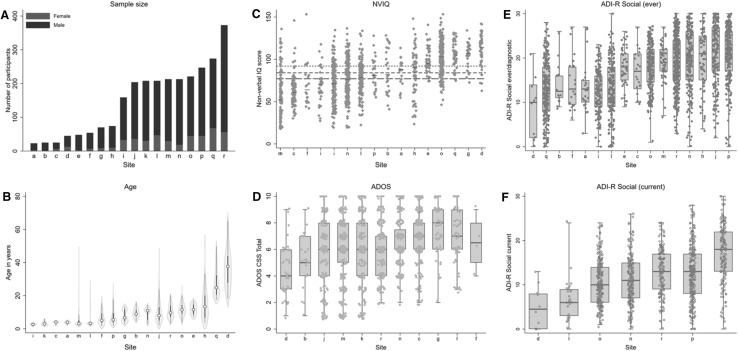
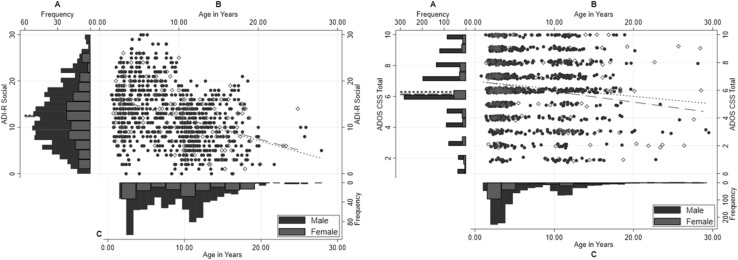
Research on sex-related differences in Autism Spectrum Disorder (ASD) has been impeded by small samples. We pooled 28 datasets from 18 sites across nine European countries to examine sex differences in the ASD phenotype on the ADI-R (376 females, 1763 males) and ADOS (233 females, 1187 males). On the ADI-R, early childhood restricted and repetitive behaviours were lower in females than males, alongside comparable levels of social interaction and communication difficulties in females and males. Current ADI-R and ADOS scores showed no sex differences for ASD severity. There were lower socio-communicative symptoms in older compared to younger individuals. This large European ASD sample adds to the literature on sex and age variations of ASD symptomatology.
Overview
The claims and statistics of this paper haven’t been checked yet.
Free: it reads the open-access text and checks the first 5 claims that cite a source we can check. Create a free account to check every claim.
Integrity signals
Registry
Cites
Statistics
Figures
Verification
Claims the paper makes
The claims and statistics of this paper haven’t been checked yet.
Free: it reads the open-access text and checks the first 5 claims that cite a source we can check. Create a free account to check every claim.
Claims other papers make about this one
Each is checked against this paper’s own text: does it say what the citing paper says it does?
The source backs part of the claim, not all of it — or backs it for a different population, condition or comparison.
In the citing paper
“Tillmann et al. (2018) found that girls with an ASD diagnosis exhibited fewer RRBIs than boys, however non-verbal intellectual functioning accounted for and attenuated these differences.”
From Barriers to Autism Spectrum Disorder Diagnosis for Young Women and Girls: a Systematic Review (2021) · cites this paper as Tillmann et al. 2018
Experimental — accuracy not yet measuredThe source backs part of the claim, not all of it — or backs it for a different population, condition or comparison.
In the citing paper
“Generally, there was consensus in the findings of the quantitative studies whereby males appeared to present with more RRBIs than females (Duvekot et al. 2017; Tillmann et al. 2018)”
From Barriers to Autism Spectrum Disorder Diagnosis for Young Women and Girls: a Systematic Review (2021) · cites this paper as Tillmann et al. 2018
Experimental — accuracy not yet measuredThe source backs part of the claim, not all of it — or backs it for a different population, condition or comparison.
In the citing paper
“Large-scale studies published in the last 10 years indicate that cognitive and language abilities vary substantially across all sexes and genders in the autistic population, with the most consistent difference being slightly lower restricted and repetitive behaviour scores in females than in males94,104,105.”
From Sex and gender in neurodevelopmental conditions (2023) · cites this paper as [104]
Experimental — accuracy not yet measuredThe cited source says what the claim attributes to it.
In the citing paper
“Generally, studies indicated that males show more RRBIs than females (Duvekot et al. 2017; Tillmann et al. 2018), and that RRBIs are more predictive of an ASD diagnosis in males compared to females.”
From Barriers to Autism Spectrum Disorder Diagnosis for Young Women and Girls: a Systematic Review (2021) · cites this paper as Tillmann et al. 2018
The cited source says what the claim attributes to it.
In the citing paper
“This study found no significant sex differences relating to current social communication symptoms for either the ADOS or the ADI-R, indicating a similar phenotype in terms of social communication deficits for males and females meeting ASD diagnostic criteria, irrespective of age, in a clinical sample.”
From Barriers to Autism Spectrum Disorder Diagnosis for Young Women and Girls: a Systematic Review (2021) · cites this paper as Tillmann et al. 2018
Self-check
Percentages, sums and reported differences re-computed from the paper’s own numbers.
The self-check needs the paper’s full text.
Citations
Cites
Diagnostic and Statistical Manual of Mental Disorders
American Psychiatric Association (2013) · doi:10.1176/appi.books.9780890425596 · Cited by 116,369
Diagnostic and Statistical Manual of Mental Disorders
Williams, J. B. W., & First, M. (2013) · Encyclopedia of Social Work · doi:10.1093/acrefore/9780199975839.013.104 · Cited by 109,519
Diagnostic and Statistical Manual of Mental Disorders
American Psychiatric Association (2022) · doi:10.1176/appi.books.9780890425787 · Cited by 23,476
Diagnostic and Statistical Manual of Mental Disorders.
Widiger, T. A. (2000) · Encyclopedia of Psychology, Vol. 3. · doi:10.1037/10518-009 · Cited by 19,744
(1943) · The Nervous child · Cited by 8,870
Cohen, J. (1992) · Psychological Bulletin · doi:10.1037//0033-2909.112.1.155 · Cited by 8,771
Lord, C., Risi, S., Lambrecht, L., Cook, E. H., Leventhal, B. L., DiLavore, P. C., Pickles, A., & Rutter, M. (2000) · Journal of Autism and Developmental Disorders · doi:10.1023/a:1005592401947 · Cited by 7,520
Wechsler Abbreviated Scale of Intelligence
Dumont, R., Willis, J. O., Veizel, K., & Zibulsky, J. (2014) · Encyclopedia of Special Education · doi:10.1002/9781118660584.ese2519 · Cited by 5,521 · cited 3×
“The majority of individuals were either administered the Wechsler Intelligence Scale for Children-III/IV (WISC-III/IV; Wechsler 1991, 2003) designed for children aged 6–16 years, the Wechsler Preschool and Primary Scale of Intelligence for Children-III/IV (WPPSI-III/IV; Wechsler 2002, 2012) intended for children aged…”
MethodInfluentialWechsler Abbreviated Scale of Intelligence
Wechsler, D. (2012) · PsycTESTS Dataset · doi:10.1037/t15170-000 · Cited by 4,596
Autistic disturbances of affective contact.
Kanner, L. (1968) · PubMed · Cited by 3,143
What Is the Male-to-Female Ratio in Autism Spectrum Disorder? A Systematic Review and Meta-Analysis
Loomes, R., Hull, L., & Mandy, W. P. L. (2017) · Journal of the American Academy of Child & Adolescent Psychiatry · doi:10.1016/j.jaac.2017.03.013 · Cited by 2,804
Wechsler Adult Intelligence Scale--Third Edition
Wechsler, D. (2019) · PsycTESTS Dataset · doi:10.1037/t49755-000 · Cited by 2,327
Mullen Scales of Early Learning
Bradley-Johnson, S. (1997) · Psychology in the Schools · doi:10.1002/(sici)1520-6807(199710)34:4<379::aid-pits14>3.0.co;2-e · Cited by 2,325 · cited 2×
“1997), the Mullen Scales of Early Learning (MSEL; Mullen 1995), the Merrill-Palmer-Revised (M-P-R; Roid and Sampers 2004) or the PEP-R (Schopler et al.”
MethodWechsler Adult Intelligence Scale--Fourth Edition
Wechsler, D. (2012) · PsycTESTS Dataset · doi:10.1037/t15169-000 · Cited by 2,232
Baird, G., Simonoff, E., Pickles, A., Chandler, S., Loucas, T., Meldrum, D., & Charman, T. (2006) · The Lancet · doi:10.1016/s0140-6736(06)69041-7 · Cited by 2,104
Self-citationEpidemiology of Pervasive Developmental Disorders
Fombonne, E. (2009) · Pediatric Research · doi:10.1203/pdr.0b013e31819e7203 · Cited by 1,971 · cited 2×
“9:1 in ASD associated with low IQ (≤ 70) (Baird et al. 2006; Fombonne 2009; Scott et al. 2002; Kim et al. 2011).”
BackgroundAutism Diagnostic Interview-Revised
Rutter, M., LeCouteur, A., & Lord, C. (2016) · PsycTESTS Dataset · doi:10.1037/t18128-000 · Cited by 1,627
Standardizing ADOS Scores for a Measure of Severity in Autism Spectrum Disorders
Gotham, K., Pickles, A., & Lord, C. (2009) · Journal of Autism and Developmental Disorders · doi:10.1007/s10803-008-0674-3 · Cited by 1,605 · cited 1×
“To allow comparability across ADOS Modules, ADOS-G raw scores were mapped onto ADOS-2 raw scores and CSS were computed (Gotham et al. 2009; Hus et al. 2014).”
MethodWechsler Intelligence Scale for Children, Fourth Edition
Wechsler, D. (2012) · PsycTESTS Dataset · doi:10.1037/t15174-000 · Cited by 1,577
Prevalence of Autism Spectrum Disorders in a Total Population Sample
Kim, Y. S., Leventhal, B. L., Koh, Y.-J., Fombonne, E., Laska, E., Lim, E.-C., Cheon, K.-A., Kim, S.-J., Kim, Y.-K., Lee, H., et al. (2011) · American Journal of Psychiatry · doi:10.1176/appi.ajp.2011.10101532 · Cited by 1,524 · cited 1×
“9:1 in ASD associated with low IQ (≤ 70) (Baird et al. 2006; Fombonne 2009; Scott et al. 2002; Kim et al. 2011).”
BackgroundSex/Gender Differences and Autism: Setting the Scene for Future Research
Lai, M.-C., Lombardo, M. V., Auyeung, B., Chakrabarti, B., & Baron-Cohen, S. (2015) · Journal of the American Academy of Child & Adolescent Psychiatry · doi:10.1016/j.jaac.2014.10.003 · Cited by 1,120 · cited 5×
“Moreover, since sex differences in presentation may not lead to a diagnosis in females, many ASD samples potentially miss a large number of females resulting in an overrepresentation of males in ASD research even if a small group of females is included (but underrepresented) who fulfil DSM criteria, although results a…”
BackgroundInfluentialConstantino, J. N. (2013) · Encyclopedia of Autism Spectrum Disorders · doi:10.1007/978-1-4419-1698-3_296 · Cited by 908
Epidemiology of Autism Spectrum Disorders in Adults in the Community in England
Brugha, T. S., McManus, S., Bankart, J., Scott, F., Purdon, S., Smith, J., Bebbington, P., Jenkins, R., & Meltzer, H. (2011) · Archives of General Psychiatry · doi:10.1001/archgenpsychiatry.2011.38 · Cited by 903
Mandy, W., Chilvers, R., Chowdhury, U., Salter, G., Seigal, A., & Skuse, D. (2012) · Journal of Autism and Developmental Disorders · doi:10.1007/s10803-011-1356-0 · Cited by 715 · cited 7×
“This is in line with suggestions that clinicians are reluctant to consider a diagnosis of ASD without the presence of RRB (Mandy et al. 2012), and is reflected by the requirement for an ASD diagnosis in the DSM-5 for the presence of at least two significant indications of RRB, which is putting females at even greater…”
BackgroundResultInfluentialA behavioral comparison of male and female adults with high functioning autism spectrum conditions
Lai, M.-C., Lombardo, M. V., Pasco, G., Ruigrok, A. N. V., Wheelwright, S. J., Sadek, S. A., Chakrabarti, B., MRC AIMS Consortium, & Baron-Cohen, S. (2011) · PLoS ONE · doi:10.1371/journal.pone.0020835 · Cited by 650 · cited 5×
“2011) and adults-only (N = 83; Lai et al. 2011), compared to the much larger sample and broader age range reported in the present study from early childhood to adulthood.”
BackgroundResultInfluentialWechsler Intelligence Scale for Children–Fourth Edition
Dumont, R., Willis, J. O., Veizel, K., & Zibulsky, J. (2014) · Encyclopedia of Special Education · doi:10.1002/9781118660584.ese2522 · Cited by 634
Dworzynski, K., Ronald, A., Bolton, P., & Happé, F. (2012) · Journal of the American Academy of Child & Adolescent Psychiatry · doi:10.1016/j.jaac.2012.05.018 · Cited by 633 · cited 2×
“2013), unless they present with more substantial behavioural and/or cognitive difficulties (Dworzynski et al. 2012).”
BackgroundJacquemont, S., Coe, B. P., Hersch, M., Duyzend, M. H., Krumm, N., Bergmann, S., Beckmann, J. S., Rosenfeld, J. A., & Eichler, E. E. (2014) · The American Journal of Human Genetics · doi:10.1016/j.ajhg.2014.02.001 · Cited by 605 · cited 1×
“While some have suggested that females may require a greater genetic load to develop ASD (Jacquemont et al. 2014), others have proposed that the male-preponderance in ASD prevalence, particularly at the intellectually able end of the spectrum, may be related to females being better at compensating for their difficulti…”
BackgroundThe Complete Guide to Asperger’s Syndrome
McKenzie, K. (2007) · Learning Disability Practice · doi:10.7748/ldp.10.2.26.s17 · Cited by 571
Hus, V., Gotham, K., & Lord, C. (2014) · Journal of Autism and Developmental Disorders · doi:10.1007/s10803-012-1719-1 · Cited by 568 · cited 1×
“To allow comparability across ADOS Modules, ADOS-G raw scores were mapped onto ADOS-2 raw scores and CSS were computed (Gotham et al. 2009; Hus et al. 2014).”
MethodShattuck, P. T., Seltzer, M. M., Greenberg, J. S., Orsmond, G. I., Bolt, D., Kring, S., Lounds, J., & Lord, C. (2007) · Journal of Autism and Developmental Disorders · doi:10.1007/s10803-006-0307-7 · Cited by 558 · cited 2×
“These results broadly support a range of studies showing reduced ASD symptoms with increasing age, including those studies that tracked samples longitudinally since childhood (Billstedt et al. 2007; Howlin et al. 2013; Shattuck et al. 2007).”
BackgroundResultVan Wijngaarden-Cremers, P. J. M., van Eeten, E., Groen, W. B., Van Deurzen, P. A., Oosterling, I. J., & Van der Gaag, R. J. (2014) · Journal of Autism and Developmental Disorders · doi:10.1007/s10803-013-1913-9 · Cited by 547
Self-citationGenetic Heterogeneity Between the Three Components of the Autism Spectrum: A Twin Study
RONALD, A., HAPPÉ, F., BOLTON, P., BUTCHER, L. M., PRICE, T. S., WHEELWRIGHT, S., BARON-COHEN, S., & PLOMIN, R. (2006) · Journal of the American Academy of Child & Adolescent Psychiatry · doi:10.1097/01.chi.0000215325.13058.9d · Cited by 508 · cited 1×
“This is also consistent with behavioural genetic studies (Ronald et al. 2006; Robinson et al. 2016) highlighting the possibility for sex-and domain-specific protective factors (Constantino and Charman 2012, 2016).”
ResultHowlin, P., Moss, P., Savage, S., & Rutter, M. (2013) · Journal of the American Academy of Child & Adolescent Psychiatry · doi:10.1016/j.jaac.2013.02.017 · Cited by 456 · cited 2×
“These results broadly support a range of studies showing reduced ASD symptoms with increasing age, including those studies that tracked samples longitudinally since childhood (Billstedt et al. 2007; Howlin et al. 2013; Shattuck et al. 2007).”
BackgroundResultFrazier, T. W., Georgiades, S., Bishop, S. L., & Hardan, A. Y. (2014) · Journal of the American Academy of Child & Adolescent Psychiatry · doi:10.1016/j.jaac.2013.12.004 · Cited by 409 · cited 6×
“While this contradicts some reports of greater socio-communication difficulties on the ADOS in females (Carter et al. 2007; Hartley and Sikora 2009; Frazier et al. 2014), it is in line with others that identified no differences between the sexes (Holtmann et al.”
BackgroundResultInfluentialRynkiewicz, A., Schuller, B., Marchi, E., Piana, S., Camurri, A., Lassalle, A., & Baron-Cohen, S. (2016) · Molecular Autism · doi:10.1186/s13229-016-0073-0 · Cited by 404 · cited 1×
“2014), others have proposed that the male-preponderance in ASD prevalence, particularly at the intellectually able end of the spectrum, may be related to females being better at compensating for their difficulties (“female camouflage”); (Attwood 2006; Lai et al. 2011; Postorino et al. 2015; Rynkiewicz et al. 2016), po…”
BackgroundBegeer, S., Mandell, D., Wijnker-Holmes, B., Venderbosch, S., Rem, D., Stekelenburg, F., & Koot, H. M. (2013) · Journal of Autism and Developmental Disorders · doi:10.1007/s10803-012-1656-z · Cited by 402
Christensen, D. L., Bilder, D. A., Zahorodny, W., Pettygrove, S., Durkin, M. S., Fitzgerald, R. T., Rice, C., Kurzius-Spencer, M., Baio, J., & Yeargin-Allsopp, M. (2016) · Journal of Developmental & Behavioral Pediatrics · doi:10.1097/dbp.0000000000000235 · Cited by 390
A Review of the Role of Female Gender in Autism Spectrum Disorders
Kirkovski, M., Enticott, P. G., & Fitzgerald, P. B. (2013) · Journal of Autism and Developmental Disorders · doi:10.1007/s10803-013-1811-1 · Cited by 389 · cited 2×
“2017), others have reported some differences using a mixed set of measures (for reviews see Lai et al. 2015; Kirkovski et al. 2013; Van Wijngaarden-Cremers et al. 2014).”
BackgroundResultEvans, D. W., Leckman, J. F., Carter, A. S., Reznick, J. S., Henshaw, D., King, R. A., & Pauls, D. L. (1997) · Child Development · doi:10.1111/j.1467-8624.1997.tb01925.x · Cited by 383 · cited 1×
“2007), others have not demonstrated sex differences in RRB in early development (Evans et al. 1997; Øien et al. 2017).”
BackgroundWechsler Preschool and Primary Scale of Intelligence
Warschausky, S., & Raiford, S. E. (2018) · Encyclopedia of Clinical Neuropsychology · doi:10.1007/978-3-319-56782-2_1606-2 · Cited by 381
Six Developmental Trajectories Characterize Children With Autism
Fountain, C., Winter, A. S., & Bearman, P. S. (2012) · Pediatrics · doi:10.1542/peds.2011-1601 · Cited by 372 · cited 1×
“Some studies highlight reduced ASD symptoms with age, particularly in early childhood, but also marked heterogeneity in the trajectory of symptom expression over childhood and into early adolescence with some individuals having relatively stable high or low symptom levels across age, while others improve or become mor…”
BackgroundGenetic risk for autism spectrum disorders and neuropsychiatric variation in the general population
iPSYCH-SSI-Broad Autism Group, Robinson, E. B., St Pourcain, B., Anttila, V., Kosmicki, J. A., Bulik-Sullivan, B., Grove, J., Maller, J., Samocha, K. E., Sanders, S. J., et al. (2016) · Nature Genetics · doi:10.1038/ng.3529 · Cited by 367 · cited 1×
“This is also consistent with behavioural genetic studies (Ronald et al. 2006; Robinson et al. 2016) highlighting the possibility for sex-and domain-specific protective factors (Constantino and Charman 2012, 2016).”
ResultWechsler Preschool and Primary Scale of Intelligence
Warschausky, S. (2011) · Encyclopedia of Clinical Neuropsychology · doi:10.1007/978-0-387-79948-3_1606 · Cited by 359
The Complete Guide to Asperger’s Syndrome
Attwood, T. (2007) · Jessica Kingsley Publishers eBooks · doi:10.5040/9781805014300 · Cited by 357
Hartley, S. L., & Sikora, D. M. (2009) · Journal of Autism and Developmental Disorders · doi:10.1007/s10803-009-0810-8 · Cited by 355 · cited 8×
“Thus, comparing samples of young children (Hartley and Sikora 2009; Carter et al.”
BackgroundResultInfluentialWhat about the girls? Sex-based differences in autistic traits and adaptive skills
Ratto, A. B., Kenworthy, L., Yerys, B. E., Bascom, J., Wieckowski, A. T., White, S. W., Wallace, G. L., Pugliese, C., Schultz, R. T., Ollendick, T. H., et al. (2018) · Journal of Autism and Developmental Disorders · doi:10.1007/s10803-017-3413-9 · Cited by 342 · cited 3×
“1 3 outside of the clinical arena, such as the SRS-2 (Constantino 2012), a parent, teacher, spouse, and/or self-report questionnaire measure of autistic—like traits (Frazier et al. 2014; Howe et al. 2015; Charman et al. 2017; Ratto et al. 2017), compared to the ‘gold-standard’ diagnostic instruments the ADI-R and ADOS…”
MethodResultSzatmari, P., Georgiades, S., Duku, E., Bennett, T. A., Bryson, S., Fombonne, E., Mirenda, P., Roberts, W., Smith, I. M., Vaillancourt, T., et al. (2015) · JAMA Psychiatry · doi:10.1001/jamapsychiatry.2014.2463 · Cited by 322
Billstedt, E., Carina Gillberg, I., & Gillberg, C. (2007) · Journal of Child Psychology and Psychiatry · doi:10.1111/j.1469-7610.2007.01774.x · Cited by 309 · cited 2×
“These results broadly support a range of studies showing reduced ASD symptoms with increasing age, including those studies that tracked samples longitudinally since childhood (Billstedt et al. 2007; Howlin et al. 2013; Shattuck et al. 2007).”
BackgroundResultHoltmann, M., Bölte, S., & Poustka, F. (2007) · Developmental Medicine & Child Neurology · doi:10.1111/j.1469-8749.2007.00361.x · Cited by 308 · cited 3×
“2014), it is in line with others that identified no differences between the sexes (Holtmann et al. 2007; Bölte et al. 2011; Mandy et al. 2012; Reinhardt et al. 2015).”
BackgroundMethodResultSelf-citationDaily living skills in individuals with autism spectrum disorder from 2 to 21 years of age
Bal, V. H., Kim, S.-H., Cheong, D., & Lord, C. (2015) · Autism · doi:10.1177/1362361315575840 · Cited by 306
Lord, C., Schopler, E., & Revicki, D. (1982) · Journal of Autism and Developmental Disorders · doi:10.1007/bf01538320 · Cited by 303 · cited 2×
“2017) demonstrated fewer restrictive and repetitive behaviours (RRB) in females than males, consistent with findings both in young children with varying cognitive abilities (Lord et al. 1982; Hartley and Sikora 2009) and intellectually able adults (Wilson et al.”
BackgroundResultEvans, D. W., Leckman, J. F., Carter, A., Reznick, J. S., Henshaw, D., King, R. A., & Pauls, D. (1997) · Child Development · doi:10.2307/1131925 · Cited by 298
Constantino, J. N., & Charman, T. (2016) · The Lancet Neurology · doi:10.1016/s1474-4422(15)00151-9 · Cited by 294 · cited 3×
“A future goal of research should therefore be continued exploration of the psychometric properties of these instruments (including establishing measurement equivalence across sexes) to evaluate the requirement for sex-specific norms (Constantino and Charman 2016; Lai et al. 2015).”
BackgroundSelf-citationTrajectories of Autism Severity in Children Using Standardized ADOS Scores
Gotham, K., Pickles, A., & Lord, C. (2012) · Pediatrics · doi:10.1542/peds.2011-3668 · Cited by 271
Sex Differences in Toddlers with Autism Spectrum Disorders
Carter, A. S., Black, D. O., Tewani, S., Connolly, C. E., Kadlec, M. B., & Tager-Flusberg, H. (2007) · Journal of Autism and Developmental Disorders · doi:10.1007/s10803-006-0331-7 · Cited by 262 · cited 4×
“Some studies have found girls to have more impaired social and/ or communicative functioning than boys (Hartley and Sikora 2009; Carter et al. 2007), whereas others have found equivalent (Wilson et al.”
BackgroundResultInfluentialReview of gender differences in core symptomatology in autism spectrum disorders
Rivet, T. T., & Matson, J. L. (2011) · Research in Autism Spectrum Disorders · doi:10.1016/j.rasd.2010.12.003 · Cited by 258 · cited 2×
“If current diagnostic criteria are more tuned to the male phenotype of ASD, the diagnosis of ASD in females may be missed or the condition could be misdiagnosed (Rivet and Matson 2011; Begeer et al.”
BackgroundRepetitive behaviours in typically developing 2‐year‐olds
Leekam, S., Tandos, J., McConachie, H., Meins, E., Parkinson, K., Wright, C., Turner, M., Arnott, B., Vittorini, L., & Couteur, A. L. (2007) · Journal of Child Psychology and Psychiatry · doi:10.1111/j.1469-7610.2007.01778.x · Cited by 247 · cited 1×
“However, while some studies have found boys to score higher than girls on ratings of repetitive behaviours and preoccupations with restricted patterns of interest, but not repetitive movements, sensory interest, or rigidity (Leekam et al. 2007), others have not demonstrated sex differences in RRB in early development…”
BackgroundSelf-citationSocial and demographic factors that influence the diagnosis of autistic spectrum disorders
Russell, G., Steer, C., & Golding, J. (2011) · Social Psychiatry and Psychiatric Epidemiology · doi:10.1007/s00127-010-0294-z · Cited by 239 · cited 1×
“Indeed, there is evidence from population studies that girls with comparable levels of symptoms to boys are less likely to be diagnosed or are later diagnosed by community services (Russell et al. 2011; Kirkovski et al. 2013), unless they present with more substantial behavioural and/or cognitive difficulties (Dworzyn…”
BackgroundSex differences in higher functioning people with autism
McLennan, J. D., Lord, C., & Schopler, E. (1993) · Journal of Autism and Developmental Disorders · doi:10.1007/bf01046216 · Cited by 231 · cited 1×
“This is true from both a qualitative and a quantitative point of view, because diagnostic thresholds are similar in males and females (Tsai and Beisler 1983; McLennan et al. 1993; Holtmann et al. 2007; Lai et al. 2015).”
BackgroundDifferent Functional Neural Substrates for Good and Poor Language Outcome in Autism
Lombardo, M. V., Pierce, K., Eyler, L. T., Carter Barnes, C., Ahrens-Barbeau, C., Solso, S., Campbell, K., & Courchesne, E. (2015) · Neuron · doi:10.1016/j.neuron.2015.03.023 · Cited by 213
Scott, F. J., Baron-Cohen, S., Bolton, P., & Brayne, C. (2002) · Autism · doi:10.1177/1362361302006003002 · Cited by 199
Sex differences in repetitive stereotyped behaviors in autism: Implications for genetic liability
Szatmari, P., Liu, X., Goldberg, J., Zwaigenbaum, L., Paterson, A. D., Woodbury‐Smith, M., Georgiades, S., Duku, E., & Thompson, A. (2012) · American Journal of Medical Genetics Part B: Neuropsychiatric Genetics · doi:10.1002/ajmg.b.31238 · Cited by 187 · cited 3×
“What may be the factors that underlie this finding? One possibility could be etiologic protective factors, such that females have a higher liability threshold for expressing ASD symptoms compared to males, particularly for RRB (Szatmari et al. 2012).”
BackgroundResultCharman, T., & Gotham, K. (2013) · Child and Adolescent Mental Health · doi:10.1111/j.1475-3588.2012.00664.x · Cited by 185 · cited 2×
“…of ASD symptomatology, but may yield different insights into the ASD phenotype based on their relative strengths and weaknesses in assessing symptom presentation at different developmental time-points using different informant and context-dependent assessment techniques (Charman and Gotham 2013).”
BackgroundSelf-citationBut what does it mean? The use of effect sizes in educational research
Elliot, K. (2004) · National Foundation for Educational Research in England and Wales eBooks · Cited by 184
The EU-AIMS Longitudinal European Autism Project (LEAP): clinical characterisation
Charman, T., Loth, E., Tillmann, J., Crawley, D., Wooldridge, C., Goyard, D., Ahmad, J., Auyeung, B., Ambrosino, S., Banaschewski, T., et al. (2017) · Molecular Autism · doi:10.1186/s13229-017-0145-9 · Cited by 183 · cited 6×
“Larger cross-sectional samples that have also reported differences in symptomatology with age are rare, but those that did, did not find significant age differences on the ADOS when IQ was included in the model (e.g. N = 325, Mandy et al. 2012; N = 437; Charman et al. 2017).”
BackgroundResultInfluentialSelf-citationPilowsky, T., Yirmiya, N., Shulman, C., & Dover, R. (1998) · Journal of Autism and Developmental Disorders · doi:10.1023/a:1026092632466 · Cited by 175 · cited 2×
“2007) to subjects across a broad age range (Pilowsky et al. 1998) may mask sex differences due to developmental changes.”
BackgroundMethodBölte, S., Duketis, E., Poustka, F., & Holtmann, M. (2011) · Autism · doi:10.1177/1362361310391116 · Cited by 168 · cited 3×
“adolescents (N = 56; Bölte et al. 2011) and adults-only (N = 83; Lai et al.”
ResultSelf-citationThe Development of Sex Differences in Infantile Autism
Tsai, L. Y., & Beisler, J. M. (1983) · British Journal of Psychiatry · doi:10.1192/bjp.142.4.373 · Cited by 147 · cited 2×
“This is true from both a qualitative and a quantitative point of view, because diagnostic thresholds are similar in males and females (Tsai and Beisler 1983; McLennan et al.”
BackgroundSzatmari, P., Bryson, S., Duku, E., Vaccarella, L., Zwaigenbaum, L., Bennett, T., & Boyle, M. H. (2009) · Journal of Child Psychology and Psychiatry · doi:10.1111/j.1469-7610.2009.02123.x · Cited by 136
Supekar, K., & Menon, V. (2015) · Molecular Autism · doi:10.1186/s13229-015-0042-z · Cited by 130
Does sex influence the diagnostic evaluation of autism spectrum disorder in adults?
Wilson, C. E., Murphy, C. M., McAlonan, G., Robertson, D. M., Spain, D., Hayward, H., Woodhouse, E., Deeley, P. Q., Gillan, N., Ohlsen, J. C., et al. (2016) · Autism · doi:10.1177/1362361315611381 · Cited by 129
Self-citationTowards sex- and gender-informed autism research
Mandy, W., & Lai, M. (2017) · Autism · doi:10.1177/1362361317706904 · Cited by 118 · cited 2×
“Given these confounds, the pattern of sex differences in the core symptomatology of ASD remains unclear, potentially contributing to a male-bias in our understanding of ASD (for a recent special issue on this topic see Mandy and Lai 2017).”
BackgroundBrief Report: Relationship Between Non-verbal IQ and Gender in Autism
Banach, R., Thompson, A., Szatmari, P., Goldberg, J., Tuff, L., Zwaigenbaum, L., & Mahoney, W. (2009) · Journal of Autism and Developmental Disorders · doi:10.1007/s10803-008-0612-4 · Cited by 116 · cited 1×
“2007), but these findings are more limited and tended to report null effects when taking account of IQ (Banach et al. 2009; Lord et al. 1982).”
BackgroundEffect sizes in multilevel models.
Tymms, P. B. (2004) · Durham Research Online (Durham University) · Cited by 108
Toward specifying pervasive developmental disorder-not otherwise specified
Mandy, W., Charman, T., Gilmour, J., & Skuse, D. (2011) · Autism Research · doi:10.1002/aur.178 · Cited by 103 · cited 1×
“2012), and is reflected by the requirement for an ASD diagnosis in the DSM-5 for the presence of at least two significant indications of RRB, which is putting females at even greater risk of being unnoticed (Mandy et al. 2011).”
BackgroundSelf-citationAndersson, G. W., Gillberg, C., & Miniscalco, C. (2013) · Research in Developmental Disabilities · doi:10.1016/j.ridd.2012.08.025 · Cited by 102 · cited 1×
“2017) and/or ADI-R (Rutter et al. 2003; Holtmann et al. 2007; Pilowsky et al. 1998; Andersson et al. 2013; Reinhardt et al. 2015; Harrop et al. 2015; Ratto et al. 2017), others have reported some differences using a mixed set of measures (for reviews see Lai et al.”
MethodMerrill-Palmer-Revised Scales of Development
Roid, G. H., & Sampers, J. L. (2004) · PsycTESTS Dataset · doi:10.1037/t06030-000 · Cited by 95
Gender Bias, Female Resilience, and the Sex Ratio in Autism
Constantino, J. N., & Charman, T. (2012) · Journal of the American Academy of Child & Adolescent Psychiatry · doi:10.1016/j.jaac.2012.05.017 · Cited by 92 · cited 1×
“2016) highlighting the possibility for sex-and domain-specific protective factors (Constantino and Charman 2012, 2016).”
BackgroundSelf-citationReinhardt, V. P., Wetherby, A. M., Schatschneider, C., & Lord, C. (2015) · Journal of Autism and Developmental Disorders · doi:10.1007/s10803-014-2223-6 · Cited by 89 · cited 2×
“2014), it is in line with others that identified no differences between the sexes (Holtmann et al. 2007; Bölte et al. 2011; Mandy et al. 2012; Reinhardt et al. 2015).”
MethodResultLeiter International Performance Scale-Revised (Leiter-R)
Lewis, M., Norbury, C., Luyster, R., Schmitt, L., McDuffie, A. S., Haebig, E., Murray, D. S., Timler, G. R., Frazier, T. W., Holmes, D. L., et al. (2012) · Springer eBooks · doi:10.1007/978-1-4419-1698-3_1643 · Cited by 87
Longitudinal comparison between male and female preschool children with autism spectrum disorder
Postorino, V., Fatta, L. M., Peppo, L. D., Giovagnoli, G., Armando, M., Vicari, S., & Mazzone, L. (2015) · Journal of Autism and Developmental Disorders · doi:10.1007/s10803-015-2366-0 · Cited by 76 · cited 1×
“2014), others have proposed that the male-preponderance in ASD prevalence, particularly at the intellectually able end of the spectrum, may be related to females being better at compensating for their difficulties (“female camouflage”); (Attwood 2006; Lai et al. 2011; Postorino et al. 2015; Rynkiewicz et al. 2016), po…”
BackgroundEquivalence of symptom dimensions in females and males with autism
Frazier, T. W., & Hardan, A. Y. (2017) · Autism · doi:10.1177/1362361316660066 · Cited by 71 · cited 1×
“2013; Frazier and Hardan 2017), but such evidence is missing for the ADOS.”
BackgroundPark, S., Cho, S. C., Cho, I. H., Kim, B., Kim, J.-W., Shin, M., Chung, U., Park, T. W., Son, J.-W., & Yoo, H. J. (2012) · Research in Autism · doi:10.1016/j.rasd.2011.11.006 · Cited by 67 · cited 1×
“2012; Supekar and Menon 2015) or superior social and communication skills in females compared to males (Lai et al. 2011; Park et al. 2012).”
BackgroundWatkins, M. W., Kush, J. C., & Glutting, J. J. (1997) · Psychology in the Schools · doi:10.1002/(sici)1520-6807(199710)34:4<309::aid-pits2>3.0.co;2-g · Cited by 63
Female Autism Phenotypes Investigated at Different Levels of Language and Developmental Abilities
Howe, Y. J., O’Rourke, J. A., Yatchmink, Y., Viscidi, E. W., Jones, R. N., & Morrow, E. M. (2015) · Journal of Autism and Developmental Disorders · doi:10.1007/s10803-015-2501-y · Cited by 62 · cited 2×
“Studies involving intellectually able adolescents and adults are particularly affected by this problem, and while some have addressed this issue by analysing large-scale datasets (Mandy et al. 2012; Frazier et al. 2014; Howe et al. 2015; Supekar and Menon 2015; Wilson et al. 2016; Charman et al. 2017), these studies h…”
BackgroundResultHarrop, C., Shire, S. Y., Gulsrud, A. C., Chang, Y., Ishijima, E., Lawton, K., & Kasari, C. L. (2014) · Journal of Autism and Developmental Disorders · doi:10.1007/s10803-014-2234-3 · Cited by 61 · cited 1×
“2017) and/or ADI-R (Rutter et al. 2003; Holtmann et al. 2007; Pilowsky et al. 1998; Andersson et al. 2013; Reinhardt et al. 2015; Harrop et al. 2015; Ratto et al. 2017), others have reported some differences using a mixed set of measures (for reviews see Lai et al.”
Methodde Bildt, A., Sytema, S., Zander, E., Bölte, S., Sturm, H., Yirmiya, N., Yaari, M., Charman, T., Salomone, E., LeCouteur, A., et al. (2015) · Journal of Autism and Developmental Disorders · doi:10.1007/s10803-015-2372-2 · Cited by 51
Self-citationAssessment with the Leiter International Performance Scale—Revised and the S-BIT
Roid, G. H., Nellis, L. M., & McLellan, M. J. (2003) · Springer eBooks · doi:10.1007/978-1-4615-0153-4_6 · Cited by 46
Diagnosis of Autism: The Connection between Current and Historical Information
Bölte, S., & Poustka, F. (2000) · Autism · doi:10.1177/1362361300004004004 · Cited by 38
Self-citationParent-Endorsed Sex Differences in Toddlers with and Without ASD: Utilizing the M-CHAT
Øien, R. A., Hart, L., Schjølberg, S., Wall, C. A., Kim, E. S., Nordahl-Hansen, A., Eisemann, M. R., Chawarska, K., Volkmar, F. R., & Shic, F. (2017) · Journal of Autism and Developmental Disorders · doi:10.1007/s10803-016-2945-8 · Cited by 31 · cited 1×
“2007), others have not demonstrated sex differences in RRB in early development (Evans et al. 1997; Øien et al. 2017).”
BackgroundLemler, M. (2024) · Discussions · doi:10.28953/2997-2582.1145 · Cited by 20
Measurement equivalence of the autism symptom phenotype in children and youth
Duku, E., Szatmári, P., Vaillancourt, T., Georgiades, S., Thompson, A., Liu, X., Paterson, A. D., & Bennett, T. (2013) · Journal of Child Psychology and Psychiatry · doi:10.1111/jcpp.12103 · Cited by 12 · cited 1×
“At least for the ADI-R, there is some evidence to suggest equivalent scale and item structure of the ASD phenotype in males and females (Duku et al. 2013; Frazier and Hardan 2017), but such evidence is missing for the ADOS.”
Research works printed but not linked: 6
- Brunet O Lezine I Josse D Brunet-Lézine révisé: échelle de développement psychomoteur de la première enfance: Manuel BLR-C 1997 Issy-Les-Moulineaux Etablissements d’Applications Psychotechniques
- Lord C Rutter M DiLavore PC Risi S Gotham K Bishop S Autism diagnostic observation schedule, Second Edition (ADOS-2) Manual (Part I): Modules 1–4 2012 Torrance, CA Western Psychological Services
- Luiz D Barnard A Knoesen A Kotras N Burns L Challis D Griffiths Mental Development Scales—Extended Revised: Two to Eight Years: Administration Manual 2006 Oxford Hogrefe
- Schopler E Reichler R Bashford A Lansing M Marcus L The psychoeducational profile revised (PEP-R) 1990 Austin, TX Pro-Ed
- StataCorp Stata Statistical Software: Release 15 2017 College Station, TX StataCorp LLC
- World Health Organization The ICD-10 classification of mental and behavioural disorders: Clinical descriptions and diagnostic guidelines 1992 Geneva World Health Organization
Cited by
Barriers to Autism Spectrum Disorder Diagnosis for Young Women and Girls: a Systematic Review
Lockwood Estrin, G., Milner, V., Spain, D., Happé, F., & Colvert, E. (2021) · Review Journal of Autism and Developmental Disorders · doi:10.1007/s40489-020-00225-8 · Cited by 444
“Three papers reported gender differences in RRBIs relevant to diagnostic barriers (Duvekot et al. 2017; Rynkiewicz et al. 2016; Tillmann et al. 2018).”
BackgroundResultInfluentialSex and gender in neurodevelopmental conditions
Bölte, S., Neufeld, J., Marschik, P. B., Williams, Z. J., Gallagher, L., & Lai, M.-C. (2023) · Nature Reviews Neurology · doi:10.1038/s41582-023-00774-6 · Cited by 249
Self-citationSex and gender impacts on the behavioural presentation and recognition of autism
Lai, M.-C., & Szatmari, P. (2020) · Current Opinion in Psychiatry · doi:10.1097/yco.0000000000000575 · Cited by 237
Sex Differences in Autism Spectrum Disorder: Diagnostic, Neurobiological, and Behavioral Features
Napolitano, A., Schiavi, S., La Rosa, P., Rossi-Espagnet, M. C., Petrillo, S., Bottino, F., Tagliente, E., Longo, D., Lupi, E., Casula, L., et al. (2022) · Frontiers in Psychiatry · doi:10.3389/fpsyt.2022.889636 · Cited by 234
“The effects of IQ and gender/sex on measures of ASD symptoms still have to be well-documented, and previous studies failed to consider multiple developmental variables or have not accounted for these factors simultaneously (45, 46).”
BackgroundD'Mello, A. M., Frosch, I. R., Li, C. E., Cardinaux, A. L., & Gabrieli, J. D. E. (2022) · Autism Research · doi:10.1002/aur.2795 · Cited by 185
“These results are consistent with several studies from the past decade suggesting that gold-standard instruments such as the ADOS poorly identify autistic females (Lai et al., 2011; Ratto et al., 2018; Rynkiewicz & Łucka, 2018; Tillmann et al., 2018).”
Result
Metadata
- Authors
- Tillmann, J., Ashwood, K., Absoud, M., Bölte, S., Bonnet-Brilhault, F., Buitelaar, J. K., Calderoni, S., Calvo, R., Canal-Bedia, R., Canitano, R., De Bildt, A., Gomot, M., Hoekstra, P. J., Kaale, A., McConachie, H., Murphy, D. G., Narzisi, A., Oosterling, I., Pejovic-Milovancevic, M., Persico, A. M., Puig, O., Roeyers, H., Rommelse, N., Sacco, R., Scandurra, V., Stanfield, A. C., Zander, E., & Charman, T.
- Affiliations
- King's College London (GB)
- Region Stockholm (SE)
- Radboud University Medical Center (NL)
- University of Pisa (IT)
- Centro de Investigación Biomédica en Red de Salud Mental (ES)
- University of Siena (IT)
- Université de Tours (FR)
- Accare (NL)
- Oslo University Hospital (NO)
- Newcastle University (GB)
- Karakter (NL)
- University of Belgrade (RS)
- University of Messina (IT)
- Ghent University (BE)
- Università Campus Bio-Medico (IT)
- University of Edinburgh (GB)
- Lund University (SE)
- Corresponding author
- Tillmann, J.
- ORCID
- Venue
- Journal of Autism and Developmental Disorders
- Published
- 2018-02-21
- Volume
- 48
- Issue
- 7
- Pages
- 2490-2505
- ISSN
- 0162-3257 (ISSN-L)
- 1573-3432
- PMC
- PMC5996001
- OpenAlex
- W2788761918
- Cited by
- 121
- References
- 95
- Citations by year
- 2026: 8 · 2025: 10 · 2024: 9 · 2023: 16 · 2022: 19 · 2021: 21 · 2020: 14 · 2019: 16 · 2018: 7
- FWCI
- 8.64
- Type
- journal article
- Language
- en
- Open access
- hybrid
- doi.org
- Licence
- cc-by
- creativecommons.org/licenses/by/4.0 (tdm)
- Locations
- Journal of Autism and Developmental Disorders (publishedVersion, cc-by)
- Europe PMC (PubMed Central) (publishedVersion, other-oa)
- PubMed Central (publishedVersion, cc-by)
- PubMed (publishedVersion)
- Archivio Istituzionale della Ricerca - Università degli Studi dell Aquila (submittedVersion, cc-by-nc-nd)
- HAL (submittedVersion)
- Ghent University Academic Bibliography (Ghent University) (submittedVersion)
- CINECA IRIS Institutial research information system (University of Pisa) (submittedVersion)
- eSpace (Curtin University) (submittedVersion, cc-by)
- IRIS UNIMORE (University of Modena and Reggio Emilia) (submittedVersion, cc-by)
- Research Portal (King's College London) (submittedVersion, cc-by)
- Lund University Publications (Lund University) (submittedVersion)
- Edinburgh Research Explorer (University of Edinburgh) (submittedVersion, cc-by)
- University of Groningen research database (University of Groningen / Centre for Information Technology) (submittedVersion, cc-by)
- Radboud Repository (Radboud University) (submittedVersion)
- NORA - Norwegian Open Research Archives (submittedVersion, cc-by)
- Radboud Repository (Radboud University) (submittedVersion, other-oa)
- Newcastle University ePrints (Newcastle Univesity) (cc-by)
- Funders
- Innovative Medicines Initiative Joint Undertaking (115300)
- Instituto de Salud Carlos III, Fondo Investigaciones Sanitarias (PI09/1588)
- Fundació la Marató de TV3 (091510)
- Wellcome Trust (WT802131MF)
- Medical Research Council (206FRG)
- Research for Patient Benefit Programme (PB-PG-0408-16069, PB-PG-1010-23305)
- Topics
- Life Sciences › Neuroscience › Cognitive Neuroscience › Autism Spectrum Disorder Research
- Life Sciences › Biochemistry, Genetics and Molecular Biology › Genetics › Genetics and Neurodevelopmental Disorders
- Health Sciences › Medicine › Psychiatry and Mental health › Child Nutrition and Feeding Issues
- Keywords
- autism spectrum disorder, sex differences, age differences, ADI-R, Autism Diagnostic Observation Schedule, restricted and repetitive behaviors, social interaction difficulties, communication difficulties, ASD severity
- MeSH terms
- Autism Spectrum Disorder, Adolescent, Adult, Age Factors, Child, Child, Preschool, Female, Humans, Infant, Interpersonal Relations, Male, Phenotype, Sex Characteristics
About these checks
Registry, retraction, Cites and statistics results are computed, not judged, with one exception: a printed reference that no index lists is read once by a model before it counts as a citation error. Claims are extracted by a model and kept only when their quote appears verbatim in the text; each cited source is then checked, with a model’s help, for whether it says what the claim relies on. Those verdicts can be wrong — read the claim’s quote and the cited source before relying on one.
Statistics and arithmetic are recomputed, not judged.
Confidence bands are shown only for fields calibrated on our annotated test set. None is calibrated yet, so no band is shown.
What counts as a claim ›How we measure confidence ›How we check this ›
Are you an author, or do you see a problem with this page? Request a review
Data sources
Bibliographic data: Semantic Scholar, OpenAlex, Crossref.
Contains information from the Semantic Scholar Academic Graph Datasets, made available under the ODC Attribution License (ODC-BY 1.0).
Semantic Scholar’s data is described in: Kinney, R., et al. (2023). The Semantic Scholar Open Data Platform. arXiv:2301.10140.
