

Standardization of health outcomes assessment for depression and anxiety: recommendations from the ICHOM Depression and Anxiety Working Group
Open accessThe DOI matches its Crossref record; 64 of the 65 references it cites were found in a registry or an index.
Abstract
PURPOSE: National initiatives, such as the UK Improving Access to Psychological Therapies program (IAPT), demonstrate the feasibility of conducting empirical mental health assessments on a large scale, and similar initiatives exist in other countries. However, there is a lack of international consensus on which outcome domains are most salient to monitor treatment progress and how they should be measured. The aim of this project was to propose (1) an essential set of outcome domains relevant across countries and cultures, (2) a set of easily accessible patient-reported instruments, and (3) a psychometric approach to make scores from different instruments comparable. METHODS: Twenty-four experts, including ten health outcomes researchers, ten clinical experts from all continents, two patient advocates, and two ICHOM coordinators worked for seven months in a consensus building exercise to develop recommendations based on existing evidence using a structured consensus-driven modified Delphi technique. RESULTS: The group proposes to combine an assessment of potential outcome predictors at baseline (47 items: demographics, functional, clinical status, etc.), with repeated assessments of disease-specific symptoms during the treatment process (19 items: symptoms, side effects, etc.), and a comprehensive annual assessment of broader treatment outcomes (45 items: remission, absenteeism, etc.). Further, it is suggested reporting disease-specific symptoms for depression and anxiety on a standardized metric to increase comparability with other legacy instruments. All recommended instruments are provided online ( www.ichom.org ). CONCLUSION: An international standard of health outcomes assessment has the potential to improve clinical decision making, enhance health care for the benefit of patients, and facilitate scientific knowledge.
Overview
The claims and statistics of this paper haven’t been checked yet.
Free: it reads the open-access text and checks the first 5 claims that cite a source we can check. Create a free account to check every claim.
Integrity signals
Registry
Cites
Statistics
Figures
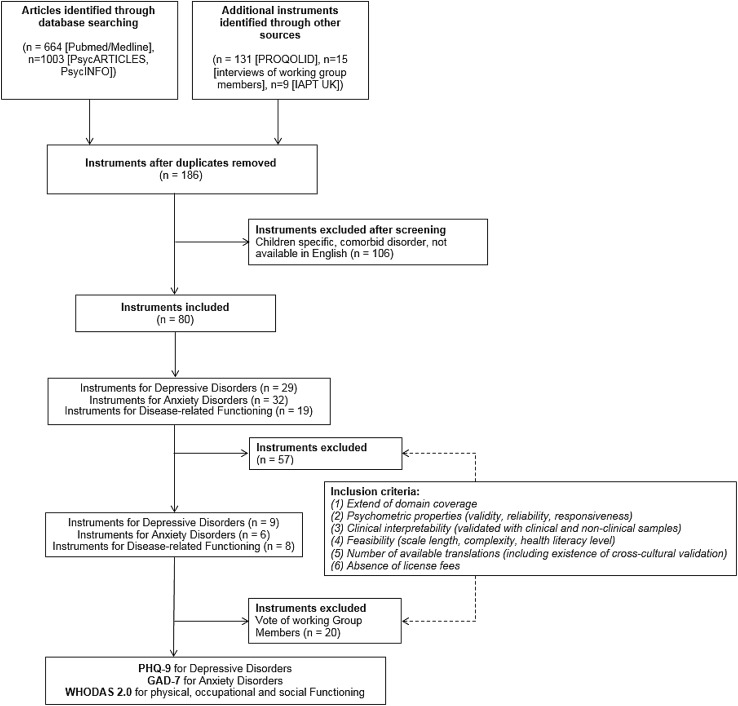
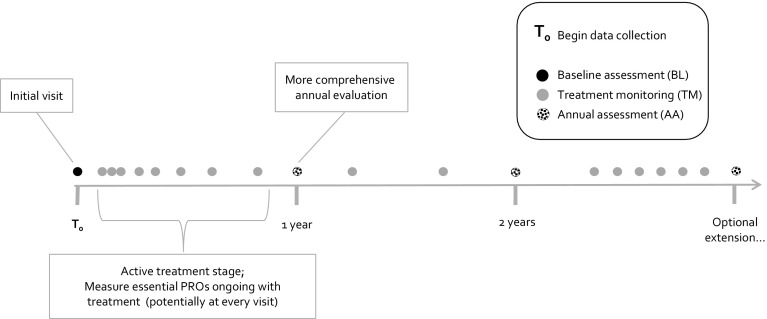
Verification
Claims the paper makes
The claims and statistics of this paper haven’t been checked yet.
Free: it reads the open-access text and checks the first 5 claims that cite a source we can check. Create a free account to check every claim.
Claims other papers make about this one
Each is checked against this paper’s own text: does it say what the citing paper says it does?
The cited source says what the claim attributes to it.
In the citing paper
“The review here is consonant with calls in the field to develop common metrics 264 , to agree on core outcome sets 265,266 , and to harmonize measurement results 263 .”
From The clinical characterization of the adult patient with an anxiety or related disorder aimed at personalization of management (2021) · cites this paper as [266]
Self-check
Percentages, sums and reported differences re-computed from the paper’s own numbers.
The self-check needs the paper’s full text.
Citations
Cites
The PHQ-9: Validity of a brief depression severity measure
Kroenke, K., Spitzer, R. L., & Williams, J. B. W. (2001) · Journal of General Internal Medicine · doi:10.1046/j.1525-1497.2001.016009606.x · Cited by 44,910
A Brief Measure for Assessing Generalized Anxiety Disorder: The GAD-7
Spitzer, R. L., Kroenke, K., Williams, J. B. W., & Löwe, B. (2006) · Archives of Internal Medicine · doi:10.1001/archinte.166.10.1092 · Cited by 31,765
Spitzer, R. L. (1999) · JAMA · doi:10.1001/jama.282.18.1737 · Cited by 9,802 · cited 4×
“Due to its availability in many languages and general population reference data, we selected the World Health Organization Disability Schedule 2.0 (WHODAS 2.0) 12-item self-rating version to measure physical, social, and occupational functioning (Tables 2, 3, Online Table 3 Assessment sets, domains, number of items, a…”
MethodInfluentialVos, T., Flaxman, A. D., Naghavi, M., Lozano, R., Michaud, C., Ezzati, M., Shibuya, K., Salomon, J. A., Abdalla, S., Aboyans, V., et al. (2012) · The Lancet · doi:10.1016/s0140-6736(12)61729-2 · Cited by 8,291
Self-citationJacobson, N. S., & Truax, P. (1991) · Journal of Consulting and Clinical Psychology · doi:10.1037/0022-006x.59.1.12 · Cited by 7,770
Scoville, W. B. (1949) · Journal of neurosurgery · doi:10.3171/jns.1949.6.1.0065 · Cited by 7,381
Research guidelines for the Delphi survey technique
Hasson, F. (2000) · Journal of Advanced Nursing · doi:10.1046/j.1365-2648.2000.01567.x · Cited by 5,951 · cited 1×
“The Delphi approach is an iterative, multistage process with the aim of transforming opinion into group consensus [16].”
MethodCella, D., Riley, W., Stone, A., Rothrock, N., Reeve, B., Yount, S., Amtmann, D., Bode, R., Buysse, D., Choi, S., et al. (2010) · Journal of Clinical Epidemiology · doi:10.1016/j.jclinepi.2010.04.011 · Cited by 5,128
Self-citationPorter, M. E. (2010) · New England Journal of Medicine · doi:10.1056/nejmp1011024 · Cited by 5,084
Essentials of nursing research: Methods, appraisal, and utilization
Polit, D. F., & Hungler, B. P. (1989) · Cited by 3,249
Ferrari, A. J., Charlson, F. J., Norman, R. E., Patten, S. B., Freedman, G., Murray, C. J. L., Vos, T., & Whiteford, H. A. (2013) · PLoS Medicine · doi:10.1371/journal.pmed.1001547 · Cited by 3,115
The functioning and well-being of depressed patients. Results from the Medical Outcomes Study
Wells, K. B. (1989) · JAMA · doi:10.1001/jama.262.7.914 · Cited by 2,808
International Standard Classification of Education, ISCED 1997
UNESCO United Nations Educational, S. A. C. O. (2003) · Advances in Cross-National Comparison · doi:10.1007/978-1-4419-9186-7_10 · Cited by 2,351
Psychometric properties of the credibility/expectancy questionnaire
Devilly, G. J., & Borkovec, T. D. (2000) · Journal of Behavior Therapy and Experimental Psychiatry · doi:10.1016/s0005-7916(00)00012-4 · Cited by 2,295 · cited 2×
“Finally, we prioritized patients’ perceived success of treatment as this appraisal is one of the best indicators for good treatment outcome (Table 1, #9) [39].”
BackgroundMethodSocioeconomic Status in Health Research: One Size Does Not Fit All
Braveman, P. A., Cubbin, C., Egerter, S., Chideya, S., Marchi, K. S., Metzler, M., & Posner, S. (2005) · JAMA · doi:10.1001/jama.294.22.2879 · Cited by 2,242
Pilkonis, P. A., Choi, S. W., Reise, S. P., Stover, A. M., Riley, W. T., Cella, D., & PROMIS Cooperative Group (2011) · Assessment · doi:10.1177/1073191111411667 · Cited by 2,132
Self-citationThe Functioning and Well-being of Depressed Patients: Results From the Medical Outcomes Study
Wells, K. B. (1989) · JAMA · doi:10.1001/jama.1989.03430070062031 · Cited by 2,130 · cited 2×
“Given the large body of evidence suggesting that depression and anxiety disorders are associated with impaired functioning, the Working Group recommended its inclusion in the standard set [34].”
BackgroundMethodDeveloping the World Health Organization Disability Assessment Schedule 2.0
Üstün, T. B., Chatterji, S., Kostanjsek, N., Rehm, J., Kennedy, C., Epping-Jordan, J., Saxena, S., von Korff, M., & Pull, C. (2010) · Bulletin of the World Health Organization · doi:10.2471/blt.09.067231 · Cited by 1,851
Sangha, O., Stucki, G., Liang, M. H., Fossel, A. H., & Katz, J. N. (2003) · Arthritis Care & Research · doi:10.1002/art.10993 · Cited by 1,806
The Economic Burden of Adults With Major Depressive Disorder in the United States (2005 and 2010)
Greenberg, P. E., Fournier, A.-A., Sisitsky, T., Pike, C. T., & Kessler, R. C. (2015) · The Journal of Clinical Psychiatry · doi:10.4088/jcp.14m09298 · Cited by 1,779
Gilbody, S., Richards, D., Brealey, S., & Hewitt, C. (2007) · Journal of General Internal Medicine · doi:10.1007/s11606-007-0333-y · Cited by 1,290 · cited 1×
“, the PHQ-9 and GAD-7, have been widely used to assess different disease states and manifestations of depression and anxiety, respectively [53].”
MethodRedefining Health Care: Creating Value-based Competition on Results
Porter, M. E., & Teisberg, E. O. (2006) · Cited by 1,207
Blackstone, E. A., & Fuhr, J. P. (2007) · Atlantic Economic Journal · doi:10.1007/s11293-007-9091-9 · Cited by 870
Health literacy: addressing the health and education divide
Kickbusch, I. S. (2001) · Health Promotion International · doi:10.1093/heapro/16.3.289 · Cited by 750
Test Equating, Scaling, and Linking
Kolen, M. J., & Brennan, R. L. (2004) · doi:10.1007/978-1-4757-4310-4 · Cited by 706
Clark, D. M. (2011) · International Review of Psychiatry · doi:10.3109/09540261.2011.606803 · Cited by 699 · cited 2×
“To date, the most comprehensive effort to initiate standardized outcome assessments for the treatment of mental health disorders has come from the United Kingdom (‘‘Improving Access to Psychological Therapies’’ (IAPT)) [10].”
BackgroundMethodSelf-citationGarcia-Campayo, J., Zamorano, E., Ruiz, M. A., Pardo, A., Perez-Paramo, M., Lopez-Gomez, V., Freire, O., & Rejas, J. (2010) · Health and Quality of Life Outcomes · doi:10.1186/1477-7525-8-8 · Cited by 673
Test Equating, Scaling, and Linking: Methods and Practices
Kolen, M. J., & Brennan, R. L. (2014) · Springer eBooks · doi:10.1007/978-1-4939-0317-7 · Cited by 630
Validity of the patient health questionnaire-9 for depression screening and diagnosis in East Africa
Gelaye, B., Williams, M. A., Lemma, S., Deyessa, N., Bahretibeb, Y., Shibre, T., Wondimagegn, D., Lemenhe, A., Fann, J. R., Vander Stoep, A., et al. (2013) · Psychiatry Research · doi:10.1016/j.psychres.2013.07.015 · Cited by 543
Implementing routine outcome monitoring in clinical practice: Benefits, challenges, and solutions
Boswell, J. F., Kraus, D. R., Miller, S. D., & Lambert, M. J. (2015) · Psychotherapy Research · doi:10.1080/10503307.2013.817696 · Cited by 494
Choi, S. W., Schalet, B., Cook, K. F., & Cella, D. (2014) · Psychological Assessment · doi:10.1037/a0035768 · Cited by 480 · cited 3×
“over the last decade, and is in our opinion the most likely to be widely accepted in the future [31, 32].”
BackgroundMethodNormative data for the 12 item WHO Disability Assessment Schedule 2.0
Andrews, G., Kemp, A., Sunderland, M., Von Korff, M., & Ustun, T. B. (2009) · PLoS ONE · doi:10.1371/journal.pone.0008343 · Cited by 437
Meta‐Analysis of Therapist Effects in Psychotherapy Outcome Studies
Crits-Christoph, P., Baranackie, K., Kurcias, J., Beck, A., Carroll, K., Perry, K., Luborsky, L., McLellan, A., Woody, G., Thompson, L., et al. (1991) · Psychotherapy Research · doi:10.1080/10503309112331335511 · Cited by 433
Cuijpers, P., Sijbrandij, M., Koole, S. L., Andersson, G., Beekman, A. T., & Reynolds, C. F. (2014) · World Psychiatry · doi:10.1002/wps.20089 · Cited by 424 · cited 1×
“A variety of treatment options have been proven effective in reducing symptom burden and improving functioning for patients with depression or anxiety [4].”
BackgroundEnhancing recovery rates: Lessons from year one of IAPT
Gyani, A., Shafran, R., Layard, R., & Clark, D. M. (2013) · Behaviour Research and Therapy · doi:10.1016/j.brat.2013.06.004 · Cited by 345
Self-citationDisability in depression and back pain
Chwastiak, L. A., & Von Korff, M. (2003) · Journal of Clinical Epidemiology · doi:10.1016/s0895-4356(03)00051-9 · Cited by 280
Schalet, B. D., Cook, K. F., Choi, S. W., & Cella, D. (2014) · Journal of Anxiety Disorders · doi:10.1016/j.janxdis.2013.11.006 · Cited by 257
Defining a Standard Set of Patient-centered Outcomes for Men with Localized Prostate Cancer
Martin, N. E., Massey, L., Stowell, C., Bangma, C., Briganti, A., Bill-Axelson, A., Blute, M., Catto, J., Chen, R. C., D’Amico, A. V., et al. (2015) · European Urology · doi:10.1016/j.eururo.2014.08.075 · Cited by 239
Self-citationAllgaier, A.-K., Pietsch, K., Frühe, B., Sigl-Glöckner, J., & Schulte-Körne, G. (2012) · Depression and Anxiety · doi:10.1002/da.21971 · Cited by 235
Williams, A. D., Blackwell, S. E., Mackenzie, A., Holmes, E. A., & Andrews, G. (2013) · Journal of Consulting and Clinical Psychology · doi:10.1037/a0033247 · Cited by 195
Wahl, I., Löwe, B., Bjorner, J. B., Fischer, F., Langs, G., Voderholzer, U., Aita, S. A., Bergemann, N., Brähler, E., & Rose, M. (2014) · Journal of Clinical Epidemiology · doi:10.1016/j.jclinepi.2013.04.019 · Cited by 193
Self-citationMcNamara, R. L., Spatz, E. S., Kelley, T. A., Stowell, C. J., Beltrame, J., Heidenreich, P., Tresserras, R., Jernberg, T., Chua, T., Morgan, L., et al. (2015) · Journal of the American Heart Association · doi:10.1161/jaha.115.001767 · Cited by 179
Self-citationSelecting outcome measures in mental health: the views of service users
Crawford, M. J., Robotham, D., Thana, L., Patterson, S., Weaver, T., Barber, R., Wykes, T., & Rose, D. (2011) · Journal of Mental Health · doi:10.3109/09638237.2011.577114 · Cited by 172 · cited 1×
“The IAPT program has shown that regular data collection during a course of treatment helps guide therapy and ensures very high (up to 97%) pre-post data completeness [52].”
BackgroundA proposed set of metrics for standardized outcome reporting in the management of low back pain
Clement, R. C., Welander, A., Stowell, C., Cha, T. D., Chen, J. L., Davies, M., Fairbank, J. C., Foley, K. T., Gehrchen, M., Hagg, O., et al. (2015) · Acta Orthopaedica · doi:10.3109/17453674.2015.1036696 · Cited by 170
Self-citationRose, M., & Bezjak, A. (2009) · Quality of Life Research · doi:10.1007/s11136-008-9436-0 · Cited by 164
Self-citationDefining a standard set of patient-centred outcomes for lung cancer
Mak, K. S., van Bommel, A. C. M., Stowell, C. J., Abrahm, J. L., Baker, M., Baldotto, C. S. D. R., Baldwin, D., Borthwick, D., Carbone, D. P., Chen, A. B., et al. (2016) · European Respiratory Journal · doi:10.1183/13993003.02049-2015 · Cited by 136
Self-citationHolden, L., Lee, C., Hockey, R., Ware, R. S., & Dobson, A. J. (2014) · Quality of Life Research · doi:10.1007/s11136-014-0741-5 · Cited by 125
A Proposed Minimum Standard Set of Outcome Measures for Cataract Surgery
Mahmud, I., Kelley, T. A., Stowell, C. J., Haripriya, A., Boman, A., Kössler, I., Morlet, N., Pershing, S., Pesudovs, K., Goh, P. P., et al. (2015) · JAMA Ophthalmology · doi:10.1001/jamaophthalmol.2015.2810 · Cited by 121
Self-citationDefining a Minimum Set of Standardized Patient-centered Outcome Measures for Macular Degeneration
Rodrigues, I. A. S., Sprinkhuizen, S. M., Barthelmes, D., Blumenkranz, M. S., Cheung, C. M. G., Haller, J. A., Johnston, R. L., Ramasamy, K., Klaver, C. C. W., McKibbin, M., et al. (2016) · American Journal of Ophthalmology · doi:10.1016/j.ajo.2016.04.012 · Cited by 113
Morgans, A. K., van Bommel, A. C. M., Stowell, C. J., Abrahm, J. L., Basch, E., Bekelman, J. E., Berry, D. L., Bossi, A., Davis, I. D., de Reijke, T. M., et al. (2015) · European Urology · doi:10.1016/j.eururo.2015.06.007 · Cited by 110
Self-citationZhong, Q., Gelaye, B., Fann, J. R., Sanchez, S. E., & Williams, M. A. (2014) · Journal of Affective Disorders · doi:10.1016/j.jad.2014.02.012 · Cited by 101
NICE guidelines for the management of depression
Middleton, H., Shaw, I., Hull, S., & Feder, G. (2005) · BMJ · doi:10.1136/bmj.330.7486.267 · Cited by 93
Silveira, C., Parpinelli, M. Â., Pacagnella, R. C., de Camargo, R. S., Costa, M. L., Zanardi, D. M. T., Ferreira, E. C., dos Santos, J. P. F., Hanson, L., Cecatti, J. G., et al. (2013) · Revista da Associação Médica Brasileira · doi:10.1016/j.ramb.2012.11.005 · Cited by 91
Reise, S. P., & Rodriguez, A. (2016) · Psychological Medicine · doi:10.1017/s0033291716000520 · Cited by 82
Psychotherapy research: do we know what works for whom?
Fonagy, P. (2010) · British Journal of Psychiatry · doi:10.1192/bjp.bp.110.079657 · Cited by 67
Olomu, A. B., Corser, W. D., Stommel, M., Xie, Y., & Holmes-Rovner, M. M. (2012) · BMC Health Services Research · doi:10.1186/1472-6963-12-398 · Cited by 51
Screening for mental disorders in heart failure patients using computer-adaptive tests
Fischer, F. H., Klug, C., Roeper, K., Blozik, E., Edelmann, F., Eisele, M., Störk, S., Wachter, R., Scherer, M., Rose, M., et al. (2013) · Quality of Life Research · doi:10.1007/s11136-013-0599-y · Cited by 49
Self-citationKupfer, D. J., & Frank, E. (2003) · Acta Psychiatrica Scandinavica · doi:10.1034/j.1600-0447.108.s418.12.x · Cited by 36
de Beurs, E., Barendregt, M., de Heer, A., van Duijn, E., Goeree, B., Kloos, M., Kooiman, K., Lionarons, H., & Merks, A. (2015) · Clinical Psychology & Psychotherapy · doi:10.1002/cpp.1954 · Cited by 34
Silveira, C., Parpinelli, M. Â., Pacagnella, R. C., de Camargo, R. S., Costa, M. L., Zanardi, D. M. T., Ferreira, E. C., dos Santos, J. P. F., Hanson, L., Cecatti, J. G., et al. (2013) · Revista da Associação Médica Brasileira (English Edition) · doi:10.1016/s2255-4823(13)70462-4 · Cited by 32
Ng, C. G., Sulaiman, A. R. B., Loh, H. S., Ann, A. Y. H., Wahab, S. B., & Pillai, S. K. (2013) · Indian Journal of Psychological Medicine · doi:10.4103/0253-7176.122234 · Cited by 28
Predictors of response to CBT and IPT for depression; the contribution of therapy process
Carter, J. D., Crowe, M., Jordan, J., McIntosh, V. V. W., FRAMPTON, C. M. A., & Joyce, P. R. (2015) · Behaviour Research and Therapy · doi:10.1016/j.brat.2015.09.003 · Cited by 20
Comparing outcomes of routine care for depression: The dilemma of case-mix adjustment
Kramer, T. L., Evans, R. B., Landes, R., Mancino, M. J., Booth, B., & Smith, G. R. (2001) · Journal of Behavioral Health Services & Research · doi:10.1007/bf02287245 · Cited by 19
van der Lem, R., Stamsnieder, P. M., van der Wee, N. J. A., van Veen, T., & Zitman, F. G. (2012) · Social Psychiatry and Psychiatric Epidemiology · doi:10.1007/s00127-012-0624-4 · Cited by 12
Making an economic case for better mental health services
Knapp, M. R. J. (2013) · Wiley eBooks · doi:10.1002/9781118337981.ch13 · Cited by 3
Cited by
Digital interventions for the treatment of depression: a meta-analytic review
Moshe, I., Terhorst, Y., Philippi, P., Domhardt, M., Cuijpers, P., Cristea, I., Pulkki-Råback, L., Baumeister, H., & Sander, L. B. (2021) · Psychological Bulletin · doi:10.1037/bul0000334 · Cited by 390
Suryavanshi, N., Kadam, A., Dhumal, G., Nimkar, S., Mave, V., Gupta, A., Cox, S. R., & Gupte, N. (2020) · Brain and Behavior · doi:10.1002/brb3.1837 · Cited by 267
Chevance, A., Ravaud, P., Tomlinson, A., Le Berre, C., Teufer, B., Touboul, S., Fried, E. I., Gartlehner, G., Cipriani, A., & Tran, V. T. (2020) · The Lancet Psychiatry · doi:10.1016/s2215-0366(20)30191-7 · Cited by 193
Krause, K. R., Chung, S., Adewuya, A. O., Albano, A. M., Babins-Wagner, R., Birkinshaw, L., Brann, P., Creswell, C., Delaney, K., Falissard, B., et al. (2021) · The Lancet Psychiatry · doi:10.1016/s2215-0366(20)30356-4 · Cited by 162
How is quality of life defined and assessed in published research?
Costa, D. S. J., Mercieca-Bebber, R., Rutherford, C., Tait, M.-A., & King, M. T. (2021) · Quality of Life Research · doi:10.1007/s11136-021-02826-0 · Cited by 158
Metadata
- Authors
- Obbarius, A., van Maasakkers, L., Baer, L., Clark, D. M., Crocker, A. G., de Beurs, E., Emmelkamp, P. M. G., Furukawa, T. A., Hedman-Lagerlöf, E., Kangas, M., Langford, L., Lesage, A., Mwesigire, D. M., Nolte, S., Patel, V., Pilkonis, P. A., Pincus, H. A., Reis, R. A., Rojas, G., Sherbourne, C., Smithson, D., Stowell, C., Woolaway-Bickel, K., & Rose, M.
- Affiliations
- Humboldt-Universität zu Berlin (DE)
- Harvard University (US)
- University of Oxford (GB)
- Institut national de psychiatrie légale Philippe-Pinel (CA)
- King Abdulaziz University (SA)
- Kyoto University (JP)
- Macquarie University (AU)
- Institut universitaire en santé mentale de Montréal (CA)
- Makerere University (UG)
- Deakin University (AU)
- University of Pittsburgh (US)
- RAND Corporation (US)
- Universidade Federal do Rio Grande do Sul (BR)
- University of Chile (CL)
- United States Army (US)
- University of Massachusetts Chan Medical School (US)
- Corresponding author
- Obbarius, Alexander
- ORCID
- Venue
- Quality of Life Research
- Published
- 2017-08-07
- Volume
- 26
- Issue
- 12
- Pages
- 3211-3225
- ISSN
- 0962-9343 (ISSN-L)
- 1573-2649
- PMC
- PMC5681977
- OpenAlex
- W2743832743
- Semantic Scholar
- d3589c9c0bc75758d8506821cd359014039141e4
- Cited by
- 116
- References
- 65
- Citations by year
- 2026: 16 · 2025: 12 · 2024: 12 · 2023: 9 · 2022: 19 · 2021: 18 · 2020: 16 · 2019: 6 · 2018: 7
- FWCI
- 20.26
- Type
- journal article
- Language
- en
- Open access
- hybrid
- doi.org
- Locations
- Quality of Life Research (publishedVersion, cc-by)
- Europe PMC (PubMed Central) (publishedVersion, cc-by)
- PubMed Central (publishedVersion, cc-by)
- PubMed (publishedVersion)
- Institutional Repositories DataBase (IRDB) (submittedVersion, cc-by)
- Data Archiving and Networked Services (DANS) (submittedVersion, other-oa)
- Digital Access to Scholarship at Harvard (DASH) (Harvard University) (submittedVersion, cc-by)
- UvA-DARE (University of Amsterdam) (submittedVersion, cc-by)
- Figshare (submittedVersion, cc-by)
- Universidad de Chile (submittedVersion, cc-by-nc-nd)
- Kyoto University Research Information Repository (Kyoto University) (submittedVersion, cc-by)
- Funders
- International Consortium for Health Outcomes Measurement (ICHOM)
- Stichting Benchmark GGZ
- Douglas Mental Health University Institute
- Charité Universitätsmedizin Berlin
- Topics
- Social Sciences › Sociology and Political Science › Delphi Technique in Research
- Social Sciences › Economics, Econometrics and Finance › Economics and Econometrics › Health Systems, Economic Evaluations, Quality of Life
- Social Sciences › Psychology › Experimental and Cognitive Psychology › Anxiety, Depression, Psychometrics, Treatment, Cognitive Processes
- Keywords
- depression, anxiety, health outcome measurement, outcome standardization, patient-reported outcome measures, ICHOM, outcome domains, remission, absenteeism, treatment progress monitoring, consensus recommendations
- MeSH terms
- Anxiety, Depression, Humans, Psychometrics, Treatment Outcome, Sickness Impact Profile
About these checks
Registry, retraction, Cites and statistics results are computed, not judged, with one exception: a printed reference that no index lists is read once by a model before it counts as a citation error. Claims are extracted by a model and kept only when their quote appears verbatim in the text; each cited source is then checked, with a model’s help, for whether it says what the claim relies on. Those verdicts can be wrong — read the claim’s quote and the cited source before relying on one.
Statistics and arithmetic are recomputed, not judged.
Confidence bands are shown only for fields calibrated on our annotated test set. None is calibrated yet, so no band is shown.
What counts as a claim ›How we measure confidence ›How we check this ›
Are you an author, or do you see a problem with this page? Request a review
Data sources
Bibliographic data: Semantic Scholar, OpenAlex, Crossref.
Contains information from the Semantic Scholar Academic Graph Datasets, made available under the ODC Attribution License (ODC-BY 1.0).
Semantic Scholar’s data is described in: Kinney, R., et al. (2023). The Semantic Scholar Open Data Platform. arXiv:2301.10140.
