

The Use of Cronbach’s Alpha When Developing and Reporting Research Instruments in Science Education
Open accessThe DOI matches its Crossref record; 37 of the 37 references it cites were found in a registry or an index.
Abstract
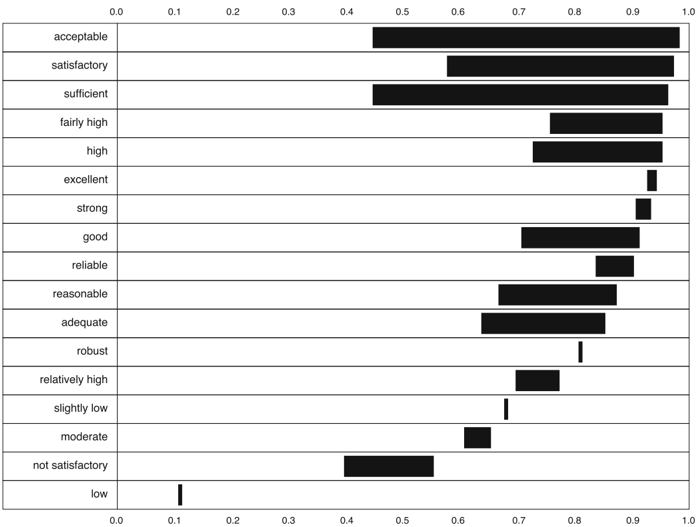
Cronbach’s alpha is a statistic commonly quoted by authors to demonstrate that tests and scales that have been constructed or adopted for research projects are fit for purpose. Cronbach’s alpha is regularly adopted in studies in science education: it was referred to in 69 different papers published in 4 leading science education journals in a single year (2015)—usually as a measure of reliability. This article explores how this statistic is used in reporting science education research and what it represents. Authors often cite alpha values with little commentary to explain why they feel this statistic is relevant and seldom interpret the result for readers beyond citing an arbitrary threshold for an acceptable value. Those authors who do offer readers qualitative descriptors interpreting alpha values adopt a diverse and seemingly arbitrary terminology. More seriously, illustrative examples from the science education literature demonstrate that alpha may be acceptable even when there are recognised problems with the scales concerned. Alpha is also sometimes inappropriately used to claim an instrument is unidimensional. It is argued that a high value of alpha offers limited evidence of the reliability of a research instrument, and that indeed a very high value may actually be undesirable when developing a test of scientific knowledge or understanding. Guidance is offered to authors reporting, and readers evaluating, studies that present Cronbach’s alpha statistic as evidence of instrument quality.
Overview
The claims and statistics of this paper haven’t been checked yet.
Free: it reads the open-access text and checks the first 5 claims that cite a source we can check. Create a free account to check every claim.
Integrity signals
Registry
Cites
Statistics
Figures
Verification
Claims the paper makes
The claims and statistics of this paper haven’t been checked yet.
Free: it reads the open-access text and checks the first 5 claims that cite a source we can check. Create a free account to check every claim.
Claims other papers make about this one
Each is checked against this paper’s own text: does it say what the citing paper says it does?
The cited source doesn’t support the claim as written.
In the citing paper
“Specifically, all studies using the AAQ and one third of studies using the AAQ-II reported internal consistency below recommended cutoffs (i.e., Cronbach’s alpha > .80; Taber, 2018), with alphas as low as .57 and .51 respectively.”
From Psychological flexibility in older adulthood: a scoping review. (2023) · cites this paper as Taber, 2018
Checked by a reasoning model — may be wrong.
Experimental — accuracy not yet measuredThe cited source doesn’t support the claim as written.
In the citing paper
“The internal consistency in our data was moderate ( α = 0.59) on the basis of Taber et al.'s (2018) criteria.”
From Enhancing School Students' Self-Regulated Learning through Generative AI Support: A Randomized Controlled Trial (2026) · cites this paper as Taber et al.'s (2018)
Checked by a reasoning model — may be wrong.
Experimental — accuracy not yet measuredThe cited source doesn’t support the claim as written.
In the citing paper
“The internal consistency in our data was acceptable ( α = 0.70) on the basis of Taber et al.'s (2018) criteria.”
From Enhancing School Students' Self-Regulated Learning through Generative AI Support: A Randomized Controlled Trial (2026) · cites this paper as Taber et al.'s (2018)
Checked by a reasoning model — may be wrong.
Experimental — accuracy not yet measuredThe source backs part of the claim, not all of it — or backs it for a different population, condition or comparison.
In the citing paper
“No study reported good internal consistency for the AAQ, as indicated by Cronbach α > .80 (Taber, 2018).”
From Psychological flexibility in older adulthood: a scoping review. (2023) · cites this paper as Taber, 2018
Experimental — accuracy not yet measuredThe source backs part of the claim, not all of it — or backs it for a different population, condition or comparison.
In the citing paper
“These findings suggest a number of conceptual and statistical issues (see Taber, 2018; Tavakol & Dennick, 2011), including the possibility that the AAQ and AAQ-II do not measure a common factor among older adults or that, given the broad range of alpha scores (i.e., .51-.94), these measures do not perform consistently in older adult samples.”
From Psychological flexibility in older adulthood: a scoping review. (2023) · cites this paper as Taber, 2018
Experimental — accuracy not yet measured
15 more claims about this paper
Create a free account to see every claim other papers make about this one.
Self-check
Percentages, sums and reported differences re-computed from the paper’s own numbers.
The self-check needs the paper’s full text.
Citations
Cites
Coefficient Alpha and the Internal Structure of Tests
Cronbach, L. J. (1951) · Psychometrika · doi:10.1007/bf02310555 · Cited by 43,931 · cited 13×
“Sijtsma (2009) develops an argument explored in Cronbach’s (1951) seminal paper that alpha does not offer an accurate value for reliability as understood by psychometricians (but rather a lower bound, although Cronbach himself had argued in his 1951 paper that alpha was often a suitable proxy) and suggests that intern…”
BackgroundMethodInfluentialWhat is coefficient alpha? An examination of theory and applications
Cortina, J. M. (1993) · Journal of Applied Psychology · doi:10.1037/0021-9010.78.1.98 · Cited by 8,810 · cited 5×
“Cronbach ’ s alpha has been described as ‘ one of the most important and pervasive statistics in research involving test construction and use ’ (Cortina, 1993, p. 98) to the extent that its use in research with multiple-item measurements is considered routine (Schmitt, 1996, p. 350).”
BackgroundInfluentialOn the use, the misuse, and the very limited usefulness of Cronbach’s alpha
Sijtsma, K. (2009) · Psychometrika · doi:10.1007/s11336-008-9101-0 · Cited by 2,814 · cited 2×
“Sijtsma (2009) has more recently made the point more bluntly: “ both very low and very high alpha values can go either with unidimensionality or multidimensionality of the data ” (p.119).”
BackgroundUses and abuses of coefficient alpha
Schmitt, N. (1996) · Psychological Assessment · doi:10.1037/1040-3590.8.4.350 · Cited by 2,588 · cited 4×
“(Cortina, 1993; Schmitt, 1996), it is generally possible to increase alpha to 0.”
BackgroundInfluentialGlobal Patterns in Students’ Views of Science and Interest in Science
van Griethuijsen, R. A. L. F., van Eijck, M. W., Haste, H., den Brok, P. J., Skinner, N. C., Mansour, N., Savran Gencer, A., & BouJaoude, S. (2015) · Research in Science Education · doi:10.1007/s11165-014-9438-6 · Cited by 852 · cited 3×
“Griethuijsen et al. (2014) reported a cross-national study looking at student interests in science where “ several of the values calculated for Cronbach ’ s alpha are below the acceptable values of 0.7 or 0.6 ” (p.588).”
BackgroundInfluentialThe development of a questionnaire to measure students' motivation towards science learning
Tuan *, H., Chin, C., & Shieh, S. (2005) · International Journal of Science Education · doi:10.1080/0950069042000323737 · Cited by 625 · cited 2×
“Tuan and colleagues (Tuan, Chin, & Shieh, 2005) report a study “ to develop a questionnaire that measures students ’ motivation toward science learning ” (p.639).”
BackgroundDevelopment and Validation of Instruments to Measure Learning of Expert‐Like Thinking
Adams, W. K., & Wieman, C. E. (2011) · International Journal of Science Education · doi:10.1080/09500693.2010.512369 · Cited by 451 · cited 1×
“Given that some authors choose to report cross-scale results, readers should be aware that the Cronbach alpha statistic is most valuable in relation to single-construct scales and less informative when reported for instruments measuring several constructs at once (Adams & Wieman, 2010).”
BackgroundArslan, H. O., Cigdemoglu, C., & Moseley, C. (2012) · International Journal of Science Education · doi:10.1080/09500693.2012.680618 · Cited by 304
Developing attitude to science scales for use with children of ages from five to eleven years
Pell, T., & Jarvis, T. (2001) · International Journal of Science Education · doi:10.1080/09500690010016111 · Cited by 284 · cited 2×
“…for measuring affect in science education is “ Developing attitude to science scales for use with children of ages from five to eleven years ” (Pell & Jarvis, 2001) which “ reports on the development stages of three attitudes to science and school scales for use with children aged from 5 to…”
BackgroundMeasuring attitudes to science: Unidimensionality and internal consistency revisited
Gardner, P. L. (1995) · Research in Science Education · doi:10.1007/bf02357402 · Cited by 175 · cited 2×
“It seems that despite Gardner ’ s (1995) warning in this journal that researchers should not conflate internal consistency and unidimensionality and consider a high value of alpha as suggesting that the items in an instrument were all measuring the same thing, reports are still being published in…”
Background
Research works printed but not linked: 1
- 21. National Research Council Committee on Scientific Principles for Educational Research. (2002). Scientific Research in Education. Washington DC: National Academies Press.
Cited by
Items 901–1,000 of 1,037
Do Authentic People Care about the Environment? A View from Two Paradigms
Reznichenko, S. I., Кимовна, Н.-Б. С., & Irkhin, B. D. (2021) · Psychology in Russia State of Art · doi:10.11621/pir.2021.0306 · Cited by 34
“The reliability of this scale was acceptable (ω = 0.675; α = 0.643) for a research instrument with few items (Taber, 2017).”
BackgroundInfluentialImpact of stakeholder management on efficient construction waste management
Frempong-Jnr, E. Y., Ametepey, S. O., & Cobbina, J. E. (2022) · Smart and Sustainable Built Environment · doi:10.1108/sasbe-08-2021-0147 · Cited by 34
Philibert, A., Fillion, M., Silva, J. D., Lena, T. S., & Mergler, D. (2022) · Environmental Health · doi:10.1186/s12940-022-00838-y · Cited by 42
Khaliq, A., Amreen, Jameel, N., & Krauth, S. J. (2022) · Maternal and Child Health Journal · doi:10.1007/s10995-022-03391-9 · Cited by 38
“7 or more) of Cronbach alpha for reliability analysis (Taber, 2018).”
BackgroundWee, L. L. M., & Goy, S. C. (2022) · International Journal of Social Economics · doi:10.1108/ijse-02-2021-0114 · Cited by 41
Understanding the role of social factors in cyberbullying at work
Wang, Y. (2022) · Computers in Human Behavior · doi:10.1016/j.chb.2022.107325 · Cited by 33
Online learning satisfaction in higher education: what are the determining factors?
Suhandiah, S., Suhariadi, F., Yulianti, P., Wardani, R., & Muliatie, Y. E. (2022) · Jurnal Cakrawala Pendidikan · doi:10.21831/cp.v41i2.35724 · Cited by 50
School Demands and Resources as Predictors of Student Burnout Among High School Students
Jagodics, B., Nagy, K., Szénási, S., Varga, R., & Szabó, É. (2022) · School Mental Health · doi:10.1007/s12310-022-09534-1 · Cited by 39
Occupational Risk of Technostress Related to the Use of ICT among Teachers in Spain
Rey-Merchán, M. D. C., & López-Arquillos, A. (2022) · Sustainability · doi:10.3390/su14148746 · Cited by 40
Pretorius, T. B., & Padmanabhanunni, A. (2022) · African Journal of Psychological Assessment · doi:10.4102/ajopa.v4i0.106 · Cited by 30
Wang, K., Wong, E. L., Cheung, A. W.-L., Chung, V. C., Wong, C. H.-L., Dong, D., Wong, S. Y. S., & Yeoh, E. (2022) · European Journal of Pediatrics · doi:10.1007/s00431-022-04586-6 · Cited by 32
“734, which indicated an acceptable and relatively high internal consistency of the questions [40].”
Backgroundla Rosa, A. D., Quintero, A. M., Villa, M. A. C., Arc‐Chagnaud, C., de Andrade, A. G. P., Reyes-Correa, S., Quintero-Bernal, R., & García, J. P. F. (2022) · International Journal of Environmental Research and Public Health · doi:10.3390/ijerph191811234 · Cited by 29
“7 to indicate the satisfactory homogeneity of the items within the total scale [28].”
BackgroundExplain yourself! Effects of Explanations in Human-Robot Interaction
Ambsdorf, J., Munir, A., Wei, Y., Degkwitz, K., Harms, H. M., Stannek, S., Ahrens, K., Becker, D., Strahl, E., Weber, T., et al. (2022) · IEEE RO-MAN · doi:10.1109/ro-man53752.2022.9900558 · Cited by 33
“The dimension of safety only consists of three items and the Cronbach’s Alpha indicates an adequate consistency [67].”
BackgroundJafar, A., Dollah, R., Sakke, N., Mapa, M. T., Hua, A. K., Eboy, O. V., Joko, E. P., Hassan, D., & Hung, C. V. (2022) · Scientific Reports · doi:10.1038/s41598-022-22360-4 · Cited by 56
Modeling Collaborative Behaviors in Energy Ecosystems
Adu-Kankam, K. O., & Camarinha-Matos, L. M. (2023) · Computers · doi:10.3390/computers12020039 · Cited by 25
Ooi, K., Ong, Z.-T., Watcharasupat, K. N., Lam, B., Hong, J. Y., & Gan, W. (2023) · IEEE Transactions on Affective Computing · doi:10.1109/taffc.2023.3247914 · Cited by 37
“8, which can be considered “high” given the number of items in each questionnaire [103].”
BackgroundAlnahdi, G. H., & Schwab, S. (2023) · Frontiers in Psychology · doi:10.3389/fpsyg.2023.1066843 · Cited by 39
“809, and these values are good indicators of internal consistency (Taber, 2018) among items within each scale.”
BackgroundInfluentialUsman, I. M., Chama, N., Aigbogun, E., Kabanyoro, A., Kasozi, K. I., Usman, C. O., Diaz, M. E. F., Ndyamuhakyi, E., Archibong, V. B., Onongha, C., et al. (2023) · International Journal of Women s Health · doi:10.2147/ijwh.s404845 · Cited by 34
Fuady, A., Arifin, B., Yunita, F., Rauf, S., Fitriangga, A., Sugiharto, A., Yani, F. F., Nasution, H. S., Putra, I. W. G. A. E., Mansyur, M., et al. (2023) · BMC Psychology · doi:10.1186/s40359-023-01161-y · Cited by 48
“8 was considered to have good to very good internal consistency [33].”
BackgroundPretorius, T. B., & Padmanabhanunni, A. (2023) · International Journal of Environmental Research and Public Health · doi:10.3390/ijerph20095697 · Cited by 33
A deep learning-based SEM-ANN analysis of the impact of AI-based audit services on client trust
Rawashdeh, A. (2023) · Journal of Applied Accounting Research · doi:10.1108/jaar-10-2022-0273 · Cited by 38
Holopainen, M., Saunila, M., & Ukko, J. (2023) · International Journal of Industrial Engineering and Operations Management · doi:10.1108/ijieom-04-2023-0040 · Cited by 50
The Analysis of Barriers for Implementation of Sustainable Construction in Indonesia
Susanti, B., Filestre, S. F. H., & Juliantina, I. (2019) · IOP Conference Series Earth and Environmental Science · doi:10.1088/1755-1315/396/1/012033 · Cited by 32
Ružičić, M. M., Miletić, M., & Dobrota, M. (2021) · Sustainability · doi:10.3390/su13073591 · Cited by 28
“We used Cronbach’s alpha as an appropriate measure for the internal consistency of the constructs [77].”
MethodArchila-Godínez, J. C., Chen, H., Klinestiver, L., Rosa, L., Barrett, T., Henley, S. C., & Feng, Y. (2022) · Foods · doi:10.3390/foods11030355 · Cited by 24
“85, indicating acceptable reliability [34].”
Zhang, Y. S. D., & Noels, K. A. (2023) · Journal of Multilingual and Multicultural Development · doi:10.1080/01434632.2023.2173759 · Cited by 45
“The subscales demonstrated acceptable internal consistency (Taber 2018), which are .82, .81, .71, and .69, for the CCA, EPT, EF, and EE subscales, respectively.”
Doğanülkü, H. A., & Korkmaz, O. (2023) · International Journal for Educational and Vocational Guidance · doi:10.1007/s10775-023-09597-9 · Cited by 47
“Kurtosis and skewness coefficients of the variables within ±1.5 are considered normal distributions (Tabachnick & Fidell, 2007).”
InfluentialHwang, Y., & Kim, J. (2023) · Geriatric Nursing · doi:10.1016/j.gerinurse.2023.10.015 · Cited by 33
Alanzi, T. M., Alsalem, A. A., Alzahrani, H., Almudaymigh, N., Alessa, A., Mulla, R., Alqahtani, L., Bajonaid, R., Alharthi, A. K. Z., Alnahdi, O. S., et al. (2023) · Cureus · doi:10.7759/cureus.49486 · Cited by 41
College Teachers’ Behavioral Intention to Adopt Artificial Intelligence-Assisted Teaching Systems
Zhang, W., & Hou, Z. (2024) · IEEE Access · doi:10.1109/access.2024.3445909 · Cited by 40
“The findings presented in the CFA ( Table 3 ) indicate that Cronbach’s alpha are surpassing 0.8 [67], demonstrating a high level of internal consistency and reliability of the scale.”
BackgroundInfluentialPan, L., Luo, H., & Gu, Q. (2025) · IEEE Access · doi:10.1109/access.2025.3546572 · Cited by 41
“The Cronbach’s alpha coefficient is a widely used measure for assessing reliability and internal consistency, and generally, a Cronbach’s coefficient over 0.7 is deemed acceptable [58].”
InfluentialKomperda, R., Hosbein, K. N., & Barbera, J. (2018) · Chemistry Education Research and Practice · doi:10.1039/c7rp00181a · Cited by 28
Roller, S. A., Lampley, S. A., Dillihunt, M. L., Benfield, M. P. J., Gholston, S. E., Turner, M. W., & Davis, A. M. (2020) · Journal of Science Education and Technology · doi:10.1007/s10956-020-09843-7 · Cited by 29
“However, several researchers (Cho and Kim 2015; Schmitt 1996; Taber 2018) have recently begun to question the 0.7 level, since it was derived from Nunnally’s personal intuition and not from empirical evidence (Churchill and Peter 1984; Peterson 1994).”
InfluentialLearning from abroad: An interdisciplinary exploration of knowledge transfer in the transport domain
Glaser, M., Blake, O., Bertolini, L., Brömmelstroet, M. T., & Rubin, O. (2020) · Research in Transportation Business & Management · doi:10.1016/j.rtbm.2020.100531 · Cited by 36
“Due to an underlying relevance among items in a scale, averaging scales validated by Cronbach’s alpha is common practice (Taber, 2018) and used in survey research in many domains, including learning transfer (i.”
Exploratory and Confirmatory Factor Analysis of the Social Skills Scale for Young Immigrants
Fernández, M. T., Fernández-Leyva, C., & Moreno, E. M. O. (2020) · Sustainability · doi:10.3390/su12176897 · Cited by 48
Impact of panelists’ experience on script concordance test scores of medical students
Peyrony, O., Hutin, A., Truchot, J., Borie, R., Calvet, D., Albaladejo, A., Baadj, Y., Cailleaux, P., Flamant, M., Martin, C., et al. (2020) · BMC Medical Education · doi:10.1186/s12909-020-02243-w · Cited by 28
Ahmed, M. S., Khan, S., Hsan, K., Sen, L. C., Yunus, F. M., & Griffiths, M. D. (2020) · Sleep and Vigilance · doi:10.1007/s41782-020-00106-4 · Cited by 32
“Female susceptibility for the poor sleep quality may be influenced by gender variation in the biology of sleep [30] or some other variables (e.”
BackgroundMeasuring financial well-being in Europe using a fuzzy set approach
D’Agostino, A., Rosciano, M., & Starita, M. G. (2020) · International Journal of Bank Marketing · doi:10.1108/ijbm-03-2020-0114 · Cited by 32
Wu, S., Zhou, S., Yu, X., Chen, W., Zheng, W., Huang, M., Zhang, H., Li, X., Fang, G., Zhao, X., et al. (2020) · Frontiers in Psychology · doi:10.3389/fpsyg.2020.581397 · Cited by 30
“Moreover, although the Cronbach’s alpha coefficient of SS is 0.67, it can be acceptable (Taber, 2018).”
BackgroundInfluentialNguyen, L., Linnosmaa, I., Jokimäki, H., Rand, S. E., Malley, J., Razik, K., Trukeschitz, B., & Forder, J. (2021) · Health & Social Care in the Community · doi:10.1111/hsc.13328 · Cited by 28
Dhurumraj, T., Ramaila, S. M., Raban, F., & Ashruf, A. (2020) · Journal of Baltic Science Education · doi:10.33225/jbse/20.19.1055 · Cited by 37
“Cronbach’s alpha is used as an indicator of scale reliability or internal consistency (Taber, 2017).”
MethodSinaga, O. S., Marpaung, F. K., Dewi, R. S., & Sudirman, A. (2021) · Insight Management Journal · doi:10.47065/imj.v1i3.71 · Cited by 69
An Analysis of Mushroom Consumption in Hungary in the International Context
Bringye, B., Fekete‐Farkas, M., & Vinogradov, S. (2021) · Agriculture · doi:10.3390/agriculture11070677 · Cited by 32
“6 indicate a reliable latent variable [97]; − Spearman–Brown coefficient: Values over 0.”
BackgroundInvestigating the effectiveness of emotional design principle to attenuate ego depletion effect
Le, Y., Chen, Z., Liu, S., Pang, W., & Deng, C. (2021) · Computers & Education · doi:10.1016/j.compedu.2021.104311 · Cited by 29
Martínez-Ventura, J., Arbones, E. D. M., Omarrementería, C. S., Galan, J., & Calero, M. (2021) · Sustainability · doi:10.3390/su13179596 · Cited by 28
“Nevertheless, due to this reason, and to the fact that these two scales do not have many items (7 each one), their Cronbach’s alfa values were considered acceptable, as proposed by some authors [62,138,139], especially in scales with less than 10 items [140].”
MethodExamining the Link Between Stress Level and Cybersecurity Practices of Hospital Staff in Indonesia
Fauzi, M. A., Yeng, P. K., Yang, B., & Rachmayani, D. (2021) · International Conference on Availability, Reliability and Security (ARES) · doi:10.1145/3465481.3470094 · Cited by 29
“Based on sources, Cronbach’s α value of more than 0.7 is considered acceptable [3, 34, 35].”
BackgroundInfluentialIlić, J., Radović, K., Savić-Stanković, T., Popovac, A., Miletić, V., & Milić‐Lemić, A. (2021) · PLoS ONE · doi:10.1371/journal.pone.0257359 · Cited by 24
“In support of this were high level of reliability indicated by satisfactory level of Cronbach’s α [19] and the �Significant difference in self-confidence level for the procedure between the study and the control group Superscript: Significant difference within the group; in comparison to procedures numbered in supersc…”
BackgroundInfluentialThe case of socially constructed knowledge through online collaborative reflection
Radović, S., Firssova, O., Hummel, H. G. K., & Vermeulen, M. (2022) · Studies in Continuing Education · doi:10.1080/0158037x.2022.2029389 · Cited by 28
Mgbeojedo, U. G., Akosile, C. O., Ezugwu, J. C., Okoye, E. C., John, J. N., Ani, K. U., & Okezue, O. C. (2022) · Health and Quality of Life Outcomes · doi:10.1186/s12955-022-01928-8 · Cited by 28
“A high reliability coefficient does not usually ensure accuracy of the study, rather it provides basis for making inferences about changes [58].”
BackgroundThe association of adolescent e-cigarette harm perception to advertising exposure and marketing type
Hung, M., Spencer, A., Goh, C., Hon, E. S., Cheever, V. J., Licari, F. W., Moffat, R., Raymond, B., & Lipsky, M. S. (2022) · Archives of Public Health · doi:10.1186/s13690-022-00867-6 · Cited by 30
Nationality differences in Gen Z work values: an exploratory study
de Boer, P., & Bordoloi, P. (2022) · Journal of International Education in Business · doi:10.1108/jieb-09-2021-0088 · Cited by 53
Mede, N. G. (2022) · Humanities and Social Sciences Communications · doi:10.1057/s41599-022-01058-y · Cited by 32
“…moderately (Cronbach’s α= 0.51), which is plausible and somewhat desirable as they refer to a relatively broad scope of information sources (see Taber, 2018, who argues that reliability test statistics are not necessarily useful when evaluating scores that capture phenomena that manifest in…”
BackgroundInfluentialJafar, A., Dollah, R., Mittal, P., Idris, A., Kim, J. E., Abdullah, M. S., Joko, E. P., TEJUDDIN, D. N. A., Sakke, N., Zakaria, N. S., et al. (2023) · International Journal of Environmental Research and Public Health · doi:10.3390/ijerph20020905 · Cited by 38
Students’ perceptions of e-learning ESP course in virtual and blended learning modes
Gaffas, Z. M. (2023) · Education and Information Technologies · doi:10.1007/s10639-023-11579-x · Cited by 47
“Cronbach’s alpha is used to determine the internal reliability of the instruments (Taber, 2018).”
MethodAryee, S., Hsiung, H., Jo, H., Chuang, C., & Chiao, Y. (2023) · European Journal of Work and Organizational Psychology · doi:10.1080/1359432x.2023.2178905 · Cited by 35
“Considering that respondents for the two studies shared the same Confucian heritage, these differences (in alpha reliability) may be attributed to their occupation as well as the length of the survey (Rolstad et al., 2011; Taber, 2018).”
BackgroundTuran, E., & Smedt, B. D. (2023) · Cognitive Development · doi:10.1016/j.cogdev.2023.101318 · Cited by 24
Designing and evaluating Reto Global, a serious video game for supporting global warming awareness
Barcena-Vazquez, J., Caro, K., Bermudez, K., & Zatarain-Aceves, H. (2023) · International Journal of Human-Computer Studies · doi:10.1016/j.ijhcs.2023.103080 · Cited by 25
Maric, D., Fore, G., Nyarko, S. C., & Varma‐Nelson, P. (2023) · International Journal of STEM Education · doi:10.1186/s40594-023-00430-x · Cited by 54
Lan, B. T. H., Phuong, T. T., Đạt, T. T., & Truong, D. D. (2023) · Sustainability · doi:10.3390/su15097726 · Cited by 44
Intra, F. S., Nasti, C., Massaro, R., Perretta, A. J., Girolamo, A. D., Brighi, A., & Biroli, P. (2023) · Sustainability · doi:10.3390/su151411237 · Cited by 51
“These reliabilities can be considered acceptable [37].”
Akande, O. W., Muzigaba, M., Igumbor, E. U., Elimian, K., Bolarinwa, O. A., Musa, O. I., & Akande, T. M. (2024) · Reproductive Health · doi:10.1186/s12978-023-01735-4 · Cited by 24
“In the second stage, disproportionate stratified sampling for between-strata analysis which is used to maximize sample size of each stratum using equal allocation for comparative analysis was employed [23, 24].”
MethodInfluentialCzepiel, D., McCormack, C. A., da Silva, A. T. C., Šeblová, D., Moro, M. F., Restrepo, A., Martínez, A. M., Afolabi, O., Alnasser, L. A., Alvarado, R., et al. (2024) · Cambridge Prisms Global Mental Health · doi:10.1017/gmh.2024.18 · Cited by 32
“We observed good internal consistency (Taber, 2018) in this study ( α =. 85).”
MethodMcCormack, B. G., Slater, P. F., Gilmour, F., Edgar, D., Gschwenter, S., McFadden, S. L., Hughes, C., Wilson, V., & McCance, T. (2024) · PLoS ONE · doi:10.1371/journal.pone.0303158 · Cited by 31
“Examination of the alpha scores confirm the reliability (internal consistency) of each construct [53].”
BackgroundMarami, D., Hailu, K., & Tolera, M. (2018) · Annals of Occupational and Environmental Medicine · doi:10.1186/s40557-018-0263-7 · Cited by 29
“80, indicating a high level of internal consistency [14].”
BackgroundTan, J. K. L., Steinhoff, M. S., Bewley, A., Gieler, U., & Rives, V. (2019) · Journal of Dermatological Treatment · doi:10.1080/09546634.2019.1623368 · Cited by 24
“45 were considered acceptable to describe the construct (13).”
BackgroundPinto, M., Salvador, D. S., & Fernández-Pascual, R. (2019) · Library & Information Science Research · doi:10.1016/j.lisr.2019.100979 · Cited by 32
Unlocking the Newsroom: Measuring Journalists’ Perceptions of Innovative Learning Culture
Porcu, O., Hermans, L., & Broersma, M. (2020) · Journalism Studies · doi:10.1080/1461670x.2020.1758956 · Cited by 28
“In order to measure perceptions, beliefs and attitudes about ILC, we have constructed a questionnaire with multiple scales, measuring di ff erent aspects of ILC (Bryman 2008; Cres-well 2014; Taber 2018).”
BackgroundMethodInfluentialExploring the determinants of scientific productivity: a proposed typology of researchers
Rodríguez, J. L. B., Pérez, P. D. S., García-Carbonell, N., Alcázar, F. M., & Sánchez‐Gardey, G. (2020) · Journal of Intellectual Capital · doi:10.1108/jic-07-2019-0178 · Cited by 33
The Authenticity Scale: Validation in Russian Culture
Кимовна, Н.-Б. С., Reznichenko, S. I., & Maltby, J. (2021) · Frontiers in Psychology · doi:10.3389/fpsyg.2020.609617 · Cited by 37
“7 for Cronbach’s alpha indicates acceptable reliability (Taber, 2016).”
BackgroundInfluentialStudents' understanding of molar concentration
Raviolo, A., Farré, A. S., & Schroh, N. T. (2021) · Chemistry Education Research and Practice · doi:10.1039/d0rp00344a · Cited by 31
Al-Tarawneh, A., Ali, T., & Al‐Taani, G. M. (2024) · Antibiotics · doi:10.3390/antibiotics13010098 · Cited by 33
“In this study, the Cronbach’s alpha value was 0.73, which is considered as an acceptable value according to Taber [25].”
MethodInfluentialAwareness, adoption readiness and challenges of railway 4.0 technologies in a developing economy
Awodele, I. A., Mewomo, M. C., Municio, Á. M. G., Chan, A. P. C., Darko, A., Taiwo, R., Olatunde, N. A., Eze, E. C., & Awodele, O. A. (2024) · Heliyon · doi:10.1016/j.heliyon.2024.e25934 · Cited by 31
“Since the Cronbach ’ s alpha coefficients figure is more than 0.7, this suggests that the data provided is sufficient and the responses are reliable [53 – 55].”
MethodInfluentialAlshahrani, M. D., Yaqub, M. Z., & Alabdali, M. A. (2024) · Journal of Intellectual Capital · doi:10.1108/jic-05-2023-0111 · Cited by 41
From cart to door: Unravelling consumer behaviour through attitudinal sustainability profiles
Cauwelier, K., Buldeo, H., Puttemans, K., Macharis, C., & Mommens, K. M. (2024) · Transportation Research Part D Transport and Environment · doi:10.1016/j.trd.2024.104168 · Cited by 34
Yapay Zekâya Bağımlılık Ölçeğinin Türkçe’ye Uyarlanması: Geçerlik ve Güvenirlik Çalışması
Savaş, B. Ç. (2024) · Herkes için Spor ve Rekreasyon Dergisi · doi:10.56639/jsar.1509301 · Cited by 33
Chakraborty, D., & Mattila, A. S. (2024) · Journal of Sustainable Tourism · doi:10.1080/09669582.2024.2406532 · Cited by 25
“The Cronbach’s alpha values surpassed the threshold of 0.7, suggesting satisfactory internal reliability (Taber, 2018).”
InfluentialRasheed, K., Saad, S., Zaland, A., Khan, M. W., Ali, Z., Haris, M. S., Ammad, S., & Sadiq, T. (2024) · Results in Engineering · doi:10.1016/j.rineng.2024.102995 · Cited by 29
Exploring gaps in young generations’ sustainable travel behavior: a mixed-methods study
Liu-Lastres, B., Bao, H., & Cecil, A. K. (2025) · Journal of Sustainable Tourism · doi:10.1080/09669582.2025.2453693 · Cited by 35
“Cronbach’s alpha had to be equal to or greater than 0.700 for a construct to be considered valid (Taber, 2018).”
InfluentialAshoori, F., Karimi, M., Mokarami, H., & Seif, M. (2020) · Pediatric Dental Journal · doi:10.1016/j.pdj.2019.12.001 · Cited by 34
Practice of Fostering 4Cs Skills in Teaching and Learning
Rusdin, N. M., & Ali, S. R. (2019) · International Journal of Academic Research in Business and Social Sciences · doi:10.6007/ijarbss/v9-i6/6063 · Cited by 31
Niyukuri, F., Nzotungicimpaye, J., & Ntahomvukiye, C. (2020) · Eurasia Journal of Mathematics Science and Technology Education · doi:10.29333/ejmste/8334 · Cited by 29
Ghanbari-Firoozabadi, M., Mirzaei, M., Nasab, M. V., Grace, S. L., Okati‐Aliabad, H., Madadizadeh, F., Dadras, H., Amrolahi, N., Entezari, M., & Sadrbafghi, S. M. (2020) · BMJ Open · doi:10.1136/bmjopen-2019-034552 · Cited by 25
Validation of the Work Engagement Scale-3, used in the 5th Korean Working Conditions Survey
Choi, M., Suh, C., Choi, S. P., Lee, C. K., & Son, B. C. (2020) · Annals of Occupational and Environmental Medicine · doi:10.35371/aoem.2020.32.e27 · Cited by 27
Fujii, K., Komoda, T., Maekawa, A., & Nishikawa, M. (2020) · BMC Nursing · doi:10.1186/s12912-020-00467-1 · Cited by 29
“However, acceptable Cronbach’s alpha values vary between researchers [23].”
BackgroundQuantifying halo effects in students’ evaluation of teaching
Cannon, E. S., & Cipriani, G. P. (2021) · Assessment & Evaluation in Higher Education · doi:10.1080/02602938.2021.1888868 · Cited by 30
“Clayson (2018) suggests that there is no widespread agreement on the appropriate statistic to use for this; nor is there complete agreement on the various statistics’ interpretation (Taber 2018).”
BackgroundPhysical Education and the Adoption of Habits Related to the Mediterranean Diet
Manzano, M. J. L., Trigueros, R., Aguilar-Parra, J. M., Mercader, I., Campoy, J. M. F., & Díaz-López, M. D. P. (2021) · Nutrients · doi:10.3390/nu13020567 · Cited by 30
“70 [40] and were therefore considered to be reliable.”
BackgroundMeasuring workplace bullying in a U.S. nursing population with the Short Negative Acts Questionnaire
Anusiewicz, C. V., Li, P., & Patrician, P. A. (2021) · Research in Nursing & Health · doi:10.1002/nur.22117 · Cited by 23
“3.2 | Reliability of SNAQ in a U.S. nursing population The Cronbach’s α for the nine SNAQ items was 0.89, indicating good internal consistency reliability (Taber, 2018).”
BackgroundMethodInfluentialAllred, S. B., Stedman, R. C., Heady, L., & Strong, K. (2021) · Land Use Policy · doi:10.1016/j.landusepol.2021.105344 · Cited by 28
“While a higher Cronbach’s alpha is preferable, we retained two factor scales that were close to but below the recommended threshold of 0.60 (Cortina, 1993; Taber, 2018; van Griethuijsen et al., 2015) because of their importance to the concepts being measured.”
BackgroundInfluentialChinyamurindi, W., Bagorogoza, J. K., Kabagabe, J. B., Mafabi, S., & Dywili, M. (2021) · Employee Relations · doi:10.1108/er-03-2020-0138 · Cited by 32
Perception of New Technologies: Constructing an Innovation Openness Index
Pishnyak, A. I., & Вячеславовна, Х. Н. (2021) · Foresight-Russia · doi:10.17323/2500-2597.2021.1.39.54 · Cited by 29
“15 Analyzing scale reliability using the Cronbach alpha model implies testing the correlation between the rank of each variable in the group describing a certain feature and the sum of the ranks of the remaining variables [Taber, 2018].”
MethodIntercultural Competence as a Predictor of Adaptation of Foreign Students
Гриценко, В. В., Khukhlaev, O. E., Zinurova, R. I., Konstantinov, V. V., Kulesh, E. V., Malyshev, I. V., Novikova, I., & Chеrnaya, A. V. (2021) · Cultural-Historical Psychology · doi:10.17759/chp.2021170114 · Cited by 30
Leveraging Upward Social Comparison in Social Media to Promote Healthy Parenting
Rheu, M., Peng, W., & Haung, K.-T. (2021) · Health Communication · doi:10.1080/10410236.2021.1943891 · Cited by 29
“7 is considered as an acceptable level of reliability (Taber, 2018; Ursachi et al., 2015).”
BackgroundInfluentialDevelopment and evaluation of a serious game to support learning among pharmacy and nursing students
Kayyali, R., Wells, J. S., Rahmtullah, N., Tahsin, A., Gafoor, A., Harrap, N., & Nabhani‐Gebara, S. (2021) · Currents in Pharmacy Teaching and Learning · doi:10.1016/j.cptl.2021.06.023 · Cited by 26
Vo, D. V., & Csapó, B. (2021) · International Journal of Science Education · doi:10.1080/09500693.2021.1957515 · Cited by 33
“For our study’s purposes, these were acceptable levels in terms of internal consistency reliability in general (Dunn et al., 2014; Taber, 2018).”
BackgroundMethodDynamic pricing of perishable food as a sustainable business model
Scholz, M., & Kulko, R.-D. (2021) · British Food Journal · doi:10.1108/bfj-03-2021-0294 · Cited by 35
Liderazgo transformacional y cultura innovativa: efectos en la calidad institucional
Pedraja-Rejas, L., Rodríguez-Ponce, E., & Muñoz-Fritis, C. P. (2021) · Revista Venezolana de Gerencia · doi:10.52080/rvgluz.26.96.2 · Cited by 63
Nurtjahjani, F., Batilmurik, R. W., Puspita, A. F., & Fanggidae, J. P. (2021) · Organization Management Journal · doi:10.1108/omj-03-2021-1169 · Cited by 58
Drivers and effects of sustainable construction in the South African construction industry
DOSUMU, O. S., & Aigbavboa, C. O. (2021) · Acta Structilia · doi:10.18820/24150487/as28i2.4 · Cited by 34
Lloyd, C. E. M., Reid, G., & Kotera, Y. (2021) · Frontiers in Psychology · doi:10.3389/fpsyg.2021.744432 · Cited by 33
Jiang, S., Allison, D., & Duchowski, A. T. (2022) · HERD Health Environments Research & Design Journal · doi:10.1177/19375867211067539 · Cited by 28
“6 was not proceed in the current study (Taber, 2018).”
Background
Metadata
- Authors
- Taber, K. S.
- Affiliations
- University of Cambridge (GB)
- Corresponding author
- Taber, Keith S.
- ORCID
- Taber, Keith S.
- Venue
- Research in Science Education
- Published
- 2017-06-07
- Volume
- 48
- Issue
- 6
- Pages
- 1273-1296
- ISSN
- 0157-244X (ISSN-L)
- 1573-1898
- OpenAlex
- W2623703952
- Semantic Scholar
- ccc38dd46fc6ed6d2c6c6e8b1613d6f74a0f7df1
- Cited by
- 10,679
- References
- 37
- Citations by year
- 2026: 1432 · 2025: 1887 · 2024: 1845 · 2023: 1708 · 2022: 1532 · 2021: 1330 · 2020: 682 · 2019: 199 · 2018: 53 · 2017: 6
- FWCI
- 227.70
- Type
- journal article
- Language
- en
- Open access
- hybrid
- doi.org
- Licence
- cc-by
- creativecommons.org/licenses/by/4.0 (tdm)
- Locations
- Research in Science Education (publishedVersion, cc-by)
- Apollo (University of Cambridge) (submittedVersion, cc-by)
- Apollo (cc-by)
- Funders
- University of Cambridge
- Topics
- Social Sciences › Decision Sciences › Management Science and Operations Research › Psychometric Methodologies and Testing
- Social Sciences › Education › Science Education and Pedagogy
- Health Sciences › Nursing › Research and Theory › Health Education and Validation
- Keywords
- Cronbach's alpha, research instrument development, reliability statistics, scale development, reporting quality, unidimensionality, science education research
About these checks
Registry, retraction, Cites and statistics results are computed, not judged, with one exception: a printed reference that no index lists is read once by a model before it counts as a citation error. Claims are extracted by a model and kept only when their quote appears verbatim in the text; each cited source is then checked, with a model’s help, for whether it says what the claim relies on. Those verdicts can be wrong — read the claim’s quote and the cited source before relying on one.
Statistics and arithmetic are recomputed, not judged.
Confidence bands are shown only for fields calibrated on our annotated test set. None is calibrated yet, so no band is shown.
What counts as a claim ›How we measure confidence ›How we check this ›
Are you an author, or do you see a problem with this page? Request a review
Data sources
Bibliographic data: Semantic Scholar, OpenAlex, Crossref.
Contains information from the Semantic Scholar Academic Graph Datasets, made available under the ODC Attribution License (ODC-BY 1.0).
Semantic Scholar’s data is described in: Kinney, R., et al. (2023). The Semantic Scholar Open Data Platform. arXiv:2301.10140.
