

The Use of Cronbach’s Alpha When Developing and Reporting Research Instruments in Science Education
Open accessThe DOI matches its Crossref record; 37 of the 37 references it cites were found in a registry or an index.
Abstract
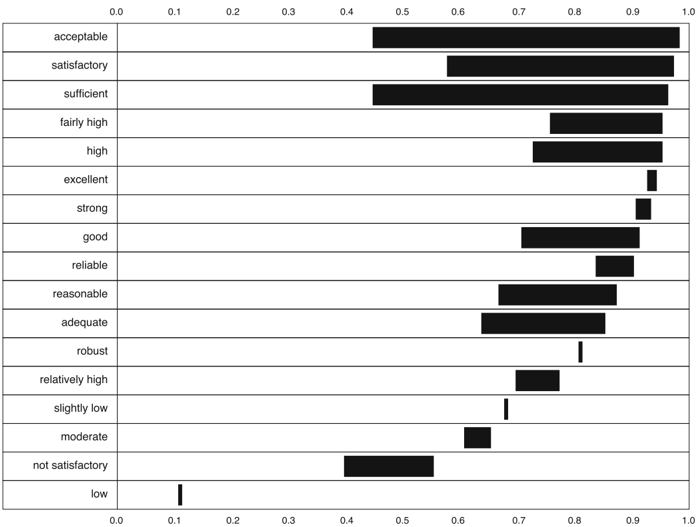
Cronbach’s alpha is a statistic commonly quoted by authors to demonstrate that tests and scales that have been constructed or adopted for research projects are fit for purpose. Cronbach’s alpha is regularly adopted in studies in science education: it was referred to in 69 different papers published in 4 leading science education journals in a single year (2015)—usually as a measure of reliability. This article explores how this statistic is used in reporting science education research and what it represents. Authors often cite alpha values with little commentary to explain why they feel this statistic is relevant and seldom interpret the result for readers beyond citing an arbitrary threshold for an acceptable value. Those authors who do offer readers qualitative descriptors interpreting alpha values adopt a diverse and seemingly arbitrary terminology. More seriously, illustrative examples from the science education literature demonstrate that alpha may be acceptable even when there are recognised problems with the scales concerned. Alpha is also sometimes inappropriately used to claim an instrument is unidimensional. It is argued that a high value of alpha offers limited evidence of the reliability of a research instrument, and that indeed a very high value may actually be undesirable when developing a test of scientific knowledge or understanding. Guidance is offered to authors reporting, and readers evaluating, studies that present Cronbach’s alpha statistic as evidence of instrument quality.
Overview
The claims and statistics of this paper haven’t been checked yet.
Free: it reads the open-access text and checks the first 5 claims that cite a source we can check. Create a free account to check every claim.
Integrity signals
Registry
Cites
Statistics
Figures
Verification
Claims the paper makes
The claims and statistics of this paper haven’t been checked yet.
Free: it reads the open-access text and checks the first 5 claims that cite a source we can check. Create a free account to check every claim.
Claims other papers make about this one
Each is checked against this paper’s own text: does it say what the citing paper says it does?
The cited source doesn’t support the claim as written.
In the citing paper
“Specifically, all studies using the AAQ and one third of studies using the AAQ-II reported internal consistency below recommended cutoffs (i.e., Cronbach’s alpha > .80; Taber, 2018), with alphas as low as .57 and .51 respectively.”
From Psychological flexibility in older adulthood: a scoping review. (2023) · cites this paper as Taber, 2018
Checked by a reasoning model — may be wrong.
Experimental — accuracy not yet measuredThe cited source doesn’t support the claim as written.
In the citing paper
“The internal consistency in our data was moderate ( α = 0.59) on the basis of Taber et al.'s (2018) criteria.”
From Enhancing School Students' Self-Regulated Learning through Generative AI Support: A Randomized Controlled Trial (2026) · cites this paper as Taber et al.'s (2018)
Checked by a reasoning model — may be wrong.
Experimental — accuracy not yet measuredThe cited source doesn’t support the claim as written.
In the citing paper
“The internal consistency in our data was acceptable ( α = 0.70) on the basis of Taber et al.'s (2018) criteria.”
From Enhancing School Students' Self-Regulated Learning through Generative AI Support: A Randomized Controlled Trial (2026) · cites this paper as Taber et al.'s (2018)
Checked by a reasoning model — may be wrong.
Experimental — accuracy not yet measuredThe source backs part of the claim, not all of it — or backs it for a different population, condition or comparison.
In the citing paper
“No study reported good internal consistency for the AAQ, as indicated by Cronbach α > .80 (Taber, 2018).”
From Psychological flexibility in older adulthood: a scoping review. (2023) · cites this paper as Taber, 2018
Experimental — accuracy not yet measuredThe source backs part of the claim, not all of it — or backs it for a different population, condition or comparison.
In the citing paper
“These findings suggest a number of conceptual and statistical issues (see Taber, 2018; Tavakol & Dennick, 2011), including the possibility that the AAQ and AAQ-II do not measure a common factor among older adults or that, given the broad range of alpha scores (i.e., .51-.94), these measures do not perform consistently in older adult samples.”
From Psychological flexibility in older adulthood: a scoping review. (2023) · cites this paper as Taber, 2018
Experimental — accuracy not yet measured
15 more claims about this paper
Create a free account to see every claim other papers make about this one.
Self-check
Percentages, sums and reported differences re-computed from the paper’s own numbers.
The self-check needs the paper’s full text.
Citations
Cites
Coefficient Alpha and the Internal Structure of Tests
Cronbach, L. J. (1951) · Psychometrika · doi:10.1007/bf02310555 · Cited by 43,931 · cited 13×
“Sijtsma (2009) develops an argument explored in Cronbach’s (1951) seminal paper that alpha does not offer an accurate value for reliability as understood by psychometricians (but rather a lower bound, although Cronbach himself had argued in his 1951 paper that alpha was often a suitable proxy) and suggests that intern…”
BackgroundMethodInfluentialWhat is coefficient alpha? An examination of theory and applications
Cortina, J. M. (1993) · Journal of Applied Psychology · doi:10.1037/0021-9010.78.1.98 · Cited by 8,810 · cited 5×
“Cronbach ’ s alpha has been described as ‘ one of the most important and pervasive statistics in research involving test construction and use ’ (Cortina, 1993, p. 98) to the extent that its use in research with multiple-item measurements is considered routine (Schmitt, 1996, p. 350).”
BackgroundInfluentialOn the use, the misuse, and the very limited usefulness of Cronbach’s alpha
Sijtsma, K. (2009) · Psychometrika · doi:10.1007/s11336-008-9101-0 · Cited by 2,814 · cited 2×
“Sijtsma (2009) has more recently made the point more bluntly: “ both very low and very high alpha values can go either with unidimensionality or multidimensionality of the data ” (p.119).”
BackgroundUses and abuses of coefficient alpha
Schmitt, N. (1996) · Psychological Assessment · doi:10.1037/1040-3590.8.4.350 · Cited by 2,588 · cited 4×
“(Cortina, 1993; Schmitt, 1996), it is generally possible to increase alpha to 0.”
BackgroundInfluentialGlobal Patterns in Students’ Views of Science and Interest in Science
van Griethuijsen, R. A. L. F., van Eijck, M. W., Haste, H., den Brok, P. J., Skinner, N. C., Mansour, N., Savran Gencer, A., & BouJaoude, S. (2015) · Research in Science Education · doi:10.1007/s11165-014-9438-6 · Cited by 852 · cited 3×
“Griethuijsen et al. (2014) reported a cross-national study looking at student interests in science where “ several of the values calculated for Cronbach ’ s alpha are below the acceptable values of 0.7 or 0.6 ” (p.588).”
BackgroundInfluentialThe development of a questionnaire to measure students' motivation towards science learning
Tuan *, H., Chin, C., & Shieh, S. (2005) · International Journal of Science Education · doi:10.1080/0950069042000323737 · Cited by 625 · cited 2×
“Tuan and colleagues (Tuan, Chin, & Shieh, 2005) report a study “ to develop a questionnaire that measures students ’ motivation toward science learning ” (p.639).”
BackgroundDevelopment and Validation of Instruments to Measure Learning of Expert‐Like Thinking
Adams, W. K., & Wieman, C. E. (2011) · International Journal of Science Education · doi:10.1080/09500693.2010.512369 · Cited by 451 · cited 1×
“Given that some authors choose to report cross-scale results, readers should be aware that the Cronbach alpha statistic is most valuable in relation to single-construct scales and less informative when reported for instruments measuring several constructs at once (Adams & Wieman, 2010).”
BackgroundArslan, H. O., Cigdemoglu, C., & Moseley, C. (2012) · International Journal of Science Education · doi:10.1080/09500693.2012.680618 · Cited by 304
Developing attitude to science scales for use with children of ages from five to eleven years
Pell, T., & Jarvis, T. (2001) · International Journal of Science Education · doi:10.1080/09500690010016111 · Cited by 284 · cited 2×
“…for measuring affect in science education is “ Developing attitude to science scales for use with children of ages from five to eleven years ” (Pell & Jarvis, 2001) which “ reports on the development stages of three attitudes to science and school scales for use with children aged from 5 to…”
BackgroundMeasuring attitudes to science: Unidimensionality and internal consistency revisited
Gardner, P. L. (1995) · Research in Science Education · doi:10.1007/bf02357402 · Cited by 175 · cited 2×
“It seems that despite Gardner ’ s (1995) warning in this journal that researchers should not conflate internal consistency and unidimensionality and consider a high value of alpha as suggesting that the items in an instrument were all measuring the same thing, reports are still being published in…”
Background
Research works printed but not linked: 1
- 21. National Research Council Committee on Scientific Principles for Educational Research. (2002). Scientific Research in Education. Washington DC: National Academies Press.
Cited by
Items 1,001–1,037 of 1,037
Voice-based control system for smart hospital wards: a pilot study of patient acceptance
Jian, W., Wang, J.-Y., Rahmanti, A. R., Chien, S.-C., Hsu, C.-K., Chien, C., Li, Y., Chen, C.-Y., Chin, Y.-P., & Huang, C. (2022) · BMC Health Services Research · doi:10.1186/s12913-022-07668-1 · Cited by 26
“70, suggesting internal consistency reliability [10].”
Satisfaction differences in bus traveling among low-income individuals before and after COVID-19
Sun, F., Jin, M., Zhang, T., & Huang, W. (2022) · Transportation Research Part A Policy and Practice · doi:10.1016/j.tra.2022.04.015 · Cited by 27
“6, indicating that the results are consistent (Taber, 2018).”
Improving the effectiveness of video-based flipped classrooms with question-embedding
Deng, R., Feng, S., & Shen, S. (2024) · Education and Information Technologies · doi:10.1007/s10639-023-12303-5 · Cited by 21
Edelsbrunner, P. A., Malone, S., Hofer, S. I., Küchemann, S., Kuhn, J., Schmid, R., Altmeyer, K., Brünken, R., & Lichtenberger, A. (2023) · International Journal of STEM Education · doi:10.1186/s40594-023-00435-6 · Cited by 19
“, 2022) and more specifically for conceptual knowledge (Stadler et al., 2021; Taber, 2018), it has been recently debated whether traditional latent variable models with this specific assumption regarding measurement error are useful.”
BackgroundPahnke, J., Jansson-Fröjmark, M., Andersson, G., Bjureberg, J., Jokinen, J., Bohman, B., & Lundgren, T. (2023) · Autism · doi:10.1177/13623613221140749 · Cited by 19
“The interpretations of Cronbach’s alpha were α ⩾ 0.70 = satisfactory , α ⩾ 0.80 = good , and α ⩾ 0.90 = satisfactory , where a too low or high alpha value may indicate insufficient reliability (Taber, 2018).”
InfluentialAbduljawad, S. A. (2025) · International Journal of Computer-Assisted Language Learning and Teaching · doi:10.4018/ijcallt.367276 · Cited by 19
Beyond Shopping: The Motivations and Experience of Live Stream Shopping Viewers
Liu, X., & Kim, S. H. (2021) · 2021 13th International Conference on Quality of Multimedia Experience (QoMEX) · doi:10.1109/qomex51781.2021.9465387 · Cited by 19
Development and Validation of the Programming Anxiety Scale
YILDIRIM, O. G., & OZDENER, N. (2022) · International Journal of Computer Science Education in Schools · doi:10.21585/ijcses.v5i3.140 · Cited by 18
Wang, C.-M., Tseng, S.-M., & Huang, C.-S. (2020) · Healthcare · doi:10.3390/healthcare8020179 · Cited by 18
“8, it is decided in general that the collected data are consistent and so may be regarded as reliable [56].”
BackgroundThe role of creative thinking in children's scientific reasoning
Willemsen, R. H., de Vink, I. C., Kroesbergen, E. H., & Lazonder, A. W. (2023) · Thinking Skills and Creativity · doi:10.1016/j.tsc.2023.101375 · Cited by 17
Chu, Y. B. (2022) · Education and Information Technologies · doi:10.1007/s10639-022-10987-9 · Cited by 15
“Based on the result, the Cronbach’s alpha for both of the surveys are higher than 0.7 (acceptable range) suggesting that the feedback collected are consistent internally and can be considered acceptable (Ursachi et al., 2013; Taber, 2018).”
InfluentialStress and Perception of Procedural Pain Management in Chinese Parents of Children with Cancer
Yan, C., Cheung, R. S.-Y., Wong, C. L., Cheng, H. Y., Liu, F., Huang, H., Ewig, C. L.-Y., Li, C.-K., Zhang, H., & Cheung, Y. T. (2021) · Journal of Pain and Symptom Management · doi:10.1016/j.jpainsymman.2020.06.028 · Cited by 12
Yu, Q., & Lan, X. (2024) · Proceedings of the Twelfth International Symposium of Chinese CHI · doi:10.1145/3758871.3758884 · Cited by 12
Castro-García, M., Barquero-Ruiz, C., & López-Villar, C. (2025) · Journal of Teaching in Physical Education · doi:10.1123/jtpe.2023-0352 · Cited by 11
Chudnofsky, C. R., Reisdorff, E. J., Joldersma, K. B., Ruff, K. C., Goyal, D. G., & Gorgas, D. L. (2023) · AEM Education and Training · doi:10.1002/aet2.10850 · Cited by 11
Ayana, H., Mereba, T., & Alemu, A. (2024) · Frontiers in Education · doi:10.3389/feduc.2024.1399350 · Cited by 11
“All the Cronbach’s alpha values fell within the accepted range (> 0.65), as recommended by Taber (2017), indicating the generalizability of the study results based on the pre-and posttests and questionnaire data.”
InfluentialBrophy, K., Emery, M., MacDonald, C., Côté, C. I., & Körner, A. (2024) · PLoS ONE · doi:10.1371/journal.pone.0305776 · Cited by 10
Rethinking pre-training: cognitive load implications for learners with varying prior knowledge
Gorbunova, A., Kapuza, A., Chen, O., & Costley, J. (2025) · Frontiers in Psychology · doi:10.3389/fpsyg.2025.1628047 · Cited by 14
Hossain, S., Loa, P., Ong, F., & Habib, K. N. (2022) · Transportation Research Part A: Policy and Practice · doi:10.1016/j.tra.2022.10.010 · Cited by 7
Fütterer, T., Bardach, L., Kuhn, J., Keller, S. D., & Gerjets, P. (2026) · Educational Psychology Review · doi:10.1007/s10648-026-10133-8 · Cited by 17
Factors Influencing COVID-19 Vaccine Confidence and Uptake in Australian Adults
Williams, C. T., Saini, B., Zaidi, S. T. R., Kali, C., Moujalli, G., & Castelino, R. (2024) · Vaccines · doi:10.3390/vaccines12060627 · Cited by 6
“To check the scale reliability, Cronbach’s alpha coefficients were calculated for the “General Confidence” total scale and the subscales (“Benefits”, “Harm”, and “Trust”), with acceptable reliability considered α ≥ 0.7 [25].”
MethodInfluentialTillaar, R. V. D., Ball, N., & Torvik, P. Ø. (2025) · Journal of Functional Morphology and Kinesiology · doi:10.3390/jfmk10020155 · Cited by 5
“Also, the ICCs between the test and retest for these parameters were of acceptable consistency [24].”
P. Miranda, J. P., B. Dianelo, R. F., B. Gamboa, A., Bansil, J. A., R. Regala, A., & S. Simpao, L. (2024) · International Journal of Evaluation and Research in Education (IJERE) · doi:10.11591/ijere.v13i5.28919 · Cited by 5
Interest Fit Beyond the RIASEC: The Comprehensive Assessment of Basic Interests—O*NET (CABIN-NET)
Chu, C., Hoff, K. A., Liu, Z., Heimpel, N. F., Greco, A., Oswald, F. L., & Rounds, J. (2026) · Journal of Career Assessment · doi:10.1177/10690727251322520 · Cited by 4
“These suggests good internal consistency among items within each basic interest scale, especially for scales with only three items (Nunnally, 1978; Taber, 2018).”
Alsaedi, N. S. (2025) · Contemporary Educational Technology · doi:10.30935/cedtech/17302 · Cited by 4
Alexander, M. (2022) · doi:10.1101/2022.04.25.22274226 · Cited by 4
“Spearman Ro (Akoglu, 2018) 1 = complete or perfect correlation, 0=no correlation Crohnbach alpha (Taber, 2018) >0.”
BackgroundYang, T., Chen, J., & Liu, Y. (2025) · One Health · doi:10.1016/j.onehlt.2025.101046 · Cited by 4
“The overall social network Cronbach ’ s alpha is 0.91, indicating acceptable internal consistency [31].”
InfluentialAlanzi, T. M., Alzahrani, W., Albalawi, N. S., Allahyani, T., Alghamdi, A., Al-Zahrani, ., Almutairi, ., Alzahrani, H., Almulhem, L., Alanzi, N., et al. (2023) · Cureus · doi:10.7759/cureus.50781 · Cited by 4
Alshogran, O. Y., Al-Hamdan, Z., El-Awaisi, A., Alkhalidy, H., Saadeh, N., & Alsqaier, H. (2023) · Journal of Interprofessional Care · doi:10.1080/13561820.2022.2128727 · Cited by 4
Obenza, B. (2025) · doi:10.2139/ssrn.5075354 · Cited by 3
Multi-modal mindfulness training and well-being for healthcare students
Harrison, R. J., Buckley, E. A., Ross, N. J., Witte, C. E., & Thompson, W. L. (2024) · Currents in Pharmacy Teaching and Learning · doi:10.1016/j.cptl.2023.12.008 · Cited by 4
Peker, A., & Cengiz, S. (2025) · Acta Psychologica · doi:10.1016/j.actpsy.2025.105159 · Cited by 3
Key social media travel influencer traits impacting followers’ tourist behavior
Kılıçarslan, D., & Caber, M. (2026) · Journal of Hospitality and Tourism Technology · doi:10.1108/jhtt-07-2025-0588 · Cited by 1
Bailey, A., Chenoweth, T., Fisher, Z., Joannides, M., Watters, S., Mazzucchelli, J., Taylor, S., & Harris, C. (2022) · Developmental Neurorehabilitation · doi:10.1080/17518423.2022.2099031 · Cited by 1
Bergantiňos, M. (2025) · Psychology and Education: A Multidisciplinary Journal · doi:10.70838/pemj.490606
Ma, J., Yue, H., & Li, X. (2026) · Frontiers in Psychology · doi:10.3389/fpsyg.2026.1946196
“Internal consistency was assessed before the primary analyses using Cronbach’s α (Taber, 2018).”
InfluentialDevelopment and Analysis of an Item Pool: Assessing Students’ Mathematical Conceptual Attainment
-, T. P., & -, J. G. (2025) · International Journal For Multidisciplinary Research · doi:10.36948/ijfmr.2025.v07i01.37171
“To answer what value of alpha is desirable, Taber [45] noted from many studies that there is no general level (such as 0.70) where alpha becomes acceptable but a high value of alpha was ‘desirable’ when an instrument was used to assign a score to an individual.”
Influential
Metadata
- Authors
- Taber, K. S.
- Affiliations
- University of Cambridge (GB)
- Corresponding author
- Taber, Keith S.
- ORCID
- Taber, Keith S.
- Venue
- Research in Science Education
- Published
- 2017-06-07
- Volume
- 48
- Issue
- 6
- Pages
- 1273-1296
- ISSN
- 0157-244X (ISSN-L)
- 1573-1898
- OpenAlex
- W2623703952
- Semantic Scholar
- ccc38dd46fc6ed6d2c6c6e8b1613d6f74a0f7df1
- Cited by
- 10,679
- References
- 37
- Citations by year
- 2026: 1432 · 2025: 1887 · 2024: 1845 · 2023: 1708 · 2022: 1532 · 2021: 1330 · 2020: 682 · 2019: 199 · 2018: 53 · 2017: 6
- FWCI
- 227.70
- Type
- journal article
- Language
- en
- Open access
- hybrid
- doi.org
- Licence
- cc-by
- creativecommons.org/licenses/by/4.0 (tdm)
- Locations
- Research in Science Education (publishedVersion, cc-by)
- Apollo (University of Cambridge) (submittedVersion, cc-by)
- Apollo (cc-by)
- Funders
- University of Cambridge
- Topics
- Social Sciences › Decision Sciences › Management Science and Operations Research › Psychometric Methodologies and Testing
- Social Sciences › Education › Science Education and Pedagogy
- Health Sciences › Nursing › Research and Theory › Health Education and Validation
- Keywords
- Cronbach's alpha, research instrument development, reliability statistics, scale development, reporting quality, unidimensionality, science education research
About these checks
Registry, retraction, Cites and statistics results are computed, not judged, with one exception: a printed reference that no index lists is read once by a model before it counts as a citation error. Claims are extracted by a model and kept only when their quote appears verbatim in the text; each cited source is then checked, with a model’s help, for whether it says what the claim relies on. Those verdicts can be wrong — read the claim’s quote and the cited source before relying on one.
Statistics and arithmetic are recomputed, not judged.
Confidence bands are shown only for fields calibrated on our annotated test set. None is calibrated yet, so no band is shown.
What counts as a claim ›How we measure confidence ›How we check this ›
Are you an author, or do you see a problem with this page? Request a review
Data sources
Bibliographic data: Semantic Scholar, OpenAlex, Crossref.
Contains information from the Semantic Scholar Academic Graph Datasets, made available under the ODC Attribution License (ODC-BY 1.0).
Semantic Scholar’s data is described in: Kinney, R., et al. (2023). The Semantic Scholar Open Data Platform. arXiv:2301.10140.
