

The Use of Cronbach’s Alpha When Developing and Reporting Research Instruments in Science Education
Open accessThe DOI matches its Crossref record; 37 of the 37 references it cites were found in a registry or an index.
Abstract
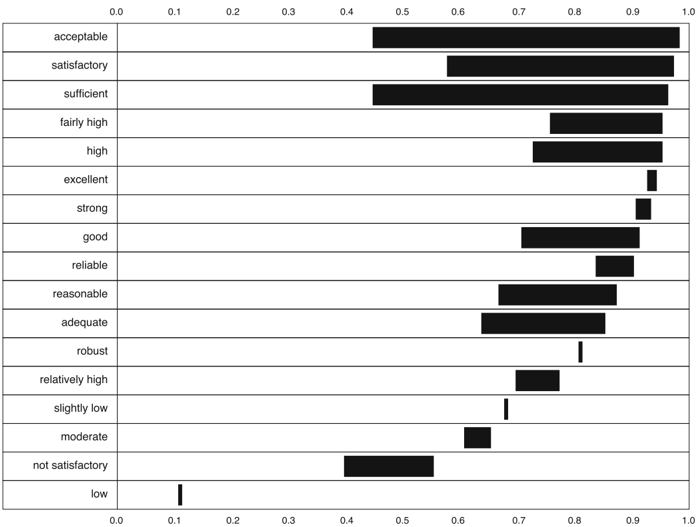
Cronbach’s alpha is a statistic commonly quoted by authors to demonstrate that tests and scales that have been constructed or adopted for research projects are fit for purpose. Cronbach’s alpha is regularly adopted in studies in science education: it was referred to in 69 different papers published in 4 leading science education journals in a single year (2015)—usually as a measure of reliability. This article explores how this statistic is used in reporting science education research and what it represents. Authors often cite alpha values with little commentary to explain why they feel this statistic is relevant and seldom interpret the result for readers beyond citing an arbitrary threshold for an acceptable value. Those authors who do offer readers qualitative descriptors interpreting alpha values adopt a diverse and seemingly arbitrary terminology. More seriously, illustrative examples from the science education literature demonstrate that alpha may be acceptable even when there are recognised problems with the scales concerned. Alpha is also sometimes inappropriately used to claim an instrument is unidimensional. It is argued that a high value of alpha offers limited evidence of the reliability of a research instrument, and that indeed a very high value may actually be undesirable when developing a test of scientific knowledge or understanding. Guidance is offered to authors reporting, and readers evaluating, studies that present Cronbach’s alpha statistic as evidence of instrument quality.
Overview
The claims and statistics of this paper haven’t been checked yet.
Free: it reads the open-access text and checks the first 5 claims that cite a source we can check. Create a free account to check every claim.
Integrity signals
Registry
Cites
Statistics
Figures
Verification
Claims the paper makes
The claims and statistics of this paper haven’t been checked yet.
Free: it reads the open-access text and checks the first 5 claims that cite a source we can check. Create a free account to check every claim.
Claims other papers make about this one
Each is checked against this paper’s own text: does it say what the citing paper says it does?
The cited source doesn’t support the claim as written.
In the citing paper
“Specifically, all studies using the AAQ and one third of studies using the AAQ-II reported internal consistency below recommended cutoffs (i.e., Cronbach’s alpha > .80; Taber, 2018), with alphas as low as .57 and .51 respectively.”
From Psychological flexibility in older adulthood: a scoping review. (2023) · cites this paper as Taber, 2018
Checked by a reasoning model — may be wrong.
Experimental — accuracy not yet measuredThe cited source doesn’t support the claim as written.
In the citing paper
“The internal consistency in our data was moderate ( α = 0.59) on the basis of Taber et al.'s (2018) criteria.”
From Enhancing School Students' Self-Regulated Learning through Generative AI Support: A Randomized Controlled Trial (2026) · cites this paper as Taber et al.'s (2018)
Checked by a reasoning model — may be wrong.
Experimental — accuracy not yet measuredThe cited source doesn’t support the claim as written.
In the citing paper
“The internal consistency in our data was acceptable ( α = 0.70) on the basis of Taber et al.'s (2018) criteria.”
From Enhancing School Students' Self-Regulated Learning through Generative AI Support: A Randomized Controlled Trial (2026) · cites this paper as Taber et al.'s (2018)
Checked by a reasoning model — may be wrong.
Experimental — accuracy not yet measuredThe source backs part of the claim, not all of it — or backs it for a different population, condition or comparison.
In the citing paper
“No study reported good internal consistency for the AAQ, as indicated by Cronbach α > .80 (Taber, 2018).”
From Psychological flexibility in older adulthood: a scoping review. (2023) · cites this paper as Taber, 2018
Experimental — accuracy not yet measuredThe source backs part of the claim, not all of it — or backs it for a different population, condition or comparison.
In the citing paper
“These findings suggest a number of conceptual and statistical issues (see Taber, 2018; Tavakol & Dennick, 2011), including the possibility that the AAQ and AAQ-II do not measure a common factor among older adults or that, given the broad range of alpha scores (i.e., .51-.94), these measures do not perform consistently in older adult samples.”
From Psychological flexibility in older adulthood: a scoping review. (2023) · cites this paper as Taber, 2018
Experimental — accuracy not yet measured
15 more claims about this paper
Create a free account to see every claim other papers make about this one.
Self-check
Percentages, sums and reported differences re-computed from the paper’s own numbers.
The self-check needs the paper’s full text.
Citations
Cites
Coefficient Alpha and the Internal Structure of Tests
Cronbach, L. J. (1951) · Psychometrika · doi:10.1007/bf02310555 · Cited by 43,931 · cited 13×
“Sijtsma (2009) develops an argument explored in Cronbach’s (1951) seminal paper that alpha does not offer an accurate value for reliability as understood by psychometricians (but rather a lower bound, although Cronbach himself had argued in his 1951 paper that alpha was often a suitable proxy) and suggests that intern…”
BackgroundMethodInfluentialWhat is coefficient alpha? An examination of theory and applications
Cortina, J. M. (1993) · Journal of Applied Psychology · doi:10.1037/0021-9010.78.1.98 · Cited by 8,810 · cited 5×
“Cronbach ’ s alpha has been described as ‘ one of the most important and pervasive statistics in research involving test construction and use ’ (Cortina, 1993, p. 98) to the extent that its use in research with multiple-item measurements is considered routine (Schmitt, 1996, p. 350).”
BackgroundInfluentialOn the use, the misuse, and the very limited usefulness of Cronbach’s alpha
Sijtsma, K. (2009) · Psychometrika · doi:10.1007/s11336-008-9101-0 · Cited by 2,814 · cited 2×
“Sijtsma (2009) has more recently made the point more bluntly: “ both very low and very high alpha values can go either with unidimensionality or multidimensionality of the data ” (p.119).”
BackgroundUses and abuses of coefficient alpha
Schmitt, N. (1996) · Psychological Assessment · doi:10.1037/1040-3590.8.4.350 · Cited by 2,588 · cited 4×
“(Cortina, 1993; Schmitt, 1996), it is generally possible to increase alpha to 0.”
BackgroundInfluentialGlobal Patterns in Students’ Views of Science and Interest in Science
van Griethuijsen, R. A. L. F., van Eijck, M. W., Haste, H., den Brok, P. J., Skinner, N. C., Mansour, N., Savran Gencer, A., & BouJaoude, S. (2015) · Research in Science Education · doi:10.1007/s11165-014-9438-6 · Cited by 852 · cited 3×
“Griethuijsen et al. (2014) reported a cross-national study looking at student interests in science where “ several of the values calculated for Cronbach ’ s alpha are below the acceptable values of 0.7 or 0.6 ” (p.588).”
BackgroundInfluentialThe development of a questionnaire to measure students' motivation towards science learning
Tuan *, H., Chin, C., & Shieh, S. (2005) · International Journal of Science Education · doi:10.1080/0950069042000323737 · Cited by 625 · cited 2×
“Tuan and colleagues (Tuan, Chin, & Shieh, 2005) report a study “ to develop a questionnaire that measures students ’ motivation toward science learning ” (p.639).”
BackgroundDevelopment and Validation of Instruments to Measure Learning of Expert‐Like Thinking
Adams, W. K., & Wieman, C. E. (2011) · International Journal of Science Education · doi:10.1080/09500693.2010.512369 · Cited by 451 · cited 1×
“Given that some authors choose to report cross-scale results, readers should be aware that the Cronbach alpha statistic is most valuable in relation to single-construct scales and less informative when reported for instruments measuring several constructs at once (Adams & Wieman, 2010).”
BackgroundArslan, H. O., Cigdemoglu, C., & Moseley, C. (2012) · International Journal of Science Education · doi:10.1080/09500693.2012.680618 · Cited by 304
Developing attitude to science scales for use with children of ages from five to eleven years
Pell, T., & Jarvis, T. (2001) · International Journal of Science Education · doi:10.1080/09500690010016111 · Cited by 284 · cited 2×
“…for measuring affect in science education is “ Developing attitude to science scales for use with children of ages from five to eleven years ” (Pell & Jarvis, 2001) which “ reports on the development stages of three attitudes to science and school scales for use with children aged from 5 to…”
BackgroundMeasuring attitudes to science: Unidimensionality and internal consistency revisited
Gardner, P. L. (1995) · Research in Science Education · doi:10.1007/bf02357402 · Cited by 175 · cited 2×
“It seems that despite Gardner ’ s (1995) warning in this journal that researchers should not conflate internal consistency and unidimensionality and consider a high value of alpha as suggesting that the items in an instrument were all measuring the same thing, reports are still being published in…”
Background
Research works printed but not linked: 1
- 21. National Research Council Committee on Scientific Principles for Educational Research. (2002). Scientific Research in Education. Washington DC: National Academies Press.
Cited by
Items 101–200 of 1,037
An Aberrant Abundance of Cronbach’s Alpha Values at .70
Hussey, I., Alsalti, T., Bosco, F. A., Elson, M., & Arslan, R. C. (2025) · Advances in Methods and Practices in Psychological Science · doi:10.1177/25152459241287123 · Cited by 235
“For example, Taber (2018) found that α values ranging from .45 to .98 have all been described as “acceptable” by authors.”
Song, Y., Yang, Y., & Cheng, P. (2022) · Sensors · doi:10.3390/s22041614 · Cited by 95
“Next, the data were analyzed by examining the measurement model and the structural model, respectively [99].”
Vickovic, S. G., & Morrow, W. J. (2019) · Criminal Justice Review · doi:10.1177/0734016819863099 · Cited by 156
Trott, C. D. (2021) · Environmental Education Research · doi:10.1080/13504622.2021.2007223 · Cited by 133
Abell, A., & Biswas, D. (2022) · Journal of Interactive Marketing · doi:10.1177/10949968221128556 · Cited by 132
“We combined these items because their correlation was in an acceptable range (r= .51; Briggs and Cheek 1986; Ruzeviciute, Kamleitner, and Biswas 2020; Taber 2018).”
MethodOrellana, C. I., & Orellana, L. (2020) · Actualidades en Psicología · doi:10.15517/ap.v34i128.41431 · Cited by 160
“La consistencia interna de la escala y sus dimensiones fue satisfactoria, según el coeficiente Alfa de Cronbach (i.e., ≥ .70, ver Taber, 2017).”
BackgroundAn analysis of anatomy education before and during Covid‐19: August–December 2020
Attardi, S. M., Harmon, D., Barremkala, M., Bentley, D. C., Brown, K., Dennis, J. F., Goldman, H. M., Harrell, K. M., Klein, B. A., Ramnanan, C. J., et al. (2022) · Anatomical Sciences Education · doi:10.1002/ase.2152 · Cited by 98
“The response rate was 76% and the Cronbach alpha coefficient was 0.73, suggesting the survey instrument measured with acceptable internal consistency (Taber, 2018).”
MethodResultInfluentialLaw, C. C. H., Zhang, Y., & Gow, J. (2022) · Case Studies on Transport Policy · doi:10.1016/j.cstp.2022.02.002 · Cited by 184
Andati, P., Majiwa, E., Ngigi, M. W., Mbeche, R., & Ateka, J. M. (2022) · Sustainable Technology and Entrepreneurship · doi:10.1016/j.stae.2022.100017 · Cited by 107
Sociodemographic predictors of COVID-19 vaccine acceptance: a nationwide US-based survey study
Mondal, P., Sinharoy, A., & Su, L. (2021) · Public Health · doi:10.1016/j.puhe.2021.07.028 · Cited by 93
Ju, B., & Li, J. (2019) · European journal of training and development · doi:10.1108/ejtd-05-2018-0045 · Cited by 141
The Acceptance of Telepresence Robots in Higher Education
Lei, M., Clemente, I. M., Liu, H., & Bell, J. (2022) · International Journal of Social Robotics · doi:10.1007/s12369-021-00837-y · Cited by 87
Trait impressions from voices are formed rapidly within 400 ms of exposure.
Mileva, M., & Lavan, N. (2023) · Journal of Experimental Psychology General · doi:10.1037/xge0001325 · Cited by 101
Bowes, S. M., Costello, T. H., Lee, C., McElroy-Heltzel, S., Davis, D. E., & Lilienfeld, S. O. (2022) · Personality and Social Psychology Bulletin · doi:10.1177/0146167221997619 · Cited by 87
“Nevertheless, internal consistency estimates exceeded recommended cutoffs for adequate reliability in the present investigation (e.g., >.70; see Taber, 2018) in most cases (92%).”
BackgroundValidity and reliability of the Turkish Occupational Balance Questionnaire (OBQ11-T)
Günal, A., Pekçetin, S., Demirtürk, F., Şenol, H., Håkansson, C., & Wagman, P. (2019) · Scandinavian Journal of Occupational Therapy · doi:10.1080/11038128.2019.1673479 · Cited by 102
Kennison, S. M., & Chan‐Tin, E. (2020) · Frontiers in Psychology · doi:10.3389/fpsyg.2020.546546 · Cited by 113
“In the present research, we also observed good internal consistency for the five domains with Cronbach alphas ranging from α = 0.71 to α = 0.84 (see Nunnally, 1978; George and Mallery, 2003; Taber, 2018).”
MethodResultInfluentialKoob, C., Schröpfer, K., Coenen, M., Kus, S., & Schmidt, N. C. (2021) · PLoS ONE · doi:10.1371/journal.pone.0255191 · Cited by 109
“7, which are commonly regarded as required minimum [49], indicating sufficient reliabilities.”
BackgroundAcceptance of COVID-19 Vaccination in the Elderly: A Cross-Sectional Study in Southern Italy
Gallé, F., Sabella, E. A., Roma, P., Molin, G. D., Diella, G., Montagna, M. T., Ferracuti, S., Liguori, G., Orsi, G. B., & Napoli, C. (2021) · Vaccines · doi:10.3390/vaccines9111222 · Cited by 98
“81, respectively, showing a satisfactory level of reliability [32].”
BackgroundGallé, F., Sabella, E. A., Roma, P., Ferracuti, S., Molin, G. D., Diella, G., Montagna, M. T., Orsi, G. B., Liguori, G., & Napoli, C. (2021) · International Journal of Environmental Research and Public Health · doi:10.3390/ijerph182010872 · Cited by 93
Magni, D., Gaudio, G. D., Papa, A., & Corte, V. D. (2023) · Journal of Management History · doi:10.1108/jmh-12-2022-0084 · Cited by 128
Rugarabamu, S., Ibrahim, M., & Byanaku, A. (2020) · medRxiv · doi:10.1101/2020.04.26.20080820 · Cited by 133
“To guarantee control success, people's adherence to these control measures are essential [9-10].”
BackgroundNarrative dialogic reading with wordless picture books: A cluster-randomized intervention study
Grolig, L., Cohrdes, C., Tiffin‐Richards, S. P., & Schroeder, S. (2019) · Early Childhood Research Quarterly · doi:10.1016/j.ecresq.2019.11.002 · Cited by 126
Sayeed, A., Kundu, S., Banna, M. H. A., Christopher, E., Hasan, M. T., Begum, M. R., Chowdhury, S., & Khan, M. S. I. (2020) · Psychiatria Danubina · doi:10.24869/psyd.2020.491 · Cited by 116
Das, S., & Hassan, H. M. K. (2021) · International Journal of Productivity and Performance Management · doi:10.1108/ijppm-08-2020-0441 · Cited by 138
Putritamara, J. A., Hartono, B., Toiba, H., Utami, H. N., Rahman, M. S., & Masyithoh, D. (2023) · Sustainability · doi:10.3390/su15031760 · Cited by 223
Green Supply Chain Management: The Effect of Procurement Sustainability on Reverse Logistics
Letunovska, N., Offei, F. A., Junior, P. A., Lyulyov, O. V., Pimonenko, T., & Kwilinski, A. S. (2023) · Logistics · doi:10.3390/logistics7030047 · Cited by 136
“The reliability of the measurement sets, as assessed by Cronbach’s alpha (CA), exceeded the required threshold of 0.7, indicating a high level of reliability [45].”
MethodInfluentialAbdelwahab, H. R., Rauf, A., & Chen, D. (2023) · Industry and Higher Education · doi:10.1177/09504222221087614 · Cited by 82
“The data obtained were analysed in terms of internal consistency and correlation (Taber, 2017).”
BackgroundMethodInfluentialAdolescent addiction to short video applications in the mobile internet era
Lu, L., Liu, M., Ge, B., Bai, Z., & Liu, Z. (2022) · Frontiers in Psychology · doi:10.3389/fpsyg.2022.893599 · Cited by 82
“…life boredom (RC), addictive use of short video apps (SY), and UGC perception (UG) was, respectively, 0.856, 0.908, and 0.901, all greater than 0.7 (Tavakol and Dennick, 2011; Cho and Kim, 2015; Taber, 2018), indicating that the theoretical model of this study had excellent internal consistency.”
BackgroundInfluentialSaqlain, M., Riaz, A., Malik, M. N., Khan, S., Ahmed, A., Kamran, S., & Ali, H. (2019) · Medicina · doi:10.3390/medicina55050163 · Cited by 122
Roth, C., Berger, S. J., Krug, K., Mahler, C., & Wensing, M. (2021) · BMC Nursing · doi:10.1186/s12912-021-00581-8 · Cited by 129
García, M. D. C. M., Hernández, C. M., & Yubero, C. (2021) · Journal of Hospitality Leisure Sport & Tourism Education · doi:10.1016/j.jhlste.2021.100329 · Cited by 142
“The responses were reclassified in ordinal values and their reliability was estimated (Taber, 2018).”
BackgroundPlayful work design and employee work engagement: A self-determination perspective
Scharp, Y. S., Bakker, A. B., & Breevaart, K. (2022) · Journal of Vocational Behavior · doi:10.1016/j.jvb.2022.103693 · Cited by 121
Akram, H., & Li, S. (2024) · Perceptual and Motor Skills · doi:10.1177/00315125241248709 · Cited by 189
“Cronbach ’ s alpha scale ensured the internal reliability of the variables measured, with, achieving a level exceeding 70%, indicating satisfactory consistency (see Table 3) in line with guidelines by Taber (2018).”
Effect of Display Methods on Intentions to Use Virtual Reality in Museum Tourism
Wang, J., Sun, Y., Zhang, L., Zhang, S., Feng, L., & Morrison, A. M. (2023) · Journal of Travel Research · doi:10.1177/00472875231164987 · Cited by 103
“The scales had high reliability (Taber, 2018) and could be used in the experiments.”
MethodInfluentialHakim, M. P., Zanetta, L. D., de Oliveira, J. M., & da Cunha, D. T. (2020) · Food Research International · doi:10.1016/j.foodres.2020.109053 · Cited by 97
Talebzadehhosseini, S., & Garibay, I. I. (2021) · Journal of Cleaner Production · doi:10.1016/j.jclepro.2021.130134 · Cited by 93
Tian, Y., & Frank, B. (2024) · Journal of Retailing and Consumer Services · doi:10.1016/j.jretconser.2024.103974 · Cited by 108
Merino, J. M., Corbacho‐Cuello, I., & del Barco, M. A. H. (2020) · Sustainability · doi:10.3390/su12187445 · Cited by 120
Decent work and physical health: A multi-wave investigation
Duffy, R. D., Prieto, C. G., Kim, H. J., Raque‐Bogdan, T. L., & Duffy, N. O. (2021) · Journal of Vocational Behavior · doi:10.1016/j.jvb.2021.103544 · Cited by 99
Htay, M. N. N., Parial, L. L., Tolabing, M. C., Dadaczynski, K., Okan, O., Leung, A. Y. M., & Su, T. T. (2022) · PLOS ONE · doi:10.1371/journal.pone.0266276 · Cited by 78
“These findings suggested an acceptable to good internal consistency of all the scales included in this study [39].”
ResultJi, Y., Zhong, M., Lyu, S., Li, T., Niu, S., & Zhan, Z. (2025) · Education and Information Technologies · doi:10.1007/s10639-025-13437-4 · Cited by 117
“A Cronbach’s α value exceeding 0.7 indicates an acceptable reliability level (Taber, 2018).”
InfluentialImplementation of quality assurance standards in European higher education: does context matter?
Alzafari, K., & Ursin, J. (2019) · Quality in Higher Education · doi:10.1080/13538322.2019.1578069 · Cited by 76
“It is commonly used in quantitative research to measure the ‘fit of purpose’ (Taber, 2017), as well as to evaluate the precision of a measurement instrument (Cooper & Schindler, 2011, p.”
MethodDagnall, N., Denovan, A., Papageorgiou, K. Α., Clough, P., Parker, A., & Drinkwater, K. G. (2019) · Frontiers in Psychology · doi:10.3389/fpsyg.2019.01933 · Cited by 93
“One of the earliest studies to provide psychometric details about the MTQ-18, Levy et al. (2006), reported an adequate level of internal reliability (Cronbach’s alpha, α = 0.65) (see Taber, 2018 for a detailed description of alpha values).”
BackgroundInfluentialMISINFORMATION RELATED TO COVID-19 IN INDONESIA
Nasir, N. M., Baequni, B., & Nurmansyah, M. I. (2020) · Jurnal Administrasi Kesehatan Indonesia · doi:10.20473/jaki.v8i2.2020.51-59 · Cited by 90
“The α-value of 0.70 was considered sufficient for reliability or internal consistency of an instrument (Taber, 2018).”
BackgroundInfluentialKryshko, O., Fleischer, J., Grunschel, C., & Leutner, D. (2021) · Learning and Individual Differences · doi:10.1016/j.lindif.2021.102096 · Cited by 109
The Effectiveness of Problem-based learning with Local Wisdom oriented to Socio-Scientific Issues
Lubis, S. P. W., Suryadarma, I. G. P., Paidi, P., & Yanto, B. E. (2022) · International Journal of Instruction · doi:10.29333/iji.2022.15225a · Cited by 76
Runyon, K., Chesnut, S. R., & Burley, H. E. (2018) · Journal of Affective Disorders · doi:10.1016/j.jad.2018.07.049 · Cited by 89
The Differential Effects of Comprehensive Feedback Forms in the Second Language Writing Class
Bonilla López, M., Van Steendam, E., Speelman, D., & Buyse, K. (2018) · Language Learning · doi:10.1111/lang.12295 · Cited by 75
The Mental Health of High School Students During the COVID-19 Pandemic
Rao, M. E., & Rao, D. M. (2021) · Frontiers in Education · doi:10.3389/feduc.2021.719539 · Cited by 98
“The circumstances surrounding the COVID-19 pandemic have increased the stress and anxiety in people (APA 2020; Tandon 2020; Wang et al., 2020), including high school students.”
BackgroundYang, S. C., Luo, Y.-F., & Chiang, C.-H. (2019) · Journal of Medical Internet Research · doi:10.2196/13140 · Cited by 85
“The alpha values of .45 to .98 for this instrument have been described as acceptable [29].”
Four Years in Review: Statistical Practices of Likert Scales in Human-Robot Interaction Studies
Schrum, M. L., Johnson, M., Ghuy, M., & Gombolay, M. C. (2020) · Companion of the 2020 ACM/IEEE International Conference on Human-Robot Interaction · doi:10.1145/3371382.3380739 · Cited by 72
Panic buying: The effect of thinking style and situational ambiguity
Herjanto, H., Amin, M., & Purington, E. F. (2021) · Journal of Retailing and Consumer Services · doi:10.1016/j.jretconser.2021.102455 · Cited by 68
Impact of AIS success on decision-making effectiveness among SMEs in less developed countries
Al‐Hattami, H. M. (2022) · Information Technology for Development · doi:10.1080/02681102.2022.2073325 · Cited by 121
“The reliability is achieved when Alpha Cronbach ( α > 0.60) (Taber, 2018) and composite reliability (CR ≥ 0.70) (Hair et al., 2017).”
InfluentialSebaka, L., & Zhao, S. (2023) · Technology in Society · doi:10.1016/j.techsoc.2023.102332 · Cited by 84
Debono, A. E., Ewoldt, K. B., Heimbauer, M., Mendelsohn, E., & Cohen, J. A. (2025) · Learning Disability Quarterly · doi:10.1177/07319487241301400 · Cited by 74
“In this study, each of the eight subscales had good to excellent levels of internal consistency (Taber, 2018): resilience, = .82; ⍺ self-reflection, = .83; social skills, = .77; ⍺ problem-solving, = .90; self-advocacy, = .80; ⍺ ⍺ and management/organization, = .93. self-regulation, = .89; social…”
Cong, Y., Yang, L., & Ergün, A. L. P. (2024) · Acta Psychologica · doi:10.1016/j.actpsy.2024.104394 · Cited by 68
Kyprianides, A., Bradford, B., Beale, M., Savigar-Shaw, L., Stott, C., & Radburn, M. (2021) · Policing & Society · doi:10.1080/10439463.2021.1916492 · Cited by 84
“5 and above is considered acceptable (Taber, 2018).”
Almeida, T. C., Guarda, R., & Cunha, O. S. (2021) · Child Abuse & Neglect · doi:10.1016/j.chiabu.2021.105179 · Cited by 90
Chen, J., Lin, C., & Chen, G. (2021) · Computers & Education · doi:10.1016/j.compedu.2021.104322 · Cited by 107
The Mediating Role of Job Satisfaction in the Relationship between FWAs and Turnover Intentions
Berber, N., Gašić, D., Katić, I., & Borocki, J. (2022) · Sustainability · doi:10.3390/su14084502 · Cited by 155
Berdida, D. J. E. (2023) · Nurse Education in Practice · doi:10.1016/j.nepr.2023.103639 · Cited by 103
Explanations, Fairness, and Appropriate Reliance in Human-AI Decision-Making
Schoeffer, J., De-Arteaga, M., & Kühl, N. (2024) · Proceedings of the CHI Conference on Human Factors in Computing Systems · doi:10.1145/3613904.3642621 · Cited by 68
“Ratio of corrective to detrimental overrides is independent of fairness perceptions. task-relevant and gendered conditions have significantly different perceptions of fairness towards the AI model.”
BackgroundFütterer, T., Scherer, R., Scheiter, K., Stürmer, K., & Lachner, A. (2023) · Computers & Education · doi:10.1016/j.compedu.2023.104756 · Cited by 70
Albeaino, G., & Gheisari, M. (2021) · Journal of Information Technology in Construction · doi:10.36680/j.itcon.2021.006 · Cited by 92
“For this specific set of items, α was equal to 0.890, which is greater than the acceptable limit for reliability and internal consistency (Hair et al. 2014; Taber 2018).”
BackgroundInfluentialFunQ: Measuring the fun experience of a learning activity with adolescents
Tisza, G., & Markopoulos, P. (2021) · Current Psychology · doi:10.1007/s12144-021-01484-2 · Cited by 88
“Given that there is a wide variety for the acceptable internal consistency values (starting from 0.45 (Taber 2018)) for the reported study, we regarded the Omega values above 0.6 acceptable (Hair Jr et al. 2014; Tasci and Ko 2016).”
MethodInfluentialMobile investment technology adoption among investors
Fan, L. (2021) · International Journal of Bank Marketing · doi:10.1108/ijbm-11-2020-0551 · Cited by 99
Toro, R., Peña-Sarmiento, M. D. R., Prieto, B. L. A., Mejía-Vélez, S., & Bernal-Torres, A. (2022) · Revista Iberoamericana de Diagnóstico y Evaluación - e Avaliação Psicológica · doi:10.21865/ridep63.2.02 · Cited by 273
The OCI-12: A syndromally valid modification of the obsessive-compulsive inventory-revised
Abramovitch, A., Abramowitz, J. S., & McKay, D. (2021) · Psychiatry Research · doi:10.1016/j.psychres.2021.113808 · Cited by 68
“Within the three groups internal consistency calculated for the OCI-12 was good to very good (Taber, 2018): NCC ( α = 0.71, ω = 0.69) OCD ( α = 0.79, ω = 0.71), and ARD ( α = 0.89, ω = 0.89).”
InfluentialCole, A. R., Bond, C., Qualter, P., & Maes, M. (2021) · International Journal of Environmental Research and Public Health · doi:10.3390/ijerph18063285 · Cited by 92
“8 and above were considered acceptable levels of internal consistency both in development papers and subsequent research [27].”
BackgroundAli, N., Nakayama, S., & Yamaguchi, H. (2023) · Transportation Research Interdisciplinary Perspectives · doi:10.1016/j.trip.2022.100742 · Cited by 116
A Review on the Use of Large Language Models as Virtual Tutors
García-Méndez, S., de Arriba-Pérez, F., & Somoza-López, M. D. C. (2024) · Science & Education · doi:10.1007/s11191-024-00530-2 · Cited by 123
“This workwaspartiallysupportedby( i )XuntadeGaliciagrantsED481B-2021-118andED481B-2022-093,Spain, and ( iii ) University of Vigo/CISUG for open access charge.”
Goswami, M., De, A., Habibi, M. K. K., & Daultani, Y. (2020) · International Journal of Production Research · doi:10.1080/00207543.2020.1756504 · Cited by 79
She, L., Rasiah, R., Waheed, H., & Pahlevan Sharif, S. (2021) · Young Consumers · doi:10.1108/yc-11-2020-1252 · Cited by 59
Carthy, S. L., Doody, C. B., Cox, K. M., O’Hora, D. P., & Sarma, K. M. (2020) · Campbell Systematic Reviews · doi:10.1002/cl2.1106 · Cited by 102
“Although the majority of measures were not validated, most provided indicators of reliability using Cronbach's Alpha; throughout this review, α > .70 is interpreted as “ acceptable ” (see Abraham & Barker, 2015; Taber, 2018). of “ social stigma ” (Smith, 2012, p. 530).”
Olanrewaju, O. I., Enegbuma, W. I., & Donn, M. (2024) · Sustainable Production and Consumption · doi:10.1016/j.spc.2024.06.021 · Cited by 103
Herreen, D., Rice, S., Currier, D., Schlichthorst, M., & Zajac, I. (2021) · BMC Psychology · doi:10.1186/s40359-021-00533-6 · Cited by 66
Elnadi, M., & Gheith, M. H. (2022) · Travel Behaviour and Society · doi:10.1016/j.tbs.2022.06.002 · Cited by 82
Gélinas, C., Joffe, A. M., Szumita, P. M., Payen, J., Berube, M., Shiva Shahiri, T., Boitor, M., Chanques, G., & Puntillo, K. (2019) · AACN Advanced Critical Care · doi:10.4037/aacnacc2019952 · Cited by 77
“Cronbach also is influenced by the number of items (ie, a greater number of items increases the coefficient value).(131) Therefore, we may question the relevance of this statistic for the validation of behavioral pain assessment tools.”
Geriatric malnutrition and depression: Evidence from elderly home care population in Bangladesh
Alam, M. R., Karmokar, S., Reza, S., Kabir, M. R., Ghosh, S., & Mamun, M. A. A. (2021) · Preventive Medicine Reports · doi:10.1016/j.pmedr.2021.101478 · Cited by 76
“Overall internal reliability was 0.78, which is acceptable for field assessment (Taber, 2018).”
BackgroundInfluentialNguyen, T. T. T., Malek, L., Umberger, W. J., & O’Connor, P. (2022) · Journal of Cleaner Production · doi:10.1016/j.jclepro.2022.134636 · Cited by 88
Stuart, J., & Scott, R. A. (2020) · Computers in Human Behavior · doi:10.1016/j.chb.2020.106534 · Cited by 95
“However, the final 12 items were retained because of their conceptual significance in measuring the construct, and in following guidelines that suggest inspection of the relationships between items in these circumstances is an appropriate way to measure such redundancy (Taber, 2018).”
Javid, M. A., Abdullah, M., Ali, N., & Dias, C. (2021) · Transportation Research Interdisciplinary Perspectives · doi:10.1016/j.trip.2021.100474 · Cited by 75
“A value of more than 0.7 shows an acceptable level of reliability of a factor or latent variable (Taber, 2018; Tavakol and Dennick, 2011).”
InfluentialBoosting Sustainability through Digital Transformation’s Domains and Resilience
Hajishirzi, R., Costa, C. J. D. C., & Aparício, M. (2022) · Sustainability · doi:10.3390/su14031822 · Cited by 90
“7, it indicates that the study is internally consistent [87].”
BackgroundUsing the UTAUT model to analyze user intention to accept electronic payment systems in Serbia
Tomić, N. Z., Kalinić, Z., & Todorović, V. (2022) · Portuguese Economic Journal · doi:10.1007/s10258-022-00210-5 · Cited by 104
“Trust has been included in several of studies, including Tai and Liu (2015), Kalinić and Marinković (2016), Marinković and Kalinić (2017), Liebana-Cabanillas et al.”
Adli, I., Widyahening, I. S., Lazarus, G., Phowira, J., Baihaqi, L. A., Ariffandi, B., Putera, A. M., Nugraha, D., Gamalliel, N., & Findyartini, A. (2022) · PLoS ONE · doi:10.1371/journal.pone.0262827 · Cited by 73
“807, respectively, indicating satisfactory internal reliability [15].”
E-scooters and other mode trip chaining: Preferences and attitudes of university students
Nikiforiadis, A., Paschalidis, E., Stamatiadis, N., Paloka, N., Tsekoura, E., & Basbas, S. (2023) · Transportation Research Part A Policy and Practice · doi:10.1016/j.tra.2023.103636 · Cited by 64
Jatileni, C. N., Sanusi, I. T., Olaleye, S. A., Ayanwale, M. A., Agbo, F. J., & Oyelere, P. B. (2024) · Education and Information Technologies · doi:10.1007/s10639-023-12341-z · Cited by 59
Li, M., Sum, R. K. W., Tremblay, M. S., Sit, C. H. P., Ha, A. S. C., & Wong, S. H. (2020) · Journal of Sports Sciences · doi:10.1080/02640414.2020.1803016 · Cited by 80
Digital Literacy of EFL Students: An Empirical Study in Vietnamese Universities
Nguyen, L. A. T., & Habók, A. (2021) · Libri · doi:10.1515/libri-2020-0165 · Cited by 109
“Cronbach ’ s Alpha co-ef fi cients rank from 0.87 to 0.95, implying a good level of reliability for the questionnaire fi elds (Taber 2018).”
BackgroundInfluentialHernandez, R., Roll, S. C., Jin, H., Schneider, S., & Pyatak, E. A. (2021) · Ergonomics · doi:10.1080/00140139.2021.2006317 · Cited by 83
“7 or above are widely considered desirable (Taber 2018), with values of 0.”
BackgroundOuahi, M. B., Lamri, D., Hassouni, T., & Ibrahmi, E. M. A. (2021) · International Journal of Instruction · doi:10.29333/iji.2022.15116a · Cited by 113
“Regarding the reliability of the internal consistency, the Cronbach’s alpha value was found to be 0.904, which shows that the reliability is excellent (α ≥ 0.9) (Taber, 2018).”
InfluentialOpportunities and Barriers for FinTech in SAARC and ASEAN Countries
Imam, T., McInnes, A. N. S., Colombage, S. R. N., & Grose, R. F. (2022) · Journal of risk and financial management · doi:10.3390/jrfm15020077 · Cited by 86
“2022, 15, 77 26 of 37 in Table 3 that the alpha value for the criteria composing the FOI is below 0.7, however the value of 0.54 falls within the “acceptable” or “sufficient” range outlined in some works (Taber 2018).”
BackgroundMethodInfluentialEmbracing drones and the Internet of drones systems in manufacturing – An exploration of obstacles
Askerbekov, D., Garza‐Reyes, J. A., Ghatak, R. R., Joshi, R., Kandasamy, J., & Nascimento, D. L. D. M. (2024) · Technology in Society · doi:10.1016/j.techsoc.2024.102648 · Cited by 77
Chemistry topics posing incommensurate difficulty to students with low math aptitude scores
Rosa, V., & Lewis, S. E. (2018) · Chemistry Education Research and Practice · doi:10.1039/c8rp00115d · Cited by 73
Baird, S., Bhutta, Z. A., Hamad, B. A. A., Hicks, J. H., Jones, N., & Muz, J. (2019) · SSM - Population Health · doi:10.1016/j.ssmph.2019.100480 · Cited by 80
“Although the norms have high reliability, the Cronbach’s alpha for attitudes is adequate to low (Tavakol and Dennick, 2011; Taber, 2017), which should be kept in mind when interpreting the results.”
BackgroundGümüş, E., & Bellibaş, M. Ş. (2021) · European Journal of Teacher Education · doi:10.1080/02619768.2021.1892639 · Cited by 106
“The reliability coefficient alpha values for the subscales are larger than .7 in all countries and regions except for Mexico (.68), Flanders (Belgium) (.68), and France (.63), which are in the acceptable range (Taber 2018).”
BackgroundInfluentialCOVID-19: Fear and Anxiety among Healthcare Workers in Saudi Arabia. A Cross-Sectional Study
Mohsin, S. F., Agwan, M. A. S., Shaikh, S., Alsuwaydani, Z. A., & Alsuwaydani, S. A. (2021) · INQUIRY The Journal of Health Care Organization Provision and Financing · doi:10.1177/00469580211025225 · Cited by 70
Grade Prediction Modeling in Hybrid Learning Environments for Sustainable Engineering Education
Kanetaki, Z., Stergiou, C. I., Bekas, G., Jacques, S., Troussas, C., Sgouropoulou, C., & Ouahabi, A. (2022) · Sustainability · doi:10.3390/su14095205 · Cited by 83
AL-Dossary, R. N. (2022) · Journal of Healthcare Leadership · doi:10.2147/jhl.s365526 · Cited by 132
“81 indicating good internal reliability and consistency.(36) The questions in the main questionnaire are presented in both Arabic and English languages to improve the readability and understandability.”
BackgroundInfluentialWhat factors drive policy transfer in smart city development? Insights from a Delphi study
Li, L., Taeihagh, A., & Tan, S. Y. (2022) · Sustainable Cities and Society · doi:10.1016/j.scs.2022.104008 · Cited by 75
Metadata
- Authors
- Taber, K. S.
- Affiliations
- University of Cambridge (GB)
- Corresponding author
- Taber, Keith S.
- ORCID
- Taber, Keith S.
- Venue
- Research in Science Education
- Published
- 2017-06-07
- Volume
- 48
- Issue
- 6
- Pages
- 1273-1296
- ISSN
- 0157-244X (ISSN-L)
- 1573-1898
- OpenAlex
- W2623703952
- Semantic Scholar
- ccc38dd46fc6ed6d2c6c6e8b1613d6f74a0f7df1
- Cited by
- 10,679
- References
- 37
- Citations by year
- 2026: 1432 · 2025: 1887 · 2024: 1845 · 2023: 1708 · 2022: 1532 · 2021: 1330 · 2020: 682 · 2019: 199 · 2018: 53 · 2017: 6
- FWCI
- 227.70
- Type
- journal article
- Language
- en
- Open access
- hybrid
- doi.org
- Licence
- cc-by
- creativecommons.org/licenses/by/4.0 (tdm)
- Locations
- Research in Science Education (publishedVersion, cc-by)
- Apollo (University of Cambridge) (submittedVersion, cc-by)
- Apollo (cc-by)
- Funders
- University of Cambridge
- Topics
- Social Sciences › Decision Sciences › Management Science and Operations Research › Psychometric Methodologies and Testing
- Social Sciences › Education › Science Education and Pedagogy
- Health Sciences › Nursing › Research and Theory › Health Education and Validation
- Keywords
- Cronbach's alpha, research instrument development, reliability statistics, scale development, reporting quality, unidimensionality, science education research
About these checks
Registry, retraction, Cites and statistics results are computed, not judged, with one exception: a printed reference that no index lists is read once by a model before it counts as a citation error. Claims are extracted by a model and kept only when their quote appears verbatim in the text; each cited source is then checked, with a model’s help, for whether it says what the claim relies on. Those verdicts can be wrong — read the claim’s quote and the cited source before relying on one.
Statistics and arithmetic are recomputed, not judged.
Confidence bands are shown only for fields calibrated on our annotated test set. None is calibrated yet, so no band is shown.
What counts as a claim ›How we measure confidence ›How we check this ›
Are you an author, or do you see a problem with this page? Request a review
Data sources
Bibliographic data: Semantic Scholar, OpenAlex, Crossref.
Contains information from the Semantic Scholar Academic Graph Datasets, made available under the ODC Attribution License (ODC-BY 1.0).
Semantic Scholar’s data is described in: Kinney, R., et al. (2023). The Semantic Scholar Open Data Platform. arXiv:2301.10140.
