

The Use of Cronbach’s Alpha When Developing and Reporting Research Instruments in Science Education
Open accessThe DOI matches its Crossref record; 37 of the 37 references it cites were found in a registry or an index.
Abstract
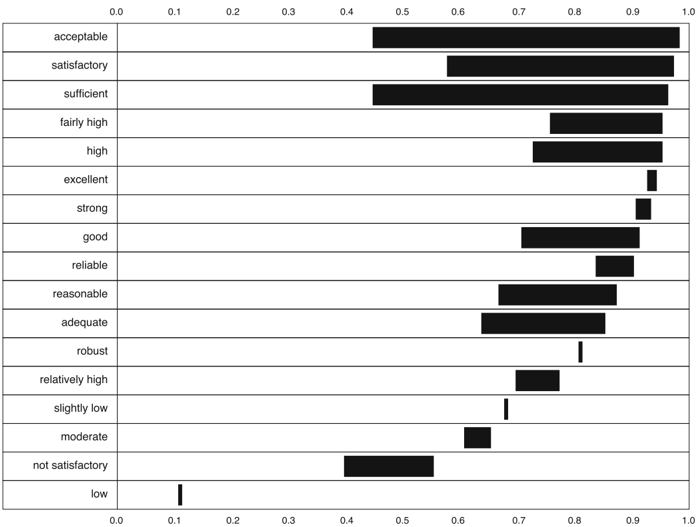
Cronbach’s alpha is a statistic commonly quoted by authors to demonstrate that tests and scales that have been constructed or adopted for research projects are fit for purpose. Cronbach’s alpha is regularly adopted in studies in science education: it was referred to in 69 different papers published in 4 leading science education journals in a single year (2015)—usually as a measure of reliability. This article explores how this statistic is used in reporting science education research and what it represents. Authors often cite alpha values with little commentary to explain why they feel this statistic is relevant and seldom interpret the result for readers beyond citing an arbitrary threshold for an acceptable value. Those authors who do offer readers qualitative descriptors interpreting alpha values adopt a diverse and seemingly arbitrary terminology. More seriously, illustrative examples from the science education literature demonstrate that alpha may be acceptable even when there are recognised problems with the scales concerned. Alpha is also sometimes inappropriately used to claim an instrument is unidimensional. It is argued that a high value of alpha offers limited evidence of the reliability of a research instrument, and that indeed a very high value may actually be undesirable when developing a test of scientific knowledge or understanding. Guidance is offered to authors reporting, and readers evaluating, studies that present Cronbach’s alpha statistic as evidence of instrument quality.
Overview
The claims and statistics of this paper haven’t been checked yet.
Free: it reads the open-access text and checks the first 5 claims that cite a source we can check. Create a free account to check every claim.
Integrity signals
Registry
Cites
Statistics
Figures
Verification
Claims the paper makes
The claims and statistics of this paper haven’t been checked yet.
Free: it reads the open-access text and checks the first 5 claims that cite a source we can check. Create a free account to check every claim.
Claims other papers make about this one
Each is checked against this paper’s own text: does it say what the citing paper says it does?
The cited source doesn’t support the claim as written.
In the citing paper
“Specifically, all studies using the AAQ and one third of studies using the AAQ-II reported internal consistency below recommended cutoffs (i.e., Cronbach’s alpha > .80; Taber, 2018), with alphas as low as .57 and .51 respectively.”
From Psychological flexibility in older adulthood: a scoping review. (2023) · cites this paper as Taber, 2018
Checked by a reasoning model — may be wrong.
Experimental — accuracy not yet measuredThe cited source doesn’t support the claim as written.
In the citing paper
“The internal consistency in our data was moderate ( α = 0.59) on the basis of Taber et al.'s (2018) criteria.”
From Enhancing School Students' Self-Regulated Learning through Generative AI Support: A Randomized Controlled Trial (2026) · cites this paper as Taber et al.'s (2018)
Checked by a reasoning model — may be wrong.
Experimental — accuracy not yet measuredThe cited source doesn’t support the claim as written.
In the citing paper
“The internal consistency in our data was acceptable ( α = 0.70) on the basis of Taber et al.'s (2018) criteria.”
From Enhancing School Students' Self-Regulated Learning through Generative AI Support: A Randomized Controlled Trial (2026) · cites this paper as Taber et al.'s (2018)
Checked by a reasoning model — may be wrong.
Experimental — accuracy not yet measuredThe source backs part of the claim, not all of it — or backs it for a different population, condition or comparison.
In the citing paper
“No study reported good internal consistency for the AAQ, as indicated by Cronbach α > .80 (Taber, 2018).”
From Psychological flexibility in older adulthood: a scoping review. (2023) · cites this paper as Taber, 2018
Experimental — accuracy not yet measuredThe source backs part of the claim, not all of it — or backs it for a different population, condition or comparison.
In the citing paper
“These findings suggest a number of conceptual and statistical issues (see Taber, 2018; Tavakol & Dennick, 2011), including the possibility that the AAQ and AAQ-II do not measure a common factor among older adults or that, given the broad range of alpha scores (i.e., .51-.94), these measures do not perform consistently in older adult samples.”
From Psychological flexibility in older adulthood: a scoping review. (2023) · cites this paper as Taber, 2018
Experimental — accuracy not yet measured
15 more claims about this paper
Create a free account to see every claim other papers make about this one.
Self-check
Percentages, sums and reported differences re-computed from the paper’s own numbers.
The self-check needs the paper’s full text.
Citations
Cites
Coefficient Alpha and the Internal Structure of Tests
Cronbach, L. J. (1951) · Psychometrika · doi:10.1007/bf02310555 · Cited by 43,931 · cited 13×
“Sijtsma (2009) develops an argument explored in Cronbach’s (1951) seminal paper that alpha does not offer an accurate value for reliability as understood by psychometricians (but rather a lower bound, although Cronbach himself had argued in his 1951 paper that alpha was often a suitable proxy) and suggests that intern…”
BackgroundMethodInfluentialWhat is coefficient alpha? An examination of theory and applications
Cortina, J. M. (1993) · Journal of Applied Psychology · doi:10.1037/0021-9010.78.1.98 · Cited by 8,810 · cited 5×
“Cronbach ’ s alpha has been described as ‘ one of the most important and pervasive statistics in research involving test construction and use ’ (Cortina, 1993, p. 98) to the extent that its use in research with multiple-item measurements is considered routine (Schmitt, 1996, p. 350).”
BackgroundInfluentialOn the use, the misuse, and the very limited usefulness of Cronbach’s alpha
Sijtsma, K. (2009) · Psychometrika · doi:10.1007/s11336-008-9101-0 · Cited by 2,814 · cited 2×
“Sijtsma (2009) has more recently made the point more bluntly: “ both very low and very high alpha values can go either with unidimensionality or multidimensionality of the data ” (p.119).”
BackgroundUses and abuses of coefficient alpha
Schmitt, N. (1996) · Psychological Assessment · doi:10.1037/1040-3590.8.4.350 · Cited by 2,588 · cited 4×
“(Cortina, 1993; Schmitt, 1996), it is generally possible to increase alpha to 0.”
BackgroundInfluentialGlobal Patterns in Students’ Views of Science and Interest in Science
van Griethuijsen, R. A. L. F., van Eijck, M. W., Haste, H., den Brok, P. J., Skinner, N. C., Mansour, N., Savran Gencer, A., & BouJaoude, S. (2015) · Research in Science Education · doi:10.1007/s11165-014-9438-6 · Cited by 852 · cited 3×
“Griethuijsen et al. (2014) reported a cross-national study looking at student interests in science where “ several of the values calculated for Cronbach ’ s alpha are below the acceptable values of 0.7 or 0.6 ” (p.588).”
BackgroundInfluentialThe development of a questionnaire to measure students' motivation towards science learning
Tuan *, H., Chin, C., & Shieh, S. (2005) · International Journal of Science Education · doi:10.1080/0950069042000323737 · Cited by 625 · cited 2×
“Tuan and colleagues (Tuan, Chin, & Shieh, 2005) report a study “ to develop a questionnaire that measures students ’ motivation toward science learning ” (p.639).”
BackgroundDevelopment and Validation of Instruments to Measure Learning of Expert‐Like Thinking
Adams, W. K., & Wieman, C. E. (2011) · International Journal of Science Education · doi:10.1080/09500693.2010.512369 · Cited by 451 · cited 1×
“Given that some authors choose to report cross-scale results, readers should be aware that the Cronbach alpha statistic is most valuable in relation to single-construct scales and less informative when reported for instruments measuring several constructs at once (Adams & Wieman, 2010).”
BackgroundArslan, H. O., Cigdemoglu, C., & Moseley, C. (2012) · International Journal of Science Education · doi:10.1080/09500693.2012.680618 · Cited by 304
Developing attitude to science scales for use with children of ages from five to eleven years
Pell, T., & Jarvis, T. (2001) · International Journal of Science Education · doi:10.1080/09500690010016111 · Cited by 284 · cited 2×
“…for measuring affect in science education is “ Developing attitude to science scales for use with children of ages from five to eleven years ” (Pell & Jarvis, 2001) which “ reports on the development stages of three attitudes to science and school scales for use with children aged from 5 to…”
BackgroundMeasuring attitudes to science: Unidimensionality and internal consistency revisited
Gardner, P. L. (1995) · Research in Science Education · doi:10.1007/bf02357402 · Cited by 175 · cited 2×
“It seems that despite Gardner ’ s (1995) warning in this journal that researchers should not conflate internal consistency and unidimensionality and consider a high value of alpha as suggesting that the items in an instrument were all measuring the same thing, reports are still being published in…”
Background
Research works printed but not linked: 1
- 21. National Research Council Committee on Scientific Principles for Educational Research. (2002). Scientific Research in Education. Washington DC: National Academies Press.
Cited by
Items 601–700 of 1,037
Valencia-Arías, A., Rodríguez-Correa, P. A., Patiño-Vanegas, J. C., Benjumea-Arias, M. L., Cruz-Vargas, J. A. D. L., & Moreno-López, G. (2022) · Drones · doi:10.3390/drones6090225 · Cited by 39
Effects of mode and medium in reading comprehension tests on cognitive load
Brüggemann, T., Ludewig, U., Lorenz, R., & McElvany, N. (2022) · Computers & Education · doi:10.1016/j.compedu.2022.104649 · Cited by 45
Alam, S. S., Masukujjaman, M., Ahmad, M. G., & Jaffor, R. (2022) · Education and Information Technologies · doi:10.1007/s10639-022-11533-3 · Cited by 48
“Each vari-able’s Cronbach’s CR was determined to be greater than 0.8 (Hair et al. 2021), and the Cronbach’s alpha is greater than 0.7 (Taber, 2018) indicating good internal consistency.”
MethodInfluentialXia, Z., Yuan, C., Gao, Y., Shen, Z., Liu, K., Huang, Y., Wei, X., & Liu, L. (2023) · Ecosystem Services · doi:10.1016/j.ecoser.2023.101522 · Cited by 40
Seloa, P., & Ngole-Jeme, V. (2022) · Journal of Integrative Environmental Sciences · doi:10.1080/1943815x.2022.2131827 · Cited by 43
Development and Validation of the Teachers’ Digital Competence Scale (TDiCoS)
Ergül, D. Y., & Taşar, M. F. (2023) · Journal of Learning and Teaching in Digital Age · doi:10.53850/joltida.1204358 · Cited by 47
Rizki, I. A., & Suprapto, N. (2024) · Journal of Science Education and Technology · doi:10.1007/s10956-024-10102-2 · Cited by 78
“However, Indonesian students’ critical thinking skills are considerably below average, as indicated by the Programme for International Student Assessment (PISA) 2018, where Indonesia ranked third from the bottom in science performance (OECD, 2019).”
InfluentialEvaluations of Virtual and Augmented Reality Technology-Enhanced Learning for Higher Education
Wong, J. Y., Azam, A. B., Cao, Q. P., Huang, L., Xie, Y., Winkler, I., & Cai, Y. (2024) · Electronics · doi:10.3390/electronics13081549 · Cited by 51
“The Cronbach’s alpha coefficient value α is commonly utilized to measure the reliability of survey responses [37,38].”
MethodKhan, T., & Emon, M. M. H. (2024) · IEEE International Conference on Robotics, Automation, Artificial-Intelligence and Internet-of-Things (RAAICON) · doi:10.1109/raaicon64172.2024.10928548 · Cited by 43
“Cronbach's alpha values for all constructs are above or near the acceptable threshold of 0.70, demonstrating consistent and reliable measurements [18], [20].”
InfluentialFokides, E., & Kefallinou, M. (2020) · Journal of Information Technology Education Research · doi:10.28945/4612 · Cited by 50
“Prior to analyzing the results in the questionnaire, its internal consistency was assessed using Cronbach’s alpha and it was found to be acceptable (α = .767), given that values exceeding the .700 threshold are considered adequate in most social science research situations (Taber, 2018).”
MethodKibga, E. S., Gakuba, E., & Sentongo, J. (2021) · Eurasia Journal of Mathematics Science and Technology Education · doi:10.29333/ejmste/10856 · Cited by 49
Exploring Informal Learning Opportunities via YouTube Kids among Children During COVID-19
Temban, M. M., Hua, T. K., & Said, N. E. M. (2021) · Academic Journal of Interdisciplinary Studies · doi:10.36941/ajis-2021-0083 · Cited by 32
Kritsotakis, G., Gkorezis, P., Andreadaki, E., Θεοδωροπούλου, Μ., Grigoriou, G., Alvizou, A., Κωσταγιόλας, Π., & Ratsika, N. (2021) · Journal of Advanced Nursing · doi:10.1111/jan.14994 · Cited by 40
İnfodemide Dijital Ortamda Sağlık Bilgisi Edinme ve Teyit Davranışları
Çömlekçi, M. F., & BOZKANAT, E. (2021) · İstanbul Üniversitesi Sosyoloji Dergisi / İstanbul University Journal of Sociology · doi:10.26650/sj.2021.41.1.0024 · Cited by 45
Rabbani, M. G., Akter, O., Hasan, M. Z., Samad, N., Mahmood, S. S., & Joarder, T. (2021) · JMIR Formative Research · doi:10.2196/28344 · Cited by 42
“86, which indicates a satisfactory level of internal consistency [23].”
BackgroundHsieh, H.-S., & Chuang, M.-T. (2021) · Journal of Transport and Land Use · doi:10.5198/jtlu.2021.1869 · Cited by 36
“The reliability of all factors according to the specifications in Table 3 was satisfactory or above (≧0.6) (Taber, 2018) (see Table 4).”
BackgroundInfluentialYouth-Led Climate Change Action: Multi-Level Effects on Children, Families, and Communities
Trott, C. D. (2021) · Sustainability · doi:10.3390/su132212355 · Cited by 46
“At pre ( α = 0.81) and post ( α = 0.82), the internal reliability of the 10-item PEBES scale was strong [43].”
BackgroundInfluentialAl-Qerem, W. A., Bawab, A. Q. A., Abusara, O. H., Alkhatib, N. S., & Horne, R. (2022) · PLoS ONE · doi:10.1371/journal.pone.0266606 · Cited by 32
Javid, M. A., Abdullah, M., & Ali, N. (2022) · Asian Transport Studies · doi:10.1016/j.eastsj.2022.100083 · Cited by 36
Competitive State Anxiety Inventory–2R (CSAI-2R): Adapting and Validating Its Indonesian Version
Putra, M. F. P., & Guntoro, T. S. (2022) · International journal of human movement and sports sciences · doi:10.13189/saj.2022.100305 · Cited by 72
Assessing Indonesian student inductive reasoning: Rasch analysis
Soeharto, S., & Csapó, B. (2022) · Thinking Skills and Creativity · doi:10.1016/j.tsc.2022.101132 · Cited by 32
Amusan, L. M., Aigbavboa, C. O., Stella, E., Moses, E., & Biodun, O. (2022) · Buildings · doi:10.3390/buildings12101557 · Cited by 61
Analysis of the Last 40 Years of Science Education Research via Bibliometric Methods
Tosun, C. (2022) · Science & Education · doi:10.1007/s11191-022-00400-9 · Cited by 57
“…Deci, 2000), nature of science (Lederman, 1992; Lederman et al., 2002), inquiry (Minner et al., 2010), science experience (Carlone & Johnson, 2007), research experience (Seymour et al., 2004), and research instruments (Taber, 2018) received significant attention from science education researchers.”
Feeling the News? The Differential Effects of Immersive Journalism on Emotional Response
Greber, H., Lecheler, S. K., Aaldering, L., de Haan, Y., Kruikemeier, S., Goutier, N., & de Bruin, K. (2023) · Digital Journalism · doi:10.1080/21670811.2022.2155205 · Cited by 79
Berdida, D. J. E., & Grande, R. A. N. (2023) · Journal of Religion and Health · doi:10.1007/s10943-023-01873-w · Cited by 41
“These results support the validity and reliability of the survey instruments (Taber, 2018).”
ResultAbu-Farha, R., Fino, L., Al-Ashwal, F. Y., Zawiah, M., Gharaibeh, L., Harahsheh, M. M., & Darwish Elhajji, F. (2023) · Journal of the American Pharmacists Association · doi:10.1016/j.japh.2023.08.020 · Cited by 32
Bray, A., Girvan, C., & Chorcora, E. N. (2023) · Thinking Skills and Creativity · doi:10.1016/j.tsc.2023.101319 · Cited by 71
Pakpour, A. H., Jafari, E., Zanjanchi, F., Potenza, M. N., & Lin, C. (2023) · International Journal of Mental Health and Addiction · doi:10.1007/s11469-023-01216-6 · Cited by 38
“For internal consistency, Cronbach’s α was used, with values larger than 0.7 suggesting satisfactory internal consistency (Taber, 2018).”
InfluentialBörekci, C., & Çelik, Ö. (2024) · Sakarya University Journal of Education · doi:10.19126/suje.1468866 · Cited by 63
Chau, H. K. L., Ngo, T. T. A., Bui, C. T., & Tran, N. P. N. (2025) · Computers in Human Behavior Reports · doi:10.1016/j.chbr.2025.100725 · Cited by 72
Do Not Disturb While Driving – Use of cellphone blockers among adult drivers
Reagan, I. J., & Cicchino, J. B. (2020) · Safety Science · doi:10.1016/j.ssci.2020.104753 · Cited by 37
Bukhari, S. N. Z., Isa, S. M., & Nee, G. Y. (2020) · Journal of Islamic marketing · doi:10.1108/jima-10-2019-0209 · Cited by 41
Bahat, P. Y., Talmaç, M. A., Bestel, A., Selçuki, N. F. T., Karadeniz, O., & Polat, İ. (2020) · International Journal of Gynecology & Obstetrics · doi:10.1002/ijgo.13287 · Cited by 33
Asmelash, D., Fasil, A., Tegegne, Y., Akalu, T. Y., Ferede, H. A., & Aynalem, G. L. (2020) · Risk Management and Healthcare Policy · doi:10.2147/rmhp.s277846 · Cited by 42
“704 respectively).(14) Face validity was performed to evaluate the comprehension towards understanding of the questionnaire and to assess how important it was to target study participants.”
BackgroundReligiosity and Trust: Evidence from the United States
Valente, R. R., & Okulicz‐Kozaryn, A. (2021) · Review of Religious Research · doi:10.1007/s13644-020-00437-8 · Cited by 46
Karim, A., Akter, M., Mazid, A. T., Pulock, O. S., Aziz, T. T., Hayee, S., Tamanna, N., Chuwdhury, G., Haque, A., Yeasmin, F., et al. (2020) · Journal of Clinical and Experimental Investigations · doi:10.29333/jcei/9143 · Cited by 32
Measuring implicit intergroup biases
Lai, C. K., & Wilson, M. E. (2020) · Social and Personality Psychology Compass · doi:10.1111/spc3.12573 · Cited by 48
Mukuka, A., Mutarutinya, V., & Balimuttajjo, S. (2019) · Problems of Education in the 21st Century · doi:10.33225/pec/19.77.745 · Cited by 45
Bell, A. E., & Ulhas, K. R. (2020) · Sustainability · doi:10.3390/su12229669 · Cited by 45
“This was still considered acceptable as the α -value of 0.6 to 0.7 generally indicates an acceptable level of reliability [63,64].”
InfluentialNasri, N., Rahimi, N. M., Nasri, N. M., & Talib, M. A. A. (2021) · Sustainability · doi:10.3390/su13020554 · Cited by 31
“94 indicated excellent reliability [25].”
Olarewaju, V. O., Jafflin, K. G., Deml, M. J., Zimmermann, C., Sonderegger, J., Preda, T., Staub, H., Kwiatkowski, M., Kloetzer, A., Huber, B. M., et al. (2021) · Human Vaccines & Immunotherapeutics · doi:10.1080/21645515.2021.1894894 · Cited by 36
Mohammed, W., Alanzi, T. M., Alanezi, F., Alhodaib, H. I., & AlShammari, M. M. (2021) · Informatics in Medicine Unlocked · doi:10.1016/j.imu.2021.100553 · Cited by 44
Associations between health behaviors and mental health in Australian nursing students
Stanton, R., Best, T., Williams, S. L., Vandelanotte, C., Irwin, C. G., Heidke, P., Saito, A., Rebar, A. L., Dwyer, T., & Khalesi, S. (2021) · Nurse Education in Practice · doi:10.1016/j.nepr.2021.103084 · Cited by 41
Hassan, T. H., & Salem, A. E. (2021) · Sustainability · doi:10.3390/su13095216 · Cited by 35
Purchase Intention for Electric Vehicles Among Young Adults in Thailand
Brinkmann, D., & Bhatiasevi, V. (2021) · Vision The Journal of Business Perspective · doi:10.1177/09722629211001981 · Cited by 38
Parent, N., Bond, T. A., & Shapka, J. D. (2021) · Current Psychology · doi:10.1007/s12144-021-02092-w · Cited by 38
“Further, it is important to note the low reliability rating (α = .68) for the Attachment Avoidance subscale which may have impacted the results of the analyses conducted with this variable (though an alpha rating above .60 is often deemed acceptable; Taber, 2018).”
ResultTowards sustainability in the port sector: The role of intermediation in transition work
Bjerkan, K. Y., Hansen, L., & Steén, M. (2021) · Environmental Innovation and Societal Transitions · doi:10.1016/j.eist.2021.08.004 · Cited by 40
Chatterjee, D., & Barbhuiya, M. R. (2021) · Scandinavian Journal of Hospitality and Tourism · doi:10.1080/15022250.2021.1974544 · Cited by 33
Toward Gender Equality in Education—Teachers’ Beliefs about Gender and Math
Lindner, J., Makarova, E., Bernhard, D., & Brovelli, D. (2022) · Education Sciences · doi:10.3390/educsci12060373 · Cited by 47
Saija, M., Rahayu, S. L., Fajaroh, F., & Sumari, S. (2022) · Jurnal Pendidikan IPA Indonesia · doi:10.15294/jpii.v11i1.33341 · Cited by 81
“In addition, the reliability study of the scientific literacy ability test instrument reached a Cronbach’s Alpha score of 0.717, which met the “good” requirements (Taber, 2018).”
BackgroundInfluentialEvaluation of Four Clinical Metrology Instruments for the Assessment of Osteoarthritis in Dogs
Alves, J. C., Santos, A., Jorge, P. I. F., Lavrador, C., & Carreira, L. M. (2022) · Animals · doi:10.3390/ani12202808 · Cited by 37
“It is not surprising that Cronbach’s α varies in performance between different populations, and is possibly influenced by a homogeneous sample with a low overall variance of item scores [51].”
BackgroundKonstantinidou, A., & Nisiforou, E. A. (2022) · Australasian Journal of Educational Technology · doi:10.14742/ajet.7910 · Cited by 55
“This shows that the questionnaire has internal consistency, and the results can be considered reliable (Taber, 2018).”
BackgroundNasti, C., Intra, F. S., Palmiero, M., & Brighi, A. (2022) · International Journal of Clinical and Health Psychology · doi:10.1016/j.ijchp.2022.100359 · Cited by 65
“In this study only the bullying subscale was used (Cronbach’s α = .65), providing an acceptable reliability (Taber, 2018).”
MethodInfluentialKanwar, A., & Huang, Y.-C. (2022) · Entrepreneurial Business and Economics Review · doi:10.15678/eber.2022.100308 · Cited by 68
Lulaj, E., Dragusha, B., & Hysa, E. (2023) · Administrative Sciences · doi:10.3390/admsci13030072 · Cited by 40
Bose, A., Basak, D., Roy, S., Chowdhury, I. R., Abdo, H. G., Aldagheiri, M., & Almohamad, H. (2023) · Sustainability · doi:10.3390/su15129788 · Cited by 37
“Mean Performance (P): This is the average score of respondents’ ratings of the performance of a specific attribute or factor. where: p = performance rating of an attribute; n = number of respondents.”
Lewis, S. E. (2022) · Chemistry Education Research and Practice · doi:10.1039/d2rp90009b · Cited by 31
ARAM: A Technology Acceptance Model to Ascertain the Behavioural Intention to Use Augmented Reality
Marto, A., Gonçalves, A., Melo, M., Bessa, M., & Silva, R. (2023) · Journal of Imaging · doi:10.3390/jimaging9030073 · Cited by 31
“This statistical technique is widely used and cited by several authors to demonstrate that the tests and scales that are built or adopted are relevant in explaining the results of research [63].”
MethodMayer, G., Gronewold, N., Polte, K., Hummel, S., Barniske, J., Korbel, J. J., Zarnekow, R., & Schultz, J.-H. (2022) · JMIR Mental Health · doi:10.2196/40056 · Cited by 30
“Therefore, all scales reached a good level of reliability [61].”
BackgroundRuble, M. J., Cole, J. D., Weiss, S. S., Clayton, R. W., & Weiss, L. (2021) · Journal of the American Pharmacists Association · doi:10.1016/j.japh.2021.09.004 · Cited by 39
AL-Dossary, R. N. (2022) · Frontiers in Public Health · doi:10.3389/fpubh.2022.918492 · Cited by 70
“70) indicating good internal reliability and consistency (23).”
BackgroundLobo, J. (2023) · Journal of Ethnic and Cultural Studies · doi:10.29333/ejecs/1527 · Cited by 57
Rabby, M. R.-A., Islam, M. S., Orthy, M. T., Jami, A. T., & Hasan, M. T. (2023) · Frontiers in Public Health · doi:10.3389/fpubh.2023.1136557 · Cited by 30
Girmay, A. M., Weldetinsae, A., Mengesha, S. D., Adugna, E. A., Alemu, Z. A., Wagari, B., Serte, M. G., Awoke, K. S., Bedada, T. L., Weldegebriel, M. G., et al. (2023) · BMJ Open · doi:10.1136/bmjopen-2022-071296 · Cited by 32
Bubaš, G., Čižmešija, A., & Kovačić, A. (2023) · Future Internet · doi:10.3390/fi16010004 · Cited by 48
The Impact of Artificial Intelligence (AI) on the Accounting System of Saudi Companies
Alnor, N. H. A., Hamza, R. A. E. M., Al‐Matari, E. M., Benzerrouk, Z. S., Mohamed, A. M. E., Bennaceur, M. Y., Elshaabany, M. M., & Elhefni, A. H. M. (2024) · WSEAS TRANSACTIONS ON BUSINESS AND ECONOMICS · doi:10.37394/23207.2024.21.42 · Cited by 50
“Generally accepted reliability thresholds state that internal consistency reliability is considered acceptable if Cronbach's alpha value is at least 0.7, [83].”
BackgroundInfluentialMutambik, I. (2024) · Sustainability · doi:10.3390/su16104310 · Cited by 57
“These fi ndings indicate a strong internal consistency among the constructs, con fi rming the accurate measurement of the intended latent constructs [101,102].”
BackgroundMaqbool, S., Zafeer, H. M. I., Maqbool, S., Zeng, P., Draissi, Z., & Javed, S. (2024) · Heliyon · doi:10.1016/j.heliyon.2024.e36438 · Cited by 74
“Taber [60] stated that Cronbach α values above 0.7 are considered acceptable for research purposes.”
BackgroundInfluentialExplanatory and predictive modeling of cybersecurity behaviors using protection motivation theory
Kiran, U., Khan, N. F., Murtaza, H., Farooq, A., & Pirkkalainen, H. (2024) · Computers & Security · doi:10.1016/j.cose.2024.104204 · Cited by 67
Free range startups? Market scope, academic founders, and the role of general knowledge in AI
Chattopadhyay, S., Honoré, F., & Won, S. (2025) · Strategic Management Journal · doi:10.1002/smj.3685 · Cited by 30
Ji, H., Suo, L., & Hua, C. (2024) · Frontiers in Psychology · doi:10.3389/fpsyg.2024.1447680 · Cited by 52
Kim, S., & Kim, J. (2025) · Journal of Services Marketing · doi:10.1108/jsm-05-2024-0214 · Cited by 45
AcademAI: Investigating AI Usage, Attitudes, and Literacy in Higher Education and Research
Brown, R., Sillence, E., & Branley-Bell, D. (2025) · Journal of Educational Technology Systems · doi:10.1177/00472395251347304 · Cited by 59
“Cronbach ’ s alpha scores showed high levels of internal consistency for both scales: AIAS-4, α = .90; AILS, α = .85 (Taber, 2018).”
Huh, M. B., Miri, M., & Tracy, T. (2025) · Education Sciences · doi:10.3390/educsci15091160 · Cited by 30
Frunzaru, V., Vătămănescu, E., Gazzola, P., & Bolisani, E. (2018) · Knowledge Management Research & Practice · doi:10.1080/14778238.2018.1493368 · Cited by 53
“The appropriateness of the obtained values was supported by Taher (2017), who reviewed the use of Cronbach’s alpha when developing and reporting research instruments in four leading science education journals and posited that values over 0.6 indicated a satisfactory level (p. 7).”
MethodInfluentialYue, W. S., Liang, J., & Tsai, C. (2019) · Research in Science Education · doi:10.1007/s11165-019-09908-7 · Cited by 48
“The high Cronbach’s alpha value (.91) indicates that these questionnaires were strongly reliable and acceptable in science education study (Taber 2017).”
BackgroundZhou, Y., Daukantaité, D., Lundh, L., Wångby‐Lundh, M., & Ryde, A. (2020) · Frontiers in Psychiatry · doi:10.3389/fpsyt.2020.00462 · Cited by 33
“In a recent review, Taber (54) provided illustrative examples from the science education literature showing a wide range of values treated as acceptable or satisfactory (e.”
BackgroundFiorini, L. A., Houdmont, J., & Griffiths, A. (2020) · Journal of Nursing Management · doi:10.1111/jonm.13065 · Cited by 48
“For each of the multi-measurement scales presented below, Cronbach’s alpha coefficient scores were calculated; alpha coefficients ≥.60 were considered acceptable, with alphas >.70 desirable (Taber, 2017).”
MethodSato, M., & McDonough, K. (2020) · System · doi:10.1016/j.system.2020.102301 · Cited by 41
Do parents want death to be included in their children’s education?
Gascón, A. D. L. H., Herrero, P. R., & Manzano, B. F. S. (2020) · Journal of Family Studies · doi:10.1080/13229400.2020.1819379 · Cited by 30
Zubaidi, N. A. (2020) · Journal of Sustainable Marketing · doi:10.51300/josm-2020-23 · Cited by 47
“Cronbach’s alpha value of each construct ranged from acceptable to moderate (0.86 to 0.68) (Taber, 2018).”
BackgroundInfluentialGambelli, D., Solfanelli, F., Orsini, S., & Zanoli, R. (2021) · Sustainability · doi:10.3390/su13063321 · Cited by 42
“67, which can, however, still be considered as acceptable [42] (see Table 3, for the measurement properties).”
BackgroundFeasibility pilot of an adapted parenting program embedded within the Thai public health system
McCoy, A., Lachman, J. M., Ward, C. L., Tapanya, S., Poomchaichote, T., Kelly, J., Mukaka, M., Cheah, P. Y., & Gardner, F. E. M. (2021) · BMC Public Health · doi:10.1186/s12889-021-11081-4 · Cited by 44
“However, Cronbach’s alpha itself does not provide sufficient evidence of instrument quality, and is less informative for scales that measure several constructs at once [92].”
BackgroundStudents Preferences in Teaching Methods of Entrepreneurship Education
Pech, M., Řehoř, P., & Slabová, M. (2021) · Journal on Efficiency and Responsibility in Education and Science · doi:10.7160/eriesj.2021.140201 · Cited by 55
“The recommended value for applied education research is, according to Taber (2018) value of Cronbach Alpha between 0.7 and 0.95.”
MethodInfluentialBobos, P., Pouliopoulou, D. V., Harriss, A. B., Sadi, J., Rushton, A. B., & MacDermid, J. C. (2021) · PLoS ONE · doi:10.1371/journal.pone.0255696 · Cited by 30
Kundu, S., Banna, M. H. A., Sayeed, A., Begum, M. R., Brazendale, K., Hasan, M. T., Habiba, S. J., Abid, M. T., Khan, M. A., Chowdhury, S., et al. (2021) · Journal of Public Health · doi:10.1007/s10389-021-01636-5 · Cited by 41
“The Cronbach’s alpha coefficient of the knowledge questions, questions toward attitude, and questions related to practice were 0.80, 0.81, and 0.79, respectively, indicating acceptable internal consistency (Taber 2018).”
BackgroundInfluentialHas COVID-19 changed the workload for primary care physicians? The case of Spain
Fernández‐Aguilar, C., Casado‐Aranda, L., Fernández, M. F., & Lorenzo, S. M. (2021) · Family Practice · doi:10.1093/fampra/cmab028 · Cited by 30
“Although there is no previous evidence in the field of primary care in this regard, this result confirms what has already been shown in other work environments (31).”
ResultUbam, E., Hipiny, I., & Ujir, H. B. (2021) · doi:10.1109/iceei52609.2021.9611136 · Cited by 43
Gallé, F., Quaranta, A., Napoli, C., Diella, G., Giglio, O. D., Caggiano, G., Muzio, M. D., Stefanizzi, P., Orsi, G. B., Liguori, G., et al. (2022) · Vaccines · doi:10.3390/vaccines10020247 · Cited by 31
“70, for the pilot and the final study respectively) [21].”
BackgroundBanna, M. H. A., Hamiduzzaman, M., Kundu, S., Ara, T., Abid, M. T., Brazendale, K., Seidu, A., Disu, T. R., Mozumder, N. H. M. R., Frimpong, J. B., et al. (2022) · Frontiers in Nutrition · doi:10.3389/fnut.2022.867926 · Cited by 35
Wang, T., & Deng, X. N. (2022) · Computers in Human Behavior Reports · doi:10.1016/j.chbr.2022.100218 · Cited by 39
“89, which are all at the acceptable level (Hair et al., 2010, 2017; Taber, 2018), as shown in Table 1.”
InfluentialBurnout syndrome among medical students in Kazakhstan
Bolatov, A., Seisembekov, T. Z., Smailova, D. S., & Hosseini, H. M. (2022) · BMC Psychology · doi:10.1186/s40359-022-00901-w · Cited by 50
Clustering pedestrians’ perceptions towards road infrastructure and traffic characteristics
Saxena, A., & Yadav, A. K. (2022) · International Journal of Injury Control and Safety Promotion · doi:10.1080/17457300.2022.2112234 · Cited by 32
“7 was obtained for all the four factors, indicating good reliability of data (Taber, 2018).”
BackgroundSchilbach, M., Haun, V. C., Baethge, A., & Rigotti, T. (2022) · Journal of Business and Psychology · doi:10.1007/s10869-022-09844-w · Cited by 46
Exploring Indonesian student misconceptions in science concepts
Soeharto, S., & Csapó, B. (2022) · Heliyon · doi:10.1016/j.heliyon.2022.e10720 · Cited by 17
“The test met the criteria for Cronbach's alpha (0.82) (Taber, 2018) and person and item reliability (0.80 and 0.99, respectively) (Fisher, 2007), which meant the test can be used in the same cohort range.”
BackgroundMethodInfluentialSahputri, R. A. M., Mawardi, M. K., Yumarni, T., & Sujarwoto, S. (2023) · Journal of International Education in Business · doi:10.1108/jieb-02-2022-0010 · Cited by 47
Almusharraf, A. M., & Bailey, D. (2023) · Journal of Computer Assisted Learning · doi:10.1111/jcal.12857 · Cited by 57
News Media Credibility Ratings and Perceptions of Online Fake News Exposure in Five Countries
Martin, J. D., & Hassan, F. (2020) · Journalism Studies · doi:10.1080/1461670x.2020.1827970 · Cited by 37
Psychological flexibility in older adulthood: a scoping review.
Plys, E., Jacobs, M. L., Allen, R. S., & Arch, J. J. (2023) · Aging & Mental Health · doi:10.1080/13607863.2022.2036948 · Cited by 29
“Specifically, all studies using the AAQ and one third of studies using the AAQ-II reported internal consistency below recommended cutoffs (i.e. Cronbach’s alpha > 0.80; Taber, 2018), with alphas as low as 0.”
MethodInfluentialDevelopment and validation of a social robot anthropomorphism scale (SRA) in a french sample
David, D., Hayotte, M., Thérouanne, P., d’Arripe-Longueville, F., & Milhabet, I. (2022) · International Journal of Human-Computer Studies · doi:10.1016/j.ijhcs.2022.102802 · Cited by 31
Metadata
- Authors
- Taber, K. S.
- Affiliations
- University of Cambridge (GB)
- Corresponding author
- Taber, Keith S.
- ORCID
- Taber, Keith S.
- Venue
- Research in Science Education
- Published
- 2017-06-07
- Volume
- 48
- Issue
- 6
- Pages
- 1273-1296
- ISSN
- 0157-244X (ISSN-L)
- 1573-1898
- OpenAlex
- W2623703952
- Semantic Scholar
- ccc38dd46fc6ed6d2c6c6e8b1613d6f74a0f7df1
- Cited by
- 10,679
- References
- 37
- Citations by year
- 2026: 1432 · 2025: 1887 · 2024: 1845 · 2023: 1708 · 2022: 1532 · 2021: 1330 · 2020: 682 · 2019: 199 · 2018: 53 · 2017: 6
- FWCI
- 227.70
- Type
- journal article
- Language
- en
- Open access
- hybrid
- doi.org
- Licence
- cc-by
- creativecommons.org/licenses/by/4.0 (tdm)
- Locations
- Research in Science Education (publishedVersion, cc-by)
- Apollo (University of Cambridge) (submittedVersion, cc-by)
- Apollo (cc-by)
- Funders
- University of Cambridge
- Topics
- Social Sciences › Decision Sciences › Management Science and Operations Research › Psychometric Methodologies and Testing
- Social Sciences › Education › Science Education and Pedagogy
- Health Sciences › Nursing › Research and Theory › Health Education and Validation
- Keywords
- Cronbach's alpha, research instrument development, reliability statistics, scale development, reporting quality, unidimensionality, science education research
About these checks
Registry, retraction, Cites and statistics results are computed, not judged, with one exception: a printed reference that no index lists is read once by a model before it counts as a citation error. Claims are extracted by a model and kept only when their quote appears verbatim in the text; each cited source is then checked, with a model’s help, for whether it says what the claim relies on. Those verdicts can be wrong — read the claim’s quote and the cited source before relying on one.
Statistics and arithmetic are recomputed, not judged.
Confidence bands are shown only for fields calibrated on our annotated test set. None is calibrated yet, so no band is shown.
What counts as a claim ›How we measure confidence ›How we check this ›
Are you an author, or do you see a problem with this page? Request a review
Data sources
Bibliographic data: Semantic Scholar, OpenAlex, Crossref.
Contains information from the Semantic Scholar Academic Graph Datasets, made available under the ODC Attribution License (ODC-BY 1.0).
Semantic Scholar’s data is described in: Kinney, R., et al. (2023). The Semantic Scholar Open Data Platform. arXiv:2301.10140.
