

The Use of Cronbach’s Alpha When Developing and Reporting Research Instruments in Science Education
Open accessThe DOI matches its Crossref record; 37 of the 37 references it cites were found in a registry or an index.
Abstract
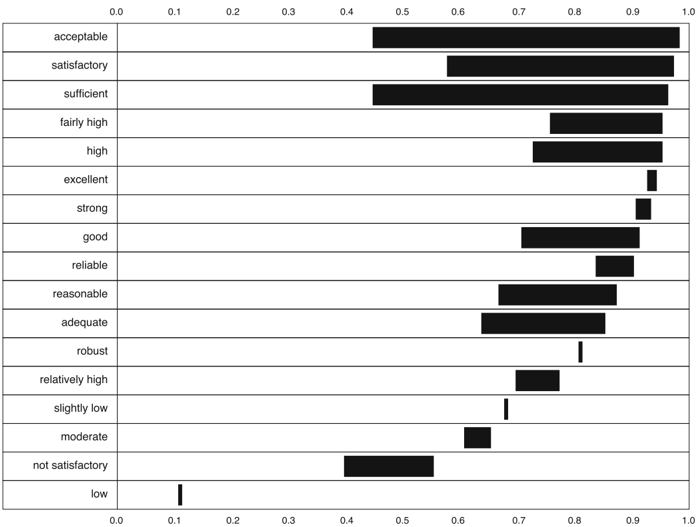
Cronbach’s alpha is a statistic commonly quoted by authors to demonstrate that tests and scales that have been constructed or adopted for research projects are fit for purpose. Cronbach’s alpha is regularly adopted in studies in science education: it was referred to in 69 different papers published in 4 leading science education journals in a single year (2015)—usually as a measure of reliability. This article explores how this statistic is used in reporting science education research and what it represents. Authors often cite alpha values with little commentary to explain why they feel this statistic is relevant and seldom interpret the result for readers beyond citing an arbitrary threshold for an acceptable value. Those authors who do offer readers qualitative descriptors interpreting alpha values adopt a diverse and seemingly arbitrary terminology. More seriously, illustrative examples from the science education literature demonstrate that alpha may be acceptable even when there are recognised problems with the scales concerned. Alpha is also sometimes inappropriately used to claim an instrument is unidimensional. It is argued that a high value of alpha offers limited evidence of the reliability of a research instrument, and that indeed a very high value may actually be undesirable when developing a test of scientific knowledge or understanding. Guidance is offered to authors reporting, and readers evaluating, studies that present Cronbach’s alpha statistic as evidence of instrument quality.
Overview
The claims and statistics of this paper haven’t been checked yet.
Free: it reads the open-access text and checks the first 5 claims that cite a source we can check. Create a free account to check every claim.
Integrity signals
Registry
Cites
Statistics
Figures
Verification
Claims the paper makes
The claims and statistics of this paper haven’t been checked yet.
Free: it reads the open-access text and checks the first 5 claims that cite a source we can check. Create a free account to check every claim.
Claims other papers make about this one
Each is checked against this paper’s own text: does it say what the citing paper says it does?
The cited source doesn’t support the claim as written.
In the citing paper
“Specifically, all studies using the AAQ and one third of studies using the AAQ-II reported internal consistency below recommended cutoffs (i.e., Cronbach’s alpha > .80; Taber, 2018), with alphas as low as .57 and .51 respectively.”
From Psychological flexibility in older adulthood: a scoping review. (2023) · cites this paper as Taber, 2018
Checked by a reasoning model — may be wrong.
Experimental — accuracy not yet measuredThe cited source doesn’t support the claim as written.
In the citing paper
“The internal consistency in our data was moderate ( α = 0.59) on the basis of Taber et al.'s (2018) criteria.”
From Enhancing School Students' Self-Regulated Learning through Generative AI Support: A Randomized Controlled Trial (2026) · cites this paper as Taber et al.'s (2018)
Checked by a reasoning model — may be wrong.
Experimental — accuracy not yet measuredThe cited source doesn’t support the claim as written.
In the citing paper
“The internal consistency in our data was acceptable ( α = 0.70) on the basis of Taber et al.'s (2018) criteria.”
From Enhancing School Students' Self-Regulated Learning through Generative AI Support: A Randomized Controlled Trial (2026) · cites this paper as Taber et al.'s (2018)
Checked by a reasoning model — may be wrong.
Experimental — accuracy not yet measuredThe source backs part of the claim, not all of it — or backs it for a different population, condition or comparison.
In the citing paper
“No study reported good internal consistency for the AAQ, as indicated by Cronbach α > .80 (Taber, 2018).”
From Psychological flexibility in older adulthood: a scoping review. (2023) · cites this paper as Taber, 2018
Experimental — accuracy not yet measuredThe source backs part of the claim, not all of it — or backs it for a different population, condition or comparison.
In the citing paper
“These findings suggest a number of conceptual and statistical issues (see Taber, 2018; Tavakol & Dennick, 2011), including the possibility that the AAQ and AAQ-II do not measure a common factor among older adults or that, given the broad range of alpha scores (i.e., .51-.94), these measures do not perform consistently in older adult samples.”
From Psychological flexibility in older adulthood: a scoping review. (2023) · cites this paper as Taber, 2018
Experimental — accuracy not yet measured
15 more claims about this paper
Create a free account to see every claim other papers make about this one.
Self-check
Percentages, sums and reported differences re-computed from the paper’s own numbers.
The self-check needs the paper’s full text.
Citations
Cites
Coefficient Alpha and the Internal Structure of Tests
Cronbach, L. J. (1951) · Psychometrika · doi:10.1007/bf02310555 · Cited by 43,931 · cited 13×
“Sijtsma (2009) develops an argument explored in Cronbach’s (1951) seminal paper that alpha does not offer an accurate value for reliability as understood by psychometricians (but rather a lower bound, although Cronbach himself had argued in his 1951 paper that alpha was often a suitable proxy) and suggests that intern…”
BackgroundMethodInfluentialWhat is coefficient alpha? An examination of theory and applications
Cortina, J. M. (1993) · Journal of Applied Psychology · doi:10.1037/0021-9010.78.1.98 · Cited by 8,810 · cited 5×
“Cronbach ’ s alpha has been described as ‘ one of the most important and pervasive statistics in research involving test construction and use ’ (Cortina, 1993, p. 98) to the extent that its use in research with multiple-item measurements is considered routine (Schmitt, 1996, p. 350).”
BackgroundInfluentialOn the use, the misuse, and the very limited usefulness of Cronbach’s alpha
Sijtsma, K. (2009) · Psychometrika · doi:10.1007/s11336-008-9101-0 · Cited by 2,814 · cited 2×
“Sijtsma (2009) has more recently made the point more bluntly: “ both very low and very high alpha values can go either with unidimensionality or multidimensionality of the data ” (p.119).”
BackgroundUses and abuses of coefficient alpha
Schmitt, N. (1996) · Psychological Assessment · doi:10.1037/1040-3590.8.4.350 · Cited by 2,588 · cited 4×
“(Cortina, 1993; Schmitt, 1996), it is generally possible to increase alpha to 0.”
BackgroundInfluentialGlobal Patterns in Students’ Views of Science and Interest in Science
van Griethuijsen, R. A. L. F., van Eijck, M. W., Haste, H., den Brok, P. J., Skinner, N. C., Mansour, N., Savran Gencer, A., & BouJaoude, S. (2015) · Research in Science Education · doi:10.1007/s11165-014-9438-6 · Cited by 852 · cited 3×
“Griethuijsen et al. (2014) reported a cross-national study looking at student interests in science where “ several of the values calculated for Cronbach ’ s alpha are below the acceptable values of 0.7 or 0.6 ” (p.588).”
BackgroundInfluentialThe development of a questionnaire to measure students' motivation towards science learning
Tuan *, H., Chin, C., & Shieh, S. (2005) · International Journal of Science Education · doi:10.1080/0950069042000323737 · Cited by 625 · cited 2×
“Tuan and colleagues (Tuan, Chin, & Shieh, 2005) report a study “ to develop a questionnaire that measures students ’ motivation toward science learning ” (p.639).”
BackgroundDevelopment and Validation of Instruments to Measure Learning of Expert‐Like Thinking
Adams, W. K., & Wieman, C. E. (2011) · International Journal of Science Education · doi:10.1080/09500693.2010.512369 · Cited by 451 · cited 1×
“Given that some authors choose to report cross-scale results, readers should be aware that the Cronbach alpha statistic is most valuable in relation to single-construct scales and less informative when reported for instruments measuring several constructs at once (Adams & Wieman, 2010).”
BackgroundArslan, H. O., Cigdemoglu, C., & Moseley, C. (2012) · International Journal of Science Education · doi:10.1080/09500693.2012.680618 · Cited by 304
Developing attitude to science scales for use with children of ages from five to eleven years
Pell, T., & Jarvis, T. (2001) · International Journal of Science Education · doi:10.1080/09500690010016111 · Cited by 284 · cited 2×
“…for measuring affect in science education is “ Developing attitude to science scales for use with children of ages from five to eleven years ” (Pell & Jarvis, 2001) which “ reports on the development stages of three attitudes to science and school scales for use with children aged from 5 to…”
BackgroundMeasuring attitudes to science: Unidimensionality and internal consistency revisited
Gardner, P. L. (1995) · Research in Science Education · doi:10.1007/bf02357402 · Cited by 175 · cited 2×
“It seems that despite Gardner ’ s (1995) warning in this journal that researchers should not conflate internal consistency and unidimensionality and consider a high value of alpha as suggesting that the items in an instrument were all measuring the same thing, reports are still being published in…”
Background
Research works printed but not linked: 1
- 21. National Research Council Committee on Scientific Principles for Educational Research. (2002). Scientific Research in Education. Washington DC: National Academies Press.
Cited by
Items 701–800 of 1,037
Affective Design Analysis of Explainable Artificial Intelligence (XAI): A User-Centric Perspective
Bernardo, E. L., & Seva, R. R. (2023) · Informatics · doi:10.3390/informatics10010032 · Cited by 49
“From the model validity test, Cronbach’s alpha and average variance explained (AVE) showed high reliability and convergent validity, respectively, as all are above the threshold of 0.70 [84].”
InfluentialWassie, Y. T., & Ahlgren, E. O. (2023) · Energy · doi:10.1016/j.energy.2023.127351 · Cited by 35
Is intellectual humility related to more accuracy and less overconfidence?
Bowes, S. M., Ringwood, A., & Tasimi, A. (2023) · The Journal of Positive Psychology · doi:10.1080/17439760.2023.2208100 · Cited by 32
“…c Based on recommendations in the literature, we did not calculate Cronbach’s alpha coefficients for the knowledge and performance-based measures (Taber, 2018). d The mean is 0 and the standard deviation is 1, as the Honesty-Humility composite was standardized to account for the fact that a…”
MethodȘorcaru, I. A., Muntean, M., Manea, L., & Nistor, R. (2023) · International Entrepreneurship and Management Journal · doi:10.1007/s11365-023-00918-6 · Cited by 37
“WTE is the only construct with a low value of 0.081 (Taber, 2018).”
InfluentialTrabelsi, K., Saif, Z., Driller, M. W., Vitiello, M. V., & Jahrami, H. (2024) · BMC Sports Science Medicine and Rehabilitation · doi:10.1186/s13102-023-00787-0 · Cited by 66
“Cronbach’s alpha is commonly used to evaluate the internal consistency and reliability of multi-item scales, providing an estimate of how well the items in the questionnaire measure the same underlying construct [14].”
BackgroundMethodJabbar, M., Nasar-u-Minallah, M., & Yusoff, M. M. (2024) · Journal of Environmental Studies and Sciences · doi:10.1007/s13412-024-00895-4 · Cited by 32
“Furthermore, Cronbach’s alpha coefficients were calculated and ranged from 0.511 to 0.889, further supporting the scale’s suitability for analysis (Taber 2018).”
InfluentialBarriers to the adoption of electric cars and electric motorcycles in Vietnam
Truong, N., Trencher, G., Yarime, M., Barrett, B. F. D., & Matsubae, K. (2024) · Transportation Research Part D Transport and Environment · doi:10.1016/j.trd.2024.104204 · Cited by 35
Almazrou, S., Alanezi, F., Almutairi, S. A., AboAlsamh, H. M., Alsedrah, I. T., Arif, W. M., Alsadhan, A. A., AlSanad, D. S., Alqahtani, N. S., AlShammary, M. H., et al. (2025) · Nutrition and Health · doi:10.1177/02601060241273627 · Cited by 29
“The Cronbach alpha coef fi cient was computed for all items and found to exceed 0.7 suggesting good internal consistency and reliability (Taber, 2018).”
InfluentialUsing Augmented Reality to Strengthen Consumer/Brand Relationships: The Case of Luxury Brands
Arya, V., Sethi, D., & Hollebeek, L. D. (2024) · Journal of Consumer Behaviour · doi:10.1002/cb.2419 · Cited by 38
Blanc, S., Peiró, A. C., Benlloch-Dualde, J. V., Monteiro, A. M. R., & Grindei, L. (2025) · International Journal of STEM Education · doi:10.1186/s40594-025-00534-6 · Cited by 81
“However, according to Taber (2018) in his review of educational studies on Cronbach’s alpha, many authors consider values below 0.6 as acceptable or satisfactory when there are only two items.”
InfluentialVillarino, R. T. (2025) · IJERI: International Journal of Educational Research and Innovation · doi:10.46661/ijeri.10909 · Cited by 29
Min, H., Abbasi, B. N., & Jing, H. (2025) · Humanities and Social Sciences Communications · doi:10.1057/s41599-025-05817-5 · Cited by 76
“…reliability of the data analyzed through the use of the Cronbach ’ s alpha reliability test which is a method utilized by researchers to con fi rm that a designed or accepted instrument serves its intended purpose; hence, a test for the validation and reliability of the instruments (Taber, 2018).”
Measuring student engagement in the undergraduate general chemistry laboratory
Smith, K. C., & Alonso, V. (2020) · Chemistry Education Research and Practice · doi:10.1039/c8rp00167g · Cited by 33
Vučković, S., Ručević, S., & Ajduković, M. (2020) · European Journal of Developmental Psychology · doi:10.1080/17405629.2020.1768067 · Cited by 40
“Moreover, Hostility/Aggression subscale had acceptable (Taber, 2017), albeit low internal consistency.”
Wanjohi, B. K., Njenga, E. W., Sudoi, V., Kipkore, W. K., Moore, H. L., & Davies, M. I. J. (2020) · Ethnobotany Research and Applications · doi:10.32859/era.20.1.1-16 · Cited by 37
“Reliability of the research instruments was done during pilot through test-retest method and Cronbach alpha coefficient computed (Taber, 2018).”
MethodZammitti, A., Magnano, P., & Santisi, G. (2020) · Sustainability · doi:10.3390/su12166473 · Cited by 38
“60, as indicated by the literature [68,69].”
Dimensions of interoception in obsessive-compulsive disorder
Eng, G. K., Collins, K. A., Brown, C. S., Ludlow, M., Tobe, R. H., Iosifescu, D. V., & Stern, E. R. (2020) · Journal of Obsessive-Compulsive and Related Disorders · doi:10.1016/j.jocrd.2020.100584 · Cited by 33
“70 for three subscales (noticing, not-distracting, not-worrying), suggesting lower internal consistency (Taber, 2018).”
BackgroundMethodInfluentialJiménez‐Hernández, E. M., Oktaba, H., Díaz‐Barriga, F., & Piattini, M. (2020) · Computer Applications in Engineering Education · doi:10.1002/cae.22335 · Cited by 29
“All of them are greater than .70, which indicates that there is sufficient reliability in the questionnaire applied [76].”
BackgroundHe, P., Zheng, C., & Li, T. (2021) · Chemistry Education Research and Practice · doi:10.1039/c9rp00286c · Cited by 32
Lim, X. Y., Yap, A. C., Mahendran, R., & Yu, J. (2021) · Translational Behavioral Medicine · doi:10.1093/tbm/ibaa143 · Cited by 30
Nyarko, S. C., & Petcovic, H. L. (2021) · International Journal of Science Education · doi:10.1080/09500693.2021.1922779 · Cited by 38
“91, indicating that the ODCCKA is a valid and reliable instrument (Taber, 2018) to explore the ozone depletion and climate change knowledge of preservice teachers simultaneously.”
BackgroundMethodInfluentialDrinkwater, K. G., Dagnall, N., Denovan, A., & Williams, C. A. (2021) · Frontiers in Psychology · doi:10.3389/fpsyg.2021.670959 · Cited by 38
“(see Taber, 2018).”
‘Landguardism’ in Ghana: Examining public perceptions about the driving factors
Ehwi, R. J., & Asafo, D. M. (2021) · Land Use Policy · doi:10.1016/j.landusepol.2021.105630 · Cited by 35
Casselman, M. D., Eichler, J. F., & Atit, K. (2021) · Science Education · doi:10.1002/sce.21675 · Cited by 48
Impact of Total Quality Management on SMEs Sustainable Performance in the Context of Industry 4.0
Ali, K., & Johl, S. K. (2021) · Lecture notes in networks and systems · doi:10.1007/978-3-030-82616-1_50 · Cited by 29
Luu-Thi, H.-T., Ngo-Thi, T.-T., Nguyen-Thi, M.-T., Ly, T.-T., Nguyen-Duong, B.-T., & Tran-Chi, V.-L. (2021) · Frontiers in Education · doi:10.3389/feduc.2021.742130 · Cited by 62
“Although Cronbach’s alpha should be higher than 0.70 to ensure the reliability of the scale, values below 0.70 are still acceptable (Hair et al., 2007; Taber, 2018).”
MethodInfluentialConsumers’ Perspectives and Behaviors towards Corporate Social Responsibility—A Cross-Cultural Study
Hsu, Y. H., & Bui, T. H. G. (2022) · Sustainability · doi:10.3390/su14020615 · Cited by 38
Soft and hard skills development in lean management trainings
Lista, A. P., Tortorella, G. L., Bouzon, M., Thürer, M., & Jurburg, D. (2022) · International Journal of Lean Six Sigma · doi:10.1108/ijlss-06-2021-0116 · Cited by 50
Li, H., Kuo, Y., Mir, M. M., & Omar, M. S. (2022) · Economic Research-Ekonomska Istraživanja · doi:10.1080/1331677x.2021.2015612 · Cited by 48
“As suggested by Haier et al. (2014), Taber (2018) the acceptable range of the reliability (i.e., Composite reliability, rho-A, and Cronbach ’ s alpha) are 0.7 and above.”
InfluentialGamification as technology enabler in SEN and DHH education
Chan, G. L., Santally, M., & Whitehead, J. (2022) · Education and Information Technologies : Official Journal of the IFIP technical committee on Education · doi:10.1007/s10639-022-10984-y · Cited by 28
“Due to the relatively small sample size it was irrelevant to calculate Cronbach’s Alpha for internal reliability of items (Taber, 2018), and that an overall Cronbach Alpha of 0.73 for the whole instrument is acceptable.”
InfluentialPiraneh, H., Gholami, M., Sargeran, K., & Shamshiri, A. R. (2022) · BMC Pediatrics · doi:10.1186/s12887-022-03178-5 · Cited by 42
Hiking in the COVID-19 era: motivation and post-outbreak intentions
Obradović, S., & Tešin, A. (2022) · Journal of Sport & Tourism · doi:10.1080/14775085.2022.2048683 · Cited by 32
“Earlier studies (Strickland, 1999; Taber, 2017; Wen & Ye, 2011) indicated that the most widely used reliability test method is Cronbach’s internal consistency reliability (Cronbach’s alpha is asserted as a correlation coefficient, ranging from 0 to 1).”
MethodAbed, A. R., Obeidat, B., & Gharaibeh, I. (2022) · Journal of Asian Architecture and Building Engineering · doi:10.1080/13467581.2022.2074021 · Cited by 33
COVID-19 vaccine hesitancy in Malaysia: Exploring factors and identifying highly vulnerable groups
Jafar, A., Dambul, R., Dollah, R., Sakke, N., Mapa, M. T., & Joko, E. P. (2022) · PLoS ONE · doi:10.1371/journal.pone.0270868 · Cited by 40
“This means that the questionnaire of this study has a reliability level in the robustness category, making it suitable for use [44].”
Caffeine’s Effects on Consumer Spending
Biswas, D., Hartmann, P., Eisend, M., Szocs, C., Jochims, B., Apaolaza, V., Hermann, E., López, C. M., & Borges, A. A., Jr. (2022) · Journal of Marketing · doi:10.1177/00222429221109247 · Cited by 33
Integrating BIM in Construction Dispute Resolution: Development of a Contractual Framework
Muhammad, R., & Nasir, A. R. (2022) · Buildings · doi:10.3390/buildings12111828 · Cited by 29
“…data, the intercorrelation scores from Cronbach’s alpha test were found to be 0.93 (potential legal aspects) and 0.91 (potential contract provisions) for the As the threshold value for this test stands at 0.70, this shows that the variables are reliable in terms of internal consistency [55].”
BackgroundMethodInfluentialMeher, M. M., Afrin, M., Talukder, A. K., & Haider, M. G. (2022) · Heliyon · doi:10.1016/j.heliyon.2022.e12166 · Cited by 43
DOSUMU, O. S., & Uwayo, S. M. (2023) · Built Environment Project and Asset Management · doi:10.1108/bepam-08-2022-0123 · Cited by 36
Al‐Mamary, Y. H., Abubakar, A. A., & Abdulrab, M. (2023) · Interactive Learning Environments · doi:10.1080/10494820.2023.2191272 · Cited by 42
“Cronbach ’ s Alpha values of 0.7 orhigher have always beencommonly considered tobe perfectly acceptable,whilevalues greaterthan 0.9 may indicate redundancy (Taber, 2018; Heale & Twycross, 2015).”
InfluentialCheng, J.-Y., Gheisari, M., & Jeelani, I. (2023) · Journal of Computing in Civil Engineering · doi:10.1061/jccee5.cpeng-5140 · Cited by 36
Robbins, P., & Fu, N. (2022) · R and D Management · doi:10.1111/radm.12515 · Cited by 49
Breast awareness mobile apps for health education and promotion for breast cancer
Yusuf, A., Iskandar, Y. H. P., Hadi, I. S. A., Nasution, A., & Keng, S. L. (2022) · Frontiers in Public Health · doi:10.3389/fpubh.2022.951641 · Cited by 28
“89, indicating good internal consistency (12).”
Ng, S. L. (2022) · Natural Hazards · doi:10.1007/s11069-022-05703-2 · Cited by 37
“658 which represented an acceptable level of reliability (Taber 2018).”
BackgroundLiu, C.-H. S., Horng, J., Chou, S.-F., Yu, T., Lee, M.-T., & Lapuz, M. C. B. (2022) · Journal of Retailing and Consumer Services · doi:10.1016/j.jretconser.2022.103213 · Cited by 33
Set of sustainability indicators for the dairy industry
Feil, A. A., do Amaral, C. C., Walter, E., Bagatini, C. A., Schreiber, D., & Maehler, A. E. (2023) · Environmental Science and Pollution Research · doi:10.1007/s11356-023-26023-3 · Cited by 30
Großmann, L., & Krüger, D. (2023) · Science Education · doi:10.1002/sce.21832 · Cited by 57
“Still, it should be noted that Cronbach's α is affected by the number of criteria (Taber, 2018), so this value might result from many criteria ( n =24) sharing some variance with others.”
BackgroundYun, V. W. S., Ulang, N. M., & Husain, S. H. (2023) · Journal of Advanced Research in Applied Sciences and Engineering Technology · doi:10.37934/araset.33.1.392405 · Cited by 61
Kuriakose, M., & Nagasubramaniyan, G. (2024) · International Journal of Human-Computer Interaction · doi:10.1080/10447318.2024.2305479 · Cited by 34
“The CR and Cronbach’s alpha surpass the threshold of 0.7, signifying a strong level of internal consistency (Taber, 2018) (Table 4).”
InfluentialWang, S., Chen, S., & Nah, K. (2024) · Buildings · doi:10.3390/buildings14020349 · Cited by 32
Astleitner, H., & Schlick, S. (2024) · Active Learning in Higher Education · doi:10.1177/14697874241233605 · Cited by 70
“According to Taber (2018, p. 1278), the CA of our scales were “fairly high” for identity development, “high” for parallel use, and “adequate” for learning support.”
Dauda, J. A., Chavan, N. N., Saka, A. B., Ajayi, S. O., & Oyegoke, A. S. (2024) · International Journal of Construction Management · doi:10.1080/15623599.2024.2362014 · Cited by 28
“Cronbach Alpha quantifies the extent to which a set of items in a scale or questionnaire measures a single latent construct or dimension (Taber 2018).”
Studying the explanations for the automated prediction of bug and non-bug issues using LIME and SHAP
Schulte, L., Ledel, B., & Herbold, S. (2024) · Empirical Software Engineering · doi:10.1007/s10664-024-10469-1 · Cited by 48
“6 that is typically at least required to be satisfactory, and even more so in comparison to the often used threshold of 0.7 (Taber 2017).”
InfluentialUnderstanding the Factors Driving Consumers’ Willingness to Pay for Gene-Edited Foods in China
Gao, S., Chen, J., Yang, Y., & Wang, G. (2024) · Foods · doi:10.3390/foods13152348 · Cited by 31
“Although the reliability coefficient for these 12 items is above 0.6 based on previous studies [102–104] is still at an acceptable level.”
MethodInfluentialNeef, N. E., Zabel, S., Papoli, M., & Otto, S. (2024) · AI & Society · doi:10.1007/s00146-024-02020-z · Cited by 44
ANALISIS KUALITAS BUTIR SOAL TIPE HOTS PADA KOMPETENSI SISTEM REM DI SEKOLAH MENENGAH KEJURUAN
Warju, W., Ariyanto, S. R., Soeryanto, S., & Trisna, R. A. (2020) · Jurnal Pendidikan Teknologi dan Kejuruan · doi:10.23887/jptk-undiksha.v17i1.22914 · Cited by 76
“Nilai tersebut menunjukkan bahwa nilai α > 0,8 yang berarti bahwa butir soal masuk kategori istimewa [10].”
Hu, Y., Hu, J., Li, L., Zhao, B., Liu, X., & Li, F. (2020) · BMC Medical Research Methodology · doi:10.1186/s12874-020-0908-4 · Cited by 34
Tavassolirizi, M., Sarvari, H., Chan, D. W. M., & Olawumi, T. O. (2020) · International Journal of Construction Management · doi:10.1080/15623599.2020.1819946 · Cited by 28
Hassan, M. M., Kalam, M. A., Alam, M. M., Shano, S., Faruq, A. A., Hossain, M. S., Islam, M. N., Khan, S. A., & Islam, A. (2020) · Animals · doi:10.3390/ani10101814 · Cited by 35
“42 for the spreading of NiV, which is not a satisfactory value [31].”
BackgroundLi, S. R., & Ito, N. (2021) · Springer eBooks · doi:10.1007/978-3-030-65785-7_47 · Cited by 35
“7, suggesting an overall high reliability [32].”
Reffien, M. A. M., Selamat, E. M., Sobri, H. N. M., Hanan, M. F. M., Abas, M. I., Ishak, M. F. M., Azit, N. A., Abidin, N. D. I. Z., Hassim, N. H. N., Ahmad, N., et al. (2021) · Malaysian Journal of Public Health Medicine · doi:10.37268/mjphm/vol.21/no.1/art.742 · Cited by 29
Prevalence of abuse among the elderly population of Syangja, Nepal
Acharya, S. R., Suman, B. K., Pahari, S., Shin, Y. C., & Moon, D. H. (2021) · BMC Public Health · doi:10.1186/s12889-021-11417-0 · Cited by 42
“71, which is within the acceptable level [28].”
BackgroundOn undirected trips, satisfaction, and well-being: Evidence from Flanders (Belgium)
Hook, H., Vos, J. D., Acker, V. V., & Witlox, F. (2021) · Transportation Research Part D Transport and Environment · doi:10.1016/j.trd.2021.103018 · Cited by 28
“Reliability was assessed for the six emotion and three evaluation components, with Cronbach’s α = 0.909 and 0.864, respectively, which is higher than the 0.7 threshold of reliability (Taber, 2017).”
MethodInfluentialFerreira, D. M., Sentanin, F., Parra, K. N., Bonini, V. M. N., de Castro, M., & Kasseboehmer, A. C. (2021) · Journal of Chemical Education · doi:10.1021/acs.jchemed.1c00287 · Cited by 50
Class composition, student achievement, and the role of the learning environment.
Lavrijsen, J., Dockx, J., Struyf, E., & Verschueren, K. (2022) · Journal of Educational Psychology · doi:10.1037/edu0000709 · Cited by 43
Niimi, J., Sörensen, V., Mihnea, M., Valentin, D., Bergman, P., & Collier, E. S. (2022) · Food Quality and Preference · doi:10.1016/j.foodqual.2022.104563 · Cited by 34
Saleh, A., Phillips, T. M., Hmelo‐Silver, C. E., Glazewski, K. D., Mott, B., & Lester, J. C. (2022) · British Journal of Educational Technology · doi:10.1111/bjet.13198 · Cited by 72
Conscious or Indifferent: Concerns on digitalisation and sustainability among smes in Industry 4.0
Tick, A., Saáry, R., & Kárpáti-Daróczi, J. (2022) · Serbian Journal of Management · doi:10.5937/sjm17-36412 · Cited by 39
Trå, H. V., Volden, F. S., & Watten, R. G. (2022) · Nordic Psychology · doi:10.1080/19012276.2022.2093778 · Cited by 55
“The number of items in a scale will in fl uence the value of the coef fi cient (Taber, 2018) and it is therefore not surprising that the EOE subscale had higher alpha values than the AESS subscale scale.”
BackgroundResultPositive addiction recovery therapy: a pilot study
Ogilvie, L., & Carson, J. F. (2022) · Advances in Dual Diagnosis · doi:10.1108/add-06-2022-0018 · Cited by 30
ElSayed, D. A., Raad, E. B., Bekhit, S. A., Sallam, M., Ibrahim, N. M., Soliman, S., Abdullah, R., Farag, S., & Ghazy, R. M. (2022) · Tropical Medicine and Infectious Disease · doi:10.3390/tropicalmed7090234 · Cited by 38
“Cronbach’s alphas were calculated for the sub-scales of the questionnaire to assess their internal consistency [46].”
MethodHuang, S. (2022) · Case Studies on Transport Policy · doi:10.1016/j.cstp.2022.09.012 · Cited by 36
Shakeel, S. I., Haolader, M. F. A., & Sultana, M. S. (2023) · Heliyon · doi:10.1016/j.heliyon.2022.e12766 · Cited by 36
Youssef, D., Abboud, E., Kawtharani, M., Zheim, Z., Arrage, N. A., & Youssef, J. (2023) · Journal of Pharmaceutical Policy and Practice · doi:10.1186/s40545-023-00544-1 · Cited by 27
Khan, A. J., Hameed, W. U., Ahmed, T., Iqbal, J., Aplin-Houtz, M. J., & Leahy, S. (2023) · Employee Responsibilities and Rights Journal · doi:10.1007/s10672-023-09443-8 · Cited by 39
“The reliability and validity of these measurement items were tested with the recommended Cronbach’s alpha value for reliability of α > 0.70 (Taber, 2018).”
InfluentialShahzad, W. M., Reddy, S. M., Kahandawa, R., & Rotimi, J. O. B. (2023) · Engineering Construction & Architectural Management · doi:10.1108/ecam-10-2022-1020 · Cited by 36
Hassandoust, F., & Johnston, A. C. (2023) · Information Systems Journal · doi:10.1111/isj.12441 · Cited by 39
Millanzi, W. C., Herman, P. Z., & Mtangi, S. A. (2023) · SAGE Open Medicine · doi:10.1177/20503121231174735 · Cited by 44
Lim, W. M., & Koay, K. Y. (2024) · Global Business and Organizational Excellence · doi:10.1002/joe.22252 · Cited by 38
Garay-Rondero, C. L., Castillo-Paz, A., Gijón-Rivera, C., Domínguez-Ramírez, G., Rosales-Torres, C., & Oliart-Ros, A. (2024) · Cogent Education · doi:10.1080/2331186x.2024.2392424 · Cited by 28
“According to Taber (2018), a Cronbach Alpha of 0.7 is generally considered sufficient for indicating internal consistency in educational research, but this threshold may vary depending on the test ’ s context and dimensions.”
InfluentialOmar, A., Shaqour, A. Z., & Khlaif, Z. N. (2024) · Frontiers in Education · doi:10.3389/feduc.2024.1414606 · Cited by 27
“From the previous table, it’s evident that the reliability of the Opportunities Questionnaire was 0.840, a value indicating good stability and reliability upon which results can be generalized (Taber, 2018).”
InfluentialPerceptions of Artificial Intelligence and ChatGPT by Speech-Language Pathologists and Students
Austin, J., Benas, K., Caicedo, S., Imiolek, E., Piekutowski, A., & Ghanim, I. (2025) · American Journal of Speech-Language Pathology · doi:10.1044/2024_ajslp-24-00218 · Cited by 31
Goren, T., Vashdi, D. R., & Beeri, I. (2022) · Policy Sciences · doi:10.1007/s11077-022-09481-3 · Cited by 41
“, 2017; Shim & You, 2015): (1) “How likely do you think it is that you would become sick with coronavirus?”; (2) “How severe would your condition be if you did become sick with coronavirus?”; (3) “To what extent are you worried about the possibility of becoming sick with Coronavirus?” An inter-item reliability check,…”
BackgroundJalil, M. F., Ali, A., & Kamarulzaman, R. (2023) · Humanities and Social Sciences Communications · doi:10.1057/s41599-023-01908-3 · Cited by 57
Cronbach’s alpha and its confidence interval
Roco-Videla, Á., Flores-Carrasco, S. V., Olguín-Barraza, M., & Maureira-Carsalade, N. (2023) · Nutrición Hospitalaria · doi:10.20960/nh.04961 · Cited by 27
Digital hoarding and personal use digital data
Sillence, E., Dawson, J. A., Brown, R. D., McKellar, K., & Neave, N. (2023) · Human-Computer Interaction · doi:10.1080/07370024.2023.2293001 · Cited by 39
“Furthermore, Cronbach’s alpha for the full DHQ demonstrated an excellent level of internal consistency, α = 0.93 (Taber, 2018).”
InfluentialPatole, S., Pawale, D., & Rath, C. P. (2024) · Healthcare · doi:10.3390/healthcare12020171 · Cited by 42
Bissel, M., & Becker, S. (2024) · Transportation Research Part F Traffic Psychology and Behaviour · doi:10.1016/j.trf.2023.12.018 · Cited by 33
Li, Y., Yang, D., & Liu, S. (2024) · PLoS ONE · doi:10.1371/journal.pone.0299231 · Cited by 46
Cao, J., Feng, H., Lim, Y., Kodama, K., & Zhang, S. (2024) · Behavioral Sciences · doi:10.3390/bs14060498 · Cited by 43
“The paths connected through the mediating variables trust and health consciousness also showed statistical significance, supporting H2, H3, H4, and H5.”
BackgroundGorbunova, A., Lange, C. H., Savelyev, A., Adamovich, K., & Costley, J. (2024) · Education Sciences · doi:10.3390/educsci14080860 · Cited by 54
Guo, N., Xia, F., & Yu, S. (2024) · Buildings · doi:10.3390/buildings14092845 · Cited by 31
Chen, S., Tian, Y., & Pei, S. (2024) · Sustainability · doi:10.3390/su16188261 · Cited by 43
“The reliability analysis of the pilot test revealed that the Cronbach’s alpha coe ffi cients for all latent variables met the minimum standard recommended by Taber [113], being above 0.7, indicating satisfactory internal consistency of the scale.”
InfluentialKadri, M., Boubakri, F.-E., Teo, T. P., Kaghat, F.-Z., Azough, A., & Zidani, K. A. (2024) · Displays · doi:10.1016/j.displa.2024.102870 · Cited by 37
Boadu, S. K., & Boateng, F. O. (2024) · Eurasia Journal of Mathematics Science and Technology Education · doi:10.29333/ejmste/15622 · Cited by 100
“According to Taber ’ s recommendation, the study verified that each construct ’ s CA stayed at the necessary level of 0.70 (Taber, 2018).”
InfluentialChimi, P. M., Mala, W. A., Djoumbi, B. L. T., Fobane, J. L., Kenmoe, F. U. F., Abdel, K. N., Yonga, G., Dikoume, A. M. N., & Bell, J. M. (2025) · Discover Environment · doi:10.1007/s44274-025-00192-z · Cited by 33
“Taber [73] reported a mean Cronbach’s alpha of 0.61, which falls within an acceptable range.”
InfluentialAssessing timebanking use and coordination: implications for service exchange tools
Yuan, C. W., Hanrahan, B. V., & Carroll, J. M. (2018) · Information Technology and People · doi:10.1108/itp-09-2017-0311 · Cited by 29
Derevianko, O. (2019) · Oeconomia Copernicana · doi:10.24136/oc.2019.025 · Cited by 33
Effects of Using Immersive Media on the Effectiveness of Training to Prevent Ergonomics Risks
Diego-Más, J. A., Alcaide-Marzal, J., & Poveda-Bautista, R. (2020) · International Journal of Environmental Research and Public Health · doi:10.3390/ijerph17072592 · Cited by 34
“7 is usually considered to indicate a moderate consistency [50].”
BackgroundPérez-Díaz, P. A., Perazzo, M. F., Chiesi, F., Marunic, G., Granville‐Garcia, A. F., Paiva, S. M., & Petrides, K. V. (2020) · Personality and Individual Differences · doi:10.1016/j.paid.2020.110038 · Cited by 34
“As for the remaining factors, all showed adequate alphas (Taber, 2018): Well-being = 0.76, Self-con-trol = 0.61, Emotionality = 0.67, although the values were considerably lower than that of the global trait EI score, which the TEIQue-SF was specifically designed to measure.”
InfluentialLazăr, I., Pânişoară, G., & Pânișoară, I.-O. (2020) · Journal of Baltic Science Education · doi:10.33225/jbse/20.19.429 · Cited by 39
Metadata
- Authors
- Taber, K. S.
- Affiliations
- University of Cambridge (GB)
- Corresponding author
- Taber, Keith S.
- ORCID
- Taber, Keith S.
- Venue
- Research in Science Education
- Published
- 2017-06-07
- Volume
- 48
- Issue
- 6
- Pages
- 1273-1296
- ISSN
- 0157-244X (ISSN-L)
- 1573-1898
- OpenAlex
- W2623703952
- Semantic Scholar
- ccc38dd46fc6ed6d2c6c6e8b1613d6f74a0f7df1
- Cited by
- 10,679
- References
- 37
- Citations by year
- 2026: 1432 · 2025: 1887 · 2024: 1845 · 2023: 1708 · 2022: 1532 · 2021: 1330 · 2020: 682 · 2019: 199 · 2018: 53 · 2017: 6
- FWCI
- 227.70
- Type
- journal article
- Language
- en
- Open access
- hybrid
- doi.org
- Licence
- cc-by
- creativecommons.org/licenses/by/4.0 (tdm)
- Locations
- Research in Science Education (publishedVersion, cc-by)
- Apollo (University of Cambridge) (submittedVersion, cc-by)
- Apollo (cc-by)
- Funders
- University of Cambridge
- Topics
- Social Sciences › Decision Sciences › Management Science and Operations Research › Psychometric Methodologies and Testing
- Social Sciences › Education › Science Education and Pedagogy
- Health Sciences › Nursing › Research and Theory › Health Education and Validation
- Keywords
- Cronbach's alpha, research instrument development, reliability statistics, scale development, reporting quality, unidimensionality, science education research
About these checks
Registry, retraction, Cites and statistics results are computed, not judged, with one exception: a printed reference that no index lists is read once by a model before it counts as a citation error. Claims are extracted by a model and kept only when their quote appears verbatim in the text; each cited source is then checked, with a model’s help, for whether it says what the claim relies on. Those verdicts can be wrong — read the claim’s quote and the cited source before relying on one.
Statistics and arithmetic are recomputed, not judged.
Confidence bands are shown only for fields calibrated on our annotated test set. None is calibrated yet, so no band is shown.
What counts as a claim ›How we measure confidence ›How we check this ›
Are you an author, or do you see a problem with this page? Request a review
Data sources
Bibliographic data: Semantic Scholar, OpenAlex, Crossref.
Contains information from the Semantic Scholar Academic Graph Datasets, made available under the ODC Attribution License (ODC-BY 1.0).
Semantic Scholar’s data is described in: Kinney, R., et al. (2023). The Semantic Scholar Open Data Platform. arXiv:2301.10140.
