

The Use of Cronbach’s Alpha When Developing and Reporting Research Instruments in Science Education
Open accessThe DOI matches its Crossref record; 37 of the 37 references it cites were found in a registry or an index.
Abstract
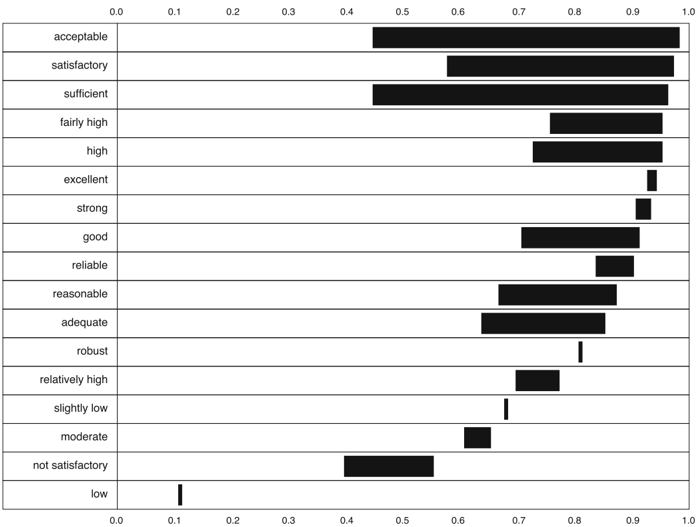
Cronbach’s alpha is a statistic commonly quoted by authors to demonstrate that tests and scales that have been constructed or adopted for research projects are fit for purpose. Cronbach’s alpha is regularly adopted in studies in science education: it was referred to in 69 different papers published in 4 leading science education journals in a single year (2015)—usually as a measure of reliability. This article explores how this statistic is used in reporting science education research and what it represents. Authors often cite alpha values with little commentary to explain why they feel this statistic is relevant and seldom interpret the result for readers beyond citing an arbitrary threshold for an acceptable value. Those authors who do offer readers qualitative descriptors interpreting alpha values adopt a diverse and seemingly arbitrary terminology. More seriously, illustrative examples from the science education literature demonstrate that alpha may be acceptable even when there are recognised problems with the scales concerned. Alpha is also sometimes inappropriately used to claim an instrument is unidimensional. It is argued that a high value of alpha offers limited evidence of the reliability of a research instrument, and that indeed a very high value may actually be undesirable when developing a test of scientific knowledge or understanding. Guidance is offered to authors reporting, and readers evaluating, studies that present Cronbach’s alpha statistic as evidence of instrument quality.
Overview
The claims and statistics of this paper haven’t been checked yet.
Free: it reads the open-access text and checks the first 5 claims that cite a source we can check. Create a free account to check every claim.
Integrity signals
Registry
Cites
Statistics
Figures
Verification
Claims the paper makes
The claims and statistics of this paper haven’t been checked yet.
Free: it reads the open-access text and checks the first 5 claims that cite a source we can check. Create a free account to check every claim.
Claims other papers make about this one
Each is checked against this paper’s own text: does it say what the citing paper says it does?
The cited source doesn’t support the claim as written.
In the citing paper
“Specifically, all studies using the AAQ and one third of studies using the AAQ-II reported internal consistency below recommended cutoffs (i.e., Cronbach’s alpha > .80; Taber, 2018), with alphas as low as .57 and .51 respectively.”
From Psychological flexibility in older adulthood: a scoping review. (2023) · cites this paper as Taber, 2018
Checked by a reasoning model — may be wrong.
Experimental — accuracy not yet measuredThe cited source doesn’t support the claim as written.
In the citing paper
“The internal consistency in our data was moderate ( α = 0.59) on the basis of Taber et al.'s (2018) criteria.”
From Enhancing School Students' Self-Regulated Learning through Generative AI Support: A Randomized Controlled Trial (2026) · cites this paper as Taber et al.'s (2018)
Checked by a reasoning model — may be wrong.
Experimental — accuracy not yet measuredThe cited source doesn’t support the claim as written.
In the citing paper
“The internal consistency in our data was acceptable ( α = 0.70) on the basis of Taber et al.'s (2018) criteria.”
From Enhancing School Students' Self-Regulated Learning through Generative AI Support: A Randomized Controlled Trial (2026) · cites this paper as Taber et al.'s (2018)
Checked by a reasoning model — may be wrong.
Experimental — accuracy not yet measuredThe source backs part of the claim, not all of it — or backs it for a different population, condition or comparison.
In the citing paper
“No study reported good internal consistency for the AAQ, as indicated by Cronbach α > .80 (Taber, 2018).”
From Psychological flexibility in older adulthood: a scoping review. (2023) · cites this paper as Taber, 2018
Experimental — accuracy not yet measuredThe source backs part of the claim, not all of it — or backs it for a different population, condition or comparison.
In the citing paper
“These findings suggest a number of conceptual and statistical issues (see Taber, 2018; Tavakol & Dennick, 2011), including the possibility that the AAQ and AAQ-II do not measure a common factor among older adults or that, given the broad range of alpha scores (i.e., .51-.94), these measures do not perform consistently in older adult samples.”
From Psychological flexibility in older adulthood: a scoping review. (2023) · cites this paper as Taber, 2018
Experimental — accuracy not yet measured
15 more claims about this paper
Create a free account to see every claim other papers make about this one.
Self-check
Percentages, sums and reported differences re-computed from the paper’s own numbers.
The self-check needs the paper’s full text.
Citations
Cites
Coefficient Alpha and the Internal Structure of Tests
Cronbach, L. J. (1951) · Psychometrika · doi:10.1007/bf02310555 · Cited by 43,931 · cited 13×
“Sijtsma (2009) develops an argument explored in Cronbach’s (1951) seminal paper that alpha does not offer an accurate value for reliability as understood by psychometricians (but rather a lower bound, although Cronbach himself had argued in his 1951 paper that alpha was often a suitable proxy) and suggests that intern…”
BackgroundMethodInfluentialWhat is coefficient alpha? An examination of theory and applications
Cortina, J. M. (1993) · Journal of Applied Psychology · doi:10.1037/0021-9010.78.1.98 · Cited by 8,810 · cited 5×
“Cronbach ’ s alpha has been described as ‘ one of the most important and pervasive statistics in research involving test construction and use ’ (Cortina, 1993, p. 98) to the extent that its use in research with multiple-item measurements is considered routine (Schmitt, 1996, p. 350).”
BackgroundInfluentialOn the use, the misuse, and the very limited usefulness of Cronbach’s alpha
Sijtsma, K. (2009) · Psychometrika · doi:10.1007/s11336-008-9101-0 · Cited by 2,814 · cited 2×
“Sijtsma (2009) has more recently made the point more bluntly: “ both very low and very high alpha values can go either with unidimensionality or multidimensionality of the data ” (p.119).”
BackgroundUses and abuses of coefficient alpha
Schmitt, N. (1996) · Psychological Assessment · doi:10.1037/1040-3590.8.4.350 · Cited by 2,588 · cited 4×
“(Cortina, 1993; Schmitt, 1996), it is generally possible to increase alpha to 0.”
BackgroundInfluentialGlobal Patterns in Students’ Views of Science and Interest in Science
van Griethuijsen, R. A. L. F., van Eijck, M. W., Haste, H., den Brok, P. J., Skinner, N. C., Mansour, N., Savran Gencer, A., & BouJaoude, S. (2015) · Research in Science Education · doi:10.1007/s11165-014-9438-6 · Cited by 852 · cited 3×
“Griethuijsen et al. (2014) reported a cross-national study looking at student interests in science where “ several of the values calculated for Cronbach ’ s alpha are below the acceptable values of 0.7 or 0.6 ” (p.588).”
BackgroundInfluentialThe development of a questionnaire to measure students' motivation towards science learning
Tuan *, H., Chin, C., & Shieh, S. (2005) · International Journal of Science Education · doi:10.1080/0950069042000323737 · Cited by 625 · cited 2×
“Tuan and colleagues (Tuan, Chin, & Shieh, 2005) report a study “ to develop a questionnaire that measures students ’ motivation toward science learning ” (p.639).”
BackgroundDevelopment and Validation of Instruments to Measure Learning of Expert‐Like Thinking
Adams, W. K., & Wieman, C. E. (2011) · International Journal of Science Education · doi:10.1080/09500693.2010.512369 · Cited by 451 · cited 1×
“Given that some authors choose to report cross-scale results, readers should be aware that the Cronbach alpha statistic is most valuable in relation to single-construct scales and less informative when reported for instruments measuring several constructs at once (Adams & Wieman, 2010).”
BackgroundArslan, H. O., Cigdemoglu, C., & Moseley, C. (2012) · International Journal of Science Education · doi:10.1080/09500693.2012.680618 · Cited by 304
Developing attitude to science scales for use with children of ages from five to eleven years
Pell, T., & Jarvis, T. (2001) · International Journal of Science Education · doi:10.1080/09500690010016111 · Cited by 284 · cited 2×
“…for measuring affect in science education is “ Developing attitude to science scales for use with children of ages from five to eleven years ” (Pell & Jarvis, 2001) which “ reports on the development stages of three attitudes to science and school scales for use with children aged from 5 to…”
BackgroundMeasuring attitudes to science: Unidimensionality and internal consistency revisited
Gardner, P. L. (1995) · Research in Science Education · doi:10.1007/bf02357402 · Cited by 175 · cited 2×
“It seems that despite Gardner ’ s (1995) warning in this journal that researchers should not conflate internal consistency and unidimensionality and consider a high value of alpha as suggesting that the items in an instrument were all measuring the same thing, reports are still being published in…”
Background
Research works printed but not linked: 1
- 21. National Research Council Committee on Scientific Principles for Educational Research. (2002). Scientific Research in Education. Washington DC: National Academies Press.
Cited by
Zhong, B.-L., Luo, W., Li, H.-M., Zhang, Q.-Q., Liu, X.-G., Li, W.-T., & Li, Y. (2020) · International Journal of Biological Sciences · doi:10.7150/ijbs.45221 · Cited by 3,090
“71 in our sample, indicating acceptable internal consistency [12].”
Background(2010) · doi:10.1787/19939019 · Cited by 885
Ferdous, M. Z., Islam, M. S., Sikder, M. T., Mosaddek, A. S. M., Zegarra-Valdivia, J. A., & Gozal, D. (2020) · PLOS ONE · doi:10.1371/journal.pone.0239254 · Cited by 590
“73, which indicates acceptable internal consistency [27].”
An effective blended online teaching and learning strategy during the COVID-19 pandemic
Lapitan, L. D., Tiangco, C. E., Sumalinog, D. A. G., Sabarillo, N. S., & Diaz, J. M. (2021) · Education for Chemical Engineers · doi:10.1016/j.ece.2021.01.012 · Cited by 566
Barbayannis, G., Bandari, M., Zheng, X., Baquerizo, H., Pecor, K. W., & Ming, X. (2022) · Frontiers in Psychology · doi:10.3389/fpsyg.2022.886344 · Cited by 555
“7 is often considered a threshold value in terms of acceptable internal consistency, and our values could be considered “high” or “good” (Taber, 2018).”
BackgroundTang, Y. M., Chen, P. C., Law, K. M. Y., Wu, C. H., Lau, Y.-Y., Guan, J., He, D., & Ho, G. T. S. (2021) · Computers & Education · doi:10.1016/j.compedu.2021.104211 · Cited by 538
“Cronbach’s alpha value of 0.7 was used to measure the model’s satisfactory reliability levels, while the acceptable value of CR and AVE was 0.7 and 0.5, respectively (Taber, 2018).”
MethodInfluentialKalolo, A., Gautier, L., Radermacher, R., Srivastava, S., Meshack, M., & De Allegri, M. (2021) · BMC Public Health · doi:10.1186/s12889-020-10013-y · Cited by 429
Kalkbrenner, M. T. (2023) · Counseling Outcome Research and Evaluation · doi:10.1080/21501378.2021.1940118 · Cited by 395
“, 2014; McNeish, 2018), science education (Taber, 2018), organizational research (Cho, 2016), clinical neuropsychology (Watkins, 2017), poverty measurement (Nájera Catalán, 2019), and statistics (Şimşek & Noyan, 2013).”
BackgroundStudents’ Perception towards E-Learning during COVID-19 Pandemic in India: An Empirical Study
Khan, M. A., Vivek, V., Nabi, M. K., Khojah, M., & Tahir, M. (2020) · Sustainability · doi:10.3390/su13010057 · Cited by 374
“The Cronbach’s alpha [31] values between 0.”
Kong, S.-C., Man-Yin Cheung, W., & Zhang, G. (2021) · Computers and Education: Artificial Intelligence · doi:10.1016/j.caeai.2021.100026 · Cited by 332
Nitschke, J. P., Forbes, P. A. G., Ali, N., Cutler, J., Apps, M. A. J., Lockwood, P. L., & Lamm, C. (2021) · British Journal of Health Psychology · doi:10.1111/bjhp.12485 · Cited by 329
“In order to test the reliability, we calculated Cronbach’s a for the 6 items used (Taber, 2018).”
MethodMeasuring the perceived benefits of implementing blockchain technology in the banking sector
Garg, P., Gupta, B., Chauhan, A. K., Sivarajah, U., Gupta, S., & Modgil, S. (2021) · Technological Forecasting and Social Change · doi:10.1016/j.techfore.2020.120407 · Cited by 320
Revolutionizing education: Artificial intelligence empowered learning in higher education
Rahiman, H. U., & Kodikal, R. (2024) · Cogent Education · doi:10.1080/2331186x.2023.2293431 · Cited by 301
“The alpha value of the research notifies that all the values are above 0.700 which is above the threshold (Taber, 2018).”
InfluentialHoldack, E., Lurie-Stoyanov, K., & Fromme, H. F. (2022) · Journal of Retailing and Consumer Services · doi:10.1016/j.jretconser.2020.102259 · Cited by 298
Akalu, Y., Ayelign, B., & Molla, M. D. (2020) · Infection and Drug Resistance · doi:10.2147/idr.s258736 · Cited by 294
Schober, P., Mascha, E. J., & Vetter, T. R. (2021) · Anesthesia & Analgesia · doi:10.1213/ane.0000000000005773 · Cited by 271
Using ChatGPT for Science Learning: A Study on Pre-service Teachers' Lesson Planning
Lee, G.-G., & Zhai, X. (2024) · IEEE Transactions on Learning Technologies · doi:10.1109/tlt.2024.3401457 · Cited by 269
“69,basedontheresultsfor29lessonplanevaluation, whichfallsintotherangeof“acceptable”[50].”
Banna, M. H. A., Sayeed, A., Kundu, S., Christopher, E., Hasan, M. T., Begum, M. R., Kormoker, T., Dola, S. T. I., Hassan, M. M., Chowdhury, S., et al. (2022) · International Journal of Environmental Health Research · doi:10.1080/09603123.2020.1802409 · Cited by 252
Gallè, F., Sabella, E. A., Da Molin, G., De Giglio, O., Caggiano, G., Di Onofrio, V., Ferracuti, S., Montagna, M. T., Liguori, G., Orsi, G. B., et al. (2020) · International Journal of Environmental Research and Public Health · doi:10.3390/ijerph17103481 · Cited by 246
“81, respectively, showing a satisfactory level of reliability also considering that the questionnaire did not include items of high difficulty [16].”
BackgroundEffect of Variability on Cronbach Alpha Reliability in Research Practice
Amirrudin, M., Nasution, K., & Supahar, S. (2020) · Jurnal Matematika, Statistika dan Komputasi · doi:10.20956/jmsk.v17i2.11655 · Cited by 236
“In the world of education, Taber [24] surveyed four leading educational journals (International Journal of Science Education, Journal of Research in Science Teaching, Research in Science Education, and Science Education) in 2015, that as many as 69 articles explicitly used Cronbach Alpha in his research.”
BackgroundSelf-regulated learning support in flipped learning videos enhances learning outcomes
van Alten, D. C. D., Phielix, C., Janssen, J., & Kester, L. (2020) · Computers & Education · doi:10.1016/j.compedu.2020.104000 · Cited by 235
Gupta, P., Maheshwari, S., Sinha, R., & Rawat, P. (2020) · Journal of Acute Disease · doi:10.4103/2221-6189.283886 · Cited by 213
Importance of Marketing Mix Elements in Determining Consumer Purchase Decision in the Retail Market
Hanaysha, J. R., Al Shaikh, M. E., & Alzoubi, H. M. (2021) · International Journal of Service Science, Management, Engineering, and Technology · doi:10.4018/ijssmet.2021110104 · Cited by 199
Bielenberg, J., Swisher, G., Lembke, A., & Haug, N. A. (2021) · Journal of Substance Abuse Treatment · doi:10.1016/j.jsat.2021.108486 · Cited by 198
Banmairuroy, W., Kritjaroen, T., & Homsombat, W. (2022) · Asia Pacific Management Review · doi:10.1016/j.apmrv.2021.09.001 · Cited by 197
Lee, F., & Suryohusodo, A. A. (2022) · Frontiers in Public Health · doi:10.3389/fpubh.2022.957630 · Cited by 192
“74, respectively, showing justifiable consistency (16).”
Pressley, C., & Garside, J. (2023) · Nursing Open · doi:10.1002/nop2.1588 · Cited by 181
“…the included studies had a Cronbach α score >0.70 and, while acknowledging with caution the limitations of Cronbach Alpha, this tested instrument alongside commentary confirmed a construct validity, verified quality and assured consistency and replicability of research findings (Taber, 2017).”
InfluentialGrima, S., Kizilkaya, M., Sood, K., & ErdemDelice, M. (2021) · Journal of Risk and Financial Management · doi:10.3390/jrfm14080363 · Cited by 179
The use of intercoder reliability in qualitative interview data analysis in science education
Cheung, K. K. C., & Tai, K. W. H. (2023) · Research in Science & Technological Education · doi:10.1080/02635143.2021.1993179 · Cited by 182
Knowledge as a formative construct: A good alpha is not always better
Stadler, M., Sailer, M., & Fischer, F. (2021) · New Ideas in Psychology · doi:10.1016/j.newideapsych.2020.100832 · Cited by 179
Smart Digital Marketing Capabilities for Sustainable Property Development: A Case of Malaysia
Low, S., Ullah, F., Shirowzhan, S., Sepasgozar, S. M. E., & Lin Lee, C. (2020) · Sustainability · doi:10.3390/su12135402 · Cited by 176
The bright side of online consumer behavior: Continuance intention for mobile payments
Purohit, S., Arora, R., & Paul, J. (2022) · Journal of Consumer Behaviour · doi:10.1002/cb.2017 · Cited by 177
Guo, Y., Liu, Y., Lu, S., Chan, O. F., Chui, C. H. K., & Lum, T. Y. S. (2021) · Landscape and Urban Planning · doi:10.1016/j.landurbplan.2021.104058 · Cited by 167
Laupichler, M. C., Aster, A., Meyerheim, M., Raupach, T., & Mergen, M. (2024) · BMC Medical Education · doi:10.1186/s12909-024-05400-7 · Cited by 170
“While the model fit was even better for the ATAI measuring instrument, Cronbach’s α of that scale was rather low, although this does not necessarily question the usefulness of the ATAI scale [26].”
MethodAn LLM-Driven Chatbot in Higher Education for Databases and Information Systems
Neumann, A. T., Yin, Y., Sowe, S., Decker, S., & Jarke, M. (2025) · IEEE Transactions on Education · doi:10.1109/te.2024.3467912 · Cited by 161
“6 threshold were considered, suggesting that the questionnaire items for these coefficients present satisfactory reliability since values below are questionable [72].”
An Analysis of Anatomy Education Before and During Covid‐19: May–August 2020
Harmon, D. J., Attardi, S. M., Barremkala, M., Bentley, D. C., Brown, K. M., Dennis, J. F., Goldman, H. M., Harrell, K. M., Klein, B. A., Ramnanan, C. J., et al. (2021) · Anatomical Sciences Education · doi:10.1002/ase.2051 · Cited by 165
“Response rate was 84% and the Cronbach’s alpha coefficient was 0.71, suggesting the survey instrument measures with acceptable internal validity (Taber, 2018).”
BackgroundMethodInfluentialTsai, Y.-T., & Tiwasing, P. (2021) · Journal of Retailing and Consumer Services · doi:10.1016/j.jretconser.2021.102514 · Cited by 158
Chatbots and service failure: When does it lead to customer aggression
Huang, Y.-S. (., & Dootson, P. (2022) · Journal of Retailing and Consumer Services · doi:10.1016/j.jretconser.2022.103044 · Cited by 159
The mental health impacts of climate change: Findings from a Pacific Island atoll nation
Gibson, K. E., Barnett, J., Haslam, N., & Kaplan, I. (2020) · Journal of Anxiety Disorders · doi:10.1016/j.janxdis.2020.102237 · Cited by 152
Yafi, E., Tehseen, S., & Haider, S. A. (2021) · Sustainability · doi:10.3390/su13105624 · Cited by 260
“70 or higher, it was considered good [57].”
BackgroundDehghani, M. A., Kennedy, R. W., Mashatan, A., Rese, A., & Karavidas, D. (2022) · Journal of Business Research · doi:10.1016/j.jbusres.2022.05.015 · Cited by 194
The self-reinforcing effect of digital and social exclusion: The inequality loop
Ragnedda, M., Ruiu, M. L., & Addeo, F. (2022) · Telematics and Informatics · doi:10.1016/j.tele.2022.101852 · Cited by 148
“Reduce Food Waste, Save Money”: Testing a Novel Intervention to Reduce Household Food Waste
van der Werf, P., Seabrook, J. A., & Gilliland, J. (2019) · Environment and Behavior · doi:10.1177/0013916519875180 · Cited by 191
“, reasonable, moderate), the mean was calculated and used in subsequent analyses (Taber, 2018).”
MethodClarity on Cronbach’s Alpha Use
Barbera, J., Naibert, N., Komperda, R., & Pentecost, T. C. (2020) · Journal of Chemical Education · doi:10.1021/acs.jchemed.0c00183 · Cited by 145
Izah, S. C., Sylva, L., & Hait, M. (2023) · ES Energy & Environments · doi:10.30919/esee1057 · Cited by 521
“[53] Moreover, CA assists in choosing the most appropriate assessment tools, eliminating unreliable instruments and reducing the risk of drawing inaccurate conclusions from environmental health data.”
BackgroundInfluentialMiller, L. B., Rice, R. E., Gustafson, A., & Goldberg, M. H. (2022) · Environment and Behavior · doi:10.1177/00139165221131002 · Cited by 200
“60, a lower α for instruments designed to measure multifaceted constructs is often expected, especially when limited to a low number of question items (Taber, 2018).”
BackgroundShaping Digital Innovation Via Digital-related Capabilities
Nasiri, M., Saunila, M., Ukko, J., Rantala, T., & Rantanen, H. (2020) · Information Systems Frontiers · doi:10.1007/s10796-020-10089-2 · Cited by 196
“Although a value of 0.7 or 0.6 is recommended as the acceptable cutoff for Cronbach ’ s alpha (Taber 2018) in both exploratory research (Boyer and Pagell 2000) and in the development of new constructs (Flynn et al. 1990; Nunnally 1978) mentioned that a smaller value is permissible if the scales are…”
BackgroundInfluentialMat Nawi, F. A., A.Tambi, A. M., Samat, M. F., & Mustapha, W. M. W. (2020) · Asian People Journal (APJ) · doi:10.37231/apj.2020.3.1.121 · Cited by 135
“It is a crucial process for a researcher in choosing the instrument or considering in developing the new one to achieve the research objective as well as the quality of the instrument (Taber, 2018).”
BackgroundWhat are the determinants of the willingness to share rides in pooled on-demand services?
González, M. J. A., Cats, O., van Oort, N., Hoogendoorn-Lanser, S., & Hoogendoorn, S. P. (2020) · Transportation · doi:10.1007/s11116-020-10110-2 · Cited by 161
“Following Schmitt (1996) and Taber (2017), which argue that factors with lower alphas can also prove both acceptable and useful, and after checking that the two attitudinal time items are highly correlated (their Pearson correlation is 0.40), we decide to not discard the time factor due to the…”
BackgroundInfluentialTourist acceptance of ChatGPT in travel services: the mediating role of parasocial interaction
Xu, H., Law, R., Lovett, J., Luo, J. M., & Liu, L. (2024) · Journal of Travel & Tourism Marketing · doi:10.1080/10548408.2024.2364336 · Cited by 130
“Results demonstrated acceptable Cronbach’s alpha value exceeding .70 for all measures, indicating adequate internal consistency for broader investigations with more diverse populations (Taber, 2018).”
Obregon, M., Luo, J., Shelton, J., Blevins, T., & MacDowell, M. (2020) · BMC Medical Education · doi:10.1186/s12909-020-02274-3 · Cited by 130
“5 were considered acceptable with higher scores indicating greater internal consistency [26].”
BackgroundLi, Y., Al‐Sulaiti, K. I., Dongling, W., Abbas, J., & Al-Sulaiti, I. (2022) · Frontiers in Environmental Science · doi:10.3389/fenvs.2022.964410 · Cited by 202
“Accordingly, the analysis produced a decent result (α = 0.872) (Asad et al., 2017; Taber, 2017).”
InfluentialGallé, F., Sabella, E. A., Roma, P., Giglio, O. D., Caggiano, G., Tafuri, S., Molin, G. D., Ferracuti, S., Montagna, M. T., Liguori, G., et al. (2021) · Vaccines · doi:10.3390/vaccines9060638 · Cited by 152
“79, respectively, showing a satisfactory level of reliability [28].”
BackgroundKrieglstein, F., Beege, M., Rey, G. D., Ginns, P., Krell, M., & Schneider, S. (2022) · Educational Psychology Review · doi:10.1007/s10648-022-09683-4 · Cited by 118
“However, researchers should be aware of the ongoing debate concerning methodological weaknesses of Cronbach’s alpha (Christmann & Aelst, 2006; Hayes & Coutts, 2020; McNeish, 2018; Panayides, 2013; Sijtsma, 2009; Taber, 2018) and should critically evaluate the reliability values also with regard to the construct to be…”
BackgroundRisk Factors That Lead to Time and Cost Overruns of Building Projects in Saudi Arabia
Alshihri, S., Al-Gahtani, K. S., & Almohsen, A. S. (2022) · Buildings · doi:10.3390/buildings12070902 · Cited by 193
“The C α range is between 0 and 1, and the acceptable reliability number is typically 0.7 or higher as identified by [67].”
BackgroundInfluentialZaid, M. A. A., Wang, M., & Abuhijleh, S. T. F. (2019) · Journal of Global Responsibility · doi:10.1108/jgr-10-2018-0053 · Cited by 180
Haider, S. A., Zubair, M. K., Tehseen, S., Iqbal, S., & Sohail, M. (2021) · European Journal of Innovation Management · doi:10.1108/ejim-02-2021-0083 · Cited by 168
Heidari, E., Mehrvarz, M., Marzooghi, R., & Stoyanov, S. (2021) · Journal of Computer Assisted Learning · doi:10.1111/jcal.12553 · Cited by 121
“6 have also been considered acceptable (Taber, 2018).”
Like it or not! Brand communication on social networking sites triggers consumer‐based brand equity
Arya, V., Paul, J., & Sethi, D. (2021) · International Journal of Consumer Studies · doi:10.1111/ijcs.12763 · Cited by 167
Asikainen, H., Salmela‐Aro, K., Parpala, A., & Katajavuori, N. (2019) · Learning and Individual Differences · doi:10.1016/j.lindif.2019.101781 · Cited by 175
Nguyen, M., & Jones, T. (2022) · Conservation Science and Practice · doi:10.1111/csp2.12822 · Cited by 138
“9, suggesting that these groups had excellent internal reliabilities (Jones & Nguyen, 2021; Taber, 2018).”
BackgroundMohamed, A. M., Shaaban, T. S., Bakry, S. H., Guillén-Gámez, F. D., & Strzelecki, A. (2025) · Innovative Higher Education · doi:10.1007/s10755-024-09747-z · Cited by 115
“It is recommended by the litera - ture that the coefficients be larger than 0.7 (Taber, 2018 ).”
InfluentialStevanović, A., Božić, R., & Radović, S. (2021) · Journal of Computer Assisted Learning · doi:10.1111/jcal.12613 · Cited by 156
“Then, we calculated the internal consistency of each subscale of the questionnaire (Taber, 2018).”
MethodZhou, Z., Shek, D. T. L., Zhu, X., & Dou, D. (2020) · International Journal of Environmental Research and Public Health · doi:10.3390/ijerph17124457 · Cited by 127
“First, some references suggest that this reliability level for scales with few items is marginally acceptable [53,54].”
BackgroundResultAmatori, S., Zeppa, S. D., Preti, A., Gervasi, M., Gobbi, E., Ferrini, F., Rocchi, M., Baldari, C., Perroni, F., Piccoli, G., et al. (2020) · Nutrients · doi:10.3390/nu12123660 · Cited by 137
Nurses’ intention to stay in the work environment in acute healthcare: a systematic review
Yahyaei, A. A., Hewison, A., Efstathiou, N., & Carrick‐Sen, D. (2022) · Journal of research in nursing · doi:10.1177/17449871221080731 · Cited by 165
“91 (Sourdif, 2004), which indicated acceptable to excellent levels of internal consistency (Taber, 2018).”
BackgroundManasia, L., Ianos, M. G., & Chicioreanu, T. D. (2019) · Sustainability · doi:10.3390/su12010166 · Cited by 176
El‐Den, S., Schneider, C. R., Mirzaei, A., & Carter, S. (2020) · International Journal of Pharmacy Practice · doi:10.1111/ijpp.12600 · Cited by 160
“Typically, three or more items for each dimension provide useful statistical information about shared variance.([16]) While it is possible to conduct factor analyses with fewer than three items for each dimension, the issue of model ‘identification’ requires extra consideration.”
BackgroundBarriers to sustainable sourcing in the apparel and fashion luxury industry
Bhandari, N., Garza‐Reyes, J. A., Rocha-Lona, L., Kumar, A., Naz, F., & Joshi, R. (2022) · Sustainable Production and Consumption · doi:10.1016/j.spc.2022.02.007 · Cited by 148
Ruangkanjanases, A., Khan, A., Sivarak, O., Rahardja, U., & Chen, S. (2024) · SAGE Open · doi:10.1177/21582440241258595 · Cited by 310
“Cronbach alpha and rho A (Taber, 2018) must exceed .7 to be considered trust-worthy (Ruangkanjanases et al., 2023).”
Cross-Sectional Study on Awareness and Knowledge of COVID-19 Among Senior pharmacy Students
Hamza, M. S., Badary, O. A., & Elmazar, M. M. (2020) · Journal of Community Health · doi:10.1007/s10900-020-00859-z · Cited by 111
Radwan, E., Radwan, A., & Radwan, W. (2020) · Heliyon · doi:10.1016/j.heliyon.2020.e05807 · Cited by 111
“879 in our sample, indicating acceptable internal consistency [32].”
Evans, S. C., Corteselli, K. A., Edelman, A., Scott, H., & Weisz, J. R. (2022) · Child Psychiatry & Human Development · doi:10.1007/s10578-021-01301-8 · Cited by 126
“Internal consistency for CBCL/YSR irritability was within the acceptable range [63] for caregiver report (α = 0.”
BackgroundMa, D., Akram, H., & Hua, C. (2024) · The International Review of Research in Open and Distributed Learning · doi:10.19173/irrodl.v25i3.7703 · Cited by 229
“Cronbach’s alpha was used to ensure the reliability of the variables, and all constructs achieved a satisfactory level exceeding 70% across both samples, in line with the guidelines by Taber (2018) (Table 3).”
MethodPsychometric properties of the Italian version of the Climate Change Anxiety Scale
Innocenti, M., Santarelli, G., Faggi, V., Castellini, G., Manelli, I., Magrini, G., Galassi, F., & Ricca, V. (2021) · The Journal of Climate Change and Health · doi:10.1016/j.joclim.2021.100080 · Cited by 103
Rokhshad, R., Zhang, P., Mohammad‐Rahimi, H., Pitchika, V., Entezari, N., & Schwendicke, F. (2024) · Journal of Dentistry · doi:10.1016/j.jdent.2024.104938 · Cited by 133
Development of the urban green space quality assessment tool (RECITAL)
Knobel, P., Dadvand, P., Alonso, L., Costa, L., Español, M., & Maneja, R. (2020) · Urban forestry & urban greening · doi:10.1016/j.ufug.2020.126895 · Cited by 123
Assessment of Cybersecurity Awareness among Students of Majmaah University
Alharbi, T., & Tassaddiq, A. (2021) · Big Data and Cognitive Computing · doi:10.3390/bdcc5020023 · Cited by 176
“The standard value for this test to be acceptable in the social sciences is a minimum of 0.70 [44].”
BackgroundInfluentialEdelsbrunner, P. A., Simonsmeier, B. A., & Schneider, M. (2025) · Educational Psychology Review · doi:10.1007/s10648-024-09982-y · Cited by 104
“These guidelines have been challenged for knowledge tests based on theoretical and empirical arguments about the heterogeneous and dynamically changing structure of knowledge (Stadler et al., 2021; Taber, 2018).”
InfluentialKim, S., & Kim, D.-J. (2021) · Sustainability · doi:10.3390/su13126734 · Cited by 107
Digitization of Accounting: The Premise of the Paradigm Shift of Role of the Professional Accountant
Coman, D. M., Ionescu, C. A., Duică, A., Coman, M. D., Uzlău, M. C., Stănescu, S. G., & State, V. (2022) · Applied Sciences · doi:10.3390/app12073359 · Cited by 202
“According to the literature [65], the reliability test is performed for a value of the Alpha Cronbach coefficient that exceeds the threshold of 0.7.”
MethodInfluentialEl Sadik, A., & Al Abdulmonem, W. (2021) · Anatomical Sciences Education · doi:10.1002/ase.2015 · Cited by 106
Haider, S. A., Akbar, A., Tehseen, S., Poulová, P., & Jaleel, F. (2022) · Journal of Innovation & Knowledge · doi:10.1016/j.jik.2022.100265 · Cited by 166
Knowledge, Attitude and Practice toward COVID-19 among Egyptians
Kasemy, Z. A. A., Bahbah, W. A., Zewain, S. K., Haggag, M. G., Alkalash, S. H., Zahran, E. S., & Desouky, D. E. (2020) · Journal of Epidemiology and Global Health · doi:10.2991/jegh.k.200909.001 · Cited by 126
“Reliability of the questionnaire was tested and Cronbach’s alpha coefficient of the knowledge questionnaire was 0.73 [17].”
InfluentialAdopting Industry 4.0 by leveraging organisational factors
Srivastava, D., Kumar, V., Ekren, B. Y., Upadhyay, A., Tyagi, M., & Kumari, A. (2021) · Technological Forecasting and Social Change · doi:10.1016/j.techfore.2021.121439 · Cited by 127
“Cronbach's alpha values of dimensions were more than 0.60, showing adequate reliability (Taber, 2018; van Griethuijsen et al. 2015).”
BackgroundInfluentialGoruntla, N., Pradeepkumar, B., Jinka, D. R., Thummala, J., Dasari, L. Y., & Bonala, K. K. (2020) · Current Medicine Research and Practice · doi:10.1016/j.cmrp.2020.07.013 · Cited by 103
The influence of human values on attitudes and behaviours towards forest conservation
Ihemezie, E. J., Nawrath, M., Strauß, L., Stringer, L. C., & Dallimer, M. (2021) · Journal of Environmental Management · doi:10.1016/j.jenvman.2021.112857 · Cited by 130
Moya, E., Larson, L. M., Stewart, R. C., Fisher, J., Mwangi, M. N., & Phiri, K. S. (2022) · BMC Psychiatry · doi:10.1186/s12888-022-03994-0 · Cited by 99
Digital Financial Literacy and Its Impact on Financial Decision-Making of Women: Evidence from India
Mishra, D., Agarwal, N., Sharahiley, S. M., & Kandpal, V. (2024) · Journal of risk and financial management · doi:10.3390/jrfm17100468 · Cited by 246
Factors Influencing Job Satisfaction in Hospitality Industry
Heimerl, P., Haid, M., Benedikt, L., & Scholl‐Grissemann, U. (2020) · SAGE Open · doi:10.1177/2158244020982998 · Cited by 196
“50 for all constructs, indicating acceptable internal consistency of the subscales (Hair et al., 2006; Taber, 2018).”
BackgroundFarah, N. M., Saw Yee, T., & Mohd Rasdi, H. F. (2019) · International Journal of Environmental Research and Public Health · doi:10.3390/ijerph16234750 · Cited by 99
Thiyagarajan, A., James, T. G., & Marzo, R. R. (2022) · Humanities and Social Sciences Communications · doi:10.1057/s41599-022-01229-x · Cited by 96
“70 or above was considered as good internal consistency (Taber, 2018).”
BackgroundMethodInfluentialKomperda, R., Pentecost, T. C., & Barbera, J. (2018) · Journal of Chemical Education · doi:10.1021/acs.jchemed.8b00220 · Cited by 118
Preferences for shared automated vehicles: A hybrid latent class modeling approach
Etzioni, S. B. Z., Daziano, R. A., Ben-Elia, E., & Shiftan, Y. (2021) · Transportation Research Part C Emerging Technologies · doi:10.1016/j.trc.2021.103013 · Cited by 108
Lazarus, G., Findyartini, A., Putera, A. M., Gamalliel, N., Nugraha, D., Adli, I., Phowira, J., Baihaqi, L. A., Ariffandi, B., & Widyahening, I. S. (2021) · BMC Medical Education · doi:10.1186/s12909-021-02576-0 · Cited by 112
“767, indicating high internal reliability [19].”
ChatGPT adoption and its influence on faculty well-being: an empirical research in higher education
Cambra-Fierro, J. J., Blasco, M. F., López-Pérez, M.-E. E., & Trifu, A. (2025) · Education and Information Technologies · doi:10.1007/s10639-024-12871-0 · Cited by 97
“The results confirm that the items load onto their latent construct excellently—factor loadings > 0.7 1 (Tabach - nick & Fidell, 2007)— and that the reliability of the scales is optimal, as shown in Table 1 —Cronbach’s α > 0.8 (Taber, 2018 )—.”
InfluentialNagata, J. M., Al-Shoaibi, A. A. A., Leong, A. W., Zamora, G., Testa, A., Ganson, K. T., & Baker, F. C. (2024) · BMC Public Health · doi:10.1186/s12889-024-20102-x · Cited by 103
“The CBCL has high test-retest reliability (ICC = 0.95), strong validity (ability of all items to discriminate significantly p 0.01) [98], and acceptable internal consistency with alphas ranging from 0.63 to 0.79 [99].”
BackgroundInfluentialCircular Economy in the Construction Industry: A Step towards Sustainable Development
Ghufran, M., Khan, K. I. A., Ullah, F., Nasir, A. R., Alahmadi, A. A., Alzaed, A., & Alwetaishi, M. (2022) · Buildings · doi:10.3390/buildings12071004 · Cited by 130
Valizadeh, N., Bijani, M., Karimi, H., Naeimi, A., Hayati, D., & Azadi, H. (2020) · Water Research · doi:10.1016/j.watres.2020.116131 · Cited by 106
Álvarez-Risco, A., Del-Aguila-Arcentales, S., Yáñez, J. A., Rosen, M. A., & Mejia, C. R. (2021) · Sustainability · doi:10.3390/su13168949 · Cited by 119
“Each subscale’s internal consistency was evaluated by Cronbach’s alpha reliability coefficient [69].”
Method
Metadata
- Authors
- Taber, K. S.
- Affiliations
- University of Cambridge (GB)
- Corresponding author
- Taber, Keith S.
- ORCID
- Taber, Keith S.
- Venue
- Research in Science Education
- Published
- 2017-06-07
- Volume
- 48
- Issue
- 6
- Pages
- 1273-1296
- ISSN
- 0157-244X (ISSN-L)
- 1573-1898
- OpenAlex
- W2623703952
- Cited by
- 10,679
- References
- 37
- Citations by year
- 2026: 1432 · 2025: 1887 · 2024: 1845 · 2023: 1708 · 2022: 1532 · 2021: 1330 · 2020: 682 · 2019: 199 · 2018: 53 · 2017: 6
- FWCI
- 227.70
- Type
- journal article
- Language
- en
- Open access
- hybrid
- doi.org
- Licence
- cc-by
- creativecommons.org/licenses/by/4.0 (tdm)
- Locations
- Research in Science Education (publishedVersion, cc-by)
- Apollo (University of Cambridge) (submittedVersion, cc-by)
- Apollo (cc-by)
- Funders
- University of Cambridge
- Topics
- Social Sciences › Decision Sciences › Management Science and Operations Research › Psychometric Methodologies and Testing
- Social Sciences › Education › Science Education and Pedagogy
- Health Sciences › Nursing › Research and Theory › Health Education and Validation
- Keywords
- Cronbach's alpha, research instrument development, reliability statistics, scale development, reporting quality, unidimensionality, science education research
About these checks
Registry, retraction, Cites and statistics results are computed, not judged, with one exception: a printed reference that no index lists is read once by a model before it counts as a citation error. Claims are extracted by a model and kept only when their quote appears verbatim in the text; each cited source is then checked, with a model’s help, for whether it says what the claim relies on. Those verdicts can be wrong — read the claim’s quote and the cited source before relying on one.
Statistics and arithmetic are recomputed, not judged.
Confidence bands are shown only for fields calibrated on our annotated test set. None is calibrated yet, so no band is shown.
What counts as a claim ›How we measure confidence ›How we check this ›
Are you an author, or do you see a problem with this page? Request a review
Data sources
Bibliographic data: Semantic Scholar, OpenAlex, Crossref.
Contains information from the Semantic Scholar Academic Graph Datasets, made available under the ODC Attribution License (ODC-BY 1.0).
Semantic Scholar’s data is described in: Kinney, R., et al. (2023). The Semantic Scholar Open Data Platform. arXiv:2301.10140.
