

The Use of Cronbach’s Alpha When Developing and Reporting Research Instruments in Science Education
Open accessThe DOI matches its Crossref record; 37 of the 37 references it cites were found in a registry or an index.
Abstract
Cronbach’s alpha is a statistic commonly quoted by authors to demonstrate that tests and scales that have been constructed or adopted for research projects are fit for purpose. Cronbach’s alpha is regularly adopted in studies in science education: it was referred to in 69 different papers published in 4 leading science education journals in a single year (2015)—usually as a measure of reliability. This article explores how this statistic is used in reporting science education research and what it represents. Authors often cite alpha values with little commentary to explain why they feel this statistic is relevant and seldom interpret the result for readers beyond citing an arbitrary threshold for an acceptable value. Those authors who do offer readers qualitative descriptors interpreting alpha values adopt a diverse and seemingly arbitrary terminology. More seriously, illustrative examples from the science education literature demonstrate that alpha may be acceptable even when there are recognised problems with the scales concerned. Alpha is also sometimes inappropriately used to claim an instrument is unidimensional. It is argued that a high value of alpha offers limited evidence of the reliability of a research instrument, and that indeed a very high value may actually be undesirable when developing a test of scientific knowledge or understanding. Guidance is offered to authors reporting, and readers evaluating, studies that present Cronbach’s alpha statistic as evidence of instrument quality.
Overview
The claims and statistics of this paper haven’t been checked yet.
Free: it reads the open-access text and checks the first 5 claims that cite a source we can check. Create a free account to check every claim.
Integrity signals
Registry
Cites
Statistics
Figures
Verification
Claims the paper makes
The claims and statistics of this paper haven’t been checked yet.
Free: it reads the open-access text and checks the first 5 claims that cite a source we can check. Create a free account to check every claim.
Claims other papers make about this one
Each is checked against this paper’s own text: does it say what the citing paper says it does?
The cited source doesn’t support the claim as written.
In the citing paper
“Specifically, all studies using the AAQ and one third of studies using the AAQ-II reported internal consistency below recommended cutoffs (i.e., Cronbach’s alpha > .80; Taber, 2018), with alphas as low as .57 and .51 respectively.”
From Psychological flexibility in older adulthood: a scoping review. (2023) · cites this paper as Taber, 2018
Checked by a reasoning model — may be wrong.
Experimental — accuracy not yet measuredThe cited source doesn’t support the claim as written.
In the citing paper
“The internal consistency in our data was moderate ( α = 0.59) on the basis of Taber et al.'s (2018) criteria.”
From Enhancing School Students' Self-Regulated Learning through Generative AI Support: A Randomized Controlled Trial (2026) · cites this paper as Taber et al.'s (2018)
Checked by a reasoning model — may be wrong.
Experimental — accuracy not yet measuredThe cited source doesn’t support the claim as written.
In the citing paper
“The internal consistency in our data was acceptable ( α = 0.70) on the basis of Taber et al.'s (2018) criteria.”
From Enhancing School Students' Self-Regulated Learning through Generative AI Support: A Randomized Controlled Trial (2026) · cites this paper as Taber et al.'s (2018)
Checked by a reasoning model — may be wrong.
Experimental — accuracy not yet measuredThe source backs part of the claim, not all of it — or backs it for a different population, condition or comparison.
In the citing paper
“No study reported good internal consistency for the AAQ, as indicated by Cronbach α > .80 (Taber, 2018).”
From Psychological flexibility in older adulthood: a scoping review. (2023) · cites this paper as Taber, 2018
Experimental — accuracy not yet measuredThe source backs part of the claim, not all of it — or backs it for a different population, condition or comparison.
In the citing paper
“These findings suggest a number of conceptual and statistical issues (see Taber, 2018; Tavakol & Dennick, 2011), including the possibility that the AAQ and AAQ-II do not measure a common factor among older adults or that, given the broad range of alpha scores (i.e., .51-.94), these measures do not perform consistently in older adult samples.”
From Psychological flexibility in older adulthood: a scoping review. (2023) · cites this paper as Taber, 2018
Experimental — accuracy not yet measured
15 more claims about this paper
Create a free account to see every claim other papers make about this one.
Self-check
Percentages, sums and reported differences re-computed from the paper’s own numbers.
The self-check needs the paper’s full text.
Citations
Cites
Coefficient Alpha and the Internal Structure of Tests
Cronbach, L. J. (1951) · Psychometrika · doi:10.1007/bf02310555 · Cited by 43,931 · cited 13×
“Sijtsma (2009) develops an argument explored in Cronbach’s (1951) seminal paper that alpha does not offer an accurate value for reliability as understood by psychometricians (but rather a lower bound, although Cronbach himself had argued in his 1951 paper that alpha was often a suitable proxy) and suggests that intern…”
BackgroundMethodInfluentialWhat is coefficient alpha? An examination of theory and applications
Cortina, J. M. (1993) · Journal of Applied Psychology · doi:10.1037/0021-9010.78.1.98 · Cited by 8,810 · cited 5×
“Cronbach ’ s alpha has been described as ‘ one of the most important and pervasive statistics in research involving test construction and use ’ (Cortina, 1993, p. 98) to the extent that its use in research with multiple-item measurements is considered routine (Schmitt, 1996, p. 350).”
BackgroundInfluentialOn the use, the misuse, and the very limited usefulness of Cronbach’s alpha
Sijtsma, K. (2009) · Psychometrika · doi:10.1007/s11336-008-9101-0 · Cited by 2,814 · cited 2×
“Sijtsma (2009) has more recently made the point more bluntly: “ both very low and very high alpha values can go either with unidimensionality or multidimensionality of the data ” (p.119).”
BackgroundUses and abuses of coefficient alpha
Schmitt, N. (1996) · Psychological Assessment · doi:10.1037/1040-3590.8.4.350 · Cited by 2,588 · cited 4×
“(Cortina, 1993; Schmitt, 1996), it is generally possible to increase alpha to 0.”
BackgroundInfluentialGlobal Patterns in Students’ Views of Science and Interest in Science
van Griethuijsen, R. A. L. F., van Eijck, M. W., Haste, H., den Brok, P. J., Skinner, N. C., Mansour, N., Savran Gencer, A., & BouJaoude, S. (2015) · Research in Science Education · doi:10.1007/s11165-014-9438-6 · Cited by 852 · cited 3×
“Griethuijsen et al. (2014) reported a cross-national study looking at student interests in science where “ several of the values calculated for Cronbach ’ s alpha are below the acceptable values of 0.7 or 0.6 ” (p.588).”
BackgroundInfluentialThe development of a questionnaire to measure students' motivation towards science learning
Tuan *, H., Chin, C., & Shieh, S. (2005) · International Journal of Science Education · doi:10.1080/0950069042000323737 · Cited by 625 · cited 2×
“Tuan and colleagues (Tuan, Chin, & Shieh, 2005) report a study “ to develop a questionnaire that measures students ’ motivation toward science learning ” (p.639).”
BackgroundDevelopment and Validation of Instruments to Measure Learning of Expert‐Like Thinking
Adams, W. K., & Wieman, C. E. (2011) · International Journal of Science Education · doi:10.1080/09500693.2010.512369 · Cited by 451 · cited 1×
“Given that some authors choose to report cross-scale results, readers should be aware that the Cronbach alpha statistic is most valuable in relation to single-construct scales and less informative when reported for instruments measuring several constructs at once (Adams & Wieman, 2010).”
BackgroundArslan, H. O., Cigdemoglu, C., & Moseley, C. (2012) · International Journal of Science Education · doi:10.1080/09500693.2012.680618 · Cited by 304
Developing attitude to science scales for use with children of ages from five to eleven years
Pell, T., & Jarvis, T. (2001) · International Journal of Science Education · doi:10.1080/09500690010016111 · Cited by 284 · cited 2×
“…for measuring affect in science education is “ Developing attitude to science scales for use with children of ages from five to eleven years ” (Pell & Jarvis, 2001) which “ reports on the development stages of three attitudes to science and school scales for use with children aged from 5 to…”
BackgroundMeasuring attitudes to science: Unidimensionality and internal consistency revisited
Gardner, P. L. (1995) · Research in Science Education · doi:10.1007/bf02357402 · Cited by 175 · cited 2×
“It seems that despite Gardner ’ s (1995) warning in this journal that researchers should not conflate internal consistency and unidimensionality and consider a high value of alpha as suggesting that the items in an instrument were all measuring the same thing, reports are still being published in…”
Background
Research works printed but not linked: 1
- 21. National Research Council Committee on Scientific Principles for Educational Research. (2002). Scientific Research in Education. Washington DC: National Academies Press.
Cited by
Items 201–300 of 1,037
Achdut, N., & Sarid, O. (2020) · Israel Journal of Health Policy Research · doi:10.1186/s13584-019-0359-8 · Cited by 75
What do teachers think of death education?
Herrero, P. R., Gascón, A. D. L. H., Bonet, G. P., & Huete, J. C. S. (2020) · Death Studies · doi:10.1080/07481187.2020.1817176 · Cited by 76
Oliveira, M., Sousa, M., Silva, R., & Santos, T. (2021) · Journal of Open Innovation: Technology, Market, and Complexity · doi:10.3390/joitmc7010075 · Cited by 61
“The use of Cronbach’s alpha (α) is a statistical technique widely used and cited by several authors to demonstrate that the tests and scales that were built or adopted are relevant in explaining the investigation results [77].”
MethodObradović, S., Stojanović, V., Kovačić, S., Jovanović, T. S., Pantelić, M., & Vujičić, M. D. (2021) · Journal of Outdoor Recreation and Tourism · doi:10.1016/j.jort.2021.100384 · Cited by 61
Lin-Schilstra, L., Backus, G. B. C., Snoek, H. M., & Mörlein, D. (2022) · Meat Science · doi:10.1016/j.meatsci.2022.108736 · Cited by 76
Saif, M. A. M., Hussin, N., Husin, M. M., Alwadain, A. S., & Chakraborty, A. (2022) · Sustainability · doi:10.3390/su141711043 · Cited by 105
Examining technostress and its impact on worker well-being in the digital gig economy
Umair, A., Conboy, K., & Whelan, E. (2023) · Internet Research · doi:10.1108/intr-03-2022-0214 · Cited by 87
“However, studies support α 5 0.6 as an acceptable threshold (Kim et al. , 2009; Taber, 2018).”
BackgroundInfluentialPredicting Ayurveda-Based Constituent Balancing in Human Body Using Machine Learning Methods
Madaan, V., & Goyal, A. (2020) · IEEE Access · doi:10.1109/access.2020.2985717 · Cited by 85
“Cronbach alpha shows how closely a set of elements is connected as a group [22].”
BackgroundTranslation and validation of the Short HIV Stigma scale in Brazilian Portuguese
Luz, P. M., Torres, T. S., Almeida-Brasil, C. C., Marins, L. M. S., Bezerra, D. R. B., Veloso, V. G., Grinsztejn, B. G. J., Harel, D., & Thombs, B. D. (2020) · Health and Quality of Life Outcomes · doi:10.1186/s12955-020-01571-1 · Cited by 67
Game-Based Digital Quiz as a Tool for Improving Students’ Engagement and Learning in Online Lectures
Nuci, K. P., Tahir, R., Wang, A. I., & Imran, A. S. (2021) · IEEE Access · doi:10.1109/access.2021.3088583 · Cited by 59
“Cronbach’s alpha resulted in 0.804, indicating good internal consistency in the responses [51].”
InfluentialTrần, V. Đ. (2021) · Sustainability · doi:10.3390/su132112066 · Cited by 86
“According to Taber [73], Cronbach’s alpha is a measurement typically cited by authors to illustrate that tests and scales created or accepted for research projects are suitable for the purpose.”
Cokley, K., Krueger, N. T., Cunningham, S., Burlew, A. K., Hall, S., Harris, K. J., Castelin, S., & Coleman, C. A. (2021) · Journal of Community Psychology · doi:10.1002/jcop.22747 · Cited by 67
Ramdan, I. M. (2019) · Jurnal NERS · doi:10.20473/jn.v13i2.10673 · Cited by 142
The role of cuteness on consumer attachment to artificial intelligence agents
Yim, A., Cui, A. P., & Walsh, M. (2023) · Journal of Research in Interactive Marketing · doi:10.1108/jrim-02-2023-0046 · Cited by 65
Franco, M. P., Bottiani, J. H., & Bradshaw, C. P. (2023) · Review of Educational Research · doi:10.3102/00346543231208720 · Cited by 114
Establishing survey validity: A practical guide
COBERN, W., & ADAMS, B. (2020) · International Journal of Assessment Tools in Education · doi:10.21449/ijate.781366 · Cited by 59
“Following Taber (2018), we believe this to be a mistake.”
BackgroundMohammad, A. A. S. (2020) · Verslas teorija ir praktika · doi:10.3846/btp.2020.11617 · Cited by 85
“Moreover, CFA enables to measure instrument validity and reliability through Average Variance Extracted (AVE), McDonald’s Omega Coefficient (ω), and Cronbach’s Alpha (α) according to (Stacciarini & Pace, 2017; Taber, 2018; Zainudin & Subali, 2019).”
MethodShehata, S. M., Abdeljawad, A. M., Mazouz, L. A., Aldossary, L. Y. K., Alsaeed, M. Y., & Sayed, M. N. (2021) · International Journal of Financial Studies · doi:10.3390/ijfs9010009 · Cited by 100
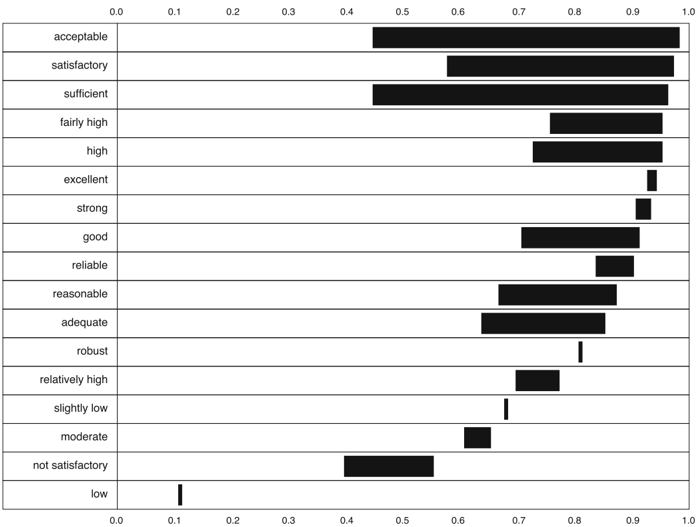
“As an embryo, the Cronbach alpha values are acceptable since, as suggested by Taber (2018), they are between 0.45–0.98.”
MethodInfluentialHow COVID-19 Triggers Our Herding Behavior? Risk Perception, State Anxiety, and Trust
Lee, Y.-C., Wu, W.-L., & Lee, C.-K. (2021) · Frontiers in Public Health · doi:10.3389/fpubh.2021.587439 · Cited by 71
“689, and although it was reasonable (43), we suggest that researchers use these items more carefully.”
BackgroundTourists and AI: A political ideology perspective
van Esch, P., Cui, Y. G., Das, G., Jain, S. P., & Wirtz, J. (2022) · Annals of Tourism Research · doi:10.1016/j.annals.2022.103471 · Cited by 67
The role of diverse leadership styles in teaching to sustain academic excellence at secondary level
Maqbool, S., Zafeer, H. M. I., Zeng, P., Mohammad, T., Khassawneh, O., & Wu, L. (2023) · Frontiers in Psychology · doi:10.3389/fpsyg.2022.1096151 · Cited by 112
“Furthermore, the values were Strategic Leadership (α = 0.85), Culture Leadership (α = 0.82), Instructional Leadership (α = 0.78), and Sustaining Academic Excellence (α = 0.77) which was accurate, as suggested by the literature (Taber, 2018).”
MethodInfluentialMata, M. N., Martins, J. M., & Inácio, P. L. (2023) · Journal of Innovation & Knowledge · doi:10.1016/j.jik.2023.100327 · Cited by 83
“A Cronbach ’ s alpha value of 0.70 or above was the general rule (Taber, 2018).”
InfluentialBrauchli, V., Sticca, F., Edelsbrunner, P. A., von Wyl, A., & Lannen, P. (2023) · Computers in Human Behavior · doi:10.1016/j.chb.2023.108057 · Cited by 95
Juhola, J., Arokoski, J. P., Ervasti, J. M., Kivimäki, M., Vahtera, J., Myllyntausta, S., & Saltychev, M. (2021) · BMJ Open · doi:10.1136/bmjopen-2020-043276 · Cited by 73
Morotti, E., Stacchio, L., Donatiello, L., Roccetti, M., Tarabelli, J., & Marfia, G. (2021) · Virtual Reality · doi:10.1007/s10055-021-00602-6 · Cited by 76
Peng, Y., Ahmad, S. F., Irshad, M., Al‐Razgan, M., Ali, Y. A., & Awwad, E. M. (2023) · Sustainability · doi:10.3390/su152015156 · Cited by 87
Pengembangan E-modul Praktikum Kimia Dasar Menggunakan Aplikasi Canva Design
Puspita, K., Nazar, M., Hanum, L., & Reza, M. D. F. (2021) · Jurnal IPA & Pembelajaran IPA · doi:10.24815/jipi.v5i2.20334 · Cited by 57
Cheung, T. C. T., Graham, L. T., & Schiavon, S. (2022) · Building and Environment · doi:10.1016/j.buildenv.2022.108783 · Cited by 76
Epistemic Beliefs in Science—A Systematic Integration of Evidence From Multiple Studies
Schiefer, J., Edelsbrunner, P. A., Bernholt, A., Kampa, N., & Nehring, A. (2022) · Educational Psychology Review · doi:10.1007/s10648-022-09661-w · Cited by 88
“For formative constructs, high internal consistency is neither desirable nor an appropriate indicator of reliability (Stalder et al., 2021; Taber, 2018).”
BackgroundBowes, S. M., & Tasimi, A. (2022) · Journal of Research in Personality · doi:10.1016/j.jrp.2022.104220 · Cited by 68
Determining dimensions of job satisfaction in healthcare using factor analysis
Karaferis, D., Aletras, V., & Niakas, D. (2022) · BMC Psychology · doi:10.1186/s40359-022-00941-2 · Cited by 76
“Addionnaly, Ursally [33] showed that important differences in the values of Cronbach Alpha are possible due to indirect influences from external factors - respondents’ age, gender, level of study, religiousness, rural/urban living, and survey type of the research subject for the participants to the survey [34, 35].”
BackgroundKovács-Tóth, B., Oláh, B., Szabó, I. K., & Fekete, Z. (2023) · Frontiers in Psychology · doi:10.3389/fpsyg.2023.1161620 · Cited by 82
“Moreover, the low number of items tested may result in a lower Cronbach’s alpha coefficient (Tavakol and Dennick, 2011; Taber, 2018).”
BackgroundAdapting Competitiveness and Gamification to a Digital Platform for Foreign Language Learning
Arce, N. P. H., & Valdivia, A. M. C. (2020) · International Journal of Emerging Technologies in Learning (iJET) · doi:10.3991/ijet.v15i20.16135 · Cited by 104
“It is the mean of the correlations between the variables that are part of the scale and can be related to the variances and correlations of the items [67].”
Backgroundvan Alten, D. C. D., Phielix, C., Janssen, J. J. H. M., & Kester, L. (2020) · Computers in Human Behavior · doi:10.1016/j.chb.2020.106676 · Cited by 80
Development of pre-service chemistry teachers’ technological pedagogical content knowledge
Çetin‐Dindar, A., Boz, Y., Yıldıran, D., & Celep, N. D. (2018) · Chemistry Education Research and Practice · doi:10.1039/c7rp00175d · Cited by 91
Active bilingualism delays the onset of mild cognitive impairment
Calabria, M., Hernández, M., Cattaneo, G., Suades, A., Serra, M., Juncadella, M., Reñé, R., Sala, I., Lleó, A., Ortiz‐Gil, J., et al. (2020) · Neuropsychologia · doi:10.1016/j.neuropsychologia.2020.107528 · Cited by 72
“72 (Taber, 2018), indicating that internal consistency was acceptable (Tavakol & Dennick, 2011) and thus stipulating that the principal component analysis was appropriate for those variables.”
BackgroundCarroll, N., Perreault, M., David, W. L., & Haines, J. (2021) · Public Health Nutrition · doi:10.1017/s1368980021004389 · Cited by 92
“across subscales was reported by 8 tools(25–31,35), with internal consistency considered acceptable to high(42) for”
BackgroundPerception of online feedback and its impact on cognitive and emotional engagement with feedback
Saíz, R. M. M., Espasa, A., Guasch, T., & Melo, M. M. (2022) · Education and Information Technologies · doi:10.1007/s10639-022-10948-2 · Cited by 78
“71 which provides reasonable internal consistency (Taber, 2018).”
BackgroundInfluentialMaake, M. M. S., & Antwi, M. A. (2022) · Agriculture & Food Security · doi:10.1186/s40066-022-00372-7 · Cited by 98
Ngo, T. T. A., Tran, T. T., An, G. K., & Nguyen, P. T. (2024) · IEEE Transactions on Learning Technologies · doi:10.1109/tlt.2024.3383773 · Cited by 56
“The results showed that Cronbach’s alpha values for all the indicators were within an acceptable to good range, ranging from 0.748 to 0.850, indicating a satisfactory level of internal consistency for most of the investigated constructs [81].”
BackgroundInfluentialZaki, R. A., Roffeei, S. N., Hii, Y. L., Yahya, A., Appannan, M., Said, M. A., Wan, N. C., Aghamohammadi, N., Hairi, N. N., Bulgiba, A. M., et al. (2019) · PLoS ONE · doi:10.1371/journal.pone.0212497 · Cited by 78
Rahman, M. S., Karamehić-Muratović, A., Baghbanzadeh, M., Amrin, M., Zafar, S., Rahman, N. N., Shirina, S. U., & Haque, U. (2020) · Transactions of the Royal Society of Tropical Medicine and Hygiene · doi:10.1093/trstmh/traa093 · Cited by 72
Tella, A., Ukwoma, S. C., & Kayode, A. I. (2020) · The Journal of Academic Librarianship · doi:10.1016/j.acalib.2020.102255 · Cited by 70
Esmaili, A., Aghabayk, K., Parishad, N., & Stephens, A. N. (2021) · Accident Analysis & Prevention · doi:10.1016/j.aap.2021.106050 · Cited by 61
Chen, Y., Chang, Y., & Chuang, M.-J. (2021) · Journal of Computer Assisted Learning · doi:10.1111/jcal.12588 · Cited by 72
Ratan, R., Ucha, C. R., Lei, Y. S., Lim, C., Triwibowo, W., Yelon, S. L., Sheahan, A., Lamb, B., Deni, B., & Chen, V. H. H. (2022) · Computers & Education · doi:10.1016/j.compedu.2022.104621 · Cited by 80
Reciprocal Dynamics of Solo-Living and Health Among Older Adults in Contemporary China
Gu, D., Feng, Q., & Yeung, W. J. (2018) · The Journals of Gerontology Series B · doi:10.1093/geronb/gby140 · Cited by 59
Gender and renewable energy integration: The mediating role of green-microfinance
Atahau, A. D. R., Sakti, I. M., Huruta, A. D., & Kim, M. (2021) · Journal of Cleaner Production · doi:10.1016/j.jclepro.2021.128536 · Cited by 70
Yau, A. H. Y., Yeung, M. W. L., & Lee, C. Y. P. (2022) · Studies In Educational Evaluation · doi:10.1016/j.stueduc.2022.101128 · Cited by 66
“If the Cronbach’s Alpha was above 0.7, which is the common standard, the items would be seen as appropriately categorised as a construct (Taber, 2018).”
MethodInfluentialHalonen, V., Uusitalo, V., Levänen, J., Sillman, J., Leppäkoski, L., & Claudelin, A. (2022) · Sustainability · doi:10.3390/su14031439 · Cited by 62
Bećirović, S., Dubravac, V., & Brdarević‐Čeljo, A. (2022) · SAGE Open · doi:10.1177/21582440221078016 · Cited by 95
Zayed, N. M., Rashid, M. M., Darwish, S., Faisal-E-Alam, M., Nitsenko, V. S., & Islam, K. M. A. (2022) · Economies · doi:10.3390/economies10110290 · Cited by 126
Jiang, Q., Chen, Z., Zhang, Z., & Zuo, C. (2023) · Frontiers in Psychiatry · doi:10.3389/fpsyt.2023.1233303 · Cited by 80
“The reliability Cronbach’s α was 0.647, which was not optimal but also surpassed the acceptable level (47).”
BackgroundInfluentialYounis, B. (2024) · Journal of Digital Learning in Teacher Education · doi:10.1080/21532974.2024.2365663 · Cited by 92
“The scale scored a Cronbach’s Alpha of .88, which is an accepted value for the purposes of this study (Taber, 2018).”
Baig, S. A., Abrar, M., Batool, A., Hashim, M., & Shabbir, R. (2020) · Cogent Business & Management · doi:10.1080/23311975.2020.1841525 · Cited by 80
“alpha coefficients, CR estimates, and average variance extracted (AVE) were in acceptable range or above their cutoff values (Churchill, 1979; Hair, Ringle et al., 2013; Hair, Hult et al., 2016; Taber, 2018) confirming the reliability and validity of measurement model.”
BackgroundImpact of Career Planning, Employee Autonomy, and Manager Recognition on Employee Engagement
Lartey, F. M. (2021) · Journal of Human Resource and Sustainability Studies · doi:10.4236/jhrss.2021.92010 · Cited by 106
“70 to consider the level of internal self-consistency of an instrument suitable for the study (Taber, 2018).”
BackgroundInfluentialAdoption of mobile banking at the bottom of the pyramid: an emerging market perspective
Purohit, S., & Arora, R. (2021) · International Journal of Emerging Markets · doi:10.1108/ijoem-07-2020-0821 · Cited by 44
Marzo, R. R., Su, T. T., Ismail, R., Htay, M. N. N., Essar, M. Y., Chauhan, S., Patalinghug, M. E., Biçer, B. K., Respati, T., Fitriyana, S., et al. (2022) · Frontiers in Public Health · doi:10.3389/fpubh.2022.998234 · Cited by 66
“88, suggesting acceptable to good internal consistency (30).”
BackgroundConsumer attitudes toward dairy products from sheep and goats: A cross-continental perspective
Vargas‐Bello‐Pérez, E., Tajonar, K., Foggi, G., Mele, M. L., Simitzis, P., Mavrommatis, A., Tsiplakou, E., Habib, M. R., González-Ronquillo, M., & Toro-Mújica, P. (2022) · Journal of Dairy Science · doi:10.3168/jds.2022-21894 · Cited by 53
“This allowed us to quantify the level of reliability of the new measurement scale built through the extracted dimensions so that the obtained value is considered acceptable (Taber, 2018).”
BackgroundGarcia, M. B., Nadelson, L. S., & Yeh, A. (2023) · International journal of child care and education policy/International journal of child care and education · doi:10.1186/s40723-023-00110-x · Cited by 77
“The Cronbach’s alpha values for the internal consistency of all constructs (attitude = 0.73, perceived usefulness = 0.71, inquiry = 0.81, involvement = 0.87, video engagement = 0.85, and virtual guide = 0.83) were greater than 0.70, indicating acceptable reliability (Taber, 2018).”
BackgroundInfluentialValidation of the Short Version (TLS-15) of the Triangular Love Scale (TLS-45) across 37 Languages
Kowal, M., Sorokowski, P., Dinić, B. M., Pisanski, K., Gjoneska, B., Frederick, D. A., Pfuhl, G., Milfont, T. L., Bode, A., Durán, L. A. A., et al. (2023) · Archives of Sexual Behavior · doi:10.1007/s10508-023-02702-7 · Cited by 81
“…we estimated the expected a posteriori score (EAP) as a measure of reliability, difficulty, and discrimination parameters for all items, and the total information function for all subscales and total TLS-45 score, with the minimal acceptable value of 0.70 indicating good reliability (Taber, 2018).”
BackgroundInfluentialChien, N. B., & Thanh, N. N. (2022) · Administrative Sciences · doi:10.3390/admsci12010035 · Cited by 53
Shah, K., Halder, S., & Haider, S. S. (2021) · Heliyon · doi:10.1016/j.heliyon.2021.e05976 · Cited by 71
“89 indicating a reliable tool to assess and conduct this study [16].”
MethodPEDCARE: validation of a mobile application on diabetic foot self-care
Marques, A. D. B., Moreira, T. M. M., de Carvalho, R. E. F. L., Chaves, E. M. C., de Oliveira, S. K. P., Felipe, G. F., & Silveira, J. (2021) · Revista Brasileira de Enfermagem · doi:10.1590/0034-7167-2020-0856 · Cited by 65
“95 a very strong correlation, suggesting redundancy between items(14).”
BackgroundThe significance of mentorship in supporting the career advancement of women in the public sector
Mcilongo, M., & Strydom, K. (2021) · Heliyon · doi:10.1016/j.heliyon.2021.e07321 · Cited by 80
“…ANOVA and the Chi-square test, were employed to determine the statistical significant relationships among variables – in this case, the relationship of each mentorship dimension with career advancement – and confirm whether a hypothesis had been supported or rejected (Conroy, 2012; Taber, 2017).”
BackgroundMethodResultInfluentialJanschitz, G., & Penker, M. (2022) · Bulletin of Sociological Methodology/Bulletin de Méthodologie Sociologique · doi:10.1177/07591063211061760 · Cited by 95
Determinants of consumers' adoption intention for blockchain technology in E-commerce
Esfahbodi, A., Pang, G., & Peng, L. (2022) · Journal of Digital Economy · doi:10.1016/j.jdec.2022.11.001 · Cited by 97
The Landscape of Research on Prior Knowledge and Learning: a Bibliometric Analysis
Bittermann, A., McNamara, D. S., Simonsmeier, B. A., & Schneider, M. (2023) · Educational Psychology Review · doi:10.1007/s10648-023-09775-9 · Cited by 88
“It has been shown that a low internal consistency (i.e., a low Cronbach’s alpha) of knowledge tests can naturally arise from the heterogeneous nature of the construct and does not necessarily indicate high amounts of random measurement error (Stadler et al., 2021; Taber, 2017).”
BackgroundSu, Y.-S., Suen, H.-Y., & Hung, K.-E. (2021) · Journal of Real-Time Image Processing · doi:10.1007/s11554-021-01071-5 · Cited by 59
Burnout and Well-Being Among Medical Professionals in China: A National Cross-Sectional Study
Xiao, Y., Dong, D., Zhang, H., Chen, P., Li, X., Tian, Z., Jing, Z., & Zhang, S. (2022) · Frontiers in Public Health · doi:10.3389/fpubh.2021.761706 · Cited by 73
“7 indicating a high level of internal consistency (28).”
BackgroundQuashie, P. K., Mutungi, J. K., Dzabeng, F., Oduro‐Mensah, D., Opurum, P. C., Tapela, K., Udoakang, A. J., WACCBIP COVID-19 Team, Asante, I. A., Paemka, L., et al. (2021) · Wellcome Open Research · doi:10.12688/wellcomeopenres.16890.1 · Cited by 50
Puthukulam, G., Ravikumar, A., Sharma, R. V. K., & Meesaala, K. M. (2021) · Universal Journal of Accounting and Finance · doi:10.13189/ujaf.2021.090527 · Cited by 51
“S [21], Cronbach’s alpha is the most used to check scale reliability or internal consistency.”
MethodThe Impacts of Housing Characteristics and Built-Environment Features on Mental Health
Kan, Z., Kwan, M., Ng, M. K., & Tieben, H. (2022) · International Journal of Environmental Research and Public Health · doi:10.3390/ijerph19095143 · Cited by 61
“65 for the built-environment variables, which is considered acceptable internal reliability [47,48].”
BackgroundHan, S., Li, Y., & Haider, S. A. (2022) · Frontiers in Psychology · doi:10.3389/fpsyg.2022.945062 · Cited by 106
“Cronbach’s alpha values ranged from 0.563 to 0.882, indicating good reliability, according to Taber (2018).”
MethodInfluentialvan Geel, M. J. M., Keuning, T., & Safar, I. (2022) · Teaching and Teacher Education Leadership and Professional Development · doi:10.1016/j.tatelp.2022.100007 · Cited by 118
Supporting Future Teachers to Promote Computational Thinking Skills in Teaching STEM—A Case Study
Tripon, C. (2022) · Sustainability · doi:10.3390/su141912663 · Cited by 65
“Within the single constructed scale of the questionnaire, Cronbach’s Alpha was calculated to indicate scale reliability, in the sense of the equivalence of the items [33].”
MethodConcerning Trends in Likert Scale Usage in Human-robot Interaction: Towards Improving Best Practices
Schrum, M., Ghuy, M., Hedlund-Botti, E., Natarajan, M., Johnson, M., & Gombolay, M. (2023) · ACM Transactions on Human-Robot Interaction · doi:10.1145/3572784 · Cited by 71
“A Cronbach’s alpha of 0.7 is typically considered an acceptable level for inter-item reliability [115].”
BackgroundInfluentialChalutz Ben-Gal, H. (2023) · Frontiers in Public Health · doi:10.3389/fpubh.2022.931225 · Cited by 50
“Reliability was measured based on the Cronbach’s alpha coefficients of the constructs (2, 56).”
BackgroundMethodThe Social Media Use Scale: Development and Validation
Tuck, A. B., & Thompson, R. J. (2023) · Assessment · doi:10.1177/10731911231173080 · Cited by 99
“Item responding was deemed reliable if Cronbach’s alpha was greater than .70 (Taber, 2018).”
MethodFritz, L., Hansmann, R., Dalimier, B., & Binder, C. R. (2023) · Sustainability Science · doi:10.1007/s11625-023-01348-7 · Cited by 71
Martinez, A. P., Teklu, S., Tahir, P., & Garcia, M. E. (2023) · JAMA Network Open · doi:10.1001/jamanetworkopen.2023.36529 · Cited by 62
Ramnarain, U. D., & Ramaila, S. M. (2018) · Chemistry Education Research and Practice · doi:10.1039/c7rp00110j · Cited by 69
Yan, Y. K., & Subramaniam, R. (2018) · Chemistry Education Research and Practice · doi:10.1039/c7rp00143f · Cited by 75
Penn, M., & Ramnarain, U. D. (2019) · Chemistry Education Research and Practice · doi:10.1039/c9rp00014c · Cited by 81
Jorge, E., Lopez‐Valeiras, E., & Sánchez, M. B. G. (2020) · Journal of Cleaner Production · doi:10.1016/j.jclepro.2020.120601 · Cited by 65
Han, J., Jia, P., Huang, Y., Gao, B., Yu, B., Yang, S., Yu, J., Xiong, J., Liu, C., Xie, T., et al. (2020) · BMC Public Health · doi:10.1186/s12889-020-08705-6 · Cited by 53
“6 or greater was considered acceptable [54, 55].”
Use of BIM technology and impact on productivity in construction project management
Mésároš, P., Mandičák, T., & Behúnová, A. (2020) · Wireless Networks · doi:10.1007/s11276-020-02302-6 · Cited by 50
Mukuka, A., Mutarutinya, V., & Balimuttajjo, S. (2021) · Journal on Mathematics Education · doi:10.22342/jme.12.1.12508.73-92 · Cited by 86
“Cronbach’s alpha was computed for each sub-category as it is considered more valuable to measure the internal consistency of questionnaire items for a single construct rather than measuring different constructs at once (Adams & Wieman, 2010; Taber, 2018).”
MethodSuicidal ideation among Lebanese adults: scale validation and correlates
Zakhour, M., Haddad, C., Sacre, H., Fares, K., Akel, M., Obeïd, S., Salameh, P., & Hallit, S. R. (2021) · BMC Psychiatry · doi:10.1186/s12888-021-03111-7 · Cited by 64
Clercq, D. D., Kaciak, E., & Thongpapanl, N. (2021) · International Small Business Journal Researching Entrepreneurship · doi:10.1177/02662426211011405 · Cited by 74
Loneliness unlocked: Associations with smartphone use and personality
MacDonald, K. B., & Schermer, J. A. (2021) · Acta Psychologica · doi:10.1016/j.actpsy.2021.103454 · Cited by 69
“58, suggesting that the scale had a low but adequate internal consistency value (Taber, 2018).”
BackgroundStudents’ Acceptance of Discord as an Alternative Online Learning Media
Arifianto, M. L., & Izzudin, I. F. (2021) · International Journal of Emerging Technologies in Learning (iJET) · doi:10.3991/ijet.v16i20.22917 · Cited by 88
Kim, S., Filimonau, V., & Dickinson, J. E. (2021) · Journal of Travel Research · doi:10.1177/00472875211064636 · Cited by 64
“Cronbach’s alpha was not tested because the set of items in the questionnaire did not employ multiple-indicator measures of the same latent variable that was only one variable (Taber 2018).”
MethodGrande, R. A. N., Berdida, D. J. E., Cruz, J. P., Cometa‐Manalo, R. J., Balace, A. B., & Ramirez, S. H. (2022) · Nursing Forum · doi:10.1111/nuf.12698 · Cited by 64
Virtual shopping: segmenting consumer attitudes towards augmented reality as a shopping tool
Romano, B., Sands, S., & Pallant, J. I. (2022) · International Journal of Retail & Distribution Management · doi:10.1108/ijrdm-10-2021-0493 · Cited by 64
Santoso, H. B., Schrepp, M., Hasani, L. M., Fitriansyah, R., & Setyanto, A. (2022) · Heliyon · doi:10.1016/j.heliyon.2022.e11748 · Cited by 98
“Cronbach's alpha with a value (cid:2) 0.80 is considered fairly high and adequate (Taber, 2016), and the value for each scale is shown in Table 9.”
MethodInfluentialHong Kong’s new wave of migration: socio-political factors of individuals’ intention to emigrate
Chan, K. W. A. 陳., Cheung, L. T. O., Chong, E. K., Lee, M. Y. K., & Wong, M. Y. H. (2022) · Comparative Migration Studies · doi:10.1186/s40878-022-00323-y · Cited by 67
Validation of the Italian version of the Neuroception of Psychological Safety Scale (NPSS)
Poli, A., & Miccoli, M. (2024) · Heliyon · doi:10.1016/j.heliyon.2024.e27625 · Cited by 55
“Regarding Cronbach ’ s alpha ( α , [49]) research has shown that a very high index (i.e., > 0.95) may be inappropriate when constructing a test [50], although several reports exist on the adequate values, which range from 0.70 to 0.95 [51 – 53].”
BackgroundInfluentialWahn, B., Schmitz, L., Gerster, F. N., & Weiss, M. (2023) · PLOS ONE · doi:10.1371/journal.pone.0286102 · Cited by 49
Nejati, B., Fan, C.-W., Boone, W. J., Griffiths, M. D., Lin, C., & Pakpour, A. H. (2020) · Evaluation & the Health Professions · doi:10.1177/0163278720965688 · Cited by 51
“Cronbach’s a was conducted using Cronbach’s a; a value 0.7 is acceptable (Taber, 2018).”
MethodInfluential
Metadata
- Authors
- Taber, K. S.
- Affiliations
- University of Cambridge (GB)
- Corresponding author
- Taber, Keith S.
- ORCID
- Taber, Keith S.
- Venue
- Research in Science Education
- Published
- 2017-06-07
- Volume
- 48
- Issue
- 6
- Pages
- 1273-1296
- ISSN
- 0157-244X (ISSN-L)
- 1573-1898
- OpenAlex
- W2623703952
- Semantic Scholar
- ccc38dd46fc6ed6d2c6c6e8b1613d6f74a0f7df1
- Cited by
- 10,679
- References
- 37
- Citations by year
- 2026: 1432 · 2025: 1887 · 2024: 1845 · 2023: 1708 · 2022: 1532 · 2021: 1330 · 2020: 682 · 2019: 199 · 2018: 53 · 2017: 6
- FWCI
- 227.70
- Type
- journal article
- Language
- en
- Open access
- hybrid
- doi.org
- Licence
- cc-by
- creativecommons.org/licenses/by/4.0 (tdm)
- Locations
- Research in Science Education (publishedVersion, cc-by)
- Apollo (University of Cambridge) (submittedVersion, cc-by)
- Apollo (cc-by)
- Funders
- University of Cambridge
- Topics
- Social Sciences › Decision Sciences › Management Science and Operations Research › Psychometric Methodologies and Testing
- Social Sciences › Education › Science Education and Pedagogy
- Health Sciences › Nursing › Research and Theory › Health Education and Validation
- Keywords
- Cronbach's alpha, research instrument development, reliability statistics, scale development, reporting quality, unidimensionality, science education research
About these checks
Registry, retraction, Cites and statistics results are computed, not judged, with one exception: a printed reference that no index lists is read once by a model before it counts as a citation error. Claims are extracted by a model and kept only when their quote appears verbatim in the text; each cited source is then checked, with a model’s help, for whether it says what the claim relies on. Those verdicts can be wrong — read the claim’s quote and the cited source before relying on one.
Statistics and arithmetic are recomputed, not judged.
Confidence bands are shown only for fields calibrated on our annotated test set. None is calibrated yet, so no band is shown.
What counts as a claim ›How we measure confidence ›How we check this ›
Are you an author, or do you see a problem with this page? Request a review
Data sources
Bibliographic data: Semantic Scholar, OpenAlex, Crossref.
Contains information from the Semantic Scholar Academic Graph Datasets, made available under the ODC Attribution License (ODC-BY 1.0).
Semantic Scholar’s data is described in: Kinney, R., et al. (2023). The Semantic Scholar Open Data Platform. arXiv:2301.10140.
