

Towards investigating the validity of measurement of self-regulated learning based on trace data
Open accessThe DOI matches its Crossref record; 53 of the 54 references it cites were found in a registry or an index.
Abstract
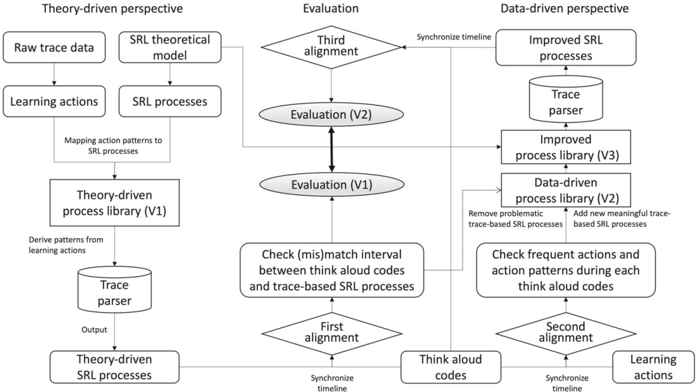
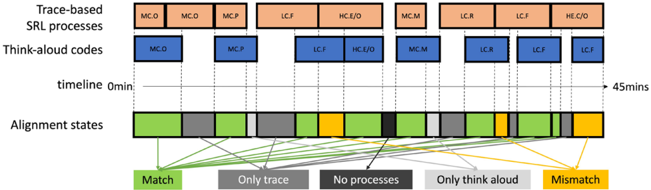
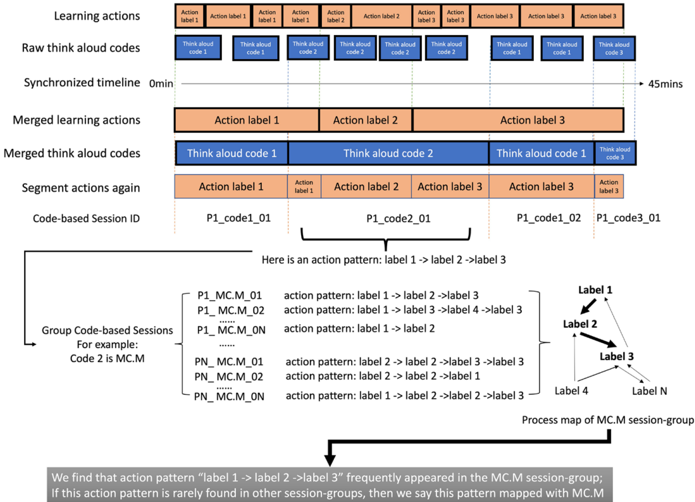
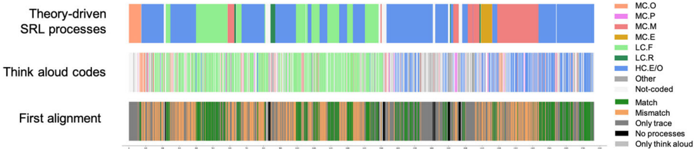
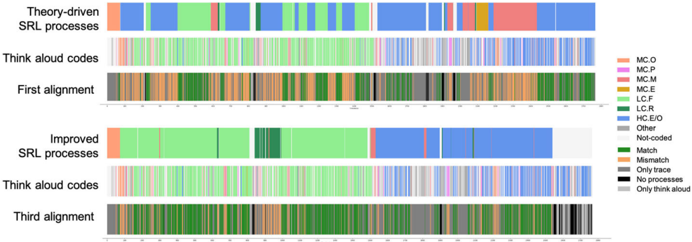
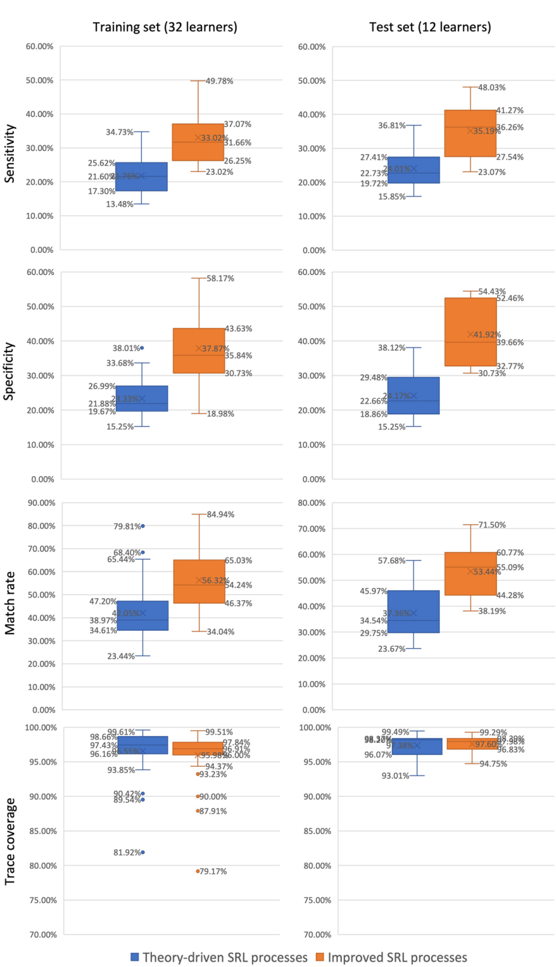
Contemporary research that looks at self-regulated learning (SRL) as processes of learning events derived from trace data has attracted increasing interest over the past decade. However, limited research has been conducted that looks into the validity of trace-based measurement protocols. In order to fill this gap in the literature, we propose a novel validation approach that combines theory-driven and data-driven perspectives to increase the validity of interpretations of SRL processes extracted from trace-data. The main contribution of this approach consists of three alignments between trace data and think aloud data to improve measurement validity. In addition, we define the match rate between SRL processes extracted from trace data and think aloud as a quantitative indicator together with other three indicators (sensitivity, specificity and trace coverage), to evaluate the “degree” of validity. We tested this validation approach in a laboratory study that involved 44 learners who learned individually about the topic of artificial intelligence in education with the use of a technology-enhanced learning environment for 45 minutes. Following this new validation approach, we achieved an improved match rate between SRL processes extracted from trace-data and think aloud data (training set: 54.24%; testing set: 55.09%) compared to the match rate before applying the validation approach (training set: 38.97%; test set: 34.54%). By considering think aloud data as “reference point”, this improvement of the match rate quantified the extent to which validity can be improved by using our validation approach. In conclusion, the novel validation approach presented in this study used both empirical evidence from think aloud data and rationale from our theoretical framework of SRL, which now, allows testing and improvement of the validity of trace-based SRL measurements.
Overview
The claims and statistics of this paper haven’t been checked yet.
Free: it reads the open-access text and checks the first 5 claims that cite a source we can check. Create a free account to check every claim.
Integrity signals
Registry
Cites
Statistics
Figures
Verification
Claims the paper makes
The claims and statistics of this paper haven’t been checked yet.
Free: it reads the open-access text and checks the first 5 claims that cite a source we can check. Create a free account to check every claim.
Claims other papers make about this one
Each is checked against this paper’s own text: does it say what the citing paper says it does?
The cited source says what the claim attributes to it.
In the citing paper
“Coding was performed by experts using theory-driven guidelines and a tracing protocol adapted from validated methods for measuring SRL via trace data (Fan et al., 2022; Rakovic et al., 2022; Li et al., 2023; van der Graaf et al., 2023a; Lim et al., 2023).”
From Towards reliable generative AI-driven scaffolding: Reducing hallucinations and enhancing quality in self-regulated learning support (2026) · cites this paper as Fan et al., 2022
The cited source says what the claim attributes to it.
In the citing paper
“We measured SRL processes via trace data with Fan et al.'s (2022) approach, using an SRL process library (see Appendix A) that parsed raw data into sequences of learning actions representing SRL activities.”
From How do students regulate their learning with a genAI chatbot? (2026) · cites this paper as Fan et al.'s (2022)
In the citing paper
“Specifically, AI can detect the SRL processes automatically in the separate data streams and at the same time determine the synchronicity between the different layers, such as the work in FLoRa (Fan et al., 2022).”
From Measuring self-regulated learning and the role of AI: Five years of research using multimodal multichannel data (2023) · cites this paper as Fan et al., 2022
In the citing paper
“The flora project validated the algorithms by first building a theory-driven process library and then training a multimodal data-driven process library on top of it (Fan et al., 2022).”
From Measuring self-regulated learning and the role of AI: Five years of research using multimodal multichannel data (2023) · cites this paper as Fan et al., 2022
Self-check
Percentages, sums and reported differences re-computed from the paper’s own numbers.
The self-check needs the paper’s full text.
Citations
Cites
Cohen, J. (1992) · Psychological Bulletin · doi:10.1037//0033-2909.112.1.155 · Cited by 8,771
The Role of Goal Orientation in Self-Regulated Learning
Pintrich, P. R. (2000) · Handbook of Self-Regulation · doi:10.1016/b978-012109890-2/50043-3 · Cited by 5,173
A Conceptual Framework for Assessing Motivation and Self-Regulated Learning in College Students
Pintrich, P. R. (2004) · Educational Psychology Review · doi:10.1007/s10648-004-0006-x · Cited by 3,269 · cited 1×
“To date, researchers have proposed several theoretical models to describe SRL processes (e.g., Winne and Hadwin (1998), Pintrich (2004), and Zimmerman (2000)).”
BackgroundMeasuring Self-Regulated Learning
Winne, P. H., & Perry, N. E. (2000) · Handbook of Self-Regulation · doi:10.1016/b978-012109890-2/50045-7 · Cited by 1,383
Kizilcec, R. F., Pérez-Sanagustín, M., & Maldonado, J. J. (2017) · Computers & Education · doi:10.1016/j.compedu.2016.10.001 · Cited by 1,003 · cited 2×
“Building on the previous literature (Siadaty et al., 2016b, c; Saint et al., 2020a, b; Kizilcec et al., 2017), we conducted multiple rounds of in-depth discussion to construct the theorydriven process library that is based on our theoretical framework.”
BackgroundDoes adaptive scaffolding facilitate students’ ability to regulate their learning with hypermedia?
Azevedo, R., Cromley, J. G., & Seibert, D. (2004) · Contemporary Educational Psychology · doi:10.1016/j.cedpsych.2003.09.002 · Cited by 473 · cited 1×
“…scheme operationalises five macro-level SRL processes such as planning, monitoring and strategy use, which are further subdivided into 35 micro-level SRL processes such as judgement of learning, self-questioning and content evaluation, as per (Azevedo et al., 2004, 2005; Greene et al., 2008).”
MethodToward Meta-cognitive Tutoring: A Model of Help Seeking with a Cognitive Tutor
Aleven, V., McLaren, B., Roll, I., & Koedinger, K. (2006) · International Journal of Artificial Intelligence in Education · doi:10.3233/irg-2006-16(2)02 · Cited by 406
Improving Measurements of Self-Regulated Learning
WINNE, P. H. (2010) · Educational Psychologist · doi:10.1080/00461520.2010.517150 · Cited by 405 · cited 12×
“Once the trace-based measurement protocols are validated, they could and should be combined with think aloud protocols to measure and describe “a fuller picture” of SRL (Winne, 2010).”
BackgroundMethodInfluentialMotivated Strategies for Learning Questionnaire
Pintrich, P. R., & De Groot, E. V. (2012) · PsycTESTS Dataset · doi:10.1037/t09161-000 · Cited by 399
The Experience of Agency: Feelings, Judgments, and Responsibility
Haggard, P., & Tsakiris, M. (2009) · Current Directions in Psychological Science · doi:10.1111/j.1467-8721.2009.01644.x · Cited by 367 · cited 1×
“In these models, learners are commonly considered as agents (Haggard & Tsakiris, 2009) who decide which learning processes they should engage in to accomplish their goals for learning (Dunlosky & Thiede, 2013).”
Background
Research works printed but not linked: 6
- 7. Azevedo, R., & Witherspoon, A. (2009). Self-regulated learning with hypermedia. In Handbook of metacog- nition in education (pp. 331-351). Routledge.
- 13. Biswas, G., Segedy, J. R., & Kinnebrew, J. S. (2014). "A Combined Theory-and Data-Driven Approach for Interpreting Learners' Metacognitive Behaviors in Open-Ended Tutoring Environments. Design recommendations for intelligent tutoring systems, 2, 135.
- 17. Fan, Y., Lim, L., van der Graaf, J., Kilgour, J., Engelmann, K., Bannert, M., Molenaar, I., Moore, J., & Gase- vic, D. (2020). Measuring Micro-Level Self-Regulated Learning Processes with Enhanced Log Data and Eye Tracking Data.pdf. In Companion Proceedings 10th International Conference on Learning Analytics & Knowledge (LAK20) (pp. 433-436).
- 21. Günther, C. W., & Rozinat, A. (2012). Disco: discover your processes. BPM (Demos), 940, 40-44. Publisher: Citeseer.
- 56. Winne, P. H., & Hadwin, A. F. (2007). The weave of motivation and self-regulated learning. In Motivation and Self-Regulated Learning. Routledge. Num Pages: 18.
- 59. Zimmerman, B. J. (2000). Chapter 2 -attaining self-regulation: a social cognitive perspective. In M. Boekaerts, P. R. Pintrich, & M. Zeidner (Eds.) Handbook of Self-Regulation (pp. 13-39). San Diego: Academic Press.
Cited by
Fan, Y., Tang, L., Le, H., Shen, K., Tan, S., Zhao, Y., Shen, Y., Li, X., & Gašević, D. (2025) · British Journal of Educational Technology · doi:10.1111/bjet.13544 · Cited by 805
Self-citationPromises and challenges of generative artificial intelligence for human learning
Yan, L., Greiff, S., Teuber, Z., & Gašević, D. (2024) · Nature Human Behaviour · doi:10.1038/s41562-024-02004-5 · Cited by 499
“…reflection, and integrating these with processcentred methodologies (for example, modelling selfregulated learning from learners’ digital traces 55 ) from the field of learning analytics 56,57 , learning scientists and researchers can develop generative agents capable of autonomously…”
Self-citationTowards hybrid human‐AI learning technologies
Molenaar, I. (2022) · European Journal of Education · doi:10.1111/ejed.12527 · Cited by 348
Self-citationStadler, M., Bannert, M., & Sailer, M. (2024) · Computers in Human Behavior · doi:10.1016/j.chb.2024.108386 · Cited by 262
Self-citationMolenaar, I., Mooij, S. D., Azevedo, R., Bannert, M., Järvelä, S., & Gašević, D. (2023) · Computers in Human Behavior · doi:10.1016/j.chb.2022.107540 · Cited by 217
Self-citationEffects of real-time analytics-based personalized scaffolds on students’ self-regulated learning
Lim, L., Bannert, M., van der Graaf, J., Singh, S., Fan, Y., Surendrannair, S., Rakovic, M., Molenaar, I., Moore, J., & Gašević, D. (2023) · Computers in Human Behavior · doi:10.1016/j.chb.2022.107547 · Cited by 198
Self-citationChen, A., Xiang, M., Zhou, J., Jia, J., Shang, J., Li, X., Gašević, D., & Fan, Y. (2025) · Computers & Education · doi:10.1016/j.compedu.2024.105198 · Cited by 115
Self-citationYan, L., Martinez-Maldonado, R., & Gasevic, D. (2024) · Proceedings of the 14th Learning Analytics and Knowledge Conference · doi:10.1145/3636555.3636856 · Cited by 102
“This ensures that the essence of learning remains deeply rooted in human-centric principles.”
BackgroundImproving the measurement of self-regulated learning using multi-channel data
Fan, Y., Lim, L., van der Graaf, J., Kilgour, J., Raković, M., Moore, J., Molenaar, I., Bannert, M., & Gašević, D. (2022) · Metacognition and Learning · doi:10.1007/s11409-022-09304-z · Cited by 69
“Therefore, in this study, we followed a validation approach that combines theory-driven and data-driven perspectives to ensure the validity of interpretations of SRL processes extracted from trace-data (Fan et al., 2022).”
BackgroundMethodInfluentialSelf-citationHe, S., Epp, C. D., Chen, F., & Cui, Y. D. (2023) · Computers in Human Behavior · doi:10.1016/j.chb.2023.108061 · Cited by 84
The End is the Beginning is the End: The closed-loop learning analytics framework
Sailer, M., Ninaus, M., Huber, S. E., Bauer, E., & Greiff, S. (2024) · Computers in Human Behavior · doi:10.1016/j.chb.2024.108305 · Cited by 53
Alhazbi, S., Al-Ali, A., Tabassum, A., Al-Ali, A. K., Al‐Emadi, A., Khattab, T. M., & Hasan, M. A. (2024) · Journal of Computer Assisted Learning · doi:10.1111/jcal.12982 · Cited by 80
Fan, Y., Rakovic, M., van der Graaf, J., Lim, L., Singh, S., Moore, J., Molenaar, I., Bannert, M., & Gašević, D. (2023) · Journal of Computer Assisted Learning · doi:10.1111/jcal.12801 · Cited by 59
Self-citationHow to design and evaluate personalized scaffolds for self-regulated learning
van der Graaf, J., Raković, M., Fan, Y., Lim, L., Singh, S., Bannert, M., Gašević, D., & Molenaar, I. (2023) · Metacognition and Learning · doi:10.1007/s11409-023-09361-y · Cited by 45
“We proposed detecting SRL processes in a fine-grained manner during learning to personalize scaffolds (Fan et al., 2022).”
BackgroundMethodInfluentialSelf-citationHow do students learn with real-time personalized scaffolds?
Lim, L., Bannert, M., van der Graaf, J., Fan, Y., Rakovic, M., Singh, S., Molenaar, I., & Gašević, D. (2024) · British Journal of Educational Technology · doi:10.1111/bjet.13414 · Cited by 66
Self-citationde Mooij, S., Lämsä, J., Lim, L., Aksela, O., Athavale, S., Bistolfi, I., Jin, F., Li, T., Azevedo, R., Bannert, M., et al. (2025) · Educational Psychology Review · doi:10.1007/s10648-025-10028-0 · Cited by 46
“By building on laboratory studies from Fan et al. (2022, 2023) using an integrated approach to align think-aloud and trace data with higher education students to diagnose metacognitive and cognitive processes, Lämsä et al. (2025) successfully applied a trace-based engine to reveal cognitive and…”
Self-citationAnalytics of self-regulated learning scaffolding: effects on learning processes
Li, T., Fan, Y., Tan, Y., Wang, Y., Singh, S., Li, X., Raković, M., van der Graaf, J., Lim, L., Yang, B., et al. (2023) · Frontiers in Psychology · doi:10.3389/fpsyg.2023.1206696 · Cited by 43
“Once collected, the data were processed following the trace parser, grounded theoretically in Bannert’s self-regulated hypermedia learning framework (Bannert, 2007) and adopted in preceding studies (Fan et al., 2022a; Srivastava et al., 2022).”
BackgroundMethodInfluentialSelf-citationMeasuring secondary education students' self-regulated learning processes with digital trace data
Lämsä, J., de Mooij, S. M. M., Aksela, O., Athavale, S., Bistolfi, I., Azevedo, R., Bannert, M., Gašević, D., Molenaar, I., & Järvelä, S. (2025) · Learning and Individual Differences · doi:10.1016/j.lindif.2024.102625 · Cited by 46
Self-citationQian, K., Liu, S., Li, T., Raković, M., Li, X., Guan, R., Molenaar, I., Nawaz, S., Swiecki, Z., Yan, L., et al. (2026) · Computers & Education · doi:10.1016/j.compedu.2025.105448 · Cited by 39
Self-citationAksela, O., Lämsä, J., & Järvelä, S. (2024) · Technology Knowledge and Learning · doi:10.1007/s10758-024-09789-4 · Cited by 40
“The raw trace data were parsed by implementing an existing, theory-based SRL process library (Fan et al., 2022).”
InfluentialFLoRA Engine: Using Analytics to Measure and Facilitate Learners’ Own Regulation Activities
Li, X., Fan, Y., Li, T., Raković, M., Singh, S., van der Graaf, J., Lim, L., Moore, J. D., Molenaar, I., Bannert, M., et al. (2025) · Journal of Learning Analytics · doi:10.18608/jla.2025.8349 · Cited by 34
Self-citationBaker, R. S., Richey, J. E., Zhang, J., Karumbaiah, S., Andres-Bray, J. M. L., Nguyen, H. A., Andres, J. M. A. L., & McLaren, B. M. (2024) · Instructional Science · doi:10.1007/s11251-024-09679-3 · Cited by 38
“By applying automated detection of disengaged behaviors and other key processes such as self-regulated learning (Fan et al., 2022), we can obtain a set of measures that can be used as mediators to investigate the differences in the effectiveness of games between groups.”
Personalizing simulation-based learning in higher education
Bauer, E., Heitzmann, N., Bannert, M., Chernikova, O., Fischer, M. R., Frenzel, A. C., Gartmeier, M., Hofer, S. I., Holzberger, D., Kasneci, E., et al. (2025) · Learning and Individual Differences · doi:10.1016/j.lindif.2025.102746 · Cited by 33
Self-citationFernandez, J., & Guilbert, J. (2024) · Metacognition and Learning · doi:10.1007/s11409-024-09398-7 · Cited by 33
“Thus, we argue that the recent sig - nificant development of research into the measurement of self-regulation skills (Fan et al., 2023; Fan, Lim Fan et al., 2022b; Fan, van der Graaf Fan et al., 2022b; Li et al., 2023; Lim et al., 2021, 2023 ; Raković et al., 2022, 2023; van der Graaf et al., 2023…”
InfluentialSelf-regulated Learning in the Digitally Enhanced Science Classroom: Toward an Early Warning System
Kubsch, M., Strauß, S., Grimm, A., Gombert, S., Drachsler, H., Neumann, K., & Rummel, N. (2025) · Educational Psychology Review · doi:10.1007/s10648-025-10011-9 · Cited by 28
“…behavioral traces from the learning environment requires a careful mapping of theoretically relevant constructs and patterns in the trace-data (Fan et al., 2022; Saint et al., 2020), especially when the goal is to achieve psychometrically valid measurements (for an example see Landers et al.,…”
FLoRA: An advanced ai-powered engine to facilitate hybrid human-ai regulated learning
Li, X., Li, T., Yan, L., Li, Y., Zhao, L., Raković, M., Molenaar, I., Gašević, D., & Fan, Y. (2026) · Computers & Education · doi:10.1016/j.compedu.2025.105527 · Cited by 20
Self-citationUnderstanding validity criteria in technology-enhanced learning: A systematic literature review
van Haastrecht, M., Haas, M., Brinkhuis, M. J. S., & Spruit, M. R. (2024) · Computers & Education · doi:10.1016/j.compedu.2024.105128 · Cited by 25
Bernacki, M. L. (2025) · Journal of Educational Psychology · doi:10.1037/edu0000933 · Cited by 27
Learning analytics and assessment: Emerging research trends, promises and future opportunities
Raković, M., Gašević, D., Hassan, S., Ruipérez‐Valiente, J. A., Aljohani, N. R., & Milligan, S. (2023) · British Journal of Educational Technology · doi:10.1111/bjet.13301 · Cited by 28
Self-citationLi, T., Yan, L., Iqbal, S., Srivastava, N., Singh, S., Raković, M., Swiecki, Z., Tsai, Y., Gašević, D., Fan, Y., et al. (2025) · Computers and Education Artificial Intelligence · doi:10.1016/j.caeai.2025.100410 · Cited by 32
Self-citationMerikko, J., & Kivimäki, V. (2022) · Frontiers in Education · doi:10.3389/feduc.2022.1010255 · Cited by 26
“Developing such a technology requires collecting and analyzing data about a learner’s self-regulated learning behavior (Lim et al., 2021; Fan et al., 2022a,b) and using the generated insights to provide personalized feedback for the learner (Pardo et al., 2019, 2022).”
BackgroundBoulahmel, A., Djelil, F., & Smits, G. (2025) · Technology Knowledge and Learning · doi:10.1007/s10758-025-09816-y · Cited by 23
“Fan et al. (2021, 2022c) used the FOMM algorithm to detect learning tactics from temporally ordered sequences of learning actions in learning sessions, based on which a clustering is performed.”
InfluentialSelf-regulated Learning Processes in Secondary Education: A Network Analysis of Trace-based Measures
Cheng, Y., Guan, R., Li, T., Raković, M., Li, X., Fan, Y., Jin, F. J.-Y., Tsai, Y., Gašević, D., & Swiecki, Z. (2025) · International Conference on Learning Analytics and Knowledge (LAK) · doi:10.1145/3706468.3706502 · Cited by 25
Self-citationHuang, L., Doleck, T., Chen, B., Huang, X., Tan, C., Lajoie, S. P., & Wang, M. (2023) · Education and Information Technologies · doi:10.1007/s10639-023-11804-7 · Cited by 22
“The studies by Fan and his colleagues (Fan et al., 2022a, b) used eye-tracking data to improve the granularity and validity of log-based SRL measurement.”
BackgroundMethodLi, T., Fan, Y., Srivastava, N., Zeng, Z., Li, X., Khosravi, H., Tsai, Y., Swiecki, Z., & Gašević, D. (2024) · International Conference on Learning Analytics and Knowledge (LAK) · doi:10.1145/3636555.3636900 · Cited by 24
“Although various conceptual frameworks of SRL exist, they commonly incorporate a macro-level cyclical process consisting of forethought, performance, and reflection phases [15, 49].”
BackgroundMethodSelf-citationTao, L., Song, Y., & Fu, J. (2025) · Computers & Education · doi:10.1016/j.compedu.2025.105515 · Cited by 20
Osakwe, I., Chen, G., Fan, Y., Raković, M., Singh, S., Lim, L., van der Graaf, J., Moore, J. D., Molenaar, I., Bannert, M., et al. (2024) · British Journal of Educational Technology · doi:10.1111/bjet.13429 · Cited by 20
“The study uses trace data generated while learners interact with a digital learning environment (Fan et al., 2022).”
BackgroundMethodSelf-citationLin, C.-H., Kuo, B., & Chang, F. T. Y. (2025) · Educational Psychology · doi:10.1080/01443410.2025.2561028 · Cited by 19
“More targeted approaches—such as administering pre-and post-intervention SRL questionnaires (Kuo & Chang, 2025) or analysing trace data to monitor behavioural changes in SRL (Fan et al., 2022)—should be adopted.”
Reinforcement learning for automatic detection of effective strategies for self-regulated learning
Osakwe, I., Chen, G., Fan, Y., Raković, M., Li, X., Singh, S., Molenaar, I., Bannert, M., & Gašević, D. (2023) · Computers and Education Artificial Intelligence · doi:10.1016/j.caeai.2023.100181 · Cited by 24
Self-citationCTAM4SRL: A Consolidated Temporal Analytic Method for Analysis of Self-Regulated Learning
Nath, D., Gašević, D., Fan, Y., & Rajendran, R. (2024) · International Conference on Learning Analytics and Knowledge (LAK) · doi:10.1145/3636555.3636926 · Cited by 18
“Intended towards unlocking SRL from this temporal standpoint, several trace data-based measurement frameworks [17, 43, 45] and methodological approaches [40] have come into the fray.”
BackgroundMethodInfluentialSelf-citationHuang, L., Zheng, J., Lajoie, S. P., Chen, Y., Hmelo‐Silver, C. E., & Wang, M. (2023) · Education and Information Technologies · doi:10.1007/s10639-023-12131-7 · Cited by 15
“Think-aloud techniques are considered one of the reliable methods for collecting objective and accurate data (Fan et al., 2022).”
Liu, Y., Lu, Y., Ren, S., & Zhang, D. (2024) · Research in Science Education · doi:10.1007/s11165-024-10159-4 · Cited by 18
“With more research offering validity evidence of various measurements of SRL (e.g., Fan et al., 2022), multimodal data will provide rich insight into the SRL process in the future.”
Raković, M., Li, Y., Foumani, N. M., Salehi, M., Kuhlmann, L., Mackellar, G., Martínez‐Maldonado, R., Haffari, G., Swiecki, Z., Li, X., et al. (2024) · International Conference on Learning Analytics and Knowledge (LAK) · doi:10.1145/3636555.3636934 · Cited by 17
“For this reason, SRL researchers have been increasingly leveraging student digital trace data, (e.g., navigational logs, mouse movements, and keyboard strokes), eye-gaze and elec-trodermal activity (EDA) data to study CAMM processes in SRL [4, 15, 16, 18, 20, 37, 46, 56].”
BackgroundMethodSelf-citationRuhl, J., Perels, F., & Dörrenbächer-Ulrich, L. (2025) · Learning and Individual Differences · doi:10.1016/j.lindif.2025.102760 · Cited by 15
Villa-Torrano, C., Suraworachet, W., Gómez‐Sánchez, E., Asensio-Pérez, J. I., Bote‐Lorenzo, M. L., Martínez‐Monés, A., Zhou, Q., Cukurova, M., & Dimitriadis, Y. A. (2025) · Computers & Education · doi:10.1016/j.compedu.2025.105261 · Cited by 17
A design-based approach to analysing student engagement with a GenAI-Enabled brainstorming app
Chia, J., & Frattarola, A. (2025) · Computers and Education Artificial Intelligence · doi:10.1016/j.caeai.2025.100468 · Cited by 16
Analysis of the Deep Learning Strategies Questionnaire with Ecuadorian students
Yaguarema, M., Jimmy Zambrano, R., & Salavarría, M. (2022) · Frontiers in Education · doi:10.3389/feduc.2022.1004874 · Cited by 12
“Measuring self-regulative learning strategies is still challenging for researchers (Veenman, 2007; Fan et al., 2022).”
BackgroundMentoring and metacognition—Interferences and interdependencies
Bocoș, M. D., Mara, D., Roman, A. F., Rad, D., Crișan, C., Balaș, E., Mara, E. L., Neacșu, M.-G., Colareza, C. C., Todor, I., et al. (2023) · Journal of Infrastructure Policy and Development · doi:10.24294/jipd.v8i2.2859 · Cited by 11
“Principles of metacognitive approaches: self-empowerment; comprehension orientation; metacognitive development orientation, which fosters transfer of learning; self-improvement (Fan et al., 2022).”
BackgroundSong, Y., de Oliveira, E. A., Barba, P. D., Kirley, M., & Thompson, P. (2025) · International Conference on Learning Analytics and Knowledge (LAK) · doi:10.1145/3706468.3706511 · Cited by 10
“To build this library, two different approaches can be used: theory-driven and data-driven [11].”
InfluentialExplaining trace‐based learner profiles with self‐reports: The added value of psychological networks
Jovanović, J., Gašević, D., Yan, L., Baker, G., Murray, A. D., & Gašević, D. (2024) · Journal of Computer Assisted Learning · doi:10.1111/jcal.12968 · Cited by 11
Self-citationBeyond Self-Regulated Learning Processes: Unveiling Hidden Tactics in Generative AI-Assisted Writing
Yang, K., Fan, Y., Tang, L., Raković, M., Li, X., Gašević, D., & Chen, G. (2025) · arXiv · doi:10.48550/arxiv.2508.10310 · Cited by 8
Self-citationZhao, L., Raković, M., Cloude, E. B., Li, X., Gašević, D., & Bardach, L. (2025) · International Conference on Learning Analytics and Knowledge (LAK) · doi:10.1145/3706468.3706534 · Cited by 8
Self-citationRadović, S., Wetchy, E., & Seidel, N. (2025) · Journal of Research on Technology in Education · doi:10.1080/15391523.2025.2547176 · Cited by 7
Qi, J., Zhao, H., Xiang, R., Zhang, Y., Zhang, X., Wang, C., Jian, L., & Ji, F. (2026) · Journal of Research on Technology in Education · doi:10.1080/15391523.2025.2601067 · Cited by 9
Toomla, K., Hooshyar, D., Kikas, E., Malva, L., Malleus, E., & Aus, K. (2026) · Educational Research Review · doi:10.1016/j.edurev.2026.100782 · Cited by 11
AI as a co-regulator: relational design for strengthening self-regulated learning
Agustin, M. C. (2026) · Frontiers in Education · doi:10.3389/feduc.2026.1761602 · Cited by 8
Towards Real-Time Automated Self-regulated Learning Detection in Essays
Bistolfi, I., de Mooij, S. M. M., van der Graaf, J., & Molenaar, I. (2025) · Lecture notes in computer science · doi:10.1007/978-3-031-98420-4_27 · Cited by 5
Self-citationAlnashiri, H., Raković, M., Nawaz, S., Li, X., Lämsä, J., Lim, L., Bannert, M., Järvelä, S., & Gašević, D. (2025) · Journal of Computer Assisted Learning · doi:10.1111/jcal.70114 · Cited by 5
Self-citationYu, L., Halpin, P. F., Bernacki, M. L., Ren, S., Plumley, R. D., & Greene, J. A. (2025) · Journal of Learning Analytics · doi:10.18608/jla.2025.8865 · Cited by 10
Augmentation or Erosion? Regulating Cognitive Offloading in Generative AI-Supported STEM Learning
Nakamura, D. (2026) · Educational Psychology Review · doi:10.1007/s10648-026-10224-6 · Cited by 8
“…internal activity: concurrent think-aloud protocols, whose relation to trace data has been examined directly in self-regulated-learning research (Fan et al., 2022 ; Greene & Azevedo, 2010 ); stimulated recall, in which the log itself serves as the cue for reconstructing what the learner was…”
Osakwe, I., Chen, G., Fan, Y., Raković, M., Singh, S., Molenaar, I., & Gašević, D. (2024) · International Conference on Learning Analytics and Knowledge (LAK) · doi:10.1145/3636555.3636915 · Cited by 9
“Furthermore, the accuracy of questionnaires can be questioned as students may fail to adequately self-report their use of SRL strategies due to imperfect memory or lack of context [8].”
BackgroundMethodInfluentialSelf-citationLearner-generated contexts in the elementary EFL classroom: A GenAI-assisted framework
Tsai, T.-J. (2025) · Journal of English and Education · doi:10.20885/jee.v11i2.40446 · Cited by 4
“This results in the cultivation of self-regulatory skills that underpin lifelong learning (Fan et al., 2022).”
Modelability as a Strategy for Improving the Generalizability and Scalability of Predictive Models
Xu, A., Zhang, I., Blake, A. B., & Stigler, J. W. (2026) · Journal of Learning Analytics · doi:10.18608/jla.2026.9099 · Cited by 5
Analytics of Temporal Patterns of Self-regulated Learners: A Time Series Approach
Alghamdi, S. R., Raković, M., Yang, K., Fan, Y., Gašević, D., & Chen, G. (2025) · International Conference on Learning Analytics and Knowledge (LAK) · doi:10.1145/3706468.3706504 · Cited by 6
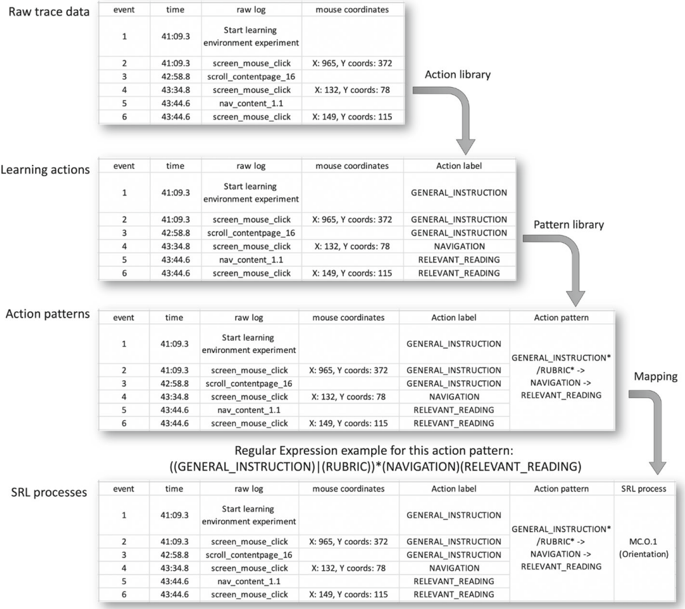
“We developed a trace parser to extract SRL processes from the raw trace data, following the protocol defined in Fan’s et al. study [2].”
InfluentialSelf-citationKhamidulina, M. S., & Maloshonok, N. (2025) · Высшее образование в России · doi:10.31992/0869-3617-2025-34-1-106-127 · Cited by 4
Zhang, Y., Ye, Y., Paquette, L., Wang, Y., & Hu, X. (2024) · Journal of Computer Assisted Learning · doi:10.1111/jcal.12951 · Cited by 4
Xu, X., Cheng, N., Tao, J., Qiao, L., Liu, H., Zhao, W., & Guo, X. (2025) · The Asia-Pacific Education Researcher · doi:10.1007/s40299-025-00995-x · Cited by 3
“The classification aligns with approaches from recent studies (Fan et al., 2022; Saint et al., 2020).”
LLM feedback for academic writing: Effects on students’ performance and engagement
Glüsing, R., Fleckenstein, J., Schmidt, F. T. C., & Möller, J. (2026) · Contemporary Educational Psychology · doi:10.1016/j.cedpsych.2026.102463 · Cited by 2
Nath, D., Fan, Y., Gašević, D., & Rajendran, R. (2025) · Review of Educational Research · doi:10.3102/00346543251382238 · Cited by 5
Self-citationExploring young learners’ prompted and unprompted SRL think-alouds
Pape, R., & Thomas, J. (2025) · Learning and Instruction · doi:10.1016/j.learninstruc.2025.102294 · Cited by 2
Lu, C.-M. (2026) · Computers & Education · doi:10.1016/j.compedu.2025.105556 · Cited by 2
Availability to Learn: An Essential, Achievable Condition for Self-Regulated Learning
Ben‐Eliyahu, A., & Bernacki, M. L. (2026) · Educational Psychology Review · doi:10.1007/s10648-026-10144-5 · Cited by 2
Arifin, M., Nasution, S., Ranam, S., Fuadah, S., & Saleh, M. A. M. (2026) · JURNAL IQRA · doi:10.25217/ji.v11i1.6605 · Cited by 2
“The content validity of the instruments was assessed by consulting with Islamic education experts and interdisciplinary curriculum experts (Fan et al., 2022).”
Cross-course generalizability of SRL-aligned predictive models using digital learning traces
Schwerter, J., Sabel, L., Bose, J., Bernacki, M. L., Xu, D., Schmellenkamp, M., Zeume, T., & Doebler, P. (2026) · Computers & Education · doi:10.1016/j.compedu.2026.105670 · Cited by 4
Molnár, É. D. (2022) · Iskolakultúra · doi:10.14232/iskkult.2022.11.30 · Cited by 2
Ximenes, M. A. M., Fontenele, N. Â. O., Brandão, M. G. S. A., Lima, F. E. T., Ribeiro, S. G., Rebouças, C. B. D. A., Barros, L. M., & Caetano, J. Á. (2024) · Revista CUIDARTE · doi:10.15649/cuidarte.3854 · Cited by 2
Adi, F. P., Atmojo, I. R. W., Matsuri, M., Chumdari, C., Ardiansyah, R., & Saputri, D. Y. (2024) · Mimbar Sekolah Dasar · doi:10.53400/mimbar-sd.v11i4.78850 · Cited by 2
Colling, L., Deininger, H., Parrisius, C., von Keyserlingk, L., Bodnar, S., Holz, H., Kasneci, G., Nagengast, B., Trautwein, U., & Meurers, D. (2025) · Educational Psychology · doi:10.1080/01443410.2025.2599786 · Cited by 4
“In this regard, researchers started to develop theory-informed frameworks for mapping temporally ordered trace events to SRL processes (Fan et al., 2022; Saint et al., 2020; Siadaty et al., 2016). other studies on sequential analysis also emphasised the potential of traces to identify temporal…”
Percepción de los conocimientos de la analítica del aprendizaje en la educación superior
de Jesús, M., Figueroa-Garza, F. G., & Ramírez-Ramírez, J. F. (2023) · Vinculatégica EFAN · doi:10.29105/vtga9.5-506 · Cited by 1
Eberle, J., Strauß, S., Nachtigall, V., & Rummel, N. (2024) · Unterrichtswissenschaft · doi:10.1007/s42010-024-00205-5 · Cited by 1
“Studien wie etwa Fan et al. (2022) machen Vorschläge für die Validierung von Learning-Analytics-Indikatoren für Lehr-Lern-Prozesse, verdeutlichen gleichzeitig aber auch, dass dies ein herausforderndes Unterfangen ist.”
Saprıatı, A., Sekarwinahyu, M., Puspitasari, M., & Amastini, F. (2025) · Open Education Studies · doi:10.1515/edu-2025-0076 · Cited by 1
Lämsä, J., & Järvelä, S. (2025) · Proceedings. · doi:10.22318/icls2025.104120 · Cited by 1
Na, C., Jeong, S., Clarke‐Midura, J., & van Dijk, W. (2025) · Online Learning · doi:10.24059/olj.v29i4.5216 · Cited by 1
Asy’ari, M., Muhali, M., & Ikhsan, M. (2026) · Journal of Turkish Science Education · doi:10.36681/tused.2026.001 · Cited by 1
“Many studies rely on self-reported data, which can introduce biases and may not accurately reflect learners' cognitive processes (Dang et al., 2020; Fan et al., 2022; Van Der Ham et al., 2021; Villegas & Panoy, 2023).”
Zhong, Y., Chen, J., Huang, C., Wang, X., Chen, Y., & He, T. (2026) · IEEE Transactions on Learning Technologies · doi:10.1109/tlt.2026.3696968 · Cited by 1
“Table I shows the coding scheme used to record students’ learning behaviors [4], [56], [57], [58].”
Costa, J., Lima, G. D. O., Araújo, R. D., & Dorça, F. A. (2026) · Discover Artificial Intelligence · doi:10.1007/s44163-026-01267-3 · Cited by 1
“Several studies, such as those by [15–17], highlight different approaches adopted in the literature to evaluate SRL processes in educational contexts.”
Co-designing a Dashboard Promoting SRL for Secondary Education
Bistolfi, I., de Mooij, S. M. M., Sparou, C., Molenaar, I., & van der Graaf, J. (2026) · Lecture notes in computer science · doi:10.1007/978-3-032-30781-1_3 · Cited by 1
Self-citationZhang, L., & Duan, S. (2026) · Scientific Reports · doi:10.1038/s41598-026-68508-4 · Cited by 2
“In a controlled study of 44 learners the match rate between processes extracted from traces and those voiced in think-aloud was 34.5% to 39.0%, and deliberate alignment of the two streams raised it only to 54.2% to 55.1% 27 .”
InfluentialKuo, B., Lin, C.-H., Chang, F., Yang, C.-W., Li, X., Raković, M., Li, T., Zhao, L., & Gašević, D. (2026) · Computers & Education · doi:10.1016/j.compedu.2026.105747 · Cited by 1
Self-citationTechnology-Supported Interventions and Learners’ Metacognition: A Three-Level Meta-Analysis
Yuan, Y., & Du, Y. (2026) · Educational Psychology Review · doi:10.1007/s10648-026-10227-3 · Cited by 1
“Their interpreta - tion is more defensible when observed actions are linked to regulatory constructs through explicit theoretical rationale and supporting empirical evidence (Azevedo & Gašević, 2019; Fan et al., 2022).”
Self-Regulated Learning in Essay Writing: Consistency of Strategies and Impact on OutcomesPreprint
Fernandez-Nieto, G. M., Garcés, K., Raković, M., Li, T., Li, X., Zhao, L., & Gašević, D. (2026) · arXiv (Cornell University) · doi:10.48550/arxiv.2605.14228 · Cited by 1
“Researchers have proposed theoretical and methodological frameworks to understand SRL processes, from macro-level approaches [9] that focus on broad phases of SRL, to micro-level [10] frameworks that examine moment-to-moment interactions.”
InfluentialSelf-citationHow do students regulate their learning with a genAI chatbot?
Lim, L., & Bannert, M. (2026) · Learning Letters · doi:10.20851/ll.v8.61
Self-citationA Conceptual Framework to Integrate Research Programs on Self-Regulation in Education
Wortha, F., Gerjets, P., Azevedo, R., Bernacki, M., Brucker, B., Bühler, B., Ehlis, A.-C., Kasneci, E., Miyake, A., Murayama, K., et al. (2026) · Educational Psychology Review · doi:10.1007/s10648-026-10196-7
“…strongly emphasizes the contextual and dynamic nature of learning processes and increasingly calls for the investigation of contingent, context-sensitive patterns of regulation as they unfold over time (Ben-Eliyahu and Bernacki, 2015; Winne, 2020; see also Bernacki, 2025; Fan et al., 2022).”
Exploration of the online learners’ actions: A sequence mining approach
Natthaphatwirata, R., & Matcha, W. (2024) · Online Journal of Communication and Media Technologies · doi:10.30935/ojcmt/14957
Supporting young learners' self-regulated learning in computer-based learning environments
Pape, R. (2025) · Publication Server of the Catholic University Eichstätt-Ingolstadt (Catholic University of Eichstätt-Ingolstadt) · doi:10.17904/ku.opus-968 · Cited by 1
Scaffolding Self-Regulated Learning with Advanced Learning Technologies
Lim, L. (2023) · mediaTUM (Technical University of Munich)
Self-citationCabral, M. R. (2025) · Portuguese National Funding Agency for Science, Research and Technology (RCAAP Project by FCT)
Zhang, L., Lin, F., & Wang, W. (2026) · arXiv (Cornell University) · doi:10.48550/arxiv.2601.11576 · Cited by 2
“Recent researches have utilized these logs to infer SRL processes from behaviors such as resource access frequency, forum participation, and video-viewing patterns (Du et al., 2023; Fan et al., 2022).”
InfluentialAn AI-based Chat Agent for Measuring Students’ Self-Regulated Learning Skills
Radović, S., Wetchy, E., & Seidel, N. (2025) · International Conference on Education Technology and Computer · doi:10.1109/icetc66579.2025.11387673
“In contrast, log data can provide objective insights into learners’ behaviors but often lack fail to capture the metacognitive and motivational dimensions of SRL [6, 8, 11].”
Taito, K. A. N. O., Horikoshi, I., Koike, K., & Ogata, H. (2026) · Research and Practice in Technology Enhanced Learning · doi:10.58459/rptel.2026.21044 · Cited by 1
Metadata
- Authors
- Fan, Y., van der Graaf, J., Lim, L., Raković, M., Singh, S., Kilgour, J., Moore, J., Molenaar, I., Bannert, M., & Gašević, D.
- Affiliations
- University of Edinburgh (GB)
- Technical University of Munich (DE)
- Monash University (AU)
- Radboud University Nijmegen (NL)
- Corresponding author
- Fan, Yizhou
- ORCID
- Venue
- Metacognition and Learning
- Published
- 2022-05-04
- Volume
- 17
- Issue
- 3
- Pages
- 949-987
- ISSN
- 1556-1623 (ISSN-L)
- 1556-1631
- OpenAlex
- W4225374280
- Semantic Scholar
- 97d3a315dac3e647bad116f94651f3c4e455b42b
- Cited by
- 101
- References
- 54
- Citations by year
- 2026: 33 · 2025: 27 · 2024: 23 · 2023: 11 · 2022: 7
- FWCI
- 13.13
- Type
- journal article
- Language
- en
- Open access
- hybrid
- doi.org
- Licence
- cc-by
- creativecommons.org/licenses/by/4.0 (tdm)
- creativecommons.org/licenses/by/4.0 (vor)
- Locations
- Metacognition and Learning (publishedVersion, cc-by)
- Edinburgh Research Explorer (University of Edinburgh) (submittedVersion, cc-by)
- Monash University Research Portal (Monash University) (submittedVersion, other-oa)
- HAL (submittedVersion)
- mediaTUM – the media and publications repository of the Technical University Munich (Technical University Munich) (submittedVersion)
- mediaTUM – the media and publications repository of the Technical University Munich (Technical University Munich) (submittedVersion, other-oa)
- Radboud Repository (Radboud University) (submittedVersion)
- Radboud Repository (Radboud University) (submittedVersion, other-oa)
- Funders
- Deutsche Forschungsgemeinschaft (BA20144/10-1)
- Nederlandse Organisatie voor Wetenschappelijk Onderzoek (NWO464.18.104)
- Economic and Social Research Council (ES/S015701/1)
- Topics
- Physical Sciences › Computer Science › Computer Science Applications › Online Learning and Analytics
- Social Sciences › Psychology › Developmental and Educational Psychology › Innovative Teaching and Learning Methods
- Physical Sciences › Computer Science › Artificial Intelligence › Intelligent Tutoring Systems and Adaptive Learning
- Keywords
- student self-regulation, trace data, measurement validity, validation methodology, match rate, sensitivity and specificity, technology-enhanced learning environments, artificial intelligence in education, learning analytics
About these checks
Registry, retraction, Cites and statistics results are computed, not judged, with one exception: a printed reference that no index lists is read once by a model before it counts as a citation error. Claims are extracted by a model and kept only when their quote appears verbatim in the text; each cited source is then checked, with a model’s help, for whether it says what the claim relies on. Those verdicts can be wrong — read the claim’s quote and the cited source before relying on one.
Statistics and arithmetic are recomputed, not judged.
Confidence bands are shown only for fields calibrated on our annotated test set. None is calibrated yet, so no band is shown.
What counts as a claim ›How we measure confidence ›How we check this ›
Are you an author, or do you see a problem with this page? Request a review
Data sources
Bibliographic data: Semantic Scholar, OpenAlex, Crossref.
Contains information from the Semantic Scholar Academic Graph Datasets, made available under the ODC Attribution License (ODC-BY 1.0).
Semantic Scholar’s data is described in: Kinney, R., et al. (2023). The Semantic Scholar Open Data Platform. arXiv:2301.10140.
