

Towards investigating the validity of measurement of self-regulated learning based on trace data
Open accessThe DOI matches its Crossref record; 53 of the 54 references it cites were found in a registry or an index.
Abstract
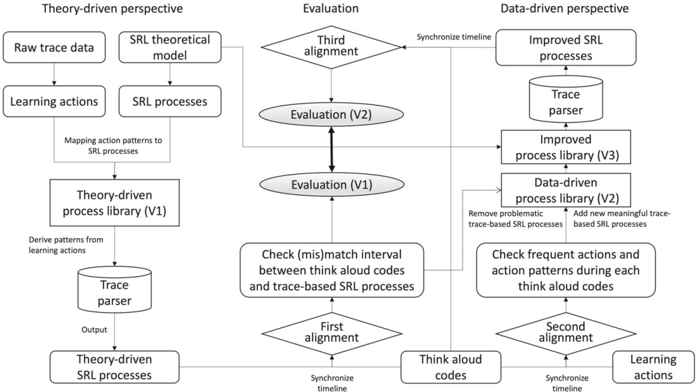
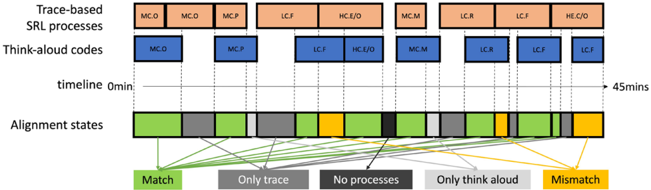
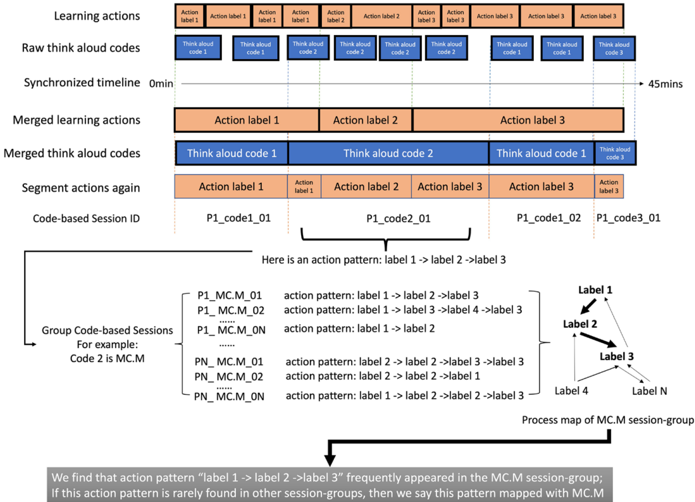
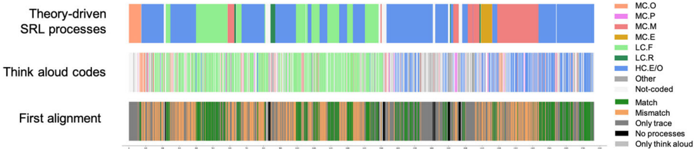
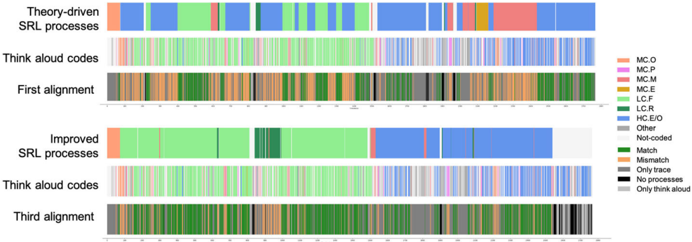
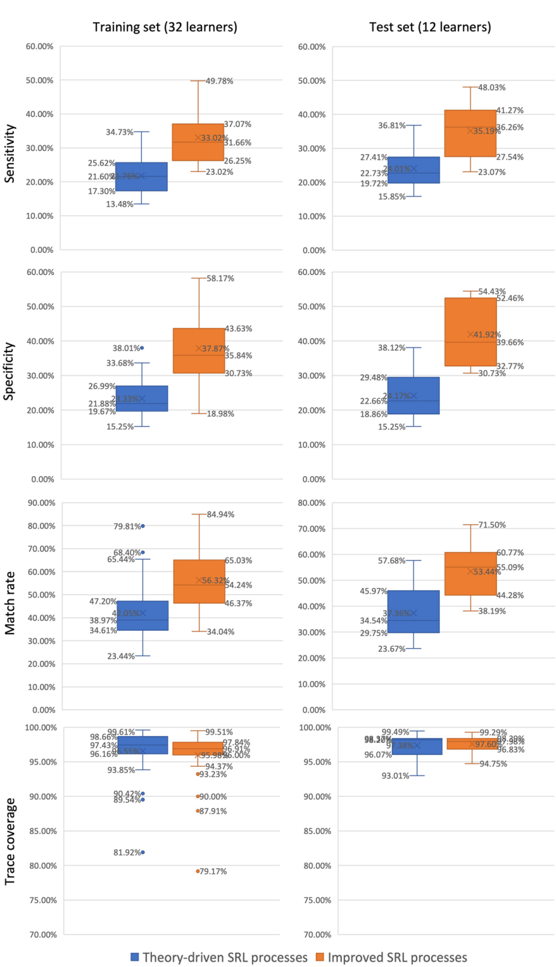
Contemporary research that looks at self-regulated learning (SRL) as processes of learning events derived from trace data has attracted increasing interest over the past decade. However, limited research has been conducted that looks into the validity of trace-based measurement protocols. In order to fill this gap in the literature, we propose a novel validation approach that combines theory-driven and data-driven perspectives to increase the validity of interpretations of SRL processes extracted from trace-data. The main contribution of this approach consists of three alignments between trace data and think aloud data to improve measurement validity. In addition, we define the match rate between SRL processes extracted from trace data and think aloud as a quantitative indicator together with other three indicators (sensitivity, specificity and trace coverage), to evaluate the “degree” of validity. We tested this validation approach in a laboratory study that involved 44 learners who learned individually about the topic of artificial intelligence in education with the use of a technology-enhanced learning environment for 45 minutes. Following this new validation approach, we achieved an improved match rate between SRL processes extracted from trace-data and think aloud data (training set: 54.24%; testing set: 55.09%) compared to the match rate before applying the validation approach (training set: 38.97%; test set: 34.54%). By considering think aloud data as “reference point”, this improvement of the match rate quantified the extent to which validity can be improved by using our validation approach. In conclusion, the novel validation approach presented in this study used both empirical evidence from think aloud data and rationale from our theoretical framework of SRL, which now, allows testing and improvement of the validity of trace-based SRL measurements.
Overview
The claims and statistics of this paper haven’t been checked yet.
Free: it reads the open-access text and checks the first 5 claims that cite a source we can check. Create a free account to check every claim.
Integrity signals
Registry
Cites
Statistics
Figures
Verification
Claims the paper makes
The claims and statistics of this paper haven’t been checked yet.
Free: it reads the open-access text and checks the first 5 claims that cite a source we can check. Create a free account to check every claim.
Claims other papers make about this one
Each is checked against this paper’s own text: does it say what the citing paper says it does?
The cited source says what the claim attributes to it.
In the citing paper
“Coding was performed by experts using theory-driven guidelines and a tracing protocol adapted from validated methods for measuring SRL via trace data (Fan et al., 2022; Rakovic et al., 2022; Li et al., 2023; van der Graaf et al., 2023a; Lim et al., 2023).”
From Towards reliable generative AI-driven scaffolding: Reducing hallucinations and enhancing quality in self-regulated learning support (2026) · cites this paper as Fan et al., 2022
The cited source says what the claim attributes to it.
In the citing paper
“We measured SRL processes via trace data with Fan et al.'s (2022) approach, using an SRL process library (see Appendix A) that parsed raw data into sequences of learning actions representing SRL activities.”
From How do students regulate their learning with a genAI chatbot? (2026) · cites this paper as Fan et al.'s (2022)
In the citing paper
“Specifically, AI can detect the SRL processes automatically in the separate data streams and at the same time determine the synchronicity between the different layers, such as the work in FLoRa (Fan et al., 2022).”
From Measuring self-regulated learning and the role of AI: Five years of research using multimodal multichannel data (2023) · cites this paper as Fan et al., 2022
In the citing paper
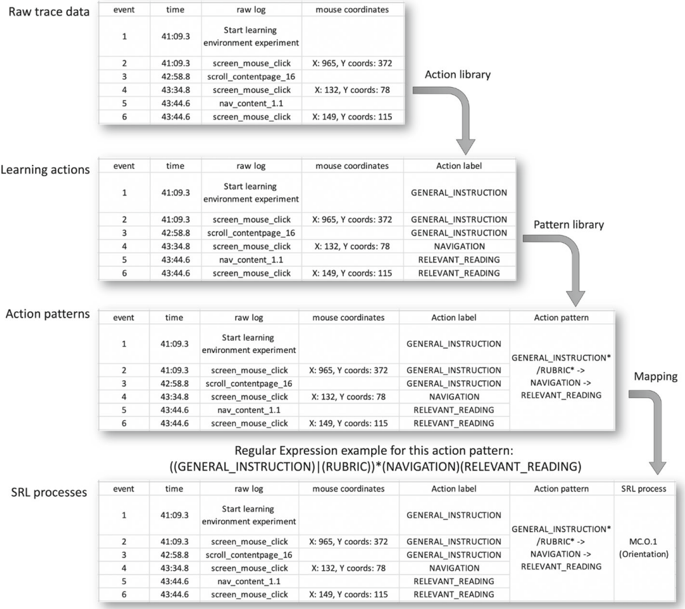
“The flora project validated the algorithms by first building a theory-driven process library and then training a multimodal data-driven process library on top of it (Fan et al., 2022).”
From Measuring self-regulated learning and the role of AI: Five years of research using multimodal multichannel data (2023) · cites this paper as Fan et al., 2022
Self-check
Percentages, sums and reported differences re-computed from the paper’s own numbers.
The self-check needs the paper’s full text.
Citations
Cites
Cohen, J. (1992) · Psychological Bulletin · doi:10.1037//0033-2909.112.1.155 · Cited by 8,771
The Role of Goal Orientation in Self-Regulated Learning
Pintrich, P. R. (2000) · Handbook of Self-Regulation · doi:10.1016/b978-012109890-2/50043-3 · Cited by 5,173
A Conceptual Framework for Assessing Motivation and Self-Regulated Learning in College Students
Pintrich, P. R. (2004) · Educational Psychology Review · doi:10.1007/s10648-004-0006-x · Cited by 3,269 · cited 1×
“To date, researchers have proposed several theoretical models to describe SRL processes (e.g., Winne and Hadwin (1998), Pintrich (2004), and Zimmerman (2000)).”
BackgroundMeasuring Self-Regulated Learning
Winne, P. H., & Perry, N. E. (2000) · Handbook of Self-Regulation · doi:10.1016/b978-012109890-2/50045-7 · Cited by 1,383
Kizilcec, R. F., Pérez-Sanagustín, M., & Maldonado, J. J. (2017) · Computers & Education · doi:10.1016/j.compedu.2016.10.001 · Cited by 1,003 · cited 2×
“Building on the previous literature (Siadaty et al., 2016b, c; Saint et al., 2020a, b; Kizilcec et al., 2017), we conducted multiple rounds of in-depth discussion to construct the theorydriven process library that is based on our theoretical framework.”
BackgroundDoes adaptive scaffolding facilitate students’ ability to regulate their learning with hypermedia?
Azevedo, R., Cromley, J. G., & Seibert, D. (2004) · Contemporary Educational Psychology · doi:10.1016/j.cedpsych.2003.09.002 · Cited by 473 · cited 1×
“…scheme operationalises five macro-level SRL processes such as planning, monitoring and strategy use, which are further subdivided into 35 micro-level SRL processes such as judgement of learning, self-questioning and content evaluation, as per (Azevedo et al., 2004, 2005; Greene et al., 2008).”
MethodToward Meta-cognitive Tutoring: A Model of Help Seeking with a Cognitive Tutor
Aleven, V., McLaren, B., Roll, I., & Koedinger, K. (2006) · International Journal of Artificial Intelligence in Education · doi:10.3233/irg-2006-16(2)02 · Cited by 406
Improving Measurements of Self-Regulated Learning
WINNE, P. H. (2010) · Educational Psychologist · doi:10.1080/00461520.2010.517150 · Cited by 405 · cited 12×
“Once the trace-based measurement protocols are validated, they could and should be combined with think aloud protocols to measure and describe “a fuller picture” of SRL (Winne, 2010).”
BackgroundMethodInfluentialMotivated Strategies for Learning Questionnaire
Pintrich, P. R., & De Groot, E. V. (2012) · PsycTESTS Dataset · doi:10.1037/t09161-000 · Cited by 399
The Experience of Agency: Feelings, Judgments, and Responsibility
Haggard, P., & Tsakiris, M. (2009) · Current Directions in Psychological Science · doi:10.1111/j.1467-8721.2009.01644.x · Cited by 367 · cited 1×
“In these models, learners are commonly considered as agents (Haggard & Tsakiris, 2009) who decide which learning processes they should engage in to accomplish their goals for learning (Dunlosky & Thiede, 2013).”
BackgroundGreene, J. A., & Azevedo, R. (2009) · Contemporary Educational Psychology · doi:10.1016/j.cedpsych.2008.05.006 · Cited by 364 · cited 2×
“…coding schemes in a group of studies, e.g., to distinguish between macro-and micro-level SRL processes (Azevedo et al., 2005, Greene et al., 2008, 2009) and to examine the relationships between learners’ SRL processes and their mental models in a complex learning system (Greene & Azevedo, 2009).”
BackgroundMethodAzevedo, R., & Gašević, D. (2019) · Computers in Human Behavior · doi:10.1016/j.chb.2019.03.025 · Cited by 345 · cited 1×
“However, triangulation across measurement protocols is very infrequent (Winne & Perry, 2000; Azevedo & Gaˇsevi´c, 2019), and has only recently received attention (Taub et al., 2016; Azevedo & Gaˇsevi´c, 2019; Reimann, 2019).”
BackgroundSelf-citationAZEVEDO, R., MOOS, D. C., JOHNSON, A. M., & CHAUNCEY, A. D. (2010) · Educational Psychologist · doi:10.1080/00461520.2010.515934 · Cited by 324
Process mining techniques for analysing patterns and strategies in students’ self-regulated learning
Bannert, M., Reimann, P., & Sonnenberg, C. (2014) · Metacognition and Learning · doi:10.1007/s11409-013-9107-6 · Cited by 317 · cited 1×
“The dynamic SRL processes represented as events thus can be identified by using data mining techniques or by stipulation based on hypothesis (Winne & Perry, 2000, 2014; Bannert et al., 2014).”
MethodSelf-citationAdaptive Human Scaffolding Facilitates Adolescents’ Self-regulated Learning with Hypermedia
Azevedo, R., Cromley, J. G., Winters, F. I., Moos, D. C., & Greene, J. A. (2005) · Instructional Science · doi:10.1007/s11251-005-1273-8 · Cited by 306 · cited 5×
“Methods commonly used to measure SRL processes to date include self-report surveys (Pintrich & et al. 1991), think aloud protocols (Bannert, 2007; Azevedo et al., 2005; Greene et al., 2008, 2009), trace-based measurement (Kinnebrew et al., 2014; Siadaty et al., 2016c; Saint et al., 2020b; Fan et…”
BackgroundMethodInfluentialMaldonado-Mahauad, J., Pérez-Sanagustín, M., Kizilcec, R. F., Morales, N., & Munoz-Gama, J. (2018) · Computers in Human Behavior · doi:10.1016/j.chb.2017.11.011 · Cited by 299 · cited 4×
“As reviewed in Background Section, a majority of previous studies measured SRL processes using either a data-driven approach (e.g., Maldonado-Mahauad et al., 2018a), or a theory-driven approach (e.g., Siadaty et al., 2016b).”
BackgroundResultInfluentialGREENE, J. A., & AZEVEDO, R. (2010) · Educational Psychologist · doi:10.1080/00461520.2010.515935 · Cited by 267 · cited 2×
“…that think aloud data can provide a more valid account of observed SRL processes than the data collected via self-report surveys, and also that think aloud data are a stronger predictor of learning achievement than the self-report data (Bannert, 2007, 2013; Veenman, 2007; Greene & Azevedo, 2010).”
MethodResultDunlosky, J., & Thiede, K. W. (2013) · Learning and Instruction · doi:10.1016/j.learninstruc.2012.05.002 · Cited by 220 · cited 1×
“In these models, learners are commonly considered as agents (Haggard & Tsakiris, 2009) who decide which learning processes they should engage in to accomplish their goals for learning (Dunlosky & Thiede, 2013).”
BackgroundGasevic, D., Jovanovic, J., Pardo, A., & Dawson, S. (2017) · Journal of Learning Analytics · doi:10.18608/jla.2017.42.10 · Cited by 218 · cited 1×
“Trace data that learners generate are thus temporally proximal to decisions learners make during a study session and generally reflect learning events more completely and with less bias than self-report surveys (Gasevic et al., 2017).”
BackgroundSelf-citationSupporting self-regulated hypermedia learning through prompts
Bannert, M., & Reimann, P. (2012) · Instructional Science · doi:10.1007/s11251-011-9167-4 · Cited by 213 · cited 1×
“Self-regulated learning (SRL) skills are considered critical to ensure productive lifelong learning (Klug et al., 2011) and success in different learning tasks (Maldonado-Mahauad et al., 2018b; Bannert & Reimann, 2012).”
BackgroundSelf-citationMessick, S. (1987) · ETS Research Report Series · doi:10.1002/j.2330-8516.1987.tb00244.x · Cited by 199
ELAN: A Software Package for Analysis and Visualization of MEG, EEG, and LFP Signals
Aguera, P.-E., Jerbi, K., Caclin, A., & Bertrand, O. (2011) · Computational Intelligence and Neuroscience · doi:10.1155/2011/158970 · Cited by 185 · cited 2×
“Second, two coders used the ELAN software (Aguera et al., 2011) to code the utterances of each of the participants.”
MethodDirect from the source: The value of 'think-aloud' data in understanding learning
Young, K. (2005) · UTS ePRESS (University of Technology Sydney) · Cited by 178
Scaffolding Hypermedia Learning Through Metacognitive Prompts
Bannert, M., & Mengelkamp, C. (2013) · Springer international handbooks of education · doi:10.1007/978-1-4419-5546-3_12 · Cited by 144
Self-citationIssues in researching self-regulated learning as patterns of events
Winne, P. H. (2014) · Metacognition and Learning · doi:10.1007/s11409-014-9113-3 · Cited by 136 · cited 4×
“As suggested by Winne (2014), these trace-based methods rest on a common assumption that patterns of the observed events complement self-reports and provide a deeper insight into how SRL is constituted (Winne, 2014, p. 234).”
BackgroundInfluentialDirect from the source: The value of 'think-aloud' data in understanding learning
Young, K. (2005) · UTS ePRESS (University of Technology Sydney) · Cited by 135
The assessment and instruction of self-regulation in computer-based environments: a discussion
Veenman, M. V. J. (2007) · Metacognition and Learning · doi:10.1007/s11409-007-9017-6 · Cited by 131 · cited 7×
“…limitations (Young, 2005), the interpretations based on think aloud codes are still considered a more valid measurement of observed SRL, and can be used as a stronger predictor of learning achievement than the self-report survey data (Bannert, 2007, 2013; Veenman, 2007; Greene & Azevedo, 2010).”
BackgroundMethodResultInfluentialGreene, J. A., Moos, D. C., Azevedo, R., & Winters, F. I. (2006) · Computers & Education · doi:10.1016/j.compedu.2006.10.004 · Cited by 126 · cited 5×
“…to measure SRL processes to date include self-report surveys (Pintrich & et al. 1991), think aloud protocols (Bannert, 2007; Azevedo et al., 2005; Greene et al., 2008, 2009), trace-based measurement (Kinnebrew et al., 2014; Siadaty et al., 2016c; Saint et al., 2020b; Fan et al., 2021), and more…”
BackgroundMethodInfluentialAnalyzing the temporal evolution of students’ behaviors in open-ended learning environments
Kinnebrew, J. S., Segedy, J. R., & Biswas, G. (2014) · Metacognition and Learning · doi:10.1007/s11409-014-9112-4 · Cited by 125 · cited 2×
“, 2008, 2009), trace-based measurement (Kinnebrew et al., 2014; Siadaty et al., 2016c; Saint et al., 2020b; Fan et al., 2021), and more recently the use of new data channels such as eye-tracking (Taub et al.”
BackgroundMinimizing the black box problem to enhance the validity of theories about instructional effects.
Winne, P. H. (1982) · Instructional Science · doi:10.1007/bf00120978 · Cited by 123 · cited 1×
“It is critical that researchers ensure that learners are trained or prepared to self-regulate their learning in a certain context (Winne, 1982, 2010).”
BackgroundConstruct and consequential validity for learning analytics based on trace data
Winne, P. H. (2020) · Computers in Human Behavior · doi:10.1016/j.chb.2020.106457 · Cited by 111 · cited 10×
“The validity challenge in trace-based SRL measurement identified in this and previous studies (Saint et al., 2020a; Winne, 2020, 2014) may encourage more researchers to consider validity in the development of trace-based SRL measurement protocols.”
BackgroundMethodInfluentialLearning Analytics to Reveal Links Between Learning Design and Self-Regulated Learning
Fan, Y., Matcha, W., Uzir, N. A., Wang, Q., & Gašević, D. (2021) · International Journal of Artificial Intelligence in Education · doi:10.1007/s40593-021-00249-z · Cited by 99 · cited 5×
“This finding exposes some limitations in measurement protocols that have previously been proposed (Siadaty et al., 2016b, c, Saint et al., 2020a, 2021; Fan et al., 2020, 2021) but have not been tested for validity.”
BackgroundMethodInfluentialSelf-citationSaint, J., Whitelock-Wainwright, A., Gasevic, D., & Pardo, A. (2020) · IEEE Transactions on Learning Technologies · doi:10.1109/tlt.2020.3027496 · Cited by 99 · cited 13×
“This finding exposes some limitations in measurement protocols that have previously been proposed (Siadaty et al., 2016b, c, Saint et al., 2020a, 2021; Fan et al., 2020, 2021) but have not been tested for validity.”
BackgroundMethodResultInfluentialSelf-citationTrace-based Micro-analytic Measurement of Self-Regulated Learning Processes
Siadaty, M., Gasevic, D., & Hatala, M. (2016) · Journal of Learning Analytics · doi:10.18608/jla.2016.31.11 · Cited by 96 · cited 12×
“Therefore, many studies (Beheshitha et al., 2015; Munshi et al., 2018; Siadaty et al., 2016b; Kinnebrew et al., 2013) emphasise the training of learners, especially to ensure that they are familiar with their learning environment.”
BackgroundMethodResultInfluentialSelf-citationSiadaty, M., Gašević, D., & Hatala, M. (2016) · Computers in Human Behavior · doi:10.1016/j.chb.2016.02.025 · Cited by 89 · cited 13×
“Therefore, many studies (Beheshitha et al., 2015; Munshi et al., 2018; Siadaty et al., 2016b; Kinnebrew et al., 2013) emphasise the training of learners, especially to ensure that they are familiar with their learning environment.”
BackgroundMethodResultInfluentialSelf-citationTaub, M., Mudrick, N. V., Azevedo, R., Millar, G. C., Rowe, J., & Lester, J. C. (2017) · Computers in Human Behavior · doi:10.1016/j.chb.2017.01.038 · Cited by 89 · cited 1×
“…2007; Azevedo et al., 2005; Greene et al., 2008, 2009), trace-based measurement (Kinnebrew et al., 2014; Siadaty et al., 2016c; Saint et al., 2020b; Fan et al., 2021), and more recently the use of new data channels such as eye-tracking (Taub et al., 2017; Mudrick et al., 2019; Fan et al., 2020).”
BackgroundCombining analytic methods to unlock sequential and temporal patterns of self-regulated learning
Saint, J., Gašević, D., Matcha, W., Uzir, N. A., & Pardo, A. (2020) · Proceedings of the Tenth International Conference on Learning Analytics & Knowledge · doi:10.1145/3375462.3375487 · Cited by 84 · cited 13×
“This finding exposes some limitations in measurement protocols that have previously been proposed (Siadaty et al., 2016b, c, Saint et al., 2020a, 2021; Fan et al., 2020, 2021) but have not been tested for validity.”
BackgroundMethodResultInfluentialSelf-citationA plea for self-regulated learning as a process: Modelling, measuring and intervening
Klug, J., Ogrin, S., Keller, S., Ihringer, A., & Schmitz, B. (2011) · Psychological test and assessment modeling · Cited by 83
Siadaty, M., Gašević, D., & Hatala, M. (2015) · Computers in Human Behavior · doi:10.1016/j.chb.2015.10.035 · Cited by 82
Self-citationWinne, P. H. (2019) · Computers in Human Behavior · doi:10.1016/j.chb.2019.03.026 · Cited by 77 · cited 3×
“As discussed by Winne (2019), when considering the origins of different tools or instruments and their properties when measuring SRL, “ground truth” can be elusive.”
BackgroundMethodInfluentialMetacognitive scaffolding in an innovative learning arrangement
Molenaar, I., van Boxtel, C. A. M., & Sleegers, P. J. C. (2011) · Instructional Science · doi:10.1007/s11251-010-9154-1 · Cited by 74 · cited 1×
“These utterances were then segmented, transcribed and coded by well-trained coders based on a previously developed coding scheme (Bannert, 2007; Molenaar et al., 2011).”
MethodSelf-citationMaldonado‐Mahauad, J., Pérez‐Sanagustín, M., Moreno-Marcos, P. M., Alario‐Hoyos, C., Muñoz‐Merino, P. J., & Kloos, C. D. (2018) · Lecture notes in computer science · doi:10.1007/978-3-319-98572-5_27 · Cited by 70 · cited 4×
“As reviewed in Background Section, a majority of previous studies measured SRL processes using either a data-driven approach (e.g., Maldonado-Mahauad et al., 2018a), or a theory-driven approach (e.g., Siadaty et al., 2016b).”
BackgroundResultInfluentialMudrick, N. V., Azevedo, R., & Taub, M. (2019) · Computers in Human Behavior · doi:10.1016/j.chb.2018.06.028 · Cited by 66 · cited 2×
“, 2021), and more recently the use of new data channels such as eye-tracking (Taub et al., 2017; Mudrick et al., 2019; Fan et al., 2020).”
Background(2020) · Journal of Learning Analytics · doi:10.18608/jla · Cited by 61
Discovery and Temporal Analysis of MOOC Study Patterns
Boroujeni, M. S., & Dillenbourg, P. (2019) · Journal of Learning Analytics · doi:10.18608/jla.2019.61.2 · Cited by 59 · cited 2×
“Several previous studies have adopted data-driven approaches to discover latent SRL processes and to track these processes as they unfold over time (Boroujeni & Dillenbourg, 2019).”
ResultMunshi, A., Rajendran, R., Ocumpaugh, J. L., Biswas, G., Baker, R. S., & Paquette, L. (2018) · ACM Conference on User Modeling, Adaptation and Personalization (UMAP) · doi:10.1145/3209219.3209241 · Cited by 47 · cited 2×
“In a more recent study, Munshi et al. (2018) focused on SRL processes that triggered major differences in the number of instances of affective states observed in high-performance versus low-performance learner groups (Munshi et al., 2018).”
BackgroundUsing process mining to analyse self-regulated learning: a systematic analysis of four algorithms
Saint, J., Fan, Y., Singh, S., Gasevic, D., & Pardo, A. (2021) · LAK21: 11th International Learning Analytics and Knowledge Conference · doi:10.1145/3448139.3448171 · Cited by 47 · cited 1×
“This finding exposes some limitations in measurement protocols that have previously been proposed (Siadaty et al., 2016b, c, Saint et al., 2020a, 2021; Fan et al., 2020, 2021) but have not been tested for validity.”
BackgroundSelf-citationInvestigating Self-Regulated Learning in Teachable Agent Environments
Kinnebrew, J. S., Biswas, G., Sulcer, B., & Taylor, R. (2013) · Springer international handbooks of education · doi:10.1007/978-1-4419-5546-3_29 · Cited by 45 · cited 1×
“Therefore, many studies (Beheshitha et al., 2015; Munshi et al., 2018; Siadaty et al., 2016b; Kinnebrew et al., 2013) emphasise the training of learners, especially to ensure that they are familiar with their learning environment.”
BackgroundA learning analytic approach to unveiling self-regulatory processes in learning tactics
Fan, Y., Saint, J., Singh, S., Jovanovic, J., & Gašević, D. (2021) · LAK21: 11th International Learning Analytics and Knowledge Conference · doi:10.1145/3448139.3448211 · Cited by 45 · cited 4×
“Once more trace-based measurement protocols that developed in different contexts (such as Siadaty et al., 2016a, b, Saint et al., 2020a, b, 2021, Fan et al., 2020, 2021) are validated using the approach we proposed, researchers in the field of SRL can review the similarity of all the…”
BackgroundMethodInfluentialSelf-citationDo Instrumentation Tools Capture Self-Regulated Learning?
van der Graaf, J., Lim, L., Fan, Y., Kilgour, J., Moore, J., Bannert, M., Gasevic, D., & Molenaar, I. (2021) · LAK21: 11th International Learning Analytics and Knowledge Conference · doi:10.1145/3448139.3448181 · Cited by 44 · cited 1×
“A more detailed introduction about these instrumentation tools and how learners use these tools could be found in van der Graaf et al. (2021).”
BackgroundSelf-citationBeheshitha, S. S., Gašević, D., & Hatala, M. (2015) · Proceedings of the Fifth International Conference on Learning Analytics And Knowledge · doi:10.1145/2723576.2723628 · Cited by 38 · cited 1×
“Therefore, many studies (Beheshitha et al., 2015; Munshi et al., 2018; Siadaty et al., 2016b; Kinnebrew et al., 2013) emphasise the training of learners, especially to ensure that they are familiar with their learning environment.”
BackgroundSelf-citationASSESSMENT IN THE SCHOOLS: PURPOSES AND CONSEQUENCES
Messick, S. (1987) · ETS Research Report Series · doi:10.1002/j.2330-8516.1987.tb00255.x · Cited by 28
Methodological progress in the study of self-regulated learning enables theory advancement
Reimann, P. (2019) · Learning and Instruction · doi:10.1016/j.learninstruc.2019.101269 · Cited by 24 · cited 1×
“However, triangulation across measurement protocols is very infrequent (Winne & Perry, 2000; Azevedo & Gašević, 2019), and has only recently received attention (Taub et al., 2016; Azevedo & Gašević, 2019; Reimann, 2019).”
BackgroundTaub, M., Mudrick, N. V., Azevedo, R., Millar, G. C., Rowe, J., & Lester, J. C. (2016) · Lecture notes in computer science · doi:10.1007/978-3-319-39583-8_24 · Cited by 19 · cited 2×
“However, triangulation across measurement protocols is very infrequent (Winne & Perry, 2000; Azevedo & Gašević, 2019), and has only recently received attention (Taub et al., 2016; Azevedo & Gašević, 2019; Reimann, 2019).”
Background
Research works printed but not linked: 6
- 7. Azevedo, R., & Witherspoon, A. (2009). Self-regulated learning with hypermedia. In Handbook of metacog- nition in education (pp. 331-351). Routledge.
- 13. Biswas, G., Segedy, J. R., & Kinnebrew, J. S. (2014). "A Combined Theory-and Data-Driven Approach for Interpreting Learners' Metacognitive Behaviors in Open-Ended Tutoring Environments. Design recommendations for intelligent tutoring systems, 2, 135.
- 17. Fan, Y., Lim, L., van der Graaf, J., Kilgour, J., Engelmann, K., Bannert, M., Molenaar, I., Moore, J., & Gase- vic, D. (2020). Measuring Micro-Level Self-Regulated Learning Processes with Enhanced Log Data and Eye Tracking Data.pdf. In Companion Proceedings 10th International Conference on Learning Analytics & Knowledge (LAK20) (pp. 433-436).
- 21. Günther, C. W., & Rozinat, A. (2012). Disco: discover your processes. BPM (Demos), 940, 40-44. Publisher: Citeseer.
- 56. Winne, P. H., & Hadwin, A. F. (2007). The weave of motivation and self-regulated learning. In Motivation and Self-Regulated Learning. Routledge. Num Pages: 18.
- 59. Zimmerman, B. J. (2000). Chapter 2 -attaining self-regulation: a social cognitive perspective. In M. Boekaerts, P. R. Pintrich, & M. Zeidner (Eds.) Handbook of Self-Regulation (pp. 13-39). San Diego: Academic Press.
Cited by
Fan, Y., Tang, L., Le, H., Shen, K., Tan, S., Zhao, Y., Shen, Y., Li, X., & Gašević, D. (2025) · British Journal of Educational Technology · doi:10.1111/bjet.13544 · Cited by 805
Self-citationPromises and challenges of generative artificial intelligence for human learning
Yan, L., Greiff, S., Teuber, Z., & Gašević, D. (2024) · Nature Human Behaviour · doi:10.1038/s41562-024-02004-5 · Cited by 499
“…reflection, and integrating these with processcentred methodologies (for example, modelling selfregulated learning from learners’ digital traces 55 ) from the field of learning analytics 56,57 , learning scientists and researchers can develop generative agents capable of autonomously…”
Self-citationTowards hybrid human‐AI learning technologies
Molenaar, I. (2022) · European Journal of Education · doi:10.1111/ejed.12527 · Cited by 348
Self-citationStadler, M., Bannert, M., & Sailer, M. (2024) · Computers in Human Behavior · doi:10.1016/j.chb.2024.108386 · Cited by 262
Self-citationMolenaar, I., Mooij, S. D., Azevedo, R., Bannert, M., Järvelä, S., & Gašević, D. (2023) · Computers in Human Behavior · doi:10.1016/j.chb.2022.107540 · Cited by 217
Self-citation
Metadata
- Authors
- Fan, Y., van der Graaf, J., Lim, L., Raković, M., Singh, S., Kilgour, J., Moore, J., Molenaar, I., Bannert, M., & Gašević, D.
- Affiliations
- University of Edinburgh (GB)
- Technical University of Munich (DE)
- Monash University (AU)
- Radboud University Nijmegen (NL)
- Corresponding author
- Fan, Yizhou
- ORCID
- Venue
- Metacognition and Learning
- Published
- 2022-05-04
- Volume
- 17
- Issue
- 3
- Pages
- 949-987
- ISSN
- 1556-1623 (ISSN-L)
- 1556-1631
- OpenAlex
- W4225374280
- Semantic Scholar
- 97d3a315dac3e647bad116f94651f3c4e455b42b
- Cited by
- 101
- References
- 54
- Citations by year
- 2026: 33 · 2025: 27 · 2024: 23 · 2023: 11 · 2022: 7
- FWCI
- 13.13
- Type
- journal article
- Language
- en
- Open access
- hybrid
- doi.org
- Licence
- cc-by
- creativecommons.org/licenses/by/4.0 (tdm)
- creativecommons.org/licenses/by/4.0 (vor)
- Locations
- Metacognition and Learning (publishedVersion, cc-by)
- Edinburgh Research Explorer (University of Edinburgh) (submittedVersion, cc-by)
- Monash University Research Portal (Monash University) (submittedVersion, other-oa)
- HAL (submittedVersion)
- mediaTUM – the media and publications repository of the Technical University Munich (Technical University Munich) (submittedVersion)
- mediaTUM – the media and publications repository of the Technical University Munich (Technical University Munich) (submittedVersion, other-oa)
- Radboud Repository (Radboud University) (submittedVersion)
- Radboud Repository (Radboud University) (submittedVersion, other-oa)
- Funders
- Deutsche Forschungsgemeinschaft (BA20144/10-1)
- Nederlandse Organisatie voor Wetenschappelijk Onderzoek (NWO464.18.104)
- Economic and Social Research Council (ES/S015701/1)
- Topics
- Physical Sciences › Computer Science › Computer Science Applications › Online Learning and Analytics
- Social Sciences › Psychology › Developmental and Educational Psychology › Innovative Teaching and Learning Methods
- Physical Sciences › Computer Science › Artificial Intelligence › Intelligent Tutoring Systems and Adaptive Learning
- Keywords
- student self-regulation, trace data, measurement validity, validation methodology, match rate, sensitivity and specificity, technology-enhanced learning environments, artificial intelligence in education, learning analytics
About these checks
Registry, retraction, Cites and statistics results are computed, not judged, with one exception: a printed reference that no index lists is read once by a model before it counts as a citation error. Claims are extracted by a model and kept only when their quote appears verbatim in the text; each cited source is then checked, with a model’s help, for whether it says what the claim relies on. Those verdicts can be wrong — read the claim’s quote and the cited source before relying on one.
Statistics and arithmetic are recomputed, not judged.
Confidence bands are shown only for fields calibrated on our annotated test set. None is calibrated yet, so no band is shown.
What counts as a claim ›How we measure confidence ›How we check this ›
Are you an author, or do you see a problem with this page? Request a review
Data sources
Bibliographic data: Semantic Scholar, OpenAlex, Crossref.
Contains information from the Semantic Scholar Academic Graph Datasets, made available under the ODC Attribution License (ODC-BY 1.0).
Semantic Scholar’s data is described in: Kinney, R., et al. (2023). The Semantic Scholar Open Data Platform. arXiv:2301.10140.
