

Transfer of metacognitive skills in self-regulated learning: effects on strategy application and content knowledge acquisition
Open accessThe DOI matches its Crossref record; 62 of the 64 references it cites were found in a registry or an index.
Abstract
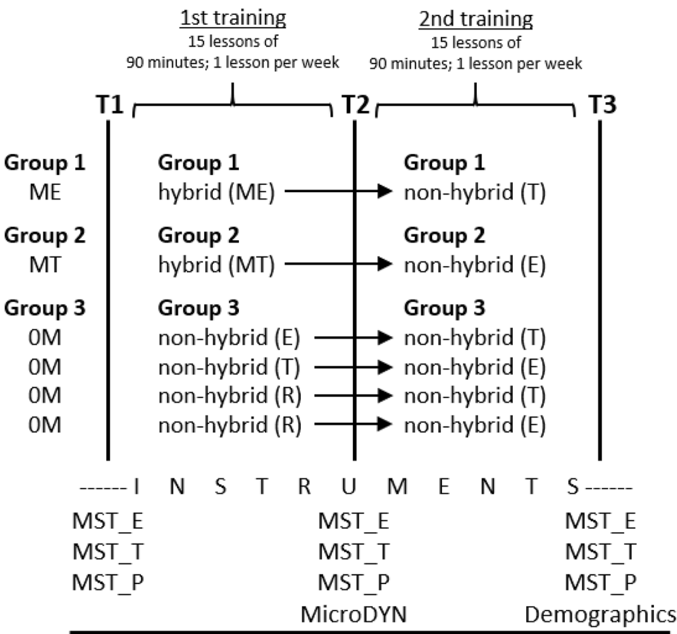
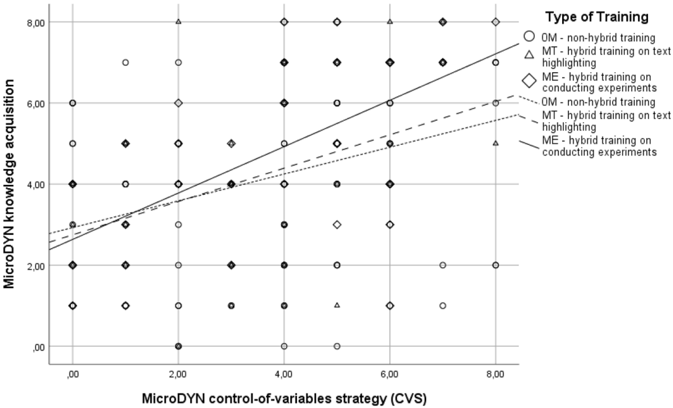
Metacognitive skills are often considered domain-general, therefore they have the potential to transfer across domains, subjects, and tasks. However, transfer of metacognitive skills seldomly occurs spontaneously. Schuster et al., (2020) showed that training can have beneficial effects on spontaneous near and far transfer of metacognitive skills. However, evidence of metacognitive skill transfer resulting in superior acquisition of content knowledge is pending. In the present study we set out to extend prior findings by investigating whether students benefit from training metacognitive skills not only regarding metacognitive skill application but also regarding content knowledge acquisition in learning tasks of different transfer distances. 243 fifth-grade students were randomly assigned to three different conditions for the first 15 weeks of a school year: two hybrid metacognitive skill training conditions (metacognitive skills and one out of two cognitive strategies) and one non-hybrid training condition (cognitive strategies or motivation regulation only). For the second 15 weeks of the school year, all students received non-hybrid training involving a new cognitive strategy. Spontaneous metacognitive skill transfer of different transfer distances (near and far) was tested after the first and after the second 15 weeks of training. The effect of hybrid metacognitive skill training on the acquisition of content knowledge was measured once directly after the first 15 weeks. Results show that hybrid metacognitive skill training supported spontaneous transfer of metacognitive skills to learning scenarios of both near and far transfer distance. However, hybrid metacognitive skill training only had a positive effect on content knowledge acquisition if metacognitive skill transfer was near.
Overview
The claims and statistics of this paper haven’t been checked yet.
Free: it reads the open-access text and checks the first 5 claims that cite a source we can check. Create a free account to check every claim.
Integrity signals
Registry
Cites
Statistics
Figures
Verification
Claims the paper makes
The claims and statistics of this paper haven’t been checked yet.
Free: it reads the open-access text and checks the first 5 claims that cite a source we can check. Create a free account to check every claim.
Claims other papers make about this one
Each is checked against this paper’s own text: does it say what the citing paper says it does?
The source backs part of the claim, not all of it — or backs it for a different population, condition or comparison.
In the citing paper
“In addition, studies in online and blended learning contexts demonstrate that the benefits of technology use for learning are contingent on learners' self-regulatory capacity rather than on tool availability alone (Eggers et al., 2021; Lobos et al., 2024; Stebner et al., 2022).”
From Cognitive offloading through digital tools and its relationship with critical thinking, task persistence, and learning depth (2026) · cites this paper as Stebner et al., 2022
Experimental — accuracy not yet measuredIn the citing paper
“Similarly, in the context of metacognitive onloading, learners not only learn at the task level but also need to adjust their metacognitive strategies over a longer timescale, gradually developing more fl exible strategies that can adapt to changing tasks and environments, including human-AI interaction 121 -123 .”
From A Metacognitive Approach to Learning and Performance in Human-AI Interaction (2026) · cites this paper as [122]
Self-check
Percentages, sums and reported differences re-computed from the paper’s own numbers.
The self-check needs the paper’s full text.
Citations
Cites
Statistical power analyses using G∗Power 3.1: tests for correlation and regression analyses
Faul, F., Erdfelder, E., Buchner, A., & Lang, A.-G. (2009) · Behavior Research Methods · doi:10.3758/brm.41.4.1149 · Cited by 37,615 · cited 2×
“Using G-Power 3.1.9.4 (Faul et al., 2009) we calculated a statistical power of 1-β = 0.85 for the MANOVA (N = 159, 3 groups, 6 dependent variables, ɑ = 1 3 730 Transfer of metacognitive skills in self-regulated learning: effects on… 0.05, f2(V) = 0.0625), and a statistical power of 1-β = 0.88 for…”
MethodInfluentialMetacognition and cognitive monitoring: A new area of cognitive–developmental inquiry
Flavell, J. H. (1979) · American Psychologist · doi:10.1037/0003-066x.34.10.906 · Cited by 11,282 · cited 2×
“According to Flavell (1979), metacognition refers to monitoring and regulation of cognitive processes.”
BackgroundMissing data analysis: making it work in the real world
Graham, J. W. (2009) · Annual Review of Psychology · doi:10.1146/annurev.psych.58.110405.085530 · Cited by 6,163
Acquisition of cognitive skill
Anderson, J. R. (1982) · Psychological Review · doi:10.1037/0033-295x.89.4.369 · Cited by 3,663 · cited 1×
“Therefore, the repeated and consistent use of the same quality criteria by metacognitive skills support the automatization of metacognitive skill execution (Anderson, 1982).”
BackgroundSchema induction and analogical transfer
Gick, M. L., & Holyoak, K. J. (1983) · Cognitive Psychology · doi:10.1016/0010-0285(83)90002-6 · Cited by 3,010 · cited 1×
“…to understand the transfer of metacognitive skills in more detail by applying principles that have been studied in the context of analogical problem-solving (e.g., Gick & Holyoak 1983) to SRL. Analogical problem solving involves the transfer of a solution learned in one problem to another problem.”
MethodMetamemory: A Theoretical Framework and New Findings
Nelson, T. O. (1990) · Psychology of Learning and Motivation · doi:10.1016/s0079-7421(08)60053-5 · Cited by 2,583 · cited 5×
“For example, according to Nelson & Narens (1990), learning is monitored at the object-level, which - in line with the COPES model (Winne & Hadwin, 1998) - is evaluated against standards at the meta-level.”
BackgroundMethodInfluentialMetacognition and learning: conceptual and methodological considerations
Veenman, M. V. J., Van Hout-Wolters, B. H. A. M., & Afflerbach, P. (2006) · Metacognition and Learning · doi:10.1007/s11409-006-6893-0 · Cited by 2,023 · cited 9×
“The degree to which certain strategies of SRL are domain-general or domain-specific has been discussed several times without clear and consensual results having been reached (e.g., Greene et al., 2015; Meijer et al., 2006; Neuenhaus et al., 2011; Poitras & Lajoie, 2013; Raaijmakers et al., 2018; Rotgans & Schmidt, 200…”
BackgroundResultInfluentialStudying as Self-Regulated Learning
(1998) · Metacognition in Educational Theory and Practice · doi:10.4324/9781410602350-19 · Cited by 1,589 · cited 6×
“Metacognitive skills included planning, monitoring, evaluating and regulating (e.g., Winne & Hadwin 1998).”
BackgroundMethodInfluentialSchraw, G., Crippen, K. J., & Hartley, K. (2006) · Research in Science Education · doi:10.1007/s11165-005-3917-8 · Cited by 1,529 · cited 4×
“, 2000), whereas within motivation the light is raised on beliefs and attitudes that motivate the application of cognitive and metacognitive strategies (Schraw et al., 2006).”
BackgroundInfluentialSelf-regulated learning : from teaching to self-reflective practice
Schunk, D. H., & Zimmerman, B. J. (1998) · Cited by 1,426
Research works printed but not linked: 3
- 14. Flavell, J. H., Miller, P. H., & Miller, S. A. (2002). Cognitive development (4th ed.). Prentice Hall Forbus, K. D., Gentner, D., & Law, K. (1994). MAC/FAC: A model of similarity-based retrieval. Cognitive Science, 19, 141-205
- 20. Greeno, J. G., Moore, J. L., & Smith, D. R. (1993). Transfer of situated learning. In D. K. Detterman, & R. J. Sternberg (Eds.), Transfer on trial: Intelligence, cognition, and instruction (pp. 99-167). Ablex Publishing
- 25. Horton, R. L. (1978). The general linear model. McGraw-Hill Hulleman, C. S., & Cordray, D. S. (2009). Moving from the lab to the field: The role of fidelity and achieved relative intervention strength. Journal of Research on Educational Effectiveness, 2, 88-110
Cited by
Karlen, Y., Hirt, C. N., Jud, J., Rosenthal, A., & Eberli, T. D. (2023) · Teaching and Teacher Education · doi:10.1016/j.tate.2023.104055 · Cited by 231
“This is important as teaching SRL and metacognition can be demanding and is accompanied by supporting students' transfer of metacognitive skills across various school subjects (Hirt et al., 2022; Stebner et al., 2022).”
BackgroundThe Interplay of Cognitive Load, Learners’ Resources and Self-regulation
Seufert, T., Hamm, V., Vogt, A., & Riemer, V. (2024) · Educational Psychology Review · doi:10.1007/s10648-024-09890-1 · Cited by 101
“As learners gain experience in using strategies, they will be able to tackle more difficult tasks and apply learning strategies successfully (Dresel et al., 2015; Stebner et al., 2022).”
Nufus, H., Muhandaz, R., Hasanuddin, H., Nurdin, E., Ariawan, R., Fineldi, R. J., Hayati, I. R., & Situmorang, D. D. B. (2024) · Heliyon · doi:10.1016/j.heliyon.2024.e24871 · Cited by 75
“As stated by Stebner et al., by fostering self-regulated learning, the students will be increasingly able to organize their H. Nufus et al. learning consciously [48].”
Arianto, F., & Hanif, M. (2024) · Journal of Pedagogical Research · doi:10.33902/jpr.202428575 · Cited by 71
Karlen, Y., & Hertel, S. (2024) · Unterrichtswissenschaft · doi:10.1007/s42010-024-00196-3 · Cited by 49
“As students do not automatically transfer strategies across different learning contexts (Stebner et al. 2022), teachers support learners in transferring their strategies from one context to another.”
The effect of a distributed metacognitive strategy intervention on reading comprehension
Urban, M., Urban, K., & Nietfeld, J. L. (2023) · Metacognition and Learning · doi:10.1007/s11409-023-09334-1 · Cited by 39
Krieger, F., Azevedo, R., Graesser, A. C., & Greiff, S. (2022) · Metacognition and Learning · doi:10.1007/s11409-022-09327-6 · Cited by 37
Self-citationResearch on the Influence Path of Metacognitive Reading Strategies on Scientific Literacy
Xie, Y. L., Wang, J., Li, S., & Zheng, Y. (2023) · Journal of Intelligence · doi:10.3390/jintelligence11050078 · Cited by 37
Wirth, J., Weber-Reuter, X.-L., Schuster, C., Fleischer, J., Leutner, D., & Stebner, F. (2025) · Educational Psychology Review · doi:10.1007/s10648-024-09983-x · Cited by 30
“…the metacognitive regulation training (near transfer; Glaser & Brunstein, 2007; King, 1991; Labuhn et al., 2008; Schus-ter et al., 2018; 2020, 2023; Stebner et al., 2022) but also has a beneficial effect on the use of learning strategies not addressed in training (far transfer; Schuster et al.,…”
InfluentialSelf-citationFLoRA: An advanced ai-powered engine to facilitate hybrid human-ai regulated learning
Li, X., Li, T., Yan, L., Li, Y., Zhao, L., Raković, M., Molenaar, I., Gašević, D., & Fan, Y. (2026) · Computers & Education · doi:10.1016/j.compedu.2025.105527 · Cited by 20
Sadykova, A., Оразгалиевна, И. М., Ismailova, G., Ishmukhametova, A., Советова, А. Б., & Mukasheva, K. (2024) · Frontiers in Education · doi:10.3389/feduc.2024.1460496 · Cited by 32
Teaching for transfer of learning in health professions education: AMEE Guide No. 176
Cecílio‐Fernandes, D., Sandars, J. E., Gianotto‐Oliveira, R., & Steenhof, N. (2024) · Medical Teacher · doi:10.1080/0142159x.2024.2414823 · Cited by 20
“Educators can design activities that provide opportunities for encouraging learners to use their key metacognitive processes for transfer [38,39].”
Brunner, S. N., Bäuerlein, K., Conti, M., & Karlen, Y. (2025) · Learning and Individual Differences · doi:10.1016/j.lindif.2025.102656 · Cited by 16
An Integrated Human Cognitive Architecture
Sweller, J. (2025) · Educational Psychology Review · doi:10.1007/s10648-025-10089-1 · Cited by 18
“For example, Stebner et al. (2022) tested the extent to which teaching students metacognitive strategies facilitated far transfer content knowledge acquisition.”
Siregar, R. A., Lengkanawati, N. S., & Damayanti, I. L. (2024) · LLT Journal A Journal on Language and Language Teaching · doi:10.24071/llt.v27i1.5502 · Cited by 18
“As previously explicated, metacognitive strategies not only accelerate the learning process and improve adults’ foreign language learning performance (Stebner et al., 2022), but they also function as essential higher-order abilities that form the foundation of successful self-regulation.”
BackgroundEpistemic fluency in virtual laboratories as flipped classroom’s innovative learning delivery
Errabo, D. D. R., Paguio, A. J., & Enriquez, P. A. (2024) · Journal of Research in Innovative Teaching & Learning · doi:10.1108/jrit-03-2024-0052 · Cited by 16
Wen, C.-H. R., & Chen, Y.-N. K. (2024) · Journal of Science Communication · doi:10.22323/2.23050207 · Cited by 18
Camacho, J. D. J. P., & Maravilla, L. M. V. (2024) · RIDE Revista Iberoamericana para la Investigación y el Desarrollo Educativo · doi:10.23913/ride.v14i28.1816 · Cited by 13
Wang, J. (2026) · Frontiers in Psychology · doi:10.3389/fpsyg.2026.1781101 · Cited by 10
Metacognitive Monitoring via Strategies and Judgments: Different Phases, Different Objects
Händel, M., Naujoks-Schober, N., & Dresel, M. (2023) · Zeitschrift für Entwicklungspsychologie und Pädagogische Psychologie · doi:10.1026/0049-8637/a000273 · Cited by 10
“Students can implement monitoring strategies regarding their learning or test answering approach (Stebner et al., 2022).”
BackgroundTeacher- and student-related factors supporting primary school students' self-regulated learning
Matulaitienė, J., Kaminskienè, L., Monkevičienė, O., & Lehtinen, E. (2025) · Frontiers in Education · doi:10.3389/feduc.2025.1503867 · Cited by 11
Gao, X., Zhu, C., Guo, X., & Zhang, D. (2026) · Educational Technology Research and Development · doi:10.1007/s11423-025-10582-y · Cited by 10
Allow Me to Explain: Benefits of Explaining Extend to Distal Academic Performance
Modrek, A., & Lombrozo, T. (2024) · Cognitive Science · doi:10.1111/cogs.13496 · Cited by 7
“Metacognitive skills are also known to transfer (Kornell, Son, & Terrace, 2007): because they are domain-general, they support potential applications across contexts, subjects, and tasks (Kuhn & Modrek, 2023; Kuhn & Modrek, 2021; Modrek & Sandoval, 2020; Stebner et al., 2022).”
BackgroundApplying, not ignoring: how feedback uptake and neural synchrony drive creativity
Yin, J., Jin, Z., Zhang, Y., Li, X., Li, Y., Zhang, G., & Luo, J. (2025) · npj Science of Learning · doi:10.1038/s41539-025-00351-0 · Cited by 6
“This transfer effect is likely due to enhanced cognitive engagement, particularly in innovative skills and cognitivestrategies 47 .”
Zhu, M., & Sari, A. R. (2026) · Learning and Individual Differences · doi:10.1016/j.lindif.2026.102917 · Cited by 10
Self-Regulation Competence as a Superpower: An Integrated Framework for K-12
Trautwein, U., Eberhart, J., Dignath, C., Bonner, C. V., & Roberts, B. W. (2026) · Educational Psychology Review · doi:10.1007/s10648-026-10190-z · Cited by 6
“For example, Stebner et al. (2022) argued that learners need to be explicitly taught how to recognize when and where specific strategies apply.”
Lin, Y., Wang, W., & Lai, Z.-L. (2025) · Education and Information Technologies · doi:10.1007/s10639-025-13470-3 · Cited by 7
“Metacognition refers to students’ capability to control and regulate their learning behavior (e.g., planning, monitoring, evaluating, and problem-solving skills) during DGBL activities (Chen, 2024; Koltovskaia et al., 2024; Stebner et al., 2022; Teng & Zhang, 2024).”
Karyotaki, M., Drigas, A. S., & Skianis, C. A. (2024) · Sustainability · doi:10.3390/su16072913 · Cited by 14
Qi, J., Reynolds, B. L., & Bai, X. (2025) · Reading in a Foreign Language · doi:10.64152/10125/67480 · Cited by 5
Haris, A., & Mahir, M. (2025) · International Journal of Learning Teaching and Educational Research · doi:10.26803/ijlter.24.8.48 · Cited by 4
Metacognition in Learning - New Perspectives
Tezer, M. (2023) · Education and human development · doi:10.5772/intechopen.107819 · Cited by 4
Toward an Integrated Model of the Individual Differences in Mathematical Flexibility
Yang, X., Star, J. R., Liu, R., & Yang, Y. (2025) · Educational Psychology Review · doi:10.1007/s10648-025-10051-1 · Cited by 5
“Research has indicated that students with better development in metacognitive knowledge and monitoring skills have a stronger awareness of strategy application (Stebner et al., 2022), which might be a condition leading to their better performance in mathemati‑ cal flexibility.”
Syahmani, S., Hafizah, E., Sholahuddın, A., Sauqina, S., Prasetyo, Y. D., & Rahman, N. F. A. (2023) · Jurnal Pendidikan IPA Indonesia · doi:10.15294/jpii.v12i3.45737 · Cited by 4
Xiao, W. J., & Hu, J. (2025) · Interactive Learning Environments · doi:10.1080/10494820.2025.2554242 · Cited by 3
Juhana, J. (2025) · Dinasti International Journal of Education Management And Social Science · doi:10.38035/dijemss.v6i6.5498 · Cited by 3
Prasetyo, T., Rasmitadila, R., & Amalia, R. (2025) · International Journal of Elementary Education · doi:10.23887/ijee.v9i4.102117 · Cited by 5
Chen, S., Geesa, R. L., Song, H. S., & Izci, B. (2024) · Early Childhood Education Journal · doi:10.1007/s10643-024-01808-4 · Cited by 3
“…children’s emerging metacognition by engaging their own metacognition to model learning approaches, ask germinating seeds and sink or float, provide authentic learn - ing contexts that promote profound learning and metacogni - tive skills transfer (Chen et al., 2024 ; Stebner et al., 2022 ).”
Msaddek, M. (2024) · European Journal of English Language Teaching · doi:10.46827/ejel.v9i1.5330 · Cited by 4
“Much scholarly research underscores the importance of LSs in enhancing second language learning (e.g., Cohen, 1998; O’Malley, et al. , 1985; Oktoma, et al. , 2020; Oxford, 1990; Ranjan, et al. , 2019; Schuster, et al. , 2023; Stebner, et al. , 2022).”
BackgroundExploring young learners’ prompted and unprompted SRL think-alouds
Pape, R., & Thomas, J. (2025) · Learning and Instruction · doi:10.1016/j.learninstruc.2025.102294 · Cited by 2
Fitrianingtyas, N. E., Kusumawardani, S. S., & Permanasari, A. E. (2023) · International Conference on Information Technology, Computer, and Electrical Engineering · doi:10.1109/icitacee58587.2023.10276393 · Cited by 2
“…building and Prevention [27], Strategic planning, Perceived ease, Self-efficacy, Adaptability, and Self-satisfaction [28], Directed attention, Personal knowledge and Mental translation [29], Reflection [30], Reflecting [37], Learning settings [40], Awareness [42], Seeking help and Persistence [44].”
BackgroundInfluentialA metacognitive approach to learning and performance in human-AI interaction
Fan, Y., Yan, L., Molenaar, I., Greiff, S., & Gašević, D. (2026) · Communications Psychology · doi:10.1038/s44271-026-00548-y · Cited by 1
Self-citationAnnesi, J. J., & Powell, S. M. (2024) · Women & Health · doi:10.1080/03630242.2024.2374783 · Cited by 1
“Although analyses of the transfer of within-and between-group changes from one context to another present challenges within behavioral research (Cromwell et al. 2011), the current design was guided by recently applied methods (Stebner et al. 2022).”
BackgroundBergander, N., & Melle, I. (2025) · Chemistry Teacher International · doi:10.1515/cti-2025-0011 · Cited by 1
Metacognitive Questioning Strategy for Enhancing Students’ Mathematical Competencies
Busanet, N., & Seehamongkon, Y. (2026) · Journal of Education and Learning · doi:10.5539/jel.v15n4p39 · Cited by 1
Reichert-Schlax, J., & Zlatkin‐Troitschanskaia, O. (2026) · International Journal of Educational Research · doi:10.1016/j.ijer.2026.103007 · Cited by 1
Metacognition and Nursing Students’ Academic Achievement: An Experimental Study
seleem, E. A. E. S., Eltahan, A. A., Mohamed, A. M. A., & Abdelaziz, M. M. A. (2026) · Studies in systems, decision and control · doi:10.1007/978-3-032-15739-3_27 · Cited by 1
Wu, J. C. (2026) · Discover Education · doi:10.1007/s44217-026-01818-x · Cited by 1
“…such strategies are domain-general regulatory skills that support the effective deployment of cognitive strategies across learning environments [35], their role becomes especially salient in L2 writing where metacognitive regulation helps learners set goals, oversee the composing process,…”
InfluentialRosenthal, A., Hirt, C. N., Eberli, T. D., Jud, J., & Karlen, Y. (2026) · Metacognition and Learning · doi:10.1007/s11409-026-09488-8 · Cited by 1
From theory to action: Supporting self-regulated learning in the classroom
Dignath, C., Karlen, Y., Schuster, C., & Stebner, F. (2026) · Theory Into Practice · doi:10.1080/00405841.2026.2714717 · Cited by 1
Self-citationStudents’ Metacognitive Skills in Solving Probability Investigation-Based Problem
Diantik, D. N., Wulan, E. R., & Surur, A. M. (2022) · Al Khawarizmi Jurnal Pendidikan dan Pembelajaran Matematika · doi:10.22373/jppm.v6i2.14795 · Cited by 2
Teachers’ Role in Chemistry Metacognition
Mudau, A. V., & Tawanda, T. (2024) · Education and human development · doi:10.5772/intechopen.113789 · Cited by 1
RFDT learning: A pathway to elevated metacognitive and communication skills in biology education
Siswati, B. H., & Suratno, S. (2024) · JURNAL BIOLOKUS · doi:10.30821/biolokus.v7i1.3602 · Cited by 2
“This research uses a metacognitive skills instrument adapted from research by Stebner, et al. (2022) and Braun, et al. (2019) The instruments used in this research include the Metacognitive Ability test, namely this test is designed to measure students' abilities in planning, communicating and…”
شيمي, د. ن. س., & الحميد, أ. ص. ع. (2024) · تکنولوجيا التعليم سلسلة دراسات وبحوث · doi:10.21608/tesr.2024.360920
Khorshidi, S., Mohammadi, F. S., & Pirāni, Z. (2024) · پویایی روانشناختی در اختلالهای خلقی. · doi:10.61838/kman.pdmd.3.1.5
Sooki, S., Bagheri, N., Babakhani, N., & Mojtabaee, M. (2024) · Journal of Cognition Behavior Learning · doi:10.61838/jcbl.1.1.6
Culmsee, A., Bosch, E., & Spinath, B. (2025) · Zeitschrift für Pädagogische Psychologie · doi:10.1024/1010-0652/a000400
Msaddek, M. (2025) · European Journal of Foreign Language Teaching · doi:10.46827/ejfl.v9i2.5939 · Cited by 1
“In this regard, many researchers (e.g., Stebner et al ., 2022) put forward that metacognitive skills and strategies are transferred to many learning scenarios.”
Mouchrif, H., Najat, M., & Benzehaf, B. (2025) · European Journal of English Language Teaching · doi:10.46827/ejel.v9i6.5865
“The same pattern of results is found in Stebner et al. (2022).”
Bouanani, N. (2025) · The Paris Conference on Education, official conference proceedings · doi:10.22492/issn.2758-0962.2025.23
Supporting young learners' self-regulated learning in computer-based learning environments
Pape, R. (2025) · Publication Server of the Catholic University Eichstätt-Ingolstadt (Catholic University of Eichstätt-Ingolstadt) · doi:10.17904/ku.opus-968 · Cited by 1
Moradi, S., & Afrashteh, M. Y. (2025) · KMAN Counseling and Psychology Nexus · doi:10.61838/kman.rc.psynexus.3.11
Navigating Trends and Challenges in Educational Professionalism
Raman, A., Indu, H., Thiyagu, K., G., P. M., Gayatridevi, S., Thangavelu, A. P., & Anbalagan, R. S. (2025) · Frontiers research topics · doi:10.3389/978-2-8325-7109-5
Nogueira, J. P. D. M. (2024) · LA Referencia (Red Federada de Repositorios Institucionales de Publicaciones Científicas)
Longkaeo, W. (2025) · Journal of Education Studies, Chulalongkorn University · doi:10.14456/jescu.2025.31
Iksan, K., Martawijaya, M. A., Mahir, Hasyim, M., & Haris, A. (2025) · Proceeding of International Conference on Digital Social and Science · doi:10.62201/9016ap51
Galli, F., & New, K. J. (2026) · Revista Española de Educación Médica · doi:10.6018/edumed.698791
“ Metacognitive skills (MCs): they are involved in the monitoring and control of cognitive processes (3).”
Reynoso, E. B. Y. (2025) · Communities in DSpace (Pontifical Catholic University of Peru)
Learning to Learn and General Education: The Importance of Instruction for Metacognition
Thomas, G. P. (2026) · IGI Global eBooks · doi:10.4018/979-8-2600-1133-1.ch004
Richter, L. F., Müller, S., & Seibert, J. (2026) · Journal of Chemical Education · doi:10.1021/acs.jchemed.5c00778
Liline, S., Sasabone, L. M., Rumahlatu, D., Sangur, K., & Latupeirissa, L. N. (2026) · Social Sciences & Humanities Open · doi:10.1016/j.ssaho.2026.102817
Akamatsu, D., Kakinuma, K., & Fujiwara, T. (2026) · Educational Psychology Review · doi:10.1007/s10648-026-10167-y
“Stebner et al. (2022) found that transfer is far more likely when two domains share overlapping structures—such as similar problem-solving procedures, representational forms, or feedback dynamics—than when they do not.”
Selbstregulation im Kontext der Schulpsychologie
Dignath, C. (2026) · Springer eBooks · doi:10.1007/978-3-658-26545-8_56-1
Chirinos, R. A. G. (2026) · Journal of Intelligent Decision Making and Information Science · doi:10.59543/jidmis.v3.1043
“The second comes from Stebner et al. (2022) and Wirth et al. (2025), who document the difficulty of spontaneous transfer and the importance of coupling between regulation and strategy.”
InfluentialBergmann, A., & Knippels, M. P. J. (2026) · Journal of Biological Education · doi:10.1080/00219266.2026.2719536
Alcívar, G. R. Z., Cañarte, M. I. C., Lozano, N. S. M., & Castillo, A. F. Q. (2026) · Saber Estratégico Internacional · doi:10.70577/s.e.v4i3.69
BakhtyariRenani, A., & Arhami, N. S. (2026) · Management Education and Development in Digital Age · doi:10.61838/medda.555
Jiang, Q., Zhang, L., Xiong, W., Li, Q., Liu, P., & Zhao, W. (2026) · Journal of Computers in Education · doi:10.1007/s40692-026-00408-y
Saragih, E., Nababan, T., Simbolon, N. E., & Sumbayak, D. M. (2026) · International Journal of English Language and Literature Studies · doi:10.55493/5019.v15i4.6212
“According to research on self-regulated learning, immediate feedback on specific aspects can significantly improve metacognitive monitoring skills and learning strategies (Saragih, 2024; Stebner et al., 2022).”
Mubarak, M. Z., Bahruddin, U., & Aziz, A. (2026) · Al-Muyassar Journal of Arabic Education · doi:10.31000/btavyy70
“It also corresponds with contemporary self-regulated learning research, which views regulation as a dynamic process developing through recurring cycles of planning, monitoring, action, and reflection rather than as a static learner attribute (Stebner et al. 2022).”
Bumanglag, R. F. (2026) · International Journal of Sustainable and Integrated Studies · doi:10.65339/ijsis.v1.i4.270
Metadata
- Authors
- Stebner, F., Schuster, C., Weber, X.-L., Greiff, S., Leutner, D., & Wirth, J.
- Affiliations
- Osnabrück University (DE)
- Ruhr University Bochum (DE)
- University of Luxembourg (LU)
- University of Duisburg-Essen (DE)
- Corresponding author
- Stebner, Ferdinand
- Schuster, Corinna
- Greiff, Samuel
- Leutner, Detlev
- Wirth, Joachim
- Venue
- Metacognition and Learning
- Published
- 2022-10-28
- Volume
- 17
- Issue
- 3
- Pages
- 715-744
- ISSN
- 1556-1623 (ISSN-L)
- 1556-1631
- OpenAlex
- W4307727912
- Semantic Scholar
- 0eab84ca37e745acead12a1107c1000c22bb8a49
- Cited by
- 57
- References
- 64
- Citations by year
- 2026: 18 · 2025: 13 · 2024: 17 · 2023: 7 · 2022: 2
- FWCI
- 14.85
- Type
- journal article
- Language
- en
- Open access
- hybrid
- doi.org
- Licence
- cc-by
- creativecommons.org/licenses/by/4.0 (tdm)
- creativecommons.org/licenses/by/4.0 (vor)
- Locations
- Metacognition and Learning (publishedVersion, cc-by)
- Funders
- Stiftung Mercator (Stiftung Mercator)
- Universität Osnabrück
- Topics
- Social Sciences › Psychology › Developmental and Educational Psychology › Innovative Teaching and Learning Methods
- Social Sciences › Psychology › Developmental and Educational Psychology › Educational Strategies and Epistemologies
- Social Sciences › Psychology › Experimental and Cognitive Psychology › Visual and Cognitive Learning Processes
- Keywords
- metacognitive skills, student self-regulation, metacognitive training, cognitive strategy instruction, content knowledge acquisition, transfer distance, hybrid training, fifth grade students, motivational regulation
About these checks
Registry, retraction, Cites and statistics results are computed, not judged, with one exception: a printed reference that no index lists is read once by a model before it counts as a citation error. Claims are extracted by a model and kept only when their quote appears verbatim in the text; each cited source is then checked, with a model’s help, for whether it says what the claim relies on. Those verdicts can be wrong — read the claim’s quote and the cited source before relying on one.
Statistics and arithmetic are recomputed, not judged.
Confidence bands are shown only for fields calibrated on our annotated test set. None is calibrated yet, so no band is shown.
What counts as a claim ›How we measure confidence ›How we check this ›
Are you an author, or do you see a problem with this page? Request a review
Data sources
Bibliographic data: Semantic Scholar, OpenAlex, Crossref.
Contains information from the Semantic Scholar Academic Graph Datasets, made available under the ODC Attribution License (ODC-BY 1.0).
Semantic Scholar’s data is described in: Kinney, R., et al. (2023). The Semantic Scholar Open Data Platform. arXiv:2301.10140.
